Domina Conceptos Médicos

Estudia para la escuela de medicina y tus examenes con Lecturio.

Pleuritis

La pleuritis Pleuritis Pleuritis, also known as pleurisy, is an inflammation of the visceral and parietal layers of the pleural membranes of the lungs. The condition can be primary or secondary and results in sudden, sharp, and intense chest pain on inhalation and exhalation. Pleuritis, también conocida como pleuresía, es la inflamación de las capas visceral y parietal Parietal One of a pair of irregularly shaped quadrilateral bones situated between the frontal bone and occipital bone, which together form the sides of the cranium. Skull: Anatomy de las membranas pleurales de los LOS Neisseria pulmones. La afección puede ser primaria o secundaria y provoca dolor Dolor Inflammation torácico repentino, agudo e intenso que empeora con la inspiración. Las etiologías incluyen infección, traumatismo, embolia pulmonar y cáncer de pulmón. La causa infecciosa primaria más común es una infección viral, y las infecciones pulmonares subyacentes representan la mayoría de las causas infecciosas secundarias. El tratamiento consiste en EN Erythema nodosum is an immune-mediated panniculitis (inflammation of the subcutaneous fat) caused by a type IV (delayed-type) hypersensitivity reaction. It commonly manifests in young women as tender, erythematous nodules on the shins. Erythema Nodosum el control del dolor Dolor Inflammation y el tratamiento de la enfermedad subyacente.

Last updated: Dec 15, 2025

Editorial responsibility: Stanley Oiseth, Lindsay Jones, Evelin Maza

Etiología

  • Causas infecciosas: (generalmente exudativas)
    • Viral (e.g., coxsackie, citomegalovirus, virus Virus Viruses are infectious, obligate intracellular parasites composed of a nucleic acid core surrounded by a protein capsid. Viruses can be either naked (non-enveloped) or enveloped. The classification of viruses is complex and based on many factors, including type and structure of the nucleoid and capsid, the presence of an envelope, the replication cycle, and the host range. Virology de Epstein-Barr, influenza Influenza Influenza viruses are members of the Orthomyxoviridae family and the causative organisms of influenza, a highly contagious febrile respiratory disease. There are 3 primary influenza viruses (A, B, and C) and various subtypes, which are classified based on their virulent surface antigens, hemagglutinin (HA) and neuraminidase (NA). Influenza typically presents with a fever, myalgia, headache, and symptoms of an upper respiratory infection. Influenza Viruses/Influenza): a menudo asociado a un derrame pleural transudativo
    • Bacterianas (e.g., neumonía (50% desarrollan pleuritis Pleuritis Pleuritis, also known as pleurisy, is an inflammation of the visceral and parietal layers of the pleural membranes of the lungs. The condition can be primary or secondary and results in sudden, sharp, and intense chest pain on inhalation and exhalation. Pleuritis), tuberculosis Tuberculosis Tuberculosis (TB) is an infectious disease caused by Mycobacterium tuberculosis complex bacteria. The bacteria usually attack the lungs but can also damage other parts of the body. Approximately 30% of people around the world are infected with this pathogen, with the majority harboring a latent infection. Tuberculosis spreads through the air when a person with active pulmonary infection coughs or sneezes. Tuberculosis, legionelosis, rickettsiosis)
    • Parasitarias (e.g., amebiasis Amebiasis Amebiasis, or amoebic dysentery, is an infection caused by the parasite Entamoeba histolytica. Transmission is through the fecal-oral route or by consumption of contaminated food and water. Most patients infected with E. histolytica are asymptomatic, but about 10% may develop dysentery. Entamoeba spp./Amebiasis)
    • Infecciones por hongos
    • Abscesos hepáticos o esplénicos
  • Causas sistémicas: (a menudo con derrames pleurales transudativos)
    • Trastornos autoinmunes: artritis reumatoide (5% tiene pleuritis Pleuritis Pleuritis, also known as pleurisy, is an inflammation of the visceral and parietal layers of the pleural membranes of the lungs. The condition can be primary or secondary and results in sudden, sharp, and intense chest pain on inhalation and exhalation. Pleuritis) o lupus eritematoso sistémico (50% tiene pleuritis Pleuritis Pleuritis, also known as pleurisy, is an inflammation of the visceral and parietal layers of the pleural membranes of the lungs. The condition can be primary or secondary and results in sudden, sharp, and intense chest pain on inhalation and exhalation. Pleuritis), otros
    • Enfermedad inflamatoria intestinal
    • Cáncer de pulmón, mesotelioma (por exposición al AL Amyloidosis asbesto), otros tumores malignos que afectan a la pleura Pleura The pleura is a serous membrane that lines the walls of the thoracic cavity and the surface of the lungs. This structure of mesodermal origin covers both lungs, the mediastinum, the thoracic surface of the diaphragm, and the inner part of the thoracic cage. The pleura is divided into a visceral pleura and parietal pleura. Pleura: Anatomy
    • Linfoma
    • Fibrosis Fibrosis Any pathological condition where fibrous connective tissue invades any organ, usually as a consequence of inflammation or other injury. Bronchiolitis Obliterans quística
    • Problemas cardíacos (isquemia, pericarditis Pericarditis Pericarditis is an inflammation of the pericardium, often with fluid accumulation. It can be caused by infection (often viral), myocardial infarction, drugs, malignancies, metabolic disorders, autoimmune disorders, or trauma. Acute, subacute, and chronic forms exist. Pericarditis)
    • Pancreatitis Pancreatitis Inflammation of the pancreas. Pancreatitis is classified as acute unless there are computed tomographic or endoscopic retrograde cholangiopancreatographic findings of chronic pancreatitis. The two most common forms of acute pancreatitis are alcoholic pancreatitis and gallstone pancreatitis. Acute Pancreatitis
  • Causas traumáticas o mecánicas: ( los LOS Neisseria traumatismos se asocian a menudo con un hemotórax)
    • Neumotórax (90% desarrolla pleuritis Pleuritis Pleuritis, also known as pleurisy, is an inflammation of the visceral and parietal layers of the pleural membranes of the lungs. The condition can be primary or secondary and results in sudden, sharp, and intense chest pain on inhalation and exhalation. Pleuritis)
    • Embolia pulmonar (5%–20% asociada con pleuritis Pleuritis Pleuritis, also known as pleurisy, is an inflammation of the visceral and parietal layers of the pleural membranes of the lungs. The condition can be primary or secondary and results in sudden, sharp, and intense chest pain on inhalation and exhalation. Pleuritis)
    • Lesiones torácicas (cerradas o penetrantes):
    • Fractura de costilla
    • Disección aórtica
    • Alteración u obstrucción del conducto torácico, que provoca la acumulación de linfa en EN Erythema nodosum is an immune-mediated panniculitis (inflammation of the subcutaneous fat) caused by a type IV (delayed-type) hypersensitivity reaction. It commonly manifests in young women as tender, erythematous nodules on the shins. Erythema Nodosum el espacio pleural (quilotórax)
  • Medicamentos:
    • Amiodarona, bleomicina, bromocriptina, ciclofosfamida, metotrexato, procarbazina, hidralazina, procainamida, quinidina, etc ETC The electron transport chain (ETC) sends electrons through a series of proteins, which generate an electrochemical proton gradient that produces energy in the form of adenosine triphosphate (ATP). Electron Transport Chain (ETC).

Patogénesis

  • Consideraciones anatomopatológicas:
    • Espacio pleural: espacio potencial revestido por una sola capa de células mesoteliales sostenidas por tejido conectivo
    • La inflamación puede hacer que los mediadores inflamatorios se infiltren en el espacio pleural, provocando la producción de líquido pleural, que puede ser transudativo o exudativo; si hay pus franco dentro del espacio, se denomina “empiema”, que es diferente a un absceso porque los LOS Neisseria neutrófilos se acumulan en EN Erythema nodosum is an immune-mediated panniculitis (inflammation of the subcutaneous fat) caused by a type IV (delayed-type) hypersensitivity reaction. It commonly manifests in young women as tender, erythematous nodules on the shins. Erythema Nodosum un espacio preformado.
    • La sangre, el aire o el quilo también pueden entrar en EN Erythema nodosum is an immune-mediated panniculitis (inflammation of the subcutaneous fat) caused by a type IV (delayed-type) hypersensitivity reaction. It commonly manifests in young women as tender, erythematous nodules on the shins. Erythema Nodosum el espacio pleural.
  • Receptores del dolor Dolor Inflammation
    • Presentes en EN Erythema nodosum is an immune-mediated panniculitis (inflammation of the subcutaneous fat) caused by a type IV (delayed-type) hypersensitivity reaction. It commonly manifests in young women as tender, erythematous nodules on the shins. Erythema Nodosum la pleura Pleura The pleura is a serous membrane that lines the walls of the thoracic cavity and the surface of the lungs. This structure of mesodermal origin covers both lungs, the mediastinum, the thoracic surface of the diaphragm, and the inner part of the thoracic cage. The pleura is divided into a visceral pleura and parietal pleura. Pleura: Anatomy parietal Parietal One of a pair of irregularly shaped quadrilateral bones situated between the frontal bone and occipital bone, which together form the sides of the cranium. Skull: Anatomy
    • Las membranas pleurales periféricas y laterales del hemidiafragma están inervadas por nervios intercostales que también tienen distribución cutánea.
    • La región central de la pleura Pleura The pleura is a serous membrane that lines the walls of the thoracic cavity and the surface of the lungs. This structure of mesodermal origin covers both lungs, the mediastinum, the thoracic surface of the diaphragm, and the inner part of the thoracic cage. The pleura is divided into a visceral pleura and parietal pleura. Pleura: Anatomy diafragmática está inervada por el nervio frénico y puede irradiar el dolor Dolor Inflammation hacia el cuello y el hombro ipsilateral.
    • El dolor Dolor Inflammation se transmite por fibras A delta de conducción rápida → dolor Dolor Inflammation agudo y localizado

Presentación Clínica

  • Dolor Dolor Inflammation torácico punzante y repentino (i.e., dolor Dolor Inflammation pleurítico) al AL Amyloidosis inhalar y exhalar
    • Empeora con el aumento de la presión intratorácica (e.g., respiración profunda, tos TOS Thoracic outlet syndrome (TOS) is a broad term used for a spectrum of syndromes related to the general region of the thoracic outlet, which involves the compression or irritation of elements of the brachial plexus, subclavian artery, or subclavian vein. Thoracic Outlet Syndrome, estornudos, movimiento del tronco)
    • Otros descriptores comunes: sordo, urente, lancinante
    • Puede aliviarse cuando la cavidad pleural se llena de líquido, como en EN Erythema nodosum is an immune-mediated panniculitis (inflammation of the subcutaneous fat) caused by a type IV (delayed-type) hypersensitivity reaction. It commonly manifests in young women as tender, erythematous nodules on the shins. Erythema Nodosum el derrame pleural
  • Tos TOS Thoracic outlet syndrome (TOS) is a broad term used for a spectrum of syndromes related to the general region of the thoracic outlet, which involves the compression or irritation of elements of the brachial plexus, subclavian artery, or subclavian vein. Thoracic Outlet Syndrome seca
  • Estornudos
  • Disnea y respiración rápida y superficial
  • Fiebre y/o escalofríos si la causa es infecciosa
  • Otros signos y síntomas que se presentan dependerán de la causa subyacente

Diagnóstico

  • Análisis de sangre
    • Comprobar la presencia de infección mediante la elevación de los LOS Neisseria leucocitos en EN Erythema nodosum is an immune-mediated panniculitis (inflammation of the subcutaneous fat) caused by a type IV (delayed-type) hypersensitivity reaction. It commonly manifests in young women as tender, erythematous nodules on the shins. Erythema Nodosum el hemograma con diferencial
    • Los LOS Neisseria anticuerpos pueden ser analizados para determinar/descartar condiciones autoinmunes:
      • Artritis reumatoide
      • Lupus eritematoso sistémico
    • La elevación del dímero D puede sugerir una embolia pulmonar.
    • La troponina cardíaca es sugestiva de infarto de miocardio.
  • Examen físico
    • Roce pleural a la auscultación
    • También puede revelar otros sonidos anormales si hay una enfermedad pulmonar concomitante, como crepitantes y disminución del ruido respiratorio en EN Erythema nodosum is an immune-mediated panniculitis (inflammation of the subcutaneous fat) caused by a type IV (delayed-type) hypersensitivity reaction. It commonly manifests in young women as tender, erythematous nodules on the shins. Erythema Nodosum un derrame pleural
  • Imagenología
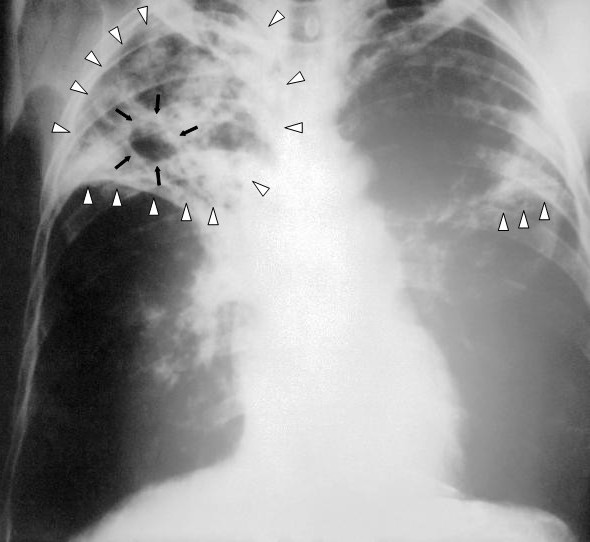
    • Radiografía de tórax: puede mostrar aire o líquido en EN Erythema nodosum is an immune-mediated panniculitis (inflammation of the subcutaneous fat) caused by a type IV (delayed-type) hypersensitivity reaction. It commonly manifests in young women as tender, erythematous nodules on the shins. Erythema Nodosum el espacio pleural, y sugerir una causa (e.g., fractura de costilla, tumor Tumor Inflammation maligno)
      • Una consolidación puede representar una neumonía.
      • Neumotórax
      • El ensanchamiento del mediastino es indicativo de disección aórtica.
      • La cardiomegalia puede representar una pericarditis Pericarditis Pericarditis is an inflammation of the pericardium, often with fluid accumulation. It can be caused by infection (often viral), myocardial infarction, drugs, malignancies, metabolic disorders, autoimmune disorders, or trauma. Acute, subacute, and chronic forms exist. Pericarditis.
      • Linfadenopatías o cavitación pueden sugerir tuberculosis Tuberculosis Tuberculosis (TB) is an infectious disease caused by Mycobacterium tuberculosis complex bacteria. The bacteria usually attack the lungs but can also damage other parts of the body. Approximately 30% of people around the world are infected with this pathogen, with the majority harboring a latent infection. Tuberculosis spreads through the air when a person with active pulmonary infection coughs or sneezes. Tuberculosis.
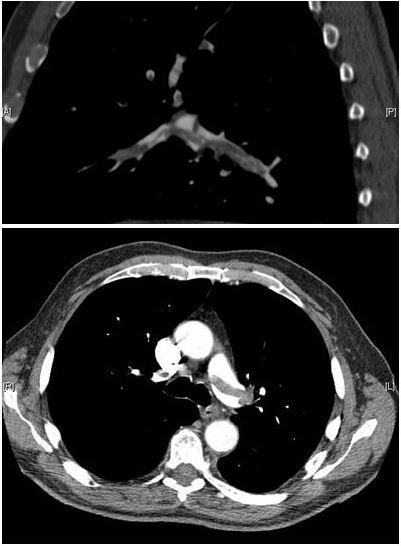
    • TC: puede mostrar signos de neumonía o la presencia de un absceso, tumor Tumor Inflammation o coágulo de sangre dentro del pulmón con una angiografía
    • Ultrasonido: puede utilizarse para confirmar el derrame pleural a la cabecera del paciente
  • Electrocardiograma: se utiliza para ayudar a diagnosticar las causas cardíacas, incluyendo el infarto de miocardio y la pericarditis Pericarditis Pericarditis is an inflammation of the pericardium, often with fluid accumulation. It can be caused by infection (often viral), myocardial infarction, drugs, malignancies, metabolic disorders, autoimmune disorders, or trauma. Acute, subacute, and chronic forms exist. Pericarditis
  • Procedimientos diagnósticos
    • Prueba de esputo: prueba para detectar causas infecciosas, especialmente la tuberculosis Tuberculosis Tuberculosis (TB) is an infectious disease caused by Mycobacterium tuberculosis complex bacteria. The bacteria usually attack the lungs but can also damage other parts of the body. Approximately 30% of people around the world are infected with this pathogen, with the majority harboring a latent infection. Tuberculosis spreads through the air when a person with active pulmonary infection coughs or sneezes. Tuberculosis
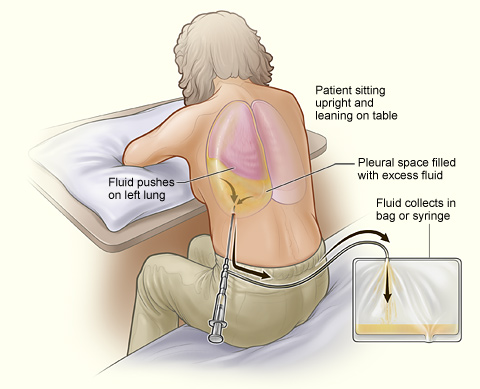
    • Toracocentesis: Se aspira el líquido para su análisis en EN Erythema nodosum is an immune-mediated panniculitis (inflammation of the subcutaneous fat) caused by a type IV (delayed-type) hypersensitivity reaction. It commonly manifests in young women as tender, erythematous nodules on the shins. Erythema Nodosum el laboratorio.
      • El líquido pleural exudativo muestra proteínas elevadas, lactato deshidrogenasa elevada o leucocitosis.
      • Se utilizan los LOS Neisseria criterios de Light (véase la tabla siguiente) para determinar la etiología.
    • Toracoscopia: visualización directa de los LOS Neisseria pulmones y de la cavidad pleural para visualizar las anomalías y obtener una muestra de tejido para el examen patológico y un posible cultivo microbiológico
Criterios de Light para los LOS Neisseria derrames pleurales
Transudado Exudado
Proteína (pleural/sérica) ≤ 0,5 > 0,5
LDH LDH Osteosarcoma (pleural/sérica) ≤ 0,6 > 0,6
LDH LDH Osteosarcoma pleural ≤ dos-tercios del límite superior de la LDH LDH Osteosarcoma sérica normal LDH LDH Osteosarcoma pleural > dos-tercios del límite superior de la LDH LDH Osteosarcoma sérica normal
Causas comunes
  • Hipoalbuminemia (cirrosis, síndrome nefrótico)
  • Insuficiencia cardíaca
  • Pericarditis Pericarditis Pericarditis is an inflammation of the pericardium, often with fluid accumulation. It can be caused by infection (often viral), myocardial infarction, drugs, malignancies, metabolic disorders, autoimmune disorders, or trauma. Acute, subacute, and chronic forms exist. Pericarditis constrictiva
  • Enfermedad autoinmune (lupus, artritis reumatoide)
  • Ruptura esofágica
  • Infección (paraneumónica, tuberculosis Tuberculosis Tuberculosis (TB) is an infectious disease caused by Mycobacterium tuberculosis complex bacteria. The bacteria usually attack the lungs but can also damage other parts of the body. Approximately 30% of people around the world are infected with this pathogen, with the majority harboring a latent infection. Tuberculosis spreads through the air when a person with active pulmonary infection coughs or sneezes. Tuberculosis, fúngica, empiema)
  • Tumor Tumor Inflammation maligno
  • Pancreatitis Pancreatitis Inflammation of the pancreas. Pancreatitis is classified as acute unless there are computed tomographic or endoscopic retrograde cholangiopancreatographic findings of chronic pancreatitis. The two most common forms of acute pancreatitis are alcoholic pancreatitis and gallstone pancreatitis. Acute Pancreatitis
  • Post-baipás coronario ( CABG CABG Surgical therapy of ischemic coronary artery disease achieved by grafting a section of saphenous vein, internal mammary artery, or other substitute between the aorta and the obstructed coronary artery distal to the obstructive lesion. Cardiac Surgery, por sus siglas en EN Erythema nodosum is an immune-mediated panniculitis (inflammation of the subcutaneous fat) caused by a type IV (delayed-type) hypersensitivity reaction. It commonly manifests in young women as tender, erythematous nodules on the shins. Erythema Nodosum inglés)
  • Embolia pulmonar

Tratamiento

  • Alivio de los LOS Neisseria síntomas:
  • Extracción del líquido, el aire o la sangre del espacio pleural:
    • La toracocentesis puede ser tanto diagnóstica como terapéutica
    • La colocación de un drenaje pleural puede ser necesaria en EN Erythema nodosum is an immune-mediated panniculitis (inflammation of the subcutaneous fat) caused by a type IV (delayed-type) hypersensitivity reaction. It commonly manifests in young women as tender, erythematous nodules on the shins. Erythema Nodosum el caso de grandes cantidades de líquido acumulado.
  • Tratamiento de la enfermedad subyacente

Relevancia Clínica

  • Derrame pleural: presencia de líquido en EN Erythema nodosum is an immune-mediated panniculitis (inflammation of the subcutaneous fat) caused by a type IV (delayed-type) hypersensitivity reaction. It commonly manifests in young women as tender, erythematous nodules on the shins. Erythema Nodosum la cavidad pleural, que puede clasificarse como transudativo o exudativo en EN Erythema nodosum is an immune-mediated panniculitis (inflammation of the subcutaneous fat) caused by a type IV (delayed-type) hypersensitivity reaction. It commonly manifests in young women as tender, erythematous nodules on the shins. Erythema Nodosum función de la causa subyacente.
  • Hemotórax: acumulación de sangre en EN Erythema nodosum is an immune-mediated panniculitis (inflammation of the subcutaneous fat) caused by a type IV (delayed-type) hypersensitivity reaction. It commonly manifests in young women as tender, erythematous nodules on the shins. Erythema Nodosum la cavidad pleural. Suele producirse tras un traumatismo torácico que provoca una laceración pulmonar o daños en EN Erythema nodosum is an immune-mediated panniculitis (inflammation of the subcutaneous fat) caused by a type IV (delayed-type) hypersensitivity reaction. It commonly manifests in young women as tender, erythematous nodules on the shins. Erythema Nodosum las arterias intercostales.
  • Neumotórax: acumulación de aire en EN Erythema nodosum is an immune-mediated panniculitis (inflammation of the subcutaneous fat) caused by a type IV (delayed-type) hypersensitivity reaction. It commonly manifests in young women as tender, erythematous nodules on the shins. Erythema Nodosum el espacio pleural, que provoca un colapso pulmonar debido a la pérdida de la presión negativa entre las membranas pleurales visceral y parietal Parietal One of a pair of irregularly shaped quadrilateral bones situated between the frontal bone and occipital bone, which together form the sides of the cranium. Skull: Anatomy.
  • Empiema: constituye la acumulación de pus dentro de una cavidad preexistente, como el empiema pleural.
  • Neumonía: inflamación aguda o crónica del tejido pulmonar, que puede ser causada por una infección de bacterias, virus Virus Viruses are infectious, obligate intracellular parasites composed of a nucleic acid core surrounded by a protein capsid. Viruses can be either naked (non-enveloped) or enveloped. The classification of viruses is complex and based on many factors, including type and structure of the nucleoid and capsid, the presence of an envelope, the replication cycle, and the host range. Virology u hongos. En EN Erythema nodosum is an immune-mediated panniculitis (inflammation of the subcutaneous fat) caused by a type IV (delayed-type) hypersensitivity reaction. It commonly manifests in young women as tender, erythematous nodules on the shins. Erythema Nodosum casos más raros, la neumonía también puede ser causada por desencadenantes tóxicos a través de la inhalación de sustancias tóxicas, procesos inmunológicos o en EN Erythema nodosum is an immune-mediated panniculitis (inflammation of the subcutaneous fat) caused by a type IV (delayed-type) hypersensitivity reaction. It commonly manifests in young women as tender, erythematous nodules on the shins. Erythema Nodosum el curso de la radioterapia.

Referencias

  1. Mayo Clinic Staff. (2023). Pleurisy – Diagnosis and treatment. Mayo Clinic. Retrieved August 4, 2025, from https://www.mayoclinic.org/diseases-conditions/pleurisy/diagnosis-treatment/drc-20351866
  2. Hunter, M. P., Goldin, J., & Regunath, H. (2024). Pleurisy. In StatPearls. StatPearls Publishing. Retrieved August 4, 2025, from https://www.ncbi.nlm.nih.gov/books/NBK558958/ 
  3. Cleveland Clinic. (2022). Pleurisy: Causes, symptoms, diagnosis, treatment & prevention. Retrieved August 4, 2025, from https://my.clevelandclinic.org/health/diseases/21172-pleurisy
  4. Nestor, J., Huggins, T., Kummerfeldt, C., DiVietro, M., Walters, K., & Sahn, S. (2013). Viral diseases affecting the pleura. Journal of Clinical Virology, 58(2), 367–373. https://doi.org/10.1016/j.jcv.2013.06.013

¡Crea tu cuenta gratis o inicia una sesión para seguir leyendo!

Regístrate ahora y obtén acceso gratuito a Lecturio con páginas de concepto, videos médicos y cuestionarios para tu educación médica.

User Reviews

Que tengas una sesión de estudio alegre y navideña 🎁 Ahorra 50% en todos los planes >>

Details