Domina Conceptos Médicos

Estudia para la escuela de medicina y tus examenes con Lecturio.

Macrólidos y Cetólidos

Los LOS Neisseria macrólidos y los LOS Neisseria cetólidos son antibióticos que inhiben la síntesis proteica bacteriana al AL Amyloidosis unirse a la subunidad ribosomal 50S y bloquean la transpeptidación. Estos antibióticos tienen un amplio espectro de actividad antimicrobiana, pero son más conocidos por su cobertura hacia los LOS Neisseria microorganismos atípicos. Los LOS Neisseria macrólidos más comunes son eritromicina, claritromicina, azitromicina y fidaxomicina. Los LOS Neisseria efectos secundarios incluyen malestar gastrointestinal, prolongación del QT y hepatotoxicidad. Los LOS Neisseria mecanismos de resistencia incluyen la metilación o la mutación ribosómica, la inactivación del medicamento mediante la producción de enzimas o la eliminación del medicamento mediante bombas de eflujo.

Last updated: Dec 15, 2025
Editorial responsibility: Stanley Oiseth, Lindsay Jones, Evelin Maza

Estructura Química y Farmacodinamia

Estructura química

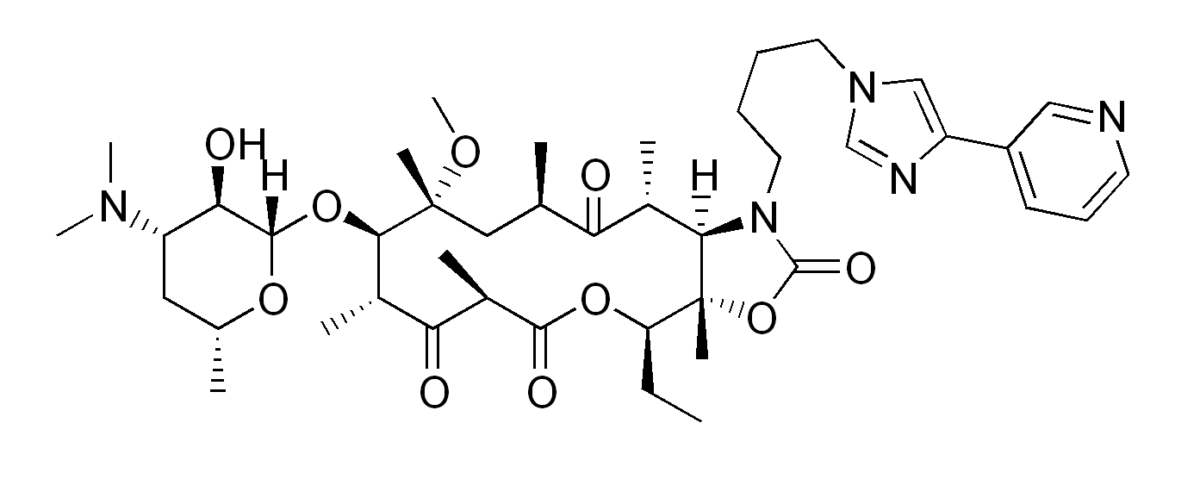
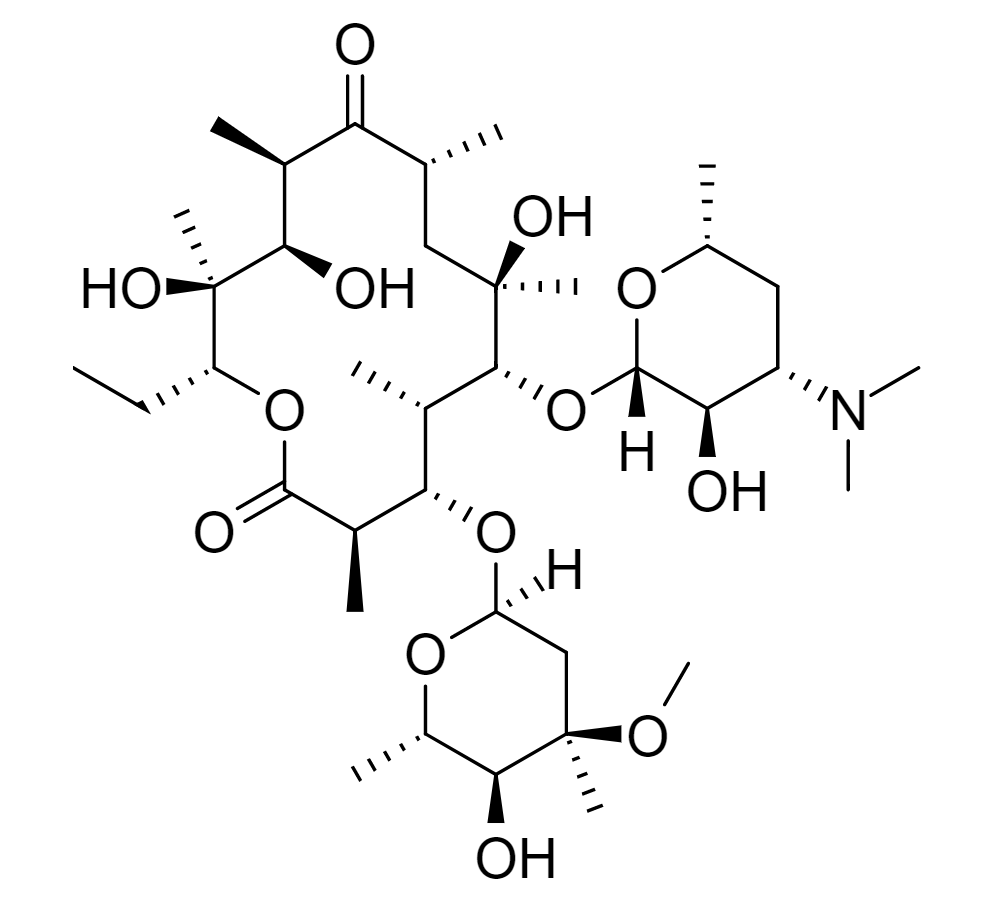
  • Macrólidos: caracterizados por un anillo macrocíclico de lactona
    • Anillo con 14‒16 átomos
    • 1 o más azúcares están unidos mediante enlaces glucosídicos
    • La eritromicina es el medicamento prototipo de la clase.
  • Cetólidos (e.g., telitromicina): comparten una estructura similar a los LOS Neisseria macrólidos
    • Anillo de 14 átomos
    • 1 de los LOS Neisseria azúcares es sustituido por un grupo cetónico
    • Derivado de la eritromicina

Mecanismo de acción

General:

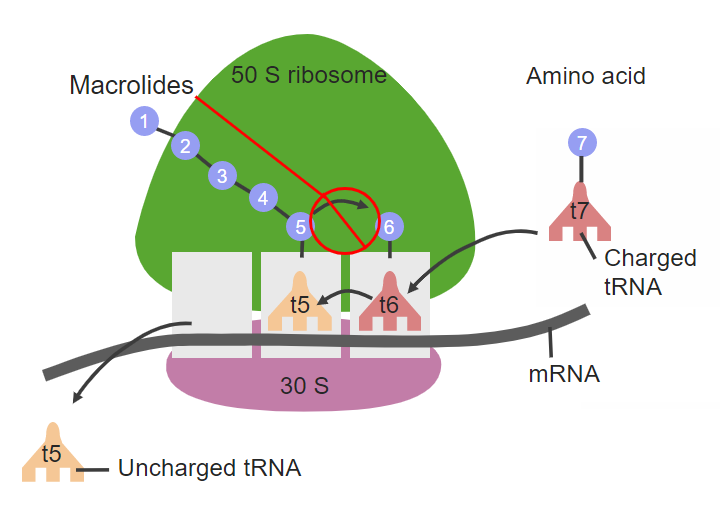
  • Inhibe la síntesis de proteínas bacterianas al AL Amyloidosis unirse reversiblemente al AL Amyloidosis ARNr 23S de la subunidad ribosomal 50S.
    • Se une cerca del centro de la peptidiltransferasa → impide que la peptidiltransferasa añada aminoácidos a un péptido en EN Erythema nodosum is an immune-mediated panniculitis (inflammation of the subcutaneous fat) caused by a type IV (delayed-type) hypersensitivity reaction. It commonly manifests in young women as tender, erythematous nodules on the shins. Erythema Nodosum crecimiento (impide la transpeptidación)
    • También inhibe la formación de la subunidad 50S
  • Limita el crecimiento bacteriano → bacteriostático
  • Excepción de la fidaxomicina: se une a la subunidad sigma de la ARN polimerasa, lo que impide la transcripción → bactericida contra Clostridioides difficile
  • Efectos adicionales:
    • Efecto antiinflamatorio por ↓ interleucinas y factor de necrosis Necrosis The death of cells in an organ or tissue due to disease, injury or failure of the blood supply. Ischemic Cell Damage tumoral alfa
    • La eritromicina es un agonista del receptor Receptor Receptors are proteins located either on the surface of or within a cell that can bind to signaling molecules known as ligands (e.g., hormones) and cause some type of response within the cell. Receptors de la motilina en EN Erythema nodosum is an immune-mediated panniculitis (inflammation of the subcutaneous fat) caused by a type IV (delayed-type) hypersensitivity reaction. It commonly manifests in young women as tender, erythematous nodules on the shins. Erythema Nodosum las células enterocromafines duodenales → tiene propiedades procinéticas

Fidaxomicina es una excepción:

  • Se une a la RNA RNA A polynucleotide consisting essentially of chains with a repeating backbone of phosphate and ribose units to which nitrogenous bases are attached. RNA is unique among biological macromolecules in that it can encode genetic information, serve as an abundant structural component of cells, and also possesses catalytic activity. RNA Types and Structure polimerasa → previene la transcripción del ARNm
  • Bactericida
Sitio de acción de los macrólidos

Sitio de acción de los macrólidos en la subunidad ribosomal 50S
tRNA: ARN de transferencia (por sus siglas en inglés)
mRNA: ARN mensajero (por sus siglas en inglés)

Imagen por Lecturio. Licencia: CC BY-NC-SA 4.0

Farmacocinética

Tabla: Farmacocinética de los LOS Neisseria macrólidos y cetólidos
Macrólidos Cetólidos
Absorción Eritromicina:
  • Destruida por el ácido gástrico → requiere recubrimiento entérico
  • Absorción relativamente mala
  • Los LOS Neisseria alimentos interfieren con la absorción
Azitromicina y claritromicina:
  • Estables en EN Erythema nodosum is an immune-mediated panniculitis (inflammation of the subcutaneous fat) caused by a type IV (delayed-type) hypersensitivity reaction. It commonly manifests in young women as tender, erythematous nodules on the shins. Erythema Nodosum el estómago
  • Mejor absorción
Fidaxomicina:
  • Absorción sistémica mínima
  • Alcanza concentraciones fecales altas
Rápida absorción
Distribución
  • Lipofílicos
  • Ampliamente distribuidos en EN Erythema nodosum is an immune-mediated panniculitis (inflammation of the subcutaneous fat) caused by a type IV (delayed-type) hypersensitivity reaction. It commonly manifests in young women as tender, erythematous nodules on the shins. Erythema Nodosum los LOS Neisseria fluidos y tejidos corporales
  • Captación por los LOS Neisseria macrófagos:
    • Sobre todo con la azitromicina
    • Contribuye a una mayor vida media
  • Cruzan la placenta Placenta A highly vascularized mammalian fetal-maternal organ and major site of transport of oxygen, nutrients, and fetal waste products. It includes a fetal portion (chorionic villi) derived from trophoblasts and a maternal portion (decidua) derived from the uterine endometrium. The placenta produces an array of steroid, protein and peptide hormones (placental hormones). Placenta, Umbilical Cord, and Amniotic Cavity
  • No cruzan la barrera hematoencefálica
  • Excepción: fidaxomicina actúa localmente en EN Erythema nodosum is an immune-mediated panniculitis (inflammation of the subcutaneous fat) caused by a type IV (delayed-type) hypersensitivity reaction. It commonly manifests in young women as tender, erythematous nodules on the shins. Erythema Nodosum el lumen gastrointestinal
  • Ampliamente distribuidos en EN Erythema nodosum is an immune-mediated panniculitis (inflammation of the subcutaneous fat) caused by a type IV (delayed-type) hypersensitivity reaction. It commonly manifests in young women as tender, erythematous nodules on the shins. Erythema Nodosum los LOS Neisseria tejidos
  • 70% unidos a proteinas (albúmina)
Metabolismo
Excreción
  • Hepática (bilis → heces):
    • Azitromicina
    • Eritromicina
  • Renal: claritromicina
  • Fecal: fidaxomicina
  • Renal
  • Heces

Indicaciones

Cobertura antimicrobiana

  • Gram-positivos:
    • Streptococcus Streptococcus Streptococcus is one of the two medically important genera of gram-positive cocci, the other being Staphylococcus. Streptococci are identified as different species on blood agar on the basis of their hemolytic pattern and sensitivity to optochin and bacitracin. There are many pathogenic species of streptococci, including S. pyogenes, S. agalactiae, S. pneumoniae, and the viridans streptococci. Streptococcus
    • Staphylococcus Staphylococcus Staphylococcus is a medically important genera of Gram-positive, aerobic cocci. These bacteria form clusters resembling grapes on culture plates. Staphylococci are ubiquitous for humans, and many strains compose the normal skin flora. Staphylococcus
    • Clostridioides difficile (fidaxomicin)
  • Gram-negativos:
    • Haemophilus influenzae Haemophilus Influenzae A species of Haemophilus found on the mucous membranes of humans and a variety of animals. The species is further divided into biotypes I through viii. Haemophilus y H. ducreyi
    • Moraxella catarrhalis Moraxella catarrhalis Gram-negative aerobic cocci of low virulence that colonize the nasopharynx and occasionally cause meningitis; bacteremia; empyema; pericarditis; and pneumonia. Moraxella
    • Campylobacter jejuni Campylobacter jejuni A species of bacteria that resemble small tightly coiled spirals. Its organisms are known to cause abortion in sheep and fever and enteritis in man and may be associated with enteric diseases of calves, lambs, and other animals. Campylobacter
    • Vibrio cholerae Vibrio cholerae The etiologic agent of cholera. Vibrio
    • Neisseria gonorrhoeae Neisseria gonorrhoeae A species of gram-negative, aerobic bacteria primarily found in purulent venereal discharges. It is the causative agent of gonorrhea. Neisseria (actividad limitada)
    • Helicobacter pylori Helicobacter pylori A spiral bacterium active as a human gastric pathogen. It is a gram-negative, urease-positive, curved or slightly spiral organism initially isolated in 1982 from patients with lesions of gastritis or peptic ulcers in Western Australia. Helicobacter pylori was originally classified in the genus campylobacter, but RNA sequencing, cellular fatty acid profiles, growth patterns, and other taxonomic characteristics indicate that the micro-organism should be included in the genus Helicobacter. It has been officially transferred to Helicobacter gen. Helicobacter (claritromicina en EN Erythema nodosum is an immune-mediated panniculitis (inflammation of the subcutaneous fat) caused by a type IV (delayed-type) hypersensitivity reaction. It commonly manifests in young women as tender, erythematous nodules on the shins. Erythema Nodosum terapia combinada)
    • Bordetella pertussis Bordetella pertussis A species of gram-negative, aerobic bacteria that is the causative agent of whooping cough. Its cells are minute coccobacilli that are surrounded by a slime sheath. Bordetella
  • Atípicos:
    • Mycoplasma pneumoniae Mycoplasma pneumoniae Short filamentous organism of the genus mycoplasma, which binds firmly to the cells of the respiratory epithelium. It is one of the etiologic agents of non-viral primary atypical pneumonia in man. Mycoplasma
    • Chlamydia pneumoniae Chlamydia pneumoniae A species of chlamydophila that causes acute respiratory infection, especially atypical pneumonia, in humans, horses, and koalas. Chlamydia
    • Legionella pneumophila Legionella pneumophila A species of gram-negative, aerobic bacteria that is the causative agent of legionnaires’ disease. It has been isolated from numerous environmental sites as well as from human lung tissue, respiratory secretions, and blood. Legionella/Legionellosis
    • Treponema pallidum Treponema pallidum The causative agent of venereal and non-venereal syphilis as well as yaws. Treponema
    • Babesia Babesia Babesiosis is an infection caused by a protozoa belonging to the genus, Babesia. The most common Babesia seen in the United States is B. microti, which is transmitted by the Ixodes tick. The protozoa thrive and replicate within host erythrocytes. Lysis of erythrocytes and the body’s immune response result in clinical symptoms. Babesia/Babesiosis microti
    • Ureaplasma
  • Complejo Mycobacterium avium Mycobacterium avium A bacterium causing tuberculosis in domestic fowl and other birds. In pigs, it may cause localized and sometimes disseminated disease. The organism occurs occasionally in sheep and cattle. It should be distinguished from the m. avium complex, which infects primarily humans. Mycobacterium

Tipos de infección

  • Infecciones respiratorias:
    • Neumonía adquirida en EN Erythema nodosum is an immune-mediated panniculitis (inflammation of the subcutaneous fat) caused by a type IV (delayed-type) hypersensitivity reaction. It commonly manifests in young women as tender, erythematous nodules on the shins. Erythema Nodosum la comunidad
    • Profilaxis y tratamiento del complejo Mycobacterium avium Mycobacterium avium A bacterium causing tuberculosis in domestic fowl and other birds. In pigs, it may cause localized and sometimes disseminated disease. The organism occurs occasionally in sheep and cattle. It should be distinguished from the m. avium complex, which infects primarily humans. Mycobacterium
    • Enfermedad del legionario
    • Tos TOS Thoracic outlet syndrome (TOS) is a broad term used for a spectrum of syndromes related to the general region of the thoracic outlet, which involves the compression or irritation of elements of the brachial plexus, subclavian artery, or subclavian vein. Thoracic Outlet Syndrome ferina
    • Faringitis estreptocócica
  • Infecciones de transmisión sexual:
    • Gonorrea
    • Clamidia
    • Chancroide
  • Infección por H. pylori H. pylori A spiral bacterium active as a human gastric pathogen. It is a gram-negative, urease-positive, curved or slightly spiral organism initially isolated in 1982 from patients with lesions of gastritis or peptic ulcers in Western Australia. Helicobacter pylori was originally classified in the genus campylobacter, but RNA sequencing, cellular fatty acid profiles, growth patterns, and other taxonomic characteristics indicate that the micro-organism should be included in the genus Helicobacter. It has been officially transferred to Helicobacter gen. Helicobacter (la claritromicina forma parte de la terapia triple)
  • Diarrea asociada a C. difficile (fidaxomicina es monoterapia)
  • Infecciones de piel y tejidos blandos: acné

Otras indicaciones

  • Exacerbaciones de la enfermedad pulmonar obstructiva crónica y la fibrosis Fibrosis Any pathological condition where fibrous connective tissue invades any organ, usually as a consequence of inflammation or other injury. Bronchiolitis Obliterans quística (efecto antiinflamatorio)
  • Gastroparesia (eritromicina, efecto procinético)

Indicaciones para los LOS Neisseria cetólidos

  • Actividad antimicrobiana similar a la de los LOS Neisseria macrólidos
  • La telitromicina se dejó de comercializar en EN Erythema nodosum is an immune-mediated panniculitis (inflammation of the subcutaneous fat) caused by a type IV (delayed-type) hypersensitivity reaction. It commonly manifests in young women as tender, erythematous nodules on the shins. Erythema Nodosum Estados Unidos (antes solo estaba indicada para la neumonía adquirida en EN Erythema nodosum is an immune-mediated panniculitis (inflammation of the subcutaneous fat) caused by a type IV (delayed-type) hypersensitivity reaction. It commonly manifests in young women as tender, erythematous nodules on the shins. Erythema Nodosum la comunidad).

Efectos Secundarios y Contraindicaciones

Macrólidos

  • Efectos secundarios:
    • Malestar gastrointestinal (especialmente con el uso de eritromicina y fidaxomicina)
    • Mareo
    • Pérdida auditiva transitoria (relacionada con la dosis, reversible)
    • Hepatotoxicidad:
      • Pruebas de función hepática anormales
      • Hepatitis
      • Ictericia colestática
      • Necrosis Necrosis The death of cells in an organ or tissue due to disease, injury or failure of the blood supply. Ischemic Cell Damage hepática
      • Insuficiencia hepática
    • Prolongación del QT
  • Contraindicaciones: antecedentes de insuficiencia hepática o ictericia colestática
  • Advertencias:
    • Alteración en EN Erythema nodosum is an immune-mediated panniculitis (inflammation of the subcutaneous fat) caused by a type IV (delayed-type) hypersensitivity reaction. It commonly manifests in young women as tender, erythematous nodules on the shins. Erythema Nodosum la conducción cardíaca (especialmente aquellos con prolongación del QT y anomalías electrolíticas)
    • Hepatotoxicidad
    • Exacerbación de la miastenia gravis
    • Claritromicina: ↑ potencial de mortalidad en EN Erythema nodosum is an immune-mediated panniculitis (inflammation of the subcutaneous fat) caused by a type IV (delayed-type) hypersensitivity reaction. It commonly manifests in young women as tender, erythematous nodules on the shins. Erythema Nodosum pacientes con enfermedad arterial coronaria
  • Interacciones medicamentosas (especialmente con eritromicina y claritromicina debido a la inhibición del CYP3A4 CYP3A4 Class 3 Antiarrhythmic Drugs (Potassium Channel Blockers)):
    • Warfarina: ↑ índice internacional normalizado (INR, por sus siglas en EN Erythema nodosum is an immune-mediated panniculitis (inflammation of the subcutaneous fat) caused by a type IV (delayed-type) hypersensitivity reaction. It commonly manifests in young women as tender, erythematous nodules on the shins. Erythema Nodosum inglés)
    • Simvastatina, lovastatina: ↑ riesgo de mialgia y/o rabdomiólisis
    • Midazolam Midazolam A short-acting hypnotic-sedative drug with anxiolytic and amnestic properties. It is used in dentistry, cardiac surgery, endoscopic procedures, as preanesthetic medication, and as an adjunct to local anesthesia. The short duration and cardiorespiratory stability makes it useful in poor-risk, elderly, and cardiac patients. It is water-soluble at ph less than 4 and lipid-soluble at physiological pH. Benzodiazepines: somnolencia
    • Teofilina: convulsiones
    • ↑ Concentraciones séricas de:
      • Tacrolimus Tacrolimus A macrolide isolated from the culture broth of a strain of streptomyces tsukubaensis that has strong immunosuppressive activity in vivo and prevents the activation of T-lymphocytes in response to antigenic or mitogenic stimulation in vitro. Immunosuppressants
      • Ciclosporina
      • Alcaloides del ergot
      • Colchicina

Cetólidos

  • Efectos secundarios:
    • Malestar gastrointestinal
    • Alteraciones visuales
    • Hepatotoxicidad
    • Síncope
  • Contraindicaciones:
    • Hipersensibilidad a los LOS Neisseria macrólidos
    • Miastenia gravis
    • Hepatitis o ictericia
  • Advertencias:
    • Hepatotoxicidad
    • Exacerbación de la miastenia gravis
    • Prolongación del QT

Mecanismo de Resistencia

Existen 3 métodos de resistencia a los LOS Neisseria macrólidos:

  • Metilación o mutación ribosómica:
    • Evita la unión de los LOS Neisseria macrólidos
    • Puede estar mediada por plásmidos o por cromosomas
  • Producción de enzimas inactivadoras de medicamentos:
    • Esterasas
    • Cinasas
  • Producción de proteínas de eflujo dependientes de ATP activas:
    • Transportan el medicamento fuera de la célula
    • Los LOS Neisseria cetólidos no se ven afectados por este mecanismo de resistencia → permite su uso en EN Erythema nodosum is an immune-mediated panniculitis (inflammation of the subcutaneous fat) caused by a type IV (delayed-type) hypersensitivity reaction. It commonly manifests in young women as tender, erythematous nodules on the shins. Erythema Nodosum algunas cepas resistentes a los LOS Neisseria macrólidos

Comparación de Medicamentos

Tabla: Comparación de varias clases de antibióticos inhibidores de la síntesis proteica bacteriana
Clase de medicamento Mecanismo de acción Cobertura Efectos secundarios
Anfenicoles
  • Se unen a la subunidad 50S
  • Evitan la transpeptidación
  • Gram-positivos
  • Gram-negativos
  • Atípicos
  • Malestar gastrointestinal
  • Neuritis óptica
  • Anemia Anemia Anemia is a condition in which individuals have low Hb levels, which can arise from various causes. Anemia is accompanied by a reduced number of RBCs and may manifest with fatigue, shortness of breath, pallor, and weakness. Subtypes are classified by the size of RBCs, chronicity, and etiology. Anemia: Overview and Types aplásica
  • Síndrome del bebé gris
Lincosamidas
  • Se unen a la subunidad 50S
  • Evitan la transpeptidación
  • Cocos gram-positivos:
    • MSSA
    • MRSA MRSA A strain of Staphylococcus aureus that is non-susceptible to the action of methicillin. The mechanism of resistance usually involves modification of normal or the presence of acquired penicillin binding proteins. Staphylococcus
    • Streptococcus Streptococcus Streptococcus is one of the two medically important genera of gram-positive cocci, the other being Staphylococcus. Streptococci are identified as different species on blood agar on the basis of their hemolytic pattern and sensitivity to optochin and bacitracin. There are many pathogenic species of streptococci, including S. pyogenes, S. agalactiae, S. pneumoniae, and the viridans streptococci. Streptococcus
  • Anaerobios
  • Malestar gastrointestinal
  • Reacciones alérgicas
  • Colitis Colitis Inflammation of the colon section of the large intestine, usually with symptoms such as diarrhea (often with blood and mucus), abdominal pain, and fever. Pseudomembranous Colitis pseudomembranosa
Macrólidos
  • Se unen a la subunidad 50S
  • Evitan la transpeptidación
  • Gram-positivos
  • Gram-negativos
  • Atípicos
  • Complejo Mycobacterium avium Mycobacterium avium A bacterium causing tuberculosis in domestic fowl and other birds. In pigs, it may cause localized and sometimes disseminated disease. The organism occurs occasionally in sheep and cattle. It should be distinguished from the m. avium complex, which infects primarily humans. Mycobacterium
  • Malestar gastrointestinal
  • Prolongación del QT
  • Hepatotoxicidad
  • Exacerbación de la miastenia gravis
Oxazolidinonas
  • Se unen al AL Amyloidosis ARNr 23S de la subunidad 50S
  • Evitan la formación del complejo de iniciación
Cocos gram-positivos:
  • MSSA
  • MRSA MRSA A strain of Staphylococcus aureus that is non-susceptible to the action of methicillin. The mechanism of resistance usually involves modification of normal or the presence of acquired penicillin binding proteins. Staphylococcus
  • ERV
  • Streptococcus Streptococcus Streptococcus is one of the two medically important genera of gram-positive cocci, the other being Staphylococcus. Streptococci are identified as different species on blood agar on the basis of their hemolytic pattern and sensitivity to optochin and bacitracin. There are many pathogenic species of streptococci, including S. pyogenes, S. agalactiae, S. pneumoniae, and the viridans streptococci. Streptococcus
  • Mielosupresión
  • Neuropatía
  • Acidosis Acidosis A pathologic condition of acid accumulation or depletion of base in the body. The two main types are respiratory acidosis and metabolic acidosis, due to metabolic acid build up. Respiratory Acidosis láctica
  • Síndrome serotoninérgico
MSSA: Staphylococcus aureus sensible a la meticilina (por sus siglas en inglés)
MRSA: Staphylococcus aureus resistente a la meticilina (por sus siglas en inglés)
ARNr: ARN ribosómico
ERV: Enterococcus resistente a la vancomicina
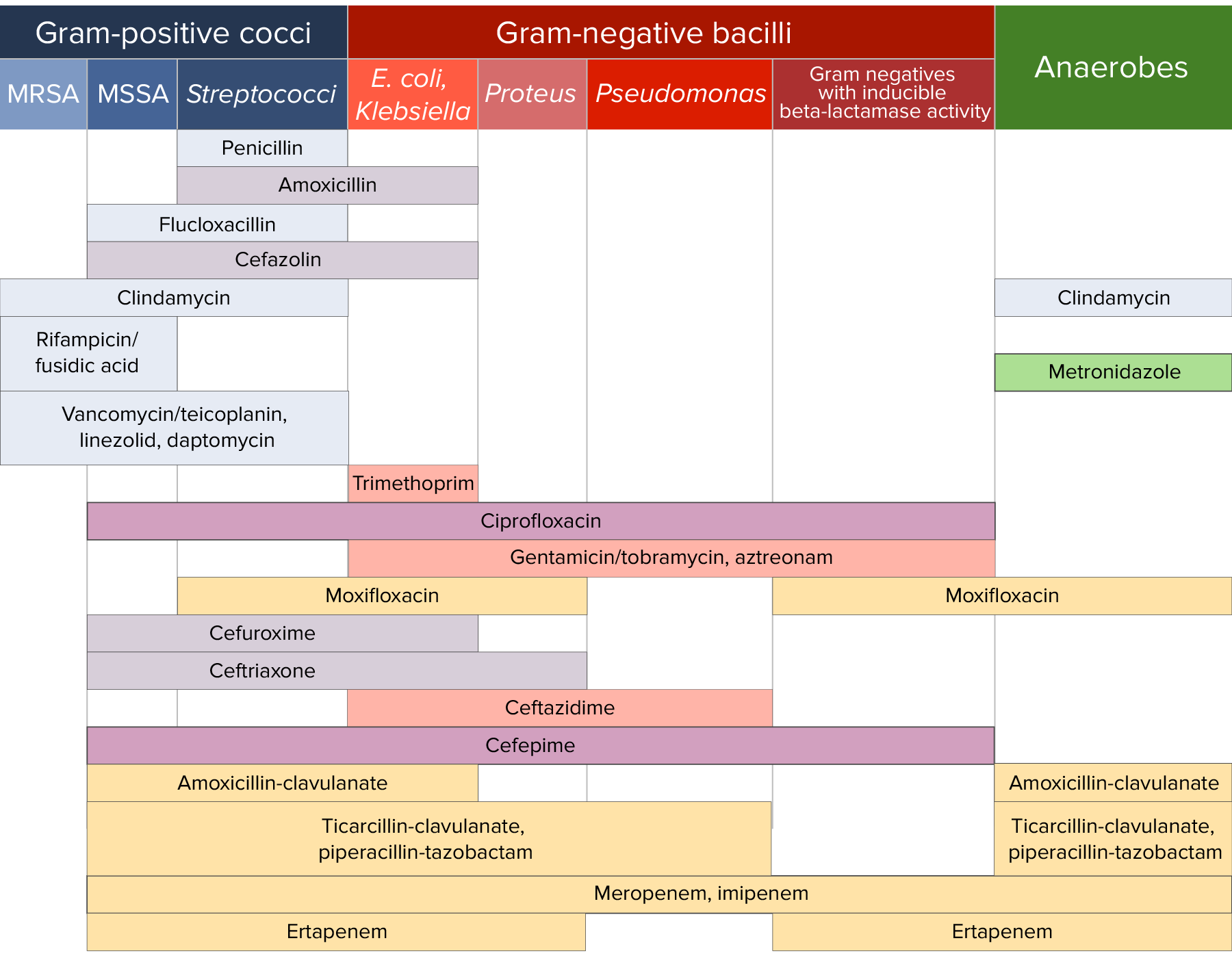
Tabla de sensibilidad a los antibióticos

Sensibilidad a los antibióticos:
Tabla que compara la cobertura microbiana de diferentes antibióticos para cocos gram-positivos, bacilos gram-negativos y anaerobios.

Imagen por Lecturio. Licencia: CC BY-NC-SA 4.0

Referencias

  1. Bertram G. (2007). Macrolide Antibiotics Comparison: Erythromycin, Clarithromycin, Azithromycin. Basic and Clinical Pharmacology. Retrieved October 20, 2025, from https://www.emedexpert.com/compare/macrolides.shtml.
  2. Werth BJ. (2024). Macrolides. MSD Manual Professional Version. Retrieved October 20, 2025, from https://www.msdmanuals.com/professional/infectious-diseases/bacteria-and-antibacterial-drugs/macrolides
  3. Patel PH, Hashmi MF. (2023). Macrolides. StatPearls. Retrieved October 20, 2025, from https://www.ncbi.nlm.nih.gov/books/NBK551495/
  4. Graziani, A.L. (2024). Azithromycin and clarithromycin. In Bond, S. (Ed.), UpToDate. Retrieved October 20, 2025, from https://www.uptodate.com/contents/azithromycin-and-clarithromycin
  5. Deck DH, Winston LG. (2012). Tetracyclines, macrolides, clindamycin, chloramphenicol, streptogramins, & oxazolidinones. In Katzung BG, Masters SB, Trevor AJ. (Eds.), Basic & Clinical Pharmacology (12th edition, pp. 809-819). https://pharmacomedicale.org/images/cnpm/CNPM_2016/katzung-pharmacology.pdf
  6. Sears P, Crook DW, Louie TJ, Miller MA, Weiss K. Fidaxomicin attains high fecal concentrations with minimal plasma concentrations following oral administration in patients with Clostridium difficile infection. Clin Infect Dis. 2012 Aug;55 Suppl 2(Suppl 2):S116-20. doi: 10.1093/cid/cis337. PMID: 22752859; PMCID: PMC3388019.

¡Crea tu cuenta gratis o inicia una sesión para seguir leyendo!

Regístrate ahora y obtén acceso gratuito a Lecturio con páginas de concepto, videos médicos y cuestionarios para tu educación médica.

User Reviews

Que tengas una sesión de estudio alegre y navideña 🎁 Ahorra 50% en todos los planes >>

Details