Domina Conceptos Médicos

Estudia para la escuela de medicina y tus examenes con Lecturio.

Ictericia

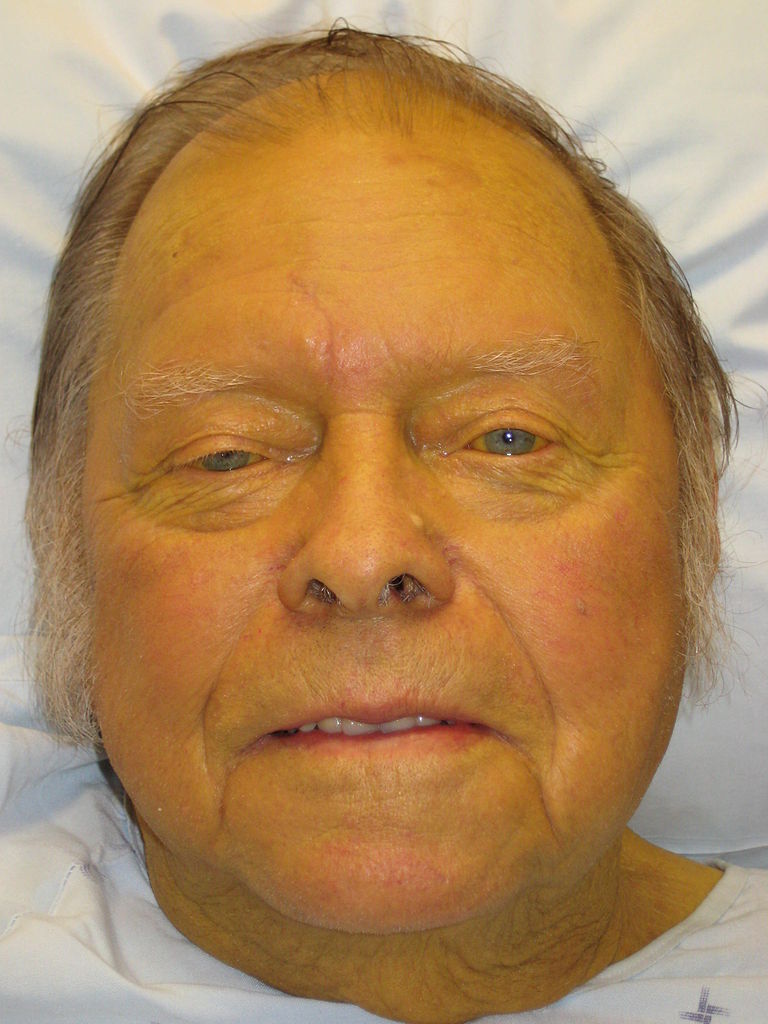
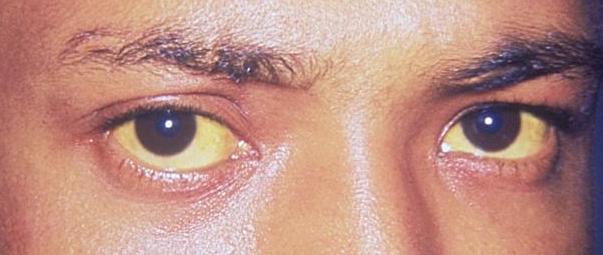
La ictericia es la coloración amarillenta anormal de la piel y/o la esclerótica causada por la acumulación de bilirrubina. La hiperbilirrubinemia es causada por un aumento en EN Erythema nodosum is an immune-mediated panniculitis (inflammation of the subcutaneous fat) caused by a type IV (delayed-type) hypersensitivity reaction. It commonly manifests in young women as tender, erythematous nodules on the shins. Erythema Nodosum la producción de bilirrubina o por una disminución en EN Erythema nodosum is an immune-mediated panniculitis (inflammation of the subcutaneous fat) caused by a type IV (delayed-type) hypersensitivity reaction. It commonly manifests in young women as tender, erythematous nodules on the shins. Erythema Nodosum la captación, conjugación o excreción hepática de bilirrubina. Las etiologías suelen afectar al AL Amyloidosis hígado y pueden ser prehepáticas, intrahepáticas o posthepáticas. Otros síntomas de hiperbilirrubinemia incluyen prurito, heces pálidas y orina oscura. El diagnóstico se realiza con base en EN Erythema nodosum is an immune-mediated panniculitis (inflammation of the subcutaneous fat) caused by a type IV (delayed-type) hypersensitivity reaction. It commonly manifests in young women as tender, erythematous nodules on the shins. Erythema Nodosum pruebas de función hepática e imagenología. El tratamiento se enfoca en EN Erythema nodosum is an immune-mediated panniculitis (inflammation of the subcutaneous fat) caused by a type IV (delayed-type) hypersensitivity reaction. It commonly manifests in young women as tender, erythematous nodules on the shins. Erythema Nodosum el tratamiento de la condición subyacente.

Last updated: Dec 15, 2025

Editorial responsibility: Stanley Oiseth, Lindsay Jones, Evelin Maza

Definición

  • Ictericia
    • Decoloración de la piel y las membranas mucosas
    • Aparece con bilirrubinas séricas > 4–5 mg/dL
  • Ictericia escleral
    • Decoloración de la esclerótica (ojos)
    • Aparece con bilirrubinas séricas > 2–3 mg/dL

Fisiopatología

La ictericia es causada por una elevación de la bilirrubina sérica (hiperbilirrubinemia), que puede ser causada por:
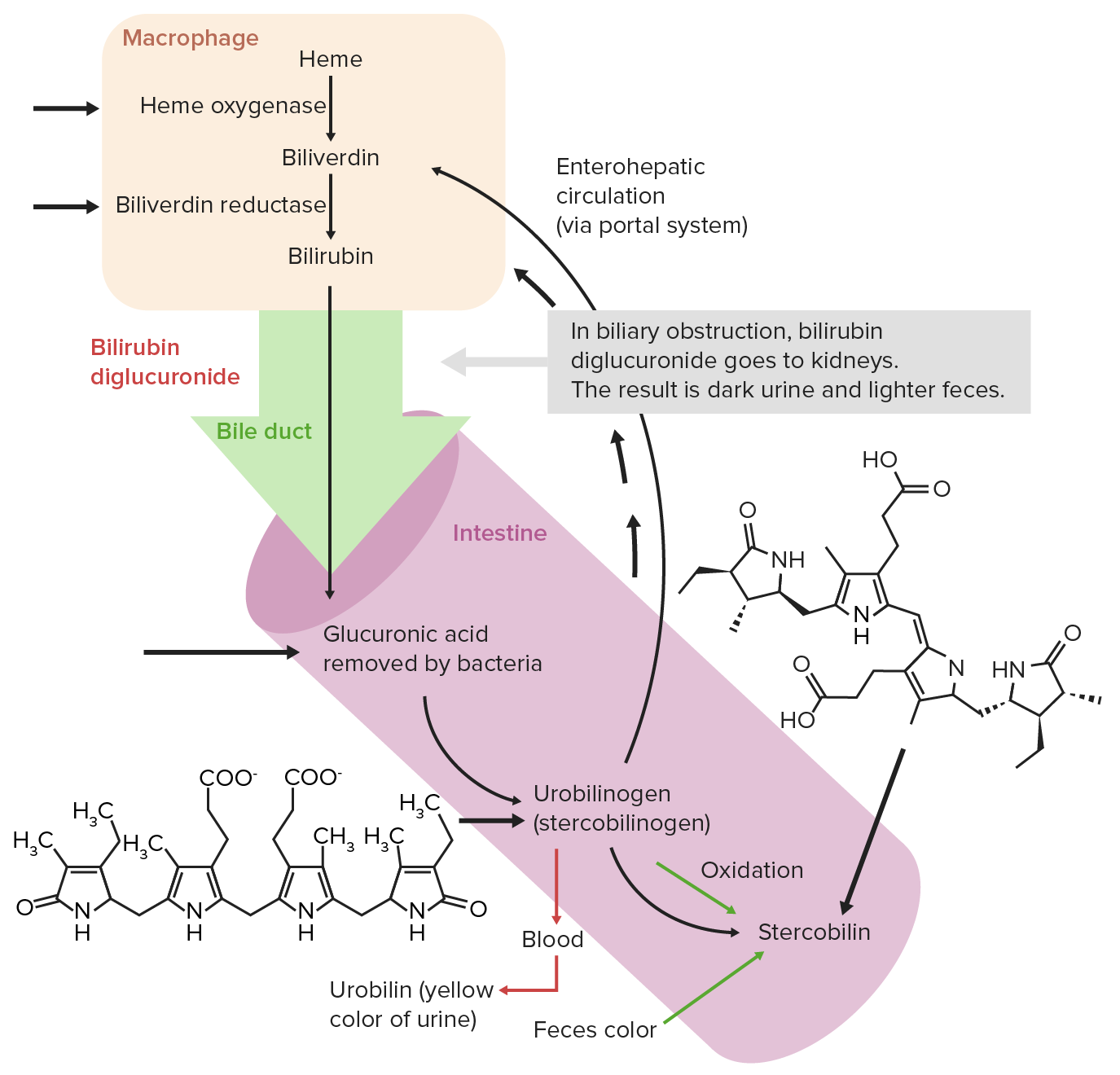
  • Patologías prehepáticas
    • Ocurre a menudo debido al AL Amyloidosis aumento de la hemólisis.
    • Provoca un aumento de la bilirrubina no conjugada (indirecta)
    • Incluye ictericia neonatal fisiológica
      • Causada por UDP-glucuronosiltransferasa inmadura
      • Ahora se recomienda el cribado universal de bilirrubina a las 24-48 horas de vida.
      • Las directrices actuales de la AAP (2022) presentan umbrales de fototerapia más altos y un tratamiento ajustado al AL Amyloidosis riesgo basado en EN Erythema nodosum is an immune-mediated panniculitis (inflammation of the subcutaneous fat) caused by a type IV (delayed-type) hypersensitivity reaction. It commonly manifests in young women as tender, erythematous nodules on the shins. Erythema Nodosum la edad gestacional y los LOS Neisseria factores de neurotoxicidad, y la raza ya no se considera un factor de riesgo.
  • Patologías intrahepáticas
    • Puede deberse a
      • Captación hepática defectuosa
      • Conjugación defectuosa de la bilirrubina
    • Provoca un aumento de la bilirrubina tanto conjugada (directa) como no conjugada (indirecta)
  • Patologías posthepáticas
    • A menudo ocurren debido a
      • Disminución de la eliminación de bilirrubina (a través del tracto biliar)
      • Aumento de la recaptación de bilirrubina
    • Provoca un aumento de la bilirrubina conjugada (directa)
Circulación extrahepática normal de bilirrubina

Circulación extrahepática normal de bilirrubina

Imagen por Lecturio. Licencia: CC BY-NC-SA 4.0

Mnemotecnia

Las causas comunes de la hiperbilirrubinemia se pueden recordar con la mnemotecnia “HOT Liver Liver The liver is the largest gland in the human body. The liver is found in the superior right quadrant of the abdomen and weighs approximately 1.5 kilograms. Its main functions are detoxification, metabolism, nutrient storage (e.g., iron and vitamins), synthesis of coagulation factors, formation of bile, filtration, and storage of blood. Liver: Anatomy ( en EN Erythema nodosum is an immune-mediated panniculitis (inflammation of the subcutaneous fat) caused by a type IV (delayed-type) hypersensitivity reaction. It commonly manifests in young women as tender, erythematous nodules on the shins. Erythema Nodosum inglés):

  • H – Hemolysis (hemólisis)
  • O – Obstruction (obstrucción)
  • T Tumor Tumor Inflammation ( tumor Tumor Inflammation)
  • L Liver Liver The liver is the largest gland in the human body. The liver is found in the superior right quadrant of the abdomen and weighs approximately 1.5 kilograms. Its main functions are detoxification, metabolism, nutrient storage (e.g., iron and vitamins), synthesis of coagulation factors, formation of bile, filtration, and storage of blood. Liver: Anatomy disease (enfermedad hepática)

Etiología

Las etiologías de la ictericia se pueden dividir en EN Erythema nodosum is an immune-mediated panniculitis (inflammation of the subcutaneous fat) caused by a type IV (delayed-type) hypersensitivity reaction. It commonly manifests in young women as tender, erythematous nodules on the shins. Erythema Nodosum las que causan una hiperbilirrubinemia indirecta, directa o mixta (consulte la tabla a continuación).

Causas de hiperbilirrubinemia aislada
Hiperbilirrubinemia indirecta (no conjugada) Trastornos hemolíticos Heredados:
  • Esferocitosis
  • Deficiencia de glucosa-6-fosfato deshidrogenasa
  • Deficiencia de piruvato quinasa
  • Anemia Anemia Anemia is a condition in which individuals have low Hb levels, which can arise from various causes. Anemia is accompanied by a reduced number of RBCs and may manifest with fatigue, shortness of breath, pallor, and weakness. Subtypes are classified by the size of RBCs, chronicity, and etiology. Anemia: Overview and Types falciforme
Adquiridos:
  • Anemia Anemia Anemia is a condition in which individuals have low Hb levels, which can arise from various causes. Anemia is accompanied by a reduced number of RBCs and may manifest with fatigue, shortness of breath, pallor, and weakness. Subtypes are classified by the size of RBCs, chronicity, and etiology. Anemia: Overview and Types hemolítica
  • Hemoglobinuria Hemoglobinuria The presence of free hemoglobin in the urine, indicating hemolysis of erythrocytes within the vascular system. After saturating the hemoglobin-binding proteins (haptoglobins), free hemoglobin begins to appear in the urine. Transfusion Reactions paroxística nocturna
  • Infecciones parasitarias ( malaria Malaria Malaria is an infectious parasitic disease affecting humans and other animals. Most commonly transmitted via the bite of a female Anopheles mosquito infected with microorganisms of the Plasmodium genus. Patients present with fever, chills, myalgia, headache, and diaphoresis. Plasmodium/Malaria, babesiosis Babesiosis Babesiosis is an infection caused by a protozoa belonging to the genus, Babesia. The most common Babesia seen in the United States is B. microti, which is transmitted by the Ixodes tick. The protozoa thrive and replicate within host erythrocytes. Lysis of erythrocytes and the body’s immune response result in clinical symptoms. Babesia/Babesiosis)
  • Antipalúdicos (e.g., dapsona)
Eritropoyesis ineficaz Heredada:
  • Talasemia
Adquirida
  • Deficiencia de vitamina B12
  • Deficiencias severas de hierro
Aumento de la producción de bilirrubina Secundario a:
  • Transfusión masiva de sangre
  • Resorción de hematomas
Disminución de la conjugación de bilirrubina
  • Ictericia fisiológica del recién nacido
  • Crigler-Najjar tipos I y II
  • Síndrome de Gilbert
Medicamentos
  • Rifampicina
  • Sobredosis de acetaminofén
  • Probenecid Probenecid The prototypical uricosuric agent. It inhibits the renal excretion of organic anions and reduces tubular reabsorption of urate. Probenecid has also been used to treat patients with renal impairment, and, because it reduces the renal tubular excretion of other drugs, has been used as an adjunct to antibacterial therapy. Gout Drugs
  • Sulfonamidas
Hiperbilirrubinemia directa (conjugada) Obstrucción del tracto biliar Secundaria a:
  • Cálculos biliares
  • Colangiocarcinoma
  • Cáncer de páncreas/hígado
  • Parásitos hepáticos
  • Fugas de bilis postoperatorias o estenosis biliares
Enfermedad del tracto biliar
  • Colangitis esclerosante primaria
  • Colangitis biliar primaria
Disminución de la excreción/recaptación de bilirrubina:
  • Síndrome de Dubin-Johnson
  • Síndrome de Rotor
Hiperbilirrubinemia mixta (tanto indirecta como directa) Condiciones crónicas
  • Hepatitis (viral, autoinmune, tóxica y alcohólica)
  • Cirrosis

Las etiologías de la ictericia también se pueden dividir según el sistema de órganos (condiciones hepáticas y colestásicas).

Condiciones hepatocelulares

  • Hepatitis viral:
    • Hepatitis A Hepatitis A Hepatitis A is caused by the hepatitis A virus (HAV), a nonenveloped virus of the Picornaviridae family with single-stranded RNA. HAV causes an acute, highly contagious hepatitis with unspecific prodromal symptoms such as fever and malaise followed by jaundice and elevated liver transaminases. Hepatitis A Virus, B, C, D y E
    • Virus Virus Viruses are infectious, obligate intracellular parasites composed of a nucleic acid core surrounded by a protein capsid. Viruses can be either naked (non-enveloped) or enveloped. The classification of viruses is complex and based on many factors, including type and structure of the nucleoid and capsid, the presence of an envelope, the replication cycle, and the host range. Virology de Epstein-Barr
    • Citomegalovirus
  • Hepatitis alcohólica
  • Toxicidad por medicamentos
    • Predecible, dependiente de la dosis (e.g., paracetamol paracetamol Acetaminophen is an over-the-counter nonopioid analgesic and antipyretic medication and the most commonly used analgesic worldwide. Despite the widespread use of acetaminophen, its mechanism of action is not entirely understood. Acetaminophen)
    • Impredecible, idiosincrásica (e.g., isoniazida)
  • Toxinas ambientales:
    • Cloruro de vinilo
    • Setas silvestres (amanita)
  • Enfermedad de Wilson
  • Hepatitis autoinmune

Condiciones colestásicas

Intrahepáticas

  • Hepatitis viral
  • Hepatitis alcohólica
  • Toxicidad por medicamentos:
    • Colestasis pura: esteroides anabólicos y anticonceptivos
    • Hepatitis colestásica: clorpromazina y estolato de eritromicina
    • Colestasis crónica: clorpromazina y proclorperazina
  • Cirrosis biliar primaria
  • Colangitis esclerosante primaria
  • Síndrome del conducto biliar evanescente:
    • Rechazo crónico de trasplantes hepáticos
    • Sarcoidosis Sarcoidosis Sarcoidosis is a multisystem inflammatory disease that causes noncaseating granulomas. The exact etiology is unknown. Sarcoidosis usually affects the lungs and thoracic lymph nodes, but it can also affect almost every system in the body, including the skin, heart, and eyes, most commonly. Sarcoidosis
    • Medicamentos
  • Enfermedad hepática congestiva
  • Hepatitis isquémica
  • Colestasis del embarazo
  • Nutrición parenteral total
  • Enfermedad de injerto contra huésped
  • Enfermedades infiltrativas:
    • Tuberculosis Tuberculosis Tuberculosis (TB) is an infectious disease caused by Mycobacterium tuberculosis complex bacteria. The bacteria usually attack the lungs but can also damage other parts of the body. Approximately 30% of people around the world are infected with this pathogen, with the majority harboring a latent infection. Tuberculosis spreads through the air when a person with active pulmonary infection coughs or sneezes. Tuberculosis
    • Linfoma
    • Amiloidosis
  • Infecciones:
    • Malaria Malaria Malaria is an infectious parasitic disease affecting humans and other animals. Most commonly transmitted via the bite of a female Anopheles mosquito infected with microorganisms of the Plasmodium genus. Patients present with fever, chills, myalgia, headache, and diaphoresis. Plasmodium/Malaria
    • Leptospirosis Leptospirosis Leptospira is a spiral or question mark-shaped, gram-negative spirochete with hook-shaped ends. The major clinical species is Leptospira interrogans, which causes a mild flu-like illness in a majority of cases. The manifestations are biphasic, with Leptospira found in the blood initially. Leptospira/Leptospirosis

Extrahepáticas

  • Malignas:
    • Colangiocarcinoma
    • Cáncer de páncreas
    • Cáncer de vesícula biliar
  • Benignas:
    • Coledocolitiasis
    • Estenosis biliares postoperatorias
    • Colangitis esclerosante primaria
  • Pancreatitis Pancreatitis Inflammation of the pancreas. Pancreatitis is classified as acute unless there are computed tomographic or endoscopic retrograde cholangiopancreatographic findings of chronic pancreatitis. The two most common forms of acute pancreatitis are alcoholic pancreatitis and gallstone pancreatitis. Acute Pancreatitis crónica
  • Colangiopatía por SIDA
  • Síndrome de Mirizzi
  • Enfermedad parasitaria ( ascariasis Ascariasis Ascariasis is most often caused by A. lumbricoides. If symptomatic, characteristics typically follow 2 phases, which correlate with the migration of the parasite through the body. The early phase may include cough, dyspnea, and wheezing. The late phase typically includes abdominal discomfort, bloating, nausea, and intermittent diarrhea. Ascaris/Ascariasis)

Presentación Clínica y Diagnóstico

Presentación clínica

  • Ictericia
  • Prurito
    • Ocurre debido a la deposición de sales biliares
    • Se ve VE Ventilation: Mechanics of Breathing con mayor frecuencia en EN Erythema nodosum is an immune-mediated panniculitis (inflammation of the subcutaneous fat) caused by a type IV (delayed-type) hypersensitivity reaction. It commonly manifests in young women as tender, erythematous nodules on the shins. Erythema Nodosum patologías posthepáticas
  • Heces pálidas de color arcilla y orina oscurecida
    • Ocurre principalmente debido a la bilirrubina directa elevada
  • En EN Erythema nodosum is an immune-mediated panniculitis (inflammation of the subcutaneous fat) caused by a type IV (delayed-type) hypersensitivity reaction. It commonly manifests in young women as tender, erythematous nodules on the shins. Erythema Nodosum los LOS Neisseria bebés, puede causar kerníctero: depósito de bilirrubina no conjugada en EN Erythema nodosum is an immune-mediated panniculitis (inflammation of the subcutaneous fat) caused by a type IV (delayed-type) hypersensitivity reaction. It commonly manifests in young women as tender, erythematous nodules on the shins. Erythema Nodosum el cerebro

Estos síntomas pueden estar asociados con:

  • Fiebre, escalofríos, dolor Dolor Inflammation en EN Erythema nodosum is an immune-mediated panniculitis (inflammation of the subcutaneous fat) caused by a type IV (delayed-type) hypersensitivity reaction. It commonly manifests in young women as tender, erythematous nodules on the shins. Erythema Nodosum el cuadrante superior derecho abdominal: puede sugerir colangitis aguda
  • Anorexia Anorexia The lack or loss of appetite accompanied by an aversion to food and the inability to eat. It is the defining characteristic of the disorder anorexia nervosa. Anorexia Nervosa, malestar general, mialgias: pueden sugerir hepatitis viral
  • Dolor Dolor Inflammation abdominal en EN Erythema nodosum is an immune-mediated panniculitis (inflammation of the subcutaneous fat) caused by a type IV (delayed-type) hypersensitivity reaction. It commonly manifests in young women as tender, erythematous nodules on the shins. Erythema Nodosum el cuadrante superior derecho: puede sugerir obstrucción del tracto biliar
  • Hiperpigmentación: puede sugerir hemocromatosis
  • Anillos de Kayser-Fleischer: pueden sugerir la enfermedad de Wilson
  • Xantomas: pueden sugerir colangitis biliar primaria
  • Signos de insuficiencia hepática crónica
  • Signo de Courvoisier en EN Erythema nodosum is an immune-mediated panniculitis (inflammation of the subcutaneous fat) caused by a type IV (delayed-type) hypersensitivity reaction. It commonly manifests in young women as tender, erythematous nodules on the shins. Erythema Nodosum el examen físico: vesícula biliar palpable; a menudo indica malignidad del conducto cístico

Diagnóstico

  • Pruebas de función hepática:
    • Fosfatasa alcalina ( FA FA Inhaled Anesthetics), rango normal: 40–129 U/L
    • Alanina transaminasa ( ALT ALT An enzyme that catalyzes the conversion of l-alanine and 2-oxoglutarate to pyruvate and l-glutamate. Liver Function Tests), rango normal: 7–55 U/L
    • Aspartato transaminasa ( AST AST Enzymes of the transferase class that catalyze the conversion of l-aspartate and 2-ketoglutarate to oxaloacetate and l-glutamate. Liver Function Tests), rango normal: 8–48 U/L
    • Proporción AST AST Enzymes of the transferase class that catalyze the conversion of l-aspartate and 2-ketoglutarate to oxaloacetate and l-glutamate. Liver Function Tests/ ALT ALT An enzyme that catalyzes the conversion of l-alanine and 2-oxoglutarate to pyruvate and l-glutamate. Liver Function Tests: 2:1 o mayor es sugestiva de enfermedad hepática alcohólica
    • Gamma-gutamil transferasa ( GGT GGT An enzyme, sometimes called ggt, with a key role in the synthesis and degradation of glutathione; (gsh, a tripeptide that protects cells from many toxins). It catalyzes the transfer of the gamma-glutamyl moiety to an acceptor amino acid. Alcoholic Liver Disease), rango normal: 8–61 U/L
    • Bilirrubina sérica (total y no conjugada)
    • Albúmina
    • Tiempo de protrombina/índice normalizado internacional (TP/INR)
    • LDH LDH Osteosarcoma (lactato deshidrogenasa)
    • Haptoglobina
    • Serología por hepatitis
    • Considerar autoanticuerpos (ver siguiente imagen)
  • Cálculo del valor R: puede ayudar a distinguir patrones de lesión
    • Valor R = ( ALT ALT An enzyme that catalyzes the conversion of l-alanine and 2-oxoglutarate to pyruvate and l-glutamate. Liver Function Tests ÷ LSN para ALT ALT An enzyme that catalyzes the conversion of l-alanine and 2-oxoglutarate to pyruvate and l-glutamate. Liver Function Tests) ÷ ( FA FA Inhaled Anesthetics ÷ LSN para FA FA Inhaled Anesthetics)
    • R ≥5 sugiere lesión hepatocelular
    • R ≤2 sugiere lesión colestásica
    • R 2-5 sugiere patrón mixto
  • La imagenología puede incluir:
    • Ultrasonido:
      • Colestasis extrahepática: conductos biliares dilatados (e.g., cálculos, tumores, quistes, colangitis)
      • Colestasis intrahepática: más comúnmente tiene conductos biliares no dilatados
    • Colangiopancreatografía retrógrada endoscópica o colangiopancreatografía por resonancia magnética (RM)
    • Tomografía computarizada (TC) abdominal

En EN Erythema nodosum is an immune-mediated panniculitis (inflammation of the subcutaneous fat) caused by a type IV (delayed-type) hypersensitivity reaction. It commonly manifests in young women as tender, erythematous nodules on the shins. Erythema Nodosum la imagen a continuación se describen más estudios.

Diagrama de diagnóstico de ictericia

Abreviaturas clave:
ANA: anticuerpo antinuclear
SMA: anticuerpo de músculo liso
SPEP: electroforesis de proteínas séricas
AMA: anticuerpo antimitocondrial
CPRM: colangiopancreatografía por resonancia magnética

Imagen por Lecturio. Licencia: CC BY-NC-SA 4.0
Tipos de ictericia (según marcadores de laboratorio)
Prehepática Intrahepática Posthepática
Color de las heces Oscura Pálida, color arcilla Pálida, color arcilla
Análisis sanguíneo Bilirrubina indirecta ↑↑ Normal
Bilirrubina directa Normal ↑↑
Anemia Anemia Anemia is a condition in which individuals have low Hb levels, which can arise from various causes. Anemia is accompanied by a reduced number of RBCs and may manifest with fatigue, shortness of breath, pallor, and weakness. Subtypes are classified by the size of RBCs, chronicity, and etiology. Anemia: Overview and Types Presente Ausente Ausente
Fosfatasa alcalina Normal ↑↑
Transaminasas Normal ↑↑
Análisis de orina Color Normal u oscura Oscura Oscura o muy oscura
Urobilinógeno ↑↑ Normal o ↑ Bajo o ausente
Sal biliar Ausente Ausente Presente

Tratamiento

El tratamiento se basa en EN Erythema nodosum is an immune-mediated panniculitis (inflammation of the subcutaneous fat) caused by a type IV (delayed-type) hypersensitivity reaction. It commonly manifests in young women as tender, erythematous nodules on the shins. Erythema Nodosum el tratamiento de la condición subyacente.

  • Remisión a hepatólogo está indicada en EN Erythema nodosum is an immune-mediated panniculitis (inflammation of the subcutaneous fat) caused by a type IV (delayed-type) hypersensitivity reaction. It commonly manifests in young women as tender, erythematous nodules on the shins. Erythema Nodosum los LOS Neisseria siguientes casos:
    • Bilirrubina no conjugada ≥4 mg/dl
    • Bilirrubina total >3 mg/dl con etiología desconocida
    • Aminotransferasas >2 veces el límite superior de la normalidad
    • Fosfatasa alcalina >1,5 veces el límite superior de la normalidad si persiste
  • Cirrosis: El objetivo es retardar o revertir la progresión y prevenir lesiones superpuestas al AL Amyloidosis hígado.
    • Modificar el medicamento según sea necesario.
    • Corregir anomalías de laboratorio.
    • Tratar los LOS Neisseria síntomas.
    • En EN Erythema nodosum is an immune-mediated panniculitis (inflammation of the subcutaneous fat) caused by a type IV (delayed-type) hypersensitivity reaction. It commonly manifests in young women as tender, erythematous nodules on the shins. Erythema Nodosum última instancia, se requiere un trasplante de hígado.
  • Hepatitis B Hepatitis B Hepatitis B virus (HBV) is a partially double-stranded DNA virus, which belongs to the Orthohepadnavirus genus and the Hepadnaviridae family. Most individuals with acute HBV infection are asymptomatic or have mild, self-limiting symptoms. Chronic infection can be asymptomatic or create hepatic inflammation, leading to liver cirrhosis and hepatocellular carcinoma (HCC). Hepatitis B Virus y C: tratamiento médico con antivirales (incluidos los LOS Neisseria antivirales de acción directa para la hepatitis C Hepatitis C Hepatitis C is an infection of the liver caused by the hepatitis C virus (HCV). The infection can be transmitted through infectious blood or body fluids and may be transmitted during childbirth or through IV drug use or sexual intercourse. Hepatitis C virus can cause both acute and chronic hepatitis, ranging from a mild to a serious, lifelong illness including liver cirrhosis and hepatocellular carcinoma (HCC). Hepatitis C Virus)
  • Enfermedad hepática alcohólica: abandono del alcohol
  • Colangitis biliar primaria y colangitis esclerosante primaria: ácido ursodesoxicólico
  • Neoplasia maligna: estadificación y resección o tratamiento paliativo
  • Colelitiasis y colecistitis: extracción por colangiopancreatografía retrógrada endoscópica o colecistectomía
  • Quistes biliares: escisión quirúrgica

Diagnóstico Diferencial

Pseudoictericia ( carotenosis Carotenosis Jaundice): decoloración amarilla o anaranjada de la piel causada por la deposición de caroteno. Se puede distinguir de la ictericia verdadera porque no causa decoloración de las membranas conjuntivales de la esclerótica y los LOS Neisseria niveles de bilirrubina se mantienen normales. Suele ser secundaria a la ingesta excesiva de sustancias ricas en EN Erythema nodosum is an immune-mediated panniculitis (inflammation of the subcutaneous fat) caused by a type IV (delayed-type) hypersensitivity reaction. It commonly manifests in young women as tender, erythematous nodules on the shins. Erythema Nodosum carotenoides (e.g., suplementos multivitamínicos, naranjas, zanahorias, manzanas, brócoli, papayas, col rizada).

Referencias

  1. Roy-Chowdhury, N., & Roy-Chowdhury, J. (2023, September 12). Diagnostic approach to the adult with jaundice or asymptomatic hyperbilirubinemia. UpToDate. In S. Chopra (Ed.), H. Li (Deputy Ed.). Retrieved June 4, 2025, from https://www.uptodate.com/contents/diagnostic-approach-to-the-adult-with-jaundice-or-asymptomatic-hyperbilirubinemia
  2. Kasper, D. L., & Braunwald, F. (2017). Harrison’s principles of internal medicine (19th ed., Vol. 1, pp. 279–285). McGraw-Hill Education.
  3. Roy-Chowdhury, Namita, Yang Lu, and Jayanta Roy-Chowdhury. 2007. “Bilirubin metabolism.” Textbook of Hepatology. From Basic Science to Clinical Practice. eds Rodes, Juan et al. 3rd Edition. Blackwell Publishing. Pages 165-174.
  4. Voet, D. & Voet, J.G. (2011). Biochemistry. 4th Edition. New York: J. Wiley and Sons.
  5. Kemper, A. R., Newman, T. B., Slaughter, J. L., Maisels, M. J., Watchko, J. F., Downs, A. M., Grout, R. W., Bundy, D. G., Stark, A. R., Bogen, D. L., Holmes, A. V., Feldman-Winter, L. B., Bhutani, V. K., Brown, S. R., Panayotti, G. M. M., Okechukwu, K., Rappo, P. D., & Russel, T. L. (2022). Clinical practice guideline revision: Management of hyperbilirubinemia in the newborn infant 35 or more weeks of gestation. Pediatrics, 150(3), e2022058859. https://doi.org/10.1542/peds.2022-058859
  6. Chastain, A. P., Geary, A. L., & Bogenschutz, K. M. (2024). Managing neonatal hyperbilirubinemia: An updated guideline. JAAPA, 37(10), 19-25. https://doi.org/10.1097/01.JAA.0000000000000120
  7. Slusher, T. M., Farouk, Z. L., & Satrom, K. M. (2023). Management challenges in the treatment of severe hyperbilirubinemia in low- and middle-income countries: Encouraging advancements, remaining gaps, and future opportunities. Frontiers in Pediatrics, 11, 1001141. https://doi.org/10.3389/fped.2023.1001141
  8. Roberts, Eve A., and Michael L. Schilsky. “Current and Emerging Issues in Wilson’s Disease.” The New England Journal of Medicine, vol. 389, no. 10, Sept. 2023, pp. 922–38. PubMed, https://doi.org/10.1056/NEJMra1903585.
  9. Feldman, M., Friedman, L. S., & Brandt, L. J. (Eds.). (2020). Sleisenger and Fordtran’s gastrointestinal and liver disease: Pathophysiology, diagnosis, management (11th ed.). Elsevier. 
  10. Kliegman, R., & St. Geme, J. W. (Eds.). (2024). Nelson textbook of pediatrics, 2-volume set (22nd ed.). Elsevier. ISBN 978-0-323-88305-4

¡Crea tu cuenta gratis o inicia una sesión para seguir leyendo!

Regístrate ahora y obtén acceso gratuito a Lecturio con páginas de concepto, videos médicos y cuestionarios para tu educación médica.

User Reviews

Que tengas una sesión de estudio alegre y navideña 🎁 Ahorra 50% en todos los planes >>

Details