Domina Conceptos Médicos

Estudia para la escuela de medicina y tus examenes con Lecturio.

Flucitosina, Griseofulvina y Terbinafina

Además de las otras tres clases principales de agentes antimicóticos ( azoles Azoles Azoles are a widely used class of antifungal medications inhibiting the production of ergosterol, a critical component in the fungal cell membrane. The 2 primary subclasses of azoles are the imidazoles, older agents typically only used for topical applications, and the triazoles, newer agents with a wide spectrum of uses. Azoles, polienos y equinocandinas), se utilizan otros agentes antimicóticos clínicamente importantes, que incluyen flucitosina, griseofulvina y terbinafina. Cada medicamento tiene un mecanismo de acción distinto y características e indicaciones únicas. La flucitosina es un análogo de pirimidina que interrumpe la síntesis de ADN y ARN fúngico. La flucitosina siempre se usa en EN Erythema nodosum is an immune-mediated panniculitis (inflammation of the subcutaneous fat) caused by a type IV (delayed-type) hypersensitivity reaction. It commonly manifests in young women as tender, erythematous nodules on the shins. Erythema Nodosum combinación con otros agentes antimicóticos y se usa principalmente para tratar la meningitis Meningitis Meningitis is inflammation of the meninges, the protective membranes of the brain, and spinal cord. The causes of meningitis are varied, with the most common being bacterial or viral infection. The classic presentation of meningitis is a triad of fever, altered mental status, and nuchal rigidity. Meningitis criptocócica. Tanto la griseofulvina como la terbinafina actúan dentro del estrato córneo de la piel y se emplean para tratar las infecciones por dermatofitos de la piel, el cabello y las uñas.

Last updated: Dec 15, 2025

Editorial responsibility: Stanley Oiseth, Lindsay Jones, Evelin Maza

Clasificación y Estructura Química

Clasificación

Además de las 3 clases principales de agentes antimicóticos ( azoles Azoles Azoles are a widely used class of antifungal medications inhibiting the production of ergosterol, a critical component in the fungal cell membrane. The 2 primary subclasses of azoles are the imidazoles, older agents typically only used for topical applications, and the triazoles, newer agents with a wide spectrum of uses. Azoles, polienos y equinocandinas), existen varios otros agentes antimicóticos clínicamente importantes. Estos medicamentos incluyen:
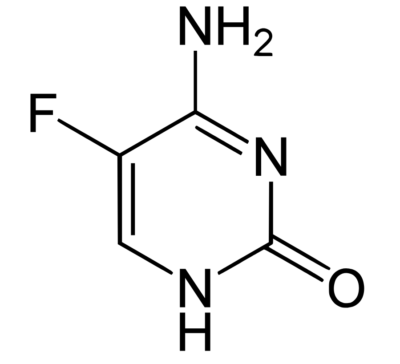
  • Flucitosina (también conocida como 5-fluorocitosina)
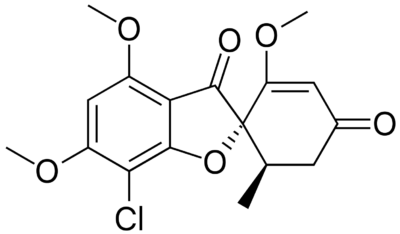
  • Griseofulvina
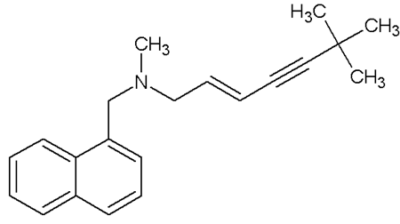
  • Tterbinafina

Estructuras químicas

  • Flucitosina: un análogo de pirimidina
  • Griseofulvina: un compuesto de oxaespiro (una estructura cíclica en EN Erythema nodosum is an immune-mediated panniculitis (inflammation of the subcutaneous fat) caused by a type IV (delayed-type) hypersensitivity reaction. It commonly manifests in young women as tender, erythematous nodules on the shins. Erythema Nodosum la que uno de los LOS Neisseria componentes del anillo es una molécula de oxígeno)
  • Terbinafina:
    • Una alilamina: contiene un átomo de nitrógeno y un doble enlace carbono-carbono
    • Contiene un grupo funcional alquinilo (triple enlace carbono-carbono)

Farmacodinamia: Mecanismos de Acción

Flucitosina

La flucitosina es un análogo de la pirimidina que interrumpe la síntesis de ADN y ARN.
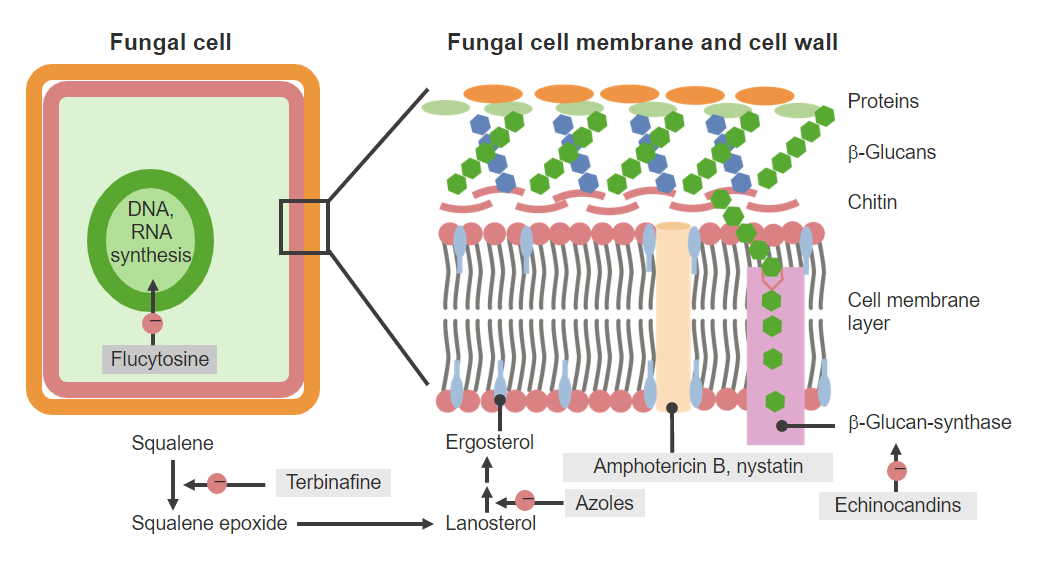
  • Entra en EN Erythema nodosum is an immune-mediated panniculitis (inflammation of the subcutaneous fat) caused by a type IV (delayed-type) hypersensitivity reaction. It commonly manifests in young women as tender, erythematous nodules on the shins. Erythema Nodosum las células fúngicas a través de una proteína conocida como citosina permeasa
  • Dentro de la célula fúngica, la enzima citosina desaminasa convierte la flucitosina en EN Erythema nodosum is an immune-mediated panniculitis (inflammation of the subcutaneous fat) caused by a type IV (delayed-type) hypersensitivity reaction. It commonly manifests in young women as tender, erythematous nodules on the shins. Erythema Nodosum su forma activa 5-fluorouracilo.
    • Los LOS Neisseria mamíferos carecen de citosina desaminasa → efectos selectivos en EN Erythema nodosum is an immune-mediated panniculitis (inflammation of the subcutaneous fat) caused by a type IV (delayed-type) hypersensitivity reaction. It commonly manifests in young women as tender, erythematous nodules on the shins. Erythema Nodosum las células microbianas
    • Se cree que la conversión a 5-fluoracilo por la flora intestinal es responsable de la toxicidad en EN Erythema nodosum is an immune-mediated panniculitis (inflammation of the subcutaneous fat) caused by a type IV (delayed-type) hypersensitivity reaction. It commonly manifests in young women as tender, erythematous nodules on the shins. Erythema Nodosum humanos.
  • 5-fluoracilo:
    • Compite con el uracilo → se incorpora a las hebras de ARN, interrumpiendo la síntesis de ARN → inhibe la síntesis de proteínas fúngicas
    • Inhibe irreversiblemente las timidilato sintasas → inhibición de la producción de timina → incapacidad para sintetizar o corregir el ADN → daño en EN Erythema nodosum is an immune-mediated panniculitis (inflammation of the subcutaneous fat) caused by a type IV (delayed-type) hypersensitivity reaction. It commonly manifests in young women as tender, erythematous nodules on the shins. Erythema Nodosum el ADN
  • Puede ejercer efectos fungistáticos o fungicidas dependiendo del organismo
  • Efectos sinérgicos con anfotericina B y azoles Azoles Azoles are a widely used class of antifungal medications inhibiting the production of ergosterol, a critical component in the fungal cell membrane. The 2 primary subclasses of azoles are the imidazoles, older agents typically only used for topical applications, and the triazoles, newer agents with a wide spectrum of uses. Azoles
  • Resistencia:
    • Resistencia primaria/intrínseca: debido a mutaciones en EN Erythema nodosum is an immune-mediated panniculitis (inflammation of the subcutaneous fat) caused by a type IV (delayed-type) hypersensitivity reaction. It commonly manifests in young women as tender, erythematous nodules on the shins. Erythema Nodosum la citosina permeasa → ↓ captación de 5-fluoracilo en EN Erythema nodosum is an immune-mediated panniculitis (inflammation of the subcutaneous fat) caused by a type IV (delayed-type) hypersensitivity reaction. It commonly manifests in young women as tender, erythematous nodules on the shins. Erythema Nodosum células fúngicas
    • Resistencia secundaria/adquirida:
      • Debido a mutaciones en EN Erythema nodosum is an immune-mediated panniculitis (inflammation of the subcutaneous fat) caused by a type IV (delayed-type) hypersensitivity reaction. It commonly manifests in young women as tender, erythematous nodules on the shins. Erythema Nodosum la citosina desaminasa
      • La resistencia es significativa cuando se usa flucitosina como monoterapia.
    • Resistencia en EN Erythema nodosum is an immune-mediated panniculitis (inflammation of the subcutaneous fat) caused by a type IV (delayed-type) hypersensitivity reaction. It commonly manifests in young women as tender, erythematous nodules on the shins. Erythema Nodosum C. albicans : aproximadamente 10%
Agentes antifúngicos y mecanismos de acción.

Agentes antifúngicos y mecanismos de acción.

Imagen por Lecturio. Licencia: CC BY-NC-SA 4.0

Griseofulvina

Los LOS Neisseria mecanismos exactos de la griseofulvina no se comprenden completamente, pero se han sugerido dos mecanismos generales de acción:

  • Se une a la queratina en EN Erythema nodosum is an immune-mediated panniculitis (inflammation of the subcutaneous fat) caused by a type IV (delayed-type) hypersensitivity reaction. It commonly manifests in young women as tender, erythematous nodules on the shins. Erythema Nodosum la piel recién formada, lo que hace HACE Altitude Sickness que las nuevas células humanas sean resistentes a la invasión.
    • Previene la infección de nuevas estructuras de la piel → agente fungistático
    • Con el tiempo (semanas o meses), las nuevas estructuras de cabello/piel/uñas no infectadas habrán reemplazado a las estructuras que estaban infectadas.
  • Inhibe la replicación celular en EN Erythema nodosum is an immune-mediated panniculitis (inflammation of the subcutaneous fat) caused by a type IV (delayed-type) hypersensitivity reaction. It commonly manifests in young women as tender, erythematous nodules on the shins. Erythema Nodosum dermatofitos:
    • Se une a la tubulina, inhibiendo el ensamblaje de los LOS Neisseria microtúbulos.
    • Conduce a la inhibición de la formación del huso mitótico → prevención de la mitosis Mitosis A type of cell nucleus division by means of which the two daughter nuclei normally receive identical complements of the number of chromosomes of the somatic cells of the species. Cell Cycle en EN Erythema nodosum is an immune-mediated panniculitis (inflammation of the subcutaneous fat) caused by a type IV (delayed-type) hypersensitivity reaction. It commonly manifests in young women as tender, erythematous nodules on the shins. Erythema Nodosum la metafase

Terbinafina

La terbinafina ejerce sus efectos provocando el deterioro de la membrana celular fúngica al AL Amyloidosis inhibir la producción de epóxido de escualeno, un precursor del ergosterol Ergosterol A steroid occurring in fungi. Irradiation with ultraviolet rays results in formation of ergocalciferol (vitamin d2). Azoles.

  • Síntesis de ergosterol Ergosterol A steroid occurring in fungi. Irradiation with ultraviolet rays results in formation of ergocalciferol (vitamin d2). Azoles:
    • El escualeno se convierte en EN Erythema nodosum is an immune-mediated panniculitis (inflammation of the subcutaneous fat) caused by a type IV (delayed-type) hypersensitivity reaction. It commonly manifests in young women as tender, erythematous nodules on the shins. Erythema Nodosum epóxido de escualeno por la enzima escualeno epoxidasa.
    • El epóxido de escualeno se convierte en EN Erythema nodosum is an immune-mediated panniculitis (inflammation of the subcutaneous fat) caused by a type IV (delayed-type) hypersensitivity reaction. It commonly manifests in young women as tender, erythematous nodules on the shins. Erythema Nodosum lanosterol Lanosterol A triterpene that derives from the chair-boat-chair-boat folding of 2, 3-oxidosqualene. It is metabolized to cholesterol and cucurbitacins. Cholesterol Metabolism.
    • El lanosterol Lanosterol A triterpene that derives from the chair-boat-chair-boat folding of 2, 3-oxidosqualene. It is metabolized to cholesterol and cucurbitacins. Cholesterol Metabolism se convierte en EN Erythema nodosum is an immune-mediated panniculitis (inflammation of the subcutaneous fat) caused by a type IV (delayed-type) hypersensitivity reaction. It commonly manifests in young women as tender, erythematous nodules on the shins. Erythema Nodosum ergosterol Ergosterol A steroid occurring in fungi. Irradiation with ultraviolet rays results in formation of ergocalciferol (vitamin d2). Azoles mediante la enzima lanosterol Lanosterol A triterpene that derives from the chair-boat-chair-boat folding of 2, 3-oxidosqualene. It is metabolized to cholesterol and cucurbitacins. Cholesterol Metabolism 14-α-desmetilasa (la 14-α-desmetilasa es inhibida por los LOS Neisseria azoles Azoles Azoles are a widely used class of antifungal medications inhibiting the production of ergosterol, a critical component in the fungal cell membrane. The 2 primary subclasses of azoles are the imidazoles, older agents typically only used for topical applications, and the triazoles, newer agents with a wide spectrum of uses. Azoles).
  • La terbinafina inhibe de forma no competitiva la escualeno epoxidasa.
  • Los LOS Neisseria efectos incluyen:
    • ↓ producción de epóxido de escualeno → ↓ ergosterol Ergosterol A steroid occurring in fungi. Irradiation with ultraviolet rays results in formation of ergocalciferol (vitamin d2). Azoles
    • Los LOS Neisseria hongos son incapaces de sintetizar o mantener sus membranas celulares sin ergosterol Ergosterol A steroid occurring in fungi. Irradiation with ultraviolet rays results in formation of ergocalciferol (vitamin d2). Azoles.
    • ↑ Permeabilidad de la membrana celular fúngica → lisis celular
  • La terbinafina ejerce efectos fungicidas en EN Erythema nodosum is an immune-mediated panniculitis (inflammation of the subcutaneous fat) caused by a type IV (delayed-type) hypersensitivity reaction. It commonly manifests in young women as tender, erythematous nodules on the shins. Erythema Nodosum dermatofitos.

Farmacocinética

Tabla: Farmacocinética de la flucitosina, griseofulvina y terbinafina
Medicamentos Flucitosina Griseofulvina Terbinafina
Absorción
  • Bien absorbida
  • Biodisponibilidad: 75%‒90%
  • No se absorbe tópicamente
  • Solubilidad en EN Erythema nodosum is an immune-mediated panniculitis (inflammation of the subcutaneous fat) caused by a type IV (delayed-type) hypersensitivity reaction. It commonly manifests in young women as tender, erythematous nodules on the shins. Erythema Nodosum agua muy pobre
  • Mejora de la absorción oral con alimentos grasos.
  • Bien absorbida
  • Biodisponibilidad: 40% (debido al AL Amyloidosis metabolismo de 1er paso)
Distribución
  • Unión mínima a proteínas
  • Penetra bien en EN Erythema nodosum is an immune-mediated panniculitis (inflammation of the subcutaneous fat) caused by a type IV (delayed-type) hypersensitivity reaction. It commonly manifests in young women as tender, erythematous nodules on the shins. Erythema Nodosum todos los LOS Neisseria compartimentos de fluidos corporales, incluido el LCR
  • Estrato córneo (capa de queratina) de la piel, cabello y uñas
  • También se concentra en EN Erythema nodosum is an immune-mediated panniculitis (inflammation of the subcutaneous fat) caused by a type IV (delayed-type) hypersensitivity reaction. It commonly manifests in young women as tender, erythematous nodules on the shins. Erythema Nodosum:
    • Hígado
    • Grasa
    • Músculo esquelético
  • Estrato córneo
  • Unión a proteínas: > 99%
Metabolismo
  • Metabolizado intracelularmente por levaduras a su forma activa, 5-FU 5-FU A pyrimidine analog that is an antineoplastic antimetabolite. It interferes with DNA synthesis by blocking the thymidylate synthetase conversion of deoxyuridylic acid to thymidylic acid. Antimetabolite Chemotherapy
  • Metabolismo hepático extenso
  • Inductor CYP450 (interacciones medicamento-medicamento)
  • Metabolismo hepático a través de enzimas CYP450 a metabolitos inactivos
  • Inhibidor moderado de CYP2D6
Excreción
  • Eliminación renal por filtración glomerular, principalmente como medicamento inalterado
  • T 1/2: 3‒6 horas
  • Ajustar dosis en EN Erythema nodosum is an immune-mediated panniculitis (inflammation of the subcutaneous fat) caused by a type IV (delayed-type) hypersensitivity reaction. It commonly manifests in young women as tender, erythematous nodules on the shins. Erythema Nodosum insuficiencia renal.
  • Eliminación:
    • Heces (33%)
    • Transpiración
  • T 1/2: 9‒24 horas
  • Eliminación:
    • Orina: 80%, principalmente como metabolitos inactivos
    • Heces: 20%
  • Efectivo T 1/2: aproximadamente 36 horas
  • Terminal T 1/2: 200-400 horas (liberación muy lenta del medicamento de la piel y el tejido adiposo)
CYP450: citocromo P450
5-FU: 5-fluorouracilo
T 1/2: vida media
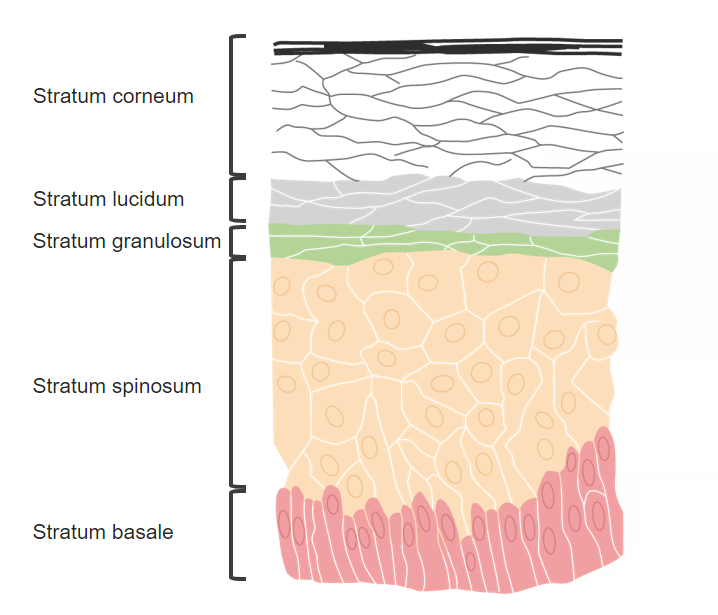
capas de la piel

Capas de la piel:
La griseofulvina y la terbinafina se distribuyen en el estrato córneo.

Imagen por Lecturio. Licencia: CC BY-NC-SA 4.0

Flucitosina

Indicaciones

La flucitosina tiene un espectro de actividad estrecho. Debido a su sinergia demostrada con otros agentes antifúngicos y al AL Amyloidosis alto riesgo de resistencia secundaria cuando se usa como monoterapia, la flucitosina no se usa como agente único.

  • Activo contra:
    • Cryptococcus Cryptococcus Cryptococcosis is an opportunistic, fungal infection caused by the Cryptococcus species. The principal pathogens in humans are C. neoformans (primary) and C. gattii. Cryptococcus neoformans is typically found in pigeon droppings and acquired by inhaling dust from contaminated soil. The majority of affected patients are immunocompromised. Cryptococcus/Cryptococcosis neoformans
    • Algunas Candida Candida Candida is a genus of dimorphic, opportunistic fungi. Candida albicans is part of the normal human flora and is the most common cause of candidiasis. The clinical presentation varies and can include localized mucocutaneous infections (e.g., oropharyngeal, esophageal, intertriginous, and vulvovaginal candidiasis) and invasive disease (e.g., candidemia, intraabdominal abscess, pericarditis, and meningitis). Candida/Candidiasis spp.
    • Cromoblastomicosis
  • No activo contra:
    • Micosis endémicas: Histoplasma Histoplasma Histoplasmosis is an infection caused by Histoplasma capsulatum, a dimorphic fungus. The fungus exists as a mold at low temperatures and as yeast at high temperatures. H. capsulatum is the most common endemic fungal infection in the US and is most prevalent in the midwestern and central states along the Ohio and Mississippi River valleys. Histoplasma/Histoplasmosis, Blastomyces Blastomyces Blastomycosis is an infection caused by inhalation of the spores of the fungus, Blastomyces. Blastomyces species thrive in moist soil and decaying material and are common in the Ohio and Mississippi River valleys and the Great Lakes regions of the United States and Canada. Although most patients are asymptomatic, some can develop pneumonia. Blastomyces/Blastomycosis, Coccidioides Coccidioides Coccidioidomycosis, commonly known as San Joaquin Valley fever, is a fungal disease caused by Coccidioides immitis or Coccidioides posadasii. When Coccidioides spores are inhaled, they transform into spherules that result in infection. Coccidioidomycosis is also a common cause of community-acquired pneumonia and can cause severe disease in the immunocompromised. Coccidioides/Coccidioidomycosis
    • Aspergillus Aspergillus A genus of mitosporic fungi containing about 100 species and eleven different teleomorphs in the family trichocomaceae. Echinocandins
    • Zigomicetos
    • La mayoría de los LOS Neisseria dermatofitos
  • Usos clínicos:
    • Se usa en EN Erythema nodosum is an immune-mediated panniculitis (inflammation of the subcutaneous fat) caused by a type IV (delayed-type) hypersensitivity reaction. It commonly manifests in young women as tender, erythematous nodules on the shins. Erythema Nodosum combinación con anfotericina B para tratar la meningitis Meningitis Meningitis is inflammation of the meninges, the protective membranes of the brain, and spinal cord. The causes of meningitis are varied, with the most common being bacterial or viral infection. The classic presentation of meningitis is a triad of fever, altered mental status, and nuchal rigidity. Meningitis criptocócica y la neumonía (uso principal)
    • Se usa en EN Erythema nodosum is an immune-mediated panniculitis (inflammation of the subcutaneous fat) caused by a type IV (delayed-type) hypersensitivity reaction. It commonly manifests in young women as tender, erythematous nodules on the shins. Erythema Nodosum combinación con itraconazol para tratar la cromoblastomicosis
    • Se usa en EN Erythema nodosum is an immune-mediated panniculitis (inflammation of the subcutaneous fat) caused by a type IV (delayed-type) hypersensitivity reaction. It commonly manifests in young women as tender, erythematous nodules on the shins. Erythema Nodosum combinación con otros agentes para infecciones fúngicas sistémicas susceptibles, que incluyen:
      • Septicemia
      • Endocarditis Endocarditis Endocarditis is an inflammatory disease involving the inner lining (endometrium) of the heart, most commonly affecting the cardiac valves. Both infectious and noninfectious etiologies lead to vegetations on the valve leaflets. Patients may present with nonspecific symptoms such as fever and fatigue. Endocarditis
      • ITU
      • Peritonitis Peritonitis Inflammation of the peritoneum lining the abdominal cavity as the result of infectious, autoimmune, or chemical processes. Primary peritonitis is due to infection of the peritoneal cavity via hematogenous or lymphatic spread and without intra-abdominal source. Secondary peritonitis arises from the abdominal cavity itself through rupture or abscess of intra-abdominal organs. Penetrating Abdominal Injury
      • Infecciones pulmonares

Efectos secundarios

La flucitosina a menudo se administra con el agente altamente nefrotóxico anfotericina B. La insuficiencia renal inducida por anfotericina B puede conducir a la acumulación de 5-fluoracilo (que se elimina por vía renal) y toxicidad directa de 5-fluoracilo, que incluye:

  • Efectos hematológicos: por toxicidad en EN Erythema nodosum is an immune-mediated panniculitis (inflammation of the subcutaneous fat) caused by a type IV (delayed-type) hypersensitivity reaction. It commonly manifests in young women as tender, erythematous nodules on the shins. Erythema Nodosum la médula ósea
    • Leucopenia
    • Trombocitopenia
    • Anemia Anemia Anemia is a condition in which individuals have low Hb levels, which can arise from various causes. Anemia is accompanied by a reduced number of RBCs and may manifest with fatigue, shortness of breath, pallor, and weakness. Subtypes are classified by the size of RBCs, chronicity, and etiology. Anemia: Overview and Types
  • Efectos gastrointestinales y hepáticos:
    • Molestias gastrointestinales (6% de las personas): náuseas, vómitos y/o diarrea
    • ↑ Transaminasas séricas
    • Se ha HA Hemolytic anemia (HA) is the term given to a large group of anemias that are caused by the premature destruction/hemolysis of circulating red blood cells (RBCs). Hemolysis can occur within (intravascular hemolysis) or outside the blood vessels (extravascular hemolysis). Hemolytic Anemia informado necrosis Necrosis The death of cells in an organ or tissue due to disease, injury or failure of the blood supply. Ischemic Cell Damage hepática, pero es rara.

Contraindicaciones

  • Hipersensibilidad a la flucitosina (única contraindicación absoluta)
  • Usar con extrema precaución en EN Erythema nodosum is an immune-mediated panniculitis (inflammation of the subcutaneous fat) caused by a type IV (delayed-type) hypersensitivity reaction. It commonly manifests in young women as tender, erythematous nodules on the shins. Erythema Nodosum personas con:
    • Mielosupresión
    • Deterioro hepático
    • Insuficiencia renal
  • Evitar el uso como monoterapia.

Monitoreo

  • Hemograma completo con diferencial: para monitorear signos de toxicidad hematológica
  • Pruebas de función hepática: para monitorear signos de hepatotoxicidad
  • Nitrógeno de urea Urea A compound formed in the liver from ammonia produced by the deamination of amino acids. It is the principal end product of protein catabolism and constitutes about one half of the total urinary solids. Urea Cycle y creatinina: para controlar los LOS Neisseria signos de disfunción renal, que pueden requerir ajustes de dosis
  • Concentraciones séricas de flucitosina: ventana terapéutica estrecha

Griseofulvina

Indicaciones

La griseofulvina se usa principalmente para tratar las infecciones por dermatofitos del cabello, piel o uñas. Sin embargo, la griseofulvina está siendo reemplazada por agentes más nuevos como la terbinafina o el itraconazol para muchas de sus indicaciones.

  • Activo contra:
    • Trichophyton Trichophyton A mitosporic fungal genus and an anamorphic form of arthroderma. Various species attack the skin, nails, and hair. Dermatophytes/Tinea Infections spp.
    • Microsporum Microsporum A mitosporic oxygenales fungal genus causing various diseases of the skin and hair. The species microsporum canis produces tinea capitis and tinea corporis, which usually are acquired from domestic cats and dogs. Teleomorphs includes arthroderma (nannizzia). Dermatophytes/Tinea Infections spp.
    • Epidermophyton Epidermophyton A fungal genus which grows in the epidermis and is the cause of tinea. Dermatophytes/Tinea Infections floccosum
  • Indicaciones clínicas:
    • Tinea pedis Tinea pedis Dermatological pruritic lesion in the feet, caused by Trichophyton rubrum, T. mentagrophytes, or Epidermophyton floccosum. Dermatophytes/Tinea Infections: “pie de atleta”
    • Tinea cruris: “prurito inguinal”, que generalmente afecta la ingle
    • Tinea corporis Tinea corporis Dermatophytes/Tinea Infections: “tiña”, en EN Erythema nodosum is an immune-mediated panniculitis (inflammation of the subcutaneous fat) caused by a type IV (delayed-type) hypersensitivity reaction. It commonly manifests in young women as tender, erythematous nodules on the shins. Erythema Nodosum cualquier parte del cuerpo
    • Tinea barbae: una infección de la barba y las áreas con bigote de la cara, que se observa típicamente en EN Erythema nodosum is an immune-mediated panniculitis (inflammation of the subcutaneous fat) caused by a type IV (delayed-type) hypersensitivity reaction. It commonly manifests in young women as tender, erythematous nodules on the shins. Erythema Nodosum hombres adultos
    • Tinea capitis Tinea capitis Ringworm of the scalp and associated hair mainly caused by species of Microsporum; Trichophyton; and Epidermophyton, which may occasionally involve the eyebrows and eyelashes. Dermatophytes/Tinea Infections: infección del cuero cabelludo y del cabello
      • La eficacia mejora cuando se combina con un champú que contiene sulfuro de selenio.
    • Tinea unguium Tinea unguium A fungal infection of the nail, usually caused by dermatophytes; yeasts; or nondermatophyte molds. Dermatophytes/Tinea Infections (onicomicosis): infección de las uñas
  • Nota: la griseofulvina no es eficaz para el tratamiento de la tiña versicolor.

Efectos secundarios

En EN Erythema nodosum is an immune-mediated panniculitis (inflammation of the subcutaneous fat) caused by a type IV (delayed-type) hypersensitivity reaction. It commonly manifests in young women as tender, erythematous nodules on the shins. Erythema Nodosum general, la griseofulvina tiene un nivel de toxicidad relativamente bajo. Los LOS Neisseria efectos secundarios pueden incluir:

  • Síntomas gastrointestinales: náuseas, vómitos y/o diarrea.
  • Cefaleas
  • Reacciones de histamina:
    • Fiebre
    • Sarpullido
    • Enrojecimiento
  • Reacciones cutáneas:
    • Fotosensibilidad
    • Sarpullido
    • Síndrome de Stevens-Johnson
  • Crisis de porfiria
  • Exacerbación del lupus eritematoso sistémico (LES)
  • Hepatotoxicidad (rara, pero puede ser grave)
  • Posible alergia cruzada con penicilinas
  • Leucopenia

Contraindicaciones

  • Hipersensibilidad a la griseofulvina
  • Falla hepática
  • Porfiria
  • Embarazo

Terbinafina

Indicaciones

  • Infecciones por dermatofitos, especialmente onicomicosis
  • Más eficaz que la griseofulvina o el itraconazol para la onicomicosis
  • Disponible en EN Erythema nodosum is an immune-mediated panniculitis (inflammation of the subcutaneous fat) caused by a type IV (delayed-type) hypersensitivity reaction. It commonly manifests in young women as tender, erythematous nodules on the shins. Erythema Nodosum formas orales y tópicas (a diferencia de la griseofulvina, que solo está disponible como formulación oral)

Efectos secundarios

Los LOS Neisseria efectos secundarios suelen ser leves y autolimitados.

  • Molestias gastrointestinales: náuseas, vómitos y/o diarrea.
  • Reacciones de histamina:
    • Fiebre
    • Sarpullido
    • Enrojecimiento
  • Exacerbación de LES
  • Se han informado casos raros de toxicidad hepática y hematológica.

Contraindicaciones

  • Hipersensibilidad a la terbinafina u otras alilaminas (e.g., naftifina)
  • Enfermedad hepática crónica o activa
  • Usar con precaución en EN Erythema nodosum is an immune-mediated panniculitis (inflammation of the subcutaneous fat) caused by a type IV (delayed-type) hypersensitivity reaction. It commonly manifests in young women as tender, erythematous nodules on the shins. Erythema Nodosum personas con insuficiencia renal.

Comparación de Medicamentos Antimicóticos

Tabla: Comparación de medicamentos antimicóticos
Clase de droga (ejemplos) Mecanismo de acción Relevancia clínica
Azoles Azoles Azoles are a widely used class of antifungal medications inhibiting the production of ergosterol, a critical component in the fungal cell membrane. The 2 primary subclasses of azoles are the imidazoles, older agents typically only used for topical applications, and the triazoles, newer agents with a wide spectrum of uses. Azoles (fluconazol, voriconazol)
  • Inhibe la producción de ergosterol Ergosterol A steroid occurring in fungi. Irradiation with ultraviolet rays results in formation of ergocalciferol (vitamin d2). Azoles (un componente crítico de la membrana celular fúngica) al AL Amyloidosis bloquear la enzima lanosterol Lanosterol A triterpene that derives from the chair-boat-chair-boat folding of 2, 3-oxidosqualene. It is metabolized to cholesterol and cucurbitacins. Cholesterol Metabolism 14-α-desmetilasa
  • Antifúngicos ampliamente utilizados con un espectro de actividad relativamente amplio
  • Muchas interacciones de medicamento a medicamento debido a los LOS Neisseria efectos sobre el sistema CYP450
  • Hepatotoxicidad
  • En EN Erythema nodosum is an immune-mediated panniculitis (inflammation of the subcutaneous fat) caused by a type IV (delayed-type) hypersensitivity reaction. It commonly manifests in young women as tender, erythematous nodules on the shins. Erythema Nodosum general menos tóxico que la anfotericina B
Polienos (anfotericina B, nistatina)
  • Se une al AL Amyloidosis ergosterol Ergosterol A steroid occurring in fungi. Irradiation with ultraviolet rays results in formation of ergocalciferol (vitamin d2). Azoles en EN Erythema nodosum is an immune-mediated panniculitis (inflammation of the subcutaneous fat) caused by a type IV (delayed-type) hypersensitivity reaction. It commonly manifests in young women as tender, erythematous nodules on the shins. Erythema Nodosum la membrana celular fúngica creando poros artificiales en EN Erythema nodosum is an immune-mediated panniculitis (inflammation of the subcutaneous fat) caused by a type IV (delayed-type) hypersensitivity reaction. It commonly manifests in young women as tender, erythematous nodules on the shins. Erythema Nodosum la membrana → da como resultado la fuga de componentes celulares y conduce a la lisis celular (muerte)
Anfotericina B:
  • Reservado para infecciones fúngicas potencialmente mortales
  • Amplio espectro de actividad
  • Relativamente ↑ toxicidad (especialmente nefrotoxicidad)

Nistatina:
  • Solo uso tópico: piel, membranas mucosas, luz gastro intestinal
Equinocandinas (caspofungina, micafungina, anidulafungina)
  • Inhibe la β-glucano sintasa (la enzima que sintetiza el β-glucano y un componente estructural importante de la pared celular fúngica) → pared celular debilitada → lisis celular
  • Trata las infecciones por Candida Candida Candida is a genus of dimorphic, opportunistic fungi. Candida albicans is part of the normal human flora and is the most common cause of candidiasis. The clinical presentation varies and can include localized mucocutaneous infections (e.g., oropharyngeal, esophageal, intertriginous, and vulvovaginal candidiasis) and invasive disease (e.g., candidemia, intraabdominal abscess, pericarditis, and meningitis). Candida/Candidiasis y Aspergillus Aspergillus A genus of mitosporic fungi containing about 100 species and eleven different teleomorphs in the family trichocomaceae. Echinocandins en EN Erythema nodosum is an immune-mediated panniculitis (inflammation of the subcutaneous fat) caused by a type IV (delayed-type) hypersensitivity reaction. It commonly manifests in young women as tender, erythematous nodules on the shins. Erythema Nodosum pacientes críticos y neutropénicos
  • Toxicidad mínima
  • Interacciones mínimas de medicamento a medicamento
Griseofulvina
  • Se une a la queratina en EN Erythema nodosum is an immune-mediated panniculitis (inflammation of the subcutaneous fat) caused by a type IV (delayed-type) hypersensitivity reaction. It commonly manifests in young women as tender, erythematous nodules on the shins. Erythema Nodosum la piel recién formada, lo que hace HACE Altitude Sickness que las células humanas sean resistentes a la invasión → con el tiempo, las nuevas estructuras de cabello/piel/uñas no infectadas reemplazan las viejas estructuras infectadas
  • Inhibe el ensamblaje de microtúbulos en EN Erythema nodosum is an immune-mediated panniculitis (inflammation of the subcutaneous fat) caused by a type IV (delayed-type) hypersensitivity reaction. It commonly manifests in young women as tender, erythematous nodules on the shins. Erythema Nodosum dermatofitos → inhibe la replicación de células fúngicas
  • Trata las infecciones por dermatofitos del cabello, la piel y las uñas.
  • Medicamento únicamente oral (no tópicamente activa)
  • Afecta el sistema CYP450 (más interacciones de medicamento a medicamento)
  • Reemplazado en EN Erythema nodosum is an immune-mediated panniculitis (inflammation of the subcutaneous fat) caused by a type IV (delayed-type) hypersensitivity reaction. It commonly manifests in young women as tender, erythematous nodules on the shins. Erythema Nodosum gran medida por agentes más nuevos (e.g., terbinafina)
Terbinafina
  • Inhibe la enzima escualeno epoxidasa → bloquea la producción de epóxido de escualeno, que es un precursor del ergosterol Ergosterol A steroid occurring in fungi. Irradiation with ultraviolet rays results in formation of ergocalciferol (vitamin d2). Azoles y un componente crítico de la membrana celular
  • Trata las infecciones por dermatofitos del cabello, la piel y las uñas.
  • Agente de elección para la onicomicosis
  • Toxicidad relativamente baja
Flucitosina
  • Un análogo de pirimidina con metabolitos:
    • Compitiendo con el uracilo e interrumpiendo la síntesis de ARN
    • Inhibe irreversiblemente la timidilato sintasa → el hongo es incapaz de sintetizar o corregir el ADN
  • Siempre utilizado en EN Erythema nodosum is an immune-mediated panniculitis (inflammation of the subcutaneous fat) caused by a type IV (delayed-type) hypersensitivity reaction. It commonly manifests in young women as tender, erythematous nodules on the shins. Erythema Nodosum combinación con otros agentes debido a:
    • Efectos sinérgicos positivos
    • ↑ Resistencia con monoterapia
  • Principales indicaciones:
    • Meningitis Meningitis Meningitis is inflammation of the meninges, the protective membranes of the brain, and spinal cord. The causes of meningitis are varied, with the most common being bacterial or viral infection. The classic presentation of meningitis is a triad of fever, altered mental status, and nuchal rigidity. Meningitis criptocócica
    • cromoblastomicosis
  • Toxicidad: mielosupresión

Referencias

  1. Sheppard, D., Lampiris, H.W. (2012). Antifungal agents. In Katzung, B.G., Masters, S.B., and Trevor, A.J. (Eds.), Basic and Clinical Pharmacology, 12th Ed., pp. 852‒853, 855‒856.
  2. Drew, R.H. (2020). Pharmacology of flucytosine (5-FC). In Bogorodskaya, M (Ed.), UpToDate. Retrieved July 23, 2021, from https://www.uptodate.com/contents/pharmacology-of-flucytosine-5-fc 
  3. Nivoix, Y., Ledoux, M., Herbrecht, R. (2020). Antifungal therapy: New and evolving therapies. Semin Respir Crit Care Med. 2020, 41, 158-174. Retrieved July 23, 2021, from https://www.medscape.com/viewarticle/924712_7 
  4. Padda, I. (2021). Flucytosine. In StatPearls. Retrieved July 23, 2021, from https://www.statpearls.com/articlelibrary/viewarticle/21829/ 
  5. Olson, J. (2020). Griseofulvin. In StatPearls. Retrieved July 23, 2021, from https://www.statpearls.com/articlelibrary/viewarticle/22435/ 
  6. Maxfield, L. (2021). Terbinafine. In StatPearls. Retrieved July 23, 2021, from https://www.statpearls.com/articlelibrary/viewarticle/42970/ 
  7. Lexicomp Drug Information Sheets (2021). In UpToDate. Retrieved July 22, 2021, from:

¡Crea tu cuenta gratis o inicia una sesión para seguir leyendo!

Regístrate ahora y obtén acceso gratuito a Lecturio con páginas de concepto, videos médicos y cuestionarios para tu educación médica.

User Reviews

Que tengas una sesión de estudio alegre y navideña 🎁 Ahorra 50% en todos los planes >>

Details