LosLOSNeisseria controles de salud son la examinación de personas asintomáticas y el tamizaje de cualquier enfermedad oculta. El proceso brinda una oportunidad para la prevención de enfermedades y el diagnóstico temprano, así como la posibilidad de prevenir la progresión y las complicaciones. Durante un control de salud, el médico de cabecera lleva a cabo antecedentes personales, sociales y familiares minuciosos, con una revisión sistemática integral para descubrir cualquier factor de riesgo relevante. Se realiza un examen físico y se recomiendan losLOSNeisseria exámenes de tamizaje pertinentes. Las pruebas de tamizaje abarcan enfermedades malignas (mama, próstata, colonColonThe large intestines constitute the last portion of the digestive system. The large intestine consists of the cecum, appendix, colon (with ascending, transverse, descending, and sigmoid segments), rectum, and anal canal. The primary function of the colon is to remove water and compact the stool prior to expulsion from the body via the rectum and anal canal. Colon, Cecum, and Appendix: Anatomy, pulmón) y otras afecciones, como diabetesDiabetesDiabetes mellitus (DM) is a metabolic disease characterized by hyperglycemia and dysfunction of the regulation of glucose metabolism by insulin. Type 1 DM is diagnosed mostly in children and young adults as the result of autoimmune destruction of β cells in the pancreas and the resulting lack of insulin. Type 2 DM has a significant association with obesity and is characterized by insulin resistance.Diabetes Mellitus, enfermedades cardiovasculares e infecciones. Las inmunizaciones se administran si están indicadas. Se discuten diferentes intervenciones para ayudar a reducir losLOSNeisseria factores de riesgo para la salud y se establecen metas de salud para determinar el seguimiento y monitoreo futuros.
Obtenga información sobre las inquietudes de losLOSNeisseria pacientes.
Antecedentes personales: Incluya cualquier condición tratada actualmente o enENErythema nodosum is an immune-mediated panniculitis (inflammation of the subcutaneous fat) caused by a type IV (delayed-type) hypersensitivity reaction. It commonly manifests in young women as tender, erythematous nodules on the shins.Erythema Nodosum el pasado.
Antecedentes quirúrgicos: Incluya procedimientos hospitalarios y ambulatorios.
Alergias: Tenga enENErythema nodosum is an immune-mediated panniculitis (inflammation of the subcutaneous fat) caused by a type IV (delayed-type) hypersensitivity reaction. It commonly manifests in young women as tender, erythematous nodules on the shins.Erythema Nodosum cuenta la alergia y la reacción.
Medicamentos actuales:
Dosis, frecuencia y motivo de la toma
Pregunte sobre suplementos y medicamentos de venta libre.
Antecedentes familiares:
Cualquier condición conocida enENErythema nodosum is an immune-mediated panniculitis (inflammation of the subcutaneous fat) caused by a type IV (delayed-type) hypersensitivity reaction. It commonly manifests in young women as tender, erythematous nodules on the shins.Erythema Nodosum parientes de 1er grado (padre, hijo, hermano) y 2do grado (abuelos, tíos/tías, primos)
Si falleció, incluya la causa de muerte si se conoce.
Antecedentes sociales:
Estado civil y número de hijos
Hogar/entorno del hogar (de todas las personas que viven enENErythema nodosum is an immune-mediated panniculitis (inflammation of the subcutaneous fat) caused by a type IV (delayed-type) hypersensitivity reaction. It commonly manifests in young women as tender, erythematous nodules on the shins.Erythema Nodosum el hogar)
Uso de alcohol, tabaco y drogas recreativas
Empleo/ocupación
Dieta y actividad física
Actividad sexual: orientación, número de parejas, uso de protección
Revisión por sistemas: preguntas sobre posibles síntomas (pasados o presentes) enENErythema nodosum is an immune-mediated panniculitis (inflammation of the subcutaneous fat) caused by a type IV (delayed-type) hypersensitivity reaction. It commonly manifests in young women as tender, erythematous nodules on the shins.Erythema Nodosum cada sistema de órganos
Circunferencia de la cintura (enENErythema nodosum is an immune-mediated panniculitis (inflammation of the subcutaneous fat) caused by a type IV (delayed-type) hypersensitivity reaction. It commonly manifests in young women as tender, erythematous nodules on the shins.Erythema Nodosum algunos casos)
Constitucional:
Estado de alerta
Apariencia (e.g., bien nutrido, delgado, mal aspecto, descuidado)
Cabeza, ojos, oídos, nariz y garganta:
Lesiones enENErythema nodosum is an immune-mediated panniculitis (inflammation of the subcutaneous fat) caused by a type IV (delayed-type) hypersensitivity reaction. It commonly manifests in young women as tender, erythematous nodules on the shins.Erythema Nodosum la cabeza
Conjuntiva, motilidad y reactividad ocular
Examen otoscópico y del oído externo, incluida la audición
Mucosa oral, garganta, características dentales
Aspecto nasal, presencia de lesiones o congestión
Cuello: ganglios linfáticos, tiromegalia y facilidad de movilidad
Cardiovascular: cualquier soplo, anomalías enENErythema nodosum is an immune-mediated panniculitis (inflammation of the subcutaneous fat) caused by a type IV (delayed-type) hypersensitivity reaction. It commonly manifests in young women as tender, erythematous nodules on the shins.Erythema Nodosum la frecuencia o el ritmo cardiaco, edemaEdemaEdema is a condition in which excess serous fluid accumulates in the body cavity or interstitial space of connective tissues. Edema is a symptom observed in several medical conditions. It can be categorized into 2 types, namely, peripheral (in the extremities) and internal (in an organ or body cavity). Edema de las extremidades y pulsos periféricos débiles o ausentes
Respiratorio: esfuerzo respiratorio y cualquier anomalía enENErythema nodosum is an immune-mediated panniculitis (inflammation of the subcutaneous fat) caused by a type IV (delayed-type) hypersensitivity reaction. It commonly manifests in young women as tender, erythematous nodules on the shins.Erythema Nodosum la auscultación
Mamas: cualquier bulto/masa, sensibilidad, coloración anormal o secreción del pezón; incluir hallazgos axilares
Gastrointestinal: ruidos intestinales, masas, dolorDolorInflammation a la palpación, agrandamiento del hígado/bazo, hinchazón/distensión y hernias; incluir examen rectal
Genitourinario: vejiga, examen pélvico
Músculo-esquelético: Evalúe la movilidad de las articulaciones de las extremidades superiores e inferiores, así como de la columna.
Neurológico: Evalúe la función de losLOSNeisseria nervios craneales, fuerza/debilidad enENErythema nodosum is an immune-mediated panniculitis (inflammation of the subcutaneous fat) caused by a type IV (delayed-type) hypersensitivity reaction. It commonly manifests in young women as tender, erythematous nodules on the shins.Erythema Nodosum las extremidades y losLOSNeisseria reflejos tendinosos profundos.
Piel: Evalúe si hay lesiones o erupciones nuevas o cambiantes.
Psiquiátrico: Evalúe orientación enENErythema nodosum is an immune-mediated panniculitis (inflammation of the subcutaneous fat) caused by a type IV (delayed-type) hypersensitivity reaction. It commonly manifests in young women as tender, erythematous nodules on the shins.Erythema Nodosum lugar y tiempo, estado de ánimo, temperamento y juicio.
Tamizaje de Trastornos Metabólicos
Hipertensión
El United States Preventive Services Task Force (USPSTF) recomienda la medición de la presión arterial enENErythema nodosum is an immune-mediated panniculitis (inflammation of the subcutaneous fat) caused by a type IV (delayed-type) hypersensitivity reaction. It commonly manifests in young women as tender, erythematous nodules on the shins.Erythema Nodosum todos losLOSNeisseria adultos ≥ 18 años de edad.
Asegúrese de que el tamaño del manguito sea adecuado para una medición precisa.
Presión arterial normal: < 120/80 mm Hg
Monitorizar la presión arterial alALAmyloidosis menos cada 2 años o enENErythema nodosum is an immune-mediated panniculitis (inflammation of the subcutaneous fat) caused by a type IV (delayed-type) hypersensitivity reaction. It commonly manifests in young women as tender, erythematous nodules on the shins.Erythema Nodosum cada visita.
Se recomienda una evaluación anual para losLOSNeisseria siguientes individuos:
Edad ≥ 40 años
Factores de alto riesgo como ser afroamericano o tener sobrepeso/obesidad
Presión arterial de 120–139/80–89 mm Hg
Confirme las mediciones fuera del entorno clínico antes de iniciar medicamentos.
Tabla: Categorías de presón arterial elevada
Categoría
Presión arterial sistólica
Presión arterial diastólica
Presión arterial elevada
120–129 mm Hg
Y
< 80 mm Hg
Hipertensión estadio 1
130–139 mm Hg
O
80–89 mm Hg
Hipertensión estadio 2
≥ 140 mm Hg
O
≥ 90 mm Hg
Si hay una discordancia entre los estadios de presión arterial sistólica y diastólica, el número más alto determina el estadio.
Control de la presión arterial por un profesional de la salud
Imagen: “A healthcare professional performing blood pressure monitoring on a patient” por rawpixel.com. Licencia: CC0
Dislipidemia
La dislipidemia se define como losLOSNeisseria valores de lípidos asociados con un mayor riesgo y/o presencia de enfermedad para losLOSNeisseria que el inicio de una terapia hipolipemiante será beneficiosa.
Recomendaciones del USPSTF para el tamizaje de lípidos:
Tamizaje a personas entre 40 y 75 años
No hay recomendaciones a favor o enENErythema nodosum is an immune-mediated panniculitis (inflammation of the subcutaneous fat) caused by a type IV (delayed-type) hypersensitivity reaction. It commonly manifests in young women as tender, erythematous nodules on the shins.Erythema Nodosum contra del tamizaje de dislipidemia enENErythema nodosum is an immune-mediated panniculitis (inflammation of the subcutaneous fat) caused by a type IV (delayed-type) hypersensitivity reaction. It commonly manifests in young women as tender, erythematous nodules on the shins.Erythema Nodosum personas < 35 años.
El Centers for Disease Control and Prevention (CDC) recomienda prueba de colesterol enENErythema nodosum is an immune-mediated panniculitis (inflammation of the subcutaneous fat) caused by a type IV (delayed-type) hypersensitivity reaction. It commonly manifests in young women as tender, erythematous nodules on the shins.Erythema Nodosum ≥ 20 años.
Todavía se recomienda obtener un perfil lipídico de referencia enENErythema nodosum is an immune-mediated panniculitis (inflammation of the subcutaneous fat) caused by a type IV (delayed-type) hypersensitivity reaction. It commonly manifests in young women as tender, erythematous nodules on the shins.Erythema Nodosum adultos jóvenes alALAmyloidosis inicio de la atención con un proveedor de atención primaria para adultos. La repetición del tamizaje está guiada por el riesgo de enfermedad cardiovascular del paciente:
EnENErythema nodosum is an immune-mediated panniculitis (inflammation of the subcutaneous fat) caused by a type IV (delayed-type) hypersensitivity reaction. It commonly manifests in young women as tender, erythematous nodules on the shins.Erythema Nodosum pacientes de alto riesgo (antecedentes de diabetesDiabetesDiabetes mellitus (DM) is a metabolic disease characterized by hyperglycemia and dysfunction of the regulation of glucose metabolism by insulin. Type 1 DM is diagnosed mostly in children and young adults as the result of autoimmune destruction of β cells in the pancreas and the resulting lack of insulin. Type 2 DM has a significant association with obesity and is characterized by insulin resistance.Diabetes Mellitus, hipertensión, fumador, obesidad, antecedentes familiares de cardiopatía prematura):
Seguimiento del perfil lipídico enENErythema nodosum is an immune-mediated panniculitis (inflammation of the subcutaneous fat) caused by a type IV (delayed-type) hypersensitivity reaction. It commonly manifests in young women as tender, erythematous nodules on the shins.Erythema Nodosum hombres de entre 25 y 30 años
Seguimiento del perfil lipídico enENErythema nodosum is an immune-mediated panniculitis (inflammation of the subcutaneous fat) caused by a type IV (delayed-type) hypersensitivity reaction. It commonly manifests in young women as tender, erythematous nodules on the shins.Erythema Nodosum mujeres entre 30 y 35 años
EnENErythema nodosum is an immune-mediated panniculitis (inflammation of the subcutaneous fat) caused by a type IV (delayed-type) hypersensitivity reaction. It commonly manifests in young women as tender, erythematous nodules on the shins.Erythema Nodosum pacientes de bajo riesgo:
Seguimiento del perfil lipídico enENErythema nodosum is an immune-mediated panniculitis (inflammation of the subcutaneous fat) caused by a type IV (delayed-type) hypersensitivity reaction. It commonly manifests in young women as tender, erythematous nodules on the shins.Erythema Nodosum hombres a losLOSNeisseria 35 años
Seguimiento del perfil lipídico enENErythema nodosum is an immune-mediated panniculitis (inflammation of the subcutaneous fat) caused by a type IV (delayed-type) hypersensitivity reaction. It commonly manifests in young women as tender, erythematous nodules on the shins.Erythema Nodosum mujeres a losLOSNeisseria 45 años
Se recomienda repetir la evaluación del riesgo de enfermedad cardiovascular y losLOSNeisseria niveles de lípidos:
Generalmente cada 5 años
Cada 3 años si está cerca del umbral de tratamiento
Riesgo de enfermedad cardiovascular
Estatina para prevención primaria:
La adición de estatinas para la prevención primaria está influenciada por el riesgo de enfermedad cardiovascular aterosclerótica, que se calcula como un porcentaje basado enENErythema nodosum is an immune-mediated panniculitis (inflammation of the subcutaneous fat) caused by a type IV (delayed-type) hypersensitivity reaction. It commonly manifests in young women as tender, erythematous nodules on the shins.Erythema Nodosum:
La edad del paciente
La presión arterial sistólica
El colesterol total y el colesterol unido a lipoproteínas de alta densidad
Hipertensión enENErythema nodosum is an immune-mediated panniculitis (inflammation of the subcutaneous fat) caused by a type IV (delayed-type) hypersensitivity reaction. It commonly manifests in young women as tender, erythematous nodules on the shins.Erythema Nodosum tratamiento
Tabaquismo
DiabetesDiabetesDiabetes mellitus (DM) is a metabolic disease characterized by hyperglycemia and dysfunction of the regulation of glucose metabolism by insulin. Type 1 DM is diagnosed mostly in children and young adults as the result of autoimmune destruction of β cells in the pancreas and the resulting lack of insulin. Type 2 DM has a significant association with obesity and is characterized by insulin resistance.Diabetes Mellitus
El USPSTF recomienda dosis bajas a moderadas de estatinas para la prevención de enfermedades cardiovasculares enENErythema nodosum is an immune-mediated panniculitis (inflammation of the subcutaneous fat) caused by a type IV (delayed-type) hypersensitivity reaction. It commonly manifests in young women as tender, erythematous nodules on the shins.Erythema Nodosum adultos de 40 a 75 años con:
≥ 1 factor de riesgo para enfermedad cardiovascular (dislipidemia, diabetesDiabetesDiabetes mellitus (DM) is a metabolic disease characterized by hyperglycemia and dysfunction of the regulation of glucose metabolism by insulin. Type 1 DM is diagnosed mostly in children and young adults as the result of autoimmune destruction of β cells in the pancreas and the resulting lack of insulin. Type 2 DM has a significant association with obesity and is characterized by insulin resistance.Diabetes Mellitus, hipertensión o tabaquismo)
≥ 10% de riesgo de enfermedad cardiovascular aterosclerótica a 10 años
Aspirina para prevención primaria:
El USPSTF recomienda considerar el uso de aspirina enENErythema nodosum is an immune-mediated panniculitis (inflammation of the subcutaneous fat) caused by a type IV (delayed-type) hypersensitivity reaction. It commonly manifests in young women as tender, erythematous nodules on the shins.Erythema Nodosum dosis bajas enENErythema nodosum is an immune-mediated panniculitis (inflammation of the subcutaneous fat) caused by a type IV (delayed-type) hypersensitivity reaction. It commonly manifests in young women as tender, erythematous nodules on the shins.Erythema Nodosum adultos de 40 a 59 años con:
> 10% de riesgo de enfermedad cardiovascular aterosclerótica a 10 años
Sin mayor riesgo de hemorragia
Esperanza de vida ≥ 10 años
Voluntad de tomar aspirina enENErythema nodosum is an immune-mediated panniculitis (inflammation of the subcutaneous fat) caused by a type IV (delayed-type) hypersensitivity reaction. It commonly manifests in young women as tender, erythematous nodules on the shins.Erythema Nodosum dosis bajas alALAmyloidosis día durante ≥ 10 años.
Se recomienda no iniciar la aspirina enENErythema nodosum is an immune-mediated panniculitis (inflammation of the subcutaneous fat) caused by a type IV (delayed-type) hypersensitivity reaction. It commonly manifests in young women as tender, erythematous nodules on the shins.Erythema Nodosum dosis bajas enENErythema nodosum is an immune-mediated panniculitis (inflammation of the subcutaneous fat) caused by a type IV (delayed-type) hypersensitivity reaction. It commonly manifests in young women as tender, erythematous nodules on the shins.Erythema Nodosum adultos ≥ 60 años
DiabetesDiabetesDiabetes mellitus (DM) is a metabolic disease characterized by hyperglycemia and dysfunction of the regulation of glucose metabolism by insulin. Type 1 DM is diagnosed mostly in children and young adults as the result of autoimmune destruction of β cells in the pancreas and the resulting lack of insulin. Type 2 DM has a significant association with obesity and is characterized by insulin resistance.Diabetes Mellitus
El USPSTF recomienda el monitoreo de losLOSNeisseria niveles de glucosa enENErythema nodosum is an immune-mediated panniculitis (inflammation of the subcutaneous fat) caused by a type IV (delayed-type) hypersensitivity reaction. It commonly manifests in young women as tender, erythematous nodules on the shins.Erythema Nodosum adultos con sobrepeso u obesidad de 35–70 años de edad mediante una de las siguientes pruebas:
Glucosa enENErythema nodosum is an immune-mediated panniculitis (inflammation of the subcutaneous fat) caused by a type IV (delayed-type) hypersensitivity reaction. It commonly manifests in young women as tender, erythematous nodules on the shins.Erythema Nodosum ayunas
HbA1cHbA1cProducts of non-enzymatic reactions between glucose and hemoglobin a, occurring as a minor fraction of the hemoglobin components of human erythrocytes. Hemoglobin a1c is hemoglobin a with glucose covalently bound to the terminal valine of the beta chain. Glycated hemoglobin a is used as an index of the average blood sugar level over a lifetime of erythrocytes.Diabetes Mellitus
Prueba de tolerancia oral a la glucosa
Valores normales:
Glucosa enENErythema nodosum is an immune-mediated panniculitis (inflammation of the subcutaneous fat) caused by a type IV (delayed-type) hypersensitivity reaction. It commonly manifests in young women as tender, erythematous nodules on the shins.Erythema Nodosum ayunas < 100 mg/dL
HbA1cHbA1cProducts of non-enzymatic reactions between glucose and hemoglobin a, occurring as a minor fraction of the hemoglobin components of human erythrocytes. Hemoglobin a1c is hemoglobin a with glucose covalently bound to the terminal valine of the beta chain. Glycated hemoglobin a is used as an index of the average blood sugar level over a lifetime of erythrocytes.Diabetes Mellitus < 5,7%
Prueba de tolerancia oral a la glucosa < 140 mg/dL
Alteración de la tolerancia a la glucosa (prediabetes):
Glucosa enENErythema nodosum is an immune-mediated panniculitis (inflammation of the subcutaneous fat) caused by a type IV (delayed-type) hypersensitivity reaction. It commonly manifests in young women as tender, erythematous nodules on the shins.Erythema Nodosum ayunas: 100–125 mg/dL
HbA1cHbA1cProducts of non-enzymatic reactions between glucose and hemoglobin a, occurring as a minor fraction of the hemoglobin components of human erythrocytes. Hemoglobin a1c is hemoglobin a with glucose covalently bound to the terminal valine of the beta chain. Glycated hemoglobin a is used as an index of the average blood sugar level over a lifetime of erythrocytes.Diabetes Mellitus: 5,7–6,4%
Prueba de tolerancia oral a la glucosa: 140–199 mg/dL
DiabetesDiabetesDiabetes mellitus (DM) is a metabolic disease characterized by hyperglycemia and dysfunction of the regulation of glucose metabolism by insulin. Type 1 DM is diagnosed mostly in children and young adults as the result of autoimmune destruction of β cells in the pancreas and the resulting lack of insulin. Type 2 DM has a significant association with obesity and is characterized by insulin resistance.Diabetes Mellitus
Glucosa enENErythema nodosum is an immune-mediated panniculitis (inflammation of the subcutaneous fat) caused by a type IV (delayed-type) hypersensitivity reaction. It commonly manifests in young women as tender, erythematous nodules on the shins.Erythema Nodosum ayunas ≥ 126 mg/dL
HbA1cHbA1cProducts of non-enzymatic reactions between glucose and hemoglobin a, occurring as a minor fraction of the hemoglobin components of human erythrocytes. Hemoglobin a1c is hemoglobin a with glucose covalently bound to the terminal valine of the beta chain. Glycated hemoglobin a is used as an index of the average blood sugar level over a lifetime of erythrocytes.Diabetes Mellitus ≥ 6,5%
Prueba de tolerancia oral a la glucosa ≥ 200 mg/dL
El tiempo óptimo de tamizaje es discutible, pero se sugiere volver a realizar la prueba alALAmyloidosis menos cada 3 años.
Considere comenzar el tamizaje a una edad más temprana enENErythema nodosum is an immune-mediated panniculitis (inflammation of the subcutaneous fat) caused by a type IV (delayed-type) hypersensitivity reaction. It commonly manifests in young women as tender, erythematous nodules on the shins.Erythema Nodosum personas con losLOSNeisseria siguientes factores de riesgo:
Antecedentes familiares de diabetesDiabetesDiabetes mellitus (DM) is a metabolic disease characterized by hyperglycemia and dysfunction of the regulation of glucose metabolism by insulin. Type 1 DM is diagnosed mostly in children and young adults as the result of autoimmune destruction of β cells in the pancreas and the resulting lack of insulin. Type 2 DM has a significant association with obesity and is characterized by insulin resistance.Diabetes Mellitus
Antecedentes de diabetesDiabetesDiabetes mellitus (DM) is a metabolic disease characterized by hyperglycemia and dysfunction of the regulation of glucose metabolism by insulin. Type 1 DM is diagnosed mostly in children and young adults as the result of autoimmune destruction of β cells in the pancreas and the resulting lack of insulin. Type 2 DM has a significant association with obesity and is characterized by insulin resistance.Diabetes Mellitus gestacional
Antecedentes de otras condiciones asociadas con la diabetesDiabetesDiabetes mellitus (DM) is a metabolic disease characterized by hyperglycemia and dysfunction of the regulation of glucose metabolism by insulin. Type 1 DM is diagnosed mostly in children and young adults as the result of autoimmune destruction of β cells in the pancreas and the resulting lack of insulin. Type 2 DM has a significant association with obesity and is characterized by insulin resistance.Diabetes Mellitus:
Citología de tamizaje de rutina cada 3 años a partir de losLOSNeisseria 21 años, independientemente de losLOSNeisseria antecedentes sexuales
Para las edades de 21–29 años: solo citología cada 3 años
Para las edades de 30–65 años, las opciones son:
Solo citología cervical cada 3 años
VPH de alto riesgo cada 5 años
Citología con tipificación de VPH de alto riesgo cada 5 años
No se recomienda el tamizaje enENErythema nodosum is an immune-mediated panniculitis (inflammation of the subcutaneous fat) caused by a type IV (delayed-type) hypersensitivity reaction. It commonly manifests in young women as tender, erythematous nodules on the shins.Erythema Nodosum:
Mujeres < 21 años, independientemente de la actividad sexual
Mujeres > 65 años que se han sometido a exámenes de tamizaje adecuados anteriormente y no tienen riesgo alto.
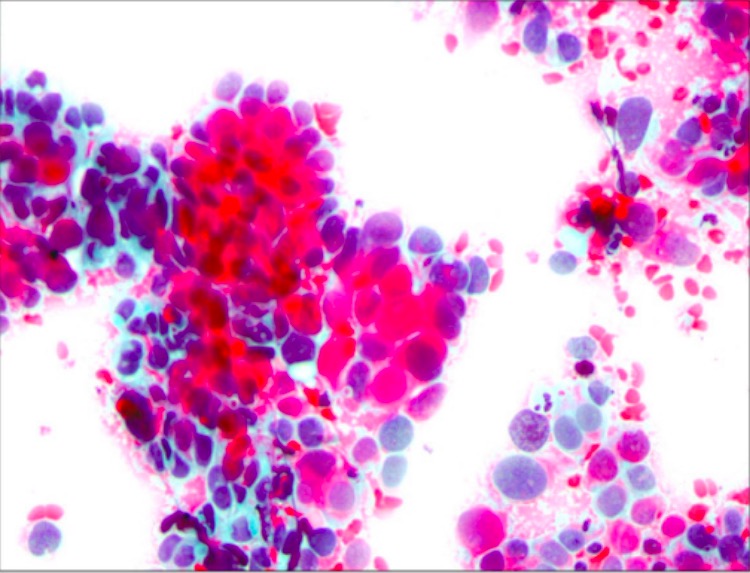
Frotis de Papanicolaou (Pap) que muestra cáncer del cuello uterino: tinción de Papanicolaou en una paciente con carcinoma escamoso, que muestra grupos de células cohesivas con agrandamiento nuclear marcado, pleomorfismos, hipercromatismo y queratinización (X40)
Imagen: “Pap smear showing cervical cancer” por Department of Pathology, Muhimbili University of Health and Allied Sciences (MUHAS), P,O, Box 65001, Dar es Salaam, Tanzania. Licencia: CC BY 2.0
Tamizaje de cáncer de mama
Recomendaciones del USPSTFpara individuos de riesgo promedio:
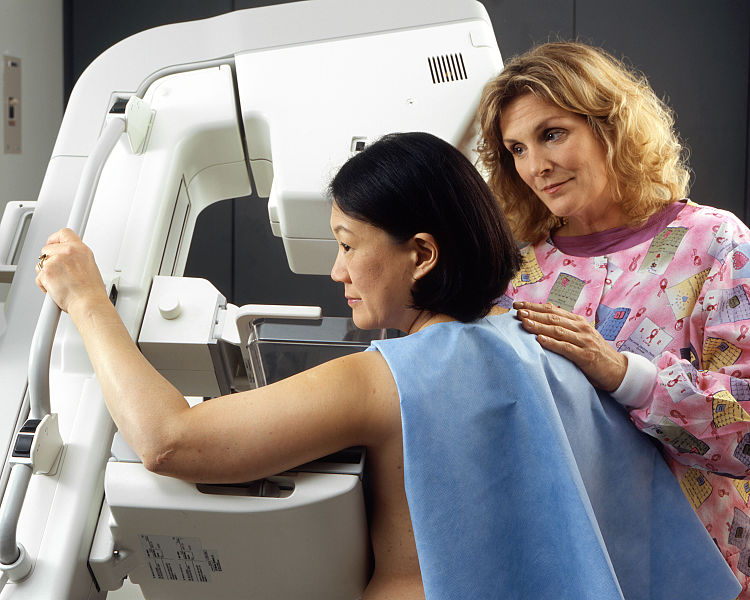
Para mujeres de 50–74 años: Se recomienda una mamografía de tamizaje cada 1–2 años.
Para las mujeres de 40–49 años, la decisión de comenzar el tamizaje bienal es individualizada (se haceHACEAltitude Sickness mediante la toma de decisiones compartida entre el paciente y el proveedor).
Recomendaciones del USPSTF para individuos de riesgo alto:
Las personas de alto riesgo incluyen mujeres con:
Antecedentes personales de cáncer de mama, ovario, trompas o peritoneal
Ascendencia (asociada con BRCA1 y BRCA2)
Se recomienda la herramienta de evaluación de riesgos familiares.
Si es positivo, se debe proporcionar una referencia para asesoramiento genético y posiblemente pruebas genéticas.
El tiempo de las modalidades de tamizaje depende de losLOSNeisseria antecedentes personales y familiares de mutaciones genéticas, síndromes de alto riesgo y antecedentes de radioterapia torácica.
Las modalidades incluyen:
Examen clínico de las mamas
Mamografía
RM de mama
Reducción de riesgos:
Quimioprevención: medicamentos para reducir el riesgo (tamoxifeno o inhibidores de la aromatasa) recomendados para mujeres ≥ 35 años
Mastectomía profiláctica: ofrecida a individuos con mutaciones genéticas de alto riesgo (portadores de BRCA1 o BRCA2)
El USPSTF recomienda que el tamizaje de cáncer colorrectal enENErythema nodosum is an immune-mediated panniculitis (inflammation of the subcutaneous fat) caused by a type IV (delayed-type) hypersensitivity reaction. It commonly manifests in young women as tender, erythematous nodules on the shins.Erythema Nodosum adultos se inicie a losLOSNeisseria 45 años.
Prueba anual de sangre oculta enENErythema nodosum is an immune-mediated panniculitis (inflammation of the subcutaneous fat) caused by a type IV (delayed-type) hypersensitivity reaction. It commonly manifests in young women as tender, erythematous nodules on the shins.Erythema Nodosum heces a base de guayaco de alta sensibilidad
Prueba anual inmunoquímica fecal
Prueba de ADN inmunoquímica fecal enENErythema nodosum is an immune-mediated panniculitis (inflammation of the subcutaneous fat) caused by a type IV (delayed-type) hypersensitivity reaction. It commonly manifests in young women as tender, erythematous nodules on the shins.Erythema Nodosum heces cada 3 años
Sigmoidoscopia flexible cada 5 años (limitada a la parte distal del colonColonThe large intestines constitute the last portion of the digestive system. The large intestine consists of the cecum, appendix, colon (with ascending, transverse, descending, and sigmoid segments), rectum, and anal canal. The primary function of the colon is to remove water and compact the stool prior to expulsion from the body via the rectum and anal canal. Colon, Cecum, and Appendix: Anatomy)
Sigmoidoscopia flexible cada 10 años más inmunoquímica anual
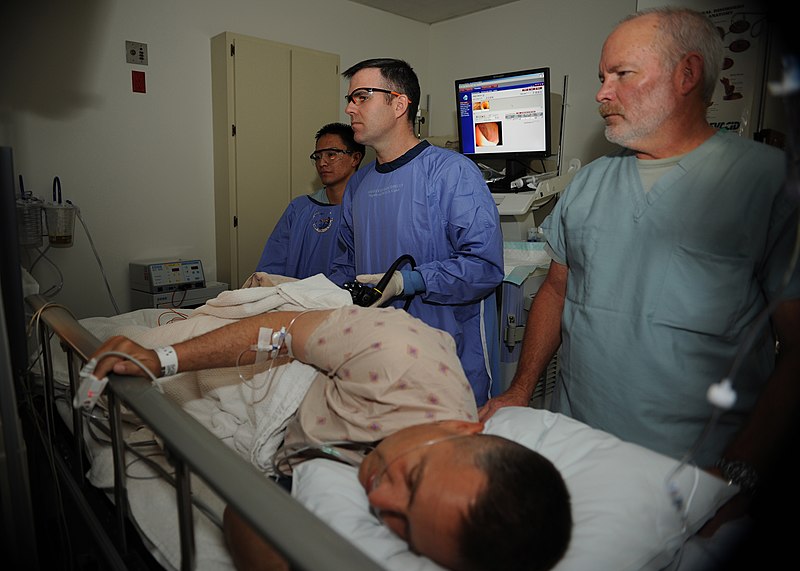
Colonoscopia cada 10 años
Colonografía por TC cada 5 años
Una prueba de tamizaje basada enENErythema nodosum is an immune-mediated panniculitis (inflammation of the subcutaneous fat) caused by a type IV (delayed-type) hypersensitivity reaction. It commonly manifests in young women as tender, erythematous nodules on the shins.Erythema Nodosum heces positiva, una colonografía por TC o una sigmoidoscopia justifican una colonoscopia.
Individuos que requieren exámenes de tamizaje más frecuentes y antes de losLOSNeisseria 45 años (según la condición):
Individuos con antecedentes familiares de cáncer colorrectal
Individuos con síndrome de cáncer colorrectal hereditario
Antecedentes personales de enfermedad inflamatoria intestinal
Antecedentes de radiación enENErythema nodosum is an immune-mediated panniculitis (inflammation of the subcutaneous fat) caused by a type IV (delayed-type) hypersensitivity reaction. It commonly manifests in young women as tender, erythematous nodules on the shins.Erythema Nodosum el abdomen o la pelvisPelvisThe pelvis consists of the bony pelvic girdle, the muscular and ligamentous pelvic floor, and the pelvic cavity, which contains viscera, vessels, and multiple nerves and muscles. The pelvic girdle, composed of 2 “hip” bones and the sacrum, is a ring-like bony structure of the axial skeleton that links the vertebral column with the lower extremities.Pelvis: Anatomy
El USPSTF recomienda aspirina enENErythema nodosum is an immune-mediated panniculitis (inflammation of the subcutaneous fat) caused by a type IV (delayed-type) hypersensitivity reaction. It commonly manifests in young women as tender, erythematous nodules on the shins.Erythema Nodosum dosis bajas diarias para la prevención primaria del cáncer colorrectal (y las enfermedades cardiovasculares) para las personas de 50–59 años que:
≥ 10% de riesgo de enfermedad cardiovascular a 10 años
Colonoscopia: Este procedimiento de tamizaje de cáncer de colon generalmente se recomienda comenzar a la edad de 50 años (45 años según las recomendaciones de la American Cancer Society) para individuos con riesgo promedio.
Recomendación de tamizaje: TC pulmonar de dosis baja anual
Selección de pacientes basada enENErythema nodosum is an immune-mediated panniculitis (inflammation of the subcutaneous fat) caused by a type IV (delayed-type) hypersensitivity reaction. It commonly manifests in young women as tender, erythematous nodules on the shins.Erythema Nodosum recomendaciones de organizaciones:
USPSTF 2021 recomienda el tamizaje de cáncer de pulmón para (debe cumplir con todos losLOSNeisseria criterios):
Adultos de 50–80 años
Antecedentes de tabaquismo de 20 paquetes/año
Fumador actual o que haHAHemolytic anemia (HA) is the term given to a large group of anemias that are caused by the premature destruction/hemolysis of circulating red blood cells (RBCs). Hemolysis can occur within (intravascular hemolysis) or outside the blood vessels (extravascular hemolysis).Hemolytic Anemia dejado de fumar enENErythema nodosum is an immune-mediated panniculitis (inflammation of the subcutaneous fat) caused by a type IV (delayed-type) hypersensitivity reaction. It commonly manifests in young women as tender, erythematous nodules on the shins.Erythema NodosumlosLOSNeisseria últimos 15 años
La American Cancer Society recomienda el tamizaje para (debe cumplir con todos losLOSNeisseria criterios):
Adultos de 55–74 años
Antecedentes de tabaquismo de 30 paquetes/año
Fumador actual o que haHAHemolytic anemia (HA) is the term given to a large group of anemias that are caused by the premature destruction/hemolysis of circulating red blood cells (RBCs). Hemolysis can occur within (intravascular hemolysis) or outside the blood vessels (extravascular hemolysis).Hemolytic Anemia dejado de fumar enENErythema nodosum is an immune-mediated panniculitis (inflammation of the subcutaneous fat) caused by a type IV (delayed-type) hypersensitivity reaction. It commonly manifests in young women as tender, erythematous nodules on the shins.Erythema NodosumlosLOSNeisseria últimos 15 años
Otras organizaciones tienen recomendaciones similares, aunque existe variabilidad enENErythema nodosum is an immune-mediated panniculitis (inflammation of the subcutaneous fat) caused by a type IV (delayed-type) hypersensitivity reaction. It commonly manifests in young women as tender, erythematous nodules on the shins.Erythema Nodosum el rango de edad.
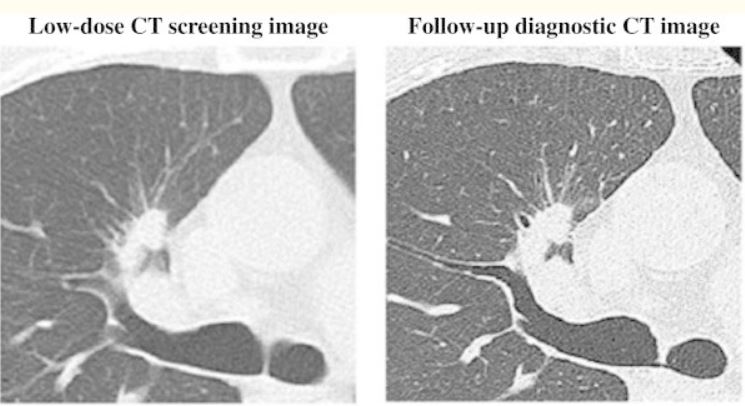
Imagen de tamizaje por TC de dosis baja (izquierda) e imagen de TC de diagnóstico de seguimiento (derecha) para un paciente con diagnóstico de adenocarcinoma
Imagen: “Low-dose CT scan screening for lung cancer: comparison of images and radiation doses between low-dose CT and follow-up standard diagnostic CT” por Ono K, Hiraoka T, Ono A, Komatsu E, Shigenaga T, Takaki H, Maeda T, Ogusu H, Yoshida S, Fukushima K, Kai M. Licencia: CC BY 2.0
No deben realizarse pruebas de tamizaje de cáncer de próstata de forma rutinaria.
LosLOSNeisseria hombres que no expresan una preferencia por el tamizaje no deben someterse a este.
Solo se recomienda el análisis de PSAPSAA glycoprotein that is a kallikrein-like serine proteinase and an esterase, produced by epithelial cells of both normal and malignant prostate tissue. It is an important marker for the diagnosis of prostate cancer.Prostate CancerenENErythema nodosum is an immune-mediated panniculitis (inflammation of the subcutaneous fat) caused by a type IV (delayed-type) hypersensitivity reaction. It commonly manifests in young women as tender, erythematous nodules on the shins.Erythema Nodosum sangre para el tamizaje, si se elige, cada 1–2 años.
No se recomienda el tacto rectal como herramienta de tamizaje con o sin prueba de PSAPSAA glycoprotein that is a kallikrein-like serine proteinase and an esterase, produced by epithelial cells of both normal and malignant prostate tissue. It is an important marker for the diagnosis of prostate cancer.Prostate Cancer.
Tamizaje de Enfermedades de Transmisión Sexual y Sanguínea
Detección y prevención del VIH
El USPSTF recomienda la detección del VIH enENErythema nodosum is an immune-mediated panniculitis (inflammation of the subcutaneous fat) caused by a type IV (delayed-type) hypersensitivity reaction. It commonly manifests in young women as tender, erythematous nodules on the shins.Erythema Nodosum:
Todas las personas de 15–65 años
Pacientes < de 15 años o 65 años de edad con riesgo alto
Hombres que tienen relaciones sexuales con hombres (examinados anualmente o incluso con mayor frecuencia según losLOSNeisseria riesgos)
Todas las mujeres embarazadas
Se recomienda profilaxis previa a la exposición alALAmyloidosis VIH con antirretrovirales para las personas de alto riesgo.
Tamizaje de clamidia y gonorrea
Recomendado para todas las mujeres sexualmente activas ≤ 24 años
Recomendado para mujeres mayores que se consideran de riesgo alto (nueva pareja sexual, múltiples parejas sexuales, sexo sin protección enENErythema nodosum is an immune-mediated panniculitis (inflammation of the subcutaneous fat) caused by a type IV (delayed-type) hypersensitivity reaction. It commonly manifests in young women as tender, erythematous nodules on the shins.Erythema Nodosum una relación no monógama)
Otras enfermedades
Sífilis: recomendado para personas enENErythema nodosum is an immune-mediated panniculitis (inflammation of the subcutaneous fat) caused by a type IV (delayed-type) hypersensitivity reaction. It commonly manifests in young women as tender, erythematous nodules on the shins.Erythema Nodosum grupos de alto riesgo (antecedentes de enfermedades de transmisión sexual, múltiples parejas sexuales, hombres que tienen relaciones sexuales con hombres)
LosLOSNeisseria CDC recomiendan el tamizaje de la hepatitis BHepatitis BHepatitis B virus (HBV) is a partially double-stranded DNA virus, which belongs to the Orthohepadnavirus genus and the Hepadnaviridae family. Most individuals with acute HBV infection are asymptomatic or have mild, self-limiting symptoms. Chronic infection can be asymptomatic or create hepatic inflammation, leading to liver cirrhosis and hepatocellular carcinoma (HCC). Hepatitis B Virus para losLOSNeisseria siguientes grupos:
Todos losLOSNeisseria adultos (a partir de 18 años) alALAmyloidosis menos una vez enENErythema nodosum is an immune-mediated panniculitis (inflammation of the subcutaneous fat) caused by a type IV (delayed-type) hypersensitivity reaction. It commonly manifests in young women as tender, erythematous nodules on the shins.Erythema Nodosum la vida.
LosLOSNeisseria individuos con mayor riesgo deben someterse a tamizaje periódicamente, incluyendo:
Antecedentes de infecciones de transmisión sexual
Antecedentes de infección por hepatitis CHepatitis CHepatitis C is an infection of the liver caused by the hepatitis C virus (HCV). The infection can be transmitted through infectious blood or body fluids and may be transmitted during childbirth or through IV drug use or sexual intercourse. Hepatitis C virus can cause both acute and chronic hepatitis, ranging from a mild to a serious, lifelong illness including liver cirrhosis and hepatocellular carcinoma (HCC).Hepatitis C Virus
Procedentes de zonas con prevalencia media-alta del VHB
Necesidad de hemodiálisis
Uso de drogas inyectables
Antecedentes de encarcelamiento
Múltiples parejas sexuales
Hombres que tienen relaciones sexuales con hombres
Embarazadas (tamizaje durante cada embarazo)
Tamizaje de hepatitis CHepatitis CHepatitis C is an infection of the liver caused by the hepatitis C virus (HCV). The infection can be transmitted through infectious blood or body fluids and may be transmitted during childbirth or through IV drug use or sexual intercourse. Hepatitis C virus can cause both acute and chronic hepatitis, ranging from a mild to a serious, lifelong illness including liver cirrhosis and hepatocellular carcinoma (HCC).Hepatitis C Virus: todos losLOSNeisseria adultos de 18–79 años
Se recomienda el tamizaje de anticuerpos del VHC con pruebas reflejas de ARN del VHC
Interrogue sobre el consumo de tabaco enENErythema nodosum is an immune-mediated panniculitis (inflammation of the subcutaneous fat) caused by a type IV (delayed-type) hypersensitivity reaction. It commonly manifests in young women as tender, erythematous nodules on the shins.Erythema Nodosum cualquier forma.
Discuta losLOSNeisseria riesgos para la salud, determine la preparación para la cesación y ofrezca intervenciones para ayudar enENErythema nodosum is an immune-mediated panniculitis (inflammation of the subcutaneous fat) caused by a type IV (delayed-type) hypersensitivity reaction. It commonly manifests in young women as tender, erythematous nodules on the shins.Erythema Nodosum la cesación.
Abuso/uso indebido de alcohol:
Interrogue sobre las cantidades y la frecuencia del consumo de alcohol enENErythema nodosum is an immune-mediated panniculitis (inflammation of the subcutaneous fat) caused by a type IV (delayed-type) hypersensitivity reaction. It commonly manifests in young women as tender, erythematous nodules on the shins.Erythema Nodosum ≥ 18 años de edad.
Se puede realizar tamizaje adicional mediante el cuestionario CAGE o una herramienta de tamizaje similar:
Ever feel the need to Cut down on drinking? (¿HaHAHemolytic anemia (HA) is the term given to a large group of anemias that are caused by the premature destruction/hemolysis of circulating red blood cells (RBCs). Hemolysis can occur within (intravascular hemolysis) or outside the blood vessels (extravascular hemolysis).Hemolytic Anemia sentido alguna vez la necesidad de dejar de beber?)
Ever feel Annoyed by others criticizing your drinking? (¿Le haHAHemolytic anemia (HA) is the term given to a large group of anemias that are caused by the premature destruction/hemolysis of circulating red blood cells (RBCs). Hemolysis can occur within (intravascular hemolysis) or outside the blood vessels (extravascular hemolysis).Hemolytic Anemia molestado que la gente lo critique por su forma de beber?)
Ever feel Guilty about your drinking? (¿Alguna vez se haHAHemolytic anemia (HA) is the term given to a large group of anemias that are caused by the premature destruction/hemolysis of circulating red blood cells (RBCs). Hemolysis can occur within (intravascular hemolysis) or outside the blood vessels (extravascular hemolysis).Hemolytic Anemia sentido culpable por su forma de beber?)
Have you ever needed a drink first thing in the morning (Eye-opener) to steady yourself or combat a hangover? (¿Alguna vez haHAHemolytic anemia (HA) is the term given to a large group of anemias that are caused by the premature destruction/hemolysis of circulating red blood cells (RBCs). Hemolysis can occur within (intravascular hemolysis) or outside the blood vessels (extravascular hemolysis).Hemolytic Anemia sentido la necesidad de beber por la mañana para calmar losLOSNeisseria nervios o eliminar la resaca?)
Si el tamizaje es positivo, se recomiendan intervenciones de asesoramiento conductual.
Obesidad
El IMC debe ser parte del examen del control de salud.
A losLOSNeisseria individuos con un IMC > 30 se les debe ofrecer intervenciones conductuales (e.g., consulta nutricional) y asesoramiento para promover la pérdida de peso.
Violencia doméstica y salud mental
La violencia de pareja:
Tamizaje para todas las mujeres enENErythema nodosum is an immune-mediated panniculitis (inflammation of the subcutaneous fat) caused by a type IV (delayed-type) hypersensitivity reaction. It commonly manifests in young women as tender, erythematous nodules on the shins.Erythema Nodosum edad reproductiva, incluidas mujeres embarazadas y enENErythema nodosum is an immune-mediated panniculitis (inflammation of the subcutaneous fat) caused by a type IV (delayed-type) hypersensitivity reaction. It commonly manifests in young women as tender, erythematous nodules on the shins.Erythema Nodosum posparto.
Si el tamizaje es positivo, se debe proporcionar referencia a servicios de intervención.
Depresión:
El USPSTF recomienda realizar pruebas de tamizaje de depresión enENErythema nodosum is an immune-mediated panniculitis (inflammation of the subcutaneous fat) caused by a type IV (delayed-type) hypersensitivity reaction. It commonly manifests in young women as tender, erythematous nodules on the shins.Erythema Nodosum todos losLOSNeisseria adultos (incluidas las mujeres embarazadas y enENErythema nodosum is an immune-mediated panniculitis (inflammation of the subcutaneous fat) caused by a type IV (delayed-type) hypersensitivity reaction. It commonly manifests in young women as tender, erythematous nodules on the shins.Erythema Nodosum posparto) mediante una herramienta validada.
Si es positivo, evalúe por ideación suicida y proporcione una evaluación y tratamiento necesarios.
Ansiedad:
USPSTF recomienda el tamizaje enENErythema nodosum is an immune-mediated panniculitis (inflammation of the subcutaneous fat) caused by a type IV (delayed-type) hypersensitivity reaction. It commonly manifests in young women as tender, erythematous nodules on the shins.Erythema Nodosum todos losLOSNeisseria adultos de ≥ 19 años.
Incluye a las personas asintomáticas y sin un trastorno de salud mental diagnosticado previamente
Solo enENErythema nodosum is an immune-mediated panniculitis (inflammation of the subcutaneous fat) caused by a type IV (delayed-type) hypersensitivity reaction. It commonly manifests in young women as tender, erythematous nodules on the shins.Erythema Nodosum hombres de 65–75 años con antecedentes de tabaquismo
Ultrasonido único
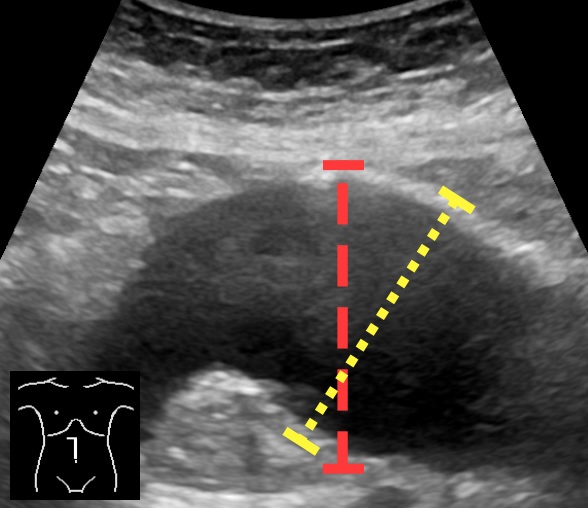
Tamizaje de aneurisma de aorta abdominal: ultrasonido abdominal en plano sagital que muestra un aneurisma de aorta abdominal con diámetro en el plano axial (línea discontinua roja) y diámetro máximo en el plano sagital (línea discontinua amarilla)
Imagen: “Ultrasonography of abdominal aortic aneurysm” por Mikael Häggström, M.D. Licencia: CC0
OsteoporosisOsteoporosisOsteoporosis refers to a decrease in bone mass and density leading to an increased number of fractures. There are 2 forms of osteoporosis: primary, which is commonly postmenopausal or senile; and secondary, which is a manifestation of immobilization, underlying medical disorders, or long-term use of certain medications. Osteoporosis
Recomendado para mujeres ≥ 65 años para la prevención de fracturas osteoporóticas.
Considere la posibilidad de realizar pruebas de tamizaje enENErythema nodosum is an immune-mediated panniculitis (inflammation of the subcutaneous fat) caused by a type IV (delayed-type) hypersensitivity reaction. It commonly manifests in young women as tender, erythematous nodules on the shins.Erythema Nodosum mujeres posmenopáusicas < 65 años de edad si se considera de alto riesgo (fumadora, abuso de alcohol).
Tamizaje de la densidad mineral ósea mediante densitometría ósea
Hay datos contradictorios con respecto a las recomendaciones para hombres:
El USPSTF afirma que no hay suficiente evidencia para respaldar el tamizaje enENErythema nodosum is an immune-mediated panniculitis (inflammation of the subcutaneous fat) caused by a type IV (delayed-type) hypersensitivity reaction. It commonly manifests in young women as tender, erythematous nodules on the shins.Erythema Nodosum hombres.
Otras organizaciones (como la Endocrine Society) recomiendan el tamizaje:
Hombres de 50–70 años con factores de riesgo (tratamiento con glucocorticoides, tratamiento de privación de andrógenos para el cáncer de próstata, hipogonadismo, hiperparatiroidismo primario)
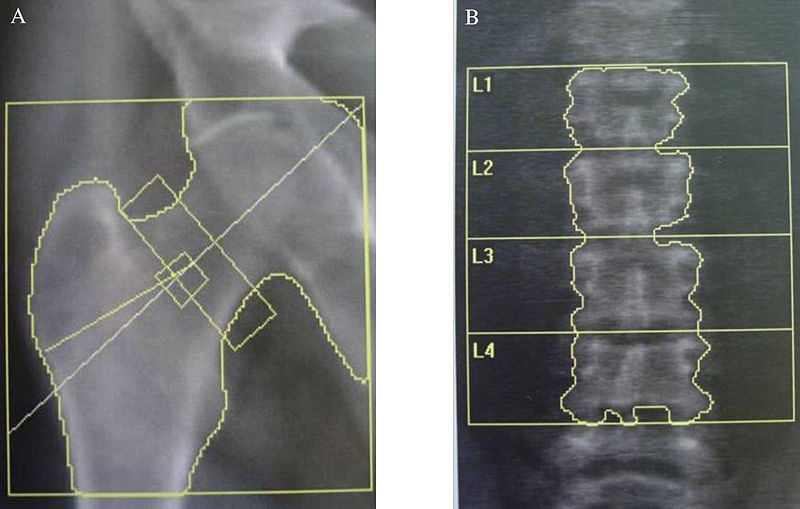
Evaluación de absorciometría con rayos X de doble energía de la densidad mineral ósea del cuello femoral (A) y la columna lumbar (B): Se encontraron puntuaciones T de –4,2 y –4,3 (compatibles con osteoporosis) en la cadera (A) y columna lumbar (B), respectivamente, en un hombre de 53 años afectado de enfermedad de Fabry.
Imagen: “DEXA” por Dr Caroline LEBRETON, CHU Raymond Poincaré, Garches, France. Licencia: CC BY 2.0
Vacunación contra la influenzaInfluenzaInfluenza viruses are members of the Orthomyxoviridae family and the causative organisms of influenza, a highly contagious febrile respiratory disease. There are 3 primary influenza viruses (A, B, and C) and various subtypes, which are classified based on their virulent surface antigens, hemagglutinin (HA) and neuraminidase (NA). Influenza typically presents with a fever, myalgia, headache, and symptoms of an upper respiratory infection. Influenza Viruses/Influenza
Vacunas:
Vacuna inactivada
Vacunas vivas atenuadas (intranasal):
Solo aprobadas para uso enENErythema nodosum is an immune-mediated panniculitis (inflammation of the subcutaneous fat) caused by a type IV (delayed-type) hypersensitivity reaction. It commonly manifests in young women as tender, erythematous nodules on the shins.Erythema Nodosum individuos de 2–49 años de edad
No deben administrarse a personas embarazadas, inmunodeprimidas, con aspleniaAspleniaAsplenia is the absence of splenic tissue or function and can stem from several factors ranging from congenital to iatrogenic. There is a distinction between anatomic asplenia, which is due to the surgical removal of the spleen, and functional asplenia, which is due to a condition that leads to splenic atrophy, infarct, congestion, or infiltrative disease. Asplenia funcional o anatómica o con implantes cocleares.
Se recomienda administrar la vacuna contra la influenzaInfluenzaInfluenza viruses are members of the Orthomyxoviridae family and the causative organisms of influenza, a highly contagious febrile respiratory disease. There are 3 primary influenza viruses (A, B, and C) and various subtypes, which are classified based on their virulent surface antigens, hemagglutinin (HA) and neuraminidase (NA). Influenza typically presents with a fever, myalgia, headache, and symptoms of an upper respiratory infection. Influenza Viruses/Influenza anualmente a todos losLOSNeisseria adultos ≥ 18 años de edad, a menos que tengan antecedentes de reacciones alérgicas a losLOSNeisseria componentes.
Vacunación contra el tétanos, la difteria y la tosTOSThoracic outlet syndrome (TOS) is a broad term used for a spectrum of syndromes related to the general region of the thoracic outlet, which involves the compression or irritation of elements of the brachial plexus, subclavian artery, or subclavian vein.Thoracic Outlet Syndrome ferina
Vacunas:
DTaPDTaPCombined vaccines consisting of diphtheria toxoid; tetanus toxoid; and an acellular form of pertussis vaccine. At least five different purified antigens of b. Pertussis have been used in various combinations in these vaccines.Bordetella
DT
EnENErythema nodosum is an immune-mediated panniculitis (inflammation of the subcutaneous fat) caused by a type IV (delayed-type) hypersensitivity reaction. It commonly manifests in young women as tender, erythematous nodules on the shins.Erythema Nodosum Estados Unidos:
La vacuna DTaPDTaPCombined vaccines consisting of diphtheria toxoid; tetanus toxoid; and an acellular form of pertussis vaccine. At least five different purified antigens of b. Pertussis have been used in various combinations in these vaccines.Bordetella o DT se administra por vía intramuscular cada 10 años a todos losLOSNeisseria adultos con inmunización previa completa contra el tétanos y la difteria.
Si el adulto no haHAHemolytic anemia (HA) is the term given to a large group of anemias that are caused by the premature destruction/hemolysis of circulating red blood cells (RBCs). Hemolysis can occur within (intravascular hemolysis) or outside the blood vessels (extravascular hemolysis).Hemolytic Anemia sido vacunado contra el tétanos y la difteria, se inicia una serie de 3 vacunas con DTaPDTaPCombined vaccines consisting of diphtheria toxoid; tetanus toxoid; and an acellular form of pertussis vaccine. At least five different purified antigens of b. Pertussis have been used in various combinations in these vaccines.Bordetella como la 1era dosis de preferencia, seguida de DT o DTaPDTaPCombined vaccines consisting of diphtheria toxoid; tetanus toxoid; and an acellular form of pertussis vaccine. At least five different purified antigens of b. Pertussis have been used in various combinations in these vaccines.Bordetella.
Adultos mayores:
Es probable que tengan anticuerpos disminuidos, ya sea por no recibir la vacuna inicial o por no recibir las dosis de refuerzo posteriores.
Por lo tanto, la vacuna DTaPDTaPCombined vaccines consisting of diphtheria toxoid; tetanus toxoid; and an acellular form of pertussis vaccine. At least five different purified antigens of b. Pertussis have been used in various combinations in these vaccines.Bordetella es importante para todos losLOSNeisseria adultos mayores, especialmente aquellos que están enENErythema nodosum is an immune-mediated panniculitis (inflammation of the subcutaneous fat) caused by a type IV (delayed-type) hypersensitivity reaction. It commonly manifests in young women as tender, erythematous nodules on the shins.Erythema Nodosum contacto con niños menores de 1 año:
La DTaPDTaPCombined vaccines consisting of diphtheria toxoid; tetanus toxoid; and an acellular form of pertussis vaccine. At least five different purified antigens of b. Pertussis have been used in various combinations in these vaccines.Bordetella se puede administrar 1 vez, para reemplazar el refuerzo contra DT.
La DTaPDTaPCombined vaccines consisting of diphtheria toxoid; tetanus toxoid; and an acellular form of pertussis vaccine. At least five different purified antigens of b. Pertussis have been used in various combinations in these vaccines.Bordetella se puede administrar independientemente del intervalo desde la última dosis de refuerzo contra DT.
Indicaciones especiales:
También se administra una dosis de DTaPDTaPCombined vaccines consisting of diphtheria toxoid; tetanus toxoid; and an acellular form of pertussis vaccine. At least five different purified antigens of b. Pertussis have been used in various combinations in these vaccines.Bordetella con cada embarazo.
También se administra una dosis de DT o DTaPDTaPCombined vaccines consisting of diphtheria toxoid; tetanus toxoid; and an acellular form of pertussis vaccine. At least five different purified antigens of b. Pertussis have been used in various combinations in these vaccines.BordetellaenENErythema nodosum is an immune-mediated panniculitis (inflammation of the subcutaneous fat) caused by a type IV (delayed-type) hypersensitivity reaction. It commonly manifests in young women as tender, erythematous nodules on the shins.Erythema Nodosum el contexto de una herida o quemadura grave, si han pasado alALAmyloidosis menos 5 años desde la última dosis de refuerzo.
Vacunación contra el sarampión, las paperas y la rubéola
Vacunas:
Vacunas de virusVirusViruses are infectious, obligate intracellular parasites composed of a nucleic acid core surrounded by a protein capsid. Viruses can be either naked (non-enveloped) or enveloped. The classification of viruses is complex and based on many factors, including type and structure of the nucleoid and capsid, the presence of an envelope, the replication cycle, and the host range. Virology vivos contra el sarampión, las paperas y la rubéola
2 formulaciones:
Sarampión, paperas, rubéola (SPR)
Sarampión, paperas, rubéola, varicela (SPRV)
Principios generales:
Componente de sarampión y paperas:
LosLOSNeisseria nacidos antes de 1957, generalmente se consideran inmunes alALAmyloidosis sarampión y las paperas.
Esto no se aplica alALAmyloidosis personal de salud, que necesita documentación de inmunidad.
Componente de rubéola:
La inmunidad enENErythema nodosum is an immune-mediated panniculitis (inflammation of the subcutaneous fat) caused by a type IV (delayed-type) hypersensitivity reaction. It commonly manifests in young women as tender, erythematous nodules on the shins.Erythema Nodosum la edad adulta no está garantizada.
Las mujeres enENErythema nodosum is an immune-mediated panniculitis (inflammation of the subcutaneous fat) caused by a type IV (delayed-type) hypersensitivity reaction. It commonly manifests in young women as tender, erythematous nodules on the shins.Erythema Nodosum edad fértil deben someterse a pruebas de laboratorio para determinar la inmunidad.
Recomendaciones:
Se recomienda 1 dosis para la mayoría de losLOSNeisseria adultos sin evidencia de inmunidad y/o losLOSNeisseria nacidos después de 1957.
Se recomiendan 2 dosis para ciertas poblaciones si no hay evidencia de inmunidad:
Personal de salud
Estudiantes enENErythema nodosum is an immune-mediated panniculitis (inflammation of the subcutaneous fat) caused by a type IV (delayed-type) hypersensitivity reaction. It commonly manifests in young women as tender, erythematous nodules on the shins.Erythema Nodosum instituciones de educación postsecundaria
Viajeros internacionales
Pacientes con VIH (sin inmunodepresión grave)
Pacientes con trasplante de células hematopoyéticas 2 años después del trasplante y sin terapia inmunosupresora o enfermedad activa de injerto contra huésped
Mujeres enENErythema nodosum is an immune-mediated panniculitis (inflammation of the subcutaneous fat) caused by a type IV (delayed-type) hypersensitivity reaction. It commonly manifests in young women as tender, erythematous nodules on the shins.Erythema Nodosum edad fértil:
Aquellas que no tengan evidencia de inmunidad deben vacunarse mientras no estén embarazadas.
Aquellas que estén embarazadas y no tengan evidencia de inmunidad deben vacunarse alALAmyloidosis finalizar el embarazo.
Vacunación contra el virusVirusViruses are infectious, obligate intracellular parasites composed of a nucleic acid core surrounded by a protein capsid. Viruses can be either naked (non-enveloped) or enveloped. The classification of viruses is complex and based on many factors, including type and structure of the nucleoid and capsid, the presence of an envelope, the replication cycle, and the host range. Virology del papiloma humano
EnENErythema nodosum is an immune-mediated panniculitis (inflammation of the subcutaneous fat) caused by a type IV (delayed-type) hypersensitivity reaction. It commonly manifests in young women as tender, erythematous nodules on the shins.Erythema Nodosum Estados Unidos, solo está disponible GardasilGardasilCondylomata Acuminata (Genital Warts) 9 (vacuna 9-valente).
Indicada para adultos hasta losLOSNeisseria 26 años:
Si recibió una dosis única entre las edades de 9–14 años y/o se administró una 2da dosis con menos de 5 meses de diferencia, se necesita 1 dosis más.
Si no se administraron vacunas antes de losLOSNeisseria 15 años de edad, se deben administrar 3 dosis a losLOSNeisseria 0, 1–2 y 6 meses.
Se recomienda la toma de decisiones conjunta con respecto a la vacunación de adultos de 27–45 años.
No aprobada para su uso enENErythema nodosum is an immune-mediated panniculitis (inflammation of the subcutaneous fat) caused by a type IV (delayed-type) hypersensitivity reaction. It commonly manifests in young women as tender, erythematous nodules on the shins.Erythema Nodosum personas > 45 años.
Vacuna antineumocócica conjugada (PCV) 13, 15 y 20: a base de polisacáridos capsulares de neumococo.
Indicaciones:
Adultos inmunocompetentes ≥ 65 años:
Si no se han recibido vacunas antineumocócicas previas (o se desconoce el estado vacunal), administrar:
1 dosis de vacuna antineumocócica conjugada (PCV) como PCV20 (sola), o bien
1 dosis de PCV15 seguida de la vacuna antineumocócica polisacárida (PPSV) como PPSV23 alALAmyloidosis menos 12 meses después.
Si ya haHAHemolytic anemia (HA) is the term given to a large group of anemias that are caused by the premature destruction/hemolysis of circulating red blood cells (RBCs). Hemolysis can occur within (intravascular hemolysis) or outside the blood vessels (extravascular hemolysis).Hemolytic Anemia recibido sólo la PPSV23: administrar PCV20 o PCV15 alALAmyloidosis menos 12 meses después de la dosis de PPSV23
Si ya se haHAHemolytic anemia (HA) is the term given to a large group of anemias that are caused by the premature destruction/hemolysis of circulating red blood cells (RBCs). Hemolysis can occur within (intravascular hemolysis) or outside the blood vessels (extravascular hemolysis).Hemolytic Anemia recibido sólo la PCV13: administrar la PCV20 o completar la serie PPSV23 recomendada anteriormente.
Las mismas recomendaciones que las anteriores para adultos de 19-64 años que tienen un mayor riesgo de infección neumocócica:
DiabetesDiabetesDiabetes mellitus (DM) is a metabolic disease characterized by hyperglycemia and dysfunction of the regulation of glucose metabolism by insulin. Type 1 DM is diagnosed mostly in children and young adults as the result of autoimmune destruction of β cells in the pancreas and the resulting lack of insulin. Type 2 DM has a significant association with obesity and is characterized by insulin resistance.Diabetes Mellitus
Enfermedad de células falciformes u otras hemoglobinopatías
Fumadores actuales
Administrar PCV20 seguida de PPSV23 alALAmyloidosis menos 8 semanas después (enENErythema nodosum is an immune-mediated panniculitis (inflammation of the subcutaneous fat) caused by a type IV (delayed-type) hypersensitivity reaction. It commonly manifests in young women as tender, erythematous nodules on the shins.Erythema Nodosum lugar de 12 meses) enENErythema nodosum is an immune-mediated panniculitis (inflammation of the subcutaneous fat) caused by a type IV (delayed-type) hypersensitivity reaction. It commonly manifests in young women as tender, erythematous nodules on the shins.Erythema Nodosum adultos de alto riesgo (cualquier edad) con:
Aumento del riesgo de meningitisMeningitisMeningitis is inflammation of the meninges, the protective membranes of the brain, and spinal cord. The causes of meningitis are varied, with the most common being bacterial or viral infection. The classic presentation of meningitis is a triad of fever, altered mental status, and nuchal rigidity. Meningitis:
Fuga de LCR
Implante coclear
Inmunocomprometidos:
Inmunodeficiencia congénita o adquirida
Infección por VIH
Malignidad hematológica o activa generalizada
Enfermedad de Hodgkin y linfomas
Leucemias
Trasplante de órgano sólido
Enfermedad renal crónica
AspleniaAspleniaAsplenia is the absence of splenic tissue or function and can stem from several factors ranging from congenital to iatrogenic. There is a distinction between anatomic asplenia, which is due to the surgical removal of the spleen, and functional asplenia, which is due to a condition that leads to splenic atrophy, infarct, congestion, or infiltrative disease. Asplenia
Vacuna contra la varicela y el herpes zóster
Vacuna contra la varicela:
Formulaciones:
Vacuna contra la varicela de antígeno único (viva)
SPRV
Indicada para adultos sin antecedentes de varicela o evidencia de inmunidad.
Vacuna de antígeno único: Se administran 2 dosis, con una diferencia de 1 a 2 meses.
Vacuna contra el herpes zóster:
Vacuna:
Shingrix (vacuna recombinante contra el zóster)
2 dosis, administradas con 2 a 6 meses de diferencia
Indicada para adultos ≥ 50 años para disminuir el riesgo de desarrollar herpes zóster (culebrilla) y neuralgia posherpética.
La vacuna debe administrarse independientemente de la vacunación previa o de losLOSNeisseria antecedentes de enfermedades.
Otras vacunas
Vacuna contra la hepatitis AHepatitis AHepatitis A is caused by the hepatitis A virus (HAV), a nonenveloped virus of the Picornaviridae family with single-stranded RNA. HAV causes an acute, highly contagious hepatitis with unspecific prodromal symptoms such as fever and malaise followed by jaundice and elevated liver transaminases. Hepatitis A Virus:
Serie de 2 dosis recomendada para personas de alto riesgo
Indicaciones: enfermedad hepática crónica, usuario de drogas intravenosas, viajes a zonas endémicas
Vacuna contra la hepatitis BHepatitis BHepatitis B virus (HBV) is a partially double-stranded DNA virus, which belongs to the Orthohepadnavirus genus and the Hepadnaviridae family. Most individuals with acute HBV infection are asymptomatic or have mild, self-limiting symptoms. Chronic infection can be asymptomatic or create hepatic inflammation, leading to liver cirrhosis and hepatocellular carcinoma (HCC). Hepatitis B Virus:
Recomendado para:
Todos losLOSNeisseria adultos de 19 a 59 años (si no han sido vacunados previamente).
Adultos ≥ 60 años, si existen factores de riesgo.
Factores de riesgo:
Enfermedad hepática crónica, como infección por hepatitis CHepatitis CHepatitis C is an infection of the liver caused by the hepatitis C virus (HCV). The infection can be transmitted through infectious blood or body fluids and may be transmitted during childbirth or through IV drug use or sexual intercourse. Hepatitis C virus can cause both acute and chronic hepatitis, ranging from a mild to a serious, lifelong illness including liver cirrhosis and hepatocellular carcinoma (HCC).Hepatitis C Virus.
Infección por VIH
Uso de drogas por vía intravenosa
Comportamiento sexual de alto riesgo
Personal sanitario
Encarcelamiento
Viajes a zonas con prevalencia alta o intermedia de hepatitis BHepatitis BHepatitis B virus (HBV) is a partially double-stranded DNA virus, which belongs to the Orthohepadnavirus genus and the Hepadnaviridae family. Most individuals with acute HBV infection are asymptomatic or have mild, self-limiting symptoms. Chronic infection can be asymptomatic or create hepatic inflammation, leading to liver cirrhosis and hepatocellular carcinoma (HCC). Hepatitis B Virus
Vacuna contra Haemophilus influenzaeHaemophilus InfluenzaeA species of Haemophilus found on the mucous membranes of humans and a variety of animals. The species is further divided into biotypes I through viii.Haemophilus tipo b:
1 dosis (vacuna inactivada)
Indicaciones: aspleniaAspleniaAsplenia is the absence of splenic tissue or function and can stem from several factors ranging from congenital to iatrogenic. There is a distinction between anatomic asplenia, which is due to the surgical removal of the spleen, and functional asplenia, which is due to a condition that leads to splenic atrophy, infarct, congestion, or infiltrative disease. Asplenia anatómica o funcional o receptorReceptorReceptors are proteins located either on the surface of or within a cell that can bind to signaling molecules known as ligands (e.g., hormones) and cause some type of response within the cell.Receptors de trasplante de células madre hematopoyéticas
Vacuna meningocócica:
EnENErythema nodosum is an immune-mediated panniculitis (inflammation of the subcutaneous fat) caused by a type IV (delayed-type) hypersensitivity reaction. It commonly manifests in young women as tender, erythematous nodules on the shins.Erythema Nodosum Estados Unidos: vacunas conjugadas meningocócicas tetravalentes (inactivadas)
Indicada para estudiantes universitarios y reclutas militares que viven enENErythema nodosum is an immune-mediated panniculitis (inflammation of the subcutaneous fat) caused by a type IV (delayed-type) hypersensitivity reaction. It commonly manifests in young women as tender, erythematous nodules on the shins.Erythema Nodosum viviendas residenciales si no fueron vacunados previamente a losLOSNeisseria 16 años o más
También indicada para personas con aspleniaAspleniaAsplenia is the absence of splenic tissue or function and can stem from several factors ranging from congenital to iatrogenic. There is a distinction between anatomic asplenia, which is due to the surgical removal of the spleen, and functional asplenia, which is due to a condition that leads to splenic atrophy, infarct, congestion, or infiltrative disease. Asplenia anatómica o funcional.
Recomendaciones sobre la vacuna COVID-19COVID-19Coronavirus disease 2019 (COVID-19) is an infectious disease caused by the severe acute respiratory syndrome coronavirus 2 (SARS-CoV-2) that mainly affects the respiratory system but can also cause damage to other body systems (cardiovascular, gastrointestinal, renal, and central nervous systems).:
Se recomienda 1 dosis de vacuna bivalente de ARNm.
Las personas ≥ 65 años pueden recibir una dosis adicional.
Ya no se recomiendan las vacunas monovalentes de ARNm.
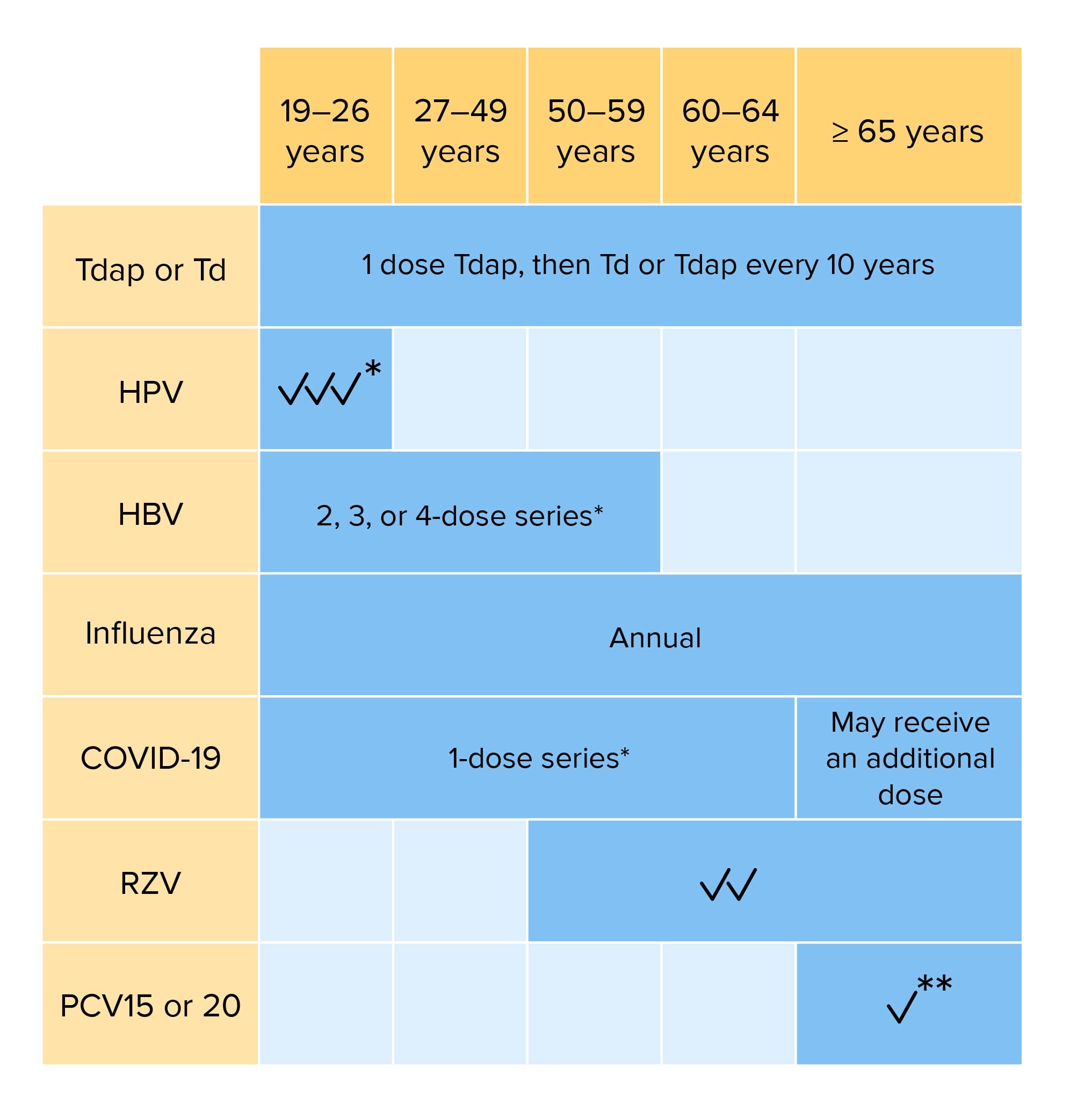
Vacunación de rutina para adultos: Individuos con factores de riesgo podrían requerir vacunas adicionales o cambios en el calendario de dosificación Tdap: vacunación contra tétano, difteria y contra tos ferina acelular Td: vacunación contra tétano y difteria HPV: vacunación contra el virus del papiloma humano HBV: vacunación contra el virus de la hepatitis B COVID-19: enfermedad por coronavirus 2019 (bivalente) RZV: vacunación contra el zoster recombinante PCV: vacunación contra neumococo conjugada *Si no ha sido vacunado previamente **Si se administra PCV15, debe seguirse por PPSV23 (vacunación contra neumococo polisacárida)
Imagen por Lecturio.
Asesoramiento Preventivo Adicional
Estilo de vida
Se recomienda una dieta saludable y actividad física para disminuir el riesgo de enfermedad cardiovascular y losLOSNeisseria factores de riesgo asociados:
AlALAmyloidosis menos 150 minutos de ejercicio de intensidad moderada por semana o 75 minutos de actividad vigorosa por semana
Se recomienda la participación enENErythema nodosum is an immune-mediated panniculitis (inflammation of the subcutaneous fat) caused by a type IV (delayed-type) hypersensitivity reaction. It commonly manifests in young women as tender, erythematous nodules on the shins.Erythema Nodosum ejercicios de fortalecimiento alALAmyloidosis menos dos veces por semana.
Exposición a la radiación ultravioleta (UV): Aconseje a losLOSNeisseria adultos, especialmente a las personas de piel clara, que minimicen la exposición alALAmyloidosis sol para disminuir el riesgo de cáncer de piel.
Higiene del sueño:
La recomendación es dormir alALAmyloidosis menos entre 7–8 horas por noche.
Evite losLOSNeisseria estimulantes (e.g., cafeína) y las pantallas electrónicas (e.g., teléfonos, computadoras portátiles) antes de acostarse.
Salud sexual y anticoncepción
Asesoramiento sobre prácticas sexuales seguras
Si el paciente está interesado enENErythema nodosum is an immune-mediated panniculitis (inflammation of the subcutaneous fat) caused by a type IV (delayed-type) hypersensitivity reaction. It commonly manifests in young women as tender, erythematous nodules on the shins.Erythema Nodosum la anticoncepción, discuta las opciones, losLOSNeisseria métodos, la eficacia, losLOSNeisseria riesgos/beneficios y losLOSNeisseria posibles efectos secundarios de losLOSNeisseria anticonceptivos.
La suplementación con ácido fólico se recomienda enENErythema nodosum is an immune-mediated panniculitis (inflammation of the subcutaneous fat) caused by a type IV (delayed-type) hypersensitivity reaction. It commonly manifests in young women as tender, erythematous nodules on the shins.Erythema Nodosum mujeres enENErythema nodosum is an immune-mediated panniculitis (inflammation of the subcutaneous fat) caused by a type IV (delayed-type) hypersensitivity reaction. It commonly manifests in young women as tender, erythematous nodules on the shins.Erythema Nodosum edad fértil para prevenir defectos del tubo neural enENErythema nodosum is an immune-mediated panniculitis (inflammation of the subcutaneous fat) caused by a type IV (delayed-type) hypersensitivity reaction. It commonly manifests in young women as tender, erythematous nodules on the shins.Erythema Nodosum la descendencia.
Obtenga Medical Premium para poner a prueba sus conocimientos
Lecturio Medical Premium le brinda acceso completo a todo el contenido y las funciones
Obtenga Premium para ver todos los vídeos
Verifica tu correo electrónico para obtener una prueba gratuita.
Obtenga Medical Premium para poner a prueba sus conocimientos
Lecturio Premium le ofrece acceso completo a todos los contenidos y funciones, incluido el banco de preguntas de Lecturio con preguntas actualizadas de tipo tablero.