Domina Conceptos Médicos

Estudia para la escuela de medicina y tus examenes con Lecturio.

Bartonella

Bartonella Bartonella Bartonella is a genus of gram-negative bacteria in the family Bartonellaceae. As a facultative intracellular parasite, Bartonella can infect healthy people as well as act as an opportunistic pathogen. Bartonella species are transmitted by vectors such as ticks, fleas, sandflies, and mosquitoes. B. henselae is the most common of the 3 species known to cause human disease. Bartonella es un género de bacterias gram-negativas de la familia Bartonellaceae Bartonellaceae A family of small gram-negative bacteria whose organisms are parasites of erythrocytes in man and other vertebrates and the etiologic agents of several diseases. Bartonella. Como parásito intracelular facultativo, Bartonella Bartonella Bartonella is a genus of gram-negative bacteria in the family Bartonellaceae. As a facultative intracellular parasite, Bartonella can infect healthy people as well as act as an opportunistic pathogen. Bartonella species are transmitted by vectors such as ticks, fleas, sandflies, and mosquitoes. B. henselae is the most common of the 3 species known to cause human disease. Bartonella puede infectar a personas sanas a la vez que actúa como un patógeno oportunista. Las especies de Bartonella Bartonella Bartonella is a genus of gram-negative bacteria in the family Bartonellaceae. As a facultative intracellular parasite, Bartonella can infect healthy people as well as act as an opportunistic pathogen. Bartonella species are transmitted by vectors such as ticks, fleas, sandflies, and mosquitoes. B. henselae is the most common of the 3 species known to cause human disease. Bartonella son transmitidas por vectores como garrapatas, pulgas, flebótomos y mosquitos. B. henselae es la más común de las 3 especies que causan enfermedades en EN Erythema nodosum is an immune-mediated panniculitis (inflammation of the subcutaneous fat) caused by a type IV (delayed-type) hypersensitivity reaction. It commonly manifests in young women as tender, erythematous nodules on the shins. Erythema Nodosum humanos; es una zoonosis que causa la enfermedad por arañazo de gato y la angiomatosis bacilar. Las otras 2 especies son específicas de los LOS Neisseria humanos: B. bacilliformis causa fiebre de las trincheras y angiomatosis bacilar, y B. quintana causa fiebre de la Oroya, verruga peruana Verruga peruana Bartonella y enfermedad de Carrión.

Last updated: Dec 15, 2025
Editorial responsibility: Stanley Oiseth, Lindsay Jones, Evelin Maza

Características Generales

Características básicas

  • Género: Bartonella Bartonella Bartonella is a genus of gram-negative bacteria in the family Bartonellaceae. As a facultative intracellular parasite, Bartonella can infect healthy people as well as act as an opportunistic pathogen. Bartonella species are transmitted by vectors such as ticks, fleas, sandflies, and mosquitoes. B. henselae is the most common of the 3 species known to cause human disease. Bartonella, estrechamente relacionado con los LOS Neisseria géneros Brucella Brucella Brucellosis (also known as undulant fever, Mediterranean fever, or Malta fever) is a zoonotic infection that spreads predominantly through ingestion of unpasteurized dairy products or direct contact with infected animal products. Clinical manifestations include fever, arthralgias, malaise, lymphadenopathy, and hepatosplenomegaly. Brucella/Brucellosis y Agrobacterium Agrobacterium A genus of gram negative, aerobic, rod-shaped bacteria found in soil, plants, and marine mud. Bartonella
  • Familia: Bartonellaceae Bartonellaceae A family of small gram-negative bacteria whose organisms are parasites of erythrocytes in man and other vertebrates and the etiologic agents of several diseases. Bartonella
  • Bacterias parásitas intracelulares facultativas
  • Tiñen muy mal con tinción de Gram:
    • A veces clasificado como gramnegativo
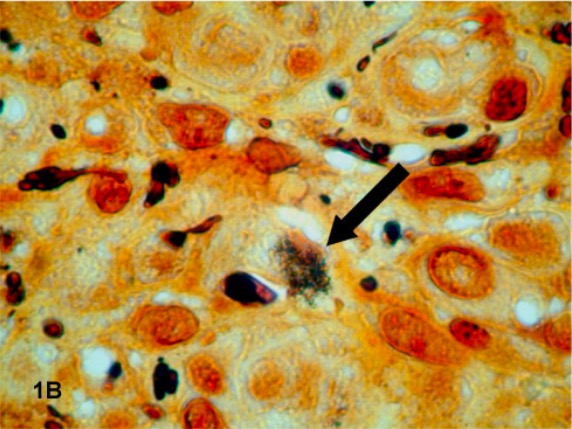
    • Se tiñe de negro con tinciones impregnadas de plata (e.g., tinción de Warthin-Starry)
  • Al AL Amyloidosis menos 22 especies nombradas; las 3 con mayor relevancia médica son:
    • B. henselae
    • B. quintana (antes conocida como Rickettsiae quintana)
    • B. bacilliformis
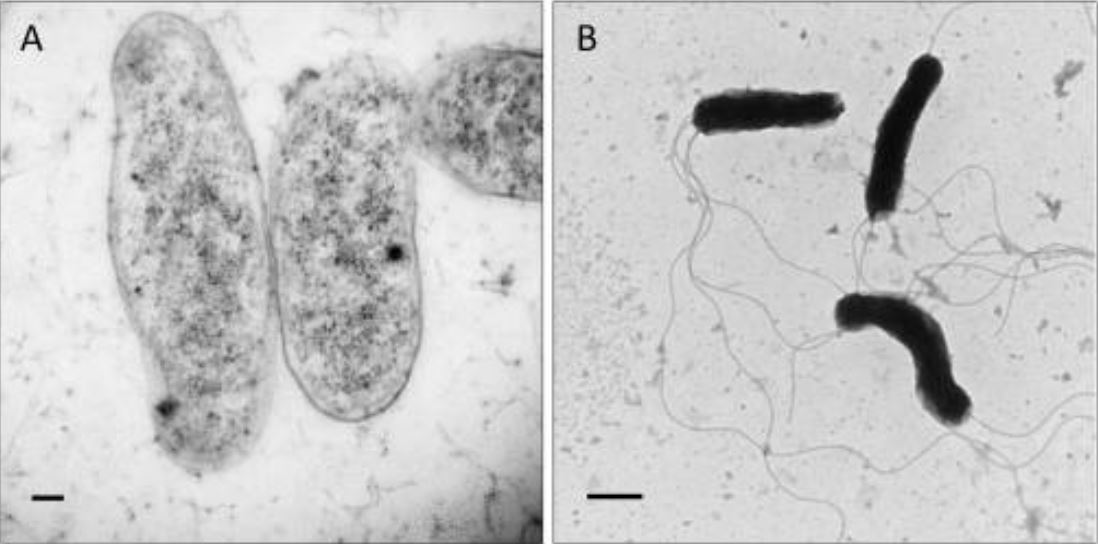
Micrografías electrónicas de transmisión que muestran la morfología de B. bacilliformis

Micrografías electrónicas de transmisión que muestran la morfología de Bartonella bacilliformis:
Las barras de escala representan 100 nm en el panel A y 500 nm en el panel B.
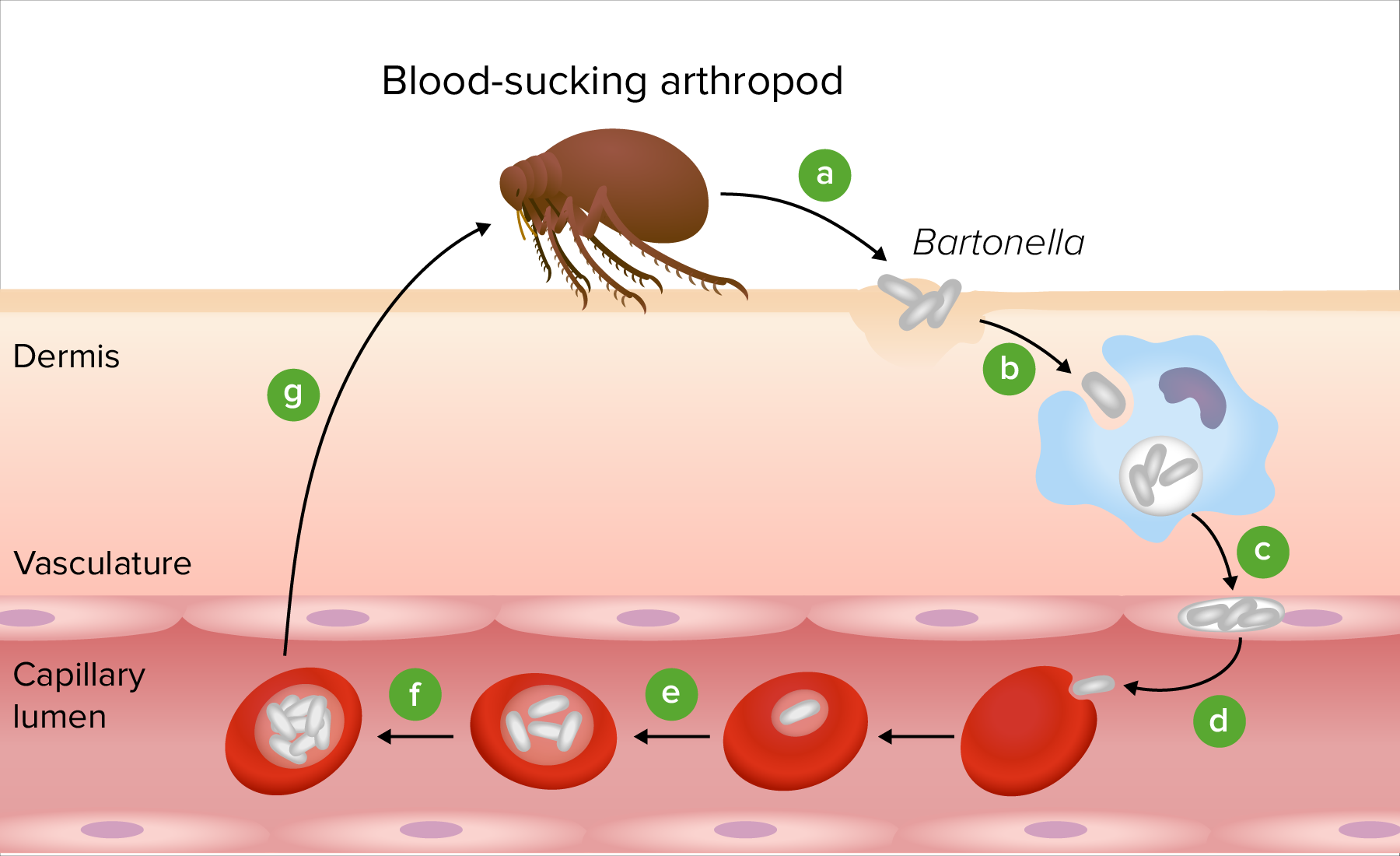
Imagen:Transmission electron micrographs showing morphology of B. bacilliformis” por Michael F. Minnick, Burt E. Anderson, Amorce Lima, James M. Battisti, Phillip G. Lawyer y Richard J. Birtles. Licencia: Dominio Público

Epidemiología y Patogénesis

Epidemiología

  • Bartonella Bartonella Bartonella is a genus of gram-negative bacteria in the family Bartonellaceae. As a facultative intracellular parasite, Bartonella can infect healthy people as well as act as an opportunistic pathogen. Bartonella species are transmitted by vectors such as ticks, fleas, sandflies, and mosquitoes. B. henselae is the most common of the 3 species known to cause human disease. Bartonella spp. se encuentra distribuida a nivel mundial.
  • Ningún tipo de bartonelosis tiene predilección por el sexo
  • Enfermedad por arañazo de gato (B. henselae):
    • Distribución a nivel mundial
    • Se diagnostican anualmente aproximadamente 12 000 casos en EN Erythema nodosum is an immune-mediated panniculitis (inflammation of the subcutaneous fat) caused by a type IV (delayed-type) hypersensitivity reaction. It commonly manifests in young women as tender, erythematous nodules on the shins. Erythema Nodosum el ámbito ambulatorio y 500 personas son hospitalizadas cada año.
    • Más frecuente en EN Erythema nodosum is an immune-mediated panniculitis (inflammation of the subcutaneous fat) caused by a type IV (delayed-type) hypersensitivity reaction. It commonly manifests in young women as tender, erythematous nodules on the shins. Erythema Nodosum niños y adolescentes que en EN Erythema nodosum is an immune-mediated panniculitis (inflammation of the subcutaneous fat) caused by a type IV (delayed-type) hypersensitivity reaction. It commonly manifests in young women as tender, erythematous nodules on the shins. Erythema Nodosum adultos (excepto en EN Erythema nodosum is an immune-mediated panniculitis (inflammation of the subcutaneous fat) caused by a type IV (delayed-type) hypersensitivity reaction. It commonly manifests in young women as tender, erythematous nodules on the shins. Erythema Nodosum adultos inmunocomprometidos)
  • Enfermedad de Carrión (B. bacilliformis)
    • Enfermedad infecciosa muy rara
    • Encontrado solo en EN Erythema nodosum is an immune-mediated panniculitis (inflammation of the subcutaneous fat) caused by a type IV (delayed-type) hypersensitivity reaction. It commonly manifests in young women as tender, erythematous nodules on the shins. Erythema Nodosum Perú (endémico), Ecuador y Colombia o asociado con antecedentes de viajes recientes a estas regiones
  • La fiebre de las trincheras (B. quintana) es más común en EN Erythema nodosum is an immune-mediated panniculitis (inflammation of the subcutaneous fat) caused by a type IV (delayed-type) hypersensitivity reaction. It commonly manifests in young women as tender, erythematous nodules on the shins. Erythema Nodosum poblaciones propensas a infestaciones de piojos, como las personas sin hogar

Transmisión

  • Transmitido principalmente por vectores como pulgas, piojos, flebótomos o garrapatas
  • Enfermedad zoonótica (transmitida de animales a personas)
  • Reservorios:
    • Humanos
    • Animales domésticos, especialmente gatos (portadores asintomáticos)
    • Animales salvajes, especialmente roedores, coyotes o zorros

Factores de riesgo del huésped

  • Pacientes inmunocomprometidos:
    • Quimioterapia
    • Trasplante de órgano
    • VIH/SIDA → la angiomatosis bacilar es una afección definitoria del SIDA
  • Falta de vivienda
  • Mala higiene
  • Alcoholismo

Patogénesis

  • Después de la exposición a un reservorio o vector, las bacterias colonizan las células endoteliales del nuevo huésped.
  • Desde las células endoteliales, las bacterias son liberadas al AL Amyloidosis torrente sanguíneo, donde infectan a los LOS Neisseria eritrocitos.
  • Las bacterias invaden y se replican en EN Erythema nodosum is an immune-mediated panniculitis (inflammation of the subcutaneous fat) caused by a type IV (delayed-type) hypersensitivity reaction. It commonly manifests in young women as tender, erythematous nodules on the shins. Erythema Nodosum los LOS Neisseria eritrocitos y en EN Erythema nodosum is an immune-mediated panniculitis (inflammation of the subcutaneous fat) caused by a type IV (delayed-type) hypersensitivity reaction. It commonly manifests in young women as tender, erythematous nodules on the shins. Erythema Nodosum las células endoteliales.
  • Los LOS Neisseria eritrocitos carecen del complejo mayor de histocompatibilidad (MHC), lo que impide la presentación de antígenos y hace HACE Altitude Sickness que la citotoxicidad dependiente del MHC sea ineficaz.
    • Todas las Bartonella Bartonella Bartonella is a genus of gram-negative bacteria in the family Bartonellaceae. As a facultative intracellular parasite, Bartonella can infect healthy people as well as act as an opportunistic pathogen. Bartonella species are transmitted by vectors such as ticks, fleas, sandflies, and mosquitoes. B. henselae is the most common of the 3 species known to cause human disease. Bartonella spp. inducen a los LOS Neisseria tejidos del huésped a producir factor inducible por hipoxia 1α, que impulsa la producción de factor de crecimiento endotelial vascular, lo que provoca proliferación vascular (angiogénesis).
    • Patología microscópica de la angiogénesis: proliferación capilar con células endoteliales epitelioides prominentes que muestran atipia nuclear y mitosis Mitosis A type of cell nucleus division by means of which the two daughter nuclei normally receive identical complements of the number of chromosomes of the somatic cells of the species. Cell Cycle, asociada con neutrófilos y bacterias
    • Las propiedades intracelulares facultativas ayudan a evadir la respuesta inmunitaria del huésped.
  • Respuesta inmunitaria:
    • Respuesta autoinmunitaria:
      • B. henselae desencadena respuestas mediadas por células T CD8+, lo que conduce a reacciones autoinmunitarias, daño nervioso e inflamación.
      • La alteración de la barrera hematoencefálica provoca inflamación focal, isquemia y daño neurológico.
      • La ​​infección crónica por Bartonella Bartonella Bartonella is a genus of gram-negative bacteria in the family Bartonellaceae. As a facultative intracellular parasite, Bartonella can infect healthy people as well as act as an opportunistic pathogen. Bartonella species are transmitted by vectors such as ticks, fleas, sandflies, and mosquitoes. B. henselae is the most common of the 3 species known to cause human disease. Bartonella mantiene la inflamación, lo que contribuye a la disfunción neurológica.
    • Respuesta inmunitaria innata:
      • Macrófagos: internalizan rápidamente B. henselae (logra saturación en EN Erythema nodosum is an immune-mediated panniculitis (inflammation of the subcutaneous fat) caused by a type IV (delayed-type) hypersensitivity reaction. It commonly manifests in young women as tender, erythematous nodules on the shins. Erythema Nodosum 4 horas) y producen citocinas proinflamatorias: TNF-α, IL-1β e IL-6.
      • Células dendríticas: regulan positivamente CXCL8, CXCL1 y CXCL13, reclutando neutrófilos y células B a los LOS Neisseria sitios de infección mientras promueven la formación de granulomas Granulomas A relatively small nodular inflammatory lesion containing grouped mononuclear phagocytes, caused by infectious and noninfectious agents. Sarcoidosis (característicos de la enfermedad por arañazo de gato) para limitar la propagación bacteriana.
    • Respuesta inmunitaria humoral:
      • Anticuerpos: bloquean la adhesión bacteriana a los LOS Neisseria eritrocitos, suprimen la bacteriemia, neutralizan los LOS Neisseria patógenos y atacan los LOS Neisseria determinantes de superficie de Bartonella Bartonella Bartonella is a genus of gram-negative bacteria in the family Bartonellaceae. As a facultative intracellular parasite, Bartonella can infect healthy people as well as act as an opportunistic pathogen. Bartonella species are transmitted by vectors such as ticks, fleas, sandflies, and mosquitoes. B. henselae is the most common of the 3 species known to cause human disease. Bartonella (p. ej., CFA) con IgG2a e IgG3.
  • El ciclo de vida intraeritrocitario provoca anemia Anemia Anemia is a condition in which individuals have low Hb levels, which can arise from various causes. Anemia is accompanied by a reduced number of RBCs and may manifest with fatigue, shortness of breath, pallor, and weakness. Subtypes are classified by the size of RBCs, chronicity, and etiology. Anemia: Overview and Types hemolítica.
  • La proliferación de células endoteliales provoca trombosis microvascular y oclusión de vasos, lo que conduce a isquemia tisular
  • Los LOS Neisseria eritrocitos son tomados por otro vector (artrópodo que se alimenta de sangre) para ser transmitidos al AL Amyloidosis siguiente huésped.
  • Tipos de Bartonella Bartonella Bartonella is a genus of gram-negative bacteria in the family Bartonellaceae. As a facultative intracellular parasite, Bartonella can infect healthy people as well as act as an opportunistic pathogen. Bartonella species are transmitted by vectors such as ticks, fleas, sandflies, and mosquitoes. B. henselae is the most common of the 3 species known to cause human disease. Bartonella:
    • B. bacilliformis:
      • Utiliza un flagelo polar para la motilidad
      • Se replica en EN Erythema nodosum is an immune-mediated panniculitis (inflammation of the subcutaneous fat) caused by a type IV (delayed-type) hypersensitivity reaction. It commonly manifests in young women as tender, erythematous nodules on the shins. Erythema Nodosum vacuolas
    • B. henselae y B. quintana:
      • Invaden las células endoteliales
      • Producen un aglutinante proteico que se adhiere a las membranas de los LOS Neisseria eritrocitos felinos
    • B. quintana:
      • Invade las células endoteliales
      • Forma agregados bacterianos que son absorbidos internamente por el invasoma, una estructura fagosómica única
      • Los LOS Neisseria invasomas proliferan y forman vesículas intracelulares.
Patogenia de Bartonella

Patogénesis de Bartonella:
Después de la transmisión por un vector artrópodo (a), la bacteria Bartonella coloniza la piel (b). Luego, las bacterias son transportadas al endotelio vascular (c) e ingresan en el torrente sanguíneo para invadir los eritrocitos (d). Después de la replicación dentro de los eritrocitos (e), las bacterias persisten en el nicho intraeritrocitario (f), haciéndolos competentes para la transmisión por otro artrópodo que se alimenta de sangre (g).

Imagen por Lecturio. Licencia: CC BY-NC-SA 4.0

Enfermedades Causadas por Bartonella

La bartonelosis en EN Erythema nodosum is an immune-mediated panniculitis (inflammation of the subcutaneous fat) caused by a type IV (delayed-type) hypersensitivity reaction. It commonly manifests in young women as tender, erythematous nodules on the shins. Erythema Nodosum humanos es causada por 3 especies principales de bacterias Bartonella Bartonella Bartonella is a genus of gram-negative bacteria in the family Bartonellaceae. As a facultative intracellular parasite, Bartonella can infect healthy people as well as act as an opportunistic pathogen. Bartonella species are transmitted by vectors such as ticks, fleas, sandflies, and mosquitoes. B. henselae is the most common of the 3 species known to cause human disease. Bartonella y produce una amplia gama de síntomas y enfermedades según la especie y el estado inmunitario del individuo infectado.

Tabla: Enfermedades causadas por especies de Bartonella Bartonella Bartonella is a genus of gram-negative bacteria in the family Bartonellaceae. As a facultative intracellular parasite, Bartonella can infect healthy people as well as act as an opportunistic pathogen. Bartonella species are transmitted by vectors such as ticks, fleas, sandflies, and mosquitoes. B. henselae is the most common of the 3 species known to cause human disease. Bartonella
Especies Enfermedad
B. bacilliformis Enfermedad de Carrión, también conocida como:
  • Fiebre de la Oroya: forma bacteriémica inicial
  • Verruga peruana Verruga peruana Bartonella: forma eruptiva de aparición tardía
B. quintana
  • Fiebre de las trincheras (“fiebre de los LOS Neisseria 5 días”)
  • BA: si está gravemente inmunosuprimido; una afección definitoria del SIDA
  • Endocarditis Endocarditis Endocarditis is an inflammatory disease involving the inner lining (endometrium) of the heart, most commonly affecting the cardiac valves. Both infectious and noninfectious etiologies lead to vegetations on the valve leaflets. Patients may present with nonspecific symptoms such as fever and fatigue. Endocarditis (a menudo con cultivos negativos)
B. henselae
  • CSD
  • BA: si está gravemente inmunosuprimido; una afección definitoria del SIDA
  • Peliosis hepática: BA en EN Erythema nodosum is an immune-mediated panniculitis (inflammation of the subcutaneous fat) caused by a type IV (delayed-type) hypersensitivity reaction. It commonly manifests in young women as tender, erythematous nodules on the shins. Erythema Nodosum hígado, bazo, ganglios linfáticos
  • Endocarditis Endocarditis Endocarditis is an inflammatory disease involving the inner lining (endometrium) of the heart, most commonly affecting the cardiac valves. Both infectious and noninfectious etiologies lead to vegetations on the valve leaflets. Patients may present with nonspecific symptoms such as fever and fatigue. Endocarditis: con CSD atípica; a menudo con cultivos negativos
  • Neurorretinitis: con CSD atípica
  • Meningitis Meningitis Meningitis is inflammation of the meninges, the protective membranes of the brain, and spinal cord. The causes of meningitis are varied, with the most common being bacterial or viral infection. The classic presentation of meningitis is a triad of fever, altered mental status, and nuchal rigidity. Meningitis/encefalitis: con CSD atípica
BA: angiomatosis bacilar (en inglés)
CSD: enfermedad por arañazo de gato (en inglés)

Enfermedad de Carrión (bartonelosis sudamericana)

Transmisión:

  • Transportado por flebótomos nocturnos del género Lutzomyia (anteriormente Phlebotomus)

Presentación clínica:

  • Curso clínico bifásico que solía considerarse 2 enfermedades separadas
  • Fase aguda:
    • También conocida como fiebre de la Oroya
    • Se desarrolla de 3–12 semanas después de la exposición inicial
    • Fiebre alta y escalofríos de inicio repentino
    • Sudoración excesiva
    • Cefalea intensa
    • Debilidad
    • Palidez cutánea
    • Dolor Dolor Inflammation abdominal, muscular o articular
    • Meningoencefalitis y/o convulsiones
    • La anemia Anemia Anemia is a condition in which individuals have low Hb levels, which can arise from various causes. Anemia is accompanied by a reduced number of RBCs and may manifest with fatigue, shortness of breath, pallor, and weakness. Subtypes are classified by the size of RBCs, chronicity, and etiology. Anemia: Overview and Types hemolítica severa puede provocar:
      • Confusión, desorientación o coma Coma Coma is defined as a deep state of unarousable unresponsiveness, characterized by a score of 3 points on the GCS. A comatose state can be caused by a multitude of conditions, making the precise epidemiology and prognosis of coma difficult to determine. Coma
      • Dolor Dolor Inflammation torácico
      • Trombocitopenia
      • Disnea
      • Disfunción orgánica
  • Fase crónica:
    • También conocida como verruga peruana Verruga peruana Bartonella
    • Generalmente, se desarrolla en EN Erythema nodosum is an immune-mediated panniculitis (inflammation of the subcutaneous fat) caused by a type IV (delayed-type) hypersensitivity reaction. It commonly manifests in young women as tender, erythematous nodules on the shins. Erythema Nodosum el transcurso de semanas o meses en EN Erythema nodosum is an immune-mediated panniculitis (inflammation of the subcutaneous fat) caused by a type IV (delayed-type) hypersensitivity reaction. It commonly manifests in young women as tender, erythematous nodules on the shins. Erythema Nodosum personas no tratadas que pueden o no haber manifestado la fase aguda de la enfermedad
    • Lesiones cutáneas características
      • De color rojizo-púrpura
      • Se desarrollan en EN Erythema nodosum is an immune-mediated panniculitis (inflammation of the subcutaneous fat) caused by a type IV (delayed-type) hypersensitivity reaction. It commonly manifests in young women as tender, erythematous nodules on the shins. Erythema Nodosum brotes en EN Erythema nodosum is an immune-mediated panniculitis (inflammation of the subcutaneous fat) caused by a type IV (delayed-type) hypersensitivity reaction. It commonly manifests in young women as tender, erythematous nodules on the shins. Erythema Nodosum varias regiones del cuerpo a la vez o en EN Erythema nodosum is an immune-mediated panniculitis (inflammation of the subcutaneous fat) caused by a type IV (delayed-type) hypersensitivity reaction. It commonly manifests in young women as tender, erythematous nodules on the shins. Erythema Nodosum un patrón migratorio
      • Generalmente, se encuentran en EN Erythema nodosum is an immune-mediated panniculitis (inflammation of the subcutaneous fat) caused by a type IV (delayed-type) hypersensitivity reaction. It commonly manifests in young women as tender, erythematous nodules on the shins. Erythema Nodosum la piel expuesta, como la cara, los LOS Neisseria brazos y las piernas, pero también puede desarrollarse en EN Erythema nodosum is an immune-mediated panniculitis (inflammation of the subcutaneous fat) caused by a type IV (delayed-type) hypersensitivity reaction. It commonly manifests in young women as tender, erythematous nodules on the shins. Erythema Nodosum membranas mucosas y órganos internos
      • Las lesiones son inicialmente pequeñas y se vuelven nodulares (0,2 a 4 cm de diámetro)
      • Pueden sangrar, ulcerarse o convertirse en EN Erythema nodosum is an immune-mediated panniculitis (inflammation of the subcutaneous fat) caused by a type IV (delayed-type) hypersensitivity reaction. It commonly manifests in young women as tender, erythematous nodules on the shins. Erythema Nodosum pústulas

Fiebre de las trincheras

Transmisión:

  • Transportada principalmente por el piojo del cuerpo humano Pediculus humanus Pediculus humanus Lice of the genus pediculus, family pediculidae. Pediculus humanus corporis is the human body louse and pediculus humanus capitis is the human head louse. Bartonella var. corporis (junto con otras especies de piojos, garrapatas y pulgas)
  • Transmisión a través de la inoculación de heces de piojos infectados en EN Erythema nodosum is an immune-mediated panniculitis (inflammation of the subcutaneous fat) caused by a type IV (delayed-type) hypersensitivity reaction. It commonly manifests in young women as tender, erythematous nodules on the shins. Erythema Nodosum abrasiones de la piel o en EN Erythema nodosum is an immune-mediated panniculitis (inflammation of the subcutaneous fat) caused by a type IV (delayed-type) hypersensitivity reaction. It commonly manifests in young women as tender, erythematous nodules on the shins. Erythema Nodosum las conjuntivas

Presentación clínica:

  • Período de incubación: 5–20 días (promedio, 7,7)
  • La fiebre de las trincheras clásica puede variar desde una enfermedad leve similar a la gripe, hasta una enfermedad debilitante
  • La enfermedad aguda generalmente se presenta con malestar general, fiebre, cefalea, mareo, náuseas y vómitos, dolor Dolor Inflammation de huesos y, a veces, erupción macular en EN Erythema nodosum is an immune-mediated panniculitis (inflammation of the subcutaneous fat) caused by a type IV (delayed-type) hypersensitivity reaction. It commonly manifests in young women as tender, erythematous nodules on the shins. Erythema Nodosum el tronco
  • La fiebre generalmente es episódica y se presenta cada 5 días (“fiebre de los LOS Neisseria 5 días” o “fiebre quintana”).

Enfermedad por arañazo de gato

Transmisión:

  • Los LOS Neisseria gatos son los LOS Neisseria portadores más importantes, aunque existen casos de transmisión por perros.
  • Vías de transmisión:
    • Arañazo o mordedura de un gato infectado
    • Picadura de pulgas de gato
    • Contacto con saliva Saliva The clear, viscous fluid secreted by the salivary glands and mucous glands of the mouth. It contains mucins, water, organic salts, and ptyalin. Salivary Glands: Anatomy de gato a través de piel rota o superficies mucosas

Presentación clínica:

  • Puede no manifestarse hasta varios días o semanas después de la exposición inicial
  • Lesiones papulares características
    • Comienza como una mácula en EN Erythema nodosum is an immune-mediated panniculitis (inflammation of the subcutaneous fat) caused by a type IV (delayed-type) hypersensitivity reaction. It commonly manifests in young women as tender, erythematous nodules on the shins. Erythema Nodosum el sitio de la infección que puede convertirse en EN Erythema nodosum is an immune-mediated panniculitis (inflammation of the subcutaneous fat) caused by a type IV (delayed-type) hypersensitivity reaction. It commonly manifests in young women as tender, erythematous nodules on the shins. Erythema Nodosum una pápula indolora después de 3–10 días
    • La pápula puede convertirse en EN Erythema nodosum is an immune-mediated panniculitis (inflammation of the subcutaneous fat) caused by a type IV (delayed-type) hypersensitivity reaction. It commonly manifests in young women as tender, erythematous nodules on the shins. Erythema Nodosum una vesícula, formar una costra y sana dejando una cicatriz después de 1–3 semanas.
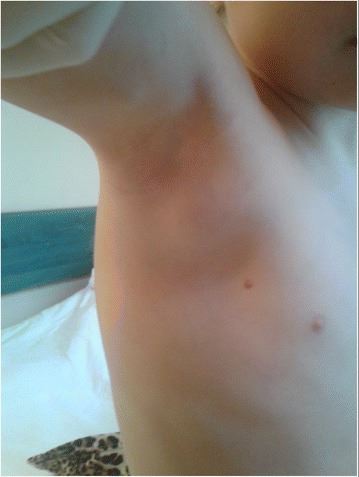
  • Crecimiento gradual de los LOS Neisseria ganglios linfáticos regionales
    • Generalmente, se localiza en EN Erythema nodosum is an immune-mediated panniculitis (inflammation of the subcutaneous fat) caused by a type IV (delayed-type) hypersensitivity reaction. It commonly manifests in young women as tender, erythematous nodules on the shins. Erythema Nodosum las regiones axilar, cervical o inguinal
    • Los LOS Neisseria ganglios inflamados son sensibles y pueden durar 2–3 meses o más
    • Pueden lucir eritematosos y ser cálidos al AL Amyloidosis tacto
    • Pueden presentar supuración
  • Síntomas generales o similares a la gripe:
    • Malestar, dolores de espalda y cuerpo
    • Fatiga
    • Cefalea
    • Fiebre leve
    • Pérdida de apetito y pérdida de peso.
    • Dolor Dolor Inflammation de garganta
  • Complicaciones (“enfermedad por arañazo de gato atípica”), que generalmente se presentan en EN Erythema nodosum is an immune-mediated panniculitis (inflammation of the subcutaneous fat) caused by a type IV (delayed-type) hypersensitivity reaction. It commonly manifests in young women as tender, erythematous nodules on the shins. Erythema Nodosum personas inmunocomprometidas:
    • Hepatitis granulomatosa y/o esplenitis
    • Osteomielitis
    • Angiomatosis bacilar
    • Meningitis Meningitis Meningitis is inflammation of the meninges, the protective membranes of the brain, and spinal cord. The causes of meningitis are varied, with the most common being bacterial or viral infection. The classic presentation of meningitis is a triad of fever, altered mental status, and nuchal rigidity. Meningitis y/o encefalitis
    • Neurorretinitis
    • Síndrome oculoglandular de Parinaud (similar a la conjuntivitis más linfadenopatía)
    • Parotiditis
    • Endocarditis Endocarditis Endocarditis is an inflammatory disease involving the inner lining (endometrium) of the heart, most commonly affecting the cardiac valves. Both infectious and noninfectious etiologies lead to vegetations on the valve leaflets. Patients may present with nonspecific symptoms such as fever and fatigue. Endocarditis
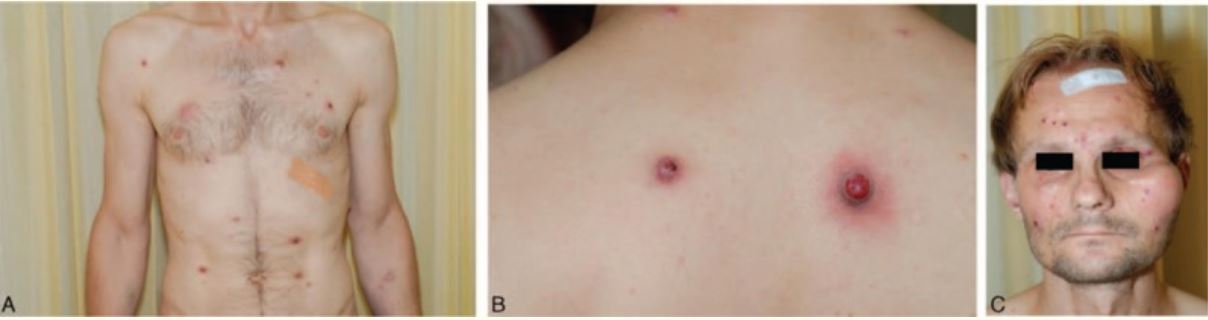
Presentación clínica de un paciente con angiomatosis bacilar

Presentación clínica de un paciente con angiomatosis bacilar:
A: Múltiples pápulas eritematosas en el tórax y el abdomen
B: 2 nódulos en la espalda
C: Pápulas en la cara con lesión de masa subcutánea sobre el arco cigomático izquierdo
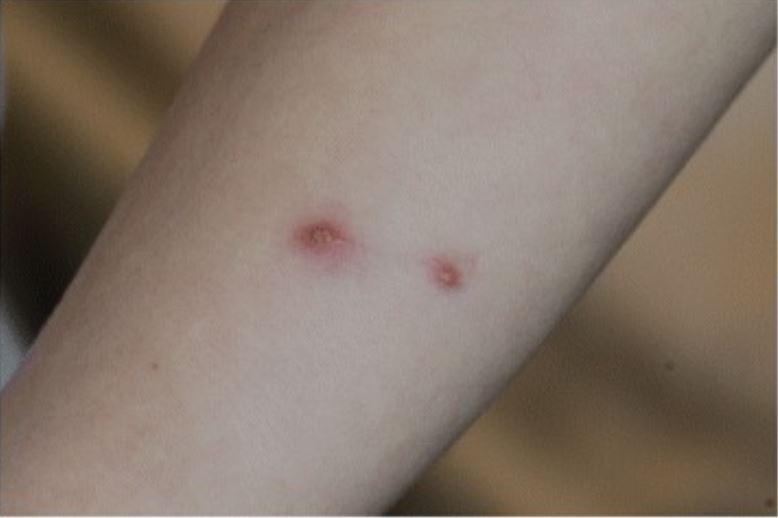
Imagen:Bacillary angiomatosis presenting with facial tumor and multiple abscesses” por Markowicz M, Käser S, Müller A, Lang G, Lang S, Mayerhöfer M, Stanek G, Rieger A. Licencia: CC BY 4.0

Angiomatosis bacilar

  • Ocurre principalmente en EN Erythema nodosum is an immune-mediated panniculitis (inflammation of the subcutaneous fat) caused by a type IV (delayed-type) hypersensitivity reaction. It commonly manifests in young women as tender, erythematous nodules on the shins. Erythema Nodosum individuos inmunocomprometidos
    • Especialmente en EN Erythema nodosum is an immune-mediated panniculitis (inflammation of the subcutaneous fat) caused by a type IV (delayed-type) hypersensitivity reaction. It commonly manifests in young women as tender, erythematous nodules on the shins. Erythema Nodosum pacientes con SIDA y un recuento de CD4 < 100 células/μL
    • Constituye una afección definitoria del SIDA
  • Enfermedad proliferativa vascular que afecta principalmente la piel, pero puede desarrollarse en EN Erythema nodosum is an immune-mediated panniculitis (inflammation of the subcutaneous fat) caused by a type IV (delayed-type) hypersensitivity reaction. It commonly manifests in young women as tender, erythematous nodules on the shins. Erythema Nodosum otros órganos (e.g., médula ósea, hígado, bazo o ganglios linfáticos)
  • Lesiones cutáneas eritematosas características
    • Generalmente elevadas
    • Pueden estar rodeadas por un anillo escamoso
    • Muy friables y sangran fácilmente

Peliosis hepática

  • Ocurre principalmente en EN Erythema nodosum is an immune-mediated panniculitis (inflammation of the subcutaneous fat) caused by a type IV (delayed-type) hypersensitivity reaction. It commonly manifests in young women as tender, erythematous nodules on the shins. Erythema Nodosum individuos inmunocomprometidos, especialmente en EN Erythema nodosum is an immune-mediated panniculitis (inflammation of the subcutaneous fat) caused by a type IV (delayed-type) hypersensitivity reaction. It commonly manifests in young women as tender, erythematous nodules on the shins. Erythema Nodosum pacientes con SIDA
  • Proliferación vascular de capilares hepáticos sinusoides que dan como resultado sacos llenos de sangre dentro del parénquima hepático
  • Comúnmente asociado con peliosis del bazo y los LOS Neisseria ganglios linfáticos

Diagnóstico

La mayoría de los LOS Neisseria casos de bartonelosis pueden ser diagnosticados mediante la detección de síntomas y hallazgos físicos característicos y una toma completa de los LOS Neisseria antecedentes médicos. Se utilizan pruebas de laboratorio especializadas para confirmar el diagnóstico.

  • La infección por Bartonella Bartonella Bartonella is a genus of gram-negative bacteria in the family Bartonellaceae. As a facultative intracellular parasite, Bartonella can infect healthy people as well as act as an opportunistic pathogen. Bartonella species are transmitted by vectors such as ticks, fleas, sandflies, and mosquitoes. B. henselae is the most common of the 3 species known to cause human disease. Bartonella puede ser difícil de detectar, confirmar y diagnosticar.
  • Las pruebas serológicas son la herramienta diagnóstica más rentable, pero pueden producirse falsos negativos incluso durante la infección activa.
  • La detección de anticuerpos IgG IgG The major immunoglobulin isotype class in normal human serum. There are several isotype subclasses of igg, for example, igg1, igg2a, and igg2b. Hypersensitivity Pneumonitis e IgM IgM A class of immunoglobulin bearing mu chains (immunoglobulin mu-chains). Igm can fix complement. The name comes from its high molecular weight and originally being called a macroglobulin. Immunoglobulins: Types and Functions en EN Erythema nodosum is an immune-mediated panniculitis (inflammation of the subcutaneous fat) caused by a type IV (delayed-type) hypersensitivity reaction. It commonly manifests in young women as tender, erythematous nodules on the shins. Erythema Nodosum suero sanguíneo mediante ensayos de inmunofluorescencia indirecta se utilizan para detectar B. henselae en EN Erythema nodosum is an immune-mediated panniculitis (inflammation of the subcutaneous fat) caused by a type IV (delayed-type) hypersensitivity reaction. It commonly manifests in young women as tender, erythematous nodules on the shins. Erythema Nodosum casos sospechosos de enfermedad por arañazo de gato.
  • El examen microscópico de frotis de sangre con tinción de Giemsa se usa para detectar B. bacilliformis en EN Erythema nodosum is an immune-mediated panniculitis (inflammation of the subcutaneous fat) caused by a type IV (delayed-type) hypersensitivity reaction. It commonly manifests in young women as tender, erythematous nodules on the shins. Erythema Nodosum casos sospechosos de enfermedad de Carrión.
  • El análisis por reacción en EN Erythema nodosum is an immune-mediated panniculitis (inflammation of the subcutaneous fat) caused by a type IV (delayed-type) hypersensitivity reaction. It commonly manifests in young women as tender, erythematous nodules on the shins. Erythema Nodosum cadena de la polimerasa ( PCR PCR Polymerase chain reaction (PCR) is a technique that amplifies DNA fragments exponentially for analysis. The process is highly specific, allowing for the targeting of specific genomic sequences, even with minuscule sample amounts. The PCR cycles multiple times through 3 phases: denaturation of the template DNA, annealing of a specific primer to the individual DNA strands, and synthesis/elongation of new DNA molecules. Polymerase Chain Reaction (PCR), por sus siglas en EN Erythema nodosum is an immune-mediated panniculitis (inflammation of the subcutaneous fat) caused by a type IV (delayed-type) hypersensitivity reaction. It commonly manifests in young women as tender, erythematous nodules on the shins. Erythema Nodosum inglés) de tejidos y fluidos corporales es la prueba diagnóstica más específica para detectar Bartonella Bartonella Bartonella is a genus of gram-negative bacteria in the family Bartonellaceae. As a facultative intracellular parasite, Bartonella can infect healthy people as well as act as an opportunistic pathogen. Bartonella species are transmitted by vectors such as ticks, fleas, sandflies, and mosquitoes. B. henselae is the most common of the 3 species known to cause human disease. Bartonella spp.
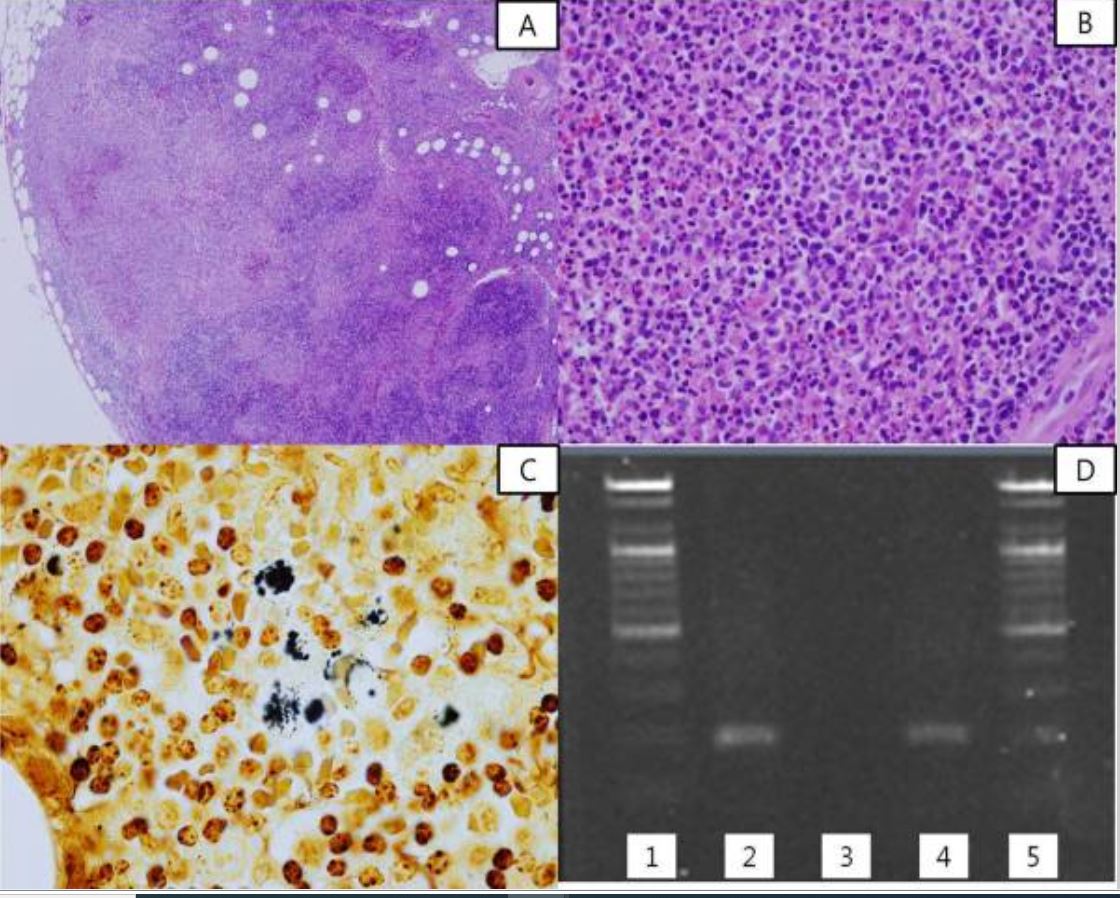
  • Otras Bartonella Bartonella Bartonella is a genus of gram-negative bacteria in the family Bartonellaceae. As a facultative intracellular parasite, Bartonella can infect healthy people as well as act as an opportunistic pathogen. Bartonella species are transmitted by vectors such as ticks, fleas, sandflies, and mosquitoes. B. henselae is the most common of the 3 species known to cause human disease. Bartonella spp. son visibles solo con tinciones de plata.
  • Las pruebas de imagenología abdominal se utilizan para confirmar los LOS Neisseria casos sospechosos de complicaciones del hígado y el bazo.

Tratamiento

Aparte de los LOS Neisseria cuidados de soporte, el tratamiento depende de la especie específica de Bartonella Bartonella Bartonella is a genus of gram-negative bacteria in the family Bartonellaceae. As a facultative intracellular parasite, Bartonella can infect healthy people as well as act as an opportunistic pathogen. Bartonella species are transmitted by vectors such as ticks, fleas, sandflies, and mosquitoes. B. henselae is the most common of the 3 species known to cause human disease. Bartonella adquirida y la gravedad de cada caso.

  • Enfermedad por arañazo de gato:
    • En EN Erythema nodosum is an immune-mediated panniculitis (inflammation of the subcutaneous fat) caused by a type IV (delayed-type) hypersensitivity reaction. It commonly manifests in young women as tender, erythematous nodules on the shins. Erythema Nodosum casos leves: los LOS Neisseria antibióticos pueden no ser necesarios, pero la azitromicina puede acortar la duración de los LOS Neisseria síntomas.
    • En EN Erythema nodosum is an immune-mediated panniculitis (inflammation of the subcutaneous fat) caused by a type IV (delayed-type) hypersensitivity reaction. It commonly manifests in young women as tender, erythematous nodules on the shins. Erythema Nodosum casos moderados: azitromicina, eritromicina o doxiciclina (se pueden agregar esteroides para la linfadenopatía refractaria)
    • En EN Erythema nodosum is an immune-mediated panniculitis (inflammation of the subcutaneous fat) caused by a type IV (delayed-type) hypersensitivity reaction. It commonly manifests in young women as tender, erythematous nodules on the shins. Erythema Nodosum casos severos: rifampicina y eritromicina o doxiciclina
  • Enfermedad de Carrión:
    • Fase aguda: cloranfenicol o ciprofloxacino ( en EN Erythema nodosum is an immune-mediated panniculitis (inflammation of the subcutaneous fat) caused by a type IV (delayed-type) hypersensitivity reaction. It commonly manifests in young women as tender, erythematous nodules on the shins. Erythema Nodosum casos pediátricos no se utiliza ciprofloxacino y se añaden betalactámicos)
    • Fase crónica: rifampicina o macrólidos
  • Fiebre de las trincheras: doxiciclina y gentamicina
  • Bartonelosis en EN Erythema nodosum is an immune-mediated panniculitis (inflammation of the subcutaneous fat) caused by a type IV (delayed-type) hypersensitivity reaction. It commonly manifests in young women as tender, erythematous nodules on the shins. Erythema Nodosum pacientes inmunocomprometidos: curso prolongado de eritromicina o doxiciclina

Diagnóstico Diferencial

  • Linfadenitis cervical: los LOS Neisseria ganglios linfáticos cervicales pueden agrandarse, inflamarse y estar sensibles debido a infecciones virales (e.g., adenovirus Adenovirus Adenovirus (member of the family Adenoviridae) is a nonenveloped, double-stranded DNA virus. Adenovirus is transmitted in a variety of ways, and it can have various presentations based on the site of entry. Presentation can include febrile pharyngitis, conjunctivitis, acute respiratory disease, atypical pneumonia, and gastroenteritis. Adenovirus) o infecciones bacterianas (e.g., Staphylococcus aureus Staphylococcus aureus Potentially pathogenic bacteria found in nasal membranes, skin, hair follicles, and perineum of warm-blooded animals. They may cause a wide range of infections and intoxications. Brain Abscess). El tratamiento de la linfadenitis cervical es mediante el diagnóstico de la causa subyacente. Rara vez se necesitan biopsias.
  • Linfoma de Hodgkin: neoplasia maligna de los LOS Neisseria linfocitos B dentro de los LOS Neisseria ganglios linfáticos. El hallazgo histológico del linfoma de Hodgkin es una célula de Reed-Sternberg (linfocito B gigante con inclusiones eosinofílicas). La presentación de la enfermedad es con linfadenopatía y “síntomas B” constitucionales. El linfoma de Hodgkin se trata con quimioterapia y radioterapia.
  • Linfomas no Hodgkin: grupo diverso de neoplasias malignas de linfocitos B, linfocitos T y células asesinas naturales. Los LOS Neisseria ganglios linfáticos están involucrados en EN Erythema nodosum is an immune-mediated panniculitis (inflammation of the subcutaneous fat) caused by a type IV (delayed-type) hypersensitivity reaction. It commonly manifests in young women as tender, erythematous nodules on the shins. Erythema Nodosum ⅔ de los LOS Neisseria linfomas no Hodgkin; el resto de los LOS Neisseria linfomas no Hodgkin son extraganglionares. En EN Erythema nodosum is an immune-mediated panniculitis (inflammation of the subcutaneous fat) caused by a type IV (delayed-type) hypersensitivity reaction. It commonly manifests in young women as tender, erythematous nodules on the shins. Erythema Nodosum los LOS Neisseria Estados Unidos, los LOS Neisseria linfomas no Hodgkin son 10ⅹ más comunes que el linfoma de Hodgkin y representan una causa común de muerte relacionada con el cáncer.
  • Celulitis: infección cutánea bacteriana frecuente y dolorosa que afecta a las capas más profundas de la dermis Dermis A layer of vascularized connective tissue underneath the epidermis. The surface of the dermis contains innervated papillae. Embedded in or beneath the dermis are sweat glands; hair follicles; and sebaceous glands. Skin: Structure and Functions y del tejido celular subcutáneo. La celulitis se presenta como un área eritematosa y edematosa que se siente caliente y sensible al AL Amyloidosis tacto. La afección es causada más comúnmente por Staphylococcus aureus Staphylococcus aureus Potentially pathogenic bacteria found in nasal membranes, skin, hair follicles, and perineum of warm-blooded animals. They may cause a wide range of infections and intoxications. Brain Abscess y Streptococcus Streptococcus Streptococcus is one of the two medically important genera of gram-positive cocci, the other being Staphylococcus. Streptococci are identified as different species on blood agar on the basis of their hemolytic pattern and sensitivity to optochin and bacitracin. There are many pathogenic species of streptococci, including S. pyogenes, S. agalactiae, S. pneumoniae, and the viridans streptococci. Streptococcus pyogenes. Generalmente, el diagnóstico es clínico y el tratamiento se realiza con antibióticos en EN Erythema nodosum is an immune-mediated panniculitis (inflammation of the subcutaneous fat) caused by a type IV (delayed-type) hypersensitivity reaction. It commonly manifests in young women as tender, erythematous nodules on the shins. Erythema Nodosum función de los LOS Neisseria organismos sospechosos.
  • Sarcoma de Kaposi Kaposi A multicentric, malignant neoplastic vascular proliferation characterized by the development of bluish-red cutaneous nodules, usually on the lower extremities, most often on the toes or feet, and slowly increasing in size and number and spreading to more proximal areas. The tumors have endothelium-lined channels and vascular spaces admixed with variably sized aggregates of spindle-shaped cells, and often remain confined to the skin and subcutaneous tissue, but widespread visceral involvement may occur. Hhv-8 is the suspected cause. There is also a high incidence in AIDS patients. AIDS-defining Conditions: tumor Tumor Inflammation vascular maligno y agresivo que es una afección definitoria del SIDA y generalmente se presenta en EN Erythema nodosum is an immune-mediated panniculitis (inflammation of the subcutaneous fat) caused by a type IV (delayed-type) hypersensitivity reaction. It commonly manifests in young women as tender, erythematous nodules on the shins. Erythema Nodosum pacientes con un recuento de CD4 < 500 células/μL. El sarcoma de Kaposi Kaposi A multicentric, malignant neoplastic vascular proliferation characterized by the development of bluish-red cutaneous nodules, usually on the lower extremities, most often on the toes or feet, and slowly increasing in size and number and spreading to more proximal areas. The tumors have endothelium-lined channels and vascular spaces admixed with variably sized aggregates of spindle-shaped cells, and often remain confined to the skin and subcutaneous tissue, but widespread visceral involvement may occur. Hhv-8 is the suspected cause. There is also a high incidence in AIDS patients. AIDS-defining Conditions es causado por el virus Virus Viruses are infectious, obligate intracellular parasites composed of a nucleic acid core surrounded by a protein capsid. Viruses can be either naked (non-enveloped) or enveloped. The classification of viruses is complex and based on many factors, including type and structure of the nucleoid and capsid, the presence of an envelope, the replication cycle, and the host range. Virology herpes humano 8 (HHV-8, por sus siglas en EN Erythema nodosum is an immune-mediated panniculitis (inflammation of the subcutaneous fat) caused by a type IV (delayed-type) hypersensitivity reaction. It commonly manifests in young women as tender, erythematous nodules on the shins. Erythema Nodosum inglés) y se transmite a través de la saliva Saliva The clear, viscous fluid secreted by the salivary glands and mucous glands of the mouth. It contains mucins, water, organic salts, and ptyalin. Salivary Glands: Anatomy y el contacto sexual. La afección se presenta como lesiones papulares o similares a placas de color rosa, rojo, púrpura o marrón que no son dolorosas ni pruriginosas.
  • Hemangioma Hemangioma A vascular anomaly due to proliferation of blood vessels that forms a tumor-like mass. The common types involve capillaries and veins. It can occur anywhere in the body but is most frequently noticed in the skin and subcutaneous tissue. Imaging of the Liver and Biliary Tract: tumor Tumor Inflammation benigno formado por vasos sanguíneos y capilares. El hemangioma Hemangioma A vascular anomaly due to proliferation of blood vessels that forms a tumor-like mass. The common types involve capillaries and veins. It can occur anywhere in the body but is most frequently noticed in the skin and subcutaneous tissue. Imaging of the Liver and Biliary Tract generalmente se presenta como una pápula bien delimitada de color púrpura o rojo.
  • Granuloma piógeno: lesión vascular benigna de causa u origen desconocido. El granuloma piógeno a veces se desarrolla después de un traumatismo o una lesión menor. El granuloma se presenta como una pápula roja o morada que es friable y sangra con facilidad.
  • Brucelosis: infección zoonótica que se propaga predominantemente a través de la ingestión de productos lácteos no pasteurizados o el contacto directo con productos animales infectados. Las manifestaciones clínicas de la brucelosis incluyen fiebre, artralgias, malestar general, linfadenopatía y hepatoesplenomegalia. Las manifestaciones clínicas, el antecedente de exposición, la serología y los LOS Neisseria datos de cultivo se utilizan en EN Erythema nodosum is an immune-mediated panniculitis (inflammation of the subcutaneous fat) caused by a type IV (delayed-type) hypersensitivity reaction. It commonly manifests in young women as tender, erythematous nodules on the shins. Erythema Nodosum el diagnóstico. El tratamiento implica una combinación de antibióticos, que incluyen doxiciclina, rifampicina y aminoglucósidos.

Referencias

  1. Hammoud, K. (2024). Bartonellosis (Bartonella Infection). Emedicine. Retrieved December 5, 2024, from https://emedicine.medscape.com/article/213169-overview#a6.
  2. Spach, D. (2023). Clinical features, diagnosis, and treatment of Bartonella quintana. UpToDate. Retrieved December 5, 2024, from https://www.uptodate.com/contents/clinical-features-diagnosis-and-treatment-of-bartonella-quintana-infections
  3. Nelson VA, Saha S, Mead PS. (2016). Cat-scratch disease in the United States, 2005-2013. Emerg Infect Dis 22:1741–1746. https://pubmed.ncbi.nlm.nih.gov/27648778/
  4. Versalovic J, Carroll KC, Funke G, Jorgensen JH, Landry ML, Warnock DW. (2011). Manual of Clinical Microbiology, 10th ed. Washington, DC: ASM Press.
  5. Angelakis E, Raoult D. (2014). Pathogenicity and treatment of Bartonella infections. Int J Antimicrob Agents 44:16–25. https://pubmed.ncbi.nlm.nih.gov/24933445/
  6. Eicher SC, Dehio C. (2012). Bartonella entry mechanisms into mammalian host cells. Cell Microbiol 14:1166–1173. https://doi.org/https://doi.org/10.1111/j.1462-5822.2012.01806.x
  7. Corey C. (2018). Herpes simplex virus infections. In Jameson JL, et al. (Eds.), Harrison’s Principles of Internal Medicine, 20th ed. Vol. 1, pp. 1345–1354. 
  8. Giladi M, Ephros M. (2018). Bartonella infections, including cat-scratch disease. In Jameson JL, et al. (Ed.s), Harrison’s Principles of Internal Medicine, 20th ed. Vol. 1, pp. 1209–1214. 
  9. Spach, D. H., & Kaplan, S. L. (2024). Microbiology, epidemiology, clinical manifestations, and diagnosis of cat scratch disease. UpToDate. Retrieved December 5, 2024, from https://www.uptodate.com/contents/microbiology-epidemiology-clinical-manifestations-and-diagnosis-of-cat-scratch-disease 
  10. Bush, J. C., Robveille, C., Maggi, R. G., & Breitschwerdt, E. B. (2024). Neurobartonelloses: Emerging from obscurity! Parasites & Vectors, 17(416). Retrieved December 5, 2024, from https://parasitesandvectors.biomedcentral.com/articles/10.1186/s13071-024-06491-3
  11. Jin, X., Gou, Y., Xin, Y., Li, J., Sun, J., Li, T., & Feng, J. (2023). Advancements in understanding the molecular and immune mechanisms of Bartonella pathogenicity. Frontiers in Microbiology, 14, 1196700. https://doi.org/10.3389/fmicb.2023.1196700

¡Crea tu cuenta gratis o inicia una sesión para seguir leyendo!

Regístrate ahora y obtén acceso gratuito a Lecturio con páginas de concepto, videos médicos y cuestionarios para tu educación médica.

User Reviews

Details