


Vírus Ébola/Vírus Marburg

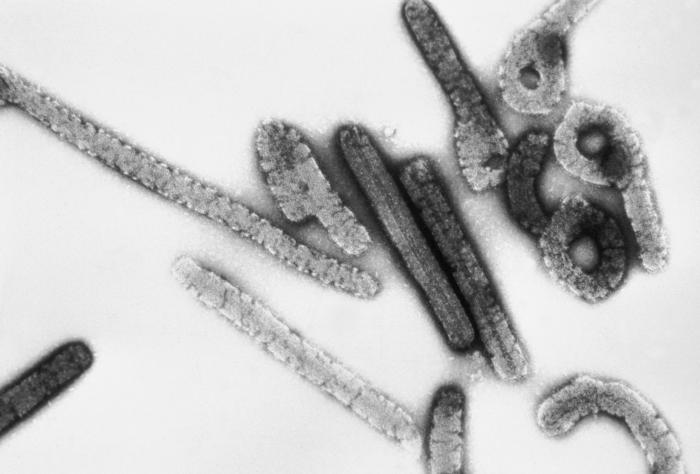
O vírus Ébola e o vírus Marburg são membros da família Filoviridae Filoviridae A family of RNA viruses, of the order mononegavirales, containing filamentous virions. Although they resemble rhabdoviridae in possessing helical nucleocapsids, filoviridae differ in the length and degree of branching in their virions. There are two genera: ebolavirus and marburgvirus. Ebolavirus and Marburgvirus. São vírus de RNA RNA A polynucleotide consisting essentially of chains with a repeating backbone of phosphate and ribose units to which nitrogenous bases are attached. RNA is unique among biological macromolecules in that it can encode genetic information, serve as an abundant structural component of cells, and also possesses catalytic activity. RNA Types and Structure de cadeia simples, de sentido negativo, com uma morfologia filamentosa e pleomórfica característica. A transmissão ocorre principalmente através do contacto com secreções de um indivíduo infetado. Estes vírus causam doenças similares, com sintomas semelhantes aos da gripe, diarreia, hemorragia, disfunção multiorgânica e choque. O diagnóstico pode ser feito por PCR PCR Polymerase chain reaction (PCR) is a technique that amplifies DNA fragments exponentially for analysis. The process is highly specific, allowing for the targeting of specific genomic sequences, even with minuscule sample amounts. The PCR cycles multiple times through 3 phases: denaturation of the template DNA, annealing of a specific primer to the individual DNA strands, and synthesis/elongation of new DNA molecules. Polymerase Chain Reaction (PCR), deteção de antigénios e serologia. O tratamento é principalmente de suporte, embora a terapia com anticorpos monoclonais tem sido promissora para o tratamento da doença do vírus Ébola.

Last updated: Dec 15, 2025
Editorial responsibility: Stanley Oiseth, Lindsay Jones, Evelin Maza

Classificação

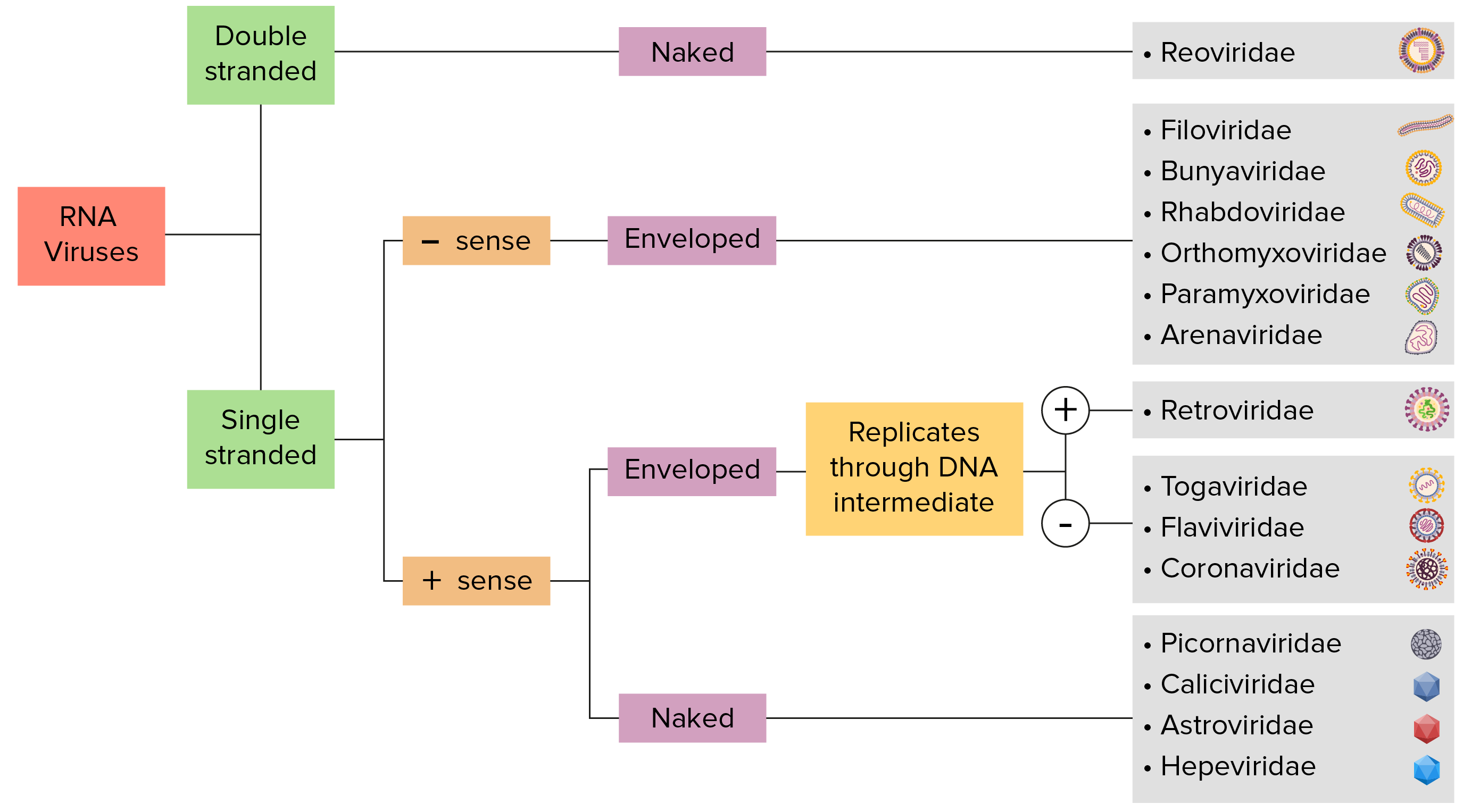
Classificação do fluxograma de vírus de RNA

Identificação do vírus RNA:
Os vírus podem ser classificados de várias maneiras. A maioria dos vírus, no entanto, terá um genoma formado por DNA ou RNA. Os vírus de genoma de RNA podem ser ainda caracterizados por um RNA de cadeia simples ou dupla. Os vírus “envelopados” são cobertos por uma fina camada de membrana celular (geralmente retirada da célula hospedeira). Se a camada estiver ausente, os vírus são chamados de vírus “nus”. Os vírus com genomas de cadeia simples são vírus de “sentido positivo” se o genoma for usado diretamente como RNA mensageiro (mRNA), que é traduzido em proteínas. Os vírus de “sentido negativo” de cadeia simples usam a RNA polimerase dependente de RNA, uma enzima viral, para transcrever o seu genoma em RNA mensageiro.
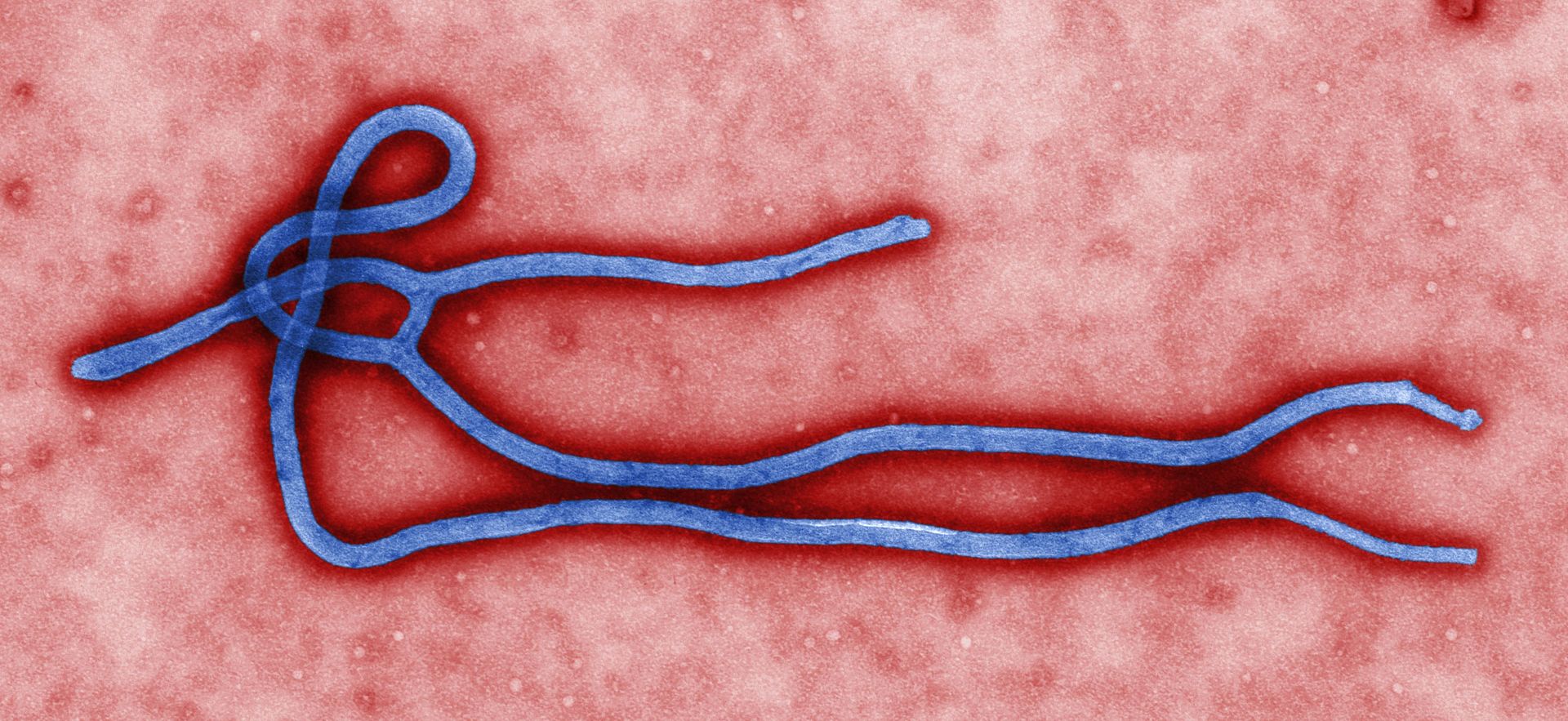
Imagem por Lecturio. Licença: CC BY-NC-SA 4.0

Características Gerais

Taxonomia

  • Família: Filoviridae Filoviridae A family of RNA viruses, of the order mononegavirales, containing filamentous virions. Although they resemble rhabdoviridae in possessing helical nucleocapsids, filoviridae differ in the length and degree of branching in their virions. There are two genera: ebolavirus and marburgvirus. Ebolavirus and Marburgvirus
  • Género Ebolavirus Ebolavirus Ebolavirus is a member of the Filoviridae family. They are single-stranded, negative-sense RNA viruses with a characteristic filamentous, pleomorphic morphology. Transmission mainly occurs through contact with secretions from an infected individual. This virus causes flu-like symptoms, diarrhea, hemorrhage, multiorgan dysfunction, and shock. Ebolavirus and Marburgvirus:
  • Género Marburgvirus Marburgvirus Marburgvirus is a member of the Filoviridae family. They are single-stranded, negative-sense RNA viruses with a characteristic filamentous, pleomorphic morphology. Transmission mainly occurs through contact with secretions from an infected individual. This virus causes flu-like symptoms, diarrhea, hemorrhage, multiorgan dysfunction, and shock. Ebolavirus and Marburgvirus: Marburg marburgvirus Marburgvirus Marburgvirus is a member of the Filoviridae family. They are single-stranded, negative-sense RNA viruses with a characteristic filamentous, pleomorphic morphology. Transmission mainly occurs through contact with secretions from an infected individual. This virus causes flu-like symptoms, diarrhea, hemorrhage, multiorgan dysfunction, and shock. Ebolavirus and Marburgvirus

Características básicas dos vírus Ébola e Marburg

  • Vírus RNA RNA A polynucleotide consisting essentially of chains with a repeating backbone of phosphate and ribose units to which nitrogenous bases are attached. RNA is unique among biological macromolecules in that it can encode genetic information, serve as an abundant structural component of cells, and also possesses catalytic activity. RNA Types and Structure:
    • Não segmentado
    • Sentido negativo
    • Cadeia simples
  • Estrutura e morfologia:
    • Nucleocapsídeo helicoidal
    • Membrana lipídica
    • Filamentosa
    • Forma pleomórfica:
      • Em forma de “6”
      • Em forma de “U”
      • Circular

Doença associada

  • 5 espécies do vírus Ébola causam doença do vírus Ébola (EVD, pela sigla em inglês).
  • O vírus Marburg causa doença do vírus Marburg (MVD, pela sigla em inglês), previamente conhecida como febre hemorrágica de Marburg.

Epidemiologia

Doença do vírus Ébola

  • A maioria dos surtos tem origem na África Subsariana.
  • Qualquer faixa etária pode ser infetada.
  • Sem predileção racial ou sexual
  • Taxa de mortalidade dos casos (varia entre os surtos): aproximadamente 40%‒90%

Doença do vírus Marburg

  • Rara
  • Surtos e casos esporádicos foram relatados em:
    • Angola
    • Uganda
    • República Democrática do Congo
    • Quénia
    • África do Sul
  • Taxa de mortalidade dos casos (varia entre os surtos): aproximadamente 23%‒90%

Patogénese

Reservatório

  • Não totalmente conhecido
  • Possivelmente morcegos frugívoros

Hospedeiros

  • Primatas
  • Humanos

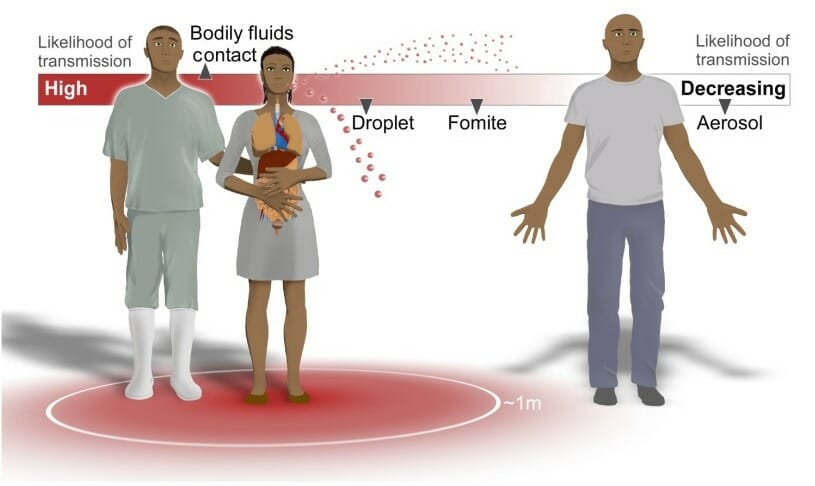
Transmissão

  • De humano para humano:
    • Contacto direto com fluidos corporais infetados
    • Fomites Fomites Inanimate objects that carry pathogenic microorganisms and thus can serve as the source of infection. Microorganisms typically survive on fomites for minutes or hours. Common fomites include clothing, tissue paper, hairbrushes, and cooking and eating utensils. Adenovirus
    • Contacto sexual
  • Primata para humano através de fluidos corporais infetados
  • Possivelmente morcego frugívoro para humano

Fatores de risco do hospedeiro

  • As profissões de risco incluem:
    • Profissionais de saúde
    • Veterinários
    • Trabalhadores de laboratório
    • Mineiros ou espeleólogos que trabalham em cavernas de morcegos frugívoros.
  • Parceiro sexual de um sobrevivente de EVD ou MVD (partes do vírus podem persistir no sémen por semanas a meses após a infeção)

Fisiopatologia

  • Os mecanismos específicos subjacentes à patogenicidade dos vírus Ébola e Marburg não foram totalmente delineados.
  • Ambos os vírus entram através das membranas mucosas → 1º tem como alvo macrófagos e células dendríticas
  • Replicação → morte de células infetadas → libertação de novos vírions
  • Disseminação para gânglios linfáticos regionais → replicação → disseminação pela corrente sanguínea
  • Novamente, os vírions têm como alvo células dendríticas e macrófagos (e outros tipos de células, incluindo células endoteliais) em tecidos linfoides → necrose tecidual:
    • Fígado
    • Baço
    • Timo
  • O vírus causa:
    • Défice da imunidade adaptativa:
    • A libertação de citocinas inflamatórias dos macrófagos → resposta inflamatória sistémica → pode estar ligada a:
      • Sintomas gastrointestinais
      • ↑ Permeabilidade vascular → extravazamento vascular difuso
      • Falência multiorgânica
      • Distúrbios da coagulação
Routes of Ebola virus transmission

Vias de transmissão do vírus Ébola:
O contacto com fluídos corporais como sangue, fezes, sémen, leite materno e saliva tem o maior risco de transmissão. Os fluídos infecciosos também se podem formar em gotículas de aerossóis, que possuem um menor risco de transmissão.

Imagem: “Potential routes of Ebola virus transmission and infection between people” por Judson S., Prescott J., Munster V. License: CC BY 4.0

Apresentação Clínica

A doença do vírus Ébola e a MVD têm apresentações muito semelhantes e podem ser difíceis de distinguir.
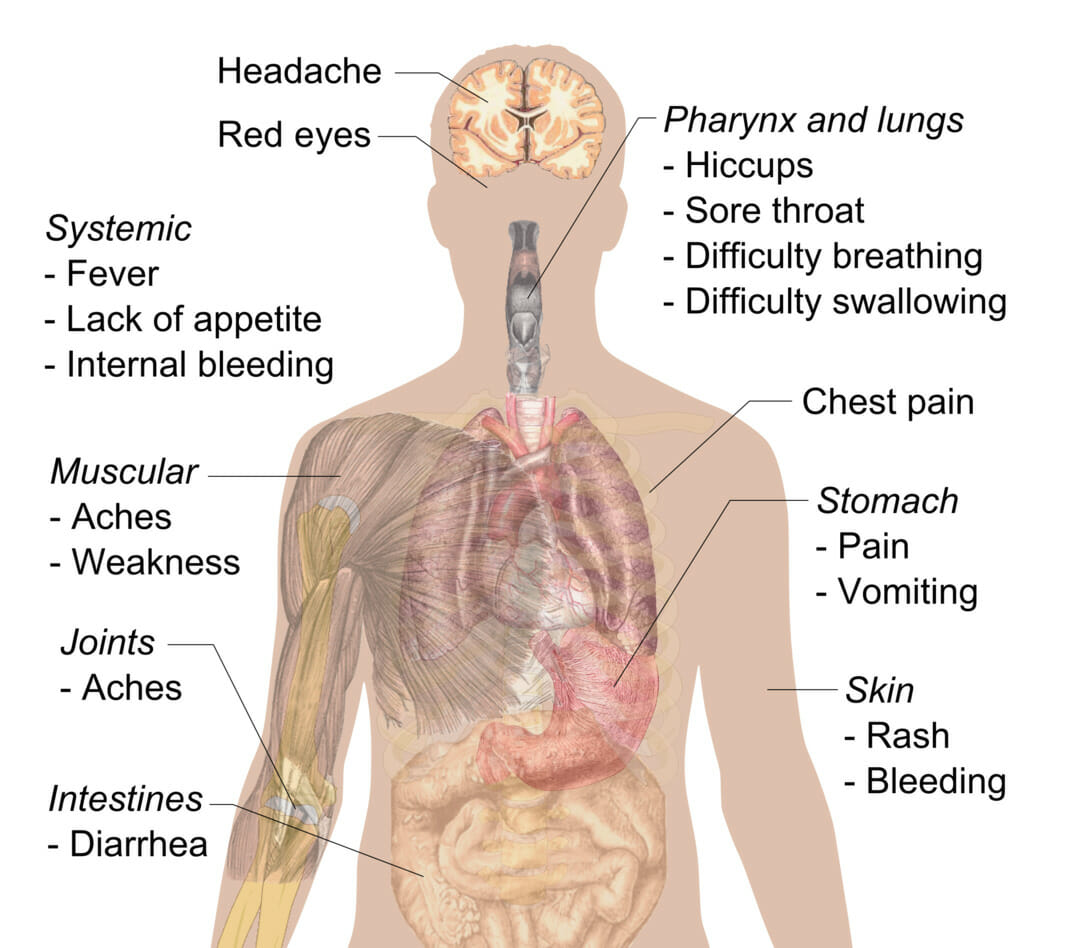
  • Período de incubação:
    • EVD: 2‒21 dias
    • MVD: 5‒10 dias
  • Sinais e sintomas iniciais:
  • Mais MAIS Androgen Insensitivity Syndrome tarde, manifestações mais MAIS Androgen Insensitivity Syndrome graves:
    • Desidratação → hipotensão
    • Hemorragia:
      • Hemorragia da mucosa
      • Equimoses
      • Escorrência de locais de punção venosa
      • Hemorragia GI
    • Neurológicas:
      • Alteração do estado de consciência
      • Hiperreflexia
      • Rigidez da nuca
      • Instabilidade da marcha
      • Convulsões
      • Coma Coma Coma is defined as a deep state of unarousable unresponsiveness, characterized by a score of 3 points on the GCS. A comatose state can be caused by a multitude of conditions, making the precise epidemiology and prognosis of coma difficult to determine. Coma
    • Bradicardia
    • Respiratórias:
      • Dispneia
      • Hipóxia
      • Insuficiência respiratória
    • Hepatite
    • Insuficiência renal
    • Choque
  • Após a recuperação da EVD, os doentes podem apresentar:
    • Problemas de visão (por exemplo, catarata, uveíte)
    • Perda de audição
    • Alterações cognitivas
    • Dor nas articulações
    • Recaída (devido à persistência do vírus no corpo)
Symptoms of ebola

Sinais e sintomas da doença do vírus Ébola

Imagem: “Symptoms of ebola” por Mikael Häggström. Licença: CC0 1.0

Diagnóstico e Tratamento

Diagnóstico

O diagnóstico de EVD e MVD no início do curso da doença pode ser difícil (os primeiros sintomas mimetizam outras doenças mais MAIS Androgen Insensitivity Syndrome comuns). É necessário um alto grau de suspeição, uma vez que o isolamento precoce dos pacientes em que há suspeita de EVD ou MVC é essencial para controlar o surto.

  • PCR PCR Polymerase chain reaction (PCR) is a technique that amplifies DNA fragments exponentially for analysis. The process is highly specific, allowing for the targeting of specific genomic sequences, even with minuscule sample amounts. The PCR cycles multiple times through 3 phases: denaturation of the template DNA, annealing of a specific primer to the individual DNA strands, and synthesis/elongation of new DNA molecules. Polymerase Chain Reaction (PCR):
    • Mais MAIS Androgen Insensitivity Syndrome frequentemente usada para fazer um diagnóstico definitivo
    • Deteta RNA RNA A polynucleotide consisting essentially of chains with a repeating backbone of phosphate and ribose units to which nitrogenous bases are attached. RNA is unique among biological macromolecules in that it can encode genetic information, serve as an abundant structural component of cells, and also possesses catalytic activity. RNA Types and Structure viral
  • ELISA ELISA An immunoassay utilizing an antibody labeled with an enzyme marker such as horseradish peroxidase. While either the enzyme or the antibody is bound to an immunosorbent substrate, they both retain their biologic activity; the change in enzyme activity as a result of the enzyme-antibody-antigen reaction is proportional to the concentration of the antigen and can be measured spectrophotometrically or with the naked eye. Many variations of the method have been developed. St. Louis Encephalitis Virus para deteção de antigénio:
    • Deteta antigénios virais
    • Os resultados devem ser confirmados com PCR PCR Polymerase chain reaction (PCR) is a technique that amplifies DNA fragments exponentially for analysis. The process is highly specific, allowing for the targeting of specific genomic sequences, even with minuscule sample amounts. The PCR cycles multiple times through 3 phases: denaturation of the template DNA, annealing of a specific primer to the individual DNA strands, and synthesis/elongation of new DNA molecules. Polymerase Chain Reaction (PCR).
  • Serologia:
    • ELISA ELISA An immunoassay utilizing an antibody labeled with an enzyme marker such as horseradish peroxidase. While either the enzyme or the antibody is bound to an immunosorbent substrate, they both retain their biologic activity; the change in enzyme activity as a result of the enzyme-antibody-antigen reaction is proportional to the concentration of the antigen and can be measured spectrophotometrically or with the naked eye. Many variations of the method have been developed. St. Louis Encephalitis Virus
    • Anticorpo de fluorescência indireta

Tratamento

  • Não existe tratamento específico para estas infeções virais.
  • O tratamento é geralmente de suporte:
    • Hidratação IV
    • Reposição de eletrólitos
    • Ventilação mecânica para insuficiência respiratória
    • Antipiréticos (por exemplo, paracetamol paracetamol Acetaminophen is an over-the-counter nonopioid analgesic and antipyretic medication and the most commonly used analgesic worldwide. Despite the widespread use of acetaminophen, its mechanism of action is not entirely understood. Acetaminophen)
    • Controlo da dor
    • Fármacos antidiarreicos (por exemplo, loperamida)
    • Derivados sanguíneos
  • Terapias usadas para o tratamento de EVD:
    • Anticorpos monoclonais
    • Plasma Plasma The residual portion of blood that is left after removal of blood cells by centrifugation without prior blood coagulation. Transfusion Products convalescente (benefício incerto)

Comparação de Febres Hemorrágicas Virais

A tabela a seguir compara e diferencia as várias causas virais de febre hemorrágica:

Tabela: Comparação de febres hemorrágicas virais
Organismo Vírus Ébola Vírus da Febre Amarela Hantavírus Vírus Lassa
Família Filoviridae Filoviridae A family of RNA viruses, of the order mononegavirales, containing filamentous virions. Although they resemble rhabdoviridae in possessing helical nucleocapsids, filoviridae differ in the length and degree of branching in their virions. There are two genera: ebolavirus and marburgvirus. Ebolavirus and Marburgvirus Flaviviridae Flaviviridae A family of RNA viruses, many of which cause disease in humans and domestic animals. There are three genera flavivirus; pestivirus; and hepacivirus, as well as several unassigned species. Hepatitis C Virus Bunyaviridae Bunyaviridae A family of viruses, mainly arboviruses, consisting of a single strand of RNA. Virions are enveloped particles 90-120 nm diameter. The complete family contains over 300 members arranged in five genera: orthobunyavirus; hantavirus; nairovirus; phlebovirus; and tospovirus. Bunyavirales Arenaviridae Arenaviridae A family of RNA viruses naturally infecting rodents and consisting of one genus (arenavirus) with two groups: old world arenaviruses and new world arenaviruses. Infection in rodents is persistent and silent. Vertical transmission is through milk-, saliva-, or urine-borne routes. Horizontal transmission to humans, monkeys, and other animals is important. Lassa Virus
Características
  • Vírus RNA RNA A polynucleotide consisting essentially of chains with a repeating backbone of phosphate and ribose units to which nitrogenous bases are attached. RNA is unique among biological macromolecules in that it can encode genetic information, serve as an abundant structural component of cells, and also possesses catalytic activity. RNA Types and Structure:
    • Cadeia simples
    • Linear
    • Não segmentado
    • Sentido negativo
  • Forma filamentosa e pleomórfica
  • Com envelope Envelope Bilayer lipid membrane acquired by viral particles during viral morphogenesis. Although the lipids of the viral envelope are host derived, various virus-encoded integral membrane proteins, i.e. Viral envelope proteins are incorporated there. Virology
  • Vírus RNA RNA A polynucleotide consisting essentially of chains with a repeating backbone of phosphate and ribose units to which nitrogenous bases are attached. RNA is unique among biological macromolecules in that it can encode genetic information, serve as an abundant structural component of cells, and also possesses catalytic activity. RNA Types and Structure:
    • Cadeia simples
    • Linear
    • Não segmentado
    • Sentido positivo
  • Esférico
  • Com envelope Envelope Bilayer lipid membrane acquired by viral particles during viral morphogenesis. Although the lipids of the viral envelope are host derived, various virus-encoded integral membrane proteins, i.e. Viral envelope proteins are incorporated there. Virology
  • Vírus RNA RNA A polynucleotide consisting essentially of chains with a repeating backbone of phosphate and ribose units to which nitrogenous bases are attached. RNA is unique among biological macromolecules in that it can encode genetic information, serve as an abundant structural component of cells, and also possesses catalytic activity. RNA Types and Structure:
    • Cadeia simples
    • Linear
    • Segmentado
    • Sentido negativo
  • Esférico
  • Com envelope Envelope Bilayer lipid membrane acquired by viral particles during viral morphogenesis. Although the lipids of the viral envelope are host derived, various virus-encoded integral membrane proteins, i.e. Viral envelope proteins are incorporated there. Virology
  • Vírus RNA RNA A polynucleotide consisting essentially of chains with a repeating backbone of phosphate and ribose units to which nitrogenous bases are attached. RNA is unique among biological macromolecules in that it can encode genetic information, serve as an abundant structural component of cells, and also possesses catalytic activity. RNA Types and Structure:
    • Cadeia simples
    • Linear
    • Segmentado
    • Sentido negativo
  • Esférico
  • Com envelope Envelope Bilayer lipid membrane acquired by viral particles during viral morphogenesis. Although the lipids of the viral envelope are host derived, various virus-encoded integral membrane proteins, i.e. Viral envelope proteins are incorporated there. Virology
Transmissão
  • Contacto direto com secreções infetadas
  • Fomites Fomites Inanimate objects that carry pathogenic microorganisms and thus can serve as the source of infection. Microorganisms typically survive on fomites for minutes or hours. Common fomites include clothing, tissue paper, hairbrushes, and cooking and eating utensils. Adenovirus
  • Contacto com primatas ou morcegos infetados
Vetor: mosquito
  • Aerossóis
  • Contacto com excrementos de roedores, urina ou saliva Saliva The clear, viscous fluid secreted by the salivary glands and mucous glands of the mouth. It contains mucins, water, organic salts, and ptyalin. Salivary Glands: Anatomy
  • Aerossóis
  • Contacto direto
  • Ingestão
  • Exposição a sangue, secreções, tecidos de indivíduos infetados
Apresentação clínica
  • Sintomas semelhantes à gripe
  • Manifestações hemorrágicas
  • Disfunção hepática (icterícia)
  • Febre
  • Manifestações hemorrágicas
  • LRA – lesão renal aguda
  • A maioria dos doentes está assintomática ou com sintomas leves.
  • Manifestações hemorrágicas
  • A surdez é comum.
Diagnóstico
  • PCR PCR Polymerase chain reaction (PCR) is a technique that amplifies DNA fragments exponentially for analysis. The process is highly specific, allowing for the targeting of specific genomic sequences, even with minuscule sample amounts. The PCR cycles multiple times through 3 phases: denaturation of the template DNA, annealing of a specific primer to the individual DNA strands, and synthesis/elongation of new DNA molecules. Polymerase Chain Reaction (PCR)
  • Deteção de antigénio viral
  • Serologia
  • Serologia
  • PCR PCR Polymerase chain reaction (PCR) is a technique that amplifies DNA fragments exponentially for analysis. The process is highly specific, allowing for the targeting of specific genomic sequences, even with minuscule sample amounts. The PCR cycles multiple times through 3 phases: denaturation of the template DNA, annealing of a specific primer to the individual DNA strands, and synthesis/elongation of new DNA molecules. Polymerase Chain Reaction (PCR)
  • Cultura do vírus
  • Serologia
  • PCR PCR Polymerase chain reaction (PCR) is a technique that amplifies DNA fragments exponentially for analysis. The process is highly specific, allowing for the targeting of specific genomic sequences, even with minuscule sample amounts. The PCR cycles multiple times through 3 phases: denaturation of the template DNA, annealing of a specific primer to the individual DNA strands, and synthesis/elongation of new DNA molecules. Polymerase Chain Reaction (PCR)
  • Serologia
  • PCR PCR Polymerase chain reaction (PCR) is a technique that amplifies DNA fragments exponentially for analysis. The process is highly specific, allowing for the targeting of specific genomic sequences, even with minuscule sample amounts. The PCR cycles multiple times through 3 phases: denaturation of the template DNA, annealing of a specific primer to the individual DNA strands, and synthesis/elongation of new DNA molecules. Polymerase Chain Reaction (PCR)
Tratamento
  • Suporte
  • Terapia com anticorpos monoclonais
Suporte Suporte
  • Suporte
  • Ribavirina

Diagnóstico Diferencial

  • Malária: doença infecciosa transmitida por mosquitos, causada por espécies de Plasmodium Plasmodium A genus of protozoa that comprise the malaria parasites of mammals. Four species infect humans (although occasional infections with primate malarias may occur). These are plasmodium falciparum; plasmodium malariae; plasmodium ovale, and plasmodium vivax. Species causing infection in vertebrates other than man include: plasmodium berghei; plasmodium chabaudi; p. Vinckei, and plasmodium yoelii in rodents; p. Brasilianum, plasmodium cynomolgi; and plasmodium knowlesi in monkeys; and plasmodium gallinaceum in chickens. Antimalarial Drugs. A malária geralmente apresenta-se com febre, calafrios, sudorese, icterícia, dor abdominal, anemia Anemia Anemia is a condition in which individuals have low Hb levels, which can arise from various causes. Anemia is accompanied by a reduced number of RBCs and may manifest with fatigue, shortness of breath, pallor, and weakness. Subtypes are classified by the size of RBCs, chronicity, and etiology. Anemia: Overview and Types hemolítica, hepatoesplenomegalia e insuficiência renal. O esfregaço de sangue periférico na malária mostra um único anel pleomórfico. Os testes Testes Gonadal Hormones rápidos para antigénios de Plasmodium Plasmodium A genus of protozoa that comprise the malaria parasites of mammals. Four species infect humans (although occasional infections with primate malarias may occur). These are plasmodium falciparum; plasmodium malariae; plasmodium ovale, and plasmodium vivax. Species causing infection in vertebrates other than man include: plasmodium berghei; plasmodium chabaudi; p. Vinckei, and plasmodium yoelii in rodents; p. Brasilianum, plasmodium cynomolgi; and plasmodium knowlesi in monkeys; and plasmodium gallinaceum in chickens. Antimalarial Drugs também podem ser realizados. O tratamento requer um esquema prolongado de vários fármacos antimaláricos.
  • Febre tifoide: doença sistémica causada pela bactéria gram-negativa, Salmonella enterica Salmonella enterica A subgenus of Salmonella containing several medically important serotypes. The habitat for the majority of strains is warm-blooded animals. Salmonella sorotipo typhi. Os sintomas incluem febre alta, dor abdominal, rash Rash Rocky Mountain Spotted Fever cutâneo cor de rosa e diarreia. A hemorragia gastrointestinal é uma complicação de uma infeção não tratada. O diagnóstico é confirmado pela cultura. O tratamento inclui fluoroquinolonas ou azitromicina.
  • Gripe: infeção viral comum e autolimitada causada pelo vírus Influenza Influenza Influenza viruses are members of the Orthomyxoviridae family and the causative organisms of influenza, a highly contagious febrile respiratory disease. There are 3 primary influenza viruses (A, B, and C) and various subtypes, which are classified based on their virulent surface antigens, hemagglutinin (HA) and neuraminidase (NA). Influenza typically presents with a fever, myalgia, headache, and symptoms of an upper respiratory infection. Influenza Viruses/Influenza que normalmente apresenta-se com febre, mialgias, cefaleia e sintomas respiratórios superiores. A dor abdominal, vómitos e diarreia também podem ocorrer mais MAIS Androgen Insensitivity Syndrome frequentemente em crianças. Não são observadas manifestações hemorrágicas. O diagnóstico é confirmado por PCR PCR Polymerase chain reaction (PCR) is a technique that amplifies DNA fragments exponentially for analysis. The process is highly specific, allowing for the targeting of specific genomic sequences, even with minuscule sample amounts. The PCR cycles multiple times through 3 phases: denaturation of the template DNA, annealing of a specific primer to the individual DNA strands, and synthesis/elongation of new DNA molecules. Polymerase Chain Reaction (PCR) ou ELISA ELISA An immunoassay utilizing an antibody labeled with an enzyme marker such as horseradish peroxidase. While either the enzyme or the antibody is bound to an immunosorbent substrate, they both retain their biologic activity; the change in enzyme activity as a result of the enzyme-antibody-antigen reaction is proportional to the concentration of the antigen and can be measured spectrophotometrically or with the naked eye. Many variations of the method have been developed. St. Louis Encephalitis Virus. O tratamento geralmente é de suporte, embora os inibidores da neuraminidase Neuraminidase An enzyme that catalyzes the hydrolysis of alpha-2, 3, alpha-2, 6-, and alpha-2, 8-glycosidic linkages (at a decreasing rate, respectively) of terminal sialic residues in oligosaccharides, glycoproteins, glycolipids, colominic acid, and synthetic substrate. Antivirals for Influenza possam ser iniciados nas primeiras 48 horas da doença.
  • Diarreia do viajante: tipo de gastroenterite geralmente causada por bactérias ou vírus, como Escherichia coli Escherichia coli The gram-negative bacterium Escherichia coli is a key component of the human gut microbiota. Most strains of E. coli are avirulent, but occasionally they escape the GI tract, infecting the urinary tract and other sites. Less common strains of E. coli are able to cause disease within the GI tract, most commonly presenting as abdominal pain and diarrhea. Escherichia coli enterotoxigénica (ETEC, pela sigla em inglês) ou norovírus, no saneamento de água local. Os sintomas ocorrem após o consumo de água ou alimentos contaminados e incluem diarreia aquosa, mal-estar e cólicas abdominais. Ao contrário daqueles com EVD e MVD, os sintomas são geralmente restritos ao trato GI. O diagnóstico é clínico e a doença é autolimitada.
  • Meningite bacteriana: infeção aguda das meninges Meninges The brain and the spinal cord are enveloped by 3 overlapping layers of connective tissue called the meninges. The layers are, from the most external layer to the most internal layer, the dura mater, arachnoid mater, and pia mater. Between these layers are 3 potential spaces called the epidural, subdural, and subarachnoid spaces. Meninges: Anatomy. Os doentes apresentam cefaleias, febre, rigidez de nuca e rápida deterioração clínica. Para estabelecer o diagnóstico é realizada uma punção lombar. A análise do líquido cefalorraquidiano mostrar um líquido turvo, glicose baixa e contagem elevada de leucócitos com predominância de neutrófilos. A coloração de Gram e a cultura são usadas para determinar as bactérias causadoras de infeção. O tratamento inclui antibióticos e corticoides.

Referências

  1. Emanuel, J., Marzi, A., Feldmann, H. (2018). Filoviruses: Ecology, Molecular Biology, and Evolution. Adv Virus Res. 100, 189–221. https://pubmed.ncbi.nlm.nih.gov/29551136/
  2. Negredo, A., et al. (2011). Discovery of an ebolavirus-like filovirus in Europe. PLoS Pathog. 7(10), e1002304. https://pubmed.ncbi.nlm.nih.gov/22039362/
  3. Dixon, M.G., Schafer, I.J. (2014). Ebola viral disease outbreak–West Africa, 2014. MMWR Morb Mortal Wkly Rep. 63(25), 548–551. https://pubmed.ncbi.nlm.nih.gov/24964881/
  4. Zawilińska, B., Kosz-Vnenchak, M. (2014). General introduction into the Ebola virus biology and disease. Folia Med Cracov. 54(3), 57–65. https://pubmed.ncbi.nlm.nih.gov/25694096/
  5. Maxmen, A. (2019). Ebola outbreak declared an international public health emergency. Nature. https://pubmed.ncbi.nlm.nih.gov/32669721/
  6. Jacob, S.T., et al. (2020). Ebola virus disease. Nat Rev Dis Primers. 6(1), 13. https://pubmed.ncbi.nlm.nih.gov/32080199/
  7. Baseler, L., et al. (2017). The pathogenesis of Ebola virus disease. Annu Rev Pathol. 12, 387–418. https://pubmed.ncbi.nlm.nih.gov/27959626/
  8. Sanchez, A., Geisbert, T., Feldmann, H. (2007). Filoviridae – Marburg and ebola viruses. In Knipe, D. (Ed.) Fields Virology. Lippincott Williams and Wilkins; PA, USA. pp. 1410–1448.
  9. Peterson, A.T., et al. (2006). Geographic potential for outbreaks of Marburg hemorrhagic fever. Am J Trop Med Hyg. 75(1), 9–15. https://pubmed.ncbi.nlm.nih.gov/16837700/
  10. Bausch, D.G., et al. (2006). Marburg hemorrhagic fever associated with multiple genetic lineages of virus. N Engl J Med 355(9), 909–919. https://pubmed.ncbi.nlm.nih.gov/16943403/
  11. Kuhn, J.H., et al. (2010). Proposal for a revised taxonomy of the family Filoviridae: Classification, names of taxa and viruses, and virus abbreviations. Arch Virol. 155(12), 2083–2103. https://pubmed.ncbi.nlm.nih.gov/21046175/
  12. Spickler, A. (2014). Ebolavirus and Marburgvirus Infections. Retrieved September 30, 2025, from https://www.cfsph.iastate.edu/Factsheets/pdfs/viral_hemorrhagic_fever_filovirus.pdf
  13. WHO. (2018). Marburg virus disease-Fact sheet. Retrieved September 30, 2025, from http://www.who.int/mediacentre/factsheets/fs_marburg/en/
  14. Bharat, T.A.M., et al. (2011). Cryo-electron tomography of Marburg virus particles and their morphogenesis within infected cells. PLoS Biol. 9(11), e1001196. https://pubmed.ncbi.nlm.nih.gov/22110401/
  15. Bray, M., Chertow, D.S. (2021). Epidemiology and pathogenesis of Ebola virus disease. In Mitty, J. (Ed.), UpToDate. Retrieved September 30, 2025, from https://www.uptodate.com/contents/epidemiology-and-pathogenesis-of-ebola-virus-disease
  16. Chertow, D. S., Bray, M., & Palmore, T. N. (2025). Clinical manifestations and diagnosis of Ebola disease. UpToDate. Retrieved September 30, 2025, from https://www.uptodate.com/contents/clinical-manifestations-and-diagnosis-of-ebola-disease
  17. Chertow, D. S., Bray, M., & Palmore, T. N. (2025). Treatment and prevention of Ebola and Sudan virus disease. UpToDate. Retrieved September 30, 2025, from https://www.uptodate.com/contents/treatment-and-prevention-of-ebola-and-sudan-virus-disease
  18. Bray, M., & Chertow, D. S. (2025). Marburg virus disease. UpToDate. Retrieved September 30, 2025, from https://www.uptodate.com/contents/marburg-virus-disease
  19. Yuill, T.M. (2025). Marburg and Ebola virus infections. MSD Manual Professional Version. Retrieved September 30, 2025, from https://www.msdmanuals.com/professional/infectious-diseases/arboviruses-arenaviridae-and-filoviridae/marburg-and-ebola-virus-infections
  20. Centers for Disease Control and Prevention. (2024). Ebola (Ebola virus disease). Retrieved September 30, 2025, from https://www.cdc.gov/vhf/ebola/index.html
  21. Centers for Disease Control and Prevention. (2025). About Marburg. https://www.cdc.gov/marburg/about/index.html

Crie sua conta gratuita ou faça login para continuar lendo!

Cadastre-se agora e tenha acesso grátis ao Lecturio, com páginas de conceitos, vídeos de medicina e questões para sua educação médica.

Aprende mais com a Lecturio:

Multiple devices displaying human anatomy and health education content.

Complementa o teu estudo da faculdade com o companheiro de estudo tudo-em-um da Lecturio, através de métodos de ensino baseados em evidência.

Estuda onde quiseres

Two iPhones display medical education apps, one showing anatomy, the other Bookmatcher.

A Lecturio Medical complementa o teu estudo através de métodos de ensino baseados em evidência, vídeos de palestras, perguntas e muito mais – tudo combinado num só lugar e fácil de usar.

User Reviews

Details