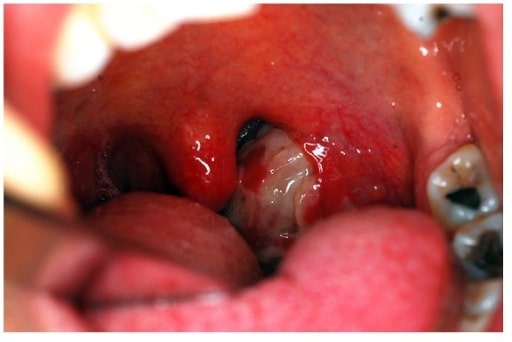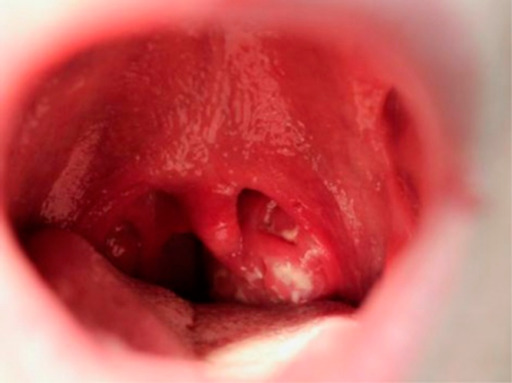



Faringite

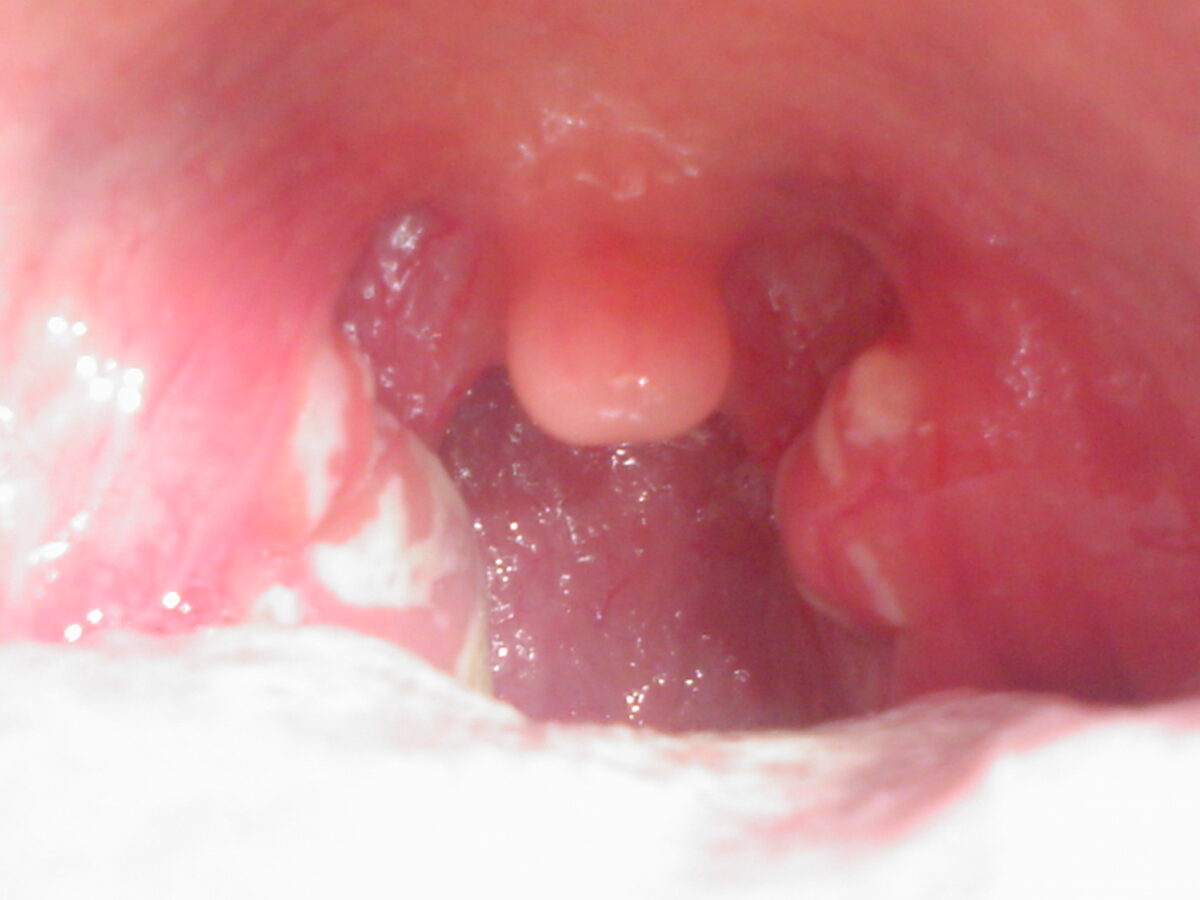
A faringite é uma inflamação da zona posterior da garganta (faringe). Normalmente é provocada por uma infeção do trato respiratório superior, vírica na maioria dos casos. Tipicamente associada a odinofagia e febre. Podem ocorrer outros sintomas, nomeadamente rinorreia, tosse, cefaleia e rouquidão. É difícil determinar o agente causal com base apenas nos sintomas. Assim, realiza-se frequentemente um esfregaço com amostra da faringe para excluir uma causa bacteriana. O tratamento é sintomático e de suporte, sendo que as causas bacterianas requerem antibiótico.

Last updated: Dec 15, 2025

Editorial responsibility: Stanley Oiseth, Lindsay Jones, Evelin Maza

Etiologia

A faringite define-se como uma inflamação da faringe e das estruturas adjacentes.

A maioria dos casos ocorre devido a um microrganismo infecioso adquirido por contacto próximo com um indivíduo infetado.
  • Vírica:
    • Adenovírus ( mais MAIS Androgen Insensitivity Syndrome comum)
    • Vírus Coxsackie A
    • Família Orthomyxoviridae Orthomyxoviridae A family of RNA viruses causing influenza and other diseases. There are five recognized genera: influenzavirus a; influenzavirus b; influenzavirus c; isavirus; and thogotovirus. Influenza Viruses/Influenza
    • Vírus Epstein-Barr (provoca mononucleose infeciosa)
    • Vírus herpes simples
    • Vírus do sarampo
    • Rinovírus
    • Coronavírus
    • Vírus sincicial respiratório
    • Vírus parainfluenza
  • Bacteriana:
    • Streptococcus Streptococcus Streptococcus is one of the two medically important genera of gram-positive cocci, the other being Staphylococcus. Streptococci are identified as different species on blood agar on the basis of their hemolytic pattern and sensitivity to optochin and bacitracin. There are many pathogenic species of streptococci, including S. pyogenes, S. agalactiae, S. pneumoniae, and the viridans streptococci. Streptococcus pyogenes (causa bacteriana mais MAIS Androgen Insensitivity Syndrome frequente de faringite infeciosa)
    • Streptococcus Streptococcus Streptococcus is one of the two medically important genera of gram-positive cocci, the other being Staphylococcus. Streptococci are identified as different species on blood agar on the basis of their hemolytic pattern and sensitivity to optochin and bacitracin. There are many pathogenic species of streptococci, including S. pyogenes, S. agalactiae, S. pneumoniae, and the viridans streptococci. Streptococcus pneumoniae (infeções por Streptococcus Streptococcus Streptococcus is one of the two medically important genera of gram-positive cocci, the other being Staphylococcus. Streptococci are identified as different species on blood agar on the basis of their hemolytic pattern and sensitivity to optochin and bacitracin. There are many pathogenic species of streptococci, including S. pyogenes, S. agalactiae, S. pneumoniae, and the viridans streptococci. Streptococcus beta-hemolítico são comuns em crianças dos 4 aos 7 anos)
    • Haemophilus influenzae Haemophilus Influenzae A species of Haemophilus found on the mucous membranes of humans and a variety of animals. The species is further divided into biotypes I through viii. Haemophilus
    • Bordetella pertussis Bordetella pertussis A species of gram-negative, aerobic bacteria that is the causative agent of whooping cough. Its cells are minute coccobacilli that are surrounded by a slime sheath. Bordetella
    • Bacillus anthracis Bacillus anthracis A species of bacteria that causes anthrax in humans and animals. Anthrax
    • Corynebacterium diphtheriae Corynebacterium diphtheriae Diphtheria is an infectious disease caused by corynebacterium diphtheriae that most often results in respiratory disease with membranous inflammation of the pharynx, sore throat, fever, swollen glands, and weakness. The hallmark sign is a sheet of thick, gray material covering the back of the throat. Diphtheria
    • Neisseria gonorrhoeae Neisseria gonorrhoeae A species of gram-negative, aerobic bacteria primarily found in purulent venereal discharges. It is the causative agent of gonorrhea. Neisseria
    • Chlamydophila pneumoniae
    • Mycoplasma pneumoniae Mycoplasma pneumoniae Short filamentous organism of the genus mycoplasma, which binds firmly to the cells of the respiratory epithelium. It is one of the etiologic agents of non-viral primary atypical pneumonia in man. Mycoplasma
    • Fusobacterium Fusobacterium A genus of gram-negative, anaerobic, rod-shaped bacteria found in cavities of humans and other animals. No endospores are formed. Some species are pathogenic and occur in various purulent or gangrenous infections. Dog and Cat Bites necrophorum
  • Fúngica:
    • Candidíase (candidíase oral com atingimento da faringe pode ocorrer em pacientes imunocomprometidos, com o uso de antibióticos e glicocorticóides inalados e em pacientes a receber quimioterapia e/ou radioterapia)
  • Causas não infeciosas:
    • Tabagismo
    • Roncopatia
    • Gritar
    • Entubação traqueal
    • Fármacos
    • Doença concomitante
    • Poluentes do ar AR Aortic regurgitation (AR) is a cardiac condition characterized by the backflow of blood from the aorta to the left ventricle during diastole. Aortic regurgitation is associated with an abnormal aortic valve and/or aortic root stemming from multiple causes, commonly rheumatic heart disease as well as congenital and degenerative valvular disorders. Aortic Regurgitation interior e exterior
    • Temperatura e humidade (e.g., mais MAIS Androgen Insensitivity Syndrome seco durante os meses de inverno, sistemas de aquecimento)
    • Irritantes ocupacionais ou perigosos
    • Corpo estranho (e.g., espinha de peixe na faringe)
    • Doenças inflamatórias sistémicas: doença de Kawasaki, síndrome de Stevens-Johnson, síndrome de Behçet, síndrome PFAPA (periodic fever (febre periódica), aphthous stomatitis Stomatitis Stomatitis is a general term referring to inflammation of the mucous membranes of the mouth, which may include sores. Stomatitis can be caused by infections, autoimmune disorders, allergic reactions, or exposure to irritants. The typical presentation may be either solitary or a group of painful oral lesions. Stomatitis (estomatite aftosa), pharyngitis (faringite), adenitis (adenite))
    • Exposição química (e.g., paraquat Paraquat A poisonous bipyridylium compound used as contact herbicide. Contact with concentrated solutions causes irritation of the skin, cracking and shedding of the nails, and delayed healing of cuts and wounds. Herbicide Poisoning, alcalinos)
    • Dor referida (e.g., otite média, abcesso dentário)
    • Psicogénica

Apresentação Clínica

  • Os sintomas geralmente duram 3 a 5 dias
  • Desconforto na garganta
  • Odinofagia: dor ao engolir
  • Tosse seca
  • Linfadenopatia cervical
  • Exsudado faríngeo
  • Sem tosse ou rouquidão (se estes sintomas estiverem presentes apontam para laringite)
  • Sintomas constitucionais: dores corporais, cefaleia, febre, mialgia, mal-estar, início abrupto

Diagnóstico

Critérios de Centor: estimam a probabilidade da faringite ser estreptocócica e sugerem uma abordagem para adultos

  • Critérios:
    • Idade 3-14 anos: +1
    • Idade 15–44 anos: +0
    • Idade ≥ 45 anos: -1
    • Ausência de tosse: +1
    • Exsudados amigdalinos: +1
    • Febre: +1
    • Adenopatia cervical anterior dolorosa: +1
  • Pontuação:
    • -1, 0 ou 1 ponto: sem necessidade de teste adicional ou antibiótico
    • 2 pontos: teste de diagnóstico antigénico rápido e/ou cultura opcional
    • 3 pontos: teste de diagnóstico antigénico rápido e/ou cultura recomendado, antibiótico apenas se positivo
    • 4 ou 5 pontos: teste de diagnóstico antigénico rápido e/ou cultura com antibiótico empírico recomendados

Diagnóstico laboratorial:

  • Teste de diagnóstico antigénico rápido para estreptococos: deteta o antigénio da ribonuclease Ribonuclease Enzymes that catalyze the hydrolysis of ester bonds within RNA. Interferons
  • Zaragatoa faríngea para cultura
  • Teste serológico

A identificação da infeção estreptocócica beta-hemolítica é de extrema importância, porque esta está associada ao desenvolvimento de doença cardíaca reumática se não tratada.

Algoritmo de diagnóstico para faringite

Algoritmo de diagnóstico para faringite

Imagem por Lecturio.

Para recordar os critérios do Centor, lembrar:

  • C = cough (tosse)
  • E = exudate Exudate Exudates are fluids, cells, or other cellular substances that are slowly discharged from blood vessels usually from inflamed tissues. Pleural Effusion (exsudado)
  • N = nodes (gânglios linfáticos)
  • T = temperature ( fever Fever Fever is defined as a measured body temperature of at least 38°C (100.4°F). Fever is caused by circulating endogenous and/or exogenous pyrogens that increase levels of prostaglandin E2 in the hypothalamus. Fever is commonly associated with chills, rigors, sweating, and flushing of the skin. Fever) (temperatura (febre))
  • OR = young OR old modifier (modificador jovem OU velho)

Tratamento

  • A base do tratamento é sintomática e de suporte:
    • Ingestão adequada de fluidos, evicção de irritantes respiratórios, como o fumo do tabaco, evicção de alimentos e bebidas ácidas, dieta ligeira, repouso adequado, analgesia Analgesia Methods of pain relief that may be used with or in place of analgesics. Anesthesiology: History and Basic Concepts sistémica, pastilhas e sprays para a garganta
  • Alguns pacientes podem necessitar de antibióticos para o tratamento de faringite bacteriana documentada laboratorialmente:
    • Tratar a faringite por Streptococci beta-hemolítico do grupo A com penicilina oral ou amoxicilina por 10 dias (cefalexina se penicilina provocar erupção cutânea; clindamicina ou macrólido se penicilina provocar anafilaxia).
    • O tratamento adequado é crucial para prevenir febre reumática aguda.
  • A faringite vírica é autolimitada e resolve de forma espontânea e constante durante alguns dias, sem piorar.
  • Se existir uma causa subjacente, identificar e tratar (e.g., antirretrovíricos para VIH, penicilina para Streptococcus Streptococcus Streptococcus is one of the two medically important genera of gram-positive cocci, the other being Staphylococcus. Streptococci are identified as different species on blood agar on the basis of their hemolytic pattern and sensitivity to optochin and bacitracin. There are many pathogenic species of streptococci, including S. pyogenes, S. agalactiae, S. pneumoniae, and the viridans streptococci. Streptococcus do grupo A, nistatina para Candida Candida Candida is a genus of dimorphic, opportunistic fungi. Candida albicans is part of the normal human flora and is the most common cause of candidiasis. The clinical presentation varies and can include localized mucocutaneous infections (e.g., oropharyngeal, esophageal, intertriginous, and vulvovaginal candidiasis) and invasive disease (e.g., candidemia, intraabdominal abscess, pericarditis, and meningitis). Candida/Candidiasis, etc ETC The electron transport chain (ETC) sends electrons through a series of proteins, which generate an electrochemical proton gradient that produces energy in the form of adenosine triphosphate (ATP). Electron Transport Chain (ETC).).

Complicações

Complicações supurativas

  • Sinusite
  • Otite média
  • Epiglotite
  • Mastoidite
  • Abcesso periamigdalino
  • Abcesso retrofaríngeo
  • Linfadenite cervical supurativa
  • Pneumonia Pneumonia Pneumonia or pulmonary inflammation is an acute or chronic inflammation of lung tissue. Causes include infection with bacteria, viruses, or fungi. In more rare cases, pneumonia can also be caused through toxic triggers through inhalation of toxic substances, immunological processes, or in the course of radiotherapy. Pneumonia
  • Celulite amigdalina
  • Fasceíte necrotizante
  • Bacteremia Bacteremia The presence of viable bacteria circulating in the blood. Fever, chills, tachycardia, and tachypnea are common acute manifestations of bacteremia. The majority of cases are seen in already hospitalized patients, most of whom have underlying diseases or procedures which render their bloodstreams susceptible to invasion. Glycopeptides estreptocócica (rara)
  • Meningite ou abcesso cerebral (extremamente raro)

Complicações não supurativas

  • Obstrução da via aérea
  • Trombocitopenia
  • Miocardite
  • Pericardite
  • Encefalite
  • Meningite
  • Síndrome do choque tóxico
  • Febre reumática aguda
  • Polineuropatia desmielinizante inflamatória aguda
  • Artrite pós-estreptocócica reativa
  • Glomerulonefrite aguda
  • PANDAS (pediatric autoimmune neuropsychiatric disorders associated with streptococcal infections Infections Invasion of the host organism by microorganisms or their toxins or by parasites that can cause pathological conditions or diseases. Chronic Granulomatous Disease) (distúrbios neuropsiquiátricos autoimunes pediátricos associados a infeções estreptocócicas)

Diagnóstico Diferencial

As seguintes condições são diagnósticos diferenciais de faringite:

  • Epiglotite: uma inflamação da epiglote causada por infeções por Haemophilus, estreptocócicas ou estafilocócicas, que se manifesta com dificuldade respiratória, estridor e cianose e pode provocar a morte por obstrução da via aérea
  • Laringite ou laringotraqueíte: uma inflamação da laringe devido a trauma ou infeção, entre outras causas. Nesta condição, as 2 dobras da membrana mucosa que constituem as cordas vocais tornam-se inflamadas e dolorosas.
  • Abcesso periamigdaliano: uma infeção profunda do pescoço que ocorre frequentemente em adolescentes ou adultos jovens como complicação de amigdalite aguda. Apresenta-se com febre, odinofagia, disfagia, a chamada voz de “batata quente” e trismo
  • Candidíase: uma infeção fúngica provocada por leveduras Candida que pode causar infeções profundas no corpo e afetar órgãos internos como o rim, o coração ou o cérebro
  • Difteria: uma infeção bacteriana grave causada por Corynebacterium diphtheriae que afeta as membranas mucosas nasais e faríngeas, resultando em odinofagia, febre, aumento dos gânglios linfáticos (“pescoço de touro” é patognomónico) e astenia
  • Croup Croup Croup, also known as laryngotracheobronchitis, is a disease most commonly caused by a viral infection that leads to severe inflammation of the upper airway. It usually presents in children < 5 years of age. Patients develop a hoarse, "seal-like" barking cough and inspiratory stridor. Croup: também chamada de laringotraqueobronquite; causada mais MAIS Androgen Insensitivity Syndrome frequentemente por uma infeção vírica ou, raramente, por uma infeção bacteriana que resulta em edema Edema Edema is a condition in which excess serous fluid accumulates in the body cavity or interstitial space of connective tissues. Edema is a symptom observed in several medical conditions. It can be categorized into 2 types, namely, peripheral (in the extremities) and internal (in an organ or body cavity). Edema da traqueia e interfere com a normal respiração
  • Gonorreia: uma doença sexualmente transmissível que afeta ambos os sexos, manifestando-se nos órgãos genitais, reto e faringe; atinge frequentemente adolescentes (15-24 anos) que praticam sexo vaginal, anal ou oral
  • Pneumonia Pneumonia Pneumonia or pulmonary inflammation is an acute or chronic inflammation of lung tissue. Causes include infection with bacteria, viruses, or fungi. In more rare cases, pneumonia can also be caused through toxic triggers through inhalation of toxic substances, immunological processes, or in the course of radiotherapy. Pneumonia: uma inflamação aguda ou crónica do parênquima pulmonar, que inclui infeção por bactérias, vírus ou fungos

Crie sua conta gratuita ou faça login para continuar lendo!

Cadastre-se agora e tenha acesso grátis ao Lecturio, com páginas de conceitos, vídeos de medicina e questões para sua educação médica.

Aprende mais com a Lecturio:

Multiple devices displaying human anatomy and health education content.

Complementa o teu estudo da faculdade com o companheiro de estudo tudo-em-um da Lecturio, através de métodos de ensino baseados em evidência.

Estuda onde quiseres

Two iPhones display medical education apps, one showing anatomy, the other Bookmatcher.

A Lecturio Medical complementa o teu estudo através de métodos de ensino baseados em evidência, vídeos de palestras, perguntas e muito mais – tudo combinado num só lugar e fácil de usar.

User Reviews

Have a holly, jolly study session 🎁 Save 50% on all plans now >>

Que tengas una sesión de estudio alegre y navideña 🎁 Ahorra 50% en todos los planes >>

Details