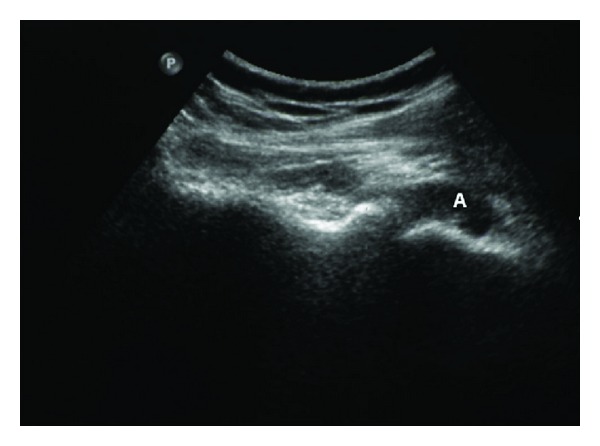



Artrite Sética

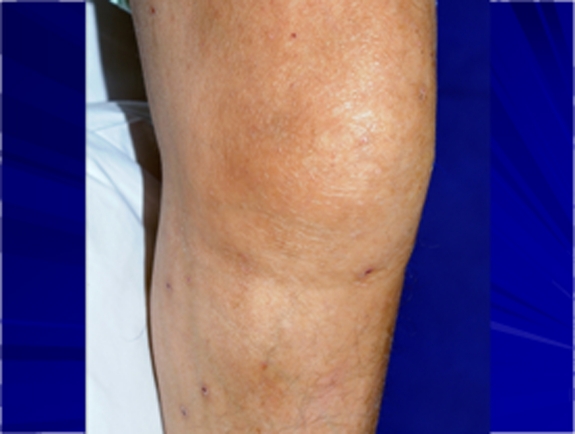
A artrite sética é uma infeção da articulação devido à inoculação direta, extensão contígua ou disseminação hematogénica de organismos infeciosos no espaço articular. Este processo causa uma artrite inflamatória monoarticular aguda. Tem sido implicada uma variedade de organismos, mais MAIS Androgen Insensitivity Syndrome frequentemente Staphylococcus aureus Staphylococcus aureus Potentially pathogenic bacteria found in nasal membranes, skin, hair follicles, and perineum of warm-blooded animals. They may cause a wide range of infections and intoxications. Brain Abscess. As articulações com danos prévios (por exemplo, artrite reumatoide) apresentam maior risco de infeção. Os pacientes apresentam uma articulação edemaciada, quente e dolorosa, geralmente o joelho. As culturas positivas da artrocentese fazem o diagnóstico, com antibioterapia adequada para o organismo específico. Em alguns casos é necessário a aspiração articular de repetição ou drenagem cirúrgica. Se o espaço articular estiver infetado e houver uma prótese colocada, também pode ser necessário fazer-se desbridamento e remoção da prótese.

Last updated: Dec 15, 2025

Editorial responsibility: Stanley Oiseth, Lindsay Jones, Evelin Maza

Epidemiologia e Etiologia

Epidemiologia

  • Incidência: 2-6 casos por 100.000 pessoas nos Estados Unidos
  • Mais MAIS Androgen Insensitivity Syndrome comum em crianças do que em adultos: pico entre os 2 e 3 anos de idade
  • 2:1, com predominância masculina

Etiologia

A maioria das infeções por artrite sética são monomicrobianas. Os organismos comuns incluem:

  • Staphylococcus Staphylococcus Staphylococcus is a medically important genera of Gram-positive, aerobic cocci. These bacteria form clusters resembling grapes on culture plates. Staphylococci are ubiquitous for humans, and many strains compose the normal skin flora. Staphylococcus:
    • Staphylococcus aureus Staphylococcus aureus Potentially pathogenic bacteria found in nasal membranes, skin, hair follicles, and perineum of warm-blooded animals. They may cause a wide range of infections and intoxications. Brain Abscess ( mais MAIS Androgen Insensitivity Syndrome comum)
    • S. epidermidis S. epidermidis A species of staphylococcus that is a spherical, non-motile, gram-positive, chemoorganotrophic, facultative anaerobe. Mainly found on the skin and mucous membrane of warm-blooded animals, it can be primary pathogen or secondary invader. Staphylococcus
  • Streptococcus Streptococcus Streptococcus is one of the two medically important genera of gram-positive cocci, the other being Staphylococcus. Streptococci are identified as different species on blood agar on the basis of their hemolytic pattern and sensitivity to optochin and bacitracin. There are many pathogenic species of streptococci, including S. pyogenes, S. agalactiae, S. pneumoniae, and the viridans streptococci. Streptococcus:
    • Streptococcus Streptococcus Streptococcus is one of the two medically important genera of gram-positive cocci, the other being Staphylococcus. Streptococci are identified as different species on blood agar on the basis of their hemolytic pattern and sensitivity to optochin and bacitracin. There are many pathogenic species of streptococci, including S. pyogenes, S. agalactiae, S. pneumoniae, and the viridans streptococci. Streptococcus pyogenes
    • S. pneumoniae
    • S. agalactiae
  • Bactérias gram-negativas:
    • Pseudomonas aeruginosa Pseudomonas aeruginosa A species of gram-negative, aerobic, rod-shaped bacteria commonly isolated from clinical specimens (wound, burn, and urinary tract infections). It is also found widely distributed in soil and water. P. Aeruginosa is a major agent of nosocomial infection. Pseudomonas
    • Escheria coli
    • Kingella Kingae
    • Neisseria gonorrhoeae Neisseria gonorrhoeae A species of gram-negative, aerobic bacteria primarily found in purulent venereal discharges. It is the causative agent of gonorrhea. Neisseria
    • Haemophilus influenzae Haemophilus Influenzae A species of Haemophilus found on the mucous membranes of humans and a variety of animals. The species is further divided into biotypes I through viii. Haemophilus
    • Espécies de Salmonella Salmonella Salmonellae are gram-negative bacilli of the family Enterobacteriaceae. Salmonellae are flagellated, non-lactose-fermenting, and hydrogen sulfide-producing microbes. Salmonella enterica, the most common disease-causing species in humans, is further classified based on serotype as typhoidal (S. typhi and paratyphi) and nontyphoidal (S. enteritidis and typhimurium). Salmonella

Fatores de risco

  • Bebés e crianças:
    • Prematuridade
    • Hemofilia (devido a hemartroses)
    • Imunossupressão:
      • Quimioterapia
      • HIV HIV Anti-HIV Drugs
      • Anemia Anemia Anemia is a condition in which individuals have low Hb levels, which can arise from various causes. Anemia is accompanied by a reduced number of RBCs and may manifest with fatigue, shortness of breath, pallor, and weakness. Subtypes are classified by the size of RBCs, chronicity, and etiology. Anemia: Overview and Types falciforme
      • Diabetes Diabetes Diabetes mellitus (DM) is a metabolic disease characterized by hyperglycemia and dysfunction of the regulation of glucose metabolism by insulin. Type 1 DM is diagnosed mostly in children and young adults as the result of autoimmune destruction of β cells in the pancreas and the resulting lack of insulin. Type 2 DM has a significant association with obesity and is characterized by insulin resistance. Diabetes Mellitus
  • Adultos:
    • Idade > 80 anos
    • Doença crónica/imunossupressão:
      • Diabetes Diabetes Diabetes mellitus (DM) is a metabolic disease characterized by hyperglycemia and dysfunction of the regulation of glucose metabolism by insulin. Type 1 DM is diagnosed mostly in children and young adults as the result of autoimmune destruction of β cells in the pancreas and the resulting lack of insulin. Type 2 DM has a significant association with obesity and is characterized by insulin resistance. Diabetes Mellitus
      • HIV HIV Anti-HIV Drugs
    • Doença articular:
      • Artrite reumatoide
      • Osteoartrite
      • Gota
    • Procedimentos articulares:
      • Cirurgia
      • Injeções intra-articulares
      • Prótese articular
    • Infeções cutâneas ou úlceras
    • Utilização de drogas IV
Tabela: Organismos mais MAIS Androgen Insensitivity Syndrome comuns na artrite sética, com base em alguns fatores de risco subjacentes
Fatores de risco Agentes infeciosos
Nenhum fator de risco específico S. aureus S. aureus Potentially pathogenic bacteria found in nasal membranes, skin, hair follicles, and perineum of warm-blooded animals. They may cause a wide range of infections and intoxications. Staphylococcus
Substituição de prótese articular
  • S. aureus S. aureus Potentially pathogenic bacteria found in nasal membranes, skin, hair follicles, and perineum of warm-blooded animals. They may cause a wide range of infections and intoxications. Staphylococcus (particularmente MRSA MRSA A strain of Staphylococcus aureus that is non-susceptible to the action of methicillin. The mechanism of resistance usually involves modification of normal or the presence of acquired penicillin binding proteins. Staphylococcus)
  • S. epidermidis S. epidermidis A species of staphylococcus that is a spherical, non-motile, gram-positive, chemoorganotrophic, facultative anaerobe. Mainly found on the skin and mucous membrane of warm-blooded animals, it can be primary pathogen or secondary invader. Staphylococcus (cria biofilmes em próteses)
Doença crónica, doença autoimune, infeção da pele, trauma, idoso S. pyogenes ( Streptococcus Streptococcus Streptococcus is one of the two medically important genera of gram-positive cocci, the other being Staphylococcus. Streptococci are identified as different species on blood agar on the basis of their hemolytic pattern and sensitivity to optochin and bacitracin. There are many pathogenic species of streptococci, including S. pyogenes, S. agalactiae, S. pneumoniae, and the viridans streptococci. Streptococcus beta-hemolítico do grupo A)
Jovem, sexualmente ativo N. gonorrhoeae N. gonorrhoeae A species of gram-negative, aerobic bacteria primarily found in purulent venereal discharges. It is the causative agent of gonorrhea. Neisseria
Trauma S. epidermidis S. epidermidis A species of staphylococcus that is a spherical, non-motile, gram-positive, chemoorganotrophic, facultative anaerobe. Mainly found on the skin and mucous membrane of warm-blooded animals, it can be primary pathogen or secondary invader. Staphylococcus
Anemia Anemia Anemia is a condition in which individuals have low Hb levels, which can arise from various causes. Anemia is accompanied by a reduced number of RBCs and may manifest with fatigue, shortness of breath, pallor, and weakness. Subtypes are classified by the size of RBCs, chronicity, and etiology. Anemia: Overview and Types falciforme
  • Salmonella Salmonella Salmonellae are gram-negative bacilli of the family Enterobacteriaceae. Salmonellae are flagellated, non-lactose-fermenting, and hydrogen sulfide-producing microbes. Salmonella enterica, the most common disease-causing species in humans, is further classified based on serotype as typhoidal (S. typhi and paratyphi) and nontyphoidal (S. enteritidis and typhimurium). Salmonella
  • S. aureus S. aureus Potentially pathogenic bacteria found in nasal membranes, skin, hair follicles, and perineum of warm-blooded animals. They may cause a wide range of infections and intoxications. Staphylococcus

Fisiopatologia

  • A invasão da articulação ocorre através de:
  • Articulações com danos prévios são particularmente suscetíveis a infeções por:
    • Neovascularização
    • Defesas celulares disfuncionais
    • Membrana basal ausente na membrana sinovial
  • Progressão da doença:
    • Invasão bacteriana → inflamação → libertação de citocinas e proteases Proteases Proteins and Peptides
    • Esta resposta, mais MAIS Androgen Insensitivity Syndrome as toxinas bacterianas → destruição de:
      • Cartilagem articular
      • Sinovial
      • Osso subcondral
    • Ocorre a formação de pannus Pannus A genus of cyanobacteria in the family synechococcaceae that is free-floating and occurs in various water environments attaching to algae and submersed plants. Septic Arthritis.
    • Se se desenvolver um derrame de grande dimensão → compromisso do suprimento sanguíneo → necrose assética

Apresentação Clínica e Diagnóstico

Apresentação clínica

  • Geralmente com início agudo
  • Sinais e sintomas articulares:
    • Edema Edema Edema is a condition in which excess serous fluid accumulates in the body cavity or interstitial space of connective tissues. Edema is a symptom observed in several medical conditions. It can be categorized into 2 types, namely, peripheral (in the extremities) and internal (in an organ or body cavity). Edema e derrame
    • Calor Calor Inflammation
    • Dor moderada a severa
    • Eritema
    • Restrição de movimento
    • Normalmente monoarticular, mas em 20% dos casos pode ser oligo- ou poliarticular
  • Sintomas constitucionais:
    • Febre
    • Fadiga
    • Taquicardia
  • Articulações afetadas frequentemente:
    • Joelho (> 50% dos casos)
    • Pulso
    • Tornozelo
    • Anca ANCA Group of systemic vasculitis with a strong association with anca. The disorders are characterized by necrotizing inflammation of small and medium size vessels, with little or no immune-complex deposits in vessel walls. Rapidly Progressive Glomerulonephritis
    • Cotovelo
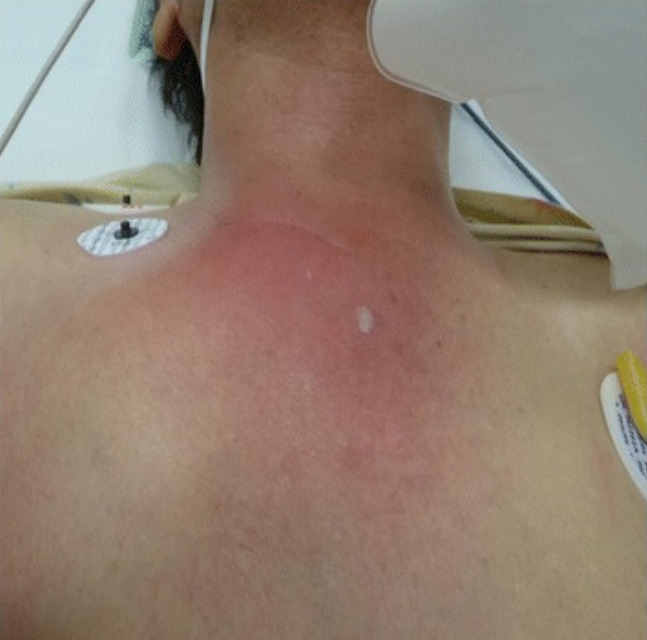
    • Articulações axiais (em utilizadores de drogas intravenosas):
      • Sacroilíaca
      • Articulação esternoclavicular

Artrocentese

O diagnóstico de artrite sética é feito com a análise do líquido sinovial.

  • Deve ser feita antes de se iniciar antibioterapia
  • Uma coloração de Gram e/ou cultura positiva confirma o diagnóstico.
  • Um aspirado purulento dá um diagnóstico presuntivo:
    • Contagem de leucócitos > 50.000 células/μL
    • Predominância de neutrófilos
  • Pode fazer-se um teste de amplificação de ácidos nucleicos se houver suspeita de N. gonorrhoeae N. gonorrhoeae A species of gram-negative, aerobic bacteria primarily found in purulent venereal discharges. It is the causative agent of gonorrhea. Neisseria.
  • Inclui uma análise de cristais para excluir gota.

Avaliação laboratorial

Exames laboratoriais que suportam o diagnóstico:

  • ↑ Velocidade de sedimentação (VS)
  • PCR PCR Polymerase chain reaction (PCR) is a technique that amplifies DNA fragments exponentially for analysis. The process is highly specific, allowing for the targeting of specific genomic sequences, even with minuscule sample amounts. The PCR cycles multiple times through 3 phases: denaturation of the template DNA, annealing of a specific primer to the individual DNA strands, and synthesis/elongation of new DNA molecules. Polymerase Chain Reaction (PCR)
  • ↑ contagem de leucócitos
  • Hemoculturas
  • Esfregaços cervicais, uretrais, retais ou orofaríngeos para teste de amplificação de ácido nucleico se houver suspeita de N. gonorrhoeae N. gonorrhoeae A species of gram-negative, aerobic bacteria primarily found in purulent venereal discharges. It is the causative agent of gonorrhea. Neisseria

Imagiologia

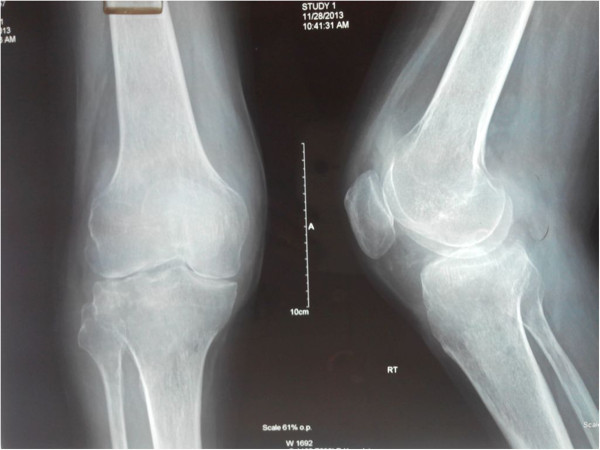
  • Raio-X simples:
    • Diminuição ou aumento do espaço articular
    • Alterações ósseas subcondrais, osteopenia Osteopenia Osteoporosis
    • Edema Edema Edema is a condition in which excess serous fluid accumulates in the body cavity or interstitial space of connective tissues. Edema is a symptom observed in several medical conditions. It can be categorized into 2 types, namely, peripheral (in the extremities) and internal (in an organ or body cavity). Edema periarticular dos tecidos moles Moles Primary Skin Lesions
    • Exames normais não excluem artrite sética.
  • Ecografia:
    • Identificação de um derrame articular
    • Pode auxiliar na punção do derrame
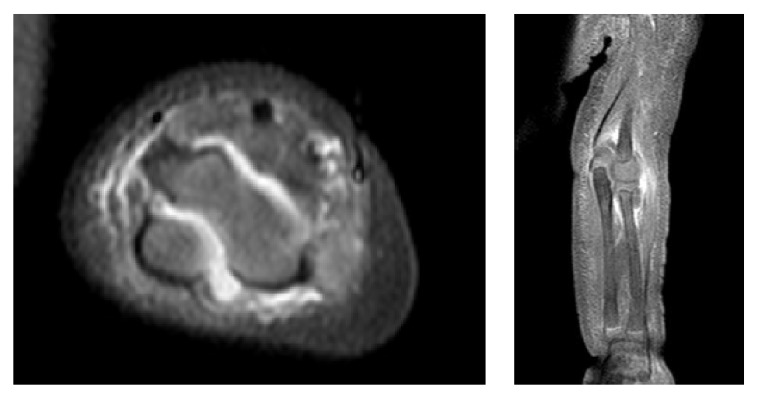
  • Ressonância magnética:
    • Sensível para identificação precoce de derrame articular
    • Avalia a extensão das anomalias ósseas e dos tecidos moles Moles Primary Skin Lesions
    • Avaliação da presença de osteomielite
    • Particularmente útil na avaliação de infeções da articulação sacroilíaca e esternoclavicular

Tratamento

Terapia antibiótica

A seleção de antibióticos é baseada na coloração de Gram inicial e adequada com base nos dados da cultura.

  • Regime empírico se a coloração de Gram for negativa:
    • Vancomicina
    • Cefalosporina de 3ª ou 4ª geração
  • Cocos Gram-positivos:
    • Vancomicina empírica
    • Se houver crescimento de MSSA nas culturas:
      • Cefazolina
      • Nafcilina
      • Dicloxacilina
      • Flucloxacilina
      • Clindamicina ou vancomicina se alérgico à penicilina
    • Se houver crescimento de MRSA MRSA A strain of Staphylococcus aureus that is non-susceptible to the action of methicillin. The mechanism of resistance usually involves modification of normal or the presence of acquired penicillin binding proteins. Staphylococcus nas culturas:
      • Vancomicina
      • Daptomicina
      • Linezolida
      • Clindamicina
  • Bacilos Gram-negativos:
    • Opções empíricas:
      • Cefalosporinas de 3ª ou 4ª geração
      • Aztreonam Aztreonam The carbapenems and aztreonam are both members of the bactericidal beta-lactam family of antibiotics (similar to penicillins). They work by preventing bacteria from producing their cell wall, ultimately leading to bacterial cell death. Carbapenems and Aztreonam
    • Para P. aeruginosa P. aeruginosa A species of gram-negative, aerobic, rod-shaped bacteria commonly isolated from clinical specimens (wound, burn, and urinary tract infections). It is also found widely distributed in soil and water. P. Aeruginosa is a major agent of nosocomial infection. Pseudomonas, adicione 1 dos seguintes:
      • Fluoroquinolona
      • Gentamicina
  • Cocos Gram-negativos:
    • Ceftriaxone Ceftriaxone A broad-spectrum cephalosporin antibiotic and cefotaxime derivative with a very long half-life and high penetrability to meninges, eyes and inner ears. Cephalosporins (tratamento de eleição na infeção por N. gonorrhoeae N. gonorrhoeae A species of gram-negative, aerobic bacteria primarily found in purulent venereal discharges. It is the causative agent of gonorrhea. Neisseria)
    • Aminoglicosídeos

A duração da terapêutica depende de fatores adicionais:

  • Com hemoculturas negativas:
    • 2 semanas de antibióticos parentéricos
    • 1–2 semanas adicionais de antibióticos orais
  • Com hemoculturas positivas: 4 semanas de antibióticos parentéricos
  • Infeção por P. aeruginosa P. aeruginosa A species of gram-negative, aerobic, rod-shaped bacteria commonly isolated from clinical specimens (wound, burn, and urinary tract infections). It is also found widely distributed in soil and water. P. Aeruginosa is a major agent of nosocomial infection. Pseudomonas : 4-6 semanas

Intervenções cirúrgicas

Drenagem articular:

  • Geralmente feita em todos os pacientes
  • Frequentemente requer aspirações de repetição
  • Opções:
    • Aspiração por agulha
    • Drenagem artroscópica
    • A artrotomia (cirurgia aberta) está indicada quando:
      • A drenagem percutânea de repetição não consegue controlar o derrame articular
      • A articulação é tecnicamente difícil de aspirar
      • Os tecidos moles Moles Primary Skin Lesions adjacentes estão infetados

Desbridamento cirúrgico em pacientes com prótese:

  • Desbridamento com preservação da prótese:
    • A infeção ocorre dentro de 30 dias após a colocação.
    • Apresentação dentro de 3 semanas do início dos sintomas
    • Sem evidência de drenagem por um trajeto fistuloso
  • Desbridamento com remoção da prótese:
    • A prótese é removida e é colocado um espaçador da articulação.
    • Curso de antibioterapia de 6 semanas
    • Eventual substituição por uma nova prótese articular

Diagnóstico Diferencial

  • Artrite reativa: uma espondiloartropatia autoimune soronegativa que geralmente é precipitada por uma infeção gastrointestinal ou geniturinária. Os pacientes apresentam oligoartrite assimétrica, entesopatia, dactilite e/ou sacroileíte. O diagnóstico é clínico, e uma cultura e coloração de Gram do líquido sinovial negativas ajudarão a excluir a artrite séptica. O tratamento inclui AINEs, fármacos antirreumáticos modificadores da doença ( DMARDs DMARDs Disease-modifying antirheumatic drugs are antiinflammatory medications used to manage rheumatoid arthritis. The medications slow, but do not cure, the progression of the disease. The medications are classified as either synthetic or biologic agents and each has unique mechanisms of action and side effects. Disease-Modifying Antirheumatic Drugs (DMARDs)) e tratamento da infeção ativa.
  • Artrite gotosa: uma artrite causada pela precipitação de cristais de urato monossódico nas articulações. A doença é caracterizada por artrite monoarticular aguda, dolorosa e recorrente. A articulação envolvida com maior frequência é a 1ª articulação metatarsofalângica. O diagnóstico é feito com a identificação de cristais com birrefringência negativa em forma de agulha no líquido sinovial, que diferenciam a gota da artrite sética. As terapias incluem AINEs, colchicina, esteroides e redução do ácido úrico com alopurinol.
  • Pseudogota: deposição intra-articular de pirofosfato de cálcio. A etiologia não é clara. Os pacientes apresentam crises agudas de edema Edema Edema is a condition in which excess serous fluid accumulates in the body cavity or interstitial space of connective tissues. Edema is a symptom observed in several medical conditions. It can be categorized into 2 types, namely, peripheral (in the extremities) and internal (in an organ or body cavity). Edema, calor Calor Inflammation e dor nas articulações. A pseudogota geralmente afeta articulações maiores, como o joelho. O diagnóstico é feito com a identificação de cristais com birrefringência positiva e romboides no líquido sinovial, o que diferencia a pseudogota da artrite sética. O tratamento inclui AINEs, corticosteroides e colchicina.
  • Osteoartrite ( OA OA Osteoarthritis (OA) is the most common form of arthritis, and is due to cartilage destruction and changes of the subchondral bone. The risk of developing this disorder increases with age, obesity, and repetitive joint use or trauma. Patients develop gradual joint pain, stiffness lasting < 30 minutes, and decreased range of motion. Osteoarthritis): artrite devido à destruição da cartilagem e alterações no osso subcondral. Os pacientes desenvolvem dor gradual nas articulações, rigidez com duração < 30 minutos e diminuição da amplitude de movimento. O exame físico pode revelar crepitação com o movimento articular e formação de osteófitos. O diagnóstico é clínico. O líquido sinovial é não inflamatório, o que diferencia a OA OA Osteoarthritis (OA) is the most common form of arthritis, and is due to cartilage destruction and changes of the subchondral bone. The risk of developing this disorder increases with age, obesity, and repetitive joint use or trauma. Patients develop gradual joint pain, stiffness lasting < 30 minutes, and decreased range of motion. Osteoarthritis da artrite sética. O tratamento inclui analgésicos, injeções intra-articulares de glucocorticoides e cirurgia na doença avançada.
  • Osteomielite: uma infeção do osso mais MAIS Androgen Insensitivity Syndrome frequentemente causada por S. aureus S. aureus Potentially pathogenic bacteria found in nasal membranes, skin, hair follicles, and perineum of warm-blooded animals. They may cause a wide range of infections and intoxications. Staphylococcus. Os pacientes apresentam dor, rubor Rubor Inflammation e edema Edema Edema is a condition in which excess serous fluid accumulates in the body cavity or interstitial space of connective tissues. Edema is a symptom observed in several medical conditions. It can be categorized into 2 types, namely, peripheral (in the extremities) and internal (in an organ or body cavity). Edema no local afetado e podem ter sintomas associados, como febre e calafrios. Os valores laboratoriais demonstrarão leucócitos, PCR PCR Polymerase chain reaction (PCR) is a technique that amplifies DNA fragments exponentially for analysis. The process is highly specific, allowing for the targeting of specific genomic sequences, even with minuscule sample amounts. The PCR cycles multiple times through 3 phases: denaturation of the template DNA, annealing of a specific primer to the individual DNA strands, and synthesis/elongation of new DNA molecules. Polymerase Chain Reaction (PCR) e VS elevados na maioria dos casos. O exame de imagem mais MAIS Androgen Insensitivity Syndrome sensível e específico para diagnosticar a osteomielite é a ressonância magnética. O tratamento requer antibioterapia de longo prazo e potencial desbridamento cirúrgico.
  • Doença de Lyme: infeção transmitida por carraças causada pela espiroqueta gram-negativa Borrelia burgdorferi Borrelia burgdorferi A specific species of bacteria, part of the borrelia burgdorferi group, whose common name is lyme disease spirochete. Borrelia. Os pacientes com doença tardia podem desenvolver uma poliartrite migratória, particularmente nas grandes articulações. Também podem estar presentes uma erupção cutânea com eritema migrans, bem como manifestações neurológicas, cardíacas e oculares. A análise do líquido sinovial e o teste serológico podem confirmar uma infeção de Lyme e diferenciar a doença da artrite sética. O tratamento é feito com antibioterapia.

Referências

  1. Goldenberg, D. L., & Sexton, D. J. (2025). Septic arthritis of native joints in adults. UpToDate. Retrieved August 14, 2025, from https://www.uptodate.com/contents/septic-arthritis-of-native-joints-in-adults
  2. Helfgott, S.M. (2024). Monoarthritis in adults: Etiology and evaluation. In Ramirez Curtis, M. (Ed.), UpToDate. Retrieved August 14, 2025, from https://www.uptodate.com/contents/monoarthritis-in-adults-etiology-and-evaluation
  3. Momodu, I. (2023). Septic arthritis. In Savaliya, V. (Ed.), StatPearls. Retrieved August 14, 2025, from https://www.statpearls.com/articlelibrary/viewarticle/17857/
  4. Brusch, J. L. (2022). Septic arthritis treatment & management. In Bronze, M. S. (Ed.), Medscape. Retrieved August 14, 2025, from https://emedicine.medscape.com/article/236299-overview#a6
  5. Schmitt, S. (2024). Acute infectious arthritis. MSD Manual Professional Version. Retrieved August 14, 2025, from https://www.msdmanuals.com/professional/musculoskeletal-and-connective-tissue-disorders/infections-of-joints-and-bones/acute-infectious-arthritis

Crie sua conta gratuita ou faça login para continuar lendo!

Cadastre-se agora e tenha acesso grátis ao Lecturio, com páginas de conceitos, vídeos de medicina e questões para sua educação médica.

Aprende mais com a Lecturio:

Multiple devices displaying human anatomy and health education content.

Complementa o teu estudo da faculdade com o companheiro de estudo tudo-em-um da Lecturio, através de métodos de ensino baseados em evidência.

Estuda onde quiseres

Two iPhones display medical education apps, one showing anatomy, the other Bookmatcher.

A Lecturio Medical complementa o teu estudo através de métodos de ensino baseados em evidência, vídeos de palestras, perguntas e muito mais – tudo combinado num só lugar e fácil de usar.

User Reviews

Have a holly, jolly study session 🎁 Save 50% on all plans now >>

Que tengas una sesión de estudio alegre y navideña 🎁 Ahorra 50% en todos los planes >>

Details