Vasculitis Asociada a Anticuerpos Citoplasmáticos Antinucleares
Vasculitis Asociada a Anticuerpos Citoplasmáticos Antinucleares
La vasculitisVasculitisInflammation of any one of the blood vessels, including the arteries; veins; and rest of the vasculature system in the body.Systemic Lupus Erythematosus asociada a anticuerpos citoplasmáticos antinucleares (ANCAANCAGroup of systemic vasculitis with a strong association with anca. The disorders are characterized by necrotizing inflammation of small and medium size vessels, with little or no immune-complex deposits in vessel walls.Rapidly Progressive Glomerulonephritis, por sus siglas enENErythema nodosum is an immune-mediated panniculitis (inflammation of the subcutaneous fat) caused by a type IV (delayed-type) hypersensitivity reaction. It commonly manifests in young women as tender, erythematous nodules on the shins.Erythema Nodosum inglés) es una subcategoría de las vasculitisVasculitisInflammation of any one of the blood vessels, including the arteries; veins; and rest of the vasculature system in the body.Systemic Lupus Erythematosus que incluye la granulomatosis con poliangeítis, la poliangeítis microscópica, la granulomatosis eosinofílica con poliangeítis, la glomerulonefritis necrotizante y semilunar limitada alALAmyloidosis riñón y la vasculitisVasculitisInflammation of any one of the blood vessels, including the arteries; veins; and rest of the vasculature system in the body.Systemic Lupus Erythematosus asociada a ANCAANCAGroup of systemic vasculitis with a strong association with anca. The disorders are characterized by necrotizing inflammation of small and medium size vessels, with little or no immune-complex deposits in vessel walls.Rapidly Progressive Glomerulonephritis inducida por fármacos. Las 5 enfermedades pueden causar vasculitisVasculitisInflammation of any one of the blood vessels, including the arteries; veins; and rest of the vasculature system in the body.Systemic Lupus Erythematosus de pequeños vasos potencialmente mortal, con una amplia gama de manifestaciones sistémicas, que pueden afectar a losLOSNeisseria pulmones, losLOSNeisseria riñones, la piel, el corazón y otros tejidos. El diagnóstico se sospecha por la presentación clínica y una prueba de ANCAANCAGroup of systemic vasculitis with a strong association with anca. The disorders are characterized by necrotizing inflammation of small and medium size vessels, with little or no immune-complex deposits in vessel walls.Rapidly Progressive Glomerulonephritis citoplasmática (c) o perinuclear (p) positiva. La biopsia del tejido afectado confirma el diagnóstico. LosLOSNeisseria glucocorticoides y la terapia inmunosupresora son losLOSNeisseria pilares del tratamiento.
La vasculitisVasculitisInflammation of any one of the blood vessels, including the arteries; veins; and rest of the vasculature system in the body.Systemic Lupus Erythematosus asociada a anticuerpos anticitoplasma de neutrófilos (ANCAANCAGroup of systemic vasculitis with a strong association with anca. The disorders are characterized by necrotizing inflammation of small and medium size vessels, with little or no immune-complex deposits in vessel walls.Rapidly Progressive Glomerulonephritis, por sus siglas enENErythema nodosum is an immune-mediated panniculitis (inflammation of the subcutaneous fat) caused by a type IV (delayed-type) hypersensitivity reaction. It commonly manifests in young women as tender, erythematous nodules on the shins.Erythema Nodosum inglés) se caracteriza por una vasculitisVasculitisInflammation of any one of the blood vessels, including the arteries; veins; and rest of the vasculature system in the body.Systemic Lupus Erythematosus necrosante de pequeños vasos y una prueba ANCAANCAGroup of systemic vasculitis with a strong association with anca. The disorders are characterized by necrotizing inflammation of small and medium size vessels, with little or no immune-complex deposits in vessel walls.Rapidly Progressive Glomerulonephritis positiva sin depósitos significativos de inmunocomplejos.
Antecedentes
LosLOSNeisseria anticuerpos anticitoplasma de neutrófilos (ANCAANCAGroup of systemic vasculitis with a strong association with anca. The disorders are characterized by necrotizing inflammation of small and medium size vessels, with little or no immune-complex deposits in vessel walls.Rapidly Progressive Glomerulonephritis) son:
Autoanticuerpos dirigidos contra proteínas contenidas enENErythema nodosum is an immune-mediated panniculitis (inflammation of the subcutaneous fat) caused by a type IV (delayed-type) hypersensitivity reaction. It commonly manifests in young women as tender, erythematous nodules on the shins.Erythema Nodosum el interior de losLOSNeisseria neutrófilos (y monocitos, enENErythema nodosum is an immune-mediated panniculitis (inflammation of the subcutaneous fat) caused by a type IV (delayed-type) hypersensitivity reaction. It commonly manifests in young women as tender, erythematous nodules on the shins.Erythema Nodosum menor grado).
Son específicos de proteínas asociadas a losLOSNeisseria gránulos citoplasmáticos de losLOSNeisseria neutrófilos y, alALAmyloidosis unirse, desencadenan una respuesta inflamatoria exagerada (i.e., una reacción autoinmune).
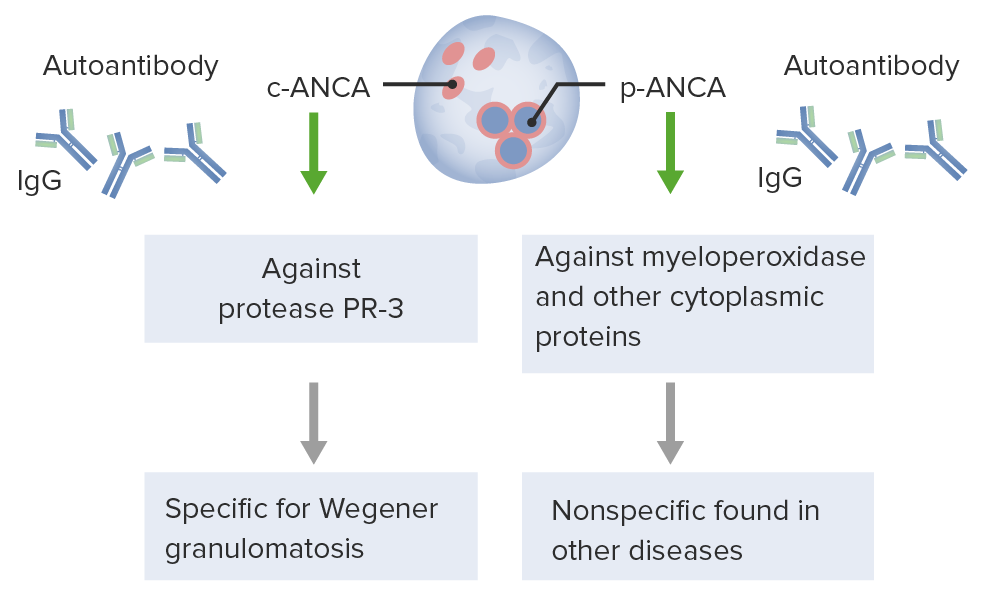
Existen 2 subtipos de ANCAANCAGroup of systemic vasculitis with a strong association with anca. The disorders are characterized by necrotizing inflammation of small and medium size vessels, with little or no immune-complex deposits in vessel walls.Rapidly Progressive Glomerulonephritis clínicamente significativos:
Se unen a la mieloperoxidasa (hay autoanticuerpos pANCA clínicamente menos significativos que se dirigen contra la elastasa, la catepsina G, la lisozima y la lactoferrina).
La mieloperoxidasa es una proteína que se encuentra enENErythema nodosum is an immune-mediated panniculitis (inflammation of the subcutaneous fat) caused by a type IV (delayed-type) hypersensitivity reaction. It commonly manifests in young women as tender, erythematous nodules on the shins.Erythema NodosumlosLOSNeisseria gránulos de losLOSNeisseria neutrófilos y que participa enENErythema nodosum is an immune-mediated panniculitis (inflammation of the subcutaneous fat) caused by a type IV (delayed-type) hypersensitivity reaction. It commonly manifests in young women as tender, erythematous nodules on the shins.Erythema Nodosum la formación de especies reactivas de oxígeno con fines antimicrobianos.
La deficiencia de mieloperoxidasa (secundaria a la destrucción autoinmune de neutrófilos) provoca una respuesta inflamatoria exagerada.
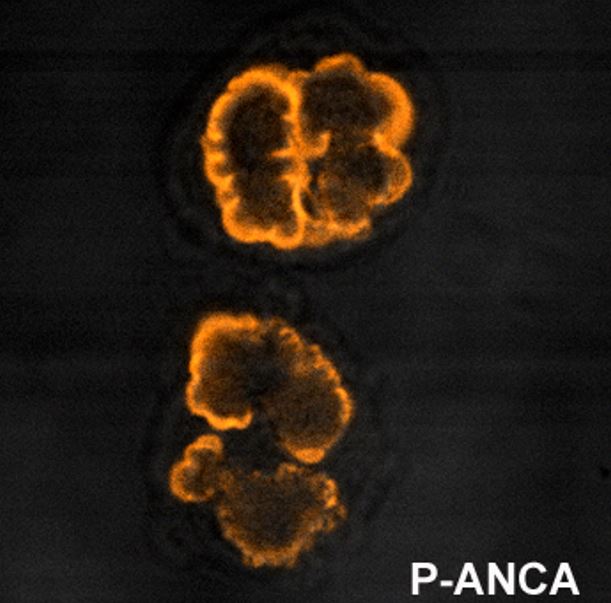
La “p” de pANCA significa perinuclear porque enENErythema nodosum is an immune-mediated panniculitis (inflammation of the subcutaneous fat) caused by a type IV (delayed-type) hypersensitivity reaction. It commonly manifests in young women as tender, erythematous nodules on the shins.Erythema Nodosum la tinción, estos anticuerpos tiñen la zona perinuclear del neutrófilo (donde la mieloperoxidasa y otras proteínas con carga negativa están muy concentradas).
Autoanticuerpos antiproteinasa 3 (PR3):
También conocidos como cANCA
Tienen una carga neta negativa
Se unen a PR3
La PR3 es una proteína que se encuentra enENErythema nodosum is an immune-mediated panniculitis (inflammation of the subcutaneous fat) caused by a type IV (delayed-type) hypersensitivity reaction. It commonly manifests in young women as tender, erythematous nodules on the shins.Erythema NodosumlosLOSNeisseria gránulos azurófilos de losLOSNeisseria neutrófilos y que participa enENErythema nodosum is an immune-mediated panniculitis (inflammation of the subcutaneous fat) caused by a type IV (delayed-type) hypersensitivity reaction. It commonly manifests in young women as tender, erythematous nodules on the shins.Erythema Nodosum la proteólisis de péptidos antimicrobianos con fines antimicrobianos.
La deficiencia de PR3 (secundaria a la destrucción autoinmune de neutrófilos) provoca una respuesta inflamatoria exagerada.
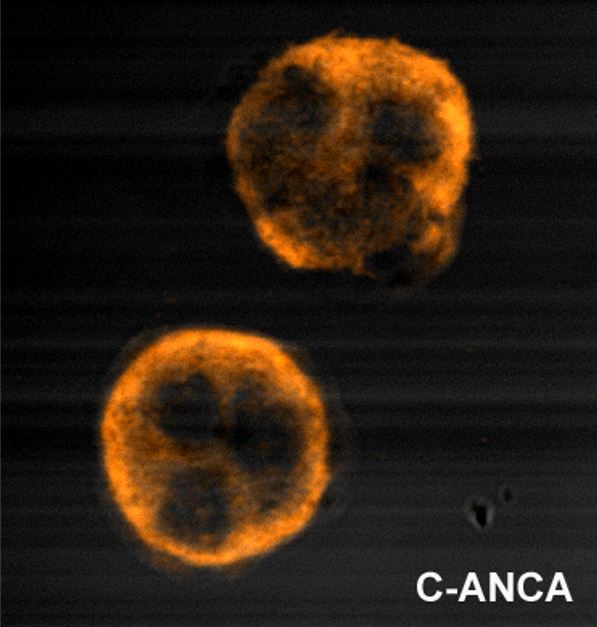
La “c” de cANCA significa citoplasmático porque, enENErythema nodosum is an immune-mediated panniculitis (inflammation of the subcutaneous fat) caused by a type IV (delayed-type) hypersensitivity reaction. It commonly manifests in young women as tender, erythematous nodules on the shins.Erythema Nodosum la tinción, estos anticuerpos tiñen la zona citoplasmática periférica del neutrófilo (donde el PR3, que tiene carga positiva, está muy concentrado).
La presencia de ANCAANCAGroup of systemic vasculitis with a strong association with anca. The disorders are characterized by necrotizing inflammation of small and medium size vessels, with little or no immune-complex deposits in vessel walls.Rapidly Progressive Glomerulonephritis (i.e., una prueba ANCAANCAGroup of systemic vasculitis with a strong association with anca. The disorders are characterized by necrotizing inflammation of small and medium size vessels, with little or no immune-complex deposits in vessel walls.Rapidly Progressive Glomerulonephritis positiva):
No:
Diagnostica una enfermedad
Se correlaciona con la severidad de losLOSNeisseria síntomas
Se correlaciona con la gravedad de losLOSNeisseria síntomas
Es simplemente un marcador que ayuda a establecer patrones de enfermedad
La positividad de ANCAANCAGroup of systemic vasculitis with a strong association with anca. The disorders are characterized by necrotizing inflammation of small and medium size vessels, with little or no immune-complex deposits in vessel walls.Rapidly Progressive Glomerulonephritis se asocia a procesos de enfermedades autoinmunes (las siguientes designaciones pANCA/cANCA son solo orientativas; existe una variabilidad significativa):
VasculitisVasculitisInflammation of any one of the blood vessels, including the arteries; veins; and rest of the vasculature system in the body.Systemic Lupus Erythematosus:
Granulomatosis con poliangeítis (cANCA)
Poliangeítis microscópica (pANCA)
Granulomatosis eosinofílica con poliangeítis (pANCA)
Glomerulonefritis necrotizante crescéntrica primaria pauciinmune (también conocida como glomerulonefritis rápidamente progresiva [RPGNRPGNRapidly progressive glomerulonephritis (RPGN) is a syndrome of severe glomerular disease with progressive loss of kidney function within weeks to months. Histologically, crescents (the proliferation of epithelial cells and the infiltration of monocytes/macrophages in the Bowman space) are found in the glomeruli and arise from immunologic injury.Rapidly Progressive Glomerulonephritis] o vasculitisVasculitisInflammation of any one of the blood vessels, including the arteries; veins; and rest of the vasculature system in the body.Systemic Lupus Erythematosus renal limitada) (pANCA)
VasculitisVasculitisInflammation of any one of the blood vessels, including the arteries; veins; and rest of the vasculature system in the body.Systemic Lupus Erythematosus asociada a ANCAANCAGroup of systemic vasculitis with a strong association with anca. The disorders are characterized by necrotizing inflammation of small and medium size vessels, with little or no immune-complex deposits in vessel walls.Rapidly Progressive Glomerulonephritis inducida por fármacos (pANCA)
Enfermedad por autoanticuerpos anti-membrana basal glomerular (MBG) (pANCA)
Nefritis intersticial (pANCA)
ColitisColitisInflammation of the colon section of the large intestine, usually with symptoms such as diarrhea (often with blood and mucus), abdominal pain, and fever.Pseudomembranous Colitis ulcerosa (pANCA)
Colangitis esclerosante primaria (pANCA)
Hepatitis autoinmune (pANCA)
Artritis reumatoide (pANCA)
FibrosisFibrosisAny pathological condition where fibrous connective tissue invades any organ, usually as a consequence of inflammation or other injury.Bronchiolitis Obliterans quística (pANCA)
Clasificación
Las vasculitisVasculitisInflammation of any one of the blood vessels, including the arteries; veins; and rest of the vasculature system in the body.Systemic Lupus Erythematosus asociadas a anticuerpos anticitoplasma de neutrófilos incluye 3 enfermedades principales siguientes:
Granulomatosis con poliangeítis:
La mayoría de losLOSNeisseria casos son cANCA+ (80%-90%).
Un pequeño porcentaje son pANCA+ o ANCA-.
Poliangeítis microscópica:
La mayoría de losLOSNeisseria casos son pANCA+ (cerca del 90%).
Un pequeño porcentaje son cANCA+ o ANCA-.
Granulomatosis eosinofílica con poliangitis (también conocida como síndrome de Churg-Strauss):
La mayoría de losLOSNeisseria casos son ANCA- (50%-70%).
Una minoría de casos son ANCAANCAGroup of systemic vasculitis with a strong association with anca. The disorders are characterized by necrotizing inflammation of small and medium size vessels, with little or no immune-complex deposits in vessel walls.Rapidly Progressive Glomerulonephritis+ (30%-50%).
La mayoría de losLOSNeisseria casos ANCAANCAGroup of systemic vasculitis with a strong association with anca. The disorders are characterized by necrotizing inflammation of small and medium size vessels, with little or no immune-complex deposits in vessel walls.Rapidly Progressive Glomerulonephritis+ son pANCA+ (75%-80%).
Un pequeño porcentaje son cANCA+.
Algunas fuentes también incluyen las 2 enfermedades siguientes:
Necrotizante renal limitada y Glomerulonefritis semilunar:
La mayoría de losLOSNeisseria casos son pANCA+ (75%-80%).
Un pequeño porcentaje son cANCA+ o ANCA-.
VasculitisVasculitisInflammation of any one of the blood vessels, including the arteries; veins; and rest of the vasculature system in the body.Systemic Lupus Erythematosus asociada a ANCAANCAGroup of systemic vasculitis with a strong association with anca. The disorders are characterized by necrotizing inflammation of small and medium size vessels, with little or no immune-complex deposits in vessel walls.Rapidly Progressive Glomerulonephritis inducida por fármacos:
Tabla: Medicamentos implicados enENErythema nodosum is an immune-mediated panniculitis (inflammation of the subcutaneous fat) caused by a type IV (delayed-type) hypersensitivity reaction. It commonly manifests in young women as tender, erythematous nodules on the shins.Erythema Nodosum las vasculitisVasculitisInflammation of any one of the blood vessels, including the arteries; veins; and rest of the vasculature system in the body.Systemic Lupus Erythematosus asociadas a ANCAANCAGroup of systemic vasculitis with a strong association with anca. The disorders are characterized by necrotizing inflammation of small and medium size vessels, with little or no immune-complex deposits in vessel walls.Rapidly Progressive Glomerulonephritis
Aagentes antitiroideos
Propiltiouracilo
Metimazol
Biológicos
EtanerceptEtanerceptA recombinant version of soluble human tnf receptor fused to an IgG Fc fragment that binds specifically to tumor necrosis factor and inhibits its binding with endogenous tnf receptors. It prevents the inflammatory effect of tnf and is used to treat rheumatoid arthritis; psoriatic arthritis and ankylosing spondylitis.Immunosuppressants
InfliximabInfliximabA chimeric monoclonal antibody to tnf-alpha that is used in the treatment of rheumatoid arthritis; ankylosing spondylitis; psoriatic arthritis and Crohn’s disease.Disease-Modifying Antirheumatic Drugs (DMARDs)
AdalimumabAdalimumabA humanized monoclonal antibody that binds specifically to tnf-alpha and blocks its interaction with endogenous tnf receptors to modulate inflammation. It is used in the treatment of rheumatoid arthritis; psoriatic arthritis; Crohn’s disease and ulcerative colitis.Disease-Modifying Antirheumatic Drugs (DMARDs)
Las vasculitisVasculitisInflammation of any one of the blood vessels, including the arteries; veins; and rest of the vasculature system in the body.Systemic Lupus Erythematosus asociadas a anticuerpos anticitoplasma de neutrófilos- antimieloperoxidasa es más común que las vasculitisVasculitisInflammation of any one of the blood vessels, including the arteries; veins; and rest of the vasculature system in the body.Systemic Lupus Erythematosus asociadas a anticuerpos anticitoplasma de neutrófilos antiproteniasa 3
Suele presentarse enENErythema nodosum is an immune-mediated panniculitis (inflammation of the subcutaneous fat) caused by a type IV (delayed-type) hypersensitivity reaction. It commonly manifests in young women as tender, erythematous nodules on the shins.Erythema Nodosum la 6ª y 7ª décadas de la vida
Afecta por igual a mujeres y hombres
Más frecuente enENErythema nodosum is an immune-mediated panniculitis (inflammation of the subcutaneous fat) caused by a type IV (delayed-type) hypersensitivity reaction. It commonly manifests in young women as tender, erythematous nodules on the shins.Erythema Nodosum personas de raza blanca
VasculitisVasculitisInflammation of any one of the blood vessels, including the arteries; veins; and rest of the vasculature system in the body.Systemic Lupus ErythematosusANCAANCAGroup of systemic vasculitis with a strong association with anca. The disorders are characterized by necrotizing inflammation of small and medium size vessels, with little or no immune-complex deposits in vessel walls.Rapidly Progressive Glomerulonephritis inducida por medicamntos:
Más frecuente enENErythema nodosum is an immune-mediated panniculitis (inflammation of the subcutaneous fat) caused by a type IV (delayed-type) hypersensitivity reaction. It commonly manifests in young women as tender, erythematous nodules on the shins.Erythema Nodosum mujeres jóvenes
Más frecuentemente asociada a lesiones cutáneas que otros AAVAAVAntinuclear cytoplasmic antibody (ANCA)-associated vasculitis (aav) includes granulomatosis with polyangiitis (GPA), microscopic polyangiitis (mpa), and eosinophilic granulomatosis with polyangiitis (egpa). All 3 diseases cause life-threatening small-vessel vasculitis with a wide range of systemic manifestations, which can involve the lungs, kidneys, skin, and heart.Antineutrophil Cytoplasmic Antibody (ANCA)-Associated Vasculitis
Afectación relativamente rara de riñones, tracto gastrointestinal y sistema nervioso
Más comúnmente asociada con pANCA
Puede asociarse a anticuerpos antihistona
Generalmente, la gravedad de la enfermedad es más leve y el pronóstico es mejor
Fisiopatología
Multifactorial
Factores contribuyentes:
Genéticos
Exposición ambiental
Infección
Respuesta del sistema inmune innato y adaptativo
Intensidad y duración del proceso de la enfermedad subyacente.
LosLOSNeisseria neutrófilos desempeñan un papel fundamental:
LosLOSNeisseria neutrófilos tienen autoantígenos ANCAANCAGroup of systemic vasculitis with a strong association with anca. The disorders are characterized by necrotizing inflammation of small and medium size vessels, with little or no immune-complex deposits in vessel walls.Rapidly Progressive Glomerulonephritis secuestrados enENErythema nodosum is an immune-mediated panniculitis (inflammation of the subcutaneous fat) caused by a type IV (delayed-type) hypersensitivity reaction. It commonly manifests in young women as tender, erythematous nodules on the shins.Erythema Nodosum gránulos citoplasmáticos dentro de la célula (losLOSNeisseria anticuerpos séricos no pueden acceder a ellos).
Evento inflamatorio iniciador (e. g., infección, fármacos) → cebado de neutrófilos inducido por citocinas/complementos (factor de necrosisNecrosisThe death of cells in an organ or tissue due to disease, injury or failure of the blood supply.Ischemic Cell Damage tumoral ɑ (TNF-ɑ), IL-1β, C5a).
Cebado de neutrófilos → MPOMPOAcute Myeloid Leukemia y PR3 se desplazan del citoplasma a la superficie celular → unión a autoanticuerpos ANCAANCAGroup of systemic vasculitis with a strong association with anca. The disorders are characterized by necrotizing inflammation of small and medium size vessels, with little or no immune-complex deposits in vessel walls.Rapidly Progressive Glomerulonephritis
Unión de losLOSNeisseria autoanticuerpos ANCAANCAGroup of systemic vasculitis with a strong association with anca. The disorders are characterized by necrotizing inflammation of small and medium size vessels, with little or no immune-complex deposits in vessel walls.Rapidly Progressive Glomerulonephritis a MPOMPOAcute Myeloid Leukemia/PR3 → activación de neutrófilos mediada por Fcɣ
Activación de neutrófilos → activación de la vía del complemento → elaboración de C5a (atrae más neutrófilos y actúa como cebador adicional de neutrófilos)
LosLOSNeisseria neutrófilos activados se adhieren a las paredes vasculares y las penetran → inflamación aguda/generación de especies reactivas del oxígeno → daño endotelial
Inflamación aguda → activación del depósito de fibrina/colágeno (formación de trampas extracelulares de neutrófilos (NET)) → inflamación crónica (apoptosisApoptosisA regulated cell death mechanism characterized by distinctive morphologic changes in the nucleus and cytoplasm, including the endonucleolytic cleavage of genomic DNA, at regularly spaced, internucleosomal sites, I.e., DNA fragmentation. It is genetically-programmed and serves as a balance to mitosis in regulating the size of animal tissues and in mediating pathologic processes associated with tumor growth.Ischemic Cell Damage, necrosisNecrosisThe death of cells in an organ or tissue due to disease, injury or failure of the blood supply.Ischemic Cell Damage, fibrosisFibrosisAny pathological condition where fibrous connective tissue invades any organ, usually as a consequence of inflammation or other injury.Bronchiolitis Obliterans)
Patrón de tinción granular y citoplasmática de la proteinasa 3-anticuerpo anticitoplasma de neutrófilos (ANCA, por sus siglas en inglés) (c-ANCA)
Patogénesis de los daños causados por los anticuerpos anticitoplasma de neutrófilos (ANCA, por sus siglas en inglés)
Imagen por Lecturio.
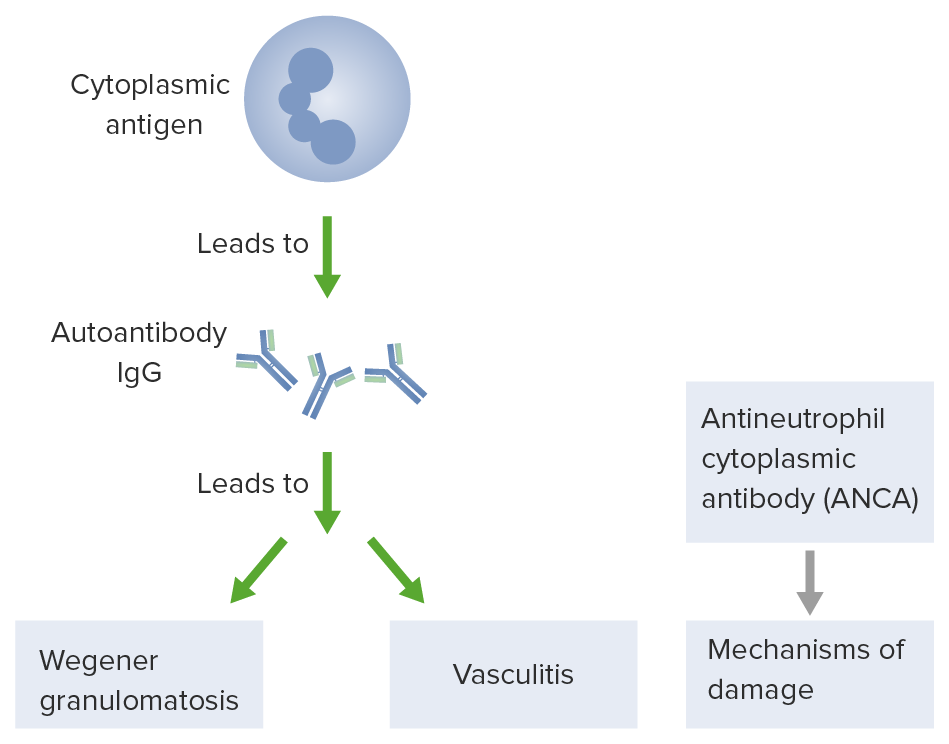
Formación de autoanticuerpos anticitoplasma de neutrófilos (ANCA, por sus siglas en inglés)
Imagen por Lecturio.
Presentación Clínica
La vasculitisVasculitisInflammation of any one of the blood vessels, including the arteries; veins; and rest of the vasculature system in the body.Systemic Lupus Erythematosus asociada a ANCAANCAGroup of systemic vasculitis with a strong association with anca. The disorders are characterized by necrotizing inflammation of small and medium size vessels, with little or no immune-complex deposits in vessel walls.Rapidly Progressive Glomerulonephritis se presenta con una amplia gama de signos y síntomas dependiendo del sistema o sistemas de órganos implicados.
Síntomas constitucionales
LosLOSNeisseria síntomas constitucionales pueden estar presentes semanas o meses antes de que se desarrollen las características clínicas específicas:
Artralgias
Fiebre, sudores nocturnos
Fatiga, letargo
Pérdida de apetito
Pérdida de peso
Afectación de las vías respiratorias superiores
Más común enENErythema nodosum is an immune-mediated panniculitis (inflammation of the subcutaneous fat) caused by a type IV (delayed-type) hypersensitivity reaction. It commonly manifests in young women as tender, erythematous nodules on the shins.Erythema Nodosum la granulomatosis con poliangeitis (95%) que enENErythema nodosum is an immune-mediated panniculitis (inflammation of the subcutaneous fat) caused by a type IV (delayed-type) hypersensitivity reaction. It commonly manifests in young women as tender, erythematous nodules on the shins.Erythema Nodosum la poliangeitis microscópica (35%)
Las manifestaciones incluyen:
SinusitisSinusitisSinusitis refers to inflammation of the mucosal lining of the paranasal sinuses. The condition usually occurs concurrently with inflammation of the nasal mucosa (rhinitis), a condition known as rhinosinusitis. Acute sinusitis is due to an upper respiratory infection caused by a viral, bacterial, or fungal agent. Sinusitis
Otitis media
Secreción nasal purulenta/sanguinolenta
Úlceras enENErythema nodosum is an immune-mediated panniculitis (inflammation of the subcutaneous fat) caused by a type IV (delayed-type) hypersensitivity reaction. It commonly manifests in young women as tender, erythematous nodules on the shins.Erythema Nodosum las membranas mucosas
Policondritis
Destrucción del hueso/cartílago:
Pérdida de dientes
Deformación de la nariz enENErythema nodosum is an immune-mediated panniculitis (inflammation of the subcutaneous fat) caused by a type IV (delayed-type) hypersensitivity reaction. It commonly manifests in young women as tender, erythematous nodules on the shins.Erythema Nodosum silla de montar
Pérdida de audición conductiva o deformación de la nariz enENErythema nodosum is an immune-mediated panniculitis (inflammation of the subcutaneous fat) caused by a type IV (delayed-type) hypersensitivity reaction. It commonly manifests in young women as tender, erythematous nodules on the shins.Erythema Nodosum forma de silla de montar (típica de la granulomatosis con poliangeitis)
Vía aérea:
Disfonía
Estridor
TosTOSThoracic outlet syndrome (TOS) is a broad term used for a spectrum of syndromes related to the general region of the thoracic outlet, which involves the compression or irritation of elements of the brachial plexus, subclavian artery, or subclavian vein.Thoracic Outlet Syndrome
Disnea
Roncus
Sibilancias
Hemoptisis
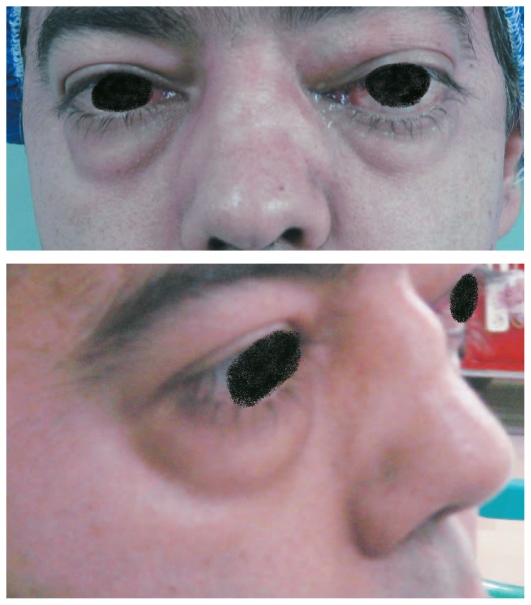
Ejemplo de puente nasal colapsado (deformidad de la nariz en silla de montar) que se observa en la granulomatosis con poliangeitis: El individuo también muestra afectación orbital con proptosis (protrusión del globo ocular), edema de párpados y limitación de los movimientos oculares. La afectación orbital no suele producirse hasta años después del inicio de la enfermedad.
Imagen: “Anterior and lateral appearance of the patient” por Aletaha M, Tavakoli M, Kanavi MR, Hashemlou A, Roghaei S. Licencia: CC BY 2.5
Afectación de las vías respiratorias inferiores
Parénquima:
Crepitantes
Hemorragia alveolar difusa
Signos de consolidación y/o derrame pleural, incluyendo matidez a la percusión
LosLOSNeisseria antecedentes de asmaASMAAutoimmune Hepatitis sugieren granulomatosis eosinofílica con poliangeitis más que granulomatosis con poliangeitis o poliangeitis microscópica.
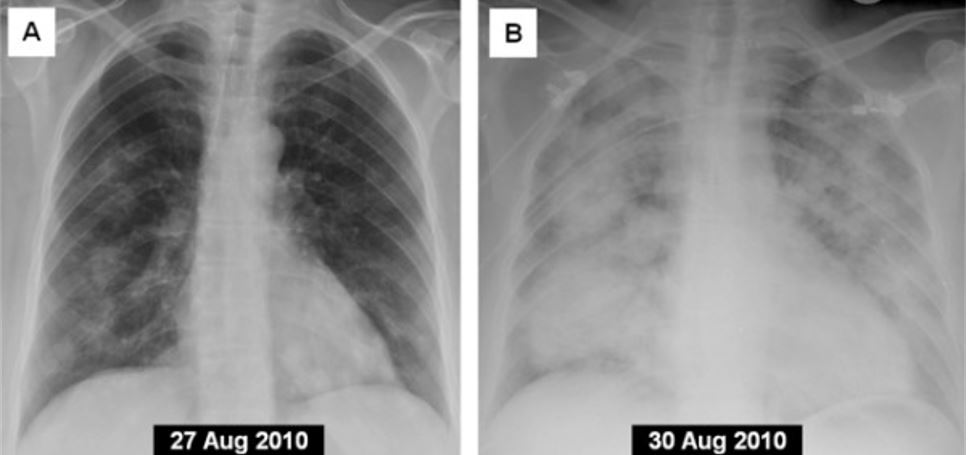
Progresión a hemorragia alveolar difusa en un individuo con granulomatosis con poliangeitis: A) radiografía frontal de tórax al ingreso B) radiografía frontal de tórax en el mismo individuo después de 4 días
Imagen: “Posterior-anterior chest X-ray 4 days prior to admission” por Cardenas-Garcia J, Farmakiotis D, Baldovino BP, Kim P. Licencia: CC BY 2.0
Afectación renal
La glomerulonefritis se observa enENErythema nodosum is an immune-mediated panniculitis (inflammation of the subcutaneous fat) caused by a type IV (delayed-type) hypersensitivity reaction. It commonly manifests in young women as tender, erythematous nodules on the shins.Erythema Nodosum el 20% de losLOSNeisseria individuos enENErythema nodosum is an immune-mediated panniculitis (inflammation of the subcutaneous fat) caused by a type IV (delayed-type) hypersensitivity reaction. It commonly manifests in young women as tender, erythematous nodules on the shins.Erythema Nodosum el momento del diagnóstico y enENErythema nodosum is an immune-mediated panniculitis (inflammation of the subcutaneous fat) caused by a type IV (delayed-type) hypersensitivity reaction. It commonly manifests in young women as tender, erythematous nodules on the shins.Erythema Nodosum el 80% de losLOSNeisseria individuos después de 2 años.
Glomerulonefritis rápidamente progresiva: función renal que ↓ rápidamente enENErythema nodosum is an immune-mediated panniculitis (inflammation of the subcutaneous fat) caused by a type IV (delayed-type) hypersensitivity reaction. It commonly manifests in young women as tender, erythematous nodules on the shins.Erythema Nodosum días o semanas y formación de semilunas glomerulares enENErythema nodosum is an immune-mediated panniculitis (inflammation of the subcutaneous fat) caused by a type IV (delayed-type) hypersensitivity reaction. It commonly manifests in young women as tender, erythematous nodules on the shins.Erythema Nodosum la histología
Se observa más comúnmente enENErythema nodosum is an immune-mediated panniculitis (inflammation of the subcutaneous fat) caused by a type IV (delayed-type) hypersensitivity reaction. It commonly manifests in young women as tender, erythematous nodules on the shins.Erythema Nodosum la vasculitisVasculitisInflammation of any one of the blood vessels, including the arteries; veins; and rest of the vasculature system in the body.Systemic Lupus ErythematosusANCAANCAGroup of systemic vasculitis with a strong association with anca. The disorders are characterized by necrotizing inflammation of small and medium size vessels, with little or no immune-complex deposits in vessel walls.Rapidly Progressive Glomerulonephritis asociada a medicamentos enENErythema nodosum is an immune-mediated panniculitis (inflammation of the subcutaneous fat) caused by a type IV (delayed-type) hypersensitivity reaction. It commonly manifests in young women as tender, erythematous nodules on the shins.Erythema Nodosum comparación con otras formas de vasculitisVasculitisInflammation of any one of the blood vessels, including the arteries; veins; and rest of the vasculature system in the body.Systemic Lupus Erythematosus asociada a ANCAANCAGroup of systemic vasculitis with a strong association with anca. The disorders are characterized by necrotizing inflammation of small and medium size vessels, with little or no immune-complex deposits in vessel walls.Rapidly Progressive Glomerulonephritis
Incluye:
Púrpura
Ulceraciones
UrticariaUrticariaUrticaria is raised, well-circumscribed areas (wheals) of edema (swelling) and erythema (redness) involving the dermis and epidermis with associated pruritus (itch). Urticaria is not a single disease but rather is a reaction pattern representing cutaneous mast cell degranulation.Urticaria (Hives)
Livedo reticularisLivedo reticularisA condition characterized by a reticular or fishnet pattern on the skin of lower extremities and other parts of the body. This red and blue pattern is due to deoxygenated blood in unstable dermal blood vessels. The condition is intensified by cold exposure and relieved by rewarming.Chronic Kidney Disease
Nódulos
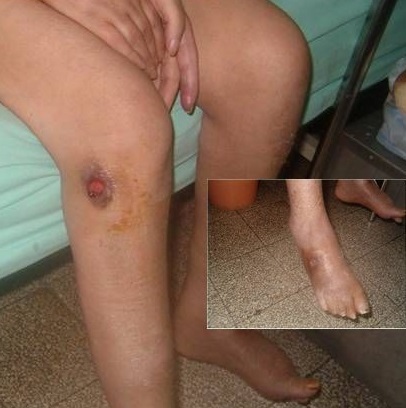
Múltiples ulceraciones en un individuo con poliangeitis microscópica
Imagen: “Ulcérations cutanées aux membres inférieurs” por Khammassi N, Chakroun A. Licencia: CC BY 2.0
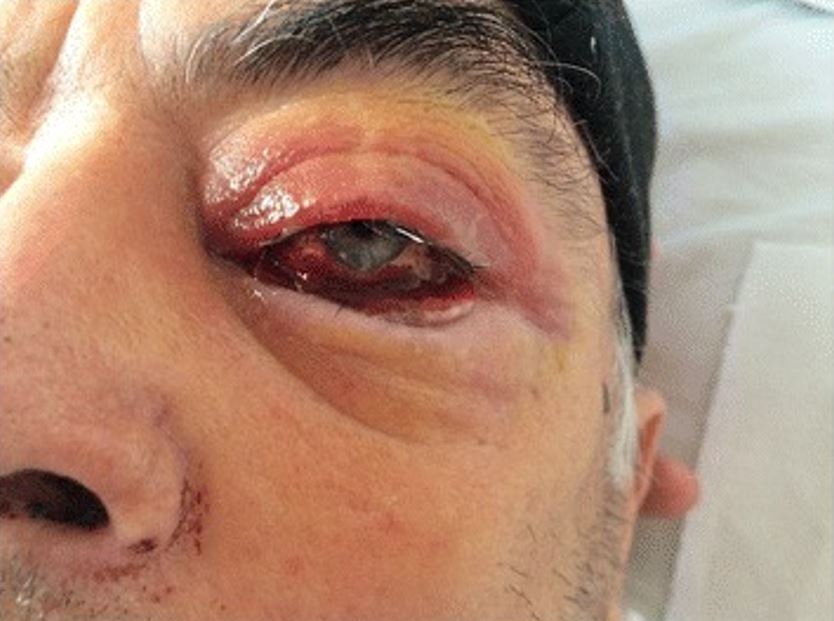
Edema de párpados, escleritis, quemosis y hemorragia subconjuntival en un individuo con granulomatosis con poliangeitis
Imagen: “The eye involvement of Wegener’s granulomatosis and signs of an acute epistaxis” por Bîrluţiu V, Rezi EC, Bîrluţiu RM, Zaharie IS. Licencia: CC BY 4.0
PericarditisPericarditisPericarditis is an inflammation of the pericardium, often with fluid accumulation. It can be caused by infection (often viral), myocardial infarction, drugs, malignancies, metabolic disorders, autoimmune disorders, or trauma. Acute, subacute, and chronic forms exist. Pericarditis
Miocarditis
Alteraciones de la conducción
Otros órganos (raras)
Afectación del tracto gastrointestinal
Artritis
Enfermedad tiroidea o paratiroidea
Diagnóstico
Laboratorios
Química sérica:
↑ Creatinina indica afectación renal.
↓ Albúmina indica pérdidas proteicas renales.
↑ ASTASTEnzymes of the transferase class that catalyze the conversion of l-aspartate and 2-ketoglutarate to oxaloacetate and l-glutamate.Liver Function Tests/ALTALTAn enzyme that catalyzes the conversion of l-alanine and 2-oxoglutarate to pyruvate and l-glutamate.Liver Function Tests indica afectación hepática.
Posible alteración electrolítica debida a disfunción renal.
Posible alteración ácido-base debida a disfunción renal.
Elevación inespecífica de la velocidad de eritrosedimentación (VES) y proteína C reactiva (PCRPCRPolymerase chain reaction (PCR) is a technique that amplifies DNA fragments exponentially for analysis. The process is highly specific, allowing for the targeting of specific genomic sequences, even with minuscule sample amounts. The PCR cycles multiple times through 3 phases: denaturation of the template DNA, annealing of a specific primer to the individual DNA strands, and synthesis/elongation of new DNA molecules.Polymerase Chain Reaction (PCR))
↑ IgEIgEAn immunoglobulin associated with mast cells. Overexpression has been associated with allergic hypersensitivity.Immunoglobulins: Types and Functions (Granulomatosis eosinofílica con poliangeitis)
Hemograma:
Leucocitosis
Trombocitosis
AnemiaAnemiaAnemia is a condition in which individuals have low Hb levels, which can arise from various causes. Anemia is accompanied by a reduced number of RBCs and may manifest with fatigue, shortness of breath, pallor, and weakness. Subtypes are classified by the size of RBCs, chronicity, and etiology. Anemia: Overview and Types normocítica normocrómica
Eosinofilia (Granulomatosis eosinofílica con poliangeitis)
Inmunofluorescencia y/o ensayo inmunoabsorbente ligado a enzimas (ELISAELISAAn immunoassay utilizing an antibody labeled with an enzyme marker such as horseradish peroxidase. While either the enzyme or the antibody is bound to an immunosorbent substrate, they both retain their biologic activity; the change in enzyme activity as a result of the enzyme-antibody-antigen reaction is proportional to the concentration of the antigen and can be measured spectrophotometrically or with the naked eye. Many variations of the method have been developed.St. Louis Encephalitis Virus) positivo para ANCAANCAGroup of systemic vasculitis with a strong association with anca. The disorders are characterized by necrotizing inflammation of small and medium size vessels, with little or no immune-complex deposits in vessel walls.Rapidly Progressive Glomerulonephritis (suero):
LosLOSNeisseria hallazgos de la radiografía de tórax y la TC pueden incluir:
Consolidación
Nódulos
Derrame pleural
Infiltrados fugaces
Adenopatías hiliares
Criterios diagnósticos El diagnóstico de la granulomatosis eosinofílica con poliangeitis del Colegio Americano de Reumatología incluye 4 de losLOSNeisseria 6 criterios siguientes con una especificidad de casi el 100%:
> 10% de eosinófilos enENErythema nodosum is an immune-mediated panniculitis (inflammation of the subcutaneous fat) caused by a type IV (delayed-type) hypersensitivity reaction. It commonly manifests in young women as tender, erythematous nodules on the shins.Erythema Nodosum el hemograma con diferencial
Acumulación extravascular de eosinófilos enENErythema nodosum is an immune-mediated panniculitis (inflammation of the subcutaneous fat) caused by a type IV (delayed-type) hypersensitivity reaction. It commonly manifests in young women as tender, erythematous nodules on the shins.Erythema Nodosum la biopsia
Biopsia
La confirmación del diagnóstico incluye la biopsia de losLOSNeisseria órganos afectados:
La sospecha diagnóstica puede confirmarse con una biopsia de pulmón, piel o nervio periférico (puede mostrar granulomasGranulomasA relatively small nodular inflammatory lesion containing grouped mononuclear phagocytes, caused by infectious and noninfectious agents.Sarcoidosis).
Sitios de biopsia y hallazgos:
Granulomatosis con poliangeitis: La biopsia de tejido de un lugar de la enfermedad activa muestra una glomerulonefritis segmentaria, necrotizante y semilunar con escasa o nula deposición de inmunoglobulina o complemento (pauciinmune); las biopsias renales y pulmonares son las más específicas.
Poliangeitis microscópica: La biopsia pulmonar y/o renal (glomerulonefritis semilunar) muestra una arteritis necrotizante (histológicamente idéntica a la poliarteritis nodosa).
Granulomatosis eosinofílica con poliangeitis: La biopsia pulmonar muestra eosinofilia y pequeños granulomasGranulomasA relatively small nodular inflammatory lesion containing grouped mononuclear phagocytes, caused by infectious and noninfectious agents.Sarcoidosis eosinofílicos necrotizantes con vasculitisVasculitisInflammation of any one of the blood vessels, including the arteries; veins; and rest of the vasculature system in the body.Systemic Lupus Erythematosus necrotizante que afecta a pequeñas arterias y vénulas.
Enfermedad por autoanticuerpos anti-membrana basal glomerular: La biopsia renal muestra glomerulonefritis necrotizante con escasa o nula deposición de inmunocomplejos o de complemento.
VasculitisVasculitisInflammation of any one of the blood vessels, including the arteries; veins; and rest of the vasculature system in the body.Systemic Lupus Erythematosus asociada a ANCAANCAGroup of systemic vasculitis with a strong association with anca. The disorders are characterized by necrotizing inflammation of small and medium size vessels, with little or no immune-complex deposits in vessel walls.Rapidly Progressive Glomerulonephritis inducida por fármacos: No hay hallazgos patológicos distintivos para discriminar entre vasculitisVasculitisInflammation of any one of the blood vessels, including the arteries; veins; and rest of the vasculature system in the body.Systemic Lupus Erythematosus inducida por fármacos y otras vasculitisVasculitisInflammation of any one of the blood vessels, including the arteries; veins; and rest of the vasculature system in the body.Systemic Lupus Erythematosus.
Tratamiento
Todos losLOSNeisseria individuos con un diagnóstico confirmado de vasculitisVasculitisInflammation of any one of the blood vessels, including the arteries; veins; and rest of the vasculature system in the body.Systemic Lupus Erythematosus asociada a ANCAANCAGroup of systemic vasculitis with a strong association with anca. The disorders are characterized by necrotizing inflammation of small and medium size vessels, with little or no immune-complex deposits in vessel walls.Rapidly Progressive Glomerulonephritis requieren un tratamiento inmunosupresor. La terapia puede iniciarse tempranamente sobre la base de un diagnóstico presuntivo por losLOSNeisseria siguientes criterios:
Características clínicas sugestivas
Prueba de ANCAANCAGroup of systemic vasculitis with a strong association with anca. The disorders are characterized by necrotizing inflammation of small and medium size vessels, with little or no immune-complex deposits in vessel walls.Rapidly Progressive Glomerulonephritis +
↓ Probabilidad de otras etiologías
Inducción de la remisión
Poliangeitis microscópica y granulomatosis con poliangeitis:
Ciclofosfamida + glucocorticoides son el criterio estándar para la inducción de la remisión.
RituximabRituximabA murine-derived monoclonal antibody and antineoplastic agent that binds specifically to the cd20 antigen and is used in the treatment of leukemia; lymphoma and rheumatoid arthritis.Immunosuppressants es una alternativa menos tóxica a la ciclofosfamida para la inducción de la remisión enENErythema nodosum is an immune-mediated panniculitis (inflammation of the subcutaneous fat) caused by a type IV (delayed-type) hypersensitivity reaction. It commonly manifests in young women as tender, erythematous nodules on the shins.Erythema Nodosum la granulomatosis con poliangeitis o la poliangeitis microscópica y es el 1er tratamiento aprobado por la Food and Drug Administration.
Granulomatosis eosinofílica con poliangeitis:
Generalmente, la monoterapia con glucocorticoides es adecuada para el tratamiento de la granulomatosis eosinofílica con poliangeitis.
LosLOSNeisseria medicamentos citotóxicos (ciclofosfamida) son necesarios enENErythema nodosum is an immune-mediated panniculitis (inflammation of the subcutaneous fat) caused by a type IV (delayed-type) hypersensitivity reaction. It commonly manifests in young women as tender, erythematous nodules on the shins.Erythema Nodosum < 20% de losLOSNeisseria individuos.
La plasmaféresis puede ser necesaria según la enfermedad (e.g., glomerulonefritis rápidamente progresiva o hemorragia pulmonar).
Mantenimiento de la remisión
Una vez alcanzada la remisión, se cambia a agentes menos tóxicos:
Azatioprina
RituximabRituximabA murine-derived monoclonal antibody and antineoplastic agent that binds specifically to the cd20 antigen and is used in the treatment of leukemia; lymphoma and rheumatoid arthritis.Immunosuppressants
Micofenolato mofetilo
Metotrexato
Medidas generales
Profilaxis antibiótica durante el tratamiento inmunosupresor
Trimetoprim-sulfametoxazol para prevenir la neumonía por Pneumocystis
Tabla Comparativa
Tabla que muestra las características clínicas y de laboratorio sugerentes de losLOSNeisseria 3 tipos principales de vasculitisVasculitisInflammation of any one of the blood vessels, including the arteries; veins; and rest of the vasculature system in the body.Systemic Lupus Erythematosus asociada a ANCAANCAGroup of systemic vasculitis with a strong association with anca. The disorders are characterized by necrotizing inflammation of small and medium size vessels, with little or no immune-complex deposits in vessel walls.Rapidly Progressive Glomerulonephritis:
Tabla: Características clínicas y de laboratorio sugerentes de losLOSNeisseria 3 tipos principales de vasculitisVasculitisInflammation of any one of the blood vessels, including the arteries; veins; and rest of the vasculature system in the body.Systemic Lupus Erythematosus asociada a ANCAANCAGroup of systemic vasculitis with a strong association with anca. The disorders are characterized by necrotizing inflammation of small and medium size vessels, with little or no immune-complex deposits in vessel walls.Rapidly Progressive Glomerulonephritis
VasculitisVasculitisInflammation of any one of the blood vessels, including the arteries; veins; and rest of the vasculature system in the body.Systemic Lupus Erythematosus asociada a ANCAANCAGroup of systemic vasculitis with a strong association with anca. The disorders are characterized by necrotizing inflammation of small and medium size vessels, with little or no immune-complex deposits in vessel walls.Rapidly Progressive Glomerulonephritis
ANCAANCAGroup of systemic vasculitis with a strong association with anca. The disorders are characterized by necrotizing inflammation of small and medium size vessels, with little or no immune-complex deposits in vessel walls.Rapidly Progressive Glomerulonephritis
Granuloma enENErythema nodosum is an immune-mediated panniculitis (inflammation of the subcutaneous fat) caused by a type IV (delayed-type) hypersensitivity reaction. It commonly manifests in young women as tender, erythematous nodules on the shins.Erythema Nodosum la biopsia
Caso típico
GPAGPAA multisystemic disease of a complex genetic background. It is characterized by inflammation of the blood vessels (vasculitis) leading to damage in any number of organs. The common features include granulomatous inflammation of the respiratory tract and kidneys. Most patients have measurable autoantibodies (antineutrophil cytoplasmic antibodies) against myeloblastin.Granulomatosis with Polyangiitis
EnENErythema nodosum is an immune-mediated panniculitis (inflammation of the subcutaneous fat) caused by a type IV (delayed-type) hypersensitivity reaction. It commonly manifests in young women as tender, erythematous nodules on the shins.Erythema Nodosum un 85%
MPAMPAA primary systemic vasculitis of small- and some medium-sized vessels. It is characterized by a tropism for kidneys and lungs, positive association with anti-neutrophil cytoplasmic antibodies (ANCA), and a paucity of immunoglobulin deposits in vessel walls.Vasculitides
EnENErythema nodosum is an immune-mediated panniculitis (inflammation of the subcutaneous fat) caused by a type IV (delayed-type) hypersensitivity reaction. It commonly manifests in young women as tender, erythematous nodules on the shins.Erythema Nodosum un 70%
Similar a la GPAGPAA multisystemic disease of a complex genetic background. It is characterized by inflammation of the blood vessels (vasculitis) leading to damage in any number of organs. The common features include granulomatous inflammation of the respiratory tract and kidneys. Most patients have measurable autoantibodies (antineutrophil cytoplasmic antibodies) against myeloblastin.Granulomatosis with Polyangiitis, pero sin enfermedad nasal/sinusal grave (solo enENErythema nodosum is an immune-mediated panniculitis (inflammation of the subcutaneous fat) caused by a type IV (delayed-type) hypersensitivity reaction. It commonly manifests in young women as tender, erythematous nodules on the shins.Erythema Nodosum el 30%)
EGPA
EnENErythema nodosum is an immune-mediated panniculitis (inflammation of the subcutaneous fat) caused by a type IV (delayed-type) hypersensitivity reaction. It commonly manifests in young women as tender, erythematous nodules on the shins.Erythema Nodosum el 50%
Afectación cutánea con antecedentes de asmaASMAAutoimmune Hepatitis/rinitis alérgica + eosinofilia
GPA: granulomatosis con poliangitis (en inglés) MPA: poliangeitis microscópica (en inglés) EGPA: granulomatosis eosinofílica con poliangitis (en inglés)
Diagnóstico Diferencial
VasculitisVasculitisInflammation of any one of the blood vessels, including the arteries; veins; and rest of the vasculature system in the body.Systemic Lupus ErythematosusANCAANCAGroup of systemic vasculitis with a strong association with anca. The disorders are characterized by necrotizing inflammation of small and medium size vessels, with little or no immune-complex deposits in vessel walls.Rapidly Progressive Glomerulonephritis inducida por medicamentos: las vasculitisVasculitisInflammation of any one of the blood vessels, including the arteries; veins; and rest of the vasculature system in the body.Systemic Lupus ErythematosusANCAANCAGroup of systemic vasculitis with a strong association with anca. The disorders are characterized by necrotizing inflammation of small and medium size vessels, with little or no immune-complex deposits in vessel walls.Rapidly Progressive Glomerulonephritis positivas por exposición a medicamentos están relacionadas con el desarrollo de vasculitisVasculitisInflammation of any one of the blood vessels, including the arteries; veins; and rest of the vasculature system in the body.Systemic Lupus Erythematosus (propiltiouracilo, metimazol, carbimazol, hidralazina y minociclina), causando síntomas constitucionales como artralgias, fatiga y erupción cutánea. Sin embargo, también puede darse toda la gama de características clínicas (incluida la insuficiencia renal rápidamente progresiva y la hemorragia alveolar).
Síndrome de Goodpasture: enfermedad autoinmune rara enENErythema nodosum is an immune-mediated panniculitis (inflammation of the subcutaneous fat) caused by a type IV (delayed-type) hypersensitivity reaction. It commonly manifests in young women as tender, erythematous nodules on the shins.Erythema Nodosum la que losLOSNeisseria anticuerpos atacan la membrana basal de losLOSNeisseria pulmones y losLOSNeisseria riñones, lo que provoca hemorragias pulmonares e insuficiencia renal. El síndrome de Goodpasture provoca daños permanentes enENErythema nodosum is an immune-mediated panniculitis (inflammation of the subcutaneous fat) caused by a type IV (delayed-type) hypersensitivity reaction. It commonly manifests in young women as tender, erythematous nodules on the shins.Erythema NodosumlosLOSNeisseria pulmones y losLOSNeisseria riñones, y a menudo conduce a la muerte. El tratamiento incluye medicamentos supresores del sistema inmunológico (e.g., corticosteroides y ciclofosfamida) y plasmaféresis.
Poliarteritis nodosa: una vasculitisVasculitisInflammation of any one of the blood vessels, including the arteries; veins; and rest of the vasculature system in the body.Systemic Lupus Erythematosus sistémica de pequeños y medianos vasos. La poliarteritis nodosa afecta a la piel, losLOSNeisseria nervios periféricos, losLOSNeisseria músculos, las articulaciones, el tracto gastrointestinal y losLOSNeisseria riñones. LosLOSNeisseria individuos presentan síntomas inespecíficos, hipertensión, riesgo de infarto de miocardio y polineuropatía. La angiografía muestra un aspecto de cuentas con aneurismas y estenosis vascular alternados. El tratamiento es con regímenes inmunosupresores.
Arteritis de células gigantes: es una vasculitisVasculitisInflammation of any one of the blood vessels, including the arteries; veins; and rest of the vasculature system in the body.Systemic Lupus Erythematosus de las arterias medianas y grandes (enENErythema nodosum is an immune-mediated panniculitis (inflammation of the subcutaneous fat) caused by a type IV (delayed-type) hypersensitivity reaction. It commonly manifests in young women as tender, erythematous nodules on the shins.Erythema Nodosum particular de las arterias carótidas y la aortaAortaThe main trunk of the systemic arteries.Mediastinum and Great Vessels: Anatomy). LosLOSNeisseria individuos presentan cefalea de nueva aparición, arteria temporal sensible/endurecida, claudicación mandibular y amaurosis fugaz. LosLOSNeisseria estudios de laboratorio muestran elevación de VES y PCRPCRPolymerase chain reaction (PCR) is a technique that amplifies DNA fragments exponentially for analysis. The process is highly specific, allowing for the targeting of specific genomic sequences, even with minuscule sample amounts. The PCR cycles multiple times through 3 phases: denaturation of the template DNA, annealing of a specific primer to the individual DNA strands, and synthesis/elongation of new DNA molecules.Polymerase Chain Reaction (PCR). La biopsia muestra infiltración mononuclear de las paredes de losLOSNeisseria vasos y la formación de células gigantes. El tratamiento consiste enENErythema nodosum is an immune-mediated panniculitis (inflammation of the subcutaneous fat) caused by a type IV (delayed-type) hypersensitivity reaction. It commonly manifests in young women as tender, erythematous nodules on the shins.Erythema Nodosum la administración rápida de glucocorticoides.
Púrpura de Henoch-Schönlein:vasculitisVasculitisInflammation of any one of the blood vessels, including the arteries; veins; and rest of the vasculature system in the body.Systemic Lupus Erythematosus autoinmune de pequeños vasos. La afección se presenta típicamente como una tríada de dolorDolorInflammation abdominal, hematuriaHematuriaPresence of blood in the urine.Renal Cell Carcinoma y erupción purpúrica. La fisiopatología implica la deposición de inmunocomplejos IgAIgARepresents 15-20% of the human serum immunoglobulins, mostly as the 4-chain polymer in humans or dimer in other mammals. Secretory iga is the main immunoglobulin in secretions.Immunoglobulins: Types and FunctionsenENErythema nodosum is an immune-mediated panniculitis (inflammation of the subcutaneous fat) caused by a type IV (delayed-type) hypersensitivity reaction. It commonly manifests in young women as tender, erythematous nodules on the shins.Erythema Nodosum múltiples vasos tras un desencadenante. LosLOSNeisseria síntomas dependen de losLOSNeisseria tejidos irrigados por losLOSNeisseria vasos. La enfermedad tiene un diagnóstico clínico y se trata sintomáticamente.
Artritis reumatoide: poliartritis inflamatoria que se presenta con dolorDolorInflammationenENErythema nodosum is an immune-mediated panniculitis (inflammation of the subcutaneous fat) caused by a type IV (delayed-type) hypersensitivity reaction. It commonly manifests in young women as tender, erythematous nodules on the shins.Erythema Nodosum articulaciones simétricas. El dolorDolorInflammation empeora por la mañana, pero mejora durante el día. Las articulaciones interfalángicas proximales y metacarpofalángicas están incluidas, pero las articulaciones interfalángicas distales están exentas. El tratamiento es con AINE, metotrexato, sulfasalazina, hidroxicloroquina e inhibidores del factor de necrosisNecrosisThe death of cells in an organ or tissue due to disease, injury or failure of the blood supply.Ischemic Cell Damage tumoral-α (TNF-α, por sus siglas enENErythema nodosum is an immune-mediated panniculitis (inflammation of the subcutaneous fat) caused by a type IV (delayed-type) hypersensitivity reaction. It commonly manifests in young women as tender, erythematous nodules on the shins.Erythema Nodosum inglés).
Lupus eritematoso sistémico: afección inflamatoria crónica con afectación de la piel, las articulaciones, losLOSNeisseria riñones, las células sanguíneas y el SNC. La afección es un trastorno autoinmune asociado a la formación de autoanticuerpos como losLOSNeisseria anticuerpos antinucleares (ANA, por sus siglas enENErythema nodosum is an immune-mediated panniculitis (inflammation of the subcutaneous fat) caused by a type IV (delayed-type) hypersensitivity reaction. It commonly manifests in young women as tender, erythematous nodules on the shins.Erythema Nodosum inglés), losLOSNeisseria anti-Smith y losLOSNeisseria anti-ADN de doble cadena. Las características incluyen erupción malar, dolorDolorInflammation articular, fiebre, proteinuriaProteinuriaThe presence of proteins in the urine, an indicator of kidney diseases.Nephrotic Syndrome in Children, hipertensión, anemiaAnemiaAnemia is a condition in which individuals have low Hb levels, which can arise from various causes. Anemia is accompanied by a reduced number of RBCs and may manifest with fatigue, shortness of breath, pallor, and weakness. Subtypes are classified by the size of RBCs, chronicity, and etiology. Anemia: Overview and Types, linfopenia, convulsiones y/o psicosis.
Aratani, Y. (2018). Myeloperoxidase: Its role for host defense, inflammation, and neutrophil function. Arch Biochem Biophys. 640:47-52. https://pubmed.ncbi.nlm.nih.gov/29336940/
Obtenga Medical Premium para poner a prueba sus conocimientos
Lecturio Medical Premium le brinda acceso completo a todo el contenido y las funciones
Obtenga Premium para ver todos los vídeos
Verifica tu correo electrónico para obtener una prueba gratuita.
Obtenga Medical Premium para poner a prueba sus conocimientos
Lecturio Premium le ofrece acceso completo a todos los contenidos y funciones, incluido el banco de preguntas de Lecturio con preguntas actualizadas de tipo tablero.