Domina Conceptos Médicos

Estudia para la escuela de medicina y tus examenes con Lecturio.

Trombosis Venosa Profunda

La trombosis venosa profunda (TVP) es un coágulo de sangre en EN Erythema nodosum is an immune-mediated panniculitis (inflammation of the subcutaneous fat) caused by a type IV (delayed-type) hypersensitivity reaction. It commonly manifests in young women as tender, erythematous nodules on the shins. Erythema Nodosum las venas profundas, normalmente en EN Erythema nodosum is an immune-mediated panniculitis (inflammation of the subcutaneous fat) caused by a type IV (delayed-type) hypersensitivity reaction. It commonly manifests in young women as tender, erythematous nodules on the shins. Erythema Nodosum las extremidades inferiores (aunque también pueden producirse en EN Erythema nodosum is an immune-mediated panniculitis (inflammation of the subcutaneous fat) caused by a type IV (delayed-type) hypersensitivity reaction. It commonly manifests in young women as tender, erythematous nodules on the shins. Erythema Nodosum las extremidades superiores, en EN Erythema nodosum is an immune-mediated panniculitis (inflammation of the subcutaneous fat) caused by a type IV (delayed-type) hypersensitivity reaction. It commonly manifests in young women as tender, erythematous nodules on the shins. Erythema Nodosum las venas mesentéricas y en EN Erythema nodosum is an immune-mediated panniculitis (inflammation of the subcutaneous fat) caused by a type IV (delayed-type) hypersensitivity reaction. It commonly manifests in young women as tender, erythematous nodules on the shins. Erythema Nodosum las cerebrales). Las venas afectadas suelen ser las poplíteas, femorales, ilíacas y pélvicas. Los LOS Neisseria tres factores principales (conocidos como la tríada de Virchow) que contribuyen a la formación de la TVP son: estasis venosa, hipercoagulabilidad y daño endotelial vascular. Cualquier condición que empeore 1 (o más) de estos 3 factores aumenta el riesgo de formación de TVP. Las personas pueden presentar dolor Dolor Inflammation unilateral en EN Erythema nodosum is an immune-mediated panniculitis (inflammation of the subcutaneous fat) caused by a type IV (delayed-type) hypersensitivity reaction. It commonly manifests in young women as tender, erythematous nodules on the shins. Erythema Nodosum las extremidades, hinchazón y/o enrojecimiento alrededor de la TVP; sin embargo, la mayoría de los LOS Neisseria casos son asintomáticos. El ultrasonido puede visualizar el trombo. La anticoagulación es el principal modo de tratamiento; el objetivo principal es prevenir un tromboembolismo pulmonar (TEP).

Last updated: Dec 15, 2025

Editorial responsibility: Stanley Oiseth, Lindsay Jones, Evelin Maza

Epidemiología y Factores de Riesgo

Epidemiología

  • Prevalencia de la TVP en EN Erythema nodosum is an immune-mediated panniculitis (inflammation of the subcutaneous fat) caused by a type IV (delayed-type) hypersensitivity reaction. It commonly manifests in young women as tender, erythematous nodules on the shins. Erythema Nodosum la extremidad inferior: 1 por cada 1000 habitantes.
  • La incidencia es ligeramente superior en EN Erythema nodosum is an immune-mediated panniculitis (inflammation of the subcutaneous fat) caused by a type IV (delayed-type) hypersensitivity reaction. It commonly manifests in young women as tender, erythematous nodules on the shins. Erythema Nodosum los LOS Neisseria hombres y aumenta con la edad.
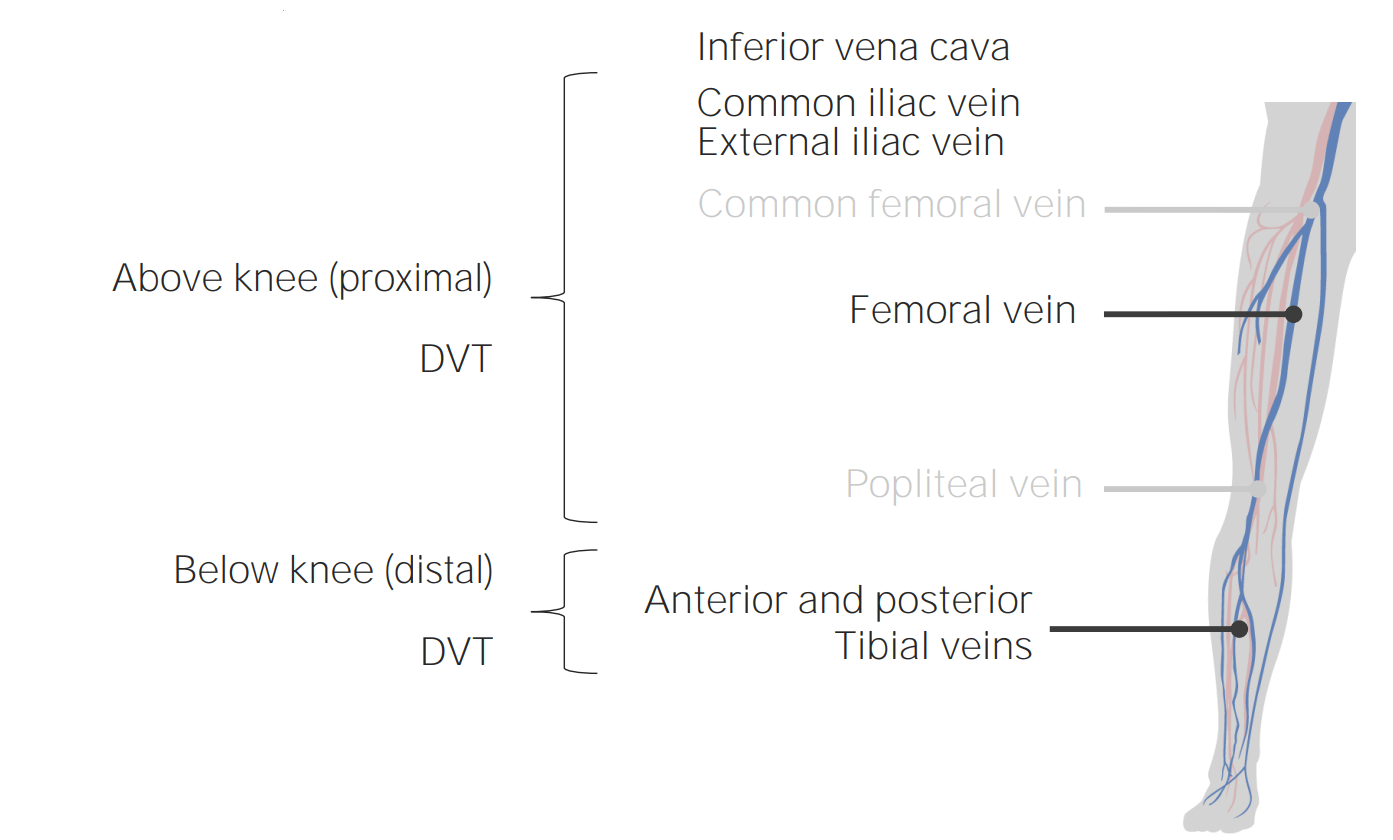
  • Las trombosis venosas profundas (TVP) proximales tienen más probabilidades de provocar un tromboembolismo pulmonar (TEP).
    • El 10% de las TVP de la vena proximal de la pierna causarán un TEP.
    • El 50% de las TVP proximales no tratadas darán lugar a un TEP dentro de un plazo de 3 meses.
    • > del 90% de los LOS Neisseria TEP se deben a TVP en EN Erythema nodosum is an immune-mediated panniculitis (inflammation of the subcutaneous fat) caused by a type IV (delayed-type) hypersensitivity reaction. It commonly manifests in young women as tender, erythematous nodules on the shins. Erythema Nodosum la parte inferior de la pierna.

Factores de Riesgo

Los LOS Neisseria 3 factores primarios (conocidos como tríada de Virchow) que contribuyen a la formación de TVP incluyen: estasis venosa, hipercoagulabilidad y daño endotelial vascular. Cualquier condición que empeore uno (o más) de estos tres factores aumenta el riesgo de formación de TVP.

Factores que resultan en EN Erythema nodosum is an immune-mediated panniculitis (inflammation of the subcutaneous fat) caused by a type IV (delayed-type) hypersensitivity reaction. It commonly manifests in young women as tender, erythematous nodules on the shins. Erythema Nodosum daño endotelial:

  • Hipertensión: El aumento de la tensión de cizallamiento provoca daños en EN Erythema nodosum is an immune-mediated panniculitis (inflammation of the subcutaneous fat) caused by a type IV (delayed-type) hypersensitivity reaction. It commonly manifests in young women as tender, erythematous nodules on the shins. Erythema Nodosum el endotelio.
  • Cirugía
  • Colocación de catéteres vasculares (e.g., catéteres de hemodiálisis, catéteres centrales de inserción periférica, [ PICC, por sus siglas en EN Erythema nodosum is an immune-mediated panniculitis (inflammation of the subcutaneous fat) caused by a type IV (delayed-type) hypersensitivity reaction. It commonly manifests in young women as tender, erythematous nodules on the shins. Erythema Nodosum inglés]): causa más común de TVP en EN Erythema nodosum is an immune-mediated panniculitis (inflammation of the subcutaneous fat) caused by a type IV (delayed-type) hypersensitivity reaction. It commonly manifests in young women as tender, erythematous nodules on the shins. Erythema Nodosum las extremidades superiores
  • Traumatismos y quemaduras, especialmente los LOS Neisseria que afectan la vasculatura
  • Síndrome nefrótico
    • Conduce a la pérdida de proteínas anticoagulantes (e.g., antitrombina, proteínas C y S) a través de la orina debido al AL Amyloidosis daño de las membranas glomerulares
    • Conduce a un aumento de la producción de fibrinógeno y otras proteínas procoagulantes en EN Erythema nodosum is an immune-mediated panniculitis (inflammation of the subcutaneous fat) caused by a type IV (delayed-type) hypersensitivity reaction. It commonly manifests in young women as tender, erythematous nodules on the shins. Erythema Nodosum el hígado debido a la pérdida de proteínas y a la hipoalbuminemia

Factores que resultan en EN Erythema nodosum is an immune-mediated panniculitis (inflammation of the subcutaneous fat) caused by a type IV (delayed-type) hypersensitivity reaction. It commonly manifests in young women as tender, erythematous nodules on the shins. Erythema Nodosum estasis venosa:

  • Inmovilización (e.g., viajes largos en EN Erythema nodosum is an immune-mediated panniculitis (inflammation of the subcutaneous fat) caused by a type IV (delayed-type) hypersensitivity reaction. It commonly manifests in young women as tender, erythematous nodules on the shins. Erythema Nodosum avión, después de una cirugía ortopédica): riesgo 20 veces mayor de desarrollar una TVP
  • Insuficiencia cardíaca
  • Policitemia

Factores que resultan en EN Erythema nodosum is an immune-mediated panniculitis (inflammation of the subcutaneous fat) caused by a type IV (delayed-type) hypersensitivity reaction. It commonly manifests in young women as tender, erythematous nodules on the shins. Erythema Nodosum hipercoagulabilidad:

  • Trombofilia hereditaria, más a menudo:
  • Embarazo/uso de anticonceptivos orales (ACO): Los LOS Neisseria estrógenos aumentan la producción de factores de coagulación en EN Erythema nodosum is an immune-mediated panniculitis (inflammation of the subcutaneous fat) caused by a type IV (delayed-type) hypersensitivity reaction. It commonly manifests in young women as tender, erythematous nodules on the shins. Erythema Nodosum el hígado.
  • Cáncer
  • Tabaquismo: Los LOS Neisseria gases oxidantes y otras sustancias químicas presentes en EN Erythema nodosum is an immune-mediated panniculitis (inflammation of the subcutaneous fat) caused by a type IV (delayed-type) hypersensitivity reaction. It commonly manifests in young women as tender, erythematous nodules on the shins. Erythema Nodosum el humo del cigarrillo producen radicales libres que provocan la agregación de las plaquetas y un aumento de la producción de moléculas procoagulantes.
  • Trombocitopenia inducida por heparina (HIT, por sus siglas en EN Erythema nodosum is an immune-mediated panniculitis (inflammation of the subcutaneous fat) caused by a type IV (delayed-type) hypersensitivity reaction. It commonly manifests in young women as tender, erythematous nodules on the shins. Erythema Nodosum inglés)

Otros factores de riesgo y/o condiciones que afectan múltiples componentes de la triada de Virchow:

  • TVP/tromboembolismo pulmonar previo: riesgo 30 veces mayor de TVP/TEP recurrente
  • Antecedentes familiares
  • Edad > 60 años
  • Obesidad
  • Enfermedades autoinmunes
    • Síndrome antifosfolípido
    • Lupus eritematoso sistémico (LES)
    • Enfermedad inflamatoria intestinal
  • Quimioterapia
primary etiologic factors that cause DVT

Los principales factores etiológicos que causan la TVP: estasis circulatoria, lesión o disfunción endotelial e hipercoagulabilidad

Imagen por Lecturio.

Mnemotecnia

Para recordar los LOS Neisseria factores de riesgo de la TVP, piense THROMBOSIS Thrombosis Formation and development of a thrombus or blood clot in the blood vessel. Epidemic Typhus.
  • Travel (Viaje)
  • Hypercoagulable/Hormone replacement therapy ( HRT HRT Hormone replacement therapy (HRT) is used to treat symptoms associated with female menopause and in combination to suppress ovulation. Risks and side effects include uterine bleeding, predisposition to cancer, breast tenderness, hyperpigmentation, migraine headaches, hypertension, bloating, and mood changes. Noncontraceptive Estrogen and Progestins, en EN Erythema nodosum is an immune-mediated panniculitis (inflammation of the subcutaneous fat) caused by a type IV (delayed-type) hypersensitivity reaction. It commonly manifests in young women as tender, erythematous nodules on the shins. Erythema Nodosum inglés) (Hipercoagulabilidad/Terapia de remplazo hormonal)
  • Recreational drugs (Drogas recreativas)
  • Old (age > 60) (Ancianos, edad > 60)
  • Malignancy (Malignidad)
  • Blood disorders (Trastornos sanguíneos)
  • Obesity/Obstetrics (Obesidad/Obstetricia)
  • Surgery/Smoking (Cirugía/Fumador)
  • Immobilization (Inmovilización)
  • Sickness (congestive heart failure Heart Failure A heterogeneous condition in which the heart is unable to pump out sufficient blood to meet the metabolic need of the body. Heart failure can be caused by structural defects, functional abnormalities (ventricular dysfunction), or a sudden overload beyond its capacity. Chronic heart failure is more common than acute heart failure which results from sudden insult to cardiac function, such as myocardial infarction. Total Anomalous Pulmonary Venous Return (TAPVR) [ CHF CHF Congestive heart failure refers to the inability of the heart to supply the body with normal cardiac output to meet metabolic needs. Echocardiography can confirm the diagnosis and give information about the ejection fraction. Heart Failure]/ myocardial infarction Myocardial infarction MI is ischemia and death of an area of myocardial tissue due to insufficient blood flow and oxygenation, usually from thrombus formation on a ruptured atherosclerotic plaque in the epicardial arteries. Clinical presentation is most commonly with chest pain, but women and patients with diabetes may have atypical symptoms. Myocardial Infarction [ MI MI MI is ischemia and death of an area of myocardial tissue due to insufficient blood flow and oxygenation, usually from thrombus formation on a ruptured atherosclerotic plaque in the epicardial arteries. Clinical presentation is most commonly with chest pain, but women and patients with diabetes may have atypical symptoms. Myocardial Infarction], inflammatory bowel disease [IBD], nephrotic syndrome Nephrotic syndrome Nephrotic syndrome is characterized by severe proteinuria, hypoalbuminemia, and peripheral edema. In contrast, the nephritic syndromes present with hematuria, variable loss of renal function, and hypertension, although there is sometimes overlap of > 1 glomerular disease in the same individual. Nephrotic Syndrome, vasculitis Vasculitis Inflammation of any one of the blood vessels, including the arteries; veins; and rest of the vasculature system in the body. Systemic Lupus Erythematosus), (Enfermedad: insuficiencia cardíaca, infarto de miocardio (IM), enfermedad inflamatoria intestinal, síndrome nefrótico, vasculitis Vasculitis Inflammation of any one of the blood vessels, including the arteries; veins; and rest of the vasculature system in the body. Systemic Lupus Erythematosus)

Fisiopatología

Lugar de inicio

  • La TVP comienza en EN Erythema nodosum is an immune-mediated panniculitis (inflammation of the subcutaneous fat) caused by a type IV (delayed-type) hypersensitivity reaction. It commonly manifests in young women as tender, erythematous nodules on the shins. Erythema Nodosum la zona de daño endotelial, usualmente cerca de las válvulas venosas.
  • Los LOS Neisseria coágulos usualmente empiezan en EN Erythema nodosum is an immune-mediated panniculitis (inflammation of the subcutaneous fat) caused by a type IV (delayed-type) hypersensitivity reaction. It commonly manifests in young women as tender, erythematous nodules on the shins. Erythema Nodosum los LOS Neisseria vasos profundos de las pantorrillas y se extienden proximalmente hacia las venas más grandes.
  • Las venas más afectadas son:
    • Venas femoral, poplítea e ilíaca
    • Durante el embarazo: venas pélvicas
Common locations of DVT

Localizaciones comunes de TVP.

Imagen por Lecturio.
Composición del trombo

  • Eritrocitos
  • Plaquetas
  • Fibrina

Tres mecanismos fisiopatológicos (tríada de Virchow)

  1. Hipercoagulabilidad de la sangre:
    • Aumento de la síntesis de factores de coagulación
    • Aumento de la activación y adhesión de las plaquetas
    • Disminución de anticoagulantes
  2. Daño endotelial: inflamación/traumatismo →
    • La exposición del factor von Willebrand (vWF) → provoca la activación de las plaquetas y la formación del tapón plaquetario
    • Exposición del factor tisular → activa la vía extrínseca en EN Erythema nodosum is an immune-mediated panniculitis (inflammation of the subcutaneous fat) caused by a type IV (delayed-type) hypersensitivity reaction. It commonly manifests in young women as tender, erythematous nodules on the shins. Erythema Nodosum la cascada de coagulación → resulta en EN Erythema nodosum is an immune-mediated panniculitis (inflammation of the subcutaneous fat) caused by a type IV (delayed-type) hypersensitivity reaction. It commonly manifests in young women as tender, erythematous nodules on the shins. Erythema Nodosum la formación de coágulos de fibrina.
  3. Flujo/estasis anormal: inmovilización, incompetencia de la válvula venosa → estasis de sangre → mayor tiempo para la formación de coágulos.

Complicaciones de la TVP

  • Tromboembolismo pulmonar:
    • Una condición en EN Erythema nodosum is an immune-mediated panniculitis (inflammation of the subcutaneous fat) caused by a type IV (delayed-type) hypersensitivity reaction. It commonly manifests in young women as tender, erythematous nodules on the shins. Erythema Nodosum la que una arteria pulmonar está obstruida por una porción de trombo que se ha HA Hemolytic anemia (HA) is the term given to a large group of anemias that are caused by the premature destruction/hemolysis of circulating red blood cells (RBCs). Hemolysis can occur within (intravascular hemolysis) or outside the blood vessels (extravascular hemolysis). Hemolytic Anemia roto a partir de una TVP y ha HA Hemolytic anemia (HA) is the term given to a large group of anemias that are caused by the premature destruction/hemolysis of circulating red blood cells (RBCs). Hemolysis can occur within (intravascular hemolysis) or outside the blood vessels (extravascular hemolysis). Hemolytic Anemia viajado hasta el pulmón
    • Potencialmente mortal
    • Tiene efectos cardiovasculares y respiratorios (hipotensión e hipoxia)
  • Síndrome postrombótico (complicación más común de la TVP proximal)
    • Los LOS Neisseria síntomas incluyen dolor Dolor Inflammation e hinchazón.
    • Insuficiencia venosa crónica: Puede ocurrir disfunción valvular y de la pared venosa como resultado de fibrosis Fibrosis Any pathological condition where fibrous connective tissue invades any organ, usually as a consequence of inflammation or other injury. Bronchiolitis Obliterans debida a inflamación alrededor del trombo.
    • Se desarrollan úlceras a largo plazo en EN Erythema nodosum is an immune-mediated panniculitis (inflammation of the subcutaneous fat) caused by a type IV (delayed-type) hypersensitivity reaction. It commonly manifests in young women as tender, erythematous nodules on the shins. Erythema Nodosum las extremidades inferiores.
    • La movilidad puede estar reducida.
    • Algunos pacientes experimentan parestesias.
    • Ocurre en EN Erythema nodosum is an immune-mediated panniculitis (inflammation of the subcutaneous fat) caused by a type IV (delayed-type) hypersensitivity reaction. It commonly manifests in young women as tender, erythematous nodules on the shins. Erythema Nodosum el 25%50% de todos los LOS Neisseria pacientes con TVP

Presentación Clínica

  • La mayoría de los LOS Neisseria casos son asintomáticos.
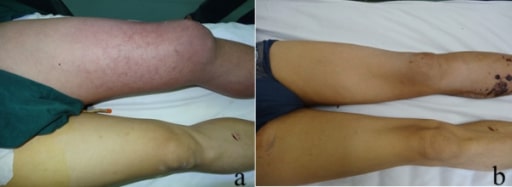
  • Los LOS Neisseria síntomas/manifestaciones suelen ser unilaterales.
    • Dolor Dolor Inflammation
    • Calor Calor Inflammation
    • Edema Edema Edema is a condition in which excess serous fluid accumulates in the body cavity or interstitial space of connective tissues. Edema is a symptom observed in several medical conditions. It can be categorized into 2 types, namely, peripheral (in the extremities) and internal (in an organ or body cavity). Edema
    • Pulsos distales intactos
    • Fiebre (debido a la liberación de citoquinas)
    • Cordones palpables que representan la vena trombótica (hallazgo raro pero significativo)
    • Signo de Homan: dolor Dolor Inflammation en EN Erythema nodosum is an immune-mediated panniculitis (inflammation of the subcutaneous fat) caused by a type IV (delayed-type) hypersensitivity reaction. It commonly manifests in young women as tender, erythematous nodules on the shins. Erythema Nodosum la pantorrilla al AL Amyloidosis realizar dorsiflexión del pie (no es sensible ni específico)
    • La 1era manifestación puede ser un tromboembolismo pulmonar (que se presenta con dolor Dolor Inflammation torácico, disnea)
    • La TVP crónica puede ser asintomática y causar una insuficiencia venosa crónica.
  • Flegmasia alba dolens “pierna dolorosa blanca”:
    • Ocurre con una oclusión masiva de los LOS Neisseria principales vasos profundos, pero con vasos colaterales persistentes y sin isquemia
    • Se presenta con edema Edema Edema is a condition in which excess serous fluid accumulates in the body cavity or interstitial space of connective tissues. Edema is a symptom observed in several medical conditions. It can be categorized into 2 types, namely, peripheral (in the extremities) and internal (in an organ or body cavity). Edema, dolor Dolor Inflammation y palidez sin cianosis
    • Puede progresar a flegmasia cerulea dolens y síndrome compartimental
  • Flegmasia cerulea dolens “pierna dolorosa azul”:
    • Obstrucción de todas las venas de una extremidad → congestión venosa severa → flujo arterial limitado → isquemia → muerte tisular
    • Se presenta con edema, dolor Dolor Inflammation, ausencia de pulsos y cianosis.

Diagnóstico

Primera línea, según el grado de sospecha

  • Los LOS Neisseria criterios de Wells se utilizan para evaluar el riesgo de una TVP en EN Erythema nodosum is an immune-mediated panniculitis (inflammation of the subcutaneous fat) caused by a type IV (delayed-type) hypersensitivity reaction. It commonly manifests in young women as tender, erythematous nodules on the shins. Erythema Nodosum función de la presentación del individuo (ver tabla)
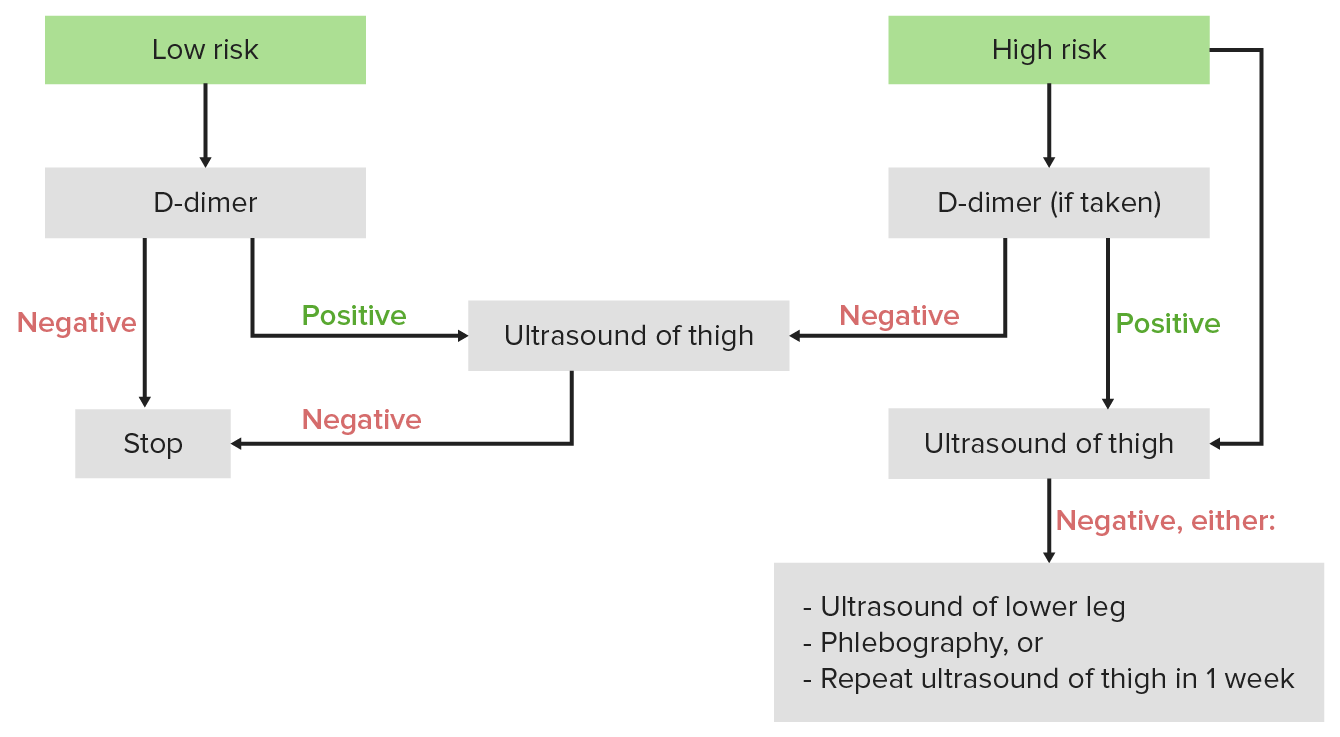
  • Si la sospecha de TVP es alta (puntuación de Wells > 2), la prueba de elección es el ultrasonido con Doppler Doppler Ultrasonography applying the doppler effect, with frequency-shifted ultrasound reflections produced by moving targets (usually red blood cells) in the bloodstream along the ultrasound axis in direct proportion to the velocity of movement of the targets, to determine both direction and velocity of blood flow. Ultrasound (Sonography). Los LOS Neisseria hallazgos diagnósticos que sugieren una TVP son los LOS Neisseria siguientes:
    • Lumen no comprimible
    • Masa hiperecoica
    • Disminución/ausencia de flujo
  • Si la sospecha de TVP es baja (puntuación de Wells < 2), la primera prueba debe ser el dímero D.
    • Alta sensibilidad pero baja especificidad
    • Una prueba negativa (niveles normales/bajos de dímero D) descarta la TVP
    • Una prueba positiva (niveles elevados de dímero D) justifica la realización de un ultrasonido para su confirmación
Tabla: Criterios de Wells modificados para la TVP
Sensibilidad/ Dolor Dolor Inflammation a lo largo del sistema venoso profundo +1
Edema Edema Edema is a condition in which excess serous fluid accumulates in the body cavity or interstitial space of connective tissues. Edema is a symptom observed in several medical conditions. It can be categorized into 2 types, namely, peripheral (in the extremities) and internal (in an organ or body cavity). Edema con fóvea unilateral +1
Hinchazón de toda la pierna +1
Hinchazón de la pantorrilla ≥ 3 cm ( en EN Erythema nodosum is an immune-mediated panniculitis (inflammation of the subcutaneous fat) caused by a type IV (delayed-type) hypersensitivity reaction. It commonly manifests in young women as tender, erythematous nodules on the shins. Erythema Nodosum comparación con la pantorrilla asintomática) +1
Venas colaterales superficiales no varicosas +1
Cáncer activo +1
TVP anterior +1
Parálisis o inmovilización por yeso +1
En EN Erythema nodosum is an immune-mediated panniculitis (inflammation of the subcutaneous fat) caused by a type IV (delayed-type) hypersensitivity reaction. It commonly manifests in young women as tender, erythematous nodules on the shins. Erythema Nodosum cama ≥ 3 días o cirugía mayor en EN Erythema nodosum is an immune-mediated panniculitis (inflammation of the subcutaneous fat) caused by a type IV (delayed-type) hypersensitivity reaction. It commonly manifests in young women as tender, erythematous nodules on the shins. Erythema Nodosum las últimas 4 semanas +1
Diagnóstico alternativo tan probable/más probable que TVP -2
Algoritmo de diagnóstico de la trombosis venosa profunda

Algoritmo diagnóstico de la TVP: Si la puntuación de Wells es < 2, se considera al individuo como de bajo riesgo, y la 1era prueba debe ser el dímero D. Si la puntuación de Wells es ≥ 2, se considera al individuo como de alto riesgo, y la 1era prueba debe ser un ultrasonido.

Imagen por Lecturio.

Otras pruebas

  • Tamizaje de cáncer adecuado para la edad (e.g., tacto rectal, mamografía, colonoscopia)
  • Estudios de hipercoagulabilidad están indicados en EN Erythema nodosum is an immune-mediated panniculitis (inflammation of the subcutaneous fat) caused by a type IV (delayed-type) hypersensitivity reaction. It commonly manifests in young women as tender, erythematous nodules on the shins. Erythema Nodosum pacientes con:
    • Antecedentes familiares de trastornos de la coagulación
    • Edad joven
    • Localización inusual del trombo
    • Reaparición
  • Individuos hemodinámicamente estables con una TVP y signos de TEP (e.g., dolor Dolor Inflammation torácico, disnea): tomografía computarizada (TC) contrastada de tórax
  • Pacientes hemodinámicamente inestables con TVP y signos de TEP: ecocardiograma para visualizar la dilatación del ventrículo derecho
  • Venografía
    • Anteriormente el estándar de oro
    • Se inyecta contraste en EN Erythema nodosum is an immune-mediated panniculitis (inflammation of the subcutaneous fat) caused by a type IV (delayed-type) hypersensitivity reaction. It commonly manifests in young women as tender, erythematous nodules on the shins. Erythema Nodosum una vena dorsal del pie y se toman imágenes para detectar trombos obstruyentes.
    • Invasiva y rara vez se hace HACE Altitude Sickness actualmente.

Tratamiento

La anticoagulación es el pilar del tratamiento de las TVP. Dependiendo de la situación, algunos individuos pueden requerir trombólisis, un procedimiento invasivo y/o anticoagulación de por vida.

Tratamiento inicial

  • Opciones
    • Heparina de bajo peso molecular (HBPM)
    • Heparina no fraccionada
    • Inhibidor indirecto del factor Xa: fondaparinux Fondaparinux Synthetic pentasaccharide that mediates the interaction of heparin with antithrombins and inhibits factor Xa; it is used for prevention of venous thromboembolism after surgery. Anticoagulants
    • Inhibidores directos del factor Xa: rivaroxaban Rivaroxaban A morpholine and thiophene derivative that functions as a factor Xa inhibitor and is used in the treatment and prevention of deep-vein thrombosis and pulmonary embolism. It is also used for the prevention of stroke and systemic embolization in patients with non-valvular atrial fibrillation, and for the prevention of atherothrombotic events in patients after an acute coronary syndrome. Anticoagulants, apixaban Apixaban Anticoagulants
    • Inhibidor directo de la trombina: dabigatran Dabigatran A thrombin inhibitor which acts by binding and blocking thrombogenic activity and the prevention of thrombus formation. It is used to reduce the risk of stroke and systemic embolism in patients with nonvalvular atrial fibrillation. Anticoagulants
  • El medicamento es seleccionado en EN Erythema nodosum is an immune-mediated panniculitis (inflammation of the subcutaneous fat) caused by a type IV (delayed-type) hypersensitivity reaction. It commonly manifests in young women as tender, erythematous nodules on the shins. Erythema Nodosum base a la experiencia del clínico, las comorbilidades del paciente y las preferencias del paciente.
  • Contraindicaciones:
    • Sangrado activo
    • Hemorragia intracraneal aguda
    • Traumatismo mayor
    • Trastornos hemorrágicos severos
  • Notas:
    • La warfarina no debe ser usada como tratamiento incial debido al AL Amyloidosis corto periodo de hipercoagulabilidad desde su instauración
    • Se prefiere la heparina no fraccionada en EN Erythema nodosum is an immune-mediated panniculitis (inflammation of the subcutaneous fat) caused by a type IV (delayed-type) hypersensitivity reaction. It commonly manifests in young women as tender, erythematous nodules on the shins. Erythema Nodosum pacientes con insuficiencia renal.

Prevención secundaria de la TVP

  • Se administra durante 3-6 meses para prevenir la recurrencia (algunos individuos pueden requerir una terapia de por vida)
  • La duración de la terapia depende de los LOS Neisseria factores de riesgo de recurrencia y hemorragia
  • Opciones:
    • HBPM
    • Antagonistas de la vitamina K (warfarina):
      • Requiere un control regular Regular Insulin del tiempo de protrombina (TP)
      • Numerosas interacciones farmacológicas
      • Contraindicada en EN Erythema nodosum is an immune-mediated panniculitis (inflammation of the subcutaneous fat) caused by a type IV (delayed-type) hypersensitivity reaction. It commonly manifests in young women as tender, erythematous nodules on the shins. Erythema Nodosum el embarazo (teratogénico)
    • Inhibidores directos del factor Xa: rivaroxaban Rivaroxaban A morpholine and thiophene derivative that functions as a factor Xa inhibitor and is used in the treatment and prevention of deep-vein thrombosis and pulmonary embolism. It is also used for the prevention of stroke and systemic embolization in patients with non-valvular atrial fibrillation, and for the prevention of atherothrombotic events in patients after an acute coronary syndrome. Anticoagulants, apixaban Apixaban Anticoagulants, edoxaban Edoxaban Anticoagulants:
      • Por lo general, no es necesaria la monitorización
      • Más costosos
    • Inhibidores de la trombina: dabigatrán:
      • Suelen utilizarse en EN Erythema nodosum is an immune-mediated panniculitis (inflammation of the subcutaneous fat) caused by a type IV (delayed-type) hypersensitivity reaction. It commonly manifests in young women as tender, erythematous nodules on the shins. Erythema Nodosum personas con antecedentes de HIT
  • Dependiendo de las terapias iniciales y secundarias, puede ser necesario hacer un “puente” para asegurar la anticoagulación completa durante la transición de la terapia (por ejemplo, continuar con la HBPM hasta que la warfarina sea efectiva según el TP).

Otras medidas preventivas

  • Trombólisis:
    • Medicamentos que provocan la trombólisis ( en EN Erythema nodosum is an immune-mediated panniculitis (inflammation of the subcutaneous fat) caused by a type IV (delayed-type) hypersensitivity reaction. It commonly manifests in young women as tender, erythematous nodules on the shins. Erythema Nodosum lugar de limitarse a impedir una mayor coagulación y dejar que se produzcan los LOS Neisseria procesos trombolíticos naturales)
    • Medicamento principal: activador tisular del plasminógeno ( tPA tPA Ischemic Stroke)
    • Indicaciones para la trombólisis:
      • TVP proximal grande y/o flegmasia cerulea dolens
      • Tromboembolismo pulmonar con inestabilidad hemodinámica (presión arterial sistólica < 90)
      • Refractario a la anticoagulación
  • Trombectomía:
    • Extirpación quirúrgica de un trombo
    • Indicaciones para la trombectomía:
      • Flegmasia cerulea dolens
      • Trombo grande refractario a la fibrinolisis
      • Trombo grande + contraindicaciones a la anticoagulación/trombolíticos
  • Filtro de vena cava inferior (VCI)
    • Colocación de un filtro en EN Erythema nodosum is an immune-mediated panniculitis (inflammation of the subcutaneous fat) caused by a type IV (delayed-type) hypersensitivity reaction. It commonly manifests in young women as tender, erythematous nodules on the shins. Erythema Nodosum la VCI para atrapar cualquier émbolo trombótico que pueda desprenderse de la TVP en EN Erythema nodosum is an immune-mediated panniculitis (inflammation of the subcutaneous fat) caused by a type IV (delayed-type) hypersensitivity reaction. It commonly manifests in young women as tender, erythematous nodules on the shins. Erythema Nodosum un esfuerzo por prevenir un TEP
    • Indicaciones de un filtro de VCI
      • Contraindicaciones para la anticoagulación/trombolíticos/trombectomía (e.g., hemorragias importantes)
      • Pacientes que presentan TVP o EP EP Ectopic pregnancy refers to the implantation of a fertilized egg (embryo) outside the uterine cavity. The main cause is disruption of the normal anatomy of the fallopian tube. Ectopic Pregnancy mientras reciben la anticoagulación adecuada
  • Tratamiento de la flemasia cerulea dolens
    • Inicio de la anticoagulación adecuada
    • Trombectomía
    • Fasciotomía si hay síndrome compartimental
    • Fibrinolisis si falla la trombectomía
    • Amputación: si fallan tanto la trombectomía como la fibrinólisis, lo que lleva a una isquemia crítica de la extremidad y a la pérdida de la misma

Profilaxis

  • Movilización temprana después de la cirugía
  • Anticoagulación profiláctica postoperatoria
  • Ejercicio
  • Pérdida de peso
  • Dejar de fumar
  • Control de la hipertensión
  • Evitar los LOS Neisseria estrógenos (e.g., píldoras anticonceptivas orales combinadas) en EN Erythema nodosum is an immune-mediated panniculitis (inflammation of the subcutaneous fat) caused by a type IV (delayed-type) hypersensitivity reaction. It commonly manifests in young women as tender, erythematous nodules on the shins. Erythema Nodosum pacientes de alto riesgo
  • Medias de compresión

Diagnóstico Diferencial

Las siguientes condiciones pueden presentarse similarmente a la TVP:

  • Enfermedad vascular periférica: enfermedad crónica que afecta a las arterias de las extremidades y es la principal causa de claudicación intermitente. El proceso aterosclerótico crónico conduce a la estenosis arterial y, en EN Erythema nodosum is an immune-mediated panniculitis (inflammation of the subcutaneous fat) caused by a type IV (delayed-type) hypersensitivity reaction. It commonly manifests in young women as tender, erythematous nodules on the shins. Erythema Nodosum una fase posterior, a la oclusión completa de las arterias (ya sea por embolia o por trombosis).
  • Quiste de Baker: es un aumento de volumen de la sinovia en EN Erythema nodosum is an immune-mediated panniculitis (inflammation of the subcutaneous fat) caused by a type IV (delayed-type) hypersensitivity reaction. It commonly manifests in young women as tender, erythematous nodules on the shins. Erythema Nodosum el espacio poplíteo (espacio detrás de la rodilla). El dolor Dolor Inflammation empeora si el paciente flexiona o extiende completamente la rodilla. Los LOS Neisseria quistes de Baker suelen estar asociados a la artritis reumatoide u osteoartritis. La rotura de un quiste de Baker puede simular una TVP aguda.
  • Linfedema: retención de líquidos localizada e hinchazón de los LOS Neisseria tejidos causada por un sistema linfático comprometido. El linfedema puede estar causado por una intervención quirúrgica, infecciones parasitarias o condiciones hereditarias. La afección suele ser bilateral, a diferencia de la TVP, que es unilateral. Además, el dímero D puede ser negativo con el linfedema, pero casi siempre es positivo cuando hay una TVP.
  • Celulitis: infección de la dermis Dermis A layer of vascularized connective tissue underneath the epidermis. The surface of the dermis contains innervated papillae. Embedded in or beneath the dermis are sweat glands; hair follicles; and sebaceous glands. Skin: Structure and Functions y la grasa subcutánea. Los LOS Neisseria pacientes presentan hinchazón localizada, calor Calor Inflammation, enrojecimiento y dolor Dolor Inflammation en EN Erythema nodosum is an immune-mediated panniculitis (inflammation of the subcutaneous fat) caused by a type IV (delayed-type) hypersensitivity reaction. It commonly manifests in young women as tender, erythematous nodules on the shins. Erythema Nodosum una zona. Puede formarse un absceso. El dímero D puede ser negativo y el ultrasonido no mostrará una TVP.

Referencias

  1. Bauer, K.A., and Lip, G.Y.H. (2021). Overview of the causes of venous thrombosis. UpToDate. Retrieved Feb 1, 2022 from https://www.uptodate.com/contents/overview-of-the-causes-of-venous-thrombosis 
  2. Bauer, K.A., and Huisman, M.V. (2021). Clinical presentation and diagnosis of the nonpregnant adult with suspected deep vein thrombosis of the lower extremity. UpToDate. Retrieved Feb 1, 2022 from https://www.uptodate.com/contents/clinical-presentation-and-diagnosis-of-the-nonpregnant-adult-with-suspected-deep-vein-thrombosis-of-the-lower-extremity
  3. Lip, G.Y.H., and Hull, R.D. (2022). Overview of the treatment of lower extremity deep vein thrombosis. UpToDate. Retrieved Feb 1, 2022 from https://www.uptodate.com/contents/overview-of-the-treatment-of-lower-extremity-deep-vein-thrombosis-dvt 
  4. Patel, K. (2019). Deep vein thrombosis (DVT). Medscape. Retrieved Feb 1, 2022 from https://emedicine.medscape.com/article/1911303-overview#a4 
  5. Waheed, S. (2021). Deep vein thrombosis. StatPearls. Retrieved Feb 1, 2022 from https://www.statpearls.com/articlelibrary/viewarticle/20298

¡Crea tu cuenta gratis o inicia una sesión para seguir leyendo!

Regístrate ahora y obtén acceso gratuito a Lecturio con páginas de concepto, videos médicos y cuestionarios para tu educación médica.

User Reviews

Que tengas una sesión de estudio alegre y navideña 🎁 Ahorra 50% en todos los planes >>

Details