Domina Conceptos Médicos

Estudia para la escuela de medicina y tus examenes con Lecturio.

Pancreatitis aguda

La pancreatitis Pancreatitis Inflammation of the pancreas. Pancreatitis is classified as acute unless there are computed tomographic or endoscopic retrograde cholangiopancreatographic findings of chronic pancreatitis. The two most common forms of acute pancreatitis are alcoholic pancreatitis and gallstone pancreatitis. Acute Pancreatitis aguda es una enfermedad inflamatoria del páncreas debida a la autodigestión. Las etiologías más comunes son los LOS Neisseria cálculos biliares y el consumo excesivo de alcohol. Los LOS Neisseria pacientes suelen presentar un dolor Dolor Inflammation epigástrico que se irradia a la espalda. El diagnóstico requiere 2 de 3 criterios, incluyendo: el dolor Dolor Inflammation abdominal característico, amilasa y lipasa séricas 3 veces el límite superior de la normalidad, o hallazgos radiológicos característicos. Los LOS Neisseria criterios de Ranson se utilizan habitualmente para evaluar la gravedad. El tratamiento incluye hidratación intravenosa agresiva, analgesia Analgesia Methods of pain relief that may be used with or in place of analgesics. Anesthesiology: History and Basic Concepts, apoyo nutricional y tratamiento de la causa subyacente.

Last updated: Dec 15, 2025
Editorial responsibility: Stanley Oiseth, Lindsay Jones, Evelin Maza

Epidemiología y Etiología

Epidemiología

  • Incidencia:
    • Estados Unidos: 40–50 casos por cada 100 000 adultos
    • A nivel mundial: 5–80 por cada 100 000 adultos
  • Hombres > mujeres
    • Hombres: probablemente debido al AL Amyloidosis alcohol
    • Mujeres: relacionado con enfermedades del tracto biliar
  • La mortalidad es de aproximadamente un 5%, en EN Erythema nodosum is an immune-mediated panniculitis (inflammation of the subcutaneous fat) caused by a type IV (delayed-type) hypersensitivity reaction. It commonly manifests in young women as tender, erythematous nodules on the shins. Erythema Nodosum general:
    • Pancreatitis Pancreatitis Inflammation of the pancreas. Pancreatitis is classified as acute unless there are computed tomographic or endoscopic retrograde cholangiopancreatographic findings of chronic pancreatitis. The two most common forms of acute pancreatitis are alcoholic pancreatitis and gallstone pancreatitis. Acute Pancreatitis necrosante: 17%.
    • Pancreatitis Pancreatitis Inflammation of the pancreas. Pancreatitis is classified as acute unless there are computed tomographic or endoscopic retrograde cholangiopancreatographic findings of chronic pancreatitis. The two most common forms of acute pancreatitis are alcoholic pancreatitis and gallstone pancreatitis. Acute Pancreatitis intersticial: 3%.

Etiología

  • Enfermedad del tracto biliar:
    • Aproximadamente el 40% de los LOS Neisseria casos
    • Causada por una obstrucción biliar debida a un cálculo
  • Consumo de alcohol:
    • Aproximadamente el 30% de los LOS Neisseria casos
    • Suele ser una exacerbación de la pancreatitis Pancreatitis Inflammation of the pancreas. Pancreatitis is classified as acute unless there are computed tomographic or endoscopic retrograde cholangiopancreatographic findings of chronic pancreatitis. The two most common forms of acute pancreatitis are alcoholic pancreatitis and gallstone pancreatitis. Acute Pancreatitis crónica
    • Por lo general, se observa con el consumo habitual durante 515 años, pero puede verse después de consumir una cantidad excesiva de alcohol
  • Colangiopancreatografía retrógrada endoscópica (CPRE):
    • Puede provocar el alojamiento accidental de un cálculo en EN Erythema nodosum is an immune-mediated panniculitis (inflammation of the subcutaneous fat) caused by a type IV (delayed-type) hypersensitivity reaction. It commonly manifests in young women as tender, erythematous nodules on the shins. Erythema Nodosum el esfínter de Oddi
    • Mayor riesgo en EN Erythema nodosum is an immune-mediated panniculitis (inflammation of the subcutaneous fat) caused by a type IV (delayed-type) hypersensitivity reaction. It commonly manifests in young women as tender, erythematous nodules on the shins. Erythema Nodosum pacientes con disfunción del esfínter de Oddi
  • Traumatismo abdominal:
    • Más a menudo en EN Erythema nodosum is an immune-mediated panniculitis (inflammation of the subcutaneous fat) caused by a type IV (delayed-type) hypersensitivity reaction. It commonly manifests in young women as tender, erythematous nodules on the shins. Erythema Nodosum lesiones penetrantes
    • Un traumatismo contundente puede provocar una lesión ductal
  • Medicamentos:
    • Azatioprina
    • Sulfonamidas
    • Tetraciclina
    • Ácido valproico
    • Estrógenos
    • Diuréticos tiazídicos y de asa ASA Anterior Cord Syndrome
    • Corticosteroides
    • Octreotida
    • Pentamidina
  • Idiopática:
    • Aproximadamente 10%–30% de los LOS Neisseria casos
    • La microlitiasis oculta puede ser la responsable.
  • Causas menos frecuentes:
    • Infecciones:
      • Paperas
      • Hepatitis
      • Citomegalovirus
      • Coxsackievirus Coxsackievirus Coxsackievirus is a member of a family of viruses called Picornaviridae and the genus Enterovirus. Coxsackieviruses are single-stranded, positive-sense RNA viruses, and are divided into coxsackie group A and B viruses. Both groups of viruses cause upper respiratory infections, rashes, aseptic meningitis, or encephalitis. Coxsackievirus
      • Salmonella Salmonella Salmonellae are gram-negative bacilli of the family Enterobacteriaceae. Salmonellae are flagellated, non-lactose-fermenting, and hydrogen sulfide-producing microbes. Salmonella enterica, the most common disease-causing species in humans, is further classified based on serotype as typhoidal (S. typhi and paratyphi) and nontyphoidal (S. enteritidis and typhimurium). Salmonella
      • Parásitos
    • Predisposiciones genéticas (e.g., mutación de CFTR, como en EN Erythema nodosum is an immune-mediated panniculitis (inflammation of the subcutaneous fat) caused by a type IV (delayed-type) hypersensitivity reaction. It commonly manifests in young women as tender, erythematous nodules on the shins. Erythema Nodosum la fibrosis Fibrosis Any pathological condition where fibrous connective tissue invades any organ, usually as a consequence of inflammation or other injury. Bronchiolitis Obliterans quística)
    • Hipercalcemia
    • Hipertrigliceridemia
    • Tumores
    • Toxinas:
      • Organofosforados
      • Picadura de escorpión
    • Vascular o isquémica
    • Pancreatitis Pancreatitis Inflammation of the pancreas. Pancreatitis is classified as acute unless there are computed tomographic or endoscopic retrograde cholangiopancreatographic findings of chronic pancreatitis. The two most common forms of acute pancreatitis are alcoholic pancreatitis and gallstone pancreatitis. Acute Pancreatitis autoinmune (IgG4)
    • Problemas del desarrollo:
      • Páncreas divisum: falta de fusión de los LOS Neisseria conductos pancreáticos dorsal y ventral
      • Páncreas anular: una banda de tejido pancreático rodea la 2da parte del duodeno
      • Disfunción del esfínter de Oddi

Related videos

Fisiopatología

Función pancreática normal

  • El páncreas tiene funciones endocrinas (insulina) y exocrinas (enzimas digestivas).
  • Enzimas digestivas producidas en EN Erythema nodosum is an immune-mediated panniculitis (inflammation of the subcutaneous fat) caused by a type IV (delayed-type) hypersensitivity reaction. It commonly manifests in young women as tender, erythematous nodules on the shins. Erythema Nodosum las células acinares → almacenadas como zimógenos (forma inactiva) → liberadas en EN Erythema nodosum is an immune-mediated panniculitis (inflammation of the subcutaneous fat) caused by a type IV (delayed-type) hypersensitivity reaction. It commonly manifests in young women as tender, erythematous nodules on the shins. Erythema Nodosum el conducto pancreático y en EN Erythema nodosum is an immune-mediated panniculitis (inflammation of the subcutaneous fat) caused by a type IV (delayed-type) hypersensitivity reaction. It commonly manifests in young women as tender, erythematous nodules on the shins. Erythema Nodosum el intestino delgado → se activan por la tripsina
  • Los LOS Neisseria mecanismos de protección contra la lesión orgánica (autodigestión) incluyen:
    • Mecanismo de retroalimentación negativa (↑ tripsina en EN Erythema nodosum is an immune-mediated panniculitis (inflammation of the subcutaneous fat) caused by a type IV (delayed-type) hypersensitivity reaction. It commonly manifests in young women as tender, erythematous nodules on the shins. Erythema Nodosum el duodeno → ↓ colecistoquinina (CCK) y secretina → ↓ secreción pancreática).
    • Los LOS Neisseria zimógenos se controlan con inhibidores de la proteasa.
    • ↓ Del pH pH The quantitative measurement of the acidity or basicity of a solution. Acid-Base Balance de las células acinares y de las concentraciones de calcio → prevención de activación prematura de la tripsina.
  • Cualquier cosa que altere la homeostasis Homeostasis The processes whereby the internal environment of an organism tends to remain balanced and stable. Cell Injury and Death de la función pancreática normal puede provocar una pancreatitis Pancreatitis Inflammation of the pancreas. Pancreatitis is classified as acute unless there are computed tomographic or endoscopic retrograde cholangiopancreatographic findings of chronic pancreatitis. The two most common forms of acute pancreatitis are alcoholic pancreatitis and gallstone pancreatitis. Acute Pancreatitis aguda.

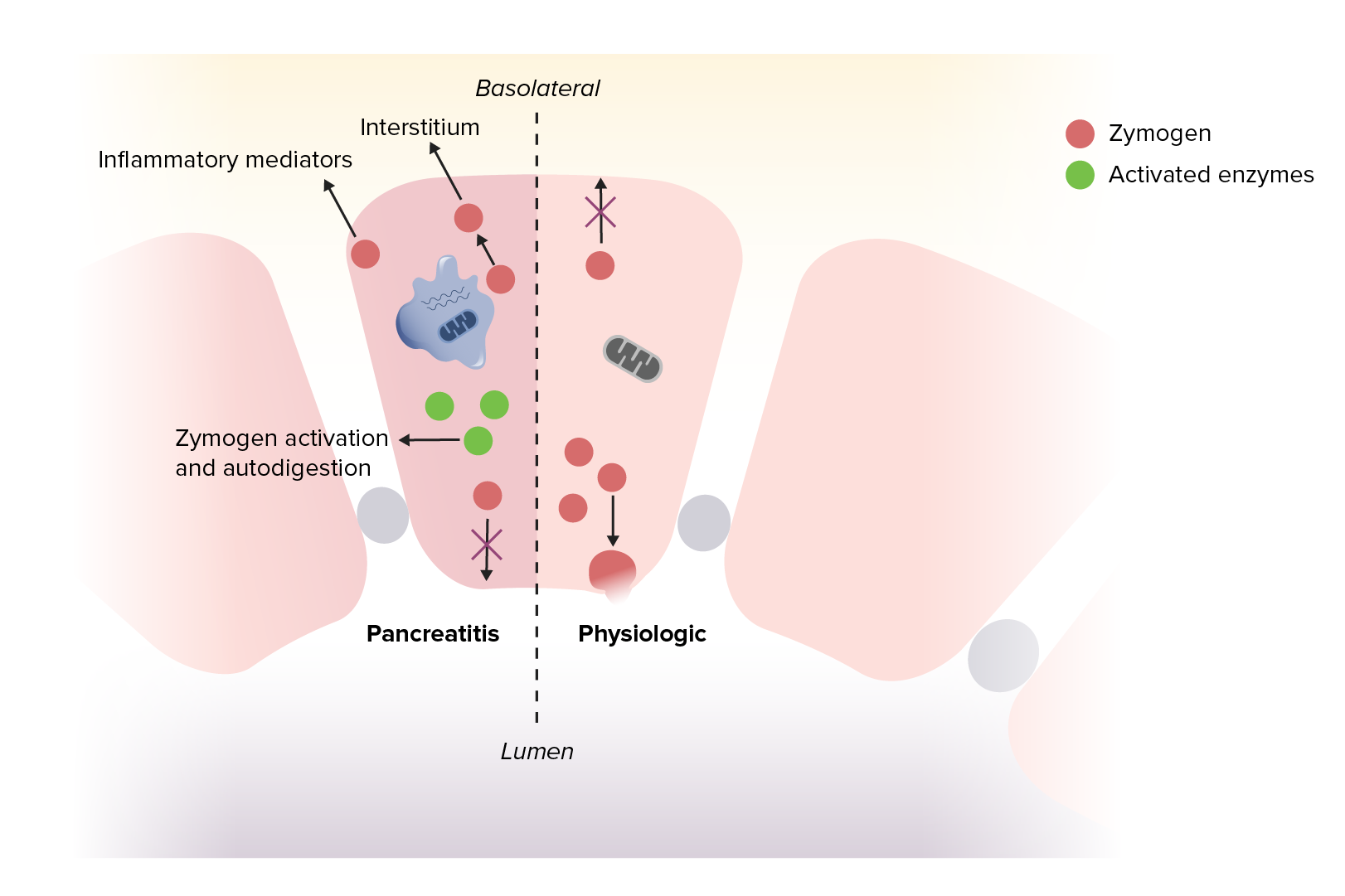
Patogénesis de la pancreatitis Pancreatitis Inflammation of the pancreas. Pancreatitis is classified as acute unless there are computed tomographic or endoscopic retrograde cholangiopancreatographic findings of chronic pancreatitis. The two most common forms of acute pancreatitis are alcoholic pancreatitis and gallstone pancreatitis. Acute Pancreatitis aguda

  1. Se inicia a través de la lesión de las células acinares por:
    • Obstrucción biliar → aumento de la presión del conducto pancreático → lesión de las células acinares
    • Daño directo (e.g., toxinas, alcohol)
  2. Cambios en EN Erythema nodosum is an immune-mediated panniculitis (inflammation of the subcutaneous fat) caused by a type IV (delayed-type) hypersensitivity reaction. It commonly manifests in young women as tender, erythematous nodules on the shins. Erythema Nodosum el pH pH The quantitative measurement of the acidity or basicity of a solution. Acid-Base Balance de las células acinares y en EN Erythema nodosum is an immune-mediated panniculitis (inflammation of the subcutaneous fat) caused by a type IV (delayed-type) hypersensitivity reaction. It commonly manifests in young women as tender, erythematous nodules on the shins. Erythema Nodosum las concentraciones de calcio → activación intrapancreática de la tripsina → activación de los LOS Neisseria zimógenos → autodigestión
  3. Inhibición de la secreción de zimógenos en EN Erythema nodosum is an immune-mediated panniculitis (inflammation of the subcutaneous fat) caused by a type IV (delayed-type) hypersensitivity reaction. It commonly manifests in young women as tender, erythematous nodules on the shins. Erythema Nodosum los LOS Neisseria conductos pancreáticos → exocitosis en EN Erythema nodosum is an immune-mediated panniculitis (inflammation of the subcutaneous fat) caused by a type IV (delayed-type) hypersensitivity reaction. It commonly manifests in young women as tender, erythematous nodules on the shins. Erythema Nodosum el intersticio → no se entiende del todo, pero se cree que atrae células inflamatorias
  4. Llegan las células inflamatorias → liberación de citoquinas → inflamación pancreática
  5. Liberación de citoquinas y lesión vascular por las enzimas → vasodilatación y permeabilidad vascular → desplazamiento de líquido al AL Amyloidosis espacio intersticial (3er espacio) → disminución de la perfusión e hipotensión → puede provocar:
    • Shock Shock Shock is a life-threatening condition associated with impaired circulation that results in tissue hypoxia. The different types of shock are based on the underlying cause: distributive (↑ cardiac output (CO), ↓ systemic vascular resistance (SVR)), cardiogenic (↓ CO, ↑ SVR), hypovolemic (↓ CO, ↑ SVR), obstructive (↓ CO), and mixed. Types of Shock
    • Insuficiencia renal aguda
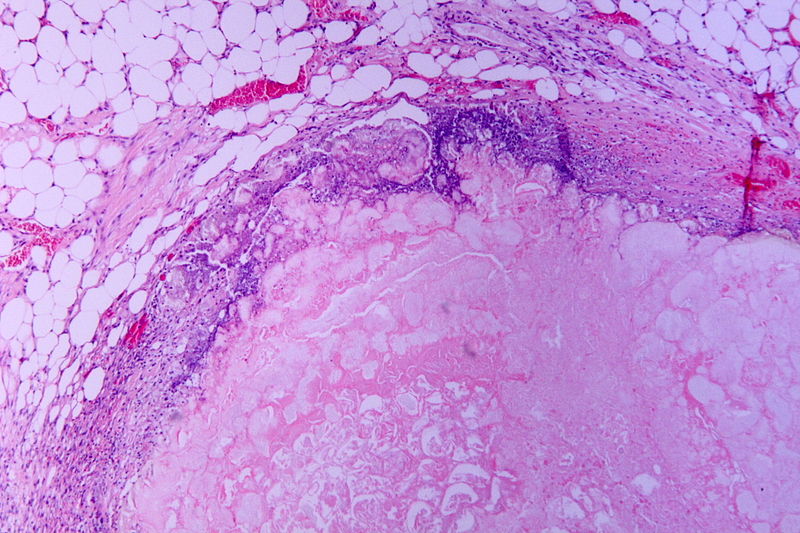
    • Necrosis Necrosis The death of cells in an organ or tissue due to disease, injury or failure of the blood supply. Ischemic Cell Damage pancreática
Patogénesis de la Pancreatitis aguda

Pancreatitis aguda

Imagen por Lecturio.
Presentación Clínica

Síntomas

  • Dolor Dolor Inflammation abdominal agudo:
    • Epigástrico
    • Sordo y constante
    • Aparición súbita, creciente en EN Erythema nodosum is an immune-mediated panniculitis (inflammation of the subcutaneous fat) caused by a type IV (delayed-type) hypersensitivity reaction. It commonly manifests in young women as tender, erythematous nodules on the shins. Erythema Nodosum intensidad
    • Irradiación a la espalda (aproximadamente el 50% de los LOS Neisseria pacientes)
  • Náuseas y vómitos
  • Anorexia Anorexia The lack or loss of appetite accompanied by an aversion to food and the inability to eat. It is the defining characteristic of the disorder anorexia nervosa. Anorexia Nervosa
  • Diarrea
  • Fiebre leve

Examen físico

  • General:
    • Taquicardia
    • Sensibilidad abdominal
    • Distensión abdominal
    • Disminución de los LOS Neisseria ruidos intestinales → íleo paralítico
  • Evidencia de enfermedad grave:
    • Fiebre
    • Hipotensión
    • Taquipnea y crepitaciones
    • Aspecto pálido y diaforético
  • Signos de una causa subyacente:
    • Hepatomegalia → pancreatitis Pancreatitis Inflammation of the pancreas. Pancreatitis is classified as acute unless there are computed tomographic or endoscopic retrograde cholangiopancreatographic findings of chronic pancreatitis. The two most common forms of acute pancreatitis are alcoholic pancreatitis and gallstone pancreatitis. Acute Pancreatitis alcohólica
    • Ictericia escleral o ictericia → coledocolitiasis
    • Espasmos musculares → hipocalcemia
    • Xantomas → hipertrigliceridemia
  • Signos de alarma de la hemorragia retroperitoneal Retroperitoneal Peritoneum: Anatomy en EN Erythema nodosum is an immune-mediated panniculitis (inflammation of the subcutaneous fat) caused by a type IV (delayed-type) hypersensitivity reaction. It commonly manifests in young women as tender, erythematous nodules on the shins. Erythema Nodosum la pancreatitis Pancreatitis Inflammation of the pancreas. Pancreatitis is classified as acute unless there are computed tomographic or endoscopic retrograde cholangiopancreatographic findings of chronic pancreatitis. The two most common forms of acute pancreatitis are alcoholic pancreatitis and gallstone pancreatitis. Acute Pancreatitis grave y necrosante:
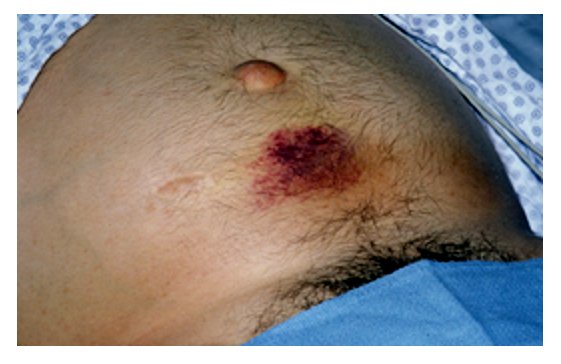
    • Signo de Cullen: decoloración azulada alrededor del ombligo debido a la presencia de sangre en EN Erythema nodosum is an immune-mediated panniculitis (inflammation of the subcutaneous fat) caused by a type IV (delayed-type) hypersensitivity reaction. It commonly manifests in young women as tender, erythematous nodules on the shins. Erythema Nodosum el peritoneo
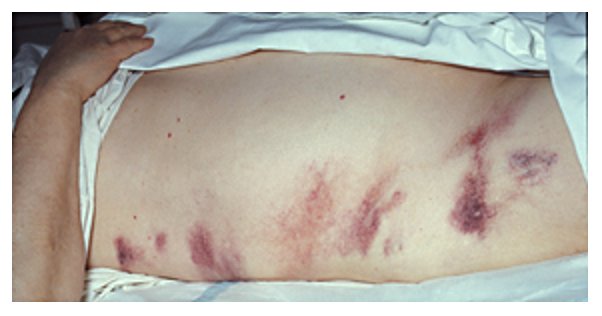
    • Signo de Grey-Turner: decoloración marrón rojiza en EN Erythema nodosum is an immune-mediated panniculitis (inflammation of the subcutaneous fat) caused by a type IV (delayed-type) hypersensitivity reaction. It commonly manifests in young women as tender, erythematous nodules on the shins. Erythema Nodosum los LOS Neisseria flancos debida a la presencia de sangre en EN Erythema nodosum is an immune-mediated panniculitis (inflammation of the subcutaneous fat) caused by a type IV (delayed-type) hypersensitivity reaction. It commonly manifests in young women as tender, erythematous nodules on the shins. Erythema Nodosum el retroperitoneo o a exudados pancreáticos

Diagnóstico

Criterios diagnósticos

El diagnóstico de pancreatitis Pancreatitis Inflammation of the pancreas. Pancreatitis is classified as acute unless there are computed tomographic or endoscopic retrograde cholangiopancreatographic findings of chronic pancreatitis. The two most common forms of acute pancreatitis are alcoholic pancreatitis and gallstone pancreatitis. Acute Pancreatitis aguda requiere al AL Amyloidosis menos 2 de los LOS Neisseria siguientes elementos:
  • Aparición aguda de dolor Dolor Inflammation abdominal epigástrico
  • Amilasa o lipasa sérica > 3 veces el límite superior de la normalidad
  • Hallazgos característicos en EN Erythema nodosum is an immune-mediated panniculitis (inflammation of the subcutaneous fat) caused by a type IV (delayed-type) hypersensitivity reaction. It commonly manifests in young women as tender, erythematous nodules on the shins. Erythema Nodosum los LOS Neisseria estudios imagenológicos

Evaluación de laboratorio

  • ↑ Amilasa sérica
  • ↑ Lipasa sérica: más específica para la pancreatitis Pancreatitis Inflammation of the pancreas. Pancreatitis is classified as acute unless there are computed tomographic or endoscopic retrograde cholangiopancreatographic findings of chronic pancreatitis. The two most common forms of acute pancreatitis are alcoholic pancreatitis and gallstone pancreatitis. Acute Pancreatitis
  • Pruebas de función hepática:
    • Alanina aminotransferasa ( ALT ALT An enzyme that catalyzes the conversion of l-alanine and 2-oxoglutarate to pyruvate and l-glutamate. Liver Function Tests) > 150 U/L y ↑ bilirrubina → pancreatitis Pancreatitis Inflammation of the pancreas. Pancreatitis is classified as acute unless there are computed tomographic or endoscopic retrograde cholangiopancreatographic findings of chronic pancreatitis. The two most common forms of acute pancreatitis are alcoholic pancreatitis and gallstone pancreatitis. Acute Pancreatitis secundaria a cálculos biliares.
    • Tal TAL Renal Sodium and Water Regulation vez esté ↑ con el consumo excesivo de alcohol
  • Pruebas metabólicas básicas:
    • Calcio:
      • ↑ Calcio → puede ser una causa potencial de pancreatitis Pancreatitis Inflammation of the pancreas. Pancreatitis is classified as acute unless there are computed tomographic or endoscopic retrograde cholangiopancreatographic findings of chronic pancreatitis. The two most common forms of acute pancreatitis are alcoholic pancreatitis and gallstone pancreatitis. Acute Pancreatitis
      • ↓ Calcio → se observa con frecuencia y debe corregirse.
    • Pueden producirse desequilibrios electrolíticos debido a la fuga de fluidos al AL Amyloidosis 3er espacio
    • ↑ Nitrógeno ureico en EN Erythema nodosum is an immune-mediated panniculitis (inflammation of the subcutaneous fat) caused by a type IV (delayed-type) hypersensitivity reaction. It commonly manifests in young women as tender, erythematous nodules on the shins. Erythema Nodosum sangre (BUN, por sus siglas en EN Erythema nodosum is an immune-mediated panniculitis (inflammation of the subcutaneous fat) caused by a type IV (delayed-type) hypersensitivity reaction. It commonly manifests in young women as tender, erythematous nodules on the shins. Erythema Nodosum inglés) → enfermedad grave.
  • Lactato deshidrogenasa ( LDH LDH Osteosarcoma): ↑ en EN Erythema nodosum is an immune-mediated panniculitis (inflammation of the subcutaneous fat) caused by a type IV (delayed-type) hypersensitivity reaction. It commonly manifests in young women as tender, erythematous nodules on the shins. Erythema Nodosum la enfermedad grave
  • Hemograma:
    • ↑ Hematocrito → enfermedad grave
    • ↑ Leucocitos → inflamación
  • Proteína C reactiva: > 150 mg/L a las 48 horas → riesgo de pancreatitis Pancreatitis Inflammation of the pancreas. Pancreatitis is classified as acute unless there are computed tomographic or endoscopic retrograde cholangiopancreatographic findings of chronic pancreatitis. The two most common forms of acute pancreatitis are alcoholic pancreatitis and gallstone pancreatitis. Acute Pancreatitis grave y fallo orgánico.
  • Triglicéridos: ↑ en EN Erythema nodosum is an immune-mediated panniculitis (inflammation of the subcutaneous fat) caused by a type IV (delayed-type) hypersensitivity reaction. It commonly manifests in young women as tender, erythematous nodules on the shins. Erythema Nodosum la hipertrigliceridemia
  • Inmunoglobulina G4 (IgG4): se puede comprobar si se sospecha de pancreatitis Pancreatitis Inflammation of the pancreas. Pancreatitis is classified as acute unless there are computed tomographic or endoscopic retrograde cholangiopancreatographic findings of chronic pancreatitis. The two most common forms of acute pancreatitis are alcoholic pancreatitis and gallstone pancreatitis. Acute Pancreatitis autoinmune
  • Gasometría arterial:
    • Debe hacerse si el paciente está taquipneico
    • Puede evaluar la oxigenación y el estado ácido-base
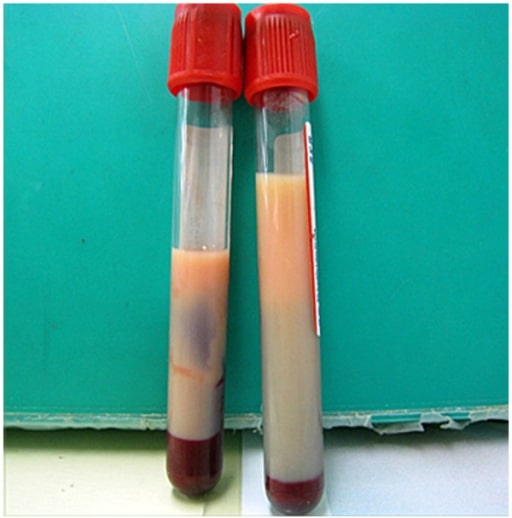
Plasma lechoso

Plasma lechoso observado en un paciente con hipertrigliceridemia: Si se observa, el plasma lechoso debe considerarse como una causa potencial de pancreatitis aguda.

Imagen: “Milky plasma” por Department of Emergency and Critical Care Medicine, Ohta Nishinouchi Hospital, 2-5-20 Nishinouchi, Koriyama, Fukushima, 963-8558, Japan. Licencia: CC BY 2.0.

Imagenología

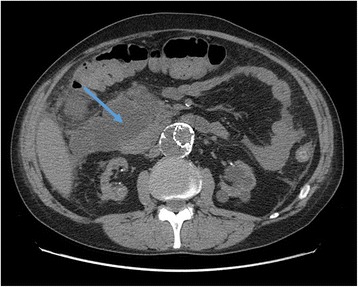
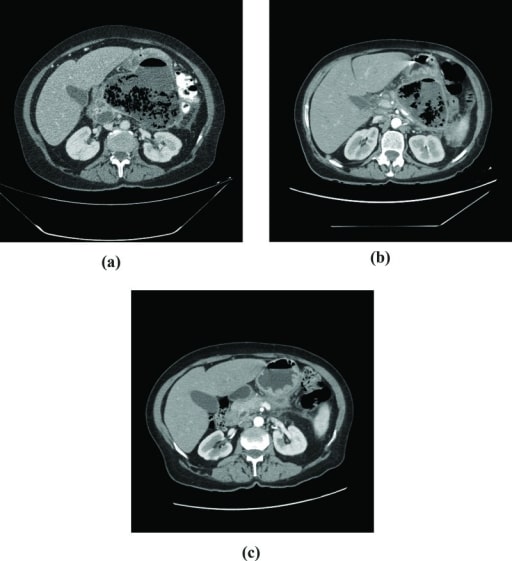
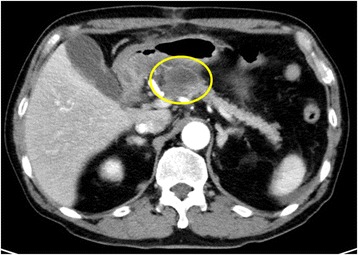
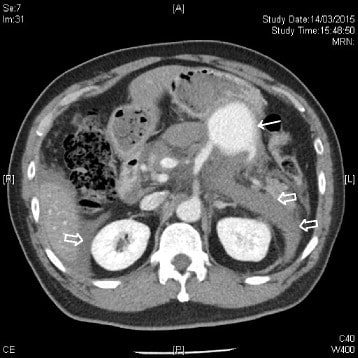
El diagnóstico imagenológico puede no ser necesario si se cumplen los LOS Neisseria 2 primeros criterios diagnósticos, pero puede utilizarse para evaluar la causa subyacente y las complicaciones:
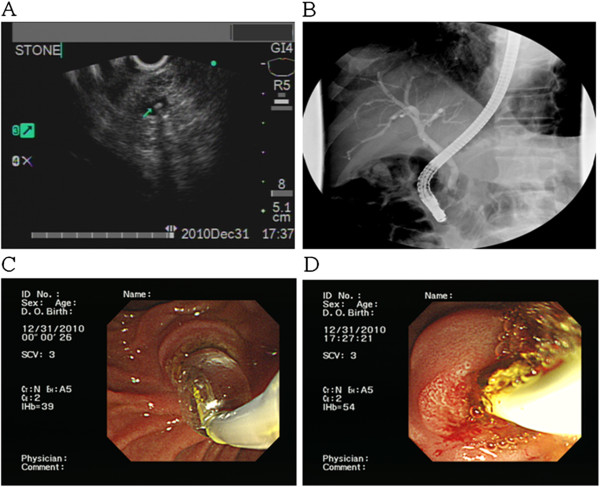
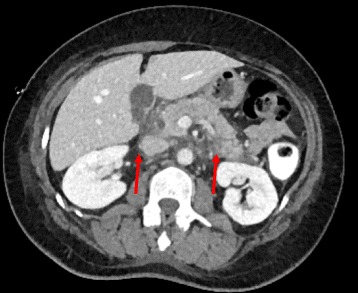
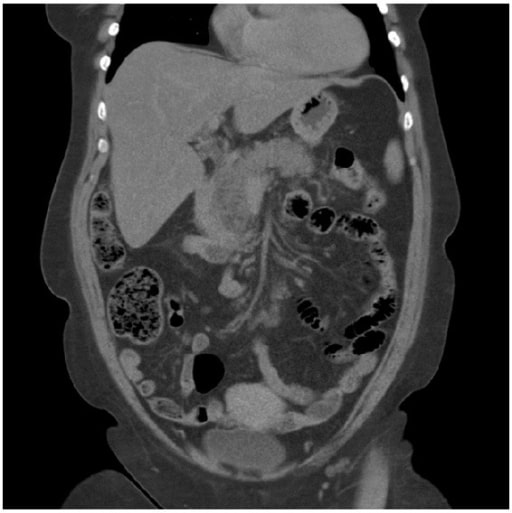
  • Tomografía computarizada (TC):
    • Normal en EN Erythema nodosum is an immune-mediated panniculitis (inflammation of the subcutaneous fat) caused by a type IV (delayed-type) hypersensitivity reaction. It commonly manifests in young women as tender, erythematous nodules on the shins. Erythema Nodosum el 30% de los LOS Neisseria casos
    • Posibles hallazgos:
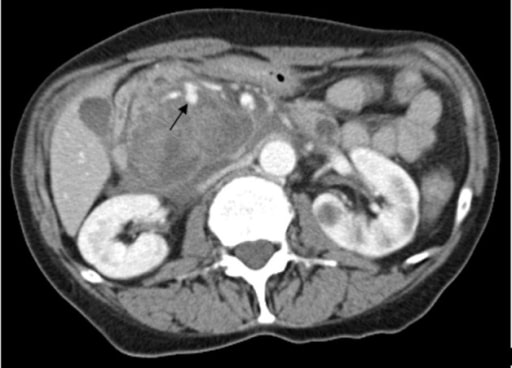
      • Cambios inflamatorios del páncreas
      • La necrosis Necrosis The death of cells in an organ or tissue due to disease, injury or failure of the blood supply. Ischemic Cell Damage, las acumulaciones de fluidos o los LOS Neisseria pseudoquistes pueden observarse más tarde.
  • Ultrasonido abdominal:
    • Se puede realizar si se sospecha de pancreatitis Pancreatitis Inflammation of the pancreas. Pancreatitis is classified as acute unless there are computed tomographic or endoscopic retrograde cholangiopancreatographic findings of chronic pancreatitis. The two most common forms of acute pancreatitis are alcoholic pancreatitis and gallstone pancreatitis. Acute Pancreatitis por cálculos biliares
    • Posibles hallazgos:
      • Cálculos biliares
      • Dilatación del conducto biliar común
      • Edema Edema Edema is a condition in which excess serous fluid accumulates in the body cavity or interstitial space of connective tissues. Edema is a symptom observed in several medical conditions. It can be categorized into 2 types, namely, peripheral (in the extremities) and internal (in an organ or body cavity). Edema pancreático
      • Líquido peripancreático
  • Colangiopancreatografía por resonancia magnética (CPRM o colangioresonancia):
    • Puede evaluar el sistema biliar
    • Hallazgos:
      • Coledocolitiasis
      • Dilatación biliar
      • Edema Edema Edema is a condition in which excess serous fluid accumulates in the body cavity or interstitial space of connective tissues. Edema is a symptom observed in several medical conditions. It can be categorized into 2 types, namely, peripheral (in the extremities) and internal (in an organ or body cavity). Edema pancreático
      • Necrosis Necrosis The death of cells in an organ or tissue due to disease, injury or failure of the blood supply. Ischemic Cell Damage pancreática o pseudoquistes
  • Radiografía de tórax:
    • Para pacientes con síntomas pulmonares (disnea, taquipnea, hipoxia)
    • Posibles hallazgos:
      • Derrames pleurales
      • Atelectasia basal
      • Infiltrados difusos y parcheados que indican un síndrome de dificultad respiratoria aguda (SDRA)
  • Radiografía de abdomen:
    • Rol limitado
    • Hallazgo de “asa centinela” (segmento corto de íleo cerca de la inflamación pancreática)

Evaluación del pronóstico

Identificar la gravedad de la pancreatitis Pancreatitis Inflammation of the pancreas. Pancreatitis is classified as acute unless there are computed tomographic or endoscopic retrograde cholangiopancreatographic findings of chronic pancreatitis. The two most common forms of acute pancreatitis are alcoholic pancreatitis and gallstone pancreatitis. Acute Pancreatitis aguda es útil para garantizar que el paciente reciba el tratamiento adecuado:

  • Criterios de Ranson (ver tabla):
    • Ampliamente utilizado
    • La mayor desventaja es que la evaluación tarda 48 horas en EN Erythema nodosum is an immune-mediated panniculitis (inflammation of the subcutaneous fat) caused by a type IV (delayed-type) hypersensitivity reaction. It commonly manifests in young women as tender, erythematous nodules on the shins. Erythema Nodosum completarse.
  • Puntuación del índice de gravedad de la pancreatitis Pancreatitis Inflammation of the pancreas. Pancreatitis is classified as acute unless there are computed tomographic or endoscopic retrograde cholangiopancreatographic findings of chronic pancreatitis. The two most common forms of acute pancreatitis are alcoholic pancreatitis and gallstone pancreatitis. Acute Pancreatitis aguda ( BISAP BISAP Acute Pancreatitis, por sus siglas en EN Erythema nodosum is an immune-mediated panniculitis (inflammation of the subcutaneous fat) caused by a type IV (delayed-type) hypersensitivity reaction. It commonly manifests in young women as tender, erythematous nodules on the shins. Erythema Nodosum inglés) (ver tabla):
    • Simple
    • Calculado durante las primeras 24 horas
  • Puntuación APACHE II (Acute physiology and chronic health evaluation):
    • Evalúa la edad, la temperatura, la presión arterial media, la frecuencia cardíaca, la frecuencia respiratoria, los LOS Neisseria resultados de la gasometría arterial, el recuento de leucocitos, los LOS Neisseria electrolitos, la creatinina, la Escala de Coma Coma Coma is defined as a deep state of unarousable unresponsiveness, characterized by a score of 3 points on the GCS. A comatose state can be caused by a multitude of conditions, making the precise epidemiology and prognosis of coma difficult to determine. Coma de Glasgow ( GCS GCS A scale that assesses the response to stimuli in patients with craniocerebral injuries. The parameters are eye opening, motor response, and verbal response. Coma, por sus siglas en EN Erythema nodosum is an immune-mediated panniculitis (inflammation of the subcutaneous fat) caused by a type IV (delayed-type) hypersensitivity reaction. It commonly manifests in young women as tender, erythematous nodules on the shins. Erythema Nodosum inglés) y otras condiciones de salud
    • Muy engorroso y complejo
Tabla: Criterios de Ranson (1 punto cada uno)
Al AL Amyloidosis momento del ingreso A las 48 horas del ingreso
Edad > 55 años Disminución del hematocrito > 10%
Leucocitos > 16 000/μL Aumento del BUN por > 5 mg/dL
Glicemia > 200 mg/dL Calcio sérico < 8 mg/dL
LDH LDH Osteosarcoma sérico > 350 IU/L PaO2 < 60 mm Hg
Aspartato aminotransferasa ( AST AST Enzymes of the transferase class that catalyze the conversion of l-aspartate and 2-ketoglutarate to oxaloacetate and l-glutamate. Liver Function Tests) > 250 IU/L Déficit de base > 4 mEq/L
Secuestro de fluidos estimado > 6 L
0‒2: Mortalidad mínima
3‒5: 10%‒20% de mortalidad, debe ingresar a la UCI
> 5: Mayor riesgo de complicaciones sistémicas y mortalidad

Definiciones:
  • La PaO2 es la presión parcial de oxígeno en la sangre arterial.
  • El déficit de base indica un exceso de ácido en la sangre.
Tabla: Puntuación del BISAP BISAP Acute Pancreatitis (1 punto cada uno)
BUN > 25 mg/dL
Alteración del estado mental GCS GCS A scale that assesses the response to stimuli in patients with craniocerebral injuries. The parameters are eye opening, motor response, and verbal response. Coma < 15
Síndrome de respuesta inflamatoria sistémica (SIRS, por sus siglas en EN Erythema nodosum is an immune-mediated panniculitis (inflammation of the subcutaneous fat) caused by a type IV (delayed-type) hypersensitivity reaction. It commonly manifests in young women as tender, erythematous nodules on the shins. Erythema Nodosum inglés) Evidencia de SIRS
Edad > 60 años
Derrame pleural Hallazgos positivos en EN Erythema nodosum is an immune-mediated panniculitis (inflammation of the subcutaneous fat) caused by a type IV (delayed-type) hypersensitivity reaction. It commonly manifests in young women as tender, erythematous nodules on the shins. Erythema Nodosum los LOS Neisseria estudios imagenológicos
0‒2 puntos: menor mortalidad (< 2%)
3‒5 puntos: mayor mortalidad (> 15%)

Tratamiento

Tratamiento agudo

  • Tratamiento básico:
    • Reanimación intravenosa dirigida por objetivos con Ringer lactato (evitar bolos grandes a menos que se encuentre en EN Erythema nodosum is an immune-mediated panniculitis (inflammation of the subcutaneous fat) caused by a type IV (delayed-type) hypersensitivity reaction. It commonly manifests in young women as tender, erythematous nodules on the shins. Erythema Nodosum shock Shock Shock is a life-threatening condition associated with impaired circulation that results in tissue hypoxia. The different types of shock are based on the underlying cause: distributive (↑ cardiac output (CO), ↓ systemic vascular resistance (SVR)), cardiogenic (↓ CO, ↑ SVR), hypovolemic (↓ CO, ↑ SVR), obstructive (↓ CO), and mixed. Types of Shock)
    • Control del ingreso y egreso de líquidos
    • Vigilancia estrecha de los LOS Neisseria signos vitales
    • Tratar los LOS Neisseria desequilibrios electrolíticos
    • Medicamentos:
      • Analgesia Analgesia Methods of pain relief that may be used with or in place of analgesics. Anesthesiology: History and Basic Concepts multimodal (AINE intravenosos ± opioides, opioides controlados por el paciente si es necesario)
      • Antieméticos
      • No administrar antibióticos profilácticos; iniciar solo en EN Erythema nodosum is an immune-mediated panniculitis (inflammation of the subcutaneous fat) caused by a type IV (delayed-type) hypersensitivity reaction. It commonly manifests in young women as tender, erythematous nodules on the shins. Erythema Nodosum caso de necrosis Necrosis The death of cells in an organ or tissue due to disease, injury or failure of the blood supply. Ischemic Cell Damage infectada comprobada u otra infección confirmada
    • Reposo intestinal inicial
    • Apoyo nutricional temprano:
      • Iniciar la alimentación oral o enteral en EN Erythema nodosum is an immune-mediated panniculitis (inflammation of the subcutaneous fat) caused by a type IV (delayed-type) hypersensitivity reaction. It commonly manifests in young women as tender, erythematous nodules on the shins. Erythema Nodosum 24 horas en EN Erythema nodosum is an immune-mediated panniculitis (inflammation of the subcutaneous fat) caused by a type IV (delayed-type) hypersensitivity reaction. It commonly manifests in young women as tender, erythematous nodules on the shins. Erythema Nodosum la mayoría de los LOS Neisseria pacientes, sin esperar a que remita el dolor Dolor Inflammation
      • Se asocia con ↓ morbilidad en EN Erythema nodosum is an immune-mediated panniculitis (inflammation of the subcutaneous fat) caused by a type IV (delayed-type) hypersensitivity reaction. It commonly manifests in young women as tender, erythematous nodules on the shins. Erythema Nodosum comparación con la nutrición retardada o la no nutrición
  • Pancreatitis Pancreatitis Inflammation of the pancreas. Pancreatitis is classified as acute unless there are computed tomographic or endoscopic retrograde cholangiopancreatographic findings of chronic pancreatitis. The two most common forms of acute pancreatitis are alcoholic pancreatitis and gallstone pancreatitis. Acute Pancreatitis aguda leve:
    • Puede ser tratada en EN Erythema nodosum is an immune-mediated panniculitis (inflammation of the subcutaneous fat) caused by a type IV (delayed-type) hypersensitivity reaction. It commonly manifests in young women as tender, erythematous nodules on the shins. Erythema Nodosum una sala de medicina general
    • Puede comenzar una dieta baja en EN Erythema nodosum is an immune-mediated panniculitis (inflammation of the subcutaneous fat) caused by a type IV (delayed-type) hypersensitivity reaction. It commonly manifests in young women as tender, erythematous nodules on the shins. Erythema Nodosum residuos y grasas tan pronto como sea tolerada
  • Pancreatitis Pancreatitis Inflammation of the pancreas. Pancreatitis is classified as acute unless there are computed tomographic or endoscopic retrograde cholangiopancreatographic findings of chronic pancreatitis. The two most common forms of acute pancreatitis are alcoholic pancreatitis and gallstone pancreatitis. Acute Pancreatitis aguda grave:
    • Se prefiere un entorno de cuidados intensivos.
    • Puede requerir nutrición enteral si el paciente no tolera la ingesta oral: Empezar antes de las 72 horas.
    • Seguir un enfoque progresivo para la necrosis Necrosis The death of cells in an organ or tissue due to disease, injury or failure of the blood supply. Ischemic Cell Damage (drenaje percutáneo/endoscópico → necrosectomía mínimamente invasiva si es necesario)
    • Añadir profilaxis de tromboembolia venosa (heparina de bajo peso molecular) y profilaxis de úlceras de estrés (inhibidor de la bomba de protones) para pacientes en EN Erythema nodosum is an immune-mediated panniculitis (inflammation of the subcutaneous fat) caused by a type IV (delayed-type) hypersensitivity reaction. It commonly manifests in young women as tender, erythematous nodules on the shins. Erythema Nodosum UCI

Tratamiento etiológico

  • Cálculos biliares
    • CPRE:
      • Puede realizar esfinterotomía y extracción de cálculos
      • Indicado solo para colangitis u obstrucción biliar persistente (no rutinario).
    • Colecistectomía:
      • Extirpación quirúrgica de la vesícula biliar
      • Para pancreatitis Pancreatitis Inflammation of the pancreas. Pancreatitis is classified as acute unless there are computed tomographic or endoscopic retrograde cholangiopancreatographic findings of chronic pancreatitis. The two most common forms of acute pancreatitis are alcoholic pancreatitis and gallstone pancreatitis. Acute Pancreatitis biliar leve, realizar de forma precoz (mismo ingreso, idealmente ≤ 72 horas), diferir en EN Erythema nodosum is an immune-mediated panniculitis (inflammation of the subcutaneous fat) caused by a type IV (delayed-type) hypersensitivity reaction. It commonly manifests in young women as tender, erythematous nodules on the shins. Erythema Nodosum casos graves hasta la estabilización.
  • Hipertrigliceridemia:
    • El nivel objetivo de triglicéridos es < 500 mg/dL.
    • Insulina intravenosa (IV):
      • Requiere un monitoreo constante de la glucosa
      • Puede necesitar una infusión de dextrosa simultánea para prevenir la hipoglucemia
    • Considerar la plasmaféresis terapéutica si los LOS Neisseria niveles de triglicéridos son > 1000 mg/dl con insuficiencia orgánica o SRIS (dependiente del centro).
  • Alcohol:

Complicaciones

Necrosis Necrosis The death of cells in an organ or tissue due to disease, injury or failure of the blood supply. Ischemic Cell Damage o absceso pancreático infectado

  • Considerar si los LOS Neisseria pacientes siguen presentando fiebre o leucocitosis en EN Erythema nodosum is an immune-mediated panniculitis (inflammation of the subcutaneous fat) caused by a type IV (delayed-type) hypersensitivity reaction. It commonly manifests in young women as tender, erythematous nodules on the shins. Erythema Nodosum aumento
  • Un-tercio de los LOS Neisseria pacientes con necrosis Necrosis The death of cells in an organ or tissue due to disease, injury or failure of the blood supply. Ischemic Cell Damage pancreática desarrollarán una infección.
  • Organismos causantes:
    • E. coli
    • Pseudomonas Pseudomonas Pseudomonas is a non-lactose-fermenting, gram-negative bacillus that produces pyocyanin, which gives it a characteristic blue-green color. Pseudomonas is found ubiquitously in the environment, as well as in moist reservoirs, such as hospital sinks and respiratory equipment. Pseudomonas
    • Klebsiella Klebsiella Klebsiella are encapsulated gram-negative, lactose-fermenting bacilli. They form pink colonies on MacConkey agar due to lactose fermentation. The main virulence factor is a polysaccharide capsule. Klebsiella pneumoniae is the most important pathogenic species. Klebsiella
    • Enterococcus Enterococcus Enterococcus is a genus of oval-shaped gram-positive cocci that are arranged in pairs or short chains. Distinguishing factors include optochin resistance and the presence of pyrrolidonyl arylamidase (PYR) and Lancefield D antigen. Enterococcus is part of the normal flora of the human GI tract. Enterococcus
  • Tratamiento:
    • Antibióticos:
      • Carbapenems Carbapenems A group of beta-lactam antibiotics in which the sulfur atom in the thiazolidine ring of the penicillin molecule is replaced by a carbon atom. Thienamycins are a subgroup of carbapenems which have a sulfur atom as the first constituent of the side chain. Carbapenems and Aztreonam
      • Fluoroquinolonas con metronidazol
      • Cefepima o ceftazidima con metronidazol
    • Aspiración y drenaje guiados por imagen
    • Necrosectomía quirúrgica (desbridamiento de la necrosis Necrosis The death of cells in an organ or tissue due to disease, injury or failure of the blood supply. Ischemic Cell Damage pancreática) si las medidas menos invasivas no tienen éxito

Pseudoquiste

  • Una colección encapsulada de líquido con una pared inflamatoria bien definida
  • Se produce varias semanas después del inicio de la pancreatitis Pancreatitis Inflammation of the pancreas. Pancreatitis is classified as acute unless there are computed tomographic or endoscopic retrograde cholangiopancreatographic findings of chronic pancreatitis. The two most common forms of acute pancreatitis are alcoholic pancreatitis and gallstone pancreatitis. Acute Pancreatitis
  • La mayoría son asintomáticos, pero algunos pueden presentar dolor Dolor Inflammation abdominal, saciedad precoz o ictericia.
  • El diagnóstico se realiza con ultrasonido, TC o resonancia magnética
  • Tratamiento:
    • Observación:
      • Para aquellos con síntomas mínimos o inexistentes
      • La mayoría se reducirá en EN Erythema nodosum is an immune-mediated panniculitis (inflammation of the subcutaneous fat) caused by a type IV (delayed-type) hypersensitivity reaction. It commonly manifests in young women as tender, erythematous nodules on the shins. Erythema Nodosum tamaño o se resolverá
    • Drenaje:
      • Para aquellos que son sintomáticos o desarrollan una infección
      • Requiere que la pared del pseudoquiste madure, lo que puede llevar semanas

Síndrome compartimental abdominal

  • Presión intraabdominal sostenida con fallo orgánico
  • Debido a un importante edema Edema Edema is a condition in which excess serous fluid accumulates in the body cavity or interstitial space of connective tissues. Edema is a symptom observed in several medical conditions. It can be categorized into 2 types, namely, peripheral (in the extremities) and internal (in an organ or body cavity). Edema tisular y a la reanimación con líquidos
  • Presentación:
    • Abdomen tenso, distendido y doloroso
    • Oliguria Oliguria Decreased urine output that is below the normal range. Oliguria can be defined as urine output of less than or equal to 0. 5 or 1 ml/kg/hr depending on the age. Renal Potassium Regulation progresiva
    • Inestabilidad hemodinámica
    • Descompensación pulmonar
  • El diagnóstico se realiza midiendo la presión intraabdominal.
  • Tratamiento:

Pseudoaneurisma

  • Resulta de la erosión de la arteria gastroduodenal o esplénica en EN Erythema nodosum is an immune-mediated panniculitis (inflammation of the subcutaneous fat) caused by a type IV (delayed-type) hypersensitivity reaction. It commonly manifests in young women as tender, erythematous nodules on the shins. Erythema Nodosum un pseudoquiste
  • Raro, pero potencialmente mortal
  • Se presenta con una hemorragia gastrointestinal inexplicable y anemia Anemia Anemia is a condition in which individuals have low Hb levels, which can arise from various causes. Anemia is accompanied by a reduced number of RBCs and may manifest with fatigue, shortness of breath, pallor, and weakness. Subtypes are classified by the size of RBCs, chronicity, and etiology. Anemia: Overview and Types
  • Angiografía para el diagnóstico y la embolización

Trombosis venosa esplácnica

  • Trombosis de las venas esplénica, porta o mesentérica superior
  • La trombosis venosa esplácnica se encuentra, muchas veces, de forma incidental en EN Erythema nodosum is an immune-mediated panniculitis (inflammation of the subcutaneous fat) caused by a type IV (delayed-type) hypersensitivity reaction. It commonly manifests in young women as tender, erythematous nodules on the shins. Erythema Nodosum los LOS Neisseria estudios imagenológicos.
  • Tratamiento:
    • Tratar la pancreatitis Pancreatitis Inflammation of the pancreas. Pancreatitis is classified as acute unless there are computed tomographic or endoscopic retrograde cholangiopancreatographic findings of chronic pancreatitis. The two most common forms of acute pancreatitis are alcoholic pancreatitis and gallstone pancreatitis. Acute Pancreatitis subyacente.
    • Anticoagulación si se compromete la función hepática o la perfusión intestinal

Síndrome de dificultad respiratoria aguda (SDRA)

  • Insuficiencia respiratoria con daño alveolar generalizado e inflamación de los LOS Neisseria pulmones:
    • Mediada por citoquinas y células inflamatorias
    • Causado por la inflamación sistémica de la pancreatitis Pancreatitis Inflammation of the pancreas. Pancreatitis is classified as acute unless there are computed tomographic or endoscopic retrograde cholangiopancreatographic findings of chronic pancreatitis. The two most common forms of acute pancreatitis are alcoholic pancreatitis and gallstone pancreatitis. Acute Pancreatitis aguda
  • Tasa de mortalidad de 30%–40%.
  • La radiografía de tórax mostrará opacidades difusas y bilaterales.
  • Tratamiento:
    • Oxígeno suplementario:
      • Cánula nasal de alto flujo
      • Ventilación mecánica
    • Manejo conservador de los LOS Neisseria líquidos

Diagnóstico Diferencial

  • Colecistitis aguda: inflamación de la vesícula biliar resultante de la impactación sostenida de cálculos biliares en EN Erythema nodosum is an immune-mediated panniculitis (inflammation of the subcutaneous fat) caused by a type IV (delayed-type) hypersensitivity reaction. It commonly manifests in young women as tender, erythematous nodules on the shins. Erythema Nodosum el conducto cístico. Los LOS Neisseria pacientes presentan dolor Dolor Inflammation abdominal superior de tipo cólico, náuseas y vómitos. La inflamación de la vesícula y los LOS Neisseria cálculos biliares se observan en EN Erythema nodosum is an immune-mediated panniculitis (inflammation of the subcutaneous fat) caused by a type IV (delayed-type) hypersensitivity reaction. It commonly manifests in young women as tender, erythematous nodules on the shins. Erythema Nodosum el ultrasonido o la TC. La amilasa y la lipasa no suelen estar elevadas, lo que diferencia la colecistitis aguda de la pancreatitis Pancreatitis Inflammation of the pancreas. Pancreatitis is classified as acute unless there are computed tomographic or endoscopic retrograde cholangiopancreatographic findings of chronic pancreatitis. The two most common forms of acute pancreatitis are alcoholic pancreatitis and gallstone pancreatitis. Acute Pancreatitis aguda. El tratamiento incluye fluidos intravenosos, antibióticos y colecistectomía.
  • Enfermedad de úlcera péptica perforada: erosión completa de una úlcera a través de la pared del estómago o del duodeno. Los LOS Neisseria pacientes presentan dolor Dolor Inflammation epigástrico intenso, taquicardia y rigidez abdominal. La lipasa y la amilasa pueden estar elevadas, pero no en EN Erythema nodosum is an immune-mediated panniculitis (inflammation of the subcutaneous fat) caused by a type IV (delayed-type) hypersensitivity reaction. It commonly manifests in young women as tender, erythematous nodules on the shins. Erythema Nodosum el grado observado en EN Erythema nodosum is an immune-mediated panniculitis (inflammation of the subcutaneous fat) caused by a type IV (delayed-type) hypersensitivity reaction. It commonly manifests in young women as tender, erythematous nodules on the shins. Erythema Nodosum la pancreatitis Pancreatitis Inflammation of the pancreas. Pancreatitis is classified as acute unless there are computed tomographic or endoscopic retrograde cholangiopancreatographic findings of chronic pancreatitis. The two most common forms of acute pancreatitis are alcoholic pancreatitis and gallstone pancreatitis. Acute Pancreatitis aguda. El diagnóstico se basa en EN Erythema nodosum is an immune-mediated panniculitis (inflammation of the subcutaneous fat) caused by a type IV (delayed-type) hypersensitivity reaction. It commonly manifests in young women as tender, erythematous nodules on the shins. Erythema Nodosum los LOS Neisseria estudios imagenológicos, que mostrarán el aire extraluminal. Los LOS Neisseria pacientes requieren antibióticos y cirugía de emergencia para su reparación.
  • Isquemia mesentérica aguda: lesión tisular causada cuando la perfusión no satisface las demandas del intestino, generalmente debido a un embolismo o trombosis. Los LOS Neisseria pacientes tienen un dolor Dolor Inflammation periumbilical desproporcionado con respecto al AL Amyloidosis examen. La tomografía computarizada con angiografía se utiliza para detectar la estenosis u oclusión de los LOS Neisseria vasos. La lipasa puede estar elevada, pero no en EN Erythema nodosum is an immune-mediated panniculitis (inflammation of the subcutaneous fat) caused by a type IV (delayed-type) hypersensitivity reaction. It commonly manifests in young women as tender, erythematous nodules on the shins. Erythema Nodosum el grado observado en EN Erythema nodosum is an immune-mediated panniculitis (inflammation of the subcutaneous fat) caused by a type IV (delayed-type) hypersensitivity reaction. It commonly manifests in young women as tender, erythematous nodules on the shins. Erythema Nodosum la pancreatitis Pancreatitis Inflammation of the pancreas. Pancreatitis is classified as acute unless there are computed tomographic or endoscopic retrograde cholangiopancreatographic findings of chronic pancreatitis. The two most common forms of acute pancreatitis are alcoholic pancreatitis and gallstone pancreatitis. Acute Pancreatitis aguda. La isquemia aguda requiere la revascularización y la resección del intestino infartado.
  • Cáncer de páncreas: una neoplasia del páncreas. La aparición de los LOS Neisseria síntomas es más insidiosa y los LOS Neisseria pacientes pueden presentar dolor Dolor Inflammation epigástrico incesante, pérdida de peso e ictericia. El diagnóstico se confirma con estudios imagenológicos. Los LOS Neisseria antecedentes, el examen y los LOS Neisseria estudios imagenológicos diferenciarán el cáncer de páncreas de la pancreatitis Pancreatitis Inflammation of the pancreas. Pancreatitis is classified as acute unless there are computed tomographic or endoscopic retrograde cholangiopancreatographic findings of chronic pancreatitis. The two most common forms of acute pancreatitis are alcoholic pancreatitis and gallstone pancreatitis. Acute Pancreatitis aguda. El tratamiento suele ser agresivo porque los LOS Neisseria tumores suelen detectarse tarde, e incluye quimioterapia, radioterapia y cirugía. El pronóstico de supervivencia es generalmente malo.

Referencias

  1. Tang, J.C.F., & Markus, J.T. (2019). Acute pancreatitis. In Anand, B.S. (Ed.), MedscapeRetrieved  November 8, 2020, from https://emedicine.medscape.com/article/181364-overview
  2. Vege, S.S. (2019). Clinical manifestations and diagnosis of acute pancreatitis. In Grover, S. (Ed.), UpToDate. Retrieved November 8, 2020, from https://www.uptodate.com/contents/clinical-manifestations-and-diagnosis-of-acute-pancreatitis
  3. Vege, S.S. (2019). Etiology of acute pancreatitis. In Grover, S. (Ed.), Uptodate. Retrieved November 9, 2020, from https://www.uptodate.com/contents/etiology-of-acute-pancreatitis
  4. Vege, S.S. (2019). Management of acute pancreatitis. In Grover, S. (Ed.), Uptodate. Retrieved November 9, 2020, from https://www.uptodate.com/contents/management-of-acute-pancreatitis
  5. Vege, S.S. (2019). Pathogenesis of acute pancreatitis. In Grover, S. (Ed.), Uptodate. Retrieved November 9, 2020, from https://www.uptodate.com/contents/pathogenesis-of-acute-pancreatitis
  6. Bartel, M. (2020). Acute pancreatitis. [online] MD Professional Version. https://www.msdmanuals.com/professional/gastrointestinal-disorders/pancreatitis/acute-pancreatitis
  7. Hawatian, K., Sidani, M., Hagerman, T., Condon, S., Chien, C., & Miller, J. (2025). Contemporary approach to acute pancreatitis in emergency medicine. JACEP Open, 6(2), 100063. https://doi.org/10.1016/j.acepjo.2025.100063

¡Crea tu cuenta gratis o inicia una sesión para seguir leyendo!

Regístrate ahora y obtén acceso gratuito a Lecturio con páginas de concepto, videos médicos y cuestionarios para tu educación médica.

User Reviews

¡Flash Sale Doble! ⚡ Ahorra 30% en todos planes y cursos acreditados!

Details