Domina Conceptos Médicos

Estudia para la escuela de medicina y tus examenes con Lecturio.

Oxazolidinonas

Las oxazolidinonas ( linezolid Linezolid An oxazolidinone and acetamide derived anti-bacterial agent and protein synthesis inhibitor that is used in the treatment of gram-positive bacterial infections of the skin and respiratory tract. Oxazolidinones y tedizolid Tedizolid Oxazolidinones) son inhibidores de la síntesis proteica bacteriana. El sitio de unión único en EN Erythema nodosum is an immune-mediated panniculitis (inflammation of the subcutaneous fat) caused by a type IV (delayed-type) hypersensitivity reaction. It commonly manifests in young women as tender, erythematous nodules on the shins. Erythema Nodosum el ARN ribosomal 23S del ribosoma 50S impide que las bacterias desarrollen una resistencia cruzada cuando se exponen a otros antibióticos. Estos medicamentos se absorben fácilmente y se distribuyen ampliamente en EN Erythema nodosum is an immune-mediated panniculitis (inflammation of the subcutaneous fat) caused by a type IV (delayed-type) hypersensitivity reaction. It commonly manifests in young women as tender, erythematous nodules on the shins. Erythema Nodosum el organismo y están indicados para las infecciones por Gram-positivos, incluidos el Staphylococcus aureus Staphylococcus aureus Potentially pathogenic bacteria found in nasal membranes, skin, hair follicles, and perineum of warm-blooded animals. They may cause a wide range of infections and intoxications. Brain Abscess resistente a la meticilina ( MRSA MRSA A strain of Staphylococcus aureus that is non-susceptible to the action of methicillin. The mechanism of resistance usually involves modification of normal or the presence of acquired penicillin binding proteins. Staphylococcus, por sus siglas en EN Erythema nodosum is an immune-mediated panniculitis (inflammation of the subcutaneous fat) caused by a type IV (delayed-type) hypersensitivity reaction. It commonly manifests in young women as tender, erythematous nodules on the shins. Erythema Nodosum inglés) y el enterococo resistente a la vancomicina. Los LOS Neisseria efectos secundarios incluyen malestar gastrointestinal, mielosupresión, neuropatía periférica u óptica y acidosis Acidosis A pathologic condition of acid accumulation or depletion of base in the body. The two main types are respiratory acidosis and metabolic acidosis, due to metabolic acid build up. Respiratory Acidosis láctica. El linezolid Linezolid An oxazolidinone and acetamide derived anti-bacterial agent and protein synthesis inhibitor that is used in the treatment of gram-positive bacterial infections of the skin and respiratory tract. Oxazolidinones es un inhibidor débil de la monoamino oxidasa, por lo tanto, puede aumentar el riesgo de síndrome serotoninérgico cuando se coadministra con otros medicamentos serotoninérgicos.

Last updated: Dec 15, 2025
Editorial responsibility: Stanley Oiseth, Lindsay Jones, Evelin Maza

Estructura Química y Farmacodinamia

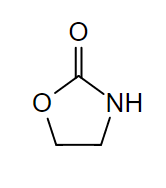
Estructura química

  • Las oxazolidinonas contienen el mismo anillo de 5 miembros (2-oxazolidona) que contienen nitrógeno (N) y oxígeno (O).
  • Similar a los LOS Neisseria azoles Azoles Azoles are a widely used class of antifungal medications inhibiting the production of ergosterol, a critical component in the fungal cell membrane. The 2 primary subclasses of azoles are the imidazoles, older agents typically only used for topical applications, and the triazoles, newer agents with a wide spectrum of uses. Azoles que contienen N y O (oxazol), con un carbono oxidado a una cetona

Mecanismo de acción

  • Inhiben la síntesis proteica bacteriana
    • Se unen al AL Amyloidosis ARN ribosomal 23S (ARNr) bacteriano de la subunidad 50S
    • Bloquean la formación del complejo de iniciación 70S → impiden la traducción
  • Previenen:
    • Crecimiento bacteriano
    • Producción de toxinas
  • Principalmente bacteriostáticos (excepción: son bactericidas contra la mayoría de las cepas estreptocócicas)
  • Mecanismo de resistencia:
    • Puede ocurrir debido a una mutación en EN Erythema nodosum is an immune-mediated panniculitis (inflammation of the subcutaneous fat) caused by a type IV (delayed-type) hypersensitivity reaction. It commonly manifests in young women as tender, erythematous nodules on the shins. Erythema Nodosum el sitio de unión del ARNr 23S
    • No existe resistencia cruzada con otros antibióticos inhibidores de la síntesis proteica bacteriana
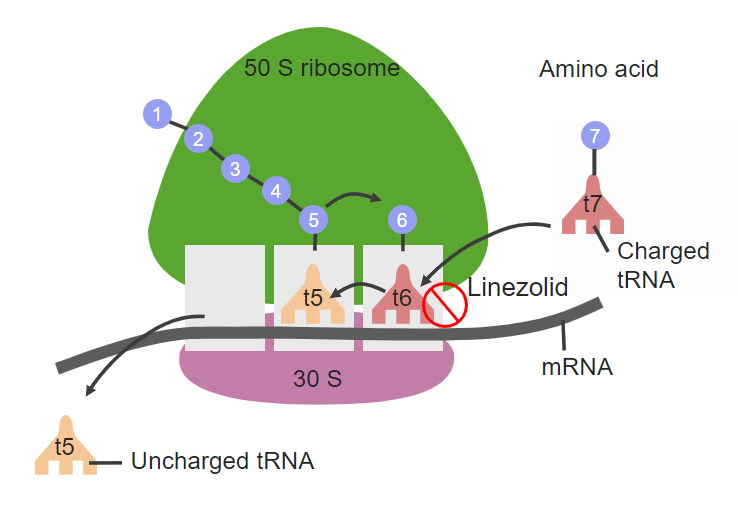
Sitio de acción del linezolid Oxazolidinonas

Sitio de acción de linezolid en la subunidad ribosomal 50S:
Esta construcción inhibe el inicio de la síntesis proteica e impide la replicación bacteriana.

Imagen por Lecturio. Licencia: CC BY-NC-SA 4.0

Farmacocinética

Absorción y distribución

  • 90%–100% biodisponibilidad tras la ingestión
  • El tedizolid Tedizolid Oxazolidinones es un promedicamento → convertido en EN Erythema nodosum is an immune-mediated panniculitis (inflammation of the subcutaneous fat) caused by a type IV (delayed-type) hypersensitivity reaction. It commonly manifests in young women as tender, erythematous nodules on the shins. Erythema Nodosum forma activa por las fosfatasas
  • Unión a proteínas:
    • Linezolid Linezolid An oxazolidinone and acetamide derived anti-bacterial agent and protein synthesis inhibitor that is used in the treatment of gram-positive bacterial infections of the skin and respiratory tract. Oxazolidinones: poca unión
    • Tedizolid Tedizolid Oxazolidinones: altamente unido
  • Se distribuye fácilmente en EN Erythema nodosum is an immune-mediated panniculitis (inflammation of the subcutaneous fat) caused by a type IV (delayed-type) hypersensitivity reaction. It commonly manifests in young women as tender, erythematous nodules on the shins. Erythema Nodosum los LOS Neisseria tejidos bien perfundidos
  • El volumen de distribución del linezolid Linezolid An oxazolidinone and acetamide derived anti-bacterial agent and protein synthesis inhibitor that is used in the treatment of gram-positive bacterial infections of the skin and respiratory tract. Oxazolidinones es similar al AL Amyloidosis agua corporal total (↑ para el tedizolid Tedizolid Oxazolidinones).

Metabolismo

  • Hepático:
    • Linezolid Linezolid An oxazolidinone and acetamide derived anti-bacterial agent and protein synthesis inhibitor that is used in the treatment of gram-positive bacterial infections of the skin and respiratory tract. Oxazolidinones: se metaboliza por oxidación no enzimática en EN Erythema nodosum is an immune-mediated panniculitis (inflammation of the subcutaneous fat) caused by a type IV (delayed-type) hypersensitivity reaction. It commonly manifests in young women as tender, erythematous nodules on the shins. Erythema Nodosum 2 metabolitos inactivos
    • Tedizolid Tedizolid Oxazolidinones: sulfatación en EN Erythema nodosum is an immune-mediated panniculitis (inflammation of the subcutaneous fat) caused by a type IV (delayed-type) hypersensitivity reaction. It commonly manifests in young women as tender, erythematous nodules on the shins. Erythema Nodosum conjugados de sulfato inactivos
  • No inducen ni inhiben las enzimas del citocromo P450

Excreción

  • Linezolid Linezolid An oxazolidinone and acetamide derived anti-bacterial agent and protein synthesis inhibitor that is used in the treatment of gram-positive bacterial infections of the skin and respiratory tract. Oxazolidinones: orina > heces
  • Tedizolid Tedizolid Oxazolidinones: heces > orina

Indicaciones

Cobertura antimicrobiana

  • Las oxazolidinonas se utilizan para tratar infecciones causadas por bacterias Gram-positivas, entre ellas:
    • Streptococcus Streptococcus Streptococcus is one of the two medically important genera of gram-positive cocci, the other being Staphylococcus. Streptococci are identified as different species on blood agar on the basis of their hemolytic pattern and sensitivity to optochin and bacitracin. There are many pathogenic species of streptococci, including S. pyogenes, S. agalactiae, S. pneumoniae, and the viridans streptococci. Streptococcus
    • Enterococos, incluido el Enterococo resistente a la vancomicina (ERV)
    • Staphylococcus Staphylococcus Staphylococcus is a medically important genera of Gram-positive, aerobic cocci. These bacteria form clusters resembling grapes on culture plates. Staphylococci are ubiquitous for humans, and many strains compose the normal skin flora. Staphylococcus coagulasa-negativo
    • Staphylococcus aureus Staphylococcus aureus Potentially pathogenic bacteria found in nasal membranes, skin, hair follicles, and perineum of warm-blooded animals. They may cause a wide range of infections and intoxications. Brain Abscess, incluido el MRSA MRSA A strain of Staphylococcus aureus that is non-susceptible to the action of methicillin. The mechanism of resistance usually involves modification of normal or the presence of acquired penicillin binding proteins. Staphylococcus
    • Bacillus Bacillus Bacillus are aerobic, spore-forming, gram-positive bacilli. Two pathogenic species are Bacillus anthracis (B. anthracis) and B. cereus. Bacillus
    • Corynebacterium Corynebacterium Corynebacteria are gram-positive, club-shaped bacilli. Corynebacteria are commonly isolated on tellurite or Loeffler’s media and have characteristic metachromatic granules. The major pathogenic species is Corynebacterium diphtheriae, which causes a severe respiratory infection called diphtheria. Corynebacterium
    • Listeria Listeria Listeria spp. are motile, flagellated, gram-positive, facultative intracellular bacilli. The major pathogenic species is Listeria monocytogenes. Listeria are part of the normal gastrointestinal flora of domestic mammals and poultry and are transmitted to humans through the ingestion of contaminated food, especially unpasteurized dairy products. Listeria Monocytogenes/Listeriosis
  • También se ha HA Hemolytic anemia (HA) is the term given to a large group of anemias that are caused by the premature destruction/hemolysis of circulating red blood cells (RBCs). Hemolysis can occur within (intravascular hemolysis) or outside the blood vessels (extravascular hemolysis). Hemolytic Anemia demostrado la actividad in vitro contra especies de Mycobacterium Mycobacterium Mycobacterium is a genus of the family Mycobacteriaceae in the phylum Actinobacteria. Mycobacteria comprise more than 150 species of facultative intracellular bacilli that are mostly obligate aerobes. Mycobacteria are responsible for multiple human infections including serious diseases, such as tuberculosis (M. tuberculosis), leprosy (M. leprae), and M. avium complex infections. Mycobacterium.

Tipos de infecciones

Estos medicamentos están aprobados por la administración de medicamentos y alimentos (FDA, por sus siglas en EN Erythema nodosum is an immune-mediated panniculitis (inflammation of the subcutaneous fat) caused by a type IV (delayed-type) hypersensitivity reaction. It commonly manifests in young women as tender, erythematous nodules on the shins. Erythema Nodosum inglés) para:

  • Linezolid Linezolid An oxazolidinone and acetamide derived anti-bacterial agent and protein synthesis inhibitor that is used in the treatment of gram-positive bacterial infections of the skin and respiratory tract. Oxazolidinones:
    • Infecciones de piel y tejidos blandos
    • Neumonía
    • Infecciones por ERV
  • Tedizolid Tedizolid Oxazolidinones: infecciones de piel y tejidos blandos

Efectos Secundarios

Efectos secundarios

  • Malestar gastrointestinal
  • Mielosupresión (incluidos todos los LOS Neisseria linajes celulares sanguíneos)
  • Neuropatía periférica y óptica
  • Acidosis Acidosis A pathologic condition of acid accumulation or depletion of base in the body. The two main types are respiratory acidosis and metabolic acidosis, due to metabolic acid build up. Respiratory Acidosis láctica
  • Hepatotoxicidad
  • Hipoglucemia
  • Nota: Los LOS Neisseria efectos secundarios más graves se producen con mayor frecuencia con el uso prolongado.

Advertencias

El linezolid Linezolid An oxazolidinone and acetamide derived anti-bacterial agent and protein synthesis inhibitor that is used in the treatment of gram-positive bacterial infections of the skin and respiratory tract. Oxazolidinones puede causar una crisis hipertensiva en EN Erythema nodosum is an immune-mediated panniculitis (inflammation of the subcutaneous fat) caused by a type IV (delayed-type) hypersensitivity reaction. It commonly manifests in young women as tender, erythematous nodules on the shins. Erythema Nodosum las siguientes condiciones:

  • Hipertensión no controlada
  • Hipertiroidismo/tirotoxicosis
  • Feocromocitoma

Interacciones medicamentosas

  • Agentes serotoninérgicos: el linezolid Linezolid An oxazolidinone and acetamide derived anti-bacterial agent and protein synthesis inhibitor that is used in the treatment of gram-positive bacterial infections of the skin and respiratory tract. Oxazolidinones puede inhibir reversiblemente la monoamino oxidasa → ↑ riesgo de síndrome serotoninérgico
    • Inhibidores selectivos de la recaptación de serotonina
    • Inhibidores de la recaptación de serotonina-norepinefrina
    • Inhibidores de la monoamino oxidasa
  • Warfarina: ↑ el tiempo de protrombina (TP)
  • Medicamentos simpaticomiméticos, vasopresores o dopaminérgicos: ↑ presión arterial

Comparación de Antibióticos

Tabla: Comparación de varias clases de antibióticos inhibidores de la síntesis proteica bacteriana
Clase de medicamento Mecanismo de acción Cobertura Efectos secundarios
Anfenicoles
  • Se unen a la subunidad 50S
  • Evitan la transpeptidación
  • Gram-positivos
  • Gram-negativos
  • Atípicos
  • Malestar gastrointestinal
  • Neuritis óptica
  • Anemia Anemia Anemia is a condition in which individuals have low Hb levels, which can arise from various causes. Anemia is accompanied by a reduced number of RBCs and may manifest with fatigue, shortness of breath, pallor, and weakness. Subtypes are classified by the size of RBCs, chronicity, and etiology. Anemia: Overview and Types aplásica
  • Síndrome del bebé gris
Lincosamidas
  • Se unen a la subunidad 50S
  • Evitan la transpeptidación
  • Cocos Gram-positivos:
    • Staphylococcus aureus Staphylococcus aureus Potentially pathogenic bacteria found in nasal membranes, skin, hair follicles, and perineum of warm-blooded animals. They may cause a wide range of infections and intoxications. Brain Abscess sensible a la meticilina (MSSA, por sus siglas en EN Erythema nodosum is an immune-mediated panniculitis (inflammation of the subcutaneous fat) caused by a type IV (delayed-type) hypersensitivity reaction. It commonly manifests in young women as tender, erythematous nodules on the shins. Erythema Nodosum inglés)
    • MRSA MRSA A strain of Staphylococcus aureus that is non-susceptible to the action of methicillin. The mechanism of resistance usually involves modification of normal or the presence of acquired penicillin binding proteins. Staphylococcus
    • Streptococcus Streptococcus Streptococcus is one of the two medically important genera of gram-positive cocci, the other being Staphylococcus. Streptococci are identified as different species on blood agar on the basis of their hemolytic pattern and sensitivity to optochin and bacitracin. There are many pathogenic species of streptococci, including S. pyogenes, S. agalactiae, S. pneumoniae, and the viridans streptococci. Streptococcus
  • Anaerobios
  • Malestar gastrointestinal
  • Reacciones alérgicas
  • Colitis Colitis Inflammation of the colon section of the large intestine, usually with symptoms such as diarrhea (often with blood and mucus), abdominal pain, and fever. Pseudomembranous Colitis pseudomembranosa
Macrólidos
  • Se unen a la subunidad 50S
  • Evitan la transpeptidación
  • Gram-positivos
  • Gram-negativos
  • Atípicos
  • Complejo Mycobacterium avium Mycobacterium avium A bacterium causing tuberculosis in domestic fowl and other birds. In pigs, it may cause localized and sometimes disseminated disease. The organism occurs occasionally in sheep and cattle. It should be distinguished from the m. avium complex, which infects primarily humans. Mycobacterium
  • Malestar gastrointestinal
  • Prolongación del QT
  • Hepatotoxicidad
  • Exacerbación de la miastenia gravis
Oxazolidinonas
  • Se unen al AL Amyloidosis ARNr 23S de la subunidad 50S
  • Evitan la formación de complejos de iniciación
Cocos Gram-positivos:
  • MSSA
  • MRSA MRSA A strain of Staphylococcus aureus that is non-susceptible to the action of methicillin. The mechanism of resistance usually involves modification of normal or the presence of acquired penicillin binding proteins. Staphylococcus
  • ERV
  • Streptococcus Streptococcus Streptococcus is one of the two medically important genera of gram-positive cocci, the other being Staphylococcus. Streptococci are identified as different species on blood agar on the basis of their hemolytic pattern and sensitivity to optochin and bacitracin. There are many pathogenic species of streptococci, including S. pyogenes, S. agalactiae, S. pneumoniae, and the viridans streptococci. Streptococcus
  • Mielosupresión
  • Neuropatía
  • Acidosis Acidosis A pathologic condition of acid accumulation or depletion of base in the body. The two main types are respiratory acidosis and metabolic acidosis, due to metabolic acid build up. Respiratory Acidosis láctica
  • Síndrome serotoninérgico
ARNr: ARN ribosómico
ERV: Enterococo resistente a la vancomicina
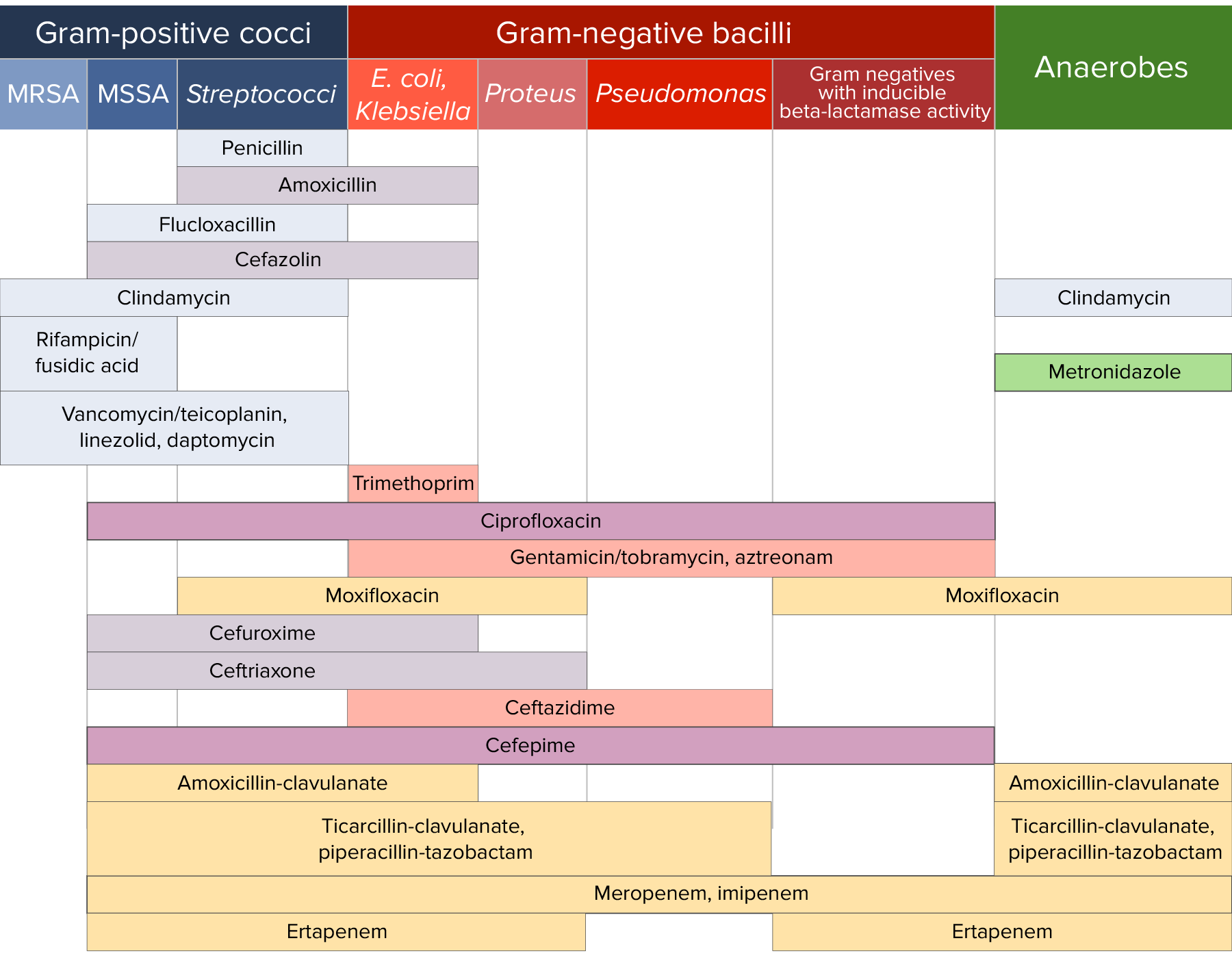
Tabla de sensibilidad a los antibióticos

Sensibilidad a los antibióticos:
Gráfico que compara la cobertura microbiana de diferentes antibióticos para cocos Gram-positivos, bacilos Gram-negativos y anaerobios.

Imagen por Lecturio. Licencia: CC BY-NC-SA 4.0

Referencias

  1. Norrby R. (2001). Linezolid—a review of the first oxazolidinone. Expert Opin Pharmacother 2:293–302. https://pubmed.ncbi.nlm.nih.gov/11336587/
  2. Hamel JC, Stapert D, Moerman JK, Ford CW. (200). Linezolid, critical characteristics. Infection 28:60–64. https://pubmed.ncbi.nlm.nih.gov/10697798/
  3. Diekema DI, Jones RN. (2000). Oxazolidinones: a review. Drugs 59:7–16. https://pubmed.ncbi.nlm.nih.gov/10718097/
  4. Deck DH, Winston LG. (2012). Tetracyclines, macrolides, clindamycin, chloramphenicol, streptogramins, & oxazolidinones. In Katzung BG, Masters SB, Trevor AJ (Eds.), Basic & Clinical Pharmacology, 12th ed., pp. 809–819. https://pharmacomedicale.org/images/cnpm/CNPM_2016/katzung-pharmacology.pdf
  5. Drew RH, Peel T. (2025). Linezolid and tedizolid (oxazolidinones): An overview. In Baron, E.L. (Ed.), UpToDate. Retrieved February 12, 2025, from https://www.uptodate.com/contents/linezolid-and-tedizolid-oxazolidinones-an-overview
  6. Azzouz A, Preuss CV. (2024). Linezolid. StatPearls. Retrieved February 12, 2025, from https://www.ncbi.nlm.nih.gov/books/NBK539793/
  7. Werth BJ. (2024). Lincosamides, oxazolidinones, and streptogramins. MSD Manual Professional Version. Retrieved February 12, 2025, from https://www.msdmanuals.com/professional/infectious-diseases/bacteria-and-antibacterial-drugs/lincosamides,-oxazolidinones,-and-streptogramins
  8. Pandit N, Singla RK, Shrivastava B. (2012). Current updates on oxazolidinone and its significance. International Journal of Medicinal Chemistry. https://doi.org/10.1155/2012/159285

¡Crea tu cuenta gratis o inicia una sesión para seguir leyendo!

Regístrate ahora y obtén acceso gratuito a Lecturio con páginas de concepto, videos médicos y cuestionarios para tu educación médica.

User Reviews

Que tengas una sesión de estudio alegre y navideña 🎁 Ahorra 50% en todos los planes >>

Details