Domina Conceptos Médicos

Estudia para la escuela de medicina y tus examenes con Lecturio.

Osteomielitis

La osteomielitis es una infección de hueso que resulta de la propagación de microorganismos desde la sangre (hematógena), el tejido infectado cercano o heridas abiertas (no hematógena). Las infecciones suelen ser causadas por Staphylococcus aureus, pero se han relacionado diversos organismos con la osteomielitis. La mayoría de los pacientes presentan dolor, enrojecimiento y edema del lugar afectado, y pueden tener síntomas asociados como fiebre y escalofríos. Los valores de laboratorio demostrarán un aumento de leucocitos, PCR y velocidad de eritrosedimentación (VES) en EN Erythema nodosum is an immune-mediated panniculitis (inflammation of the subcutaneous fat) caused by a type IV (delayed-type) hypersensitivity reaction. It commonly manifests in young women as tender, erythematous nodules on the shins. Erythema Nodosum la mayoría de los LOS Neisseria casos. La modalidad de imagenología más sensible y específica para diagnosticar la osteomielitis es la RM. El tratamiento puede requerir antibióticos a largo plazo y un posible desbridamiento quirúrgico.

Last updated: Dec 15, 2025

Editorial responsibility: Stanley Oiseth, Lindsay Jones, Evelin Maza

Epidemiología y Etiología

Epidemiología

  • Se desconoce la incidencia general.
    • Puede suponer unos 50 000 casos anuales en EN Erythema nodosum is an immune-mediated panniculitis (inflammation of the subcutaneous fat) caused by a type IV (delayed-type) hypersensitivity reaction. It commonly manifests in young women as tender, erythematous nodules on the shins. Erythema Nodosum Estados Unidos
    • Mayor incidencia en EN Erythema nodosum is an immune-mediated panniculitis (inflammation of the subcutaneous fat) caused by a type IV (delayed-type) hypersensitivity reaction. It commonly manifests in young women as tender, erythematous nodules on the shins. Erythema Nodosum los LOS Neisseria países en EN Erythema nodosum is an immune-mediated panniculitis (inflammation of the subcutaneous fat) caused by a type IV (delayed-type) hypersensitivity reaction. It commonly manifests in young women as tender, erythematous nodules on the shins. Erythema Nodosum desarrollo
  • Hombres > mujeres
  • La osteomielitis no hematógena es más frecuente en EN Erythema nodosum is an immune-mediated panniculitis (inflammation of the subcutaneous fat) caused by a type IV (delayed-type) hypersensitivity reaction. It commonly manifests in young women as tender, erythematous nodules on the shins. Erythema Nodosum los LOS Neisseria adultos.
  • La osteomielitis hematógena es más frecuente en EN Erythema nodosum is an immune-mediated panniculitis (inflammation of the subcutaneous fat) caused by a type IV (delayed-type) hypersensitivity reaction. It commonly manifests in young women as tender, erythematous nodules on the shins. Erythema Nodosum los LOS Neisseria niños.
    • La osteomielitis de los LOS Neisseria huesos largos es el subtipo más común en EN Erythema nodosum is an immune-mediated panniculitis (inflammation of the subcutaneous fat) caused by a type IV (delayed-type) hypersensitivity reaction. It commonly manifests in young women as tender, erythematous nodules on the shins. Erythema Nodosum los LOS Neisseria niños.
    • La osteomielitis vertebral es el subtipo más común en EN Erythema nodosum is an immune-mediated panniculitis (inflammation of the subcutaneous fat) caused by a type IV (delayed-type) hypersensitivity reaction. It commonly manifests in young women as tender, erythematous nodules on the shins. Erythema Nodosum adultos.

Etiología y clasificación

La osteomielitis se clasifica en EN Erythema nodosum is an immune-mediated panniculitis (inflammation of the subcutaneous fat) caused by a type IV (delayed-type) hypersensitivity reaction. It commonly manifests in young women as tender, erythematous nodules on the shins. Erythema Nodosum función de la vía de infección.

Osteomielitis no hematógena (80% de los LOS Neisseria casos):

  • Inoculación directa de bacterias debido a:
    • Cirugía
    • Prótesis
    • Traumatismo
    • Material de osteosíntesis de fracturas
    • Infección de tejidos blandos
  • Polimicrobiana:
    • Staphylococcus aureus Staphylococcus aureus Potentially pathogenic bacteria found in nasal membranes, skin, hair follicles, and perineum of warm-blooded animals. They may cause a wide range of infections and intoxications. Brain Abscess (presente en EN Erythema nodosum is an immune-mediated panniculitis (inflammation of the subcutaneous fat) caused by a type IV (delayed-type) hypersensitivity reaction. It commonly manifests in young women as tender, erythematous nodules on the shins. Erythema Nodosum > 50% de los LOS Neisseria casos)
    • S. epidermidis S. epidermidis A species of staphylococcus that is a spherical, non-motile, gram-positive, chemoorganotrophic, facultative anaerobe. Mainly found on the skin and mucous membrane of warm-blooded animals, it can be primary pathogen or secondary invader. Staphylococcus
    • Streptococcus Streptococcus Streptococcus is one of the two medically important genera of gram-positive cocci, the other being Staphylococcus. Streptococci are identified as different species on blood agar on the basis of their hemolytic pattern and sensitivity to optochin and bacitracin. There are many pathogenic species of streptococci, including S. pyogenes, S. agalactiae, S. pneumoniae, and the viridans streptococci. Streptococcus
    • Bacterias gram-negativas
    • Bacterias anaeróbicas

Osteomielitis hematógena (20% de los LOS Neisseria casos):

  • Las bacterias se propagan a través de la sangre desde el sitio primario de la infección.
  • Monomicrobiana:
    • S. aureus S. aureus Potentially pathogenic bacteria found in nasal membranes, skin, hair follicles, and perineum of warm-blooded animals. They may cause a wide range of infections and intoxications. Staphylococcus (más común)
    • Streptococcus Streptococcus Streptococcus is one of the two medically important genera of gram-positive cocci, the other being Staphylococcus. Streptococci are identified as different species on blood agar on the basis of their hemolytic pattern and sensitivity to optochin and bacitracin. There are many pathogenic species of streptococci, including S. pyogenes, S. agalactiae, S. pneumoniae, and the viridans streptococci. Streptococcus
    • Bacterias entéricas gram-negativas
    • Pseudomonas aeruginosa Pseudomonas aeruginosa A species of gram-negative, aerobic, rod-shaped bacteria commonly isolated from clinical specimens (wound, burn, and urinary tract infections). It is also found widely distributed in soil and water. P. Aeruginosa is a major agent of nosocomial infection. Pseudomonas
    • Serratia Serratia A genus of gram-negative, facultatively anaerobic, rod-shaped bacteria that occurs in the natural environment (soil, water, and plant surfaces) or as an opportunistic human pathogen. Acute Cholangitis
    • Salmonella Salmonella Salmonellae are gram-negative bacilli of the family Enterobacteriaceae. Salmonellae are flagellated, non-lactose-fermenting, and hydrogen sulfide-producing microbes. Salmonella enterica, the most common disease-causing species in humans, is further classified based on serotype as typhoidal (S. typhi and paratyphi) and nontyphoidal (S. enteritidis and typhimurium). Salmonella
    • Mycobacterium tuberculosis Mycobacterium tuberculosis Tuberculosis (TB) is an infectious disease caused by Mycobacterium tuberculosis complex bacteria. The bacteria usually attack the lungs but can also damage other parts of the body. Approximately 30% of people around the world are infected with this pathogen, with the majority harboring a latent infection. Tuberculosis spreads through the air when a person with active pulmonary infection coughs or sneezes. Tuberculosis
    • Neisseria gonorrhoeae Neisseria gonorrhoeae A species of gram-negative, aerobic bacteria primarily found in purulent venereal discharges. It is the causative agent of gonorrhea. Neisseria
    • Kingella
    • Bartonella henselae Bartonella henselae A species of gram-negative bacteria that is the etiologic agent of bacillary angiomatosis. This organism can also be a cause of cat-scratch disease in immunocompetent patients. Bartonella
    • Candida Candida Candida is a genus of dimorphic, opportunistic fungi. Candida albicans is part of the normal human flora and is the most common cause of candidiasis. The clinical presentation varies and can include localized mucocutaneous infections (e.g., oropharyngeal, esophageal, intertriginous, and vulvovaginal candidiasis) and invasive disease (e.g., candidemia, intraabdominal abscess, pericarditis, and meningitis). Candida/Candidiasis
    • Histoplasmosis Histoplasmosis Histoplasmosis is an infection caused by Histoplasma capsulatum, a dimorphic fungus. Transmission is through inhalation, and exposure to soils containing bird or bat droppings increases the risk of infection. Most infections are asymptomatic; however, immunocompromised individuals generally develop acute pulmonary infection, chronic infection, or even disseminated disease. Histoplasma/Histoplasmosis
    • Blastomicosis
    • Coccidioidomicosis

Factores de riesgo

  • No hematógena:
    • Traumatismo
    • Úlceras por presión
    • Cuerpo extraño (prótesis)
    • Diabetes Diabetes Diabetes mellitus (DM) is a metabolic disease characterized by hyperglycemia and dysfunction of the regulation of glucose metabolism by insulin. Type 1 DM is diagnosed mostly in children and young adults as the result of autoimmune destruction of β cells in the pancreas and the resulting lack of insulin. Type 2 DM has a significant association with obesity and is characterized by insulin resistance. Diabetes Mellitus
    • Enfermedad vascular periférica
    • Neuropatía periférica
  • Hematógena:
    • Enfermedad de células falciformes
    • Diabetes Diabetes Diabetes mellitus (DM) is a metabolic disease characterized by hyperglycemia and dysfunction of the regulation of glucose metabolism by insulin. Type 1 DM is diagnosed mostly in children and young adults as the result of autoimmune destruction of β cells in the pancreas and the resulting lack of insulin. Type 2 DM has a significant association with obesity and is characterized by insulin resistance. Diabetes Mellitus
    • Consumo de drogas intravenosas
    • Catéteres permanentes
    • Inmunodeficiencia
    • Endocarditis Endocarditis Endocarditis is an inflammatory disease involving the inner lining (endometrium) of the heart, most commonly affecting the cardiac valves. Both infectious and noninfectious etiologies lead to vegetations on the valve leaflets. Patients may present with nonspecific symptoms such as fever and fatigue. Endocarditis
Tabla: Causas comunes de osteomielitis según los LOS Neisseria factores de riesgo de los LOS Neisseria pacientes
Factores de riesgo Agentes infecciosos
Ningún factor de riesgo específico S. aureus S. aureus Potentially pathogenic bacteria found in nasal membranes, skin, hair follicles, and perineum of warm-blooded animals. They may cause a wide range of infections and intoxications. Staphylococcus
Prótesis articulares de reemplazo
  • S. aureus S. aureus Potentially pathogenic bacteria found in nasal membranes, skin, hair follicles, and perineum of warm-blooded animals. They may cause a wide range of infections and intoxications. Staphylococcus
  • S. epidermidis S. epidermidis A species of staphylococcus that is a spherical, non-motile, gram-positive, chemoorganotrophic, facultative anaerobe. Mainly found on the skin and mucous membrane of warm-blooded animals, it can be primary pathogen or secondary invader. Staphylococcus (crea biopelículas en EN Erythema nodosum is an immune-mediated panniculitis (inflammation of the subcutaneous fat) caused by a type IV (delayed-type) hypersensitivity reaction. It commonly manifests in young women as tender, erythematous nodules on the shins. Erythema Nodosum las prótesis)
Enfermedades de células falciformes
  • S. aureus S. aureus Potentially pathogenic bacteria found in nasal membranes, skin, hair follicles, and perineum of warm-blooded animals. They may cause a wide range of infections and intoxications. Staphylococcus
  • Salmonella Salmonella Salmonellae are gram-negative bacilli of the family Enterobacteriaceae. Salmonellae are flagellated, non-lactose-fermenting, and hydrogen sulfide-producing microbes. Salmonella enterica, the most common disease-causing species in humans, is further classified based on serotype as typhoidal (S. typhi and paratyphi) and nontyphoidal (S. enteritidis and typhimurium). Salmonella
Enfermedad granulomatosa crónica
  • Serratia Serratia A genus of gram-negative, facultatively anaerobic, rod-shaped bacteria that occurs in the natural environment (soil, water, and plant surfaces) or as an opportunistic human pathogen. Acute Cholangitis
  • Aspergillus Aspergillus A genus of mitosporic fungi containing about 100 species and eleven different teleomorphs in the family trichocomaceae. Echinocandins
Osteomielitis vertebral
  • M. tuberculosis Tuberculosis Tuberculosis (TB) is an infectious disease caused by Mycobacterium tuberculosis complex bacteria. The bacteria usually attack the lungs but can also damage other parts of the body. Approximately 30% of people around the world are infected with this pathogen, with the majority harboring a latent infection. Tuberculosis spreads through the air when a person with active pulmonary infection coughs or sneezes. Tuberculosis (enfermedad de Pott)
  • S. aureus S. aureus Potentially pathogenic bacteria found in nasal membranes, skin, hair follicles, and perineum of warm-blooded animals. They may cause a wide range of infections and intoxications. Staphylococcus
Actividad sexual, sin otros factores de riesgo N. gonorrhoeae N. gonorrhoeae A species of gram-negative, aerobic bacteria primarily found in purulent venereal discharges. It is the causative agent of gonorrhea. Neisseria (más probable que cause artritis séptica que osteomielitis)
Mordedura de gato o de perro Pasteurella multocida Pasteurella Multocida A species of gram-negative, facultatively anaerobic, rod-shaped bacteria normally found in the flora of the mouth and respiratory tract of animals and birds. It causes shipping fever; hemorrhagic bacteremia; and intestinal disease in animals. In humans, disease usually arises from a wound infection following a bite or scratch from domesticated animals. Dog and Cat Bites
Uso de drogas por vía intravenosa o inmunocompromiso
  • P. aeruginosa P. aeruginosa A species of gram-negative, aerobic, rod-shaped bacteria commonly isolated from clinical specimens (wound, burn, and urinary tract infections). It is also found widely distributed in soil and water. P. Aeruginosa is a major agent of nosocomial infection. Pseudomonas
  • S. aureus S. aureus Potentially pathogenic bacteria found in nasal membranes, skin, hair follicles, and perineum of warm-blooded animals. They may cause a wide range of infections and intoxications. Staphylococcus
  • Candida Candida Candida is a genus of dimorphic, opportunistic fungi. Candida albicans is part of the normal human flora and is the most common cause of candidiasis. The clinical presentation varies and can include localized mucocutaneous infections (e.g., oropharyngeal, esophageal, intertriginous, and vulvovaginal candidiasis) and invasive disease (e.g., candidemia, intraabdominal abscess, pericarditis, and meningitis). Candida/Candidiasis

Fisiopatología

La osteomielitis es una infección de hueso que resulta de la propagación hematógena o no hematógena de organismos infecciosos.
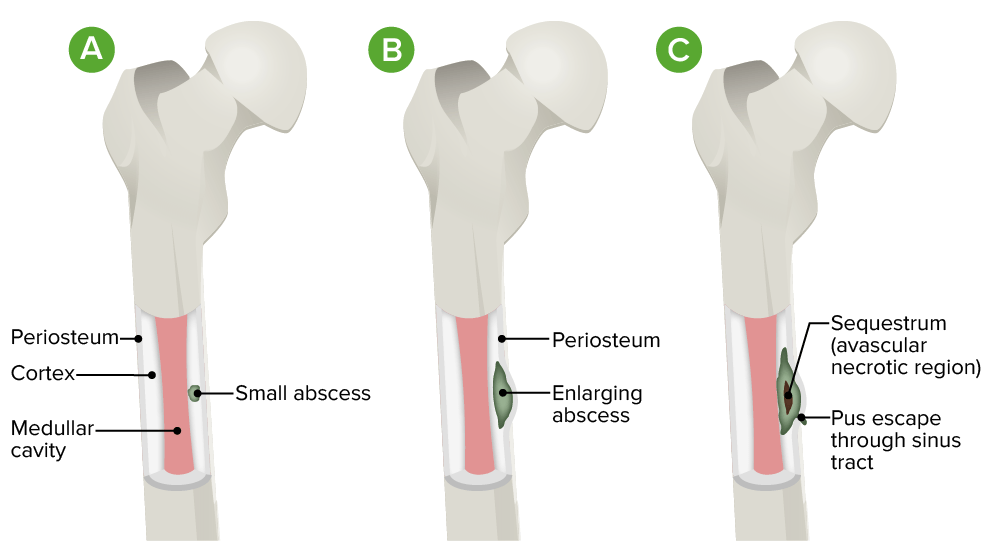
  • Dado que el hueso es generalmente resistente a la infección, suele ser necesario lo siguiente:
    • Un gran inóculo de organismos
    • Daño óseo
    • Material extraño
  • La patogénesis es poco conocida, pero parece estar afectada por varios factores:
    • Estado inmunitario del huésped
    • Enfermedad subyacente
    • Virulencia de los LOS Neisseria organismos:
      • Adhesión
      • Mecanismos de defensa
      • Actividad proteolítica
    • Vascularidad y localización del hueso (e.g., la metáfisis del hueso se ve VE Ventilation: Mechanics of Breathing comúnmente afectada en EN Erythema nodosum is an immune-mediated panniculitis (inflammation of the subcutaneous fat) caused by a type IV (delayed-type) hypersensitivity reaction. It commonly manifests in young women as tender, erythematous nodules on the shins. Erythema Nodosum la diseminación hematógena debido al AL Amyloidosis rico suministro vascular de las placas de crecimiento)
  • Evolución de la infección:
    • La osteomielitis aguda evoluciona en EN Erythema nodosum is an immune-mediated panniculitis (inflammation of the subcutaneous fat) caused by a type IV (delayed-type) hypersensitivity reaction. It commonly manifests in young women as tender, erythematous nodules on the shins. Erythema Nodosum días o semanas.
    • La osteomielitis crónica persiste durante meses a años y provoca:
      • Isquemia y necrosis Necrosis The death of cells in an organ or tissue due to disease, injury or failure of the blood supply. Ischemic Cell Damage ósea
      • Pérdida de hueso
      • Formación de tracto sinusal
Pathophysiology of osteomyelitis

Fisiopatología de la osteomielitis:
A. La infección inicial se localiza en la región cortical.
B. Hay progresión hacia el espacio subperióstico con levantamiento del periostio.
C. Se produce una infección difusa con secuestro (región necrótica avascular) y formación de tracto sinusal.

Imagen por Lecturio.

Presentación Clínica

Osteomielitis aguda

  • El inicio puede ser gradual.
  • Signos y síntomas:
    • Fiebre y escalofríos
    • Edema Edema Edema is a condition in which excess serous fluid accumulates in the body cavity or interstitial space of connective tissues. Edema is a symptom observed in several medical conditions. It can be categorized into 2 types, namely, peripheral (in the extremities) and internal (in an organ or body cavity). Edema localizado
    • Temperatura aumentada
    • Eritema
    • Dolor Dolor Inflammation sordo

Osteomielitis crónica

  • Similar a la osteomielitis aguda
  • Dolor Dolor Inflammation óseo intermitente
  • Tracto sinusal que drena (patognomónico)
  • La fiebre y los LOS Neisseria escalofríos son menos frecuentes.

Examen físico

  • Comprobar si hay sensibilidad a la palpación del área sobre el hueso.
  • Evaluar si hay un foco de infección:
    • Cicatrización de heridas
    • Alta probabilidad de osteomielitis si es posible tocar el hueso a través de una úlcera crónica con una herramienta estéril
  • Comprobar la función sensorial.
  • Evaluar si hay pulsos disminuidos.

Subtipos

Osteomielitis vertebral:

  • Subtipo más común de osteomielitis hematógena en EN Erythema nodosum is an immune-mediated panniculitis (inflammation of the subcutaneous fat) caused by a type IV (delayed-type) hypersensitivity reaction. It commonly manifests in young women as tender, erythematous nodules on the shins. Erythema Nodosum adultos
  • La columna lumbar es la más comúnmente afectada.
  • Progresión lenta de los LOS Neisseria síntomas:
    • Dolor Dolor Inflammation de espalda localizado:
      • Irradiación hacia las piernas, el abdomen o la ingle
      • Empeora con la actividad y por la noche
    • Déficits motores y sensoriales con la progresión severa

Osteomielitis esternoclavicular y pélvica:

  • Más frecuente en EN Erythema nodosum is an immune-mediated panniculitis (inflammation of the subcutaneous fat) caused by a type IV (delayed-type) hypersensitivity reaction. It commonly manifests in young women as tender, erythematous nodules on the shins. Erythema Nodosum usuarios de drogas intravenosas
  • Articulación esternoclavicular:
    • Edema Edema Edema is a condition in which excess serous fluid accumulates in the body cavity or interstitial space of connective tissues. Edema is a symptom observed in several medical conditions. It can be categorized into 2 types, namely, peripheral (in the extremities) and internal (in an organ or body cavity). Edema, dolor Dolor Inflammation y sensibilidad de la pared torácica anterior
    • Puede imitar un absceso de tejido blando
  • Osteomielitis pélvica:
    • Cambios en EN Erythema nodosum is an immune-mediated panniculitis (inflammation of the subcutaneous fat) caused by a type IV (delayed-type) hypersensitivity reaction. It commonly manifests in young women as tender, erythematous nodules on the shins. Erythema Nodosum la marcha o incapacidad para soportar el peso
    • Dolor Dolor Inflammation de cadera o glúteos

Osteomielitis de los LOS Neisseria huesos largos:
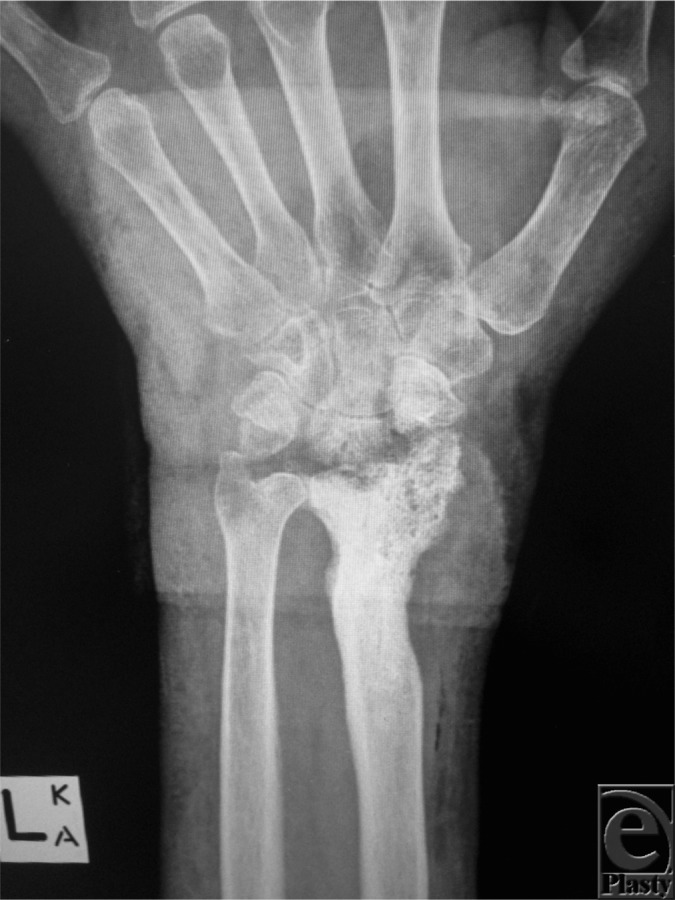
  • El subtipo menos común en EN Erythema nodosum is an immune-mediated panniculitis (inflammation of the subcutaneous fat) caused by a type IV (delayed-type) hypersensitivity reaction. It commonly manifests in young women as tender, erythematous nodules on the shins. Erythema Nodosum adultos, pero el más común en EN Erythema nodosum is an immune-mediated panniculitis (inflammation of the subcutaneous fat) caused by a type IV (delayed-type) hypersensitivity reaction. It commonly manifests in young women as tender, erythematous nodules on the shins. Erythema Nodosum niños
  • Puede presentarse de forma similar a la artritis séptica
  • Puede ser difícil soportar el peso corporal sobre los LOS Neisseria huesos largos afectados.

Diagnóstico

Evaluación de laboratorio

  • Las siguientes pruebas apoyan el diagnóstico de osteomielitis:
    • ↑ Conteo de leucocitos
    • ↑ Velocidad de eritrosedimentación (VES)
    • PCR PCR Polymerase chain reaction (PCR) is a technique that amplifies DNA fragments exponentially for analysis. The process is highly specific, allowing for the targeting of specific genomic sequences, even with minuscule sample amounts. The PCR cycles multiple times through 3 phases: denaturation of the template DNA, annealing of a specific primer to the individual DNA strands, and synthesis/elongation of new DNA molecules. Polymerase Chain Reaction (PCR):
      • Se correlaciona con la respuesta clínica al AL Amyloidosis tratamiento
      • Puede utilizarse para el seguimiento durante el tratamiento
  • Los LOS Neisseria siguientes cultivos proporcionan datos para la identificación y establecer la sensibilidad del organismo causante:
    • Hemocultivos:
      • Positivo en EN Erythema nodosum is an immune-mediated panniculitis (inflammation of the subcutaneous fat) caused by a type IV (delayed-type) hypersensitivity reaction. It commonly manifests in young women as tender, erythematous nodules on the shins. Erythema Nodosum el 50% de los LOS Neisseria casos
      • Obtener antes de iniciar los LOS Neisseria antibióticos, si es posible.
    • Cultivo de tejidos:
      • También debe obtenerse antes del inicio de los LOS Neisseria antibióticos, si es posible
      • La biopsia ósea es la mejor manera de identificar el organismo causante.
      • Los LOS Neisseria cultivos de heridas o abscesos no son fiables.

Imagenología

  • Radiografía:
    • Modalidad de imagenología de 1ra línea
    • Puede no mostrar cambios en EN Erythema nodosum is an immune-mediated panniculitis (inflammation of the subcutaneous fat) caused by a type IV (delayed-type) hypersensitivity reaction. It commonly manifests in young women as tender, erythematous nodules on the shins. Erythema Nodosum las primeras 2 semanas de la enfermedad
    • Una radiografía normal no descarta una osteomielitis.
    • Descarta metástasis o fracturas
    • Hallazgos:
      • Edema Edema Edema is a condition in which excess serous fluid accumulates in the body cavity or interstitial space of connective tissues. Edema is a symptom observed in several medical conditions. It can be categorized into 2 types, namely, peripheral (in the extremities) and internal (in an organ or body cavity). Edema de los LOS Neisseria tejidos blandos
      • Osteopenia Osteopenia Osteoporosis regional
      • Reacción perióstica
      • Engrosamiento cortical
      • Esclerosis periférica
      • Destrucción ósea
  • RM:
    • Modalidad más sensible y específica para la osteomielitis
    • Detecta la infección a los LOS Neisseria 3–5 días de su aparición
    • Su uso está limitado si hay materiales quirúrgicos.
    • Hallazgos:
      • El edema Edema Edema is a condition in which excess serous fluid accumulates in the body cavity or interstitial space of connective tissues. Edema is a symptom observed in several medical conditions. It can be categorized into 2 types, namely, peripheral (in the extremities) and internal (in an organ or body cavity). Edema de la médula ósea es el hallazgo más temprano.
      • Destrucción cortical
      • Inflamación de tejidos blandos
    • El realce del contraste ayuda a distinguir los LOS Neisseria márgenes del absceso y el periostio adyacente o la afectación de los LOS Neisseria tejidos blandos.
  • Gammagrafía ósea trifásica:
    • Utiliza un trazador radionúclido que se acumula en EN Erythema nodosum is an immune-mediated panniculitis (inflammation of the subcutaneous fat) caused by a type IV (delayed-type) hypersensitivity reaction. It commonly manifests in young women as tender, erythematous nodules on the shins. Erythema Nodosum las zonas de actividad de los LOS Neisseria osteoblastos
    • 3 fases:
      • Flujo sanguíneo
      • Acumulación de sangre
      • Ósea
    • En EN Erythema nodosum is an immune-mediated panniculitis (inflammation of the subcutaneous fat) caused by a type IV (delayed-type) hypersensitivity reaction. It commonly manifests in young women as tender, erythematous nodules on the shins. Erythema Nodosum la osteomielitis hay captación significativa en EN Erythema nodosum is an immune-mediated panniculitis (inflammation of the subcutaneous fat) caused by a type IV (delayed-type) hypersensitivity reaction. It commonly manifests in young women as tender, erythematous nodules on the shins. Erythema Nodosum las 3 fases
  • Gammagrafía con leucocitos marcados:
    • Se extrae sangre del paciente y se marcan leucocitos autólogos con un trazador radionúclido.
    • A continuación, se inyectan las células marcadas en EN Erythema nodosum is an immune-mediated panniculitis (inflammation of the subcutaneous fat) caused by a type IV (delayed-type) hypersensitivity reaction. It commonly manifests in young women as tender, erythematous nodules on the shins. Erythema Nodosum el paciente y se realiza la exploración.
    • Los LOS Neisseria leucocitos marcados se acumulan en EN Erythema nodosum is an immune-mediated panniculitis (inflammation of the subcutaneous fat) caused by a type IV (delayed-type) hypersensitivity reaction. It commonly manifests in young women as tender, erythematous nodules on the shins. Erythema Nodosum el lugar de la infección.
    • Se utiliza más en EN Erythema nodosum is an immune-mediated panniculitis (inflammation of the subcutaneous fat) caused by a type IV (delayed-type) hypersensitivity reaction. It commonly manifests in young women as tender, erythematous nodules on the shins. Erythema Nodosum afecciones distales de las extremidades
    • Puede ser falsamente positivo si hay otras afecciones inflamatorias en EN Erythema nodosum is an immune-mediated panniculitis (inflammation of the subcutaneous fat) caused by a type IV (delayed-type) hypersensitivity reaction. It commonly manifests in young women as tender, erythematous nodules on the shins. Erythema Nodosum la zona (e.g., fractura)

Tratamiento

Terapia con antibióticos

  • Opciones:
    • Terapia empírica inicial:
      • Vancomicina
      • Cefalosporina de 3ra o 4ta generación
    • Si en EN Erythema nodosum is an immune-mediated panniculitis (inflammation of the subcutaneous fat) caused by a type IV (delayed-type) hypersensitivity reaction. It commonly manifests in young women as tender, erythematous nodules on the shins. Erythema Nodosum los LOS Neisseria cultivos crece Staphylococcus aureus Staphylococcus aureus Potentially pathogenic bacteria found in nasal membranes, skin, hair follicles, and perineum of warm-blooded animals. They may cause a wide range of infections and intoxications. Brain Abscess sensible a la meticilina (MSSA, por sus siglas en EN Erythema nodosum is an immune-mediated panniculitis (inflammation of the subcutaneous fat) caused by a type IV (delayed-type) hypersensitivity reaction. It commonly manifests in young women as tender, erythematous nodules on the shins. Erythema Nodosum inglés):
      • Cefalosporinas de 1ra generación
      • Nafcilina u oxacilina
    • Cobertura para el Staphylococcus aureus Staphylococcus aureus Potentially pathogenic bacteria found in nasal membranes, skin, hair follicles, and perineum of warm-blooded animals. They may cause a wide range of infections and intoxications. Brain Abscess resistente a la meticilina ( MRSA MRSA A strain of Staphylococcus aureus that is non-susceptible to the action of methicillin. The mechanism of resistance usually involves modification of normal or the presence of acquired penicillin binding proteins. Staphylococcus, por sus siglas en EN Erythema nodosum is an immune-mediated panniculitis (inflammation of the subcutaneous fat) caused by a type IV (delayed-type) hypersensitivity reaction. It commonly manifests in young women as tender, erythematous nodules on the shins. Erythema Nodosum inglés):
      • Clindamicina
      • Vancomicina
      • Daptomicina
      • Linezolida
  • Suele ser suficiente en EN Erythema nodosum is an immune-mediated panniculitis (inflammation of the subcutaneous fat) caused by a type IV (delayed-type) hypersensitivity reaction. It commonly manifests in young women as tender, erythematous nodules on the shins. Erythema Nodosum determinados pacientes con:
    • Enfermedad no complicada, especialmente en EN Erythema nodosum is an immune-mediated panniculitis (inflammation of the subcutaneous fat) caused by a type IV (delayed-type) hypersensitivity reaction. It commonly manifests in young women as tender, erythematous nodules on the shins. Erythema Nodosum niños
    • Osteomielitis en EN Erythema nodosum is an immune-mediated panniculitis (inflammation of the subcutaneous fat) caused by a type IV (delayed-type) hypersensitivity reaction. It commonly manifests in young women as tender, erythematous nodules on the shins. Erythema Nodosum un pie diabético
    • No hay material de osteosíntesis ni prótesis subyacentes

Desbridamiento quirúrgico

  • Suele ser necesario si la osteomielitis está asociada a:
    • Herida necrótica y purulenta
    • Colecciones de fluidos infectados
    • Hueso lesionado o necrótico
    • Material de osteosíntesis/prótesis
  • Eliminación del hueso necrótico y enfermo:
    • Se debe obtener un cultivo de la herida y del hueso durante el desbridamiento para especificar la terapia antibiótica.
    • Puede permitir la colocación de antimicrobianos locales
  • A menudo es necesario retirar los LOS Neisseria elementos de fijación.

Duración del tratamiento

  • La duración del tratamiento varía mucho y está determinada por:
    • Presencia o ausencia de material de osteosíntesis
    • Opciones de desbridamiento y posibilidad de eliminar todo el hueso infectado
  • La mayoría de los LOS Neisseria regímenes de tratamiento tienen una duración promedio de 6 semanas.
  • La terapia oral supresora a largo plazo debe ser considerada para:
    • Individuos con material de osteosíntesis retenido
    • Hueso/tejido necrótico que no se puede desbridar
  • La duración puede guiarse por los LOS Neisseria niveles de PCR PCR Polymerase chain reaction (PCR) is a technique that amplifies DNA fragments exponentially for analysis. The process is highly specific, allowing for the targeting of specific genomic sequences, even with minuscule sample amounts. The PCR cycles multiple times through 3 phases: denaturation of the template DNA, annealing of a specific primer to the individual DNA strands, and synthesis/elongation of new DNA molecules. Polymerase Chain Reaction (PCR), pero a menudo se determina clínicamente por la resolución de los LOS Neisseria síntomas.

Diagnóstico Diferencial

  • Leucemia: proliferación no regulada de leucocitos que provoca el aumento de tamaño de los LOS Neisseria ganglios linfáticos y del bazo, así como insuficiencia de la médula ósea y anemia Anemia Anemia is a condition in which individuals have low Hb levels, which can arise from various causes. Anemia is accompanied by a reduced number of RBCs and may manifest with fatigue, shortness of breath, pallor, and weakness. Subtypes are classified by the size of RBCs, chronicity, and etiology. Anemia: Overview and Types. La osteomielitis y la leucemia pueden presentarse con síntomas constitucionales similares, como sudores nocturnos, fiebre y dolor Dolor Inflammation de huesos (especialmente en EN Erythema nodosum is an immune-mediated panniculitis (inflammation of the subcutaneous fat) caused by a type IV (delayed-type) hypersensitivity reaction. It commonly manifests in young women as tender, erythematous nodules on the shins. Erythema Nodosum los LOS Neisseria niños). La imagenología transversal, el frotis de sangre periférica y el hemograma con un marcado aumento de los LOS Neisseria leucocitos proporcionarán el diagnóstico. El tratamiento incluye la quimioterapia.
  • Cáncer metastásico: los LOS Neisseria cánceres que hacen metástasis en EN Erythema nodosum is an immune-mediated panniculitis (inflammation of the subcutaneous fat) caused by a type IV (delayed-type) hypersensitivity reaction. It commonly manifests in young women as tender, erythematous nodules on the shins. Erythema Nodosum los LOS Neisseria huesos son los LOS Neisseria de próstata, mama, riñón, tiroides y pulmón. La presentación puede ser similar a la osteomielitis, con dolor Dolor Inflammation en EN Erythema nodosum is an immune-mediated panniculitis (inflammation of the subcutaneous fat) caused by a type IV (delayed-type) hypersensitivity reaction. It commonly manifests in young women as tender, erythematous nodules on the shins. Erythema Nodosum los LOS Neisseria huesos largos o en EN Erythema nodosum is an immune-mediated panniculitis (inflammation of the subcutaneous fat) caused by a type IV (delayed-type) hypersensitivity reaction. It commonly manifests in young women as tender, erythematous nodules on the shins. Erythema Nodosum la espalda. Sin embargo, rara vez se observan síntomas constitucionales. En EN Erythema nodosum is an immune-mediated panniculitis (inflammation of the subcutaneous fat) caused by a type IV (delayed-type) hypersensitivity reaction. It commonly manifests in young women as tender, erythematous nodules on the shins. Erythema Nodosum la imagenología, las metástasis del cáncer de riñón, de tiroides y de pulmón pueden parecer lesiones líticas. La biopsia es la forma más definitiva de distinguir la metástasis de la osteomielitis. El tratamiento depende del tipo de cáncer primario.
  • Artropatía de Charcot: resulta de la combinación de consecuencias mecánicas y vasculares de la neuropatía periférica diabética. Este proceso desencadena una respuesta inflamatoria local que provoca dolor Dolor Inflammation, edema Edema Edema is a condition in which excess serous fluid accumulates in the body cavity or interstitial space of connective tissues. Edema is a symptom observed in several medical conditions. It can be categorized into 2 types, namely, peripheral (in the extremities) and internal (in an organ or body cavity). Edema y eritema de la articulación afectada. Los LOS Neisseria pacientes también pueden desarrollar heridas en EN Erythema nodosum is an immune-mediated panniculitis (inflammation of the subcutaneous fat) caused by a type IV (delayed-type) hypersensitivity reaction. It commonly manifests in young women as tender, erythematous nodules on the shins. Erythema Nodosum la piel a causa de su neuropatía y evolucionar hacia una osteomielitis secundaria. Las radiografías confirmarán el diagnóstico. El tratamiento incluye la estabilización de la articulación.
  • Osteomielitis crónica multifocal Multifocal Retinoblastoma recurrente: un trastorno inflamatorio estéril que se observa en EN Erythema nodosum is an immune-mediated panniculitis (inflammation of the subcutaneous fat) caused by a type IV (delayed-type) hypersensitivity reaction. It commonly manifests in young women as tender, erythematous nodules on the shins. Erythema Nodosum los LOS Neisseria niños y que puede causar daños óseos si no es tratado. La patología es poco conocida, pero se presume que está relacionada con la disfunción de los LOS Neisseria osteoclastos. Los LOS Neisseria niños pueden presentar dolor Dolor Inflammation episódico o crónico en EN Erythema nodosum is an immune-mediated panniculitis (inflammation of the subcutaneous fat) caused by a type IV (delayed-type) hypersensitivity reaction. It commonly manifests in young women as tender, erythematous nodules on the shins. Erythema Nodosum 1 o varias zonas. El diagnóstico se basa en EN Erythema nodosum is an immune-mediated panniculitis (inflammation of the subcutaneous fat) caused by a type IV (delayed-type) hypersensitivity reaction. It commonly manifests in young women as tender, erythematous nodules on the shins. Erythema Nodosum la imagenología. Los LOS Neisseria valores de laboratorio serán normales, a diferencia de la osteomielitis. El tratamiento primario consiste en EN Erythema nodosum is an immune-mediated panniculitis (inflammation of the subcutaneous fat) caused by a type IV (delayed-type) hypersensitivity reaction. It commonly manifests in young women as tender, erythematous nodules on the shins. Erythema Nodosum una terapia con AINE. La inmunosupresión puede ser necesaria si el tratamiento primario falla.
  • Artritis séptica: infección de la articulación que puede ser causada por bacterias u otros microorganismos. Los LOS Neisseria pacientes se presentan con una articulación agudamente edematizada y caliente, con un rango de movimiento limitado. Los LOS Neisseria síntomas constitucionales están presentes en EN Erythema nodosum is an immune-mediated panniculitis (inflammation of the subcutaneous fat) caused by a type IV (delayed-type) hypersensitivity reaction. It commonly manifests in young women as tender, erythematous nodules on the shins. Erythema Nodosum algunos pacientes. El diagnóstico se realiza mediante el análisis y el cultivo del líquido sinovial. A diferencia de la osteomielitis, rara vez hay cambios óseos en EN Erythema nodosum is an immune-mediated panniculitis (inflammation of the subcutaneous fat) caused by a type IV (delayed-type) hypersensitivity reaction. It commonly manifests in young women as tender, erythematous nodules on the shins. Erythema Nodosum la imagenología. El tratamiento implica el drenaje, el desbridamiento y la terapia antibiótica.

Referencias

  1. Momodu, I. I., Savaliya, V. (2023). Osteomyelitis. StatPearls. Retrieved May 13, 2025, from https://www.ncbi.nlm.nih.gov/books/NBK532250/
  2. Lalani, T. (2024, November 19). Osteomyelitis in the absence of hardware: Approach to diagnosis in adults. In S. Nelson (Ed.), UpToDate. Wolters Kluwer. Retrieved May 13, 2025, from https://www.uptodate.com/contents/osteomyelitis-in-the-absence-of-hardware-approach-to-diagnosis-in-adults
  3. Sopirala, M. M. (2022). Pathogenesis of osteomyelitis. In S. Nelson (Ed.), UpToDate. Wolters Kluwer. Retrieved May 13, 2025, from https://www.uptodate.com/contents/pathogenesis-of-osteomyelitis
  4. Tande, A. J. (2024). Osteomyelitis in the absence of hardware: Approach to treatment in adults. In S. Nelson (Ed.), UpToDate. Wolters Kluwer. Retrieved May 13, 2025, from https://www.uptodate.com/contents/osteomyelitis-in-the-absence-of-hardware-approach-to-treatment-in-adults
  5. Spritzer, C. E. (2025). Imaging studies for osteomyelitis. In S. Nelson (Ed.), UpToDate. Wolters Kluwer. Retrieved May 13, 2025, from https://www.uptodate.com/contents/imaging-studies-for-osteomyelitis
  6. Martin, E. A. (2025). Diabetic neuroarthropathy. In S. M. Helfgott & D. M. Nathan (Eds.), UpToDate. Wolters Kluwer. Retrieved May 13, 2025, from https://www.uptodate.com/contents/diabetic-neuroarthropathy
  7. Schmitt, S. (2024). Osteomyelitis. StatPearls. Retrieved March 13, 2025, from https://www.msdmanuals.com/professional/musculoskeletal-and-connective-tissue-disorders/infections-of-joints-and-bones/osteomyelitis
  8. Kishner, S., Hart, E. K., Nixon, G. C., and Laborde, J. M. (2022). Osteomyelitis. In Poduval, M. (Ed.), Medscape. Retrieved March 13, 2025, from https://emedicine.medscape.com/article/1348767-overview

¡Crea tu cuenta gratis o inicia una sesión para seguir leyendo!

Regístrate ahora y obtén acceso gratuito a Lecturio con páginas de concepto, videos médicos y cuestionarios para tu educación médica.

User Reviews

Que tengas una sesión de estudio alegre y navideña 🎁 Ahorra 50% en todos los planes >>

Details