Domina Conceptos Médicos

Estudia para la escuela de medicina y tus examenes con Lecturio.

Mieloma Múltiple

El mieloma múltiple ( MM MM Multiple myeloma (MM) is a malignant condition of plasma cells (activated B lymphocytes) primarily seen in the elderly. Monoclonal proliferation of plasma cells results in cytokine-driven osteoclastic activity and excessive secretion of IgG antibodies. Multiple Myeloma) es una condición maligna de las células plasmáticas (linfocitos B activados) que se observa principalmente en EN Erythema nodosum is an immune-mediated panniculitis (inflammation of the subcutaneous fat) caused by a type IV (delayed-type) hypersensitivity reaction. It commonly manifests in young women as tender, erythematous nodules on the shins. Erythema Nodosum los LOS Neisseria ancianos. La proliferación monoclonal de células plasmáticas da como resultado una actividad osteoclástica impulsada por citoquinas y una secreción excesiva de anticuerpos IgG IgG The major immunoglobulin isotype class in normal human serum. There are several isotype subclasses of igg, for example, igg1, igg2a, and igg2b. Hypersensitivity Pneumonitis. La actividad osteoclástica da como resultado reabsorción ósea, dolor Dolor Inflammation óseo, fracturas patológicas y alteraciones metabólicas. La secreción excesiva de anticuerpos da como resultado proteinuria Proteinuria The presence of proteins in the urine, an indicator of kidney diseases. Nephrotic Syndrome in Children y daño renal asociado, así como producción y depósito tisular de fibrillas de amiloide. Las alteraciones metabólicas combinadas con el depósito de amiloide tisular provocan daños en EN Erythema nodosum is an immune-mediated panniculitis (inflammation of the subcutaneous fat) caused by a type IV (delayed-type) hypersensitivity reaction. It commonly manifests in young women as tender, erythematous nodules on the shins. Erythema Nodosum los LOS Neisseria órganos diana. El diagnóstico se establece mediante electroforesis en EN Erythema nodosum is an immune-mediated panniculitis (inflammation of the subcutaneous fat) caused by a type IV (delayed-type) hypersensitivity reaction. It commonly manifests in young women as tender, erythematous nodules on the shins. Erythema Nodosum plasma Plasma The residual portion of blood that is left after removal of blood cells by centrifugation without prior blood coagulation. Transfusion Products y biopsia de médula ósea. Hay tratamientos disponibles para retrasar la progresión de la enfermedad; sin embargo, no existe una cura para el MM MM Multiple myeloma (MM) is a malignant condition of plasma cells (activated B lymphocytes) primarily seen in the elderly. Monoclonal proliferation of plasma cells results in cytokine-driven osteoclastic activity and excessive secretion of IgG antibodies. Multiple Myeloma. La mediana de supervivencia es de aproximadamente 3 años.

Last updated: Dec 15, 2025

Editorial responsibility: Stanley Oiseth, Lindsay Jones, Evelin Maza

Descripción General

Definición

El mieloma múltiple ( MM MM Multiple myeloma (MM) is a malignant condition of plasma cells (activated B lymphocytes) primarily seen in the elderly. Monoclonal proliferation of plasma cells results in cytokine-driven osteoclastic activity and excessive secretion of IgG antibodies. Multiple Myeloma) es una neoplasia maligna de la médula ósea que surge de las células plasmáticas monoclonales.
Epidemiología

  • El MM MM Multiple myeloma (MM) is a malignant condition of plasma cells (activated B lymphocytes) primarily seen in the elderly. Monoclonal proliferation of plasma cells results in cytokine-driven osteoclastic activity and excessive secretion of IgG antibodies. Multiple Myeloma representa el 10% de todas las neoplasias malignas hematológicas.
  • La incidencia es de 3–8 por 100 000 (según la raza).
  • La tasa más alta está en EN Erythema nodosum is an immune-mediated panniculitis (inflammation of the subcutaneous fat) caused by a type IV (delayed-type) hypersensitivity reaction. It commonly manifests in young women as tender, erythematous nodules on the shins. Erythema Nodosum los LOS Neisseria afroamericanos.
  • Hombres > mujeres (2:1)
  • Una enfermedad de los LOS Neisseria ancianos: la mediana de edad es de 65–70 años (depende de la raza).

Etiología

  • Proliferación monoclonal de células plasmáticas que producen anticuerpos monoclonales
  • La gammapatía monoclonal de significado incierto se considera un precursor.
  • Se desconoce el mecanismo causal, pero los LOS Neisseria mecanismos propuestos y/o contribuyentes incluyen:
    • Inflamación crónica:
      • Infección crónica ( hepatitis B Hepatitis B Hepatitis B virus (HBV) is a partially double-stranded DNA virus, which belongs to the Orthohepadnavirus genus and the Hepadnaviridae family. Most individuals with acute HBV infection are asymptomatic or have mild, self-limiting symptoms. Chronic infection can be asymptomatic or create hepatic inflammation, leading to liver cirrhosis and hepatocellular carcinoma (HCC). Hepatitis B Virus, hepatitis C Hepatitis C Hepatitis C is an infection of the liver caused by the hepatitis C virus (HCV). The infection can be transmitted through infectious blood or body fluids and may be transmitted during childbirth or through IV drug use or sexual intercourse. Hepatitis C virus can cause both acute and chronic hepatitis, ranging from a mild to a serious, lifelong illness including liver cirrhosis and hepatocellular carcinoma (HCC). Hepatitis C Virus)
      • Enfermedad autoinmune (artritis reumatoide, síndrome de Sjögren)
    • Exposición ambiental/ocupacional:
      • Herbicidas e insecticidas
      • Benceno y otros disolventes orgánicos
      • Radiación
    • Causas genéticas:
      • No hay pruebas sólidas que sugieran un patrón hereditario
      • Predominan las deleciones 13q14, las deleciones 17p13 y las anomalías 11q
      • La translocación más común es t(11;14)(q13;q32).
      • Las mutaciones C-myc c-MYC Basic helix-loop-helix transcription factors encoded by the c-myc genes. They are normally involved in nucleic acid metabolism and in mediating the cellular response to growth factors. Elevated and deregulated (constitutive) expression of c-myc proteins can cause tumorigenesis. Non-Hodgkin Lymphomas, NRAS y KRAS se han asociado de manera inconsistente con la enfermedad.

Fisiopatología

Patogenia

  • Comúnmente precedido por la gammapatía monoclonal de significado incierto, progresa a MM MM Multiple myeloma (MM) is a malignant condition of plasma cells (activated B lymphocytes) primarily seen in the elderly. Monoclonal proliferation of plasma cells results in cytokine-driven osteoclastic activity and excessive secretion of IgG antibodies. Multiple Myeloma latente, luego progresa a MM MM Multiple myeloma (MM) is a malignant condition of plasma cells (activated B lymphocytes) primarily seen in the elderly. Monoclonal proliferation of plasma cells results in cytokine-driven osteoclastic activity and excessive secretion of IgG antibodies. Multiple Myeloma per se
  • Aproximadamente el 1% de gammapatía monoclonal de significado incierto por año progresará a MM MM Multiple myeloma (MM) is a malignant condition of plasma cells (activated B lymphocytes) primarily seen in the elderly. Monoclonal proliferation of plasma cells results in cytokine-driven osteoclastic activity and excessive secretion of IgG antibodies. Multiple Myeloma.
  • Se desconoce el mecanismo exacto de progresión, pero probablemente se deba a mutaciones adicionales.
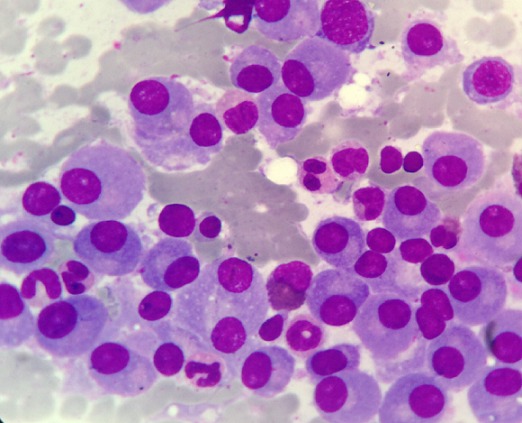
  • Las células tumorales muestran una morfología mixta:
    • Algunas parecen células plasmáticas maduras
    • Algunas parecen inmaduros (grandes, multinucleadas, de forma extraña)
    • Las células son positivas para CD138 y CD56.
  • La proliferación de células plasmáticas monoclonales está asociada con la producción de anticuerpos:
    • IgG IgG The major immunoglobulin isotype class in normal human serum. There are several isotype subclasses of igg, for example, igg1, igg2a, and igg2b. Hypersensitivity Pneumonitis > IgA IgA Represents 15-20% of the human serum immunoglobulins, mostly as the 4-chain polymer in humans or dimer in other mammals. Secretory iga is the main immunoglobulin in secretions. Immunoglobulins: Types and Functions > IgD IgD An immunoglobulin which accounts for less than 1% of plasma immunoglobulin. It is found on the membrane of many circulating B lymphocytes. Immunoglobulins: Types and Functions > IgM IgM A class of immunoglobulin bearing mu chains (immunoglobulin mu-chains). Igm can fix complement. The name comes from its high molecular weight and originally being called a macroglobulin. Immunoglobulins: Types and Functions
    • La proteína del mieloma (proteína M) es un anticuerpo monoclonal y se detecta en EN Erythema nodosum is an immune-mediated panniculitis (inflammation of the subcutaneous fat) caused by a type IV (delayed-type) hypersensitivity reaction. It commonly manifests in young women as tender, erythematous nodules on the shins. Erythema Nodosum > 95% de los LOS Neisseria casos:
      • 1 cadena pesada + 1 cadena ligera
      • O solo cadenas ligeras
  • Citoquinas:
    • Promover la proliferación y supervivencia de las células de mieloma
    • Secretadas por las propias células tumorales y las células del estroma de la médula ósea:
      • Factor de necrosis Necrosis The death of cells in an organ or tissue due to disease, injury or failure of the blood supply. Ischemic Cell Damage tumoral ( TNF TNF Tumor necrosis factor (TNF) is a major cytokine, released primarily by macrophages in response to stimuli. The presence of microbial products and dead cells and injury are among the stimulating factors. This protein belongs to the TNF superfamily, a group of ligands and receptors performing functions in inflammatory response, morphogenesis, and cell proliferation. Tumor Necrosis Factor (TNF))
      • Interleucina-1 (IL-1)
      • Interleucina-6 (IL-6)

Efectos fisiopatológicos

  • Lesiones óseas:
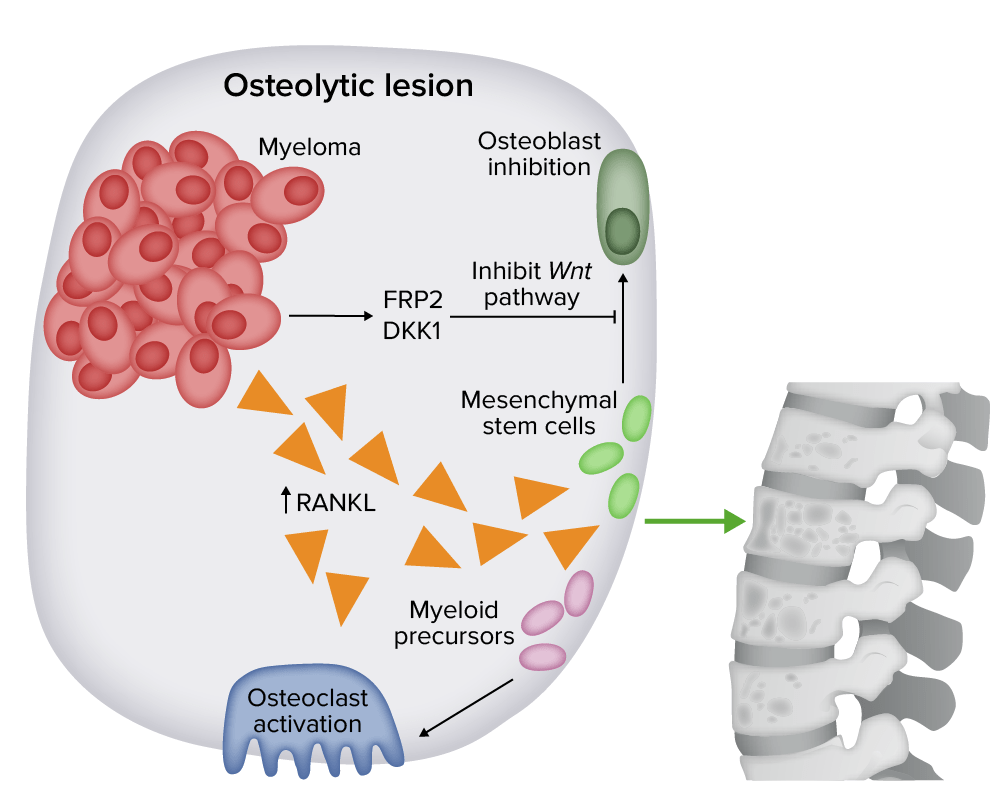
    • Las células de mieloma aumentan la expresión del activador del receptor Receptor Receptors are proteins located either on the surface of or within a cell that can bind to signaling molecules known as ligands (e.g., hormones) and cause some type of response within the cell. Receptors del ligando del factor nuclear kappa-B por las células del estroma de la médula ósea.
    • Receptor Receptor Receptors are proteins located either on the surface of or within a cell that can bind to signaling molecules known as ligands (e.g., hormones) and cause some type of response within the cell. Receptors del ligando del factor nuclear kappa-B estimula la actividad de los LOS Neisseria osteoclastos.
    • Las células tumorales también liberan moduladores de la vía Wnt, lo que provoca la inhibición de los LOS Neisseria osteoblastos.
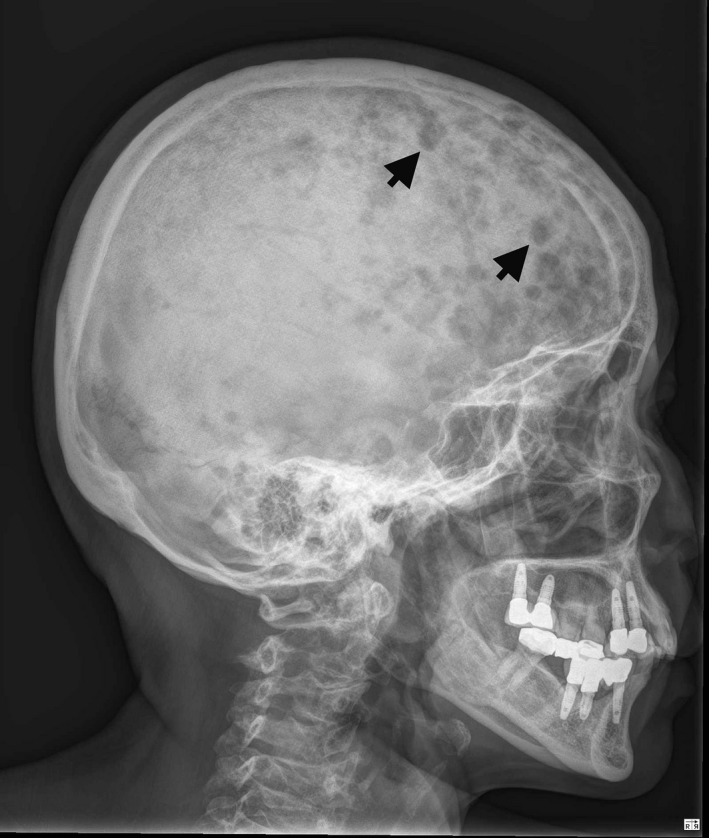
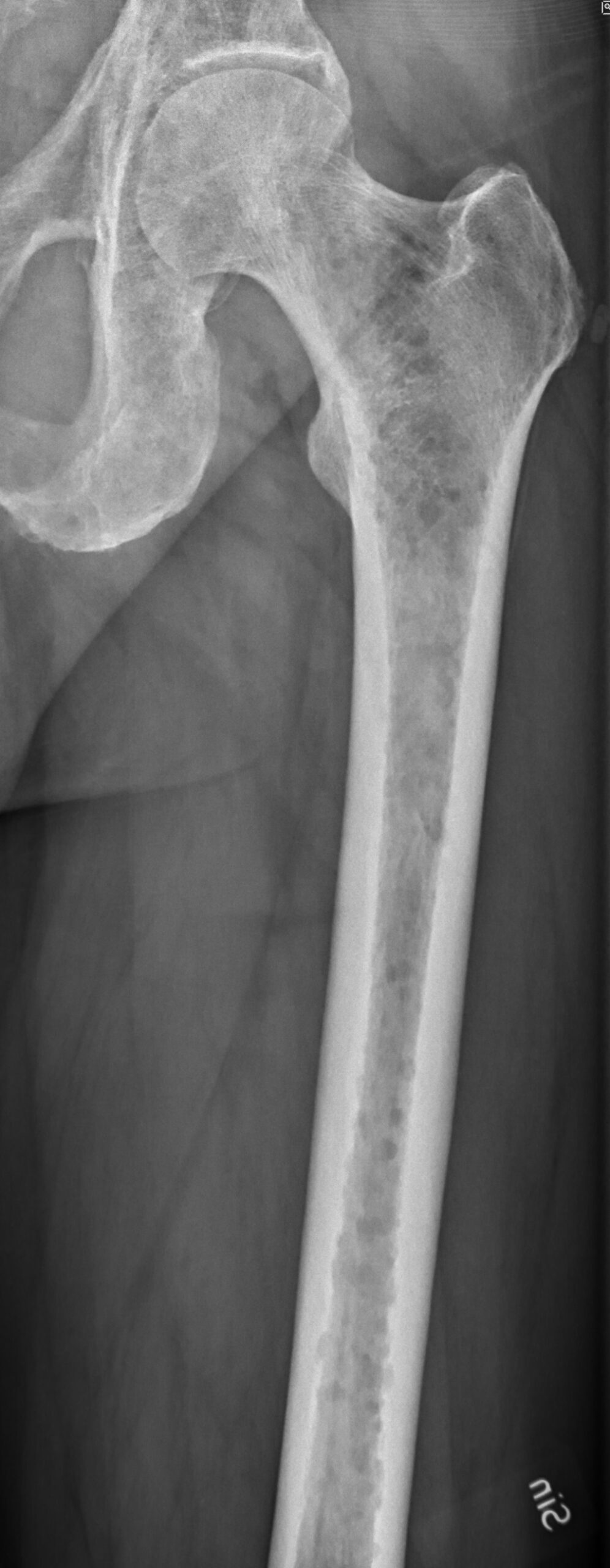
    • El resultado son lesiones óseas líticas e hipercalcemia.
  • Infiltración de médula ósea:
    • Las células tumorales se infiltran y reemplazan la médula ósea normal.
    • El resultado es la citopenia.
  • Producción de anticuerpos monoclonales:
    • Proteinuria Proteinuria The presence of proteins in the urine, an indicator of kidney diseases. Nephrotic Syndrome in Children de Bence Jones:
      • Las cadenas ligeras son excretadas por los LOS Neisseria riñones.
      • Las cadenas ligeras son tóxicas para el epitelio tubular renal.
      • El resultado es la disfunción renal.
    • Amiloidosis: del depósito de cadenas ligeras en EN Erythema nodosum is an immune-mediated panniculitis (inflammation of the subcutaneous fat) caused by a type IV (delayed-type) hypersensitivity reaction. It commonly manifests in young women as tender, erythematous nodules on the shins. Erythema Nodosum exceso en EN Erythema nodosum is an immune-mediated panniculitis (inflammation of the subcutaneous fat) caused by a type IV (delayed-type) hypersensitivity reaction. It commonly manifests in young women as tender, erythematous nodules on the shins. Erythema Nodosum los LOS Neisseria riñones y otros tejidos
  • Hiperviscosidad:
    • Asociado con proteínas M excesivas
    • Sedimentación en EN Erythema nodosum is an immune-mediated panniculitis (inflammation of the subcutaneous fat) caused by a type IV (delayed-type) hypersensitivity reaction. It commonly manifests in young women as tender, erythematous nodules on the shins. Erythema Nodosum lechos capilares
    • Principalmente en EN Erythema nodosum is an immune-mediated panniculitis (inflammation of the subcutaneous fat) caused by a type IV (delayed-type) hypersensitivity reaction. It commonly manifests in young women as tender, erythematous nodules on the shins. Erythema Nodosum subtipos de MM MM Multiple myeloma (MM) is a malignant condition of plasma cells (activated B lymphocytes) primarily seen in the elderly. Monoclonal proliferation of plasma cells results in cytokine-driven osteoclastic activity and excessive secretion of IgG antibodies. Multiple Myeloma asociados con IgA IgA Represents 15-20% of the human serum immunoglobulins, mostly as the 4-chain polymer in humans or dimer in other mammals. Secretory iga is the main immunoglobulin in secretions. Immunoglobulins: Types and Functions excesiva (aproximadamente el 7% de los LOS Neisseria pacientes)
Bone resorption in multiple myeloma

Resorción ósea en el mieloma múltiple: la liberación de citoquinas por parte de las células plasmáticas provoca la activación osteoclástica
FRP2: Receptor del péptido N-formil 2
DKK1: Dickkopf-1
RANKL: receptor activador del ligando del factor nuclear kappa-B

Imagen por Lecturio.

Presentación Clínica

  • Esquelético:
    • Dolor Dolor Inflammation/sensibilidad en EN Erythema nodosum is an immune-mediated panniculitis (inflammation of the subcutaneous fat) caused by a type IV (delayed-type) hypersensitivity reaction. It commonly manifests in young women as tender, erythematous nodules on the shins. Erythema Nodosum los LOS Neisseria huesos
    • Fracturas patológicas
    • Posible compresión medular con afectación vertebral
  • Síntomas constitucionales:
    • Pérdida de peso
    • Malestar/fatiga
    • Fiebre
  • Hipercalcemia:
    • Cálculos renales
    • Confusión
    • Estreñimiento
  • Anomalías hematológicas:
    • Anemia Anemia Anemia is a condition in which individuals have low Hb levels, which can arise from various causes. Anemia is accompanied by a reduced number of RBCs and may manifest with fatigue, shortness of breath, pallor, and weakness. Subtypes are classified by the size of RBCs, chronicity, and etiology. Anemia: Overview and Types
    • Trombocitopenia
    • Neutropenia Neutropenia Neutrophils are an important component of the immune system and play a significant role in the eradication of infections. Low numbers of circulating neutrophils, referred to as neutropenia, predispose the body to recurrent infections or sepsis, though patients can also be asymptomatic. Neutropenia: mayor susceptibilidad a las infecciones (infección del tracto urinario (ITU), neumonía)
    • Coagulopatía: la proteína M interactúa directamente con los LOS Neisseria factores de coagulación y previene la agregación.
  • Hiperviscosidad:
    • Hemorragia microvascular (púrpura, hemorragia retiniana, etc ETC The electron transport chain (ETC) sends electrons through a series of proteins, which generate an electrochemical proton gradient that produces energy in the form of adenosine triphosphate (ATP). Electron Transport Chain (ETC).)
    • Isquemia coronaria
    • Accidente cerebrovascular
    • Somnolencia, cefalea
  • Insuficiencia renal (multifactorial):
    • Depósito de amiloide
    • Cálculos renales
    • Hipercalcemia
    • Lesión tubular directa por carga de filtración (proteína, calcio, etc ETC The electron transport chain (ETC) sends electrons through a series of proteins, which generate an electrochemical proton gradient that produces energy in the form of adenosine triphosphate (ATP). Electron Transport Chain (ETC).)
  • Amiloidosis:
    • Subtipo amiloidosis: cadena ligera IgG IgG The major immunoglobulin isotype class in normal human serum. There are several isotype subclasses of igg, for example, igg1, igg2a, and igg2b. Hypersensitivity Pneumonitis lambda
    • Manifestaciones clínicas típicas de la amiloidosis:
      • Deposición muscular: signo de la hombrera
      • Deposición de la lengua: macroglosia
      • Hematomas: púrpura palpebral (ojos de mapache)
  • Neuropatía:
    • Neuropatías compresivas: síndrome del túnel carpiano en EN Erythema nodosum is an immune-mediated panniculitis (inflammation of the subcutaneous fat) caused by a type IV (delayed-type) hypersensitivity reaction. It commonly manifests in young women as tender, erythematous nodules on the shins. Erythema Nodosum el contexto de amiloidosis
    • Neuropatía periférica tradicional de “guante y media” por enfermedad de vasos pequeños (depósito de amiloide en EN Erythema nodosum is an immune-mediated panniculitis (inflammation of the subcutaneous fat) caused by a type IV (delayed-type) hypersensitivity reaction. It commonly manifests in young women as tender, erythematous nodules on the shins. Erythema Nodosum los LOS Neisseria nervios y vaso nervorum)
    • Déficits neurológicos dermatomales por compresión de la médula espinal

Mnemotécnica

Características de MM MM Multiple myeloma (MM) is a malignant condition of plasma cells (activated B lymphocytes) primarily seen in the elderly. Monoclonal proliferation of plasma cells results in cytokine-driven osteoclastic activity and excessive secretion of IgG antibodies. Multiple Myeloma: CRAB ( en EN Erythema nodosum is an immune-mediated panniculitis (inflammation of the subcutaneous fat) caused by a type IV (delayed-type) hypersensitivity reaction. It commonly manifests in young women as tender, erythematous nodules on the shins. Erythema Nodosum inglés)
  • C hyperCalcemia Hypercalcemia Hypercalcemia (serum calcium > 10.5 mg/dL) can result from various conditions, the majority of which are due to hyperparathyroidism and malignancy. Other causes include disorders leading to vitamin D elevation, granulomatous diseases, and the use of certain pharmacological agents. Symptoms vary depending on calcium levels and the onset of hypercalcemia. Hypercalcemia (hipercalcemia)
  • R – Renal anomaly (anomalía renal)
  • A Anemia Anemia Anemia is a condition in which individuals have low Hb levels, which can arise from various causes. Anemia is accompanied by a reduced number of RBCs and may manifest with fatigue, shortness of breath, pallor, and weakness. Subtypes are classified by the size of RBCs, chronicity, and etiology. Anemia: Overview and Types and amyloidosis Amyloidosis Amyloidosis is a disease caused by abnormal extracellular tissue deposition of fibrils composed of various misfolded low-molecular-weight protein subunits. These proteins are frequently byproducts of other pathological processes (e.g., multiple myeloma). Amyloidosis ( anemia Anemia Anemia is a condition in which individuals have low Hb levels, which can arise from various causes. Anemia is accompanied by a reduced number of RBCs and may manifest with fatigue, shortness of breath, pallor, and weakness. Subtypes are classified by the size of RBCs, chronicity, and etiology. Anemia: Overview and Types y amiloidosis)
  • B Bone fractures Bone fractures Breaks in bones. Bones: Remodeling and Healing (fracturas óseas)

Diagnóstico

Exámenes laboratoriales

  • Hemograma completo
    • Anemia Anemia Anemia is a condition in which individuals have low Hb levels, which can arise from various causes. Anemia is accompanied by a reduced number of RBCs and may manifest with fatigue, shortness of breath, pallor, and weakness. Subtypes are classified by the size of RBCs, chronicity, and etiology. Anemia: Overview and Types (normocítica)
    • Trombocitopenia
    • Leucopenia
  • Química sanguínea:
    • Ca CA Condylomata acuminata are a clinical manifestation of genital HPV infection. Condylomata acuminata are described as raised, pearly, flesh-colored, papular, cauliflower-like lesions seen in the anogenital region that may cause itching, pain, or bleeding. Condylomata Acuminata (Genital Warts)
    • LDH LDH Osteosarcoma
    • ↑ Velocidad de eritrosedimentación (VES)
    • ↑ Albúmina
    • ↑  𝛽2-microglobulina
    • ↑ Creatinina
  • Analisis de orina:
    • Proteína elevada
    • Mayor susceptibilidad a la ITU
  • Recolección de orina de 24 horas:
    • Proteinuria Proteinuria The presence of proteins in the urine, an indicator of kidney diseases. Nephrotic Syndrome in Children de Bence Jones (cadenas ligeras libres lambda en EN Erythema nodosum is an immune-mediated panniculitis (inflammation of the subcutaneous fat) caused by a type IV (delayed-type) hypersensitivity reaction. It commonly manifests in young women as tender, erythematous nodules on the shins. Erythema Nodosum la orina)
    • Depuración de creatinina (indica la gravedad de la insuficiencia renal)
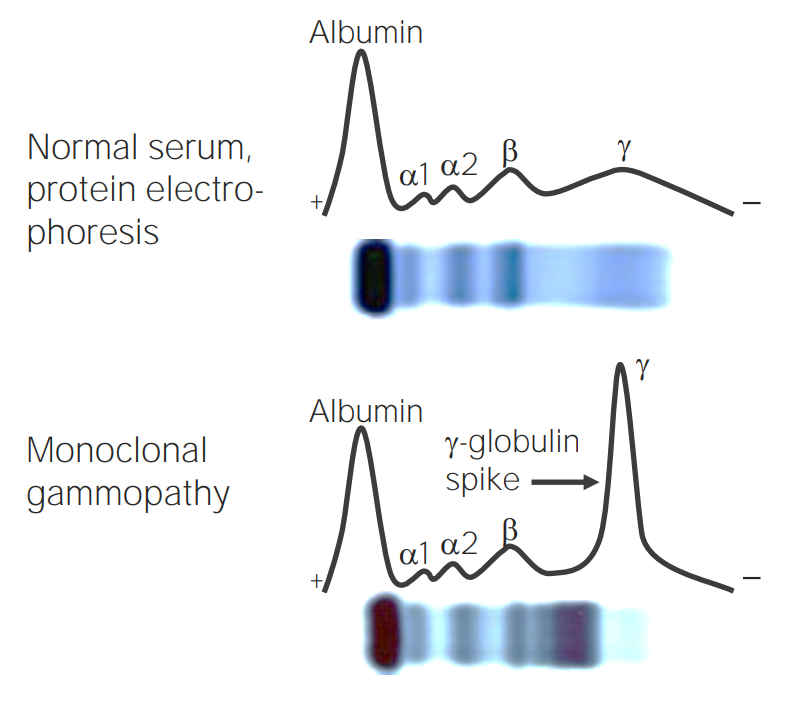
  • Electroforesis (prueba de tamizaje):
    • Pico M en EN Erythema nodosum is an immune-mediated panniculitis (inflammation of the subcutaneous fat) caused by a type IV (delayed-type) hypersensitivity reaction. It commonly manifests in young women as tender, erythematous nodules on the shins. Erythema Nodosum electroforesis de proteínas en EN Erythema nodosum is an immune-mediated panniculitis (inflammation of the subcutaneous fat) caused by a type IV (delayed-type) hypersensitivity reaction. It commonly manifests in young women as tender, erythematous nodules on the shins. Erythema Nodosum suero
    • Pico M en EN Erythema nodosum is an immune-mediated panniculitis (inflammation of the subcutaneous fat) caused by a type IV (delayed-type) hypersensitivity reaction. It commonly manifests in young women as tender, erythematous nodules on the shins. Erythema Nodosum la electroforesis de proteínas en EN Erythema nodosum is an immune-mediated panniculitis (inflammation of the subcutaneous fat) caused by a type IV (delayed-type) hypersensitivity reaction. It commonly manifests in young women as tender, erythematous nodules on the shins. Erythema Nodosum orina
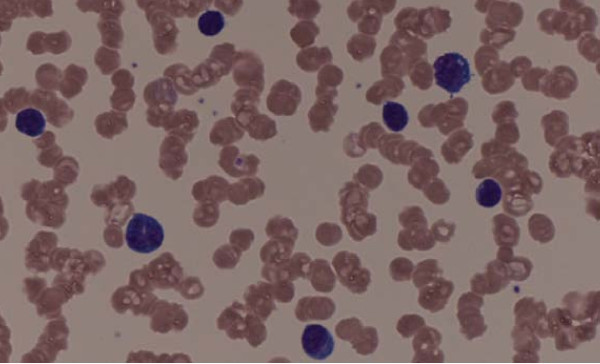
  • Frotis periférico: formación de rouleaux (agregación de eritrocitos)
  • Biopsia de médula ósea:
    • Prueba confirmatoria
    • > 10% de células plasmáticas

Imagenología

  • Radiografías (estudio esquelético) del cráneo, los LOS Neisseria huesos largos y la columna vertebral:
  • RM de la columna torácica y lumbar para evaluar:
    • Compromiso paraespinal
    • Fracturas patológicas
    • Compresión de la médula espinal

Tratamiento

Tratamiento

  • Pacientes < 65 años:
    • Citorreducción (esteroides/inmunomoduladores) seguida de trasplante de células madre
    • Regímenes de citorreducción (también conocida como terapia de inducción primaria):
      • Bortezomib Bortezomib A pyrazine and boronic acid derivative that functions as a reversible proteasome inhibitor. It is used as an antineoplastic agent in the treatment of multiple myeloma and mantle cell lymphoma. Targeted and Other Nontraditional Antineoplastic Therapy/lenalidomida/dexametasona
      • Bortezomib Bortezomib A pyrazine and boronic acid derivative that functions as a reversible proteasome inhibitor. It is used as an antineoplastic agent in the treatment of multiple myeloma and mantle cell lymphoma. Targeted and Other Nontraditional Antineoplastic Therapy/ciclofosfamida/dexametasona (utilizado en EN Erythema nodosum is an immune-mediated panniculitis (inflammation of the subcutaneous fat) caused by a type IV (delayed-type) hypersensitivity reaction. It commonly manifests in young women as tender, erythematous nodules on the shins. Erythema Nodosum el contexto de insuficiencia renal aguda)
  • Pacientes > 65 años:
    • El trasplante de células madre se tolera mal y no se realiza de forma rutinaria.
    • Quimioterapia:
      • Talidomida, como monoterapia, combinada con esteroides o melfalán
      • Lenalidomida combinada con dexametasona
      • Bortezomib Bortezomib A pyrazine and boronic acid derivative that functions as a reversible proteasome inhibitor. It is used as an antineoplastic agent in the treatment of multiple myeloma and mantle cell lymphoma. Targeted and Other Nontraditional Antineoplastic Therapy combinado con melfalán
      • Vincristina, doxorrubicina (Adriamicina) y dexametasona
      • Melfalán combinado con prednisona
  • Tratamiento de soporte:
    • Tratamiento de la hipercalcemia:
      • Bifosfonatos
      • Calcitonina
      • Hidratación
      • Natriuresis
    • Radiación a áreas de dolor Dolor Inflammation o fracturas patológicas inminentes
    • Plasmaféresis
    • Eritropoyetina para la anemia Anemia Anemia is a condition in which individuals have low Hb levels, which can arise from various causes. Anemia is accompanied by a reduced number of RBCs and may manifest with fatigue, shortness of breath, pallor, and weakness. Subtypes are classified by the size of RBCs, chronicity, and etiology. Anemia: Overview and Types
    • Vacunas para la prevención de infecciones neumocócicas
    • Tratamiento del dolor Dolor Inflammation:
      • Analgésicos
      • Descompresión espinal:
        • Cifoplastia
        • Descompresión quirúrgica
      • Bloqueos de raíces nerviosas/bloqueos de nervios periféricos

Pronóstico

  • Los LOS Neisseria factores de mal pronóstico incluyen los LOS Neisseria siguientes:
  • La mediana de supervivencia es de 3 años.
  • Tasa de supervivencia a 5 años < 50%
  • Las infecciones son una causa importante de muerte prematura en EN Erythema nodosum is an immune-mediated panniculitis (inflammation of the subcutaneous fat) caused by a type IV (delayed-type) hypersensitivity reaction. It commonly manifests in young women as tender, erythematous nodules on the shins. Erythema Nodosum MM MM Multiple myeloma (MM) is a malignant condition of plasma cells (activated B lymphocytes) primarily seen in the elderly. Monoclonal proliferation of plasma cells results in cytokine-driven osteoclastic activity and excessive secretion of IgG antibodies. Multiple Myeloma.

Diagnóstico Diferencial

  • Macroglobulinemia de Waldenstrom: otra neoplasia de células plasmáticas que produce IgM IgM A class of immunoglobulin bearing mu chains (immunoglobulin mu-chains). Igm can fix complement. The name comes from its high molecular weight and originally being called a macroglobulin. Immunoglobulins: Types and Functions específicamente, lo que resulta en EN Erythema nodosum is an immune-mediated panniculitis (inflammation of the subcutaneous fat) caused by a type IV (delayed-type) hypersensitivity reaction. It commonly manifests in young women as tender, erythematous nodules on the shins. Erythema Nodosum síndrome de hiperviscosidad y esplenomegalia. La macroglobulinemia de Waldenstrom (también conocida como linfoma linfoplasmocitario) es más indolente que el MM MM Multiple myeloma (MM) is a malignant condition of plasma cells (activated B lymphocytes) primarily seen in the elderly. Monoclonal proliferation of plasma cells results in cytokine-driven osteoclastic activity and excessive secretion of IgG antibodies. Multiple Myeloma. El diagnóstico se establece con electroforesis (pico de IgM IgM A class of immunoglobulin bearing mu chains (immunoglobulin mu-chains). Igm can fix complement. The name comes from its high molecular weight and originally being called a macroglobulin. Immunoglobulins: Types and Functions) y biopsia de médula ósea. Los LOS Neisseria casos asintomáticos no siempre requieren tratamiento. La quimioterapia es el pilar del tratamiento de la enfermedad sintomática.
  • Gammapatía monoclonal de significado indeterminado: elevación moderada de la proteína M sin síntomas clínicos. La concentración de proteína M en EN Erythema nodosum is an immune-mediated panniculitis (inflammation of the subcutaneous fat) caused by a type IV (delayed-type) hypersensitivity reaction. It commonly manifests in young women as tender, erythematous nodules on the shins. Erythema Nodosum suero es < 3 g/dL y la concentración de células plasmáticas es < 10%. La enfermedad no muestra evidencia de daño de órganos diana. El diagnóstico se establece con plasmaféresis y biopsia de médula ósea. La importancia es el riesgo de progresión a MM MM Multiple myeloma (MM) is a malignant condition of plasma cells (activated B lymphocytes) primarily seen in the elderly. Monoclonal proliferation of plasma cells results in cytokine-driven osteoclastic activity and excessive secretion of IgG antibodies. Multiple Myeloma. No se requiere tratamiento específico.
  • Malignidad ósea metastásica: diseminación a distancia de tumores primarios a los LOS Neisseria huesos. La malignidad ósea metastásica se observa con frecuencia en EN Erythema nodosum is an immune-mediated panniculitis (inflammation of the subcutaneous fat) caused by a type IV (delayed-type) hypersensitivity reaction. It commonly manifests in young women as tender, erythematous nodules on the shins. Erythema Nodosum los LOS Neisseria cánceres de próstata, mama y pulmón, entre otros. La presentación puede incluir dolor Dolor Inflammation óseo, fracturas patológicas y síntomas constitucionales. El diagnóstico generalmente se establece con imagenología en EN Erythema nodosum is an immune-mediated panniculitis (inflammation of the subcutaneous fat) caused by a type IV (delayed-type) hypersensitivity reaction. It commonly manifests in young women as tender, erythematous nodules on the shins. Erythema Nodosum el contexto de una malignidad conocida. El tratamiento es principalmente de soporte.

Referencias

  1. Azevedo, A. (2020). Multiple myeloma. Retrieved February 26, 2021, from https://www.statpearls.com/articlelibrary/viewarticle/25360/
  2. Longo, D., et al. (2012). Harrisons Manual of Medicine, 18th Edition. US: McGraw-Hill Professional. Pages 2107–2114.
  3. Shah, D. (2021). Multiple Myeloma. Medscape. Retrieved February 26, 2021, from https://emedicine.medscape.com/article/204369-overview
  4. Robbins and Cotran Pathologic Basis of Disease. (2015). 9th Edition. Pages 599–601.
  5. Van de Donk N.W.C.J., Pawlyn C., Yong K.L. (2021). Multiple myeloma. Lancet. 397(10272),410–427. Retrieved February 26, 2021, from https://pubmed.ncbi.nlm.nih.gov/33516340/

¡Crea tu cuenta gratis o inicia una sesión para seguir leyendo!

Regístrate ahora y obtén acceso gratuito a Lecturio con páginas de concepto, videos médicos y cuestionarios para tu educación médica.

User Reviews

Que tengas una sesión de estudio alegre y navideña 🎁 Ahorra 50% en todos los planes >>

Details