Domina Conceptos Médicos

Estudia para la escuela de medicina y tus examenes con Lecturio.

Inmunidad Innata: Fagocitos y Presentación de Antígenos

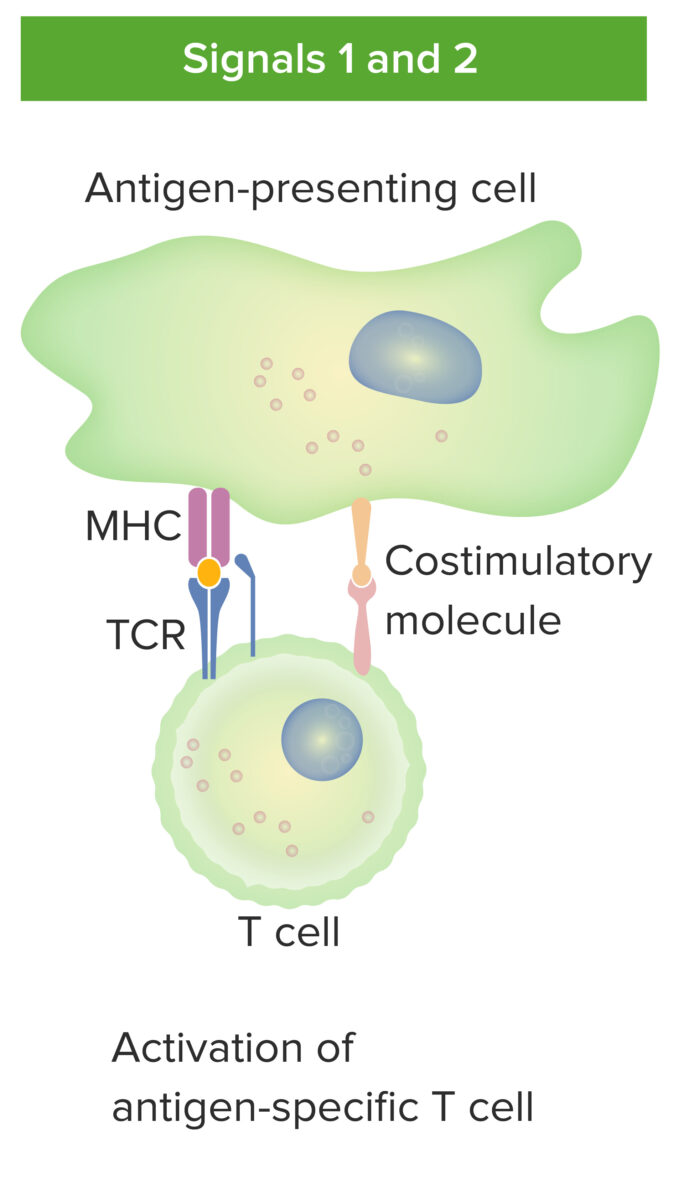
El sistema inmunológico está dotado de un variado repertorio de mecanismos de defensa frente a patógenos. Funcionalmente, el sistema inmunológico se diferencia en EN Erythema nodosum is an immune-mediated panniculitis (inflammation of the subcutaneous fat) caused by a type IV (delayed-type) hypersensitivity reaction. It commonly manifests in young women as tender, erythematous nodules on the shins. Erythema Nodosum componentes innatos y adaptativos. La inmunidad innata, la 1era capa protectora de defensa, es un sistema que reconoce los LOS Neisseria microbios amenazantes, distingue los LOS Neisseria tejidos propios de los LOS Neisseria patógenos y, posteriormente, elimina a los LOS Neisseria invasores extraños. La respuesta es inespecífica y utiliza diferentes capas de protección: barreras como la piel, receptores de reconocimiento de patrones (PRR, por sus siglas en EN Erythema nodosum is an immune-mediated panniculitis (inflammation of the subcutaneous fat) caused by a type IV (delayed-type) hypersensitivity reaction. It commonly manifests in young women as tender, erythematous nodules on the shins. Erythema Nodosum inglés), así como proteínas circulantes (e.g., complemento) que transmiten señales de una amenaza, y células inmunológicas que ayudan a eliminar el microbio. Se identifican patrones moleculares asociados a patógenos (PAMP, por sus siglas en EN Erythema nodosum is an immune-mediated panniculitis (inflammation of the subcutaneous fat) caused by a type IV (delayed-type) hypersensitivity reaction. It commonly manifests in young women as tender, erythematous nodules on the shins. Erythema Nodosum inglés) en EN Erythema nodosum is an immune-mediated panniculitis (inflammation of the subcutaneous fat) caused by a type IV (delayed-type) hypersensitivity reaction. It commonly manifests in young women as tender, erythematous nodules on the shins. Erythema Nodosum microorganismos y patrones moleculares asociados a daños (DAMP, por sus siglas en EN Erythema nodosum is an immune-mediated panniculitis (inflammation of the subcutaneous fat) caused by a type IV (delayed-type) hypersensitivity reaction. It commonly manifests in young women as tender, erythematous nodules on the shins. Erythema Nodosum inglés) de tejidos lesionados, y se reclutan las células apropiadas. Las células involucradas incluyen fagocitos y células accesorias. Los LOS Neisseria patógenos agresores son engullidos por los LOS Neisseria fagocitos para su destrucción. En EN Erythema nodosum is an immune-mediated panniculitis (inflammation of the subcutaneous fat) caused by a type IV (delayed-type) hypersensitivity reaction. It commonly manifests in young women as tender, erythematous nodules on the shins. Erythema Nodosum las células presentadoras de antígenos (la más potente de las cuales es la célula dendrítica), partes del material patógeno o péptidos se transportan a la superficie celular. A través de un mecanismo único de carga de antígeno específico para CMH I o II, los LOS Neisseria péptidos de antígeno procesados se presentan luego a los LOS Neisseria linfocitos T apropiados, lo que lleva a la activación de los LOS Neisseria linfocitos T. Esta interacción vincula la inmunidad innata con la inmunidad adaptativa.

Last updated: Feb 6, 2023

Editorial responsibility: Stanley Oiseth, Lindsay Jones, Evelin Maza

Descripción General

Sistema inmunológico

El sistema inmunológico brinda defensa (inmunidad) contra patógenos invasores que van desde virus Virus Viruses are infectious, obligate intracellular parasites composed of a nucleic acid core surrounded by a protein capsid. Viruses can be either naked (non-enveloped) or enveloped. The classification of viruses is complex and based on many factors, including type and structure of the nucleoid and capsid, the presence of an envelope, the replication cycle, and the host range. Virology hasta parásitos, y los LOS Neisseria componentes están interconectados por la circulación sanguínea y linfática.

Hay 2 líneas de defensa (que se superponen):

  • Inmunidad innata (que no es específica)
  • Inmunidad adaptativa (basada en EN Erythema nodosum is an immune-mediated panniculitis (inflammation of the subcutaneous fat) caused by a type IV (delayed-type) hypersensitivity reaction. It commonly manifests in young women as tender, erythematous nodules on the shins. Erythema Nodosum el reconocimiento de antígenos específicos):
    • Inmunidad mediada por células: respuesta adaptativa en EN Erythema nodosum is an immune-mediated panniculitis (inflammation of the subcutaneous fat) caused by a type IV (delayed-type) hypersensitivity reaction. It commonly manifests in young women as tender, erythematous nodules on the shins. Erythema Nodosum las células/tejidos que involucran a los LOS Neisseria linfocitos T
    • Inmunidad humoral: respuesta adaptativa en EN Erythema nodosum is an immune-mediated panniculitis (inflammation of the subcutaneous fat) caused by a type IV (delayed-type) hypersensitivity reaction. It commonly manifests in young women as tender, erythematous nodules on the shins. Erythema Nodosum los LOS Neisseria fluidos (humoral) que involucra linfocitos B e inmunoglobulinas

Inmunidad innata versus adaptativa

Tabla: Inmunidad innata versus adaptativa
Inmunidad innata Inmunidad adaptativa
Genética Línea germinal codificada Reordenamientos genéticos implicados en EN Erythema nodosum is an immune-mediated panniculitis (inflammation of the subcutaneous fat) caused by a type IV (delayed-type) hypersensitivity reaction. It commonly manifests in young women as tender, erythematous nodules on the shins. Erythema Nodosum el desarrollo de linfocitos
Respuesta inmune No específica Altamente específica
Tiempo de respuesta Inmediato (minutos a horas) Se desarrolla durante un período de tiempo más largo
Respuesta de memoria Ninguna Responde rápidamente al AL Amyloidosis reconocimiento del antígeno con respuesta de memoria
Reconocimiento del patógeno Los LOS Neisseria receptores de reconocimiento de patrones (PRR), como los LOS Neisseria receptores tipo toll, reconocen patrones moleculares asociados a patógenos (PAMP)
  • Células de memoria (linfocitos T y B)
  • Linfocitos B activados
Componentes
  • Barreras anatómicas (e.g., piel)
  • Barreras químicas y biológicas (e.g., ácido gástrico, flora vaginal)
  • Células (e.g., granulocitos)
  • Proteínas secretadas:
    • Enzimas (e.g., lisozima)
    • Otros receptores de reconocimiento de patrones (e.g., péptidos antimicrobianos)
    • Citoquinas*
    • Sistema de complemento*
  • Inmunidad mediada por células: linfocitos T
  • Inmunidad humoral: linfocitos B, inmunoglobulinas
*Mediadores con roles en la inmunidad adaptativa

Componentes del Sistema Inmunológico Innato

Respuesta inmune innata

  • Barreras:
    • 1era línea de defensa (mecánica, química y biológica)
    • Superficies definidas y lineales del cuerpo
    • Secretan sustancias para eliminar y reducir patógenos
  • Detección de microbios: el sistema innato utiliza lo siguiente para reconocer el patógeno:
    • Receptores de reconocimiento de patrones (PRR): proteínas que se distinguen a material propio del cuerpo, de materiales extraños, reconociendo componentes específicos de los LOS Neisseria microbios:
      • Patrones moleculares asociados a patógenos (PAMP): estructuras conservadas entre especies microbianas
      • Patrones moleculares asociados a daño (DAMP) o alarminas: moléculas endógenas liberadas de las células dañadas
    • Según la ubicación de las interacciones de los LOS Neisseria PRR y los LOS Neisseria PAMP, los LOS Neisseria PRR pueden estar asociados a células (receptores transmembrana o intracelulares):
      • Receptores tipo toll
      • Receptores tipo I del gen inducible por ácido retinoico
      • Receptores tipo dominio de oligomerización de nucleótidos
      • Receptores de lectina tipo C
    • Cuando la interacción ocurre en EN Erythema nodosum is an immune-mediated panniculitis (inflammation of the subcutaneous fat) caused by a type IV (delayed-type) hypersensitivity reaction. It commonly manifests in young women as tender, erythematous nodules on the shins. Erythema Nodosum los LOS Neisseria fluidos corporales (torrente sanguíneo y fluidos intersticiales), los LOS Neisseria PRR se secretan y circulan:
      • Péptidos antimicrobianos
      • Colectinas
      • Lectinas
      • Pentraxinas
      • Oligosacáridos antimicrobianos
  • Una brecha en EN Erythema nodosum is an immune-mediated panniculitis (inflammation of the subcutaneous fat) caused by a type IV (delayed-type) hypersensitivity reaction. It commonly manifests in young women as tender, erythematous nodules on the shins. Erythema Nodosum las barreras desencadena varios procesos → inflamación:
    • Ocurre en EN Erythema nodosum is an immune-mediated panniculitis (inflammation of the subcutaneous fat) caused by a type IV (delayed-type) hypersensitivity reaction. It commonly manifests in young women as tender, erythematous nodules on the shins. Erythema Nodosum respuesta a una infección o lesión
    • Resulta en EN Erythema nodosum is an immune-mediated panniculitis (inflammation of the subcutaneous fat) caused by a type IV (delayed-type) hypersensitivity reaction. It commonly manifests in young women as tender, erythematous nodules on the shins. Erythema Nodosum los LOS Neisseria signos cardinales ( edema Edema Edema is a condition in which excess serous fluid accumulates in the body cavity or interstitial space of connective tissues. Edema is a symptom observed in several medical conditions. It can be categorized into 2 types, namely, peripheral (in the extremities) and internal (in an organ or body cavity). Edema, rubor Rubor Inflammation, calor Calor Inflammation y dolor Dolor Inflammation)
    • Una vez que se identifica el patógeno a través de los LOS Neisseria receptores de reconocimiento de patrones, se secretan proteínas:
      • Citoquinas (las funciones incluyen reclutamiento, comunicación de célula a célula y acciones antivirales, antibacterianas y antifúngicas)
      • Quimioquinas (migración celular)
      • Sistema de complemento (complementa (ayuda a) eliminar los LOS Neisseria microbios)
      • Algunos PRR (e.g., péptidos antimicrobianos) también participan en EN Erythema nodosum is an immune-mediated panniculitis (inflammation of the subcutaneous fat) caused by a type IV (delayed-type) hypersensitivity reaction. It commonly manifests in young women as tender, erythematous nodules on the shins. Erythema Nodosum la eliminación de patógenos.
  • Respuesta celular: se reclutan varias células (e.g., fagocitos) y participan en EN Erythema nodosum is an immune-mediated panniculitis (inflammation of the subcutaneous fat) caused by a type IV (delayed-type) hypersensitivity reaction. It commonly manifests in young women as tender, erythematous nodules on the shins. Erythema Nodosum la destrucción microbiana.
  • La respuesta inmune se termina cuando ya no hay una necesidad ( homeostasis Homeostasis The processes whereby the internal environment of an organism tends to remain balanced and stable. Cell Injury and Death).

Células del sistema inmunológico innato

  • Muchos subconjuntos de células (que participan en EN Erythema nodosum is an immune-mediated panniculitis (inflammation of the subcutaneous fat) caused by a type IV (delayed-type) hypersensitivity reaction. It commonly manifests in young women as tender, erythematous nodules on the shins. Erythema Nodosum la respuesta innata) se desarrollan a partir de células madre hematopoyéticas en EN Erythema nodosum is an immune-mediated panniculitis (inflammation of the subcutaneous fat) caused by a type IV (delayed-type) hypersensitivity reaction. It commonly manifests in young women as tender, erythematous nodules on the shins. Erythema Nodosum la médula ósea (un órgano linfoide primario):
    • Células madre hematopoyéticas → progenitor mieloide común → dando lugar a:
      • Granulocitos: fagocitos profesionales (neutrófilos, monocitos/macrófagos), eosinófilos, basófilos, mastocitos
      • Megacariocitos → plaquetas
    • Células madre hematopoyéticas → progenitor linfoide común → que da lugar a linfocitos (que generalmente se activan y proliferan en EN Erythema nodosum is an immune-mediated panniculitis (inflammation of the subcutaneous fat) caused by a type IV (delayed-type) hypersensitivity reaction. It commonly manifests in young women as tender, erythematous nodules on the shins. Erythema Nodosum los LOS Neisseria órganos linfoides secundarios) como:
      • Linfocitos B y linfocitos T (inmunidad adaptativa)
      • Linfocitos asesinos naturales (principalmente respuesta inmune innata)
      • Linfocitos T-asesinos naturales (puente de inmunidad innata y adaptativa)
  • Individualmente, las células tienen diferentes funciones y objetivos en EN Erythema nodosum is an immune-mediated panniculitis (inflammation of the subcutaneous fat) caused by a type IV (delayed-type) hypersensitivity reaction. It commonly manifests in young women as tender, erythematous nodules on the shins. Erythema Nodosum la respuesta inmune.
  • Entre los LOS Neisseria roles cruciales están:
    • Fagocitosis: los LOS Neisseria microbios o partículas dañadas son engullidos y digeridos.
    • Presentación de antígenos: realizada por células dendríticas, macrófagos y linfocitos B, lo que facilita el reconocimiento de antígenos por parte de la inmunidad adaptativa
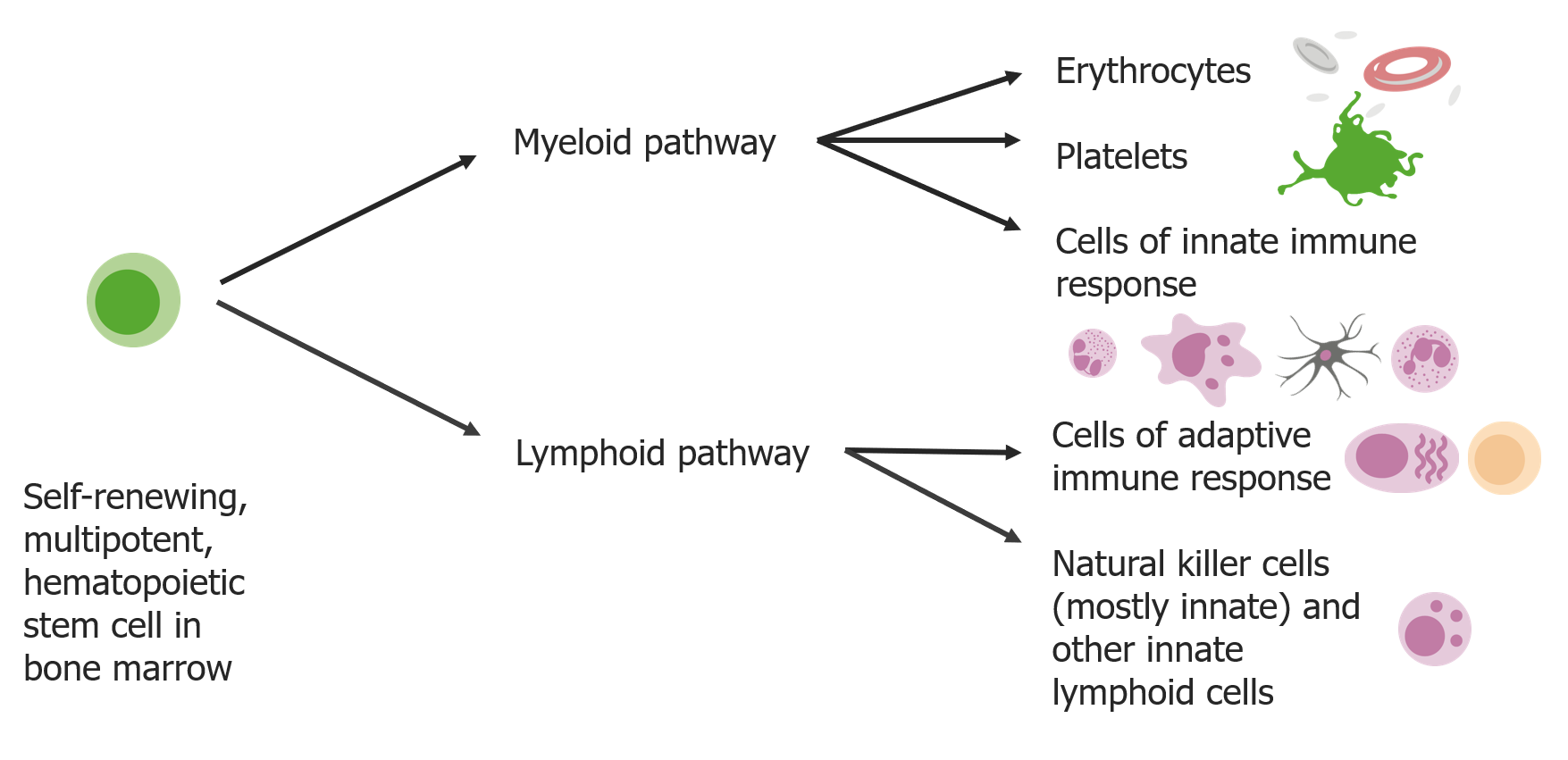
Las células madre se diferencian en 2 vías

Las células madre se diferencian en 2 vías:
Las vías mieloides producen eritrocitos, plaquetas y células de la respuesta inmune innata. Las vías linfoides producen las células de respuesta adaptativa y los linfocitos asesinos naturales.

Imagen por Lecturio.

Fagocitos Profesionales

Los LOS Neisseria fagocitos “comen” el material extraño y ayudan a detectar, limpiar y reparar el tejido dañado, reconociendo patógenos a través de PRR u opsonización (por complemento o inmunoglobulinas).
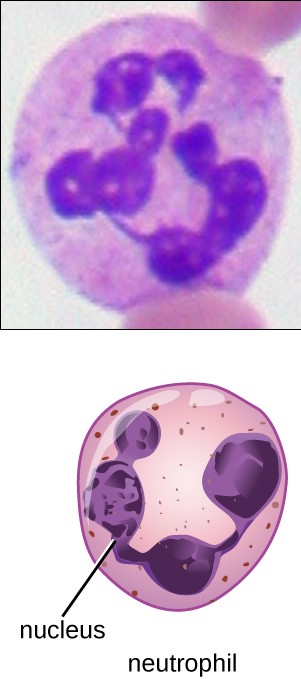
Neutrófilos

  • Descripción:
    • 1eras células en EN Erythema nodosum is an immune-mediated panniculitis (inflammation of the subcutaneous fat) caused by a type IV (delayed-type) hypersensitivity reaction. It commonly manifests in young women as tender, erythematous nodules on the shins. Erythema Nodosum ser reclutadas a los LOS Neisseria sitios de infección
    • Quimioquinas secretadas por células inmunológicas o epiteliales ( en EN Erythema nodosum is an immune-mediated panniculitis (inflammation of the subcutaneous fat) caused by a type IV (delayed-type) hypersensitivity reaction. It commonly manifests in young women as tender, erythematous nodules on the shins. Erythema Nodosum los LOS Neisseria sitios) para atraer neutrófilos:
      • Oligopéptido bacteriano N-formilo
      • C5a derivado del complemento
      • Leucotrieno B4 (secretado por numerosas células inmunológicas)
      • Interleuquina 8 (IL-8)
  • Funciones microbicidas:
    • Fagocitosis y producción de especies reactivas de oxígeno (estallido respiratorio) que son citotóxicas para los LOS Neisseria patógenos bacterianos
    • Proteasas de gránulos citoplásmicos de neutrófilos: elastasa de neutrófilos y catepsina G
    • Producción de citoquinas como el factor de necrosis Necrosis The death of cells in an organ or tissue due to disease, injury or failure of the blood supply. Ischemic Cell Damage tumoral ( TNF TNF Tumor necrosis factor (TNF) is a major cytokine, released primarily by macrophages in response to stimuli. The presence of microbial products and dead cells and injury are among the stimulating factors. This protein belongs to the TNF superfamily, a group of ligands and receptors performing functions in inflammatory response, morphogenesis, and cell proliferation. Tumor Necrosis Factor (TNF), por sus siglas en EN Erythema nodosum is an immune-mediated panniculitis (inflammation of the subcutaneous fat) caused by a type IV (delayed-type) hypersensitivity reaction. It commonly manifests in young women as tender, erythematous nodules on the shins. Erythema Nodosum inglés)
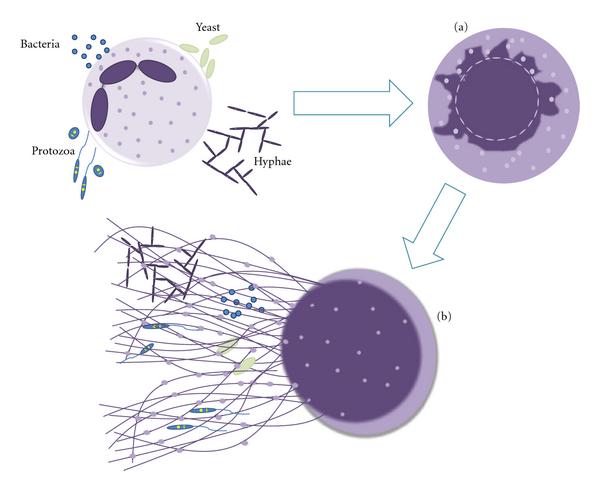
    • Uso de hebras extracelulares de cromatina enlazadas con proteínas antimicrobianas (trampas extracelulares de neutrófilos) que atrapan y eliminan patógenos

Monocitos/macrófagos

  • Descripción: Los LOS Neisseria monocitos se desarrollan en EN Erythema nodosum is an immune-mediated panniculitis (inflammation of the subcutaneous fat) caused by a type IV (delayed-type) hypersensitivity reaction. It commonly manifests in young women as tender, erythematous nodules on the shins. Erythema Nodosum la médula ósea y entran en EN Erythema nodosum is an immune-mediated panniculitis (inflammation of the subcutaneous fat) caused by a type IV (delayed-type) hypersensitivity reaction. It commonly manifests in young women as tender, erythematous nodules on the shins. Erythema Nodosum la circulación.
    • Algunos permanecen como monocitos, recogiendo y llevando antígenos a los LOS Neisseria ganglios linfáticos.
    • Cuando los LOS Neisseria monocitos migran fuera de la circulación y van a los LOS Neisseria tejidos, los LOS Neisseria monocitos se diferencian en EN Erythema nodosum is an immune-mediated panniculitis (inflammation of the subcutaneous fat) caused by a type IV (delayed-type) hypersensitivity reaction. It commonly manifests in young women as tender, erythematous nodules on the shins. Erythema Nodosum macrófagos.
    • Los LOS Neisseria macrófagos se encuentran en EN Erythema nodosum is an immune-mediated panniculitis (inflammation of the subcutaneous fat) caused by a type IV (delayed-type) hypersensitivity reaction. It commonly manifests in young women as tender, erythematous nodules on the shins. Erythema Nodosum:
      • Ganglio linfático, bazo, médula ósea, tejido conectivo perivascular y cavidades serosas
      • En EN Erythema nodosum is an immune-mediated panniculitis (inflammation of the subcutaneous fat) caused by a type IV (delayed-type) hypersensitivity reaction. It commonly manifests in young women as tender, erythematous nodules on the shins. Erythema Nodosum otros tejidos: pulmón (macrófagos alveolares), hígado (células de Kupffer), hueso (osteoclastos), sistema nervioso central (SNC) (microglías) y membrana sinovial (células de revestimiento tipo A)
    • También se diferencian en EN Erythema nodosum is an immune-mediated panniculitis (inflammation of the subcutaneous fat) caused by a type IV (delayed-type) hypersensitivity reaction. It commonly manifests in young women as tender, erythematous nodules on the shins. Erythema Nodosum células dendríticas durante la inflamación
  • Funciones:
    • Responder rápidamente a los LOS Neisseria patógenos, facilitado por la alta densidad de receptores de PRR de superficie
    • Usar óxido nítrico (NO) para matar patógenos y también producir grandes cantidades de citoquinas
    • Presentación de antígenos a los LOS Neisseria linfocitos (estimulando la respuesta inmune adaptativa)
    • Jugar un rol en EN Erythema nodosum is an immune-mediated panniculitis (inflammation of the subcutaneous fat) caused by a type IV (delayed-type) hypersensitivity reaction. It commonly manifests in young women as tender, erythematous nodules on the shins. Erythema Nodosum la homeostasis Homeostasis The processes whereby the internal environment of an organism tends to remain balanced and stable. Cell Injury and Death del hierro
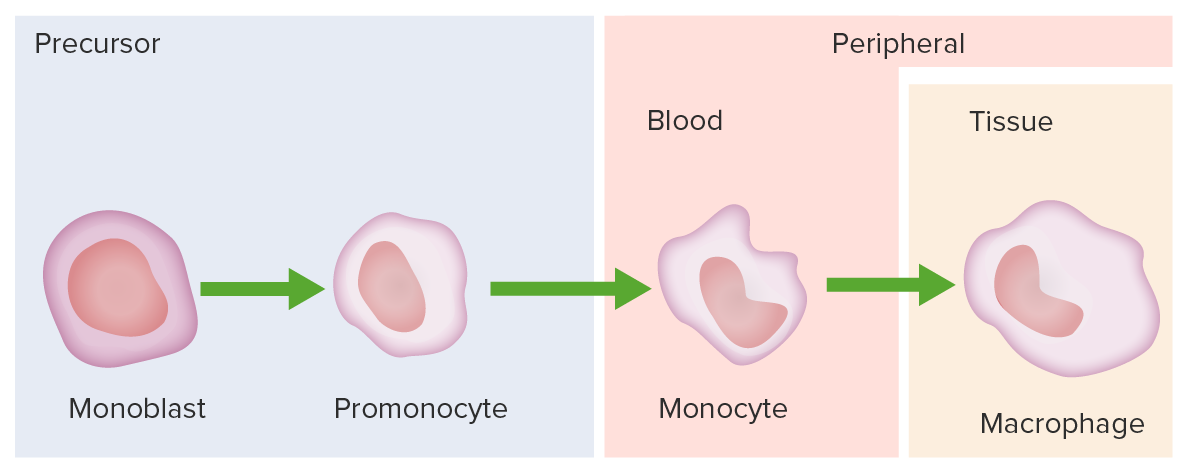
Desarrollo de monocitos

El desarrollo de monocitos comienza a partir de células madre hematopoyéticas y progresa a través de etapas hasta la unidad formadora de colonias de granulocitos-macrófagos:
El 1er precursor de monocitos es el monoblasto, que tiene un núcleo redondo u ovalado.
Sigue el promonocito y tiene un núcleo enrevesado.
El monocito surge con un núcleo dentado y se libera de la médula ósea para convertirse en un macrófago en los tejidos.

Imagen por Lecturio. Licencia: CC BY-NC-SA 4.0

Células dendríticas

  • Descripción:
    • Células presentadoras de antígenos más potentes
    • Nombre derivado de la presencia de extensiones dendríticas (ramificadas)
    • Surgen de la médula ósea
    • Vinculan la inmunidad innata y adaptativa mediante la presentación de antígenos y liberan quimioquinas, que atraen linfocitos T y linfocitos B cuando se detecta un patógeno.
  • Tipos de células dendríticas:
    • Células dendríticas mieloides:
      • También llamadas células dendríticas convencionales
      • Pueden ser células dendríticas intersticiales ( en EN Erythema nodosum is an immune-mediated panniculitis (inflammation of the subcutaneous fat) caused by a type IV (delayed-type) hypersensitivity reaction. It commonly manifests in young women as tender, erythematous nodules on the shins. Erythema Nodosum sangre e intersticios de pulmón, corazón, riñón) o células dendríticas de Langerhans
    • Células dendríticas plasmacitoides:
      • Linaje linfoide
      • Las células dendríticas plasmacitoides residen principalmente en EN Erythema nodosum is an immune-mediated panniculitis (inflammation of the subcutaneous fat) caused by a type IV (delayed-type) hypersensitivity reaction. It commonly manifests in young women as tender, erythematous nodules on the shins. Erythema Nodosum y recirculan a través de los LOS Neisseria órganos linfoides.
      • Células presentadoras de antígenos ineficientes, pero que producen masivamente interferón ( IFN IFN Interferon (IFN) is a cytokine with antiviral properties (it interferes with viral infections) and various roles in immunoregulation. The different types are type I IFN (IFN-ɑ and IFN-β), type II IFN (IFN-ɣ), and type III IFN (IFN-ƛ). Interferons) tipo I cuando ocurren infecciones virales.
  • Funciones (varían con la maduración):
    • Fagocitosis de microbios, moléculas de tejido dañado, autoantígenos, tumores
    • Los LOS Neisseria pasos posteriores conducen a la maduración (expresión de CMH II y moléculas coestimuladoras, PRR, con regulación al AL Amyloidosis alza de los LOS Neisseria receptores de citoquinas)
    • Se vuelven más específicas de antígeno con la madurez y participan en EN Erythema nodosum is an immune-mediated panniculitis (inflammation of the subcutaneous fat) caused by a type IV (delayed-type) hypersensitivity reaction. It commonly manifests in young women as tender, erythematous nodules on the shins. Erythema Nodosum la respuesta inmune adaptativa
    • Una vez maduras, las células dendríticas presentan antígenos a los LOS Neisseria linfocitos T, que luego proliferan.
    • Retroalimentación positiva: los LOS Neisseria linfocitos T efectores secretan IFN IFN Interferon (IFN) is a cytokine with antiviral properties (it interferes with viral infections) and various roles in immunoregulation. The different types are type I IFN (IFN-ɑ and IFN-β), type II IFN (IFN-ɣ), and type III IFN (IFN-ƛ). Interferons‒ɣ → hacen que las células dendríticas produzcan ↑ IL-12 y ↑ actividad microbicida de los LOS Neisseria macrófagos
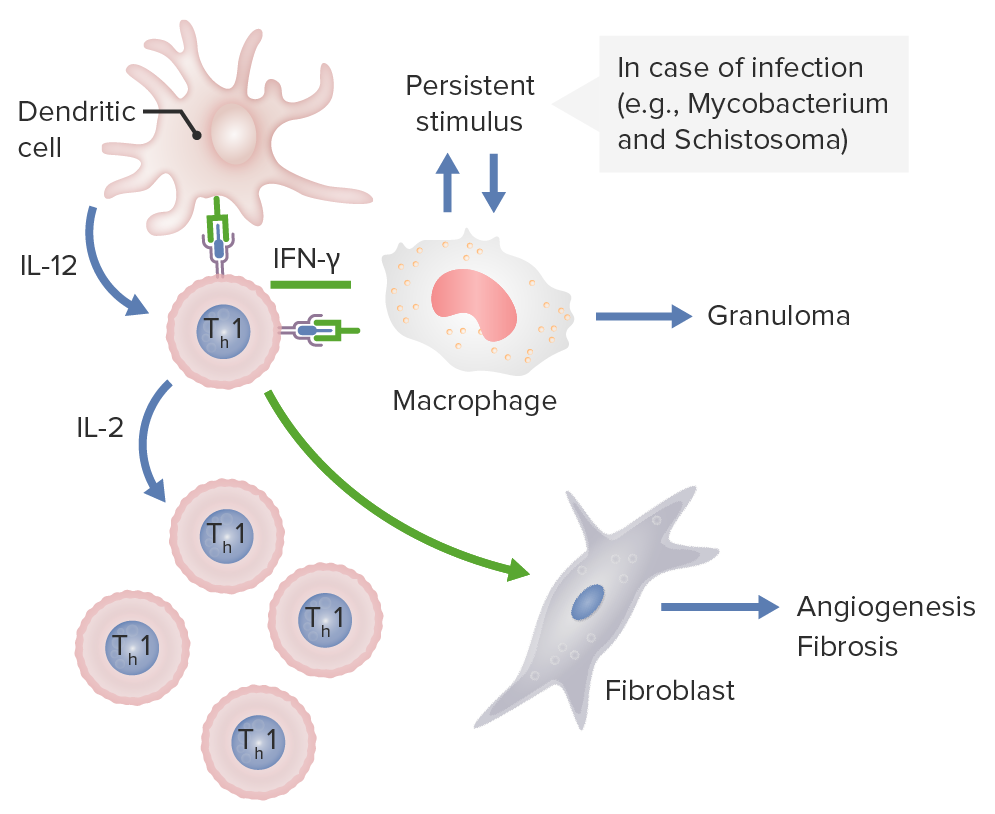
Células dendríticas que liberan IL-12

Las células dendríticas liberan IL-12, que activa las células CD4 Th1. Estas células Th1 producen IL-2, estimulando la producción de más subconjuntos de células T Th1. Las células Th1 también liberan IFN-γ, que activa los macrófagos y activa los fibroblastos para causar angiogénesis y fibrosis. Si estos macrófagos son estimulados persistentemente por patógenos como Mycobacterium y Schistosoma, se forman granulomas.

Imagen por Lecturio.

Células dendríticas versus células dendríticas foliculares

Es importante tener en EN Erythema nodosum is an immune-mediated panniculitis (inflammation of the subcutaneous fat) caused by a type IV (delayed-type) hypersensitivity reaction. It commonly manifests in young women as tender, erythematous nodules on the shins. Erythema Nodosum cuenta que las células dendríticas foliculares no tienen ninguna relación con las células dendríticas en EN Erythema nodosum is an immune-mediated panniculitis (inflammation of the subcutaneous fat) caused by a type IV (delayed-type) hypersensitivity reaction. It commonly manifests in young women as tender, erythematous nodules on the shins. Erythema Nodosum linaje y función.

Células dendríticas foliculares:

  • Concentradas en EN Erythema nodosum is an immune-mediated panniculitis (inflammation of the subcutaneous fat) caused by a type IV (delayed-type) hypersensitivity reaction. It commonly manifests in young women as tender, erythematous nodules on the shins. Erythema Nodosum los LOS Neisseria órganos linfoides secundarios donde ocurre la activación de los LOS Neisseria linfocitos B
  • Atrapan antígenos en EN Erythema nodosum is an immune-mediated panniculitis (inflammation of the subcutaneous fat) caused by a type IV (delayed-type) hypersensitivity reaction. It commonly manifests in young women as tender, erythematous nodules on the shins. Erythema Nodosum sus superficies que luego se unen a los LOS Neisseria receptores de linfocitos B de los LOS Neisseria linfocitos B (activación de linfocitos B)
Tabla: Diferencias entre células dendríticas y células dendríticas foliculares
Células dendríticas Células dendríticas foliculares
Origen Derivadas de células madre hematopoyéticas Derivadas de células madre mesenquimatosas
Sitios Presentes en EN Erythema nodosum is an immune-mediated panniculitis (inflammation of the subcutaneous fat) caused by a type IV (delayed-type) hypersensitivity reaction. It commonly manifests in young women as tender, erythematous nodules on the shins. Erythema Nodosum todo el cuerpo Presentes solo en EN Erythema nodosum is an immune-mediated panniculitis (inflammation of the subcutaneous fat) caused by a type IV (delayed-type) hypersensitivity reaction. It commonly manifests in young women as tender, erythematous nodules on the shins. Erythema Nodosum centros germinales de tejidos linfoides secundarios
Clase de CMH y moléculas coestimuladoras Poseen CMH II y moléculas coestimuladoras (e.g., B7) Carecen de CMH II y moléculas coestimuladoras
Funciones
  • Activan a los LOS Neisseria lifocitos T colaboradores
  • Inicialmente fagocíticas
  • No activan a los LOS Neisseria linfocitos T colaboradores
  • Especializadas en EN Erythema nodosum is an immune-mediated panniculitis (inflammation of the subcutaneous fat) caused by a type IV (delayed-type) hypersensitivity reaction. It commonly manifests in young women as tender, erythematous nodules on the shins. Erythema Nodosum la presentación de antígeno a los LOS Neisseria linfocitos B
  • Nunca fagocíticas

Fagocitosis

  • La unión se da a través del reconocimiento del PRR o mediada por opsoninas (proteínas que se unen/etiquetan patógenos y los LOS Neisseria hacen apetecibles para los LOS Neisseria fagocitos).
    • Sigue la inmersión del patógeno en EN Erythema nodosum is an immune-mediated panniculitis (inflammation of the subcutaneous fat) caused by a type IV (delayed-type) hypersensitivity reaction. It commonly manifests in young women as tender, erythematous nodules on the shins. Erythema Nodosum una vesícula.
    • El fagocito forma un seudópodo que envuelve al AL Amyloidosis patógeno, y este se convierte en EN Erythema nodosum is an immune-mediated panniculitis (inflammation of the subcutaneous fat) caused by a type IV (delayed-type) hypersensitivity reaction. It commonly manifests in young women as tender, erythematous nodules on the shins. Erythema Nodosum una vesícula de membrana pellizcada llamada fagosoma.
    • Se forma un fagolisosoma cuando el fagosoma se fusiona con un lisosoma.
    • En EN Erythema nodosum is an immune-mediated panniculitis (inflammation of the subcutaneous fat) caused by a type IV (delayed-type) hypersensitivity reaction. It commonly manifests in young women as tender, erythematous nodules on the shins. Erythema Nodosum el compartimento, el patógeno es eliminado por diferentes mecanismos de destrucción microbiana.
  • Cuando se destruye el patógeno, el fagocito sufre apoptosis Apoptosis A regulated cell death mechanism characterized by distinctive morphologic changes in the nucleus and cytoplasm, including the endonucleolytic cleavage of genomic DNA, at regularly spaced, internucleosomal sites, I.e., DNA fragmentation. It is genetically-programmed and serves as a balance to mitosis in regulating the size of animal tissues and in mediating pathologic processes associated with tumor growth. Ischemic Cell Damage (e.g., visto en EN Erythema nodosum is an immune-mediated panniculitis (inflammation of the subcutaneous fat) caused by a type IV (delayed-type) hypersensitivity reaction. It commonly manifests in young women as tender, erythematous nodules on the shins. Erythema Nodosum el pus) o los LOS Neisseria desechos se eliminan por exocitosis.
  • En EN Erythema nodosum is an immune-mediated panniculitis (inflammation of the subcutaneous fat) caused by a type IV (delayed-type) hypersensitivity reaction. It commonly manifests in young women as tender, erythematous nodules on the shins. Erythema Nodosum las células presentadoras de antígenos, partes del material patógeno o péptidos se transportan a la superficie celular para la presentación del antígeno.

Células Accesorias

Eosinófilos

  • Descripción:
    • Reconocidos por sus prominentes gránulos citoplasmáticos eosinófilos
    • Ubicados principalmente en EN Erythema nodosum is an immune-mediated panniculitis (inflammation of the subcutaneous fat) caused by a type IV (delayed-type) hypersensitivity reaction. It commonly manifests in young women as tender, erythematous nodules on the shins. Erythema Nodosum la lámina propia del tracto gastrointestinal
  • Funciones:
    • Las trampas extracelulares liberadas contienen gránulos de eosinófilos (que secretan su contenido, incluida la principal citotóxica básica principal) cuando se estimulan
    • Tienen efecto citotóxico contra helmintos y otros parásitos
    • También tienen una amplia actividad antibacteriana y antiviral Antiviral Antivirals for Hepatitis B
    • Median enfermedades gastrointestinales eosinofílicas

Basófilos

  • Descripción:
    • Leucocitos circulantes; no se encuentra en EN Erythema nodosum is an immune-mediated panniculitis (inflammation of the subcutaneous fat) caused by a type IV (delayed-type) hypersensitivity reaction. It commonly manifests in young women as tender, erythematous nodules on the shins. Erythema Nodosum los LOS Neisseria tejidos
    • Expresan receptores de alta afinidad para inmunoglobulina E ( IgE IgE An immunoglobulin associated with mast cells. Overexpression has been associated with allergic hypersensitivity. Immunoglobulins: Types and Functions)
  • Funciones:
    • Con los LOS Neisseria receptores de IgE IgE An immunoglobulin associated with mast cells. Overexpression has been associated with allergic hypersensitivity. Immunoglobulins: Types and Functions, los LOS Neisseria basófilos participan en EN Erythema nodosum is an immune-mediated panniculitis (inflammation of the subcutaneous fat) caused by a type IV (delayed-type) hypersensitivity reaction. It commonly manifests in young women as tender, erythematous nodules on the shins. Erythema Nodosum tipos de respuesta inmune alérgica de hipersensibilidad inmediata
    • Proporcionan resistencia contra los LOS Neisseria helmintos
    • Las actividades están mediadas por histamina, catelicidina y otros mediadores
    • Producen IL-4 e IL-13, que promueven la respuesta Th2 Th2 A subset of helper-inducer T-lymphocytes which synthesize and secrete the interleukins il-4; il-5; il-6; and il-10. These cytokines influence b-cell development and antibody production as well as augmenting humoral responses. T cells: Types and Functions

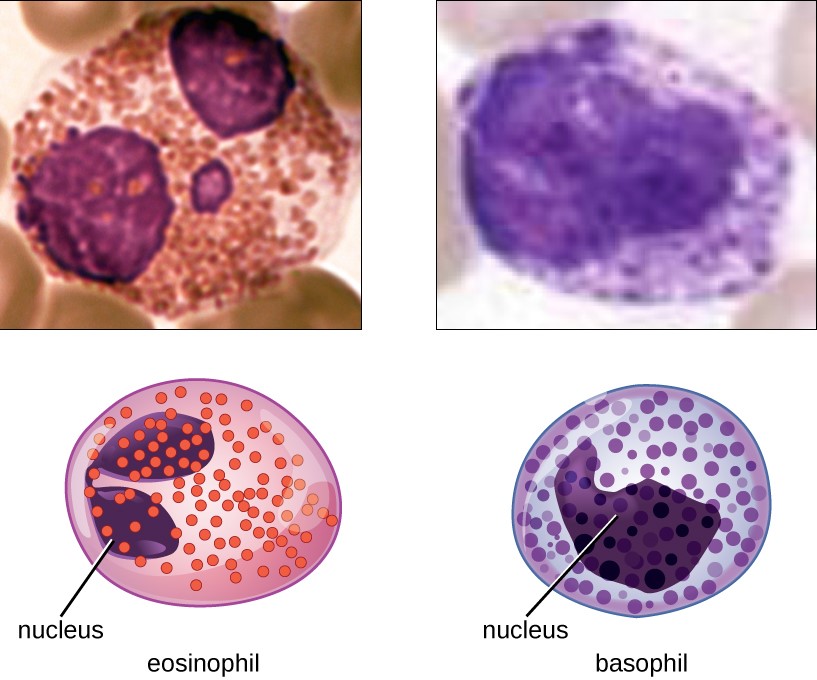
Eosinófilos y basófilos
Ambos son granulocitos, con eosinófilos que poseen un núcleo bilobulado y gránulos de color rosa oscuro y basófilos que tienen un núcleo bilobulado o trilobulado y gránulos de color azul oscuro.

Imagen: “Granulocytes can be distinguished by the number of lobes in their nuclei and the staining properties of their granules” por Parker N et al. Licencia: CC BY 4.0, recortado por Lecturio.
Mastocitos

  • Descripción:
    • Morfológicamente similares a los LOS Neisseria basófilos
    • Se encuentran en EN Erythema nodosum is an immune-mediated panniculitis (inflammation of the subcutaneous fat) caused by a type IV (delayed-type) hypersensitivity reaction. It commonly manifests in young women as tender, erythematous nodules on the shins. Erythema Nodosum grandes cantidades en EN Erythema nodosum is an immune-mediated panniculitis (inflammation of the subcutaneous fat) caused by a type IV (delayed-type) hypersensitivity reaction. It commonly manifests in young women as tender, erythematous nodules on the shins. Erythema Nodosum los LOS Neisseria tejidos intersticiales
    • Expresan:
      • Receptores tipo toll 1, 2, 4 y 6 (para la anafilatoxina C5a del complemento)
      • Receptores de lectina de unión a manosa
  • Funciones:
    • Participan en EN Erythema nodosum is an immune-mediated panniculitis (inflammation of the subcutaneous fat) caused by a type IV (delayed-type) hypersensitivity reaction. It commonly manifests in young women as tender, erythematous nodules on the shins. Erythema Nodosum las respuestas alérgicas y tienen funciones antimicrobianas y antiprotozoarias
    • Al AL Amyloidosis activarse liberan:
      • TNF-ɑ
      • IL-8
      • Mediadores inflamatorios (heparina, histamina, factor activador de plaquetas, leucotrienos)
      • Proteasas (e.g., triptasa, quimasa)
      • Péptidos antimicrobianos como catelicidina y defensinas

Linfocitos asesinos naturales

  • Descripción:
    • Células linfoides que no expresan receptores de linfocitos T o B
    • Expresan una serie de receptores activadores e inhibidores
    • Tienen gránulos con perforinas y granzimas
    • Envejecen con la edad y la obesidad
  • Funciones:
    • La activación de los LOS Neisseria receptores es clave para la “función asesina” en EN Erythema nodosum is an immune-mediated panniculitis (inflammation of the subcutaneous fat) caused by a type IV (delayed-type) hypersensitivity reaction. It commonly manifests in young women as tender, erythematous nodules on the shins. Erythema Nodosum infecciones virales y tumores malignos, lo que provoca la muerte de patógenos a través de:
      • Vía de la caspasa de ligando Fas-Fas
      • Vía granzima/perforina
    • Evitan atacar a las células huésped mediante el reconocimiento de las moléculas CMH I expresadas en EN Erythema nodosum is an immune-mediated panniculitis (inflammation of the subcutaneous fat) caused by a type IV (delayed-type) hypersensitivity reaction. It commonly manifests in young women as tender, erythematous nodules on the shins. Erythema Nodosum todas las células huésped sanas
  • Linfocitos T–asesinos naturales: tienen marcadores de superficie y funciones tanto de linfocitos T como de linfocitos asesinos naturales

Plaquetas

  • Descripción: fragmentos de células pequeñas circulantes (brotan de megacariocitos)
  • Funciones:
    • Expresar PRR
    • Producir citoquinas
    • Reclutar leucocitos en EN Erythema nodosum is an immune-mediated panniculitis (inflammation of the subcutaneous fat) caused by a type IV (delayed-type) hypersensitivity reaction. It commonly manifests in young women as tender, erythematous nodules on the shins. Erythema Nodosum sitios de lesión o inflamación
    • Los LOS Neisseria megacariocitos secretan IFN-α e IFN-β

Presentación de Antígenos

Las células presentadoras de antígenos (como las células dendríticas y los LOS Neisseria macrófagos) detectan, procesan y presentan los LOS Neisseria antígenos a los LOS Neisseria linfocitos T, lo que permite que la inmunidad adaptativa reconozca y genere una respuesta cada vez que se encuentra el patógeno (memoria inmunológica).
Complejo mayor de histocompatibilidad (CMH)

  • Proteínas que se encuentran en EN Erythema nodosum is an immune-mediated panniculitis (inflammation of the subcutaneous fat) caused by a type IV (delayed-type) hypersensitivity reaction. It commonly manifests in young women as tender, erythematous nodules on the shins. Erythema Nodosum las células presentadoras de antígenos (y otras) que están codificadas por los LOS Neisseria genes Genes A category of nucleic acid sequences that function as units of heredity and which code for the basic instructions for the development, reproduction, and maintenance of organisms. DNA Types and Structure HLA, ubicados en EN Erythema nodosum is an immune-mediated panniculitis (inflammation of the subcutaneous fat) caused by a type IV (delayed-type) hypersensitivity reaction. It commonly manifests in young women as tender, erythematous nodules on the shins. Erythema Nodosum el cromosoma 6
  • Función principal: presentar el antígeno al AL Amyloidosis sistema inmunológico adaptativo (linfocitos T)
  • Representa la interacción entre la inmunidad innata (e.g., células presentadoras de antígenos) y la inmunidad adaptativa (linfocitos T)
  • Se clasifica al AL Amyloidosis CMH como:
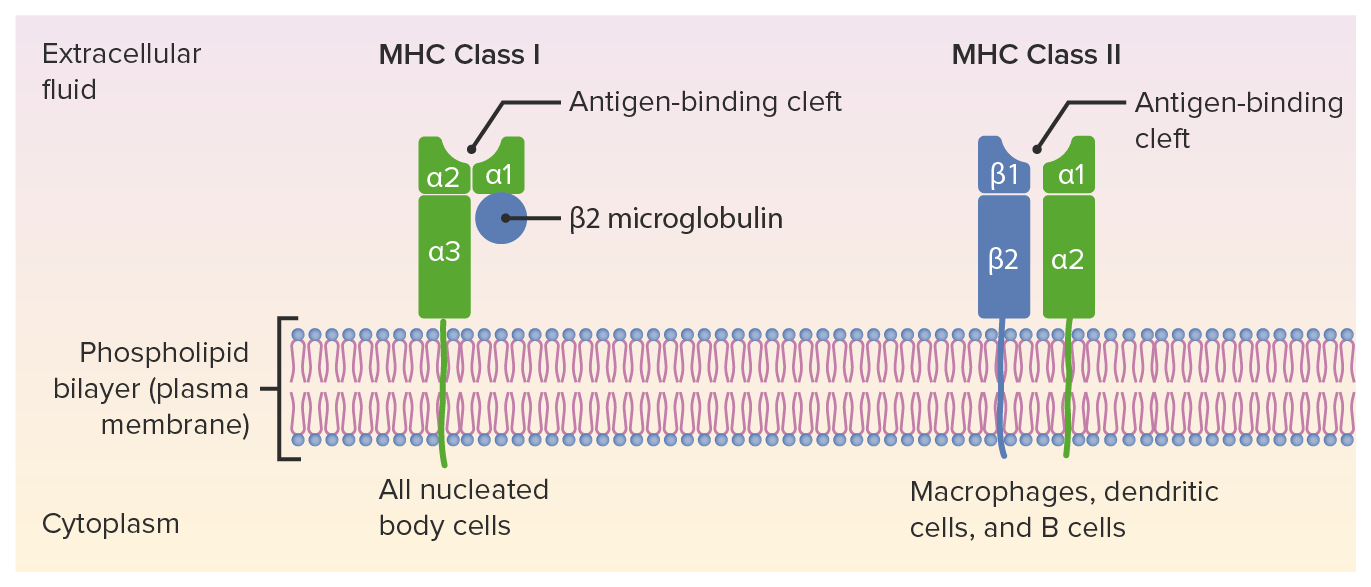
    • CMH I:
      • Se encuentra en EN Erythema nodosum is an immune-mediated panniculitis (inflammation of the subcutaneous fat) caused by a type IV (delayed-type) hypersensitivity reaction. It commonly manifests in young women as tender, erythematous nodules on the shins. Erythema Nodosum todas las células nucleadas
      • Cuando una célula tiene un patógeno intracelular (e.g., virus Virus Viruses are infectious, obligate intracellular parasites composed of a nucleic acid core surrounded by a protein capsid. Viruses can be either naked (non-enveloped) or enveloped. The classification of viruses is complex and based on many factors, including type and structure of the nucleoid and capsid, the presence of an envelope, the replication cycle, and the host range. Virology), el CMH lleva antígenos endógenos a la superficie y los LOS Neisseria presenta a los LOS Neisseria linfocitos T CD8+.
      • Estructura: 1 cadena corta y 1 larga (cadena ɑ con 3 dominios: ɑ1, ɑ2, ɑ3), asociada a la β₂-microglobulina
    • CMH II:
      • Se encuentra solo en EN Erythema nodosum is an immune-mediated panniculitis (inflammation of the subcutaneous fat) caused by a type IV (delayed-type) hypersensitivity reaction. It commonly manifests in young women as tender, erythematous nodules on the shins. Erythema Nodosum ciertas células inmunológicas (células presentadoras de antígenos)
      • Presenta antígenos exógenos (e.g., proteínas bacterianas) a los LOS Neisseria linfocitos T CD4+
      • Estructura: 2 cadenas ɑ y 2 β de igual longitud
Structure of MHC I and MHC II

Estructuras de CMH I y CMH II:
El CMH I tiene 1 cadena corta y 1 cadena larga (cadena ɑ con 3 dominios: ɑ1, ɑ2 y ɑ3), asociada con la β₂-microglobulina. El CMH II tiene 2 cadenas ɑ y 2 β. El antígeno peptídico va a la hendidura de unión al antígeno.
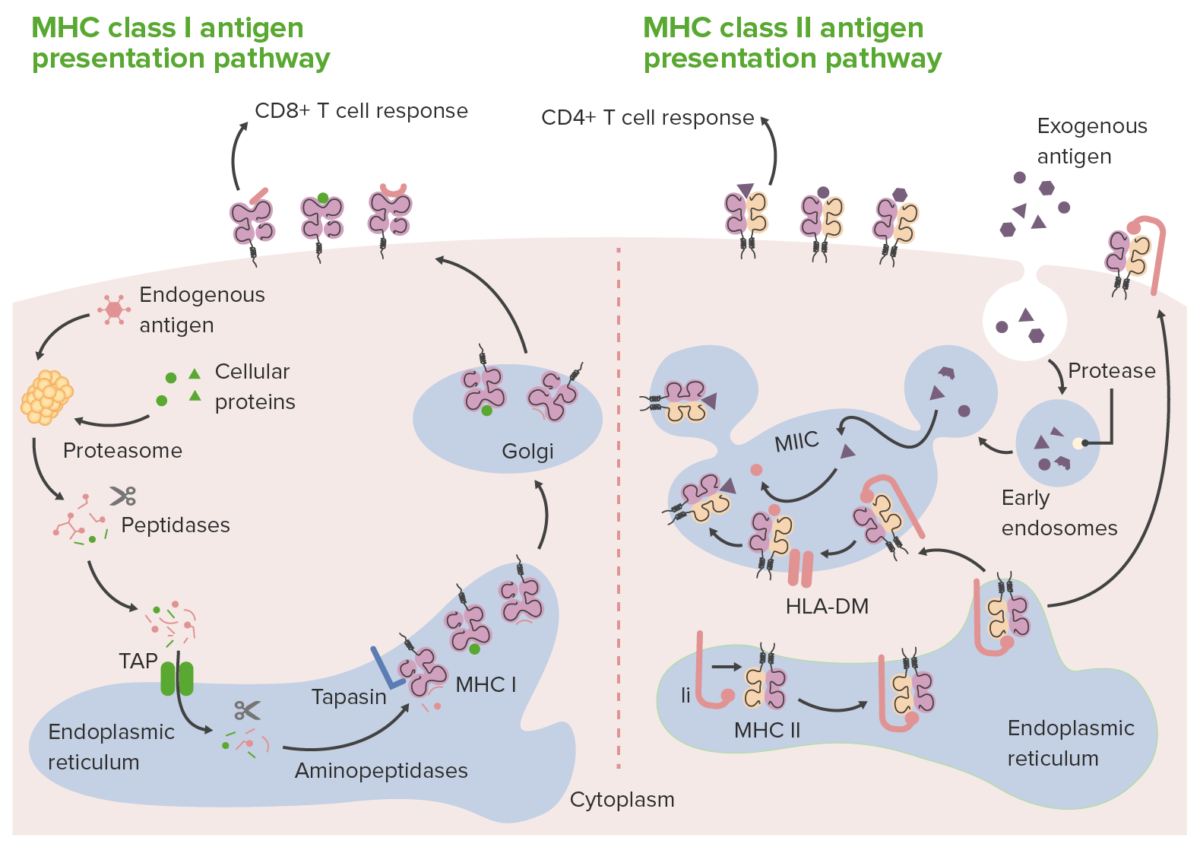
Imagen por Lecturio.

Vías de presentación de antígenos

  • CMH I:
    • Los LOS Neisseria proteosomas degradan las proteínas (dentro de la célula) en EN Erythema nodosum is an immune-mediated panniculitis (inflammation of the subcutaneous fat) caused by a type IV (delayed-type) hypersensitivity reaction. It commonly manifests in young women as tender, erythematous nodules on the shins. Erythema Nodosum péptidos.
    • Los LOS Neisseria fragmentos de péptidos se transportan (a través de un transportador asociado con el procesamiento de antígenos) al AL Amyloidosis retículo endoplasmático.
    • En EN Erythema nodosum is an immune-mediated panniculitis (inflammation of the subcutaneous fat) caused by a type IV (delayed-type) hypersensitivity reaction. It commonly manifests in young women as tender, erythematous nodules on the shins. Erythema Nodosum el retículo endoplasmático, las aminopeptidasas recortan aún más los LOS Neisseria péptidos.
    • Luego, los LOS Neisseria péptidos antigénicos se cargan en EN Erythema nodosum is an immune-mediated panniculitis (inflammation of the subcutaneous fat) caused by a type IV (delayed-type) hypersensitivity reaction. It commonly manifests in young women as tender, erythematous nodules on the shins. Erythema Nodosum las moléculas CMH I → al AL Amyloidosis aparato de Golgi para la modificación postraduccional
    • Luego, los LOS Neisseria complejos se transportan a la superficie celular, donde se presentan a los LOS Neisseria linfocitos T CD8+.
  • CMH II:
    • Las células presentadoras de antígenos toman antígenos extracelulares y son engullidas dentro de los LOS Neisseria fagosomas.
    • Los LOS Neisseria fagosomas se fusionan con los LOS Neisseria lisosomas (que contienen enzimas proteolíticas que escinden las proteínas fagocitadas en EN Erythema nodosum is an immune-mediated panniculitis (inflammation of the subcutaneous fat) caused by a type IV (delayed-type) hypersensitivity reaction. It commonly manifests in young women as tender, erythematous nodules on the shins. Erythema Nodosum pequeños péptidos).
    • En EN Erythema nodosum is an immune-mediated panniculitis (inflammation of the subcutaneous fat) caused by a type IV (delayed-type) hypersensitivity reaction. It commonly manifests in young women as tender, erythematous nodules on the shins. Erythema Nodosum el retículo endoplasmático:
      • Las moléculas de CMH II recién sintetizadas tienen la cadena invariable, que se une a la hendidura de unión al AL Amyloidosis antígeno.
      • Con el sitio ocluido, otros péptidos residentes en EN Erythema nodosum is an immune-mediated panniculitis (inflammation of the subcutaneous fat) caused by a type IV (delayed-type) hypersensitivity reaction. It commonly manifests in young women as tender, erythematous nodules on the shins. Erythema Nodosum el retículo endoplasmático no pueden unirse a la hendidura.
      • Desde el retículo endoplasmático, la cadena invariable dirige el complejo del CMH II al AL Amyloidosis endosoma acidificado (donde se encuentran los LOS Neisseria péptidos antigénicos).
      • En EN Erythema nodosum is an immune-mediated panniculitis (inflammation of the subcutaneous fat) caused by a type IV (delayed-type) hypersensitivity reaction. It commonly manifests in young women as tender, erythematous nodules on the shins. Erythema Nodosum el endosoma, la cadena invariable se libera → los LOS Neisseria péptidos se cargan en EN Erythema nodosum is an immune-mediated panniculitis (inflammation of the subcutaneous fat) caused by a type IV (delayed-type) hypersensitivity reaction. It commonly manifests in young women as tender, erythematous nodules on the shins. Erythema Nodosum los LOS Neisseria complejos de CMH II (acompañados por HLA-DM)
      • Los LOS Neisseria complejos de CMH II cargados con péptidos se transportan a la superficie celular, lo que permite la presentación de antígenos a los LOS Neisseria linfocitos T CD4+.

CMH I vs CMH II

Tabla: Complejo mayor de histocompatibilidad I versus complejo mayor de histocompatibilidad II
CMH I CMH II
Loci HLA-A HLA-A Polymorphic class I human histocompatibility (HLA) surface antigens present on almost all nucleated cells. At least 20 antigens have been identified which are encoded by the a locus of multiple alleles on chromosome 6. They serve as targets for t-cell cytolytic responses and are involved with acceptance or rejection of tissue/organ grafts. Organ Transplantation, HLA-B HLA-B Class I human histocompatibility (HLA) surface antigens encoded by more than 30 detectable alleles on locus B of the HLA complex, the most polymorphic of all the HLA specificities. Several of these antigens (e.g., hla-b27, -b7, -b8) are strongly associated with predisposition to rheumatoid and other autoimmune disorders. Like other class I HLA determinants, they are involved in the cellular immune reactivity of cytolytic T lymphocytes. Organ Transplantation, HLA-C HLA-C Class I human histocompatibility (HLA) antigens encoded by a small cluster of structural genes at the c locus on chromosome 6. They have significantly lower immunogenicity than the hla-a and -b determinants and are therefore of minor importance in donor/recipient crossmatching. Their primary role is their high-risk association with certain disease manifestations (e.g., spondyloarthritis, psoriasis, multiple myeloma). Organ Transplantation HLA-DP, HLA-DQ, HLA-DR
Unión Linfocito T CD8 Linfocito T CD4
Distribución Todas las células nucleadas (ninguno en EN Erythema nodosum is an immune-mediated panniculitis (inflammation of the subcutaneous fat) caused by a type IV (delayed-type) hypersensitivity reaction. It commonly manifests in young women as tender, erythematous nodules on the shins. Erythema Nodosum los LOS Neisseria eritrocitos) Células presentadoras de antígenos
Rol Presentar antígenos endógenos a los LOS Neisseria linfocitos T CD8+ (citolíticos) Presentar antígenos exógenos a los LOS Neisseria linfocitos T CD4+
Estructura
  • 1 cadena larga
  • 1 cadena corta
2 cadenas de igual longitud (2 ɑ, 2 β)
Proteína asociada β₂-microglobulina Cadena invariante
Carga de antígeno Carga de péptido antigénico en EN Erythema nodosum is an immune-mediated panniculitis (inflammation of the subcutaneous fat) caused by a type IV (delayed-type) hypersensitivity reaction. It commonly manifests in young women as tender, erythematous nodules on the shins. Erythema Nodosum CMH I en EN Erythema nodosum is an immune-mediated panniculitis (inflammation of the subcutaneous fat) caused by a type IV (delayed-type) hypersensitivity reaction. It commonly manifests in young women as tender, erythematous nodules on the shins. Erythema Nodosum el retículo endoplasmático (administrado a través de TAP) Carga de péptido antigénico en EN Erythema nodosum is an immune-mediated panniculitis (inflammation of the subcutaneous fat) caused by a type IV (delayed-type) hypersensitivity reaction. It commonly manifests in young women as tender, erythematous nodules on the shins. Erythema Nodosum CMH II en EN Erythema nodosum is an immune-mediated panniculitis (inflammation of the subcutaneous fat) caused by a type IV (delayed-type) hypersensitivity reaction. It commonly manifests in young women as tender, erythematous nodules on the shins. Erythema Nodosum el fagolisosoma acidificado después de la liberación de la cadena invariante
TAP: transportador asociado con el procesamiento de antígenos

Enfermedades relacionadas

La región HLA codifica varias moléculas que realizan funciones clave en EN Erythema nodosum is an immune-mediated panniculitis (inflammation of the subcutaneous fat) caused by a type IV (delayed-type) hypersensitivity reaction. It commonly manifests in young women as tender, erythematous nodules on the shins. Erythema Nodosum el sistema inmunológico. Existe una fuerte asociación entre la región HLA y varias enfermedades.

Tabla: subtipos de HLA y afecciones asociadas
Subtipo HLA Afecciones
A3 Hemocromatosis
B8
  • Enfermedad de Addison
  • Miastenia gravis
  • Enfermedad de Graves
B27
  • Artritis psoriásica
  • Espondilitis anquilosante
  • Artritis asociada a enfermedad inflamatoria intestinal
  • Artritis reactiva (artropatías seronegativas)
C Psoriasis Psoriasis Psoriasis is a common T-cell-mediated inflammatory skin condition. The etiology is unknown, but is thought to be due to genetic inheritance and environmental triggers. There are 4 major subtypes, with the most common form being chronic plaque psoriasis. Psoriasis
DQ2/DQ8 Enfermedad celíaca
DR2
  • Esclerosis múltiple
  • Fiebre del heno
  • Síndrome de Goodpasture
  • Lupus eritematoso sistémico (LES)
DR3
  • LES
  • Diabetes Diabetes Diabetes mellitus (DM) is a metabolic disease characterized by hyperglycemia and dysfunction of the regulation of glucose metabolism by insulin. Type 1 DM is diagnosed mostly in children and young adults as the result of autoimmune destruction of β cells in the pancreas and the resulting lack of insulin. Type 2 DM has a significant association with obesity and is characterized by insulin resistance. Diabetes Mellitus tipo 1
  • Enfermedad de Graves
  • Tiroiditis de Hashimoto
  • Enfermedad de Addison
DR4
  • Diabetes Diabetes Diabetes mellitus (DM) is a metabolic disease characterized by hyperglycemia and dysfunction of the regulation of glucose metabolism by insulin. Type 1 DM is diagnosed mostly in children and young adults as the result of autoimmune destruction of β cells in the pancreas and the resulting lack of insulin. Type 2 DM has a significant association with obesity and is characterized by insulin resistance. Diabetes Mellitus tipo 1
  • Artritis reumatoide
  • Enfermedad de Addison
DR5 Tiroiditis de Hashimoto
DR7 Síndrome nefrótico sensible a esteroides

Relevancia Clínica

  • Neutropenia Neutropenia Neutrophils are an important component of the immune system and play a significant role in the eradication of infections. Low numbers of circulating neutrophils, referred to as neutropenia, predispose the body to recurrent infections or sepsis, though patients can also be asymptomatic. Neutropenia congénita severa: afección con una deficiencia de neutrófilos. La neutropenia Neutropenia Neutrophils are an important component of the immune system and play a significant role in the eradication of infections. Low numbers of circulating neutrophils, referred to as neutropenia, predispose the body to recurrent infections or sepsis, though patients can also be asymptomatic. Neutropenia congénita severa se manifiesta en EN Erythema nodosum is an immune-mediated panniculitis (inflammation of the subcutaneous fat) caused by a type IV (delayed-type) hypersensitivity reaction. It commonly manifests in young women as tender, erythematous nodules on the shins. Erythema Nodosum la infancia con infecciones bacterianas potencialmente mortales. La enfermedad de Kostmann ( neutropenia Neutropenia Neutrophils are an important component of the immune system and play a significant role in the eradication of infections. Low numbers of circulating neutrophils, referred to as neutropenia, predispose the body to recurrent infections or sepsis, though patients can also be asymptomatic. Neutropenia congénita severa 3) tiene un patrón de herencia autosómico recesivo, mientras que el subtipo más común ( neutropenia Neutropenia Neutrophils are an important component of the immune system and play a significant role in the eradication of infections. Low numbers of circulating neutrophils, referred to as neutropenia, predispose the body to recurrent infections or sepsis, though patients can also be asymptomatic. Neutropenia congénita severa 1) muestra una herencia autosómica dominante. La causa más común es una mutación en EN Erythema nodosum is an immune-mediated panniculitis (inflammation of the subcutaneous fat) caused by a type IV (delayed-type) hypersensitivity reaction. It commonly manifests in young women as tender, erythematous nodules on the shins. Erythema Nodosum el gen ELANE. El tratamiento que ha HA Hemolytic anemia (HA) is the term given to a large group of anemias that are caused by the premature destruction/hemolysis of circulating red blood cells (RBCs). Hemolysis can occur within (intravascular hemolysis) or outside the blood vessels (extravascular hemolysis). Hemolytic Anemia demostrado ser efectivo es la administración de factor estimulante de colonias de granulocitos, que eleva el recuento disminuido de neutrófilos.
  • Síndrome de Chediak-Higashi: trastorno autosómico recesivo causado por mutaciones que afectan a una proteína reguladora del tráfico lisosómico. Esta mutación desempeña un papel crucial en EN Erythema nodosum is an immune-mediated panniculitis (inflammation of the subcutaneous fat) caused by a type IV (delayed-type) hypersensitivity reaction. It commonly manifests in young women as tender, erythematous nodules on the shins. Erythema Nodosum la incapacidad de los LOS Neisseria neutrófilos para eliminar los LOS Neisseria microbios fagocitados. La hiporreactividad de los LOS Neisseria linfocitos asesinos naturales también se observa en EN Erythema nodosum is an immune-mediated panniculitis (inflammation of the subcutaneous fat) caused by a type IV (delayed-type) hypersensitivity reaction. It commonly manifests in young women as tender, erythematous nodules on the shins. Erythema Nodosum algunos casos. Las personas con síndrome de Chediak-Higashi exhiben infecciones piógenas recurrentes, hemorragia y hematomas fáciles, y manifestaciones neurológicas.
  • Enfermedad granulomatosa crónica: afección genética caracterizada por infecciones bacterianas y fúngicas severas recurrentes y formación de granulomas Granulomas A relatively small nodular inflammatory lesion containing grouped mononuclear phagocytes, caused by infectious and noninfectious agents. Sarcoidosis. La nicotinamida adenina dinucleótido fosfato ( NADPH NADPH Nicotinamide adenine dinucleotide phosphate. A coenzyme composed of ribosylnicotinamide 5′-phosphate (nmn) coupled by pyrophosphate linkage to the 5′-phosphate adenosine 2. Pentose Phosphate Pathway) oxidasa defectuosa (responsable del estallido respiratorio) en EN Erythema nodosum is an immune-mediated panniculitis (inflammation of the subcutaneous fat) caused by a type IV (delayed-type) hypersensitivity reaction. It commonly manifests in young women as tender, erythematous nodules on the shins. Erythema Nodosum neutrófilos y macrófagos conduce a una fagocitosis alterada. Las infecciones comúnmente afectan pulmones, piel, ganglios linfáticos e hígado. Una prueba de función de neutrófilos, dihidrorrodamina 123, es anormal y el genotipado confirma el diagnóstico.

Referencias

  1. Castell-Rodríguez, A., Piñón-Zárate, G., Herrera- Enríquez, M., Jarquín-Yáñez, K., Medina-Solares, I. (2017). Dendritic cells: location, function, and clinical implications. In: Biology of Myelomonocytic Cells. https://www.intechopen.com/chapters/54824
  2. Chaplin, D.D. (2010). Overview of the immune response. J Allergy Clin Immunol 125(2 Suppl 2):S3–S23. https://pubmed.ncbi.nlm.nih.gov/20176265/
  3. Haynes, B.F., Soderberg, K.A., Fauci, A.S. (2018). Introduction to the immune system. Chapter 342 of Harrison’s Principles of Internal Medicine, 20th ed. McGraw-Hill. https://accessmedicine.mhmedical.com/content.aspx?bookid=2129&sectionid=192284326
  4. Johnston, R.B. (2021). An overview of the innate immune system. UptoDate. Retrieved July 2, 2021, from https://www.uptodate.com/contents/an-overview-of-the-innate-immune-system
  5. Levinson, W., Chin-Hong, P., Joyce, E.A., Nussbaum, J., Schwartz, B. (Eds.). (2020). Innate immunity. Chapter 58 of Review of Medical Microbiology & Immunology: A Guide to Clinical Infectious Diseases, 16th ed. McGraw-Hill. https://accessmedicine.mhmedical.com/content.aspx?bookid=2867&sectionid=242768129
  6. Maglione, P.J., Simchoni, N., Cunningham-Rundles, C. (2015). Toll-like receptor signaling in primary immune deficiencies. Ann NY Acad Sci 1356(1):1-21. https://pubmed.ncbi.nlm.nih.gov/25930993/
  7. Neerincx, A., Castro, W., Guarda, G., Kufer, T. (2013). NLRC5, at the heart of antigen presentation. Frontiers in Immunology. https://pubmed.ncbi.nlm.nih.gov/24319445/ 
  8. Nesmiyanov, P. (2020). Dendritic cells. In: Reference Module in Biomedical Sciences, Elsevier,
  9. Reizis, B. (2019). Plasmacytoid dendritic cells: development, regulation, and function. Immunity 50:37–50. https://pubmed.ncbi.nlm.nih.gov/30650380/
  10. Takeuchi, O., Akira, S. (2010). Pattern recognition receptors and inflammation. Cell 140:805–820. https://pubmed.ncbi.nlm.nih.gov/20303872/
  11. Thau, L., Asuka, E., Mahajan, K. (2021). Physiology, opsonization. StatPearls.
  12. Wacleche, V.S., Tremblay, C.L., Routy, J.P., Ancuta, P. (2018). The biology of monocytes and dendritic cells: contribution to HIV pathogenesis. Viruses 10:65. https://doi.org/10.3390/v10020065

¡Crea tu cuenta gratis o inicia una sesión para seguir leyendo!

Regístrate ahora y obtén acceso gratuito a Lecturio con páginas de concepto, videos médicos y cuestionarios para tu educación médica.

User Reviews

Que tengas una sesión de estudio alegre y navideña 🎁 Ahorra 50% en todos los planes >>

Details