Domina Conceptos Médicos

Estudia para la escuela de medicina y tus examenes con Lecturio.

Hígado: Anatomía

El hígado es la glándula más grande del cuerpo humano. El hígado se encuentra en EN Erythema nodosum is an immune-mediated panniculitis (inflammation of the subcutaneous fat) caused by a type IV (delayed-type) hypersensitivity reaction. It commonly manifests in young women as tender, erythematous nodules on the shins. Erythema Nodosum el cuadrante superior derecho del abdomen y pesa aproximadamente 1,5 kilogramos. Sus funciones principales son la desintoxicación, metabolismo (carbohidratos, proteínas, lípidos, hormonas), almacenamiento de nutrientes (e.g., hierro y vitaminas), síntesis de factores de coagulación, formación de bilis, filtración y almacenamiento de sangre. El hígado se puede dividir en EN Erythema nodosum is an immune-mediated panniculitis (inflammation of the subcutaneous fat) caused by a type IV (delayed-type) hypersensitivity reaction. It commonly manifests in young women as tender, erythematous nodules on the shins. Erythema Nodosum 4 lóbulos u 8 segmentos. Microscópicamente, se divide en EN Erythema nodosum is an immune-mediated panniculitis (inflammation of the subcutaneous fat) caused by a type IV (delayed-type) hypersensitivity reaction. It commonly manifests in young women as tender, erythematous nodules on the shins. Erythema Nodosum lobulillos hepáticos. Su haz neurovascular principal se encuentra dentro de la fisura transversa del hígado, también llamada porta hepatis Porta hepatis Liver: Anatomy.

Last updated: Dec 15, 2025

Editorial responsibility: Stanley Oiseth, Lindsay Jones, Evelin Maza

Desarrollo

  • Se desarrolla desde la semana 3 a la 8 durante la embriogénesis
    • Se origina en EN Erythema nodosum is an immune-mediated panniculitis (inflammation of the subcutaneous fat) caused by a type IV (delayed-type) hypersensitivity reaction. It commonly manifests in young women as tender, erythematous nodules on the shins. Erythema Nodosum el endodermo del intestino anterior
    • Aparece como el divertículo hepático, que luego se convierte en EN Erythema nodosum is an immune-mediated panniculitis (inflammation of the subcutaneous fat) caused by a type IV (delayed-type) hypersensitivity reaction. It commonly manifests in young women as tender, erythematous nodules on the shins. Erythema Nodosum el hígado y la vesícula biliar
  • El ligamento falciforme se denomina mesenterio ventral durante el período fetal.
  • El ligamento redondo contiene la vena umbilical durante la gestación, que es la principal fuente de sangre fetal (véase la tabla a continuación).

Anatomía Macroscópica

Localización

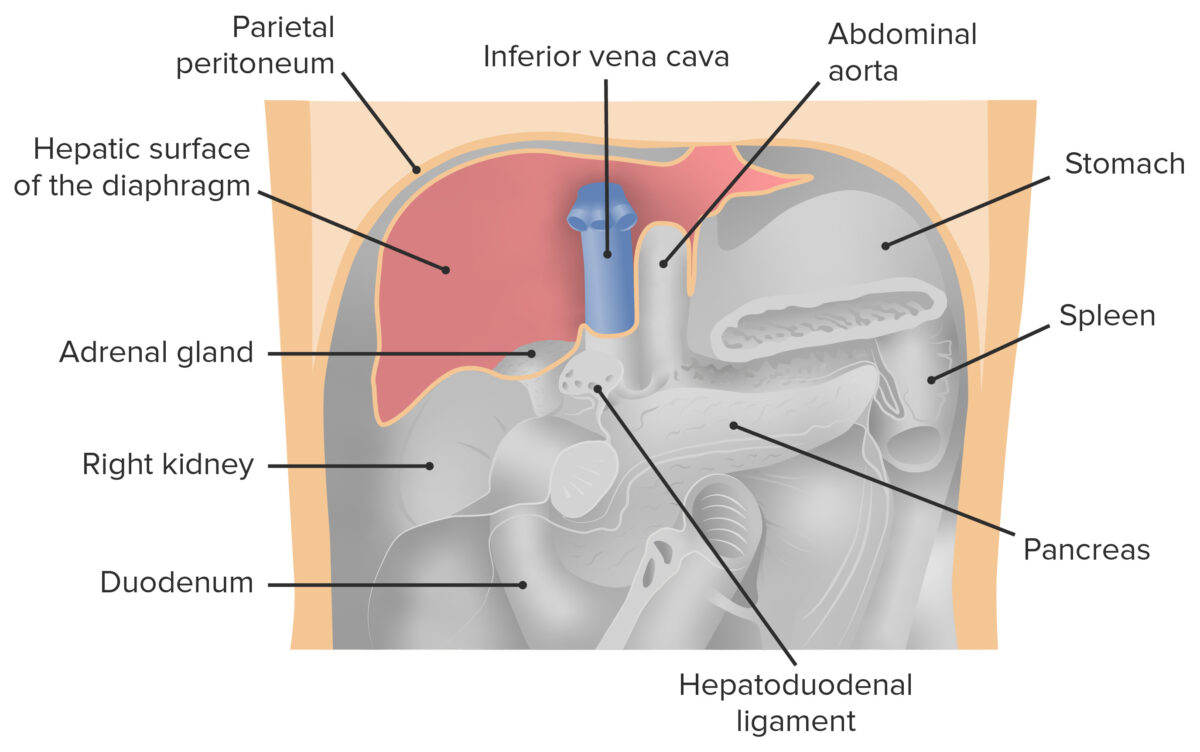
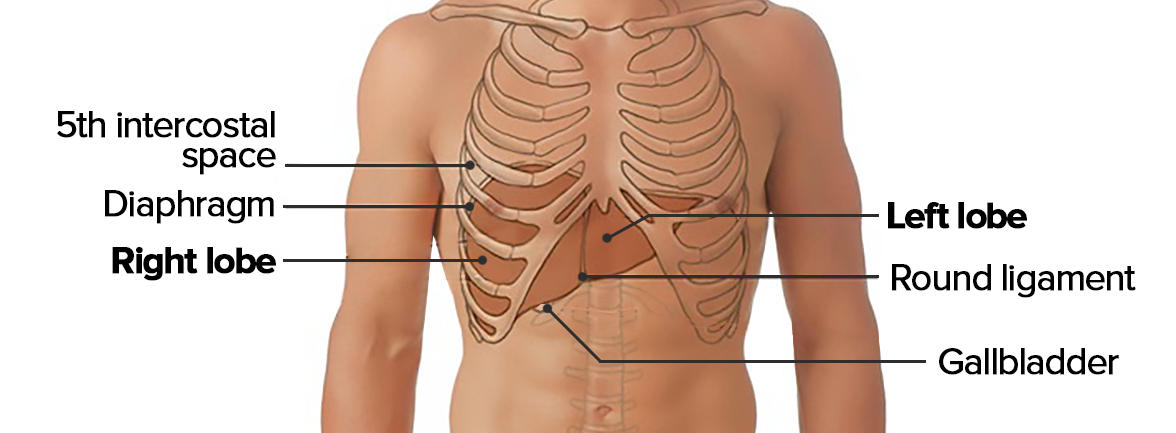
El hígado es la glándula más grande del cuerpo. Se extiende desde la región hipocondríaca derecha a la izquierda (¾ del hígado está en EN Erythema nodosum is an immune-mediated panniculitis (inflammation of the subcutaneous fat) caused by a type IV (delayed-type) hypersensitivity reaction. It commonly manifests in young women as tender, erythematous nodules on the shins. Erythema Nodosum el cuadrante superior derecho).
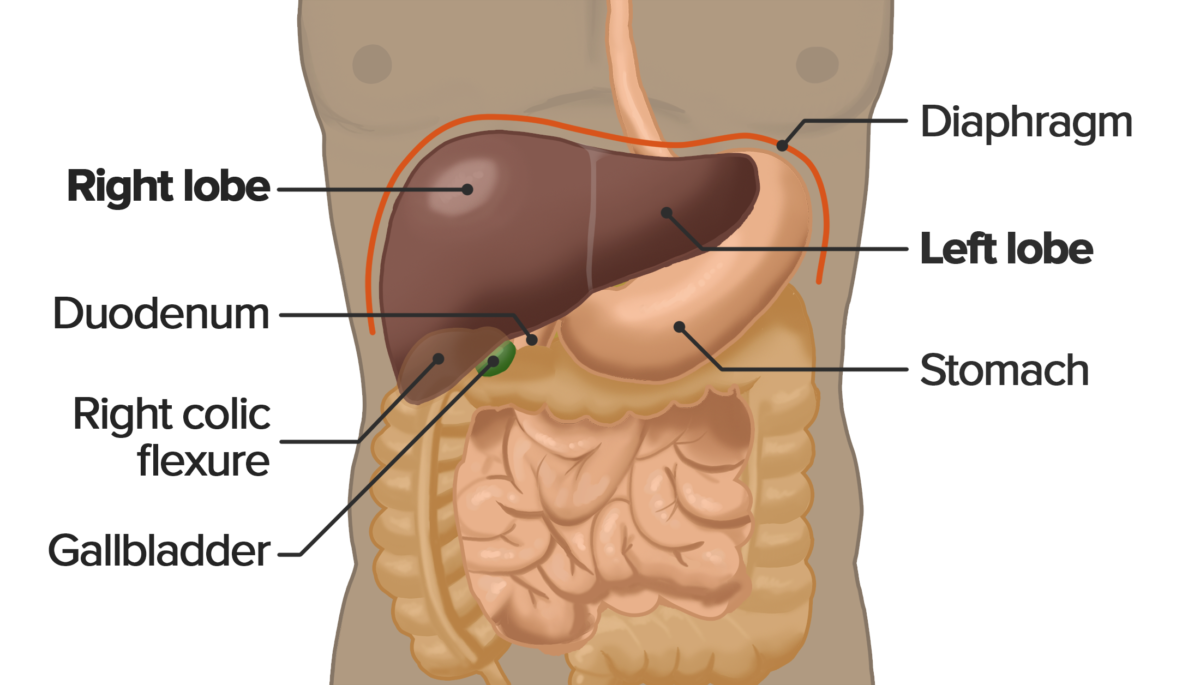
  • Inmediatamente adyacente a la superficie inferior del diafragma → la ubicación depende de la respiración (sube durante la exhalación, baja durante la inhalación)
  • Límite superior: altura del 5to espacio intercostal durante la exhalación
  • Límite inferior: curva del arco costal derecho durante la inspiración
  • Superficies: diafragmática y visceral
    • Intraperitoneal Intraperitoneal Peritoneum: Anatomy excepto por el área desnuda, porta hepatis Porta hepatis Liver: Anatomy y fosa de la vesícula biliar
    • Encerrado en EN Erythema nodosum is an immune-mediated panniculitis (inflammation of the subcutaneous fat) caused by a type IV (delayed-type) hypersensitivity reaction. It commonly manifests in young women as tender, erythematous nodules on the shins. Erythema Nodosum la cápsula de Glisson (capa externa de tejido conectivo fibroso)
  • Peso: 1,5 kg (promedio)

Cuatro lóbulos

  • Superficialmente divididos por fisuras y ligamentos
  • Determinados funcionalmente por las ramas izquierda y derecha de la vena hepática y la línea de Cantlie (una línea imaginaria que cruza la fosa de la vesícula biliar y la vena cava inferior)
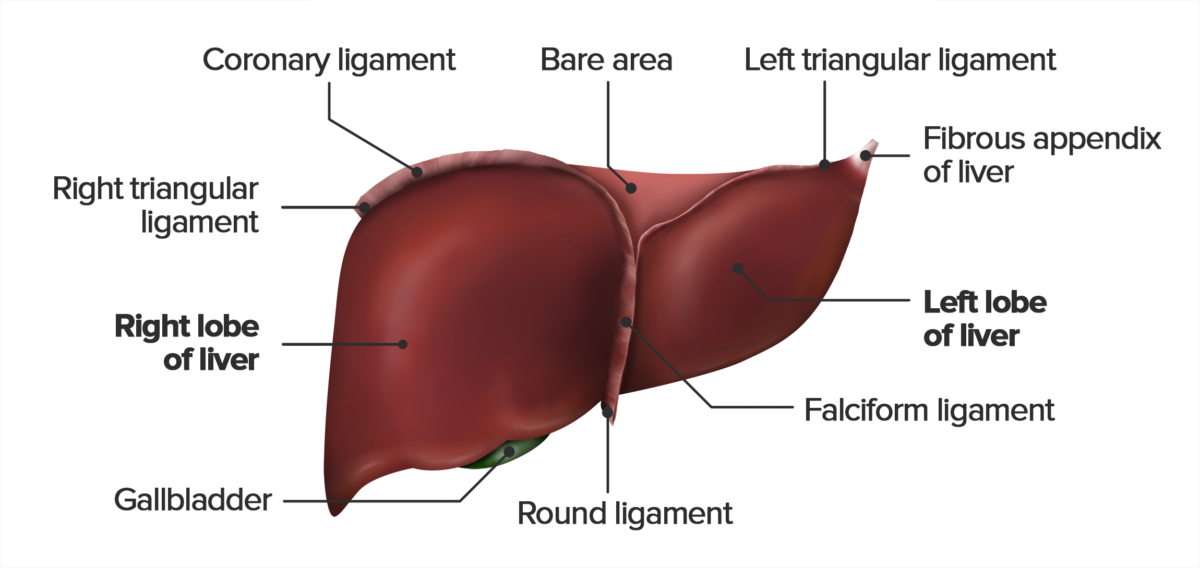
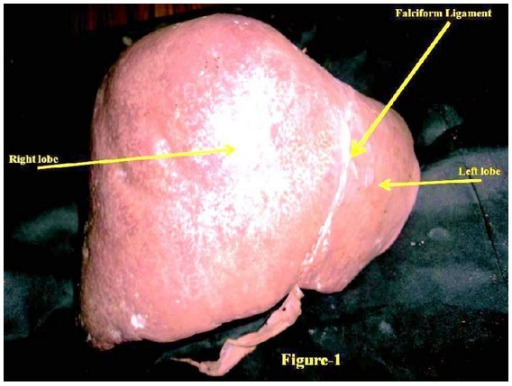
  1. Lóbulo derecho: el más grande
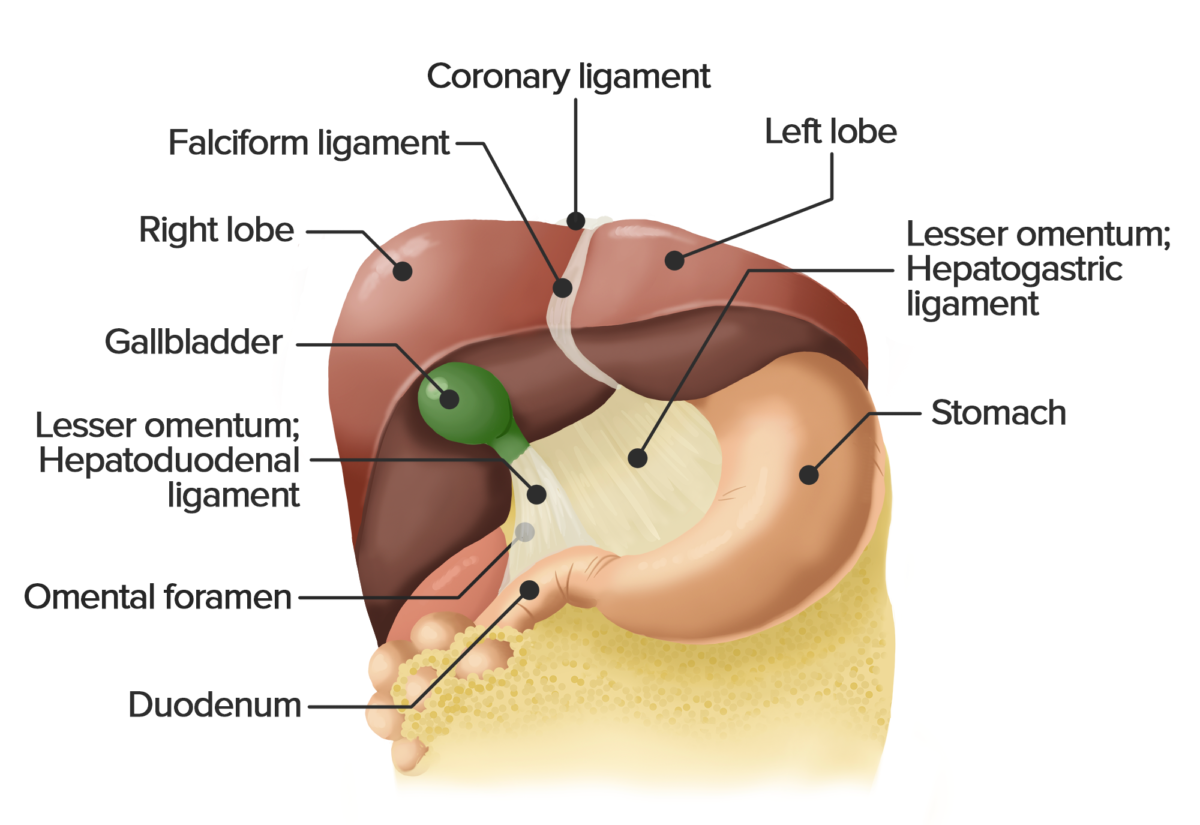
  2. Lóbulo izquierdo: separado del derecho por el ligamento falciforme en EN Erythema nodosum is an immune-mediated panniculitis (inflammation of the subcutaneous fat) caused by a type IV (delayed-type) hypersensitivity reaction. It commonly manifests in young women as tender, erythematous nodules on the shins. Erythema Nodosum la superficie diafragmática
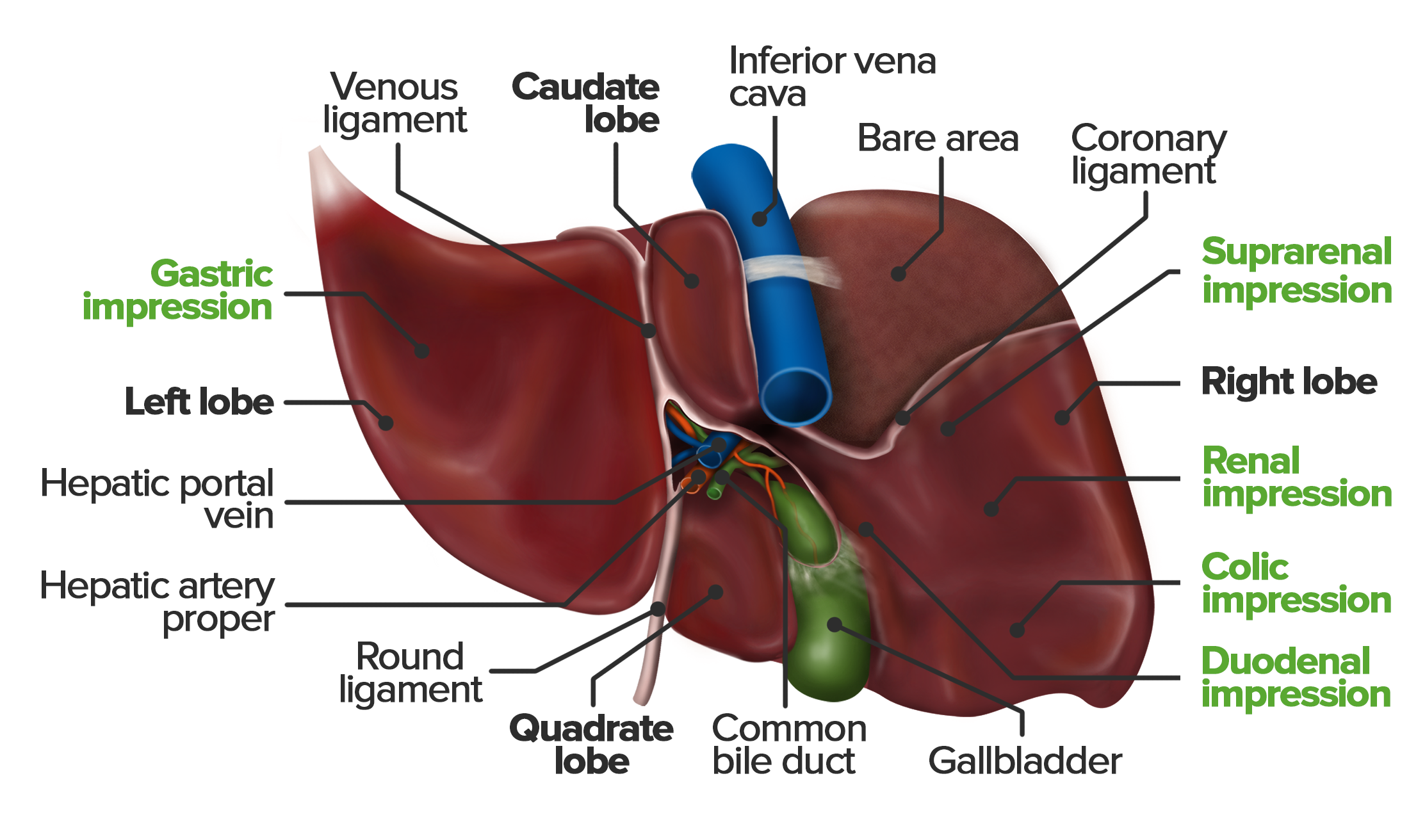
  3. Lóbulo caudado: entre el ligamento venoso y el surco de la vena cava inferior
  4. Lóbulo cuadrado: entre el ligamento redondo y la fosa de la vesícula biliar

Impresiones de estructuras y órganos adyacentes

  • Gástrica: lóbulo izquierdo, anterior a la impresión esofágica
  • Cólica: margen inferior del lóbulo derecho (flexura cólica derecha)
  • Duodenal: lóbulo derecho, lateral a la vesícula biliar (1er segmento del duodeno)
  • Renal: centro del lóbulo derecho (polo superior del riñón derecho)
  • Suprarrenal: superior a la impresión renal (glándula suprarrenal derecha)
Porta Hepatis e hígado vista inferior

Vista inferior de la superficie visceral del hígado. Obsérvese la estructura desigual que resulta de las impresiones de los órganos vecinos. La impresión cólica es causada por la flexura hepática del colon; la porción descendente del duodeno forma la impresión duodenal.

Imagen por Lecturio.
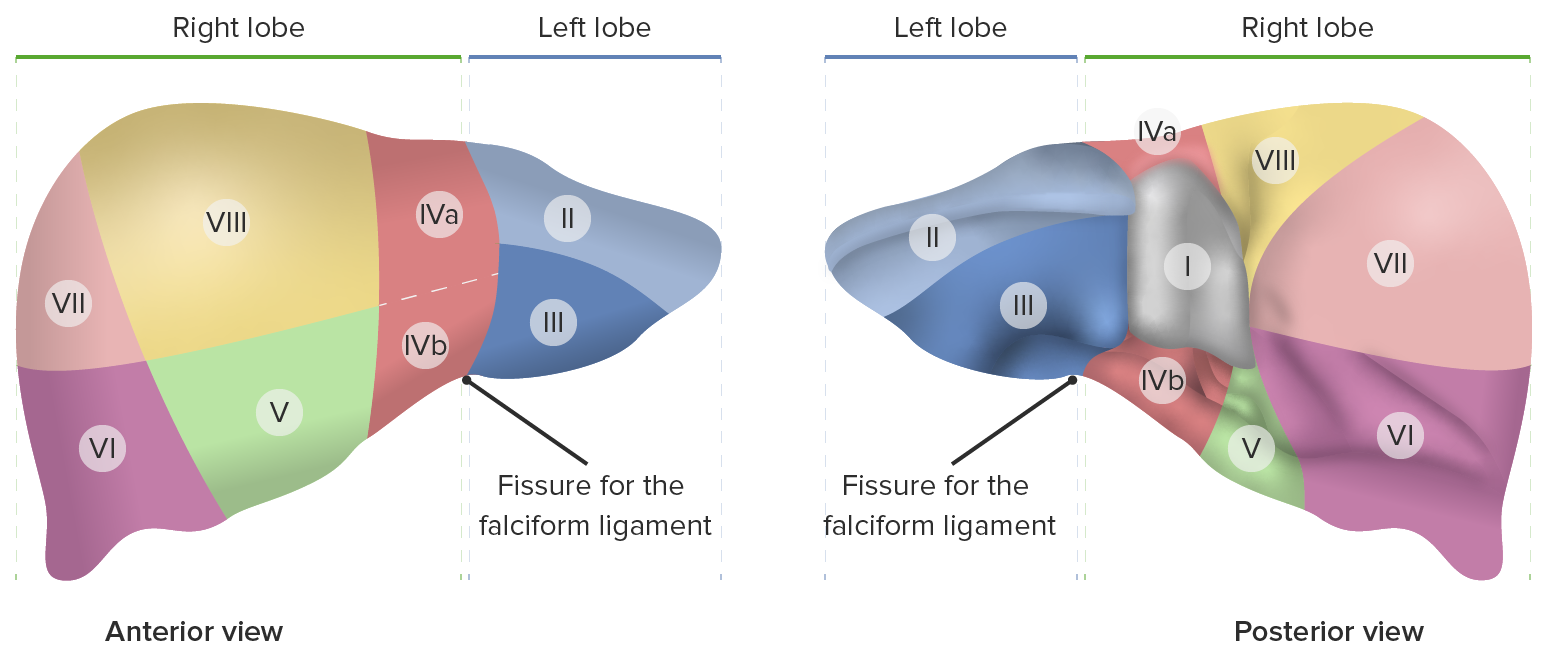
Ocho segmentos (clasificación de Couinaud)

  • Basado en EN Erythema nodosum is an immune-mediated panniculitis (inflammation of the subcutaneous fat) caused by a type IV (delayed-type) hypersensitivity reaction. It commonly manifests in young women as tender, erythematous nodules on the shins. Erythema Nodosum un plano transversal a través de la bifurcación de la vena porta principal
    • Excepción: el lóbulo caudado recibe flujo sanguíneo de ambas ramas vasculares.
  • 8 segmentos funcionalmente independientes, cada uno con su propio flujo vascular de entrada, salida y drenaje biliar
  • El segmento I es el lóbulo caudado y solo se puede ver desde la vista posterior.
  • Los LOS Neisseria segmentos se pueden resecar quirúrgicamente sin afectar la viabilidad del hígado restante.
Ilustración de clasificación de Couinaud

Ocho segmentos hepáticos según el sistema de clasificación de Couinaud.

Imagen por Lecturio.

Porta hepatis Porta hepatis Liver: Anatomy

El porta hepatis Porta hepatis Liver: Anatomy (también llamado portal hepático) es una fisura transversal que separa los LOS Neisseria lóbulos caudado y cuadrado y sirve como vía de paso para lo siguiente:
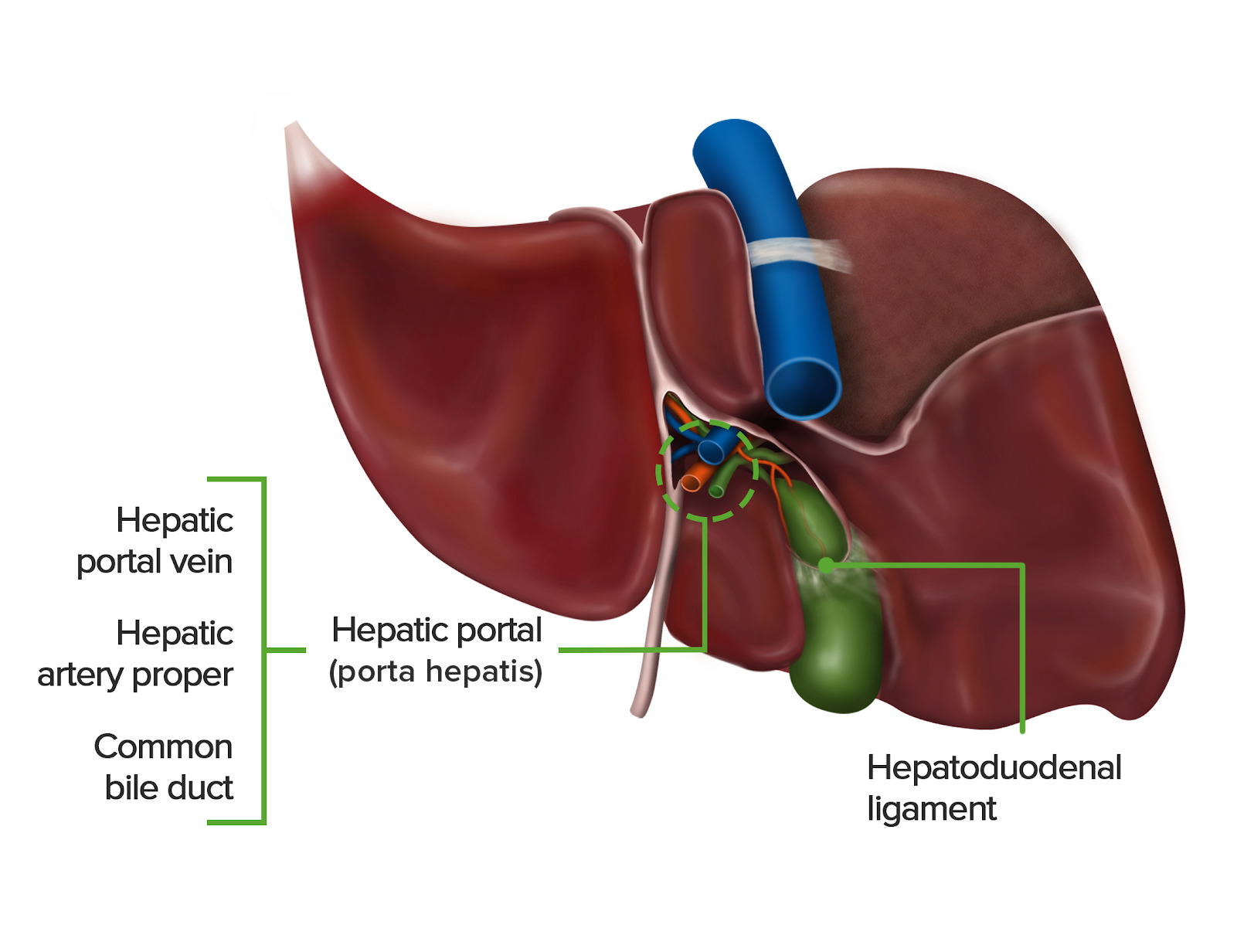
  • Conducto biliar hepático común (sale del hígado, localizado anterior y lateralmente)
  • Arteria hepática propiamente dicha (entra en EN Erythema nodosum is an immune-mediated panniculitis (inflammation of the subcutaneous fat) caused by a type IV (delayed-type) hypersensitivity reaction. It commonly manifests in young women as tender, erythematous nodules on the shins. Erythema Nodosum el hígado, localizada anterior y medialmente)
  • Vena porta hepática (entra en EN Erythema nodosum is an immune-mediated panniculitis (inflammation of the subcutaneous fat) caused by a type IV (delayed-type) hypersensitivity reaction. It commonly manifests in young women as tender, erythematous nodules on the shins. Erythema Nodosum el hígado, localizada posteriormente, entre el conducto y la arteria)
  • Plexo nervioso hepático (contiene inervación simpática posganglionar del plexo celíaco e inervación parasimpática preganglionar del nervio vago)
  • Vasos linfáticos del hígado
Porta hepatis portal hepático

Vista inferior de la superficie visceral del hígado, mostrando el portal hepático y el ligamento hepatoduodenal circundante.

Imagen por Lecturio.

Ligamentos del hígado

Definición: Los LOS Neisseria ligamentos del hígado son capas dobles de peritoneo visceral que fijan la posición del hígado al AL Amyloidosis unirlo a las estructuras circundantes.

Tabla: Ligamentos del hígado
Ligamentos coronarios
(anterior y posterior)
Reflexión peritoneal desde el diafragma hasta el hígado.
Demarca el área desnuda (superficie del hígado sin cubierta peritoneal)
Ligamento falciforme Reflexión peritoneal desde el ombligo hasta el hígado
Remanente del mesenterio ventral embrionario
Su borde libre contiene el ligamento redondo del hígado.
Ligamento hepatoduodenal Porción del epiplón menor
Se extiende desde la porta hepatis Porta hepatis Liver: Anatomy hasta la parte superior del duodeno
Contenido: arteria hepática propiamente dicha, vena porta, conducto hepático común
Ligamento hepatogástrico Se extiende desde el hígado hasta la curvatura menor del estómago
Contenido: arterias gástricas
Ligamento redondo
(también conocido como ligamentum teres Ligamentum teres A cord-like remnant structure formed from the closed left fetal umbilical vein. It is located along the lower edge of the falciform ligament. Liver: Anatomy)
Remanente de la porción intraabdominal de la vena umbilical
Se extiende desde el ombligo hasta el hígado en EN Erythema nodosum is an immune-mediated panniculitis (inflammation of the subcutaneous fat) caused by a type IV (delayed-type) hypersensitivity reaction. It commonly manifests in young women as tender, erythematous nodules on the shins. Erythema Nodosum el borde libre del ligamento falciforme
Ligamentos triangulares Formado por la fusión de los LOS Neisseria pliegues anterior y posterior del ligamento coronario
1 izquierdo y 1 derecho; ambos se extienden desde el hígado hasta el diafragma
Ligamento venoso
(también conocido como ligamentum venosum Ligamentum Venosum Liver: Anatomy)
Remanente del conducto venoso
Se extiende desde el remanente de la porción intraabdominal de la vena umbilical hasta la vena cava inferior
Fisura izquierda Impresiones de los LOS Neisseria ligamentos redondo y venoso
Fisura derecha Impresiones de la vesícula biliar y la vena cava inferior

Anatomía Microscópica

Lobulillo hepático (clásico)

  • Pequeñas unidades hexagonales del hígado, que miden 1–2,5 mm cada una, separadas por delgadas hebras de tejido conectivo
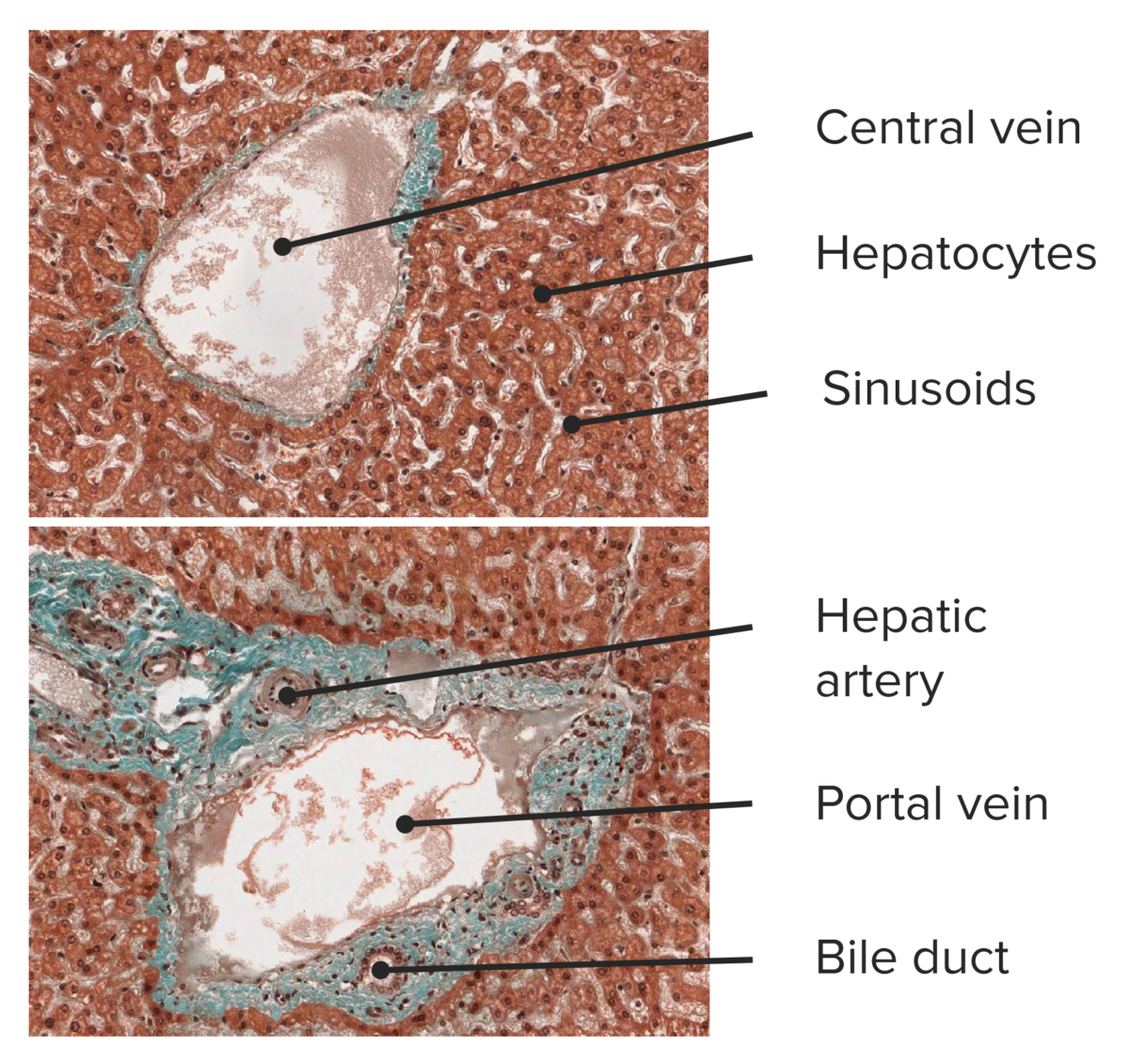
  • Vena central: cada lobulillo tiene una vena en EN Erythema nodosum is an immune-mediated panniculitis (inflammation of the subcutaneous fat) caused by a type IV (delayed-type) hypersensitivity reaction. It commonly manifests in young women as tender, erythematous nodules on the shins. Erythema Nodosum el centro que recibe sangre mixta de los LOS Neisseria sinusoides (a través de ramas de la vena porta y la arteria hepática), drena en EN Erythema nodosum is an immune-mediated panniculitis (inflammation of the subcutaneous fat) caused by a type IV (delayed-type) hypersensitivity reaction. It commonly manifests in young women as tender, erythematous nodules on the shins. Erythema Nodosum las venas hepáticas y sale del hígado a través de la vena cava inferior.
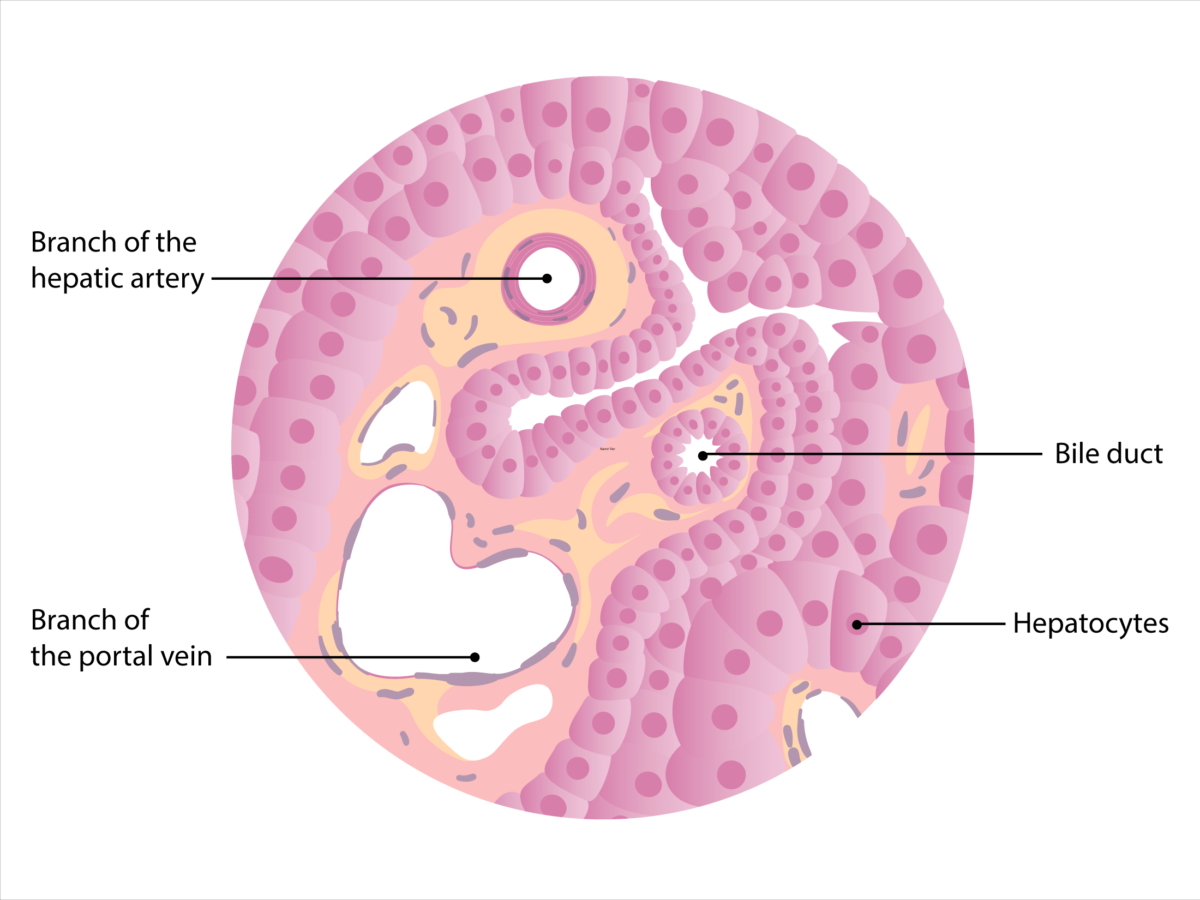
  • Tríada portal: grupo de vasos localizados en EN Erythema nodosum is an immune-mediated panniculitis (inflammation of the subcutaneous fat) caused by a type IV (delayed-type) hypersensitivity reaction. It commonly manifests in young women as tender, erythematous nodules on the shins. Erythema Nodosum los LOS Neisseria 6 vértices de cada lobulillo hepático:
    • Rama interlobulillar de la vena porta: irriga al AL Amyloidosis lobulillo con sangre desoxigenada, rica en EN Erythema nodosum is an immune-mediated panniculitis (inflammation of the subcutaneous fat) caused by a type IV (delayed-type) hypersensitivity reaction. It commonly manifests in young women as tender, erythematous nodules on the shins. Erythema Nodosum nutrientes
    • Rama interlobulillar de la arteria hepática propiamente dicha: irriga al AL Amyloidosis lobulillo con sangre oxigenada
    • Conducto biliar interlobulillar: drena la bilis de los LOS Neisseria conductos biliares en EN Erythema nodosum is an immune-mediated panniculitis (inflammation of the subcutaneous fat) caused by a type IV (delayed-type) hypersensitivity reaction. It commonly manifests in young women as tender, erythematous nodules on the shins. Erythema Nodosum la dirección opuesta al AL Amyloidosis flujo sanguíneo
    • Adicionalmente: vasos linfáticos y una rama del nervio vago
Ilustración del lóbulo hepático

Diagrama esquemático de la arquitectura del hígado, mostrando el lobulillo hepático. Las tríadas portales en las esquinas consisten en ramas de la vena porta, la arteria hepática propiamente dicha y un conducto biliar. La rama de la vena porta transporta sangre rica en nutrientes, pero desoxigenada del intestino delgado, la rama de la arteria hepática irriga sangre oxigenada a los hepatocitos. El conducto biliar drena la bilis de los hepatocitos hacia los conductos más grandes y la vesícula biliar.

Imagen por Lecturio.
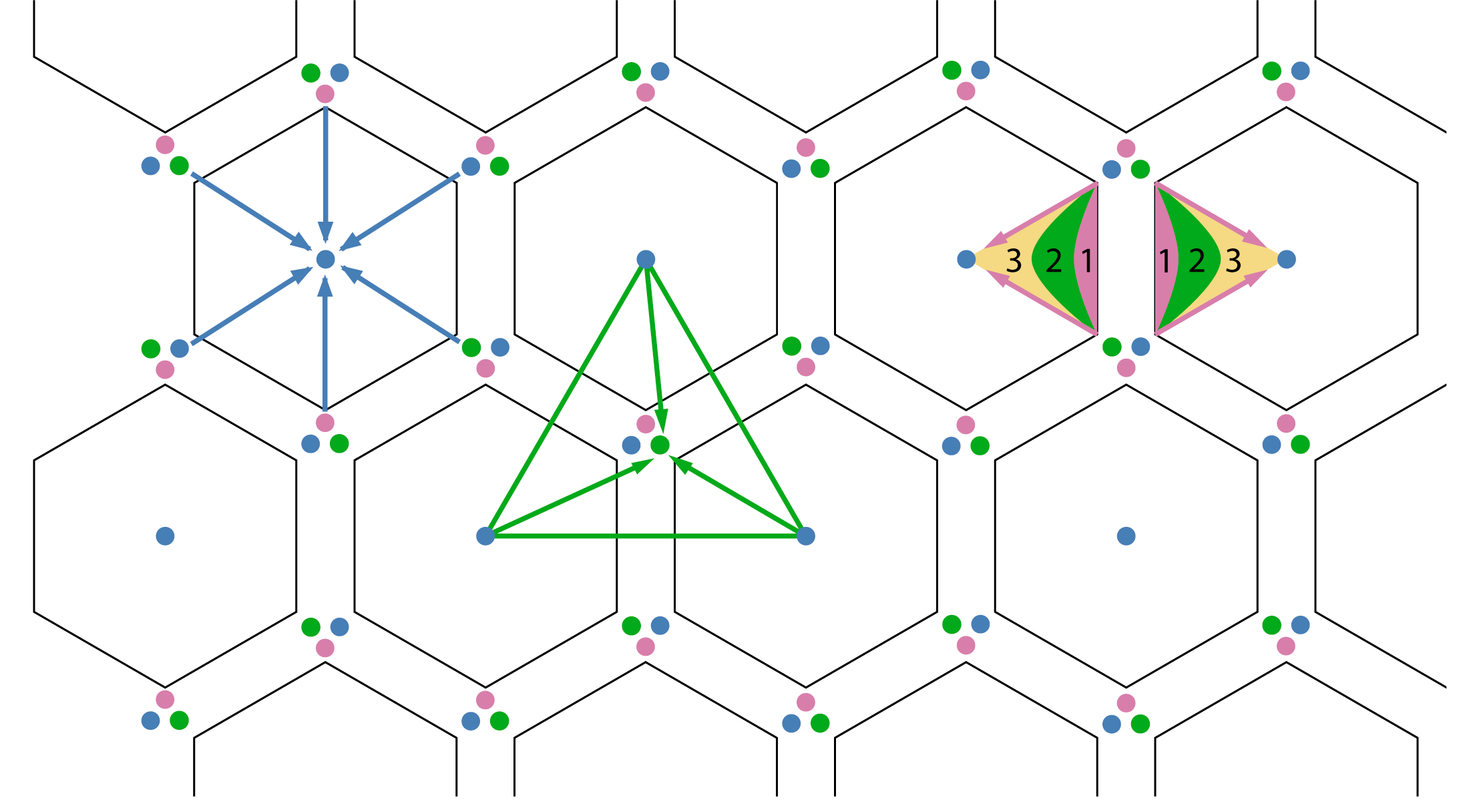
Lobulillo de la vena porta

  • El lobulillo de la vena porta es un lobulillo visto desde una 2da perspectiva, con la tríada portal en EN Erythema nodosum is an immune-mediated panniculitis (inflammation of the subcutaneous fat) caused by a type IV (delayed-type) hypersensitivity reaction. It commonly manifests in young women as tender, erythematous nodules on the shins. Erythema Nodosum el centro y las venas centrales en EN Erythema nodosum is an immune-mediated panniculitis (inflammation of the subcutaneous fat) caused by a type IV (delayed-type) hypersensitivity reaction. It commonly manifests in young women as tender, erythematous nodules on the shins. Erythema Nodosum los LOS Neisseria 3 vértices
  • Con forma de triángulo
  • Unidad funcional para el transporte de bilis
  • La bilis es atraída hacia el centro del triángulo, hacia el conducto biliar interlobulillar.

Acino hepático

  • El acino hepático es un lobulillo visto desde una 3er perspectiva, con las venas centrales y las tríadas porta en EN Erythema nodosum is an immune-mediated panniculitis (inflammation of the subcutaneous fat) caused by a type IV (delayed-type) hypersensitivity reaction. It commonly manifests in young women as tender, erythematous nodules on the shins. Erythema Nodosum los LOS Neisseria 4 vértices.
  • En EN Erythema nodosum is an immune-mediated panniculitis (inflammation of the subcutaneous fat) caused by a type IV (delayed-type) hypersensitivity reaction. It commonly manifests in young women as tender, erythematous nodules on the shins. Erythema Nodosum forma de diamante
  • Unidad funcional para el intercambio de sangre
  • La sangre se mueve desde las tríadas hasta la vena a través de 3 zonas:
    1. Zona 1: la periferia del lobulillo hepático, niveles más altos de nutrientes/oxígeno
    2. Zona 2: zona de transición
    3. Zona 3: el centro del lobulillo hepático, niveles más bajos de nutrientes/oxígeno
unidades hepáticas

Diagrama esquemático de los 3 tipos de unidades hepáticas. Observe las tríadas portales ubicadas en los vértices de las unidades hexagonales y las 3 zonas histológicas dentro del acino hepático.

Imagen por Lecturio.

Hepatocitos

  • Células poliédricas organizadas en EN Erythema nodosum is an immune-mediated panniculitis (inflammation of the subcutaneous fat) caused by a type IV (delayed-type) hypersensitivity reaction. It commonly manifests in young women as tender, erythematous nodules on the shins. Erythema Nodosum placas separadas por sinusoides
  • La forma y el número de los LOS Neisseria núcleos varían
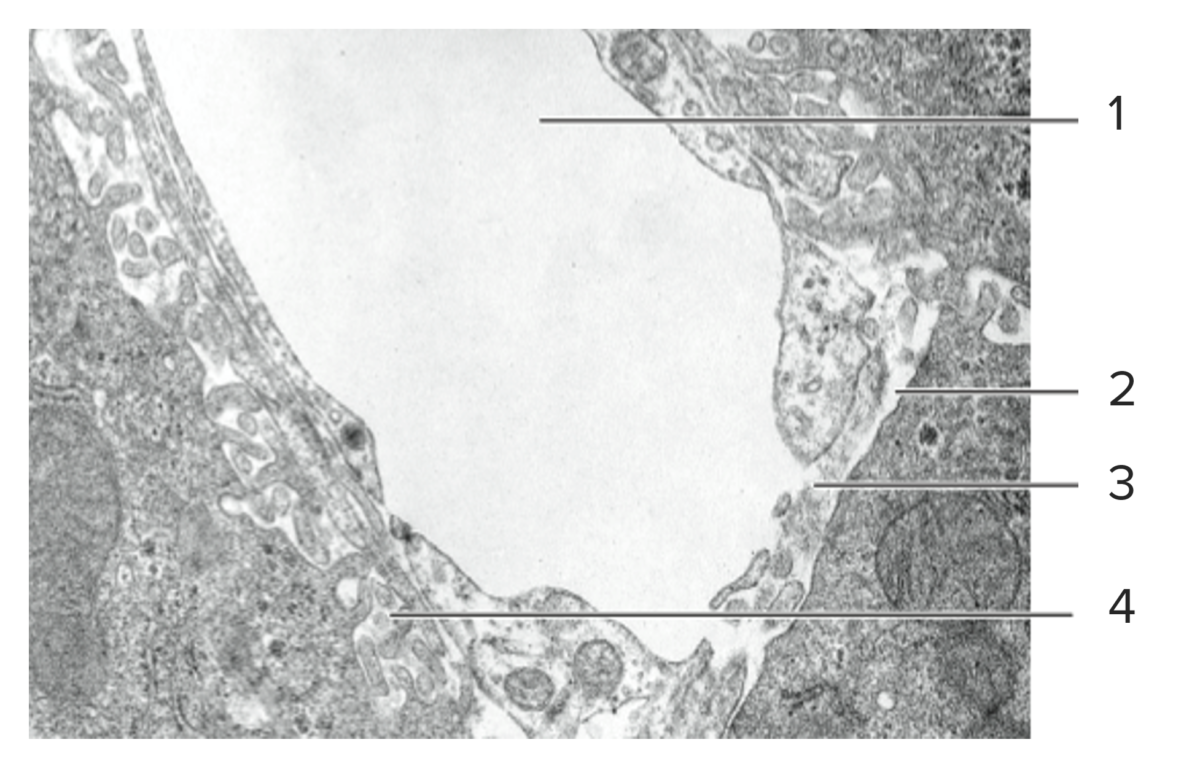
  • Cada célula tiene un polo biliar apical, que drena en EN Erythema nodosum is an immune-mediated panniculitis (inflammation of the subcutaneous fat) caused by a type IV (delayed-type) hypersensitivity reaction. It commonly manifests in young women as tender, erythematous nodules on the shins. Erythema Nodosum uno o más canalículos biliares, y un polo sanguíneo basolateral, que recibe sangre de los LOS Neisseria sinusoides.

Sinusoides

  • Capilares con endotelio discontinuo entre placas de hepatocitos
  • Recibe sangre rica en EN Erythema nodosum is an immune-mediated panniculitis (inflammation of the subcutaneous fat) caused by a type IV (delayed-type) hypersensitivity reaction. It commonly manifests in young women as tender, erythematous nodules on the shins. Erythema Nodosum oxígeno de las arterias interlobulillares y sangre rica en EN Erythema nodosum is an immune-mediated panniculitis (inflammation of the subcutaneous fat) caused by a type IV (delayed-type) hypersensitivity reaction. It commonly manifests in young women as tender, erythematous nodules on the shins. Erythema Nodosum nutrientes de las venas interlobulillares y la conduce hacia las venas centrales
  • Células de Kupffer: macrófagos especializados entre las células endoteliales, que fagocitan eritrocitos viejos o dañados
  • Células pit: células asesinas naturales específicas del hígado que se adhieren al AL Amyloidosis endotelio, dependen de las células de Kupffer y tienen la capacidad de lisar células tumorales
  • Perisinusoidal o espacio de Disse: espacio lleno de plasma Plasma The residual portion of blood that is left after removal of blood cells by centrifugation without prior blood coagulation. Transfusion Products sanguíneo que se encuentra entre los LOS Neisseria sinusoides y los LOS Neisseria hepatocitos
    • Contiene células Stellate o Ito: almacenan vitamina A y juegan un papel en EN Erythema nodosum is an immune-mediated panniculitis (inflammation of the subcutaneous fat) caused by a type IV (delayed-type) hypersensitivity reaction. It commonly manifests in young women as tender, erythematous nodules on the shins. Erythema Nodosum la producción de colágeno (importante en EN Erythema nodosum is an immune-mediated panniculitis (inflammation of the subcutaneous fat) caused by a type IV (delayed-type) hypersensitivity reaction. It commonly manifests in young women as tender, erythematous nodules on the shins. Erythema Nodosum el desarrollo de cirrosis)
Placa de hepatocitos y sinusoide

Representación esquemática de un sinusoide y placa de hepatocitos separados por el espacio de Disse. Observe las células especializadas del hígado: células de Kupffer, Pit y Stellate.

Imagen por Lecturio.
Irrigación e Inervación

Irrigación sanguínea

El hígado tiene un suministro de sangre dual especial que proporciona una mezcla de sangre oxigenada, desoxigenada y rica en EN Erythema nodosum is an immune-mediated panniculitis (inflammation of the subcutaneous fat) caused by a type IV (delayed-type) hypersensitivity reaction. It commonly manifests in young women as tender, erythematous nodules on the shins. Erythema Nodosum nutrientes.
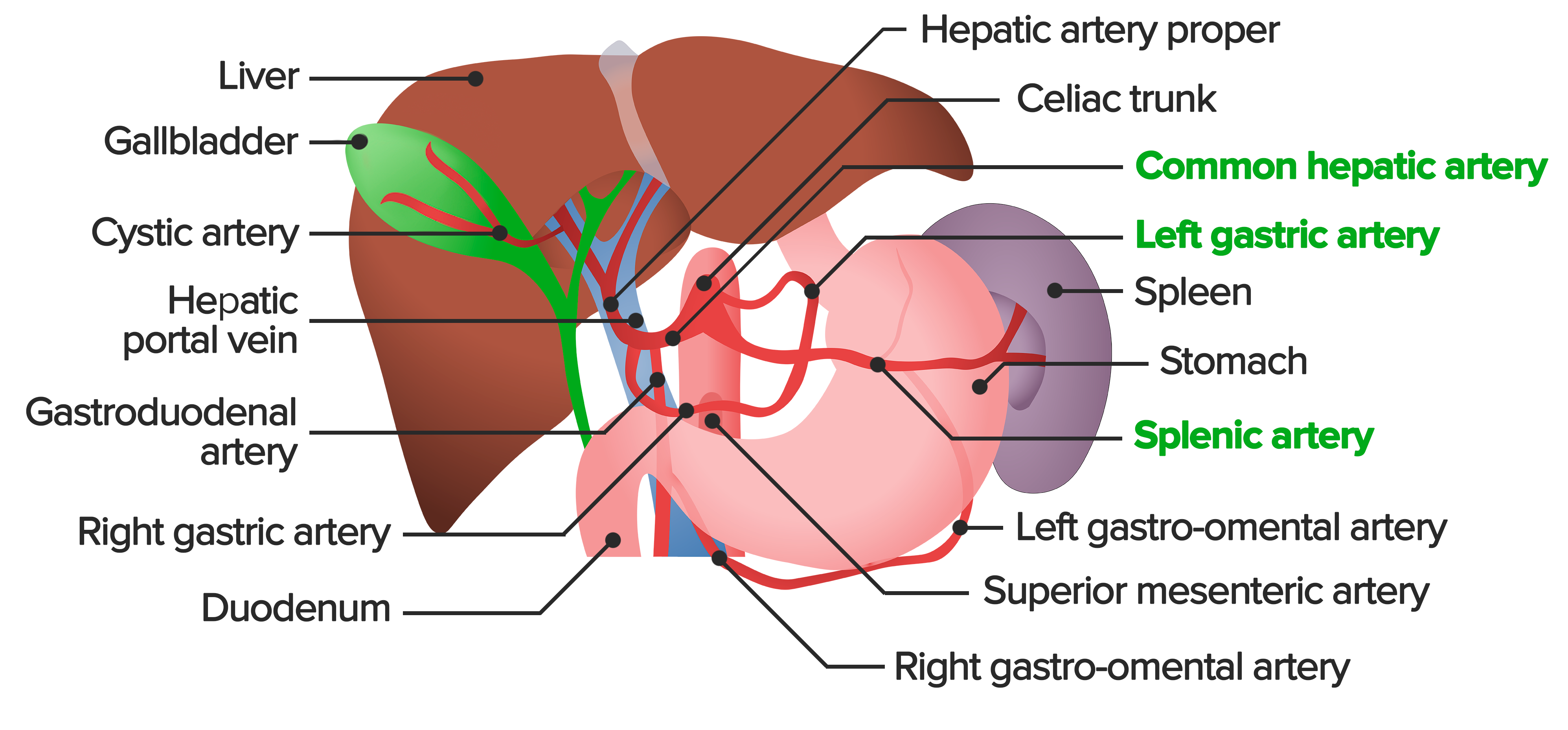
  • Arteria hepática propiamente dicha: proporciona el 25% de la irrigación del hígado y transporta sangre oxigenada
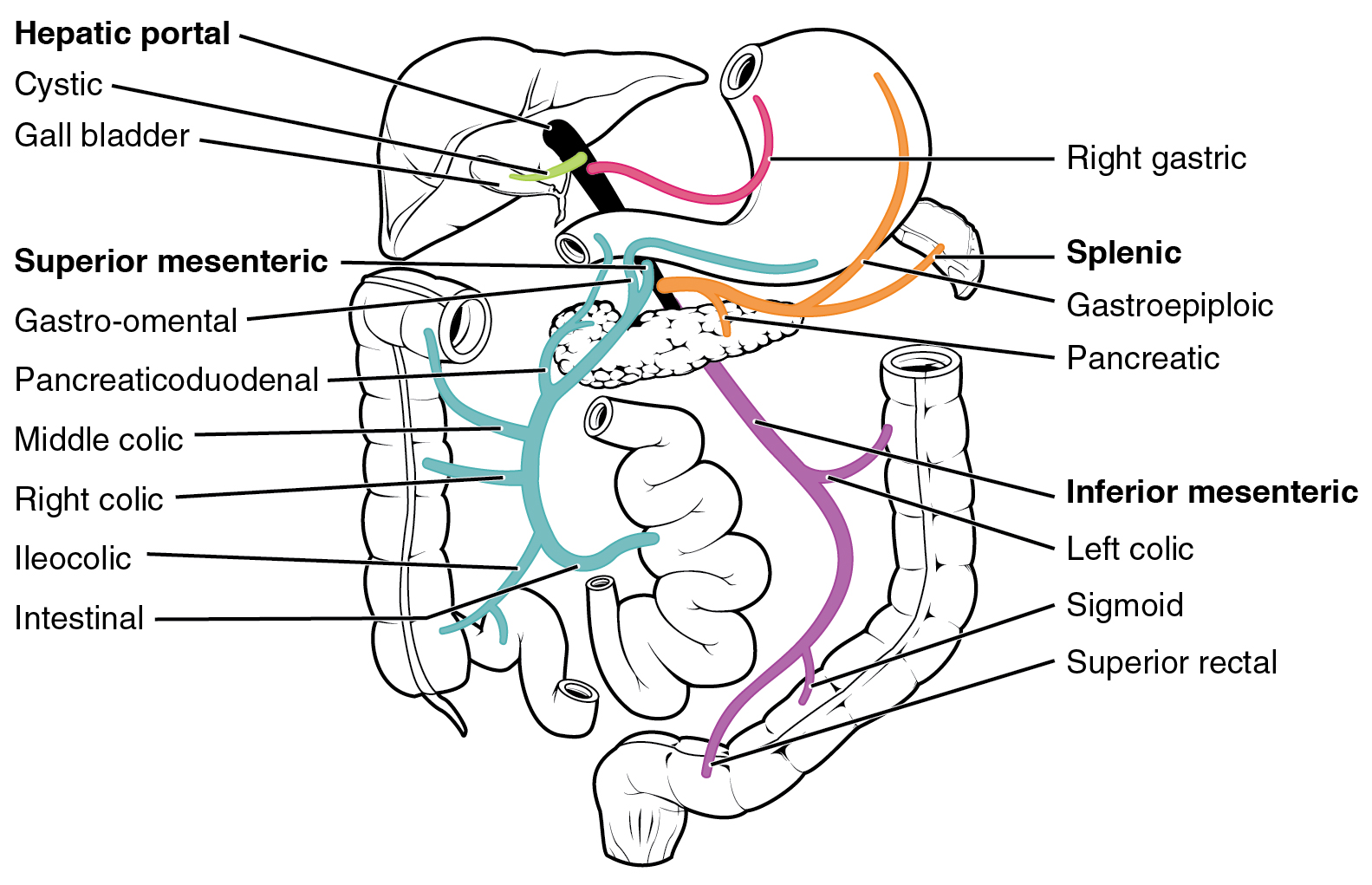
  • Vena porta: proporciona el 75% de la irrigación, transporta sangre pobre en EN Erythema nodosum is an immune-mediated panniculitis (inflammation of the subcutaneous fat) caused by a type IV (delayed-type) hypersensitivity reaction. It commonly manifests in young women as tender, erythematous nodules on the shins. Erythema Nodosum oxígeno y rica en EN Erythema nodosum is an immune-mediated panniculitis (inflammation of the subcutaneous fat) caused by a type IV (delayed-type) hypersensitivity reaction. It commonly manifests in young women as tender, erythematous nodules on the shins. Erythema Nodosum nutrientes drenada de los LOS Neisseria órganos abdominales
    • Formada más comúnmente por la unión de las venas mesentérica superior y esplénica
    • Tributarias adicionales: venas mesentérica inferior, quística y gástrica izquierda y derecha
irrigación del hígado

Descripción general de la irrigación arterial abdominal. El tronco celíaco es la primera rama principal de la aorta abdominal. Irriga sangre oxigenada al hígado, estómago, bazo, páncreas y partes del esófago y duodeno. El tronco celíaco da origen a la arteria gástrica izquierda, arteria esplénica y arteria hepática común. La arteria hepática común se divide en la arteria hepática propiamente dicha, arteria gastroduodenal y arteria gástrica derecha, todas las cuales se pueden ver aquí.

Imagen por Lecturio.
Drenaje venoso

  • Sinusoides → vena central de cada lobulillo → venas hepáticas → vena cava inferior
  • Anastomosis portosistémicas: rutas alternativas de circulación que aseguran el drenaje venoso de los LOS Neisseria órganos abdominales incluso si se produce un bloqueo en EN Erythema nodosum is an immune-mediated panniculitis (inflammation of the subcutaneous fat) caused by a type IV (delayed-type) hypersensitivity reaction. It commonly manifests in young women as tender, erythematous nodules on the shins. Erythema Nodosum el sistema portal. Anastomosis entre:
    • Las venas gástricas izquierdas y las venas esofágicas inferiores
    • Las venas rectales superiores y las venas rectales inferior y media
    • Las venas paraumbilicales y las venas epigástricas pequeñas
    • Las ramas hepáticas intraparenquimatosas de la división derecha de la vena porta y las venas retroperitoneales
    • Las venas omental y colónica con las venas retroperitoneales
    • El conducto venoso y la vena cava inferior
Sistema de vena porta hepática

Diagrama del sistema portal venoso. La vena porta hepática se forma más comúnmente por la unión de la vena esplénica y las venas mesentéricas superiores. Otras tributarias incluyen las venas mesentérica inferior, cística y gástrica izquierda y derecha. En su conjunto, el sistema portal recoge el drenaje venoso del bazo, estómago, vesícula biliar, intestino delgado y grueso y el páncreas.

Imagen: “Hepatic Portal Vein System” por OpenStax College. Licencia: CC BY 3.0

Drenaje linfático

Ganglios linfáticos hepáticos: localizados alrededor de la porta hepatis Porta hepatis Liver: Anatomy → grupo celíaco de ganglios linfáticos → cisterna chyli (saco dilatado que recibe la linfa del tronco gastrointestinal y 2 troncos linfáticos lumbares) → conducto torácico

Inervación

  • Plexo hepático (viaja con la arteria hepática y la vena porta)
  • Fibras simpáticas del plexo celíaco y del plexo mesentérico superior
  • Fibras parasimpáticas de los LOS Neisseria troncos vagales anterior y posterior
  • Cápsula de Glisson inervada por los LOS Neisseria nervios intercostales más inferiores
  • Arteria hepática propiamente dicha tiene receptores adrenérgicos α y β inervados por nervios esplácnicos

Drenaje biliar

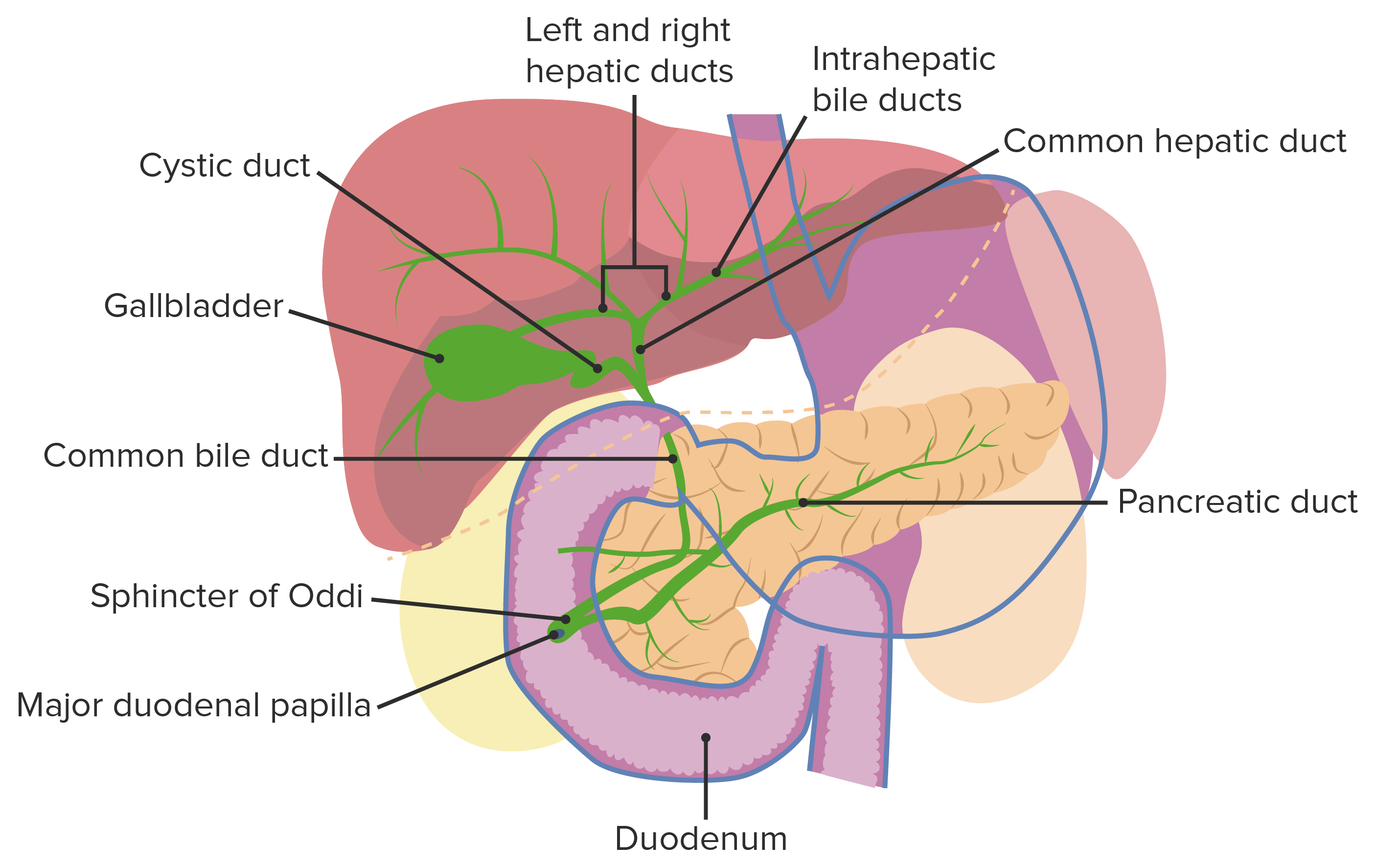
Canalículos biliares → conductos biliares intrahepáticos → conductos hepáticos izquierdo y derecho → conducto hepático común → conducto biliar común → duodeno
Vesícula biliar y vías biliares

Vesícula biliar y vías biliares

Imagen por Lecturio.

Funciones del Hígado

Desintoxicación

El hígado elimina los LOS Neisseria productos de degradación obtenidos a través de la resorción del tracto gastrointestinal. Hace HACE Altitude Sickness que las sustancias liposolubles sean solubles en EN Erythema nodosum is an immune-mediated panniculitis (inflammation of the subcutaneous fat) caused by a type IV (delayed-type) hypersensitivity reaction. It commonly manifests in young women as tender, erythematous nodules on the shins. Erythema Nodosum agua a través de la modificación enzimática. Esto permite la excreción a través de las vías biliares o a través de la orina.

  • Sistema citocromo p450: inactiva los LOS Neisseria medicamentos administrados por vía oral mediante el efecto de primer paso
  • Degradación del amoníaco en EN Erythema nodosum is an immune-mediated panniculitis (inflammation of the subcutaneous fat) caused by a type IV (delayed-type) hypersensitivity reaction. It commonly manifests in young women as tender, erythematous nodules on the shins. Erythema Nodosum urea Urea A compound formed in the liver from ammonia produced by the deamination of amino acids. It is the principal end product of protein catabolism and constitutes about one half of the total urinary solids. Urea Cycle
  • Descomposición del etanol
  • Descomposición de la bilirrubina (glucuronidación) → excreción en EN Erythema nodosum is an immune-mediated panniculitis (inflammation of the subcutaneous fat) caused by a type IV (delayed-type) hypersensitivity reaction. It commonly manifests in young women as tender, erythematous nodules on the shins. Erythema Nodosum la bilis

Metabolismo

  • Carbohidratos:
    • Gluconeogénesis (síntesis de glucosa a partir de aminoácidos, lactato o glicerol)
    • Glucogénesis (síntesis de glucógeno a partir de glucosa)
    • Glucogenólisis (descomposición del glucógeno en EN Erythema nodosum is an immune-mediated panniculitis (inflammation of the subcutaneous fat) caused by a type IV (delayed-type) hypersensitivity reaction. It commonly manifests in young women as tender, erythematous nodules on the shins. Erythema Nodosum glucosa)
    • Glucólisis (descomposición de la glucosa en EN Erythema nodosum is an immune-mediated panniculitis (inflammation of the subcutaneous fat) caused by a type IV (delayed-type) hypersensitivity reaction. It commonly manifests in young women as tender, erythematous nodules on the shins. Erythema Nodosum piruvato, produciendo adenosin trifosfato (ATP, por sus siglas en EN Erythema nodosum is an immune-mediated panniculitis (inflammation of the subcutaneous fat) caused by a type IV (delayed-type) hypersensitivity reaction. It commonly manifests in young women as tender, erythematous nodules on the shins. Erythema Nodosum inglés))
  • Proteínas:
    • Producción de albúmina; globulinas; proteínas de fase aguda; transaminasas; factores de coagulación I (fibrinógeno), II (protrombina), V, VII, VIII, IX, X, XI, XII y XIII; proteína C; proteína S; y antitrombina
    • Degradación de aminoácidos
  • Lípidos:
    • Lipogénesis (almacenamiento de grasas libres como triglicéridos)
    • Cetogénesis (síntesis de cuerpos cetónicos)
    • Síntesis y degradación de ácidos grasos
    • Producción de ácidos biliares, lipoproteínas y colesterol
Diagrama del metabolismo hepático

Diagrama esquemático que muestra las diversas vías metabólicas en las que participa el hígado

Imagen por Lecturio.

Almacenamiento

  • Glucógeno
  • Lipoproteínas
  • Vitaminas A, K, B12, B9 (folato), E y D
  • Hierro y cobre

Producción de hormonas

  • Trombopoyetina
  • Factor de crecimiento similar a la insulina 1
  • Angiotensinógeno

Eritropoyesis

  • Sitio de producción de eritrocitos fetales desde la semana 6 de gestación hasta el nacimiento
  • La eritropoyesis extramedular puede ocurrir en EN Erythema nodosum is an immune-mediated panniculitis (inflammation of the subcutaneous fat) caused by a type IV (delayed-type) hypersensitivity reaction. It commonly manifests in young women as tender, erythematous nodules on the shins. Erythema Nodosum la edad adulta después de la irradiación de la médula ósea, en EN Erythema nodosum is an immune-mediated panniculitis (inflammation of the subcutaneous fat) caused by a type IV (delayed-type) hypersensitivity reaction. It commonly manifests in young women as tender, erythematous nodules on the shins. Erythema Nodosum varios trastornos de la médula ósea (e.g., mielofibrosis, síndrome mielodisplásico, policitemia vera) y anemias crónicas (e.g., talasemia, enfermedad de células falciformes).

Relevancia Clínica

Evaluación clínica

  • Examen abdominal: el examen del hígado se basa principalmente en EN Erythema nodosum is an immune-mediated panniculitis (inflammation of the subcutaneous fat) caused by a type IV (delayed-type) hypersensitivity reaction. It commonly manifests in young women as tender, erythematous nodules on the shins. Erythema Nodosum la palpación y percusión. El propósito de la palpación del hígado es aproximar el tamaño del hígado y detectar sensibilidad y masas. El propósito de la percusión hepática es medir el tamaño del hígado.
  • Pruebas defunción hepática: se pueden dividir en EN Erythema nodosum is an immune-mediated panniculitis (inflammation of the subcutaneous fat) caused by a type IV (delayed-type) hypersensitivity reaction. It commonly manifests in young women as tender, erythematous nodules on the shins. Erythema Nodosum 3 categorías:
    • Parámetros de daño hepatocelular (transaminasas, glutamato deshidrogenasa y relación aspartato aminotransferasa/alanina aminotransferasa)
    • Parámetros de colestasis (e.g., γ-glutamil transpeptidasa, fosfatasa alcalina y bilirrubina directa e indirecta)
    • Parámetros de síntesis hepática (albúmina, colinesterasa y factores de coagulación)
  • Imagenología abdominal normal: la imagenología es esencial para detectar con precisión lesiones hepáticas focales (e.g., abscesos, tumores), pero es limitada para detectar y diagnosticar enfermedades hepatocelulares difusas (e.g., hepatitis, cirrosis).
    Los LOS Neisseria tipos de imagenología utilizados son:
    • Ultrasonido hepatobiliar
    • Elastografía por ultrasonido
    • Ultrasonido doppler Doppler Ultrasonography applying the doppler effect, with frequency-shifted ultrasound reflections produced by moving targets (usually red blood cells) in the bloodstream along the ultrasound axis in direct proportion to the velocity of movement of the targets, to determine both direction and velocity of blood flow. Ultrasound (Sonography)
    • Tomografía computarizada (TC)
    • Exploración hepática con radionúclidos
    • Radiografía de abdomen
    • Imagenología por resonancia magnética (RM)

Trastornos

Neoplasias

  • Tumores hepáticos benignos: hemangiomas cavernosos, adenomas hepatocelulares e hiperplasia nodular focal.
  • Cáncer de hígado: carcinoma hepatocelular; colangiocarcinoma intrahepático; hepatoblastoma Hepatoblastoma A malignant neoplasm occurring in young children, primarily in the liver, composed of tissue resembling embryonal or fetal hepatic epithelium, or mixed epithelial and mesenchymal tissues. Rare Malignant Liver Tumors; angiosarcoma; hemangioendotelioma; metástasis hepáticas de tumores malignos gastrointestinales, mamarios y pulmonares; y tumores hepáticos raros (carcinosarcomas, teratomas Teratomas A true neoplasm composed of a number of different types of tissue, none of which is native to the area in which it occurs. It is composed of tissues that are derived from three germinal layers, the endoderm, mesoderm, and ectoderm. They are classified histologically as mature (benign) or immature (malignant). Ovarian Cancer, tumores del saco vitelino, tumores carcinoides y linfomas).

Infecciones

  • Hepatitis viral: causada principalmente por los LOS Neisseria virus Virus Viruses are infectious, obligate intracellular parasites composed of a nucleic acid core surrounded by a protein capsid. Viruses can be either naked (non-enveloped) or enveloped. The classification of viruses is complex and based on many factors, including type and structure of the nucleoid and capsid, the presence of an envelope, the replication cycle, and the host range. Virology hepatotropos A, B, C, D y E, lo que provoca una inflamación específica del hígado. Los LOS Neisseria pacientes desarrollan síntomas inespecíficos, como náuseas, vómitos, anorexia Anorexia The lack or loss of appetite accompanied by an aversion to food and the inability to eat. It is the defining characteristic of the disorder anorexia nervosa. Anorexia Nervosa y dolor Dolor Inflammation abdominal. Otros virus Virus Viruses are infectious, obligate intracellular parasites composed of a nucleic acid core surrounded by a protein capsid. Viruses can be either naked (non-enveloped) or enveloped. The classification of viruses is complex and based on many factors, including type and structure of the nucleoid and capsid, the presence of an envelope, the replication cycle, and the host range. Virology pueden causar hepatitis, incluidos el virus Virus Viruses are infectious, obligate intracellular parasites composed of a nucleic acid core surrounded by a protein capsid. Viruses can be either naked (non-enveloped) or enveloped. The classification of viruses is complex and based on many factors, including type and structure of the nucleoid and capsid, the presence of an envelope, the replication cycle, and the host range. Virology de Epstein-Barr, citomegalovirus y virus Virus Viruses are infectious, obligate intracellular parasites composed of a nucleic acid core surrounded by a protein capsid. Viruses can be either naked (non-enveloped) or enveloped. The classification of viruses is complex and based on many factors, including type and structure of the nucleoid and capsid, the presence of an envelope, the replication cycle, and the host range. Virology de la fiebre amarilla.
  • Infecciones bacterianas:
    • Absceso hepático piógeno (causado por muchos tipos diferentes de bacterias piógenas)
    • Compromiso difuso, como por Salmonella enterica Salmonella enterica A subgenus of Salmonella containing several medically important serotypes. The habitat for the majority of strains is warm-blooded animals. Salmonella serotipo typhi, Mycobacterium tuberculosis Mycobacterium tuberculosis Tuberculosis (TB) is an infectious disease caused by Mycobacterium tuberculosis complex bacteria. The bacteria usually attack the lungs but can also damage other parts of the body. Approximately 30% of people around the world are infected with this pathogen, with the majority harboring a latent infection. Tuberculosis spreads through the air when a person with active pulmonary infection coughs or sneezes. Tuberculosis
  • Infecciones fúngicas, incluyendo Candida Candida Candida is a genus of dimorphic, opportunistic fungi. Candida albicans is part of the normal human flora and is the most common cause of candidiasis. The clinical presentation varies and can include localized mucocutaneous infections (e.g., oropharyngeal, esophageal, intertriginous, and vulvovaginal candidiasis) and invasive disease (e.g., candidemia, intraabdominal abscess, pericarditis, and meningitis). Candida/Candidiasis spp. , Histoplasma capsulatum Histoplasma capsulatum Histoplasma/Histoplasmosis
  • Infecciones parasitarias, incluyendo Schistosoma Schistosoma Schistosomiasis is an infection caused by Schistosoma, a trematode. Schistosomiasis occurs in developing countries with poor sanitation. Freshwater snails are the intermediate host and are transmitted to humans through skin contact with contaminated fresh water. The clinical presentation occurs as a result of the host’s immune response to antigens from the eggs. Schistosoma/Schistosomiasis spp. (esquistosomiasis), Plasmodium Plasmodium A genus of protozoa that comprise the malaria parasites of mammals. Four species infect humans (although occasional infections with primate malarias may occur). These are plasmodium falciparum; plasmodium malariae; plasmodium ovale, and plasmodium vivax. Species causing infection in vertebrates other than man include: plasmodium berghei; plasmodium chabaudi; p. Vinckei, and plasmodium yoelii in rodents; p. Brasilianum, plasmodium cynomolgi; and plasmodium knowlesi in monkeys; and plasmodium gallinaceum in chickens. Antimalarial Drugs spp. ( malaria Malaria Malaria is an infectious parasitic disease affecting humans and other animals. Most commonly transmitted via the bite of a female Anopheles mosquito infected with microorganisms of the Plasmodium genus. Patients present with fever, chills, myalgia, headache, and diaphoresis. Plasmodium/Malaria)

Trastornos inflamatorios

  • Enfermedad hepática alcohólica: enfermedad progresiva caracterizada por inflamación y daño del hígado debido al AL Amyloidosis abuso excesivo de alcohol a largo plazo.
  • Enfermedad del hígado graso no alcohólico: enfermedad progresiva del hígado caracterizada por la acumulación de grasa en EN Erythema nodosum is an immune-mediated panniculitis (inflammation of the subcutaneous fat) caused by a type IV (delayed-type) hypersensitivity reaction. It commonly manifests in young women as tender, erythematous nodules on the shins. Erythema Nodosum el hígado sin la ingesta excesiva de alcohol; a menudo asociado con la obesidad, diabetes Diabetes Diabetes mellitus (DM) is a metabolic disease characterized by hyperglycemia and dysfunction of the regulation of glucose metabolism by insulin. Type 1 DM is diagnosed mostly in children and young adults as the result of autoimmune destruction of β cells in the pancreas and the resulting lack of insulin. Type 2 DM has a significant association with obesity and is characterized by insulin resistance. Diabetes Mellitus y triglicéridos elevados.
  • Hepatitis autoinmune: proceso necroinflamatorio progresivo que conduce a hepatitis crónica o cirrosis. Caracterizado por la presencia de autoanticuerpos circulantes y concentraciones elevadas de globulina sérica.
  • Síndrome de Fitz-Hugh-Curtis (perihepatitis): caracterizado por la inflamación de la cápsula hepática que ocurre en EN Erythema nodosum is an immune-mediated panniculitis (inflammation of the subcutaneous fat) caused by a type IV (delayed-type) hypersensitivity reaction. It commonly manifests in young women as tender, erythematous nodules on the shins. Erythema Nodosum las mujeres como una complicación rara de la enfermedad inflamatoria pélvica.

Trastornos hereditarios

  • Hemocromatosis: trastorno genético autosómico recesivo debido a una mutación del gen HFE, que resulta en EN Erythema nodosum is an immune-mediated panniculitis (inflammation of the subcutaneous fat) caused by a type IV (delayed-type) hypersensitivity reaction. It commonly manifests in young women as tender, erythematous nodules on the shins. Erythema Nodosum un aumento de la absorción intestinal de hierro. Se presenta con hepatomegalia, cirrosis hepática, piel color bronce, diabetes Diabetes Diabetes mellitus (DM) is a metabolic disease characterized by hyperglycemia and dysfunction of the regulation of glucose metabolism by insulin. Type 1 DM is diagnosed mostly in children and young adults as the result of autoimmune destruction of β cells in the pancreas and the resulting lack of insulin. Type 2 DM has a significant association with obesity and is characterized by insulin resistance. Diabetes Mellitus mellitus, artralgia y miocardiopatía.
  • Enfermedad de Wilson: un trastorno metabólico autosómico recesivo en EN Erythema nodosum is an immune-mediated panniculitis (inflammation of the subcutaneous fat) caused by a type IV (delayed-type) hypersensitivity reaction. It commonly manifests in young women as tender, erythematous nodules on the shins. Erythema Nodosum el que se altera la excreción de cobre, lo que lleva a la acumulación de cobre en EN Erythema nodosum is an immune-mediated panniculitis (inflammation of the subcutaneous fat) caused by a type IV (delayed-type) hypersensitivity reaction. It commonly manifests in young women as tender, erythematous nodules on the shins. Erythema Nodosum el hígado.
  • Síndrome de Dubin-Johnson: un trastorno autosómico recesivo raro que involucra niveles elevados de bilirrubina conjugada en EN Erythema nodosum is an immune-mediated panniculitis (inflammation of the subcutaneous fat) caused by a type IV (delayed-type) hypersensitivity reaction. It commonly manifests in young women as tender, erythematous nodules on the shins. Erythema Nodosum el suero que conducen a que un pigmento similar a la melanina se deposite en EN Erythema nodosum is an immune-mediated panniculitis (inflammation of the subcutaneous fat) caused by a type IV (delayed-type) hypersensitivity reaction. It commonly manifests in young women as tender, erythematous nodules on the shins. Erythema Nodosum el hígado, causando lo que se conoce como “hígado negro”.

Trastornos varios

  • Hipertensión portal: aumento de la presión en EN Erythema nodosum is an immune-mediated panniculitis (inflammation of the subcutaneous fat) caused by a type IV (delayed-type) hypersensitivity reaction. It commonly manifests in young women as tender, erythematous nodules on the shins. Erythema Nodosum la vena porta. Más comúnmente causado por cirrosis, esquistosomiasis y trombosis de la vena porta, pero puede ser idiopático.
  • Cirrosis: una condición causada por daño crónico al AL Amyloidosis hígado. La cirrosis se caracteriza por necrosis Necrosis The death of cells in an organ or tissue due to disease, injury or failure of the blood supply. Ischemic Cell Damage del parénquima hepático, que finalmente conduce a fibrosis Fibrosis Any pathological condition where fibrous connective tissue invades any organ, usually as a consequence of inflammation or other injury. Bronchiolitis Obliterans e insuficiencia hepática.
  • Síndrome de BuddChiari: una condición rara que resulta de la obstrucción de la vena hepática que conduce a hepatomegalia, ascitis y molestias abdominales.

References

  1. Brunicardi, F. C., Andersen, D. K., Billiar, T. R., Dunn, D. L., Kao, L. S., Hunter, J. G., Matthews, J. B., & Pollock, R. E. (2019). Schwartz’s Principles of Surgery (11th ed.). McGraw Hill.
  2. Drake, R. L., Vogl, A. W., & Mitchell, A. W. M. (2019). Gray’s Anatomy for Students (4th ed.). Elsevier.
  3. Federle, M. P., Raman, S. P., Tublin, M. E., & Brandão, A. (2021). Diagnostic Imaging: Abdomen (4th ed.). Elsevier.
  4. Feldman, M., Friedman, L. S., & Brandt, L. J. (2020). Sleisenger and Fordtran’s Gastrointestinal and Liver Disease (11th ed.). Elsevier.
  5. Friedman, L. S. (2024). Approach to the patient with abnormal liver tests. In UpToDate. Retrieved September 30, 2024, from https://www.uptodate.com/contents/approach-to-the-patient-with-abnormal-liver-tests
  6. Hall, J. E., & Hall, M. E. (2020). Guyton and Hall Textbook of Medical Physiology (14th ed.). Elsevier.
  7. Jameson, J. L., Fauci, A. S., Kasper, D. L., Hauser, S. L., Longo, D. L., & Loscalzo, J. (2022). Harrison’s Principles of Internal Medicine (21st ed.). McGraw Hill.
  8. Kumar, V., Abbas, A. K., & Aster, J. C. (2020). Robbins and Cotran Pathologic Basis of Disease (10th ed.). Elsevier.
  9. Moore, K. L., Dalley, A. F., & Agur, A. M. R. (2021). Clinically Oriented Anatomy (9th ed.). Wolters Kluwer.
  10. Netter, F. H. (2018). Atlas of Human Anatomy (7th ed.). Elsevier.
  11. Ross, M. H., & Pawlina, W. (2020). Histology: A Text and Atlas: With Correlated Cell and Molecular Biology (8th ed.). Wolters Kluwer.

¡Crea tu cuenta gratis o inicia una sesión para seguir leyendo!

Regístrate ahora y obtén acceso gratuito a Lecturio con páginas de concepto, videos médicos y cuestionarios para tu educación médica.

User Reviews

Que tengas una sesión de estudio alegre y navideña 🎁 Ahorra 50% en todos los planes >>

Details