Domina Conceptos Médicos

Estudia para la escuela de medicina y tus examenes con Lecturio.

Glucopéptidos

Los LOS Neisseria antibióticos glucopéptidos vancomicina y teicoplanina son inhibidores de la síntesis de la pared celular bacteriana y se consideran como último recurso para el tratamiento de infecciones graves debidas a bacterias Gram-positivas como Staphylococcus aureus Staphylococcus aureus Potentially pathogenic bacteria found in nasal membranes, skin, hair follicles, and perineum of warm-blooded animals. They may cause a wide range of infections and intoxications. Brain Abscess, Enterococcus Enterococcus Enterococcus is a genus of oval-shaped gram-positive cocci that are arranged in pairs or short chains. Distinguishing factors include optochin resistance and the presence of pyrrolidonyl arylamidase (PYR) and Lancefield D antigen. Enterococcus is part of the normal flora of the human GI tract. Enterococcus spp. y Clostridiodes difficile. La vancomicina es el único antibiótico glucopéptido disponible en EN Erythema nodosum is an immune-mediated panniculitis (inflammation of the subcutaneous fat) caused by a type IV (delayed-type) hypersensitivity reaction. It commonly manifests in young women as tender, erythematous nodules on the shins. Erythema Nodosum los LOS Neisseria Estados Unidos. Este medicamento tiene una pobre absorción en EN Erythema nodosum is an immune-mediated panniculitis (inflammation of the subcutaneous fat) caused by a type IV (delayed-type) hypersensitivity reaction. It commonly manifests in young women as tender, erythematous nodules on the shins. Erythema Nodosum el tracto gastrointestinal; por lo tanto, la vancomicina oral se utiliza para las infecciones de la luz intestinal, incluido el C. difficile. La vancomicina intravenosa está indicada para las infecciones graves por Gram-positivos, como la endocarditis Endocarditis Endocarditis is an inflammatory disease involving the inner lining (endometrium) of the heart, most commonly affecting the cardiac valves. Both infectious and noninfectious etiologies lead to vegetations on the valve leaflets. Patients may present with nonspecific symptoms such as fever and fatigue. Endocarditis, neumonía y la bacteriemia. Los LOS Neisseria efectos secundarios significativos incluyen anafilaxia, reacciones de hipersensibilidad, síndrome del hombre rojo (relacionado con la infusión rápida), nefrotoxicidad y ototoxicidad.

Last updated: Dec 15, 2025

Editorial responsibility: Stanley Oiseth, Lindsay Jones, Evelin Maza

Estructura Química y Farmacodinamia

Definición

Los LOS Neisseria antibióticos glucopéptidos son péptidos no ribosomales derivados de actinomicetos, glucosilados, que se dirigen contra bacterias Gram-positivas mediante la inhibición de la síntesis de la pared celular:

  • Vancomicina
  • Teicoplanina (no disponible en EN Erythema nodosum is an immune-mediated panniculitis (inflammation of the subcutaneous fat) caused by a type IV (delayed-type) hypersensitivity reaction. It commonly manifests in young women as tender, erythematous nodules on the shins. Erythema Nodosum los LOS Neisseria Estados Unidos)

Estructura química

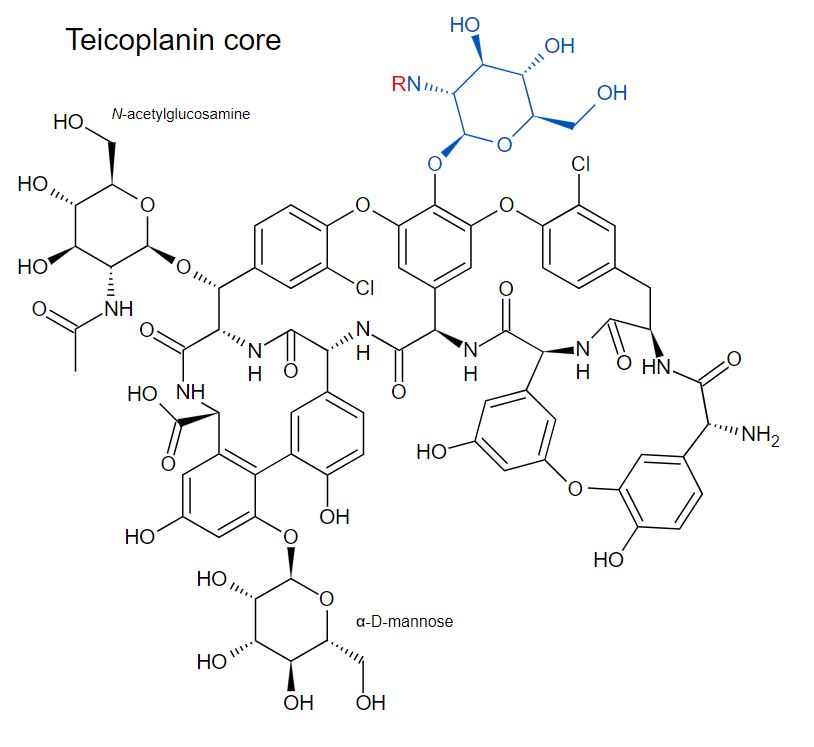
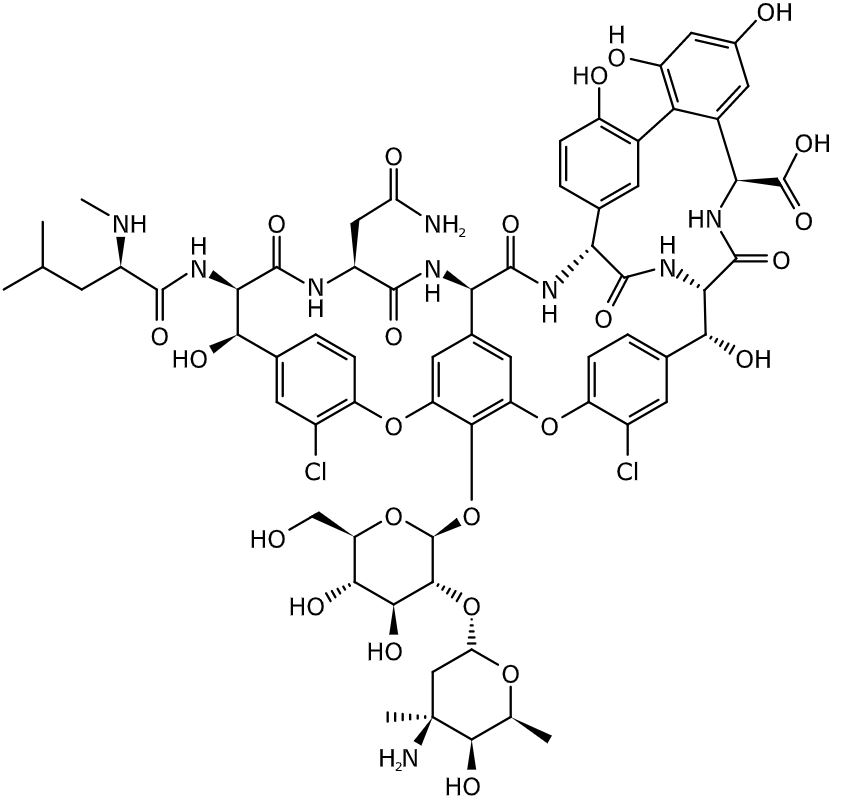
Tanto la vancomicina como la teicoplanina son heptapéptidos, pero los LOS Neisseria grupos de carbohidratos de cada medicamento difieren.
Mecanismo de acción

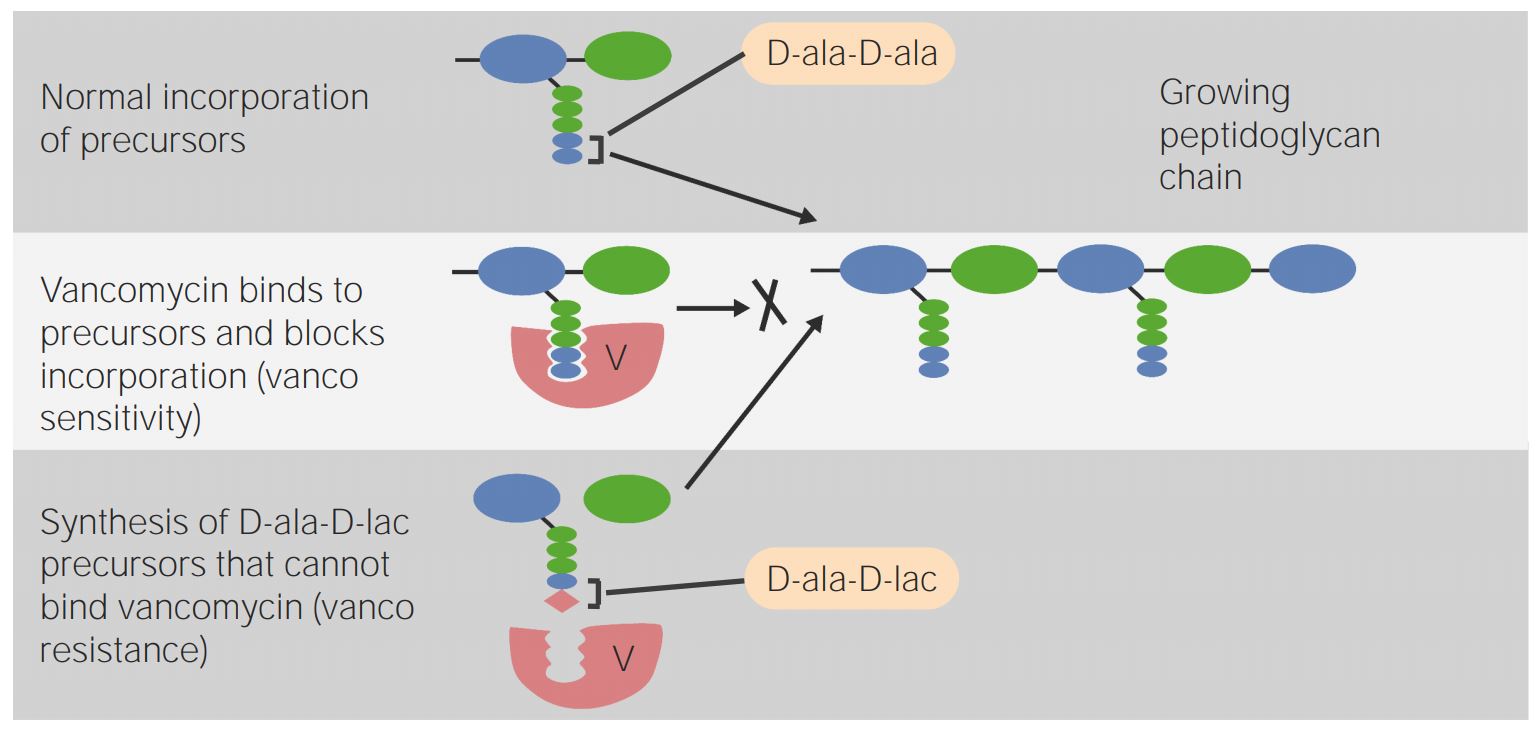
  • Los LOS Neisseria glucopéptidos son bactericidas por la inhibición de la síntesis de la pared celular en EN Erythema nodosum is an immune-mediated panniculitis (inflammation of the subcutaneous fat) caused by a type IV (delayed-type) hypersensitivity reaction. It commonly manifests in young women as tender, erythematous nodules on the shins. Erythema Nodosum las bacterias sensibles:
    • La pared celular de las bacterias está reforzada por estructuras de peptidoglicanos (PG) entrecruzados.
    • Los LOS Neisseria antibióticos glucopéptidos se unen a la terminación D-alanil-D-alanina de los LOS Neisseria precursores de los LOS Neisseria PG de la pared celular → inhibición de la polimerización y entrecruzamiento, resultando en EN Erythema nodosum is an immune-mediated panniculitis (inflammation of the subcutaneous fat) caused by a type IV (delayed-type) hypersensitivity reaction. It commonly manifests in young women as tender, erythematous nodules on the shins. Erythema Nodosum:
      • Inhibición de la síntesis de la pared celular
      • Debilitamiento de la pared celular  → lisis celular
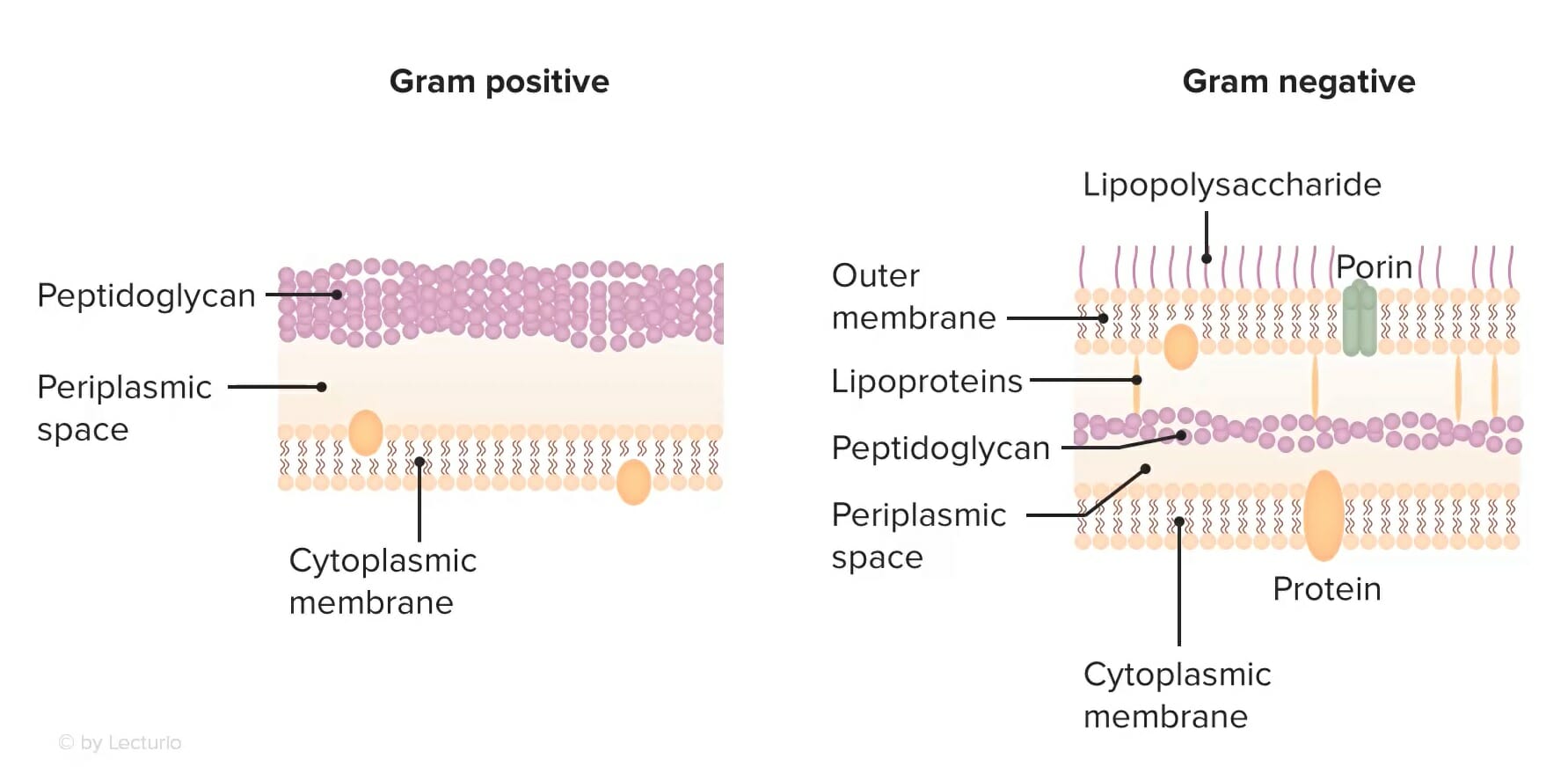
    • Los LOS Neisseria antibióticos glucopéptidos son eficaces contra las bacterias Gram-positivas porque los LOS Neisseria precursores de los LOS Neisseria PG están expuestos en EN Erythema nodosum is an immune-mediated panniculitis (inflammation of the subcutaneous fat) caused by a type IV (delayed-type) hypersensitivity reaction. It commonly manifests in young women as tender, erythematous nodules on the shins. Erythema Nodosum la superficie externa.
    • Las bacterias Gram-negativas no son sensibles a los LOS Neisseria antibióticos glucopéptidos: la membrana del lipopolisacárido no es permeable a las biomoléculas grandes.
  • La teicoplanina es más potente que la vancomicina.

Farmacocinética

Absorción y distribución

  • Absorción:
    • Vancomicina oral y teicoplanina:
      • Poca absorción oral
      • Eficaz contra las infecciones intestinales (e.g., colitis Colitis Inflammation of the colon section of the large intestine, usually with symptoms such as diarrhea (often with blood and mucus), abdominal pain, and fever. Pseudomembranous Colitis por Clostridiodes difficile), pero no para las infecciones sistémicas
    • La vancomicina se administra principalmente por vía intravenosa.
    • La teicoplanina se administra por vía intravenosa e intramuscular.
  • Distribución:
    • Vancomicina:
      • 30%- 55% de la vancomicina está unida a proteínas ( variable Variable Variables represent information about something that can change. The design of the measurement scales, or of the methods for obtaining information, will determine the data gathered and the characteristics of that data. As a result, a variable can be qualitative or quantitative, and may be further classified into subgroups. Types of Variables)
      • Penetra en EN Erythema nodosum is an immune-mediated panniculitis (inflammation of the subcutaneous fat) caused by a type IV (delayed-type) hypersensitivity reaction. It commonly manifests in young women as tender, erythematous nodules on the shins. Erythema Nodosum la mayoría de los LOS Neisseria espacios corporales (se observa en EN Erythema nodosum is an immune-mediated panniculitis (inflammation of the subcutaneous fat) caused by a type IV (delayed-type) hypersensitivity reaction. It commonly manifests in young women as tender, erythematous nodules on the shins. Erythema Nodosum la bilis y en EN Erythema nodosum is an immune-mediated panniculitis (inflammation of the subcutaneous fat) caused by a type IV (delayed-type) hypersensitivity reaction. It commonly manifests in young women as tender, erythematous nodules on the shins. Erythema Nodosum el líquido pleural, pericárdico, sinovial y ascítico)
      • Llega al AL Amyloidosis líquido cefalorraquídeo (LCR) cuando las meninges Meninges The brain and the spinal cord are enveloped by 3 overlapping layers of connective tissue called the meninges. The layers are, from the most external layer to the most internal layer, the dura mater, arachnoid mater, and pia mater. Between these layers are 3 potential spaces called the epidural, subdural, and subarachnoid spaces. Meninges: Anatomy están inflamadas.
      • Vida media de 4–6 horas ( en EN Erythema nodosum is an immune-mediated panniculitis (inflammation of the subcutaneous fat) caused by a type IV (delayed-type) hypersensitivity reaction. It commonly manifests in young women as tender, erythematous nodules on the shins. Erythema Nodosum adultos)
    • Teicoplanina:
      • 90% está unida a proteínas
      • Vida media más larga que la vancomicina (puede administrarse en EN Erythema nodosum is an immune-mediated panniculitis (inflammation of the subcutaneous fat) caused by a type IV (delayed-type) hypersensitivity reaction. It commonly manifests in young women as tender, erythematous nodules on the shins. Erythema Nodosum una dosis única diaria)

Metabolismo y excreción

  • Vancomicina:
    • Metabolismo pobre
    • Se excreta sin cambios en EN Erythema nodosum is an immune-mediated panniculitis (inflammation of the subcutaneous fat) caused by a type IV (delayed-type) hypersensitivity reaction. It commonly manifests in young women as tender, erythematous nodules on the shins. Erythema Nodosum la orina por los LOS Neisseria riñones
  • Teicoplanina: similar a la vancomicina con excreción principalmente renal

Indicaciones

Los LOS Neisseria antibióticos glucopéptidos tienen una amplia actividad contra las infecciones bacterianas Gram-positivas y suelen utilizarse como tratamiento de último recurso para las afecciones graves.

Tabla: Indicaciones de los LOS Neisseria antibióticos glucopéptidos
Medicamento Indicaciones Datos clínicos
Vancomicina
  • Infección por Clostridiodes difficile (oral)
  • Infecciones estafilocócicas:
    • Bacteriemia
    • Infecciones óseas
    • Infecciones del tracto respiratorio inferior (neumonía)
    • Infecciones de la piel y los LOS Neisseria tejidos blandos
    • Meningitis Meningitis Meningitis is inflammation of the meninges, the protective membranes of the brain, and spinal cord. The causes of meningitis are varied, with the most common being bacterial or viral infection. The classic presentation of meningitis is a triad of fever, altered mental status, and nuchal rigidity. Meningitis/infecciones del sistema nervioso central
  • Endocarditis Endocarditis Endocarditis is an inflammatory disease involving the inner lining (endometrium) of the heart, most commonly affecting the cardiac valves. Both infectious and noninfectious etiologies lead to vegetations on the valve leaflets. Patients may present with nonspecific symptoms such as fever and fatigue. Endocarditis:
    • Enterococcus Enterococcus Enterococcus is a genus of oval-shaped gram-positive cocci that are arranged in pairs or short chains. Distinguishing factors include optochin resistance and the presence of pyrrolidonyl arylamidase (PYR) and Lancefield D antigen. Enterococcus is part of the normal flora of the human GI tract. Enterococcus
    • Corynebacteria
    • Estafilococos (incluido el Staphylococcus aureus Staphylococcus aureus Potentially pathogenic bacteria found in nasal membranes, skin, hair follicles, and perineum of warm-blooded animals. They may cause a wide range of infections and intoxications. Brain Abscess resistente a la meticilina ( MRSA MRSA A strain of Staphylococcus aureus that is non-susceptible to the action of methicillin. The mechanism of resistance usually involves modification of normal or the presence of acquired penicillin binding proteins. Staphylococcus, por sus siglas en EN Erythema nodosum is an immune-mediated panniculitis (inflammation of the subcutaneous fat) caused by a type IV (delayed-type) hypersensitivity reaction. It commonly manifests in young women as tender, erythematous nodules on the shins. Erythema Nodosum inglés))
    • Streptococcus viridans Streptococcus viridans A large heterogeneous group of mostly alpha-hemolytic streptococci. They colonize the respiratory tract at birth and generally have a low degree of pathogenicity. This group of species includes Streptococcus mitis; Streptococcus mutans; Streptococcus oralis; Streptococcus sanguis; Streptococcus sobrinus; and the Streptococcus milleri group. The latter are often beta-hemolytic and commonly produce invasive pyogenic infections including brain and abdominal abscesses. Brain Abscess
    • Streptococcus Streptococcus Streptococcus is one of the two medically important genera of gram-positive cocci, the other being Staphylococcus. Streptococci are identified as different species on blood agar on the basis of their hemolytic pattern and sensitivity to optochin and bacitracin. There are many pathogenic species of streptococci, including S. pyogenes, S. agalactiae, S. pneumoniae, and the viridans streptococci. Streptococcus bovis
  • No cubre los LOS Neisseria microorganismos Gram-negativos
  • Infusión intravenosa que se administra durante 60 minutos (infusión rápida → síndrome del hombre rojo)
  • Monitoreo en EN Erythema nodosum is an immune-mediated panniculitis (inflammation of the subcutaneous fat) caused by a type IV (delayed-type) hypersensitivity reaction. It commonly manifests in young women as tender, erythematous nodules on the shins. Erythema Nodosum el uso de la vancomicina:
    • Niveles séricos (dentro de los LOS Neisseria 30 minutos previos a una dosis, normalmente antes de la 4ta dosis de un régimen)
    • Función renal (puede ser necesario ajustar la dosis si la función está deteriorada)
    • Hemograma (dependiendo de la condición subyacente o del efecto secundario)
Teicoplanina Espectro de actividad similar al AL Amyloidosis de la vancomicina
  • Mejor tolerada que la vancomicina
  • No disponible en EN Erythema nodosum is an immune-mediated panniculitis (inflammation of the subcutaneous fat) caused by a type IV (delayed-type) hypersensitivity reaction. It commonly manifests in young women as tender, erythematous nodules on the shins. Erythema Nodosum Estados Unidos

Efectos Secundarios

Vancomicina

  • Anafilaxia
  • Reacción de hipersensibilidad retardada:
  • Síndrome del hombre rojo:
    • Enrojecimiento, eritema, prurito facial y en EN Erythema nodosum is an immune-mediated panniculitis (inflammation of the subcutaneous fat) caused by a type IV (delayed-type) hypersensitivity reaction. It commonly manifests in young women as tender, erythematous nodules on the shins. Erythema Nodosum tórax y a veces, hipotensión resultante de la liberación de histamina causada por la infusión rápida de vancomicina
    • Se previene retrasando el tiempo de infusión y mediante una administración previa de antihistamínicos
    • No es una verdadera alergia
  • Neutropenia Neutropenia Neutrophils are an important component of the immune system and play a significant role in the eradication of infections. Low numbers of circulating neutrophils, referred to as neutropenia, predispose the body to recurrent infections or sepsis, though patients can also be asymptomatic. Neutropenia inducida por vancomicina:
    • Reacción secundaria rara, pero grave
    • Recuento absoluto de neutrófilos < 1 000/µL (asociado al AL Amyloidosis uso prolongado de vancomicina)
    • Mecanismo desconocido
  • Trombocitopenia inmunitaria inducida por medicamentos:
    • No está relacionado con la dosis
    • Normalmente, se observa en EN Erythema nodosum is an immune-mediated panniculitis (inflammation of the subcutaneous fat) caused by a type IV (delayed-type) hypersensitivity reaction. It commonly manifests in young women as tender, erythematous nodules on the shins. Erythema Nodosum 1–2 semanas después de iniciar del tratamiento
  • Nefrotoxicidad:
    • No está relacionado con la dosis
    • Se observa en EN Erythema nodosum is an immune-mediated panniculitis (inflammation of the subcutaneous fat) caused by a type IV (delayed-type) hypersensitivity reaction. It commonly manifests in young women as tender, erythematous nodules on the shins. Erythema Nodosum individuos con factores de riesgo:
      • Niveles de consumo ≥ 15 mg/L o dosis diarias elevadas.
      • Mayor exposición (> 7 días)
      • Deterioro renal preexistente
      • Administración simultánea de otro fármaco nefrotóxico
  • Ototoxicidad:
    • Se manifiesta como tinnitus Tinnitus A nonspecific symptom of hearing disorder characterized by the sensation of buzzing, ringing, clicking, pulsations, and other noises in the ear. Objective tinnitus refers to noises generated from within the ear or adjacent structures that can be heard by other individuals. The term subjective tinnitus is used when the sound is audible only to the affected individual. Tinnitus may occur as a manifestation of cochlear diseases; vestibulocochlear nerve diseases; intracranial hypertension; craniocerebral trauma; and other conditions. Cranial Nerve Palsies, pérdida de audición neurosensorial, mareo o vértigo
    • Mayor riesgo si se administra con otro agente ototóxico (e.g., aminoglucósidos)
  • Flebitis: inflamación, dolor Dolor Inflammation, edema Edema Edema is a condition in which excess serous fluid accumulates in the body cavity or interstitial space of connective tissues. Edema is a symptom observed in several medical conditions. It can be categorized into 2 types, namely, peripheral (in the extremities) and internal (in an organ or body cavity). Edema y eritema de una vena por la inyección de medicamentos o soluciones hipertónicas

Teicoplanina

  • Generalmente tiene mejor tolerancia
  • Raramente, se asocia con incidencias de síndrome del hombre rojo, ototoxicidad o nefrotoxicidad

Contraindicaciones

  • En EN Erythema nodosum is an immune-mediated panniculitis (inflammation of the subcutaneous fat) caused by a type IV (delayed-type) hypersensitivity reaction. It commonly manifests in young women as tender, erythematous nodules on the shins. Erythema Nodosum general, la hipersensibilidad a la vancomicina o a la teicoplanina
  • Precauciones para personas con afecciones subyacentes como:
    • Deterioro renal
    • Trastornos auditivos
    • Neutropenia Neutropenia Neutrophils are an important component of the immune system and play a significant role in the eradication of infections. Low numbers of circulating neutrophils, referred to as neutropenia, predispose the body to recurrent infections or sepsis, though patients can also be asymptomatic. Neutropenia
    • Trombocitopenia

Mecanismo de Resistencia

  • Cepas de enterococos resistentes a los LOS Neisseria glucopéptidos (especialmente Enterococcus Enterococcus Enterococcus is a genus of oval-shaped gram-positive cocci that are arranged in pairs or short chains. Distinguishing factors include optochin resistance and the presence of pyrrolidonyl arylamidase (PYR) and Lancefield D antigen. Enterococcus is part of the normal flora of the human GI tract. Enterococcus faecium):
    • El mecanismo suele implicar la unión con la terminación D-alanil-D-alanina de los LOS Neisseria precursores de PG de la pared celular bacteriana.
    • La resistencia resulta de la alteración de la D-alanil-D-alanina a D-alanil-D-lactato o D-alanil-D-serina (resulta en EN Erythema nodosum is an immune-mediated panniculitis (inflammation of the subcutaneous fat) caused by a type IV (delayed-type) hypersensitivity reaction. It commonly manifests in young women as tender, erythematous nodules on the shins. Erythema Nodosum pobre unión a glucopéptidos)
  • Las infecciones por enterococos resistentes a la vancomicina son una fuente importante de infección nosocomial.

Comparación de Antibióticos

Los LOS Neisseria siguientes antibióticos son agentes con actividad contra las bacterias Gram-positivas. Todos actúan sobre la pared celular bacteriana a través de distintos mecanismos.

Tabla: Comparación de antibióticos
Clase de antibióticos Mecanismo de acción Medicamentos
Lipopéptidos Alteración de la membrana celular bacteriana generando un canal conductor de iones, despolarizando la membrana y provocando la muerte celular Daptomicina
Glucopéptidos Inhibición de la síntesis de la pared celular mediante la unión al AL Amyloidosis extremo D-alanil-D-alanina de los LOS Neisseria precursores del peptidoglicano (PG) de la pared celular
  • Vancomicina
  • Teicoplanina
Lipoglucopéptidos Doble acción, inhibición de la síntesis de la pared celular y despolarización de la membrana celular
  • Telavancina
  • Dalbavancina
  • Oritavancina

Comparación de la Cobertura de Antibióticos

Diferentes antibióticos tienen distintos grados de actividad contra diferentes bacterias. En EN Erythema nodosum is an immune-mediated panniculitis (inflammation of the subcutaneous fat) caused by a type IV (delayed-type) hypersensitivity reaction. It commonly manifests in young women as tender, erythematous nodules on the shins. Erythema Nodosum la tabla siguiente se describen los LOS Neisseria antibióticos con actividad contra 3 clases importantes de bacterias: cocos Gram-positivos, bacilos Gram-negativos y anaerobios.
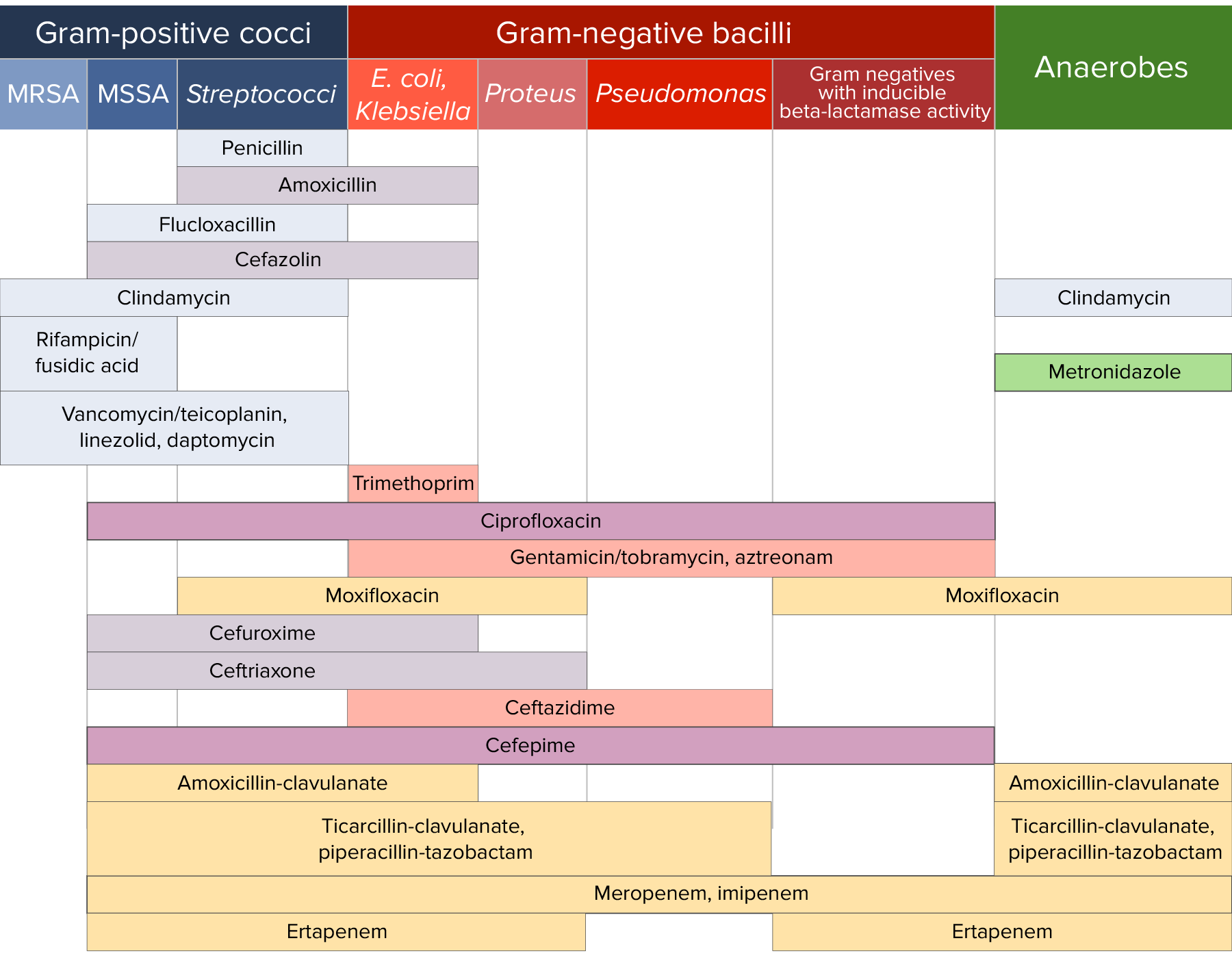
Tabla de sensibilidad a los antibióticos

Sensibilidad a los antibióticos:
Gráfico que compara la cobertura microbiana de diferentes antibióticos para cocos Gram-positivos, bacilos Gram-negativos y anaerobios.

Imagen por Lecturio. Licencia: CC BY-NC-SA 4.0

Referencias

  1. Bartlett, J.G., Auwaerter, P.G., Pham, P.A. (2010). The Johns Hopkins ABX Guide. Diagnosis and Treatment of Infectious Diseases. 2nd Edition. Jones & Bartlett Publishers, Sudbury MA.
  2. Binda, E., Marinelli, F., & Marcone, G.L. (2014). Old and New Glycopeptide Antibiotics: Action and Resistance. Antibiotics (Basel, Switzerland). 3(4), 572–594. https://doi.org/10.3390/antibiotics3040572
  3. Butler, M., Hansford, K., Blaskovich, M., et al. (2014). Glycopeptide antibiotics: Back to the future. J Antibiot. 67, 631–644. https://doi.org/10.1038/ja.2014.111
  4. Deck, D.H., Winston, L.G. (2012). Beta-Lactam & Other Cell Wall- & Membrane-Active Antibiotics (Chapter 43). In Katzung, B.G., Masters, S.B., Trevor, A.J. (Eds.), Basic and Clinical Pharmacology. 12e. McGraw-Hill/Lange.
  5. Economou, N. J., et al. (2013). Structure of the complex between teicoplanin and a bacterial cell-wall peptide: use of a carrier-protein approach. Acta crystallographica. Section D, Biological crystallography. 69(4), 520–533. https://doi.org/10.1107/S0907444912050469
  6. Finch, R.G., Eliopoulos, G.M. (2005). Safety and efficacy of glycopeptide antibiotics. J Antimicrob Chemother. 55 (Suppl 2), ii5–13. https://doi.org/10.1093/jac/dki004
  7. MacDougall, C. (2017). Protein synthesis inhibitors and miscellaneous antibacterial agents. In Brunton L.L., et al. (Eds.), Goodman & Gilman’s: The Pharmacological Basis of Therapeutics, 13e. McGraw Hill. https://accessmedicine.mhmedical.com/content.aspx?bookid=2189&sectionid=172485211
  8. Patel, S., Preuss, C.V., Bernice, F. (2021). Vancomycin. StatPearls. Treasure Island (FL): StatPearls Publishing. https://www.ncbi.nlm.nih.gov/books/NBK459263/
  9. Riedel, S., et al. (Eds.). (2019). Antimicrobial chemotherapy. Jawetz, Melnick, & Adelberg’s Medical Microbiology, 28e. McGraw Hill. https://accessmedicine.mhmedical.com/content.aspx?bookid=2629&sectionid=217773038
  10. Vancomycin: Drug information. (2021). UpToDate. Retrieved July 17, 2021, from https://www.uptodate.com/contents/vancomycin-drug-information

¡Crea tu cuenta gratis o inicia una sesión para seguir leyendo!

Regístrate ahora y obtén acceso gratuito a Lecturio con páginas de concepto, videos médicos y cuestionarios para tu educación médica.

User Reviews

Details