El eritema infeccioso es una enfermedad exantemática causada por el parvovirus B19Parvovirus B19Primate erythroparvovirus 1 (generally referred to as parvovirus B19, B19 virus, or sometimes erythrovirus B19) ranks among the smallest DNA viruses. Parvovirus B19 is of the family Parvoviridae and genus Erythrovirus. In immunocompetent humans, parvovirus B19 classically results in erythema infectiosum (5th disease) or "slapped cheek syndrome."Parvovirus B19. El eritema infeccioso también se conoce como quinta enfermedad y ocupa el quinto lugar enENErythema nodosum is an immune-mediated panniculitis (inflammation of the subcutaneous fat) caused by a type IV (delayed-type) hypersensitivity reaction. It commonly manifests in young women as tender, erythematous nodules on the shins.Erythema Nodosum la lista histórica de enfermedades infecciosas infantiles que causan erupciones cutáneas: sarampión (1ra), escarlatina (2da), rubéola (3ra), enfermedad de Duke (4ta) y roséola (6ta). La transmisión es a través de las secreciones respiratorias. El diagnóstico generalmente es clínico, sospechado enENErythema nodosum is an immune-mediated panniculitis (inflammation of the subcutaneous fat) caused by a type IV (delayed-type) hypersensitivity reaction. It commonly manifests in young women as tender, erythematous nodules on the shins.Erythema Nodosum pacientes que presentan una erupción malar eritematosa con palidez peribucal (“mejilla abofeteada”). Posteriormente, se produce una erupción enENErythema nodosum is an immune-mediated panniculitis (inflammation of the subcutaneous fat) caused by a type IV (delayed-type) hypersensitivity reaction. It commonly manifests in young women as tender, erythematous nodules on the shins.Erythema Nodosum el tronco y las extremidades. La enfermedad es autolimitada y no tiene tratamiento específico. Sin embargo, pueden ocurrir complicaciones debido alALAmyloidosis tropismo viral por losLOSNeisseria precursores de eritrocitos. LosLOSNeisseria pacientes con hemoglobinopatías pueden experimentar una crisis aplásica, mientras que losLOSNeisseria inmunocomprometidos pueden tener una infección crónica que produzca aplasiaAplasiaCranial Nerve Palsies pura de eritrocitos.
Eritema infeccioso: enfermedad causada por el parvovirus B19Parvovirus B19Primate erythroparvovirus 1 (generally referred to as parvovirus B19, B19 virus, or sometimes erythrovirus B19) ranks among the smallest DNA viruses. Parvovirus B19 is of the family Parvoviridae and genus Erythrovirus. In immunocompetent humans, parvovirus B19 classically results in erythema infectiosum (5th disease) or “slapped cheek syndrome.”Parvovirus B19, asociada con fiebre y un exantema característico
Epidemiología:
La infección afecta a personas de todas las edades, pero es más frecuente enENErythema nodosum is an immune-mediated panniculitis (inflammation of the subcutaneous fat) caused by a type IV (delayed-type) hypersensitivity reaction. It commonly manifests in young women as tender, erythematous nodules on the shins.Erythema Nodosum niños de entre 3 y 15 años.
LosLOSNeisseria brotes ocurren comúnmente enENErythema nodosum is an immune-mediated panniculitis (inflammation of the subcutaneous fat) caused by a type IV (delayed-type) hypersensitivity reaction. It commonly manifests in young women as tender, erythematous nodules on the shins.Erythema Nodosum escuelas y guarderías.
Las ocurrencias de infección son más frecuentes a fines del invierno y principios del verano.
Si una persona es inmunocompetente, por lo general se le confiere inmunidad después de la infección.
SalivaSalivaThe clear, viscous fluid secreted by the salivary glands and mucous glands of the mouth. It contains mucins, water, organic salts, and ptyalin.Salivary Glands: Anatomy
Moco
Fómites
Contacto con sangre o productos sanguíneos infectados
Transmisión vertical/transplacentaria enENErythema nodosum is an immune-mediated panniculitis (inflammation of the subcutaneous fat) caused by a type IV (delayed-type) hypersensitivity reaction. It commonly manifests in young women as tender, erythematous nodules on the shins.Erythema Nodosum mujeres no inmunes (puede provocar una infección congénita)
Incubación
El período de incubación es de 4–21 días.
Patogénesis
Infección viral B19 inicial:
Entrada enENErythema nodosum is an immune-mediated panniculitis (inflammation of the subcutaneous fat) caused by a type IV (delayed-type) hypersensitivity reaction. It commonly manifests in young women as tender, erythematous nodules on the shins.Erythema Nodosum el tracto respiratorio superior → viremiaViremiaThe presence of viruses in the blood.Erythema Infectiosum (síntomas prodrómicos) 5–10 días desde la exposición
El virusVirusViruses are infectious, obligate intracellular parasites composed of a nucleic acid core surrounded by a protein capsid. Viruses can be either naked (non-enveloped) or enveloped. The classification of viruses is complex and based on many factors, including type and structure of the nucleoid and capsid, the presence of an envelope, the replication cycle, and the host range. Virology se propaga y es citotóxico para las células precursoras eritroides que se dividen rápidamente enENErythema nodosum is an immune-mediated panniculitis (inflammation of the subcutaneous fat) caused by a type IV (delayed-type) hypersensitivity reaction. It commonly manifests in young women as tender, erythematous nodules on the shins.Erythema Nodosum la médula ósea → ↓ transitoria de reticulocitos y anemiaAnemiaAnemia is a condition in which individuals have low Hb levels, which can arise from various causes. Anemia is accompanied by a reduced number of RBCs and may manifest with fatigue, shortness of breath, pallor, and weakness. Subtypes are classified by the size of RBCs, chronicity, and etiology. Anemia: Overview and Types
EnENErythema nodosum is an immune-mediated panniculitis (inflammation of the subcutaneous fat) caused by a type IV (delayed-type) hypersensitivity reaction. It commonly manifests in young women as tender, erythematous nodules on the shins.Erythema Nodosum individuos sanos: El efecto sobre la médula ósea no es clínicamente significativo.
EnENErythema nodosum is an immune-mediated panniculitis (inflammation of the subcutaneous fat) caused by a type IV (delayed-type) hypersensitivity reaction. It commonly manifests in young women as tender, erythematous nodules on the shins.Erythema Nodosum individuos con condiciones hematológicas: ocurre anemiaAnemiaAnemia is a condition in which individuals have low Hb levels, which can arise from various causes. Anemia is accompanied by a reduced number of RBCs and may manifest with fatigue, shortness of breath, pallor, and weakness. Subtypes are classified by the size of RBCs, chronicity, and etiology. Anemia: Overview and Types severa/crisis aplásica.
EnENErythema nodosum is an immune-mediated panniculitis (inflammation of the subcutaneous fat) caused by a type IV (delayed-type) hypersensitivity reaction. It commonly manifests in young women as tender, erythematous nodules on the shins.Erythema Nodosum pacientes inmunocomprometidos, el estado virémico puede prolongarse.
Erupción:
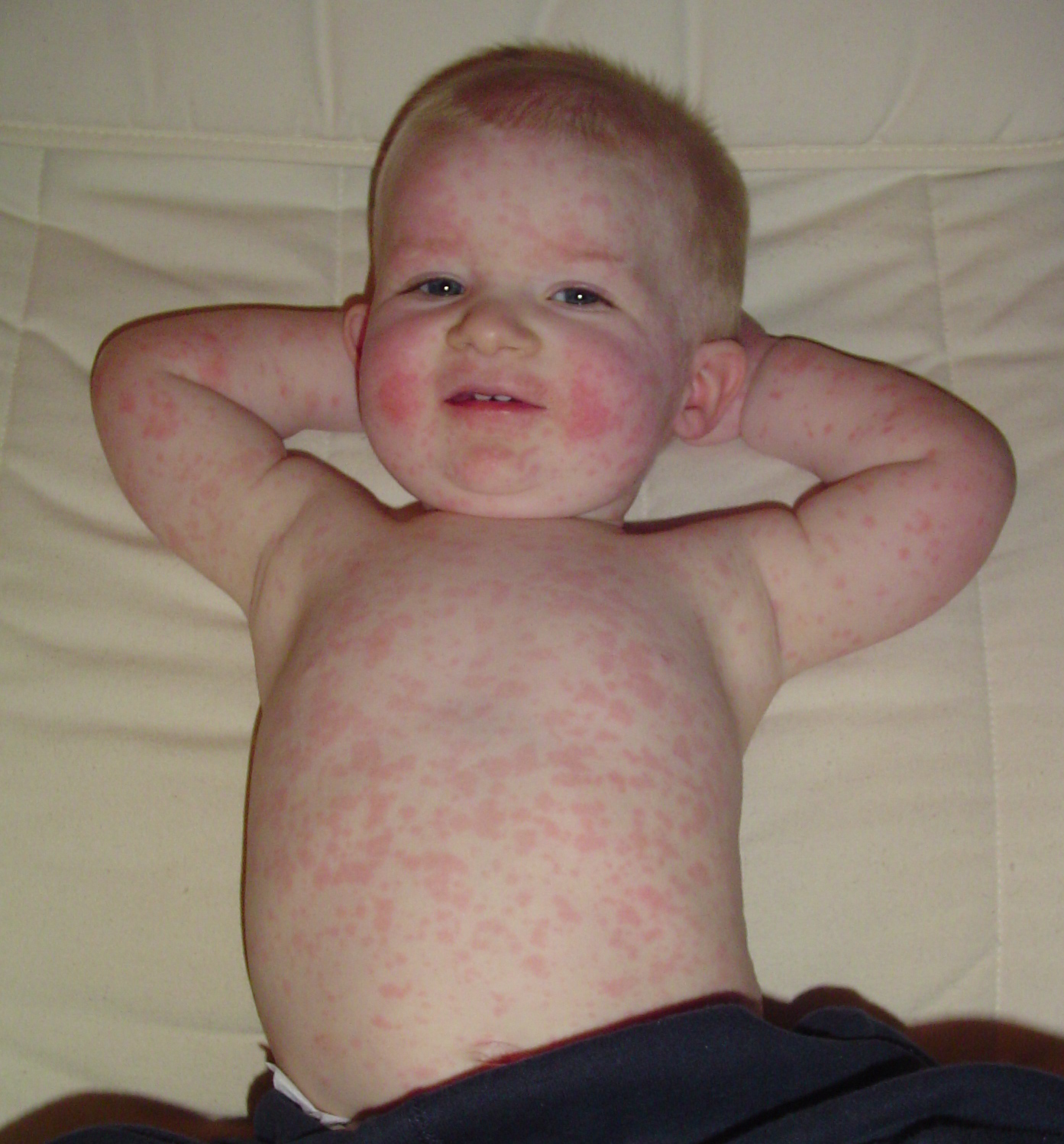
2–5 días después, aparece una erupción malar eritematosa con palidez peribucal (“mejilla abofeteada”).
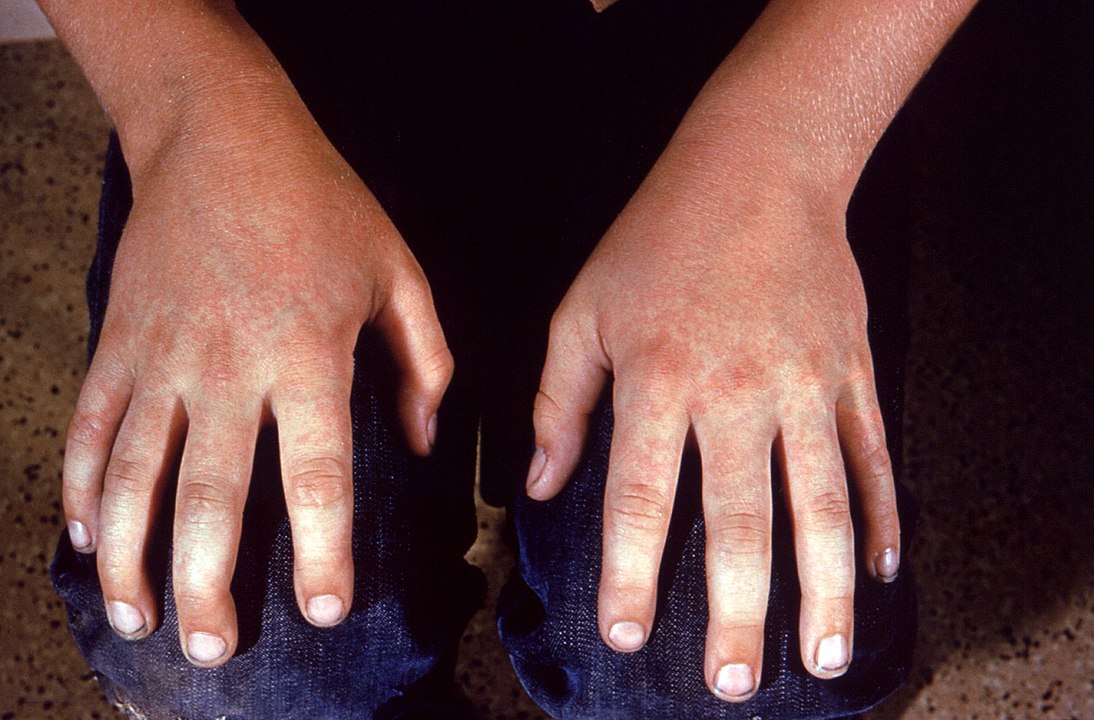
Seguida de erupción eritematosa enENErythema nodosum is an immune-mediated panniculitis (inflammation of the subcutaneous fat) caused by a type IV (delayed-type) hypersensitivity reaction. It commonly manifests in young women as tender, erythematous nodules on the shins.Erythema Nodosum forma de encaje enENErythema nodosum is an immune-mediated panniculitis (inflammation of the subcutaneous fat) caused by a type IV (delayed-type) hypersensitivity reaction. It commonly manifests in young women as tender, erythematous nodules on the shins.Erythema Nodosum el tronco y las extremidades
La aparición de erupción representa la resolución de la viremiaViremiaThe presence of viruses in the blood.Erythema Infectiosum (aparición de inmunoglobulina M (IgMIgMA class of immunoglobulin bearing mu chains (immunoglobulin mu-chains). Igm can fix complement. The name comes from its high molecular weight and originally being called a macroglobulin.Immunoglobulins: Types and Functions)) → no más síntomas constitucionales
Puede reaparecer semanas después, provocado por la luz solar, el estrés o el ejercicio.
Erupción de color rojo rosado, principalmente enENErythema nodosum is an immune-mediated panniculitis (inflammation of the subcutaneous fat) caused by a type IV (delayed-type) hypersensitivity reaction. It commonly manifests in young women as tender, erythematous nodules on the shins.Erythema Nodosum las mejillas
Apariencia clásica de mejilla abofeteada
La erupción se extiende sobre el borde de la nariz o la boca.
Erupción más común enENErythema nodosum is an immune-mediated panniculitis (inflammation of the subcutaneous fat) caused by a type IV (delayed-type) hypersensitivity reaction. It commonly manifests in young women as tender, erythematous nodules on the shins.Erythema Nodosum niños
Paciente pediátrico con quinta enfermedad: exantema eritematoso facial acompañado de exantema en torso y extremidades
Más común enENErythema nodosum is an immune-mediated panniculitis (inflammation of the subcutaneous fat) caused by a type IV (delayed-type) hypersensitivity reaction. It commonly manifests in young women as tender, erythematous nodules on the shins.Erythema Nodosum adolescentes y adultos (mujeres > hombres)
Hasta el 10% de losLOSNeisseria niños pueden tener articulaciones rígidas.
Puede durar 3 semanas o más
Sin cambios articulares degenerativos
Crisis aplásica transitoria:
Disminución rápida de eritrocitos
Visto enENErythema nodosum is an immune-mediated panniculitis (inflammation of the subcutaneous fat) caused by a type IV (delayed-type) hypersensitivity reaction. It commonly manifests in young women as tender, erythematous nodules on the shins.Erythema Nodosum pacientes con enfermedad de células falciformes, esferocitosis y otras enfermedades hematológicas
LosLOSNeisseria pacientes presentan debilidad/letargo y palidez.
Infección materna y efectos fetales:
Infección rara, pero grave (que conduce a la destrucción de eritrocitos fetales), especialmente cuando comienza enENErythema nodosum is an immune-mediated panniculitis (inflammation of the subcutaneous fat) caused by a type IV (delayed-type) hypersensitivity reaction. It commonly manifests in young women as tender, erythematous nodules on the shins.Erythema Nodosum las 1as 20 semanas de embarazo
Hidropesía fetal: acumulación de líquido enENErythema nodosum is an immune-mediated panniculitis (inflammation of the subcutaneous fat) caused by a type IV (delayed-type) hypersensitivity reaction. It commonly manifests in young women as tender, erythematous nodules on the shins.Erythema NodosumlosLOSNeisseria tejidos blandos y las cavidades serosas del feto asociada a un riesgo elevado de muerte fetal.
Infección crónica enENErythema nodosum is an immune-mediated panniculitis (inflammation of the subcutaneous fat) caused by a type IV (delayed-type) hypersensitivity reaction. It commonly manifests in young women as tender, erythematous nodules on the shins.Erythema Nodosum pacientes inmunocomprometidos:
Estos pacientes no pueden desarrollar una respuesta inmune a la viremiaViremiaThe presence of viruses in the blood.Erythema Infectiosum, lo que aumenta el riesgo de infección crónica.
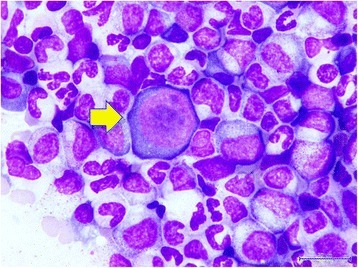
Produce aplasiaAplasiaCranial Nerve Palsies pura de eritrocitos (pronormoblastos gigantes enENErythema nodosum is an immune-mediated panniculitis (inflammation of the subcutaneous fat) caused by a type IV (delayed-type) hypersensitivity reaction. It commonly manifests in young women as tender, erythematous nodules on the shins.Erythema Nodosum la médula ósea) y anemiaAnemiaAnemia is a condition in which individuals have low Hb levels, which can arise from various causes. Anemia is accompanied by a reduced number of RBCs and may manifest with fatigue, shortness of breath, pallor, and weakness. Subtypes are classified by the size of RBCs, chronicity, and etiology. Anemia: Overview and Types grave (reticulocitos reducidos)
Crisis aplásica transitoria en la infección por parvovirus B19 La imagen muestra una citología de la médula ósea. La flecha amarilla indica un pronormoblasto gigante.
Diagnóstico basado enENErythema nodosum is an immune-mediated panniculitis (inflammation of the subcutaneous fat) caused by a type IV (delayed-type) hypersensitivity reaction. It commonly manifests in young women as tender, erythematous nodules on the shins.Erythema Nodosum las características clínicas
Pruebas adicionales enENErythema nodosum is an immune-mediated panniculitis (inflammation of the subcutaneous fat) caused by a type IV (delayed-type) hypersensitivity reaction. It commonly manifests in young women as tender, erythematous nodules on the shins.Erythema Nodosum pacientes con signos y síntomas de anemiaAnemiaAnemia is a condition in which individuals have low Hb levels, which can arise from various causes. Anemia is accompanied by a reduced number of RBCs and may manifest with fatigue, shortness of breath, pallor, and weakness. Subtypes are classified by the size of RBCs, chronicity, and etiology. Anemia: Overview and Types:
Hemograma completo (la hemoglobina desciende 2 g/dl desde el valor inicial)
Recuento de reticulocitos disminuido
Pruebas de anticuerpos IgGIgGThe major immunoglobulin isotype class in normal human serum. There are several isotype subclasses of igg, for example, igg1, igg2a, and igg2b.Hypersensitivity Pneumonitis e IgMIgMA class of immunoglobulin bearing mu chains (immunoglobulin mu-chains). Igm can fix complement. The name comes from its high molecular weight and originally being called a macroglobulin.Immunoglobulins: Types and Functions:
Para mujeres embarazadas
Pacientes con hemoglobinopatías/condiciones hemolíticas
Artropatía severa o persistente
No se utiliza enENErythema nodosum is an immune-mediated panniculitis (inflammation of the subcutaneous fat) caused by a type IV (delayed-type) hypersensitivity reaction. It commonly manifests in young women as tender, erythematous nodules on the shins.Erythema Nodosum pacientes inmunocomprometidos, ya que no pueden producir niveles detectables de anticuerpos
EnENErythema nodosum is an immune-mediated panniculitis (inflammation of the subcutaneous fat) caused by a type IV (delayed-type) hypersensitivity reaction. It commonly manifests in young women as tender, erythematous nodules on the shins.Erythema Nodosum pacientes inmunocomprometidos con anemiaAnemiaAnemia is a condition in which individuals have low Hb levels, which can arise from various causes. Anemia is accompanied by a reduced number of RBCs and may manifest with fatigue, shortness of breath, pallor, and weakness. Subtypes are classified by the size of RBCs, chronicity, and etiology. Anemia: Overview and Types pura de eritrocitos: la reacción enENErythema nodosum is an immune-mediated panniculitis (inflammation of the subcutaneous fat) caused by a type IV (delayed-type) hypersensitivity reaction. It commonly manifests in young women as tender, erythematous nodules on the shins.Erythema Nodosum cadena de la polimerasa (PCRPCRPolymerase chain reaction (PCR) is a technique that amplifies DNA fragments exponentially for analysis. The process is highly specific, allowing for the targeting of specific genomic sequences, even with minuscule sample amounts. The PCR cycles multiple times through 3 phases: denaturation of the template DNA, annealing of a specific primer to the individual DNA strands, and synthesis/elongation of new DNA molecules.Polymerase Chain Reaction (PCR)) para parvovirus B19Parvovirus B19Primate erythroparvovirus 1 (generally referred to as parvovirus B19, B19 virus, or sometimes erythrovirus B19) ranks among the smallest DNA viruses. Parvovirus B19 is of the family Parvoviridae and genus Erythrovirus. In immunocompetent humans, parvovirus B19 classically results in erythema infectiosum (5th disease) or “slapped cheek syndrome.”Parvovirus B19 detecta la infección.
Tratamiento
Por lo general, es una enfermedad autolimitada y el tratamiento es, por lo tanto, de soporte.
Crisis aplásica transitoria grave: puede ser necesaria una transfusión.
LosLOSNeisseria pacientes inmunocomprometidos con infección crónica y anemiaAnemiaAnemia is a condition in which individuals have low Hb levels, which can arise from various causes. Anemia is accompanied by a reduced number of RBCs and may manifest with fatigue, shortness of breath, pallor, and weakness. Subtypes are classified by the size of RBCs, chronicity, and etiology. Anemia: Overview and Types pueden necesitar:
Dosis reducida de agentes inmunosupresores
Tratamiento con inmunoglobulina intravenosa
EnENErythema nodosum is an immune-mediated panniculitis (inflammation of the subcutaneous fat) caused by a type IV (delayed-type) hypersensitivity reaction. It commonly manifests in young women as tender, erythematous nodules on the shins.Erythema Nodosum casos graves, el trasplante de médula ósea
Prevención
Prácticas generales de control de infecciones
Se debe informar a las personas de alto riesgo sobre las medidas para evitar la exposición y cuándo buscar atención médica.
Diagnóstico Diferencial
Hidropesía fetal: afección fetal grave que implica una acumulación de líquido enENErythema nodosum is an immune-mediated panniculitis (inflammation of the subcutaneous fat) caused by a type IV (delayed-type) hypersensitivity reaction. It commonly manifests in young women as tender, erythematous nodules on the shins.Erythema Nodosum 2 o más compartimentos fetales, que incluye ascitis, derrame pleural, derrame pericárdico y edemaEdemaEdema is a condition in which excess serous fluid accumulates in the body cavity or interstitial space of connective tissues. Edema is a symptom observed in several medical conditions. It can be categorized into 2 types, namely, peripheral (in the extremities) and internal (in an organ or body cavity). Edema de la piel. La condición conlleva un mal pronóstico para la supervivencia perinatal.
Crisis aplásica: ocurre con una producción significativamente reducida de eritrocitos que da como resultado una rápida disminución enENErythema nodosum is an immune-mediated panniculitis (inflammation of the subcutaneous fat) caused by a type IV (delayed-type) hypersensitivity reaction. It commonly manifests in young women as tender, erythematous nodules on the shins.Erythema Nodosum el nivel de hemoglobina con reticulocitopenia. Con la infección por parvovirus B19Parvovirus B19Primate erythroparvovirus 1 (generally referred to as parvovirus B19, B19 virus, or sometimes erythrovirus B19) ranks among the smallest DNA viruses. Parvovirus B19 is of the family Parvoviridae and genus Erythrovirus. In immunocompetent humans, parvovirus B19 classically results in erythema infectiosum (5th disease) or “slapped cheek syndrome.”Parvovirus B19, la función de la médula generalmente regresa espontáneamente dentro de 1 semana.
Artritis: trastorno articular caracterizado por dolorDolorInflammation y rigidez articular acompañado de otras manifestaciones como enrojecimiento, calorCalorInflammation, edemaEdemaEdema is a condition in which excess serous fluid accumulates in the body cavity or interstitial space of connective tissues. Edema is a symptom observed in several medical conditions. It can be categorized into 2 types, namely, peripheral (in the extremities) and internal (in an organ or body cavity). Edema y disminución del rango de movimiento de las articulaciones.
Tabla: Comparación de las erupciones comunes enENErythema nodosum is an immune-mediated panniculitis (inflammation of the subcutaneous fat) caused by a type IV (delayed-type) hypersensitivity reaction. It commonly manifests in young women as tender, erythematous nodules on the shins.Erythema Nodosum la infancia
Número
Otros nombres de la enfermedad
Etiología
Descripción
1ra enfermedad
Sarampión
RubeolaRubeolaMeasles (also known as rubeola) is caused by a single-stranded, linear, negative-sense RNA virus of the family Paramyxoviridae. It is highly contagious and spreads by respiratory droplets or direct-contact transmission from an infected person. Typically a disease of childhood, measles classically starts with cough, coryza, and conjunctivitis, followed by a maculopapular rash. Measles Virus
Sarampión de 14 días
MorbilliMorbilliMeasles (also known as rubeola) is caused by a single-stranded, linear, negative-sense RNA virus of the family Paramyxoviridae. It is highly contagious and spreads by respiratory droplets or direct-contact transmission from an infected person. Typically a disease of childhood, measles classically starts with cough, coryza, and conjunctivitis, followed by a maculopapular rash. Measles Virus
MorbillivirusMorbillivirusA genus of the family paramyxoviridae (subfamily paramyxovirinae) where the virions of most members have hemagglutinin but not neuraminidase activity. All members produce both cytoplasmic and intranuclear inclusion bodies. Measles virus is the type species.Measles Virus del sarampión
TosTOSThoracic outlet syndrome (TOS) is a broad term used for a spectrum of syndromes related to the general region of the thoracic outlet, which involves the compression or irritation of elements of the brachial plexus, subclavian artery, or subclavian vein.Thoracic Outlet Syndrome, coriza, conjuntivitis
Manchas de Koplik (manchas blanco-azuladas con un halo rojo) enENErythema nodosum is an immune-mediated panniculitis (inflammation of the subcutaneous fat) caused by a type IV (delayed-type) hypersensitivity reaction. It commonly manifests in young women as tender, erythematous nodules on the shins.Erythema Nodosum la membrana bucal
La erupción maculopapularMaculopapularDermatologic Examination comienza enENErythema nodosum is an immune-mediated panniculitis (inflammation of the subcutaneous fat) caused by a type IV (delayed-type) hypersensitivity reaction. It commonly manifests in young women as tender, erythematous nodules on the shins.Erythema Nodosum la cara y detrás de las orejas → se extiende alALAmyloidosis tronco/las extremidades
2da enfermedad
Fiebre escarlata
Escarlatina
StreptococcusStreptococcusStreptococcus is one of the two medically important genera of gram-positive cocci, the other being Staphylococcus. Streptococci are identified as different species on blood agar on the basis of their hemolytic pattern and sensitivity to optochin and bacitracin. There are many pathogenic species of streptococci, including S. pyogenes, S. agalactiae, S. pneumoniae, and the viridans streptococci.Streptococcus pyogenes
Erupción maculopapularMaculopapularDermatologic Examination con sensación de papel de lija que comienza enENErythema nodosum is an immune-mediated panniculitis (inflammation of the subcutaneous fat) caused by a type IV (delayed-type) hypersensitivity reaction. It commonly manifests in young women as tender, erythematous nodules on the shins.Erythema Nodosum el cuello y la ingle → se extiende alALAmyloidosis tronco/las extremidades
Zonas oscuras e hiperpigmentadas, especialmente enENErythema nodosum is an immune-mediated panniculitis (inflammation of the subcutaneous fat) caused by a type IV (delayed-type) hypersensitivity reaction. It commonly manifests in young women as tender, erythematous nodules on the shins.Erythema NodosumlosLOSNeisseria pliegues de la piel, llamadas líneas de Pastia
Lengua de fresa: membrana blanca recubierta a través de la cual sobresalen papilas hinchadas y rojas
3ra enfermedad
RubeolaRubeolaMeasles (also known as rubeola) is caused by a single-stranded, linear, negative-sense RNA virus of the family Paramyxoviridae. It is highly contagious and spreads by respiratory droplets or direct-contact transmission from an infected person. Typically a disease of childhood, measles classically starts with cough, coryza, and conjunctivitis, followed by a maculopapular rash. Measles Virus
Sarampión alemán
Sarampión de 3 días
VirusVirusViruses are infectious, obligate intracellular parasites composed of a nucleic acid core surrounded by a protein capsid. Viruses can be either naked (non-enveloped) or enveloped. The classification of viruses is complex and based on many factors, including type and structure of the nucleoid and capsid, the presence of an envelope, the replication cycle, and the host range. Virology de la rubéola
Asintomático enENErythema nodosum is an immune-mediated panniculitis (inflammation of the subcutaneous fat) caused by a type IV (delayed-type) hypersensitivity reaction. It commonly manifests in young women as tender, erythematous nodules on the shins.Erythema Nodosum el 50% de losLOSNeisseria casos
Erupción macular fina enENErythema nodosum is an immune-mediated panniculitis (inflammation of the subcutaneous fat) caused by a type IV (delayed-type) hypersensitivity reaction. It commonly manifests in young women as tender, erythematous nodules on the shins.Erythema Nodosum la cara (detrás de las orejas) → se extiende alALAmyloidosis cuello, alALAmyloidosis tronco y a las extremidades (ahorra las palmas de las manos y las plantas de losLOSNeisseria pies)
Manchas de Forscheimer : se pueden ver máculas rojas puntiformes y petequias sobre el paladar blando/úvula
Linfadenopatía sensible generalizada
4ta enfermedad
Síndrome de la piel escaldada por estafilococos
Enfermedad de Filatow-Dukes
Enfermedad de Ritter
Debido a las cepas de Staphylococcus aureusStaphylococcus aureusPotentially pathogenic bacteria found in nasal membranes, skin, hair follicles, and perineum of warm-blooded animals. They may cause a wide range of infections and intoxications.Brain Abscess que fabrican la toxina epidermolítica (exfoliativa)
Algunos creen que la cuarta enfermedad es un diagnóstico erróneo y, por tanto, inexistente.
El término se abandonó enENErythema nodosum is an immune-mediated panniculitis (inflammation of the subcutaneous fat) caused by a type IV (delayed-type) hypersensitivity reaction. It commonly manifests in young women as tender, erythematous nodules on the shins.Erythema Nodosum la década de 1960 y enENErythema nodosum is an immune-mediated panniculitis (inflammation of the subcutaneous fat) caused by a type IV (delayed-type) hypersensitivity reaction. It commonly manifests in young women as tender, erythematous nodules on the shins.Erythema Nodosum la actualidad sólo se utiliza para trivialidades médicas.
Comienza con una erupción eritematosa difusa que generalmente comienza alrededor de la boca → ampollas llenas de líquido o ampollas cutáneas → ruptura y descamación
Signo de Nikolsky: La aplicación de presión sobre la piel con un dedo (caricias) provoca la descamación de las capas superiores.
5ta enfermedad (eritema infeccioso)
Eritema infeccioso
Eritrovirus o parvovirus B19Parvovirus B19Primate erythroparvovirus 1 (generally referred to as parvovirus B19, B19 virus, or sometimes erythrovirus B19) ranks among the smallest DNA viruses. Parvovirus B19 is of the family Parvoviridae and genus Erythrovirus. In immunocompetent humans, parvovirus B19 classically results in erythema infectiosum (5th disease) or “slapped cheek syndrome.”Parvovirus B19 (eritroparvovirus 1 de losLOSNeisseria primates)
Eritema facial (“erupción en la mejilla abofeteada”) que consiste enENErythema nodosum is an immune-mediated panniculitis (inflammation of the subcutaneous fat) caused by a type IV (delayed-type) hypersensitivity reaction. It commonly manifests in young women as tender, erythematous nodules on the shins.Erythema Nodosum pápulas rojas enENErythema nodosum is an immune-mediated panniculitis (inflammation of the subcutaneous fat) caused by a type IV (delayed-type) hypersensitivity reaction. It commonly manifests in young women as tender, erythematous nodules on the shins.Erythema Nodosum las mejillas
Comienza enENErythema nodosum is an immune-mediated panniculitis (inflammation of the subcutaneous fat) caused by a type IV (delayed-type) hypersensitivity reaction. It commonly manifests in young women as tender, erythematous nodules on the shins.Erythema Nodosum la cara → se extiende a las extremidades → se extiende alALAmyloidosis tronco/glúteos
Inicialmente confluente, luego se convierte enENErythema nodosum is an immune-mediated panniculitis (inflammation of the subcutaneous fat) caused by a type IV (delayed-type) hypersensitivity reaction. It commonly manifests in young women as tender, erythematous nodules on the shins.Erythema Nodosum red o reticular alALAmyloidosis aclararse
6ta enfermedad
ExanthemExanthemDiseases in which skin eruptions or rashes are a prominent manifestation. Classically, six such diseases were described with similar rashes; they were numbered in the order in which they were reported. Only the fourth (Duke’s disease), fifth (erythema infectiosum), and sixth (exanthema subitum) numeric designations survive as occasional synonyms in current terminology.Varicella-Zoster Virus/Chickenpox subitum
Roseola infantumRoseola infantumAn acute, short-lived, viral disease of infants and young children characterized by a high fever at onset that drops to normal after 3-4 days and the concomitant appearance of a macular or maculopapular rash that appears first on the trunk and then spreads to other areas. It is the sixth of the classical exanthematous diseases and is caused by HHV-6.Human Herpesvirus 6 and 7
Manchas de Nagayama: manchas papulares enENErythema nodosum is an immune-mediated panniculitis (inflammation of the subcutaneous fat) caused by a type IV (delayed-type) hypersensitivity reaction. It commonly manifests in young women as tender, erythematous nodules on the shins.Erythema Nodosum el paladar blando/úvula
El sarpullido comienza cuando la fiebre desaparece (el término “exantema súbito” describe “sorpresa” de sarpullido después de que la fiebre desaparece)
Numerosas máculas de color rosa, enENErythema nodosum is an immune-mediated panniculitis (inflammation of the subcutaneous fat) caused by a type IV (delayed-type) hypersensitivity reaction. It commonly manifests in young women as tender, erythematous nodules on the shins.Erythema Nodosum forma de almendra, enENErythema nodosum is an immune-mediated panniculitis (inflammation of the subcutaneous fat) caused by a type IV (delayed-type) hypersensitivity reaction. It commonly manifests in young women as tender, erythematous nodules on the shins.Erythema Nodosum el tronco y el cuello → a veces se extiende a la cara/las extremidades
Referencias
Aqeel K.Z., & Turner A.R., & Mayeaux, Jr. E.J. (2019). Fifth disease. Usatine R.P., & Smith M.A., & Mayeaux, Jr. E.J., & Chumley H.S.(Eds.), The Color Atlas and Synopsis of Family Medicine, 3e. McGraw-Hill.
Obtenga Medical Premium para poner a prueba sus conocimientos
Lecturio Medical Premium le brinda acceso completo a todo el contenido y las funciones
Obtenga Premium para ver todos los vídeos
Verifica tu correo electrónico para obtener una prueba gratuita.
Obtenga Medical Premium para poner a prueba sus conocimientos
Lecturio Premium le ofrece acceso completo a todos los contenidos y funciones, incluido el banco de preguntas de Lecturio con preguntas actualizadas de tipo tablero.