
La brucelosis (también conocida como fiebre ondulante, fiebre mediterránea o fiebre de Malta) es una infección zoonótica que se propaga principalmente a través de la ingestión de productos lácteos no pasteurizados o por el contacto directo con productos animales infectados. Las manifestaciones clínicas incluyen fiebre, artralgias, malestar, linfadenopatía y hepatoesplenomegalia. Las manifestaciones clínicas, los LOS Neisseria antecedentes de exposición, la serología y los LOS Neisseria datos de los LOS Neisseria cultivos se utilizan en EN Erythema nodosum is an immune-mediated panniculitis (inflammation of the subcutaneous fat) caused by a type IV (delayed-type) hypersensitivity reaction. It commonly manifests in young women as tender, erythematous nodules on the shins. Erythema Nodosum el diagnóstico. El tratamiento consiste en EN Erythema nodosum is an immune-mediated panniculitis (inflammation of the subcutaneous fat) caused by a type IV (delayed-type) hypersensitivity reaction. It commonly manifests in young women as tender, erythematous nodules on the shins. Erythema Nodosum una combinación de antibióticos, incluyendo doxiciclina, rifampicina y aminoglucósidos. Las medidas preventivas incluyen evitar los LOS Neisseria productos lácteos no pasteurizados, vacunar al AL Amyloidosis ganado y tener precaución con los LOS Neisseria animales.
Last updated: Dec 15, 2025
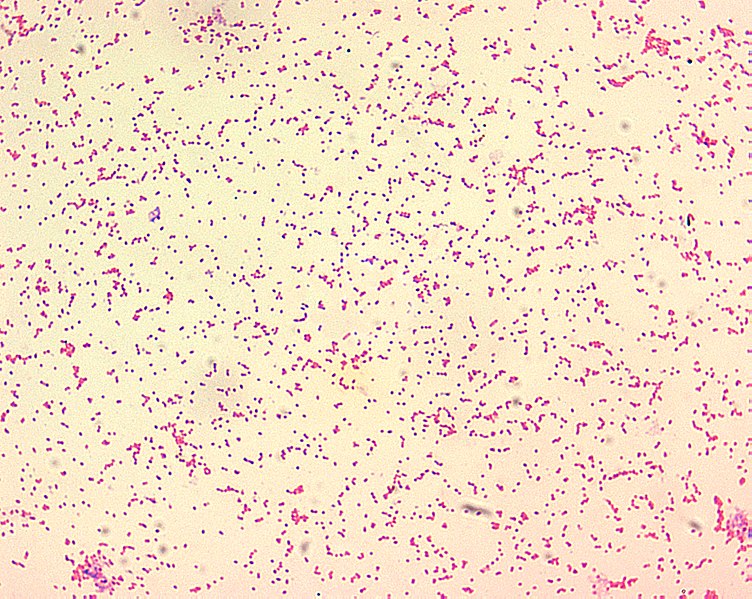
Brucella es un cocobacilo gramnegativo que no se tiñe facilmente con la tinción de Gram. La mayoría de las veces se ve como pequeñas células individuales que parecen “arena fina”.
Imagen: “Brucella spp” por CDC. Licencia: Dominio Público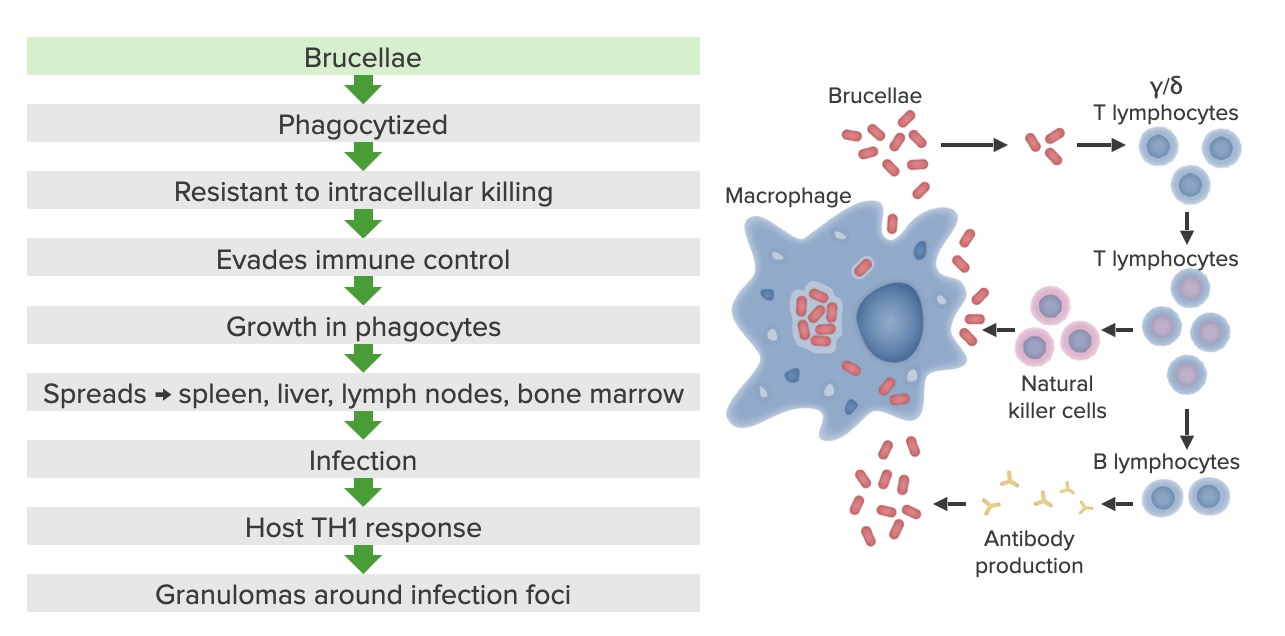
Patogénesis de la brucelosis por Brucella
Imagen por Lecturio.Pueden producirse recaídas en EN Erythema nodosum is an immune-mediated panniculitis (inflammation of the subcutaneous fat) caused by a type IV (delayed-type) hypersensitivity reaction. It commonly manifests in young women as tender, erythematous nodules on the shins. Erythema Nodosum 4%–24% de los LOS Neisseria pacientes, normalmente en EN Erythema nodosum is an immune-mediated panniculitis (inflammation of the subcutaneous fat) caused by a type IV (delayed-type) hypersensitivity reaction. It commonly manifests in young women as tender, erythematous nodules on the shins. Erythema Nodosum el plazo de un año.
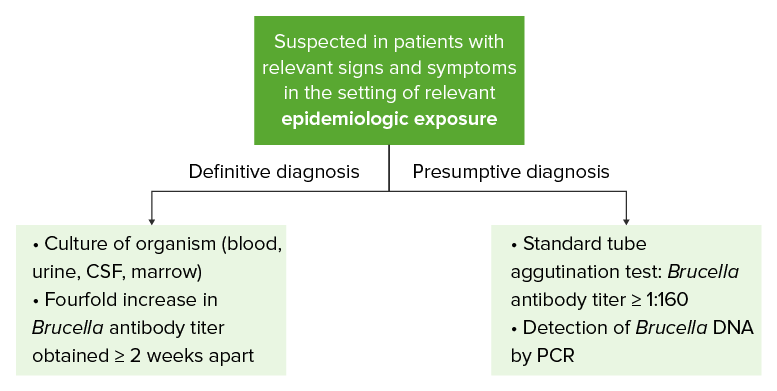
Como ilustra este diagrama, las modalidades de prueba que proporcionan un diagnóstico definitivo suelen requerir una cantidad de tiempo considerable. Mientras se esperan los resultados de estas modalidades, se pueden utilizar otras medidas de prueba para proporcionar un diagnóstico presuntivo.
CSF: líquido cefalorraquídeo
PCR: reacción en cadena de la polimerasa
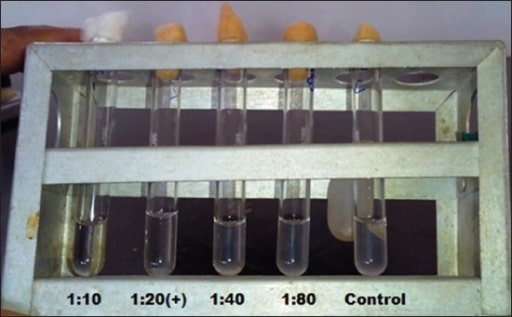
La prueba de aglutinación de suero en tubo se utiliza para detectar anticuerpos contra un antígeno de Borrelia.
De izquierda a derecha:
Tubos 1 y 2 = reacción positiva
Tubos 3 y 4 = reacción negativa
Tubo 5 = control
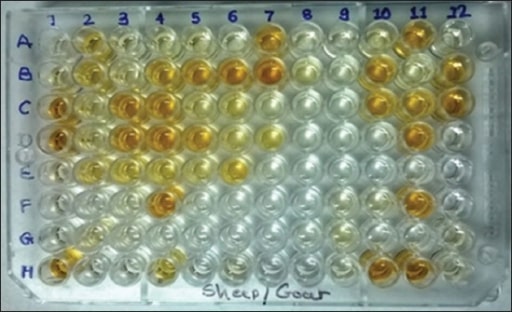
Un ejemplo de prueba ELISA: Esta prueba se basa en complejos anticuerpo-enzima para crear un cambio de color. Las pruebas positivas tendrán un color más oscuro.
Imagen: “Microtiter plate” por Department of Veterinary Medicine, Livestock Research Station, Sardarkrushinagar Dantiwada Agricultural University, Sardarkrushinagar, Dantiwada, Gujarat, India. Licencia: CC BY 2.0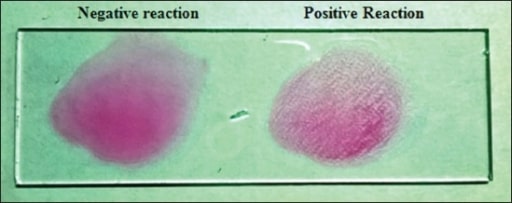
Prueba de aglutinación con rosa de Bengala: Esta prueba utiliza una suspensión de antígenos de B. abortus con un colorante rosa. Se aglutinará con una muestra del paciente si hay anticuerpos.
Imagen: “Rose Bengal plate test” por Department of Veterinary Medicine, Livestock Research Station, Sardarkrushinagar Dantiwada Agricultural University, Sardarkrushinagar, Dantiwada, Gujarat, India. Licencia: CC BY 2.0Las pruebas realizadas se guían por la presentación clínica del paciente y cualquier preocupación por las complicaciones.
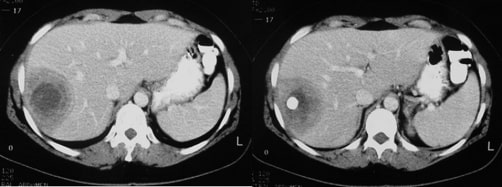
Se observa un absceso hepático en la TC con contraste en un paciente con brucelosis.
Imagen: “CT scan” por Diagnostic Radiology Department, Interbalcan Medical Center, Thessaloniki, 55236, Greece. Licencia: CC BY 3.0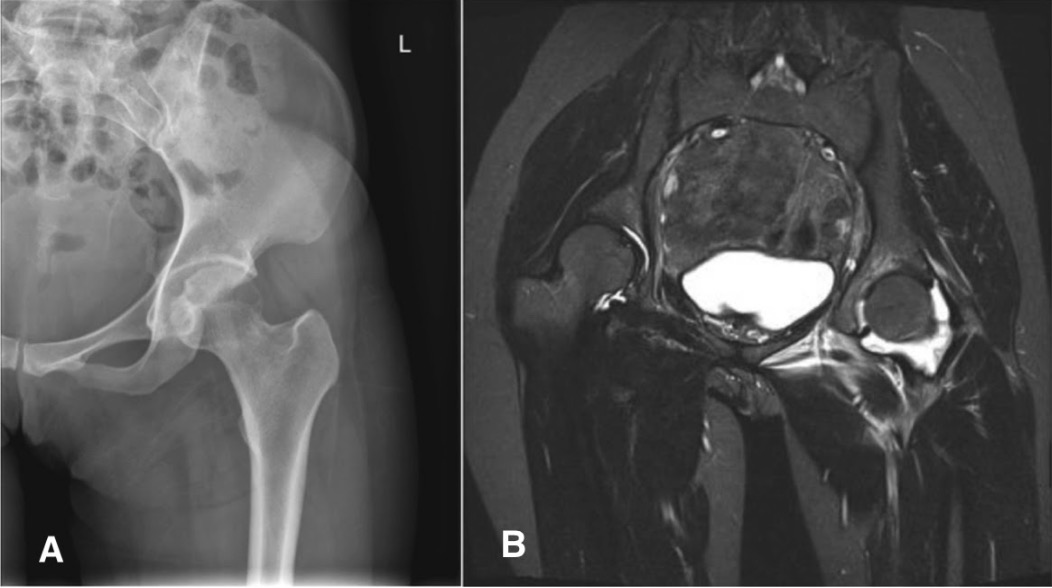
Un paciente diagnosticado de artritis séptica causada por Brucella melitensis:
(A) Radiografía normal de la cadera izquierda
(B) Plano coronal de la pelvis por RM ponderada en T2 que muestra un marcado derrame sobre la articulación de la cadera izquierda
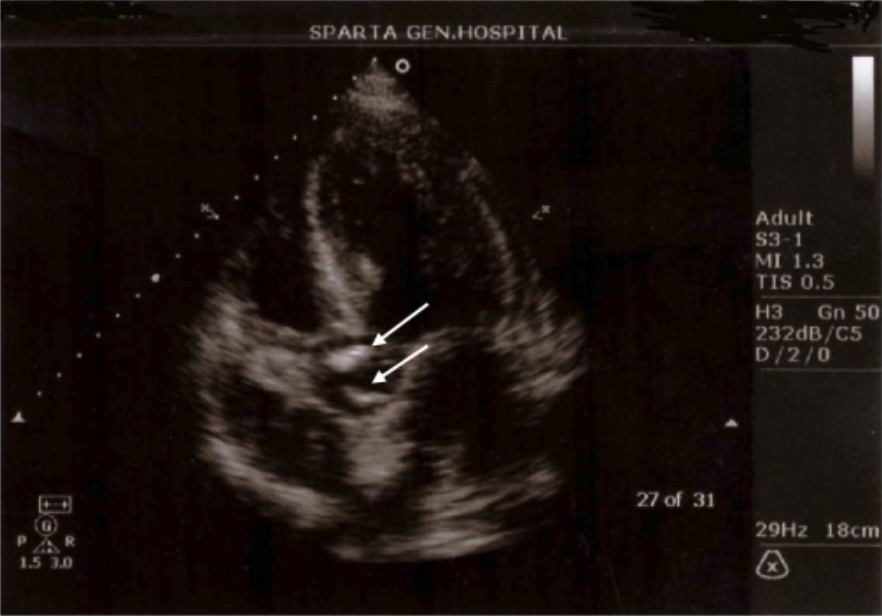
Ecocardiograma transtorácico realizado a un paciente con brucelosis: Las flechas blancas señalan las válvulas aórticas engrosadas. Este engrosamiento es secundario a vegetaciones.
Imagen: “Transthoracic echocardiogram” por Faculty of Nursing, University of Peloponnese, Orthias Artemidos & Plataion, 23100 Sparta, Greece. Licencia: CC BY 3.0, editada por Lecturio.| Organismo | Brucella Brucella Brucellosis (also known as undulant fever, Mediterranean fever, or Malta fever) is a zoonotic infection that spreads predominantly through ingestion of unpasteurized dairy products or direct contact with infected animal products. Clinical manifestations include fever, arthralgias, malaise, lymphadenopathy, and hepatosplenomegaly. Brucella/Brucellosis | Haemophilus Haemophilus Haemophilus is a genus of Gram-negative coccobacilli, all of whose strains require at least 1 of 2 factors for growth (factor V [NAD] and factor X [heme]); therefore, it is most often isolated on chocolate agar, which can supply both factors. The pathogenic species are H. influenzae and H. ducreyi. Haemophilus | Bordetella Bordetella Bordetella is a genus of obligate aerobic, Gram-negative coccobacilli. They are highly fastidious and difficult to isolate. The most important pathologic species is Bordetella pertussis (B. pertussis), which is commonly isolated on Bordet-Gengou agar. Bordetella |
|---|---|---|---|
| Especies clínicamente relevantes |
|
|
|
| Características microbiológicas |
|
|
|
| Factores de virulencia |
|
|
|
| Reservorio |
|
Humanos | Humanos |
| Transmisión | Contacto con productos animales |
|
Gotas respiratorias |
| Presentación clínica |
|
|
Tos TOS Thoracic outlet syndrome (TOS) is a broad term used for a spectrum of syndromes related to the general region of the thoracic outlet, which involves the compression or irritation of elements of the brachial plexus, subclavian artery, or subclavian vein. Thoracic Outlet Syndrome ferina |
| Diagnóstico |
|
Cultivo |
|
| Tratamiento |
|
|
|
ELISA ELISA An immunoassay utilizing an antibody labeled with an enzyme marker such as horseradish peroxidase. While either the enzyme or the antibody is bound to an immunosorbent substrate, they both retain their biologic activity; the change in enzyme activity as a result of the enzyme-antibody-antigen reaction is proportional to the concentration of the antigen and can be measured spectrophotometrically or with the naked eye. Many variations of the method have been developed. St. Louis Encephalitis Virus: ensayo inmunoenzimático
IgA IgA Represents 15-20% of the human serum immunoglobulins, mostly as the 4-chain polymer in humans or dimer in other mammals. Secretory iga is the main immunoglobulin in secretions. Immunoglobulins: Types and Functions: inmunoglobulina A
LPS: lipopolisacárido
PCR PCR Polymerase chain reaction (PCR) is a technique that amplifies DNA fragments exponentially for analysis. The process is highly specific, allowing for the targeting of specific genomic sequences, even with minuscule sample amounts. The PCR cycles multiple times through 3 phases: denaturation of the template DNA, annealing of a specific primer to the individual DNA strands, and synthesis/elongation of new DNA molecules. Polymerase Chain Reaction (PCR): reacción en EN Erythema nodosum is an immune-mediated panniculitis (inflammation of the subcutaneous fat) caused by a type IV (delayed-type) hypersensitivity reaction. It commonly manifests in young women as tender, erythematous nodules on the shins. Erythema Nodosum cadena de la polimerasa