Domina Conceptos Médicos

Estudia para la escuela de medicina y tus examenes con Lecturio.

Medicamentos Antiarrítmicos Clase 2 (Betabloqueadores)

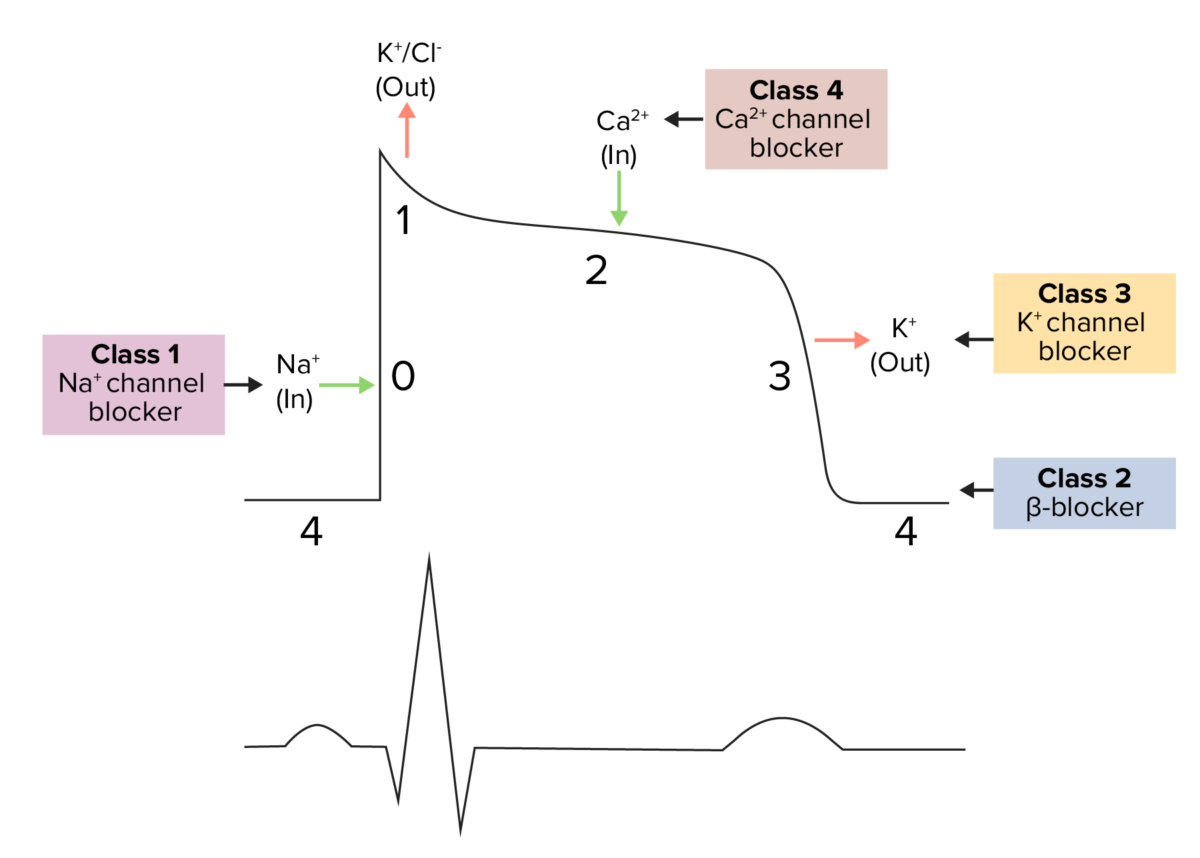
Los LOS Neisseria antiarrítmicos de clase 2 incluyen los LOS Neisseria betabloqueadores, que ejercen sus efectos terapéuticos bloqueando la unión de la epinefrina y la norepinefrina a los LOS Neisseria receptores beta-adrenérgicos del tejido cardíaco. El resultado es un efecto antiarrítmico, que resulta de la disminución de la actividad del nodo sinoauricular y del aumento del tiempo de conducción auriculoventricular y del período refractario. Otros efectos adicionales son la disminución de la contractilidad cardíaca, la poscarga y la presión arterial. Los LOS Neisseria antiarrítmicos de clase 2 se utilizan en EN Erythema nodosum is an immune-mediated panniculitis (inflammation of the subcutaneous fat) caused by a type IV (delayed-type) hypersensitivity reaction. It commonly manifests in young women as tender, erythematous nodules on the shins. Erythema Nodosum el tratamiento de fibrilación auricular, flutter auricular, taquicardia supraventricular y arritmias ventriculares. Los LOS Neisseria efectos secundarios incluyen bradicardia, hipotensión, broncoespasmo, retención de líquidos y fatiga. Los LOS Neisseria betabloqueadores no deben emplearse en EN Erythema nodosum is an immune-mediated panniculitis (inflammation of the subcutaneous fat) caused by a type IV (delayed-type) hypersensitivity reaction. It commonly manifests in young women as tender, erythematous nodules on the shins. Erythema Nodosum individuos con insuficiencia cardíaca descompensada, shock Shock Shock is a life-threatening condition associated with impaired circulation that results in tissue hypoxia. The different types of shock are based on the underlying cause: distributive (↑ cardiac output (CO), ↓ systemic vascular resistance (SVR)), cardiogenic (↓ CO, ↑ SVR), hypovolemic (↓ CO, ↑ SVR), obstructive (↓ CO), and mixed. Types of Shock y bradicardia severa.

Last updated: Dec 15, 2025

Editorial responsibility: Stanley Oiseth, Lindsay Jones, Evelin Maza

Estructura Química y Farmacodinamia

Definición

Los LOS Neisseria antiarrítmicos de clase 2 incluyen los LOS Neisseria betabloqueadores, que inhiben de forma competitiva la unión de la epinefrina y la norepinefrina a los LOS Neisseria receptores beta-adrenérgicos de las células vasculares y cardíacas.
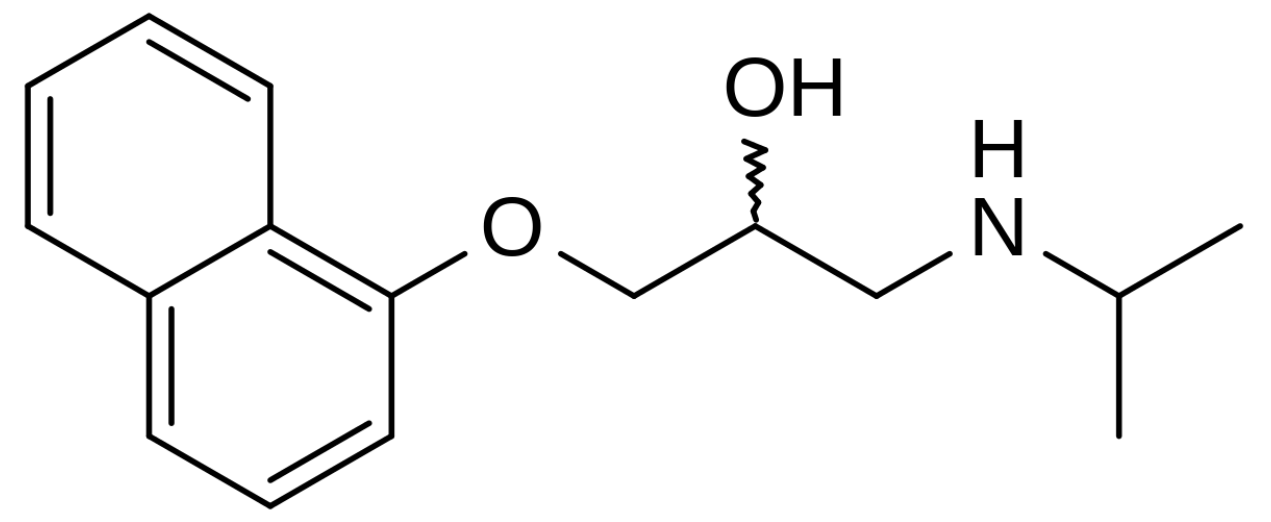
Estructura química

  • Contienen un anillo aromático o heteroaromático con un grupo amina
  • El propranolol Propranolol A widely used non-cardioselective beta-adrenergic antagonist. Propranolol has been used for myocardial infarction; arrhythmia; angina pectoris; hypertension; hyperthyroidism; migraine; pheochromocytoma; and anxiety but adverse effects instigate replacement by newer drugs. Antiadrenergic Drugs es el medicamento prototipo en EN Erythema nodosum is an immune-mediated panniculitis (inflammation of the subcutaneous fat) caused by a type IV (delayed-type) hypersensitivity reaction. It commonly manifests in young women as tender, erythematous nodules on the shins. Erythema Nodosum su clase.
  • La mayoría de los LOS Neisseria betabloqueadores utilizados clínicamente se administran como mezcla racémica, excepto el timolol Timolol A beta-adrenergic antagonist that is similar in action to propranolol; the levo-isomer is more active. Timolol has been proposed as an anti-hypertensive, anti-arrhythmic, anti-angina, and anti-glaucoma agent. It is also used in the treatment of migraine disorders and tremor. Class 2 Antiarrhythmic Drugs (Beta Blockers).
Estructura química del propranolol

Estructura química del propranolol

Imagen: “Chemical structure of propranolol” por catclock. Licencia: Dominio Público
Mecanismo de acción

  • Los LOS Neisseria betabloqueadores inhiben competitivamente los LOS Neisseria receptores beta-adrenérgicos:
    • Agentes no selectivos que se unen e inducen efectos antagonistas en EN Erythema nodosum is an immune-mediated panniculitis (inflammation of the subcutaneous fat) caused by a type IV (delayed-type) hypersensitivity reaction. It commonly manifests in young women as tender, erythematous nodules on the shins. Erythema Nodosum los LOS Neisseria receptores beta-1 (B1) y beta-2 (B2)
    • Los LOS Neisseria agentes cardioselectivos solo se unen a los LOS Neisseria receptores B1.
  • Ubicación de los LOS Neisseria receptores:
    • B1:
      • Nodo sinoauricular (SA)
      • Nodo auriculoventricular (AV)
      • Músculo auricular y ventricular
      • Riñones
    • B2:
      • Vasos sanguíneos
      • Bronquios
      • Tracto gastrointestinal
      • Útero
      • Hígado
      • Vías urinarias
  • Acción sobre las células cardíacas:
    • Bloquean la unión de las catecolaminas (epinefrina) a los LOS Neisseria receptores acoplados a la proteína G ( receptor Receptor Receptors are proteins located either on the surface of or within a cell that can bind to signaling molecules known as ligands (e.g., hormones) and cause some type of response within the cell. Receptors B1) → inhiben la activación de la adenil ciclasa
    • ↓ Conversión de ATP en EN Erythema nodosum is an immune-mediated panniculitis (inflammation of the subcutaneous fat) caused by a type IV (delayed-type) hypersensitivity reaction. It commonly manifests in young women as tender, erythematous nodules on the shins. Erythema Nodosum AMPc → ↓ activación de la proteína quinasa A
    • Los LOS Neisseria canales de calcio ( Ca CA Condylomata acuminata are a clinical manifestation of genital HPV infection. Condylomata acuminata are described as raised, pearly, flesh-colored, papular, cauliflower-like lesions seen in the anogenital region that may cause itching, pain, or bleeding. Condylomata Acuminata (Genital Warts)) no están fosforilados → no se abren → ↓ entrada de Ca CA Condylomata acuminata are a clinical manifestation of genital HPV infection. Condylomata acuminata are described as raised, pearly, flesh-colored, papular, cauliflower-like lesions seen in the anogenital region that may cause itching, pain, or bleeding. Condylomata Acuminata (Genital Warts) en EN Erythema nodosum is an immune-mediated panniculitis (inflammation of the subcutaneous fat) caused by a type IV (delayed-type) hypersensitivity reaction. It commonly manifests in young women as tender, erythematous nodules on the shins. Erythema Nodosum las células del miocardio.
    • Efecto nodal:
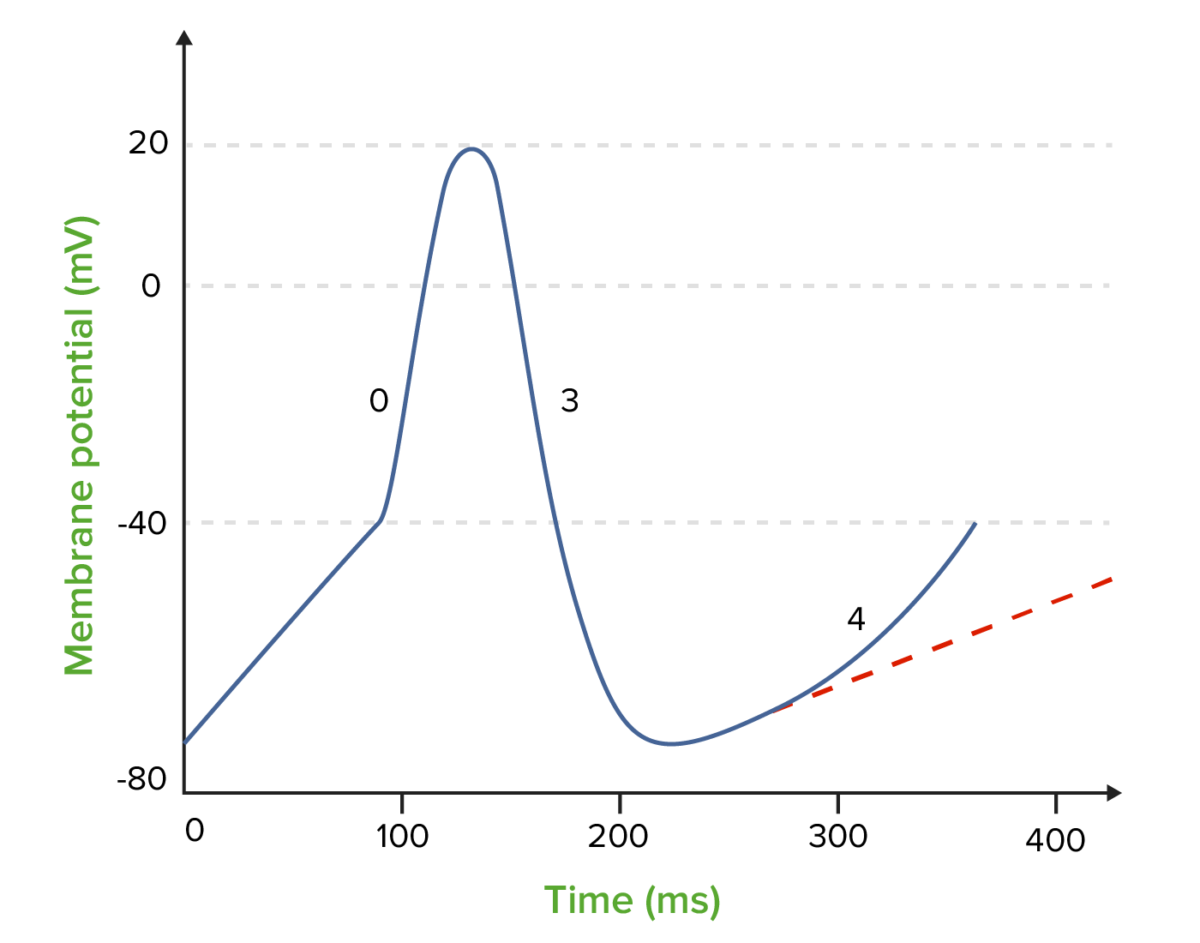
      • ↓ Actividad del nodo SA
      • ↑ Tiempo de conducción del nodo AV y del período refractario
      • Una ↓ pendiente y una prolongada fase 4

Efectos fisiológicos

  • Efectos antiarrítmicos:
    • Efectos cronotrópicos negativos ( FC Fc Crystallizable fragments composed of the carboxy-terminal halves of both immunoglobulin heavy chains linked to each other by disulfide bonds. Fc fragments contain the carboxy-terminal parts of the heavy chain constant regions that are responsible for the effector functions of an immunoglobulin (complement fixation, binding to the cell membrane via fc receptors, and placental transport). This fragment can be obtained by digestion of immunoglobulins with the proteolytic enzyme papain. Immunoglobulins: Types and Functions)
    • Efectos dromotrópicos negativos:
      • Retrasa la velocidad y la capacidad de instigar un potencial de acción
      • ↓ Velocidad de conducción
    • Período refractario prolongado
    • La actividad estabilizadora de la membrana y la actividad simpaticomimética intrínseca no tienen un impacto importante en EN Erythema nodosum is an immune-mediated panniculitis (inflammation of the subcutaneous fat) caused by a type IV (delayed-type) hypersensitivity reaction. It commonly manifests in young women as tender, erythematous nodules on the shins. Erythema Nodosum la potencia antiarrítmica.
  • Bloqueo B1:
    • ↓ Demanda de oxígeno:
      • FC Fc Crystallizable fragments composed of the carboxy-terminal halves of both immunoglobulin heavy chains linked to each other by disulfide bonds. Fc fragments contain the carboxy-terminal parts of the heavy chain constant regions that are responsible for the effector functions of an immunoglobulin (complement fixation, binding to the cell membrane via fc receptors, and placental transport). This fragment can be obtained by digestion of immunoglobulins with the proteolytic enzyme papain. Immunoglobulins: Types and Functions
      • ↓ Contractilidad
      • ↓ Poscarga
      • ↓ Presión arterial
    • ↑ Suministro de oxígeno (indirectamente):
      • Prolonga la diástole
      • Mejora la perfusión
  • Bloqueo B2:
    • Vasoconstricción
    • Broncoconstricción
  • Bloqueo alfa-1 (A1):
    • Visto con carvedilol Carvedilol A carbazole and propanol derivative that acts as a non-cardioselective beta blocker and vasodilator. It has blocking activity for alpha 1 adrenergic receptors and, at higher doses, may function as a blocker of calcium channels; it also has antioxidant properties. Carvedilol is used in the treatment of hypertension; angina pectoris; and heart failure. It can also reduce the risk of death following myocardial infarction. Class 2 Antiarrhythmic Drugs (Beta Blockers)
    • Mayor ↓ de la poscarga debido a ↓ resistencia vascular sistémica (RVS)
  • Efectos en EN Erythema nodosum is an immune-mediated panniculitis (inflammation of the subcutaneous fat) caused by a type IV (delayed-type) hypersensitivity reaction. It commonly manifests in young women as tender, erythematous nodules on the shins. Erythema Nodosum el ECG ECG An electrocardiogram (ECG) is a graphic representation of the electrical activity of the heart plotted against time. Adhesive electrodes are affixed to the skin surface allowing measurement of cardiac impulses from many angles. The ECG provides 3-dimensional information about the conduction system of the heart, the myocardium, and other cardiac structures. Electrocardiogram (ECG): Prolongación del intervalo PR

Tipos de receptores adrenérgicos y sus propiedades

Tabla: Tipos de receptores adrenérgicos y sus propiedades
Ubicación del receptor Receptor Receptors are proteins located either on the surface of or within a cell that can bind to signaling molecules known as ligands (e.g., hormones) and cause some type of response within the cell. Receptors Respuesta al AL Amyloidosis estímulo Respuesta al AL Amyloidosis bloqueo
Receptores B1
Corazón Nodo SA FC Fc Crystallizable fragments composed of the carboxy-terminal halves of both immunoglobulin heavy chains linked to each other by disulfide bonds. Fc fragments contain the carboxy-terminal parts of the heavy chain constant regions that are responsible for the effector functions of an immunoglobulin (complement fixation, binding to the cell membrane via fc receptors, and placental transport). This fragment can be obtained by digestion of immunoglobulins with the proteolytic enzyme papain. Immunoglobulins: Types and Functions FC Fc Crystallizable fragments composed of the carboxy-terminal halves of both immunoglobulin heavy chains linked to each other by disulfide bonds. Fc fragments contain the carboxy-terminal parts of the heavy chain constant regions that are responsible for the effector functions of an immunoglobulin (complement fixation, binding to the cell membrane via fc receptors, and placental transport). This fragment can be obtained by digestion of immunoglobulins with the proteolytic enzyme papain. Immunoglobulins: Types and Functions
Aurículas ↑ Contractilidad y velocidad de conducción ↓ Contractilidad y velocidad de conducción
Nodo AV y fibras de His-Purkinje ↑ Automatismo y velocidad de conducción ↓ Automatismo y velocidad de conducción
Ventrículos ↑ Contractilidad, automatismo, velocidad de conducción ↓ Contractilidad, automatismo, velocidad de conducción
Riñón Células YG ↑ Liberación de renina ↓ Liberación de renina
Receptores B2
Arterias
  • Carótidas
  • Coronarias
  • Periféricas
Vasodilatación Vasoconstricción
Pulmones Músculo liso bronquiolar Broncodilatación Broncoconstricción
Vejiga Pared Relajación Contracción
Hígado Tejido hepático Estimula la glucogenolisis
  • ↓ Secreción de insulina
  • ↓ Glucogenólisis
Receptores A1
Arterias Periféricas Vasoconstricción Vasodilatación
Vejiga Esfínter Contracción Relajación
AV: auriculoventricular
SA: sinoauricular
YG: yuxtaglomerular

Propiedades adicionales de los LOS Neisseria betabloqueadores

Algunos betabloqueadores pueden presentar las siguientes propiedades y efectos:

Tabla: Propiedades de los LOS Neisseria betabloqueadores
Propiedad de betabloqueadores Efecto
ISA Estimulación parcial de los LOS Neisseria receptores B → descenso subóptimo de la FC Fc Crystallizable fragments composed of the carboxy-terminal halves of both immunoglobulin heavy chains linked to each other by disulfide bonds. Fc fragments contain the carboxy-terminal parts of the heavy chain constant regions that are responsible for the effector functions of an immunoglobulin (complement fixation, binding to the cell membrane via fc receptors, and placental transport). This fragment can be obtained by digestion of immunoglobulins with the proteolytic enzyme papain. Immunoglobulins: Types and Functions (evitar post-IM)
MSA MSA A syndrome complex composed of three conditions which represent clinical variants of the same disease process: striatonigral degeneration; shy-drager syndrome; and the sporadic form of olivopontocerebellar atrophies. Clinical features include autonomic, cerebellar, and basal ganglia dysfunction. Pathologic examination reveals atrophy of the basal ganglia, cerebellum, pons, and medulla, with prominent loss of autonomic neurons in the brain stem and spinal cord. Atypical Parkinsonian Syndromes El medicamento puede ↓ la velocidad de conducción cardíaca al AL Amyloidosis bloquear los LOS Neisseria canales de Na+ de los LOS Neisseria miocitos
NO (Oxído nítrico) El medicamento estimula la producción de NO → vasodilatación periférica
ISA: actividad simpaticomimética intrínseca (por sus siglas en inglés)
MSA: actividad estabilizadora de la membrana (por sus siglas en inglés)

Clasificación

Los LOS Neisseria antiarrítmicos de clase 2 pueden clasificarse en EN Erythema nodosum is an immune-mediated panniculitis (inflammation of the subcutaneous fat) caused by a type IV (delayed-type) hypersensitivity reaction. It commonly manifests in young women as tender, erythematous nodules on the shins. Erythema Nodosum función de su selectividad de los LOS Neisseria receptores beta:

  • Betabloqueadores cardioselectivos (receptores B1):
  • Betabloqueadores no cardioselectivos (receptores B1 y B2):
    • Nadolol Nadolol A non-selective beta-adrenergic antagonist with a long half-life, used in cardiovascular disease to treat arrhythmias, angina pectoris, and hypertension. Nadolol is also used for migraine disorders and for tremor. Class 2 Antiarrhythmic Drugs (Beta Blockers)
    • Propranolol Propranolol A widely used non-cardioselective beta-adrenergic antagonist. Propranolol has been used for myocardial infarction; arrhythmia; angina pectoris; hypertension; hyperthyroidism; migraine; pheochromocytoma; and anxiety but adverse effects instigate replacement by newer drugs. Antiadrenergic Drugs
    • Timolol Timolol A beta-adrenergic antagonist that is similar in action to propranolol; the levo-isomer is more active. Timolol has been proposed as an anti-hypertensive, anti-arrhythmic, anti-angina, and anti-glaucoma agent. It is also used in the treatment of migraine disorders and tremor. Class 2 Antiarrhythmic Drugs (Beta Blockers)
    • Carvedilol Carvedilol A carbazole and propanol derivative that acts as a non-cardioselective beta blocker and vasodilator. It has blocking activity for alpha 1 adrenergic receptors and, at higher doses, may function as a blocker of calcium channels; it also has antioxidant properties. Carvedilol is used in the treatment of hypertension; angina pectoris; and heart failure. It can also reduce the risk of death following myocardial infarction. Class 2 Antiarrhythmic Drugs (Beta Blockers) (también tiene actividad bloqueadora del receptor Receptor Receptors are proteins located either on the surface of or within a cell that can bind to signaling molecules known as ligands (e.g., hormones) and cause some type of response within the cell. Receptors A1)

Farmacocinética

Absorción

  • La mayoría de los LOS Neisseria medicamentos se absorben de forma rápida y completa en EN Erythema nodosum is an immune-mediated panniculitis (inflammation of the subcutaneous fat) caused by a type IV (delayed-type) hypersensitivity reaction. It commonly manifests in young women as tender, erythematous nodules on the shins. Erythema Nodosum el tracto gastrointestinal.
  • ↓ Tasa de absorción:
    • Ancianos
    • Personas con insuficiencia renal

Distribución

  • Rápida distribución en EN Erythema nodosum is an immune-mediated panniculitis (inflammation of the subcutaneous fat) caused by a type IV (delayed-type) hypersensitivity reaction. It commonly manifests in young women as tender, erythematous nodules on the shins. Erythema Nodosum el organismo
  • La unión a proteínas es variable Variable Variables represent information about something that can change. The design of the measurement scales, or of the methods for obtaining information, will determine the data gathered and the characteristics of that data. As a result, a variable can be qualitative or quantitative, and may be further classified into subgroups. Types of Variables.
  • Los LOS Neisseria agentes lipofílicos pueden atravesar la barrera hematoencefálica.

Metabolismo

  • La mayoría de los LOS Neisseria agentes lipofílicos sufren un importante metabolismo hepático de 1er paso:
    • Carvedilol Carvedilol A carbazole and propanol derivative that acts as a non-cardioselective beta blocker and vasodilator. It has blocking activity for alpha 1 adrenergic receptors and, at higher doses, may function as a blocker of calcium channels; it also has antioxidant properties. Carvedilol is used in the treatment of hypertension; angina pectoris; and heart failure. It can also reduce the risk of death following myocardial infarction. Class 2 Antiarrhythmic Drugs (Beta Blockers)
    • Metoprolol Metoprolol A selective adrenergic beta-1 blocking agent that is commonly used to treat angina pectoris; hypertension; and cardiac arrhythmias. Antiadrenergic Drugs
    • Propranolol Propranolol A widely used non-cardioselective beta-adrenergic antagonist. Propranolol has been used for myocardial infarction; arrhythmia; angina pectoris; hypertension; hyperthyroidism; migraine; pheochromocytoma; and anxiety but adverse effects instigate replacement by newer drugs. Antiadrenergic Drugs
  • Algunos medicamentos se convierten en EN Erythema nodosum is an immune-mediated panniculitis (inflammation of the subcutaneous fat) caused by a type IV (delayed-type) hypersensitivity reaction. It commonly manifests in young women as tender, erythematous nodules on the shins. Erythema Nodosum sus metabolitos activos.
  • Los LOS Neisseria compuestos hidrofóbicos tienden a sufrir un metabolismo hepático limitado.

Excreción

  • Metabolismo hepático (agentes lipofílicos) → bilis
  • Agentes hidrofílicos → excreción renal
  • El deterioro de la función hepática y renal puede ↓ la tasa de eliminación

Indicaciones

Arritmia

Los LOS Neisseria antiarrítmicos de clase 2 se utilizan en EN Erythema nodosum is an immune-mediated panniculitis (inflammation of the subcutaneous fat) caused by a type IV (delayed-type) hypersensitivity reaction. It commonly manifests in young women as tender, erythematous nodules on the shins. Erythema Nodosum el tratamiento de:

  • Fibrilación auricular
  • Flutter auricular
  • Taquicardias supraventriculares
  • Arritmias ventriculares

Usos adicionales

Los LOS Neisseria betabloqueadores, como clase medicamentosa, pueden usarse como tratamiento para las siguientes entidades aprobadas por la Food and Drug Administration (FDA, por sus siglas en EN Erythema nodosum is an immune-mediated panniculitis (inflammation of the subcutaneous fat) caused by a type IV (delayed-type) hypersensitivity reaction. It commonly manifests in young women as tender, erythematous nodules on the shins. Erythema Nodosum inglés):

  • Enfermedad coronaria:
    • Angina
    • Post-IM
  • Temblores esenciales
  • Glaucoma Glaucoma Glaucoma is an optic neuropathy characterized by typical visual field defects and optic nerve atrophy seen as optic disc cupping on examination. The acute form of glaucoma is a medical emergency. Glaucoma is often, but not always, caused by increased intraocular pressure (IOP). Glaucoma ( timolol Timolol A beta-adrenergic antagonist that is similar in action to propranolol; the levo-isomer is more active. Timolol has been proposed as an anti-hypertensive, anti-arrhythmic, anti-angina, and anti-glaucoma agent. It is also used in the treatment of migraine disorders and tremor. Class 2 Antiarrhythmic Drugs (Beta Blockers))
  • Insuficiencia cardíaca con fracción de eyección reducida
  • Hipertensión
  • Estenosis subaórtica hipertrófica
  • Profilaxis de migraña
  • Feocromocitoma; adjuntos
  • Profilaxis de hemorragia variceal

Indicaciones de los LOS Neisseria medicamentos antiarrítmicos de clase 2

Tabla: Propiedades de los LOS Neisseria betabloqueadores
Medicamento Arritmia Angina IAM Insuficiencia cardíaca Hipertensión MSA MSA A syndrome complex composed of three conditions which represent clinical variants of the same disease process: striatonigral degeneration; shy-drager syndrome; and the sporadic form of olivopontocerebellar atrophies. Clinical features include autonomic, cerebellar, and basal ganglia dysfunction. Pathologic examination reveals atrophy of the basal ganglia, cerebellum, pons, and medulla, with prominent loss of autonomic neurons in the brain stem and spinal cord. Atypical Parkinsonian Syndromes
Atenolol Atenolol A cardioselective beta-1 adrenergic blocker possessing properties and potency similar to propranolol, but without a negative inotropic effect. Class 2 Antiarrhythmic Drugs (Beta Blockers)*
  • Fibrilación/flutter auricular
  • SVT SVT Supraventricular tachycardias are related disorders in which the elevation in heart rate is driven by pathophysiology in the atria. This group falls under the larger umbrella of tachyarrhythmias and includes paroxysmal supraventricular tachycardias (PSVTs), ventricular pre-excitation syndromes (i.e. Wolff-Parkinson-White syndrome), atrial flutter, multifocal atrial tachycardia, and atrial fibrillation. Supraventricular Tachycardias
  • Ventricular
X X X
Betaxolol Betaxolol A cardioselective beta-1-adrenergic antagonist with no partial agonist activity. Class 2 Antiarrhythmic Drugs (Beta Blockers)* Fibrilación auricular X X
Bisoprolol Bisoprolol A cardioselective beta-1 adrenergic blocker. It is effective in the management of hypertension and angina pectoris. Class 2 Antiarrhythmic Drugs (Beta Blockers)*
  • Fibrilación/flutter auricular
  • Ventricular
X X X
Metoprolol Metoprolol A selective adrenergic beta-1 blocking agent that is commonly used to treat angina pectoris; hypertension; and cardiac arrhythmias. Antiadrenergic Drugs*
  • Fibrilación/flutter auricular
  • SVT SVT Supraventricular tachycardias are related disorders in which the elevation in heart rate is driven by pathophysiology in the atria. This group falls under the larger umbrella of tachyarrhythmias and includes paroxysmal supraventricular tachycardias (PSVTs), ventricular pre-excitation syndromes (i.e. Wolff-Parkinson-White syndrome), atrial flutter, multifocal atrial tachycardia, and atrial fibrillation. Supraventricular Tachycardias
  • Ventricular
X X X X X
Esmolol Esmolol Antiadrenergic Drugs*
  • Fibrilación/flutter auricular
  • SVT SVT Supraventricular tachycardias are related disorders in which the elevation in heart rate is driven by pathophysiology in the atria. This group falls under the larger umbrella of tachyarrhythmias and includes paroxysmal supraventricular tachycardias (PSVTs), ventricular pre-excitation syndromes (i.e. Wolff-Parkinson-White syndrome), atrial flutter, multifocal atrial tachycardia, and atrial fibrillation. Supraventricular Tachycardias
  • Ventricular
X
Acebutolol Acebutolol A cardioselective beta-1 adrenergic antagonist with little effect on the bronchial receptors. The drug has stabilizing and quinidine-like effects on cardiac rhythm, as well as weak inherent sympathomimetic action. Class 2 Antiarrhythmic Drugs (Beta Blockers)* Ventricular X X X X
Nadolol Nadolol A non-selective beta-adrenergic antagonist with a long half-life, used in cardiovascular disease to treat arrhythmias, angina pectoris, and hypertension. Nadolol is also used for migraine disorders and for tremor. Class 2 Antiarrhythmic Drugs (Beta Blockers)
  • Fibrilación auricular
  • SVT SVT Supraventricular tachycardias are related disorders in which the elevation in heart rate is driven by pathophysiology in the atria. This group falls under the larger umbrella of tachyarrhythmias and includes paroxysmal supraventricular tachycardias (PSVTs), ventricular pre-excitation syndromes (i.e. Wolff-Parkinson-White syndrome), atrial flutter, multifocal atrial tachycardia, and atrial fibrillation. Supraventricular Tachycardias
  • Ventricular
X X X
Propranolol Propranolol A widely used non-cardioselective beta-adrenergic antagonist. Propranolol has been used for myocardial infarction; arrhythmia; angina pectoris; hypertension; hyperthyroidism; migraine; pheochromocytoma; and anxiety but adverse effects instigate replacement by newer drugs. Antiadrenergic Drugs
  • Fibrilación/flutter auricular
  • SVT SVT Supraventricular tachycardias are related disorders in which the elevation in heart rate is driven by pathophysiology in the atria. This group falls under the larger umbrella of tachyarrhythmias and includes paroxysmal supraventricular tachycardias (PSVTs), ventricular pre-excitation syndromes (i.e. Wolff-Parkinson-White syndrome), atrial flutter, multifocal atrial tachycardia, and atrial fibrillation. Supraventricular Tachycardias
  • Ventricular
X X X X
Timolol Timolol A beta-adrenergic antagonist that is similar in action to propranolol; the levo-isomer is more active. Timolol has been proposed as an anti-hypertensive, anti-arrhythmic, anti-angina, and anti-glaucoma agent. It is also used in the treatment of migraine disorders and tremor. Class 2 Antiarrhythmic Drugs (Beta Blockers) Fibrilación auricular X X X
Carvedilol Carvedilol A carbazole and propanol derivative that acts as a non-cardioselective beta blocker and vasodilator. It has blocking activity for alpha 1 adrenergic receptors and, at higher doses, may function as a blocker of calcium channels; it also has antioxidant properties. Carvedilol is used in the treatment of hypertension; angina pectoris; and heart failure. It can also reduce the risk of death following myocardial infarction. Class 2 Antiarrhythmic Drugs (Beta Blockers) Fibrilación/flutter auricular X X X X X
* denota betabloqueadores cardioselectivos
MSA: actividad estabilizadora de la membrana
SVT: taquicardia supraventricular (por sus siglas en inglés)

Efectos Secundarios y Contraindicaciones

Efectos secundarios

  • Cardiovasculares:
    • Bradicardia
    • Hipotensión
    • Exacerbación de la insuficiencia cardíaca (con tratamiento inicial)
    • Su discontinuación puede precipitar (por ↑ actividad simpática):
      • IM ( en EN Erythema nodosum is an immune-mediated panniculitis (inflammation of the subcutaneous fat) caused by a type IV (delayed-type) hypersensitivity reaction. It commonly manifests in young women as tender, erythematous nodules on the shins. Erythema Nodosum individuos con enfermedad arterial coronaria)
      • Taquiarritmias ventriculares
      • Muerte súbita cardíaca
  • En EN Erythema nodosum is an immune-mediated panniculitis (inflammation of the subcutaneous fat) caused by a type IV (delayed-type) hypersensitivity reaction. It commonly manifests in young women as tender, erythematous nodules on the shins. Erythema Nodosum el SNC:
    • Fatiga
    • Depresión
    • Sueños vívidos
    • Disfunción sexual
  • Respiratorios: broncoconstricción
  • Endocrinos:
    • Hipoglicemia
    • Hiperglicemia (generalmente en EN Erythema nodosum is an immune-mediated panniculitis (inflammation of the subcutaneous fat) caused by a type IV (delayed-type) hypersensitivity reaction. It commonly manifests in young women as tender, erythematous nodules on the shins. Erythema Nodosum individuos con diabetes Diabetes Diabetes mellitus (DM) is a metabolic disease characterized by hyperglycemia and dysfunction of the regulation of glucose metabolism by insulin. Type 1 DM is diagnosed mostly in children and young adults as the result of autoimmune destruction of β cells in the pancreas and the resulting lack of insulin. Type 2 DM has a significant association with obesity and is characterized by insulin resistance. Diabetes Mellitus mellitus no insulinodependiente)
    • Dislipidemia
    • Aumento de peso
    • Retención de líquidos
  • Dermatológicos: posible exacerbación de psoriasis Psoriasis Psoriasis is a common T-cell-mediated inflammatory skin condition. The etiology is unknown, but is thought to be due to genetic inheritance and environmental triggers. There are 4 major subtypes, with the most common form being chronic plaque psoriasis. Psoriasis

Contraindicaciones

  • Insuficiencia cardíaca descompensada
  • Shock Shock Shock is a life-threatening condition associated with impaired circulation that results in tissue hypoxia. The different types of shock are based on the underlying cause: distributive (↑ cardiac output (CO), ↓ systemic vascular resistance (SVR)), cardiogenic (↓ CO, ↑ SVR), hypovolemic (↓ CO, ↑ SVR), obstructive (↓ CO), and mixed. Types of Shock cardiogénico
  • Hipotensión
  • Bradicardia severa
  • Bloqueo AV de 2do o 3er grado
  • Síndrome del seno enfermo (a menos que haya un marcapasos)
  • Enfermedad reactiva de las vía respiratorias severa
  • Hipertensión pulmonar ( esmolol Esmolol Antiadrenergic Drugs)

Interacciones medicamentosas

  • Aumentan la bradicardia:
    • Bloqueadores de los LOS Neisseria canales de Ca CA Condylomata acuminata are a clinical manifestation of genital HPV infection. Condylomata acuminata are described as raised, pearly, flesh-colored, papular, cauliflower-like lesions seen in the anogenital region that may cause itching, pain, or bleeding. Condylomata Acuminata (Genital Warts)
    • Amiodarona
    • Agonistas A2
    • Digoxina
  • Hipoglicemia potenciada:
    • Sulfonilureas
    • Insulina
  • Vasoconstricción excesiva: alcaloides del cornezuelo

Comparación de las Clases de Medicamentos Antiarrítmicos

La siguiente tabla compara los LOS Neisseria antiarrítmicos, clases 1-4. La clase 5 no se incluye debido a sus variados mecanismos de acción y efectos.

Tabla: Comparación de las clases de fármacos antiarrítmicos 1-4
Clase Mecanismo de acción Efectos Indicaciones para arritmia
1 1A
  • Bloquean los LOS Neisseria canales rápidos de Na
  • ↓ Entrada de Na en EN Erythema nodosum is an immune-mediated panniculitis (inflammation of the subcutaneous fat) caused by a type IV (delayed-type) hypersensitivity reaction. It commonly manifests in young women as tender, erythematous nodules on the shins. Erythema Nodosum las células del miocardio
  • Afectan a la despolarización
  • ↓ Pendiente de la fase 0
  • ↓ Velocidad de conducción en EN Erythema nodosum is an immune-mediated panniculitis (inflammation of the subcutaneous fat) caused by a type IV (delayed-type) hypersensitivity reaction. It commonly manifests in young women as tender, erythematous nodules on the shins. Erythema Nodosum el tejido no nodal
  • Auricular y ventricular
  • WPW
1B Ventricular
1C Mayormente auricular
2
  • Bloquean los LOS Neisseria receptores beta
  • ↓ Entrada de Ca CA Condylomata acuminata are a clinical manifestation of genital HPV infection. Condylomata acuminata are described as raised, pearly, flesh-colored, papular, cauliflower-like lesions seen in the anogenital region that may cause itching, pain, or bleeding. Condylomata Acuminata (Genital Warts) en EN Erythema nodosum is an immune-mediated panniculitis (inflammation of the subcutaneous fat) caused by a type IV (delayed-type) hypersensitivity reaction. It commonly manifests in young women as tender, erythematous nodules on the shins. Erythema Nodosum las células del miocardio
  • Afectan al AL Amyloidosis periodo refractario
  • ↓ Pendiente de la fase 4
  • ↑ Duración de la fase 4
  • ↓ Velocidad de conducción en EN Erythema nodosum is an immune-mediated panniculitis (inflammation of the subcutaneous fat) caused by a type IV (delayed-type) hypersensitivity reaction. It commonly manifests in young women as tender, erythematous nodules on the shins. Erythema Nodosum tejido nodal y no nodal
Auricular y ventricular
3
  • Bloquean los LOS Neisseria canales de K
  • ↓ Salida de K de las células del miocardio
  • Afectan a la repolarización
  • ↑ Duración de la fase 3
  • La mayoría de medicamentos ↓ la transmisión del impulso en EN Erythema nodosum is an immune-mediated panniculitis (inflammation of the subcutaneous fat) caused by a type IV (delayed-type) hypersensitivity reaction. It commonly manifests in young women as tender, erythematous nodules on the shins. Erythema Nodosum el tejido no nodal
  • La amiodarona y el sotalol Sotalol An adrenergic beta-antagonist that is used in the treatment of life-threatening arrhythmias. Class 3 Antiarrhythmic Drugs (Potassium Channel Blockers) también ↓ la conducción nodal
Auricular y ventricular
4
  • Bloquean los LOS Neisseria canales de Ca CA Condylomata acuminata are a clinical manifestation of genital HPV infection. Condylomata acuminata are described as raised, pearly, flesh-colored, papular, cauliflower-like lesions seen in the anogenital region that may cause itching, pain, or bleeding. Condylomata Acuminata (Genital Warts)
  • ↓ Entrada de Ca CA Condylomata acuminata are a clinical manifestation of genital HPV infection. Condylomata acuminata are described as raised, pearly, flesh-colored, papular, cauliflower-like lesions seen in the anogenital region that may cause itching, pain, or bleeding. Condylomata Acuminata (Genital Warts) en EN Erythema nodosum is an immune-mediated panniculitis (inflammation of the subcutaneous fat) caused by a type IV (delayed-type) hypersensitivity reaction. It commonly manifests in young women as tender, erythematous nodules on the shins. Erythema Nodosum las células del miocardio
  • Afecta a la fase 2 en EN Erythema nodosum is an immune-mediated panniculitis (inflammation of the subcutaneous fat) caused by a type IV (delayed-type) hypersensitivity reaction. It commonly manifests in young women as tender, erythematous nodules on the shins. Erythema Nodosum el tejido no nodal
  • ↓ Pendiente de la fase 0 en EN Erythema nodosum is an immune-mediated panniculitis (inflammation of the subcutaneous fat) caused by a type IV (delayed-type) hypersensitivity reaction. It commonly manifests in young women as tender, erythematous nodules on the shins. Erythema Nodosum el tejido nodal
  • ↓ Velocidad de conducción en EN Erythema nodosum is an immune-mediated panniculitis (inflammation of the subcutaneous fat) caused by a type IV (delayed-type) hypersensitivity reaction. It commonly manifests in young women as tender, erythematous nodules on the shins. Erythema Nodosum el tejido nodal
Auricular
AV: auriculoventricular
Ca: calcio
SA: sinoauricular
WPW: Síndrome de Wolff-Parkinson-White

Referencias

  1. Hall, J.E., Guyton, A.C. (2016). The Autonomic Nervous System and the Adrenal Medulla. Guyton and Hall Textbook of Medical Physiology, 13e. Philadelphia, PA: Elsevier.
  2. Opie, L.H. (2013). Agentes β-bloqueantes. Drugs for the Heart, 8e. Philadelphia, PA: Elsevier Saunders.
  3. Pencina, M.J., Navar, A.M., Wojdyla, D., et al. (2019). Quantifying Importance of Major Risk Factors for Coronary Heart Disease. Circulation; 139, 1603-1611. https://doi.org/10.1161/CIRCULATIONAHA.117.031855.
  4. Benjamin, E.J., Muntner, P., Alonso, A., Bittencourt, M.S., et al. (2019). Heart disease and stroke statistics—2019 update: A report from the American Heart Association. Circulation; 139:e56-e528. https://doi.org/10.1161/CIR.0000000000000659.
  5. Lipton, R.B., Stewart, W.F., Diamond, S., et al. (2001). Prevalence and burden of migraine in the United States: Data from the American Migraine Study II. Headache; 41, 646-657. https://doi.org/10.1046/j.1526-4610.2001.041007646.x.
  6. Jackson, J.L., Kuriyama, A., Kuwatsuka, Y., et al. (2019). Beta-blockers for the prevention of headache in adults, a systematic review and meta-analysis. PLoS One; 14, e0212785. https://doi.org/10.1371/journal.pone.0212785.
  7. De Leo, S., Lee, S.Y., Braverman, L.E. (2016). Hyperthyroidism. The Lancet; 388, 906-918. http://dx.doi.org/10.1016/S0140-6736(16)00278-6.
  8. Podrid, P. (2020). Major side effects of beta blockers. En Levy, S. (Ed.) UpToDate. Retrieved June 13, 2021, from https://www.uptodate.com/contents/major-side-effects-of-beta-blockers.
  9. Kannam, J., Gersh, B. (2021). Beta blockers in the management of chronic coronary syndrome. Verheugt, F. UpToDate. Retrieved June 13, 2021, from https://www.uptodate.com/contents/beta-blockers-in-the-management-of-chronic-coronary-syndrome.

¡Crea tu cuenta gratis o inicia una sesión para seguir leyendo!

Regístrate ahora y obtén acceso gratuito a Lecturio con páginas de concepto, videos médicos y cuestionarios para tu educación médica.

User Reviews

Que tengas una sesión de estudio alegre y navideña 🎁 Ahorra 50% en todos los planes >>

Details