
Domina Conceptos Médicos

Estudia para la escuela de medicina y tus examenes con Lecturio.

Aneurismas de la Aorta Abdominal

Un aneurisma aórtico es la dilatación anormal de un segmento de la aorta Aorta The main trunk of the systemic arteries. Mediastinum and Great Vessels: Anatomy. El aneurisma de la aorta Aorta The main trunk of the systemic arteries. Mediastinum and Great Vessels: Anatomy abdominal es el aneurisma de aorta Aorta The main trunk of the systemic arteries. Mediastinum and Great Vessels: Anatomy más común y ocurre con frecuencia en EN Erythema nodosum is an immune-mediated panniculitis (inflammation of the subcutaneous fat) caused by a type IV (delayed-type) hypersensitivity reaction. It commonly manifests in young women as tender, erythematous nodules on the shins. Erythema Nodosum el área infrarrenal. Los LOS Neisseria trastornos aórticos degenerativos son la etiología prevalente, afectando a pacientes > 60 años de edad. La mayoría de los LOS Neisseria aneurismas son asintomáticos, pero pueden causar compresión de estructuras circundantes o ruptura, lo cual es una emergencia que pone en EN Erythema nodosum is an immune-mediated panniculitis (inflammation of the subcutaneous fat) caused by a type IV (delayed-type) hypersensitivity reaction. It commonly manifests in young women as tender, erythematous nodules on the shins. Erythema Nodosum peligro la vida. El diagnóstico se hace HACE Altitude Sickness a menudo por ultrasonido. Dado que la ruptura del aneurisma conlleva una alta tasa de mortalidad, se recomienda la vigilancia de los LOS Neisseria casos asintomáticos para monitorear el diámetro aórtico. La cirugía electiva (la mayoría a través de reparación aórtica endovascular) es una forma efectiva de reducir las complicaciones y la muerte relacionada con el aneurisma. Esta cirugía se realiza según el tamaño de la aorta Aorta The main trunk of the systemic arteries. Mediastinum and Great Vessels: Anatomy, la afección subyacente y los LOS Neisseria síntomas asociados.

Last updated: Nov 17, 2022
Editorial responsibility: Stanley Oiseth, Lindsay Jones, Evelin Maza

Descripción General

Definiciones

  • Aneurisma aórtico abdominal ( AAA AAA An aortic aneurysm is the abnormal dilation of a segment of the aorta. Abdominal aortic aneurysm is the most common aortic aneurysm, occurring frequently in the infrarenal area. Most aneurysms are asymptomatic, but can cause compression of surrounding structures or rupture, which is a life-threatening emergency. Abdominal Aortic Aneurysms): dilatación infradiafragmática de la aorta Aorta The main trunk of the systemic arteries. Mediastinum and Great Vessels: Anatomy (diámetro aórtico de ≥ 3 cm)
  • Tipos:
    • Aneurisma verdadero: dilatación de la aorta Aorta The main trunk of the systemic arteries. Mediastinum and Great Vessels: Anatomy que involucra las 3 capas (íntima, media, adventicia)
      • Forma fusiforme: protuberancias en EN Erythema nodosum is an immune-mediated panniculitis (inflammation of the subcutaneous fat) caused by a type IV (delayed-type) hypersensitivity reaction. It commonly manifests in young women as tender, erythematous nodules on the shins. Erythema Nodosum todos los LOS Neisseria lados de la aorta Aorta The main trunk of the systemic arteries. Mediastinum and Great Vessels: Anatomy (más común)
      • Forma sacular: protuberancias en EN Erythema nodosum is an immune-mediated panniculitis (inflammation of the subcutaneous fat) caused by a type IV (delayed-type) hypersensitivity reaction. It commonly manifests in young women as tender, erythematous nodules on the shins. Erythema Nodosum un lado
    • Pseudoaneurisma:
      • Dilatación causada por una ruptura de la pared aórtica
      • Sangre extravasada contenida por el tejido conjuntivo periarterial, no por todas las capas de la pared
      • El hematoma Hematoma A collection of blood outside the blood vessels. Hematoma can be localized in an organ, space, or tissue. Intussusception extravascular se comunica con el espacio intravascular.
  • Localización:
    • Suprarrenal: involucra arterias viscerales; debajo del tórax
    • Pararrenal: involucra el origen de las arterias renales
    • Yuxtarrenal:
      • Sin aneurisma en EN Erythema nodosum is an immune-mediated panniculitis (inflammation of the subcutaneous fat) caused by a type IV (delayed-type) hypersensitivity reaction. It commonly manifests in young women as tender, erythematous nodules on the shins. Erythema Nodosum el origen de las arterias renales, el aneurisma comienza justo después de las arterias renales
      • Sin segmento aórtico normal entre las arterias renales y el aneurisma
    • Infrarrenal (más común):
      • Debajo de las arterias renales
      • Hay un segmento aórtico normal entre las arterias renales y el aneurisma.

Epidemiología

  • AAA AAA An aortic aneurysm is the abnormal dilation of a segment of the aorta. Abdominal aortic aneurysm is the most common aortic aneurysm, occurring frequently in the infrarenal area. Most aneurysms are asymptomatic, but can cause compression of surrounding structures or rupture, which is a life-threatening emergency. Abdominal Aortic Aneurysms: más comunes que los LOS Neisseria aneurismas de la aorta Aorta The main trunk of the systemic arteries. Mediastinum and Great Vessels: Anatomy torácica
  • En EN Erythema nodosum is an immune-mediated panniculitis (inflammation of the subcutaneous fat) caused by a type IV (delayed-type) hypersensitivity reaction. It commonly manifests in young women as tender, erythematous nodules on the shins. Erythema Nodosum los LOS Neisseria Estados Unidos:
    • Más del 50% de los LOS Neisseria pacientes con AAA AAA An aortic aneurysm is the abnormal dilation of a segment of the aorta. Abdominal aortic aneurysm is the most common aortic aneurysm, occurring frequently in the infrarenal area. Most aneurysms are asymptomatic, but can cause compression of surrounding structures or rupture, which is a life-threatening emergency. Abdominal Aortic Aneurysms roto fallecen antes de llegar al AL Amyloidosis hospital.
    • Durante los LOS Neisseria últimos 30 años, la mortalidad relacionada con AAA AAA An aortic aneurysm is the abnormal dilation of a segment of the aorta. Abdominal aortic aneurysm is the most common aortic aneurysm, occurring frequently in the infrarenal area. Most aneurysms are asymptomatic, but can cause compression of surrounding structures or rupture, which is a life-threatening emergency. Abdominal Aortic Aneurysms ha HA Hemolytic anemia (HA) is the term given to a large group of anemias that are caused by the premature destruction/hemolysis of circulating red blood cells (RBCs). Hemolysis can occur within (intravascular hemolysis) or outside the blood vessels (extravascular hemolysis). Hemolytic Anemia disminuido, posiblemente debido a:
      • Tamizaje de enfermedades
      • Disminución del tabaquismo
      • Uso de la reparación aórtica endovascular

Etiología

  • Trastornos degenerativos:
    • Causa más frecuente de AAA AAA An aortic aneurysm is the abnormal dilation of a segment of the aorta. Abdominal aortic aneurysm is the most common aortic aneurysm, occurring frequently in the infrarenal area. Most aneurysms are asymptomatic, but can cause compression of surrounding structures or rupture, which is a life-threatening emergency. Abdominal Aortic Aneurysms
    • Factores de riesgo:
      • Edad (> 60) y sexo masculino
      • Tabaquismo
      • Aterosclerosis (más común en EN Erythema nodosum is an immune-mediated panniculitis (inflammation of the subcutaneous fat) caused by a type IV (delayed-type) hypersensitivity reaction. It commonly manifests in young women as tender, erythematous nodules on the shins. Erythema Nodosum AAA AAA An aortic aneurysm is the abnormal dilation of a segment of the aorta. Abdominal aortic aneurysm is the most common aortic aneurysm, occurring frequently in the infrarenal area. Most aneurysms are asymptomatic, but can cause compression of surrounding structures or rupture, which is a life-threatening emergency. Abdominal Aortic Aneurysms)
      • Hipertensión
      • Raza caucásica
    • Disminución del riesgo observado en EN Erythema nodosum is an immune-mediated panniculitis (inflammation of the subcutaneous fat) caused by a type IV (delayed-type) hypersensitivity reaction. It commonly manifests in young women as tender, erythematous nodules on the shins. Erythema Nodosum: mujeres, no caucásicos y pacientes con diabetes Diabetes Diabetes mellitus (DM) is a metabolic disease characterized by hyperglycemia and dysfunction of the regulation of glucose metabolism by insulin. Type 1 DM is diagnosed mostly in children and young adults as the result of autoimmune destruction of β cells in the pancreas and the resulting lack of insulin. Type 2 DM has a significant association with obesity and is characterized by insulin resistance. Diabetes Mellitus
  • Trastornos genéticos o del desarrollo:
    • Síndrome de Marfan
    • Síndrome de Turner
    • Síndrome de Ehlers-Danlos
    • Síndrome de Loeys-Dietz
    • Enfermedad renal poliquística
  • Antecedentes familiares de AAA AAA An aortic aneurysm is the abnormal dilation of a segment of the aorta. Abdominal aortic aneurysm is the most common aortic aneurysm, occurring frequently in the infrarenal area. Most aneurysms are asymptomatic, but can cause compression of surrounding structures or rupture, which is a life-threatening emergency. Abdominal Aortic Aneurysms y presencia de otros aneurismas arteriales (poplíteos, femorales, intracraneales)
  • Vasculitis Vasculitis Inflammation of any one of the blood vessels, including the arteries; veins; and rest of the vasculature system in the body. Systemic Lupus Erythematosus:
    • Arteritis de células gigantes
    • Enfermedad de Behçet
    • Arteritis de Takayasu
    • Espondiloartropatías asociadas a HLA-B27
  • Infección:
    • Sífilis (terciaria)
    • Tuberculosis Tuberculosis Tuberculosis (TB) is an infectious disease caused by Mycobacterium tuberculosis complex bacteria. The bacteria usually attack the lungs but can also damage other parts of the body. Approximately 30% of people around the world are infected with this pathogen, with the majority harboring a latent infection. Tuberculosis spreads through the air when a person with active pulmonary infection coughs or sneezes. Tuberculosis
    • Micótico ( Salmonella Salmonella Salmonellae are gram-negative bacilli of the family Enterobacteriaceae. Salmonellae are flagellated, non-lactose-fermenting, and hydrogen sulfide-producing microbes. Salmonella enterica, the most common disease-causing species in humans, is further classified based on serotype as typhoidal (S. typhi and paratyphi) and nontyphoidal (S. enteritidis and typhimurium). Salmonella, estafilococos, estreptococos, infección por hongos)
  • Trauma: incluye procedimiento aórtico previo

Fisiopatología

Factores contribuyentes

  • Embriología:
  • Genética:
    • 20% por predisposición familiar
  • Biomecánica, estructura y crecimiento de la arteria:
    • El grosor de la pared de la aorta Aorta The main trunk of the systemic arteries. Mediastinum and Great Vessels: Anatomy disminuye desde el área torácica hasta la aorta Aorta The main trunk of the systemic arteries. Mediastinum and Great Vessels: Anatomy distal
    • Aorta Aorta The main trunk of the systemic arteries. Mediastinum and Great Vessels: Anatomy abdominal:
      • Menor contenido de elastina, colágeno
      • Tiene una media avascular Avascular Corneal Abrasions, Erosion, and Ulcers (entrega deficiente de nutrientes)
      • Crece por ↑ espesor de unidades laminares
      • Menos unidades laminares = más tensión por unidad laminar
      • ↑ Presiones de pulso y más tensión de corte en EN Erythema nodosum is an immune-mediated panniculitis (inflammation of the subcutaneous fat) caused by a type IV (delayed-type) hypersensitivity reaction. It commonly manifests in young women as tender, erythematous nodules on the shins. Erythema Nodosum la pared:
        • Se observa en EN Erythema nodosum is an immune-mediated panniculitis (inflammation of the subcutaneous fat) caused by a type IV (delayed-type) hypersensitivity reaction. It commonly manifests in young women as tender, erythematous nodules on the shins. Erythema Nodosum la aorta Aorta The main trunk of the systemic arteries. Mediastinum and Great Vessels: Anatomy distal, especialmente en EN Erythema nodosum is an immune-mediated panniculitis (inflammation of the subcutaneous fat) caused by a type IV (delayed-type) hypersensitivity reaction. It commonly manifests in young women as tender, erythematous nodules on the shins. Erythema Nodosum la aorta Aorta The main trunk of the systemic arteries. Mediastinum and Great Vessels: Anatomy infrarrenal (ubicación más común del aneurisma aórtico)
  • Aterosclerosis:
    • AAA AAA An aortic aneurysm is the abnormal dilation of a segment of the aorta. Abdominal aortic aneurysm is the most common aortic aneurysm, occurring frequently in the infrarenal area. Most aneurysms are asymptomatic, but can cause compression of surrounding structures or rupture, which is a life-threatening emergency. Abdominal Aortic Aneurysms se asocia con aterosclerosis severa.
    • Alta probabilidad de progresión de la estría grasa a ateroma ( en EN Erythema nodosum is an immune-mediated panniculitis (inflammation of the subcutaneous fat) caused by a type IV (delayed-type) hypersensitivity reaction. It commonly manifests in young women as tender, erythematous nodules on the shins. Erythema Nodosum comparación con los LOS Neisseria aneurismas de la aorta Aorta The main trunk of the systemic arteries. Mediastinum and Great Vessels: Anatomy torácica)
  • La inflamación afecta tanto los LOS Neisseria aneurismas de la aorta Aorta The main trunk of the systemic arteries. Mediastinum and Great Vessels: Anatomy torácica como a AAA AAA An aortic aneurysm is the abnormal dilation of a segment of the aorta. Abdominal aortic aneurysm is the most common aortic aneurysm, occurring frequently in the infrarenal area. Most aneurysms are asymptomatic, but can cause compression of surrounding structures or rupture, which is a life-threatening emergency. Abdominal Aortic Aneurysms:
    • Predominantemente células T y macrófagos
    • En EN Erythema nodosum is an immune-mediated panniculitis (inflammation of the subcutaneous fat) caused by a type IV (delayed-type) hypersensitivity reaction. It commonly manifests in young women as tender, erythematous nodules on the shins. Erythema Nodosum AAA AAA An aortic aneurysm is the abnormal dilation of a segment of the aorta. Abdominal aortic aneurysm is the most common aortic aneurysm, occurring frequently in the infrarenal area. Most aneurysms are asymptomatic, but can cause compression of surrounding structures or rupture, which is a life-threatening emergency. Abdominal Aortic Aneurysms, se observan citocinas proinflamatorias y antiinflamatorias
  • Proteólisis por metaloproteinasas de matriz:
    • ↑ Descomposición de la matriz extracelular
    • Metaloproteinasas de matriz-9 proporcional al AL Amyloidosis diámetro del aneurisma
    • Metaloproteinasas de matriz-2: ↑ crecimiento de aneurisma

Patogénesis

  • La remodelación vascular regular Regular Insulin (síntesis, degradación y reparación) de los LOS Neisseria componentes de la matriz extracelular mantiene la integridad funcional y estructural de la arteria.
  • Los LOS Neisseria factores anteriores, en EN Erythema nodosum is an immune-mediated panniculitis (inflammation of the subcutaneous fat) caused by a type IV (delayed-type) hypersensitivity reaction. It commonly manifests in young women as tender, erythematous nodules on the shins. Erythema Nodosum combinación con la edad y el entorno (i.e., tabaquismo, traumatismo) → provocan la ruptura de la matriz extracelular → degeneración de la media arterial → pared vascular debilitada → dilatación
  • La dilatación + expansión rápida de la aorta Aorta The main trunk of the systemic arteries. Mediastinum and Great Vessels: Anatomy: ↑ riesgo de rotura o disección aórtica
  • El ensanchamiento del vaso interrumpe el flujo sanguíneo laminar → turbulencia + inflamación → posible formación de trombos dentro del vaso (con riesgo de embolia)

Presentación Clínica

Síntomas

  • Comúnmente asintomático
  • Según el tamaño y la ubicación:
    • Compresión o erosión de estructuras circundantes: dolor Dolor Inflammation abdominal, espalda baja/flanco (manifestaciones más comunes)
    • Ruptura típicamente hacia el retroperitoneo: dolor Dolor Inflammation intenso y repentino en EN Erythema nodosum is an immune-mediated panniculitis (inflammation of the subcutaneous fat) caused by a type IV (delayed-type) hypersensitivity reaction. It commonly manifests in young women as tender, erythematous nodules on the shins. Erythema Nodosum flanco o la espalda
    • Compresión y/o ruptura del aneurisma abdominal distal: dolor Dolor Inflammation pélvico, en EN Erythema nodosum is an immune-mediated panniculitis (inflammation of the subcutaneous fat) caused by a type IV (delayed-type) hypersensitivity reaction. It commonly manifests in young women as tender, erythematous nodules on the shins. Erythema Nodosum la ingle o el muslo, en EN Erythema nodosum is an immune-mediated panniculitis (inflammation of the subcutaneous fat) caused by a type IV (delayed-type) hypersensitivity reaction. It commonly manifests in young women as tender, erythematous nodules on the shins. Erythema Nodosum las extremidades inferiores
    • Eventos tromboembólicos: claudicación (isquemia de extremidades), extremidad dolorosa sin pulso (embolia)
    • Fístula aortoduodenal: hemorragia digestiva alta
    • Infección aórtica: fiebre, pérdida de peso, dolor Dolor Inflammation abdominal vago
    • Aneurisma inflamatorio: los LOS Neisseria pacientes son más jóvenes; dolor Dolor Inflammation abdominal y/o de espalda

Signos

  • AAA AAA An aortic aneurysm is the abnormal dilation of a segment of the aorta. Abdominal aortic aneurysm is the most common aortic aneurysm, occurring frequently in the infrarenal area. Most aneurysms are asymptomatic, but can cause compression of surrounding structures or rupture, which is a life-threatening emergency. Abdominal Aortic Aneurysms hallado a menudo incidentalmente en EN Erythema nodosum is an immune-mediated panniculitis (inflammation of the subcutaneous fat) caused by a type IV (delayed-type) hypersensitivity reaction. It commonly manifests in young women as tender, erythematous nodules on the shins. Erythema Nodosum imagenología
  • Ruptura AAA AAA An aortic aneurysm is the abnormal dilation of a segment of the aorta. Abdominal aortic aneurysm is the most common aortic aneurysm, occurring frequently in the infrarenal area. Most aneurysms are asymptomatic, but can cause compression of surrounding structures or rupture, which is a life-threatening emergency. Abdominal Aortic Aneurysms:
    • ¡Emergencia mortal!
    • Hipotensión, taquicardia
  • Masa abdominal pulsátil ( en EN Erythema nodosum is an immune-mediated panniculitis (inflammation of the subcutaneous fat) caused by a type IV (delayed-type) hypersensitivity reaction. It commonly manifests in young women as tender, erythematous nodules on the shins. Erythema Nodosum el 62% de los LOS Neisseria AAA AAA An aortic aneurysm is the abnormal dilation of a segment of the aorta. Abdominal aortic aneurysm is the most common aortic aneurysm, occurring frequently in the infrarenal area. Most aneurysms are asymptomatic, but can cause compression of surrounding structures or rupture, which is a life-threatening emergency. Abdominal Aortic Aneurysms rotos)
  • Sensibilidad abdominal, soplo abdominal en EN Erythema nodosum is an immune-mediated panniculitis (inflammation of the subcutaneous fat) caused by a type IV (delayed-type) hypersensitivity reaction. It commonly manifests in young women as tender, erythematous nodules on the shins. Erythema Nodosum el examen físico
  • Equimosis (signo de hematoma Hematoma A collection of blood outside the blood vessels. Hematoma can be localized in an organ, space, or tissue. Intussusception retroperitoneal Retroperitoneal Peritoneum: Anatomy y extravasación de sangre a los LOS Neisseria tejidos subcutáneos)
    • Flanco (signo de Grey-Turner)
    • Muslo proximal (signo de Fox)
    • Periumbilical (signo de Cullen)
    • Escroto (signo de Bryant)
  • Pulsos femorales y pedios reducidos en EN Erythema nodosum is an immune-mediated panniculitis (inflammation of the subcutaneous fat) caused by a type IV (delayed-type) hypersensitivity reaction. It commonly manifests in young women as tender, erythematous nodules on the shins. Erythema Nodosum tromboembolismo

Diagnóstico

Antecedentes

  • Factores de riesgo (hipertensión, tabaquismo, hipercolesterolemia)
  • Antecedentes familiares de patología aórtica
  • Antecedentes conocidos de aneurisma en EN Erythema nodosum is an immune-mediated panniculitis (inflammation of the subcutaneous fat) caused by a type IV (delayed-type) hypersensitivity reaction. It commonly manifests in young women as tender, erythematous nodules on the shins. Erythema Nodosum otras áreas (aneurismas intracraneales, ilíacos, femorales, poplíteos)
  • Disección aórtica previa
  • Otras condiciones: síndrome de Marfan, síndrome de Loeys-Dietz, síndrome de Ehlers-Danlos y otras enfermedades del tejido conectivo
  • Procedimiento aórtico previo

Pruebas diagnósticas

  • Ultrasonido abdominal:
    • Se utiliza para tamizaje, diagnóstico y mediciones seriadas
    • Determina la ubicación y el tamaño del aneurisma.
    • Tamizaje:
      • El mejor paso inicial para pacientes asintomáticos
      • Un ultrasonido es:
        • Recomendado en EN Erythema nodosum is an immune-mediated panniculitis (inflammation of the subcutaneous fat) caused by a type IV (delayed-type) hypersensitivity reaction. It commonly manifests in young women as tender, erythematous nodules on the shins. Erythema Nodosum hombres de 65–75 años que han fumado
        • Sugerido en EN Erythema nodosum is an immune-mediated panniculitis (inflammation of the subcutaneous fat) caused by a type IV (delayed-type) hypersensitivity reaction. It commonly manifests in young women as tender, erythematous nodules on the shins. Erythema Nodosum mujeres y hombres de 65–75 años con antecedentes familiares de AAA AAA An aortic aneurysm is the abnormal dilation of a segment of the aorta. Abdominal aortic aneurysm is the most common aortic aneurysm, occurring frequently in the infrarenal area. Most aneurysms are asymptomatic, but can cause compression of surrounding structures or rupture, which is a life-threatening emergency. Abdominal Aortic Aneurysms o ruptura de AAA AAA An aortic aneurysm is the abnormal dilation of a segment of the aorta. Abdominal aortic aneurysm is the most common aortic aneurysm, occurring frequently in the infrarenal area. Most aneurysms are asymptomatic, but can cause compression of surrounding structures or rupture, which is a life-threatening emergency. Abdominal Aortic Aneurysms
    • Pacientes sintomáticos: se puede utilizar a la cabecera del paciente en EN Erythema nodosum is an immune-mediated panniculitis (inflammation of the subcutaneous fat) caused by a type IV (delayed-type) hypersensitivity reaction. It commonly manifests in young women as tender, erythematous nodules on the shins. Erythema Nodosum pacientes inestables
    • Diagnóstico de aneurisma: > 3 cm de diámetro aórtico externo
    • Limitado en EN Erythema nodosum is an immune-mediated panniculitis (inflammation of the subcutaneous fat) caused by a type IV (delayed-type) hypersensitivity reaction. It commonly manifests in young women as tender, erythematous nodules on the shins. Erythema Nodosum la detección de roturas, fugas y otras afectaciones vasculares
    • Afectado por el hábito corporal y los LOS Neisseria gases intestinales.
  • Tomografía computarizada (TC) abdominal con contraste:
    • Para pacientes sintomáticos estables y en EN Erythema nodosum is an immune-mediated panniculitis (inflammation of the subcutaneous fat) caused by a type IV (delayed-type) hypersensitivity reaction. It commonly manifests in young women as tender, erythematous nodules on the shins. Erythema Nodosum los LOS Neisseria que se planea una reparación quirúrgica
    • Define la extensión del aneurisma, fuga, ruptura, afectación del vaso
    • Signos de ruptura inminente:
      • Signo de semiluna hiperdensa (93% de especificidad)
      • Fisura del trombo
      • Ampollas aórticas en EN Erythema nodosum is an immune-mediated panniculitis (inflammation of the subcutaneous fat) caused by a type IV (delayed-type) hypersensitivity reaction. It commonly manifests in young women as tender, erythematous nodules on the shins. Erythema Nodosum superficie de la aorta Aorta The main trunk of the systemic arteries. Mediastinum and Great Vessels: Anatomy
      • Pared aórtica irregular
      • Signo del abrazo aórtico (rotura ocluida por un cuerpo vertebral)
    • Signos de ruptura:
  • Resonancia magnética (RM):
    • Sin radiación ni contraste (puede usarse para pacientes con alergia al AL Amyloidosis contraste)
    • Disponibilidad limitada y mayor costo
  • Arteriografía:
    • No se puede medir con precisión el diámetro aórtico
    • Utilizado intraoperatoriamente (reparación endovascular)
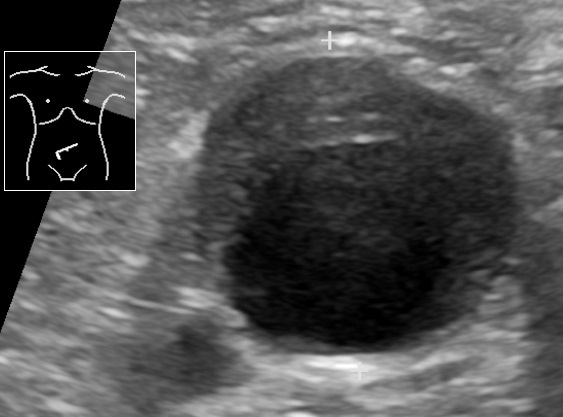
Ultrasonografía de aneurisma de aorta abdominal

Ultrasonido que muestra un aneurisma de aorta abdominal con un trombo mural

Imagen: “Ultrasonography of abdominal aortic aneurysm with mural thrombus” por Mikael Häggström, M.D. Licencia: Dominio Público

Tratamiento

Tratamiento no quirúrgico

  • Reducción del riesgo cardiovascular:
    • Cesación de tabaquismo (la intervención no quirúrgica más eficaz para reducir las complicaciones y la muerte relacionadas con el aneurisma)
    • Ejercicio:
      • Evitar levantar objetos pesados.
      • Evitar actividades que conduzcan a maniobras de Valsalva (↑ presión arterial).
    • Control de la hipertensión:
      • Antihipertensivos administrados para alcanzar los LOS Neisseria objetivos de presión arterial recomendados
      • A diferencia del aneurisma de la aorta Aorta The main trunk of the systemic arteries. Mediastinum and Great Vessels: Anatomy torácica, no se recomienda ningún medicamento específico para limitar la expansión del AAA AAA An aortic aneurysm is the abnormal dilation of a segment of the aorta. Abdominal aortic aneurysm is the most common aortic aneurysm, occurring frequently in the infrarenal area. Most aneurysms are asymptomatic, but can cause compression of surrounding structures or rupture, which is a life-threatening emergency. Abdominal Aortic Aneurysms
    • Control lipídico con estatinas (objetivo de LDL < 70 mg/dL)
  • Evitar las fluoroquinolonas (pueden ↑ el riesgo de disección o ruptura)
  • Vigilancia: AAA AAA An aortic aneurysm is the abnormal dilation of a segment of the aorta. Abdominal aortic aneurysm is the most common aortic aneurysm, occurring frequently in the infrarenal area. Most aneurysms are asymptomatic, but can cause compression of surrounding structures or rupture, which is a life-threatening emergency. Abdominal Aortic Aneurysms asintomático < 5,5 cm, evaluación periódica y vigilancia del diámetro del aneurisma
Tabla: Tratamiento de pacientes asintomáticos por tamaño de AAA AAA An aortic aneurysm is the abnormal dilation of a segment of the aorta. Abdominal aortic aneurysm is the most common aortic aneurysm, occurring frequently in the infrarenal area. Most aneurysms are asymptomatic, but can cause compression of surrounding structures or rupture, which is a life-threatening emergency. Abdominal Aortic Aneurysms
Tratamiento de AAA AAA An aortic aneurysm is the abnormal dilation of a segment of the aorta. Abdominal aortic aneurysm is the most common aortic aneurysm, occurring frequently in the infrarenal area. Most aneurysms are asymptomatic, but can cause compression of surrounding structures or rupture, which is a life-threatening emergency. Abdominal Aortic Aneurysms en EN Erythema nodosum is an immune-mediated panniculitis (inflammation of the subcutaneous fat) caused by a type IV (delayed-type) hypersensitivity reaction. It commonly manifests in young women as tender, erythematous nodules on the shins. Erythema Nodosum pacientes asintomáticos (ultrasonido) Tamaño de AAA AAA An aortic aneurysm is the abnormal dilation of a segment of the aorta. Abdominal aortic aneurysm is the most common aortic aneurysm, occurring frequently in the infrarenal area. Most aneurysms are asymptomatic, but can cause compression of surrounding structures or rupture, which is a life-threatening emergency. Abdominal Aortic Aneurysms
Reevaluar después de 10 años ≥ 2,5 cm pero < 3 cm
Imagenología cada 3 años 3–3,9 cm
Imagenología cada 12 meses 4–4,9 cm
Imagenología cada 6 meses 5–5,4 cm
Considerar la reparación electiva ≥ 5,5 cm

Considerar reparación si ≥5 cm en EN Erythema nodosum is an immune-mediated panniculitis (inflammation of the subcutaneous fat) caused by a type IV (delayed-type) hypersensitivity reaction. It commonly manifests in young women as tender, erythematous nodules on the shins. Erythema Nodosum mujeres; expansión de < 0,5 cm/6 meses o > 1 cm/1 año; aneurisma femoral, ilíaco, poplíteo asociado o enfermedad arterial periférica que requiere revascularización

Tratamiento quirúrgico

Indicaciones para la reparación quirúrgica

  • Rotura de AAA AAA An aortic aneurysm is the abnormal dilation of a segment of the aorta. Abdominal aortic aneurysm is the most common aortic aneurysm, occurring frequently in the infrarenal area. Most aneurysms are asymptomatic, but can cause compression of surrounding structures or rupture, which is a life-threatening emergency. Abdominal Aortic Aneurysms: reparación de emergencia
  • Reparación electiva: la forma más efectiva de prevenir la ruptura y la muerte relacionada con el aneurisma
    • AAA AAA An aortic aneurysm is the abnormal dilation of a segment of the aorta. Abdominal aortic aneurysm is the most common aortic aneurysm, occurring frequently in the infrarenal area. Most aneurysms are asymptomatic, but can cause compression of surrounding structures or rupture, which is a life-threatening emergency. Abdominal Aortic Aneurysms sintomático
    • Expansión rápida (> 0,5 cm/6 meses o > 1 cm/1 año)
    • AAA AAA An aortic aneurysm is the abnormal dilation of a segment of the aorta. Abdominal aortic aneurysm is the most common aortic aneurysm, occurring frequently in the infrarenal area. Most aneurysms are asymptomatic, but can cause compression of surrounding structures or rupture, which is a life-threatening emergency. Abdominal Aortic Aneurysms asintomático: cuando diámetro ≥ 5,5 cm (5 cm en EN Erythema nodosum is an immune-mediated panniculitis (inflammation of the subcutaneous fat) caused by a type IV (delayed-type) hypersensitivity reaction. It commonly manifests in young women as tender, erythematous nodules on the shins. Erythema Nodosum mujeres: mayor tasa de rotura)
    • AAA AAA An aortic aneurysm is the abnormal dilation of a segment of the aorta. Abdominal aortic aneurysm is the most common aortic aneurysm, occurring frequently in the infrarenal area. Most aneurysms are asymptomatic, but can cause compression of surrounding structures or rupture, which is a life-threatening emergency. Abdominal Aortic Aneurysms con aneurisma de arteria ilíaca, femoral o poplítea coexistente
    • AAA AAA An aortic aneurysm is the abnormal dilation of a segment of the aorta. Abdominal aortic aneurysm is the most common aortic aneurysm, occurring frequently in the infrarenal area. Most aneurysms are asymptomatic, but can cause compression of surrounding structures or rupture, which is a life-threatening emergency. Abdominal Aortic Aneurysms asociado a enfermedad arterial periférica sintomática en EN Erythema nodosum is an immune-mediated panniculitis (inflammation of the subcutaneous fat) caused by a type IV (delayed-type) hypersensitivity reaction. It commonly manifests in young women as tender, erythematous nodules on the shins. Erythema Nodosum proceso de revascularización

Opciones quirúrgicas

  • Reparación quirúrgica abierta:
    • Incisión transperitoneal o retroperitoneal Retroperitoneal Peritoneum: Anatomy en EN Erythema nodosum is an immune-mediated panniculitis (inflammation of the subcutaneous fat) caused by a type IV (delayed-type) hypersensitivity reaction. It commonly manifests in young women as tender, erythematous nodules on the shins. Erythema Nodosum línea media
    • Aorta Aorta The main trunk of the systemic arteries. Mediastinum and Great Vessels: Anatomy enferma reemplazada con tubo o injerto protésico
    • Indicado para pacientes jóvenes, de bajo riesgo perioperatorio o que tengan contraindicaciones para la reparación aórtica endovascular
    • Mayor mortalidad perioperatoria pero durable a largo plazo
    • Vigilancia: angiografía por TC 5 años después, buscar dilatación aórtica o pseudoaneurisma
  • Reparación aórtica endovascular:
    • En EN Erythema nodosum is an immune-mediated panniculitis (inflammation of the subcutaneous fat) caused by a type IV (delayed-type) hypersensitivity reaction. It commonly manifests in young women as tender, erythematous nodules on the shins. Erythema Nodosum Estados Unidos: 80% de reparación quirúrgica de AAA AAA An aortic aneurysm is the abnormal dilation of a segment of the aorta. Abdominal aortic aneurysm is the most common aortic aneurysm, occurring frequently in the infrarenal area. Most aneurysms are asymptomatic, but can cause compression of surrounding structures or rupture, which is a life-threatening emergency. Abdominal Aortic Aneurysms
    • Acceso a través de la arteria ilíaca o femoral y endoprótesis colocada dentro del lumen del AAA AAA An aortic aneurysm is the abnormal dilation of a segment of the aorta. Abdominal aortic aneurysm is the most common aortic aneurysm, occurring frequently in the infrarenal area. Most aneurysms are asymptomatic, but can cause compression of surrounding structures or rupture, which is a life-threatening emergency. Abdominal Aortic Aneurysms
    • Requiere accesibilidad anatómica (sitio y estructura del aneurisma y vasos de acceso)
    • Menor mortalidad operatoria, pero mayor tasa de reintervención
    • Vigilancia:
      • Angiografía por TC 1 mes y 1 año después de la operación, luego ultrasonido doppler Doppler Ultrasonography applying the doppler effect, with frequency-shifted ultrasound reflections produced by moving targets (usually red blood cells) in the bloodstream along the ultrasound axis in direct proportion to the velocity of movement of the targets, to determine both direction and velocity of blood flow. Ultrasound (Sonography)/TC anualmente si cirugía sin complicaciones
      • Buscar endofugas, agrandamiento del saco, migración de stents e integridad del dispositivo

Diagnóstico Diferencial

  • Rotura de víscera: una condición en EN Erythema nodosum is an immune-mediated panniculitis (inflammation of the subcutaneous fat) caused by a type IV (delayed-type) hypersensitivity reaction. It commonly manifests in young women as tender, erythematous nodules on the shins. Erythema Nodosum la que se pierde la integridad de la pared gastrointestinal con la subsiguiente fuga de contenido entérico hacia la cavidad peritoneal, lo que resulta en EN Erythema nodosum is an immune-mediated panniculitis (inflammation of the subcutaneous fat) caused by a type IV (delayed-type) hypersensitivity reaction. It commonly manifests in young women as tender, erythematous nodules on the shins. Erythema Nodosum peritonitis Peritonitis Inflammation of the peritoneum lining the abdominal cavity as the result of infectious, autoimmune, or chemical processes. Primary peritonitis is due to infection of the peritoneal cavity via hematogenous or lymphatic spread and without intra-abdominal source. Secondary peritonitis arises from the abdominal cavity itself through rupture or abscess of intra-abdominal organs. Penetrating Abdominal Injury. Una víscera rota es potencialmente mortal y requiere tratamiento quirúrgico.
  • Isquemia mesentérica: un síndrome raro y potencialmente mortal causado por un flujo sanguíneo inadecuado a través de los LOS Neisseria vasos mesentéricos que produce isquemia y gangrena de la pared intestinal. La isquemia mesentérica puede ser aguda o crónica. La isquemia mesentérica aguda es una emergencia quirúrgica, mientras que la condición crónica requiere modificación de factores de riesgo, ya que está relacionada con enfermedad vascular.
  • Hernia Hernia Protrusion of tissue, structure, or part of an organ through the bone, muscular tissue, or the membrane by which it is normally contained. Hernia may involve tissues such as the abdominal wall or the respiratory diaphragm. Hernias may be internal, external, congenital, or acquired. Abdominal Hernias estrangulada: las hernias son protuberancias de contenido abdominal (peritoneo, grasa visceral y/o vísceras) a través de un defecto congénito o adquirido en EN Erythema nodosum is an immune-mediated panniculitis (inflammation of the subcutaneous fat) caused by a type IV (delayed-type) hypersensitivity reaction. It commonly manifests in young women as tender, erythematous nodules on the shins. Erythema Nodosum la pared abdominal. La estrangulación implica la constricción del contenido de la hernia Hernia Protrusion of tissue, structure, or part of an organ through the bone, muscular tissue, or the membrane by which it is normally contained. Hernia may involve tissues such as the abdominal wall or the respiratory diaphragm. Hernias may be internal, external, congenital, or acquired. Abdominal Hernias que conduce a la isquemia intestinal y requiere cirugía de emergencia para evitar la pérdida intestinal, perforación y sepsis Sepsis Systemic inflammatory response syndrome with a proven or suspected infectious etiology. When sepsis is associated with organ dysfunction distant from the site of infection, it is called severe sepsis. When sepsis is accompanied by hypotension despite adequate fluid infusion, it is called septic shock. Sepsis and Septic Shock.
  • Colecistitis aguda: una condición caracterizada por la inflamación de la vesícula biliar, con mayor frecuencia debido a la obstrucción del conducto cístico por un cálculo biliar. El tratamiento incluye fluidos intravenosos, control del dolor Dolor Inflammation y antibióticos intravenosos para infecciones secundarias. La colecistitis complicada y los LOS Neisseria síntomas progresivos son indicaciones para una colecistectomía de emergencia.
  • Pancreatitis Pancreatitis Inflammation of the pancreas. Pancreatitis is classified as acute unless there are computed tomographic or endoscopic retrograde cholangiopancreatographic findings of chronic pancreatitis. The two most common forms of acute pancreatitis are alcoholic pancreatitis and gallstone pancreatitis. Acute Pancreatitis aguda: una inflamación del páncreas que generalmente causa dolor Dolor Inflammation epigástrico que se irradia hacia la espalda. Esta condición a menudo se trata con reposición de fluidos agresiva, reposo intestinal y control del dolor Dolor Inflammation. La cirugía está indicada si la condición está asociada con cálculos biliares.
  • Absceso diverticular: un grupo de diversas afecciones intestinales caracterizadas por evaginaciones anormales de la mucosa colónica (divertículos). Con el tiempo, estos divertículos pueden acumular contenido intestinal, infectarse, hincharse y desarrollar un absceso. Los LOS Neisseria antibióticos intravenosos son el tratamiento recomendado, con drenaje percutáneo necesario para abscesos grandes o tratamiento médico fallido.

Referencias

  1. Dalman, R, Mell, M., Mills, J., Creager, M., Collins, K (Eds.) (2024) Overview of abdominal aortic aneurysm. UpToDate. Retrieved April 13, 2025, from https://www.uptodate.com/contents/overview-of-abdominal-aortic-aneurysm
  2. Creager, M., Elmore, J. & Givens, J. (2022). Screening for abdominal aortic aneurysm. UpToDate. Retrieved April 13, 2025 from https://www.uptodate.com/contents/screening-for-abdominal-aortic-aneurysm
  3. Chung, J., Eidt, J., Mills, J., Creager, M., Collins, K. (2024). Epidemiology, risk factors, pathogenesis and natural history of abdominal aortic aneurysm. UpToDate. Retrieved March 28, 2025 from https://www.uptodate.com/contents/epidemiology-risk-factors-pathogenesis-and-natural-history-of-abdominal-aortic-aneurysm
  4. Dalman, R., Mell, M., Mills, J.; Eidt, J.,Clement, D., Creager, M., Collins, K. (Eds.). (2024). Management of asymptomatic aortic aneurysm. UpToDate. Retrieved April 13, 2025, from https://www.uptodate.com/contents/management-of-asymptomatic-abdominal-aortic-aneurysm
  5. Mazzolai, L., Teixido-Tura, G., Lanzi, S., Boc, V., Bossone, E., Brodmann, M., Bura-Rivière, A., De Backer, J., Deglise, S., Della Corte, A., Heiss, C., Kałużna-Oleksy, M., Kurpas, D., McEniery, C. M., Mirault, T., Pasquet, A. A., Pitcher, A., Schaubroeck, H. A. I., Schlager, O., Sirnes, P. A., … ESC Scientific Document Group (2024). 2024 ESC Guidelines for the management of peripheral arterial and aortic diseases. European heart journal, 45(36), 3538–3700. https://doi.org/10.1093/eurheartj/ehae179
  6. Guoledge, J., Guo-Ping, S., Norman, P., Fitridge, R., Thompson, M. (2011). Pathogenesis of aortic aneurysm. In Mechanisms of Vascular disease: A Reference Book for Vascular Specialists. Adelaide (AU): University of Adelaide Press. Retrieved April 13, 2025, from https://www.ncbi.nlm.nih.gov/books/NBK534278
  7. Mitchell, R., Halushka, M. (2020). In Kumar, V., Abbas, A., Aster, J., Turner, J. (Eds.) Robbins and Cotran Pathologic Basis of Disease. (10th ed., pp. 485–525). Elsevier.
  8. Truong, H.K. (2024). Abdominal aortic aneurysm. Medscape. Retrieved April 13, 2025 from https://emedicine.medscape.com/article/1979501-overview
  9. Ruddy, J., Jones, J., Spinale, F., Ikonomidis, J. (2008). Regional heterogeneity within the aorta: relevance to aneurysm disease. J Thorac Cardiovasc Surg 136(5):1123–1130. Retrieved March 28, 2025, from https://www.ncbi.nlm.nih.gov/pmc/articles/PMC2679174/
  10. Jim, J., Mills, J., Eidt, J., Creager, M., Collins, K. (Eds.) (2024) Clinical features and diagnosis of abdominal aortic aneurysm. UpToDate. Retrieved March 28, 2025 from https://www.uptodate.com/contents/clinical-features-and-diagnosis-of-abdominal-aortic-aneurysm
  11. Vu, K., Kaitoukov, Y., Morin-Roy, F., et al. (2014). Rupture signs on computed tomography, treatment, and outcome of abdominal aortic aneurysms. Insights Imaging.  5(3): 281–293. Retrieved April 13, 2025 from doi: 10.1007/s13244-014-0327-3
  12. Chaikof, Elliot L., et al. (2018). The Society for Vascular Surgery practice guidelines on the care of patients with an abdominal aortic aneurysm. Journal of Vascular Surgery 67(1):2-77.e2. https://doi.org/10.1016/j.jvs.2017.10.044
  13. National Institute for Health and Care Excellence. (2020). Abdominal aortic aneurysm: diagnosis and management [NG156]. Retrieved April 13, 2025, from https://www.nice.org.uk/guidance/ng156
  14. Isselbacher, E. M., Preventza, O., Hamilton Black, J., 3rd, Augoustides, J. G., Beck, A. W., Bolen, M. A., Braverman, A. C., Bray, B. E., Brown-Zimmerman, M. M., Chen, E. P., Collins, T. J., DeAnda, A., Jr, Fanola, C. L., Girardi, L. N., Hicks, C. W., Hui, D. S., Schuyler Jones, W., Kalahasti, V., Kim, K. M., Milewicz, D. M., … Peer Review Committee Members (2022). 2022 ACC/AHA Guideline for the Diagnosis and Management of Aortic Disease: A Report of the American Heart Association/American College of Cardiology Joint Committee on Clinical Practice Guidelines. Circulation, 146(24), e334–e482. https://doi.org/10.1161/CIR.0000000000001106

¡Crea tu cuenta gratis o inicia una sesión para seguir leyendo!

Regístrate ahora y obtén acceso gratuito a Lecturio con páginas de concepto, videos médicos y cuestionarios para tu educación médica.

User Reviews

Que tengas una sesión de estudio alegre y navideña 🎁 Ahorra 50% en todos los planes >>

Details