


Mononucleose

A mononucleose infeciosa ( MI MI MI is ischemia and death of an area of myocardial tissue due to insufficient blood flow and oxygenation, usually from thrombus formation on a ruptured atherosclerotic plaque in the epicardial arteries. Clinical presentation is most commonly with chest pain, but women and patients with diabetes may have atypical symptoms. Myocardial Infarction), também conhecida como “doença do beijo”, é uma infeção vírica altamente contagiosa causada pelo vírus Epstein-Barr. O seu nome deriva do seu principal método de transmissão: a disseminação de saliva Saliva The clear, viscous fluid secreted by the salivary glands and mucous glands of the mouth. It contains mucins, water, organic salts, and ptyalin. Salivary Glands: Anatomy infetada através do beijo. As manifestações clínicas da MI MI MI is ischemia and death of an area of myocardial tissue due to insufficient blood flow and oxygenation, usually from thrombus formation on a ruptured atherosclerotic plaque in the epicardial arteries. Clinical presentation is most commonly with chest pain, but women and patients with diabetes may have atypical symptoms. Myocardial Infarction incluem febre, faringoamigdalite e linfadenopatia. O diagnóstico é clínico e confirmado por anticorpos heterófilos ou serologias específicas. Atualmente, não há tratamento antivírico específico disponível para esta condição.

Last updated: Jan 15, 2023

Editorial responsibility: Stanley Oiseth, Lindsay Jones, Evelin Maza

Descrição Geral

Definição

A mononucleose infeciosa ( MI MI MI is ischemia and death of an area of myocardial tissue due to insufficient blood flow and oxygenation, usually from thrombus formation on a ruptured atherosclerotic plaque in the epicardial arteries. Clinical presentation is most commonly with chest pain, but women and patients with diabetes may have atypical symptoms. Myocardial Infarction) é uma doença infeciosa vírica causada frequentemente pelo vírus Epstein-Barr ( EBV EBV Epstein-barr virus (EBV) is a linear, double-stranded DNA virus belonging to the herpesviridae family. This highly prevalent virus is mostly transmitted through contact with oropharyngeal secretions from an infected individual. The virus can infect epithelial cells and B lymphocytes, where it can undergo lytic replication or latency. Epstein-Barr Virus, pela sigla em inglês) e caracteriza-se pela tríade de febre, faringoamigdalite e linfadenopatia.

Sinónimos

  • Mononucleose infeciosa
  • Doença de Pfeiffer ou febre glandular de Pfeiffer
  • “Mono” ou “doença do beijo”

Epidemiologia

  • Prevalência ao longo da vida de 90%–95% em todo o mundo
  • Ocorre mais MAIS Androgen Insensitivity Syndrome frequentemente na primavera e no outono
  • Crianças e adolescentes com 15 a 19 anos são os mais MAIS Androgen Insensitivity Syndrome frequentemente afetados
  • Uma causa comum de faringite vírica, especialmente em jovens adultos nos Estados Unidos
  • A infeção clínica é 30 vezes maior em americanos leucodérmicos do que em americanos meladérmicos

Etiologia

O EBV EBV Epstein-barr virus (EBV) is a linear, double-stranded DNA virus belonging to the herpesviridae family. This highly prevalent virus is mostly transmitted through contact with oropharyngeal secretions from an infected individual. The virus can infect epithelial cells and B lymphocytes, where it can undergo lytic replication or latency. Epstein-Barr Virus pertence ao grupo dos herpes vírus humanos (HHV-4, pela sigla em inglês).

Fisiopatologia

Patogenicidade

O EBV EBV Epstein-barr virus (EBV) is a linear, double-stranded DNA virus belonging to the herpesviridae family. This highly prevalent virus is mostly transmitted through contact with oropharyngeal secretions from an infected individual. The virus can infect epithelial cells and B lymphocytes, where it can undergo lytic replication or latency. Epstein-Barr Virus tem uma especificidade de espécie excecionalmente alta:
  • Replica-se quase exclusivamente em células epiteliais humanas da orofaringe e em linfócitos B
  • Não foi encontrado no meio ambiente, o que sugere que o seu principal reservatório seja a espécie humana

Transmissão

  • A doença é transmitida principalmente através do contacto com secreções corporais, principalmente secreções orofaríngeas.
    • Infeção por esfregaço (infeção por contacto direto): especialmente comum em crianças pelos pais PAIS Androgen Insensitivity Syndrome, colegas na escola, etc ETC The electron transport chain (ETC) sends electrons through a series of proteins, which generate an electrochemical proton gradient that produces energy in the form of adenosine triphosphate (ATP). Electron Transport Chain (ETC).
    • Infeção indireta: tocar em objetos contaminados (e.g. copo de beber)
    • Infeção por contacto:
      • Especialmente em adolescentes pela saliva Saliva The clear, viscous fluid secreted by the salivary glands and mucous glands of the mouth. It contains mucins, water, organic salts, and ptyalin. Salivary Glands: Anatomy infetada durante o beijo e partilha de bebidas
      • O beijo parece ser uma via mais MAIS Androgen Insensitivity Syndrome importante do que o coito
    • Raramente se transmite através de transfusões sanguíneas ou transplante de órgão devido ao uso do teste de amplificação de ácidos nucleicos (TAAN) altamente sensível do tecido de dador
    • A transmissão vertical do EBV EBV Epstein-barr virus (EBV) is a linear, double-stranded DNA virus belonging to the herpesviridae family. This highly prevalent virus is mostly transmitted through contact with oropharyngeal secretions from an infected individual. The virus can infect epithelial cells and B lymphocytes, where it can undergo lytic replication or latency. Epstein-Barr Virus parece ser excecional.

Doença

  • O vírus propaga-se por todo o organismo a partir da orofaringe:
    • Infeta:
      • Epitélios CD21-positivos na nasofaringe e glândulas salivares
      • Linfócitos B
    • Os linfócitos infetados infiltram-se depois noutros tecidos linfóides por todo o sistema linforreticular.
  • A resposta das células T citotóxicas é desencadeada → hiperplasia linfóide manifesta-se como:
    • Amigdalite
    • Linfadenopatia
    • Hepatoesplenomegalia
  • Na infecção primária por EBV EBV Epstein-barr virus (EBV) is a linear, double-stranded DNA virus belonging to the herpesviridae family. This highly prevalent virus is mostly transmitted through contact with oropharyngeal secretions from an infected individual. The virus can infect epithelial cells and B lymphocytes, where it can undergo lytic replication or latency. Epstein-Barr Virus, há uma produção massiva de EBV EBV Epstein-barr virus (EBV) is a linear, double-stranded DNA virus belonging to the herpesviridae family. This highly prevalent virus is mostly transmitted through contact with oropharyngeal secretions from an infected individual. The virus can infect epithelial cells and B lymphocytes, where it can undergo lytic replication or latency. Epstein-Barr Virus:
    • Anticorpos contra EBV EBV Epstein-barr virus (EBV) is a linear, double-stranded DNA virus belonging to the herpesviridae family. This highly prevalent virus is mostly transmitted through contact with oropharyngeal secretions from an infected individual. The virus can infect epithelial cells and B lymphocytes, where it can undergo lytic replication or latency. Epstein-Barr Virus
    • Anticorpos contra antigénios não relacionados (anticorpos heterófilos)
    • Outros anticorpos (e.g., contra plaquetas → trombocitopenia)
  • Após a resposta imunitária inicial, o EBV EBV Epstein-barr virus (EBV) is a linear, double-stranded DNA virus belonging to the herpesviridae family. This highly prevalent virus is mostly transmitted through contact with oropharyngeal secretions from an infected individual. The virus can infect epithelial cells and B lymphocytes, where it can undergo lytic replication or latency. Epstein-Barr Virus permanece em vários linfócitos infectados (latência):
    • A eliminação oral geralmente persiste por 6 meses após o início da doença e pode ser eliminado de forma intermitente durante décadas.
    • Verificou-se que o estado de portador crónico está relacionado com a fadiga crónica.
    • Reativação:
      • Nos indivíduos imunocompetentes, haveria sintomas mínimos ou nenhuns.
      • Nos indivíduos imunocomprometidos, ocorre uma infeção sintomática por EBV EBV Epstein-barr virus (EBV) is a linear, double-stranded DNA virus belonging to the herpesviridae family. This highly prevalent virus is mostly transmitted through contact with oropharyngeal secretions from an infected individual. The virus can infect epithelial cells and B lymphocytes, where it can undergo lytic replication or latency. Epstein-Barr Virus e/ou desenvolve-se uma malignidade relacionada com o EBV EBV Epstein-barr virus (EBV) is a linear, double-stranded DNA virus belonging to the herpesviridae family. This highly prevalent virus is mostly transmitted through contact with oropharyngeal secretions from an infected individual. The virus can infect epithelial cells and B lymphocytes, where it can undergo lytic replication or latency. Epstein-Barr Virus.
Ciclo de infeção por EBV

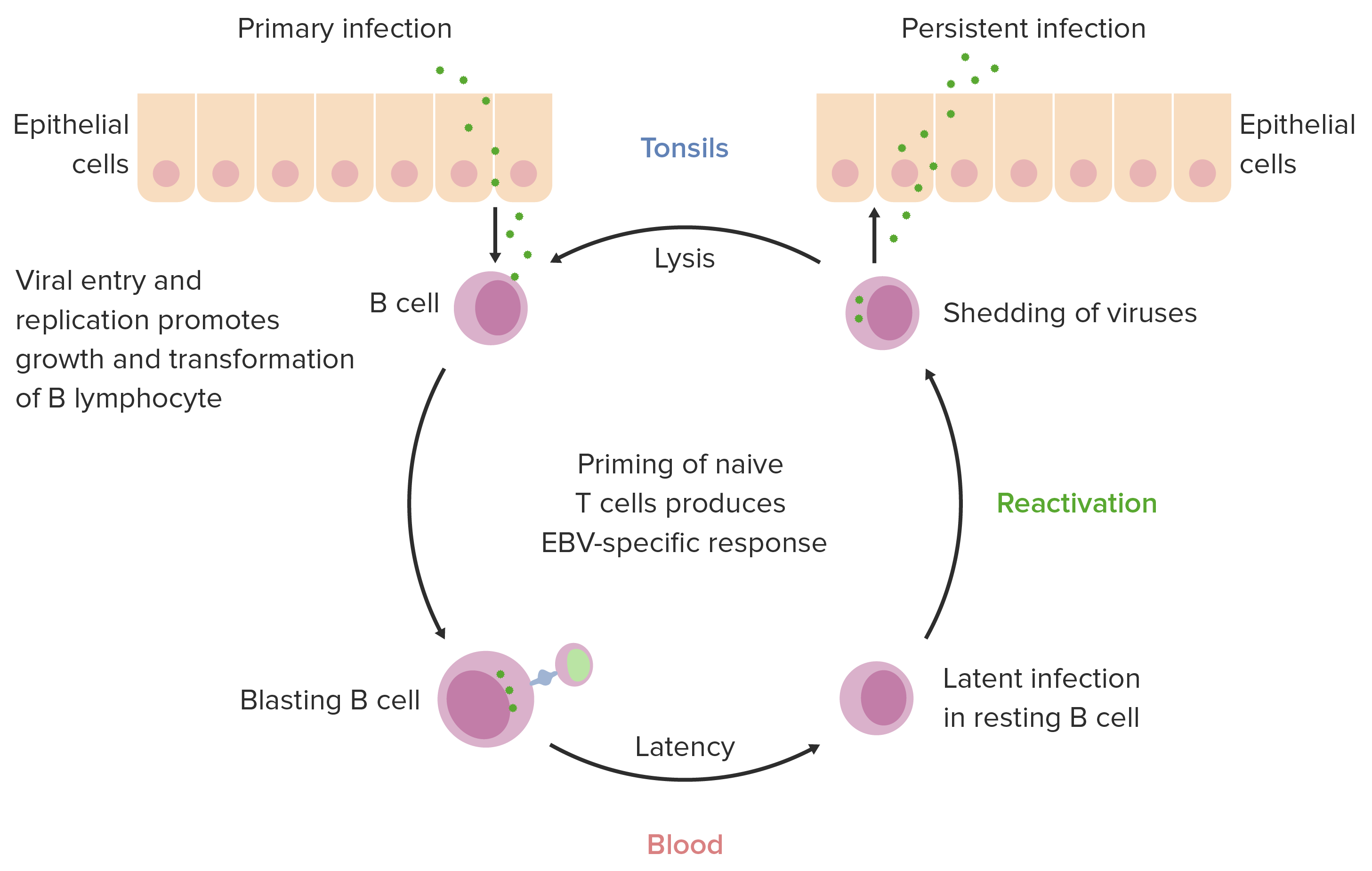
O vírus Epstein-Barr pode infetar células B e células epiteliais da orofaringe. O EBV entra nas células B ao ligar-se ao recetor celular CD21, permitindo a fusão do envelope viral com a membrana celular. O ciclo lítico resulta na produção de viriões infeciosos tanto nas células B como nas células epiteliais da orofaringe. Nas células B, normalmente a replicação lítica ocorre apenas após a reativação da latência, enquanto nas células epiteliais da orofaringe a replicação lítica ocorre diretamente após a entrada do vírus. Durante a replicação lítica, a DNA polimerase viral é responsável pela síntese do genoma viral. Isto contrasta com a latência, em que a DNA polimerase da célula hospedeira copia o genoma viral. No entanto, a latência não resulta na produção de viriões, uma vez que apenas uma parte dos genes do EBV é expressa.

Imagem por Lecturio.

Apresentação Clínica

  • Período de incubação: 4-8 semanas
  • Estadio prodrómico: geralmente assintomático (especialmente em crianças < 10 anos, das quais apenas 10% são sintomáticas), mas pode incluir mal-estar, cefaleia e febre baixa
  • Sintomas presentes em adolescentes e adultos e duram 2–4 semanas.

Tríade clássica de sintomas

  1. Febre
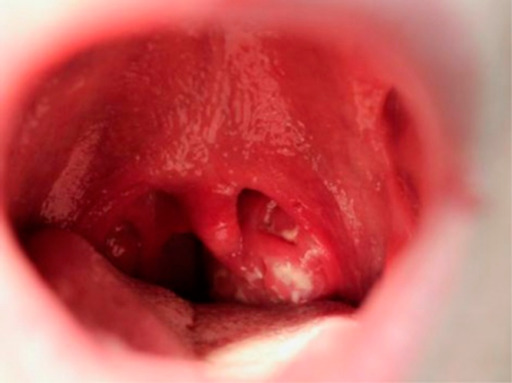
  2. Amigdalite (amígdalas edemaciadas e eritematosas que podem estar cobertas por exsudado)/ faringite
  3. Linfadenopatia cervical
Mononucleose Infeciosa

Faringite a demonstrar amigdalite exsudativa e aumento da úvula em paciente adolescente 5 dias após o início de mononucleose infeciosa

Imagem: “Infectious mononucleosis” por University of Minnesota Medical School, Minneapolis, MN, USA. Licença: CC BY 4.0

Sintomas adicionais

  • Cefaleias
  • Mal-estar geral a fadiga persistente e severa
  • Petéquias presentes na junção entre o palato duro e o palato mole Mole Nevi (singular nevus), also known as “moles,” are benign neoplasms of the skin. Nevus is a non-specific medical term because it encompasses both congenital and acquired lesions, hyper- and hypopigmented lesions, and raised or flat lesions. Nevus/Nevi
  • Fetor ex-ore (“halitose”): hálito com mau odor
  • Hepato, espleno ou hepatoesplenomegalia
    • Pode manifestar-se com dor abdominal e/ou icterícia
  • Aumento generalizado dos gânglios linfáticos (nódulos sensíveis, firmes, móveis)
  • Erupção cutânea maculopapular Maculopapular Dermatologic Examination (semelhante ao sarampo, presente em aproximadamente 5% dos casos)

Sinal de Hoagland

  • Pálpebras superiores inchadas ou edematosas: uma manifestação única de MI MI MI is ischemia and death of an area of myocardial tissue due to insufficient blood flow and oxygenation, usually from thrombus formation on a ruptured atherosclerotic plaque in the epicardial arteries. Clinical presentation is most commonly with chest pain, but women and patients with diabetes may have atypical symptoms. Myocardial Infarction aguda
  • A patofisiologia do sinal Hoagland é desconhecida, mas acredita-se que seja o resultado de infiltração linfocítica.

Síndromes neurológicas

  • Podem ocorrer 2–4 semanas após o início dos primeiros sintomas
  • Pode incluir:
    • Síndrome de Guillain-Barré
    • Paralisia facial e de outros nervos cranianos
    • Inflamação assética do cérebro, meninges Meninges The brain and the spinal cord are enveloped by 3 overlapping layers of connective tissue called the meninges. The layers are, from the most external layer to the most internal layer, the dura mater, arachnoid mater, and pia mater. Between these layers are 3 potential spaces called the epidural, subdural, and subarachnoid spaces. Meninges: Anatomy e/ou nervos centrais e periféricos

Mononucleose crónica

  • Rara, devido à replicação viral persistente (infeção EBV EBV Epstein-barr virus (EBV) is a linear, double-stranded DNA virus belonging to the herpesviridae family. This highly prevalent virus is mostly transmitted through contact with oropharyngeal secretions from an infected individual. The virus can infect epithelial cells and B lymphocytes, where it can undergo lytic replication or latency. Epstein-Barr Virus crónica e ativa)
  • Apresentação:
    • Febre crónica ou recorrente
    • Fadiga
    • Perda de peso
    • Linfadenopatia
    • Citopenia
    • Pneumonia Pneumonia Pneumonia or pulmonary inflammation is an acute or chronic inflammation of lung tissue. Causes include infection with bacteria, viruses, or fungi. In more rare cases, pneumonia can also be caused through toxic triggers through inhalation of toxic substances, immunological processes, or in the course of radiotherapy. Pneumonia intersticial
    • Hepatite

Diagnóstico

O diagnóstico é baseado nos sintomas clínicos descritos acima e em testes Testes Gonadal Hormones confirmatórios.

  • Análises laboratoriais:
    • Leucocitose linfocítica absoluta e relativa (> 4.500/mL e > 50% dos leucócitos) com > 10% de células atípicas grandes reativas T CD8+ (“linfócitos atípicos”)
    • Anemia Anemia Anemia is a condition in which individuals have low Hb levels, which can arise from various causes. Anemia is accompanied by a reduced number of RBCs and may manifest with fatigue, shortness of breath, pallor, and weakness. Subtypes are classified by the size of RBCs, chronicity, and etiology. Anemia: Overview and Types ligeira, neutropenia Neutropenia Neutrophils are an important component of the immune system and play a significant role in the eradication of infections. Low numbers of circulating neutrophils, referred to as neutropenia, predispose the body to recurrent infections or sepsis, though patients can also be asymptomatic. Neutropenia e trombocitopenia
    • ↑ Velocidade de sedimentação eritrócita
    • ↑ proteína C reativa
    • Ligeiro ↑ transaminases Transaminases A subclass of enzymes of the transferase class that catalyze the transfer of an amino group from a donor (generally an amino acid) to an acceptor (generally a 2-keto acid). Most of these enzymes are pyridoxyl phosphate proteins. Autoimmune Hepatitis, fosfatase alcalina e bilirrubina total
  • Teste de mononuclear spot, monospot ou anticorpos heterófilos:
    • Deteta anticorpos heterófilos produzidos em resposta à infeção por EBV EBV Epstein-barr virus (EBV) is a linear, double-stranded DNA virus belonging to the herpesviridae family. This highly prevalent virus is mostly transmitted through contact with oropharyngeal secretions from an infected individual. The virus can infect epithelial cells and B lymphocytes, where it can undergo lytic replication or latency. Epstein-Barr Virus
    • Tem uma sensibilidade de 85% e especificidade de 100%
    • Não são necessários mais MAIS Androgen Insensitivity Syndrome testes Testes Gonadal Hormones se estes forem reativos
  • Serologias:
    • Detetam anticorpos contra EBV EBV Epstein-barr virus (EBV) is a linear, double-stranded DNA virus belonging to the herpesviridae family. This highly prevalent virus is mostly transmitted through contact with oropharyngeal secretions from an infected individual. The virus can infect epithelial cells and B lymphocytes, where it can undergo lytic replication or latency. Epstein-Barr Virus
    • Imunoglobulina G ( IgG IgG The major immunoglobulin isotype class in normal human serum. There are several isotype subclasses of igg, for example, igg1, igg2a, and igg2b. Hypersensitivity Pneumonitis) positiva indica uma infeção passada
    • Imunoglobulina M ( IgM IgM A class of immunoglobulin bearing mu chains (immunoglobulin mu-chains). Igm can fix complement. The name comes from its high molecular weight and originally being called a macroglobulin. Immunoglobulins: Types and Functions) positiva indica uma infeção atual
  • Histopatologia dos gânglios linfáticos:
    • Não é necessário para o diagnóstico
    • É típico o quadro de hiperplasia polimórfica da polpa.
    • Na amostra histológica estão presentes a propagação nos gânglios linfáticos e o rápido crescimento de células blásticas/necrose.

Resumo

Se existir suspeita de MI MI MI is ischemia and death of an area of myocardial tissue due to insufficient blood flow and oxygenation, usually from thrombus formation on a ruptured atherosclerotic plaque in the epicardial arteries. Clinical presentation is most commonly with chest pain, but women and patients with diabetes may have atypical symptoms. Myocardial Infarction pela história e exame físico, solicitar uma contagem diferencial de leucócitos e um teste de anticorpos heterófilos.

  • Heterófilo +: sem teste adicional, diagnóstico de MI MI MI is ischemia and death of an area of myocardial tissue due to insufficient blood flow and oxygenation, usually from thrombus formation on a ruptured atherosclerotic plaque in the epicardial arteries. Clinical presentation is most commonly with chest pain, but women and patients with diabetes may have atypical symptoms. Myocardial Infarction confirmado
  • Heterófilo -: sugere citomegalovírus (CMV, pela sigla em inglês) como uma possível causa, mas o diagnóstico definitivo de EBV EBV Epstein-barr virus (EBV) is a linear, double-stranded DNA virus belonging to the herpesviridae family. This highly prevalent virus is mostly transmitted through contact with oropharyngeal secretions from an infected individual. The virus can infect epithelial cells and B lymphocytes, where it can undergo lytic replication or latency. Epstein-Barr Virus é o teste serológico para o antigénio da cápside viral do EBV EBV Epstein-barr virus (EBV) is a linear, double-stranded DNA virus belonging to the herpesviridae family. This highly prevalent virus is mostly transmitted through contact with oropharyngeal secretions from an infected individual. The virus can infect epithelial cells and B lymphocytes, where it can undergo lytic replication or latency. Epstein-Barr Virus através de anticorpos do EBV EBV Epstein-barr virus (EBV) is a linear, double-stranded DNA virus belonging to the herpesviridae family. This highly prevalent virus is mostly transmitted through contact with oropharyngeal secretions from an infected individual. The virus can infect epithelial cells and B lymphocytes, where it can undergo lytic replication or latency. Epstein-Barr Virus
Tríade clássica de MI

Algoritmo de diagnóstico para mononucleose infeciosa

Imagem por Lecturio.

Tratamento e Prognóstico

Atualmente, não há tratamento antivírico específico disponível, portanto, o tratamento é de suporte.
  • O tratamento sintomático inclui:
    • Evicção de atividade física por 3 (desportos sem contacto) a 4 (desportos com contacto) semanas após o início dos primeiros sintomas para evitar rutura esplénica
    • Antipiréticos e analgésicos (e.g., acetaminofen, anti-inflamatórios não esteroides)
    • Alimentação e ingestão hídrica adequada
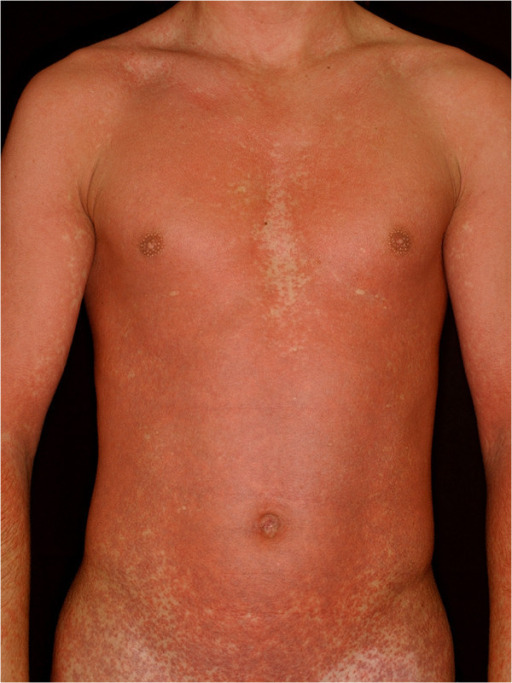
  • A administração de penicilina e aminopenicilinas pode desencadear a formação de exantema.
Erupção cutânea por amoxicilina

Erupção cutânea por amoxicilina em paciente com mononucleose infeciosa

Imagem: “Amoxicillin rash in a patient with infectious mononucleosis (patient 4)” por Department of Dermatology and Allergology, University of Szeged, Szeged, Hungary. Licença: CC BY 4.0

Prognóstico

  • Em geral, é comum a resolução favorável e desenvolve-se imunidade duradoura.
  • O curso mais MAIS Androgen Insensitivity Syndrome severo da doença é observado naqueles com imunodeficiências (incluindo os recetores de transplantes).
  • As infeções crónicas são extremamente raras.
  • Latência do vírus nas células B → aumento do risco de recorrência e linfoma de células B em imunocomprometidos (e.g., aqueles com VIH)

Complicações

Sobreinfeção bacteriana
Muitos pacientes desenvolvem faringite estreptocócica secundária.

Cardíacas

  • Miocardite: doença inflamatória do músculo cardíaco, que surge principalmente por infeção provocada por vírus cardiotrópicos (geralmente associada ao vírus coxsackie, mas também observada com EBV EBV Epstein-barr virus (EBV) is a linear, double-stranded DNA virus belonging to the herpesviridae family. This highly prevalent virus is mostly transmitted through contact with oropharyngeal secretions from an infected individual. The virus can infect epithelial cells and B lymphocytes, where it can undergo lytic replication or latency. Epstein-Barr Virus)
  • Arritmias (bradiarritmias e taquiarritmias) ou pericardite (inflamação do pericárdio): podem ser observadas juntamente com a miocardite

Dermatológicas

  • Erupção cutânea associada à ampicilina
  • Leucoplasia pilosa oral: desencadeada pelo EBV EBV Epstein-barr virus (EBV) is a linear, double-stranded DNA virus belonging to the herpesviridae family. This highly prevalent virus is mostly transmitted through contact with oropharyngeal secretions from an infected individual. The virus can infect epithelial cells and B lymphocytes, where it can undergo lytic replication or latency. Epstein-Barr Virus; resulta em manchas brancas na língua que podem ter uma aparência pilosa

Hematológicas

  • Anemia Anemia Anemia is a condition in which individuals have low Hb levels, which can arise from various causes. Anemia is accompanied by a reduced number of RBCs and may manifest with fatigue, shortness of breath, pallor, and weakness. Subtypes are classified by the size of RBCs, chronicity, and etiology. Anemia: Overview and Types hemolítica:
    • Tipo de anemia Anemia Anemia is a condition in which individuals have low Hb levels, which can arise from various causes. Anemia is accompanied by a reduced number of RBCs and may manifest with fatigue, shortness of breath, pallor, and weakness. Subtypes are classified by the size of RBCs, chronicity, and etiology. Anemia: Overview and Types causada pela destruição prematura de hemácias.
    • A anemia Anemia Anemia is a condition in which individuals have low Hb levels, which can arise from various causes. Anemia is accompanied by a reduced number of RBCs and may manifest with fatigue, shortness of breath, pallor, and weakness. Subtypes are classified by the size of RBCs, chronicity, and etiology. Anemia: Overview and Types hemolítica autoimune por anticorpos frios é uma complicação rara que pode estar associada ao EBV EBV Epstein-barr virus (EBV) is a linear, double-stranded DNA virus belonging to the herpesviridae family. This highly prevalent virus is mostly transmitted through contact with oropharyngeal secretions from an infected individual. The virus can infect epithelial cells and B lymphocytes, where it can undergo lytic replication or latency. Epstein-Barr Virus.
  • Trombocitopenia e/ou neutropenia Neutropenia Neutrophils are an important component of the immune system and play a significant role in the eradication of infections. Low numbers of circulating neutrophils, referred to as neutropenia, predispose the body to recurrent infections or sepsis, though patients can also be asymptomatic. Neutropenia: complicação relacionada com a produção de anticorpos contra plaquetas e/ou neutrófilos durante a infeção por EBV EBV Epstein-barr virus (EBV) is a linear, double-stranded DNA virus belonging to the herpesviridae family. This highly prevalent virus is mostly transmitted through contact with oropharyngeal secretions from an infected individual. The virus can infect epithelial cells and B lymphocytes, where it can undergo lytic replication or latency. Epstein-Barr Virus

Hepáticas

  • Síndrome de Reye: uma doença rara caracterizada por encefalopatia e insuficiência hepática após recuperação de uma infeção viral (afeta principalmente crianças)
  • Hepatite viral ligeira: infeção que causa inflamação e dano hepático.
  • Necrose hepática fulminante: lesão grave do fígado associada a encefalopatia e INR prolongada (num indivíduo sem doença hepática subjacente)

Esplénicas

  • Esplenomegalia
  • Rutura esplénica:
    • Ocorre em < 0,5% dos casos; mais MAIS Androgen Insensitivity Syndrome comum nos homens
    • Apresenta-se com:
      • Dor abdominal abrupta
      • Dor referida no ombro
      • Compromisso hemodinâmico
    • Requer cirurgia imediata
    • Evitar desportos de contacto e levantamento de pesos pode reduzir o risco.

Respiratórias

  • Obstrução das vias aéreas e dificuldade respiratória devido ao edema Edema Edema is a condition in which excess serous fluid accumulates in the body cavity or interstitial space of connective tissues. Edema is a symptom observed in several medical conditions. It can be categorized into 2 types, namely, peripheral (in the extremities) and internal (in an organ or body cavity). Edema das amígdalas (tratar com corticosteróides)
  • Pneumonite intersticial
  • Pneumonia Pneumonia Pneumonia or pulmonary inflammation is an acute or chronic inflammation of lung tissue. Causes include infection with bacteria, viruses, or fungi. In more rare cases, pneumonia can also be caused through toxic triggers through inhalation of toxic substances, immunological processes, or in the course of radiotherapy. Pneumonia

Imunológicas e oncológicas

  • Diminuição da imunidade mediada por células
  • Síndromes linfoproliferativas
  • Linfomas de Burkitt e não Hodgkin:
    • Associados à infeção por EBV EBV Epstein-barr virus (EBV) is a linear, double-stranded DNA virus belonging to the herpesviridae family. This highly prevalent virus is mostly transmitted through contact with oropharyngeal secretions from an infected individual. The virus can infect epithelial cells and B lymphocytes, where it can undergo lytic replication or latency. Epstein-Barr Virus.
    • O linfoma de Burkitt endémico ocorre principalmente na África; geralmente afeta a mandíbula e os ossos faciais.
    • O linfoma de Burkitt esporádico apresenta-se com massas abdominais ou envolvimento da medula óssea.
  • Linfomas de Hodgkin: cancro com origem em linfócitos e que se manifesta com aumento indolor dos gânglios linfáticos no pescoço, axila ou virilha

Neurológicas

  • Encefalite: inflamação do cérebro, mais MAIS Androgen Insensitivity Syndrome frequentemente provocada por uma infeção vírica
  • Síndrome de Guillain-Barré: uma polineuropatia autoimune (fraqueza dos membros, neuropatias cranianas, alterações sensoriais) que ocorre após uma infeção
  • Outras complicações:
    • Paralisia de Bell (paralisia do nervo facial)
    • Nevrite ótica
    • Mielite transversa
    • Linfoma primário do SNC

Renais

  • Glomerulonefrite: a inflamação pós-infeciosa dos glomérulos está ocasionalmente associada ao EBV EBV Epstein-barr virus (EBV) is a linear, double-stranded DNA virus belonging to the herpesviridae family. This highly prevalent virus is mostly transmitted through contact with oropharyngeal secretions from an infected individual. The virus can infect epithelial cells and B lymphocytes, where it can undergo lytic replication or latency. Epstein-Barr Virus.
  • Nefrite intersticial:
    • Inflamação do interstício renal
    • Normalmente induzida pela ingestão de drogas, mas também observada com infeções bacterianas, virais e fúngicas

Diagnósticos Diferenciais

As seguintes condições são diagnósticos diferenciais de mononucleose infeciosa:

  • Infeção por CMV: um vírus de cadeia dupla de DNA DNA A deoxyribonucleotide polymer that is the primary genetic material of all cells. Eukaryotic and prokaryotic organisms normally contain DNA in a double-stranded state, yet several important biological processes transiently involve single-stranded regions. DNA, which consists of a polysugar-phosphate backbone possessing projections of purines (adenine and guanine) and pyrimidines (thymine and cytosine), forms a double helix that is held together by hydrogen bonds between these purines and pyrimidines (adenine to thymine and guanine to cytosine). DNA Types and Structure que se transmite através de secreções como a saliva Saliva The clear, viscous fluid secreted by the salivary glands and mucous glands of the mouth. It contains mucins, water, organic salts, and ptyalin. Salivary Glands: Anatomy, a urina e o sangue. A infeção por CMV geralmente é assintomática em pacientes imunocompetentes, mas provoca doença grave em pacientes imunocomprometidos.
  • A infeção pelo VIH é provocada por um vírus de cadeia simples de RNA RNA A polynucleotide consisting essentially of chains with a repeating backbone of phosphate and ribose units to which nitrogenous bases are attached. RNA is unique among biological macromolecules in that it can encode genetic information, serve as an abundant structural component of cells, and also possesses catalytic activity. RNA Types and Structure da família Retroviridae Retroviridae The human immunodeficiency virus (HIV) is a species of Lentivirus, a genus of the family Retroviridae, which causes HIV infections and acquired immunodeficiency syndrome (AIDS). The virus has high genetic variability and is divided into 2 major types, HIV type 1 (HIV-1) and HIV type 2 (HIV-2). The human immunodeficiency virus is a single-stranded, positive-sense, enveloped RNA virus, which targets and destroys WBCs, leading to frequent opportunistic infections and, eventually, death. Human Immunodeficiency Virus (HIV) e é transmitida através de fluidos corporais, como o sémen e o sangue. A infeção por HIV HIV Anti-HIV Drugs provoca uma deterioração do sistema imunológico, inicialmente com sintomas constitucionais (linfadenopatia) e posteriormente com doenças definidoras de SIDA (infeções oportunistas).
  • Infeção estreptocócica: bactérias gram-positivas conhecidas pelo seu crescimento característico em cadeia; pode causar endocardite, meningite, olho rosa bacteriano e fasceíte necrotizante
  • Toxoplasmose: uma doença infeciosa provocada pelo Toxoplasma Toxoplasma Toxoplasmosis is an infectious disease caused by Toxoplasma gondii, an obligate intracellular protozoan parasite. Felines are the definitive host, but transmission to humans can occur through contact with cat feces or the consumption of contaminated foods. The clinical presentation and complications depend on the host’s immune status. Toxoplasma/Toxoplasmosis gondii, um parasita intracelular obrigatório que vive no intestino felino (hospedeiro definitivo). Os humanos podem ser infetados pelo consumo de carne crua ou alimentos contaminados por fezes de gato.
  • Vírus parainfluenza: vírus de RNA RNA A polynucleotide consisting essentially of chains with a repeating backbone of phosphate and ribose units to which nitrogenous bases are attached. RNA is unique among biological macromolecules in that it can encode genetic information, serve as an abundant structural component of cells, and also possesses catalytic activity. RNA Types and Structure com envelope Envelope Bilayer lipid membrane acquired by viral particles during viral morphogenesis. Although the lipids of the viral envelope are host derived, various virus-encoded integral membrane proteins, i.e. Viral envelope proteins are incorporated there. Virology que pode provocar infeções respiratórias superiores e inferiores e croup Croup Croup, also known as laryngotracheobronchitis, is a disease most commonly caused by a viral infection that leads to severe inflammation of the upper airway. It usually presents in children < 5 years of age. Patients develop a hoarse, "seal-like" barking cough and inspiratory stridor. Croup, geralmente com mialgias/artralgias súbitas com febre e amigdalite
  • Difteria: uma infeção bacteriana grave provocada por Corynebacterium diphtheriae Corynebacterium diphtheriae Diphtheria is an infectious disease caused by corynebacterium diphtheriae that most often results in respiratory disease with membranous inflammation of the pharynx, sore throat, fever, swollen glands, and weakness. The hallmark sign is a sheet of thick, gray material covering the back of the throat. Diphtheria que atinge as membranas mucosas nasais e faríngeas, resultando em odinofagia, febre, aumento dos gânglios linfáticos e astenia
  • Herpes-vírus humano (HHV, pela sigla em inglês): uma síndrome semelhante à MI MI MI is ischemia and death of an area of myocardial tissue due to insufficient blood flow and oxygenation, usually from thrombus formation on a ruptured atherosclerotic plaque in the epicardial arteries. Clinical presentation is most commonly with chest pain, but women and patients with diabetes may have atypical symptoms. Myocardial Infarction que está associada à seroconversão HHV-6 HHV-6 Human herpesvirus (HHV)-6 and HHV-7 are similar double-stranded DNA viruses belonging to the Herpesviridae family. Human herpesviruses are ubiquitous and infections are commonly contracted during childhood. Human Herpesvirus 6 and 7 em adultos. Embora seja uma doença rara, os sintomas estão associados à linfadenopatia anterior e posterior.

Referências

  1. Aronson, M., Auwaerter, P. (2021) Infectious mononucleosis. UpToDate. Retrieved June 25, 2022, from https://www.uptodate.com/contents/infectious-mononucleosis
  2. Cohen J.I. (2022). Epstein-Barr virus infections, including infectious mononucleosis. Loscalzo, J., Fauci, A., Kasper, D., Hauser, S., Longo, D., Jameson, J. (Eds.), Harrison’s principles of internal medicine, 21st edition. McGraw Hill. https://accessmedicine.mhmedical.com/content.aspx?bookid=3095&sectionid=265424751
  3. Centers for Disease Control and Prevention. (2024). About infectious mononucleosis (mono). Retrieved June 17, 2025, from https://www.cdc.gov/epstein-barr/about/mononucleosis.html
  4. Taga, K., Taga, H., Tosato, G. (2001). Diagnosis of atypical cases of infectious mononucleosis. Clinical Infectious Diseases 33(1):83–88. https://doi.org/10.1086/320889
  5. Roberts, J.R. (2001). Infectious mononucleosis. Emergency Medicine News 23(3):6–10. https://journals.lww.com/em-news/fulltext/2001/04000/infectious_mononucleosis__epidemiology_and.9.aspx
  6. Omori, M. (2019). Infectious mononucleosis (IM) in emergency medicine. Medscape. Retrieved June 25, 2022, from https://emedicine.medscape.com/article/784513-overview
  7. Otsuka, Y., Kishida, M. (2022). Hoagland sign: bilateral upper eyelid oedema. BMJ Case Reports 15(6):e250857. https://doi.org/10.1136/bcr-2022-250857
  8. Louppides, S., Kakoullis, L., Parpas, G., Panos, G. (2019). Upper eyelid oedema in a patient with pharyngitis/exudative tonsillitis and malaise: Hoagland sign in infectious mononucleosis. BMJ Case Reports 12(12):e233719. https://doi.org/10.1136/bcr-2019-233719
  9. Taylor, G. (2003). Cytomegalovirus. American Family Physician 67(3):519–524. https://www.aafp.org/pubs/afp/issues/2003/0201/p519.html
  10.  Friel, T. (2022) Epidemiology, clinical manifestations, and treatment of cytomegalovirus infection in immunocompetent adults. UpToDate. Retrieved June 25, 2022, from https://www.uptodate.com/contents/epidemiology-clinical-manifestations-and-treatment-of-cytomegalovirus-infection-in-immunocompetent-adults
  11.  Asgari, M.M., Begos, D.G. (1997). Spontaneous splenic rupture in infectious mononucleosis: a review. Yale Journal of Biology and Medicine 70(2):175–182. 
  12.  Lennon, P., Crotty, M., Fenton, J. (2015). Infectious mononucleosis. BMJ 350:h1825. doi: https://doi.org/10.1136/bmj.h1825
  13. Styczynski, J., van der Velden, W., Fox, C.P., Engelhard, D., de la Camara, R., Cordonnier, C., Ljungman, P., & Sixth European Conference on Infections in Leukemia, a joint venture of the Infectious Diseases Working Party of the European Society of Blood and Marrow Transplantation (EBMT-IDWP), the Infectious Diseases Group of the European Organization for Research and Treatment of Cancer (EORTC-IDG), the International Immunocompromised Host Society (ICHS) and the European Leukemia Net (ELN). (2016). Management of Epstein-Barr virus infections and post-transplant lymphoproliferative disorders in patients after allogeneic hematopoietic stem cell transplantation: Sixth European Conference on Infections in Leukemia (ECIL-6) guidelines. Haematologica 101(7):803–811. https://doi.org/10.3324/haematol.2016.144428
  14. Ebell, M.H. (2004). Epstein-Barr virus infectious mononucleosis. American Family Physician 70(7):1279–1287. https://www.aafp.org/pubs/afp/issues/2004/1001/p1279.html

Crie sua conta gratuita ou faça login para continuar lendo!

Cadastre-se agora e tenha acesso grátis ao Lecturio, com páginas de conceitos, vídeos de medicina e questões para sua educação médica.

Aprende mais com a Lecturio:

Multiple devices displaying human anatomy and health education content.

Complementa o teu estudo da faculdade com o companheiro de estudo tudo-em-um da Lecturio, através de métodos de ensino baseados em evidência.

Estuda onde quiseres

Two iPhones display medical education apps, one showing anatomy, the other Bookmatcher.

A Lecturio Medical complementa o teu estudo através de métodos de ensino baseados em evidência, vídeos de palestras, perguntas e muito mais – tudo combinado num só lugar e fácil de usar.

User Reviews

Have a holly, jolly study session 🎁 Save 50% on all plans now >>

Que tengas una sesión de estudio alegre y navideña 🎁 Ahorra 50% en todos los planes >>

Details