What is neonatal sepsis?
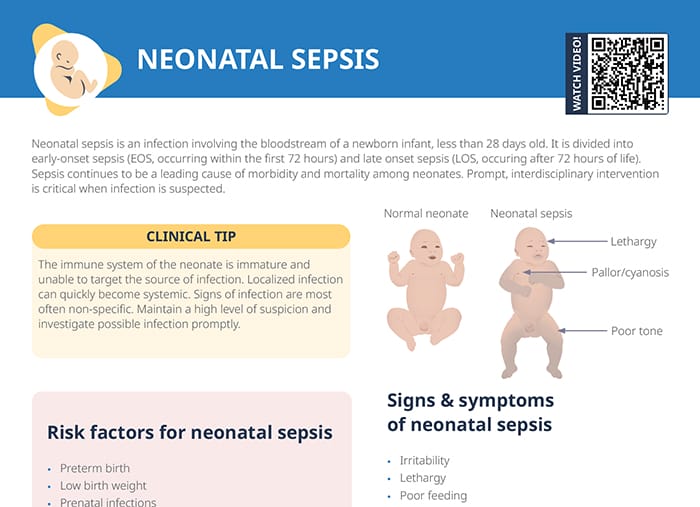
Neonatal sepsis is an infection involving the bloodstream of a newborn infant, less than 28 days old.
Classification
Types of neonatal sepsis are
Early-onset sepsis (EOS): occurring within the first 72 hours
Late onset sepsis (LOS): occuring after 72 hours of life
What causes neonatal sepsis?
The immune system of the neonate is immature and unable to target the source of infection. Localized infection can quickly become systemic.
Risk factors for neonatal sepsis include:
Preterm birth
Low birth weight
Prenatal infections
Group beta strep (GBS )E. coli
Prolonged labor
Multiple vaginal exams during labor
Rupture of membranes > 18 hours
Chorioamnionitis during labor
Signs of infection in newborns
Signs of infection are most often non-specific. Maintain a high level of suspicion and investigate possible infection promptly.
Symptoms of neonatal sepsis:
Irritability
Lethargy
Poor feeding
Poor tone
Pallor or cyanosis
Respiratory distress
Temperature instability (fever or hypothermia)
Tachycardia or bradycardia
Hemodynamic instability or collapse
Prevention and assessment
Preventive measures that help lower the risk of neonatal sepsis:
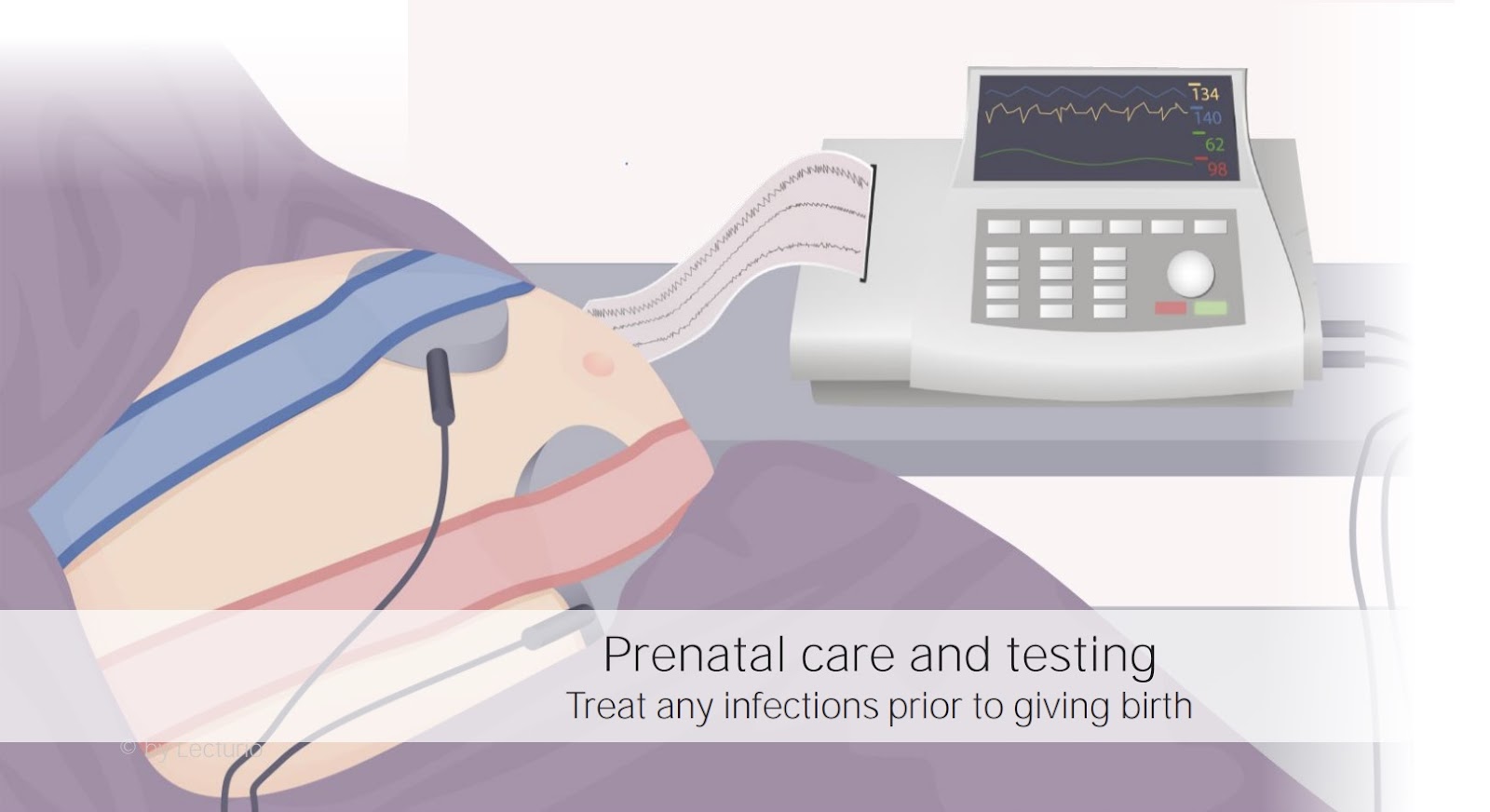
Adequate prenatal care Identification and treatment of GBS
Limited vaginal exams in labor
Adequate hand hygiene (in healthcare personnel, client, also monitor visitors for illness)
Maintenance of sterile technique when indicated
Assess for risk factors and monitor vital signs. Assess for signs of infection every 2 hours following rupture of membranes.
Lab work:
Blood cultures
CBC with differential
BMP
C-reactive protein
Treatment and nursing interventions
IV antibiotics
IV fluids
Thermoregulatory support
Nutritional support
Decrease of stimuli
Educate/ reassure family members
Resources