Domina Conceptos Médicos

Estudia para la escuela de medicina y tus examenes con Lecturio.

Pseudomonas

Pseudomonas Pseudomonas Pseudomonas is a non-lactose-fermenting, gram-negative bacillus that produces pyocyanin, which gives it a characteristic blue-green color. Pseudomonas is found ubiquitously in the environment, as well as in moist reservoirs, such as hospital sinks and respiratory equipment. Pseudomonas es un bacilo gramnegativo que no fermenta lactosa y produce piocianina, que le da un color azul verdoso característico. Pseudomonas Pseudomonas Pseudomonas is a non-lactose-fermenting, gram-negative bacillus that produces pyocyanin, which gives it a characteristic blue-green color. Pseudomonas is found ubiquitously in the environment, as well as in moist reservoirs, such as hospital sinks and respiratory equipment. Pseudomonas se encuentra de forma ubicua en EN Erythema nodosum is an immune-mediated panniculitis (inflammation of the subcutaneous fat) caused by a type IV (delayed-type) hypersensitivity reaction. It commonly manifests in young women as tender, erythematous nodules on the shins. Erythema Nodosum el medio ambiente, así como en EN Erythema nodosum is an immune-mediated panniculitis (inflammation of the subcutaneous fat) caused by a type IV (delayed-type) hypersensitivity reaction. It commonly manifests in young women as tender, erythematous nodules on the shins. Erythema Nodosum reservorios húmedos, como lavabos de hospitales y equipos respiratorios. Pseudomonas Pseudomonas Pseudomonas is a non-lactose-fermenting, gram-negative bacillus that produces pyocyanin, which gives it a characteristic blue-green color. Pseudomonas is found ubiquitously in the environment, as well as in moist reservoirs, such as hospital sinks and respiratory equipment. Pseudomonas tiene un olor dulce, parecido a la uva. La especie clínicamente más relevante es Pseudomonas aeruginosa Pseudomonas aeruginosa A species of gram-negative, aerobic, rod-shaped bacteria commonly isolated from clinical specimens (wound, burn, and urinary tract infections). It is also found widely distributed in soil and water. P. Aeruginosa is a major agent of nosocomial infection. Pseudomonas ( P. aeruginosa P. aeruginosa A species of gram-negative, aerobic, rod-shaped bacteria commonly isolated from clinical specimens (wound, burn, and urinary tract infections). It is also found widely distributed in soil and water. P. Aeruginosa is a major agent of nosocomial infection. Pseudomonas), que tiene una amplia gama de manifestaciones clínicas desde enfermedades benignas, como el oído de nadador y la foliculitis de “jacuzzi”, hasta bacteriemia diseminada y osteomielitis. Los LOS Neisseria factores de riesgo de infecciones incluyen: neutropenia Neutropenia Neutrophils are an important component of the immune system and play a significant role in the eradication of infections. Low numbers of circulating neutrophils, referred to as neutropenia, predispose the body to recurrent infections or sepsis, though patients can also be asymptomatic. Neutropenia, fibrosis Fibrosis Any pathological condition where fibrous connective tissue invades any organ, usually as a consequence of inflammation or other injury. Bronchiolitis Obliterans quística, asplenia Asplenia Asplenia is the absence of splenic tissue or function and can stem from several factors ranging from congenital to iatrogenic. There is a distinction between anatomic asplenia, which is due to the surgical removal of the spleen, and functional asplenia, which is due to a condition that leads to splenic atrophy, infarct, congestion, or infiltrative disease. Asplenia, lesiones por quemaduras y catéteres permanentes/intubación endotraqueal. El tratamiento es principalmente con piperacilina/ tazobactam Tazobactam A penicillanic acid and sulfone derivative and potent beta-lactamase inhibitor that enhances the activity of other anti-bacterial agents against beta-lactamase producing bacteria. Cephalosporins.

Last updated: Dec 15, 2025
Editorial responsibility: Stanley Oiseth, Lindsay Jones, Evelin Maza

Clasificación

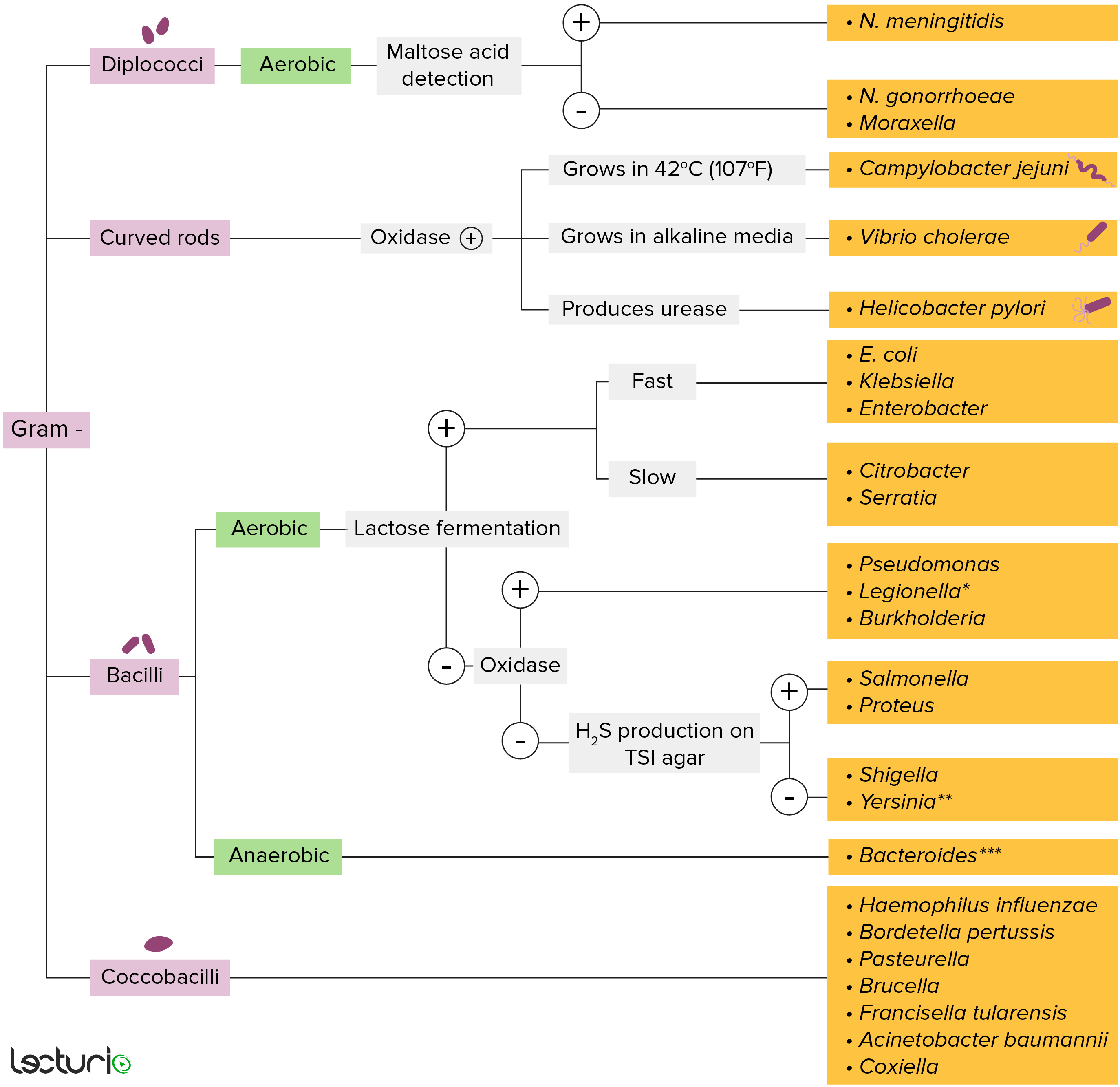
Diagrama de flujo de clasificación de bacterias gram negativas

Bacterias gramnegativas:
La mayoría de las bacterias se pueden clasificar de acuerdo a un procedimiento de laboratorio llamado tinción de Gram.
Las bacterias con paredes celulares que tienen una capa delgada de peptidoglicano no retienen la tinción de cristal violeta utilizada en la tinción de Gram. Sin embargo, estas bacterias retienen la contratinción de safranina y, por lo tanto, adoptan un color rojo-rosado en la tinción, lo que las hace gramnegativas. Estas bacterias pueden clasificarse además según su morfología (diplococos, bastones curvos, bacilos y cocobacilos) y su capacidad para crecer en presencia de oxígeno (aeróbicos versus anaeróbicos). Las bacterias se pueden identificar de manera más profunda cultivándolas en medios específicos (agar hierro triple azúcar) donde se pueden identificar sus enzimas (ureasa, oxidasa) y se puede probar su capacidad para fermentar lactosa.
* Se tiñe mal en la tinción de Gram
** Bastón pleomórfico/cocobacilo
*** Requiere medios de transporte especiales
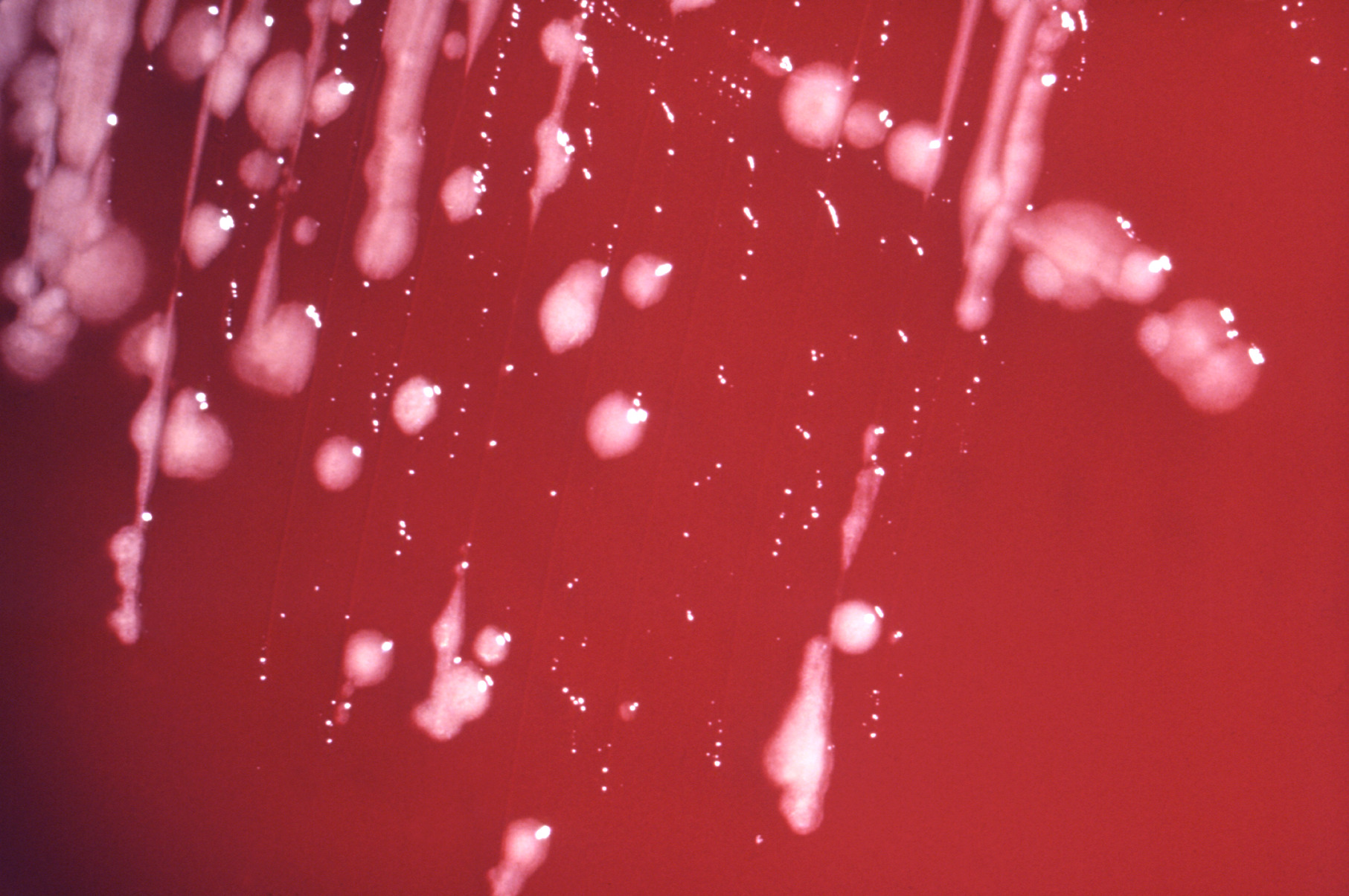
Imagen por Lecturio.

Características Generales

  • Bacilos gramnegativos
  • Encapsulados
  • Móvil: flagelo polar único
  • Aerobio obligado
  • Oxidasa positivo
  • Catalasa positivo
  • No fermenta lactosa
  • Produce un pigmento azul verdoso: debido a la producción de piocianina y fluoresceína
  • Produce un característico olor afrutado, parecido a la uva
  • Especies clínicamente relevantes: Pseudomonas aeruginosa Pseudomonas aeruginosa A species of gram-negative, aerobic, rod-shaped bacteria commonly isolated from clinical specimens (wound, burn, and urinary tract infections). It is also found widely distributed in soil and water. P. Aeruginosa is a major agent of nosocomial infection. Pseudomonas ( P. aeruginosa P. aeruginosa A species of gram-negative, aerobic, rod-shaped bacteria commonly isolated from clinical specimens (wound, burn, and urinary tract infections). It is also found widely distributed in soil and water. P. Aeruginosa is a major agent of nosocomial infection. Pseudomonas)
Bacteria Pseudomonas aeruginosa

La fotografía muestra el patrón de crecimiento colonial mostrado por la bacteria Pseudomonas aeruginosa.

Imagen: “6688” por CDC/Dr. Teo Hawkins. Licencia: Dominio Público.

Patogénesis

Reservorio y transmisión

Reservorio:

  • Ubicuo en EN Erythema nodosum is an immune-mediated panniculitis (inflammation of the subcutaneous fat) caused by a type IV (delayed-type) hypersensitivity reaction. It commonly manifests in young women as tender, erythematous nodules on the shins. Erythema Nodosum el medio ambiente
  • Reservorios húmedos:
    • Lavabos
    • Equipos respiratorios y de diálisis

Transmisión:

  • Transmisión de persona a persona a partir reservorios infectados

Factores de riesgo

  • Neutropenia Neutropenia Neutrophils are an important component of the immune system and play a significant role in the eradication of infections. Low numbers of circulating neutrophils, referred to as neutropenia, predispose the body to recurrent infections or sepsis, though patients can also be asymptomatic. Neutropenia
  • Lesiones por quemaduras
  • Asplenia Asplenia Asplenia is the absence of splenic tissue or function and can stem from several factors ranging from congenital to iatrogenic. There is a distinction between anatomic asplenia, which is due to the surgical removal of the spleen, and functional asplenia, which is due to a condition that leads to splenic atrophy, infarct, congestion, or infiltrative disease. Asplenia
  • Fibrosis Fibrosis Any pathological condition where fibrous connective tissue invades any organ, usually as a consequence of inflammation or other injury. Bronchiolitis Obliterans quística
  • Intubación endotraqueal
  • Catéteres permanentes crónicos

Patogénesis de P. aeruginosa P. aeruginosa A species of gram-negative, aerobic, rod-shaped bacteria commonly isolated from clinical specimens (wound, burn, and urinary tract infections). It is also found widely distributed in soil and water. P. Aeruginosa is a major agent of nosocomial infection. Pseudomonas

Tabla: Factores de virulencia
Factor de virulencia Efecto
Cápsula de polisacárido
  • Antifagocítico
  • Adherencia al AL Amyloidosis epitelio traqueal
  • Ayuda en EN Erythema nodosum is an immune-mediated panniculitis (inflammation of the subcutaneous fat) caused by a type IV (delayed-type) hypersensitivity reaction. It commonly manifests in young women as tender, erythematous nodules on the shins. Erythema Nodosum la colonización prolongada/producción de biopelícula
Pili Pili Filamentous or elongated proteinaceous structures which extend from the cell surface in gram-negative bacteria that contain certain types of conjugative plasmid. These pili are the organs associated with genetic transfer and have essential roles in conjugation. Normally, only one or a few pili occur on a given donor cell. This preferred use of ‘pili’ refers to the sexual appendage, to be distinguished from bacterial fimbriae, also known as common pili, which are usually concerned with adhesion. Salmonella
Fosfolipasa C
  • Degrada las membranas celulares
Exotoxina A
  • Ribosila e inactiva EF-2, lo que provoca la muerte celular
Piocianina
  • Media el daño tisular a través de la producción de especies reactivas de oxígeno
Sistema de secreción tipo III
  • Facilita la entrega directa de toxinas a la célula huésped
Formación de biopelículas in vivo
  • Permite que el organismo persista en EN Erythema nodosum is an immune-mediated panniculitis (inflammation of the subcutaneous fat) caused by a type IV (delayed-type) hypersensitivity reaction. It commonly manifests in young women as tender, erythematous nodules on the shins. Erythema Nodosum las vías respiratorias de los LOS Neisseria pacientes con fibrosis Fibrosis Any pathological condition where fibrous connective tissue invades any organ, usually as a consequence of inflammation or other injury. Bronchiolitis Obliterans quística
ꞵ-lactamasa y bombas de eflujo
  • Contribuye a la resistencia a múltiples medicamentos
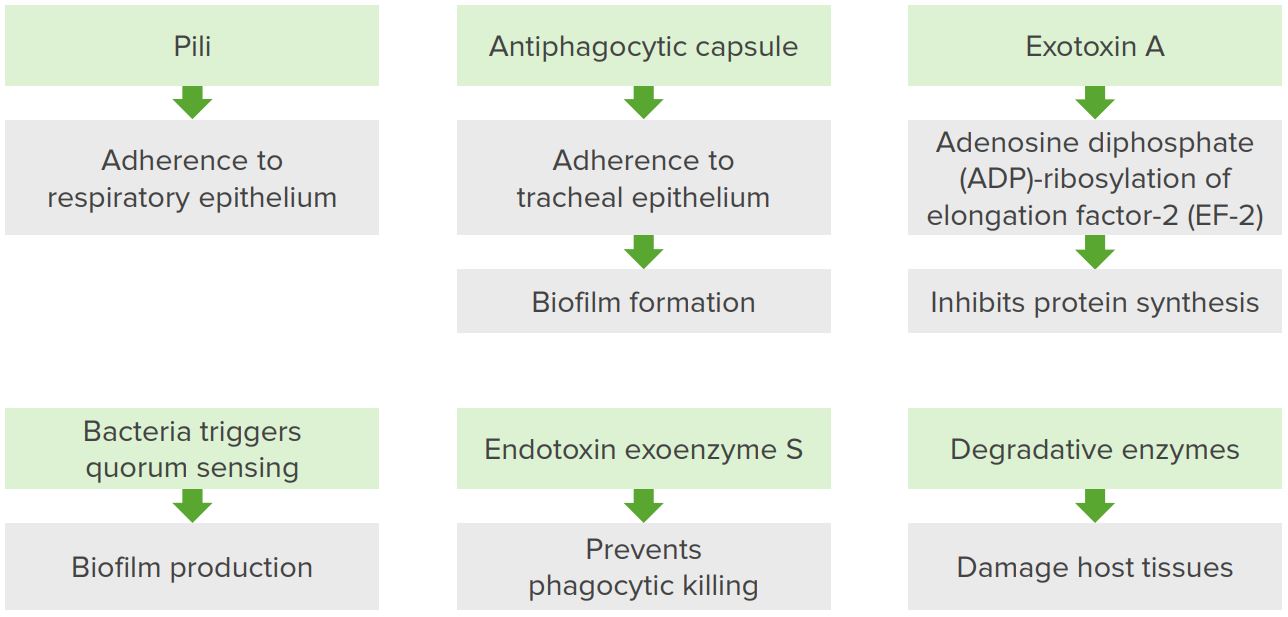
Mecanismos de Patogenia Pseudomonas aeruginosa

Mecanismos de la patogénesis de Pseudomonas aeruginosa

Imagen por Lecturio.

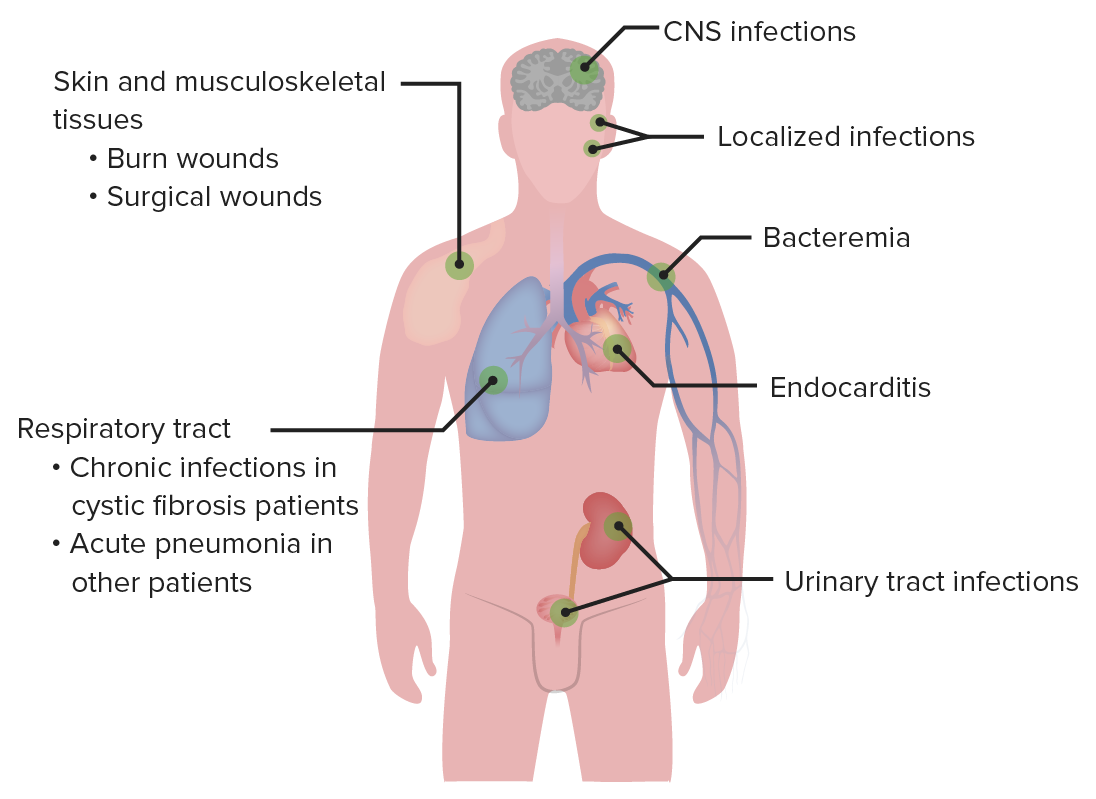
Enfermedades Causadas por P. aeruginosa

Tabla: Enfermedades causadas por P. aeruginosa P. aeruginosa A species of gram-negative, aerobic, rod-shaped bacteria commonly isolated from clinical specimens (wound, burn, and urinary tract infections). It is also found widely distributed in soil and water. P. Aeruginosa is a major agent of nosocomial infection. Pseudomonas
Tipo de afección Características
Infección del tracto urinario
  • Especialmente en EN Erythema nodosum is an immune-mediated panniculitis (inflammation of the subcutaneous fat) caused by a type IV (delayed-type) hypersensitivity reaction. It commonly manifests in young women as tender, erythematous nodules on the shins. Erythema Nodosum pacientes con catéteres permanentes
  • Causa común de ITU nosocomiales
Infecciones de heridas por quemadura Asociada con lesiones por quemaduras, causando:
  • Daño vascular
  • Necrosis Necrosis The death of cells in an organ or tissue due to disease, injury or failure of the blood supply. Ischemic Cell Damage tisular
  • Bacteriemia
  • Infecciones de oído Otitis externa Otitis externa Otitis externa (also known as external otitis or swimmer’s ear) is an infection of the external auditory canal that is most often caused by acute bacterial infection and is frequently associated with hot, humid weather and water exposure. Patients commonly present with ear pain, pruritus, discharge, and hearing loss. Otitis Externa:
    • Benigna, pero dolorosa
    • A menudo asociada con nadadores (“oído de nadador”)
    Otitis externa Otitis externa Otitis externa (also known as external otitis or swimmer’s ear) is an infection of the external auditory canal that is most often caused by acute bacterial infection and is frequently associated with hot, humid weather and water exposure. Patients commonly present with ear pain, pruritus, discharge, and hearing loss. Otitis Externa maligna:
    • Dolor Dolor Inflammation, edema Edema Edema is a condition in which excess serous fluid accumulates in the body cavity or interstitial space of connective tissues. Edema is a symptom observed in several medical conditions. It can be categorized into 2 types, namely, peripheral (in the extremities) and internal (in an organ or body cavity). Edema y secreción purulenta del conducto auditivo externo
    • Puede conducir a:
      • Daño de par PAR The PAR is the attributable risk for an entire population. It represents the fraction of cases that would not occur in a population if the exposure was eliminated. Measures of Risk craneal
      • Bacteriemia
      • Sepsis Sepsis Systemic inflammatory response syndrome with a proven or suspected infectious etiology. When sepsis is associated with organ dysfunction distant from the site of infection, it is called severe sepsis. When sepsis is accompanied by hypotension despite adequate fluid infusion, it is called septic shock. Sepsis and Septic Shock
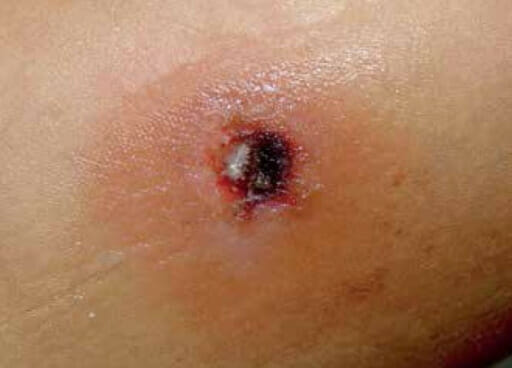
    Infecciones de la piel Ectima gangrenoso:
    • Lesiones cutáneas rápidamente progresivas, focales, negras y necróticas
    • Asociado con neutropenia Neutropenia Neutrophils are an important component of the immune system and play a significant role in the eradication of infections. Low numbers of circulating neutrophils, referred to as neutropenia, predispose the body to recurrent infections or sepsis, though patients can also be asymptomatic. Neutropenia
    Foliculitis de “jacuzzi”:
    • Infección en EN Erythema nodosum is an immune-mediated panniculitis (inflammation of the subcutaneous fat) caused by a type IV (delayed-type) hypersensitivity reaction. It commonly manifests in young women as tender, erythematous nodules on the shins. Erythema Nodosum regiones de glándulas sudoríparas apocrinas (oído externo, areola Areola Examination of the Breast, pezón)
    • Nombrado así debido a la fuente de infección, que a menudo proviene de piscinas/jacuzzis
    Infecciones pulmonares
    • Causa neumonía nosocomial y neumonía asociada a ventilador
    • Causa más frecuente de infección pulmonar crónica en EN Erythema nodosum is an immune-mediated panniculitis (inflammation of the subcutaneous fat) caused by a type IV (delayed-type) hypersensitivity reaction. It commonly manifests in young women as tender, erythematous nodules on the shins. Erythema Nodosum pacientes con fibrosis Fibrosis Any pathological condition where fibrous connective tissue invades any organ, usually as a consequence of inflammation or other injury. Bronchiolitis Obliterans quística
    Infecciones oculares Ocurre en EN Erythema nodosum is an immune-mediated panniculitis (inflammation of the subcutaneous fat) caused by a type IV (delayed-type) hypersensitivity reaction. It commonly manifests in young women as tender, erythematous nodules on the shins. Erythema Nodosum usuarios de lentes de contacto o traumatismo ocular menor:
    • Úlceras corneales
    • Queratitis
    Infecciones diseminadas Ocurre en EN Erythema nodosum is an immune-mediated panniculitis (inflammation of the subcutaneous fat) caused by a type IV (delayed-type) hypersensitivity reaction. It commonly manifests in young women as tender, erythematous nodules on the shins. Erythema Nodosum huéspedes inmunocomprometidos:
    • Pacientes trasplantados
    • Pacientes neutropénicos
    Osteomielitis
    • A menudo en EN Erythema nodosum is an immune-mediated panniculitis (inflammation of the subcutaneous fat) caused by a type IV (delayed-type) hypersensitivity reaction. It commonly manifests in young women as tender, erythematous nodules on the shins. Erythema Nodosum pacientes con uso de drogas intravenosas o diabetes Diabetes Diabetes mellitus (DM) is a metabolic disease characterized by hyperglycemia and dysfunction of the regulation of glucose metabolism by insulin. Type 1 DM is diagnosed mostly in children and young adults as the result of autoimmune destruction of β cells in the pancreas and the resulting lack of insulin. Type 2 DM has a significant association with obesity and is characterized by insulin resistance. Diabetes Mellitus
    • Asociado con heridas punzantes.

    Antimicrobianos

    Tratamiento

    • P. aeruginosa P. aeruginosa A species of gram-negative, aerobic, rod-shaped bacteria commonly isolated from clinical specimens (wound, burn, and urinary tract infections). It is also found widely distributed in soil and water. P. Aeruginosa is a major agent of nosocomial infection. Pseudomonas tiene una resistencia variable Variable Variables represent information about something that can change. The design of the measurement scales, or of the methods for obtaining information, will determine the data gathered and the characteristics of that data. As a result, a variable can be qualitative or quantitative, and may be further classified into subgroups. Types of Variables a los LOS Neisseria antibióticos:
      • Resistente a múltiples medicamentos: resistente, por los LOS Neisseria menos, a 1 agente en EN Erythema nodosum is an immune-mediated panniculitis (inflammation of the subcutaneous fat) caused by a type IV (delayed-type) hypersensitivity reaction. It commonly manifests in young women as tender, erythematous nodules on the shins. Erythema Nodosum > 3 categorías de antibióticos
      • Altamente resistente a los LOS Neisseria medicamentos: resistente, por lo menos, a 1 agente en EN Erythema nodosum is an immune-mediated panniculitis (inflammation of the subcutaneous fat) caused by a type IV (delayed-type) hypersensitivity reaction. It commonly manifests in young women as tender, erythematous nodules on the shins. Erythema Nodosum todas las categorías de antibióticos excepto 2
      • Panrresistente a los LOS Neisseria medicamentos: resistente a todas las categorías de antibióticos
    • La elección del antibiótico se adapta a los LOS Neisseria patrones de resistencia locales (tratamiento antibiótico combinado):
      • 1ra línea:
        • Combinación de penicilina/inhibidores de betalactamasas (piperacilina/ tazobactam Tazobactam A penicillanic acid and sulfone derivative and potent beta-lactamase inhibitor that enhances the activity of other anti-bacterial agents against beta-lactamase producing bacteria. Cephalosporins)
        • Cefalosporinas (ceftazidima)
        • Monobactámico ( aztreonam Aztreonam The carbapenems and aztreonam are both members of the bactericidal beta-lactam family of antibiotics (similar to penicillins). They work by preventing bacteria from producing their cell wall, ultimately leading to bacterial cell death. Carbapenems and Aztreonam)
        • Fluoroquinolonas (ciprofloxacino) (solo oral)
        • Carbapenémicos ( meropenem Meropenem A thienamycin derivative antibacterial agent that is more stable to renal dehydropeptidase I than imipenem, but does not need to be given with an enzyme inhibitor such as cilastatin. It is used in the treatment of bacterial infections, including infections in immunocompromised patients. Carbapenems and Aztreonam)
      • Las cepas multirresistentes se tratan con antibióticos recientemente desarrollados:
        • Combinaciones de betalactámicos-inhibidores de betalactamasas (ceftolozano/ tazobactam Tazobactam A penicillanic acid and sulfone derivative and potent beta-lactamase inhibitor that enhances the activity of other anti-bacterial agents against beta-lactamase producing bacteria. Cephalosporins)
        • Cefalosporinas ( cefiderocol Cefiderocol Multidrug-resistant Organisms and Nosocomial Infections)
        • Combinación de carbapenem-betalactamasa (imipenem-cilastatina-relebactam)
        • Polimixinas
      • Antibióticos adjuntos: aminoglucósidos (tobramicina, gentamicina, amikacina)

    Prevención

    • Higiene dentro del hospital:
      • Uso de técnica estéril adecuada
      • Limpieza cuidadosa de lavabos y duchas comunes
    • Supervisión periódica, reemplazo y limpieza de:
      • Equipo de soporte respiratorio
      • Vías intravenosas (especialmente vías de larga duración)
      • Catéteres

    Mnemotecnia

    Para ayudar a recordar los múltiples datos clínicamente relevantes sobre Pseudomonas, use la mnemotecnia “PSEUDOMONAS” ( en EN Erythema nodosum is an immune-mediated panniculitis (inflammation of the subcutaneous fat) caused by a type IV (delayed-type) hypersensitivity reaction. It commonly manifests in young women as tender, erythematous nodules on the shins. Erythema Nodosum inglés):

    • P Pneumonia Pneumonia Pneumonia or pulmonary inflammation is an acute or chronic inflammation of lung tissue. Causes include infection with bacteria, viruses, or fungi. In more rare cases, pneumonia can also be caused through toxic triggers through inhalation of toxic substances, immunological processes, or in the course of radiotherapy. Pneumonia, pyocyanin Pyocyanin Antibiotic pigment produced by pseudomonas aeruginosa. Pseudomonas (neumonía, piocianina)
    • S Sepsis Sepsis Systemic inflammatory response syndrome with a proven or suspected infectious etiology. When sepsis is associated with organ dysfunction distant from the site of infection, it is called severe sepsis. When sepsis is accompanied by hypotension despite adequate fluid infusion, it is called septic shock. Sepsis and Septic Shock ( sepsis Sepsis Systemic inflammatory response syndrome with a proven or suspected infectious etiology. When sepsis is associated with organ dysfunction distant from the site of infection, it is called severe sepsis. When sepsis is accompanied by hypotension despite adequate fluid infusion, it is called septic shock. Sepsis and Septic Shock)
    • E Ecthyma gangrenosum Ecthyma gangrenosum Pseudomonas (ectima gangrenoso)
    • U – UTIs (ITU)
    • D Diabetes Diabetes Diabetes mellitus (DM) is a metabolic disease characterized by hyperglycemia and dysfunction of the regulation of glucose metabolism by insulin. Type 1 DM is diagnosed mostly in children and young adults as the result of autoimmune destruction of β cells in the pancreas and the resulting lack of insulin. Type 2 DM has a significant association with obesity and is characterized by insulin resistance. Diabetes Mellitus, drug use ( diabetes Diabetes Diabetes mellitus (DM) is a metabolic disease characterized by hyperglycemia and dysfunction of the regulation of glucose metabolism by insulin. Type 1 DM is diagnosed mostly in children and young adults as the result of autoimmune destruction of β cells in the pancreas and the resulting lack of insulin. Type 2 DM has a significant association with obesity and is characterized by insulin resistance. Diabetes Mellitus, uso de drogas)
    • O Osteomyelitis Osteomyelitis Osteomyelitis is an infection of the bone that results from the spread of microorganisms from the blood (hematogenous), nearby infected tissue, or open wounds (non-hematogenous). Infections are most commonly caused by Staphylococcus aureus. Osteomyelitis (osteomielitis)
    • M – Mucoid, polysaccharide  capsule Capsule An envelope of loose gel surrounding a bacterial cell which is associated with the virulence of pathogenic bacteria. Some capsules have a well-defined border, whereas others form a slime layer that trails off into the medium. Most capsules consist of relatively simple polysaccharides but there are some bacteria whose capsules are made of polypeptides. Bacteroides (cápsula de polisacárido mucoide)
    • O Otitis externa Otitis externa Otitis externa (also known as external otitis or swimmer’s ear) is an infection of the external auditory canal that is most often caused by acute bacterial infection and is frequently associated with hot, humid weather and water exposure. Patients commonly present with ear pain, pruritus, discharge, and hearing loss. Otitis Externa ( otitis externa Otitis externa Otitis externa (also known as external otitis or swimmer’s ear) is an infection of the external auditory canal that is most often caused by acute bacterial infection and is frequently associated with hot, humid weather and water exposure. Patients commonly present with ear pain, pruritus, discharge, and hearing loss. Otitis Externa, “oído de nadador”)
    • N – Nosocomial infections Infections Invasion of the host organism by microorganisms or their toxins or by parasites that can cause pathological conditions or diseases. Chronic Granulomatous Disease (infecciones nosocomiales (catéteres, tubos endotraqueales))
    • A Exotoxin A Exotoxin A Pseudomonas (exotoxina A)
    • S – Skin infections (infecciones de la piel (foliculitis de “jacuzzi” y quemaduras))

    Referencias

    1. Tian, M., Wu, Z., Zhang, R., & Yuan, J. (2022). A new mode of swimming in singly flagellated Pseudomonas aeruginosa. Proceedings of the National Academy of Sciences, 119(14), e2120508119. https://doi.org/10.1073/pnas.2120508119
    2. Riedel, S., & Hobden, J.A. (2019). In Riedel S, Morse SA, et al (Eds.), Jawetz, Melnick, & Adelberg’s Medical Microbiology (28th ed.)
    3. Hohmann, E.L., & Portnoy, D.A. (2018). In Jameson JL, et al (Eds.), Harrison’s Principles of Internal Medicine (20th ed. Vol 2, pp. 2676–2683).

    ¡Crea tu cuenta gratis o inicia una sesión para seguir leyendo!

    Regístrate ahora y obtén acceso gratuito a Lecturio con páginas de concepto, videos médicos y cuestionarios para tu educación médica.

    User Reviews

    Que tengas una sesión de estudio alegre y navideña 🎁 Ahorra 50% en todos los planes >>

    Details