Domina Conceptos Médicos

Estudia para la escuela de medicina y tus examenes con Lecturio.

Glomerulonefritis Rápidamente Progresiva

La glomerulonefritis rápidamente progresiva es un síndrome de enfermedad glomerular grave con pérdida progresiva de la función renal en EN Erythema nodosum is an immune-mediated panniculitis (inflammation of the subcutaneous fat) caused by a type IV (delayed-type) hypersensitivity reaction. It commonly manifests in young women as tender, erythematous nodules on the shins. Erythema Nodosum semanas o meses. La glomerulonefritis rápidamente progresiva se asocia con el síndrome nefrótico y es una manifestación de diferentes enfermedades. Histológicamente, las semilunas (la proliferación de células epiteliales y la infiltración de monocitos/macrófagos en EN Erythema nodosum is an immune-mediated panniculitis (inflammation of the subcutaneous fat) caused by a type IV (delayed-type) hypersensitivity reaction. It commonly manifests in young women as tender, erythematous nodules on the shins. Erythema Nodosum el espacio de Bowman) se encuentran en EN Erythema nodosum is an immune-mediated panniculitis (inflammation of the subcutaneous fat) caused by a type IV (delayed-type) hypersensitivity reaction. It commonly manifests in young women as tender, erythematous nodules on the shins. Erythema Nodosum los LOS Neisseria glomérulos y surgen de una lesión inmunológica. Los LOS Neisseria principales mecanismos de lesión inmunológica se clasifican en EN Erythema nodosum is an immune-mediated panniculitis (inflammation of the subcutaneous fat) caused by a type IV (delayed-type) hypersensitivity reaction. It commonly manifests in young women as tender, erythematous nodules on the shins. Erythema Nodosum enfermedad anti-membrana basal glomerular (anti-MBG), glomerulonefritis pauciinmune con semilunas y lesión mediada por complejos inmunes. La glomerulonefritis rápidamente progresiva puede manifestarse con hematuria Hematuria Presence of blood in the urine. Renal Cell Carcinoma, proteinuria Proteinuria The presence of proteins in the urine, an indicator of kidney diseases. Nephrotic Syndrome in Children y grados variables de edema Edema Edema is a condition in which excess serous fluid accumulates in the body cavity or interstitial space of connective tissues. Edema is a symptom observed in several medical conditions. It can be categorized into 2 types, namely, peripheral (in the extremities) and internal (in an organ or body cavity). Edema e hipertensión. El diagnóstico se basa en EN Erythema nodosum is an immune-mediated panniculitis (inflammation of the subcutaneous fat) caused by a type IV (delayed-type) hypersensitivity reaction. It commonly manifests in young women as tender, erythematous nodules on the shins. Erythema Nodosum la presentación, las pruebas de laboratorio, la imagenología y la biopsia renal. El tratamiento oportuno es esencial porque la glomerulonefritis rápidamente progresiva puede convertirse en EN Erythema nodosum is an immune-mediated panniculitis (inflammation of the subcutaneous fat) caused by a type IV (delayed-type) hypersensitivity reaction. It commonly manifests in young women as tender, erythematous nodules on the shins. Erythema Nodosum enfermedad renal en EN Erythema nodosum is an immune-mediated panniculitis (inflammation of the subcutaneous fat) caused by a type IV (delayed-type) hypersensitivity reaction. It commonly manifests in young women as tender, erythematous nodules on the shins. Erythema Nodosum etapa terminal en EN Erythema nodosum is an immune-mediated panniculitis (inflammation of the subcutaneous fat) caused by a type IV (delayed-type) hypersensitivity reaction. It commonly manifests in young women as tender, erythematous nodules on the shins. Erythema Nodosum un período corto de tiempo. El tratamiento incluye corticosteroides, ciclofosfamida u otros inmunosupresores y plasmaféresis (según la enfermedad subyacente).

Last updated: Dec 15, 2025

Editorial responsibility: Stanley Oiseth, Lindsay Jones, Evelin Maza

Descripción General

Definición

Glomerulonefritis rápidamente progresiva es un síndrome de enfermedad glomerular grave con pérdida progresiva de la función renal en EN Erythema nodosum is an immune-mediated panniculitis (inflammation of the subcutaneous fat) caused by a type IV (delayed-type) hypersensitivity reaction. It commonly manifests in young women as tender, erythematous nodules on the shins. Erythema Nodosum semanas o meses.

  • Asociada con síndrome nefrítico
  • Es una manifestación de varias enfermedades, no una etiología.
  • Caracterizada histológicamente por la presencia de medialunas:
    • Células proliferadas (predominantemente epiteliales), con infiltración de monocitos y macrófagos en EN Erythema nodosum is an immune-mediated panniculitis (inflammation of the subcutaneous fat) caused by a type IV (delayed-type) hypersensitivity reaction. It commonly manifests in young women as tender, erythematous nodules on the shins. Erythema Nodosum el espacio de Bowman
    • También se llama glomerulonefritis en EN Erythema nodosum is an immune-mediated panniculitis (inflammation of the subcutaneous fat) caused by a type IV (delayed-type) hypersensitivity reaction. It commonly manifests in young women as tender, erythematous nodules on the shins. Erythema Nodosum media luna
  • Generalmente, las biopsias de < 10% de medialunas no se incluyen en EN Erythema nodosum is an immune-mediated panniculitis (inflammation of the subcutaneous fat) caused by a type IV (delayed-type) hypersensitivity reaction. It commonly manifests in young women as tender, erythematous nodules on the shins. Erythema Nodosum la categoría.

Clasificación

La mayoría de los LOS Neisseria casos se deben a una lesión inmunológica de los LOS Neisseria glomérulos. Los LOS Neisseria mecanismos y hallazgos se clasifican en EN Erythema nodosum is an immune-mediated panniculitis (inflammation of the subcutaneous fat) caused by a type IV (delayed-type) hypersensitivity reaction. It commonly manifests in young women as tender, erythematous nodules on the shins. Erythema Nodosum:

  • Enfermedad por anticuerpos anti-membrana basal glomerular (anti-GBM):
    • Una enfermedad rara caracterizada por vasculitis Vasculitis Inflammation of any one of the blood vessels, including the arteries; veins; and rest of the vasculature system in the body. Systemic Lupus Erythematosus de los LOS Neisseria vasos pequeños
    • Puede afectar los LOS Neisseria capilares glomerulares y pulmonares
  • Lesión mediada por inmunocomplejos: depósito de inmunocomplejos en EN Erythema nodosum is an immune-mediated panniculitis (inflammation of the subcutaneous fat) caused by a type IV (delayed-type) hypersensitivity reaction. It commonly manifests in young women as tender, erythematous nodules on the shins. Erythema Nodosum los LOS Neisseria glomérulos
  • Glomerulonefritis necrosante y pauciinmune con medialunas:
    • Glomerulonefritis con anticuerpos mínimos o nulos detectables (anti-GBM) o depósitos de inmunocomplejos en EN Erythema nodosum is an immune-mediated panniculitis (inflammation of the subcutaneous fat) caused by a type IV (delayed-type) hypersensitivity reaction. It commonly manifests in young women as tender, erythematous nodules on the shins. Erythema Nodosum inmunofluorescencia o microscopía electrónica
    • La mayoría de los LOS Neisseria casos son positivos para anticuerpos anticitoplasmáticos ( ANCA ANCA Group of systemic vasculitis with a strong association with anca. The disorders are characterized by necrotizing inflammation of small and medium size vessels, with little or no immune-complex deposits in vessel walls. Rapidly Progressive Glomerulonephritis, por sus siglas en EN Erythema nodosum is an immune-mediated panniculitis (inflammation of the subcutaneous fat) caused by a type IV (delayed-type) hypersensitivity reaction. It commonly manifests in young women as tender, erythematous nodules on the shins. Erythema Nodosum inglés).
  • Enfermedad con doble anticuerpo positivo (muy rara): características de la enfermedad por anticuerpos anti-GBM y glomerulonefritis rápidamente progresiva positiva para ANCA ANCA Group of systemic vasculitis with a strong association with anca. The disorders are characterized by necrotizing inflammation of small and medium size vessels, with little or no immune-complex deposits in vessel walls. Rapidly Progressive Glomerulonephritis
  • Idiopática, que incluye:
    • Una enfermedad por complejos inmunes que no pertenece a las categorías identificables
    • Enfermedad pauciinmune ANCA-negativa

Epidemiología

  • Incidencia anual: 7 casos por 1 millón de personas
  • Individuos blancos afectados > individuos negros
  • Rara en EN Erythema nodosum is an immune-mediated panniculitis (inflammation of the subcutaneous fat) caused by a type IV (delayed-type) hypersensitivity reaction. It commonly manifests in young women as tender, erythematous nodules on the shins. Erythema Nodosum la población pediátrica
  • Incidencia máxima: mediados de la 6ta década

Etiología

  • Enfermedad mediada por anticuerpos anti-GBM (≤ 10% de los LOS Neisseria casos):
    • Glomerulonefritis anti-GBM (sin hemorragia pulmonar)
    • Síndrome de Goodpasture con hemorragia pulmonar
  • Lesión mediada por complejos inmunes (≤ 40% de los LOS Neisseria casos):
    • Causas postinfecciosas:
      • Glomerulonefritis postestreptocócica
      • Endocarditis Endocarditis Endocarditis is an inflammatory disease involving the inner lining (endometrium) of the heart, most commonly affecting the cardiac valves. Both infectious and noninfectious etiologies lead to vegetations on the valve leaflets. Patients may present with nonspecific symptoms such as fever and fatigue. Endocarditis infecciosa
      • Nefritis protésica vascular
      • Hepatitis viral tipo B
    • Otros:
      • Nefritis lúpica
      • Vasculitis Vasculitis Inflammation of any one of the blood vessels, including the arteries; veins; and rest of the vasculature system in the body. Systemic Lupus Erythematosus asociada a glomerulonefritis por IgA IgA Represents 15-20% of the human serum immunoglobulins, mostly as the 4-chain polymer in humans or dimer in other mammals. Secretory iga is the main immunoglobulin in secretions. Immunoglobulins: Types and Functions
      • Glomerulonefritis crioglobulinémica
      • Nefropatía por IgA IgA Represents 15-20% of the human serum immunoglobulins, mostly as the 4-chain polymer in humans or dimer in other mammals. Secretory iga is the main immunoglobulin in secretions. Immunoglobulins: Types and Functions
      • Glomerulonefritis membranoproliferativa
      • Glomerulonefritis idiopática en EN Erythema nodosum is an immune-mediated panniculitis (inflammation of the subcutaneous fat) caused by a type IV (delayed-type) hypersensitivity reaction. It commonly manifests in young women as tender, erythematous nodules on the shins. Erythema Nodosum media luna (rara)
  • Enfermedad pauciinmune (hasta el 50% de los LOS Neisseria casos):
    • Granulomatosis con poliangeitis
    • Poliangeitis microscópica

Fisiopatología

  • Las medialunas se forman en EN Erythema nodosum is an immune-mediated panniculitis (inflammation of the subcutaneous fat) caused by a type IV (delayed-type) hypersensitivity reaction. It commonly manifests in young women as tender, erythematous nodules on the shins. Erythema Nodosum respuesta a una lesión en EN Erythema nodosum is an immune-mediated panniculitis (inflammation of the subcutaneous fat) caused by a type IV (delayed-type) hypersensitivity reaction. It commonly manifests in young women as tender, erythematous nodules on the shins. Erythema Nodosum la pared capilar glomerular, que puede dañarse por:
    • Complejos inmunes
    • Anticuerpos anti-GBM (reaccionan de forma cruzada con la membrana basal de los LOS Neisseria alvéolos pulmonares y provocan hemorragia pulmonar)
  • Seguido de una respuesta inflamatoria nefritogénica mediada por Th1 Th1 A subset of helper-inducer T-lymphocytes which synthesize and secrete interleukin-2; interferon-gamma; and interleukin-12. Due to their ability to kill antigen-presenting cells and their lymphokine-mediated effector activity, th1 cells are associated with vigorous delayed-type hypersensitivity reactions. T cells: Types and Functions
  • Se producen espacios focales (también conocidos como aperturas) en EN Erythema nodosum is an immune-mediated panniculitis (inflammation of the subcutaneous fat) caused by a type IV (delayed-type) hypersensitivity reaction. It commonly manifests in young women as tender, erythematous nodules on the shins. Erythema Nodosum la pared capilar glomerular, lo que permite la entrada de lo siguiente al AL Amyloidosis espacio de Bowman:
    • Factores de coagulación (e.g., fibrinógeno) → formación de fibrina
    • Factores inhibidores fibrinolíticos
    • Elementos celulares (e.g., macrófagos, células T)
    • Citoquinas proinflamatorias
  • Las medias lunas pueden provocar la obliteración del espacio urinario.

Presentación Clínica

  • Manifestaciones de la glomerulonefritis rápidamente progresiva:
    • Hematuria Hematuria Presence of blood in the urine. Renal Cell Carcinoma con cilindros de eritrocitos en EN Erythema nodosum is an immune-mediated panniculitis (inflammation of the subcutaneous fat) caused by a type IV (delayed-type) hypersensitivity reaction. It commonly manifests in young women as tender, erythematous nodules on the shins. Erythema Nodosum orina
    • Proteinuria Proteinuria The presence of proteins in the urine, an indicator of kidney diseases. Nephrotic Syndrome in Children (hasta 30% alcanza el rango nefrótico)
    • Edema Edema Edema is a condition in which excess serous fluid accumulates in the body cavity or interstitial space of connective tissues. Edema is a symptom observed in several medical conditions. It can be categorized into 2 types, namely, peripheral (in the extremities) and internal (in an organ or body cavity). Edema variable Variable Variables represent information about something that can change. The design of the measurement scales, or of the methods for obtaining information, will determine the data gathered and the characteristics of that data. As a result, a variable can be qualitative or quantitative, and may be further classified into subgroups. Types of Variables
    • La hipertensión puede estar presente o no.
  • Inicio insidioso
  • Los LOS Neisseria síntomas incluyen:
    • Oliguria Oliguria Decreased urine output that is below the normal range. Oliguria can be defined as urine output of less than or equal to 0. 5 or 1 ml/kg/hr depending on the age. Renal Potassium Regulation
    • Artralgia
    • Fatiga
    • Fiebre
    • Dolor Dolor Inflammation abdominal, náuseas y vómitos
    • Anorexia Anorexia The lack or loss of appetite accompanied by an aversion to food and the inability to eat. It is the defining characteristic of the disorder anorexia nervosa. Anorexia Nervosa
  • Las personas con enfermedad anti-GBM, granulomatosis con poliangeitis y poliangeitis microscópica pueden tener hemoptisis por afectación pulmonar.

Diagnóstico

Estudios de laboratorio

  • Creatinina sérica: casi siempre elevada
  • Análisis de orina:
    • Hematuria Hematuria Presence of blood in the urine. Renal Cell Carcinoma
    • Eritrocitos dismórficos
    • Sedimento con múltiples elementos (e.g., leucocitos, eritrocitos y otros moldes)
  • El hemograma puede mostrar:
    • Anemia Anemia Anemia is a condition in which individuals have low Hb levels, which can arise from various causes. Anemia is accompanied by a reduced number of RBCs and may manifest with fatigue, shortness of breath, pallor, and weakness. Subtypes are classified by the size of RBCs, chronicity, and etiology. Anemia: Overview and Types
    • Leucocitosis
  • Velocidad de eritrosedimentación (VES): generalmente elevada
  • Las pruebas serológicas (según lo indique la presentación clínica) pueden incluir:
    • Anticuerpos anti-GBM para la enfermedad por anticuerpos anti-GBM
    • Anticuerpos antiestreptolisina O para la glomerulonefritis rápidamente progresiva postinfecciosa
    • Anticuerpos anti-dsDNA para la glomerulonefritis rápidamente progresiva relacionada con el lupus
    • Crioglobulinas para la crioglobulinemia
    • Títulos de ANCA ANCA Group of systemic vasculitis with a strong association with anca. The disorders are characterized by necrotizing inflammation of small and medium size vessels, with little or no immune-complex deposits in vessel walls. Rapidly Progressive Glomerulonephritis para glomerulonefritis rápidamente progresiva pauciinmune
  • Niveles de complemento sérico para hipocomplementemia en EN Erythema nodosum is an immune-mediated panniculitis (inflammation of the subcutaneous fat) caused by a type IV (delayed-type) hypersensitivity reaction. It commonly manifests in young women as tender, erythematous nodules on the shins. Erythema Nodosum glomerulonefritis rápidamente progresiva por complejos inmunes
  • Otras pruebas:
    • Hepatitis B Hepatitis B Hepatitis B virus (HBV) is a partially double-stranded DNA virus, which belongs to the Orthohepadnavirus genus and the Hepadnaviridae family. Most individuals with acute HBV infection are asymptomatic or have mild, self-limiting symptoms. Chronic infection can be asymptomatic or create hepatic inflammation, leading to liver cirrhosis and hepatocellular carcinoma (HCC). Hepatitis B Virus (asociada con poliarteritis nudosa)
    • Hepatitis C Hepatitis C Hepatitis C is an infection of the liver caused by the hepatitis C virus (HCV). The infection can be transmitted through infectious blood or body fluids and may be transmitted during childbirth or through IV drug use or sexual intercourse. Hepatitis C virus can cause both acute and chronic hepatitis, ranging from a mild to a serious, lifelong illness including liver cirrhosis and hepatocellular carcinoma (HCC). Hepatitis C Virus (asociada con crioglobulinemia)
    • Electroforesis en EN Erythema nodosum is an immune-mediated panniculitis (inflammation of the subcutaneous fat) caused by a type IV (delayed-type) hypersensitivity reaction. It commonly manifests in young women as tender, erythematous nodules on the shins. Erythema Nodosum orina y suero por sospecha de mieloma múltiple
  • Imagenología:
    • Ultrasonido renal:
      • Para excluir la etiología obstructiva.
      • Determinar la presencia de 2 riñones funcionales (necesario para biopsia).
    • Radiografía de tórax o tomografía computarizada: si la presentación incluye hemoptisis o síntomas pulmonares

Biopsia renal

  • Hallazgos patológicos:
    • La proliferación de células epiteliales glomerulares.
    • La masa celular creciente llena el espacio de Bowman (puede definirse como 50% de los LOS Neisseria glomérulos o > 10%).
    • Necrosis Necrosis The death of cells in an organ or tissue due to disease, injury or failure of the blood supply. Ischemic Cell Damage en EN Erythema nodosum is an immune-mediated panniculitis (inflammation of the subcutaneous fat) caused by a type IV (delayed-type) hypersensitivity reaction. It commonly manifests in young women as tender, erythematous nodules on the shins. Erythema Nodosum el mechón glomerular
  • Microscopía de inmunofluorescencia:
    • Enfermedad por anticuerpos anti-GBM: depósito lineal o en EN Erythema nodosum is an immune-mediated panniculitis (inflammation of the subcutaneous fat) caused by a type IV (delayed-type) hypersensitivity reaction. It commonly manifests in young women as tender, erythematous nodules on the shins. Erythema Nodosum forma de cinta de IgG IgG The major immunoglobulin isotype class in normal human serum. There are several isotype subclasses of igg, for example, igg1, igg2a, and igg2b. Hypersensitivity Pneumonitis a lo largo de la membrana basal glomerular
    • Glomerulonefritis rápidamente progresiva por inmunocomplejos: depósitos mesangiales granulares o irregulares de IgG IgG The major immunoglobulin isotype class in normal human serum. There are several isotype subclasses of igg, for example, igg1, igg2a, and igg2b. Hypersensitivity Pneumonitis y C3
    • Glomerulonefritis rápidamente progresiva pauciinmune: tinción inmunitaria negativa, sin depósitos
    • Glomerulonefritis rápidamente progresiva de doble anticuerpo: tinción lineal de la membrana basal glomerular
    • Glomerulonefritis rápidamente progresiva idiopática: varía (con o sin inmunocomplejos)
Tabla: Hallazgos microscópicos en EN Erythema nodosum is an immune-mediated panniculitis (inflammation of the subcutaneous fat) caused by a type IV (delayed-type) hypersensitivity reaction. It commonly manifests in young women as tender, erythematous nodules on the shins. Erythema Nodosum afecciones comunes asociadas con glomerulonefritis rápidamente progresiva
Condición Microscopía de luz Microscopio fluorescente Microscopio de electrones
Enfermedad anti-membrana basal glomerular (anti-GBM)
  • Proliferación extracapilar de células (medias lunas)
  • Hebras de fibrina vistas entre capas de medias lunas
  • Necrosis Necrosis The death of cells in an organ or tissue due to disease, injury or failure of the blood supply. Ischemic Cell Damage
IgG IgG The major immunoglobulin isotype class in normal human serum. There are several isotype subclasses of igg, for example, igg1, igg2a, and igg2b. Hypersensitivity Pneumonitis lineal y C3
  • Sin depósitos
  • Rupturas en EN Erythema nodosum is an immune-mediated panniculitis (inflammation of the subcutaneous fat) caused by a type IV (delayed-type) hypersensitivity reaction. It commonly manifests in young women as tender, erythematous nodules on the shins. Erythema Nodosum la membrana basal glomerular
Lesión mediada por complejos inmunes IgG IgG The major immunoglobulin isotype class in normal human serum. There are several isotype subclasses of igg, for example, igg1, igg2a, and igg2b. Hypersensitivity Pneumonitis granular, otras inmunoglobulinas y complemento
  • Complejos inmunes en EN Erythema nodosum is an immune-mediated panniculitis (inflammation of the subcutaneous fat) caused by a type IV (delayed-type) hypersensitivity reaction. It commonly manifests in young women as tender, erythematous nodules on the shins. Erythema Nodosum varios sitios.
  • Rupturas en EN Erythema nodosum is an immune-mediated panniculitis (inflammation of the subcutaneous fat) caused by a type IV (delayed-type) hypersensitivity reaction. It commonly manifests in young women as tender, erythematous nodules on the shins. Erythema Nodosum la membrana basal glomerular
Glomerulonefritis pauciinmune con medias lunas Sin depósitos
  • Sin depósitos
  • Rupturas en EN Erythema nodosum is an immune-mediated panniculitis (inflammation of the subcutaneous fat) caused by a type IV (delayed-type) hypersensitivity reaction. It commonly manifests in young women as tender, erythematous nodules on the shins. Erythema Nodosum la membrana basal glomerular
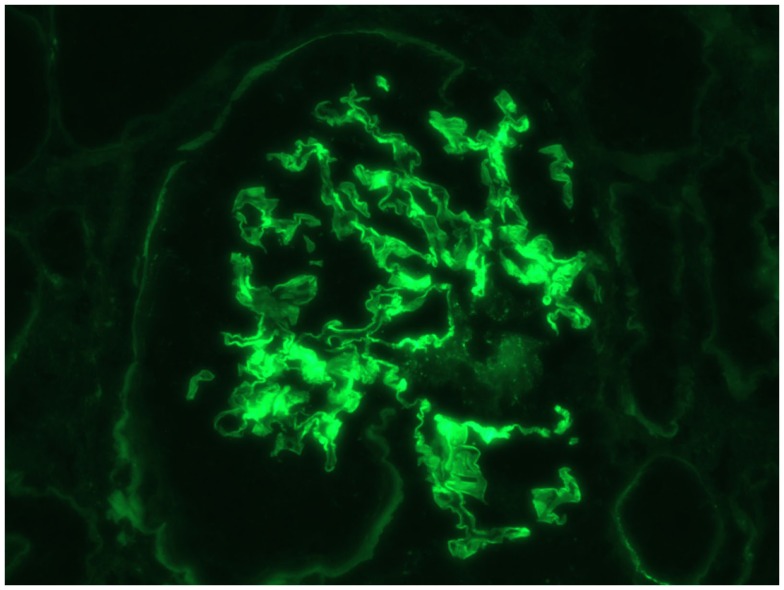
Enfermedad por anticuerpos anti-GBM: semilunas en microscopía óptica

Enfermedad por anticuerpos anti-membrana basal glomerular (anti-GBM): medialunas en microscopía óptica

Imagen: “Crescents on light microscopy” por Mavani G. P., Pommier M., Win S., Michelis M. F., Rosenstock J. Licencia: CC BY 4.0
Tratamiento

Abordaje terapéutico

  • Debido a que la glomerulonefritis rápidamente progresiva progresa rápidamente, el tratamiento debe iniciarse incluso mientras se espera la interpretación de la biopsia (especialmente en EN Erythema nodosum is an immune-mediated panniculitis (inflammation of the subcutaneous fat) caused by a type IV (delayed-type) hypersensitivity reaction. It commonly manifests in young women as tender, erythematous nodules on the shins. Erythema Nodosum la enfermedad grave).
  • Un retraso en EN Erythema nodosum is an immune-mediated panniculitis (inflammation of the subcutaneous fat) caused by a type IV (delayed-type) hypersensitivity reaction. It commonly manifests in young women as tender, erythematous nodules on the shins. Erythema Nodosum el tratamiento puede causar daño renal irreversible.
  • Objetivos iniciales:
    • Eliminar los LOS Neisseria anticuerpos circulantes.
    • Disminuir la inflamación.
  • Modalidades de tratamiento:
    • Corticosteroides: pulso de metilprednisolona seguido de prednisona
    • Ciclofosfamida
    • Alternativas a la ciclofosfamida:
      • Rituximab Rituximab A murine-derived monoclonal antibody and antineoplastic agent that binds specifically to the cd20 antigen and is used in the treatment of leukemia; lymphoma and rheumatoid arthritis. Immunosuppressants
      • Micofenolato
    • Plasmaféresis:
      • Recomendada para la enfermedad por anticuerpos anti-GBM
      • Permite la eliminación de anticuerpos libres, inmunocomplejos y mediadores inflamatorios.
  • Terapia de reemplazo renal (diálisis o trasplante de riñón)

Tratamientos específicos

  • Enfermedad anti-GBM:
    • Plasmaféresis con terapia inmunosupresora
    • Puede requerir asistencia respiratoria dependiendo de la gravedad de la hemoptisis (intubación y ventilación mecánica)
  • Enfermedad de la media luna pauciinmune ANCA-positiva:
    • Inducción con corticosteroides combinados con rituximab Rituximab A murine-derived monoclonal antibody and antineoplastic agent that binds specifically to the cd20 antigen and is used in the treatment of leukemia; lymphoma and rheumatoid arthritis. Immunosuppressants o ciclofosfamida
    • Utilizar plasmaféresis en EN Erythema nodosum is an immune-mediated panniculitis (inflammation of the subcutaneous fat) caused by a type IV (delayed-type) hypersensitivity reaction. It commonly manifests in young women as tender, erythematous nodules on the shins. Erythema Nodosum personas con enfermedad anti-GBM concomitante.
    • La plasmaféresis es controversial en EN Erythema nodosum is an immune-mediated panniculitis (inflammation of the subcutaneous fat) caused by a type IV (delayed-type) hypersensitivity reaction. It commonly manifests in young women as tender, erythematous nodules on the shins. Erythema Nodosum otros casos.
  • Enfermedad de media luna mediada por inmunocomplejos:
    • Glomerulonefritis postestreptocócica: la recuperación es típica ( en EN Erythema nodosum is an immune-mediated panniculitis (inflammation of the subcutaneous fat) caused by a type IV (delayed-type) hypersensitivity reaction. It commonly manifests in young women as tender, erythematous nodules on the shins. Erythema Nodosum los LOS Neisseria adultos, la recuperación puede ser solo parcial).
    • Nefropatía por IgA IgA Represents 15-20% of the human serum immunoglobulins, mostly as the 4-chain polymer in humans or dimer in other mammals. Secretory iga is the main immunoglobulin in secretions. Immunoglobulins: Types and Functions:
      • Comenzar con corticosteroides en EN Erythema nodosum is an immune-mediated panniculitis (inflammation of the subcutaneous fat) caused by a type IV (delayed-type) hypersensitivity reaction. It commonly manifests in young women as tender, erythematous nodules on the shins. Erythema Nodosum personas con alto riesgo de progresión.
      • Para las personas intolerantes a los LOS Neisseria corticosteroides, el micofenolato es una opción.
    • Nefritis lúpica: corticosteroides con ciclofosfamida o micofenolato
    • Crioglobulinemia:
      • Tratar la enfermedad subyacente (terapia antiviral Antiviral Antivirals for Hepatitis B para la hepatitis C Hepatitis C Hepatitis C is an infection of the liver caused by the hepatitis C virus (HCV). The infection can be transmitted through infectious blood or body fluids and may be transmitted during childbirth or through IV drug use or sexual intercourse. Hepatitis C virus can cause both acute and chronic hepatitis, ranging from a mild to a serious, lifelong illness including liver cirrhosis and hepatocellular carcinoma (HCC). Hepatitis C Virus).
      • Tratar la glomerulonefritis rápidamente progresiva con corticosteroides y rituximab Rituximab A murine-derived monoclonal antibody and antineoplastic agent that binds specifically to the cd20 antigen and is used in the treatment of leukemia; lymphoma and rheumatoid arthritis. Immunosuppressants.

Pronóstico

  • La probabilidad de que los LOS Neisseria casos no tratados progresen a una enfermedad renal terminal en EN Erythema nodosum is an immune-mediated panniculitis (inflammation of the subcutaneous fat) caused by a type IV (delayed-type) hypersensitivity reaction. It commonly manifests in young women as tender, erythematous nodules on the shins. Erythema Nodosum 6 meses es alta.
  • Características de pronóstico favorable:
    • Enfermedad anti-GBM (si se trata a tiempo)
    • Glomerulonefritis postinfecciosa
    • Lupus eritematoso sistémico
    • Granulomatosis con poliangeitis
    • Poliangeitis microscópica
  • Características de pronóstico desfavorable:
    • > 60 años
    • Nivel alto de creatinina sérica
    • Medias lunas circunferenciales en EN Erythema nodosum is an immune-mediated panniculitis (inflammation of the subcutaneous fat) caused by a type IV (delayed-type) hypersensitivity reaction. It commonly manifests in young women as tender, erythematous nodules on the shins. Erythema Nodosum > 75% de los LOS Neisseria glomérulos
    • Insuficiencia renal oligúrica
    • Sin respuesta al AL Amyloidosis tratamiento en EN Erythema nodosum is an immune-mediated panniculitis (inflammation of the subcutaneous fat) caused by a type IV (delayed-type) hypersensitivity reaction. It commonly manifests in young women as tender, erythematous nodules on the shins. Erythema Nodosum la glomerulonefritis rápidamente progresiva pauciinmune (visto en EN Erythema nodosum is an immune-mediated panniculitis (inflammation of the subcutaneous fat) caused by a type IV (delayed-type) hypersensitivity reaction. It commonly manifests in young women as tender, erythematous nodules on the shins. Erythema Nodosum aproximadamente el 30% de los LOS Neisseria individuos)
  • Las personas con enfermedad por doble anticuerpo tienen un mejor pronóstico renal que las personas con solo enfermedad por anticuerpos anti-GBM.

Diagnóstico Diferencial

  • Glomerulonefritis proliferativa difusa: clasificación histopatológica de la glomerulonefritis con aumento de la proliferación celular (células mesangiales, endoteliales y epiteliales) que afectan > 50% de los LOS Neisseria glomérulos. Las causas más comunes son la nefritis lúpica y la nefropatía por IgA IgA Represents 15-20% of the human serum immunoglobulins, mostly as the 4-chain polymer in humans or dimer in other mammals. Secretory iga is the main immunoglobulin in secretions. Immunoglobulins: Types and Functions. Los LOS Neisseria síntomas incluyen fatiga, vómitos, hematuria Hematuria Presence of blood in the urine. Renal Cell Carcinoma, proteinuria Proteinuria The presence of proteins in the urine, an indicator of kidney diseases. Nephrotic Syndrome in Children, hipertensión y edema Edema Edema is a condition in which excess serous fluid accumulates in the body cavity or interstitial space of connective tissues. Edema is a symptom observed in several medical conditions. It can be categorized into 2 types, namely, peripheral (in the extremities) and internal (in an organ or body cavity). Edema. Los LOS Neisseria hallazgos microscópicos muestran hipercelularidad de las células antes mencionadas con engrosamiento del asa ASA Anterior Cord Syndrome capilar. La terapia temprana y agresiva se basa en EN Erythema nodosum is an immune-mediated panniculitis (inflammation of the subcutaneous fat) caused by a type IV (delayed-type) hypersensitivity reaction. It commonly manifests in young women as tender, erythematous nodules on the shins. Erythema Nodosum la etiología específica.
  • Glomerulonefritis postestreptocócica: se produce después de la infección por un estreptococo beta-hemolítico del grupo A. El diagnóstico se basa en EN Erythema nodosum is an immune-mediated panniculitis (inflammation of the subcutaneous fat) caused by a type IV (delayed-type) hypersensitivity reaction. It commonly manifests in young women as tender, erythematous nodules on the shins. Erythema Nodosum la historia clínica, las pruebas de laboratorio, el análisis de orina y las pruebas serológicas. El tratamiento es de soporte y el pronóstico es excelente. La mayoría de las personas se recuperan sin complicaciones a largo plazo.
  • Glomerulonefritis membranoproliferativa: lesiones renales histológicas caracterizadas por lesión glomerular con engrosamiento de la membrana basal glomerular y proliferación mesangial. El proceso patogénico puede estar mediado por inmunocomplejos o por complemento. Los LOS Neisseria individuos pueden presentar síndrome nefrítico, proteinuria Proteinuria The presence of proteins in the urine, an indicator of kidney diseases. Nephrotic Syndrome in Children variable Variable Variables represent information about something that can change. The design of the measurement scales, or of the methods for obtaining information, will determine the data gathered and the characteristics of that data. As a result, a variable can be qualitative or quantitative, and may be further classified into subgroups. Types of Variables y función renal disminuida. La biopsia renal muestra la lesión renal patológica. Una investigación adicional (i.e., pruebas de laboratorio) señalará la causa subyacente (e.g., infección, enfermedad autoinmune). El tratamiento se basa en EN Erythema nodosum is an immune-mediated panniculitis (inflammation of the subcutaneous fat) caused by a type IV (delayed-type) hypersensitivity reaction. It commonly manifests in young women as tender, erythematous nodules on the shins. Erythema Nodosum la enfermedad etiológica.
  • Nefritis lúpica: glomerulonefritis causada por lupus eritematoso sistémico. La presentación clínica puede incluir hematuria Hematuria Presence of blood in the urine. Renal Cell Carcinoma, síndrome nefrótico y glomerulonefritis rápidamente progresiva. El diagnóstico se basa en EN Erythema nodosum is an immune-mediated panniculitis (inflammation of the subcutaneous fat) caused by a type IV (delayed-type) hypersensitivity reaction. It commonly manifests in young women as tender, erythematous nodules on the shins. Erythema Nodosum la biopsia renal, que ayudará a clasificar la enfermedad, orientar el tratamiento y proporcionar una indicación de pronóstico. El tratamiento incluye inhibidores de la enzima convertidora de angiotensina y medicamentos inmunosupresores.

Referencias

  1. Appel, G.B. et al. (2020). Overview of the classification and treatment of rapidly progressive (crescentic) glomerulonephritis. In Glassock, R.J. et al. (Eds.), UpToDate. Retrieved August 10, 2021, from https://www.uptodate.com/contents/overview-of-the-classification-and-treatment-of-rapidly-progressive-crescentic-glomerulonephritis
  2. Cattran, D., Appel, G., Coppo, R. (2021). IgA nephropathy: Treatment and prognosis. UpToDate. Retrieved Sept 11, 2021, from https://www.uptodate.com/contents/iga-nephropathy-treatment-and-prognosis
  3. Chang, A., Laszik, Z. (2021). The Kidney. In Kumar, V., Abbas, A., Aster, J. (Eds.), Robbins and Cotran Pathologic Basis of Disease, 10th edition. pp. 909–911. Elsevier Inc.
  4. Falk, R., Dall’Era, M., Appel, G. (2021). Lupus nephritis: Initial and subsequent therapy for focal or diffuse lupus nephritis. UpToDate. Retrieved Sept 11, 2021, from https://www.uptodate.com/contents/lupus-nephritis-initial-and-subsequent-therapy-for-focal-or-diffuse-lupus-nephritis
  5. Lohr, J.W., et al. (2021). Rapidly progressive glomerulonephritis. In Batuman V. et al. (Eds.), Medscape. Retrieved August 11, 2021, from https://emedicine.medscape.com/article/240457
  6. Kaplan, A., Appel, G., Pusey, C. (2021). Anti-GBM (Goodpasture) disease: Treatment and prognosis. UpToDate. Retrieved Sept 11, 2021, from https://www.uptodate.com/contents/anti-gbm-goodpasture-disease-treatment-and-prognosis
  7. O’Brien, F. (2021). Rapidly progressive glomerulonephritis (RPGN). MSD Manual Professional Version. Retrieved August 10, 2021, from https://www.msdmanuals.com/professional/genitourinary-disorders/glomerular-disorders/rapidly-progressive-glomerulonephritis-rpgn
  8. Pusey, C.D. (2020). Mechanisms of glomerular crescent formation. In Glassock, R.J. et al. (Eds.), UpToDate. Retrieved August 11, 2021, from https://www.uptodate.com/contents/mechanisms-of-glomerular-crescent-formation

¡Crea tu cuenta gratis o inicia una sesión para seguir leyendo!

Regístrate ahora y obtén acceso gratuito a Lecturio con páginas de concepto, videos médicos y cuestionarios para tu educación médica.

User Reviews

Que tengas una sesión de estudio alegre y navideña 🎁 Ahorra 50% en todos los planes >>

Details