Domina Conceptos Médicos

Estudia para la escuela de medicina y tus examenes con Lecturio.

Colangitis Aguda

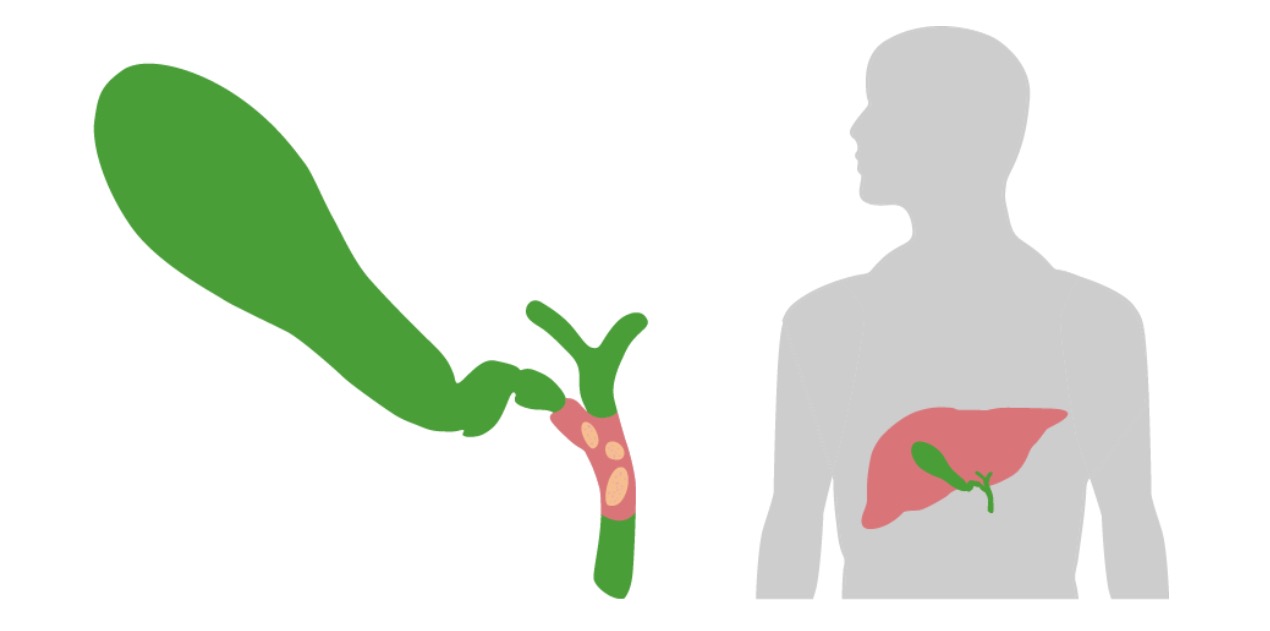
La colangitis aguda se refiere a la inflamación aguda del sistema de conductos biliares; es una afección potencialmente mortal caracterizada por fiebre, ictericia y dolor Dolor Inflammation abdominal. Esta afección se desarrolla como resultado de la estasis y la infección del tracto biliar. Las posibles complicaciones graves son shock Shock Shock is a life-threatening condition associated with impaired circulation that results in tissue hypoxia. The different types of shock are based on the underlying cause: distributive (↑ cardiac output (CO), ↓ systemic vascular resistance (SVR)), cardiogenic (↓ CO, ↑ SVR), hypovolemic (↓ CO, ↑ SVR), obstructive (↓ CO), and mixed. Types of Shock séptico, absceso hepático y disfunción multiorgánica. El diagnóstico se confirma mediante ultrasonido (u otros estudios de imagen hepatobiliares) que muestran dilatación del conducto biliar común o cálculos biliares, pruebas de función hepática elevadas y leucocitosis. El tratamiento incluye estabilización hemodinámica, antibióticos de amplio espectro, drenaje biliar urgente y tratamiento de la etiología subyacente (e.g., colecistectomía por cálculos biliares).

Last updated: Dec 15, 2025

Editorial responsibility: Stanley Oiseth, Lindsay Jones, Evelin Maza

Descripción General

Epidemiología

  • Relativamente poco común
  • Los LOS Neisseria hombres y las mujeres son igualmente afectados.
  • Más común en EN Erythema nodosum is an immune-mediated panniculitis (inflammation of the subcutaneous fat) caused by a type IV (delayed-type) hypersensitivity reaction. It commonly manifests in young women as tender, erythematous nodules on the shins. Erythema Nodosum adultos
  • La incidencia máxima es en EN Erythema nodosum is an immune-mediated panniculitis (inflammation of the subcutaneous fat) caused by a type IV (delayed-type) hypersensitivity reaction. It commonly manifests in young women as tender, erythematous nodules on the shins. Erythema Nodosum la 6ta y 7ma década de la vida.
  • Mayor incidencia en EN Erythema nodosum is an immune-mediated panniculitis (inflammation of the subcutaneous fat) caused by a type IV (delayed-type) hypersensitivity reaction. It commonly manifests in young women as tender, erythematous nodules on the shins. Erythema Nodosum europeos del norte, hispanos y nativos americanos

Etiología

  • Obstrucción del sistema biliar:
    • Coledocolitiasis (responsable del 60% de los LOS Neisseria casos)
    • Estenosis biliares
    • Malignidad
    • Compresión extrínseca (pseudoquiste pancreático o pancreatitis Pancreatitis Inflammation of the pancreas. Pancreatitis is classified as acute unless there are computed tomographic or endoscopic retrograde cholangiopancreatographic findings of chronic pancreatitis. The two most common forms of acute pancreatitis are alcoholic pancreatitis and gallstone pancreatitis. Acute Pancreatitis aguda)
    • Parásitos ( Ascaris Ascaris Ascaris is a genus of parasitic nematodes. The infection, ascariasis, is most often caused by A. lumbricoides. Transmission occurs primarily via ingestion of water or food contaminated with Ascaris eggs. Most patients with ascariasis are asymptomatic. Ascaris/Ascariasis lumbricoides)
    • Constricciones postinfecciosas (e.g., colangiopatía por SIDA)
  • Manipulación iatrogénica de la vía biliar:
    • Colangiopancreatografía retrógrada endoscópica
    • Esfinterotomía
    • Colocación de stent
  • Comúnmente una infección bacteriana en EN Erythema nodosum is an immune-mediated panniculitis (inflammation of the subcutaneous fat) caused by a type IV (delayed-type) hypersensitivity reaction. It commonly manifests in young women as tender, erythematous nodules on the shins. Erythema Nodosum el contexto de obstrucción biliar; organismos causales incluyen:
    • Bacterias gram-negativas (más comunes)
      • Escherichia coli (aislada hasta en EN Erythema nodosum is an immune-mediated panniculitis (inflammation of the subcutaneous fat) caused by a type IV (delayed-type) hypersensitivity reaction. It commonly manifests in young women as tender, erythematous nodules on the shins. Erythema Nodosum 50% de casos)
      • Klebsiella Klebsiella Klebsiella are encapsulated gram-negative, lactose-fermenting bacilli. They form pink colonies on MacConkey agar due to lactose fermentation. The main virulence factor is a polysaccharide capsule. Klebsiella pneumoniae is the most important pathogenic species. Klebsiella
      • Pseudomonas Pseudomonas Pseudomonas is a non-lactose-fermenting, gram-negative bacillus that produces pyocyanin, which gives it a characteristic blue-green color. Pseudomonas is found ubiquitously in the environment, as well as in moist reservoirs, such as hospital sinks and respiratory equipment. Pseudomonas
      • Serratia Serratia A genus of gram-negative, facultatively anaerobic, rod-shaped bacteria that occurs in the natural environment (soil, water, and plant surfaces) or as an opportunistic human pathogen. Acute Cholangitis
      • Proteus Proteus Proteus spp. are gram-negative, facultatively anaerobic bacilli. Different types of infection result from Proteus, but the urinary tract is the most common site. The majority of cases are caused by Proteus mirabilis (P. mirabilis). The bacteria are part of the normal intestinal flora and are also found in the environment. Proteus
      • Bacteroides Bacteroides Bacteroides is a genus of opportunistic, anaerobic, gram-negative bacilli. Bacteroides fragilis is the most common species involved in human disease and is part of the normal flora of the large intestine. Bacteroides
    • Bacterias gram-positivas
      • Enterococcus Enterococcus Enterococcus is a genus of oval-shaped gram-positive cocci that are arranged in pairs or short chains. Distinguishing factors include optochin resistance and the presence of pyrrolidonyl arylamidase (PYR) and Lancefield D antigen. Enterococcus is part of the normal flora of the human GI tract. Enterococcus
      • Streptococcus Streptococcus Streptococcus is one of the two medically important genera of gram-positive cocci, the other being Staphylococcus. Streptococci are identified as different species on blood agar on the basis of their hemolytic pattern and sensitivity to optochin and bacitracin. There are many pathogenic species of streptococci, including S. pyogenes, S. agalactiae, S. pneumoniae, and the viridans streptococci. Streptococcus
      • Clostridium

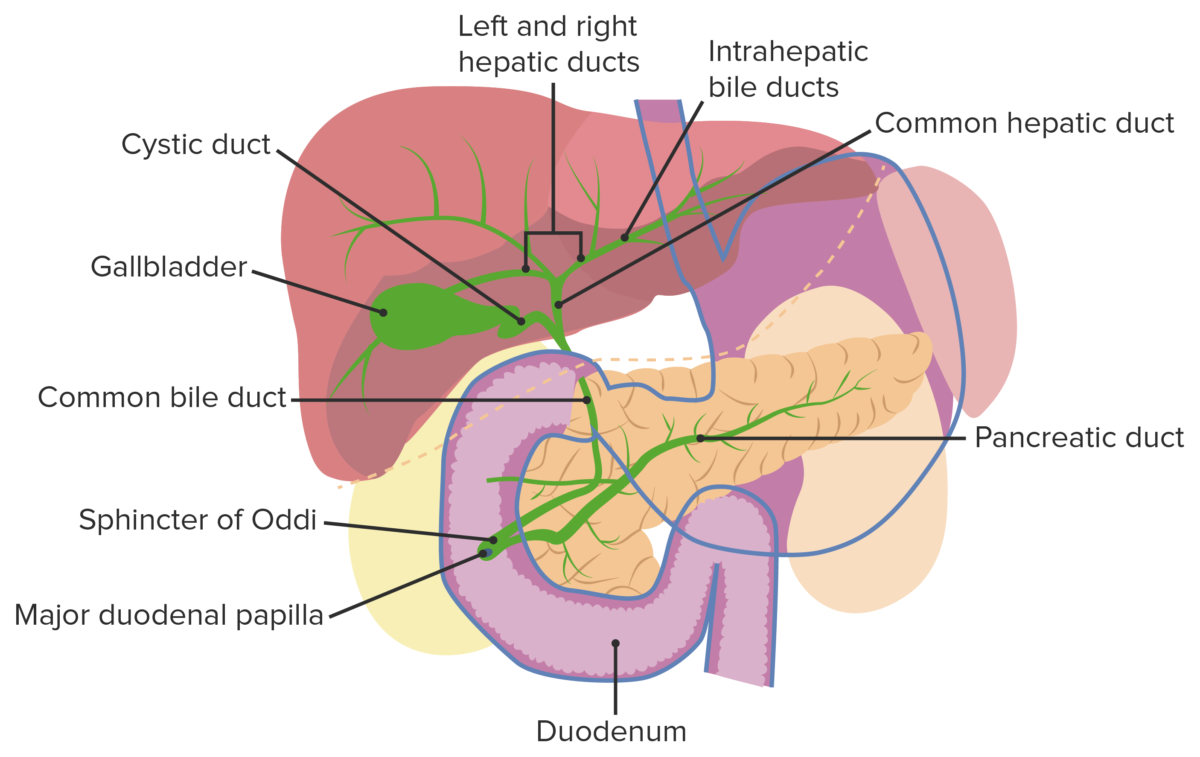
Mnemotecnia: Bacteria Bacteria Bacteria are prokaryotic single-celled microorganisms that are metabolically active and divide by binary fission. Some of these organisms play a significant role in the pathogenesis of diseases. Bacteriology responsable de la colangitis—“KEEPS” ( en EN Erythema nodosum is an immune-mediated panniculitis (inflammation of the subcutaneous fat) caused by a type IV (delayed-type) hypersensitivity reaction. It commonly manifests in young women as tender, erythematous nodules on the shins. Erythema Nodosum inglés):
  • K Klebsiella Klebsiella Klebsiella are encapsulated gram-negative, lactose-fermenting bacilli. They form pink colonies on MacConkey agar due to lactose fermentation. The main virulence factor is a polysaccharide capsule. Klebsiella pneumoniae is the most important pathogenic species. Klebsiella
  • E Enterococcus Enterococcus Enterococcus is a genus of oval-shaped gram-positive cocci that are arranged in pairs or short chains. Distinguishing factors include optochin resistance and the presence of pyrrolidonyl arylamidase (PYR) and Lancefield D antigen. Enterococcus is part of the normal flora of the human GI tract. Enterococcus
  • EE. coli
  • P Proteus Proteus Proteus spp. are gram-negative, facultatively anaerobic bacilli. Different types of infection result from Proteus, but the urinary tract is the most common site. The majority of cases are caused by Proteus mirabilis (P. mirabilis). The bacteria are part of the normal intestinal flora and are also found in the environment. Proteus
  • S Serratia Serratia A genus of gram-negative, facultatively anaerobic, rod-shaped bacteria that occurs in the natural environment (soil, water, and plant surfaces) or as an opportunistic human pathogen. Acute Cholangitis

Fisiopatología

  • Obstrucción del conducto biliar común → estasis biliar → las bacterias ascienden desde el duodeno → sobrecrecimiento bacteriano y supuración → sepsis Sepsis Systemic inflammatory response syndrome with a proven or suspected infectious etiology. When sepsis is associated with organ dysfunction distant from the site of infection, it is called severe sepsis. When sepsis is accompanied by hypotension despite adequate fluid infusion, it is called septic shock. Sepsis and Septic Shock biliar
  • Una presión intrabiliar aumentada causada por la obstrucción también aumenta la permeabilidad de los LOS Neisseria conductillos biliares → traslocación de bacterias hacia el tracto biliar
  • La ruptura del esfínter de Oddi puede resultar en EN Erythema nodosum is an immune-mediated panniculitis (inflammation of the subcutaneous fat) caused by a type IV (delayed-type) hypersensitivity reaction. It commonly manifests in young women as tender, erythematous nodules on the shins. Erythema Nodosum una pérdida de la barrera mecánica contra el reflujo duodenal → ascenso de bacterias y posterior infección
  • Procedimientos como la colocación de stent biliar y la esfinterotomía endoscópica también rompen la barrera que previene la entrada bacteriana al AL Amyloidosis tracto biliar.

Presentación Clínica

  • La tríada de Charcot (50%–75% de los pacientes tendrán las 3 características):
    1. Dolor Dolor Inflammation abdominal en EN Erythema nodosum is an immune-mediated panniculitis (inflammation of the subcutaneous fat) caused by a type IV (delayed-type) hypersensitivity reaction. It commonly manifests in young women as tender, erythematous nodules on the shins. Erythema Nodosum el cuadrante superior derecho
    2. Fiebre
    3. Ictericia
  • Pentada de Reynolds (signo de enfermedad grave):
    1. Dolor Dolor Inflammation abdominal en EN Erythema nodosum is an immune-mediated panniculitis (inflammation of the subcutaneous fat) caused by a type IV (delayed-type) hypersensitivity reaction. It commonly manifests in young women as tender, erythematous nodules on the shins. Erythema Nodosum el cuadrante superior derecho
    2. Fiebre
    3. Ictericia
    4. Hipotensión
    5. Estado mental alterado
  • Otros signos o síntomas:
    • Náuseas y vómitos
    • Distensión abdominal
    • Heces acólicas (sin bilis)
    • Coluria
    • Prurito
    • Taquicardia

Diagnóstico

Pruebas de laboratorio

  • ↑ Recuento de leucocitos
  • Prueba de función hepática:
    • ↑ Fosfatasa alcalina, bilirrubina y gamma-glutamil transpeptidasa ( GGT GGT An enzyme, sometimes called ggt, with a key role in the synthesis and degradation of glutathione; (gsh, a tripeptide that protects cells from many toxins). It catalyzes the transfer of the gamma-glutamyl moiety to an acceptor amino acid. Alcoholic Liver Disease) → colestasis
    • Leve ↑ AST AST Enzymes of the transferase class that catalyze the conversion of l-aspartate and 2-ketoglutarate to oxaloacetate and l-glutamate. Liver Function Tests (aspartato aminotransferasa) y ALT ALT An enzyme that catalyzes the conversion of l-alanine and 2-oxoglutarate to pyruvate and l-glutamate. Liver Function Tests (alanina aminotransferasa)
  • Lipasa → descartar pancreatitis Pancreatitis Inflammation of the pancreas. Pancreatitis is classified as acute unless there are computed tomographic or endoscopic retrograde cholangiopancreatographic findings of chronic pancreatitis. The two most common forms of acute pancreatitis are alcoholic pancreatitis and gallstone pancreatitis. Acute Pancreatitis concurrente
  • Hemocultivos → potencialmente aislá el organismo causante

Imagenología

Nota: si el paciente está hemodinámicamente inestable y tiene evidencia clínica de colangitis aguda, se omitirá este paso. El paciente debe proceder directamente a la descompresión biliar.
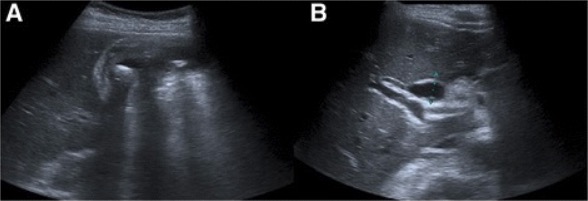
  • Ultrasonido abdominal:
    • Posibles hallazgos:
      • Dilatación del conducto biliar (hallazgo más común)
      • Cálculos biliares
    • Un ultrasonido normal no descarta colangitis aguda.
  • Tomografía computarizada(TC):
    • Se realiza si el ultrasonido no es concluyente
    • Posibles hallazgos:
      • Conductos intrahepáticos y extrahepáticos dilatados
      • Inflamación del árbol biliar
      • Malignidad
      • Abscesos
    • Los LOS Neisseria cálculos biliares no se visualizan correctamente.
  • Colangiopancreatografía por resonancia magnética(RM):
    • Se utiliza si el ultrasonido o la TC no son concluyentes
    • Posibles hallazgos:
      • Coledocolitiasis
      • Estenosis biliares
      • Dilatación ductal
      • Malignidad
  • Gammagrafía biliar (ácido iminodiacético hepatobiliar):
    • Detecta obstrucción biliar
    • Lleva tiempo, por lo que no se recomienda para pacientes críticos o inestables
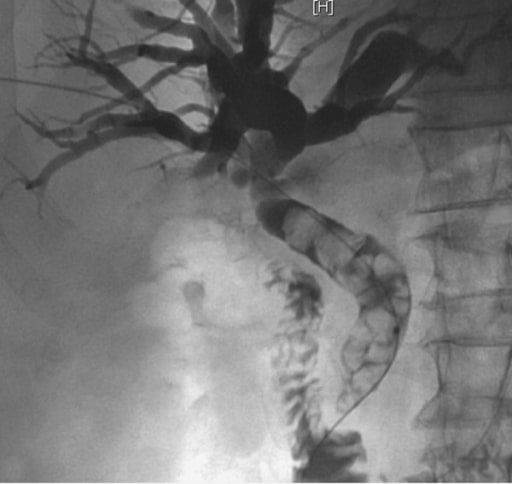
  • Colangiopancreatografía retrógrada endoscópica:
    • Diagnóstica y terapéutica
    • Puede omitir los LOS Neisseria estudios previamente descritos y proceder directamente a la colangiopancreatografía retrógrada endoscópica en EN Erythema nodosum is an immune-mediated panniculitis (inflammation of the subcutaneous fat) caused by a type IV (delayed-type) hypersensitivity reaction. It commonly manifests in young women as tender, erythematous nodules on the shins. Erythema Nodosum pacientes con la tríada de Charcot y pruebas hepáticas elevadas
Engrosamiento de la pared de la vesícula biliar colangitis aguda

Colangitis aguda: Ultrasonido abdominal que muestra engrosamiento de la pared de la vesícula biliar, líquido pericolecístico y colelitiasis (a). El conducto biliar común está dilatado. (B).

Imagen: “Abdominal ultrasound” por Serviço de Gastrenterologia e Hepatologia, Hospital de Santa Maria, Centro Hospitalar Lisboa Norte, Avenida Professor Egas Moniz, Lisboa, 1649-035, Portugal. Licencia: CC BY 4.0
Tratamiento

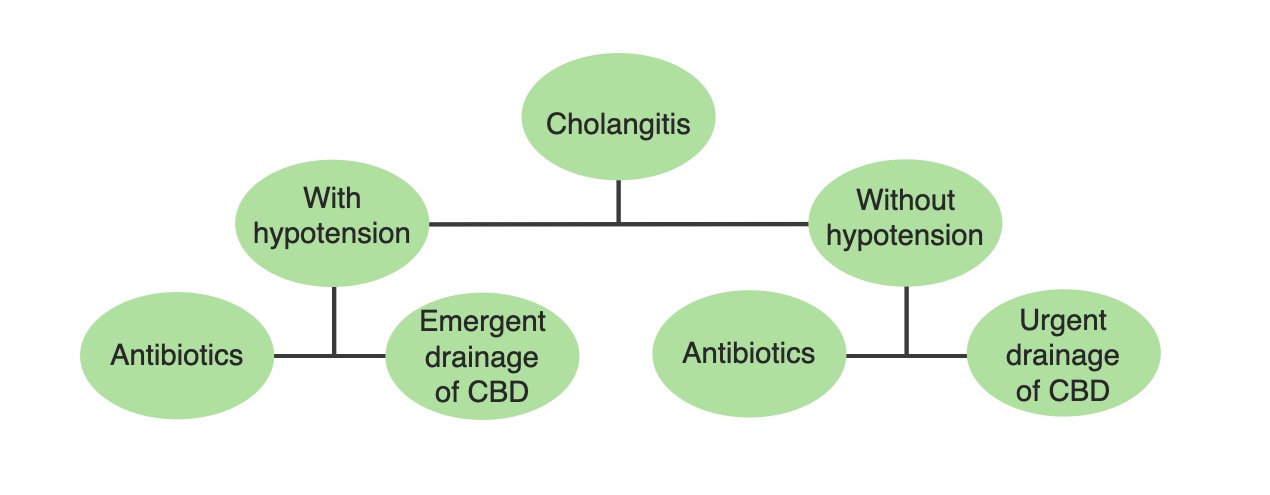
  • Evalúe los LOS Neisseria signos vitales del paciente para determinar si se requiere un drenaje biliar de emergencia (consulte el algoritmo a continuación).
  • Terapia de soporte:
    • Reanimación con líquidos intravenosos
    • Corrección de electrolitos
    • Vigilancia estrecha de los LOS Neisseria signos vitales
    • Control del dolor Dolor Inflammation
    • Vasopresores para shock Shock Shock is a life-threatening condition associated with impaired circulation that results in tissue hypoxia. The different types of shock are based on the underlying cause: distributive (↑ cardiac output (CO), ↓ systemic vascular resistance (SVR)), cardiogenic (↓ CO, ↑ SVR), hypovolemic (↓ CO, ↑ SVR), obstructive (↓ CO), and mixed. Types of Shock séptico
    • Ingreso en EN Erythema nodosum is an immune-mediated panniculitis (inflammation of the subcutaneous fat) caused by a type IV (delayed-type) hypersensitivity reaction. It commonly manifests in young women as tender, erythematous nodules on the shins. Erythema Nodosum unidad de cuidados intensivos para individuos en EN Erythema nodosum is an immune-mediated panniculitis (inflammation of the subcutaneous fat) caused by a type IV (delayed-type) hypersensitivity reaction. It commonly manifests in young women as tender, erythematous nodules on the shins. Erythema Nodosum estado crítico
  • Cobertura antibiótica para gram negativos y anaerobios:
    • Ciprofloxacina o levofloxacina más metronidazol
    • Cefalosporinas de 3ra o 4ta generación más metronidazol
    • Piperacilina– tazobactam Tazobactam A penicillanic acid and sulfone derivative and potent beta-lactamase inhibitor that enhances the activity of other anti-bacterial agents against beta-lactamase producing bacteria. Cephalosporins
    • Ertapenem Ertapenem A carbapenem derivative antibacterial agent that is more stable to renal dehydropeptidase I than imipenem, but does not need to be given with an enzyme inhibitor such as cilastatin. It is used in the treatment of gram-positive and gram-negative bacterial infections including intra-abdominal infections, acute gynecological infections, complicated urinary tract infections, skin infections, and respiratory tract infections. It is also used to prevent infection in colorectal surgery. Carbapenems and Aztreonam
  • Descompresión biliar:
    • Colangiopancreatografía retrógrada endoscópica (CPRE)
      • Con esfinterotomía y extracción de cálculos
      • Generalmente, el tratamiento de elección
    • Colangiopancreatografía endoscópica guiada por ultrasonido con drenaje biliar y colocación de stent:
      • Alternativa a CPRE (e.g., tumores obstructivos)
    • Colangiografía transhepática percutánea con drenaje por catéter
      • Requiere un sistema biliar dilatado
      • Implica la inserción transhepática de una aguja en EN Erythema nodosum is an immune-mediated panniculitis (inflammation of the subcutaneous fat) caused by a type IV (delayed-type) hypersensitivity reaction. It commonly manifests in young women as tender, erythematous nodules on the shins. Erythema Nodosum el conducto biliar, lo que permite el drenaje y la extracción de cálculos.
      • Se realiza si la CPRE no está disponible o no tiene éxito
    • Cirugía
      • Reservado para pacientes en EN Erythema nodosum is an immune-mediated panniculitis (inflammation of the subcutaneous fat) caused by a type IV (delayed-type) hypersensitivity reaction. It commonly manifests in young women as tender, erythematous nodules on the shins. Erythema Nodosum donde fallan las intervenciones anteriores
      • La colecistectomía generalmente se puede realizar al AL Amyloidosis mismo tiempo.
  • Todos los LOS Neisseria pacientes con cálculos biliares también deben ser evaluados para una colecistectomía para prevenir la recurrencia.
Opciones de colangitis aguda

Un algoritmo de tratamiento simplificado para la colangitis aguda basado en la estabilidad hemodinámica del paciente: El tratamiento definitivo requiere control de la fuente con drenaje biliar. Por lo tanto, este tratamiento se realiza de forma urgente en pacientes hemodinámicamente inestables.

Imagen por Lecturio.
Complicaciones y Pronóstico

Complicaciones

  • Shock Shock Shock is a life-threatening condition associated with impaired circulation that results in tissue hypoxia. The different types of shock are based on the underlying cause: distributive (↑ cardiac output (CO), ↓ systemic vascular resistance (SVR)), cardiogenic (↓ CO, ↑ SVR), hypovolemic (↓ CO, ↑ SVR), obstructive (↓ CO), and mixed. Types of Shock séptico
  • Absceso hepático o microabscesos
  • Lesión renal aguda
  • Insuficiencia hepática
  • Complicaciones del procedimiento
    • Hemorragia
    • Formación de fístula
    • Fuga de bilis

Pronóstico

  • Puede poner en EN Erythema nodosum is an immune-mediated panniculitis (inflammation of the subcutaneous fat) caused by a type IV (delayed-type) hypersensitivity reaction. It commonly manifests in young women as tender, erythematous nodules on the shins. Erythema Nodosum peligro la vida, especialmente en EN Erythema nodosum is an immune-mediated panniculitis (inflammation of the subcutaneous fat) caused by a type IV (delayed-type) hypersensitivity reaction. It commonly manifests in young women as tender, erythematous nodules on the shins. Erythema Nodosum ancianos o inmunocomprometidos.
  • Tasa de mortalidad
    • Aproximadamente el 11% en EN Erythema nodosum is an immune-mediated panniculitis (inflammation of the subcutaneous fat) caused by a type IV (delayed-type) hypersensitivity reaction. It commonly manifests in young women as tender, erythematous nodules on the shins. Erythema Nodosum general
    • 20%–30% en EN Erythema nodosum is an immune-mediated panniculitis (inflammation of the subcutaneous fat) caused by a type IV (delayed-type) hypersensitivity reaction. It commonly manifests in young women as tender, erythematous nodules on the shins. Erythema Nodosum enfermedad grave
  • Depende de:
    • Reconocimiento y diagnóstico temprano
    • Respuesta al AL Amyloidosis tratamiento
    • Comorbilidades del paciente
  • Mayor morbilidad y mortalidad observada en EN Erythema nodosum is an immune-mediated panniculitis (inflammation of the subcutaneous fat) caused by a type IV (delayed-type) hypersensitivity reaction. It commonly manifests in young women as tender, erythematous nodules on the shins. Erythema Nodosum:
    • Mujeres
    • Edad > 50 años
    • Cirrosis
    • Falta de respuesta a los LOS Neisseria antibióticos
    • Absceso hepático
    • Lesión renal aguda

Diagnóstico Diferencial

La siguiente tabla describe los LOS Neisseria diagnósticos biliares comunes y cómo se pueden diferenciar de la colangitis aguda:

Condición Patología Presentación clínica Diagnóstico Tratamiento
Colelitiasis Presencia de cálculos en EN Erythema nodosum is an immune-mediated panniculitis (inflammation of the subcutaneous fat) caused by a type IV (delayed-type) hypersensitivity reaction. It commonly manifests in young women as tender, erythematous nodules on the shins. Erythema Nodosum la vesícula biliar Asintomático o cólico biliar ( dolor Dolor Inflammation constante, sordo en EN Erythema nodosum is an immune-mediated panniculitis (inflammation of the subcutaneous fat) caused by a type IV (delayed-type) hypersensitivity reaction. It commonly manifests in young women as tender, erythematous nodules on the shins. Erythema Nodosum el cuadrante superior derecho que dura < 6 horas)
  • Ultrasonido
  • Análisis de sangre normales
  • Ninguno, si asintomático
  • Colecistectomía si sintomático
Colecistitis Obstrucción del conducto cístico con inflamación de la vesícula biliar Dolor Dolor Inflammation constante en EN Erythema nodosum is an immune-mediated panniculitis (inflammation of the subcutaneous fat) caused by a type IV (delayed-type) hypersensitivity reaction. It commonly manifests in young women as tender, erythematous nodules on the shins. Erythema Nodosum el cuadrante superior derecho (> 6 horas), fiebre, náusea y vómito, signo de Murphy
  • Ultrasonido
  • Gammagrafía con ácido iminodiacético hepatobiliar (si el ultrasonido es inconcluso)
  • Análisis de sangre: ↑ Leucocitos
  • Pruebas de función hepática pueden ser normales o levemente ↑
  • Colecistectomía urgente
  • Antibióticos
Coledocolitiasis Obstrucción del conducto biliar común debido a un cálculo Cólico postpandrial en EN Erythema nodosum is an immune-mediated panniculitis (inflammation of the subcutaneous fat) caused by a type IV (delayed-type) hypersensitivity reaction. It commonly manifests in young women as tender, erythematous nodules on the shins. Erythema Nodosum el cuadrante superior derecho > 6 h, ictericia
  • Ultrasonido
  • Colangiopancreatografía retrógrada endoscópica (si el ultrasonido es inconcluso)
  • Análisis de sangre: ↑ ALT ALT An enzyme that catalyzes the conversion of l-alanine and 2-oxoglutarate to pyruvate and l-glutamate. Liver Function Tests, ↑ AST AST Enzymes of the transferase class that catalyze the conversion of l-aspartate and 2-ketoglutarate to oxaloacetate and l-glutamate. Liver Function Tests, ↑ Fosfatasa alcalina, ↑ bilirrubina
CPRE y colecistectomía
Colangitis aguda Infección del conducto biliar Dolor Dolor Inflammation en EN Erythema nodosum is an immune-mediated panniculitis (inflammation of the subcutaneous fat) caused by a type IV (delayed-type) hypersensitivity reaction. It commonly manifests in young women as tender, erythematous nodules on the shins. Erythema Nodosum el cuadrante superior derecho, fiebre, ictericia, hipotensión, taquicardia
  • Ultrasonido
  • CPRE
  • Análisis de sangre: ↑ ALT ALT An enzyme that catalyzes the conversion of l-alanine and 2-oxoglutarate to pyruvate and l-glutamate. Liver Function Tests, ↑ AST AST Enzymes of the transferase class that catalyze the conversion of l-aspartate and 2-ketoglutarate to oxaloacetate and l-glutamate. Liver Function Tests, ↑ ALP ALP An enzyme that catalyzes the conversion of an orthophosphoric monoester and water to an alcohol and orthophosphate. Osteosarcoma, ↑ bilirrubina, ↑ leucocitos
  • CPRE y colecistectomía
  • Antibióticos
  • Tratamiento de la sepsis Sepsis Systemic inflammatory response syndrome with a proven or suspected infectious etiology. When sepsis is associated with organ dysfunction distant from the site of infection, it is called severe sepsis. When sepsis is accompanied by hypotension despite adequate fluid infusion, it is called septic shock. Sepsis and Septic Shock

Otros posibles diagnósticos a considerar:

  • Apendicitis aguda: una infección del apéndice. Los LOS Neisseria pacientes presentan dolor Dolor Inflammation en EN Erythema nodosum is an immune-mediated panniculitis (inflammation of the subcutaneous fat) caused by a type IV (delayed-type) hypersensitivity reaction. It commonly manifests in young women as tender, erythematous nodules on the shins. Erythema Nodosum el cuadrante inferior derecho o periumbilical, fiebre, defensa abdominal y dolor Dolor Inflammation a la palpación en EN Erythema nodosum is an immune-mediated panniculitis (inflammation of the subcutaneous fat) caused by a type IV (delayed-type) hypersensitivity reaction. It commonly manifests in young women as tender, erythematous nodules on the shins. Erythema Nodosum el punto de Mcburney. El diagnóstico se basa en EN Erythema nodosum is an immune-mediated panniculitis (inflammation of the subcutaneous fat) caused by a type IV (delayed-type) hypersensitivity reaction. It commonly manifests in young women as tender, erythematous nodules on the shins. Erythema Nodosum los LOS Neisseria antecedentes y el examen físico, y se complementa con imagenología que muestran engrosamiento apendicular y acumulación de grasa. La ubicación del dolor Dolor Inflammation y la imagenología diferencian esta condición de la colangitis aguda. El tratamiento consiste en EN Erythema nodosum is an immune-mediated panniculitis (inflammation of the subcutaneous fat) caused by a type IV (delayed-type) hypersensitivity reaction. It commonly manifests in young women as tender, erythematous nodules on the shins. Erythema Nodosum antibióticos y la extirpación quirúrgica del apéndice.
  • Pancreatitis Pancreatitis Inflammation of the pancreas. Pancreatitis is classified as acute unless there are computed tomographic or endoscopic retrograde cholangiopancreatographic findings of chronic pancreatitis. The two most common forms of acute pancreatitis are alcoholic pancreatitis and gallstone pancreatitis. Acute Pancreatitis aguda: inflamación del páncreas. Los LOS Neisseria pacientes presentan un inicio repentino de dolor Dolor Inflammation epigástrico intenso que suele ser agudo y se irradia a la espalda. La pancreatitis Pancreatitis Inflammation of the pancreas. Pancreatitis is classified as acute unless there are computed tomographic or endoscopic retrograde cholangiopancreatographic findings of chronic pancreatitis. The two most common forms of acute pancreatitis are alcoholic pancreatitis and gallstone pancreatitis. Acute Pancreatitis aguda se asocia con abuso de alcohol y cálculos biliares. El dolor Dolor Inflammation abdominal característico, la elevación de la lipasa o la imagenología que revelan edema Edema Edema is a condition in which excess serous fluid accumulates in the body cavity or interstitial space of connective tissues. Edema is a symptom observed in several medical conditions. It can be categorized into 2 types, namely, peripheral (in the extremities) and internal (in an organ or body cavity). Edema pancreático darán el diagnóstico y diferenciarán la condición de la colangitis aguda. El tratamiento incluye reposo intestinal, control del dolor Dolor Inflammation e hidratación con líquidos por vía intravenosa.
  • Nefrolitiasis: también conocida como cálculos renales, que pueden irritar u obstruir los LOS Neisseria uréteres. Los LOS Neisseria pacientes se presentan con un inicio repentino de dolor Dolor Inflammation de costado severo tipo cólico; náusea; vómitos; y hematuria Hematuria Presence of blood in the urine. Renal Cell Carcinoma. La imagenología mostrará cálculos en EN Erythema nodosum is an immune-mediated panniculitis (inflammation of the subcutaneous fat) caused by a type IV (delayed-type) hypersensitivity reaction. It commonly manifests in young women as tender, erythematous nodules on the shins. Erythema Nodosum el riñón, el uréter o la vejiga. Los LOS Neisseria antecedentes clínicos, el examen físico y la imagenología diferenciarán esta condición de la colangitis aguda. La nefrolitiasis se puede tratar con terapia de soporte, control del dolor Dolor Inflammation, stent ureterales, litotricia o cirugía.
  • Absceso hepático: absceso localizado en EN Erythema nodosum is an immune-mediated panniculitis (inflammation of the subcutaneous fat) caused by a type IV (delayed-type) hypersensitivity reaction. It commonly manifests in young women as tender, erythematous nodules on the shins. Erythema Nodosum el hígado, generalmente debido a una infección bacteriana. Los LOS Neisseria pacientes presentarán fiebre, dolor Dolor Inflammation abdominal en EN Erythema nodosum is an immune-mediated panniculitis (inflammation of the subcutaneous fat) caused by a type IV (delayed-type) hypersensitivity reaction. It commonly manifests in young women as tender, erythematous nodules on the shins. Erythema Nodosum el cuadrante superior derecho, náuseas, vómitos e ictericia. El examen físico abdominal puede revelar defensa abdominal y sensibilidad de rebote. Las pruebas de laboratorio mostrarán leucocitosis y aumento de las enzimas hepáticas. El ultrasonido o la TC ayudarán con el diagnóstico y diferenciarán esta condición de la colangitis aguda. Se administran antibióticos y es necesario drenar el absceso con guía por TC, colangiopancreatografía retrógrada endoscópica o cirugía.

Referencias

  1. Zakko, S. (2019). Acute cholangitis: Clinical manifestations, diagnosis, and management. In Chopra, S and Grover, S (Eds.), UpToDateRetrieved November 5, 2020, from https://www.uptodate.com/contents/acute-cholangitis-clinical-manifestations-diagnosis-and-management
  2. Scott, T.M., Rosh, A.J. (2017). Acute cholangitis. In Brenner, B.E. (Ed.), Medscape. Retrieved November 10, 2020, from https://emedicine.medscape.com/article/774245-overview
  3. Lindenmeyer, C.C. (2020). Choledocholithiasis and cholangitis.[online]. MSD Manual Professional Edition. Retrieved November 10, 2020, from https://www.msdmanuals.com/professional/hepatic-and-biliary-disorders/gallbladder-and-bile-duct-disorders/choledocholithiasis-and-cholangitis

¡Crea tu cuenta gratis o inicia una sesión para seguir leyendo!

Regístrate ahora y obtén acceso gratuito a Lecturio con páginas de concepto, videos médicos y cuestionarios para tu educación médica.

User Reviews

Que tengas una sesión de estudio alegre y navideña 🎁 Ahorra 50% en todos los planes >>

Details