
Domina Conceptos Médicos

Estudia para la escuela de medicina y tus examenes con Lecturio.

Carcinoma de Células Renales

El carcinoma de células renales (CCR) es un tumor Tumor Inflammation que surge del revestimiento del sistema tubular renal dentro de la corteza renal. El carcinoma de células renales es responsable del 80%–85% de todas las neoplasias renales primarias. La mayoría de los LOS Neisseria CCR surgen de forma esporádica, pero el tabaquismo, la hipertensión y la obesidad están relacionados con su desarrollo. La enfermedad suele presentarse de manera asintomática. Cuando finalmente aparecen los LOS Neisseria síntomas, el tumor Tumor Inflammation ya ha HA Hemolytic anemia (HA) is the term given to a large group of anemias that are caused by the premature destruction/hemolysis of circulating red blood cells (RBCs). Hemolysis can occur within (intravascular hemolysis) or outside the blood vessels (extravascular hemolysis). Hemolytic Anemia crecido considerablemente y/o se ha HA Hemolytic anemia (HA) is the term given to a large group of anemias that are caused by the premature destruction/hemolysis of circulating red blood cells (RBCs). Hemolysis can occur within (intravascular hemolysis) or outside the blood vessels (extravascular hemolysis). Hemolytic Anemia extendido a otros tejidos. La tríada clínica clásica del CCR es el dolor Dolor Inflammation de costado, la hematuria Hematuria Presence of blood in the urine. Renal Cell Carcinoma y una masa renal abdominal palpable, pero esta tríada solo aparece en EN Erythema nodosum is an immune-mediated panniculitis (inflammation of the subcutaneous fat) caused by a type IV (delayed-type) hypersensitivity reaction. It commonly manifests in young women as tender, erythematous nodules on the shins. Erythema Nodosum un 9% de los LOS Neisseria casos. Los LOS Neisseria individuos afectados también suelen presentar fiebre y/o anemia Anemia Anemia is a condition in which individuals have low Hb levels, which can arise from various causes. Anemia is accompanied by a reduced number of RBCs and may manifest with fatigue, shortness of breath, pallor, and weakness. Subtypes are classified by the size of RBCs, chronicity, and etiology. Anemia: Overview and Types. El carcinoma de células renales suele diagnosticarse mediante una TC de abdomen y pelvis Pelvis The pelvis consists of the bony pelvic girdle, the muscular and ligamentous pelvic floor, and the pelvic cavity, which contains viscera, vessels, and multiple nerves and muscles. The pelvic girdle, composed of 2 "hip" bones and the sacrum, is a ring-like bony structure of the axial skeleton that links the vertebral column with the lower extremities. Pelvis: Anatomy. Los LOS Neisseria casos localizados de CCR suelen tratarse y curarse con cirugía, y los LOS Neisseria casos avanzados se tratan con una combinación de inmunoterapia y/o terapia molecular dirigida. El pronóstico a largo plazo del CCR localmente avanzado o metastásico suele ser malo.

Last updated: Dec 15, 2025

Editorial responsibility: Stanley Oiseth, Lindsay Jones, Evelin Maza

Descripción General

Definición

El carcinoma de células renales (CCR), también llamado hipernefroma y adenocarcinoma de células renales, es un tipo de cáncer que se origina en EN Erythema nodosum is an immune-mediated panniculitis (inflammation of the subcutaneous fat) caused by a type IV (delayed-type) hypersensitivity reaction. It commonly manifests in young women as tender, erythematous nodules on the shins. Erythema Nodosum el revestimiento de los LOS Neisseria túbulos pequeños de la corteza renal.

Epidemiología

  • Representa el 80%–85% de todas las neoplasias renales primarias.
  • La mayor incidencia se da en EN Erythema nodosum is an immune-mediated panniculitis (inflammation of the subcutaneous fat) caused by a type IV (delayed-type) hypersensitivity reaction. It commonly manifests in young women as tender, erythematous nodules on the shins. Erythema Nodosum Norteamérica y en EN Erythema nodosum is an immune-mediated panniculitis (inflammation of the subcutaneous fat) caused by a type IV (delayed-type) hypersensitivity reaction. It commonly manifests in young women as tender, erythematous nodules on the shins. Erythema Nodosum la República Checa:
    • En EN Erythema nodosum is an immune-mediated panniculitis (inflammation of the subcutaneous fat) caused by a type IV (delayed-type) hypersensitivity reaction. It commonly manifests in young women as tender, erythematous nodules on the shins. Erythema Nodosum Norteamérica, el CCR es responsable de 76 000 nuevos casos y 14 000 muertes cada año.
    • En EN Erythema nodosum is an immune-mediated panniculitis (inflammation of the subcutaneous fat) caused by a type IV (delayed-type) hypersensitivity reaction. It commonly manifests in young women as tender, erythematous nodules on the shins. Erythema Nodosum Estados Unidos, la incidencia es mayor en EN Erythema nodosum is an immune-mediated panniculitis (inflammation of the subcutaneous fat) caused by a type IV (delayed-type) hypersensitivity reaction. It commonly manifests in young women as tender, erythematous nodules on the shins. Erythema Nodosum las poblaciones blanca, negra, hispana e india americana, y menor en EN Erythema nodosum is an immune-mediated panniculitis (inflammation of the subcutaneous fat) caused by a type IV (delayed-type) hypersensitivity reaction. It commonly manifests in young women as tender, erythematous nodules on the shins. Erythema Nodosum las poblaciones asiática americana y de las Islas del Pacífico.
  • Aproximadamente dos veces más común en EN Erythema nodosum is an immune-mediated panniculitis (inflammation of the subcutaneous fat) caused by a type IV (delayed-type) hypersensitivity reaction. It commonly manifests in young women as tender, erythematous nodules on the shins. Erythema Nodosum hombres que en EN Erythema nodosum is an immune-mediated panniculitis (inflammation of the subcutaneous fat) caused by a type IV (delayed-type) hypersensitivity reaction. It commonly manifests in young women as tender, erythematous nodules on the shins. Erythema Nodosum mujeres
  • La incidencia es mayor entre la 6ta y la 8va década de la vida, con una edad mediana de 64 años.

Etiología

  • La mayoría de los LOS Neisseria casos de CCR ocurren de forma esporádica.
  • Solo el 4% de los LOS Neisseria casos están asociados a un componente genético.
  • Factores de riesgo:
    • Tabaquismo (asociado a una mayor incidencia y a una enfermedad más avanzada)
    • Hipertensión
    • Obesidad (el riesgo aumenta con ↑ IMC)
    • ERC, especialmente individuos con enfermedad quística del riñón adquirida mediante la diálisis
    • Exposición ocupacional (e.g., cadmio, asbesto, derivados del petróleo)
    • Ingesta prolongada de combinaciones de analgésicos (e.g., aspirina, AINE y paracetamol paracetamol Acetaminophen is an over-the-counter nonopioid analgesic and antipyretic medication and the most commonly used analgesic worldwide. Despite the widespread use of acetaminophen, its mechanism of action is not entirely understood. Acetaminophen)
    • Genética: se han asociado varias enfermedades hereditarias con el CCR:
      • Enfermedad poliquística hereditaria
      • Síndrome de Von Hippel-Lindau (aproximadamente el 40% de los LOS Neisseria pacientes desarrollan un CCR)
      • Esclerosis tuberosa (aproximadamente el 5% de los LOS Neisseria pacientes desarrollan un CCR)
      • Síndrome de leiomiomatosis hereditaria y cáncer renal
      • Carcinoma renal papilar hereditario
    • Quimioterapia citotóxica
    • Infección crónica por hepatitis C Hepatitis C Hepatitis C is an infection of the liver caused by the hepatitis C virus (HCV). The infection can be transmitted through infectious blood or body fluids and may be transmitted during childbirth or through IV drug use or sexual intercourse. Hepatitis C virus can cause both acute and chronic hepatitis, ranging from a mild to a serious, lifelong illness including liver cirrhosis and hepatocellular carcinoma (HCC). Hepatitis C Virus
    • Cálculos renales
    • Anemia Anemia Anemia is a condition in which individuals have low Hb levels, which can arise from various causes. Anemia is accompanied by a reduced number of RBCs and may manifest with fatigue, shortness of breath, pallor, and weakness. Subtypes are classified by the size of RBCs, chronicity, and etiology. Anemia: Overview and Types falciforme

Clasificación Patológica

La diferencia entre masas benignas y malignas en EN Erythema nodosum is an immune-mediated panniculitis (inflammation of the subcutaneous fat) caused by a type IV (delayed-type) hypersensitivity reaction. It commonly manifests in young women as tender, erythematous nodules on the shins. Erythema Nodosum el riñón se determina por criterios histológicos. Según la morfología, el patrón de crecimiento, la célula de origen y la base histoquímica y molecular, los LOS Neisseria CCR se clasifican en EN Erythema nodosum is an immune-mediated panniculitis (inflammation of the subcutaneous fat) caused by a type IV (delayed-type) hypersensitivity reaction. It commonly manifests in young women as tender, erythematous nodules on the shins. Erythema Nodosum varios tipos:
  • De células claras (la más común)
  • Papilar
  • Cromófobo
  • Oncocítico
  • De conductos colectores (muy raro)
  • CCR con translocación (muy raro)

Carcinoma de células claras

  • 75%–85% de todos los LOS Neisseria tumores renales
  • Etiología:
    • Suele ser esporádica
    • Mutaciones genéticas:
      • Supresión de 3p (observada en EN Erythema nodosum is an immune-mediated panniculitis (inflammation of the subcutaneous fat) caused by a type IV (delayed-type) hypersensitivity reaction. It commonly manifests in young women as tender, erythematous nodules on the shins. Erythema Nodosum hasta el 94% de los LOS Neisseria tumores de células claras)
      • Ganancia de 5q
      • Monosomía o pérdida parcial de 14q
    • Alteraciones de las vías genéticas:
      • Gen VHL
      • Gen PBRM1
      • Gen BAP1
      • Inactivación de los LOS Neisseria genes Genes A category of nucleic acid sequences that function as units of heredity and which code for the basic instructions for the development, reproduction, and maintenance of organisms. DNA Types and Structure modificadores de las histonas
      • Vía de la proteólisis mediada por la ubiquitina
      • Anomalías en EN Erythema nodosum is an immune-mediated panniculitis (inflammation of the subcutaneous fat) caused by a type IV (delayed-type) hypersensitivity reaction. It commonly manifests in young women as tender, erythematous nodules on the shins. Erythema Nodosum la división celular ( Ras RAS Renal artery stenosis (RAS) is the narrowing of one or both renal arteries, usually caused by atherosclerotic disease or by fibromuscular dysplasia. If the stenosis is severe enough, the stenosis causes decreased renal blood flow, which activates the renin-angiotensin-aldosterone system (RAAS) and leads to renovascular hypertension (RVH). Renal Artery Stenosis, p53)
  • Patología/apariencia histológica:
    • Surge de las células claras del epitelio tubular proximal
    • En EN Erythema nodosum is an immune-mediated panniculitis (inflammation of the subcutaneous fat) caused by a type IV (delayed-type) hypersensitivity reaction. It commonly manifests in young women as tender, erythematous nodules on the shins. Erythema Nodosum su mayoría bien diferenciada
    • Grandes áreas de necrosis Necrosis The death of cells in an organ or tissue due to disease, injury or failure of the blood supply. Ischemic Cell Damage gris-blanca y focos de decoloración hemorrágica
    • Puede tener un patrón de crecimiento trabecular (tipo cordón) o tubular con células de forma redondeada o poligonal y citoplasma granular o claro
    • Puede mostrar áreas quísticas y/o sólidas
    • Puede mostrar atipia celular
  • Pronóstico:
    • Depende del estadio en EN Erythema nodosum is an immune-mediated panniculitis (inflammation of the subcutaneous fat) caused by a type IV (delayed-type) hypersensitivity reaction. It commonly manifests in young women as tender, erythematous nodules on the shins. Erythema Nodosum el momento del diagnóstico
    • Mal pronóstico con mayor grado nuclear y/o patrón sarcomatoide
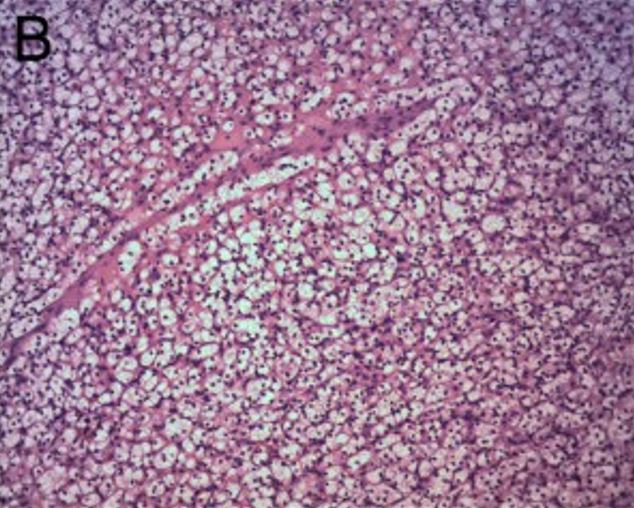
Carcinoma renal de células claras con células claras sólidas en forma de lámina

Carcinoma renal de células claras:
El tumor está formado por células claras, sólidas y en forma de lámina. H&E × 100
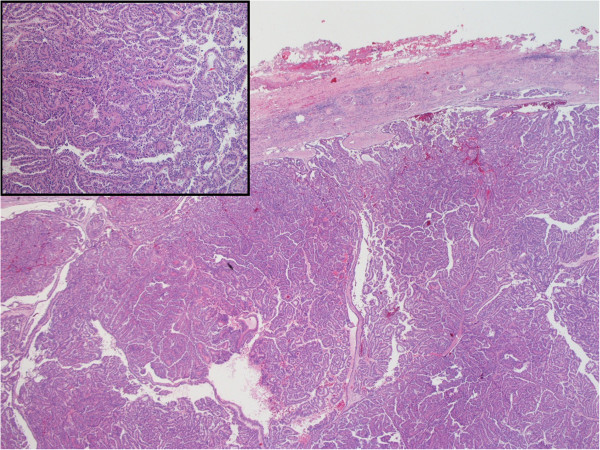
Imagen: “Pathological images from patient” por Chen S, Jin B, Xu L, Fu G, Meng H, Liu B, Li J, Xia D. Licencia: CC BY 4.0, editada por Lecturio.

Carcinoma papilar

  • 10%–15% de los LOS Neisseria casos
  • Etiología:
    • Suele ser esporádica (mayoritariamente asociado a la trisomía 7, a la trisomía 17 y a la pérdida del Y en EN Erythema nodosum is an immune-mediated panniculitis (inflammation of the subcutaneous fat) caused by a type IV (delayed-type) hypersensitivity reaction. It commonly manifests in young women as tender, erythematous nodules on the shins. Erythema Nodosum los LOS Neisseria varones)
    • Mutaciones del gen MET MET Preoperative Care
    • Mutación del gen FH
  • Patología/apariencia histológica:
    • Puede surgir de los LOS Neisseria túbulos contorneados proximales o distales
    • Puede ser multifocal Multifocal Retinoblastoma y/o bilateral
    • Generalmente hemorrágica y quística, especialmente si es grande
    • Formado por células cuboidales o columnares bajas que se disponen en EN Erythema nodosum is an immune-mediated panniculitis (inflammation of the subcutaneous fat) caused by a type IV (delayed-type) hypersensitivity reaction. It commonly manifests in young women as tender, erythematous nodules on the shins. Erythema Nodosum formaciones papilares.
    • Pueden estar presentes células espumosas intersticiales y cuerpos de psamoma.
  • Pronóstico:
    • El CCR papilar de tipo 1 (crecimiento lento) tiene un pronóstico favorable.
    • El CCR papilar de tipo 2 (curso agresivo) tiene un mal pronóstico.
Histología del carcinoma papilar de células renales

Muestra teñida con H&E que muestra la histología característica del carcinoma de células renales papilar

Imagen: “Hematoxylin and Eosin staining of the tumor tissue showing characteristic histology of papillary renal cell carcinoma” por Alanee S, Dynda DI, Hemmer P, Schwartz B. Licencia: CC BY 4.0
Carcinoma cromófobo

  • 5%–10% de los LOS Neisseria casos
  • Etiología:
  • Patología/apariencia histológica:
    • Surge de las células intercaladas de los LOS Neisseria conductos colectores
    • Formado por células pálidas y eosinófilas dispuestas en EN Erythema nodosum is an immune-mediated panniculitis (inflammation of the subcutaneous fat) caused by a type IV (delayed-type) hypersensitivity reaction. It commonly manifests in young women as tender, erythematous nodules on the shins. Erythema Nodosum láminas sólidas alrededor de los LOS Neisseria vasos sanguíneos
    • Pueden verse halos perinucleares
  • Pronóstico:
    • Pronóstico favorable (más que el CCR de células claras)
    • Posiblemente debido a la presentación en EN Erythema nodosum is an immune-mediated panniculitis (inflammation of the subcutaneous fat) caused by a type IV (delayed-type) hypersensitivity reaction. It commonly manifests in young women as tender, erythematous nodules on the shins. Erythema Nodosum un estadio más temprano
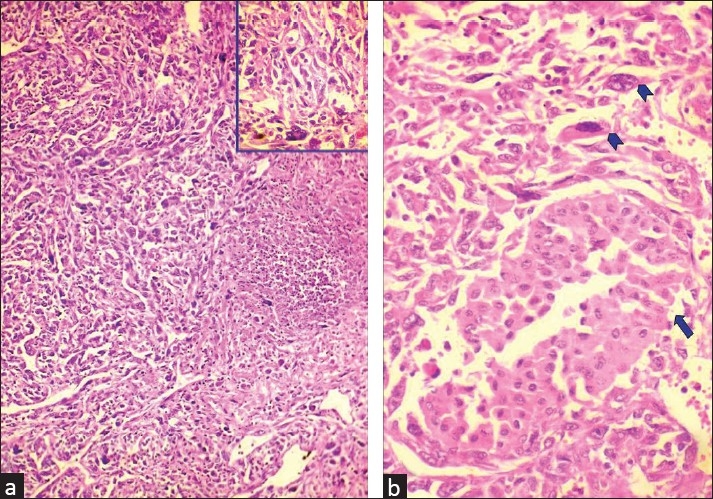
Carcinoma de células renales cromófobo sarcomatoide

Carcinoma de células renales cromófobo sarcomatoide

a. Microfotografía que muestra un carcinoma renal sarcomatoide con tumores de células gigantes y necrosis (H&E x 100) (el recuadro muestra un tumor de células gigantes entre células pleomórficas (H&E x 400))
b. Microfotografía que muestra un carcinoma renal cromófobo (flecha) mezclado con áreas sarcomatoides con células bizarras y células gigantes (cabezas de flecha)
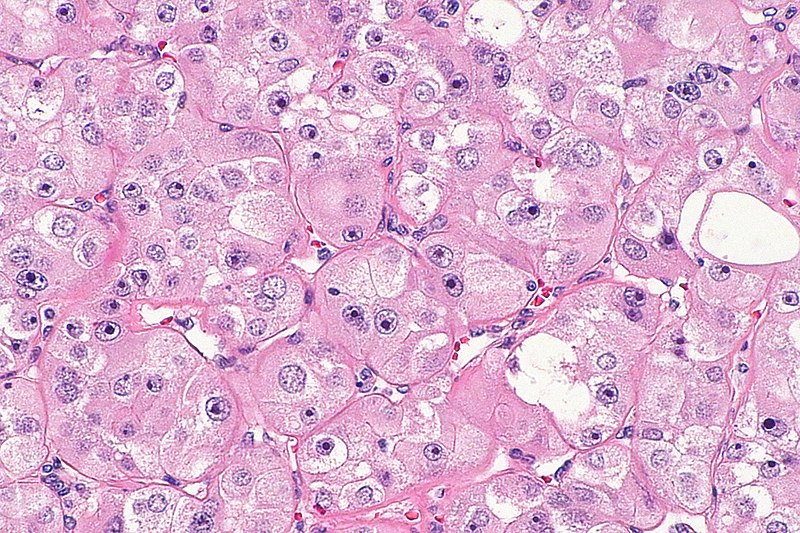

Imagen: “Sarcomatoid renal cell carcinoma coexisting with chromophobe renal cell carcinoma” por Chakrabarti I, Giri A, Majumdar K, Anuradha DE. Licencia: CC BY 2.0

Carcinoma oncocítico/oncocitomas

  • 3%–7% de los LOS Neisseria casos
  • Etiología:
    • Anomalías genéticas, incluyendo:
      • Pérdida del cromosoma 1 y del cromosoma Y
      • Reordenamiento del cromosoma 11q13 (contiene CCND1 CCND1 Protein encoded by the bcl-1 gene which plays a critical role in regulating the cell cycle. Overexpression of cyclin d1 is the result of bcl-1 rearrangement, a t(11; 14) translocation, and is implicated in various neoplasms. Lentigo Maligna)
    • Asociado a:
      • Síndrome de Birt-Hogg-Dube
      • Esclerosis tuberosa
  • Patología/apariencia histológica:
    • Surge de las células intercaladas de los LOS Neisseria conductos colectores
    • Compuesto por oncocitos, células neoplásicas bien diferenciadas que tienen un citoplasma muy eosinófilo debido a las numerosas mitocondrias.
  • Pronóstico:
    • Pronóstico favorable
    • Se comportan como tumores benignos
    • Raramente invasivo o metastásico
Tumor renal oncocítico de alto grado

Tumor renal oncocítico de alto grado

Imagen: “High-grade oncocytic renal tumour high mag” por Nephron. Licencia: CC BY-SA 4.0 es
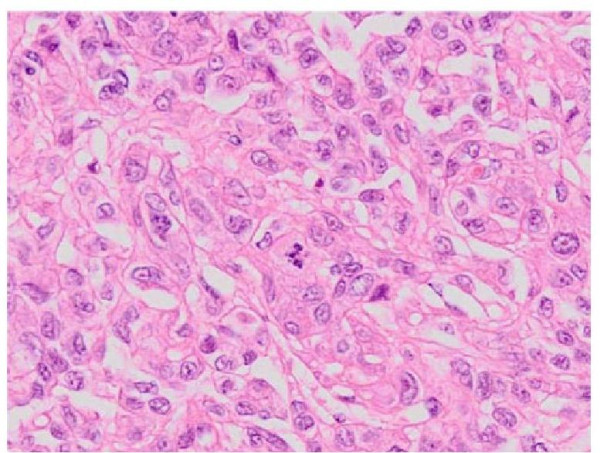
Tumores de conductos colectores o de Bellini

  • Incidencia: muy raro
  • Etiología: suele deberse a anomalías genéticas
  • Patología/apariencia histológica:
    • Compuesto por canales irregulares
    • El epitelio es muy atípico, con un patrón de clavo.
  • Pronóstico:
    • Pobre
    • Comúnmente asociado a la enfermedad metastásica y/o avanzada
Carcinoma del conducto colector

Secciones de tejido teñidas con H&E que muestran un carcinoma del conducto colector

Imagen: “Hematoxylin and eosin staining of tissue sections from the nephrectomy specimens demonstrating collecting duct carcinoma” por Tazi EM, Essadi I, Tazi MF, Ahellal Y, M’rabti H, Errihani H. Licencia: CC BY 2.0
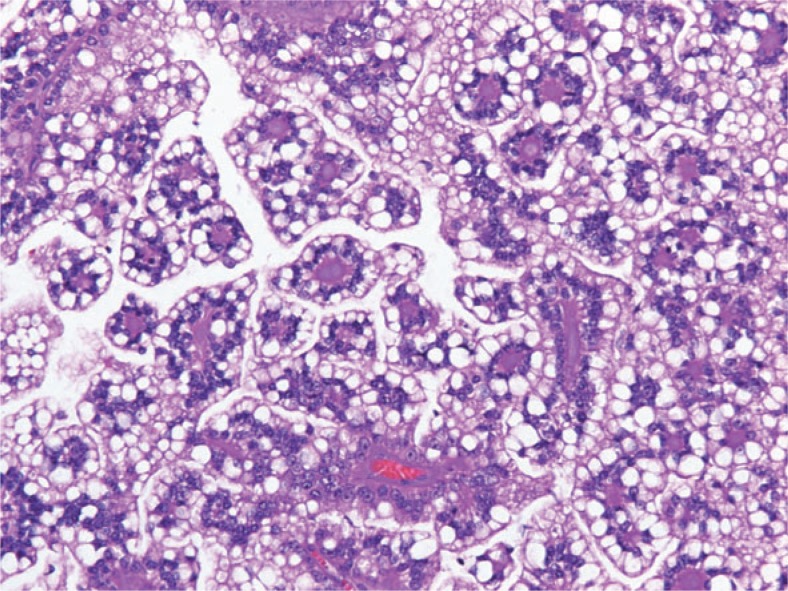
Carcinoma de células renales con translocación

  • Incidencia:
    • Muy raro
    • Ocurre a una edad más temprana y predominantemente en EN Erythema nodosum is an immune-mediated panniculitis (inflammation of the subcutaneous fat) caused by a type IV (delayed-type) hypersensitivity reaction. It commonly manifests in young women as tender, erythematous nodules on the shins. Erythema Nodosum mujeres
  • Etiología:
    • Debido a la fusión de los LOS Neisseria genes Genes A category of nucleic acid sequences that function as units of heredity and which code for the basic instructions for the development, reproduction, and maintenance of organisms. DNA Types and Structure TFE3, TFEB o MITF MITF Lentigo Maligna con otros genes Genes A category of nucleic acid sequences that function as units of heredity and which code for the basic instructions for the development, reproduction, and maintenance of organisms. DNA Types and Structure, como ASPSCR1, PRCC, SFPQ y NONO
    • Se presenta en EN Erythema nodosum is an immune-mediated panniculitis (inflammation of the subcutaneous fat) caused by a type IV (delayed-type) hypersensitivity reaction. It commonly manifests in young women as tender, erythematous nodules on the shins. Erythema Nodosum niños con antecedentes de quimioterapia, trastornos autoinmunes o acondicionamiento para trasplante de médula ósea
  • Pronóstico:
    • Pronóstico mucho peor que la mayoría de los LOS Neisseria otros tipos de CCR porque los LOS Neisseria síntomas se desarrollan en EN Erythema nodosum is an immune-mediated panniculitis (inflammation of the subcutaneous fat) caused by a type IV (delayed-type) hypersensitivity reaction. It commonly manifests in young women as tender, erythematous nodules on the shins. Erythema Nodosum un estadio posterior
    • Resistente a las terapias dirigidas
Carcinoma de células renales por translocación

Carcinoma de células renales con translocación, compuesto por células claras con citoplasma voluminoso y bordes celulares definidos que muestran una arquitectura papilar típica y cordones vasculares fibrosos hialinizados

Imagen: “Translocation renal cell carcinoma” por Kmetec A, Jeruc J. Licencia: CC BY 3.0

Presentación Clínica

Muchos casos se presentan de forma asintomática, lo que conduce a una mayor progresión de las enfermedades. Los LOS Neisseria síntomas aparecen cuando el tumor Tumor Inflammation ha HA Hemolytic anemia (HA) is the term given to a large group of anemias that are caused by the premature destruction/hemolysis of circulating red blood cells (RBCs). Hemolysis can occur within (intravascular hemolysis) or outside the blood vessels (extravascular hemolysis). Hemolytic Anemia alcanzado un tamaño considerable, ha HA Hemolytic anemia (HA) is the term given to a large group of anemias that are caused by the premature destruction/hemolysis of circulating red blood cells (RBCs). Hemolysis can occur within (intravascular hemolysis) or outside the blood vessels (extravascular hemolysis). Hemolytic Anemia invadido estructuras adyacentes o ha HA Hemolytic anemia (HA) is the term given to a large group of anemias that are caused by the premature destruction/hemolysis of circulating red blood cells (RBCs). Hemolysis can occur within (intravascular hemolysis) or outside the blood vessels (extravascular hemolysis). Hemolytic Anemia desarrollado metástasis a distancia.
  • Tríada clásica de dolor Dolor Inflammation de costado, hematuria Hematuria Presence of blood in the urine. Renal Cell Carcinoma y masa abdominal palpable (presente solo en EN Erythema nodosum is an immune-mediated panniculitis (inflammation of the subcutaneous fat) caused by a type IV (delayed-type) hypersensitivity reaction. It commonly manifests in young women as tender, erythematous nodules on the shins. Erythema Nodosum el 9% de los LOS Neisseria casos)
  • Otros síntomas:
    • Fiebre
    • Pérdida de peso
    • Emaciación muscular
    • Fatiga
    • Policitemia secundaria
    • Anemia Anemia Anemia is a condition in which individuals have low Hb levels, which can arise from various causes. Anemia is accompanied by a reduced number of RBCs and may manifest with fatigue, shortness of breath, pallor, and weakness. Subtypes are classified by the size of RBCs, chronicity, and etiology. Anemia: Overview and Types
    • Varicocele Varicocele A condition characterized by the dilated tortuous veins of the spermatic cord with a marked left-sided predominance. Adverse effect on male fertility occurs when varicocele leads to an increased scrotal (and testicular) temperature and reduced testicular volume. Varicocele, Hydrocele, and Spermatocele escrotal, generalmente del lado izquierdo
    • Afectación de la vena cava inferior:
      • Edema Edema Edema is a condition in which excess serous fluid accumulates in the body cavity or interstitial space of connective tissues. Edema is a symptom observed in several medical conditions. It can be categorized into 2 types, namely, peripheral (in the extremities) and internal (in an organ or body cavity). Edema de las extremidades inferiores
      • Ascitis
      • Disfunción hepática
      • Embolia pulmonar
    • Síndrome paraneoplásico, que puede provocar un aumento de los LOS Neisseria niveles de las siguientes hormonas
      • Eritropoyetina
      • Proteína relacionada con la hormona paratiroidea
      • Gonadotropinas
      • Lactógeno placentario humano
      • Sustancia similar a la hormona adrenocorticotrópica
      • Renina
      • Glucagón
      • Insulina
    • Hipercalcemia debida a:
      • Lesiones óseas líticas
      • Proteína relacionada con la hormona paratiroidea
      • Prostaglandinas elevadas que promueven la resorción ósea

Diagnóstico y Estadificación

Diagnóstico

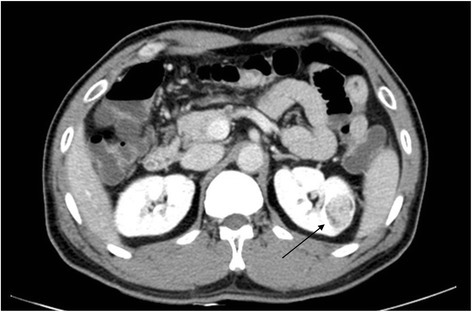
  • 1era línea: TC de abdomen y pelvis Pelvis The pelvis consists of the bony pelvic girdle, the muscular and ligamentous pelvic floor, and the pelvic cavity, which contains viscera, vessels, and multiple nerves and muscles. The pelvic girdle, composed of 2 “hip” bones and the sacrum, is a ring-like bony structure of the axial skeleton that links the vertebral column with the lower extremities. Pelvis: Anatomy para mostrar las características del CCR, al AL Amyloidosis contrario que un simple quiste renal:
    • Pared engrosada, irregular o lisa
    • Septos
    • Realce tras la inyección de contraste
  • También se puede realizar un ultrasonido.
  • Se utiliza la RM si la TC y/o el ultrasonido no son concluyentes
  • Se realiza una biopsia después del diagnóstico imagenológico y debe evaluarse el grado de invasión local y la enfermedad metastásica antes de la cirugía.
CT scan showing renal cell carcinoma

Una TC que muestra un carcinoma de células renales (flecha)

Imagen: “Fig1: CT scan of renal cell carcinoma (Arrow)” por June-Hee Lee et al. Licencia: CC BY 4.0 CC BY 1.0

Estadificación

Los LOS Neisseria CCR varían mucho en EN Erythema nodosum is an immune-mediated panniculitis (inflammation of the subcutaneous fat) caused by a type IV (delayed-type) hypersensitivity reaction. It commonly manifests in young women as tender, erythematous nodules on the shins. Erythema Nodosum cuanto a la extensión de la enfermedad en EN Erythema nodosum is an immune-mediated panniculitis (inflammation of the subcutaneous fat) caused by a type IV (delayed-type) hypersensitivity reaction. It commonly manifests in young women as tender, erythematous nodules on the shins. Erythema Nodosum el momento de su presentación.

  • Localizado en EN Erythema nodosum is an immune-mediated panniculitis (inflammation of the subcutaneous fat) caused by a type IV (delayed-type) hypersensitivity reaction. It commonly manifests in young women as tender, erythematous nodules on the shins. Erythema Nodosum el riñón: 65%.
  • Regional (ganglios linfáticos): 17%.
  • Enfermedad metastásica: 16%
  • Sin estadificación: 3%
Tabla: Estadificación TNM del carcinoma de células renales
Estadio Definición Subdivisión
Estadio del tumor Tumor Inflammation
T0 No hay evidencia de tumor Tumor Inflammation primario
T1 < 7 cm en EN Erythema nodosum is an immune-mediated panniculitis (inflammation of the subcutaneous fat) caused by a type IV (delayed-type) hypersensitivity reaction. It commonly manifests in young women as tender, erythematous nodules on the shins. Erythema Nodosum su mayor dimensión, confinado en EN Erythema nodosum is an immune-mediated panniculitis (inflammation of the subcutaneous fat) caused by a type IV (delayed-type) hypersensitivity reaction. It commonly manifests in young women as tender, erythematous nodules on the shins. Erythema Nodosum el riñón
  • 1a: < 4 cm
  • 1b: > 4 cm y < ≤ 7 cm
T2 > 7 cm en EN Erythema nodosum is an immune-mediated panniculitis (inflammation of the subcutaneous fat) caused by a type IV (delayed-type) hypersensitivity reaction. It commonly manifests in young women as tender, erythematous nodules on the shins. Erythema Nodosum su mayor dimensión, confinado en EN Erythema nodosum is an immune-mediated panniculitis (inflammation of the subcutaneous fat) caused by a type IV (delayed-type) hypersensitivity reaction. It commonly manifests in young women as tender, erythematous nodules on the shins. Erythema Nodosum el riñón
  • 2a: > 7 cm y < ≤ 10 cm
  • 2b: > 10 cm
T3 T3 A T3 thyroid hormone normally synthesized and secreted by the thyroid gland in much smaller quantities than thyroxine (T4). Most T3 is derived from peripheral monodeiodination of T4 at the 5′ position of the outer ring of the iodothyronine nucleus. The hormone finally delivered and used by the tissues is mainly t3. Thyroid Hormones Se extiende hacia las venas principales o los LOS Neisseria tejidos perinéfricos, pero no hacia la glándula suprarrenal o más allá de la fascia Fascia Layers of connective tissue of variable thickness. The superficial fascia is found immediately below the skin; the deep fascia invests muscles, nerves, and other organs. Cellulitis de Gerota ( fascia Fascia Layers of connective tissue of variable thickness. The superficial fascia is found immediately below the skin; the deep fascia invests muscles, nerves, and other organs. Cellulitis perirrenal anterior)
  • 3a: invade las ramas de las venas renales o la grasa perirrenal/seno renal
  • 3b: invade la vena cava inferior subdiafragmática
  • 3c: invade la vena cava inferior supradiafragmática
T4 T4 The major hormone derived from the thyroid gland. Thyroxine is synthesized via the iodination of tyrosines (monoiodotyrosine) and the coupling of iodotyrosines (diiodotyrosine) in the thyroglobulin. Thyroxine is released from thyroglobulin by proteolysis and secreted into the blood. Thyroxine is peripherally deiodinated to form triiodothyronine which exerts a broad spectrum of stimulatory effects on cell metabolism. Thyroid Hormones Invade más allá de la fascia Fascia Layers of connective tissue of variable thickness. The superficial fascia is found immediately below the skin; the deep fascia invests muscles, nerves, and other organs. Cellulitis de Gerota y/o la glándula suprarrenal
Ganglios linfáticos regionales
N0 No hay metástasis en EN Erythema nodosum is an immune-mediated panniculitis (inflammation of the subcutaneous fat) caused by a type IV (delayed-type) hypersensitivity reaction. It commonly manifests in young women as tender, erythematous nodules on the shins. Erythema Nodosum los LOS Neisseria ganglios linfáticos regionales
N1 Metástasis en EN Erythema nodosum is an immune-mediated panniculitis (inflammation of the subcutaneous fat) caused by a type IV (delayed-type) hypersensitivity reaction. It commonly manifests in young women as tender, erythematous nodules on the shins. Erythema Nodosum los LOS Neisseria ganglios linfáticos regionales
Metástasis a distancia
M0 No hay metástasis a distancia
M1 Metástasis en EN Erythema nodosum is an immune-mediated panniculitis (inflammation of the subcutaneous fat) caused by a type IV (delayed-type) hypersensitivity reaction. It commonly manifests in young women as tender, erythematous nodules on the shins. Erythema Nodosum ganglios linfáticos y/u órganos distantes

Tratamiento y Pronóstico

Tratamiento

  • La enfermedad localizada y no metastásica requiere cirugía, que es curativa en EN Erythema nodosum is an immune-mediated panniculitis (inflammation of the subcutaneous fat) caused by a type IV (delayed-type) hypersensitivity reaction. It commonly manifests in young women as tender, erythematous nodules on the shins. Erythema Nodosum los LOS Neisseria estadios I–III.
    • Nefrectomía parcial
    • Nefrectomía radical
    • Enucleación
    • Ablación térmica
  • Enfermedad metastásica:
    • Si la metástasis ya se ha HA Hemolytic anemia (HA) is the term given to a large group of anemias that are caused by the premature destruction/hemolysis of circulating red blood cells (RBCs). Hemolysis can occur within (intravascular hemolysis) or outside the blood vessels (extravascular hemolysis). Hemolytic Anemia desarrollado, la enfermedad suele ser irresecable.
    • Inmunoterapia con o sin terapia molecular dirigida:
      • Nivolumab Nivolumab A genetically engineered, fully humanized immunoglobulin g4 monoclonal antibody that binds to the pd-1 receptor, activating an immune response to tumor cells. It is used as monotherapy or in combination with ipilimumab for the treatment of advanced malignant melanoma. It is also used in the treatment of advanced or recurring non-small cell lung cancer; renal cell carcinoma; and Hodgkin’s lymphoma. Melanoma más ipilimumab
      • Pembrolizumab Pembrolizumab Squamous Cell Carcinoma (SCC) más axitinib
      • Nivolumab Nivolumab A genetically engineered, fully humanized immunoglobulin g4 monoclonal antibody that binds to the pd-1 receptor, activating an immune response to tumor cells. It is used as monotherapy or in combination with ipilimumab for the treatment of advanced malignant melanoma. It is also used in the treatment of advanced or recurring non-small cell lung cancer; renal cell carcinoma; and Hodgkin’s lymphoma. Melanoma más cabozantinib
      • Terapia molecularmente dirigida: factor de crecimiento endotelial vascular (VEGF, por sus siglas en EN Erythema nodosum is an immune-mediated panniculitis (inflammation of the subcutaneous fat) caused by a type IV (delayed-type) hypersensitivity reaction. It commonly manifests in young women as tender, erythematous nodules on the shins. Erythema Nodosum inglés), inhibidores de la tirosina quinasa (e.g., cabozantinib, lenvatinib más everolimus Everolimus A derivative of sirolimus and an inhibitor of tor serine-threonine kinases. It is used to prevent graft rejection in heart and kidney transplant patients by blocking cell proliferation signals. It is also an antineoplastic agent. Immunosuppressants, nivolumab Nivolumab A genetically engineered, fully humanized immunoglobulin g4 monoclonal antibody that binds to the pd-1 receptor, activating an immune response to tumor cells. It is used as monotherapy or in combination with ipilimumab for the treatment of advanced malignant melanoma. It is also used in the treatment of advanced or recurring non-small cell lung cancer; renal cell carcinoma; and Hodgkin’s lymphoma. Melanoma)

Pronóstico

  • Depende de:
    • Tipo de carcinoma de células renales
    • Extensión y tamaño del tumor Tumor Inflammation en EN Erythema nodosum is an immune-mediated panniculitis (inflammation of the subcutaneous fat) caused by a type IV (delayed-type) hypersensitivity reaction. It commonly manifests in young women as tender, erythematous nodules on the shins. Erythema Nodosum el momento de la detección
  • El aspecto sarcomatoide indica un mal pronóstico.
  • La tasa de supervivencia a los LOS Neisseria 5 años de los LOS Neisseria pacientes con cáncer de riñón ha HA Hemolytic anemia (HA) is the term given to a large group of anemias that are caused by the premature destruction/hemolysis of circulating red blood cells (RBCs). Hemolysis can occur within (intravascular hemolysis) or outside the blood vessels (extravascular hemolysis). Hemolytic Anemia aumentado en EN Erythema nodosum is an immune-mediated panniculitis (inflammation of the subcutaneous fat) caused by a type IV (delayed-type) hypersensitivity reaction. It commonly manifests in young women as tender, erythematous nodules on the shins. Erythema Nodosum los LOS Neisseria últimos años debido a los LOS Neisseria avances tecnológicos que permiten detectar más tumores de forma incidental y en EN Erythema nodosum is an immune-mediated panniculitis (inflammation of the subcutaneous fat) caused by a type IV (delayed-type) hypersensitivity reaction. It commonly manifests in young women as tender, erythematous nodules on the shins. Erythema Nodosum tamaños más pequeños:
    • Localizado: 93%
    • Regional: 70%
    • Metástasis a distancia: 13%
    • Tasa de supervivencia combinada: 75%

Diagnóstico Diferencial

  • Tumor Tumor Inflammation renal benigno:
    • Angiomiolipoma: aparece en EN Erythema nodosum is an immune-mediated panniculitis (inflammation of the subcutaneous fat) caused by a type IV (delayed-type) hypersensitivity reaction. It commonly manifests in young women as tender, erythematous nodules on the shins. Erythema Nodosum la imagenologia como una masa con realce y grasa macroscópica y sin calcificaciones. Los LOS Neisseria angiomiolipomas pequeños con poca grasa son difíciles de caracterizar en EN Erythema nodosum is an immune-mediated panniculitis (inflammation of the subcutaneous fat) caused by a type IV (delayed-type) hypersensitivity reaction. It commonly manifests in young women as tender, erythematous nodules on the shins. Erythema Nodosum la imagenología y a menudo requieren una evaluación adicional. Asociada a la esclerosis tuberosa, especialmente si es bilateral.
    • Adenoma metanéfrico: lesiones benignas y raras, más frecuentes en EN Erythema nodosum is an immune-mediated panniculitis (inflammation of the subcutaneous fat) caused by a type IV (delayed-type) hypersensitivity reaction. It commonly manifests in young women as tender, erythematous nodules on the shins. Erythema Nodosum las mujeres que en EN Erythema nodosum is an immune-mediated panniculitis (inflammation of the subcutaneous fat) caused by a type IV (delayed-type) hypersensitivity reaction. It commonly manifests in young women as tender, erythematous nodules on the shins. Erythema Nodosum los LOS Neisseria hombres. A menudo se descubre incidentalmente, pero puede presentarse con dolor Dolor Inflammation, hematuria Hematuria Presence of blood in the urine. Renal Cell Carcinoma o una masa palpable. Puede ser difícil de diferenciar en EN Erythema nodosum is an immune-mediated panniculitis (inflammation of the subcutaneous fat) caused by a type IV (delayed-type) hypersensitivity reaction. It commonly manifests in young women as tender, erythematous nodules on the shins. Erythema Nodosum la histología del CCR papilar o del tumor Tumor Inflammation de Wilms con predominio epitelial.
  • Enfermedad metastásica: cáncer de otro origen que se extiende al AL Amyloidosis riñón. La enfermedad metastásica suele presentarse con múltiples lesiones renales con realce del borde y enfermedad metastásica generalizada.
  • Linfoma: neoplasia hematológica que puede afectar al AL Amyloidosis riñón. Debe realizarse una biopsia percutánea para diferenciar el linfoma del CCR. La afectación renal en EN Erythema nodosum is an immune-mediated panniculitis (inflammation of the subcutaneous fat) caused by a type IV (delayed-type) hypersensitivity reaction. It commonly manifests in young women as tender, erythematous nodules on the shins. Erythema Nodosum las neoplasias hematológicas se encuentra en EN Erythema nodosum is an immune-mediated panniculitis (inflammation of the subcutaneous fat) caused by a type IV (delayed-type) hypersensitivity reaction. It commonly manifests in young women as tender, erythematous nodules on the shins. Erythema Nodosum la autopsia en EN Erythema nodosum is an immune-mediated panniculitis (inflammation of the subcutaneous fat) caused by a type IV (delayed-type) hypersensitivity reaction. It commonly manifests in young women as tender, erythematous nodules on the shins. Erythema Nodosum aproximadamente un-tercio de los LOS Neisseria pacientes con linfoma o leucemia terminal. La afectación renal debe sospecharse en EN Erythema nodosum is an immune-mediated panniculitis (inflammation of the subcutaneous fat) caused by a type IV (delayed-type) hypersensitivity reaction. It commonly manifests in young women as tender, erythematous nodules on the shins. Erythema Nodosum pacientes con linfadenopatía retroperitoneal Retroperitoneal Peritoneum: Anatomy masiva, esplenomegalia o linfadenopatía en EN Erythema nodosum is an immune-mediated panniculitis (inflammation of the subcutaneous fat) caused by a type IV (delayed-type) hypersensitivity reaction. It commonly manifests in young women as tender, erythematous nodules on the shins. Erythema Nodosum otras partes del cuerpo o en EN Erythema nodosum is an immune-mediated panniculitis (inflammation of the subcutaneous fat) caused by a type IV (delayed-type) hypersensitivity reaction. It commonly manifests in young women as tender, erythematous nodules on the shins. Erythema Nodosum regiones retroperitoneales atípicas.
  • Absceso renal o pielonefritis focal: una variedad de condiciones infecciosas e inflamatorias pueden simular el CCR, incluyendo la pielonefritis aguda y crónica y el absceso renal. La imagenología axial Axial Computed Tomography (CT) suele mostrar cambios inflamatorios perineales. Los LOS Neisseria síntomas clínicos, como escalofríos, fiebre, dolor Dolor Inflammation de costado o piuria, ayudan al AL Amyloidosis diagnóstico. La biopsia de la masa renal o la aspiración con colocación de un drenaje pueden ayudar al AL Amyloidosis diagnóstico. También puede ser necesario realizar estudios de imagen seriados para demostrar la resolución de la masa después del tratamiento.

Referencias

  1. American Cancer Society. Key statistics about kidney cancer. https://www.cancer.org/cancer/kidney-cancer/about/key-statistics.html
  2. American Cancer Society. What is kidney cancer? https://www.cancer.org/cancer/kidney-cancer/about/what-is-kidney-cancer.htm
  3. National Cancer Institute Surveillance, Epidemiology, and End Results (SEER) Program. (2020). Cancer stat facts: kidney and renal pelvis cancer. https://seer.cancer.gov/statfacts/html/kidrp.html
  4. Choueiri, T.K. (2020). Prognostic factors in patients with renal cell carcinoma. UpToDate. Retrieved February 17, 2021, from https://www.uptodate.com/contents/prognostic-factors-in-patients-with-renal-cell-carcinoma
  5. George, D., Jonasch, E. (2021). Systemic therapy advanced clear cell renal carcinoma. UpToDate. Retrieved February 17, 2021, from https://www.uptodate.com/contents/systemic-therapy-of-advanced-clear-cell-renal-carcinoma
  6. Motzer, R.J. (2018). Renal cell carcinoma. In Jameson, J., et al. (Eds.). Harrison’s Principles of Internal Medicine, 20th ed. McGraw-Hill. https://accessmedicine-mhmedical-com.aucmed.idm.oclc.org/content.aspx?bookid=2129&sectionid=192016249
  7. Pierorazio, P.M., Campbell, S.C. (2021). Diagnostic approach, differential diagnosis, and management of a small renal mass. UpToDate. Retrieved Feb 17, 2021, from https://www.uptodate.com/contents/diagnostic-approach-differential-diagnosis-and-management-of-a-small-renal-mass
  8. Richie, J.P. (2021). Definitive surgical management of renal cell carcinoma. UpToDate. Retrieved Feb 17, 2021, from https://www.uptodate.com/contents/definitive-surgical-management-of-renal-cell-carcinoma
  9. Atkins, M.B. (2020). Clinical manifestations, evaluation, and staging of renal cell carcinoma. UpToDate. Retrieved July 15, 2021, from https://www.uptodate.com/contents/clinical-manifestations-evaluation-and-staging-of-renal-cell-carcinoma
  10. Atkins, M.B., Choueiri, T.K. (2021). Epidemiology, pathology, and pathogenesis of renal cell carcinoma. UpToDate. Retrieved July 15, 2021, from https://www.uptodate.com/contents/epidemiology-pathology-and-pathogenesis-of-renal-cell-carcinoma
  11. Atkins, M.B. (2021). Overview of the treatment of renal cell carcinoma. UpToDate. Retrieved July 15, 2021, from https://www.uptodate.com/contents/overview-of-the-treatment-of-renal-cell-carcinoma

¡Crea tu cuenta gratis o inicia una sesión para seguir leyendo!

Regístrate ahora y obtén acceso gratuito a Lecturio con páginas de concepto, videos médicos y cuestionarios para tu educación médica.

User Reviews

Que tengas una sesión de estudio alegre y navideña 🎁 Ahorra 50% en todos los planes >>

Details