Domina Conceptos Médicos

Estudia para la escuela de medicina y tus examenes con Lecturio.

Cáncer Urológico

El cáncer urológico es un término amplio que involucra el cáncer de las vías urinarias masculinas y femeninas y los LOS Neisseria órganos reproductores masculinos. Los LOS Neisseria factores de riesgo para el cáncer urológico son el tabaquismo; exposición a sustancias químicas como la bencidina, la beta-naftilamina y el arsénico; predisposición genética; e irritación crónica del sistema urinario. La presentación clínica incluye hematuria Hematuria Presence of blood in the urine. Renal Cell Carcinoma indolora, dolor Dolor Inflammation de costado y/o suprapúbico, disuria y pérdida de peso significativa e inexplicable. El estándar de oro para el diagnóstico es la endoscopia de las estructuras urológicas (cistoscopia, cistouretroscopia, ureteropieloscopia) con biopsia. Los LOS Neisseria estudios adicionales incluyen imagenología radiológica, que brinda información sobre la invasión del tumor Tumor Inflammation y la propagación de la enfermedad a otros sitios u órganos. El tratamiento incluye cirugía, quimioterapia, radioterapia y tratamiento de soporte, según la localización, extensión e histología.

Last updated: Dec 15, 2025

Editorial responsibility: Stanley Oiseth, Lindsay Jones, Evelin Maza

Descripción General

Definición

Crecimiento de células anormales del revestimiento de los LOS Neisseria órganos de las vías urinarias masculinas y femeninas y de los LOS Neisseria órganos reproductores masculinos.
Epidemiología

  • El cáncer de vejiga es el cáncer urológico más frecuente.
  • La incidencia en EN Erythema nodosum is an immune-mediated panniculitis (inflammation of the subcutaneous fat) caused by a type IV (delayed-type) hypersensitivity reaction. It commonly manifests in young women as tender, erythematous nodules on the shins. Erythema Nodosum hombres es 4 veces mayor que en EN Erythema nodosum is an immune-mediated panniculitis (inflammation of the subcutaneous fat) caused by a type IV (delayed-type) hypersensitivity reaction. It commonly manifests in young women as tender, erythematous nodules on the shins. Erythema Nodosum mujeres.
  • La incidencia de cáncer de vejiga aumenta con la edad, con una media de edad al AL Amyloidosis momento del diagnóstico de 73 años.

Factores de riesgo

  • Fumar tabaco (factor de riesgo más común para el cáncer de vejiga urotelial en EN Erythema nodosum is an immune-mediated panniculitis (inflammation of the subcutaneous fat) caused by a type IV (delayed-type) hypersensitivity reaction. It commonly manifests in young women as tender, erythematous nodules on the shins. Erythema Nodosum los LOS Neisseria Estados Unidos)
  • Exposición a largo plazo a productos químicos (bencidina, metales pesados, tinte de anilina y beta-naftilamina)
  • Edad > 55 años
  • Inflamación crónica del tracto urinario debido a:
    • Esquistosomiasis vesical
    • Infecciones recurrentes o crónicas del tracto urinario
    • Fibrosis Fibrosis Any pathological condition where fibrous connective tissue invades any organ, usually as a consequence of inflammation or other injury. Bronchiolitis Obliterans renal por hierbas chinas (especialmente aquellas que contienen ácido aristolóquico), nefropatía
    • Nefropatía endémica de los LOS Neisseria Balcanes (proceso inflamatorio del intersticio renal observado en EN Erythema nodosum is an immune-mediated panniculitis (inflammation of the subcutaneous fat) caused by a type IV (delayed-type) hypersensitivity reaction. It commonly manifests in young women as tender, erythematous nodules on the shins. Erythema Nodosum la región de los LOS Neisseria Balcanes)
  • Antecedentes de exposición a la radiación en EN Erythema nodosum is an immune-mediated panniculitis (inflammation of the subcutaneous fat) caused by a type IV (delayed-type) hypersensitivity reaction. It commonly manifests in young women as tender, erythematous nodules on the shins. Erythema Nodosum el área pélvica
  • Tratamiento previo con ciclofosfamida
  • Uso de fenacetina (analgésico)
  • Arsénico en EN Erythema nodosum is an immune-mediated panniculitis (inflammation of the subcutaneous fat) caused by a type IV (delayed-type) hypersensitivity reaction. It commonly manifests in young women as tender, erythematous nodules on the shins. Erythema Nodosum el agua potable
  • Predisposición genética:
    • Mutaciones en EN Erythema nodosum is an immune-mediated panniculitis (inflammation of the subcutaneous fat) caused by a type IV (delayed-type) hypersensitivity reaction. It commonly manifests in young women as tender, erythematous nodules on the shins. Erythema Nodosum el gen RB1, TP53 o PTEN
    • Síndrome de Lynch (cáncer colorrectal hereditario no polipósico)
  • Exposición al AL Amyloidosis virus Virus Viruses are infectious, obligate intracellular parasites composed of a nucleic acid core surrounded by a protein capsid. Viruses can be either naked (non-enveloped) or enveloped. The classification of viruses is complex and based on many factors, including type and structure of the nucleoid and capsid, the presence of an envelope, the replication cycle, and the host range. Virology del papiloma humano (VPH-16)

Tipos

  • Cáncer de vejiga
  • Carcinoma de células renales
  • Cáncer testicular
  • Cáncer de pene
  • Cáncer de uretra
  • Cáncer ureteral
  • Cáncer de próstata

Cáncer de Vejiga

Tipos histológicos

  • Carcinoma urotelial:
    • Anteriormente conocido como carcinoma de células de transición
    • Las células uroteliales se expanden y se contraen fisiológicamente cuando la vejiga está llena y vacía, respectivamente.
    • El tipo de cáncer de vejiga más común en EN Erythema nodosum is an immune-mediated panniculitis (inflammation of the subcutaneous fat) caused by a type IV (delayed-type) hypersensitivity reaction. It commonly manifests in young women as tender, erythematous nodules on the shins. Erythema Nodosum los LOS Neisseria Estados Unidos
  • Carcinoma de células escamosas:
    • Asociado con irritación crónica de la vejiga
    • Ocurre comúnmente en EN Erythema nodosum is an immune-mediated panniculitis (inflammation of the subcutaneous fat) caused by a type IV (delayed-type) hypersensitivity reaction. It commonly manifests in young women as tender, erythematous nodules on the shins. Erythema Nodosum países donde la incidencia de esquistosomiasis es alta
  • Adenocarcinoma:
    • Ocurre en EN Erythema nodosum is an immune-mediated panniculitis (inflammation of the subcutaneous fat) caused by a type IV (delayed-type) hypersensitivity reaction. It commonly manifests in young women as tender, erythematous nodules on the shins. Erythema Nodosum las células secretoras de moco de la vejiga
    • Tipo raro

Presentación clínica

Diagnóstico

  • Antecedentes y examen físico:
    • Masa pélvica sólida al AL Amyloidosis examen abdominal (signo tardío)
    • Agrandamiento de nódulos linfáticos en EN Erythema nodosum is an immune-mediated panniculitis (inflammation of the subcutaneous fat) caused by a type IV (delayed-type) hypersensitivity reaction. It commonly manifests in young women as tender, erythematous nodules on the shins. Erythema Nodosum el examen físico
    • Antecedentes de irritación vesical crónica
  • Análisis de orina:
    • Indicado para cualquier presentación de hematuria Hematuria Presence of blood in the urine. Renal Cell Carcinoma: considerado significativo si > 3 eritrocitos por campo de alta potencia
    • Morfología de los LOS Neisseria eritrocitos:
      • Dismórficos o formados en EN Erythema nodosum is an immune-mediated panniculitis (inflammation of the subcutaneous fat) caused by a type IV (delayed-type) hypersensitivity reaction. It commonly manifests in young women as tender, erythematous nodules on the shins. Erythema Nodosum cilindros (partículas cilíndricas o tubulares): probable enfermedad renal intrínseca
      • Eritrocitos de forma normal: infección, tumor Tumor Inflammation, cálculos u obstrucción
  • Citología de orina:
    • Se recolecta una muestra de orina y se observa bajo un microscopio para detectar células cancerosas.
    • Tiene baja sensibilidad
  • Cistoscopia + biopsia:
    • Estándar de oro para el diagnóstico inicial y la estadificación del cáncer de vejiga
    • Los LOS Neisseria tumores visibles o las lesiones sospechosas se biopsian o se resecan por vía transuretral.
    • Cistoscopia de fluorescencia: se acumula protoporfirina fotoactiva en EN Erythema nodosum is an immune-mediated panniculitis (inflammation of the subcutaneous fat) caused by a type IV (delayed-type) hypersensitivity reaction. It commonly manifests in young women as tender, erythematous nodules on the shins. Erythema Nodosum el tejido neoplásico.
  • Marcadores tumorales en EN Erythema nodosum is an immune-mediated panniculitis (inflammation of the subcutaneous fat) caused by a type IV (delayed-type) hypersensitivity reaction. It commonly manifests in young women as tender, erythematous nodules on the shins. Erythema Nodosum orina:
    • Una herramienta de diagnóstico no invasiva
    • Basados en EN Erythema nodosum is an immune-mediated panniculitis (inflammation of the subcutaneous fat) caused by a type IV (delayed-type) hypersensitivity reaction. It commonly manifests in young women as tender, erythematous nodules on the shins. Erythema Nodosum la expresión de proteínas relacionadas con el tumor Tumor Inflammation, ácido desoxirribonucleico (ADN), ácido ribonucleico (ARN), cambios de metilación o marcadores celulares
    • Más sensibles que la citología de orina, pero no lo suficientemente sensibles como para reemplazar la cistoscopia
  • Imagenología:
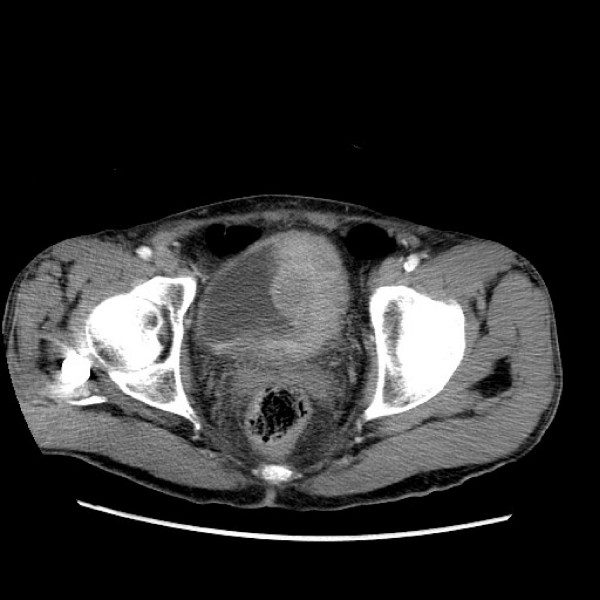
    • Tomografía computarizada (TC) (con y sin contraste)
      • Método de elección de imagenología para todos los LOS Neisseria estadios
      • Se realizan escaneos abdominales y pélvicos.
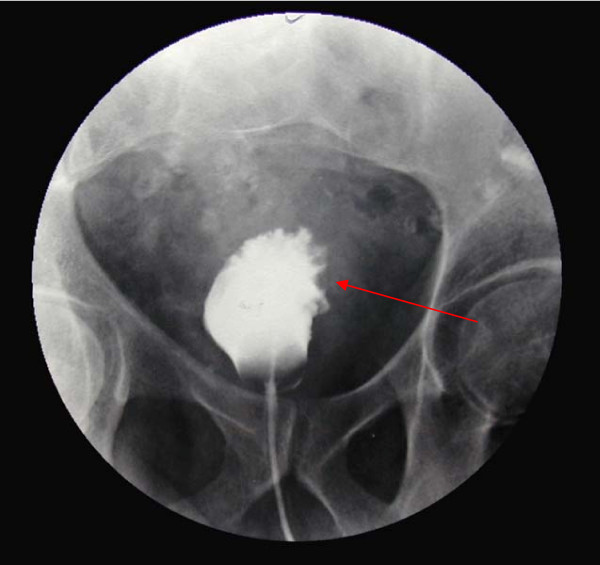
    • Pielografía intravenosa:
      • Puede visualizar tanto la vejiga como las vías urinarias superiores
      • Opción ideal para evaluar hematuria Hematuria Presence of blood in the urine. Renal Cell Carcinoma macroscópica o microscópica o para aquellos con sospecha de cáncer urotelial
      • Sensible en EN Erythema nodosum is an immune-mediated panniculitis (inflammation of the subcutaneous fat) caused by a type IV (delayed-type) hypersensitivity reaction. It commonly manifests in young women as tender, erythematous nodules on the shins. Erythema Nodosum la detección de pequeñas lesiones del uréter o la pelvis Pelvis The pelvis consists of the bony pelvic girdle, the muscular and ligamentous pelvic floor, and the pelvic cavity, which contains viscera, vessels, and multiple nerves and muscles. The pelvic girdle, composed of 2 “hip” bones and the sacrum, is a ring-like bony structure of the axial skeleton that links the vertebral column with the lower extremities. Pelvis: Anatomy renal
      • Con el uso de agentes de radiocontraste, se debe evitar la pielografía intravenosa en EN Erythema nodosum is an immune-mediated panniculitis (inflammation of the subcutaneous fat) caused by a type IV (delayed-type) hypersensitivity reaction. It commonly manifests in young women as tender, erythematous nodules on the shins. Erythema Nodosum casos de insuficiencia renal o alergia al AL Amyloidosis contraste.
    • Resonancia magnética (RM):
      • La RM con gadolinio es más sensible que la TC en EN Erythema nodosum is an immune-mediated panniculitis (inflammation of the subcutaneous fat) caused by a type IV (delayed-type) hypersensitivity reaction. It commonly manifests in young women as tender, erythematous nodules on the shins. Erythema Nodosum casos de tumores múltiples y para determinar la extensión e invasión del tumor Tumor Inflammation.
      • Mejor para evaluar tumores en EN Erythema nodosum is an immune-mediated panniculitis (inflammation of the subcutaneous fat) caused by a type IV (delayed-type) hypersensitivity reaction. It commonly manifests in young women as tender, erythematous nodules on the shins. Erythema Nodosum la base y el techo de la vejiga
      • No se puede utilizar en EN Erythema nodosum is an immune-mediated panniculitis (inflammation of the subcutaneous fat) caused by a type IV (delayed-type) hypersensitivity reaction. It commonly manifests in young women as tender, erythematous nodules on the shins. Erythema Nodosum pacientes con claustrofobia, marcapasos o cuerpos extraños metálicos
    • Ultrasonido:
      • No se utiliza para confirmar el diagnóstico ni para clasificar por estadios al AL Amyloidosis cáncer de vejiga
      • Capaz de detectar la presencia de una masa de tejido blando, pero no se puede determinar la extensión de la invasión
  • Para el tamizaje de metástasis:
    • Radiografía de tórax: sensible para lesiones ≥ 1 cm
    • La TC es más sensible que la radiografía de tórax.
    • Escaneo óseo:
      • Se utiliza para detectar metástasis óseas
      • Recomendada en EN Erythema nodosum is an immune-mediated panniculitis (inflammation of the subcutaneous fat) caused by a type IV (delayed-type) hypersensitivity reaction. It commonly manifests in young women as tender, erythematous nodules on the shins. Erythema Nodosum casos con fosfatasa alcalina elevada

Estadificación del cáncer de vejiga

Los LOS Neisseria estadios patológicos del cáncer de vejiga se basan en EN Erythema nodosum is an immune-mediated panniculitis (inflammation of the subcutaneous fat) caused by a type IV (delayed-type) hypersensitivity reaction. It commonly manifests in young women as tender, erythematous nodules on the shins. Erythema Nodosum el sistema de estadificación TNM.

Tabla: Tumor Tumor Inflammation primario
Categoría (T)
tumor Tumor Inflammation
Descripción
Tx Tumor Tumor Inflammation primario que no puede ser evaluado.
T0 Sin evidencia de tumor Tumor Inflammation primario
Ta TA Thyrotoxicosis and Hyperthyroidism Lesiones papilares o exofíticas no invasivas
Tis Carcinoma in situ (“ tumor Tumor Inflammation plano”)
T1 El tumor Tumor Inflammation invade la lámina propia (o submucosa).
T2 El tumor Tumor Inflammation invade la muscular propia.
T2a: El tumor Tumor Inflammation invade la capa muscular propia superficial (mitad interna).
T2b: El tumor Tumor Inflammation invade la capa muscular propia profunda (mitad exterior).
T3 T3 A T3 thyroid hormone normally synthesized and secreted by the thyroid gland in much smaller quantities than thyroxine (T4). Most T3 is derived from peripheral monodeiodination of T4 at the 5′ position of the outer ring of the iodothyronine nucleus. The hormone finally delivered and used by the tissues is mainly t3. Thyroid Hormones El tumor Tumor Inflammation invade la grasa perivesical.
T3a: Invasión microscópica
T3b: Invasión macroscópica (masa extravesical)
T4 T4 The major hormone derived from the thyroid gland. Thyroxine is synthesized via the iodination of tyrosines (monoiodotyrosine) and the coupling of iodotyrosines (diiodotyrosine) in the thyroglobulin. Thyroxine is released from thyroglobulin by proteolysis and secreted into the blood. Thyroxine is peripherally deiodinated to form triiodothyronine which exerts a broad spectrum of stimulatory effects on cell metabolism. Thyroid Hormones El tumor Tumor Inflammation invade 1 de los LOS Neisseria siguientes: estroma prostático, vesículas seminales, útero, vagina Vagina The vagina is the female genital canal, extending from the vulva externally to the cervix uteri internally. The structures have sexual, reproductive, and urinary functions and a rich blood supply, mainly arising from the internal iliac artery. Vagina, Vulva, and Pelvic Floor: Anatomy, pared pélvica, pared abdominal.
T4a: El tumor Tumor Inflammation invade el estroma prostático, útero, vagina Vagina The vagina is the female genital canal, extending from the vulva externally to the cervix uteri internally. The structures have sexual, reproductive, and urinary functions and a rich blood supply, mainly arising from the internal iliac artery. Vagina, Vulva, and Pelvic Floor: Anatomy (órganos adyacentes).
T4b: El tumor Tumor Inflammation invade la pared pélvica, la pared abdominal u otros órganos.
Tabla: Nódulos linfáticos regionales
Categoría (N) nódulos Descripción
Nx No se pueden evaluar los LOS Neisseria nódulos linfáticos.
N0 Ausencia de metástasis en EN Erythema nodosum is an immune-mediated panniculitis (inflammation of the subcutaneous fat) caused by a type IV (delayed-type) hypersensitivity reaction. It commonly manifests in young women as tender, erythematous nodules on the shins. Erythema Nodosum los LOS Neisseria nódulos linfáticos
N1 Metástasis en EN Erythema nodosum is an immune-mediated panniculitis (inflammation of the subcutaneous fat) caused by a type IV (delayed-type) hypersensitivity reaction. It commonly manifests in young women as tender, erythematous nodules on the shins. Erythema Nodosum un solo nódulo linfático regional en EN Erythema nodosum is an immune-mediated panniculitis (inflammation of the subcutaneous fat) caused by a type IV (delayed-type) hypersensitivity reaction. It commonly manifests in young women as tender, erythematous nodules on the shins. Erythema Nodosum la pelvis Pelvis The pelvis consists of the bony pelvic girdle, the muscular and ligamentous pelvic floor, and the pelvic cavity, which contains viscera, vessels, and multiple nerves and muscles. The pelvic girdle, composed of 2 “hip” bones and the sacrum, is a ring-like bony structure of the axial skeleton that links the vertebral column with the lower extremities. Pelvis: Anatomy verdadera (nódulos linfáticos perivesicales, obturadores, ilíacos internos y externos o sacros)
N2 Múltiples metástasis a los LOS Neisseria nódulos linfáticos regionales en EN Erythema nodosum is an immune-mediated panniculitis (inflammation of the subcutaneous fat) caused by a type IV (delayed-type) hypersensitivity reaction. It commonly manifests in young women as tender, erythematous nodules on the shins. Erythema Nodosum la pelvis Pelvis The pelvis consists of the bony pelvic girdle, the muscular and ligamentous pelvic floor, and the pelvic cavity, which contains viscera, vessels, and multiple nerves and muscles. The pelvic girdle, composed of 2 “hip” bones and the sacrum, is a ring-like bony structure of the axial skeleton that links the vertebral column with the lower extremities. Pelvis: Anatomy verdadera (metástasis de nódulos linfáticos perivesicales, obturadores, ilíacos internos y externos o sacros)
N3 Metástasis a los LOS Neisseria nódulos linfáticos ilíacos comunes
Tabla: Metástasis a distancia
Categoría (M) metástasis Descripción
M0 No existen metástasis a distancia
M1 Metástasis a distancia
M1a: Metástasis a distancia limitada a los LOS Neisseria nódulos linfáticos más allá de los LOS Neisseria nódulos ilíacos comunes
M1b: Metástasis a distancia no linfática
Tabla: Grupos de estadio/pronóstico
Estadio T N M
Estadio 0a Ta TA Thyrotoxicosis and Hyperthyroidism N0 M0
Estadio 0is Tis N0 M0
Estadio I T1 N0 M0
Estadio II T2a N0 M0
T2b N0 M0
Estadio IIIA T3a, T3b, T4a N0 M0
Estadio IIIA T1–T4a N1 M0
Estadio IIIB T1–T4a N2, N3 M0
Estadio IVA T4b Cualquier N M0
Estadio IVA Cualquier T Cualquier N M1a
Estadio IVB Cualquier T Cualquier N M1b

Tratamiento

  • Cambios en EN Erythema nodosum is an immune-mediated panniculitis (inflammation of the subcutaneous fat) caused by a type IV (delayed-type) hypersensitivity reaction. It commonly manifests in young women as tender, erythematous nodules on the shins. Erythema Nodosum el estilo de vida:
    • Dejar de fumar
    • Aumento de la ingesta de agua
    • Suplementos multivitamínicos
    • Ejercicio adecuado y cambios en EN Erythema nodosum is an immune-mediated panniculitis (inflammation of the subcutaneous fat) caused by a type IV (delayed-type) hypersensitivity reaction. It commonly manifests in young women as tender, erythematous nodules on the shins. Erythema Nodosum la dieta
  • El tratamiento del cáncer de vejiga depende del estadio del tumor Tumor Inflammation:
  • Resección transuretral de tumor Tumor Inflammation vesical
  • Terapia intravesical adyuvante potencial para disminuir el riesgo de recurrencia (depende del riesgo)
  • El bacilo de Calmette-Guérin ( BCG BCG An active immunizing agent and a viable avirulent attenuated strain of Mycobacterium bovis, which confers immunity to mycobacterial infections. It is used also in immunotherapy of neoplasms due to its stimulation of antibodies and non-specific immunity. Cancer Immunotherapy; forma viva atenuada de Mycobacterium bovis Mycobacterium bovis The bovine variety of the tubercle Bacillus. It is called also Mycobacterium tuberculosis var. Bovis. Mycobacterium) intravesical se utiliza para la enfermedad de alto riesgo.
  • Otros agentes intravesicales: gemcitabina, mitomicina, epirrubicina
  • Enfermedad con invasión muscular (cualquier estadio de los LOS Neisseria nódulos linfáticos pero sin metástasis (M0)):
    • Cistectomía radical (requiere derivación urinaria): se extirpa la vejiga, los LOS Neisseria órganos adyacentes (próstata, vesículas seminales, útero, ovarios) y los LOS Neisseria nódulos linfáticos regionales
    • Quimioterapia neoadyuvante
    • Terapia trimodal (resección transuretral del tumor Tumor Inflammation vesical, radiación y quimioterapia): preserva la vejiga para aquellos que no son candidatos para la cistectomía
  • Metástasis presente (M1):
    • Quimioterapia (a base de platino)
    • Inmunoterapia con inhibidores de puntos de control dirigida a la proteína de muerte celular programada 1 ( PD-1 PD-1 An inhibitory t-lymphocyte receptor that has specificity for CD274 antigen and programmed cell death 1 ligand 2 protein. Signaling by the receptor limits T cell proliferation and interferon gamma synthesis. The receptor also may play an essential role in the regulatory pathway that induces peripheral tolerance. T cells: Types and Functions) o su ligando (PD-L1)
    • Cuidados paliativos
  • Vigilancia:
    • Los LOS Neisseria segundos tumores primarios pueden surgir en EN Erythema nodosum is an immune-mediated panniculitis (inflammation of the subcutaneous fat) caused by a type IV (delayed-type) hypersensitivity reaction. It commonly manifests in young women as tender, erythematous nodules on the shins. Erythema Nodosum cualquier parte del tracto genitourinario.
    • Cistoscopia y citología de orina realizadas cada 3 meses en EN Erythema nodosum is an immune-mediated panniculitis (inflammation of the subcutaneous fat) caused by a type IV (delayed-type) hypersensitivity reaction. It commonly manifests in young women as tender, erythematous nodules on the shins. Erythema Nodosum los LOS Neisseria 1ros 2 años.
    • Posteriormente, la frecuencia disminuye.

Pronóstico

  • La tasa de recurrencia del carcinoma urotelial es alta, con 80% de los LOS Neisseria casos con ≥ 1 recurrencia.
  • La tasa de supervivencia a 5 años:
    • Carcinoma in situ/invasión muscular mínima (T1): 82%–100%
    • Invasión muscular ( T3 T3 A T3 thyroid hormone normally synthesized and secreted by the thyroid gland in much smaller quantities than thyroxine (T4). Most T3 is derived from peripheral monodeiodination of T4 at the 5′ position of the outer ring of the iodothyronine nucleus. The hormone finally delivered and used by the tissues is mainly t3. Thyroid Hormones en EN Erythema nodosum is an immune-mediated panniculitis (inflammation of the subcutaneous fat) caused by a type IV (delayed-type) hypersensitivity reaction. It commonly manifests in young women as tender, erythematous nodules on the shins. Erythema Nodosum adelante): hasta 71%
    • T4 T4 The major hormone derived from the thyroid gland. Thyroxine is synthesized via the iodination of tyrosines (monoiodotyrosine) and the coupling of iodotyrosines (diiodotyrosine) in the thyroglobulin. Thyroxine is released from thyroglobulin by proteolysis and secreted into the blood. Thyroxine is peripherally deiodinated to form triiodothyronine which exerts a broad spectrum of stimulatory effects on cell metabolism. Thyroid Hormones: hasta 22%
  • Los LOS Neisseria factores de riesgo para la recurrencia y la progresión son:
    • Sexo femenino
    • Gran tamaño del tumor Tumor Inflammation
    • Multifocalidad
    • Estadio avanzado
    • Presencia de carcinoma in situ

Cáncer de Uréter

Definición

Crecimiento anormal de células en EN Erythema nodosum is an immune-mediated panniculitis (inflammation of the subcutaneous fat) caused by a type IV (delayed-type) hypersensitivity reaction. It commonly manifests in young women as tender, erythematous nodules on the shins. Erythema Nodosum el revestimiento interno del uréter/uréteres, de las cuales > 90% son carcinomas uroteliales.
Presentación clínica

  • El cáncer de uréter suele ser asintomático en EN Erythema nodosum is an immune-mediated panniculitis (inflammation of the subcutaneous fat) caused by a type IV (delayed-type) hypersensitivity reaction. It commonly manifests in young women as tender, erythematous nodules on the shins. Erythema Nodosum los LOS Neisseria estadios iniciales, con una presentación clínica de la siguiente manera:
  • Al AL Amyloidosis momento de la presentación, hasta el 17% también tiene cáncer de vejiga.
  • Debido a que toda la superficie urotelial está expuesta a alteración cancerígena (cancerización de campo), se puede observar multifocalidad.

Diagnóstico

  • Antecedentes y examen físico:
    • Se presentan con signos y síntomas antes mencionados
    • Antecedentes de exposición
    • Antecedentes de cáncer o predisposición genética
    • Generalmente, el examen físico es normal, pero en EN Erythema nodosum is an immune-mediated panniculitis (inflammation of the subcutaneous fat) caused by a type IV (delayed-type) hypersensitivity reaction. It commonly manifests in young women as tender, erythematous nodules on the shins. Erythema Nodosum casos raros, se puede encontrar una masa en EN Erythema nodosum is an immune-mediated panniculitis (inflammation of the subcutaneous fat) caused by a type IV (delayed-type) hypersensitivity reaction. It commonly manifests in young women as tender, erythematous nodules on the shins. Erythema Nodosum el costado.
  • Análisis de orina: evalua la hematuria Hematuria Presence of blood in the urine. Renal Cell Carcinoma
  • Citología de orina:
    • Generalmente negativa en EN Erythema nodosum is an immune-mediated panniculitis (inflammation of the subcutaneous fat) caused by a type IV (delayed-type) hypersensitivity reaction. It commonly manifests in young women as tender, erythematous nodules on the shins. Erythema Nodosum cánceres uroteliales de bajo grado del tracto superior
    • ↑ Posibilidad de citología positiva en EN Erythema nodosum is an immune-mediated panniculitis (inflammation of the subcutaneous fat) caused by a type IV (delayed-type) hypersensitivity reaction. It commonly manifests in young women as tender, erythematous nodules on the shins. Erythema Nodosum lesiones de mayor grado
    • Citología positiva + cistoscopia/biopsia negativa → se debe evaluar las vías superiores y la uretra prostática
  • Imagenología radiológica:
    • La imagenología se utiliza para identificar el tumor Tumor Inflammation (generalmente se observa como un defecto de llenado) y para evaluar la extensión del cáncer.
    • La urografía por TC proporciona una mejor visualización que la pielografía intravenosa.
    • La RM es una alternativa (pero el gadolinio está contraindicado en EN Erythema nodosum is an immune-mediated panniculitis (inflammation of the subcutaneous fat) caused by a type IV (delayed-type) hypersensitivity reaction. It commonly manifests in young women as tender, erythematous nodules on the shins. Erythema Nodosum la función renal alterada, que conlleva el riesgo de desarrollo de fibrosis Fibrosis Any pathological condition where fibrous connective tissue invades any organ, usually as a consequence of inflammation or other injury. Bronchiolitis Obliterans sistémica nefrogénica).
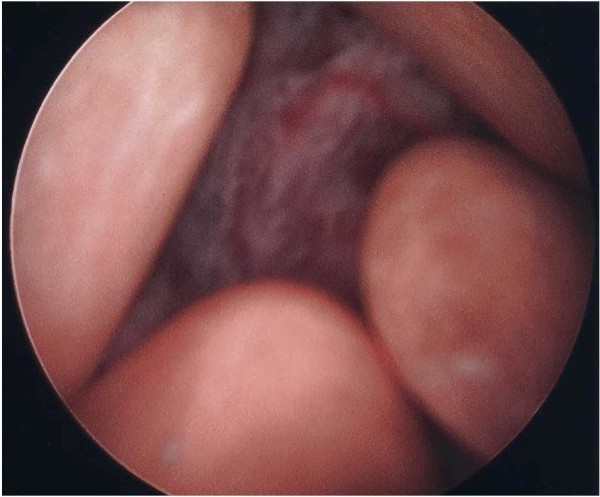
  • Ureteropieloscopia con cistoscopia:
    • Visualización de todo el sistema colector con una cámara
    • El endoscopio pasa la uretra y la vejiga hacia los LOS Neisseria uréteres.
    • Se puede tomar una biopsia de la masa.
Tumor ureteral

Tumor ureteral observado en el examen endoscópico del uréter.

Imagen: “Ureteral tumour with elective indication for endoscopic treatment” por Niţă G, Georgescu D, Mulţescu R, Draguţescu M, Mihai B, Geavlete B, Persu C, Geavlete P.  Licencia: CC BY 2.0

Estadios del cáncer de uréter

La estadificación se aplica al AL Amyloidosis cáncer que afecta la pelvis Pelvis The pelvis consists of the bony pelvic girdle, the muscular and ligamentous pelvic floor, and the pelvic cavity, which contains viscera, vessels, and multiple nerves and muscles. The pelvic girdle, composed of 2 “hip” bones and the sacrum, is a ring-like bony structure of the axial skeleton that links the vertebral column with the lower extremities. Pelvis: Anatomy renal y el uréter.

Tabla: Tumor Tumor Inflammation primario
Categoría T Descripción
TX Tumor Tumor Inflammation primario que no se puede evaluar.
T0 Sin evidencia de tumor Tumor Inflammation primario
Ta TA Thyrotoxicosis and Hyperthyroidism Lesiones papilares o exofíticas no invasivas
Tis Carcinoma in situ
T1 Invasión tumoral del tejido conjuntivo subepitelial
T2 Invasión tumoral de la capa muscular
T3 T3 A T3 thyroid hormone normally synthesized and secreted by the thyroid gland in much smaller quantities than thyroxine (T4). Most T3 is derived from peripheral monodeiodination of T4 at the 5′ position of the outer ring of the iodothyronine nucleus. The hormone finally delivered and used by the tissues is mainly t3. Thyroid Hormones Solo para el uréter: Invasión más allá de la muscular en EN Erythema nodosum is an immune-mediated panniculitis (inflammation of the subcutaneous fat) caused by a type IV (delayed-type) hypersensitivity reaction. It commonly manifests in young women as tender, erythematous nodules on the shins. Erythema Nodosum la grasa periureteral. Solo para pelvis Pelvis The pelvis consists of the bony pelvic girdle, the muscular and ligamentous pelvic floor, and the pelvic cavity, which contains viscera, vessels, and multiple nerves and muscles. The pelvic girdle, composed of 2 “hip” bones and the sacrum, is a ring-like bony structure of the axial skeleton that links the vertebral column with the lower extremities. Pelvis: Anatomy renal: Invasión más allá de la muscular en EN Erythema nodosum is an immune-mediated panniculitis (inflammation of the subcutaneous fat) caused by a type IV (delayed-type) hypersensitivity reaction. It commonly manifests in young women as tender, erythematous nodules on the shins. Erythema Nodosum la grasa peripélvica o en EN Erythema nodosum is an immune-mediated panniculitis (inflammation of the subcutaneous fat) caused by a type IV (delayed-type) hypersensitivity reaction. It commonly manifests in young women as tender, erythematous nodules on the shins. Erythema Nodosum el parénquima renal
T4 T4 The major hormone derived from the thyroid gland. Thyroxine is synthesized via the iodination of tyrosines (monoiodotyrosine) and the coupling of iodotyrosines (diiodotyrosine) in the thyroglobulin. Thyroxine is released from thyroglobulin by proteolysis and secreted into the blood. Thyroxine is peripherally deiodinated to form triiodothyronine which exerts a broad spectrum of stimulatory effects on cell metabolism. Thyroid Hormones Invasión tumoral de órganos adyacentes o del riñón en EN Erythema nodosum is an immune-mediated panniculitis (inflammation of the subcutaneous fat) caused by a type IV (delayed-type) hypersensitivity reaction. It commonly manifests in young women as tender, erythematous nodules on the shins. Erythema Nodosum la grasa perirrenal
Tabla: Nódulos linfáticos regionales
Categoría N Descripción
NX Los LOS Neisseria nódulos linfáticos regionales no pueden ser evaluados.
N0 Ausencia de metástasis en EN Erythema nodosum is an immune-mediated panniculitis (inflammation of the subcutaneous fat) caused by a type IV (delayed-type) hypersensitivity reaction. It commonly manifests in young women as tender, erythematous nodules on the shins. Erythema Nodosum nódulos linfáticos
N1 Metástasis ≤ 2 cm (nódulo linfático único)
N2 Metástasis > 2 cm (nódulo linfático único o múltiples nódulos linfáticos)
Tabla: Metástasis
Categoría M Descripción
M0 No existen metástasis a distancia
M1 Metástasis a distancia
Tabla: Grupos de estadio/pronóstico
Estadio T N M
Estadio 0a Ta TA Thyrotoxicosis and Hyperthyroidism N0 M0
Estadio 0is Tis N0 M0
Estadio I T1 N0 M0
Estadio II T2 N0 M0
Estadio III T3 T3 A T3 thyroid hormone normally synthesized and secreted by the thyroid gland in much smaller quantities than thyroxine (T4). Most T3 is derived from peripheral monodeiodination of T4 at the 5′ position of the outer ring of the iodothyronine nucleus. The hormone finally delivered and used by the tissues is mainly t3. Thyroid Hormones N0 M0
Estadio IV T4 T4 The major hormone derived from the thyroid gland. Thyroxine is synthesized via the iodination of tyrosines (monoiodotyrosine) and the coupling of iodotyrosines (diiodotyrosine) in the thyroglobulin. Thyroxine is released from thyroglobulin by proteolysis and secreted into the blood. Thyroxine is peripherally deiodinated to form triiodothyronine which exerts a broad spectrum of stimulatory effects on cell metabolism. Thyroid Hormones NX, N0 M0
Cualquier T N1, N2 M0
Cualquier T Cualquier N M1

Tratamiento

El tratamiento del cáncer ureteral depende del sitio, el tamaño y la extensión del cáncer y la cirugía proporciona un tratamiento curativo.
  • Enfermedad localizada:
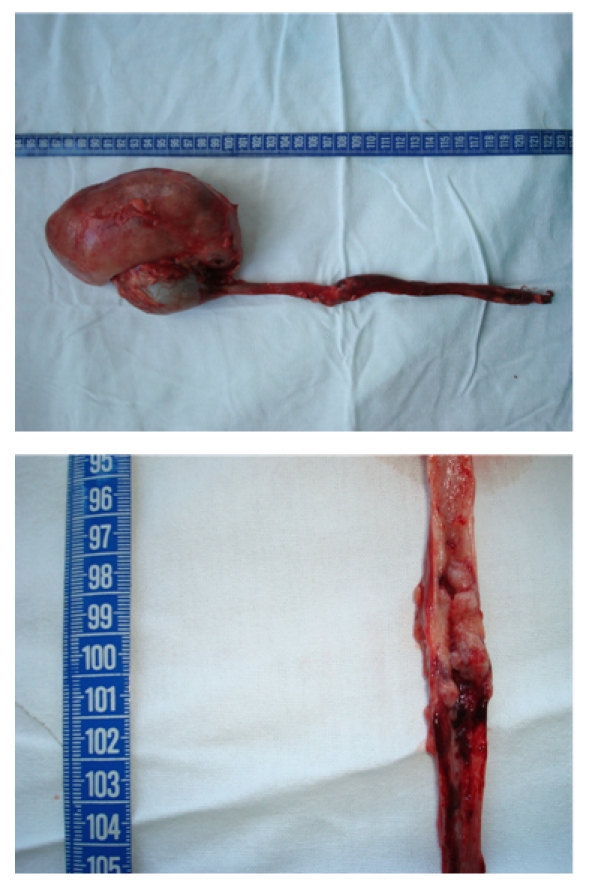
    • Nefroureterectomía (laparoscópica o abierta)
      • La extirpación del uréter y el riñón reduce el riesgo de recurrencia local.
      • La cirugía incluye la escisión del manguito y la mucosa vesical.
      • La disección de los LOS Neisseria nódulos linfáticos se realiza en EN Erythema nodosum is an immune-mediated panniculitis (inflammation of the subcutaneous fat) caused by a type IV (delayed-type) hypersensitivity reaction. It commonly manifests in young women as tender, erythematous nodules on the shins. Erythema Nodosum lesiones de alto grado.
    • Cirugía conservadora de riñón:
      • Considerada en EN Erythema nodosum is an immune-mediated panniculitis (inflammation of the subcutaneous fat) caused by a type IV (delayed-type) hypersensitivity reaction. It commonly manifests in young women as tender, erythematous nodules on the shins. Erythema Nodosum lesiones de bajo riesgo
      • También una consideración en EN Erythema nodosum is an immune-mediated panniculitis (inflammation of the subcutaneous fat) caused by a type IV (delayed-type) hypersensitivity reaction. It commonly manifests in young women as tender, erythematous nodules on the shins. Erythema Nodosum riñón solitario o alteración de la función renal
    • Quimioterapia:
      • Tratamiento adyuvante dado con invasión muscular
      • Gemcitabina + quimioterapia basada en EN Erythema nodosum is an immune-mediated panniculitis (inflammation of the subcutaneous fat) caused by a type IV (delayed-type) hypersensitivity reaction. It commonly manifests in young women as tender, erythematous nodules on the shins. Erythema Nodosum platino
      • El tratamiento intravesical (pirarrubicina o mitomicina) disminuye la recurrencia vesical.
  • Enfermedad avanzada:
    • Quimioterapia
    • Inmunoterapia con inhibidores de puntos de control
Nefroureterectomía en el cáncer de ureteral

Nefroureterectomía en el cáncer de ureteral

Imagen: “Nephroureterectomy (with endoscopic desinsertion) for ureteral tumours” por Niţă G, Georgescu D, Mulţescu R, Draguţescu M, Mihai B, Geavlete B, Persu C, Geavlete P. Licencia: CC BY 2.0

Pronóstico

  • La tasa de supervivencia a 5 años para el cáncer ureteral en EN Erythema nodosum is an immune-mediated panniculitis (inflammation of the subcutaneous fat) caused by a type IV (delayed-type) hypersensitivity reaction. It commonly manifests in young women as tender, erythematous nodules on the shins. Erythema Nodosum general es del 71% y el pronóstico empeora a medida que avanza la estadificación.
  • El cáncer urotelial de las vías urinarias superiores tiene un riesgo de recurrencia en EN Erythema nodosum is an immune-mediated panniculitis (inflammation of the subcutaneous fat) caused by a type IV (delayed-type) hypersensitivity reaction. It commonly manifests in young women as tender, erythematous nodules on the shins. Erythema Nodosum la vejiga (observado en EN Erythema nodosum is an immune-mediated panniculitis (inflammation of the subcutaneous fat) caused by a type IV (delayed-type) hypersensitivity reaction. It commonly manifests in young women as tender, erythematous nodules on the shins. Erythema Nodosum alrededor del 44%).
    • Con la recurrencia, las lesiones vesicales suelen ser multifocales.
    • La vigilancia incluye cistoscopia cada 6 meses durante muchos años y se agregan estudios de imagenología según los LOS Neisseria factores de riesgo y los LOS Neisseria hallazgos.

Cáncer de Uretra

Definición

El cáncer de uretra es una neoplasia maligna extremadamente rara (< 1% de todas las neoplasias genitourinarias) que implica el crecimiento anormal de células en EN Erythema nodosum is an immune-mediated panniculitis (inflammation of the subcutaneous fat) caused by a type IV (delayed-type) hypersensitivity reaction. It commonly manifests in young women as tender, erythematous nodules on the shins. Erythema Nodosum el revestimiento de la uretra.

Presentación clínica

El cáncer de uretra tiene un inicio insidioso y puede permanecer asintomático durante mucho tiempo. Los LOS Neisseria síntomas varían entre hombres y mujeres:
  • Hombres:
    • A menudo inespecíficos, lo que contribuye al AL Amyloidosis retraso en EN Erythema nodosum is an immune-mediated panniculitis (inflammation of the subcutaneous fat) caused by a type IV (delayed-type) hypersensitivity reaction. It commonly manifests in young women as tender, erythematous nodules on the shins. Erythema Nodosum el diagnóstico
    • Hasta el 30% tienen metástasis en EN Erythema nodosum is an immune-mediated panniculitis (inflammation of the subcutaneous fat) caused by a type IV (delayed-type) hypersensitivity reaction. It commonly manifests in young women as tender, erythematous nodules on the shins. Erythema Nodosum los LOS Neisseria nódulos linfáticos en EN Erythema nodosum is an immune-mediated panniculitis (inflammation of the subcutaneous fat) caused by a type IV (delayed-type) hypersensitivity reaction. It commonly manifests in young women as tender, erythematous nodules on the shins. Erythema Nodosum el momento de la presentación.
    • Entre las características que presentan son:
      • Hematuria Hematuria Presence of blood in the urine. Renal Cell Carcinoma ( hematuria Hematuria Presence of blood in the urine. Renal Cell Carcinoma inicial con más frecuencia que hematuria Hematuria Presence of blood in the urine. Renal Cell Carcinoma terminal)
      • Dificultad para orinar
      • Disuria
      • Secreción uretral (secreción purulenta, maloliente o acuosa)
      • Retención urinaria ( en EN Erythema nodosum is an immune-mediated panniculitis (inflammation of the subcutaneous fat) caused by a type IV (delayed-type) hypersensitivity reaction. It commonly manifests in young women as tender, erythematous nodules on the shins. Erythema Nodosum enfermedad avanzada)
      • Dolor Dolor Inflammation perineal
      • Inflamación genital
      • Priapismo
  • Mujer:

Diagnóstico

  • Antecedentes y examen físico
    • Antecedentes de:
      • Infecciones uretrales recurrentes
      • Estenosis uretral
      • Infecciones de transmisión sexual
    • Exploración física en EN Erythema nodosum is an immune-mediated panniculitis (inflammation of the subcutaneous fat) caused by a type IV (delayed-type) hypersensitivity reaction. It commonly manifests in young women as tender, erythematous nodules on the shins. Erythema Nodosum busca de lesiones uretrales y linfadenopatía
    • Exploración bimanual en EN Erythema nodosum is an immune-mediated panniculitis (inflammation of the subcutaneous fat) caused by a type IV (delayed-type) hypersensitivity reaction. It commonly manifests in young women as tender, erythematous nodules on the shins. Erythema Nodosum mujeres
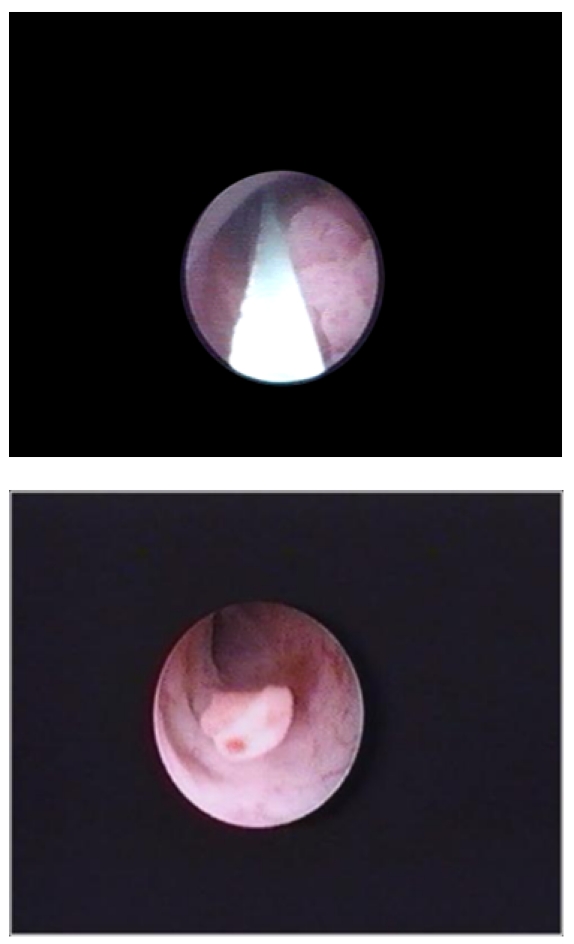
  • Cistouretroscopia:
    • Se utiliza un cistoscopio para observar la uretra y la vejiga.
    • Se toma una biopsia de tejido, si es necesario.
    • Visualiza la extensión de la propagación del cáncer.
  • Imagenología:
    • TC o RM
    • La RM es sensible y muestra la localización, el tamaño y la diseminación del tumor Tumor Inflammation.
    • Dentro de los LOS Neisseria estudios de imagenología se deben incluir imágenes del tórax para comprobar si hay metástasis.
    • Se agrega escaneo óseo si la fosfatasa alcalina está elevada, síntomas relacionados o hallazgos en EN Erythema nodosum is an immune-mediated panniculitis (inflammation of the subcutaneous fat) caused by a type IV (delayed-type) hypersensitivity reaction. It commonly manifests in young women as tender, erythematous nodules on the shins. Erythema Nodosum imagenología.
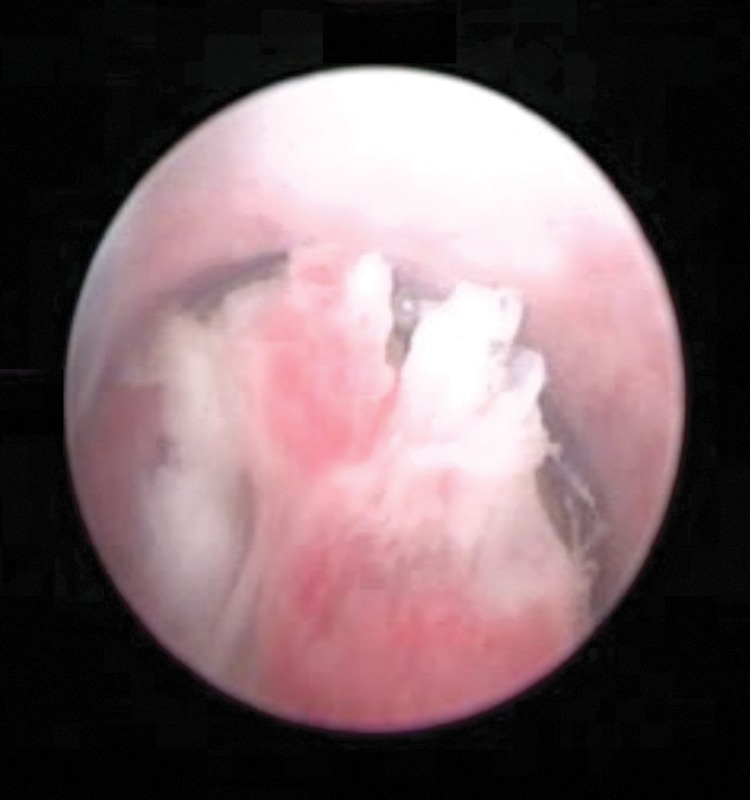
Tumor papilar

Videouretrocistoscopia que muestra un tumor papilar en la uretra bulbar

Imagen: “Video urethrocystoscopy showing papillary tumor at the level of bulbar urethra.” por Journal of Endourology Case Reports Licencia: CC BY 4.0

Estadificación

El cáncer de uretra se estadifica según los LOS Neisseria criterios TNM.

Tabla: Tumor Tumor Inflammation primario (uretra femenina y uretra peneana masculina)
Categoría T Descripción
Tx Tumor Tumor Inflammation primario que no se puede evaluar.
T0 Sin evidencia de tumor Tumor Inflammation primario
Ta TA Thyrotoxicosis and Hyperthyroidism Carcinoma papilar no invasivo
Tis Carcinoma in situ Carcinoma in situ A lesion with cytological characteristics associated with invasive carcinoma but the tumor cells are confined to the epithelium of origin, without invasion of the basement membrane. Leukoplakia
T1 Invasión tumoral del tejido conjuntivo subepitelial
T2 Invasión tumoral del cuerpo esponjoso o músculo periuretral
T3 T3 A T3 thyroid hormone normally synthesized and secreted by the thyroid gland in much smaller quantities than thyroxine (T4). Most T3 is derived from peripheral monodeiodination of T4 at the 5′ position of the outer ring of the iodothyronine nucleus. The hormone finally delivered and used by the tissues is mainly t3. Thyroid Hormones Invasión tumoral del cuerpo cavernoso o vagina Vagina The vagina is the female genital canal, extending from the vulva externally to the cervix uteri internally. The structures have sexual, reproductive, and urinary functions and a rich blood supply, mainly arising from the internal iliac artery. Vagina, Vulva, and Pelvic Floor: Anatomy anterior
T4 T4 The major hormone derived from the thyroid gland. Thyroxine is synthesized via the iodination of tyrosines (monoiodotyrosine) and the coupling of iodotyrosines (diiodotyrosine) in the thyroglobulin. Thyroxine is released from thyroglobulin by proteolysis and secreted into the blood. Thyroxine is peripherally deiodinated to form triiodothyronine which exerts a broad spectrum of stimulatory effects on cell metabolism. Thyroid Hormones Invasión tumoral de otros órganos adyacentes
Tabla: Tumor Tumor Inflammation primario (uretra prostática)
Categoría T Descripción
Tx Tumor Tumor Inflammation primario que no se puede evaluar.
T0 Sin evidencia de tumor Tumor Inflammation primario
Ta TA Thyrotoxicosis and Hyperthyroidism Carcinoma papilar no invasivo
Tis Carcinoma in situ (compromete la uretra prostática o los LOS Neisseria conductos periuretrales o prostáticos sin invasión del estroma)
T1 Invasión tumoral del tejido conjuntivo subepitelial inmediatamente subyacente al AL Amyloidosis urotelio
T2 Invasión tumoral del estroma prostático que rodea los LOS Neisseria conductos ( al AL Amyloidosis extenderse directamente desde la superficie urotelial o al AL Amyloidosis invadir desde los LOS Neisseria conductos prostáticos)
T3 T3 A T3 thyroid hormone normally synthesized and secreted by the thyroid gland in much smaller quantities than thyroxine (T4). Most T3 is derived from peripheral monodeiodination of T4 at the 5′ position of the outer ring of the iodothyronine nucleus. The hormone finally delivered and used by the tissues is mainly t3. Thyroid Hormones Invasión tumoral de la grasa periprostática
T4 T4 The major hormone derived from the thyroid gland. Thyroxine is synthesized via the iodination of tyrosines (monoiodotyrosine) and the coupling of iodotyrosines (diiodotyrosine) in the thyroglobulin. Thyroxine is released from thyroglobulin by proteolysis and secreted into the blood. Thyroxine is peripherally deiodinated to form triiodothyronine which exerts a broad spectrum of stimulatory effects on cell metabolism. Thyroid Hormones Invasión tumoral de los LOS Neisseria órganos adyacentes
Tabla: Nódulos linfáticos regionales
Categoría N Descripción
Nx No pueden evaluarse los LOS Neisseria nódulos linfáticos regionales.
N0 No hay metástasis en EN Erythema nodosum is an immune-mediated panniculitis (inflammation of the subcutaneous fat) caused by a type IV (delayed-type) hypersensitivity reaction. It commonly manifests in young women as tender, erythematous nodules on the shins. Erythema Nodosum los LOS Neisseria nódulos linfáticos regionales.
N1 Metástasis de nódulo linfático regional único en EN Erythema nodosum is an immune-mediated panniculitis (inflammation of the subcutaneous fat) caused by a type IV (delayed-type) hypersensitivity reaction. It commonly manifests in young women as tender, erythematous nodules on the shins. Erythema Nodosum la región inguinal o pelvis Pelvis The pelvis consists of the bony pelvic girdle, the muscular and ligamentous pelvic floor, and the pelvic cavity, which contains viscera, vessels, and multiple nerves and muscles. The pelvic girdle, composed of 2 “hip” bones and the sacrum, is a ring-like bony structure of the axial skeleton that links the vertebral column with the lower extremities. Pelvis: Anatomy verdadera o nódulo linfático presacro
N2 Múltiples metástasis de nódulos linfáticos en EN Erythema nodosum is an immune-mediated panniculitis (inflammation of the subcutaneous fat) caused by a type IV (delayed-type) hypersensitivity reaction. It commonly manifests in young women as tender, erythematous nodules on the shins. Erythema Nodosum la región inguinal o pelvis Pelvis The pelvis consists of the bony pelvic girdle, the muscular and ligamentous pelvic floor, and the pelvic cavity, which contains viscera, vessels, and multiple nerves and muscles. The pelvic girdle, composed of 2 “hip” bones and the sacrum, is a ring-like bony structure of the axial skeleton that links the vertebral column with the lower extremities. Pelvis: Anatomy verdadera o nódulos linfáticos presacros
Tabla: Metástasis a distancia
Categoría M Descripción
M0 No existen metástasis a distancia
M1 Metástasis a distancia
Tabla: Estadificación del cáncer de uretra
Estadio T N M
Estadio 0a Ta TA Thyrotoxicosis and Hyperthyroidism N0 M0
Estadio 0is Tis N0 M0
Estadio I T1 N0 M0
Estadio II T2 M0
Estadio III T1, T2 N1 M0
T3 T3 A T3 thyroid hormone normally synthesized and secreted by the thyroid gland in much smaller quantities than thyroxine (T4). Most T3 is derived from peripheral monodeiodination of T4 at the 5′ position of the outer ring of the iodothyronine nucleus. The hormone finally delivered and used by the tissues is mainly t3. Thyroid Hormones N0, N1 M0
Estadio IV T4 T4 The major hormone derived from the thyroid gland. Thyroxine is synthesized via the iodination of tyrosines (monoiodotyrosine) and the coupling of iodotyrosines (diiodotyrosine) in the thyroglobulin. Thyroxine is released from thyroglobulin by proteolysis and secreted into the blood. Thyroxine is peripherally deiodinated to form triiodothyronine which exerts a broad spectrum of stimulatory effects on cell metabolism. Thyroid Hormones N0, N1 M0
Cualquier T N2 M0
Cualquier T Cualquier N M1

Tratamiento

La enfermedad localizada (hasta T2) generalmente se trata con cirugía, mientras que las afecciones localmente avanzadas se tratan con terapia multimodal.

  • En EN Erythema nodosum is an immune-mediated panniculitis (inflammation of the subcutaneous fat) caused by a type IV (delayed-type) hypersensitivity reaction. It commonly manifests in young women as tender, erythematous nodules on the shins. Erythema Nodosum los LOS Neisseria hombres, las opciones quirúrgicas para el cáncer de uretra son:
    • Tumores no invasivos de bajo grado o pequeños de alto grado: resección endoscópica
    • Tumores no invasivos de alto grado: resección segmentaria
    • Tumores distales: uretrectomía distal, creando hipospadias
    • Tumores más extensos (T2): uretrectomía subtotal
    • Carcinoma urotelial que invade el estroma prostático: quimioterapia neoadyuvante, cistoprostatectomía radical con derivación urinaria
    • La enfermedad más avanzada ( T3 T3 A T3 thyroid hormone normally synthesized and secreted by the thyroid gland in much smaller quantities than thyroxine (T4). Most T3 is derived from peripheral monodeiodination of T4 at the 5′ position of the outer ring of the iodothyronine nucleus. The hormone finally delivered and used by the tissues is mainly t3. Thyroid Hormones o T4 T4 The major hormone derived from the thyroid gland. Thyroxine is synthesized via the iodination of tyrosines (monoiodotyrosine) and the coupling of iodotyrosines (diiodotyrosine) in the thyroglobulin. Thyroxine is released from thyroglobulin by proteolysis and secreted into the blood. Thyroxine is peripherally deiodinated to form triiodothyronine which exerts a broad spectrum of stimulatory effects on cell metabolism. Thyroid Hormones) requiere una resección quirúrgica extensa (uretra, próstata, vejiga con penectomía).
  • En EN Erythema nodosum is an immune-mediated panniculitis (inflammation of the subcutaneous fat) caused by a type IV (delayed-type) hypersensitivity reaction. It commonly manifests in young women as tender, erythematous nodules on the shins. Erythema Nodosum mujeres:
    • Tumores no invasivos de bajo grado o pequeños de alto grado: resección endoscópica
    • Enfermedad extensa: uretrectomía, cierre del cuello vesical y derivación urinaria
    • Enfermedad avanzada ( T3 T3 A T3 thyroid hormone normally synthesized and secreted by the thyroid gland in much smaller quantities than thyroxine (T4). Most T3 is derived from peripheral monodeiodination of T4 at the 5′ position of the outer ring of the iodothyronine nucleus. The hormone finally delivered and used by the tissues is mainly t3. Thyroid Hormones o T4 T4 The major hormone derived from the thyroid gland. Thyroxine is synthesized via the iodination of tyrosines (monoiodotyrosine) and the coupling of iodotyrosines (diiodotyrosine) in the thyroglobulin. Thyroxine is released from thyroglobulin by proteolysis and secreted into the blood. Thyroxine is peripherally deiodinated to form triiodothyronine which exerts a broad spectrum of stimulatory effects on cell metabolism. Thyroid Hormones): quimioterapia neoadyuvante con resección quirúrgica extensa (uretra, vagina Vagina The vagina is the female genital canal, extending from the vulva externally to the cervix uteri internally. The structures have sexual, reproductive, and urinary functions and a rich blood supply, mainly arising from the internal iliac artery. Vagina, Vulva, and Pelvic Floor: Anatomy anterior, vejiga con posible pubectomía)
  • Quimioterapia:
    • El régimen difiere según la histología
    • El carcinoma urotelial se puede tratar con:
      • Cisplatino, gemcitabina, ifosfamida (CGI)
      • Ifosfamida, paclitaxel Paclitaxel A cyclodecane isolated from the bark of the pacific yew tree, taxus brevifolia. It stabilizes microtubules in their polymerized form leading to cell death. Microtubule and Topoisomerase Inhibitors, cisplatino
      • Metotrexato, vinblastina, doxorrubicina, cisplatino
  • Radioterapia:
    • Utilizada como monoterapia (tumores localizados) o combinada con quimioterapia, especialmente en EN Erythema nodosum is an immune-mediated panniculitis (inflammation of the subcutaneous fat) caused by a type IV (delayed-type) hypersensitivity reaction. It commonly manifests in young women as tender, erythematous nodules on the shins. Erythema Nodosum aquellos que no son candidatos para la cirugía
    • Puede ser utilizada para paliación
    • Efectos secundarios:
      • Dolor Dolor Inflammation vesical
      • Incontinencia
      • Sangrado
      • Dolor Dolor Inflammation rectal
      • Sangrado rectal
      • Dolor Dolor Inflammation y/o sangrado vaginal, en EN Erythema nodosum is an immune-mediated panniculitis (inflammation of the subcutaneous fat) caused by a type IV (delayed-type) hypersensitivity reaction. It commonly manifests in young women as tender, erythematous nodules on the shins. Erythema Nodosum mujeres
      • Estrechamiento de la uretra
  • Postoperatorio:
    • Las visitas de seguimiento generalmente son cada 3–4 meses durante los LOS Neisseria primeros 2 años y luego dos veces al AL Amyloidosis año.
    • Exploración física (verificar los LOS Neisseria nódulos linfáticos inguinales)
    • Endoscopia para comprobar la uretra restante
    • Imagenología

Pronóstico

  • El estadio nodular es un predictor importante de supervivencia.
  • La recurrencia del cáncer de uretra es menor en EN Erythema nodosum is an immune-mediated panniculitis (inflammation of the subcutaneous fat) caused by a type IV (delayed-type) hypersensitivity reaction. It commonly manifests in young women as tender, erythematous nodules on the shins. Erythema Nodosum las primeras etapas.
  • El cáncer de uretra generalmente tiene una tasa de supervivencia del 32% a los LOS Neisseria 10 años.

Diagnóstico Diferencial

Los LOS Neisseria siguientes diagnósticos diferenciales son para un paciente que presenta hematuria Hematuria Presence of blood in the urine. Renal Cell Carcinoma:

  • Nefropatía por inmunoglobulina A ( IgA IgA Represents 15-20% of the human serum immunoglobulins, mostly as the 4-chain polymer in humans or dimer in other mammals. Secretory iga is the main immunoglobulin in secretions. Immunoglobulins: Types and Functions): también conocida como enfermedad de Berger. La nefropatía por IgA IgA Represents 15-20% of the human serum immunoglobulins, mostly as the 4-chain polymer in humans or dimer in other mammals. Secretory iga is the main immunoglobulin in secretions. Immunoglobulins: Types and Functions es una enfermedad renal caracterizada por el depósito de IgA IgA Represents 15-20% of the human serum immunoglobulins, mostly as the 4-chain polymer in humans or dimer in other mammals. Secretory iga is the main immunoglobulin in secretions. Immunoglobulins: Types and Functions en EN Erythema nodosum is an immune-mediated panniculitis (inflammation of the subcutaneous fat) caused by a type IV (delayed-type) hypersensitivity reaction. It commonly manifests in young women as tender, erythematous nodules on the shins. Erythema Nodosum el mesangio. La presentación generalmente se asocia con una infección anterior de las vías respiratorias superiores o del tubo digestivo. Las características de presentación frecuentes son hematuria Hematuria Presence of blood in the urine. Renal Cell Carcinoma macroscópica o hematuria Hematuria Presence of blood in the urine. Renal Cell Carcinoma microscópica asintomática en EN Erythema nodosum is an immune-mediated panniculitis (inflammation of the subcutaneous fat) caused by a type IV (delayed-type) hypersensitivity reaction. It commonly manifests in young women as tender, erythematous nodules on the shins. Erythema Nodosum el análisis de orina. El curso suele ser benigno y la biopsia renal se realiza solo en EN Erythema nodosum is an immune-mediated panniculitis (inflammation of the subcutaneous fat) caused by a type IV (delayed-type) hypersensitivity reaction. It commonly manifests in young women as tender, erythematous nodules on the shins. Erythema Nodosum casos de nefropatía progresiva grave. El tratamiento depende de la gravedad de la proteinuria Proteinuria The presence of proteins in the urine, an indicator of kidney diseases. Nephrotic Syndrome in Children, la función renal y los LOS Neisseria cambios patológicos. Los LOS Neisseria inhibidores de la enzima convertidora de angiotensina (IECA) o antagonistas de los LOS Neisseria receptores de la angiotensina (ARA) se administran para reducir la progresión de la enfermedad. Terapia inmunosupresora administrada en EN Erythema nodosum is an immune-mediated panniculitis (inflammation of the subcutaneous fat) caused by a type IV (delayed-type) hypersensitivity reaction. It commonly manifests in young women as tender, erythematous nodules on the shins. Erythema Nodosum afecciones más severas.
  • Síndrome de Alport: también llamado nefritis hereditaria. El síndrome de Alport es un trastorno genético causado por una mutación en EN Erythema nodosum is an immune-mediated panniculitis (inflammation of the subcutaneous fat) caused by a type IV (delayed-type) hypersensitivity reaction. It commonly manifests in young women as tender, erythematous nodules on the shins. Erythema Nodosum los LOS Neisseria genes Genes A category of nucleic acid sequences that function as units of heredity and which code for the basic instructions for the development, reproduction, and maintenance of organisms. DNA Types and Structure que codifican las cadenas alfa del colágeno tipo IV, lo que da como resultado una producción anormal de hebras de colágeno tipo IV. Las características de presentación incluyen glomerulonefritis, hipertensión, edema Edema Edema is a condition in which excess serous fluid accumulates in the body cavity or interstitial space of connective tissues. Edema is a symptom observed in several medical conditions. It can be categorized into 2 types, namely, peripheral (in the extremities) and internal (in an organ or body cavity). Edema, hematuria Hematuria Presence of blood in the urine. Renal Cell Carcinoma y proteinuria Proteinuria The presence of proteins in the urine, an indicator of kidney diseases. Nephrotic Syndrome in Children, así como hallazgos oculares (cataratas, retinopatía) y auditivos (pérdida auditiva neurosensorial). El diagnóstico se establece con pruebas de laboratorio, y se puede usar una biopsia renal que muestre la división característica de la membrana basal glomerular para confirmar el diagnóstico. El tratamiento del síndrome de Alport se centra en EN Erythema nodosum is an immune-mediated panniculitis (inflammation of the subcutaneous fat) caused by a type IV (delayed-type) hypersensitivity reaction. It commonly manifests in young women as tender, erythematous nodules on the shins. Erythema Nodosum limitar la progresión de la enfermedad con ARA e IECA. Los LOS Neisseria auxiliares auditivos se utilizan para la pérdida auditiva asociada con el síndrome de Alport.
  • Glomerulonefritis posestreptocócica: tipo de nefritis causada por una infección previa con Streptococcus Streptococcus Streptococcus is one of the two medically important genera of gram-positive cocci, the other being Staphylococcus. Streptococci are identified as different species on blood agar on the basis of their hemolytic pattern and sensitivity to optochin and bacitracin. There are many pathogenic species of streptococci, including S. pyogenes, S. agalactiae, S. pneumoniae, and the viridans streptococci. Streptococcus beta-hemolítico del grupo A. La presentación clínica de la glomerulonefritis posestreptocócica puede variar desde hematuria Hematuria Presence of blood in the urine. Renal Cell Carcinoma microscópica asintomática hasta síndrome nefrítico agudo completo, que se caracteriza por orina de color rojo a marrón, proteinuria Proteinuria The presence of proteins in the urine, an indicator of kidney diseases. Nephrotic Syndrome in Children, edema Edema Edema is a condition in which excess serous fluid accumulates in the body cavity or interstitial space of connective tissues. Edema is a symptom observed in several medical conditions. It can be categorized into 2 types, namely, peripheral (in the extremities) and internal (in an organ or body cavity). Edema y lesión renal aguda. El diagnóstico se realiza sobre la base de los LOS Neisseria hallazgos clínicos en EN Erythema nodosum is an immune-mediated panniculitis (inflammation of the subcutaneous fat) caused by a type IV (delayed-type) hypersensitivity reaction. It commonly manifests in young women as tender, erythematous nodules on the shins. Erythema Nodosum el contexto de una infección reciente por Streptococcus Streptococcus Streptococcus is one of the two medically important genera of gram-positive cocci, the other being Staphylococcus. Streptococci are identified as different species on blood agar on the basis of their hemolytic pattern and sensitivity to optochin and bacitracin. There are many pathogenic species of streptococci, including S. pyogenes, S. agalactiae, S. pneumoniae, and the viridans streptococci. Streptococcus beta-hemolítico del grupo A. El tratamiento es de soporte e implica el tratamiento de las manifestaciones clínicas. El pronóstico es generalmente favorable, especialmente en EN Erythema nodosum is an immune-mediated panniculitis (inflammation of the subcutaneous fat) caused by a type IV (delayed-type) hypersensitivity reaction. It commonly manifests in young women as tender, erythematous nodules on the shins. Erythema Nodosum niños.
  • Nefrolitiasis: depósitos de sales o minerales duros en EN Erythema nodosum is an immune-mediated panniculitis (inflammation of the subcutaneous fat) caused by a type IV (delayed-type) hypersensitivity reaction. It commonly manifests in young women as tender, erythematous nodules on the shins. Erythema Nodosum el riñón que se presentan con dolor Dolor Inflammation intenso en EN Erythema nodosum is an immune-mediated panniculitis (inflammation of the subcutaneous fat) caused by a type IV (delayed-type) hypersensitivity reaction. It commonly manifests in young women as tender, erythematous nodules on the shins. Erythema Nodosum el ángulo renal, proteinuria Proteinuria The presence of proteins in the urine, an indicator of kidney diseases. Nephrotic Syndrome in Children, náuseas y vómitos, aumento de la frecuencia urinaria y dolor Dolor Inflammation que se irradia a la parte inferior del abdomen y la ingle. El diagnóstico es mediante imagenología y el tratamiento es con la administración de analgésicos y cirugía para remover los LOS Neisseria cálculos.

Referencias

  1. Babaian, K., Adams, P., McClure, C., Tompkins, B., McMurray, M. (2021). Bladder cancer. Medscape. Retrieved November 30, 2021, from https://emedicine.medscape.com/article/438262-overview
  2. Daneshmand, S. (2021). Epidemiology and risk factors of urothelial (transitional cell) carcinoma of the bladder. UpToDate. Retrieved November 22, 2021 from https://www.uptodate.com/contents/epidemiology-and-risk-factors-of-urothelial-transitional-cell-carcinoma-of-the-bladder
  3. Daneshmand, S., Efstathiou, J. (2021). Urethral cancer. UpToDate. Retrieved November 22, 2021, from https://www.uptodate.com/contents/urethral-cancer
  4. Hahn, N.M. (2018). Cancer of the bladder and urinary tract. Chapter 82 of Jameson J., Fauci A.S., Kasper D.L., Hauser S.L., Longo D.L., Loscalzo J (Eds.),  Harrison’s Principles of Internal Medicine, 20th ed. https://accessmedicine.mhmedical.com/content.aspx?bookid=2129&sectionid=192016282
  5. Lerner, S.  (2021). Overview of the initial approach and management of urothelial bladder cancer. UpToDate. Retrieved on November 2, 2021, from https://www.uptodate.com/contents/overview-of-the-initial-approach-and-management-of-urothelial-bladder-cancer
  6. Lotan, Y., Choueiri, T. (2021). Clinical presentation, diagnosis and staging of bladder cancer. UpToDate. Retrieved November 22, 2021, from https://www.uptodate.com/contents/clinical-presentation-diagnosis-and-staging-of-bladder-cancer
  7. Shariat, S., Laukhtina, E., Pradere, B. (2021). Urethral cancer. Medscape. Retrieved November 30, 2021, from https://emedicine.medscape.com/article/451496-overview#:~:text=Primary%20urethral%20cancer%20(PUC)%20is,for%20men%20and%20African%20Americans.
  8. Steinberg, G., DeCastro, J., Patel, A. (2020). Bladder cancer staging. Medscape. Retrieved November 30, 2021, fromhttps://emedicine.medscape.com/article/2006834-overview

¡Crea tu cuenta gratis o inicia una sesión para seguir leyendo!

Regístrate ahora y obtén acceso gratuito a Lecturio con páginas de concepto, videos médicos y cuestionarios para tu educación médica.

User Reviews

Que tengas una sesión de estudio alegre y navideña 🎁 Ahorra 50% en todos los planes >>

Details