El cáncer de ovario es un tumorTumorInflammation maligno que surge del tejido ovárico y se clasifica según el tipo de tejido del que se origina. LosLOSNeisseria 3 tipos principales de cáncer de ovario son losLOSNeisseria carcinomas epiteliales de ovario (CEO), losLOSNeisseria tumores de células germinales de ovario (TCG) y losLOSNeisseria tumores del estroma de losLOSNeisseria cordones sexuales (TECS). Por mucho, losLOSNeisseria CEO son losLOSNeisseria más comunes, tienden a presentarse enENErythema nodosum is an immune-mediated panniculitis (inflammation of the subcutaneous fat) caused by a type IV (delayed-type) hypersensitivity reaction. It commonly manifests in young women as tender, erythematous nodules on the shins.Erythema Nodosum mujeres posmenopáusicas con enfermedad avanzada y conllevan un mal pronóstico. Por otro lado, losLOSNeisseria TCG y losLOSNeisseria TECS con frecuencia afectan a mujeres más jóvenes, tienden a presentarse antes y tienen un mejor pronóstico. LosLOSNeisseria individuos afectados con frecuencia son asintomáticos, aunque pueden presentar síntomas inespecíficos como fatiga, aumento de la circunferencia abdominal, síntomas gastrointestinales y dolorDolorInflammation pélvico. Además, si el tumorTumorInflammation secreta hormonas, la hemorragia anormal puede ser un síntoma de presentación. El diagnóstico se sospecha basándose enENErythema nodosum is an immune-mediated panniculitis (inflammation of the subcutaneous fat) caused by a type IV (delayed-type) hypersensitivity reaction. It commonly manifests in young women as tender, erythematous nodules on the shins.Erythema Nodosum estudios de imagen y se confirma con el examen histológico. El tratamiento es principalmente quirúrgico y, a menudo, con quimioterapia adyuvante.
El riesgo de por vida de cáncer ovárico entre las mujeres enENErythema nodosum is an immune-mediated panniculitis (inflammation of the subcutaneous fat) caused by a type IV (delayed-type) hypersensitivity reaction. It commonly manifests in young women as tender, erythematous nodules on the shins.Erythema Nodosum Estados Unidos es de aproximadamente 1,3 %.
3er cáncer ginecológico más común (después de cuello uterino y útero)
Impacto enENErythema nodosum is an immune-mediated panniculitis (inflammation of the subcutaneous fat) caused by a type IV (delayed-type) hypersensitivity reaction. It commonly manifests in young women as tender, erythematous nodules on the shins.Erythema Nodosum la mortalidad:
Principal causa de muerte por cáncer ginecológico enENErythema nodosum is an immune-mediated panniculitis (inflammation of the subcutaneous fat) caused by a type IV (delayed-type) hypersensitivity reaction. It commonly manifests in young women as tender, erythematous nodules on the shins.Erythema Nodosum mujeres
5ta causa más común de muertes relacionadas con el cáncer enENErythema nodosum is an immune-mediated panniculitis (inflammation of the subcutaneous fat) caused by a type IV (delayed-type) hypersensitivity reaction. It commonly manifests in young women as tender, erythematous nodules on the shins.Erythema Nodosum mujeres
Factores de riesgo
Mujeres postmenopáusicas
Antecedentes familiares de cáncer de mama y/o cáncer de ovario
Mayor edad
Tabaquismo
Menarquia temprana y/o menopausia tardía (↑ número de ciclos menstruales)
Nuliparidad
EndometriosisEndometriosisEndometriosis is a common disease in which patients have endometrial tissue implanted outside of the uterus. Endometrial implants can occur anywhere in the pelvis, including the ovaries, the broad and uterosacral ligaments, the pelvic peritoneum, and the urinary and gastrointestinal tracts.Endometriosis
Factores protectores
Varios factores comunes reducen significativamente el riesgo de cáncer de ovario, entre ellos:
Uso prolongado de anticonceptivos orales
Ligadura de trompas
Histerectomía
Amamantamiento
Paridad
La salpingooforectomía bilateral es la extirpación de las trompas de Falopio y losLOSNeisseria ovarios:
Realizada profilácticamente enENErythema nodosum is an immune-mediated panniculitis (inflammation of the subcutaneous fat) caused by a type IV (delayed-type) hypersensitivity reaction. It commonly manifests in young women as tender, erythematous nodules on the shins.Erythema Nodosum mujeres con mutaciones conocidas, como las mutaciones BRCA, que las ponen enENErythema nodosum is an immune-mediated panniculitis (inflammation of the subcutaneous fat) caused by a type IV (delayed-type) hypersensitivity reaction. It commonly manifests in young women as tender, erythematous nodules on the shins.Erythema Nodosum alto riesgo de cáncer de ovario.
El riesgo de cáncer no se elimina por completo a pesar de la extirpación quirúrgica.
Clasificación
Descripción general de la clasificación de losLOSNeisseria tumores de ovario
LosLOSNeisseria tumores de ovario se clasifican según el tipo de célula de la que se originan:
Tumores epiteliales
Tumores de células germinales
Tumores del estroma de losLOSNeisseria cordones sexuales
Tumores metastásicos (que se originan enENErythema nodosum is an immune-mediated panniculitis (inflammation of the subcutaneous fat) caused by a type IV (delayed-type) hypersensitivity reaction. It commonly manifests in young women as tender, erythematous nodules on the shins.Erythema Nodosum otros tejidos y metastatizan enENErythema nodosum is an immune-mediated panniculitis (inflammation of the subcutaneous fat) caused by a type IV (delayed-type) hypersensitivity reaction. It commonly manifests in young women as tender, erythematous nodules on the shins.Erythema Nodosum el ovario)
Hay múltiples subtipos histológicos dentro de cada clase de tumorTumorInflammation principal.
Benignos(adenomas): neoplasias que muestran un crecimiento anormal, pero que no invaden el tejido circundante
Tumores borderline/de bajo potencial maligno: neoplasias malignas poco agresivas y de excelente pronóstico
Malignos(carcinomas o adenocarcinomas): tumores que invaden el tejido circundante
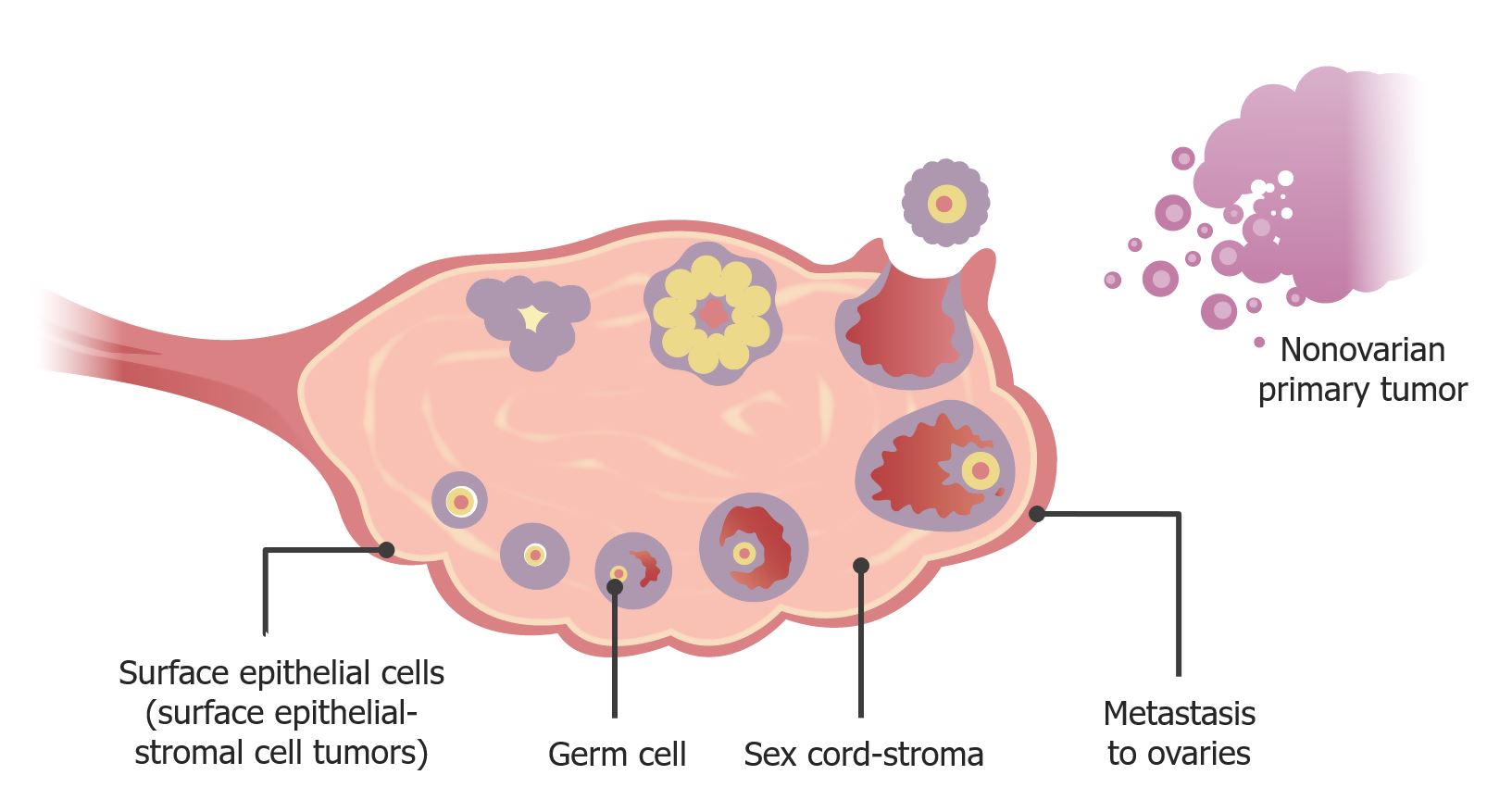
Imagen que muestra diferentes tipos de cáncer de ovario y su ubicación de origen
Imagen de Lecturio.
Tabla: Resumen de la clasificación del cáncer de ovario
Proporción de tumores ováricos malignos primarios
Grupo de edad comúnmente afectado
Tipos principales
Tumores epiteliales
90%
Mujeres postmenopáusicas
Seroso
Mucinoso
Endometrioide
Células claras
Tumores de células germinales
5%
10–30 años
TeratomaTeratomaA true neoplasm composed of a number of different types of tissue, none of which is native to the area in which it occurs. It is composed of tissues that are derived from three germinal layers, the endoderm, mesoderm, and ectoderm. They are classified histologically as mature (benign) or immature (malignant).Imaging of the Mediastinum
VariableVariableVariables represent information about something that can change. The design of the measurement scales, or of the methods for obtaining information, will determine the data gathered and the characteristics of that data. As a result, a variable can be qualitative or quantitative, and may be further classified into subgroups.Types of Variables
De:
Endometrio
Cuello uterino
Mama
Estómago (tumores de Krukenberg)
ColonColonThe large intestines constitute the last portion of the digestive system. The large intestine consists of the cecum, appendix, colon (with ascending, transverse, descending, and sigmoid segments), rectum, and anal canal. The primary function of the colon is to remove water and compact the stool prior to expulsion from the body via the rectum and anal canal. Colon, Cecum, and Appendix: Anatomy
Tumores epiteliales de ovario
LosLOSNeisseria carcinomas epiteliales de ovario (CEO) se originan a partir de las células epiteliales superficiales y representan el 90%‒95% de las neoplasias malignas de ovario. LosLOSNeisseria principales tipos de CEO incluyen:
Adenocarcinoma seroso:
Tipo más común que representa el 50% de losLOSNeisseria CEO malignos
Estructuras papilares dentro del área quística
Cuerpos de psamoma:
Depósitos intracelulares de calcio
Característica clave de losLOSNeisseria CEO serosos
Por lo general, de alto grado alALAmyloidosis momento del diagnóstico
Generalmente asociado con un mal pronóstico
Adenocarcinoma endometrioide:
Aproximadamente 15 %‒20% de CEO malignos
Arquitectura glandular compleja con crecimiento glandular espalda con espalda
Mejor pronóstico enENErythema nodosum is an immune-mediated panniculitis (inflammation of the subcutaneous fat) caused by a type IV (delayed-type) hypersensitivity reaction. It commonly manifests in young women as tender, erythematous nodules on the shins.Erythema Nodosum comparación con losLOSNeisseria tipos serosos:
Por lo general, de bajo grado alALAmyloidosis momento del diagnóstico
Más quimiosensible
Asociado con:
Adenocarcinoma endometrial coexistente (15%‒20% de losLOSNeisseria casos)
EndometriosisEndometriosisEndometriosis is a common disease in which patients have endometrial tissue implanted outside of the uterus. Endometrial implants can occur anywhere in the pelvis, including the ovaries, the broad and uterosacral ligaments, the pelvic peritoneum, and the urinary and gastrointestinal tracts.Endometriosis (40 %‒50% de losLOSNeisseria casos)
Adenocarcinoma de células claras:
Aproximadamente 5%‒10% de losLOSNeisseria CEO malignos
Presente como una gran masa quística (tamaño promedio: 15 cm)
Hojas de células con citoplasma claro
Típicamente, se presenta enENErythema nodosum is an immune-mediated panniculitis (inflammation of the subcutaneous fat) caused by a type IV (delayed-type) hypersensitivity reaction. It commonly manifests in young women as tender, erythematous nodules on the shins.Erythema Nodosum un estadio temprano.
Pobre quimiosensibilidad
Asociado con endometriosisEndometriosisEndometriosis is a common disease in which patients have endometrial tissue implanted outside of the uterus. Endometrial implants can occur anywhere in the pelvis, including the ovaries, the broad and uterosacral ligaments, the pelvic peritoneum, and the urinary and gastrointestinal tracts.Endometriosis
Adenocarcinoma mucinoso:
Grandes masas quísticas que suelen medir entre 8–20 cm, pero que pueden ser mucho más grandes
Pseudomixoma peritoneal:
Síndrome clínico de abundante material mucoide enENErythema nodosum is an immune-mediated panniculitis (inflammation of the subcutaneous fat) caused by a type IV (delayed-type) hypersensitivity reaction. It commonly manifests in young women as tender, erythematous nodules on the shins.Erythema Nodosum la cavidad abdominopélvica
Si bien es posible enENErythema nodosum is an immune-mediated panniculitis (inflammation of the subcutaneous fat) caused by a type IV (delayed-type) hypersensitivity reaction. It commonly manifests in young women as tender, erythematous nodules on the shins.Erythema NodosumlosLOSNeisseria CEO mucinosos, el pseudomixoma peritoneal generalmente se asocia con tumores mucinosos del apéndice.
Tipos menos comunes de CEO:
Carcinoma de células escamosas
Carcinoma de células pequeñas
Tumores de células de transición: tumores de Brenner
Carcinoma mixto
Carcinoma indiferenciado
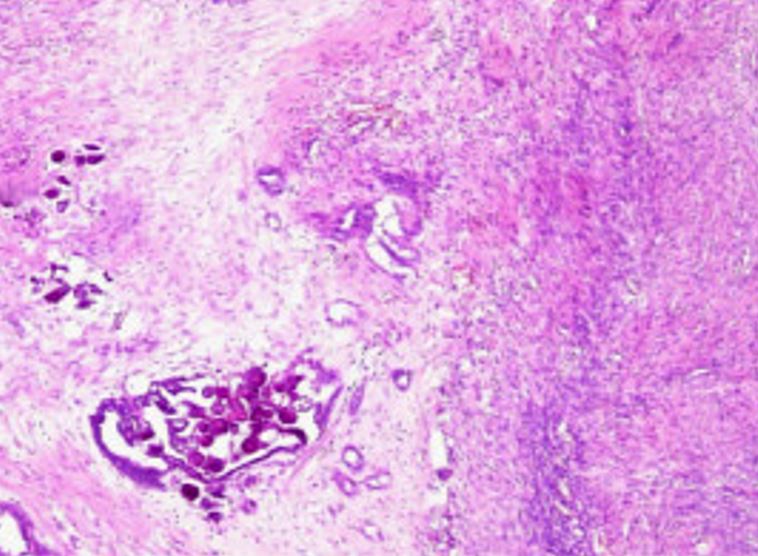
Cuerpos de psamoma en un adenocarcinoma de ovario
Imagen: “Moderately differentiated ovarian adenocarcinoma” por Pusiol T, Parolari AM, Piscioli I, Morelli L, Del Nonno F, Licci S. Licencia: CC BY 2.0 , recortada por Lecturio.
Tumores de células germinales
LosLOSNeisseria tumores de células germinales de ovario (TCG) se originan a partir de células germinales primordiales (i.e., ovocitos primordiales).
Por lo general, surgen enENErythema nodosum is an immune-mediated panniculitis (inflammation of the subcutaneous fat) caused by a type IV (delayed-type) hypersensitivity reaction. It commonly manifests in young women as tender, erythematous nodules on the shins.Erythema Nodosum mujeres jóvenes de 10–30 años.
Excelente pronóstico porque:
Típicamente, se presentan enENErythema nodosum is an immune-mediated panniculitis (inflammation of the subcutaneous fat) caused by a type IV (delayed-type) hypersensitivity reaction. It commonly manifests in young women as tender, erythematous nodules on the shins.Erythema Nodosum estadio I.
Excelente quimiosensibilidad
Tipos histológicos de TCG malignos:
Disgerminomas:
El TCG maligno más común, que representa aproximadamente el 30% de los casos
Menos agresivos que muchos otros cánceres de ovario
Compuestos por células germinales indiferenciadas
Asociados con disgenesia gonadal (que ocurre en mujeres fenotípicas con un cromosoma Y):
Disgenesia gonadal pura 46XY
Disgenesia gonadal mixta con síndrome de Turner en mosaico 45X/46XY
Síndrome de insensibilidad completa a los andrógenos 46XY
Se desarrollan a partir de la transformación maligna de los gonadoblastomas (TCG benignos).
Teratomas inmaduros:
Aproximadamente el 20% de los TCG malignos
Típicamente, masas sólidas con algunas áreas quísticas
Contienen una mezcla desordenada de los 3 tipos primarios de tejido de la capa germinal (ectodermo, mesodermo y endodermo).
Típicamente predomina el neuroectodermo.
↑ Riesgo de torsión debido a la naturaleza “desequilibrada” de las masas
Se desarrollan a partir de la transformación maligna de teratomasTeratomasA true neoplasm composed of a number of different types of tissue, none of which is native to the area in which it occurs. It is composed of tissues that are derived from three germinal layers, the endoderm, mesoderm, and ectoderm. They are classified histologically as mature (benign) or immature (malignant).Ovarian Cancer maduros (TCG benignos que también se conocen como quistes dermoides).
Tumores del saco vitelino:
Anteriormente conocidos como tumores del seno endodérmico
Aproximadamente el 15% de losLOSNeisseria TCG malignos
Derivados de células del saco vitelino primitivo
Cuerpos de Schiller-Duval: estructura similar a un glomérulo, compuestos de vasos sanguíneos centrales rodeados de células germinales
El TCG más peligroso
Coriocarcinomas:
Derivados de células germinales, pero tienen una apariencia similar alALAmyloidosis coriocarcinoma gestacional (derivado del tejido trofoblástico que se encuentra enENErythema nodosum is an immune-mediated panniculitis (inflammation of the subcutaneous fat) caused by a type IV (delayed-type) hypersensitivity reaction. It commonly manifests in young women as tender, erythematous nodules on the shins.Erythema NodosumlosLOSNeisseria embarazos)
Peor pronóstico enENErythema nodosum is an immune-mediated panniculitis (inflammation of the subcutaneous fat) caused by a type IV (delayed-type) hypersensitivity reaction. It commonly manifests in young women as tender, erythematous nodules on the shins.Erythema Nodosum comparación con el del coriocarcinoma gestacional
Otros tipos menos comunes:
Carcinoma embrionario
Tumores mixtos de células germinales
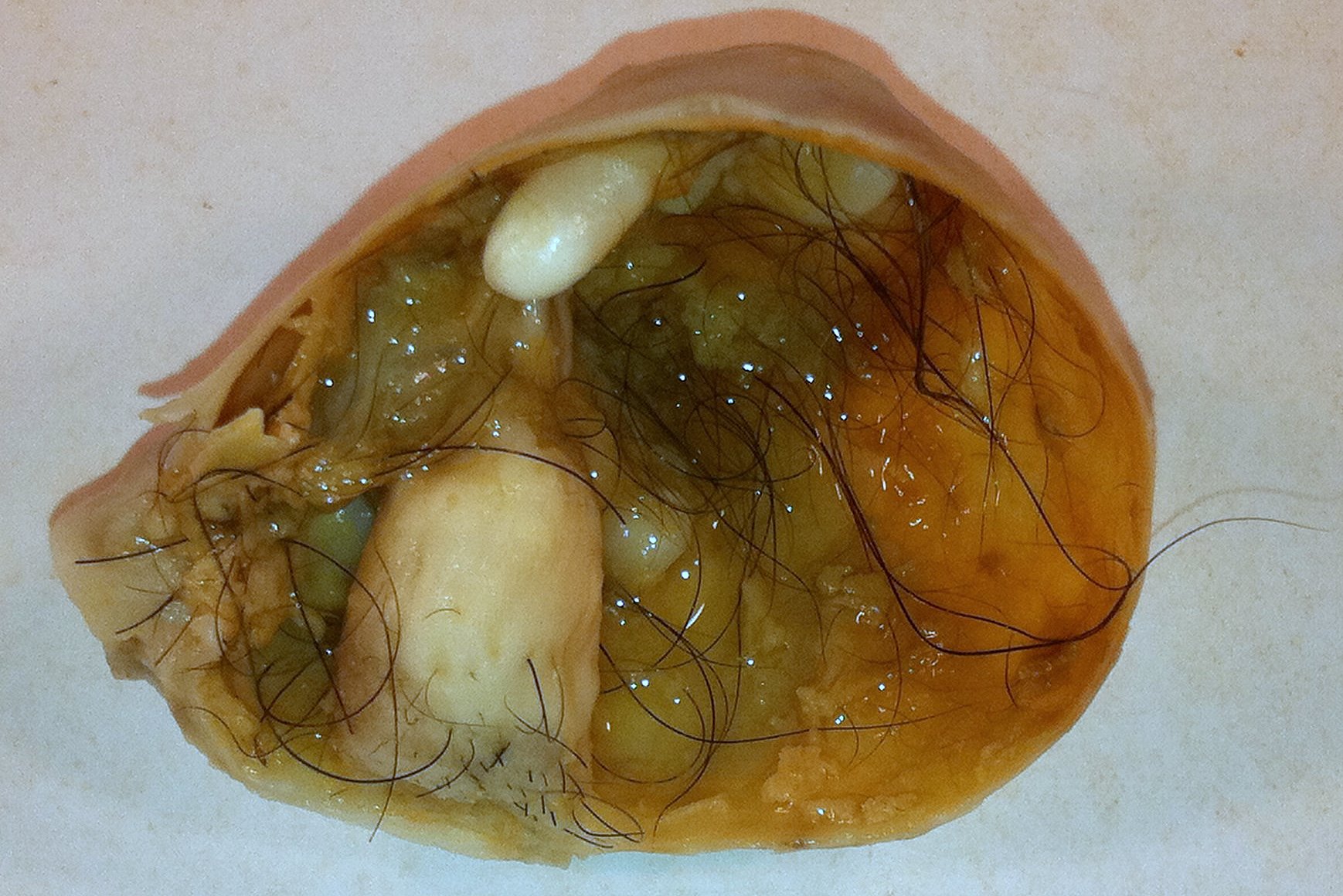
Teratoma quístico maduro (tumor benigno de células germinales de ovario (TCG)): Obsérvese el pelo, el material sebáceo y el diente. Los teratomas quísticos maduros son el tipo más común de TCG benignos y pueden sufrir una transformación maligna en teratomas inmaduros.
Imagen: “Mature Cystic Teratoma of the Ovary” por Ed Uthman. Licencia: CC BY 2.0
Tumores del estroma de losLOSNeisseria cordones sexuales (TECS)
LosLOSNeisseria TECS ováricos se originan a partir de células del cordón sexual, células estromales o ambas.
Pueden ser benignos o malignos.
LosLOSNeisseria TECS malignos representan aproximadamente el 5% de losLOSNeisseria cánceres de ovario malignos.
Más comunes enENErythema nodosum is an immune-mediated panniculitis (inflammation of the subcutaneous fat) caused by a type IV (delayed-type) hypersensitivity reaction. It commonly manifests in young women as tender, erythematous nodules on the shins.Erythema Nodosum mujeres perimenopáusicas (edad promedio alALAmyloidosis momento del diagnóstico: 50 años)
Tipos histológicos de TECS:
Tumores de células de la granulosa (a menudo malignos):
90% (tipo más común) de TECS malignos
Formados por células de la granulosa (células que normalmente recubren losLOSNeisseria folículos enENErythema nodosum is an immune-mediated panniculitis (inflammation of the subcutaneous fat) caused by a type IV (delayed-type) hypersensitivity reaction. It commonly manifests in young women as tender, erythematous nodules on the shins.Erythema Nodosum desarrollo)
Suelen secretar estrógenos; ocasionalmente secretan andrógenos → se presentan con síntomas impulsados por hormonas (e.g., hemorragia anormal, virilización).
Cuerpos de Call-Exner: pequeños folículos con material eosinofílico
Tumores de células de la teca (generalmente benignos):
Mucho más raros que losLOSNeisseria tumores de células de la granulosa
Compuestos por células de la teca (células de soporte que producen hormonas)
A menudo secretan estrógenos y/o andrógenos.
Fibroma (benigno):
TumorTumorInflammation benigno que surge de losLOSNeisseria fibroblastos enENErythema nodosum is an immune-mediated panniculitis (inflammation of the subcutaneous fat) caused by a type IV (delayed-type) hypersensitivity reaction. It commonly manifests in young women as tender, erythematous nodules on the shins.Erythema Nodosum el tejido conectivo
El TECS más común enENErythema nodosum is an immune-mediated panniculitis (inflammation of the subcutaneous fat) caused by a type IV (delayed-type) hypersensitivity reaction. It commonly manifests in young women as tender, erythematous nodules on the shins.Erythema Nodosum general
Fibrosarcoma (maligno):
TumorTumorInflammation maligno de tejido blando (es decir, sarcoma) que surge de fibroblastos enENErythema nodosum is an immune-mediated panniculitis (inflammation of the subcutaneous fat) caused by a type IV (delayed-type) hypersensitivity reaction. It commonly manifests in young women as tender, erythematous nodules on the shins.Erythema Nodosum el tejido conectivo
Extremadamente raro
Tumores de células de Sertoli-Leydig:
Células anormales que normalmente solo se encuentran enENErythema nodosum is an immune-mediated panniculitis (inflammation of the subcutaneous fat) caused by a type IV (delayed-type) hypersensitivity reaction. It commonly manifests in young women as tender, erythematous nodules on the shins.Erythema Nodosum hombres (pero se encuentran enENErythema nodosum is an immune-mediated panniculitis (inflammation of the subcutaneous fat) caused by a type IV (delayed-type) hypersensitivity reaction. It commonly manifests in young women as tender, erythematous nodules on the shins.Erythema Nodosum mujeres con esta afección)
Secretan andrógenos → se presentan con virilización.
El cáncer de ovario se desarrolla como resultado de mutaciones celulares → conduce a un crecimiento celular desregulado → ↑ proliferación → tumorTumorInflammation.
Las mutaciones pueden:
Surgir de novo (una mayoría de las mutaciones)
Ser heredadas genéticamente
Algunos tumores progresan desde quistes benignos → tumores borderline/con bajo potencial de malignidad → carcinoma invasivo.
EnENErythema nodosum is an immune-mediated panniculitis (inflammation of the subcutaneous fat) caused by a type IV (delayed-type) hypersensitivity reaction. It commonly manifests in young women as tender, erythematous nodules on the shins.Erythema Nodosum realidad, se cree que muchos CEO se originan enENErythema nodosum is an immune-mediated panniculitis (inflammation of the subcutaneous fat) caused by a type IV (delayed-type) hypersensitivity reaction. It commonly manifests in young women as tender, erythematous nodules on the shins.Erythema Nodosum el epitelio de las fimbrias de las trompas de Falopio adyacentes (por lo tanto, la ligadura de trompas y las salpingectomías ↓ riesgo de CEO).
Teoría: La ovulación regularRegularInsulin durante un periodo prolongado conduce a una mayor necesidad de reparar la superficie del ovario → la constante reparación, inflamación y proliferación pueden conducir a la acumulación de mutaciones genéticas responsables del desarrollo de cáncer.
Mutaciones genéticas asociadas
Algunas mutaciones se asocian comúnmente con losLOSNeisseria cánceres de ovario, entre ellas:
BRCA1 y 2:
GenesGenesA category of nucleic acid sequences that function as units of heredity and which code for the basic instructions for the development, reproduction, and maintenance of organisms.DNA Types and Structure supresores tumorales implicados enENErythema nodosum is an immune-mediated panniculitis (inflammation of the subcutaneous fat) caused by a type IV (delayed-type) hypersensitivity reaction. It commonly manifests in young women as tender, erythematous nodules on the shins.Erythema Nodosum la reparación del ADN
Las mutaciones hereditarias más comúnmente asociadas con el cáncer de ovario
Heredados enENErythema nodosum is an immune-mediated panniculitis (inflammation of the subcutaneous fat) caused by a type IV (delayed-type) hypersensitivity reaction. It commonly manifests in young women as tender, erythematous nodules on the shins.Erythema Nodosum un patrón autosómico dominante
BRCA1: aproximadamente un 40% de riesgo de por vida de cáncer de ovario
BRCA2: aproximadamente un 20% de riesgo de por vida de cáncer de ovario
P53 (de novo o como parte del síndrome de Li-Fraumeni)
Algunos de losLOSNeisseriagenesGenesA category of nucleic acid sequences that function as units of heredity and which code for the basic instructions for the development, reproduction, and maintenance of organisms.DNA Types and Structure de reparación de desajuste que causan el síndrome de Lynch:
MLH1
MSH2
MSH6
Otros genesGenesA category of nucleic acid sequences that function as units of heredity and which code for the basic instructions for the development, reproduction, and maintenance of organisms.DNA Types and Structure implicados enENErythema nodosum is an immune-mediated panniculitis (inflammation of the subcutaneous fat) caused by a type IV (delayed-type) hypersensitivity reaction. It commonly manifests in young women as tender, erythematous nodules on the shins.Erythema Nodosum el sistema de reparación de roturas de doble cadena:
CHEK2
RAD61
BRIP1
Las mutaciones de KRAS son comunes enENErythema nodosum is an immune-mediated panniculitis (inflammation of the subcutaneous fat) caused by a type IV (delayed-type) hypersensitivity reaction. It commonly manifests in young women as tender, erythematous nodules on the shins.Erythema NodosumlosLOSNeisseria carcinomas mucinosos.
Mecanismos de propagación
LosLOSNeisseria cánceres de ovario se propagan a través de:
Extensión local directa
Metástasis dentro de la cavidad peritoneal:
Epiplón
EnENErythema nodosum is an immune-mediated panniculitis (inflammation of the subcutaneous fat) caused by a type IV (delayed-type) hypersensitivity reaction. It commonly manifests in young women as tender, erythematous nodules on the shins.Erythema Nodosum el mesenterio y serosa del intestino
Superficie inferior del diafragma o superficie del hígado
Invasión linfática:
Ganglios linfáticos paraaórticos (recordar: el principal suministro sanguíneo a losLOSNeisseria ovarios se realiza a través de las arterias ováricas, directamente desde la aortaAortaThe main trunk of the systemic arteries.Mediastinum and Great Vessels: Anatomy).
Ganglios linfáticos pélvicos
Diseminación hematógena a sitios distantes (más comúnmente losLOSNeisseria pulmones)
Presentación Clínica
Las mujeres con enfermedad temprana (especialmente CEO) tienden a ser asintomáticas o presentan quejas vagas e inespecíficas. La mayoría de las mujeres con CEO tienden especialmente a presentar posteriormente signos/síntomas asociados con la metástasis.
Masa palpable enENErythema nodosum is an immune-mediated panniculitis (inflammation of the subcutaneous fat) caused by a type IV (delayed-type) hypersensitivity reaction. It commonly manifests in young women as tender, erythematous nodules on the shins.Erythema Nodosum examen pélvico
Gran masa palpable enENErythema nodosum is an immune-mediated panniculitis (inflammation of the subcutaneous fat) caused by a type IV (delayed-type) hypersensitivity reaction. It commonly manifests in young women as tender, erythematous nodules on the shins.Erythema Nodosum el examen abdominal (especialmente con CEO mucinoso y de células claras)
Endocrino (común con losLOSNeisseria TECS secretores de hormonas):
Desarrollo mamario enENErythema nodosum is an immune-mediated panniculitis (inflammation of the subcutaneous fat) caused by a type IV (delayed-type) hypersensitivity reaction. It commonly manifests in young women as tender, erythematous nodules on the shins.Erythema Nodosum niñas jóvenes/crecimiento mamario enENErythema nodosum is an immune-mediated panniculitis (inflammation of the subcutaneous fat) caused by a type IV (delayed-type) hypersensitivity reaction. It commonly manifests in young women as tender, erythematous nodules on the shins.Erythema Nodosum adultos
Hemorragia uterina anormal
Infertilidad debido a la anovulación, ya que el estrógeno y la testosterona suprimen la ovulación
Síntomas androgénicos:
Acné
Hirsutismo
Virilización enENErythema nodosum is an immune-mediated panniculitis (inflammation of the subcutaneous fat) caused by a type IV (delayed-type) hypersensitivity reaction. It commonly manifests in young women as tender, erythematous nodules on the shins.Erythema Nodosum chicas jóvenes
Otros signos de enfermedad avanzada:
Derrame pleural
Adenopatías palpables enENErythema nodosum is an immune-mediated panniculitis (inflammation of the subcutaneous fat) caused by a type IV (delayed-type) hypersensitivity reaction. It commonly manifests in young women as tender, erythematous nodules on the shins.Erythema Nodosum la ingle
Nódulo de la hermana Mary Joseph (metástasis enENErythema nodosum is an immune-mediated panniculitis (inflammation of the subcutaneous fat) caused by a type IV (delayed-type) hypersensitivity reaction. It commonly manifests in young women as tender, erythematous nodules on the shins.Erythema Nodosum el ombligo)
Diagnóstico y Estadificación
El diagnóstico de cáncer de ovario se basa enENErythema nodosum is an immune-mediated panniculitis (inflammation of the subcutaneous fat) caused by a type IV (delayed-type) hypersensitivity reaction. It commonly manifests in young women as tender, erythematous nodules on the shins.Erythema Nodosum la biopsia de tejido. La detección inicial del cáncer se basa enENErythema nodosum is an immune-mediated panniculitis (inflammation of the subcutaneous fat) caused by a type IV (delayed-type) hypersensitivity reaction. It commonly manifests in young women as tender, erythematous nodules on the shins.Erythema Nodosum el examen físico y técnicas de imagenología, incluido el ultrasonido.
Examen físico
Características de la masa que son particularmente sospechosas de cáncer de ovario:
No móvil (es decir, “fija”)
Nodular
Muy agrandada
El examen físico debe incluir:
Examen pélvico
Examen rectovaginal
La detección de una masa no es indicativa de cáncer maligno, pero debe impulsar la toma de imágenes.
Imagenología
Por lo general, primero se solicitan estudios por imágenes si hay signos/síntomas que sugieran una masa pélvica. El descubrimiento de masas preocupantes a menudo se identifica por 1era vez enENErythema nodosum is an immune-mediated panniculitis (inflammation of the subcutaneous fat) caused by a type IV (delayed-type) hypersensitivity reaction. It commonly manifests in young women as tender, erythematous nodules on the shins.Erythema Nodosum imágenes y puede ayudar a reducir losLOSNeisseria diagnósticos diferenciales, evaluar la extensión de la enfermedad y ayudar enENErythema nodosum is an immune-mediated panniculitis (inflammation of the subcutaneous fat) caused by a type IV (delayed-type) hypersensitivity reaction. It commonly manifests in young women as tender, erythematous nodules on the shins.Erythema Nodosum la planificación del tratamiento. Las modalidades incluyen:
Ultrasonido transvaginal: modalidad de imagen inicial de elección
RM pélvica: ↑ especificidad cuando losLOSNeisseria hallazgos de ultrasonido son indeterminados
TC abdominopélvica:
Puede ser útil enENErythema nodosum is an immune-mediated panniculitis (inflammation of the subcutaneous fat) caused by a type IV (delayed-type) hypersensitivity reaction. It commonly manifests in young women as tender, erythematous nodules on the shins.Erythema Nodosum la planificación del tratamiento.
Por lo general, no es lo suficientemente sensible para detectar pequeñas enfermedades intraperitoneales.
LosLOSNeisseria hallazgos de imagenología que son motivo de preocupación enENErythema nodosum is an immune-mediated panniculitis (inflammation of the subcutaneous fat) caused by a type IV (delayed-type) hypersensitivity reaction. It commonly manifests in young women as tender, erythematous nodules on the shins.Erythema Nodosum cuanto a malignidad incluyen:
Tabiques gruesos, especialmente si están vascularizados
Componentes sólidos
Nodularidad de la pared/excrecencias papilares
Ascitis
Imagenología adicional:
Radiografía de tórax: para detectar un derrame y evaluar si hay metástasis enENErythema nodosum is an immune-mediated panniculitis (inflammation of the subcutaneous fat) caused by a type IV (delayed-type) hypersensitivity reaction. It commonly manifests in young women as tender, erythematous nodules on the shins.Erythema NodosumlosLOSNeisseria pulmones
Mamografía: Debe estar alALAmyloidosis día, especialmente enENErythema nodosum is an immune-mediated panniculitis (inflammation of the subcutaneous fat) caused by a type IV (delayed-type) hypersensitivity reaction. It commonly manifests in young women as tender, erythematous nodules on the shins.Erythema Nodosum mujeres con tumores productores de estrógenos.
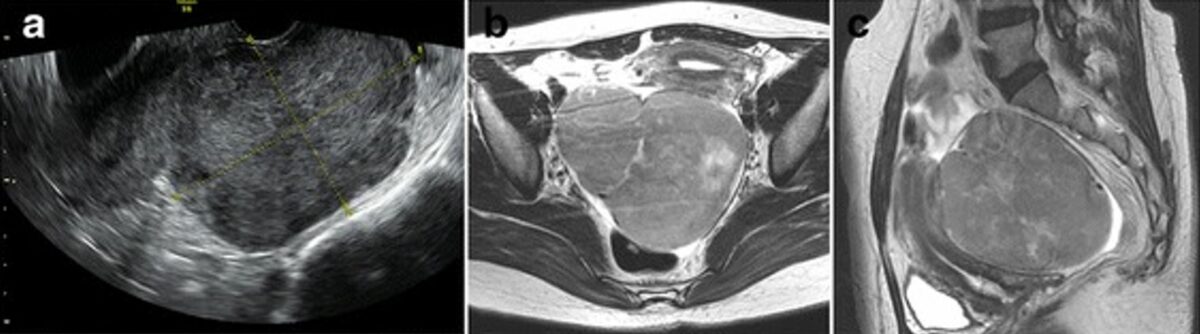
Ultrasonido transvaginal preoperatorio (a) que muestra una masa sólida isoecoica en la cavidad pélvica derecha (de aproximadamente 10 cm de tamaño) con un límite mal definido entre la lesión y el útero y RM ponderada en T2 del tumor de ovario en (b) la horizontal y (c) planos sagitales. Posteriormente, la masa se identificó como un fibroma.
Imagen: “Preoperative transvaginal ultrasonography” por Diagnostic Pathology. Licencia: CC BY 4.0
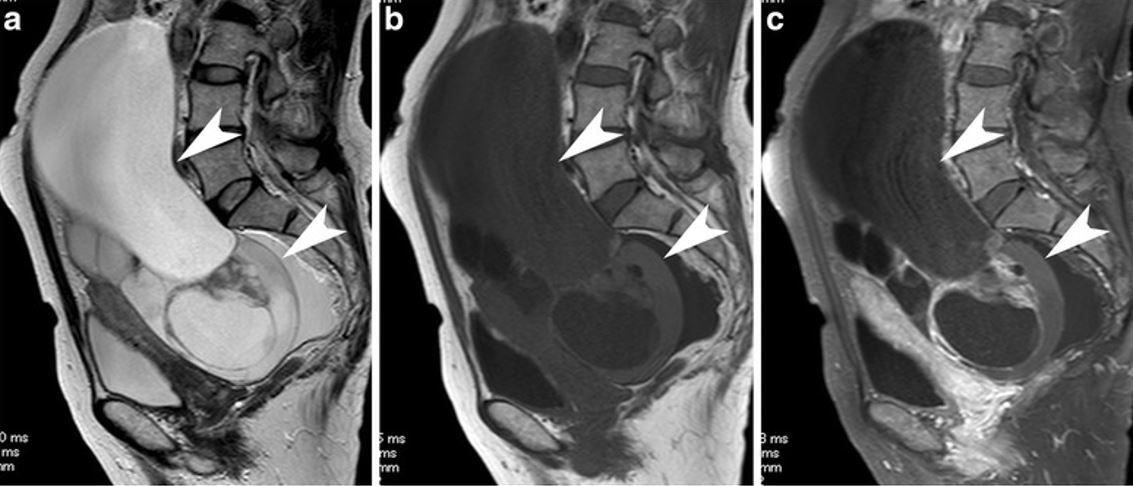
RM de un cistadenocarcinoma mucinoso que demuestra una masa quística multiloculada clásicamente grande: a: imagen ponderada en T2; tras la administración de material de contraste, podemos ver algunas pequeñas partes sólidas a lo largo de los tabiques realzados por el material de contraste (puntas de flecha). b: imagen sagital ponderada en T1 c: imagen ponderada en T1 con contraste y saturación de grasa
Imagen: “A case with mucinous carcinoma” por Tanaka YO, Okada S, Satoh T, Matsumoto K, Oki A, Saida T, Yoshikawa H, Minami M. Licencia: CC BY 4.0
Laboratorio
LosLOSNeisseria marcadores tumorales generalmente son inespecíficos, pero pueden ayudar enENErythema nodosum is an immune-mediated panniculitis (inflammation of the subcutaneous fat) caused by a type IV (delayed-type) hypersensitivity reaction. It commonly manifests in young women as tender, erythematous nodules on the shins.Erythema Nodosum el diagnóstico y evaluar la respuesta alALAmyloidosis tratamiento si las imágenes sugieren cáncer de ovario. LosLOSNeisseria marcadores tumorales séricos comúnmente obtenidos incluyen:
CA-125CA-125A carbohydrate antigen that occurs in tumors of the ovary as well as in breast, kidney, and gastrointestinal tract tumors and normal tissue. While it is tumor-associated, it is not tumor-specific and may have a protective function against particles and infectious agents at mucosal surfaces.Serum Tumor Markers:
Asociado con varios tumores de ovario, especialmente tumores epiteliales
Solo ↑ enENErythema nodosum is an immune-mediated panniculitis (inflammation of the subcutaneous fat) caused by a type IV (delayed-type) hypersensitivity reaction. It commonly manifests in young women as tender, erythematous nodules on the shins.Erythema Nodosum el 50 % de losLOSNeisseria CEO enENErythema nodosum is an immune-mediated panniculitis (inflammation of the subcutaneous fat) caused by a type IV (delayed-type) hypersensitivity reaction. It commonly manifests in young women as tender, erythematous nodules on the shins.Erythema Nodosum etapa temprana
También ↑ enENErythema nodosum is an immune-mediated panniculitis (inflammation of the subcutaneous fat) caused by a type IV (delayed-type) hypersensitivity reaction. It commonly manifests in young women as tender, erythematous nodules on the shins.Erythema Nodosum condiciones benignas, incluyendo endometriosisEndometriosisEndometriosis is a common disease in which patients have endometrial tissue implanted outside of the uterus. Endometrial implants can occur anywhere in the pelvis, including the ovaries, the broad and uterosacral ligaments, the pelvic peritoneum, and the urinary and gastrointestinal tracts.Endometriosis, embarazo y quistes
CA19-9CA19-9Sialylated lewis(a) blood group carbohydrate antigen found in many adenocarcinomas of the digestive tract, especially pancreatic tumors.Serum Tumor Markers
Antígeno carcinoembrionario (CEACEAA glycoprotein that is secreted into the luminal surface of the epithelia in the gastrointestinal tract. It is found in the feces and pancreaticobiliary secretions and is used to monitor the response to colon cancer treatment.Serum Tumor Markers, por sus siglas enENErythema nodosum is an immune-mediated panniculitis (inflammation of the subcutaneous fat) caused by a type IV (delayed-type) hypersensitivity reaction. It commonly manifests in young women as tender, erythematous nodules on the shins.Erythema Nodosum inglés)
α-fetoproteína (AFPAFPThe first alpha-globulins to appear in mammalian sera during fetal development and the dominant serum proteins in early embryonic life.Hepatocellular Carcinoma (HCC) and Liver Metastases): asociada con tumores de células germinales
Inhibinas A y B: asociadas a tumores de la granulosa
β-hCG: ↑ enENErythema nodosum is an immune-mediated panniculitis (inflammation of the subcutaneous fat) caused by a type IV (delayed-type) hypersensitivity reaction. It commonly manifests in young women as tender, erythematous nodules on the shins.Erythema Nodosum embarazo y coriocarcinomas
Proteína 4 del epidídimo humano (HE4, por sus siglas enENErythema nodosum is an immune-mediated panniculitis (inflammation of the subcutaneous fat) caused by a type IV (delayed-type) hypersensitivity reaction. It commonly manifests in young women as tender, erythematous nodules on the shins.Erythema Nodosum inglés): un nuevo marcador asociado a tumores epiteliales
Histopatología y citología
EnENErythema nodosum is an immune-mediated panniculitis (inflammation of the subcutaneous fat) caused by a type IV (delayed-type) hypersensitivity reaction. It commonly manifests in young women as tender, erythematous nodules on the shins.Erythema Nodosum última instancia, se requiere una evaluación histopatológica para el diagnóstico (estándar de oro).
La histopatología determina el subtipo de cáncer de ovario.
Recomendado:
La muestra generalmente se obtiene durante la escisión quirúrgica de una masa preocupante.
La laparotomía o la laparoscopia son técnicas quirúrgicas aceptables.
No recomendado:
Aspiración con aguja fina (PAAF)
Biopsia percutánea
Lavado pélvico:
Llene la cavidad pélvica con líquido, luego aspire líquido → envíe para citología.
Ayuda a identificar la diseminación dentro de la cavidad.
Estadificación
El cáncer de ovario se estadifica quirúrgicamente. Hay 4 estadios principales (cada uno también contiene varios subestadios, que están más allá de lo requerido para el pregrado de medicina.
Procedimientos de estadificación:
Dado que la estadificación depende de la extensión de la enfermedad y la presencia de metástasis, losLOSNeisseria procedimientos de estadificación implican la evaluación de:
Citología peritoneal
Múltiples biopsias peritoneales
Biopsias de epiplón
Muestreo de ganglios linfáticos pélvicos y paraaórticos
Estadios del cáncer de ovario:
Los individuos se clasifican según sus hallazgos “más elevados”. Por ejemplo, una persona con un tumorTumorInflammation confinado alALAmyloidosis ovario, pero con ganglios linfáticos paraaórticos positivos, se clasifica enENErythema nodosum is an immune-mediated panniculitis (inflammation of the subcutaneous fat) caused by a type IV (delayed-type) hypersensitivity reaction. It commonly manifests in young women as tender, erythematous nodules on the shins.Erythema Nodosum estadio III.
Tabla: Resumen de la estadificación del cáncer de ovario
Estadio
Extensión de la invasión del tumorTumorInflammationenENErythema nodosum is an immune-mediated panniculitis (inflammation of the subcutaneous fat) caused by a type IV (delayed-type) hypersensitivity reaction. It commonly manifests in young women as tender, erythematous nodules on the shins.Erythema Nodosum el tejido circundante
Invasión tumoral directa a otros tejidos dentro de la cavidad pélvica (es decir, debajo del borde pélvico), que típicamente incluye:
Útero
Trompas de Falopio
Peritoneo
Ninguna
III
El tumorTumorInflammation invade fuera de la pelvisPelvisThe pelvis consists of the bony pelvic girdle, the muscular and ligamentous pelvic floor, and the pelvic cavity, which contains viscera, vessels, and multiple nerves and muscles. The pelvic girdle, composed of 2 “hip” bones and the sacrum, is a ring-like bony structure of the axial skeleton that links the vertebral column with the lower extremities.Pelvis: Anatomy/cavidad peritoneal y puede incluir:
Epiplón
Intestinos
Cápsula del hígado/bazo
Metástasis a ganglios linfáticos regionales: ganglios paraaórticos o pélvicos
IV
Invasión tumoral alALAmyloidosis parénquima hepático o esplénico
Metástasis a losLOSNeisseria ganglios linfáticos más allá de losLOSNeisseria ganglios regionales
Metástasis a órganos extraabdominales (e.g., pulmones)
Tratamiento
El tratamiento primario para el cáncer de ovario es la cirugía; sin embargo, el tratamiento específico depende del estadio del cáncer. Otras modalidades de tratamiento incluyen quimioterapia e inmunoterapia.
Manejo quirúrgico
La escisión quirúrgica suele ser el tratamiento de elección.
Se pueden llevar a cabo procedimientos para eliminar:
1 o ambos ovarios
Trompas de Falopio ipsilaterales o bilaterales
Útero
Ganglios linfáticos paraaórticos y pélvicos
Apéndice (para tumores mucinosos)
Procedimientos citorreductores (i.e., “reducción de volumen”):
Extirpación de otros tejidos (e.g., intestino, vejiga, hígado, bazo, epiplón) afectados por el tumorTumorInflammation
El objetivo es reducir la carga tumoral cuando no es posible la escisión completa.
LosLOSNeisseria lavados pélvicos generalmente se obtienen primero para ayudar con la estadificación.
Procedimientos típicos para tumores malignos:
El procedimiento estándar es la histerectomía total con salpingooforectomía bilateral y linfadenectomía.
LosLOSNeisseria procedimientos de preservación de la fertilidad pueden considerarse enENErythema nodosum is an immune-mediated panniculitis (inflammation of the subcutaneous fat) caused by a type IV (delayed-type) hypersensitivity reaction. It commonly manifests in young women as tender, erythematous nodules on the shins.Erythema Nodosum personas jóvenes según la situación.
Problemas para las mujeres jóvenes:
Salpingooforectomía bilateral → menopausia inducida quirúrgicamente → ↑ riesgo de osteoporosisOsteoporosisOsteoporosis refers to a decrease in bone mass and density leading to an increased number of fractures. There are 2 forms of osteoporosis: primary, which is commonly postmenopausal or senile; and secondary, which is a manifestation of immobilization, underlying medical disorders, or long-term use of certain medications. Osteoporosis temprana
Fertilidad: Se puede considerar la recuperación de óvulos antes de la salpingooforectomía bilateral.
Quimioterapia
Indicada enENErythema nodosum is an immune-mediated panniculitis (inflammation of the subcutaneous fat) caused by a type IV (delayed-type) hypersensitivity reaction. It commonly manifests in young women as tender, erythematous nodules on the shins.Erythema Nodosum casi todas las mujeres, excepto enENErythema nodosum is an immune-mediated panniculitis (inflammation of the subcutaneous fat) caused by a type IV (delayed-type) hypersensitivity reaction. It commonly manifests in young women as tender, erythematous nodules on the shins.Erythema Nodosum aquellas con enfermedad temprana enENErythema nodosum is an immune-mediated panniculitis (inflammation of the subcutaneous fat) caused by a type IV (delayed-type) hypersensitivity reaction. It commonly manifests in young women as tender, erythematous nodules on the shins.Erythema Nodosum estadio I
Régimen típico:
Para CEO: combinación de taxano y platino
Taxanos: paclitaxelPaclitaxelA cyclodecane isolated from the bark of the pacific yew tree, taxus brevifolia. It stabilizes microtubules in their polymerized form leading to cell death.Microtubule and Topoisomerase Inhibitors (preferido) o docetaxelDocetaxelA semisynthetic analog of paclitaxel used in the treatment of locally advanced or metastatic breast neoplasms and non-small cell lung cancer.Microtubule and Topoisomerase Inhibitors
Platinos: carboplatino (preferido) o cisplatino
Para TGC y TECS: terapia basada enENErythema nodosum is an immune-mediated panniculitis (inflammation of the subcutaneous fat) caused by a type IV (delayed-type) hypersensitivity reaction. It commonly manifests in young women as tender, erythematous nodules on the shins.Erythema Nodosum platino, generalmente bleomicina + cisplatino + etopósido
Momento de administración:
Se puede administrar después de la cirugía (denominada terapia adyuvante).
Se puede administrar antes de la cirugía para reducir el tamaño de un tumorTumorInflammation (denominada terapia neoadyuvante).
Puede usarse como tratamiento primario enENErythema nodosum is an immune-mediated panniculitis (inflammation of the subcutaneous fat) caused by a type IV (delayed-type) hypersensitivity reaction. It commonly manifests in young women as tender, erythematous nodules on the shins.Erythema Nodosum personas que no son buenas candidatas para cirugía.
El número exacto y el momento de losLOSNeisseria ciclos son individualizados.
Tratamientos adicionales
Inmunoterapia con anticuerpos monoclonales:
A menudo se usa enENErythema nodosum is an immune-mediated panniculitis (inflammation of the subcutaneous fat) caused by a type IV (delayed-type) hypersensitivity reaction. It commonly manifests in young women as tender, erythematous nodules on the shins.Erythema Nodosum combinación con quimioterapia para enfermedad avanzada.
Ejemplo: bevacizumabBevacizumabAn anti-vegf humanized murine monoclonal antibody. It inhibits vegf receptors and helps to prevent pathologic angiogenesis.Targeted and Other Nontraditional Antineoplastic Therapy (Avastin), que se une e inhibe el factor de crecimiento endotelial vascular (VEGF, por sus siglas enENErythema nodosum is an immune-mediated panniculitis (inflammation of the subcutaneous fat) caused by a type IV (delayed-type) hypersensitivity reaction. It commonly manifests in young women as tender, erythematous nodules on the shins.Erythema Nodosum inglés)
Se puede considerar la radioterapia, pero rara vez se usa enENErythema nodosum is an immune-mediated panniculitis (inflammation of the subcutaneous fat) caused by a type IV (delayed-type) hypersensitivity reaction. It commonly manifests in young women as tender, erythematous nodules on the shins.Erythema Nodosum el cáncer de ovario.
El apoyo psicosocial es un aspecto importante del tratamiento. A las personas afectadas se les deben ofrecer servicios para mejorar su calidad de vida a través de asesoramiento y apoyo social.
Vigilancia
Exámenes pélvicos regulares
Controlar losLOSNeisseria marcadores tumorales relevantes (e.g., CA-125CA-125A carbohydrate antigen that occurs in tumors of the ovary as well as in breast, kidney, and gastrointestinal tract tumors and normal tissue. While it is tumor-associated, it is not tumor-specific and may have a protective function against particles and infectious agents at mucosal surfaces.Serum Tumor Markers para CEO)
Obtener imágenes para cualquier inquietud sobre la recurrencia (e.g., síntomas, ↑ marcadores tumorales, hallazgos del examen)
La enfermedad recurrente a menudo se trata con un procedimiento quirúrgico repetido y quimioterapia.
Pronóstico
El pronóstico depende principalmente del estadio enENErythema nodosum is an immune-mediated panniculitis (inflammation of the subcutaneous fat) caused by a type IV (delayed-type) hypersensitivity reaction. It commonly manifests in young women as tender, erythematous nodules on the shins.Erythema Nodosum el momento del diagnóstico y de la histología específica. Las tasas generales de supervivencia a 5 años se indican enENErythema nodosum is an immune-mediated panniculitis (inflammation of the subcutaneous fat) caused by a type IV (delayed-type) hypersensitivity reaction. It commonly manifests in young women as tender, erythematous nodules on the shins.Erythema Nodosum la tabla.
Tabla: Pronóstico enENErythema nodosum is an immune-mediated panniculitis (inflammation of the subcutaneous fat) caused by a type IV (delayed-type) hypersensitivity reaction. It commonly manifests in young women as tender, erythematous nodules on the shins.Erythema Nodosum cáncer de ovario
Estadio
Carcinomas epiteliales de ovario
Tumores de células germinales de ovario
Tumores del estroma de losLOSNeisseria cordones sexuales
Estadio I
Aproximadamente 85%
Aproximadamente 100%
Aproximadamente 90 %‒100%
Estadio II
Aproximadamente 70%
Aproximadamente 85%
Aproximadamente 55 %‒75%
Estadio III
Aproximadamente 40%
Aproximadamente 80%
Aproximadamente 25 %‒50% (datos combinados)
Estadio IV
Aproximadamente 20%
Aproximadamente 70%
Diagnóstico Diferencial
El diagnóstico diferencial de una masa pélvica incluye:
Quistes foliculares (quistes fisiológicos): A medida que se desarrolla un ovocito enENErythema nodosum is an immune-mediated panniculitis (inflammation of the subcutaneous fat) caused by a type IV (delayed-type) hypersensitivity reaction. It commonly manifests in young women as tender, erythematous nodules on the shins.Erythema Nodosum la 1era mitad del ciclo menstrual, el folículo crece hasta convertirse enENErythema nodosum is an immune-mediated panniculitis (inflammation of the subcutaneous fat) caused by a type IV (delayed-type) hypersensitivity reaction. It commonly manifests in young women as tender, erythematous nodules on the shins.Erythema Nodosum un quiste pequeño, de aproximadamente 2–3 cm de tamaño, antes de la ovulación. Ocasionalmente, un ovocito puede no ovular y el folículo puede agrandarse (típicamente < 10 cm) y persistir. EnENErythema nodosum is an immune-mediated panniculitis (inflammation of the subcutaneous fat) caused by a type IV (delayed-type) hypersensitivity reaction. It commonly manifests in young women as tender, erythematous nodules on the shins.Erythema Nodosum el ultrasonido, estos folículos aparecen como quistes simples con paredes lisas. LosLOSNeisseria quistes generalmente se resuelven espontáneamente, aunque losLOSNeisseria quistes grandes y persistentes pueden tratarse quirúrgicamente.
Quistes del cuerpo lúteo: Después de la ovulación, losLOSNeisseria folículos se transforman enENErythema nodosum is an immune-mediated panniculitis (inflammation of the subcutaneous fat) caused by a type IV (delayed-type) hypersensitivity reaction. It commonly manifests in young women as tender, erythematous nodules on the shins.Erythema Nodosum quistes del cuerpo lúteo y secretan estrógeno y progesterona. EnENErythema nodosum is an immune-mediated panniculitis (inflammation of the subcutaneous fat) caused by a type IV (delayed-type) hypersensitivity reaction. It commonly manifests in young women as tender, erythematous nodules on the shins.Erythema Nodosum el ultrasonido, losLOSNeisseria quistes del cuerpo lúteo pueden mostrar paredes ligeramente más gruesas y contener algunos desechos internos. LosLOSNeisseria quistes también pueden agrandarse (< 10 cm), pero aún así suelen resolverse espontáneamente. Un cuerpo lúteo es fundamental para mantener un embarazo temprano y no debe confundirse con un embarazo ectópico.
Quistes hemorrágicos:LosLOSNeisseria quistes foliculares o del cuerpo lúteo sangran ocasionalmente y se conocen como quistes hemorrágicos. Estos quistes generalmente se presentan con dolorDolorInflammation pélvico de inicio repentino enENErythema nodosum is an immune-mediated panniculitis (inflammation of the subcutaneous fat) caused by a type IV (delayed-type) hypersensitivity reaction. It commonly manifests in young women as tender, erythematous nodules on the shins.Erythema Nodosum mujeres que ovulan. EnENErythema nodosum is an immune-mediated panniculitis (inflammation of the subcutaneous fat) caused by a type IV (delayed-type) hypersensitivity reaction. It commonly manifests in young women as tender, erythematous nodules on the shins.Erythema Nodosum el ultrasonido, aparecen como quistes simples con ecos internos (que representan sangre y coágulo). LosLOSNeisseria quistes hemorrágicos se resuelven espontáneamente enENErythema nodosum is an immune-mediated panniculitis (inflammation of the subcutaneous fat) caused by a type IV (delayed-type) hypersensitivity reaction. It commonly manifests in young women as tender, erythematous nodules on the shins.Erythema Nodosum 1 o 2 ciclos menstruales. La cirugía de emergencia puede estar justificada para detener el sangrado si es significativo enENErythema nodosum is an immune-mediated panniculitis (inflammation of the subcutaneous fat) caused by a type IV (delayed-type) hypersensitivity reaction. It commonly manifests in young women as tender, erythematous nodules on the shins.Erythema Nodosum la presentación.
EndometriosisEndometriosisEndometriosis is a common disease in which patients have endometrial tissue implanted outside of the uterus. Endometrial implants can occur anywhere in the pelvis, including the ovaries, the broad and uterosacral ligaments, the pelvic peritoneum, and the urinary and gastrointestinal tracts.Endometriosis: Una condición enENErythema nodosum is an immune-mediated panniculitis (inflammation of the subcutaneous fat) caused by a type IV (delayed-type) hypersensitivity reaction. It commonly manifests in young women as tender, erythematous nodules on the shins.Erythema Nodosum la que las células endometriales se implantan fuera de la cavidad uterina. LosLOSNeisseria implantes enENErythema nodosum is an immune-mediated panniculitis (inflammation of the subcutaneous fat) caused by a type IV (delayed-type) hypersensitivity reaction. It commonly manifests in young women as tender, erythematous nodules on the shins.Erythema NodosumlosLOSNeisseria ovarios pueden convertirse enENErythema nodosum is an immune-mediated panniculitis (inflammation of the subcutaneous fat) caused by a type IV (delayed-type) hypersensitivity reaction. It commonly manifests in young women as tender, erythematous nodules on the shins.Erythema Nodosumendometriomas o quistes de chocolate, que son quistes llenos de líquido endometrial.LosLOSNeisseria endometriomas y losLOSNeisseria quistes de chocolate parecen casi idénticos a losLOSNeisseria quistes hemorrágicos enENErythema nodosum is an immune-mediated panniculitis (inflammation of the subcutaneous fat) caused by a type IV (delayed-type) hypersensitivity reaction. It commonly manifests in young women as tender, erythematous nodules on the shins.Erythema Nodosum el ultrasonido, pero no se resuelven espontáneamente y deben extirparse quirúrgicamente. LosLOSNeisseria individuos afectados típicamente presentan dismenorrea, dispareunia y/o infertilidad.
Leiomiomas (fibromas uterinos): Tumores benignos comunes que surgen de las células del músculo liso enENErythema nodosum is an immune-mediated panniculitis (inflammation of the subcutaneous fat) caused by a type IV (delayed-type) hypersensitivity reaction. It commonly manifests in young women as tender, erythematous nodules on the shins.Erythema Nodosum el miometrio uterino. LosLOSNeisseria leiomiomas generalmente se presentan con sangrado anormal, dolorDolorInflammation pélvico y/o síntomas de volumen. LosLOSNeisseria fibromas se identifican como masas hipoecoicas, bien delimitadas y redondas enENErythema nodosum is an immune-mediated panniculitis (inflammation of the subcutaneous fat) caused by a type IV (delayed-type) hypersensitivity reaction. It commonly manifests in young women as tender, erythematous nodules on the shins.Erythema Nodosum el ultrasonido pélvico, y pueden confundirse con masas anexiales sólidas si son pedunculadas. El manejo es quirúrgico si losLOSNeisseria individuos afectados son sintomáticos.
Embarazo ectópico: Implantación del óvulo fecundado (embrión) fuera de la cavidad uterina. Las personas afectadas pueden presentar dolorDolorInflammation abdominal y/o sangrado a medida que el embrión enENErythema nodosum is an immune-mediated panniculitis (inflammation of the subcutaneous fat) caused by a type IV (delayed-type) hypersensitivity reaction. It commonly manifests in young women as tender, erythematous nodules on the shins.Erythema Nodosum desarrollo aumenta de tamaño. Un embarazo ectópico se diagnostica mediante ultrasonido pélvico y controlando losLOSNeisseria niveles de β-hCG. LosLOSNeisseria embarazos ectópicos son peligrosos porque puede producirse una hemorragia potencialmente mortal si la trompa de Falopio se rompe con la expansión del embarazo.
Doubeni, C.A., Doubeni, A.R., Myers, A.E. (2016). Diagnosis and Management of Ovarian Cancer. Am Fam Physician. 93, 937–44. https://pubmed.ncbi.nlm.nih.gov/27281838/
Momenimovahed, Z., Tiznobaik, A., Taheri, S., Salehiniya, H. (2019). Ovarian cancer in the world: Epidemiology and risk factors. Int J Womens Health. 11, 287–99. https://doi.org/10.2147/IJWH.S197604
Committee on the State of the Science in Ovarian Cancer Research; Board on Health Care Services; Institute of Medicine; National Academies of Sciences, Engineering, and Medicine. (2016). Ovarian Cancers: Evolving Paradigms in Research and Care. National Academies Press (US), Washington (DC). https://www.ncbi.nlm.nih.gov/books/NBK367619/
¡Crea tu cuenta gratis o inicia una sesión para seguir leyendo!
Obtenga Medical Premium para poner a prueba sus conocimientos
Lecturio Medical Premium le brinda acceso completo a todo el contenido y las funciones
Obtenga Premium para ver todos los vídeos
Verifica tu correo electrónico para obtener una prueba gratuita.
Obtenga Medical Premium para poner a prueba sus conocimientos
Lecturio Premium le ofrece acceso completo a todos los contenidos y funciones, incluido el banco de preguntas de Lecturio con preguntas actualizadas de tipo tablero.