Domina Conceptos Médicos

Estudia para la escuela de medicina y tus examenes con Lecturio.

Apendicitis

La apendicitis es la inflamación aguda del apéndice vermiforme y la urgencia quirúrgica abdominal más frecuente a nivel mundial. La enfermedad tiene un riesgo de por vida del 8%. Los LOS Neisseria rasgos característicos incluyen dolor Dolor Inflammation abdominal periumbilical que migra al AL Amyloidosis cuadrante inferior derecho, fiebre, anorexia Anorexia The lack or loss of appetite accompanied by an aversion to food and the inability to eat. It is the defining characteristic of the disorder anorexia nervosa. Anorexia Nervosa, náuseas y vómitos. Con frecuencia, el diagnóstico puede establecerse clínicamente, pero el diagnóstico por imagenología se utiliza en EN Erythema nodosum is an immune-mediated panniculitis (inflammation of the subcutaneous fat) caused by a type IV (delayed-type) hypersensitivity reaction. It commonly manifests in young women as tender, erythematous nodules on the shins. Erythema Nodosum los LOS Neisseria casos inciertos. La tomografía computarizada (TC) proporciona la mayor precisión diagnóstica. La perforación se produce en EN Erythema nodosum is an immune-mediated panniculitis (inflammation of the subcutaneous fat) caused by a type IV (delayed-type) hypersensitivity reaction. It commonly manifests in young women as tender, erythematous nodules on the shins. Erythema Nodosum el 13%–20% de los LOS Neisseria casos y puede presentarse como localizada (absceso/flemón) o como perforación libre con peritonitis Peritonitis Inflammation of the peritoneum lining the abdominal cavity as the result of infectious, autoimmune, or chemical processes. Primary peritonitis is due to infection of the peritoneal cavity via hematogenous or lymphatic spread and without intra-abdominal source. Secondary peritonitis arises from the abdominal cavity itself through rupture or abscess of intra-abdominal organs. Penetrating Abdominal Injury generalizada. El tratamiento estándar es la apendicectomía, pero las perforaciones localizadas suelen tratarse de forma no quirúrgica con antibióticos.

Last updated: Dec 15, 2025

Editorial responsibility: Stanley Oiseth, Lindsay Jones, Evelin Maza

Descripción General

Definición

La apendicitis es la inflamación del apéndice vermiforme.

Epidemiología

  • Riesgo de por vida: aproximadamente el 8%
  • El 7% de la población padece apendicitis.
  • Incidencia máxima: 10–19 años de edad
  • Hombres > mujeres
  • El problema quirúrgico agudo más común en EN Erythema nodosum is an immune-mediated panniculitis (inflammation of the subcutaneous fat) caused by a type IV (delayed-type) hypersensitivity reaction. It commonly manifests in young women as tender, erythematous nodules on the shins. Erythema Nodosum la población pediátrica

Etiología

  • Obstrucción del orificio apendicular (implicado, pero no suele demostrarse)
  • La causa de la obstrucción varía con la edad.
    • Niños y adultos jóvenes: hiperplasia folicular linfoide secundaria a una infección
    • Adultos mayores:
      • Fecalitos
      • Cálculos
      • Fibrosis Fibrosis Any pathological condition where fibrous connective tissue invades any organ, usually as a consequence of inflammation or other injury. Bronchiolitis Obliterans
      • Tumores (benignos o malignos)
    • Raros: parásitos (normalmente en EN Erythema nodosum is an immune-mediated panniculitis (inflammation of the subcutaneous fat) caused by a type IV (delayed-type) hypersensitivity reaction. It commonly manifests in young women as tender, erythematous nodules on the shins. Erythema Nodosum zonas endémicas)

Fisiopatología y Presentación Clínica

Fisiopatología

  • La obstrucción del orificio apendicular es el 1er paso (presunto).
  • Acumulación de moco y distensión luminal:
    • Sobrecrecimiento bacteriano (mixto; aerobios y anaerobios):
      • Escherichia coli Escherichia coli The gram-negative bacterium Escherichia coli is a key component of the human gut microbiota. Most strains of E. coli are avirulent, but occasionally they escape the GI tract, infecting the urinary tract and other sites. Less common strains of E. coli are able to cause disease within the GI tract, most commonly presenting as abdominal pain and diarrhea. Escherichia coli
      • Peptostreptococcus Peptostreptococcus A genus of gram-positive, anaerobic, coccoid bacteria that is part of the normal flora of humans. Its organisms are opportunistic pathogens causing bacteremias and soft tissue infections. Perianal and Perirectal Abscess
      • Pseudomonas Pseudomonas Pseudomonas is a non-lactose-fermenting, gram-negative bacillus that produces pyocyanin, which gives it a characteristic blue-green color. Pseudomonas is found ubiquitously in the environment, as well as in moist reservoirs, such as hospital sinks and respiratory equipment. Pseudomonas
      • Bacteroides fragilis Bacteroides fragilis Gram-negative bacteria occurring in the lower intestinal tracts of man and other animals. It is the most common species of anaerobic bacteria isolated from human soft tissue infections. Bacteroides
    • Aumento de la presión transmural → trombosis y oclusión de pequeños vasos.
    • Isquemia y necrosis Necrosis The death of cells in an organ or tissue due to disease, injury or failure of the blood supply. Ischemic Cell Damage (gangrena)
    • Perforación eventual

Evolución

Temprana:

  • Por lo general, las primeras 24 horas
  • La distensión del apéndice estimula los LOS Neisseria nervios aferentes T8–10.
  • Aparece un vago dolor Dolor Inflammation periumbilical.

Tardía:

  • Por lo general, después de 24 horas
  • Invasión de la pared del apéndice por bacterias + isquemia
  • Propagación de exudado neutrofílico → reacción fibropurulenta que involucra la superficie serosa
  • Irritación peritoneal → dolor Dolor Inflammation localizado y sensibilidad

Perforación:

  • Afecta al AL Amyloidosis 13%–20% de los LOS Neisseria casos
  • En EN Erythema nodosum is an immune-mediated panniculitis (inflammation of the subcutaneous fat) caused by a type IV (delayed-type) hypersensitivity reaction. It commonly manifests in young women as tender, erythematous nodules on the shins. Erythema Nodosum el 65% de los LOS Neisseria casos, los LOS Neisseria síntomas duran más de 48 horas.
  • En EN Erythema nodosum is an immune-mediated panniculitis (inflammation of the subcutaneous fat) caused by a type IV (delayed-type) hypersensitivity reaction. It commonly manifests in young women as tender, erythematous nodules on the shins. Erythema Nodosum el 20% de los LOS Neisseria casos, los LOS Neisseria síntomas duran menos de 24 horas.
  • Es más probable que el cálculo sea el culpable de la obstrucción:
    • Perforación encapsulada: formación de abscesos
    • Perforación libre: peritonitis Peritonitis Inflammation of the peritoneum lining the abdominal cavity as the result of infectious, autoimmune, or chemical processes. Primary peritonitis is due to infection of the peritoneal cavity via hematogenous or lymphatic spread and without intra-abdominal source. Secondary peritonitis arises from the abdominal cavity itself through rupture or abscess of intra-abdominal organs. Penetrating Abdominal Injury generalizada
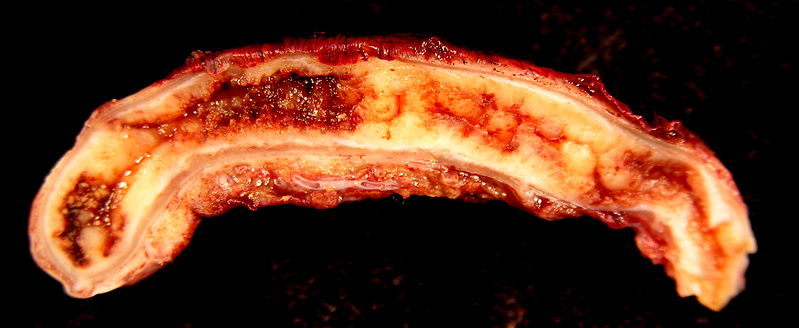
Apendicitis aguda

Apendicitis aguda

Imagen: “Acute Appendicitis” por Ed Uthman. Licencia: CC BY 2.0

Presentación Clínica

Clásica:

  • Dolor Dolor Inflammation periumbilical que posteriormente migra al AL Amyloidosis cuadrante inferior derecho
  • Anorexia Anorexia The lack or loss of appetite accompanied by an aversion to food and the inability to eat. It is the defining characteristic of the disorder anorexia nervosa. Anorexia Nervosa
  • Náuseas/vómitos
  • Fiebre

Atípica:

  • Indigestión
  • Diarrea
  • Malestar generalizado

Factores anatómicos:

  • Apéndice anterior (más común): pronunciado dolor Dolor Inflammation localizado en EN Erythema nodosum is an immune-mediated panniculitis (inflammation of the subcutaneous fat) caused by a type IV (delayed-type) hypersensitivity reaction. It commonly manifests in young women as tender, erythematous nodules on the shins. Erythema Nodosum el cuadrante inferior derecho
  • Retrocecal: dolor Dolor Inflammation abdominal sordo
  • Pélvico: disuria, diarrea, tenesmo (por irritación vesical y rectal)

Diagnóstico

Antecedentes clínicos

  • Duración de los LOS Neisseria síntomas: normalmente 24–48 horas
  • Dolor Dolor Inflammation abdominal:
    • Instauración aguda
    • Constante, empeorando progresivamente
    • Exacerbado por el movimiento
  • Puede haber o no anorexia Anorexia The lack or loss of appetite accompanied by an aversion to food and the inability to eat. It is the defining characteristic of the disorder anorexia nervosa. Anorexia Nervosa, náuseas, diarrea/estreñimiento.
  • Los LOS Neisseria síntomas pueden ser vagos/atípicos en EN Erythema nodosum is an immune-mediated panniculitis (inflammation of the subcutaneous fat) caused by a type IV (delayed-type) hypersensitivity reaction. It commonly manifests in young women as tender, erythematous nodules on the shins. Erythema Nodosum los LOS Neisseria ancianos.
  • Adultos (eliminar otras causas):
    • Antecedentes de enfermedad inflamatoria intestinal
    • Antecedentes de cáncer colorrectal/colonoscopia previa
    • Enfermedades reproductivas/de transmisión sexual en EN Erythema nodosum is an immune-mediated panniculitis (inflammation of the subcutaneous fat) caused by a type IV (delayed-type) hypersensitivity reaction. It commonly manifests in young women as tender, erythematous nodules on the shins. Erythema Nodosum la mujer (descartar enfermedad inflamatoria pélvica, embarazo ectópico)
  • Niños:
    • Más común en EN Erythema nodosum is an immune-mediated panniculitis (inflammation of the subcutaneous fat) caused by a type IV (delayed-type) hypersensitivity reaction. It commonly manifests in young women as tender, erythematous nodules on the shins. Erythema Nodosum niños de 5–12 años
    • Muy raro en EN Erythema nodosum is an immune-mediated panniculitis (inflammation of the subcutaneous fat) caused by a type IV (delayed-type) hypersensitivity reaction. It commonly manifests in young women as tender, erythematous nodules on the shins. Erythema Nodosum neonatos
    • Descartar una enfermedad viral:
      • Antecedentes de síntomas respiratorios concurrentes o precedentes
      • Antecedente de contactos enfermos con síntomas similares

Examen físico

Síntomas generales:

  • Fiebre baja (hasta 38,3°C (101°F))
  • La fiebre alta puede indicar apendicitis/ necrosis Necrosis The death of cells in an organ or tissue due to disease, injury or failure of the blood supply. Ischemic Cell Damage/perforación tardía.
  • Deseo de quedarse quieto, con dificultad para deambular (común en EN Erythema nodosum is an immune-mediated panniculitis (inflammation of the subcutaneous fat) caused by a type IV (delayed-type) hypersensitivity reaction. It commonly manifests in young women as tender, erythematous nodules on the shins. Erythema Nodosum los LOS Neisseria niños)
  • Signos de deshidratación si hay vómitos prolongados/ anorexia Anorexia The lack or loss of appetite accompanied by an aversion to food and the inability to eat. It is the defining characteristic of the disorder anorexia nervosa. Anorexia Nervosa:
    • Taquicardia
    • Hipotensión ortostática
    • Disminución de la producción de orina

Examen abdominal:

  • Sensibilidad en EN Erythema nodosum is an immune-mediated panniculitis (inflammation of the subcutaneous fat) caused by a type IV (delayed-type) hypersensitivity reaction. It commonly manifests in young women as tender, erythematous nodules on the shins. Erythema Nodosum el cuadrante inferior derecho
  • Sensibilidad de rebote localizada (irritación peritoneal)
  • Signos:
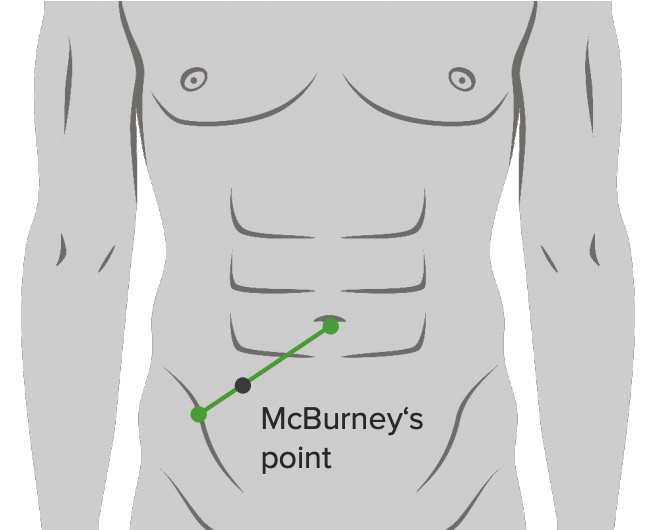
    • Sensibilidad del punto de McBurney: sensibilidad máxima a 3,8–5,0 cm (1,5–2 pulgadas) de la espina ilíaca anterosuperior en EN Erythema nodosum is an immune-mediated panniculitis (inflammation of the subcutaneous fat) caused by a type IV (delayed-type) hypersensitivity reaction. It commonly manifests in young women as tender, erythematous nodules on the shins. Erythema Nodosum una línea recta hasta el ombligo
    • Signo de Rovsing: dolor Dolor Inflammation en EN Erythema nodosum is an immune-mediated panniculitis (inflammation of the subcutaneous fat) caused by a type IV (delayed-type) hypersensitivity reaction. It commonly manifests in young women as tender, erythematous nodules on the shins. Erythema Nodosum el cuadrante inferior izquierdo a la palpación
    • Signo del psoas: dolor Dolor Inflammation en EN Erythema nodosum is an immune-mediated panniculitis (inflammation of the subcutaneous fat) caused by a type IV (delayed-type) hypersensitivity reaction. It commonly manifests in young women as tender, erythematous nodules on the shins. Erythema Nodosum el cuadrante inferior derecho con la extensión pasiva de la cadera (característico del apéndice retrocecal)
    • Signo del obturador: dolor Dolor Inflammation de cuadrante inferior derecho a la rotación interna de la cadera con la rodilla flexionada (apéndice pélvico).
  • La peritonitis Peritonitis Inflammation of the peritoneum lining the abdominal cavity as the result of infectious, autoimmune, or chemical processes. Primary peritonitis is due to infection of the peritoneal cavity via hematogenous or lymphatic spread and without intra-abdominal source. Secondary peritonitis arises from the abdominal cavity itself through rupture or abscess of intra-abdominal organs. Penetrating Abdominal Injury generalizada sugiere una perforación.

Tacto rectal:

  • No es útil para establecer el diagnóstico de apendicitis
  • Puede ser útil si se sospecha un diagnóstico alternativo

Examen pélvico:

  • Puede ser necesario en EN Erythema nodosum is an immune-mediated panniculitis (inflammation of the subcutaneous fat) caused by a type IV (delayed-type) hypersensitivity reaction. It commonly manifests in young women as tender, erythematous nodules on the shins. Erythema Nodosum una mujer si se sospecha de enfermedad pélvica inflamatoria
  • La apendicitis (especialmente la pélvica) también puede producir sensibilidad en EN Erythema nodosum is an immune-mediated panniculitis (inflammation of the subcutaneous fat) caused by a type IV (delayed-type) hypersensitivity reaction. It commonly manifests in young women as tender, erythematous nodules on the shins. Erythema Nodosum el examen pélvico.

Estudios de laboratorio

  • Hemograma: leucocitosis con desviación a la izquierda
  • Marcadores inflamatorios: ↑ velocidad de eritrosedimentación (VES), proteína C reactiva
  • La química puede mostrar un patrón de deshidratación: K (potasio) bajo, Na (sodio) bajo, alcalosis metabólica
  • Análisis de orina: puede mostrar piuria leve debido a la proximidad del uréter derecho
  • Prueba de embarazo: realizar en EN Erythema nodosum is an immune-mediated panniculitis (inflammation of the subcutaneous fat) caused by a type IV (delayed-type) hypersensitivity reaction. It commonly manifests in young women as tender, erythematous nodules on the shins. Erythema Nodosum todas las mujeres en EN Erythema nodosum is an immune-mediated panniculitis (inflammation of the subcutaneous fat) caused by a type IV (delayed-type) hypersensitivity reaction. It commonly manifests in young women as tender, erythematous nodules on the shins. Erythema Nodosum edad reproductiva.

Puntuación de Alvarado

  • Una escala numérica para predecir la probabilidad de apendicitis basada en EN Erythema nodosum is an immune-mediated panniculitis (inflammation of the subcutaneous fat) caused by a type IV (delayed-type) hypersensitivity reaction. It commonly manifests in young women as tender, erythematous nodules on the shins. Erythema Nodosum los LOS Neisseria hallazgos clínicos y de laboratorio
  • Facilita la toma de decisiones
  • Mnemotecnia: “MANTRELS” ( en EN Erythema nodosum is an immune-mediated panniculitis (inflammation of the subcutaneous fat) caused by a type IV (delayed-type) hypersensitivity reaction. It commonly manifests in young women as tender, erythematous nodules on the shins. Erythema Nodosum inglés)
Tabla: puntuación de Alvarado
Síntomas M – Migratory pain Pain An unpleasant sensation induced by noxious stimuli which are detected by nerve endings of nociceptive neurons. Pain: Types and Pathways in the right iliac fossa ( dolor Dolor Inflammation migratorio en EN Erythema nodosum is an immune-mediated panniculitis (inflammation of the subcutaneous fat) caused by a type IV (delayed-type) hypersensitivity reaction. It commonly manifests in young women as tender, erythematous nodules on the shins. Erythema Nodosum la fosa ilíaca derecha) 1
A Anorexia Anorexia The lack or loss of appetite accompanied by an aversion to food and the inability to eat. It is the defining characteristic of the disorder anorexia nervosa. Anorexia Nervosa ( anorexia Anorexia The lack or loss of appetite accompanied by an aversion to food and the inability to eat. It is the defining characteristic of the disorder anorexia nervosa. Anorexia Nervosa) 1
N Nausea Nausea An unpleasant sensation in the stomach usually accompanied by the urge to vomit. Common causes are early pregnancy, sea and motion sickness, emotional stress, intense pain, food poisoning, and various enteroviruses. Antiemetics and vomiting Vomiting The forcible expulsion of the contents of the stomach through the mouth. Hypokalemia (náuseas y vómitos) 1
Signos T – Tenderness in the right iliac fossa (sensibilidad en EN Erythema nodosum is an immune-mediated panniculitis (inflammation of the subcutaneous fat) caused by a type IV (delayed-type) hypersensitivity reaction. It commonly manifests in young women as tender, erythematous nodules on the shins. Erythema Nodosum la fosa ilíaca derecha) 2
R Rebound tenderness Rebound Tenderness Acute Abdomen (sensibilidad de rebote) 1
E – Elevated temperature (temperatura elevada) 1
Estudios del laboratorio L Leukocytosis Leukocytosis A transient increase in the number of leukocytes in a body fluid. West Nile Virus (leucocitosis) 2
S – Shift to left (desplazamiento a la izquierda) 1
Total 10
Interpretación:
  • 0–4: Apendicitis poco probable.
  • 5–6: Apendicitis es posible; se necesita una evaluación por imagenología
  • 7–8: Apendicitis es probable → consulta quirúrgica
  • 9–10: Apendicitis muy probable → consulta quirúrgica

Imagenología

El diagnóstico por imagenología no es necesario si la puntuación de Alvarado es muy baja (< 3) o alta (> 7).
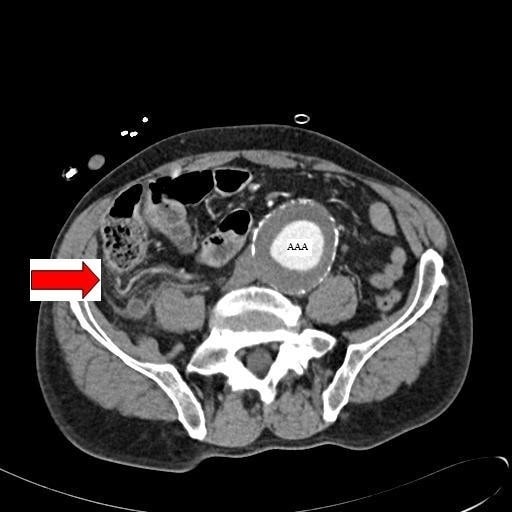
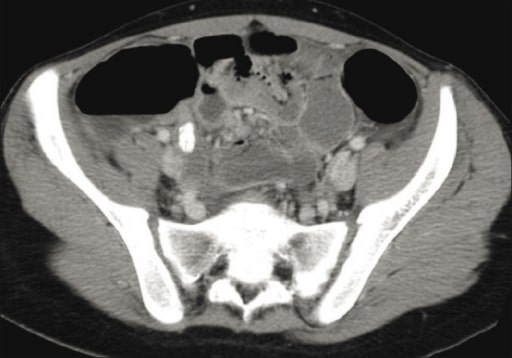
  • Tomografía computarizada (TC):
    • Máxima precisión en EN Erythema nodosum is an immune-mediated panniculitis (inflammation of the subcutaneous fat) caused by a type IV (delayed-type) hypersensitivity reaction. It commonly manifests in young women as tender, erythematous nodules on the shins. Erythema Nodosum el diagnóstico
    • Debe realizarse con contraste intravenoso a menos que esté contraindicado (insuficiencia renal, alergia)
    • Hallazgos de apendicitis:
      • Diámetro del apéndice > 6 mm (0,24 pulgadas) con lumen ocluido
      • Engrosamiento de la pared del apéndice > 2 mm (0,08 pulgadas)
      • Mejora de la pared apendicular
      • Heterogeneidad de la grasa periapical
      • Apendicolito ( en EN Erythema nodosum is an immune-mediated panniculitis (inflammation of the subcutaneous fat) caused by a type IV (delayed-type) hypersensitivity reaction. It commonly manifests in young women as tender, erythematous nodules on the shins. Erythema Nodosum aproximadamente el 25% de los LOS Neisseria casos)
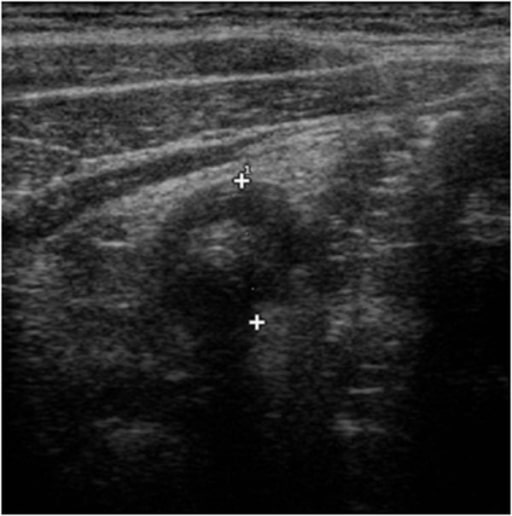
  • Ultrasonido:
    • Menor precisión diagnóstica que la TC
    • Depende del operador
    • Prueba preferida en EN Erythema nodosum is an immune-mediated panniculitis (inflammation of the subcutaneous fat) caused by a type IV (delayed-type) hypersensitivity reaction. It commonly manifests in young women as tender, erythematous nodules on the shins. Erythema Nodosum niños y embarazadas, ya que evita la radiación
    • Signos de apendicitis:
      • Apéndice no comprimible
      • Diámetro del apéndice > 6 cm (2,4 pulgadas)
      • Dolor Dolor Inflammation focal con la presión de la sonda transductora
      • Aumento de la ecogenicidad de la grasa circundante
      • Fluido en EN Erythema nodosum is an immune-mediated panniculitis (inflammation of the subcutaneous fat) caused by a type IV (delayed-type) hypersensitivity reaction. It commonly manifests in young women as tender, erythematous nodules on the shins. Erythema Nodosum cuadrante inferior derecho
      • “Signo de la diana”:
        • Hipoecoico (lumen lleno de líquido)
        • Hiperecoico (mucosa/submucosa)
        • Hipoecoico (capa muscularis)
  • Resonancia magnética (RM):
    • Inferior a la TC
    • Una alternativa cuando la TC está contraindicada

Tratamiento

Tratamiento inicial

  • Reanimación con líquidos intravenosos (hidratación y reposición de electrolitos)
  • Nada por vía oral
  • Analgesia Analgesia Methods of pain relief that may be used with or in place of analgesics. Anesthesiology: History and Basic Concepts, control de náuseas

Apendicitis no complicada

Tratamiento no quirúrgico:

  • Cada vez hay más pruebas de que la apendicitis no perforada puede tratarse solo con antibióticos
  • El 90% responderá inicialmente a los LOS Neisseria antibióticos.
  • Regímenes antibióticos para adultos:
    • Régimen de agente único:
      • Cefoxitina
      • Ertapenem Ertapenem A carbapenem derivative antibacterial agent that is more stable to renal dehydropeptidase I than imipenem, but does not need to be given with an enzyme inhibitor such as cilastatin. It is used in the treatment of gram-positive and gram-negative bacterial infections including intra-abdominal infections, acute gynecological infections, complicated urinary tract infections, skin infections, and respiratory tract infections. It is also used to prevent infection in colorectal surgery. Carbapenems and Aztreonam
      • Moxifloxacino
      • Piperacilina-tazobactam (para infección de alta gravedad)
    • O metronidazol MÁS 1 de los LOS Neisseria siguientes:
      • Cefazolina
      • Cefuroxima
      • Ceftriaxona
      • Cefotaxima
      • Ciprofloxacino
      • Levofloxacino
  • Tasa de recurrencia del 20%-30% en EN Erythema nodosum is an immune-mediated panniculitis (inflammation of the subcutaneous fat) caused by a type IV (delayed-type) hypersensitivity reaction. It commonly manifests in young women as tender, erythematous nodules on the shins. Erythema Nodosum el 1er año, y hasta el 39% en EN Erythema nodosum is an immune-mediated panniculitis (inflammation of the subcutaneous fat) caused by a type IV (delayed-type) hypersensitivity reaction. It commonly manifests in young women as tender, erythematous nodules on the shins. Erythema Nodosum 5 años

Apendicectomía:

  • Los LOS Neisseria antibióticos preoperatorios están indicados y deben administrarse en EN Erythema nodosum is an immune-mediated panniculitis (inflammation of the subcutaneous fat) caused by a type IV (delayed-type) hypersensitivity reaction. It commonly manifests in young women as tender, erythematous nodules on the shins. Erythema Nodosum los LOS Neisseria 60 minutos siguientes al AL Amyloidosis inicio del procedimiento.
  • Abordaje:
    • Laparoscópico:
      • Menor índice de infecciones en EN Erythema nodosum is an immune-mediated panniculitis (inflammation of the subcutaneous fat) caused by a type IV (delayed-type) hypersensitivity reaction. It commonly manifests in young women as tender, erythematous nodules on the shins. Erythema Nodosum las heridas
      • Menos dolor Dolor Inflammation en EN Erythema nodosum is an immune-mediated panniculitis (inflammation of the subcutaneous fat) caused by a type IV (delayed-type) hypersensitivity reaction. It commonly manifests in young women as tender, erythematous nodules on the shins. Erythema Nodosum el día postoperatorio 1
      • Estancia hospitalaria más corta
    • Abierta:
      • Menor tasa de infecciones intraabdominales
      • Menor tiempo de operación
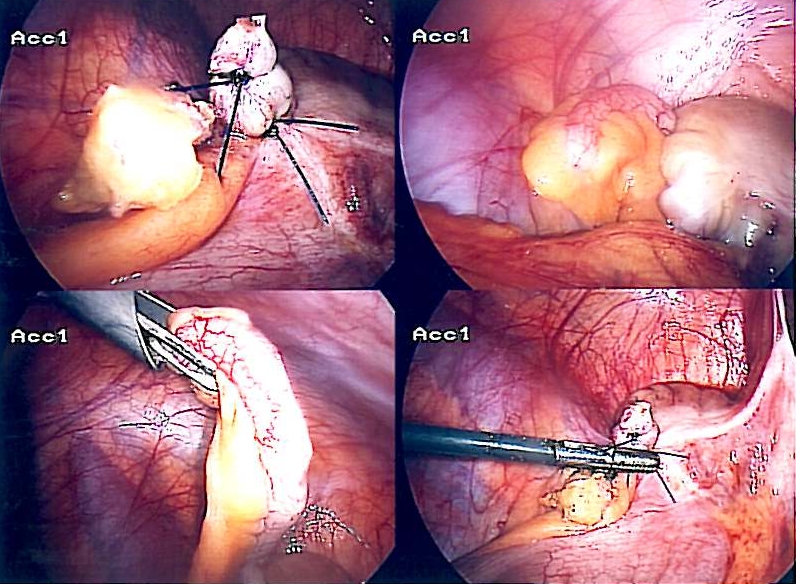
Apéndice-Entfernung

Apendicectomía laparoscópica

Imagen: “Appendix-Entfernung” por Life-of-hannes.de. Licencia: Dominio Público

Apendicitis complicada

Definición: rotura apendicular con o sin flemón o formación de absceso.

Tratamiento inicial no quirúrgico:

  • Enfoque preferido ya que la cirugía inmediata tiene un alto riesgo de complicaciones:
    • Puede ser necesaria una cirugía más extensa (ileocecectomía)
    • Riesgo de absceso postoperatorio, fístula
  • Indicado para la perforación contenida:
    • Flemón cecal o absceso > 3 cm en EN Erythema nodosum is an immune-mediated panniculitis (inflammation of the subcutaneous fat) caused by a type IV (delayed-type) hypersensitivity reaction. It commonly manifests in young women as tender, erythematous nodules on the shins. Erythema Nodosum la TC
    • Paciente estable sin peritonitis Peritonitis Inflammation of the peritoneum lining the abdominal cavity as the result of infectious, autoimmune, or chemical processes. Primary peritonitis is due to infection of the peritoneal cavity via hematogenous or lymphatic spread and without intra-abdominal source. Secondary peritonitis arises from the abdominal cavity itself through rupture or abscess of intra-abdominal organs. Penetrating Abdominal Injury difusa
  • Componentes del tratamiento:
    • Drenaje guiado de absceso por radiología
    • Antibióticos intravenosos: cobertura entérica de amplio espectro
    • Líquidos intravenosos y reposo intestinal
  • Exitoso (el paciente es dado de alta a casa con un curso de 7–10 días de antibióticos orales):
  • Sin éxito: apendicectomía de rescate durante la misma hospitalización

Apendicectomía de intervalo:

  • Generalmente se realiza entre 6–8 semanas después de un tratamiento no quirúrgico exitoso
  • Si no se realiza, los LOS Neisseria defensores de la apendicectomía a intervalos citan los LOS Neisseria siguientes riesgos:
    • Hasta un 30% de riesgo de recidiva durante el 1er año
    • 10%–29% riesgo de neoplasia en EN Erythema nodosum is an immune-mediated panniculitis (inflammation of the subcutaneous fat) caused by a type IV (delayed-type) hypersensitivity reaction. It commonly manifests in young women as tender, erythematous nodules on the shins. Erythema Nodosum el apéndice perforado
  • La colonoscopia también debe considerarse en EN Erythema nodosum is an immune-mediated panniculitis (inflammation of the subcutaneous fat) caused by a type IV (delayed-type) hypersensitivity reaction. It commonly manifests in young women as tender, erythematous nodules on the shins. Erythema Nodosum pacientes de > 40 años.

Apendicectomía inmediata:

  • Siempre indicado para el paciente inestable con peritonitis Peritonitis Inflammation of the peritoneum lining the abdominal cavity as the result of infectious, autoimmune, or chemical processes. Primary peritonitis is due to infection of the peritoneal cavity via hematogenous or lymphatic spread and without intra-abdominal source. Secondary peritonitis arises from the abdominal cavity itself through rupture or abscess of intra-abdominal organs. Penetrating Abdominal Injury generalizada/perforación libre
  • Puede requerir una resección más extensa (ileocecectomía)
  • Requiere lavado y drenaje de la cavidad peritoneal
  • También puede realizarse en EN Erythema nodosum is an immune-mediated panniculitis (inflammation of the subcutaneous fat) caused by a type IV (delayed-type) hypersensitivity reaction. It commonly manifests in young women as tender, erythematous nodules on the shins. Erythema Nodosum caso de perforación contenida con flemón o absceso pequeño (< 3 cm)

Pronóstico

  • La mortalidad es baja: 0,09%–4%.
  • Complicaciones de la apendicectomía:
    • Infección de la herida: 3,3%–10,3%
    • Absceso pélvico/abdominal: 9,4%
    • Apendicitis en EN Erythema nodosum is an immune-mediated panniculitis (inflammation of the subcutaneous fat) caused by a type IV (delayed-type) hypersensitivity reaction. It commonly manifests in young women as tender, erythematous nodules on the shins. Erythema Nodosum muñón: si el apéndice no se ha HA Hemolytic anemia (HA) is the term given to a large group of anemias that are caused by the premature destruction/hemolysis of circulating red blood cells (RBCs). Hemolysis can occur within (intravascular hemolysis) or outside the blood vessels (extravascular hemolysis). Hemolytic Anemia extirpado completamente, dejando un muñón de más de 0,5 cm (0,2 pulgadas)

Diagnóstico Diferencial

Gastrointestinal

  • Gastroenteritis Gastroenteritis Gastroenteritis is inflammation of the stomach and intestines, commonly caused by infections from bacteria, viruses, or parasites. Transmission may be foodborne, fecal-oral, or through animal contact. Common clinical features include abdominal pain, diarrhea, vomiting, fever, and dehydration. Gastroenteritis: enfermedad viral aguda autolimitada que se presenta con dolor Dolor Inflammation abdominal, vómitos y diarrea. La imagenología y los LOS Neisseria análisis pueden ser en EN Erythema nodosum is an immune-mediated panniculitis (inflammation of the subcutaneous fat) caused by a type IV (delayed-type) hypersensitivity reaction. It commonly manifests in young women as tender, erythematous nodules on the shins. Erythema Nodosum gran medida normales. La afección es tratada con tratamiento de soporte, reposo intestinal e hidratación intravenosa.
  • Linfadenitis mesentérica: inflamación de los LOS Neisseria ganglios linfáticos mesentéricos asociada a un dolor Dolor Inflammation abdominal agudo o crónico. La linfadenitis mesentérica suele localizarse en EN Erythema nodosum is an immune-mediated panniculitis (inflammation of the subcutaneous fat) caused by a type IV (delayed-type) hypersensitivity reaction. It commonly manifests in young women as tender, erythematous nodules on the shins. Erythema Nodosum el cuadrante inferior derecho debido al AL Amyloidosis gran número de ganglios linfáticos de esa zona. La tomografía computarizada/ultrasonido mostrará linfadenopatía.
  • Apendagitis epiploica: isquemia/infarto de los LOS Neisseria apéndices grasos del colon Colon The large intestines constitute the last portion of the digestive system. The large intestine consists of the cecum, appendix, colon (with ascending, transverse, descending, and sigmoid segments), rectum, and anal canal. The primary function of the colon is to remove water and compact the stool prior to expulsion from the body via the rectum and anal canal. Colon, Cecum, and Appendix: Anatomy. La apendicitis epiploica se presenta con dolor Dolor Inflammation abdominal bajo agudo o subagudo. La tomografía computarizada puede confirmar el diagnóstico. Por lo general, esta enfermedad autolimitada se trata con medicamentos antiinflamatorios orales.
  • Diverticulitis Diverticulitis Inflammation of a diverticulum or diverticula. Diverticular Disease de Meckel: inflamación del divertículo de Meckel. La afección puede ser imposible de distinguir clínicamente de la apendicitis aguda, ya que el dolor Dolor Inflammation es similar; sin embargo, puede ser más central o del lado izquierdo. Ocasionalmente, hay antecedentes de hemorragias digestivas bajas intermitentes. La tomografía computarizada puede ser diagnóstica o no. A veces, el diagnóstico se realiza durante la cirugía.
  • Diverticulitis Diverticulitis Inflammation of a diverticulum or diverticula. Diverticular Disease derecha: inflamación de los LOS Neisseria divertículos colónicos. Generalmente es del lado izquierdo, pero también puede presentarse del lado derecho, especialmente en EN Erythema nodosum is an immune-mediated panniculitis (inflammation of the subcutaneous fat) caused by a type IV (delayed-type) hypersensitivity reaction. It commonly manifests in young women as tender, erythematous nodules on the shins. Erythema Nodosum pacientes jóvenes y en EN Erythema nodosum is an immune-mediated panniculitis (inflammation of the subcutaneous fat) caused by a type IV (delayed-type) hypersensitivity reaction. It commonly manifests in young women as tender, erythematous nodules on the shins. Erythema Nodosum poblaciones asiáticas. Los LOS Neisseria pacientes presentan dolor Dolor Inflammation en EN Erythema nodosum is an immune-mediated panniculitis (inflammation of the subcutaneous fat) caused by a type IV (delayed-type) hypersensitivity reaction. It commonly manifests in young women as tender, erythematous nodules on the shins. Erythema Nodosum el cuadrante inferior derecho, fiebre y cambios en EN Erythema nodosum is an immune-mediated panniculitis (inflammation of the subcutaneous fat) caused by a type IV (delayed-type) hypersensitivity reaction. It commonly manifests in young women as tender, erythematous nodules on the shins. Erythema Nodosum los LOS Neisseria hábitos intestinales. El diagnóstico se realiza mediante una TC.
  • Ileítis terminal: inflamación del íleon terminal que puede tener como antecedentes cólicos abdominales, pérdida de peso y diarrea. La ileítis puede ser inespecífica, debida a la enfermedad de Crohn o a la infección por Yersinia Yersinia Yersinia is a genus of bacteria characterized as gram-negative bacilli that are facultative anaerobic with bipolar staining. There are 2 enteropathogenic species that cause yersiniosis, Y. enterocolitica and Y. pseudotuberculosis. Infections are manifested as pseudoappendicitis or mesenteric lymphadenitis, and enterocolitis. Yersinia spp./Yersiniosis. El diagnóstico se realiza de forma aguda mediante una TC. La colonoscopia (Crohn) y los LOS Neisseria títulos de anticuerpos en EN Erythema nodosum is an immune-mediated panniculitis (inflammation of the subcutaneous fat) caused by a type IV (delayed-type) hypersensitivity reaction. It commonly manifests in young women as tender, erythematous nodules on the shins. Erythema Nodosum suero ( Yersinia Yersinia Yersinia is a genus of bacteria characterized as gram-negative bacilli that are facultative anaerobic with bipolar staining. There are 2 enteropathogenic species that cause yersiniosis, Y. enterocolitica and Y. pseudotuberculosis. Infections are manifested as pseudoappendicitis or mesenteric lymphadenitis, and enterocolitis. Yersinia spp./Yersiniosis) pueden ayudar a establecer la etiología.

Genitourinario

  • Cólico ureteral derecho: cálculo obstructivo en EN Erythema nodosum is an immune-mediated panniculitis (inflammation of the subcutaneous fat) caused by a type IV (delayed-type) hypersensitivity reaction. It commonly manifests in young women as tender, erythematous nodules on the shins. Erythema Nodosum el uréter derecho que se presenta como un dolor Dolor Inflammation intermitente (cólico) del flanco/ingle derecho. El análisis de orina mostrará la presencia de eritrocitos. El diagnóstico se establece mediante una TC sin contraste.
  • Infección de las vías urinarias: infección bacteriana de las vías urinarias en EN Erythema nodosum is an immune-mediated panniculitis (inflammation of the subcutaneous fat) caused by a type IV (delayed-type) hypersensitivity reaction. It commonly manifests in young women as tender, erythematous nodules on the shins. Erythema Nodosum forma de cistitis (infección de la vejiga) o pielonefritis aguda derecha (afectación del riñón). Se presenta con dolor Dolor Inflammation suprapúbico y disuria (cistitis) o sensibilidad del ángulo costovertebral derecho y fiebre (pielonefritis). El diagnóstico se realiza mediante un análisis de orina y una TC.

Ginecología

  • Embarazo ectópico del lado derecho: embarazo en EN Erythema nodosum is an immune-mediated panniculitis (inflammation of the subcutaneous fat) caused by a type IV (delayed-type) hypersensitivity reaction. It commonly manifests in young women as tender, erythematous nodules on the shins. Erythema Nodosum la trompa de Falopio derecha. Presenta dolor Dolor Inflammation abdominal en EN Erythema nodosum is an immune-mediated panniculitis (inflammation of the subcutaneous fat) caused by a type IV (delayed-type) hypersensitivity reaction. It commonly manifests in young women as tender, erythematous nodules on the shins. Erythema Nodosum el lado derecho. Cuando se rompe, puede presentar fiebre, sepsis Sepsis Systemic inflammatory response syndrome with a proven or suspected infectious etiology. When sepsis is associated with organ dysfunction distant from the site of infection, it is called severe sepsis. When sepsis is accompanied by hypotension despite adequate fluid infusion, it is called septic shock. Sepsis and Septic Shock y peritonitis Peritonitis Inflammation of the peritoneum lining the abdominal cavity as the result of infectious, autoimmune, or chemical processes. Primary peritonitis is due to infection of the peritoneal cavity via hematogenous or lymphatic spread and without intra-abdominal source. Secondary peritonitis arises from the abdominal cavity itself through rupture or abscess of intra-abdominal organs. Penetrating Abdominal Injury. Por lo general, existe un antecedente de ausencia de la menstruación. Los LOS Neisseria hallazgos incluyen una prueba de embarazo positiva y dolor Dolor Inflammation con la manipulación cervical (examen pélvico). El diagnóstico se confirma con un ultrasonido pélvico.
  • Enfermedad pélvica inflamatoria: infección de transmisión sexual que afecta a los LOS Neisseria órganos reproductores internos, generalmente en EN Erythema nodosum is an immune-mediated panniculitis (inflammation of the subcutaneous fat) caused by a type IV (delayed-type) hypersensitivity reaction. It commonly manifests in young women as tender, erythematous nodules on the shins. Erythema Nodosum una mujer adulta joven. La enfermedad pélvica inflamatoria se presenta con dolor Dolor Inflammation abdominal bajo (sobre todo bilateral), fiebre y flujo vaginal. El diagnóstico se establece con un examen pélvico y un ultrasonido.
  • Torsión de los LOS Neisseria ovarios y de las trompas de Falopio: torsión de los LOS Neisseria ovarios y de las trompas que provoca una isquemia aguda de los LOS Neisseria ovarios y de las trompas de Falopio. La torsión se presenta con dolor Dolor Inflammation abdominal (cuadrante inferior derecho si es a la derecha), fiebre y náuseas/vómitos. Cuando se sospecha, se debe realizar un ultrasonido pélvico Doppler Doppler Ultrasonography applying the doppler effect, with frequency-shifted ultrasound reflections produced by moving targets (usually red blood cells) in the bloodstream along the ultrasound axis in direct proportion to the velocity of movement of the targets, to determine both direction and velocity of blood flow. Ultrasound (Sonography) (observando el flujo sanguíneo). La enfermedad puede afectar a mujeres tanto en EN Erythema nodosum is an immune-mediated panniculitis (inflammation of the subcutaneous fat) caused by a type IV (delayed-type) hypersensitivity reaction. It commonly manifests in young women as tender, erythematous nodules on the shins. Erythema Nodosum edad adulta como en EN Erythema nodosum is an immune-mediated panniculitis (inflammation of the subcutaneous fat) caused by a type IV (delayed-type) hypersensitivity reaction. It commonly manifests in young women as tender, erythematous nodules on the shins. Erythema Nodosum edad pediátrica.
  • Ruptura de quiste ovárico (derecha): el líquido o la sangre liberados por el quiste provocan una irritación peritoneal y la aparición aguda de dolor Dolor Inflammation abdominal en EN Erythema nodosum is an immune-mediated panniculitis (inflammation of the subcutaneous fat) caused by a type IV (delayed-type) hypersensitivity reaction. It commonly manifests in young women as tender, erythematous nodules on the shins. Erythema Nodosum el cuadrante inferior derecho. El diagnóstico se realiza mediante un ultrasonido pélvico.

Referencias

  1. Berg, S. (2023). What doctors wish patients knew about appendicitis. American Medical Association. Retrieved August 5, 2025, from https://www.ama-assn.org/delivering-care/population-care/what-doctors-wish-patients-knew-about-appendicitis
  2. Martin, R.F. (2024). Acute appendicitis in adults: Clinical manifestations and differential diagnosis. UpToDate. Retrieved on August 5, 2025, from https://www.uptodate.com/contents/acute-appendicitis-in-adults-clinical-manifestations-and-differential-diagnosis
  3. Pisano M., Capponi M.G., Ansaloni L. (2014). Acute Appendicitis: An Open Issue. Current Trends in Diagnostic and Therapeutic Options. Retrieved on August 5, 2025, from https://www.sciencedirect.com/topics/medicine-and-dentistry/alvarado-score
  4. Smink D., Soybel D.I. (2024). Management of acute appendicitis in adults. UpToDate. Retrieved on August 5, 2025, from https://www.uptodate.com/contents/management-of-acute-appendicitis-in-adults
  5. Wesson D.E., Brandt M.L. (2024). Acute appendicitis in children: Clinical manifestations and diagnosis. UpToDate. Retrieved on August 5, 2025, from https://www.uptodate.com/contents/acute-appendicitis-in-children-clinical-manifestations-and-diagnosis

¡Crea tu cuenta gratis o inicia una sesión para seguir leyendo!

Regístrate ahora y obtén acceso gratuito a Lecturio con páginas de concepto, videos médicos y cuestionarios para tu educación médica.

User Reviews

Que tengas una sesión de estudio alegre y navideña 🎁 Ahorra 50% en todos los planes >>

Details