Domina Conceptos Médicos

Estudia para la escuela de medicina y tus examenes con Lecturio.

Ántrax

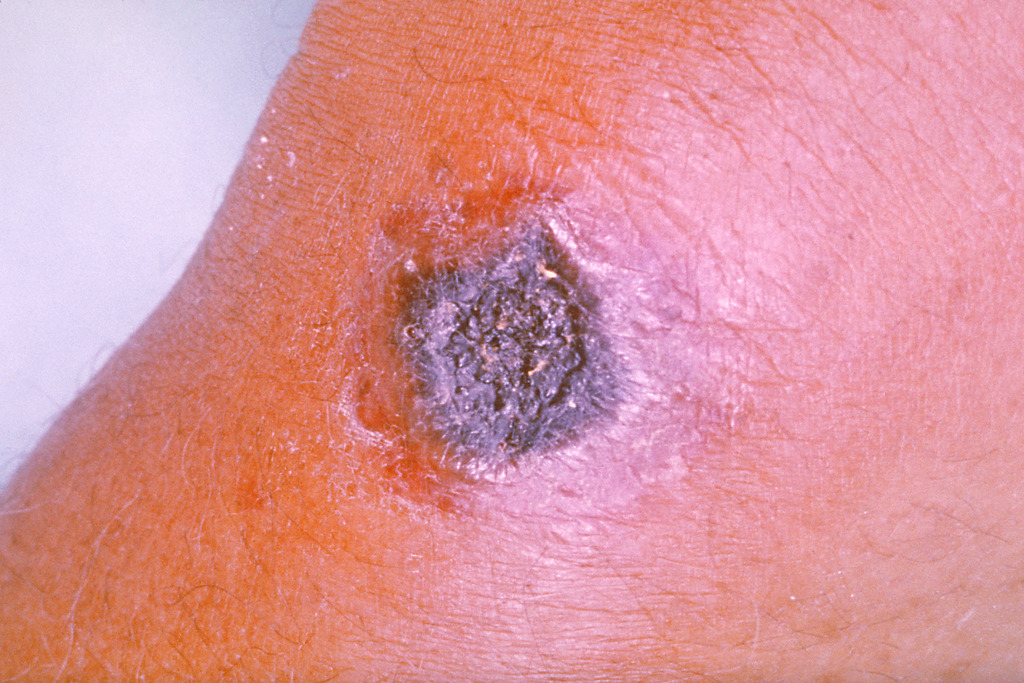
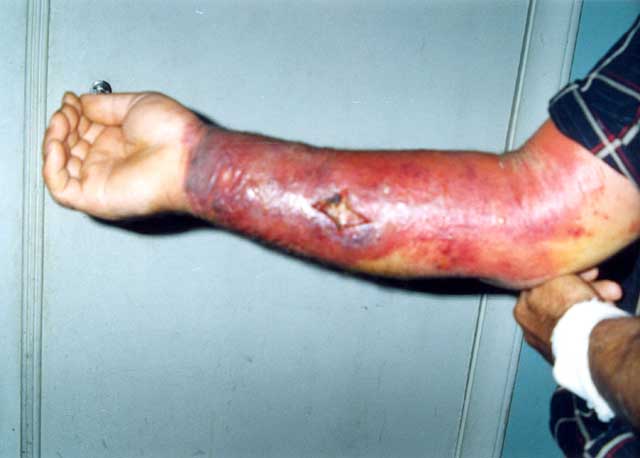
El ántrax es una infección causada por la bacteria Bacteria Bacteria are prokaryotic single-celled microorganisms that are metabolically active and divide by binary fission. Some of these organisms play a significant role in the pathogenesis of diseases. Bacteriology Bacillus anthracis Bacillus anthracis A species of bacteria that causes anthrax in humans and animals. Anthrax, que suele afectar a la piel, los LOS Neisseria pulmones o los LOS Neisseria intestinos. El ántrax es una enfermedad zoonótica y suele transmitirse al AL Amyloidosis ser humano a partir de animales o a través de productos animales. Las esporas de Bacillus Bacillus Bacillus are aerobic, spore-forming, gram-positive bacilli. Two pathogenic species are Bacillus anthracis (B. anthracis) and B. cereus. Bacillus pueden persistir en EN Erythema nodosum is an immune-mediated panniculitis (inflammation of the subcutaneous fat) caused by a type IV (delayed-type) hypersensitivity reaction. It commonly manifests in young women as tender, erythematous nodules on the shins. Erythema Nodosum el suelo durante mucho tiempo. Las esporas de Bacillus Bacillus Bacillus are aerobic, spore-forming, gram-positive bacilli. Two pathogenic species are Bacillus anthracis (B. anthracis) and B. cereus. Bacillus también se han utilizado como arma biológica. Los LOS Neisseria síntomas dependen del sistema orgánico afectado. La piel forma pequeñas ampollas con hinchazón alrededor que a menudo se convierten en EN Erythema nodosum is an immune-mediated panniculitis (inflammation of the subcutaneous fat) caused by a type IV (delayed-type) hypersensitivity reaction. It commonly manifests in young women as tender, erythematous nodules on the shins. Erythema Nodosum una úlcera indolora con un centro negro. La exposición por inhalación provoca una neumonía fulminante grave. La exposición intestinal provoca úlceras en EN Erythema nodosum is an immune-mediated panniculitis (inflammation of the subcutaneous fat) caused by a type IV (delayed-type) hypersensitivity reaction. It commonly manifests in young women as tender, erythematous nodules on the shins. Erythema Nodosum la mucosa, diarrea con sangre, dolor Dolor Inflammation abdominal, náuseas y vómitos. El diagnóstico se establece con cultivos, examen de tejidos y reacción en EN Erythema nodosum is an immune-mediated panniculitis (inflammation of the subcutaneous fat) caused by a type IV (delayed-type) hypersensitivity reaction. It commonly manifests in young women as tender, erythematous nodules on the shins. Erythema Nodosum cadena de la polimerasa ( PCR PCR Polymerase chain reaction (PCR) is a technique that amplifies DNA fragments exponentially for analysis. The process is highly specific, allowing for the targeting of specific genomic sequences, even with minuscule sample amounts. The PCR cycles multiple times through 3 phases: denaturation of the template DNA, annealing of a specific primer to the individual DNA strands, and synthesis/elongation of new DNA molecules. Polymerase Chain Reaction (PCR)). El tratamiento incluye antibióticos, antitoxinas y, con frecuencia, el ingreso en EN Erythema nodosum is an immune-mediated panniculitis (inflammation of the subcutaneous fat) caused by a type IV (delayed-type) hypersensitivity reaction. It commonly manifests in young women as tender, erythematous nodules on the shins. Erythema Nodosum el hospital/cuidados críticos. La mortalidad por enfermedad sistémica sigue siendo elevada.

Last updated: Dec 15, 2025

Editorial responsibility: Stanley Oiseth, Lindsay Jones, Evelin Maza

Descripción General

Definición

El ántrax es una enfermedad infecciosa causada por el Bacillus anthracis Bacillus anthracis A species of bacteria that causes anthrax in humans and animals. Anthrax ( B. anthracis B. anthracis A species of bacteria that causes anthrax in humans and animals. Bacillus) y puede tener manifestaciones cutáneas, respiratorias y gastrointestinales.
Epidemiología

  • Enfermedad zoonótica
  • Huéspedes comunes: ganado salvaje o doméstico, como ovejas, vacas, caballos y cabras
  • Endémica en EN Erythema nodosum is an immune-mediated panniculitis (inflammation of the subcutaneous fat) caused by a type IV (delayed-type) hypersensitivity reaction. It commonly manifests in young women as tender, erythematous nodules on the shins. Erythema Nodosum las regiones agrícolas del mundo, aunque rara en EN Erythema nodosum is an immune-mediated panniculitis (inflammation of the subcutaneous fat) caused by a type IV (delayed-type) hypersensitivity reaction. It commonly manifests in young women as tender, erythematous nodules on the shins. Erythema Nodosum Estados Unidos
  • Los LOS Neisseria Centers for Disease Control (CDC, por sus siglas en EN Erythema nodosum is an immune-mediated panniculitis (inflammation of the subcutaneous fat) caused by a type IV (delayed-type) hypersensitivity reaction. It commonly manifests in young women as tender, erythematous nodules on the shins. Erythema Nodosum inglés) informan < 5 casos/año en EN Erythema nodosum is an immune-mediated panniculitis (inflammation of the subcutaneous fat) caused by a type IV (delayed-type) hypersensitivity reaction. It commonly manifests in young women as tender, erythematous nodules on the shins. Erythema Nodosum Estados Unidos.
  • Los LOS Neisseria hombres corren un mayor riesgo que las mujeres debido a que ejercen ocupaciones de mayor riesgo.
  • Los LOS Neisseria brotes pueden ser estacionales: normalmente en EN Erythema nodosum is an immune-mediated panniculitis (inflammation of the subcutaneous fat) caused by a type IV (delayed-type) hypersensitivity reaction. It commonly manifests in young women as tender, erythematous nodules on the shins. Erythema Nodosum una zona enzoótica que recibe lluvias tras un periodo de sequía

Etiología

  • El agente etiológico es B. anthracis B. anthracis A species of bacteria that causes anthrax in humans and animals. Bacillus:
    • Bacilos Gram-positivos
    • Forma esporas que pueden persistir en EN Erythema nodosum is an immune-mediated panniculitis (inflammation of the subcutaneous fat) caused by a type IV (delayed-type) hypersensitivity reaction. It commonly manifests in young women as tender, erythematous nodules on the shins. Erythema Nodosum el suelo en EN Erythema nodosum is an immune-mediated panniculitis (inflammation of the subcutaneous fat) caused by a type IV (delayed-type) hypersensitivity reaction. It commonly manifests in young women as tender, erythematous nodules on the shins. Erythema Nodosum estado latente durante mucho tiempo
  • Los LOS Neisseria animales se infectan al AL Amyloidosis inhalar las esporas o ingerirlas → las bacterias se multiplican en EN Erythema nodosum is an immune-mediated panniculitis (inflammation of the subcutaneous fat) caused by a type IV (delayed-type) hypersensitivity reaction. It commonly manifests in young women as tender, erythematous nodules on the shins. Erythema Nodosum su cuerpo y excretan más esporas
  • Las esporas pueden entrar en EN Erythema nodosum is an immune-mediated panniculitis (inflammation of the subcutaneous fat) caused by a type IV (delayed-type) hypersensitivity reaction. It commonly manifests in young women as tender, erythematous nodules on the shins. Erythema Nodosum el ser humano de 4 maneras:
    • Inhalación (ántrax por inhalación)
    • Ingestión (ántrax gastrointestinal)
    • Contacto directo con la piel (ántrax cutáneo)
    • Inyección (p. ej., a través de medicamentos contaminados)
  • Los LOS Neisseria seres humanos suelen infectarse a través del contacto con animales o sus productos.
  • Se han notificado accidentes de laboratorio con casos documentados de infección.
  • La guerra biológica utiliza un refinamiento especializado de las esporas de ántrax para hacerlas más finas y fácilmente aerosolizables, por lo que las esporas son fácilmente inhalables.
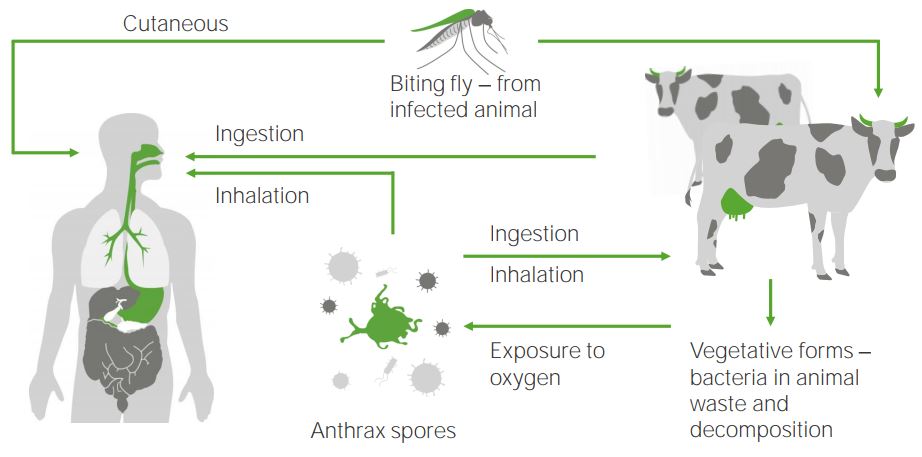
Ciclo del Ántrax

El ciclo del ántrax:
Las esporas del Bacillus anthracis (ántrax) infectan a los seres humanos o a los mamíferos a través de diferentes procesos: por ingestión, por inhalación o por vía cutánea a través de la picadura de un insecto infectado. Las esporas del ántrax se originan en la vegetación de los desechos excretados por el ganado que se expone al oxígeno.

Imagen por Lecturio.

Fisiopatología y Presentación Clínica

Patogénesis

  • Depende de la producción de 2 potentes exotoxinas:
    • Toxina edema Edema Edema is a condition in which excess serous fluid accumulates in the body cavity or interstitial space of connective tissues. Edema is a symptom observed in several medical conditions. It can be categorized into 2 types, namely, peripheral (in the extremities) and internal (in an organ or body cavity). Edema:
      • Aumenta los LOS Neisseria niveles de adenosina monofosfato cíclico (AMPc)
      • Causa edema Edema Edema is a condition in which excess serous fluid accumulates in the body cavity or interstitial space of connective tissues. Edema is a symptom observed in several medical conditions. It can be categorized into 2 types, namely, peripheral (in the extremities) and internal (in an organ or body cavity). Edema y escara negra de ántrax cutáneo
      • Induce una hemorragia multiorgánica
    • Toxina letal:
      • Proteasa (escinde la proteína quinasa activada por mitógenos (MAP) quinasa)
      • Causa necrosis Necrosis The death of cells in an organ or tissue due to disease, injury or failure of the blood supply. Ischemic Cell Damage tisular
  • El antígeno protector se une a ambas toxinas y permite que la toxina edema Edema Edema is a condition in which excess serous fluid accumulates in the body cavity or interstitial space of connective tissues. Edema is a symptom observed in several medical conditions. It can be categorized into 2 types, namely, peripheral (in the extremities) and internal (in an organ or body cavity). Edema y la toxina letal entren en EN Erythema nodosum is an immune-mediated panniculitis (inflammation of the subcutaneous fat) caused by a type IV (delayed-type) hypersensitivity reaction. It commonly manifests in young women as tender, erythematous nodules on the shins. Erythema Nodosum las células.
  • La cápsula de B. anthracis B. anthracis A species of bacteria that causes anthrax in humans and animals. Bacillus permite a la bacteria Bacteria Bacteria are prokaryotic single-celled microorganisms that are metabolically active and divide by binary fission. Some of these organisms play a significant role in the pathogenesis of diseases. Bacteriology evitar la fagocitosis.
  • Las toxinas inhiben el reclutamiento de neutrófilos, células dendríticas y macrófagos.
  • Las células endoteliales también pueden verse afectadas (fuga vascular).

Presentación clínica

Ántrax cutáneo:

  • El 95% de los LOS Neisseria casos de ántrax
  • Entra en EN Erythema nodosum is an immune-mediated panniculitis (inflammation of the subcutaneous fat) caused by a type IV (delayed-type) hypersensitivity reaction. It commonly manifests in young women as tender, erythematous nodules on the shins. Erythema Nodosum el cuerpo a través de un corte u otra llaga en EN Erythema nodosum is an immune-mediated panniculitis (inflammation of the subcutaneous fat) caused by a type IV (delayed-type) hypersensitivity reaction. It commonly manifests in young women as tender, erythematous nodules on the shins. Erythema Nodosum la piel
  • Periodo de incubación: 5-7 días
  • La forma más leve de ántrax: Con el tratamiento adecuado, rara vez es mortal.
  • Signos y síntomas:
    • Un bulto elevado y con picor que se asemeja a una picadura de insecto y que rápidamente se convierte en EN Erythema nodosum is an immune-mediated panniculitis (inflammation of the subcutaneous fat) caused by a type IV (delayed-type) hypersensitivity reaction. It commonly manifests in young women as tender, erythematous nodules on the shins. Erythema Nodosum una llaga indolora con una escara negra
    • Linfadenopatía, linfangitis y edema Edema Edema is a condition in which excess serous fluid accumulates in the body cavity or interstitial space of connective tissues. Edema is a symptom observed in several medical conditions. It can be categorized into 2 types, namely, peripheral (in the extremities) and internal (in an organ or body cavity). Edema circundante
    • Pueden aparecer síntomas sistémicos: fiebre, malestar, cefalea

Ántrax gastrointestinal:

  • Por comer carne poco cocida de un animal infectado o beber agua contaminada
  • Periodo de incubación: 1-6 días
  • Causa úlceras necróticas en EN Erythema nodosum is an immune-mediated panniculitis (inflammation of the subcutaneous fat) caused by a type IV (delayed-type) hypersensitivity reaction. It commonly manifests in young women as tender, erythematous nodules on the shins. Erythema Nodosum el tracto gastrointestinal, desde la boca hasta el colon Colon The large intestines constitute the last portion of the digestive system. The large intestine consists of the cecum, appendix, colon (with ascending, transverse, descending, and sigmoid segments), rectum, and anal canal. The primary function of the colon is to remove water and compact the stool prior to expulsion from the body via the rectum and anal canal. Colon, Cecum, and Appendix: Anatomy ascendente
  • Signos y síntomas:
    • Náuseas
    • Vómitos
    • Dolor Dolor Inflammation abdominal
    • Cefalea
    • Pérdida de apetito
    • Fiebre
    • Diarrea grave y sanguinolenta en EN Erythema nodosum is an immune-mediated panniculitis (inflammation of the subcutaneous fat) caused by a type IV (delayed-type) hypersensitivity reaction. It commonly manifests in young women as tender, erythematous nodules on the shins. Erythema Nodosum las últimas fases de la enfermedad
    • Forma orofaríngea:
      • Dolor Dolor Inflammation de garganta
      • Dificultad para tragar
      • Cuello hinchado (linfadenopatía)

Ántrax por inhalación (“enfermedad de Woolsorter”):

  • Por inhalar esporas de ántrax
  • El período de incubación reportado varía de 1-60 días.
  • Enfermedad bifásica:
    • Fase prodrómica (síntomas gripales):
      • Dolor Dolor Inflammation de garganta
      • Fiebre leve
      • Fatiga y dolores musculares
      • Puede haber hemoptisis, náuseas, disnea y odinofagia.
    • Fase fulminante:
      • Insuficiencia respiratoria rápidamente progresiva
      • Bacteriemia/ shock Shock Shock is a life-threatening condition associated with impaired circulation that results in tissue hypoxia. The different types of shock are based on the underlying cause: distributive (↑ cardiac output (CO), ↓ systemic vascular resistance (SVR)), cardiogenic (↓ CO, ↑ SVR), hypovolemic (↓ CO, ↑ SVR), obstructive (↓ CO), and mixed. Types of Shock
      • Meningitis Meningitis Meningitis is inflammation of the meninges, the protective membranes of the brain, and spinal cord. The causes of meningitis are varied, with the most common being bacterial or viral infection. The classic presentation of meningitis is a triad of fever, altered mental status, and nuchal rigidity. Meningitis (hasta en EN Erythema nodosum is an immune-mediated panniculitis (inflammation of the subcutaneous fat) caused by a type IV (delayed-type) hypersensitivity reaction. It commonly manifests in young women as tender, erythematous nodules on the shins. Erythema Nodosum un 50%)
      • Casi universalmente fatal

Ántrax inyectable:

  • La vía de infección por ántrax más recientemente identificada
  • Se contrae al AL Amyloidosis inyectarse drogas ilegales
  • Signos y síntomas:
    • Enrojecimiento en EN Erythema nodosum is an immune-mediated panniculitis (inflammation of the subcutaneous fat) caused by a type IV (delayed-type) hypersensitivity reaction. It commonly manifests in young women as tender, erythematous nodules on the shins. Erythema Nodosum la zona de la inyección (normalmente sin escara negra)
    • Hinchazón significativa
    • Fiebre
    • Absceso en EN Erythema nodosum is an immune-mediated panniculitis (inflammation of the subcutaneous fat) caused by a type IV (delayed-type) hypersensitivity reaction. It commonly manifests in young women as tender, erythematous nodules on the shins. Erythema Nodosum el lugar de la inyección

Diagnóstico

Antecedentes

  • Exposición a productos animales
  • Exposición en EN Erythema nodosum is an immune-mediated panniculitis (inflammation of the subcutaneous fat) caused by a type IV (delayed-type) hypersensitivity reaction. It commonly manifests in young women as tender, erythematous nodules on the shins. Erythema Nodosum el laboratorio
  • Exposición potencial al AL Amyloidosis bioterrorismo
  • Uso de drogas inyectables
  • Síntomas cutáneos, gastrointestinales o respiratorios típicos

Examen físico

  • Lesiones cutáneas con edema Edema Edema is a condition in which excess serous fluid accumulates in the body cavity or interstitial space of connective tissues. Edema is a symptom observed in several medical conditions. It can be categorized into 2 types, namely, peripheral (in the extremities) and internal (in an organ or body cavity). Edema importante y escaras negras
  • Fiebre

Estudios de laboratorio

  • El diagnóstico se realiza mediante la medición de los LOS Neisseria niveles de anticuerpos o toxinas en EN Erythema nodosum is an immune-mediated panniculitis (inflammation of the subcutaneous fat) caused by a type IV (delayed-type) hypersensitivity reaction. It commonly manifests in young women as tender, erythematous nodules on the shins. Erythema Nodosum la sangre o el análisis directo de muestras biológicas.
  • Las muestras deben tomarse antes de que el paciente comience el tratamiento.
  • Se pueden realizar cultivos, tinción de Gram, reacción en EN Erythema nodosum is an immune-mediated panniculitis (inflammation of the subcutaneous fat) caused by a type IV (delayed-type) hypersensitivity reaction. It commonly manifests in young women as tender, erythematous nodules on the shins. Erythema Nodosum cadena de la polimerasa ( PCR PCR Polymerase chain reaction (PCR) is a technique that amplifies DNA fragments exponentially for analysis. The process is highly specific, allowing for the targeting of specific genomic sequences, even with minuscule sample amounts. The PCR cycles multiple times through 3 phases: denaturation of the template DNA, annealing of a specific primer to the individual DNA strands, and synthesis/elongation of new DNA molecules. Polymerase Chain Reaction (PCR), por sus siglas en EN Erythema nodosum is an immune-mediated panniculitis (inflammation of the subcutaneous fat) caused by a type IV (delayed-type) hypersensitivity reaction. It commonly manifests in young women as tender, erythematous nodules on the shins. Erythema Nodosum inglés) y tinción inmunohistoquímica.
  • Especímenes a evaluar:
    • Ántrax cutáneo:
      • Líquido de las ampollas
      • Biopsia en EN Erythema nodosum is an immune-mediated panniculitis (inflammation of the subcutaneous fat) caused by a type IV (delayed-type) hypersensitivity reaction. It commonly manifests in young women as tender, erythematous nodules on the shins. Erythema Nodosum sacabocados de espesor total
      • Sangre
      • Líquido cefalorraquídeo (LCR)
    • Ántrax por inhalación:
      • Líquido pleural
      • Secreciones respiratorias
      • Sangre
      • LCR
    • Ántrax gastrointestinal:
      • Secreciones orales y rectales
      • Líquido ascítico
      • Biopsia de ganglio linfático esplénico o mesentérico
      • Sangre
      • LCR
  • Pruebas de apoyo:
    • Hemograma completo: anemia Anemia Anemia is a condition in which individuals have low Hb levels, which can arise from various causes. Anemia is accompanied by a reduced number of RBCs and may manifest with fatigue, shortness of breath, pallor, and weakness. Subtypes are classified by the size of RBCs, chronicity, and etiology. Anemia: Overview and Types, leucocitosis
    • Electrolitos
    • Nitrógeno ureico en EN Erythema nodosum is an immune-mediated panniculitis (inflammation of the subcutaneous fat) caused by a type IV (delayed-type) hypersensitivity reaction. It commonly manifests in young women as tender, erythematous nodules on the shins. Erythema Nodosum sangre (BUN, por sus siglas en EN Erythema nodosum is an immune-mediated panniculitis (inflammation of the subcutaneous fat) caused by a type IV (delayed-type) hypersensitivity reaction. It commonly manifests in young women as tender, erythematous nodules on the shins. Erythema Nodosum inglés)/creatinina
    • Enzimas hepáticas
    • Estudios de coagulación
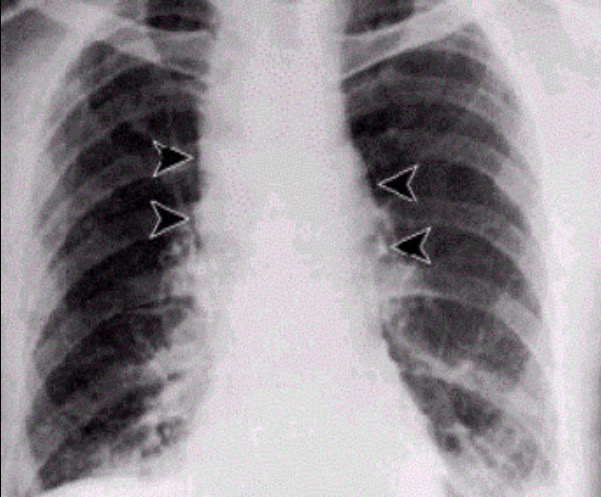
Ántrax por inhalación

Ántrax pulmonar: La radiografía de tórax muestra un ensanchamiento del mediastino.

Image: “Inhalational anthrax” por JoJan. Licencia: Dominio Público
Estudios de imagenología

  • Radiografía o tomografía computarizada (TC) de tórax para ántrax por inhalación:
    • Ensanchamiento del mediastino
    • Neumonía intersticial perihiliar
    • Derrame pleural
  • TC de abdomen para ántrax gastrointestinal:
    • Ascitis
    • Inflamación y edema Edema Edema is a condition in which excess serous fluid accumulates in the body cavity or interstitial space of connective tissues. Edema is a symptom observed in several medical conditions. It can be categorized into 2 types, namely, peripheral (in the extremities) and internal (in an organ or body cavity). Edema mesentéricos
    • Edema Edema Edema is a condition in which excess serous fluid accumulates in the body cavity or interstitial space of connective tissues. Edema is a symptom observed in several medical conditions. It can be categorized into 2 types, namely, peripheral (in the extremities) and internal (in an organ or body cavity). Edema de la pared intestinal
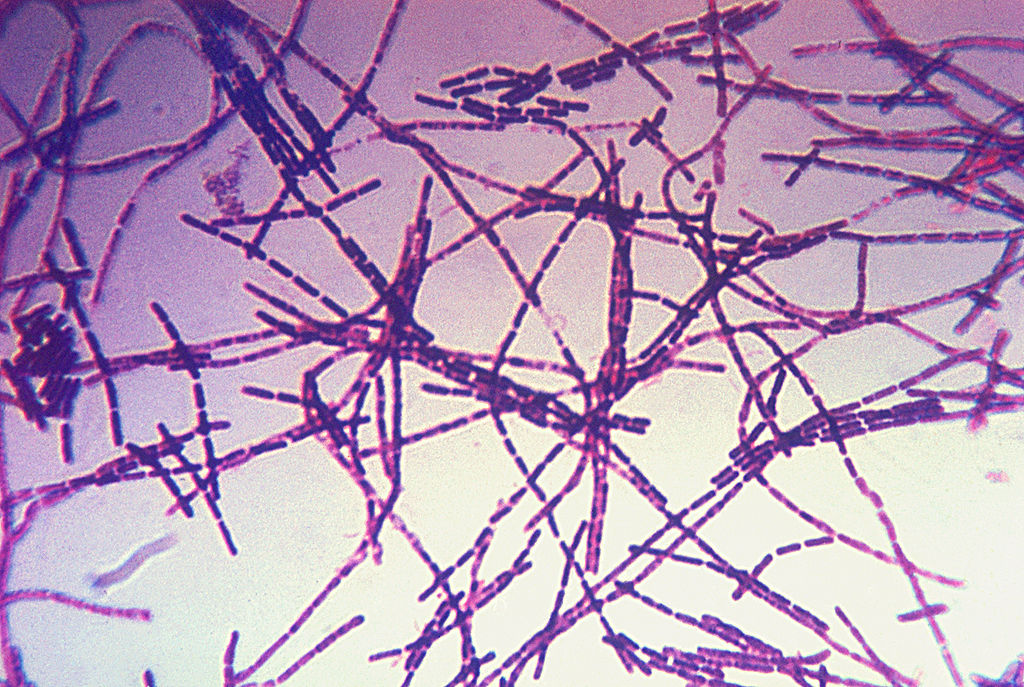
Tinción de Gram del Bacillus anthracis

Tinción de Gram de B. anthracis

Image: “Photomicrograph of a Gram stain of the bacterium Bacillus anthracis” por CDC. Licencia: Dominio Público

Tratamiento

Enfoque inicial

  • Sangre y otros cultivos apropiados deben obtenerse antes del tratamiento.
  • Todos los LOS Neisseria casos de ántrax sistémico deben ser hospitalizados (cutáneo con síntomas sistémicos y todas las demás formas).
  • Debe realizarse una estrecha vigilancia hemodinámica debido al AL Amyloidosis riesgo de un rápido deterioro.
  • Tratamiento de soporte para la sepsis Sepsis Systemic inflammatory response syndrome with a proven or suspected infectious etiology. When sepsis is associated with organ dysfunction distant from the site of infection, it is called severe sepsis. When sepsis is accompanied by hypotension despite adequate fluid infusion, it is called septic shock. Sepsis and Septic Shock (reanimación con líquidos, transfusión de sangre, vasopresores, ventilación mecánica)
  • Se debe realizar una punción lumbar para descartar una meningitis Meningitis Meningitis is inflammation of the meninges, the protective membranes of the brain, and spinal cord. The causes of meningitis are varied, with the most common being bacterial or viral infection. The classic presentation of meningitis is a triad of fever, altered mental status, and nuchal rigidity. Meningitis, a menos que esté contraindicado.

Antibióticos

  • Debe iniciarse urgentemente
  • Meningitis Meningitis Meningitis is inflammation of the meninges, the protective membranes of the brain, and spinal cord. The causes of meningitis are varied, with the most common being bacterial or viral infection. The classic presentation of meningitis is a triad of fever, altered mental status, and nuchal rigidity. Meningitis: ciprofloxacina + meropenem Meropenem A thienamycin derivative antibacterial agent that is more stable to renal dehydropeptidase I than imipenem, but does not need to be given with an enzyme inhibitor such as cilastatin. It is used in the treatment of bacterial infections, including infections in immunocompromised patients. Carbapenems and Aztreonam + linezolid Linezolid An oxazolidinone and acetamide derived anti-bacterial agent and protein synthesis inhibitor that is used in the treatment of gram-positive bacterial infections of the skin and respiratory tract. Oxazolidinones
  • Ántrax sistémico sin meningitis Meningitis Meningitis is inflammation of the meninges, the protective membranes of the brain, and spinal cord. The causes of meningitis are varied, with the most common being bacterial or viral infection. The classic presentation of meningitis is a triad of fever, altered mental status, and nuchal rigidity. Meningitis:
    • Ciprofloxacina + clindamicina
    • Ciprofloxacina + linezolid Linezolid An oxazolidinone and acetamide derived anti-bacterial agent and protein synthesis inhibitor that is used in the treatment of gram-positive bacterial infections of the skin and respiratory tract. Oxazolidinones
  • Ántrax cutáneo sin signos sistémicos y afectación de cabeza o cuello: tratamiento único con fluoroquinolonas, doxiciclina o clindamicina

Antitoxinas

  • Debe iniciarse urgentemente para el ántrax sistémico
  • Anticuerpos monoclonales: raxibacumab, obiltoxaximab
  • Inmunoglobulina contra el ántrax

Otras medidas

  • Glucocorticoides
  • Drenaje de derrames pleurales y pericárdicos por ántrax inhalatorio
  • Drenaje de ascitis por ántrax gastrointestinal

Pronóstico

  • La mortalidad por meningitis Meningitis Meningitis is inflammation of the meninges, the protective membranes of the brain, and spinal cord. The causes of meningitis are varied, with the most common being bacterial or viral infection. The classic presentation of meningitis is a triad of fever, altered mental status, and nuchal rigidity. Meningitis es casi del 100%.
  • La letalidad del ántrax cutáneo es < 2% con una terapia antibiótica adecuada.
  • La mortalidad del ántrax por inhalación o gastrointestinal sigue siendo superior al AL Amyloidosis 40% incluso con el tratamiento adecuado.

Prevención

  • Vacunación de animales
  • Eliminación adecuada de los LOS Neisseria animales infectados
  • Vacunas aprobadas:
    • Vacuna contra el ántrax adsorbida (AVA, p. ej., BioThrax)
    • Vacuna contra el ántrax adsorbida, adyuvada (p. ej., Cyfendus)
  • Proporciona inmunización activa a los LOS Neisseria grupos de riesgo:
    • Personal militar en EN Erythema nodosum is an immune-mediated panniculitis (inflammation of the subcutaneous fat) caused by a type IV (delayed-type) hypersensitivity reaction. It commonly manifests in young women as tender, erythematous nodules on the shins. Erythema Nodosum riesgo
    • Manipuladores de pieles y lana
    • Los LOS Neisseria veterinarios que manipulan animales potencialmente infectados
    • Trabajadores de laboratorio con exposición a B. anthracis B. anthracis A species of bacteria that causes anthrax in humans and animals. Bacillus
    • Zonas endémicas

Diagnóstico Diferencial

Ántrax cutáneo:

  • Mordedura de insecto o araña: puede presentarse como una zona de eritema e hinchazón localizada, a menudo con escara. A veces se asocia con fiebre/escalofríos. El diagnóstico suele hacerse a partir de los LOS Neisseria antecedentes y el examen físico. El tratamiento suele ser de soporte, y a veces incluye antibióticos y desbridamiento quirúrgico.
  • Celulitis o absceso en EN Erythema nodosum is an immune-mediated panniculitis (inflammation of the subcutaneous fat) caused by a type IV (delayed-type) hypersensitivity reaction. It commonly manifests in young women as tender, erythematous nodules on the shins. Erythema Nodosum usuarios de drogas inyectables: infección de la dermis Dermis A layer of vascularized connective tissue underneath the epidermis. The surface of the dermis contains innervated papillae. Embedded in or beneath the dermis are sweat glands; hair follicles; and sebaceous glands. Skin: Structure and Functions profunda y de los LOS Neisseria tejidos blandos que se presenta con eritema, edema Edema Edema is a condition in which excess serous fluid accumulates in the body cavity or interstitial space of connective tissues. Edema is a symptom observed in several medical conditions. It can be categorized into 2 types, namely, peripheral (in the extremities) and internal (in an organ or body cavity). Edema, drenaje purulento (absceso) y, a veces, signos sistémicos. Frecuente en EN Erythema nodosum is an immune-mediated panniculitis (inflammation of the subcutaneous fat) caused by a type IV (delayed-type) hypersensitivity reaction. It commonly manifests in young women as tender, erythematous nodules on the shins. Erythema Nodosum usuarios de drogas inyectables. Los LOS Neisseria organismos causantes se confirman mediante cultivo.

Ántrax por inhalación:

  • Neumonía: infección del parénquima pulmonar causada generalmente por bacterias o virus Virus Viruses are infectious, obligate intracellular parasites composed of a nucleic acid core surrounded by a protein capsid. Viruses can be either naked (non-enveloped) or enveloped. The classification of viruses is complex and based on many factors, including type and structure of the nucleoid and capsid, the presence of an envelope, the replication cycle, and the host range. Virology. La neumonía se adquiere en EN Erythema nodosum is an immune-mediated panniculitis (inflammation of the subcutaneous fat) caused by a type IV (delayed-type) hypersensitivity reaction. It commonly manifests in young women as tender, erythematous nodules on the shins. Erythema Nodosum la comunidad en EN Erythema nodosum is an immune-mediated panniculitis (inflammation of the subcutaneous fat) caused by a type IV (delayed-type) hypersensitivity reaction. It commonly manifests in young women as tender, erythematous nodules on the shins. Erythema Nodosum el 80% de los LOS Neisseria casos. El diagnóstico se basa en EN Erythema nodosum is an immune-mediated panniculitis (inflammation of the subcutaneous fat) caused by a type IV (delayed-type) hypersensitivity reaction. It commonly manifests in young women as tender, erythematous nodules on the shins. Erythema Nodosum una presentación clínica de fiebre, tos TOS Thoracic outlet syndrome (TOS) is a broad term used for a spectrum of syndromes related to the general region of the thoracic outlet, which involves the compression or irritation of elements of the brachial plexus, subclavian artery, or subclavian vein. Thoracic Outlet Syndrome productiva, disnea, estertores y consolidación en EN Erythema nodosum is an immune-mediated panniculitis (inflammation of the subcutaneous fat) caused by a type IV (delayed-type) hypersensitivity reaction. It commonly manifests in young women as tender, erythematous nodules on the shins. Erythema Nodosum la radiografía de tórax. La neumonía atípica puede presentarse con síntomas más leves y una imagen menos notable. El manejo es con tratamiento antibiótico empírico.
  • Tuberculosis Tuberculosis Tuberculosis (TB) is an infectious disease caused by Mycobacterium tuberculosis complex bacteria. The bacteria usually attack the lungs but can also damage other parts of the body. Approximately 30% of people around the world are infected with this pathogen, with the majority harboring a latent infection. Tuberculosis spreads through the air when a person with active pulmonary infection coughs or sneezes. Tuberculosis ( TB TB Tuberculosis (TB) is an infectious disease caused by Mycobacterium tuberculosis complex bacteria. The bacteria usually attack the lungs but can also damage other parts of the body. Approximately 30% of people around the world are infected with this pathogen, with the majority harboring a latent infection. Tuberculosis spreads through the air when a person with active pulmonary infection coughs or sneezes. Tuberculosis): enfermedad causada por bacterias del complejo Mycobacterium tuberculosis Mycobacterium tuberculosis Tuberculosis (TB) is an infectious disease caused by Mycobacterium tuberculosis complex bacteria. The bacteria usually attack the lungs but can also damage other parts of the body. Approximately 30% of people around the world are infected with this pathogen, with the majority harboring a latent infection. Tuberculosis spreads through the air when a person with active pulmonary infection coughs or sneezes. Tuberculosis. Las bacterias generalmente atacan los LOS Neisseria pulmones, pero también pueden dañar otras partes del cuerpo. La tuberculosis Tuberculosis Tuberculosis (TB) is an infectious disease caused by Mycobacterium tuberculosis complex bacteria. The bacteria usually attack the lungs but can also damage other parts of the body. Approximately 30% of people around the world are infected with this pathogen, with the majority harboring a latent infection. Tuberculosis spreads through the air when a person with active pulmonary infection coughs or sneezes. Tuberculosis se transmite por el aire y puede ser una infección latente durante décadas, lo que supone un reto para el diagnóstico, la terapia y la prevención. El manejo es con múltiples antibióticos durante un largo período de tiempo.
  • Derrame pleural: acumulación de líquido en EN Erythema nodosum is an immune-mediated panniculitis (inflammation of the subcutaneous fat) caused by a type IV (delayed-type) hypersensitivity reaction. It commonly manifests in young women as tender, erythematous nodules on the shins. Erythema Nodosum los LOS Neisseria pulmones, entre las capas de las membranas pleurales parietal Parietal One of a pair of irregularly shaped quadrilateral bones situated between the frontal bone and occipital bone, which together form the sides of the cranium. Skull: Anatomy y visceral. El derrame pleural puede estar causado por una infección debida a un virus Virus Viruses are infectious, obligate intracellular parasites composed of a nucleic acid core surrounded by a protein capsid. Viruses can be either naked (non-enveloped) or enveloped. The classification of viruses is complex and based on many factors, including type and structure of the nucleoid and capsid, the presence of an envelope, the replication cycle, and the host range. Virology, una neumonía o una insuficiencia cardíaca. Las manifestaciones clínicas incluyen dolor Dolor Inflammation torácico, tos TOS Thoracic outlet syndrome (TOS) is a broad term used for a spectrum of syndromes related to the general region of the thoracic outlet, which involves the compression or irritation of elements of the brachial plexus, subclavian artery, or subclavian vein. Thoracic Outlet Syndrome seca y no productiva, disnea y ortopnea. El tratamiento depende de la enfermedad subyacente y de la gravedad de los LOS Neisseria síntomas.

Ántrax gastrointestinal:

  • Isquemia intestinal: compromiso vascular del intestino delgado causado más comúnmente por eventos tromboembólicos arteriales o venosos. Se presenta con fuertes dolores abdominales, a veces náuseas/vómitos y diarrea sanguinolenta en EN Erythema nodosum is an immune-mediated panniculitis (inflammation of the subcutaneous fat) caused by a type IV (delayed-type) hypersensitivity reaction. It commonly manifests in young women as tender, erythematous nodules on the shins. Erythema Nodosum fases avanzadas. El diagnóstico se establece con una angiografía por TC. El tratamiento incluye la anticoagulación y la cirugía.
  • Gastroenteritis Gastroenteritis Gastroenteritis is inflammation of the stomach and intestines, commonly caused by infections from bacteria, viruses, or parasites. Transmission may be foodborne, fecal-oral, or through animal contact. Common clinical features include abdominal pain, diarrhea, vomiting, fever, and dehydration. Gastroenteritis: inflamación aguda de la mucosa gastrointestinal causada generalmente por una infección viral. Se presenta con dolor Dolor Inflammation abdominal, náuseas/vómitos y diarrea. El diagnóstico se establece clínicamente y el tratamiento es en EN Erythema nodosum is an immune-mediated panniculitis (inflammation of the subcutaneous fat) caused by a type IV (delayed-type) hypersensitivity reaction. It commonly manifests in young women as tender, erythematous nodules on the shins. Erythema Nodosum gran medida de soporte.

Related videos

Referencias

  1. Akbayram S, Dogan M, Akgün C, et al. (2010). Clinical findings in children with cutaneous anthrax in eastern Turkey. Pediatr Dermatol 27(6):600-6. 
  2. Doganay M, Metan G, Alp E. (2010). A review of cutaneous anthrax and its outcome. J Infect Public Health 3 (3):98-105. 
  3. Wilson K. (2024). Clinical manifestations and diagnosis of anthrax. UpToDate. Retrieved April 14, 2025, from https://www.uptodate.com/contents/clinical-manifestations-and-diagnosis-of-anthrax
  4. Wilson K. (2025). Microbiology, pathogenesis, and epidemiology of anthrax. UpToDate. Retrieved April 14, 2025, from https://www.uptodate.com/contents/microbiology-pathogenesis-and-epidemiology-of-anthrax
  5. Wilson K. (2024). Treatment of anthrax. UpToDate. Retrieved April 14, 2025, from https://www.uptodate.com/contents/treatment-of-anthrax
  6. U.S. Food and Drug Administration. (2023). Summary Basis for Regulatory Action: CYFENDUS (Anthrax Vaccine Adsorbed, Adjuvanted) BLA STN 125761/0

¡Crea tu cuenta gratis o inicia una sesión para seguir leyendo!

Regístrate ahora y obtén acceso gratuito a Lecturio con páginas de concepto, videos médicos y cuestionarios para tu educación médica.

User Reviews

Que tengas una sesión de estudio alegre y navideña 🎁 Ahorra 50% en todos los planes >>

Details