Domina Conceptos Médicos

Estudia para la escuela de medicina y tus examenes con Lecturio.

Absceso Hepático Piógeno

Un absceso hepático piógeno es una infección polimicrobiana que surge de la diseminación contigua o hematógena. El absceso hepático piógeno es el tipo más común de absceso visceral. Los LOS Neisseria pacientes pueden presentar la tríada de fiebre, malestar general y dolor Dolor Inflammation en EN Erythema nodosum is an immune-mediated panniculitis (inflammation of the subcutaneous fat) caused by a type IV (delayed-type) hypersensitivity reaction. It commonly manifests in young women as tender, erythematous nodules on the shins. Erythema Nodosum cuadrante superior derecho. Los LOS Neisseria análisis de laboratorio pueden presentar leucocitosis y pruebas de función hepática anormales, y la imagenología puede revelar lesiones solitarias o múltiples en EN Erythema nodosum is an immune-mediated panniculitis (inflammation of the subcutaneous fat) caused by a type IV (delayed-type) hypersensitivity reaction. It commonly manifests in young women as tender, erythematous nodules on the shins. Erythema Nodosum el ultrasonido o tomografía computarizada. En EN Erythema nodosum is an immune-mediated panniculitis (inflammation of the subcutaneous fat) caused by a type IV (delayed-type) hypersensitivity reaction. It commonly manifests in young women as tender, erythematous nodules on the shins. Erythema Nodosum imagenología con contraste, las lesiones generalmente aparecen bien definidas con realce del borde. El diagnóstico se establece principalmente mediante imágenes y aspiración para tinción de Gram y se recomienda el cultivo para identificar patógenos y guiar el tratamiento. En EN Erythema nodosum is an immune-mediated panniculitis (inflammation of the subcutaneous fat) caused by a type IV (delayed-type) hypersensitivity reaction. It commonly manifests in young women as tender, erythematous nodules on the shins. Erythema Nodosum algunos casos, se puede colocar un catéter de drenaje. Para la mayoría de los LOS Neisseria abscesos >3-5 cm, el método principal de tratamiento es una combinación de drenaje y antibióticos intravenosos. En EN Erythema nodosum is an immune-mediated panniculitis (inflammation of the subcutaneous fat) caused by a type IV (delayed-type) hypersensitivity reaction. It commonly manifests in young women as tender, erythematous nodules on the shins. Erythema Nodosum casos específicos, se utiliza el drenaje quirúrgico o la resección.

Last updated: Dec 15, 2025

Editorial responsibility: Stanley Oiseth, Lindsay Jones, Evelin Maza

Epidemiología y Etiología

Epidemiología

  • Tipo más común de absceso visceral
  • Se presenta con mayor frecuencia en EN Erythema nodosum is an immune-mediated panniculitis (inflammation of the subcutaneous fat) caused by a type IV (delayed-type) hypersensitivity reaction. It commonly manifests in young women as tender, erythematous nodules on the shins. Erythema Nodosum la 5ta década de la vida.
  • Incidencia: 2 casos por cada 100 000 habitantes
  • La incidencia de hombres a mujeres es 3:1

Etiología

Tipos de abscesos hepáticos:

  • Piógeno (bacteriano):
    • Polimicrobiano
    • Más comúnmente debido a organismos facultativos y anaeróbicos entéricos mixtos
  • Organismos causales:
    • Escherichia coli Escherichia coli The gram-negative bacterium Escherichia coli is a key component of the human gut microbiota. Most strains of E. coli are avirulent, but occasionally they escape the GI tract, infecting the urinary tract and other sites. Less common strains of E. coli are able to cause disease within the GI tract, most commonly presenting as abdominal pain and diarrhea. Escherichia coli (E. coli): más común
    • Klebsiella pneumoniae Klebsiella Pneumoniae Gram-negative, non-motile, capsulated, gas-producing rods found widely in nature and associated with urinary and respiratory infections in humans. Aminoglycosides (K. pneumoniae):
      • Común en EN Erythema nodosum is an immune-mediated panniculitis (inflammation of the subcutaneous fat) caused by a type IV (delayed-type) hypersensitivity reaction. It commonly manifests in young women as tender, erythematous nodules on the shins. Erythema Nodosum Asia ASIA Spinal Cord Injuries
      • Fuertemente asociado con carcinoma colorrectal subyacente
    • Estreptococos: Estados Unidos
    • Otros: Enterococos, Staphylococcus aureus Staphylococcus aureus Potentially pathogenic bacteria found in nasal membranes, skin, hair follicles, and perineum of warm-blooded animals. They may cause a wide range of infections and intoxications. Brain Abscess ( S. aureus S. aureus Potentially pathogenic bacteria found in nasal membranes, skin, hair follicles, and perineum of warm-blooded animals. They may cause a wide range of infections and intoxications. Staphylococcus), Proteus vulgaris Proteus vulgaris A species of gram-negative, facultatively anaerobic, rod-shaped bacteria that occurs in soil, fecal matter, and sewage. It is an opportunistic pathogen and causes cystitis and pyelonephritis. Proteus ( P. vulgaris P. vulgaris A species of gram-negative, facultatively anaerobic, rod-shaped bacteria that occurs in soil, fecal matter, and sewage. It is an opportunistic pathogen and causes cystitis and pyelonephritis. Proteus), anaerobios
  • Parasitario: quiste equinocócico, Entamoeba histolytica Entamoeba Histolytica A species of parasitic protozoa causing entamoebiasis and amebic dysentery (dysentery, amebic). Characteristics include a single nucleus containing a small central karyosome and peripheral chromatin that is finely and regularly beaded. Amebicides (E. histolytica) (amebiana)
  • Hongos: Cándida

Factores de riesgo:

  • Estado inmunocomprometido (e.g., enfermedad renal crónica (ERC), VIH)
  • Trastorno hepatobiliar o pancreático (e.g., colelitiasis, tumores hepáticos)
  • Carcinoma colorrectal
  • Enfermedad de Crohn
  • Diabetes Diabetes Diabetes mellitus (DM) is a metabolic disease characterized by hyperglycemia and dysfunction of the regulation of glucose metabolism by insulin. Type 1 DM is diagnosed mostly in children and young adults as the result of autoimmune destruction of β cells in the pancreas and the resulting lack of insulin. Type 2 DM has a significant association with obesity and is characterized by insulin resistance. Diabetes Mellitus mellitus
  • Trasplante de hígado
  • Uso regular Regular Insulin de inhibidores de la bomba de protones
  • Enfermedad granulomatosa crónica

Fisiopatología

El lóbulo derecho es el sitio más común de infección debido a su mayor tamaño e irrigación. Existen múltiples vías para infectar el hígado con bacterias:
  • Enfermedad del tracto biliar (origen más común):
    • Cálculos biliares
    • Obstrucción maligna
    • Estenosis
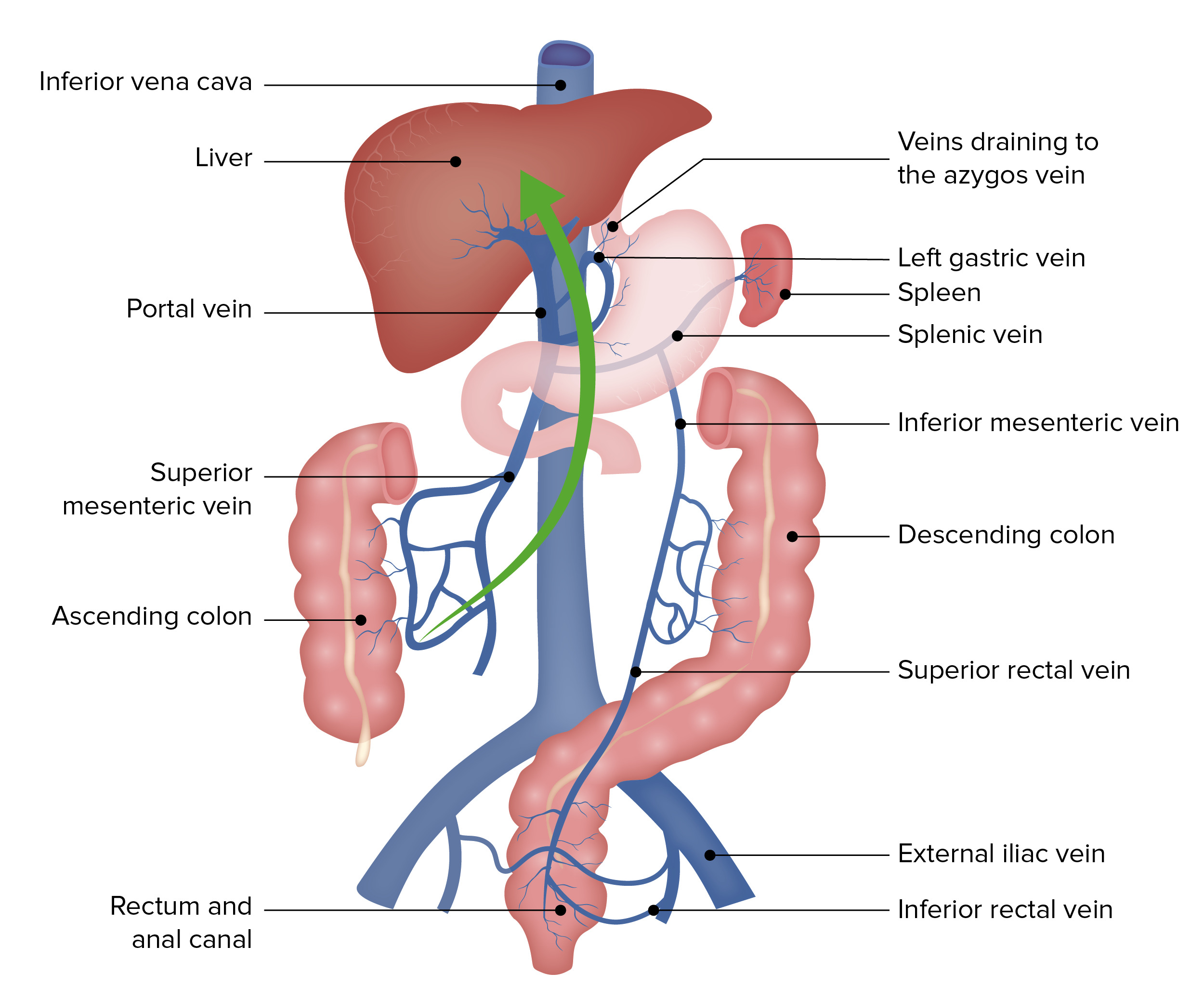
  • Vía circulación portal en EN Erythema nodosum is an immune-mediated panniculitis (inflammation of the subcutaneous fat) caused by a type IV (delayed-type) hypersensitivity reaction. It commonly manifests in young women as tender, erythematous nodules on the shins. Erythema Nodosum:
    • Perforación intestinal
    • Peritonitis Peritonitis Inflammation of the peritoneum lining the abdominal cavity as the result of infectious, autoimmune, or chemical processes. Primary peritonitis is due to infection of the peritoneal cavity via hematogenous or lymphatic spread and without intra-abdominal source. Secondary peritonitis arises from the abdominal cavity itself through rupture or abscess of intra-abdominal organs. Penetrating Abdominal Injury
    • Enfermedad de Crohn
    • Apendicitis
  • Propagación hematógena por bacteriemia: sospeche endocarditis Endocarditis Endocarditis is an inflammatory disease involving the inner lining (endometrium) of the heart, most commonly affecting the cardiac valves. Both infectious and noninfectious etiologies lead to vegetations on the valve leaflets. Patients may present with nonspecific symptoms such as fever and fatigue. Endocarditis infecciosa en EN Erythema nodosum is an immune-mediated panniculitis (inflammation of the subcutaneous fat) caused by a type IV (delayed-type) hypersensitivity reaction. It commonly manifests in young women as tender, erythematous nodules on the shins. Erythema Nodosum casos de infección monomicrobiana con especies de estreptococos o estafilococos.
  • Propagación directa a través de:
    • Absceso subfrénico
    • Absceso perirrenal
    • Absceso pancreático
  • Trauma:
    • Heridas quirúrgicas
    • Heridas penetrantes
  • Infección secundaria de:
    • Tumores hepáticos
    • Absceso hepático amebiano
    • Quiste hidatídico
Circulación portal

La circulación portal es la ruta principal de propagación bacteriana al hígado, lo que provoca un absceso hepático piógeno.

Imagen por Lecturio.
Presentación Clínica

  • Tríada del absceso hepático piógeno:
    • Fiebre
    • Malestar
    • Dolor Dolor Inflammation en EN Erythema nodosum is an immune-mediated panniculitis (inflammation of the subcutaneous fat) caused by a type IV (delayed-type) hypersensitivity reaction. It commonly manifests in young women as tender, erythematous nodules on the shins. Erythema Nodosum cuadrante superior derecho (50%–75%)
  • Síntomas:
    • Fiebre (90%), escalofríos
    • Malestar
    • Anorexia Anorexia The lack or loss of appetite accompanied by an aversion to food and the inability to eat. It is the defining characteristic of the disorder anorexia nervosa. Anorexia Nervosa
    • Pérdida de peso
    • Náuseas
    • Dolor Dolor Inflammation en EN Erythema nodosum is an immune-mediated panniculitis (inflammation of the subcutaneous fat) caused by a type IV (delayed-type) hypersensitivity reaction. It commonly manifests in young women as tender, erythematous nodules on the shins. Erythema Nodosum cuadrante superior derecho
  • Hallazgos al AL Amyloidosis examen:
    • Dolor Dolor Inflammation en EN Erythema nodosum is an immune-mediated panniculitis (inflammation of the subcutaneous fat) caused by a type IV (delayed-type) hypersensitivity reaction. It commonly manifests in young women as tender, erythematous nodules on the shins. Erythema Nodosum cuadrante superior derecho
    • Hepatomegalia
    • Ictericia

Diagnóstico

Hallazgos de laboratorio

  • Leucocitosis +/- anemia Anemia Anemia is a condition in which individuals have low Hb levels, which can arise from various causes. Anemia is accompanied by a reduced number of RBCs and may manifest with fatigue, shortness of breath, pallor, and weakness. Subtypes are classified by the size of RBCs, chronicity, and etiology. Anemia: Overview and Types de enfermedad crónica
  • Pruebas de función hepática:
    • Fosfatasa alcalina
    • AST AST Enzymes of the transferase class that catalyze the conversion of l-aspartate and 2-ketoglutarate to oxaloacetate and l-glutamate. Liver Function Tests y ALT ALT An enzyme that catalyzes the conversion of l-alanine and 2-oxoglutarate to pyruvate and l-glutamate. Liver Function Tests
    • ↑ Bilirrubina
  • Marcadores inflamatorios: ↑ velocidad de eritrosedimentación (VES) y Proteína C reactiva
  • Hemocultivos positivos en EN Erythema nodosum is an immune-mediated panniculitis (inflammation of the subcutaneous fat) caused by a type IV (delayed-type) hypersensitivity reaction. It commonly manifests in young women as tender, erythematous nodules on the shins. Erythema Nodosum el 50%:
    • Crecimiento estreptocócico o estafilocócico → buscar una fuente hematógena (e.g., endocarditis Endocarditis Endocarditis is an inflammatory disease involving the inner lining (endometrium) of the heart, most commonly affecting the cardiac valves. Both infectious and noninfectious etiologies lead to vegetations on the valve leaflets. Patients may present with nonspecific symptoms such as fever and fatigue. Endocarditis infecciosa)
    • Crecimiento negativo: considerar organismos atípicos.
  • Serología de E. histolytica o análisis de heces si no hay factores que predispongan al AL Amyloidosis absceso piógeno o presencia de factores de riesgo de infección amebiana

Imagenología

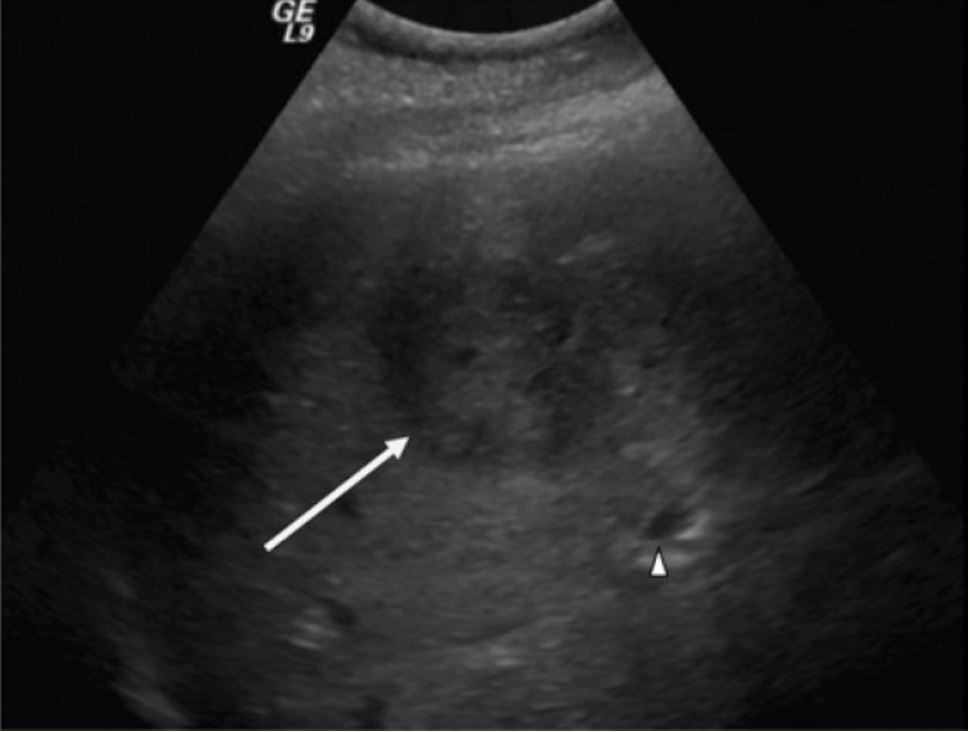
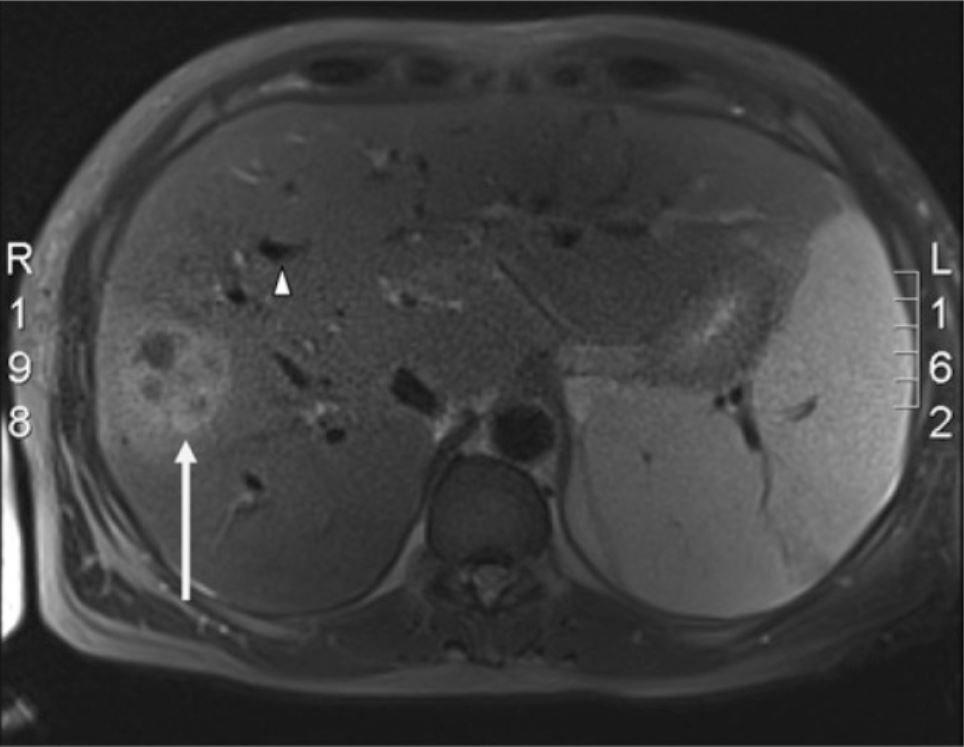
  • Ultrasonido abdominal:
    • Modalidad de 1ra línea
    • Lesiones hipoecoicas solitarias o múltiples dentro del hígado
    • Aumento del flujo sanguíneo y fondo edematoso debido a la inflamación
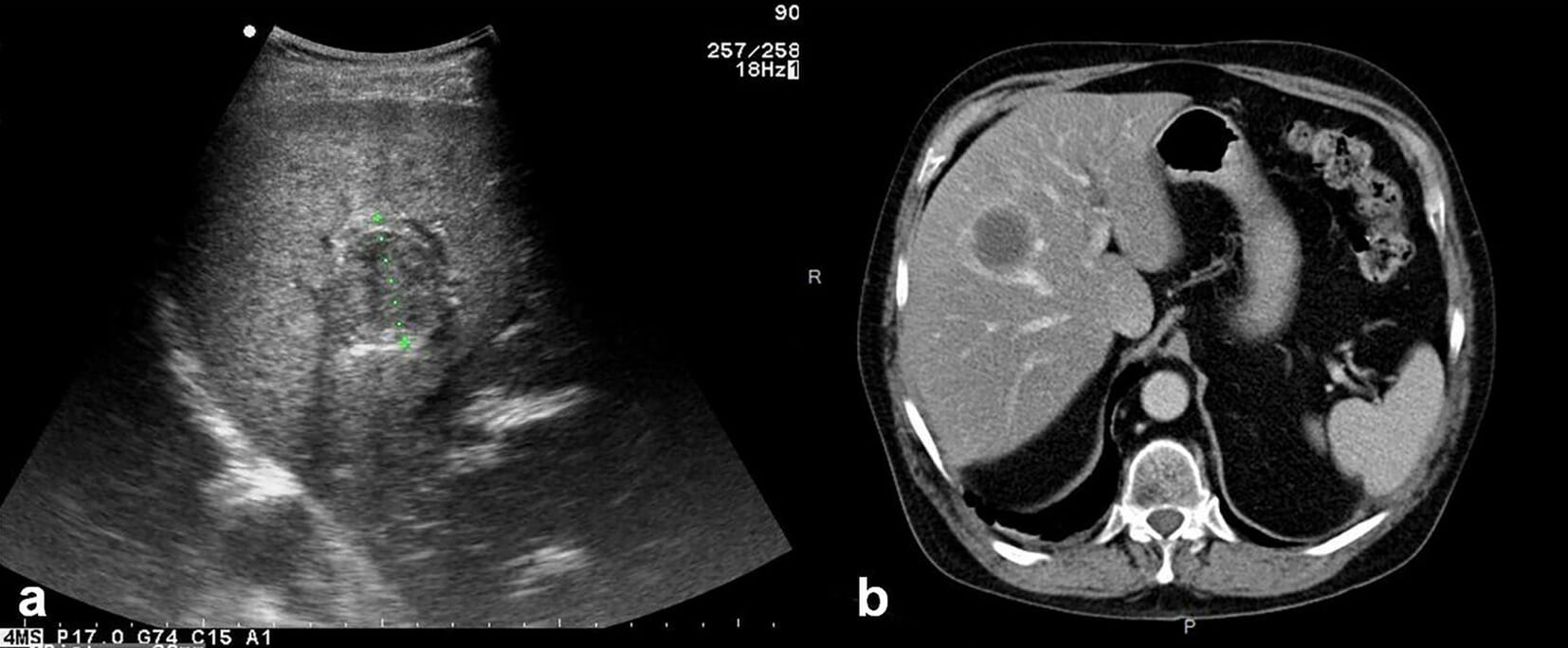
  • TC abdominal con contraste intravenoso:
    • Confirma los LOS Neisseria hallazgos del ultrasonido abdominal
    • Se utiliza si hay alta sospecha de un absceso hepático piógeno con un ultrasonido negativo
    • Lesión bien delimitada, redonda/con realce en EN Erythema nodosum is an immune-mediated panniculitis (inflammation of the subcutaneous fat) caused by a type IV (delayed-type) hypersensitivity reaction. It commonly manifests in young women as tender, erythematous nodules on the shins. Erythema Nodosum el borde con hipoatenuación central
  • La aspiración o el drenaje percutáneo se realiza bajo guía de ultrasonido o tomografía computarizada para casi todos los LOS Neisseria abscesos piógenos:
    • Diagnóstica y terapéutica
    • Realizar:
      • Tinción de Gram y cultivo (aerobios y anaerobios)
      • Citología y pruebas moleculares para E. histolytica
  • Hallazgos sugestivos de un absceso piógeno en EN Erythema nodosum is an immune-mediated panniculitis (inflammation of the subcutaneous fat) caused by a type IV (delayed-type) hypersensitivity reaction. It commonly manifests in young women as tender, erythematous nodules on the shins. Erythema Nodosum las imágenes de tórax:
    • Hemidiafragma derecho elevado
    • Derrame pleural derecho
    • Infiltrado basal derecho

Tratamiento

Tratamiento médico

Antibióticos intravenosos de amplio espectro inicialmente
  • Opciones de régimen (incluir metronidazol hasta descartar definitivamente E. histolytica):
    • Ceftriaxona y metronidazol
    • Piperacilina-tazobactam y metronidazol
    • Ampicilina, gentamicina y metronidazol
    • Fluoroquinolona y metronidazol
    • Carbapenem Carbapenem The carbapenems and aztreonam are both members of the bactericidal beta-lactam family of antibiotics (similar to penicillins). They work by preventing bacteria from producing their cell wall, ultimately leading to bacterial cell death. Carbapenems and Aztreonam y metronidazol
  • Agregar vancomicina en EN Erythema nodosum is an immune-mediated panniculitis (inflammation of the subcutaneous fat) caused by a type IV (delayed-type) hypersensitivity reaction. It commonly manifests in young women as tender, erythematous nodules on the shins. Erythema Nodosum casos de shock Shock Shock is a life-threatening condition associated with impaired circulation that results in tissue hypoxia. The different types of shock are based on the underlying cause: distributive (↑ cardiac output (CO), ↓ systemic vascular resistance (SVR)), cardiogenic (↓ CO, ↑ SVR), hypovolemic (↓ CO, ↑ SVR), obstructive (↓ CO), and mixed. Types of Shock séptico o sospecha de infección por Staphylococcus Staphylococcus Staphylococcus is a medically important genera of Gram-positive, aerobic cocci. These bacteria form clusters resembling grapes on culture plates. Staphylococci are ubiquitous for humans, and many strains compose the normal skin flora. Staphylococcus.

Estrategias de drenaje

  • Drenaje:
    • Terapéutico y diagnóstico
    • Ya sea percutáneo o quirúrgico
  • Las opciones de drenaje incluyen:
    • Aspiración guiada por ultrasonido +/- colocación de catéter de drenaje
    • Aspiración guiada por tomografía computarizada +/- colocación de catéter de drenaje
    • Opciones endoscópicas:
      • Ecografía endoscópica (EE): se utiliza para drenaje guiado cuando el acceso percutáneo no es factible
      • Colangiopancreatografía retrógrada endoscópica (CPRE): se utiliza principalmente para el control de la fuente biliar (p. ej., obstrucción/colangitis)
  • Drenaje quirúrgico (abierto o laparoscópico):
    • Respuesta inadecuada al AL Amyloidosis drenaje inicial
    • Absceso con contenido viscoso que causa obstrucción del catéter de drenaje
    • Abscesos múltiples (considerar accesibilidad para drenaje percutáneo)
    • Absceso profundo no accesible para acceso percutáneo
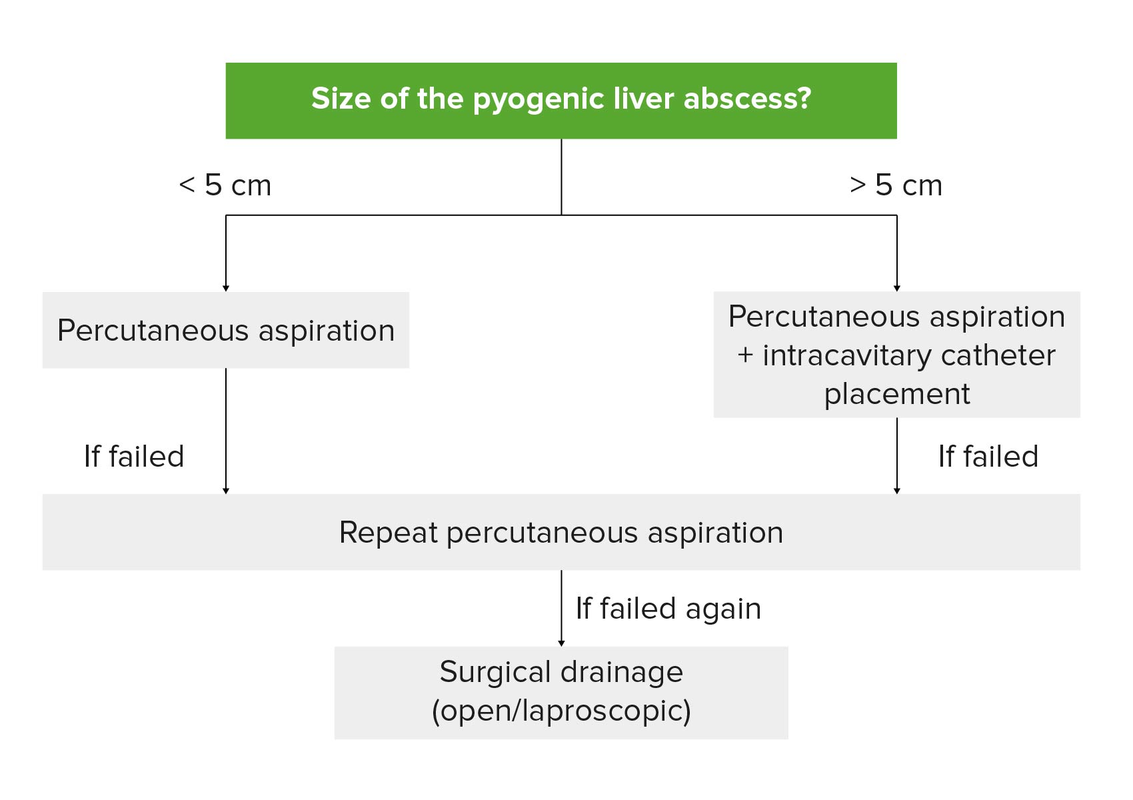
Manejo del absceso hepático piógeno

Drenaje de absceso piógeno unilocular:
Con absceso ≤ 5 cm se recomienda drenaje percutáneo (aspiración con aguja o colocación de catéter). Pueden ser necesarios intentos repetidos de aspiración con aguja. Los catéteres de drenaje permanecen colocados hasta que haya un drenaje mínimo. Para un absceso > 5 cm, se recomienda aspiración percutánea con colocación de catéter. El drenaje quirúrgico se realiza cuando falla el drenaje percutáneo en intentos repetidos.

Imagen por Lecturio.

Complicaciones y Pronóstico

Complicaciones

  • Ruptura
    • Complicación rara que conduce a:
      • Peritonitis Peritonitis Inflammation of the peritoneum lining the abdominal cavity as the result of infectious, autoimmune, or chemical processes. Primary peritonitis is due to infection of the peritoneal cavity via hematogenous or lymphatic spread and without intra-abdominal source. Secondary peritonitis arises from the abdominal cavity itself through rupture or abscess of intra-abdominal organs. Penetrating Abdominal Injury
      • Derrame pleural o empiema
      • Absceso retroperitoneal Retroperitoneal Peritoneum: Anatomy o absceso intraperitoneal Intraperitoneal Peritoneum: Anatomy
    • Factores de riesgo de ruptura:
      • Absceso > 6 cm
      • Cirrosis
  • Sepsis Sepsis Systemic inflammatory response syndrome with a proven or suspected infectious etiology. When sepsis is associated with organ dysfunction distant from the site of infection, it is called severe sepsis. When sepsis is accompanied by hypotension despite adequate fluid infusion, it is called septic shock. Sepsis and Septic Shock
  • Neumonía por diseminación directa al AL Amyloidosis lóbulo inferior derecho del pulmón

Pronóstico

  • La mortalidad general oscila entre el 2%–12%
  • Fatal si no se trata
  • Factores de riesgo de mortalidad:
    • Absceso que requiere drenaje quirúrgico abierto
    • Neoplasia maligna subyacente
    • Infección anaeróbica
    • Retraso en EN Erythema nodosum is an immune-mediated panniculitis (inflammation of the subcutaneous fat) caused by a type IV (delayed-type) hypersensitivity reaction. It commonly manifests in young women as tender, erythematous nodules on the shins. Erythema Nodosum el diagnóstico

Comparación de Masas Hepáticas

Tabla: Tipos de abscesos hepáticos infecciosos
Absceso hepático amebiano Absceso hepático piógeno Quiste de equinococo
Número Único Único/múltiple Único/múltiple
Síntomas asociados Diarrea Dolor Dolor Inflammation cuadrante superior derecho Prurito perianal
Fiebre +/- +
Imagenología (TC) Lesión solitaria en EN Erythema nodosum is an immune-mediated panniculitis (inflammation of the subcutaneous fat) caused by a type IV (delayed-type) hypersensitivity reaction. It commonly manifests in young women as tender, erythematous nodules on the shins. Erythema Nodosum el lóbulo derecho del hígado Se observa realce del borde periférico con la administración de contraste intravenoso Realce periférico incluso sin administración de contraste intravenoso (debido a la calcificación en EN Erythema nodosum is an immune-mediated panniculitis (inflammation of the subcutaneous fat) caused by a type IV (delayed-type) hypersensitivity reaction. It commonly manifests in young women as tender, erythematous nodules on the shins. Erythema Nodosum cáscara de huevo) junto con con tabiques internos
Hemograma ↑ Linfocitos ↑ Neutrófilos ↑ Eosinófilos
Diagnóstico Serología amebiana Imágenes + aspiración Imágenes + serología
Tratamiento
  • Metronidazol
  • Drenaje solo en EN Erythema nodosum is an immune-mediated panniculitis (inflammation of the subcutaneous fat) caused by a type IV (delayed-type) hypersensitivity reaction. It commonly manifests in young women as tender, erythematous nodules on the shins. Erythema Nodosum presencia de síntomas por presión
Antibióticos intravenosos y drenaje quirúrgico/percutáneo del absceso Según clasificación (resección quirúrgica, albendazol, tratamiento percutáneo)
Tabla: Tumores hepáticos benignos que simulan abscesos hepáticos
Hemangioma Hemangioma A vascular anomaly due to proliferation of blood vessels that forms a tumor-like mass. The common types involve capillaries and veins. It can occur anywhere in the body but is most frequently noticed in the skin and subcutaneous tissue. Imaging of the Liver and Biliary Tract hepático Hiperplasia nodular focal Adenoma hepatocelular
Biopsia Espacios vasculares cavernosos revestidos por células endoteliales planas Nódulos de hepatocitos localizados con grandes ramas arteriales malformadas y tejido fibroso central Hepatocitos agrandados con núcleos pequeños y regulares (sin anaplasia); arquitectura lobulillar hepática ausente
Hallazgos de la TC Masa hipodensa bien delimitada con realce periférico en EN Erythema nodosum is an immune-mediated panniculitis (inflammation of the subcutaneous fat) caused by a type IV (delayed-type) hypersensitivity reaction. It commonly manifests in young women as tender, erythematous nodules on the shins. Erythema Nodosum fase arterial y centrípeta relleno en EN Erythema nodosum is an immune-mediated panniculitis (inflammation of the subcutaneous fat) caused by a type IV (delayed-type) hypersensitivity reaction. It commonly manifests in young women as tender, erythematous nodules on the shins. Erythema Nodosum fases retardadas Cicatriz estrellada central Masa bien delimitada con realce heterogéneo en EN Erythema nodosum is an immune-mediated panniculitis (inflammation of the subcutaneous fat) caused by a type IV (delayed-type) hypersensitivity reaction. It commonly manifests in young women as tender, erythematous nodules on the shins. Erythema Nodosum fase arterial e isodensa en EN Erythema nodosum is an immune-mediated panniculitis (inflammation of the subcutaneous fat) caused by a type IV (delayed-type) hypersensitivity reaction. It commonly manifests in young women as tender, erythematous nodules on the shins. Erythema Nodosum fase venosa (sin lavado de contraste)
Tabla: Quistes hepáticos que simulan abscesos hepáticos
Quiste simple Enfermedad poliquística del hígado Quiste de colédoco Cistadenoma/cistadenocarcinoma
Descripción Quiste hepático más común, contiene líquido claro, carece de comunicación con el árbol biliar intrahepático Varios quistes reemplazan gran parte del hígado Malformaciones congénitas del árbol pancreatobiliar, múltiples tipos según la ubicación en EN Erythema nodosum is an immune-mediated panniculitis (inflammation of the subcutaneous fat) caused by a type IV (delayed-type) hypersensitivity reaction. It commonly manifests in young women as tender, erythematous nodules on the shins. Erythema Nodosum la sistema biliar
  • Cistoadenoma: raro tumor Tumor Inflammation quístico en EN Erythema nodosum is an immune-mediated panniculitis (inflammation of the subcutaneous fat) caused by a type IV (delayed-type) hypersensitivity reaction. It commonly manifests in young women as tender, erythematous nodules on the shins. Erythema Nodosum el parénquima hepático o conductos biliares extrahepáticos
  • Cistadenocarcinoma: un carcinoma invasivo
Presentación Clínica Generalmente asintomático
  • Dolor Dolor Inflammation abdominal recurrente
  • Ictericia intermitente
  • Masa en EN Erythema nodosum is an immune-mediated panniculitis (inflammation of the subcutaneous fat) caused by a type IV (delayed-type) hypersensitivity reaction. It commonly manifests in young women as tender, erythematous nodules on the shins. Erythema Nodosum cuadrante superior derecho
  • Colangitis
  • Pancreatitis Pancreatitis Inflammation of the pancreas. Pancreatitis is classified as acute unless there are computed tomographic or endoscopic retrograde cholangiopancreatographic findings of chronic pancreatitis. The two most common forms of acute pancreatitis are alcoholic pancreatitis and gallstone pancreatitis. Acute Pancreatitis
  • Masa abdominal superior
  • Dolor Dolor Inflammation abdominal
  • Anorexia Anorexia The lack or loss of appetite accompanied by an aversion to food and the inability to eat. It is the defining characteristic of the disorder anorexia nervosa. Anorexia Nervosa
Diagnóstico
  • Ultrasonido: para diagnóstico y seguimiento
  • TC: lesión bien delimitada que no realza con contraste
Ultrasonido: reemplazo del parénquima hepático por quistes de diferentes tamaños Ultrasonido, TC, colangiografía transhepática, pruebas de función hepática
  • Tomografía computarizada: quistes complejos con septos internos, proyecciones papilares y revestimiento irregular
  • Histología para el diagnóstico definitivo
Tratamiento Tratar con escisión (solo si es sintomático) Resección hepática parcial o, en EN Erythema nodosum is an immune-mediated panniculitis (inflammation of the subcutaneous fat) caused by a type IV (delayed-type) hypersensitivity reaction. It commonly manifests in young women as tender, erythematous nodules on the shins. Erythema Nodosum casos raros, trasplante (solo si hay síntomas)
  • Escisión completa de quistes
  • Trasplante de hígado si el quiste afecta los LOS Neisseria conductos biliares intrahepáticos (enfermedad de Caroli)
Todos los LOS Neisseria quistes multiloculados complejos (excepto el equinococo) deben extirparse debido al AL Amyloidosis riesgo de malignidad.

Diagnóstico Diferencial

  • Carcinoma hepatocelular: el cáncer de hígado primario más común. El carcinoma hepatocelular surge típicamente en EN Erythema nodosum is an immune-mediated panniculitis (inflammation of the subcutaneous fat) caused by a type IV (delayed-type) hypersensitivity reaction. It commonly manifests in young women as tender, erythematous nodules on the shins. Erythema Nodosum un hígado con enfermedad crónica o cirrótico. Las lesiones a menudo se encuentran incidentalmente en EN Erythema nodosum is an immune-mediated panniculitis (inflammation of the subcutaneous fat) caused by a type IV (delayed-type) hypersensitivity reaction. It commonly manifests in young women as tender, erythematous nodules on the shins. Erythema Nodosum la imagenología. Los LOS Neisseria síntomas constitucionales son raros y el dolor Dolor Inflammation en EN Erythema nodosum is an immune-mediated panniculitis (inflammation of the subcutaneous fat) caused by a type IV (delayed-type) hypersensitivity reaction. It commonly manifests in young women as tender, erythematous nodules on the shins. Erythema Nodosum cuadrante superior derecho no ocurre con frecuencia. Las características de imagen de los LOS Neisseria abscesos hepáticos piógenos (realce periférico) ayudan a diferenciarlo del carcinoma hepatocelular, que demuestra realce arterial y realce de la cápsula/borde en EN Erythema nodosum is an immune-mediated panniculitis (inflammation of the subcutaneous fat) caused by a type IV (delayed-type) hypersensitivity reaction. It commonly manifests in young women as tender, erythematous nodules on the shins. Erythema Nodosum la fase tardía. Se nota un aumento de tamaño en EN Erythema nodosum is an immune-mediated panniculitis (inflammation of the subcutaneous fat) caused by a type IV (delayed-type) hypersensitivity reaction. It commonly manifests in young women as tender, erythematous nodules on the shins. Erythema Nodosum < 6 meses. El pilar del tratamiento es la resección hepática.
  • Metástasis hepática: múltiples cánceres primarios pueden tener diseminación metastásica al AL Amyloidosis hígado, que se identifica con mayor frecuencia durante la estadificación. En EN Erythema nodosum is an immune-mediated panniculitis (inflammation of the subcutaneous fat) caused by a type IV (delayed-type) hypersensitivity reaction. It commonly manifests in young women as tender, erythematous nodules on the shins. Erythema Nodosum la TC con contraste, las lesiones se presentan como múltiples lesiones anulares en EN Erythema nodosum is an immune-mediated panniculitis (inflammation of the subcutaneous fat) caused by a type IV (delayed-type) hypersensitivity reaction. It commonly manifests in young women as tender, erythematous nodules on the shins. Erythema Nodosum el hígado. Un antecedente de malignidad extrahepática hace HACE Altitude Sickness que la metástasis sea una causa más probable de lesiones hepáticas. La presencia de fiebre y dolor Dolor Inflammation a la palpación del cuadrante superior derecho favorece el diagnóstico de absceso hepático piógeno. La biopsia es necesaria para confirmar el diagnóstico y el tratamiento implica el tratamiento de la neoplasia maligna primaria.

Referencias

  1. Davis, J., and McDonald, M. (2024). Pyogenic liver abscess. UpToDate. Retrieved August 19, 2025, from https://www.uptodate.com/contents/pyogenic-liver-abscess
  2. Peralta, R. (2024). Liver abscess. In Geibel, J. (Ed.), Medscape. Retrieved August 19, 2025, from https://emedicine.medscape.com/article/188802-overview#a2
  3. Regey, A. and Reddy, R. (2025). Diagnosis and management of cystic lesions of the liver. UpToDate. Retrieved August 19, 2025, from https://www.uptodate.com/contents/diagnosis-and-management-of-cystic-lesions-of-the-liver
  4. Chopra, S. (2024). Focal nodular hyperplasia. UpToDate. Retrieved August 9, 2025, from https://www.uptodate.com/contents/focal-nodular-hyperplasia
  5. Curry, M. P. and Chopra, S. (2024). Hepatic hemangioma. UpToDate. Retrieved August 19, 2025, from https://www.uptodate.com/contents/hepatic-hemangioma
  6. Curry, M. P. and Afdhal, N. H. (2024). Hepatocellular adenoma. UpToDate. Retrieved August 19, 2025, from https://www.uptodate.com/contents/hepatocellular-adenoma
  7. Schwartz, J, M., Carithers Jr, R. L., and Sirlin, C. B. (2025). Clinical features and diagnosis of hepatocellular carcinoma. UpToDate. Retrieved August 19, 2025, from https://www.uptodate.com/contents/clinical-features-and-diagnosis-of-hepatocellular-carcinoma

¡Crea tu cuenta gratis o inicia una sesión para seguir leyendo!

Regístrate ahora y obtén acceso gratuito a Lecturio con páginas de concepto, videos médicos y cuestionarios para tu educación médica.

User Reviews

Details