O vírus da coriomeningite linfocítica (LCMVLCMVLymphocytic choriomeningitis virus (LCMV) is a single-stranded RNA virus transmitted to humans via rodents, the primary reservoir. Viral infections can occur through direct contact (such as through a break in the skin) with rodent urine, saliva, or droppings or via inhalation of aerosolized virus. The disease typically results in a self-limited, febrile, biphasic disease. Lymphocytic Choriomeningitis Virus, pela sigla em inglês) é um vírus RNARNAA polynucleotide consisting essentially of chains with a repeating backbone of phosphate and ribose units to which nitrogenous bases are attached. RNA is unique among biological macromolecules in that it can encode genetic information, serve as an abundant structural component of cells, and also possesses catalytic activity.RNA Types and Structure de cadeia simples transmitido aos humanos através de roedores, o seu reservatório primário. As infeções virais podem ocorrer por contacto direto (como através da rutura na pele) com urina, salivaSalivaThe clear, viscous fluid secreted by the salivary glands and mucous glands of the mouth. It contains mucins, water, organic salts, and ptyalin.Salivary Glands: Anatomy ou fezes de roedores, ou por inalação do vírus aerossolizado. A transmissão vertical e, raramente, o transplante de órgãos também levam a infeções. A doença geralmente resulta em doença autolimitada, febril e bifásica. Em casos graves, os doentes podem apresentar encefalite, meningite asséptica ou meningoencefalite. As infeções pelo vírus da coriomeningite linfocítica em mulheres grávidas também foram reconhecidas como um fator teratogénico importante, resultando em morte fetal ou defeitos congénitos. O diagnóstico é por serologia ou RT-PCRRT-PCRA variation of the pcr technique in which cDNA is made from RNA via reverse transcription. The resultant cDNA is then amplified using standard pcr protocols.Polymerase Chain Reaction (PCR). O tratamento é de suporte.
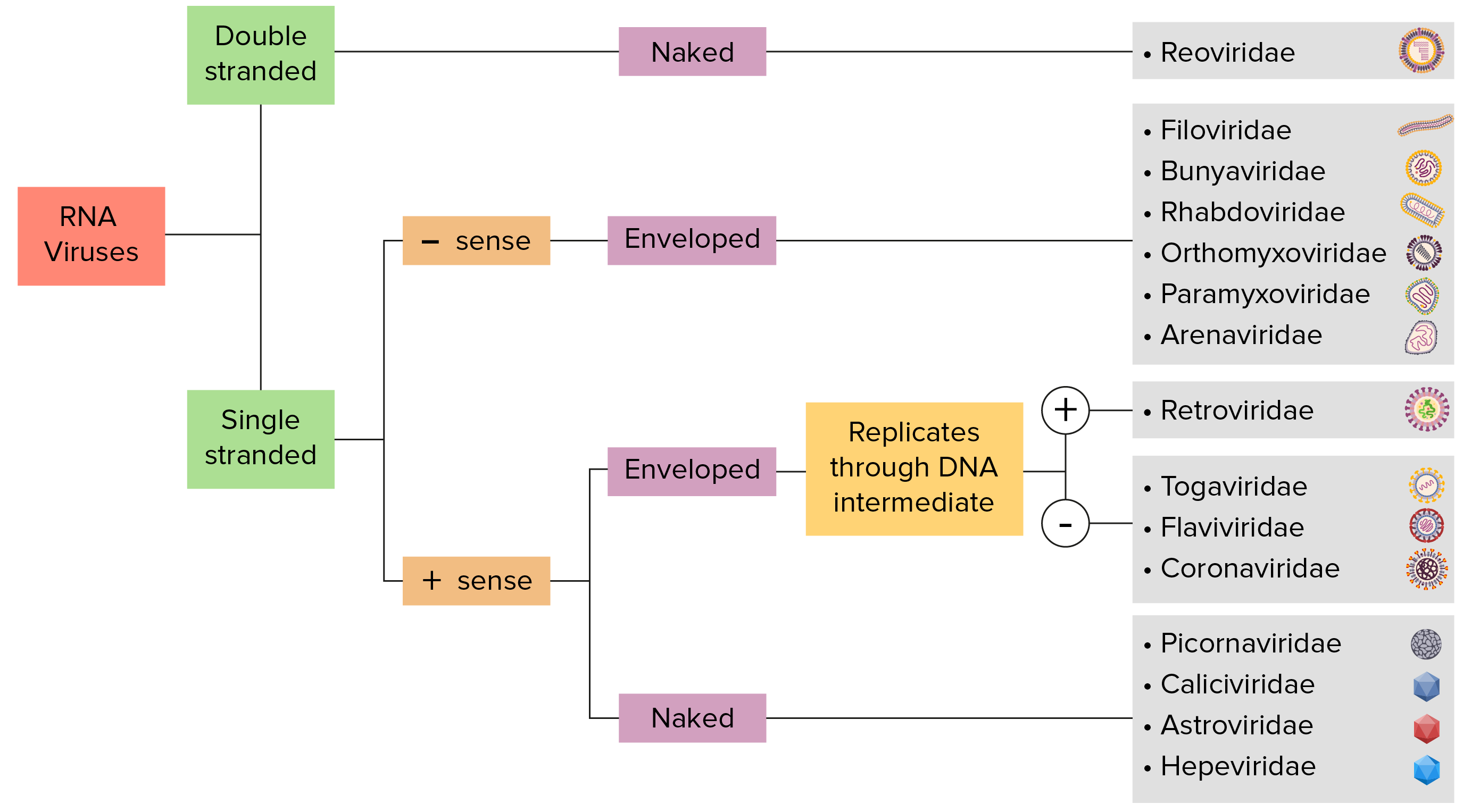
Identificação do vírus RNA: Os vírus podem ser classificados de várias maneiras. A maioria dos vírus, no entanto, terá um genoma formado por DNA ou RNA. Os vírus de genoma de RNA podem ser ainda caracterizados por como RNA de cadeia simples ou dupla. Os vírus “envelopados” são cobertos por uma fina camada de membrana celular (geralmente retirada da célula hospedeira). Se a camada estiver ausente, os vírus são chamados de vírus “nus”. Os vírus com genomas de cadeia simples são vírus de “sentido positivo” se o genoma for usado diretamente como RNA mensageiro (mRNA, pela sigla em inglês), que é traduzido em proteínas. Os vírus de “sentido negativo” usam a RNA polimerase dependente de RNA, uma enzima viral, para transcrever o seu genoma em RNA mensageiro.
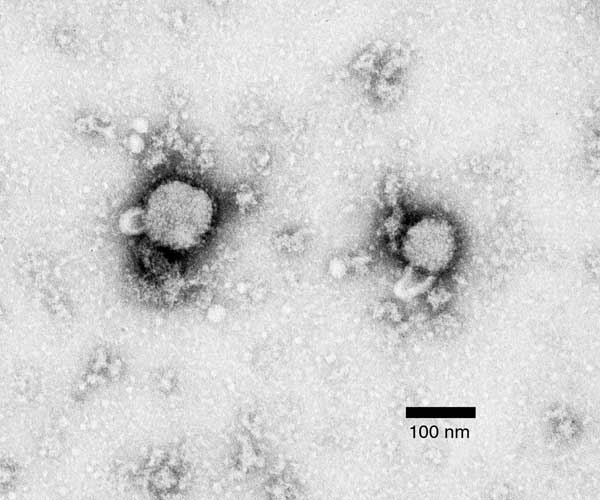
Características básicas do vírus da coriomeningite linfocítica (LCMVLCMVLymphocytic choriomeningitis virus (LCMV) is a single-stranded RNA virus transmitted to humans via rodents, the primary reservoir. Viral infections can occur through direct contact (such as through a break in the skin) with rodent urine, saliva, or droppings or via inhalation of aerosolized virus. The disease typically results in a self-limited, febrile, biphasic disease. Lymphocytic Choriomeningitis Virus)
Com envelopeEnvelopeBilayer lipid membrane acquired by viral particles during viral morphogenesis. Although the lipids of the viral envelope are host derived, various virus-encoded integral membrane proteins, i.e. Viral envelope proteins are incorporated there.Virology
Esférico
Tamanho médio (diâmetro entre 60 e 300 nm)
2 glicoproteínas de superfície viral no envelopeEnvelopeBilayer lipid membrane acquired by viral particles during viral morphogenesis. Although the lipids of the viral envelope are host derived, various virus-encoded integral membrane proteins, i.e. Viral envelope proteins are incorporated there.Virology: G1 e G2
Genoma do vírus:
Encapsulado por um nucleocapsídeo helicoidal
Segmentado com:
Uma cadeia simples grande (L) RNARNAA polynucleotide consisting essentially of chains with a repeating backbone of phosphate and ribose units to which nitrogenous bases are attached. RNA is unique among biological macromolecules in that it can encode genetic information, serve as an abundant structural component of cells, and also possesses catalytic activity.RNA Types and Structure de sentido negativo
Um RNARNAA polynucleotide consisting essentially of chains with a repeating backbone of phosphate and ribose units to which nitrogenous bases are attached. RNA is unique among biological macromolecules in that it can encode genetic information, serve as an abundant structural component of cells, and also possesses catalytic activity.RNA Types and Structure pequeno (S) ambisense
Transporta RNARNAA polynucleotide consisting essentially of chains with a repeating backbone of phosphate and ribose units to which nitrogenous bases are attached. RNA is unique among biological macromolecules in that it can encode genetic information, serve as an abundant structural component of cells, and also possesses catalytic activity.RNA Types and Structure polimerase dependente de RNARNAA polynucleotide consisting essentially of chains with a repeating backbone of phosphate and ribose units to which nitrogenous bases are attached. RNA is unique among biological macromolecules in that it can encode genetic information, serve as an abundant structural component of cells, and also possesses catalytic activity.RNA Types and Structure (RDRP, pela sigla em inglês)
Taxonomia:
Família ArenaviridaeArenaviridaeA family of RNA viruses naturally infecting rodents and consisting of one genus (arenavirus) with two groups: old world arenaviruses and new world arenaviruses. Infection in rodents is persistent and silent. Vertical transmission is through milk-, saliva-, or urine-borne routes. Horizontal transmission to humans, monkeys, and other animals is important.Lassa Virus
Contacto direto com material contaminado por fezes/urina/salivaSalivaThe clear, viscous fluid secreted by the salivary glands and mucous glands of the mouth. It contains mucins, water, organic salts, and ptyalin.Salivary Glands: Anatomy de roedores infetados (através do olho, nariz, boca, ferimento na pele ou mordida de animal)
Inalação de vírus aerossolizado
Transmissão vertical da mãe para o feto
Transplante de órgãos (destinatário do tecido de doador infetado)
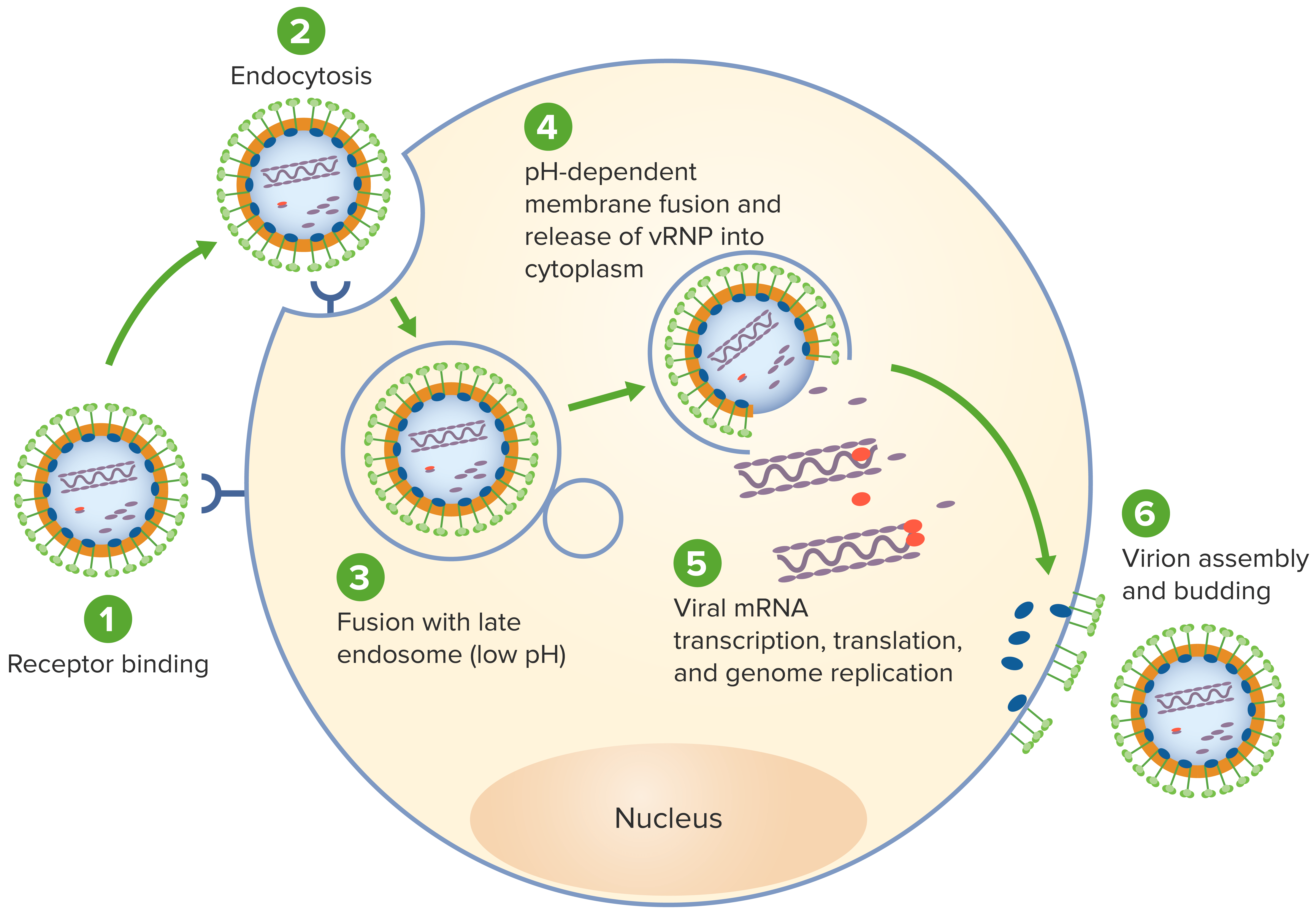
Ciclo da vida
O vírus liga-se aos recetores do hospedeiro através de glicoproteínas do envelopeEnvelopeBilayer lipid membrane acquired by viral particles during viral morphogenesis. Although the lipids of the viral envelope are host derived, various virus-encoded integral membrane proteins, i.e. Viral envelope proteins are incorporated there.Virology.
O vírus é posteriormente endocitado, conseguindo assim entrar na célula.
Segue-se a fusão viral com um endossoma.
O vírus funde-se com a membrana do endossoma, permitindo a libertação do ribonucleocapsídeo viral no citoplasma.
O RDRP medeia a replicação e transcrição do geneGeneA category of nucleic acid sequences that function as units of heredity and which code for the basic instructions for the development, reproduction, and maintenance of organisms.Basic Terms of Genetics viral no citoplasma do hospedeiro.
Novos vírus agrupam-se e ligam-se, que leva à libertação do vírus para infetar outras células.
O ciclo de vida do vírus da coriomeningite linfocítica: 1. O vírus liga-se aos recetores do hospedeiro através de glicoproteínas de envelope. 2. O vírus é subsequentemente endocitado, entrando nas células. 3. Segue-se a fusão viral com um endossoma. 4. O vírus funde-se com a membrana do endossoma, permitindo a libertação da ribonucleocápside viral no citoplasma. 5. A RNA polimerase dependente do RNA (RdRP) medeia a replicação e a transcrição do gene viral no citoplasma hospedeiro. 6. São montados novos viriões e ocorre budding, libertando o virião para infetar outras células. vRNP: ribonucleoproteína viral
Imagem por Lecturio.
Fatores de risco do hospedeiro
Donos de ratos de estimação ou hamsters
Trabalhadores de laboratório
Processo da doença
O LCMVLCMVLymphocytic choriomeningitis virus (LCMV) is a single-stranded RNA virus transmitted to humans via rodents, the primary reservoir. Viral infections can occur through direct contact (such as through a break in the skin) with rodent urine, saliva, or droppings or via inhalation of aerosolized virus. The disease typically results in a self-limited, febrile, biphasic disease. Lymphocytic Choriomeningitis Virus não é citotóxico, mas enquanto a resposta imune do hospedeiro tenta eliminar o vírus, também se pode desencadear uma doença imunomediada. A resposta imune produz as diferentes manifestações da doença.
Período de incubação: até 13 dias
Segue-se viremiaViremiaThe presence of viruses in the blood.Erythema Infectiosum primária → disseminação para outros órgãos
O vírus atinge o SNC (meningesMeningesThe brain and the spinal cord are enveloped by 3 overlapping layers of connective tissue called the meninges. The layers are, from the most external layer to the most internal layer, the dura mater, arachnoid mater, and pia mater. Between these layers are 3 potential spaces called the epidural, subdural, and subarachnoid spaces. Meninges: Anatomy, plexo coróide e revestimento ependimário ventricular), levando à infiltração de células inflamatórias.
Infeção pelo vírus da coriomeningite linfocítica adquirida
A infeção com LCMVLCMVLymphocytic choriomeningitis virus (LCMV) is a single-stranded RNA virus transmitted to humans via rodents, the primary reservoir. Viral infections can occur through direct contact (such as through a break in the skin) with rodent urine, saliva, or droppings or via inhalation of aerosolized virus. The disease typically results in a self-limited, febrile, biphasic disease. Lymphocytic Choriomeningitis Virus resulta em doença bifásica.
Início dos sintomas:
Ocorre 8-13 dias após a exposição
Os primeiros sintomas podem durar entre 5 a 7 dias.
33% são assintomáticos.
50% têm doença febril sem envolvimento neurológico.
Após alguns dias de recuperação, os sintomas da 2ª fase podem começar, e incluem sintomas neurológicos (típicos de meningite e/ou encefalite).
Aumento da cefaleia, fotofobia
Rigidez da nuca
Mudança no estado de consciência (letargia, comaComaComa is defined as a deep state of unarousable unresponsiveness, characterized by a score of 3 points on the GCS. A comatose state can be caused by a multitude of conditions, making the precise epidemiology and prognosis of coma difficult to determine. Coma)
Outros achados menos frequentes:
Orquite
Miocardite
Artrite
Parotidite
PneumoniaPneumoniaPneumonia or pulmonary inflammation is an acute or chronic inflammation of lung tissue. Causes include infection with bacteria, viruses, or fungi. In more rare cases, pneumonia can also be caused through toxic triggers through inhalation of toxic substances, immunological processes, or in the course of radiotherapy.Pneumonia
Infeção pelo vírus da coriomeningite linfocítica congénita
As mulheres infetadas com LCMVLCMVLymphocytic choriomeningitis virus (LCMV) is a single-stranded RNA virus transmitted to humans via rodents, the primary reservoir. Viral infections can occur through direct contact (such as through a break in the skin) with rodent urine, saliva, or droppings or via inhalation of aerosolized virus. The disease typically results in a self-limited, febrile, biphasic disease. Lymphocytic Choriomeningitis Virus durante a gravidez podem transmitir a infeção para o feto.
As infeções que ocorrem durante o 1º trimestre podem resultar em morte fetal ou aborto espontâneo.
Infeções no 2º e 3º trimestres podem resultar em defeitos congénitos, incluindo:
Cegueira: A coriorretinite é um achado comum em crianças.
Atraso no desenvolvimento
Hidrocefalia
Epilepsia
Infeção pelo vírus da coriomeningite linfocítica do transplante de órgãos
A imunossupressão significativa em doentes recetores de transplante desempenha um papel no desenvolvimento da doença:
Encefalopatia
Insuficiência respiratória
Insuficiência renal/hepática
Disfunção do enxerto
Coagulopatia
Trombocitopenia
Febre
Diagnóstico
Meios complementares de diagnóstico
Os testesTestesGonadal Hormones de confirmação para o LCMVLCMVLymphocytic choriomeningitis virus (LCMV) is a single-stranded RNA virus transmitted to humans via rodents, the primary reservoir. Viral infections can occur through direct contact (such as through a break in the skin) with rodent urine, saliva, or droppings or via inhalation of aerosolized virus. The disease typically results in a self-limited, febrile, biphasic disease. Lymphocytic Choriomeningitis Virus incluem:
Deteção de anticorpos IgMIgMA class of immunoglobulin bearing mu chains (immunoglobulin mu-chains). Igm can fix complement. The name comes from its high molecular weight and originally being called a macroglobulin.Immunoglobulins: Types and Functions e IgGIgGThe major immunoglobulin isotype class in normal human serum. There are several isotype subclasses of igg, for example, igg1, igg2a, and igg2b.Hypersensitivity Pneumonitis no LCR e soro
RT-PCRRT-PCRA variation of the pcr technique in which cDNA is made from RNA via reverse transcription. The resultant cDNA is then amplified using standard pcr protocols.Polymerase Chain Reaction (PCR)
Cultura viral do LCR
Para a infeção congénita por LCMVLCMVLymphocytic choriomeningitis virus (LCMV) is a single-stranded RNA virus transmitted to humans via rodents, the primary reservoir. Viral infections can occur through direct contact (such as through a break in the skin) with rodent urine, saliva, or droppings or via inhalation of aerosolized virus. The disease typically results in a self-limited, febrile, biphasic disease. Lymphocytic Choriomeningitis Virus, como os bebés podem não ter maisMAISAndrogen Insensitivity Syndrome o vírus, são usados os níveis de IgMIgMA class of immunoglobulin bearing mu chains (immunoglobulin mu-chains). Igm can fix complement. The name comes from its high molecular weight and originally being called a macroglobulin.Immunoglobulins: Types and Functions e IgGIgGThe major immunoglobulin isotype class in normal human serum. There are several isotype subclasses of igg, for example, igg1, igg2a, and igg2b.Hypersensitivity Pneumonitis.
Doentes com meningite assética, encefalite ou meningoencefalite requerem:
Hospitalização
Tratamento de suporte com base na gravidade
A recuperação geralmente dura até 3 semanas.
Taxa de mortalidade:
Infeção adquirida por LCMVLCMVLymphocytic choriomeningitis virus (LCMV) is a single-stranded RNA virus transmitted to humans via rodents, the primary reservoir. Viral infections can occur through direct contact (such as through a break in the skin) with rodent urine, saliva, or droppings or via inhalation of aerosolized virus. The disease typically results in a self-limited, febrile, biphasic disease. Lymphocytic Choriomeningitis Virus: aproximadamente 1%
Infeção congénita por LCMVLCMVLymphocytic choriomeningitis virus (LCMV) is a single-stranded RNA virus transmitted to humans via rodents, the primary reservoir. Viral infections can occur through direct contact (such as through a break in the skin) with rodent urine, saliva, or droppings or via inhalation of aerosolized virus. The disease typically results in a self-limited, febrile, biphasic disease. Lymphocytic Choriomeningitis Virus: pode chegar a 35% dependendo das doenças associadas
Comparação de Espécies
Os arenavírus podem causar doenças neurológicas (LCMVLCMVLymphocytic choriomeningitis virus (LCMV) is a single-stranded RNA virus transmitted to humans via rodents, the primary reservoir. Viral infections can occur through direct contact (such as through a break in the skin) with rodent urine, saliva, or droppings or via inhalation of aerosolized virus. The disease typically results in a self-limited, febrile, biphasic disease. Lymphocytic Choriomeningitis Virus) e/ou febres hemorrágicas, para as quais uma das principais etiologias é o vírus Lassa.
Tabela: Comparação do vírus da coriomeningite linfocítica (LCMVLCMVLymphocytic choriomeningitis virus (LCMV) is a single-stranded RNA virus transmitted to humans via rodents, the primary reservoir. Viral infections can occur through direct contact (such as through a break in the skin) with rodent urine, saliva, or droppings or via inhalation of aerosolized virus. The disease typically results in a self-limited, febrile, biphasic disease. Lymphocytic Choriomeningitis Virus) e do vírus Lassa
Organismo
LCMVLCMVLymphocytic choriomeningitis virus (LCMV) is a single-stranded RNA virus transmitted to humans via rodents, the primary reservoir. Viral infections can occur through direct contact (such as through a break in the skin) with rodent urine, saliva, or droppings or via inhalation of aerosolized virus. The disease typically results in a self-limited, febrile, biphasic disease. Lymphocytic Choriomeningitis Virus
Vírus Lassa
Família
ArenaviridaeArenaviridaeA family of RNA viruses naturally infecting rodents and consisting of one genus (arenavirus) with two groups: old world arenaviruses and new world arenaviruses. Infection in rodents is persistent and silent. Vertical transmission is through milk-, saliva-, or urine-borne routes. Horizontal transmission to humans, monkeys, and other animals is important.Lassa Virus
Género
Mammarenavírus
Características
Com envelopeEnvelopeBilayer lipid membrane acquired by viral particles during viral morphogenesis. Although the lipids of the viral envelope are host derived, various virus-encoded integral membrane proteins, i.e. Viral envelope proteins are incorporated there.Virology
Tamanho médio
Esférico
Genoma segmentado
RNARNAA polynucleotide consisting essentially of chains with a repeating backbone of phosphate and ribose units to which nitrogenous bases are attached. RNA is unique among biological macromolecules in that it can encode genetic information, serve as an abundant structural component of cells, and also possesses catalytic activity.RNA Types and Structure de cadeia simples (ssRNA)
Com envelopeEnvelopeBilayer lipid membrane acquired by viral particles during viral morphogenesis. Although the lipids of the viral envelope are host derived, various virus-encoded integral membrane proteins, i.e. Viral envelope proteins are incorporated there.Virology
Tamanho médio
Esférico
Genoma segmentado
ssRNA
Reservatório
Roedores
Transmissão
Aerossóis
Contacto direto
Transmissão vertical
Transplante de órgão
Aerossóis
Contacto direto
Ingestão
De pessoa para pessoa (através da exposição a sangue, secreções, tecido do indivíduo infetado)
Evolução clínica
Bifásico:
Doença semelhante à gripe
Meningite, encefalite
Maioria dos casos assintomáticos ou apenas sintomas leves
Manifestações hemorrágicas
A surdez é comum.
Diagnóstico
Serologias
RT-PCRRT-PCRA variation of the pcr technique in which cDNA is made from RNA via reverse transcription. The resultant cDNA is then amplified using standard pcr protocols.Polymerase Chain Reaction (PCR)
Tratamento
Suporte
Suporte
Ribavirina
Prevenção
Evitar o contacto com roedores e os seus fluidos corporais.
Evitar o contacto com roedores e os seus fluidos corporais.
Equipamento de proteção pessoal
Diagnóstico Diferencial
Os seguintes vírus selecionados de RNARNAA polynucleotide consisting essentially of chains with a repeating backbone of phosphate and ribose units to which nitrogenous bases are attached. RNA is unique among biological macromolecules in that it can encode genetic information, serve as an abundant structural component of cells, and also possesses catalytic activity.RNA Types and Structure também podem levar à infeção do SNC.
Vírus da encefalite transmitida por carraça: devido a um vírus de RNARNAA polynucleotide consisting essentially of chains with a repeating backbone of phosphate and ribose units to which nitrogenous bases are attached. RNA is unique among biological macromolecules in that it can encode genetic information, serve as an abundant structural component of cells, and also possesses catalytic activity.RNA Types and Structure de cadeia simples do género FlavivirusFlavivirusA genus of flaviviridae containing several subgroups and many species. Most are arboviruses transmitted by mosquitoes or ticks. The type species is yellow fever virus.Tick-borne Encephalitis Virus. A transmissão ocorre principalmente através de carraças Ixodes encontradas na Europa, Rússia e Ásia. A maioria dos doentes está assintomática, mas os indivíduos sintomáticos podem apresentar uma doença bifásica. Os doentes podem desenvolver manifestações neurológicas, como meningite, encefalite ou meningoencefalite. A serologia ou PCRPCRPolymerase chain reaction (PCR) is a technique that amplifies DNA fragments exponentially for analysis. The process is highly specific, allowing for the targeting of specific genomic sequences, even with minuscule sample amounts. The PCR cycles multiple times through 3 phases: denaturation of the template DNA, annealing of a specific primer to the individual DNA strands, and synthesis/elongation of new DNA molecules.Polymerase Chain Reaction (PCR) podem confirmar o diagnóstico. Não há terapia antiviralAntiviralAntivirals for Hepatitis B eficaz para infeções por vírus da encefalite transmitida por carraça, portanto, o tratamento é de suporte
Vírus da encefalite equina: arbovírus transmitidos por mosquitos (pertencentes a TogaviridaeTogaviridaeA family of RNA viruses, mainly arboviruses, consisting of two genera: alphavirus (group A arboviruses), and rubivirus. Virions are spherical, 60-70 nm in diameter, with a lipoprotein envelope tightly applied to the icosahedral nucleocapsid.Rubella Virus , género AlphavirusAlphavirusA genus of togaviridae, also known as group a arboviruses, serologically related to each other but not to other togaviridae. The viruses are transmitted by mosquitoes. The type species is the sindbis virus.Equine Encephalitis Viruses) que podem causar doenças virais menores e, em casos graves, encefalite em humanos. O vírus é um RNARNAA polynucleotide consisting essentially of chains with a repeating backbone of phosphate and ribose units to which nitrogenous bases are attached. RNA is unique among biological macromolecules in that it can encode genetic information, serve as an abundant structural component of cells, and also possesses catalytic activity.RNA Types and Structure de cadeia simples de sentido positivo. O vírus da encefalite equina oriental é o maisMAISAndrogen Insensitivity Syndrome clinicamente relevante nos Estados Unidos. O vírus é mantido num ciclo entre mosquitos e hospedeiros aviários, mas espalha-se para humanos através de vetores-ponte. Os sintomas incluem febre, dor de cabeça e vómitos, com recuperação da maioria dos doentes. A doença pode progredir para encefalite grave. O diagnóstico é feito por estudos do LCR, com serologia e deteção de antigénio viral ou sequência genómica. Não há tratamento específico e a terapia é maioritariamente de suporte.
Vírus do Nilo Ocidental: pode causar doença neuroinvasiva, incluindo meningite, encefalite e paralisia flácida aguda. É um vírus de RNARNAA polynucleotide consisting essentially of chains with a repeating backbone of phosphate and ribose units to which nitrogenous bases are attached. RNA is unique among biological macromolecules in that it can encode genetic information, serve as an abundant structural component of cells, and also possesses catalytic activity.RNA Types and Structure de cadeia simples, de sentido positivo, com envelopeEnvelopeBilayer lipid membrane acquired by viral particles during viral morphogenesis. Although the lipids of the viral envelope are host derived, various virus-encoded integral membrane proteins, i.e. Viral envelope proteins are incorporated there.Virology do género FlavivirusFlavivirusA genus of flaviviridae containing several subgroups and many species. Most are arboviruses transmitted by mosquitoes or ticks. The type species is yellow fever virus.Tick-borne Encephalitis Virus. Os hospedeiros primários são as aves, e a doença é maisMAISAndrogen Insensitivity Syndrome frequentemente transmitida por mosquitos Culex. A maioria das pessoas infetadas com o vírus está assintomática. Alguns doentes terão uma doença febril autolimitada, denominada febre do Nilo Ocidental. O diagnóstico é confirmado com serologia ou serologia do LCR, ou RT-PCRRT-PCRA variation of the pcr technique in which cDNA is made from RNA via reverse transcription. The resultant cDNA is then amplified using standard pcr protocols.Polymerase Chain Reaction (PCR). O tratamento é geralmente de suporte. A prevenção visa o controlo local do mosquito e a proteção contra picadas de mosquito.
Vírus da encefalite de Saint Louis: vírus de RNARNAA polynucleotide consisting essentially of chains with a repeating backbone of phosphate and ribose units to which nitrogenous bases are attached. RNA is unique among biological macromolecules in that it can encode genetic information, serve as an abundant structural component of cells, and also possesses catalytic activity.RNA Types and Structure de cadeia simples, de sentido positivo, com envelopeEnvelopeBilayer lipid membrane acquired by viral particles during viral morphogenesis. Although the lipids of the viral envelope are host derived, various virus-encoded integral membrane proteins, i.e. Viral envelope proteins are incorporated there.Virology, pertencente ao género FlavivirusFlavivirusA genus of flaviviridae containing several subgroups and many species. Most are arboviruses transmitted by mosquitoes or ticks. The type species is yellow fever virus.Tick-borne Encephalitis Virus e causador da encefalite de St. Louis. A transmissão é por espécies de mosquito Culex. A maioria das infeções é assintomática. Indivíduos sintomáticos podem apresentar sintomas semelhantes aos da gripe, meningite assética, encefalite ou meningoencefalite. O diagnóstico é confirmado com serologia. Não há tratamento antiviralAntiviralAntivirals for Hepatitis B eficaz, portanto, o tratamento é de suporte. A prevenção visa o controlo local do mosquito e a proteção individual com repelente de insetos e roupas de proteção.
Referências
Bonthius D.J. (2012). Lymphocytic choriomeningitis virus: an underrecognized cause of neurologic disease in the fetus, child, and adult. Seminars in Pediatric Neurology 19:89–95. https://doi.org/10.1016/j.spen.2012.02.002
Centers for Disease Control and Prevention. (2024). About viral hemorrhagic fevers (VHFs). U.S. Department of Health & Human Services. Retrieved October 28, 2025, from https://www.cdc.gov/viral-hemorrhagic-fevers/about/
Centers for Disease Control and Prevention (2008). Brief report: Lymphocytic choriomeningitis virus transmitted through solid organ transplantation. MMWR Morb Mortal Wkly Rep 57:799–801.
A Lecturio Medical complementa o teu estudo através de métodos de ensino baseados em evidência, vídeos de palestras, perguntas e muito mais – tudo combinado num só lugar e fácil de usar.
User Reviews
Details
×
Obtenha Premium para testar os seus conhecimentos
Lecturio Premium dá-lhe acesso total a todos os conteúdos e características
Obtenha Premium para ver todos os vídeos
Verifique agora o seu e-mail para obter um teste gratuito.
Crie uma conta gratuita para testar os seus conhecimentos
Lecturio Premium dá-lhe acesso total a todos os conteúdos e características - incluindo o Qbank de Lecturio com perguntas actualizadas ao estilo do board-.