



A síndrome de hiper-IgE autossômica dominante ( AD-HIES AD-HIES Autosomal dominant hyper-ige syndrome (AD-HIES), also known as Job's syndrome, is a rare form of primary immunodeficiency disorder that affects various organs systems in addition to the immune system. Some cases of AD-HIES are caused by mutations in the STAT3 gene, resulting in abnormal neutrophil chemotaxis. Autosomal Dominant Hyperimmunoglobulin E Syndrome, pela sigla em inglês), também conhecida como síndrome de Job, é uma forma rara de distúrbio de imunodeficiência primária que afeta vários sistemas de órgãos, além do sistema imunológico. Alguns casos de AD-HIES AD-HIES Autosomal dominant hyper-ige syndrome (AD-HIES), also known as Job's syndrome, is a rare form of primary immunodeficiency disorder that affects various organs systems in addition to the immune system. Some cases of AD-HIES are caused by mutations in the STAT3 gene, resulting in abnormal neutrophil chemotaxis. Autosomal Dominant Hyperimmunoglobulin E Syndrome são causados por mutações no gene Gene A category of nucleic acid sequences that function as units of heredity and which code for the basic instructions for the development, reproduction, and maintenance of organisms. Basic Terms of Genetics STAT3, o que leva a uma quimiotaxia anormal de neutrófilos. Noutros casos, a causa é desconhecida. Os doentes com AD-HIES AD-HIES Autosomal dominant hyper-ige syndrome (AD-HIES), also known as Job's syndrome, is a rare form of primary immunodeficiency disorder that affects various organs systems in addition to the immune system. Some cases of AD-HIES are caused by mutations in the STAT3 gene, resulting in abnormal neutrophil chemotaxis. Autosomal Dominant Hyperimmunoglobulin E Syndrome apresentam pneumonia Pneumonia Pneumonia or pulmonary inflammation is an acute or chronic inflammation of lung tissue. Causes include infection with bacteria, viruses, or fungi. In more rare cases, pneumonia can also be caused through toxic triggers through inhalation of toxic substances, immunological processes, or in the course of radiotherapy. Pneumonia recorrente, infeções de pele, erupções cutâneas, bolhas e abscessos.
Last updated: Dec 15, 2025
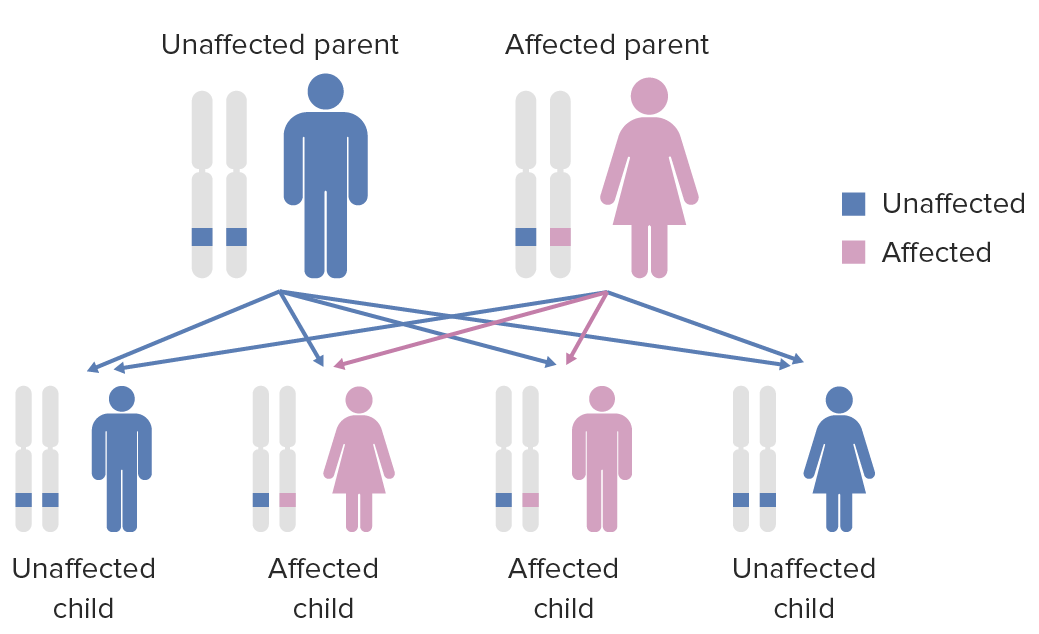
Diagrama do padrão de hereditariedade das condições autossómicas dominantes
Imagem por Lecturio.Os sintomas podem ser aparentes no nascimento ou tornar-se aparentes durante a infância ou na primeira infância.
Os doentes apresentam várias alterações e manifestações clínicas:

com características faciais características da síndrome de Job. Observar o nariz largo, olhos profundos, prognatismo e pele facial áspera com tamanho exagerado dos poros.
Imagem: “Facial features in AD-HIES” por Milton S. Hershey Medical Center, School of Medicine, Hershey, PA. Licença: CC BY 2.0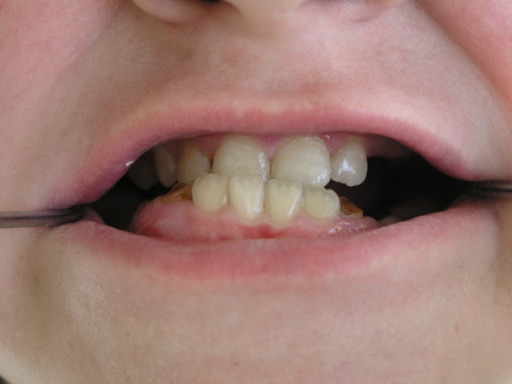
Prognatismo numa criança com AD-HIES
Imagem: “Prognathism in a child with HIES” por Department of Pediatric Pneumonology, Allergology and Clinical Immunology, Poznan University of Medical Sciences, 27/33 Szpitalna Street, Poznan, Poland. Licença: CC BY 2.0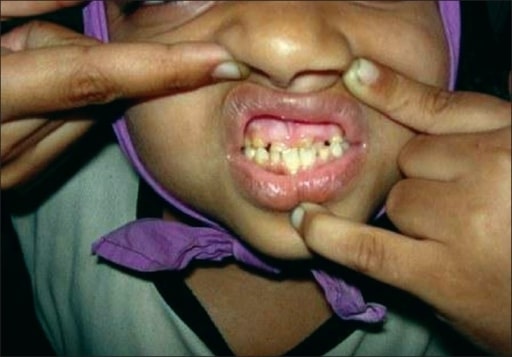
Fotografia de uma menina de 10 anos com AD-HIES, a revelar retenção da dentição decídua
Imagem: “Retention of primary dentition” por Department of Dermatology, Madras Medical College, Chennai, India. Licença: CC BY 2.0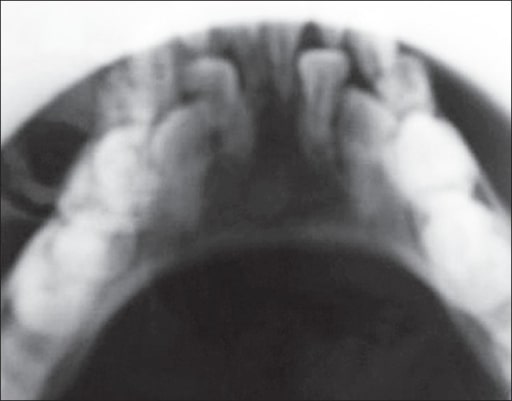
Radiografia de uma menina de dez anos com AD-HIES, a revelar retenção da dentição decídua
Imagem: “Jaw X-ray showing retention of primary dentition” por Department of Dermatology, Madras Medical College, Chennai, India. Licença: CC BY 2.0Uma mnemónica útil das manifestações clínicas do AD-HIES AD-HIES Autosomal dominant hyper-ige syndrome (AD-HIES), also known as Job’s syndrome, is a rare form of primary immunodeficiency disorder that affects various organs systems in addition to the immune system. Some cases of AD-HIES are caused by mutations in the STAT3 gene, resulting in abnormal neutrophil chemotaxis. Autosomal Dominant Hyperimmunoglobulin E Syndrome é FATED:
O diagnóstico de AD-HIES AD-HIES Autosomal dominant hyper-ige syndrome (AD-HIES), also known as Job’s syndrome, is a rare form of primary immunodeficiency disorder that affects various organs systems in addition to the immune system. Some cases of AD-HIES are caused by mutations in the STAT3 gene, resulting in abnormal neutrophil chemotaxis. Autosomal Dominant Hyperimmunoglobulin E Syndrome é baseado na avaliação clínica, especialmente na história detalhada do doente e na identificação de achados característicos.
Não há cura definitiva. O tratamento visa melhorar os sintomas, bem como prevenir e gerir infeções.
As seguintes condições são diagnósticos diferenciais da síndrome de hiperimunoglobulina E autossómica dominante: