


Aminoglicosídeos

Os aminoglicosídeos são uma classe de antibióticos que inclui gentamicina, tobramicina, amicacina, neomicina, plazomicina e estreptomicina. A classe liga-se à subunidade ribossómica 30S para inibir a síntese de proteínas bacterianas. Ao contrário de outros fármacos com mecanismo de ação semelhante, os aminoglicosídeos são bactericidas. Os aminoglicosídeos fornecem cobertura contra agentes patogénicos aeróbios gram-negativos, incluindo Pseudomonas Pseudomonas Pseudomonas is a non-lactose-fermenting, gram-negative bacillus that produces pyocyanin, which gives it a characteristic blue-green color. Pseudomonas is found ubiquitously in the environment, as well as in moist reservoirs, such as hospital sinks and respiratory equipment. Pseudomonas. Os aminoglicosídeos também podem ser usados sinergicamente com inibidores da síntese da parede celular bacteriana (por exemplo, β-lactâmicos) para agentes patogénicos gram-positivos. O seu uso é limitado pelos efeitos adversos graves, incluindo nefrotoxicidade e ototoxicidade.

Last updated: Dec 15, 2025
Editorial responsibility: Stanley Oiseth, Lindsay Jones, Evelin Maza

Estrutura Química e Farmacodinâmica

Estrutura química

  • Contém um núcleo de anel hexose
  • Ligações glicosídicas a vários amino-açúcares
  • A gentamicina é o fármaco padrão.
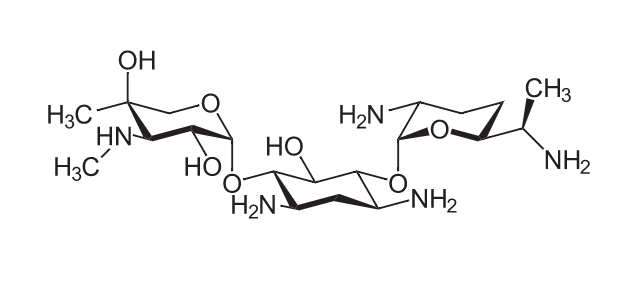
Estrutura química da gentamicina

Estrutura química da gentamicina:
um anel de hexose central (2-desoxistreptamina no centro) com 2 moléculas de amino-açúcar anexadas
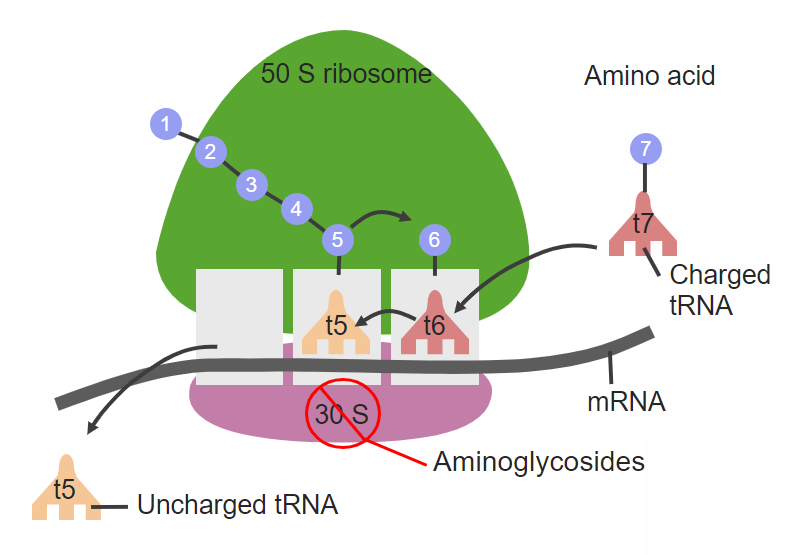
Imagem: “Gentamicin” por NEUROtiker. Licença: Public Domain

Mecanismo de ação

  • Os aminoglicosídeos ligam-se à subunidade ribossómica 30S bacteriana.
  • Perturbação da síntese de proteínas bacterianas através da:
    • Prevenção da formação de complexo de iniciação
    • Leitura incorreta do mRNA mRNA RNA sequences that serve as templates for protein synthesis. Bacterial mRNAs are generally primary transcripts in that they do not require post-transcriptional processing. Eukaryotic mRNA is synthesized in the nucleus and must be exported to the cytoplasm for translation. Most eukaryotic mRNAs have a sequence of polyadenylic acid at the 3′ end, referred to as the poly(a) tail. The function of this tail is not known for certain, but it may play a role in the export of mature mRNA from the nucleus as well as in helping stabilize some mRNA molecules by retarding their degradation in the cytoplasm. RNA Types and Structure → produção de proteínas defeituosas → dano celular
    • Inibição de translocação
  • O processo é letal para a célula bacteriana → bactericida (morte dependente da concentração)
  • O efeito pós-antibiótico permite a supressão contínua do crescimento bacteriano.
  • Observação: os aminoglicosídeos são transportados através da membrana celular através de um processo dependente de oxigénio (não é eficaz contra bactérias anaeróbias).
Local de ação dos aminoglicosídeos

Local de ação dos aminoglicosídeos, que têm como alvo a subunidade ribossómica 30S
tRNA: RNA de transferência
mRNA: RNA mensageiro

Imagem por Lecturio. Licença: CC BY-NC-SA 4.0

Farmacocinética

Absorção

  • Má absorção entérica
  • Normalmente administrado IV ou IM

Distribuição

  • Hidrofílico → volume de distribuição ↑ com a sobrecarga de fluido (por exemplo, edema Edema Edema is a condition in which excess serous fluid accumulates in the body cavity or interstitial space of connective tissues. Edema is a symptom observed in several medical conditions. It can be categorized into 2 types, namely, peripheral (in the extremities) and internal (in an organ or body cavity). Edema, ascite)
  • Atravessa a placenta Placenta A highly vascularized mammalian fetal-maternal organ and major site of transport of oxygen, nutrients, and fetal waste products. It includes a fetal portion (chorionic villi) derived from trophoblasts and a maternal portion (decidua) derived from the uterine endometrium. The placenta produces an array of steroid, protein and peptide hormones (placental hormones). Placenta, Umbilical Cord, and Amniotic Cavity
  • Não atravessa a barreira hematoencefálica
  • Pouca penetração em:
    • Árvore biliar
    • Secreções respiratórias

Excreção

  • A depuração correlaciona-se com a função renal (↓ filtração glomerular → ↑ semi-vida).
  • Aproximadamente 99% permanece inalterado na urina.
  • Pode ser removido com hemodiálise

Indicações

Cobertura antimicrobiana

  • Bactérias aeróbias gram-negativas, incluindo:
    • Pseudomonas aeruginosa Pseudomonas aeruginosa A species of gram-negative, aerobic, rod-shaped bacteria commonly isolated from clinical specimens (wound, burn, and urinary tract infections). It is also found widely distributed in soil and water. P. Aeruginosa is a major agent of nosocomial infection. Pseudomonas
    • Escherichia coli Escherichia coli The gram-negative bacterium Escherichia coli is a key component of the human gut microbiota. Most strains of E. coli are avirulent, but occasionally they escape the GI tract, infecting the urinary tract and other sites. Less common strains of E. coli are able to cause disease within the GI tract, most commonly presenting as abdominal pain and diarrhea. Escherichia coli
    • Klebsiella pneumoniae Klebsiella Pneumoniae Gram-negative, non-motile, capsulated, gas-producing rods found widely in nature and associated with urinary and respiratory infections in humans. Aminoglycosides
    • Haemophilus influenzae Haemophilus Influenzae A species of Haemophilus found on the mucous membranes of humans and a variety of animals. The species is further divided into biotypes I through viii. Haemophilus
    • Serratia marcescens Serratia Marcescens A species of gram-negative, facultatively anaerobic, rod-shaped bacteria found in soil, water, food, and clinical specimens. It is a prominent opportunistic pathogen for hospitalized patients. Aminoglycosides
    • Francisella tularensis Francisella Tularensis Aminoglycosides
    • Brucella Brucella Brucellosis (also known as undulant fever, Mediterranean fever, or Malta fever) is a zoonotic infection that spreads predominantly through ingestion of unpasteurized dairy products or direct contact with infected animal products. Clinical manifestations include fever, arthralgias, malaise, lymphadenopathy, and hepatosplenomegaly. Brucella/Brucellosis
    • Yersinia Yersinia Yersinia is a genus of bacteria characterized as gram-negative bacilli that are facultative anaerobic with bipolar staining. There are 2 enteropathogenic species that cause yersiniosis, Y. enterocolitica and Y. pseudotuberculosis. Infections are manifested as pseudoappendicitis or mesenteric lymphadenitis, and enterocolitis. Yersinia spp./Yersiniosis
    • Campylobacter Campylobacter Campylobacter (“curved bacteria”) is a genus of thermophilic, S-shaped, gram-negative bacilli. There are many species of Campylobacter, with C. jejuni and C. coli most commonly implicated in human disease. Campylobacter
  • Micobactérias
  • Efeito sinérgico com antibióticos β-lactâmicos contra:
    • Staphylococcus Staphylococcus Staphylococcus is a medically important genera of Gram-positive, aerobic cocci. These bacteria form clusters resembling grapes on culture plates. Staphylococci are ubiquitous for humans, and many strains compose the normal skin flora. Staphylococcus
    • Streptococcus Streptococcus Streptococcus is one of the two medically important genera of gram-positive cocci, the other being Staphylococcus. Streptococci are identified as different species on blood agar on the basis of their hemolytic pattern and sensitivity to optochin and bacitracin. There are many pathogenic species of streptococci, including S. pyogenes, S. agalactiae, S. pneumoniae, and the viridans streptococci. Streptococcus
    • Enterococcus Enterococcus Enterococcus is a genus of oval-shaped gram-positive cocci that are arranged in pairs or short chains. Distinguishing factors include optochin resistance and the presence of pyrrolidonyl arylamidase (PYR) and Lancefield D antigen. Enterococcus is part of the normal flora of the human GI tract. Enterococcus

Tipos de infeções

  • Normalmente usado como terapêutica combinada para:
    • Endocardite
    • Pneumonia Pneumonia Pneumonia or pulmonary inflammation is an acute or chronic inflammation of lung tissue. Causes include infection with bacteria, viruses, or fungi. In more rare cases, pneumonia can also be caused through toxic triggers through inhalation of toxic substances, immunological processes, or in the course of radiotherapy. Pneumonia nosocomial
    • Osteomielite
    • Infeções do trato urinário (incluindo pielonefrite)
  • Usado como monoterapia para:
    • Infeções do trato urinário multirresistentes
    • Peste
    • Tularemia
  • Off label:
    • Tobramicina: inalada (para fibrose quística)
    • Amicacina e estreptomicina: Mycobacterium tuberculosis Mycobacterium tuberculosis Tuberculosis (TB) is an infectious disease caused by Mycobacterium tuberculosis complex bacteria. The bacteria usually attack the lungs but can also damage other parts of the body. Approximately 30% of people around the world are infected with this pathogen, with the majority harboring a latent infection. Tuberculosis spreads through the air when a person with active pulmonary infection coughs or sneezes. Tuberculosis multirresistente

Efeitos Adversos e Contraindicações

Efeitos adversos

  • Nefrotoxicidade → acumulação de aminoglicosídeos no córtex renal
  • Ototoxicidade (pode ser irreversível):
    • Amicacina: dano coclear
    • Gentamicina, estreptomicina e tobramicina: dano vestibular
  • Bloqueio neuromuscular (raro)

Contraindicações

  • Alergia a aminoglicosídeos
  • Gravidez
  • Doenças neuromusculares (por exemplo, miastenia gravis)

Interações farmacológicas

  • Precaução com fármacos nefrotóxicos:
    • Anfotericina B
    • Vancomicina
    • AINEs
    • Corante de radiocontraste
  • Diuréticos da ansa: ↑ risco de ototoxicidade
  • ↑ Risco de bloqueio neuromuscular:
    • Vecurónio
    • Toxina botulínica
    • Mecamilamina

Monitorização

  • Níveis séricos do fármaco (níveis máximos e mínimos)
  • Função renal
  • Função auditiva
  • Acuidade visual

Mecanismos de Resistência

Vários mecanismos de resistência aos aminoglicosídeos:

  • Produção de enzimas inativadoras:
    • Acetiltransferases
    • Fosfotransferases
    • Nucleotidiltransferases
  • Alterações nos locais de ligação aos ribossomas (metilação)
  • Sistemas de efluxo e ↓ da permeabilidade celular

Comparação de Antibióticos

A tabela a seguir compara os antibióticos, que inibem a síntese de proteínas bacterianas:

Tabela: Comparação de várias classes de antibióticos inibidores da síntese de proteínas bacterianas
Classe do fármaco Mecanismo de ação Cobertura Efeitos adversos
Anfenicois
  • Ligam-se à subunidade 50S
  • Previnem a transpeptidação
  • Gram-positivos
  • Gram-negativos
  • Atípicos
  • Distúrbios GI
  • Neurite óptica
  • Anemia Anemia Anemia is a condition in which individuals have low Hb levels, which can arise from various causes. Anemia is accompanied by a reduced number of RBCs and may manifest with fatigue, shortness of breath, pallor, and weakness. Subtypes are classified by the size of RBCs, chronicity, and etiology. Anemia: Overview and Types aplásica
  • Síndrome do bebé cinzento
Lincosamidas
  • Ligam-se à subunidade 50S
  • Previnem a transpeptidação
  • Cocos Gram-positivos:
    • MSSA
    • MRSA MRSA A strain of Staphylococcus aureus that is non-susceptible to the action of methicillin. The mechanism of resistance usually involves modification of normal or the presence of acquired penicillin binding proteins. Staphylococcus
    • Streptococcus Streptococcus Streptococcus is one of the two medically important genera of gram-positive cocci, the other being Staphylococcus. Streptococci are identified as different species on blood agar on the basis of their hemolytic pattern and sensitivity to optochin and bacitracin. There are many pathogenic species of streptococci, including S. pyogenes, S. agalactiae, S. pneumoniae, and the viridans streptococci. Streptococcus
  • Anaeróbios
  • Distúrbios GI
  • Reações alérgicas
  • Colite pseudomembranosa
Macrólidos
  • Ligam-se à subunidade 50S
  • Previnem a transpeptidação
  • Gram-positivos
  • Gram-negativos
  • Atípicos
  • Complexo Mycobacterium avium Mycobacterium avium A bacterium causing tuberculosis in domestic fowl and other birds. In pigs, it may cause localized and sometimes disseminated disease. The organism occurs occasionally in sheep and cattle. It should be distinguished from the m. avium complex, which infects primarily humans. Mycobacterium
  • Distúrbios GI
  • Prolongamento do intervalo QT
  • Hepatotoxicidade
  • Exacerbação de miastenia gravis
Oxazolidinonas
  • Ligam-se ao rRNA rRNA The most abundant form of RNA. Together with proteins, it forms the ribosomes, playing a structural role and also a role in ribosomal binding of mRNA and tRNAs. Individual chains are conventionally designated by their sedimentation coefficients. In eukaryotes, four large chains exist, synthesized in the nucleolus and constituting about 50% of the ribosome. RNA Types and Structure 23S da subunidade 50S
  • Impedem a formação do complexo de iniciação
Cocos Gram-positivos:
  • MSSA
  • MRSA MRSA A strain of Staphylococcus aureus that is non-susceptible to the action of methicillin. The mechanism of resistance usually involves modification of normal or the presence of acquired penicillin binding proteins. Staphylococcus
  • VRE
  • Streptococcus Streptococcus Streptococcus is one of the two medically important genera of gram-positive cocci, the other being Staphylococcus. Streptococci are identified as different species on blood agar on the basis of their hemolytic pattern and sensitivity to optochin and bacitracin. There are many pathogenic species of streptococci, including S. pyogenes, S. agalactiae, S. pneumoniae, and the viridans streptococci. Streptococcus
  • Mielossupressão
  • Neuropatia
  • Acidose lática
  • Síndrome serotoninérgico
rRNA: RNA ribossómico
VRE: Enterococcus resistente à vancomicina
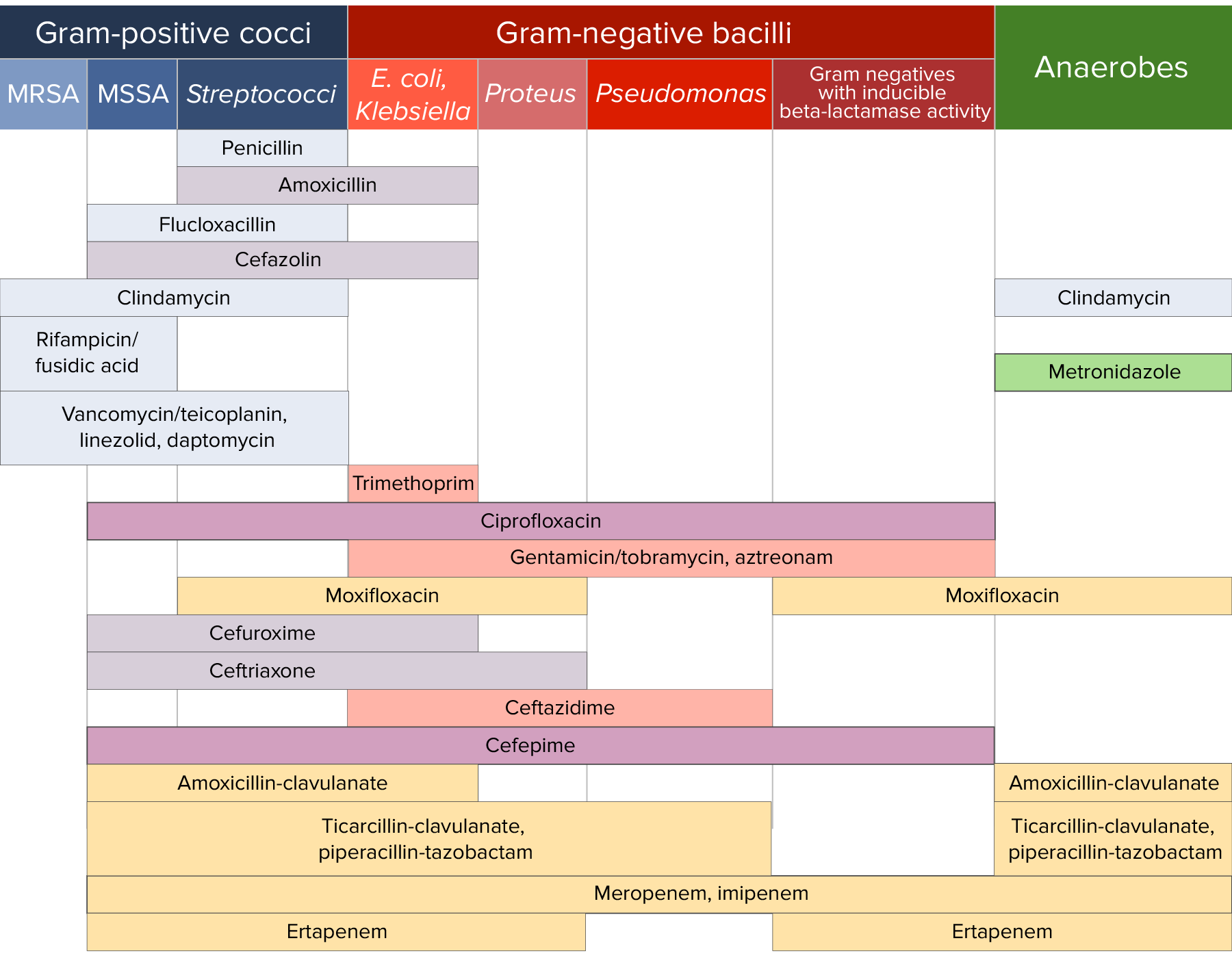
Gráfico de sensibilidade a antibióticos

Sensibilidade aos antibióticos:
Gráfico que compara a cobertura microbiana de diferentes antibióticos para cocos gram-positivos, bacilos gram-negativos e anaeróbios.

Imagem por Lecturio. Licença: CC BY-NC-SA 4.0

Referências

  1. Avent ML, Rogers BA, Cheng AC, Paterson DL. (2011). Current use of aminoglycosides: indications, pharmacokinetics, and monitoring for toxicity. Intern Med J. 41(6):441–9. https://pubmed.ncbi.nlm.nih.gov/21309997/
  2. Pagkalis S, Mantadakis E, Mavros MN, Ammari C, Falagas ME. (2011). Pharmacological considerations for the proper clinical use of aminoglycosides. Drugs; 71(17):2277–94. https://pubmed.ncbi.nlm.nih.gov/22085385/
  3. Krause KM, Serio AW, Kane TR, Connolly LE. (2016). Aminoglycosides: An Overview. Cold Spring Harb Perspect Med; 6(6) https://pubmed.ncbi.nlm.nih.gov/27252397/
  4. LeBras M, Chow I, Mabasa VH, Ensom MH. (2016). Systematic Review of Efficacy, Pharmacokinetics, and Administration of Intraventricular Aminoglycosides in Adults. Neurocrit Care; 25(3):492–507. https://pubmed.ncbi.nlm.nih.gov/27043949/
  5. Leis JA, Rutka JA, Gold WL. (2015). Aminoglycoside-induced ototoxicity. CMAJ; 187(1):E52. https://pubmed.ncbi.nlm.nih.gov/25225217/
  6. Selimoglu E. (2007). Aminoglycoside-induced ototoxicity. Curr Pharm Des; 13(1):119–26. https://pubmed.ncbi.nlm.nih.gov/17266591/
  7. Lopez-Novoa JM, Quiros Y, Vicente L, Morales AI, Lopez-Hernandez FJ. (2011). New insights into the mechanism of aminoglycoside nephrotoxicity: an integrative point of view. Kidney Int; 79(1):33–45. https://pubmed.ncbi.nlm.nih.gov/20861826/
  8. Drew, R.H. (2022). Aminoglycosides. Bloom, A. (Ed.), UpToDate. Retrieved October 28, 2025, from https://www.uptodate.com/contents/aminoglycosides
  9. Block, M., Blanchard, D.L. (2023). Aminoglycosides. StatPearls. Retrieved October 28, 2025, from https://www.ncbi.nlm.nih.gov/books/NBK541105/
  10. Werth, B.J. (2024). Aminoglycosides. MSD Manual Professional Version. Retrieved October 28, 2025, from  https://www.msdmanuals.com/professional/infectious-diseases/bacteria-and-antibacterial-drugs/aminoglycosides

Crie sua conta gratuita ou faça login para continuar lendo!

Cadastre-se agora e tenha acesso grátis ao Lecturio, com páginas de conceitos, vídeos de medicina e questões para sua educação médica.

Aprende mais com a Lecturio:

Multiple devices displaying human anatomy and health education content.

Complementa o teu estudo da faculdade com o companheiro de estudo tudo-em-um da Lecturio, através de métodos de ensino baseados em evidência.

Estuda onde quiseres

Two iPhones display medical education apps, one showing anatomy, the other Bookmatcher.

A Lecturio Medical complementa o teu estudo através de métodos de ensino baseados em evidência, vídeos de palestras, perguntas e muito mais – tudo combinado num só lugar e fácil de usar.

User Reviews

Details