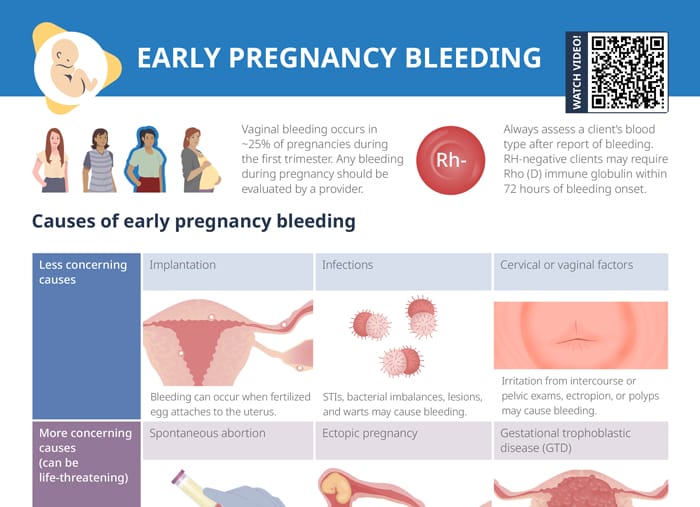


Nursing Knowledge
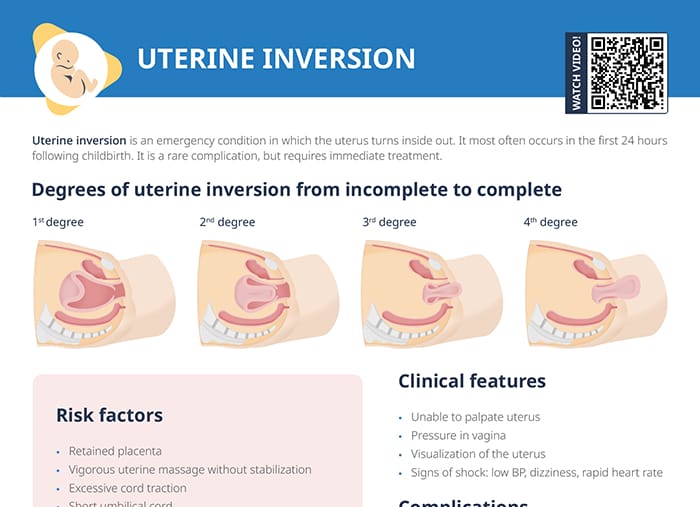
Uterine inversion is an emergency condition in which the uterus turns inside out. It most often occurs in the first 24 hours following childbirth. It is a rare complication, but requires immediate treatment.
Uterine inversion is classified into 4 degrees of inversion:
Retroversion of the uterus is a common anatomic variation where the uterus is tilted backwards towards the spine instead of forward. It does not usually cause any complications with pregnancy.
Uterine inversion is an emergency specifically during childbirth where the uterus turns inside out. Uterine prolapse describes a descent of the uterus into or outside the vaginal canal that can be caused by childbirth, but also aging or other factors weakening the surrounding support structures.
These factors increase the risk of uterine inversion:
Potential severe complications include hemorrhage and shock, tissue necrosis, and can lead to maternal death.
Notify the provider if finding signs of an inverted uterus. Also notify anesthesia.
With prompt treatment, long-term complications are rare. Still, educate your client that recurrence is possible in future pregnancies, and future providers should be informed about client history.
RELATED TOPIC:
Free Download
Master the topic with a unique study combination of a concise summary paired with video lectures.
Your free account gives you access to:
or