

Nursing Knowledge
Topical medications are treatments applied directly to the body’s surface areas to skin or mucous membranes, used to treat localized conditions or skin disorders. They come in various forms such as creams, ointments, gels, and patches. Topical medications are used for conditions such as eczema, psoriasis, skin infections, inflammation, and localized pain relief.
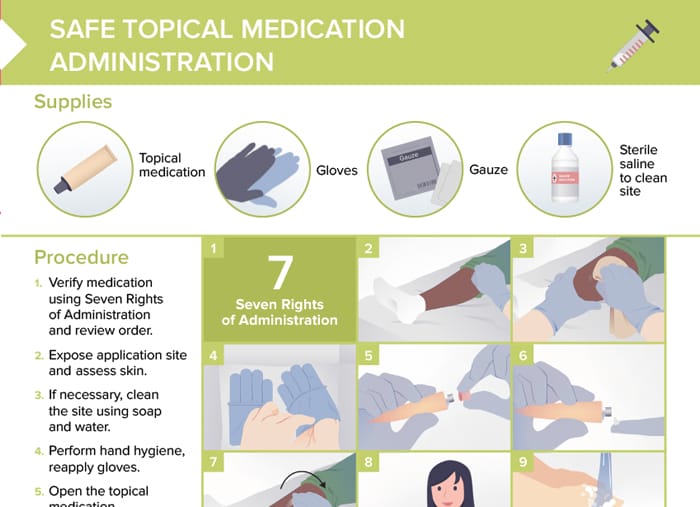
If necessary, clean the site using soap and water.
Since topical medications can enter the bloodstream, but typically in smaller quantities than oral drugs, they primarily affect the area of application and have fewer systemic side effects. The degree of absorption depends on factors like the drug’s chemical properties, concentration, the skin’s health and integrity, and the specific location of application.
The risk for systemic side effects increases if used excessively or on broken skin.
RELATED TOPIC:
Free Download
Master the topic with a unique study combination of a concise summary paired with video lectures.
Your free account gives you access to:
or