The thyroid gland, located in the front of the neck, plays an important role in metabolism, energy regulation, and hormone production. Thyroid disorders (hypothyroidism, hyperthyroidism) can significantly impact various bodily functions like heart rate, weight, and mental well-being. Key points for nurses include monitoring for systemic effects, administering and managing medication like levothyroxine or antithyroid drugs, and educating patients on lifestyle modifications and ongoing care.
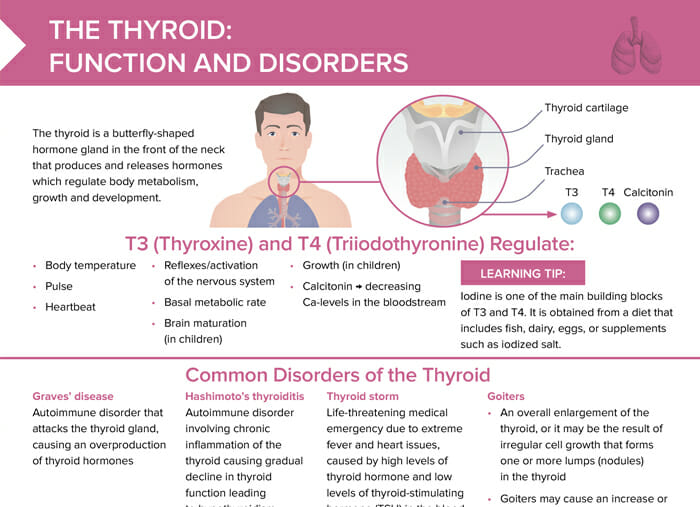
The thyroid is a butterfly-shaped hormone gland in the front of the neck that produces and releases hormones which regulate body metabolism, growth and development.
What is the function of the thyroid hormones?
T3 (thyroxine) and T4 (triiodothyronine) regulate:
Body temperature
Pulse
Heartbeat
Reflexes/activation of the nervous system
Basal metabolic rate
Brain maturation (in children)
Growth (in children)
Calcitonin → decreasing Ca levels in the bloodstream
Tip: Iodine is one of the main building blocks of T3 and T4. It is obtained from a diet that includes fish, dairy, eggs, or supplements such as iodized salt.
Are thyroid issues hereditary?
Thyroid disorders can have a hereditary component, although they are also influenced by environmental factors, lifestyle, and other medical conditions. If a patient has a family history of thyroid disorders, they may be at higher risk and may benefit from more frequent screening.
Common thyroid disorders
Grave’s disease: autoimmune disorder that attacks the thyroid gland, causing an overproduction of thyroid hormones
Hashimoto’s thyroiditis: involves chronic inflammation of the thyroid causing gradual decline in thyroid function → hypothyroidism
Thyroid storm: life-threatening medical emergency due to extreme fever and heart issues, caused by high levels of thyroid hormone and low levels of thyroid-stimulating hormone (TSH) in the blood
Goiters: overall enlargement of the thyroid, or the result of irregular cell growth that forms one or more lumps (nodules) in the thyroid; may cause an increase of decrease in hormones
What is hypothyroidism?
Hypothyroidism means an underactive thyroid producing not enough hormones.
Common symptoms are:
Fatigue
Weight gain
Constipation
Depression
Numbness/tingling
Muscle weakness
Dry, scaly skin
Brittle hair and nails
Loss of sexual drive
Irregular menstrual cycle
Sensitivity to cold temperatures
What is hyperthyroidism?
Hyperthyroidism is an overactive thyroid, producing too many hormones.
Symptoms include:
Rapid and/or irregular heartbeat
Mood disorders
Fatigue related to sleep issues
Irregular or light menstrual cycle
Sweating and/or warm skin
Puffiness or bulging of the eyes
Weight loss
Restlessness and hyperactivity
Diarrhea
Tremor
Can thyroid issues cause headaches?
While headaches are not among the primary symptoms of hypo- or hyperthyroidism, they can be associated with the conditions:
In hypothyroidism, a reduced metabolism may cause increased pressure in the brain, leading to headaches.
In hyperthyroidism, increased heart rate and blood pressure can contribute to headaches or migraines.
Do men have thyroid issues?
Thyroid disorders are less common in men than in women and therefore may be more likely to be overlooked, however, they can affect everyone.