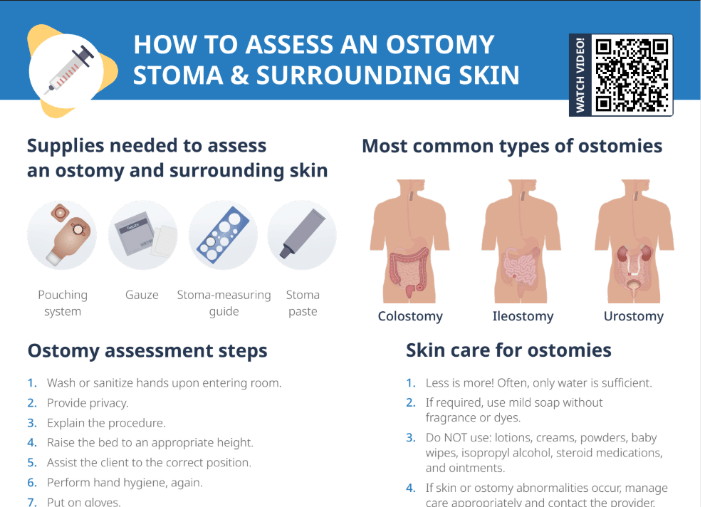
Ostomies are artificial openings that divert bodily waste. These stomas may be temporary or permanent and can significantly impact a patient’s quality of life. Regular assessment is an important nursing task, checking the stoma and the surrounding skin for color, size, shape, and signs of complications like blockage, prolapse, retraction, or necrosis.
If needed, empty contents of ostomy pouch for clear visualization of the stoma and dispose according to facility policy.
Examine stoma and surrounding skin for changes in physical appearance of the stoma and skin irritation and pain caused by leaking of contents from poor bag adherence.
Assess ostomy drainage for any changes in odor, color, discharges (such as blood or pus).
Remove and replace the ostomy bag, if required.
How to document stoma appearance
Key points to cover in stoma assessment documentation include:
Color (pink, red, purple…)
Size (dimensions or diameter)
Shape (round, oval, irregular)
Protrusion (flush with the skin, protruding, retracted)
Condition of the surrounding skin (intact, red, irritated…)
Output (type and consistency)
Any abnormalities (swelling, bleeding…)
Of course, as always, date, time, your signature, and any specifics required by your facility’s protocols.
Normal stoma appearance
A healthy stoma typically appears pinkish-red, moist, and may have some mucus.
Unhealthy stoma appearance: examples
Stoma blockage: may appear swollen and discolored, may cause pain or decreased output → immediate attention required!
Stoma prolapse: extends outward more than usual and appears elongated, may lead to obstruction or strangulation
Stoma retraction: sits below the skin level, making it difficult for the appliance to adhere properly and increasing the risk of skin irritation and leakage
Skin irritation: redness, rash, or broken skin around the stoma site
Leakage: can lead to skin irritation, requires immediate refitting
Necrosis: indicated by dark red, purple, or black coloration of the stoma → medical emergency!
How to clean a stoma: skin care
General tip: Less is more! Often, only water is sufficient.
If required, use mild soap without fragrance or dyes.
Do NOT use: lotions, creams, powders, baby wipes, isopropyl alcohol, steroid medications, and ointments.
If skin or ostomy abnormalities occur, manage care appropriately and contact the provider.
Ensure the client understands ostomy and skin care.