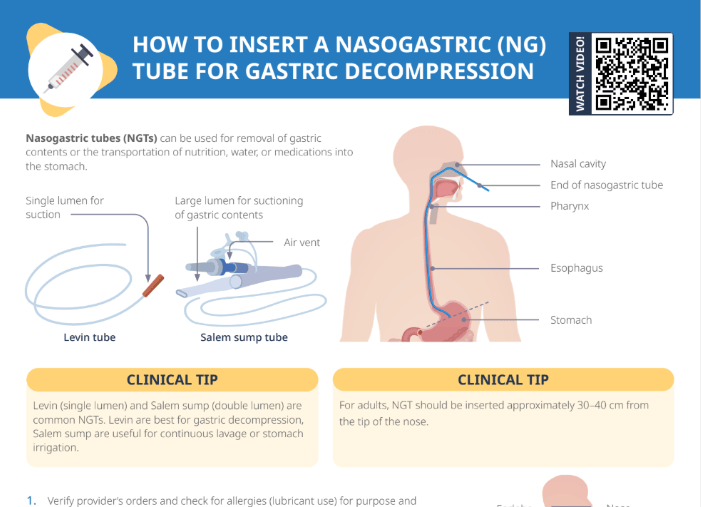
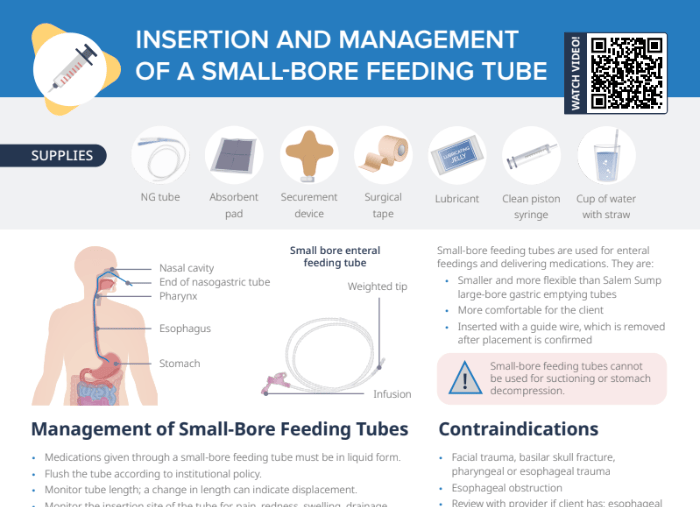
Enteral small-bore feeding tubes are thin, flexible tubes inserted into the stomach or small intestine to deliver nutrients and medications. Common types include nasogastric (NG), nasoenteric, and gastrostomy tubes. Nurses are responsible for tube placement verification, administering feedings and medications, and monitoring for complications like infection or dislodgement. Proper technique and regular assessments are crucial for patient safety and effective nutrient delivery.
What is the difference between small-bore feeding tubes and NG tubes?
An NG tube (nasogastric tube) is a type of small-bore feeding tube. The term “small-bore” refers to the tube’s diameter and is used to describe feeding tubes designed for nutritional support.
NG tubes are specifically inserted through the nose and down into the stomach. While all NG tubes are small-bore tubes, not all small-bore tubes are NG tubes. Other types include nasoenteric tubes (going into the small intestine) and gastrostomy tubes (inserted directly into the stomach through the abdominal wall).