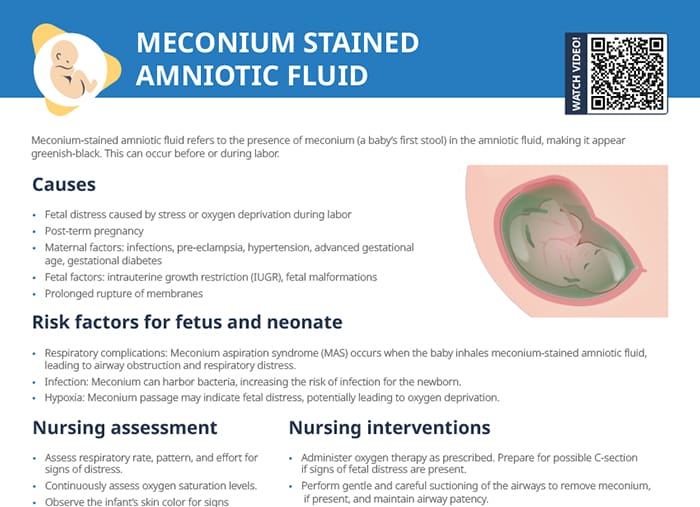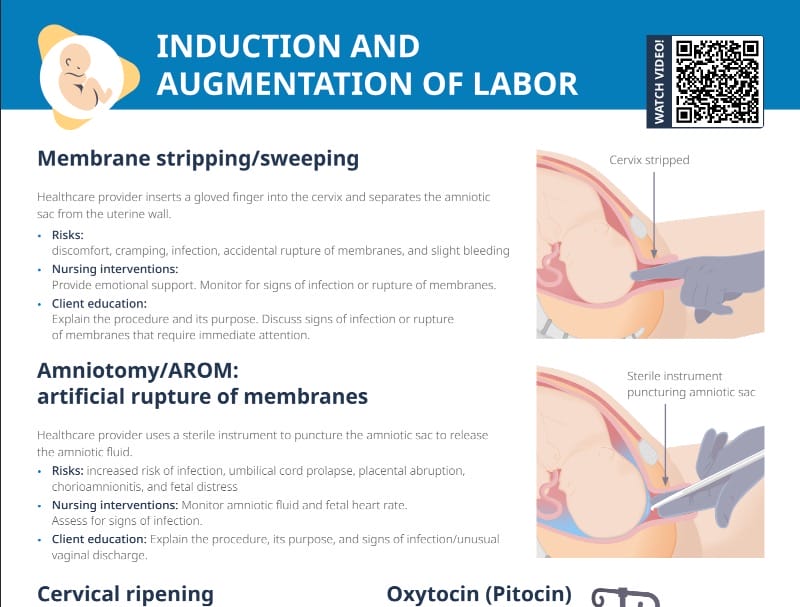


Meconium is the thick, sticky first stool of a newborn.
Amniotic fluid is the liquid in the uterus surrounding the fetus.
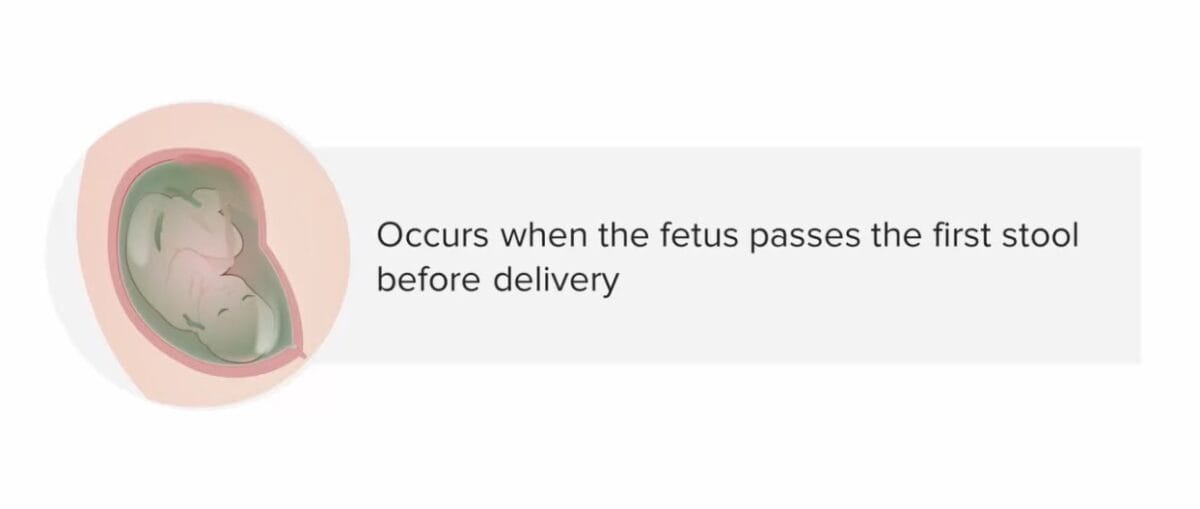
If a fetus passes meconium before delivery, it mixes with the amniotic fluid in the uterus. The baby might inhale the meconium during labor or after delivery, which can cause serious respiratory issues (meconium aspiration syndrome, MAS).
The severity of MAS can vary with some infants only having mild breathing problems that resolve with minimal intervention, while others may require significant respiratory support.
Risk factors for meconium staining include:
The bacteria in meconium can lead to infection. The baby inhaling meconium-stained amniotic fluid can lead to meconium aspiration syndrome (MAS), leading to airway obstruction and respiratory distress:
Yellowish discharge is an indication of stained amniotic fluid. When the baby is delivered, they may be covered in a yellow or greenish hue. Further assessments:
If meconium-stained amniotic fluid is suspected, these are the steps:
A common intervention for meconium-stained amniotic fluid was amnioinfusion, but since studies showed no improvement in respiratory issues through diluting the fluid, this is not recommended anymore.