>

>

Incretin Mimetics (Diabetes Management)

Nursing Knowledge

Incretin Mimetics (Diabetes Management)

Incretin mimetics and other non-insulin injectable diabetes medications represent an expanding class of drugs in diabetes management. Unlike insulin, which directly replaces or augments a deficient hormone, these agents, including GLP-1 agonists and amylin analogs, harness alternative pathways to regulate blood glucose. They can aid in glycemic control, weight loss, and carry a low risk of hypoglycemia. As with insulin therapies, patient education on proper injection technique and storage is essential.
Last updated: October 9, 2024

Table of contents

What are incretin mimetics? 

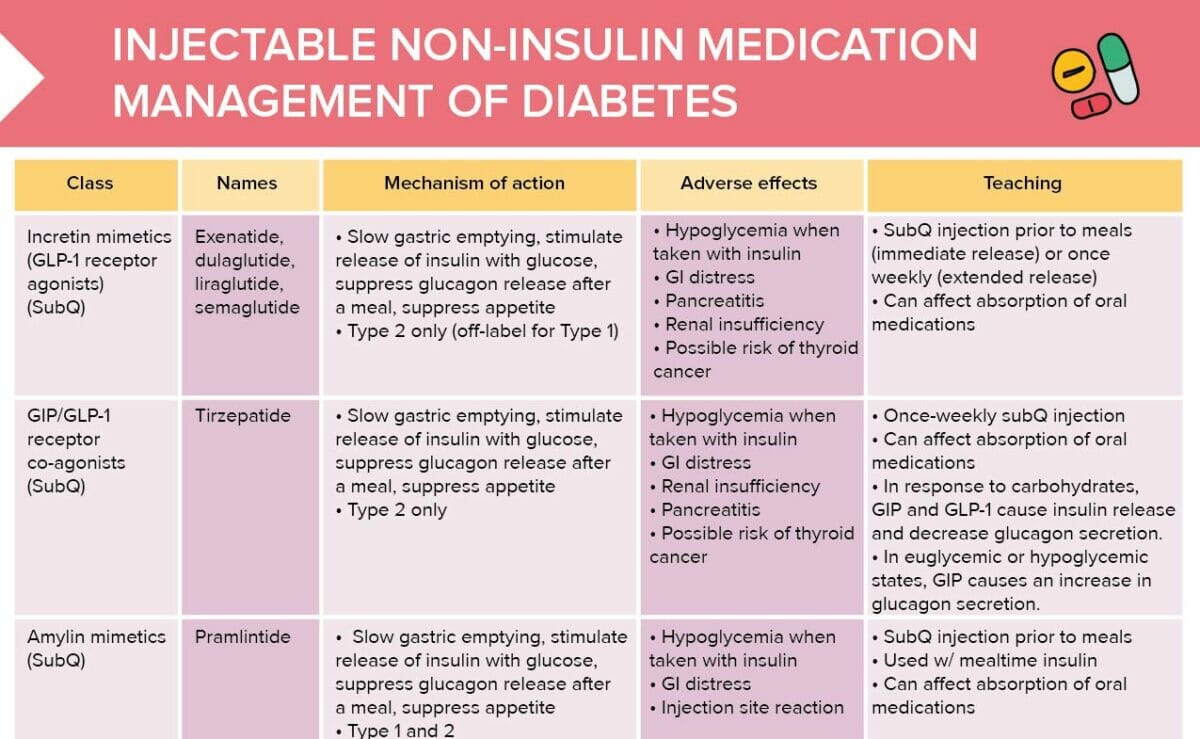
Incretin mimetics, or GLP-1 receptor agonists, are a class of medications used to treat type 2 diabetes (off-label for type 1). They mimic the action of incretins, which are natural hormones in the body. Examples of incretin mimetics include liraglutide, exenatide, semaglutide, and dulaglutide. 

https://youtu.be/2I_F7D__Ixo?si=Jcyl83liqbSc1hym

Adverse effects of incretin mimetics

Potential adverse effects of incretin mimetics include: 

  • Hypoglycemia when taken with insulin
  • GI distress
  • Pancreatitis
  • Renal insufficiency
  • Possible risk of thyroid cancer

Other non-insulin, injectable diabetes medications 

GIP/GLP-1 receptor co-agonists 

GIP/GLP-1 receptor co-agonists are used to treat type 2 diabetes only. They can have adverse effects including: 

  • Hypoglycemia when taken with insulin
  • GI distress
  • Renal insufficiency
  • Pancreatitis
  • Possible risk of thyroid cancer

Amylin mimetics 

Amylin mimetics are a group of medications used to treat type 1 and type 2 diabetes. 

Potential adverse effects of these drugs include hypoglycemia (when taken with insulin), GI distress, and injection site reactions. 

Mechanism of action

All non-insulin, injectable diabetes medications work by 
  • Slowing gastric emptying/decreasing gastric motility
  • Stimulating the release of insulin with glucose
  • Suppressing glucagon release after a meal
  • Suppressing appetite/increasing satiety

Client education points

General teachings

  • Do not inject into the same site as insulin.
  • Immediate-release medications must be taken 60 minutes prior to a meal, not after. 
  • Educate clients how to use their specific device to avoid incorrect dosing. 
  • Do not double dose if missed. 
  • These medications may interfere with oral contraceptives. 
  • Educate the client on risks of hypoglycemia if using insulin. 

Client teachings about incretin mimetics 

  • SubQ injection prior to meals (immediate release) or once weekly (extended release)
  • Can affect absorption of oral medications

Client teachings about GIP/GLP-1 receptor co-agonists 

  • Once-weekly subQ injection
  • Can affect absorption of oral medications
  • In response to carbohydrates, GIP and GLP-1 cause insulin release and decrease glucagon secretion.
  • In euglycemic or hypoglycemic states, GIP causes an increase in glucagon secretion.

Client teachings about amylin mimetics 

  • SubQ injection prior to meals
  • Used w/ mealtime insulin
  • Can affect absorption of oral medications

FREE CHEAT SHEET

Incretin Mimetics (Diabetes Management)

Free Download

Nursing Cheat Sheet

Review of injectable non-insulin medications, including mechanism of action, side effects, dosing, and client education.

Master the topic with a unique study combination of a concise summary paired with video lectures. 

Create a Free Account to Download

Your free account gives you access to:

or

User Reviews