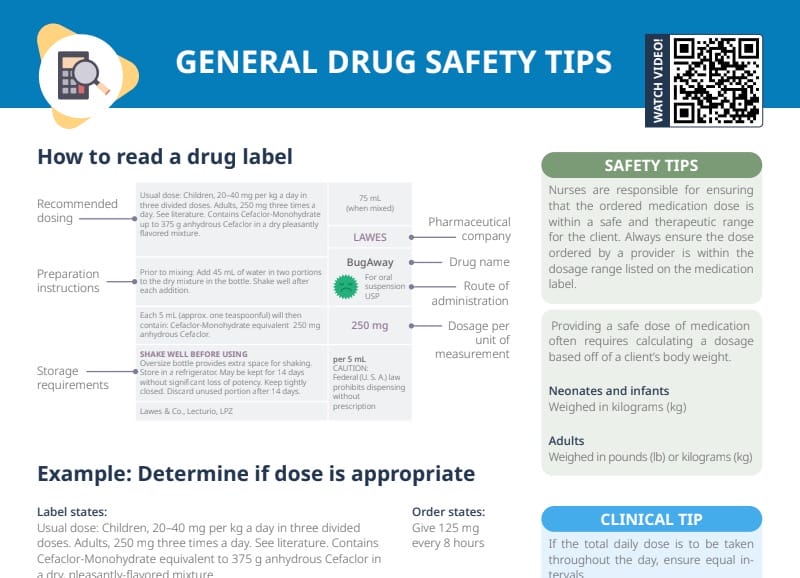


Nurses are responsible for ensuring that the ordered medication dose is within a safe and therapeutic range for the client. Always ensure the dose ordered by a provider is within the dosage range listed on the medication label.
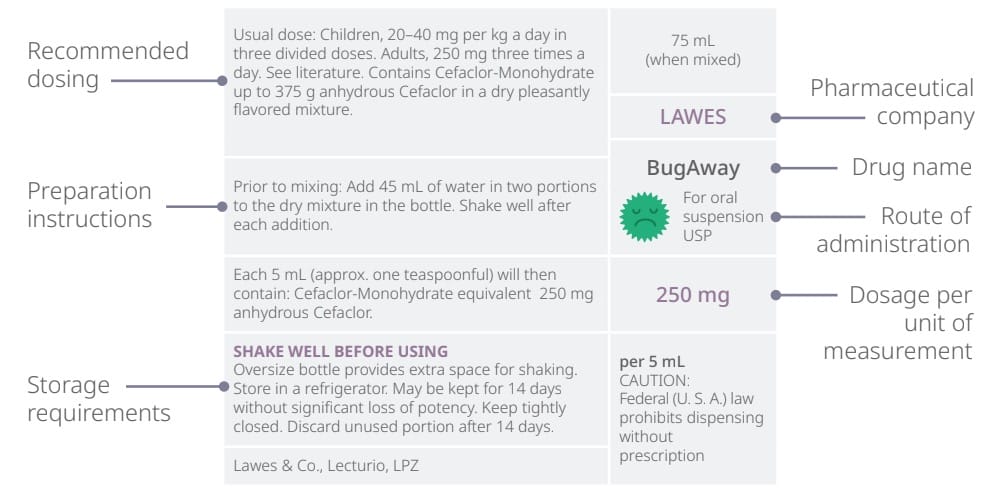
Usual dose: Children, 20–40 mg per kg a day in three divided doses. Adults, 250 mg three times a day. See literature. Contains Cefaclor-Monohydrate equivalent to 375 mg anhydrous Cefaclor in a dry, pleasantly-flavored mixture.
Give 125 mg every 8 hours
If the client weighs 10 kg, is this order a safe and therapeutic dose?
For a 10-kg client, the safe and therapeutic range of this medication is 200–400 mg/day.
10 x 20 = 200 mg (lowest therapeutic dose)
10 x 40 = 400 mg (highest safe range of medication)
—> The received order would provide 375 mg/day.
3 doses in a day (24 hours) = 24/8, which is 1 dose every 8 hours.
When a medication is ordered in divided doses, make sure the total daily dose is within the stated safe therapeutic range on the label.
125 mg x 3 is 375 mg in 1 day. 375 mg is within the safe and therapeutic range of 200–400 mg.
The parts of a typical drug label include: