

Nursing Knowledge
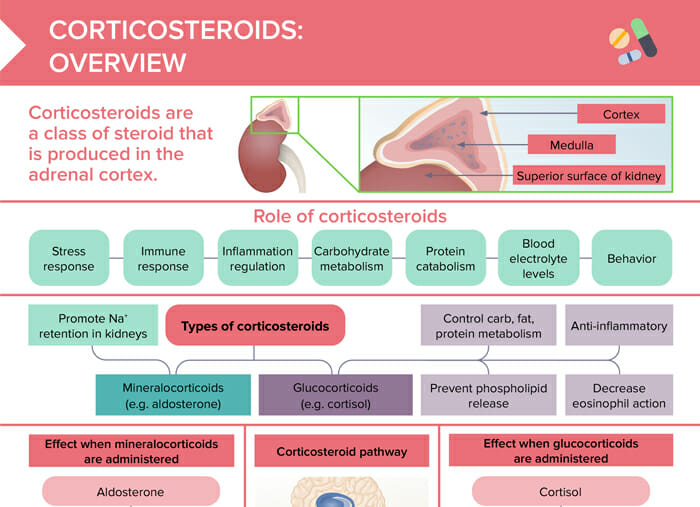
Corticosteroids are a class of steroids that are produced in the adrenal cortex. As a medication, corticosteroids mimic the hormone function and are used to treat a variety of conditions such as asthma, arthritis, allergies, lupus, multiple sclerosis, and certain skin conditions.
The two types of corticosteroids are mineralocorticoids (e.g., aldosterone, fludrocortisone) and glucocorticoids (e.g., cortisol, prednisone).
Mineralocorticoids regulate sodium, potassium, and water balance (affecting blood pressure). They are used to treat conditions such as Addison disease, where there is a deficiency of these hormones.
Glucocorticoids are primarily used to manage conditions, such as asthma, arthritis, and autoimmune diseases. Their properties are:
Mineralocorticoids, such as fludrocortisone, primarily affect the body’s balance of sodium and water, leading to increased blood volume and blood pressure. They are often used to treat conditions like Addison disease for adrenal insufficiency.
However, they can also have side effects such as fluid retention, high blood pressure, heart failure, hypokalemia (low potassium levels), and in rare cases, abrupt discontinuation may contribute to adrenal insufficiency in some cases (particularly when combined with glucocorticoids). Therefore, they should be used carefully, monitored regularly, and never abruptly discontinued. Patients on fludrocortisone should be especially monitored for hypokalemia as this is a more common and potentially dangerous adverse effect when using this agent.
Aldosterone → Sodium/water retention, potassium excretion → Increased blood volume → Higher blood pressure
Glucocorticoids, such as prednisone, have anti-inflammatory and immunosuppressive effects. They are used for conditions such as asthma, allergies, autoimmune diseases, and inflammatory conditions.
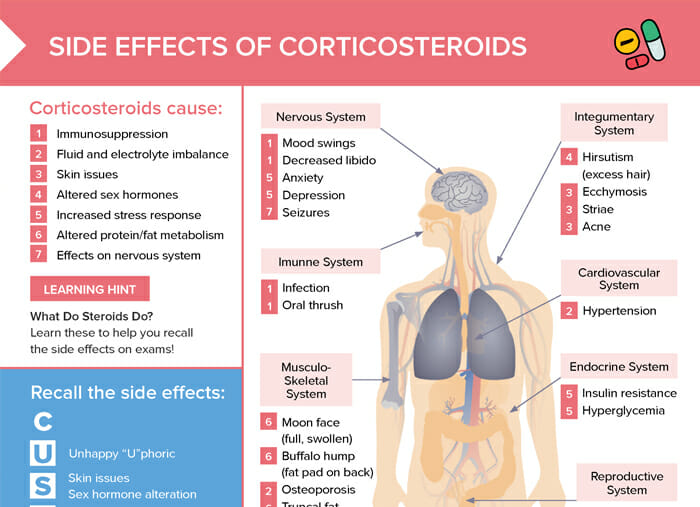
However, their side effects can include increased blood glucose levels, weight gain, mood changes, insomnia, osteoporosis with long-term use, adrenal suppression with long-term use, risk of peptic ulcer risk, especially when combined with NSAIDs, and increased susceptibility to infections due to suppressed immune response. Like mineralocorticoids, discontinuing glucocorticoids abruptly can lead to adrenal crisis, so should be tapered off under the direction of a healthcare provider. Patients on corticosteroids may not mount typical signs of infection (e.g., fever, elevated WBC) because the inflammatory response is blunted
Cortisol →
The corticosteroid pathway, or the hypothalamic-pituitary-adrenal (HPA) axis, is the body’s major stress response system. Here’s how it works:
The therapeutic goal of corticosteroid treatment is to have an anti-inflammatory effect and decrease immune reaction. They also can be used to replace hormones in adrenal insufficiency.
These functions are essential for maintaining homeostasis in the body. When corticosteroid levels are too high or too low, it can lead to health problems.
Corticosteroids can interact with many other medications, altering their effects. For example, they can increase the blood glucose in clients with diabetes or increase the risk of peptic ulcer disease or gastrointestinal bleeding with NSAIDs. Always check for potential interactions in your client’s medication plans:
Signs can include hyperglycemia, hypertension, fluid retention, insomnia, and mood changes. In severe cases, corticosteroid overdose can cause signs of corticosteroid excess/iatrogenic Cushing syndrome .
Instruct clients to:
RELATED TOPIC:
Free Download
Master the topic with a unique study combination of a concise summary paired with video lectures.
Your free account gives you access to:
or