Cardiac output (CO) and cardiac index (CI) are important measures for clinical nursing practice, as they help assess the efficiency of the heart’s pumping ability, guide treatment decisions in conditions like heart failure and shock, and monitor responses to interventions. Keep reading for normal CO and CI values, methods of measurement, calculations, and their implications for patient care and outcomes.
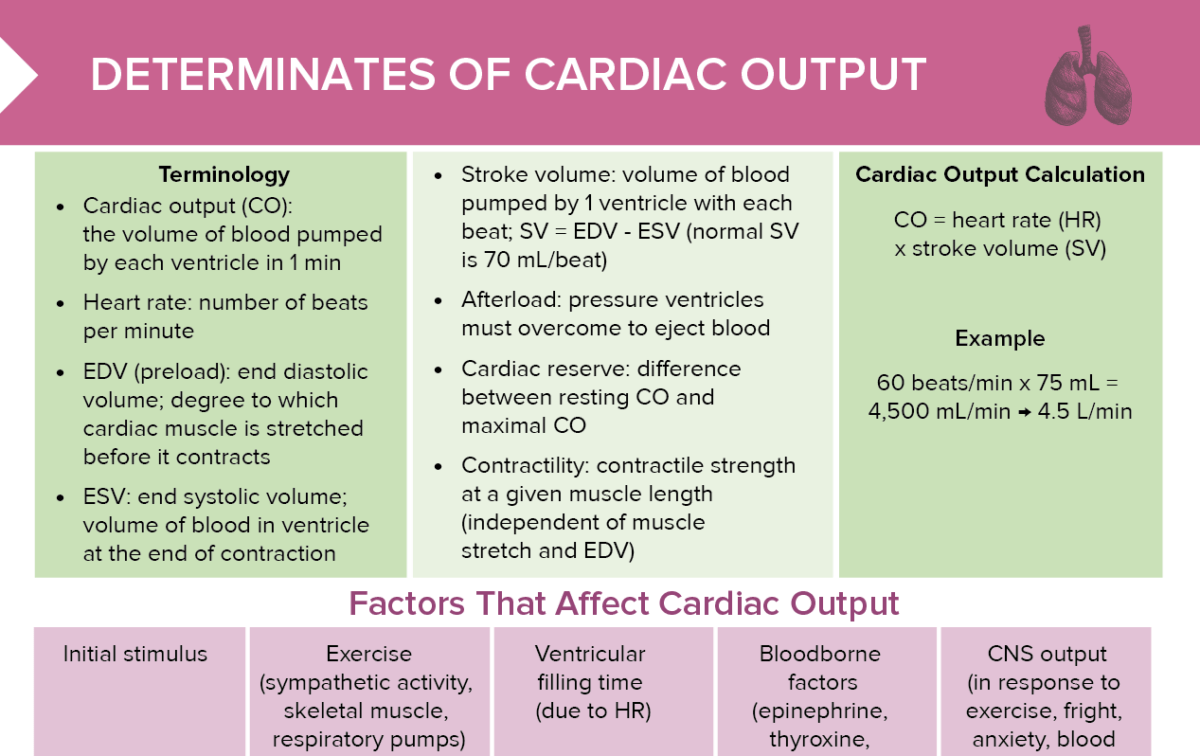
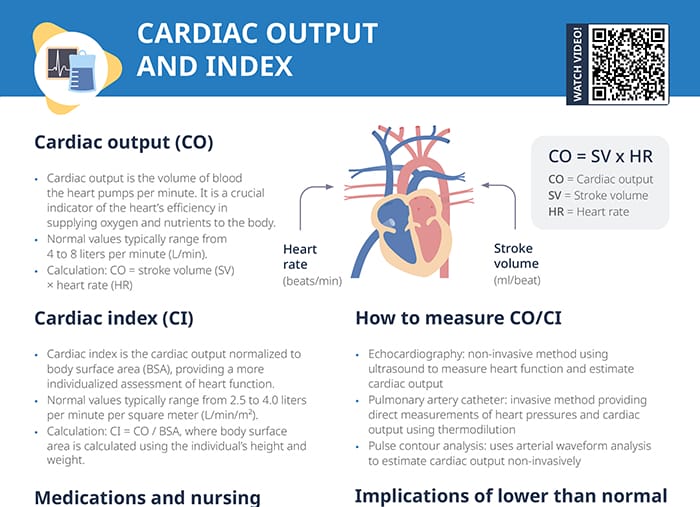
Cardiac output (CO) is the volume of blood the heart pumps per minute. It is an important indicator of the heart’s efficiency in supplying oxygen and nutrients to the body.
Normal cardiac output
The normal range of cardiac output lies between 4 and 8 liters per minute (L/min).
How to calculate cardiac output: equation
Calculation: CO = stroke volume (SV) × heart rate (HR)
The heart rate is the number of heart beats per minute, and the stroke volume is the volume of blood pumped out by one ventricle with a single heart beat.
What is cardiac index?
Cardiac index (CI) is the cardiac output normalized to body surface area (BSA), providing a more individualized assessment of heart function.
Normal cardiac index
The normal range of cardiac index typically is from 2.5 to 4 liters per minute per square meter (L/min/m2).
The maximal CO is 4–5 times the resting CO in nonathletic people (20–25 L/min). It may reach 35 L/min in trained athletes.
How to calculate cardiac index: equation
Calculation: CI = CO / BSA, where body surface area is calculated using the individual’s height and weight.
How to measure cardiac output and index (CO/CI)
Echocardiography: non-invasive method using ultrasound to measure heart function and estimate cardiac output
Pulmonary artery catheter: invasive method providing direct measurements of heart pressures and cardiac output using thermodilution
Low cardiac output and cardiac index can lead to inadequate tissue perfusion, resulting in hypotension and shock. Prolonged low CO/CI can cause organ dysfunction or failure due to insufficient oxygen delivery.
The signs and symptoms of low cardiac output can manifest as fatigue, dizziness, shortness of breath, and poor exercise tolerance.
Values higher than normal:
Higher CO/CI values may be seen during states of increased metabolic demand, such as fever, sepsis, hyperthyroidism, or during vigorous physical activity.
Conditions like anemia, pregnancy, or early stages of heart failure may also lead to elevated CO as the body compensates for increased oxygen demands or decreased oxygen-carrying capacity.
Medications and nursing implications of decreased CO/CI
Inotropic agents
Dobutamine, milrinone
Monitor for arrhythmias, blood pressure, and signs of improved perfusion.
Titrate dosage based on hemodynamic response and clinical condition.
Vasopressors
Norepinephrine, dopamine, epinephrine
Closely monitor blood pressure, heart rate, and signs of tissue perfusion.
Adjust dosages to maintain target blood pressure and avoid excessive vasoconstriction.
Diuretics (for fluid overload)
Furosemide, bumetanide
Monitor fluid balance, electrolyte levels, and renal function.
Ensure effective fluid removal while preventing dehydration and electrolyte imbalances.
Vasodilators
Nitroglycerin, nitroprusside
Monitor blood pressure and signs of hypotension.
Titrate dosage to achieve optimal balance between lowering afterload and maintaining adequate blood pressure.