

Nursing Knowledge
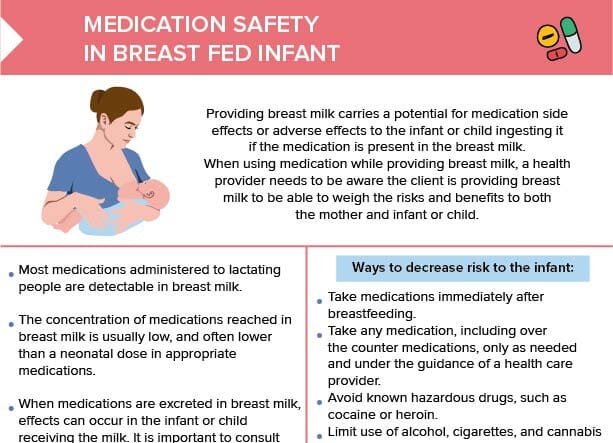
Providing breast milk carries a potential for adverse effects from medications to the infant or child ingesting it if the medication is present in the breast milk.
When using medication while providing breast milk, a health provider needs to be aware the client is providing breast milk to be able to weigh the risks and benefits to both the mother and infant.
Note: Pharmacology and medicine is ever-evolving. It is essential to keep risk vs benefit in mind when considering medication use while breastfeeding, as there is a shortage of reliable data regarding toxicity from drug use during pregnancy or breastfeeding.
LactMed@NIH is a free and searchable database of drugs and other chemicals to which nursing mothers may be exposed.
Commonly used pain medications considered to be generally safe during breastfeeding include acetaminophen (Tylenol) and ibuprofen (Advil, Motrin).
Some selective serotonin reuptake inhibitors (SSRIs) like sertraline (Zoloft) and paroxetine (Paxil) are often considered as first-line options for treating anxiety in breastfeeding mothers due to lower levels in breast milk and fewer reported side effects in infants.
Cold medications containing pseudoephedrine or phenylephrine are generally not recommended for breastfeeding mothers due to potential risks of reducing milk supply. Medications containing only acetaminophen are often considered safer, as are certain antihistamines like loratadine (Claritin).
Methylphenidate (Ritalin) and atomoxetine (Strattera), have been studied for use during breastfeeding with limited negative effects reported on the infant.
Antihistamines like loratadine (Claritin) and cetirizine (Zyrtec) are commonly considered safer options for breastfeeding mothers as they are less sedating and have low milk-to-plasma ratios.
It is recommended to avoid weight loss drugs during breastfeeding. Many weight loss medications can pass into breast milk and pose potential risks to the infant. Additionally, weight loss drugs could interfere with the mother’s ability to produce sufficient milk. For safe and effective weight management during breastfeeding, mothers should consult a healthcare provider for a personalized plan that may include diet and exercise.
RELATED TOPIC:
Free Download
Master the topic with a unique study combination of a concise summary paired with video lectures.
Your free account gives you access to:
or