

Nursing Knowledge
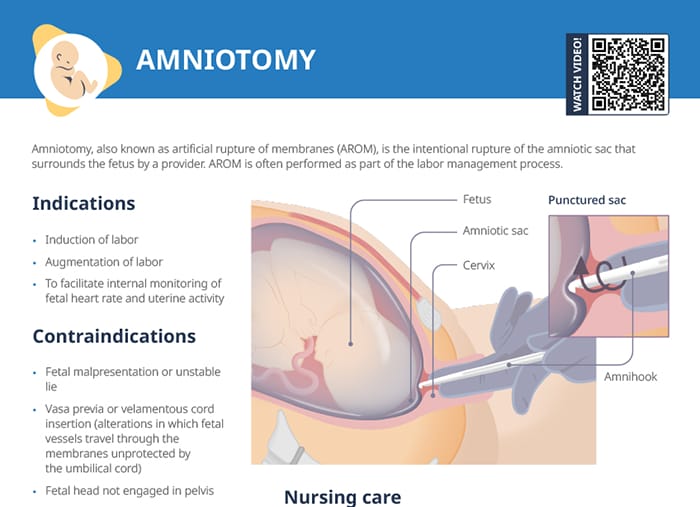
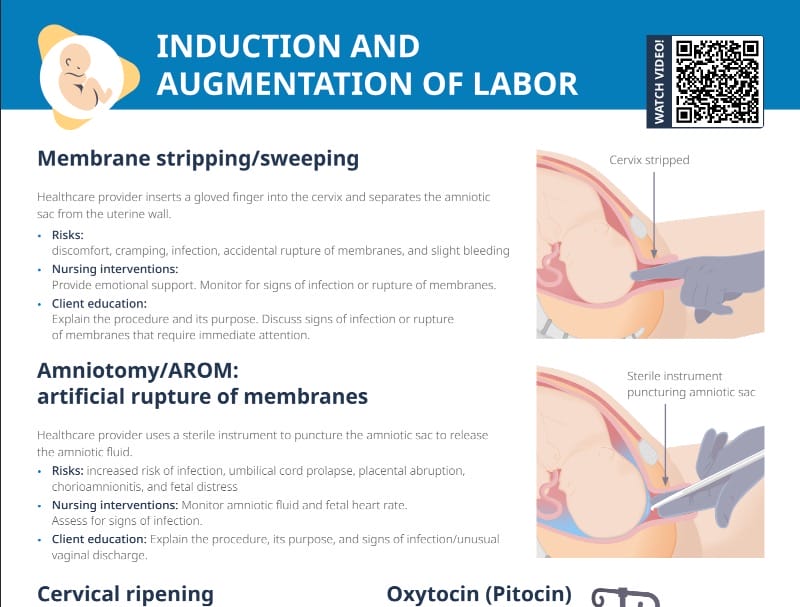
Amniotomy is a procedure where the amniotic sac that surrounds the fetus is intentionally ruptured by a provider. Therefore, amniotomy is also called the “artificial rupture of membranes” or “AROM.”
This procedure is often performed as part of the labor management process.
Amniotomy is indicated in the contexts of induction of augmentation of labor, as well as to facilitate internal monitoring of fetal heart rate and uterine activity.
Cord prolapse and infection are the biggest risks that come with artificially rupturing the amniotic sac.
When the amniotic sac is ruptured, the buoyancy within it is removed and the fetus descends. If the umbilical cord is floating below a disengaged fetal head when this occurs, cord compression will result in fetal hypoxia and necessitate emergent cesarean delivery.
Breaking the protective barrier around the fetus increases the risk of chorioamnionitis, particularly if AROM is performed early in labor.
Before an amniotomy is performed, ensure the client has consented and received an explanation of the procedure. The client and their family should have all their questions answered.
Assess and document the client’s vital signs and the fetal heart tones, as well as the fetal station. Gather the supplies:
An amniotomy hook, amniotic hook, or “amnihook” is the instrument used to rupture the membranes. It is a long plastic device with a small hook at the end.
The procedure is done by a provider with the assistance of a nurse. The procedure steps after preparation are as follows:
During the procedure, important nursing tasks include assisting the client into the correct position, assisting the provider with supplies, and reassuring the client.
Reassure your client that the baby is being closely monitored and labor is expected to progress after the membranes are artificially ruptured. How long the baby is safe in the uterus after the membranes have ruptured depends on many factors.
A premature rupture of membranes (before the onset of labor) is recognized by painless discharge of clear or yellowish fluid, either as a large gush or as intermittent trickles. Management depends on how far the pregnancy has progressed: After 34 weeks, labor will be induced. If earlier, measures will be taken to prolong the pregnancy as much as possible to give the fetus the maximum possible time to mature.
If the water breaks and the time until the onset of labor extends beyond 18 or 24 hours, the condition is called prolonged rupture of membranes. This increases the infection risk, so labor will likely be induced and measures against infection will be taken.
The water can be discharged from the vagina in a sudden gush, or in a slower intermittent trickle (sometimes mistaken by clients for urine). Typically happening during labor, it may occur before labor starts (premature rupture of membranes).
The fluid should be clear or slightly yellowish with a mild odor; colors like green, brown, and foul odors can indicate problems like infections or meconium staining.
RELATED TOPIC:
Free Download
Master the topic with a unique study combination of a concise summary paired with video lectures.
Your free account gives you access to:
or