Domina Conceptos Médicos

Estudia para la escuela de medicina y tus examenes con Lecturio.

Virus de la Coriomeningitis Linfocítica

El virus Virus Viruses are infectious, obligate intracellular parasites composed of a nucleic acid core surrounded by a protein capsid. Viruses can be either naked (non-enveloped) or enveloped. The classification of viruses is complex and based on many factors, including type and structure of the nucleoid and capsid, the presence of an envelope, the replication cycle, and the host range. Virology de la coriomeningitis linfocítica es un virus Virus Viruses are infectious, obligate intracellular parasites composed of a nucleic acid core surrounded by a protein capsid. Viruses can be either naked (non-enveloped) or enveloped. The classification of viruses is complex and based on many factors, including type and structure of the nucleoid and capsid, the presence of an envelope, the replication cycle, and the host range. Virology de ARN monocatenario que se transmite a humanos a través de roedores, su reservorio principal. Las infecciones virales pueden ocurrir por contacto directo (como una herida en EN Erythema nodosum is an immune-mediated panniculitis (inflammation of the subcutaneous fat) caused by a type IV (delayed-type) hypersensitivity reaction. It commonly manifests in young women as tender, erythematous nodules on the shins. Erythema Nodosum la piel) con orina, saliva Saliva The clear, viscous fluid secreted by the salivary glands and mucous glands of the mouth. It contains mucins, water, organic salts, and ptyalin. Salivary Glands: Anatomy o excrementos de roedores, o por inhalación de virus Virus Viruses are infectious, obligate intracellular parasites composed of a nucleic acid core surrounded by a protein capsid. Viruses can be either naked (non-enveloped) or enveloped. The classification of viruses is complex and based on many factors, including type and structure of the nucleoid and capsid, the presence of an envelope, the replication cycle, and the host range. Virology en EN Erythema nodosum is an immune-mediated panniculitis (inflammation of the subcutaneous fat) caused by a type IV (delayed-type) hypersensitivity reaction. It commonly manifests in young women as tender, erythematous nodules on the shins. Erythema Nodosum aerosoles. La transmisión vertical y, en EN Erythema nodosum is an immune-mediated panniculitis (inflammation of the subcutaneous fat) caused by a type IV (delayed-type) hypersensitivity reaction. It commonly manifests in young women as tender, erythematous nodules on the shins. Erythema Nodosum raras ocasiones, el trasplante de órganos también provoca infecciones. La enfermedad generalmente da como resultado una enfermedad bifásica febril autolimitada. En EN Erythema nodosum is an immune-mediated panniculitis (inflammation of the subcutaneous fat) caused by a type IV (delayed-type) hypersensitivity reaction. It commonly manifests in young women as tender, erythematous nodules on the shins. Erythema Nodosum casos graves, los LOS Neisseria pacientes pueden presentar encefalitis, meningitis Meningitis Meningitis is inflammation of the meninges, the protective membranes of the brain, and spinal cord. The causes of meningitis are varied, with the most common being bacterial or viral infection. The classic presentation of meningitis is a triad of fever, altered mental status, and nuchal rigidity. Meningitis aséptica o meningoencefalitis. Las infecciones por el virus Virus Viruses are infectious, obligate intracellular parasites composed of a nucleic acid core surrounded by a protein capsid. Viruses can be either naked (non-enveloped) or enveloped. The classification of viruses is complex and based on many factors, including type and structure of the nucleoid and capsid, the presence of an envelope, the replication cycle, and the host range. Virology de la coriomeningitis linfocítica en EN Erythema nodosum is an immune-mediated panniculitis (inflammation of the subcutaneous fat) caused by a type IV (delayed-type) hypersensitivity reaction. It commonly manifests in young women as tender, erythematous nodules on the shins. Erythema Nodosum mujeres embarazadas también se ha HA Hemolytic anemia (HA) is the term given to a large group of anemias that are caused by the premature destruction/hemolysis of circulating red blood cells (RBCs). Hemolysis can occur within (intravascular hemolysis) or outside the blood vessels (extravascular hemolysis). Hemolytic Anemia reconocido como un teratógeno importante que provoca la muerte fetal o defectos congénitos. El diagnóstico se realiza mediante serología o RT-PCR RT-PCR A variation of the pcr technique in which cDNA is made from RNA via reverse transcription. The resultant cDNA is then amplified using standard pcr protocols. Polymerase Chain Reaction (PCR). El tratamiento es de soporte.

Last updated: Dec 15, 2025
Editorial responsibility: Stanley Oiseth, Lindsay Jones, Evelin Maza

Clasificación

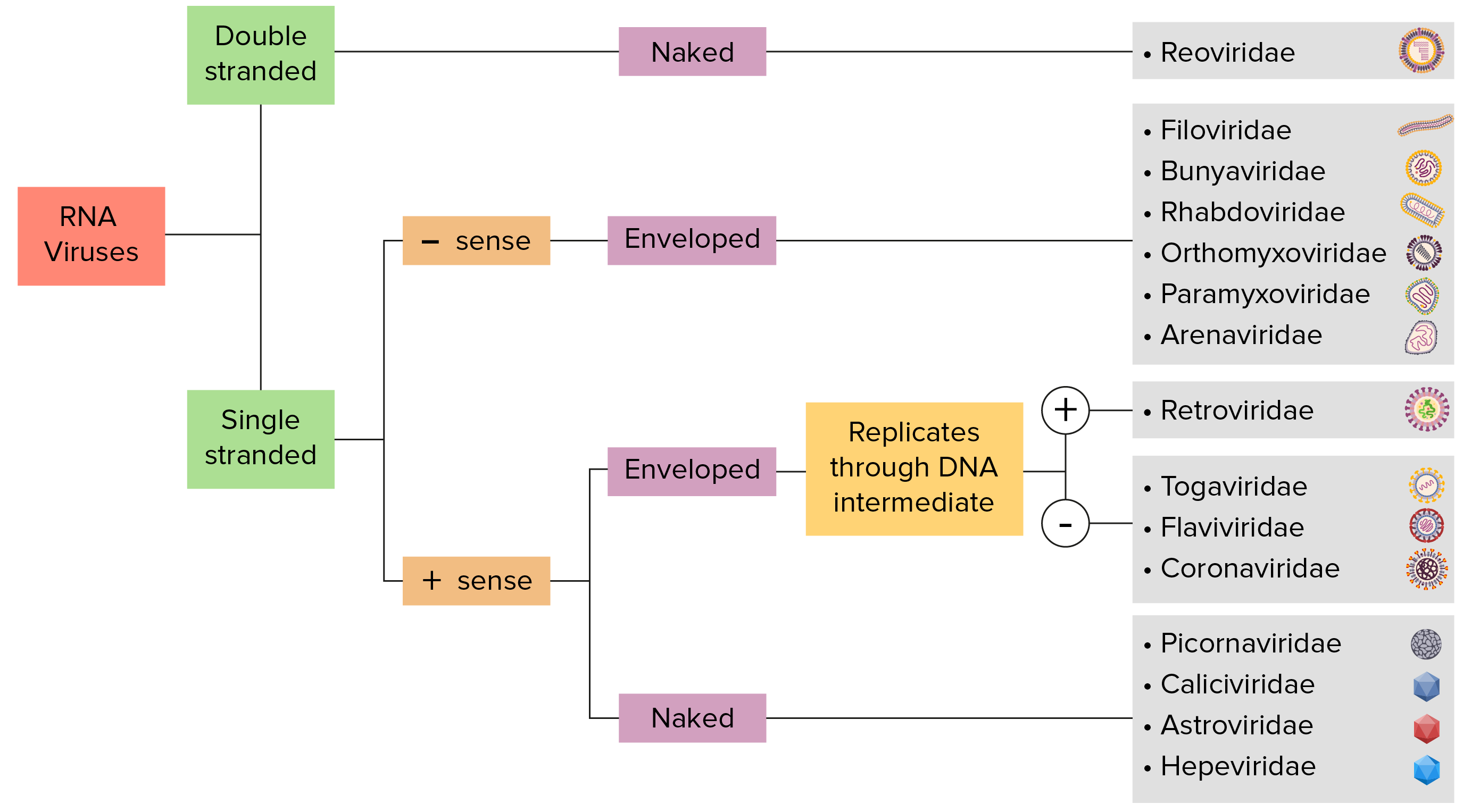
Diagrama de flujo de la clasificación de los virus de ARN

Identificación de los virus ARN:
Los virus pueden clasificarse de muchas maneras. Sin embargo, la mayoría de los virus tienen un genoma formado por ADN o ARN. Los virus con genoma ARN pueden caracterizarse además por tener ARN monocatenario o bicatenario. Los virus “envueltos” están cubiertos por una fina capa de membrana celular (normalmente tomada de la célula huésped). Si la envoltura está ausente, los virus se denominan “desnudos”. Los virus con genomas monocatenarios son positivos si el genoma se emplea directamente como ARN mensajero (ARNm), que se traduce en proteínas. Los virus monocatenarios negativos emplean la ARN polimerasa, una enzima viral, para transcribir su genoma en ARN mensajero.

Imagen por Lecturio. Licencia: CC BY-NC-SA 4.0

Características Generales

Características básicas del virus Virus Viruses are infectious, obligate intracellular parasites composed of a nucleic acid core surrounded by a protein capsid. Viruses can be either naked (non-enveloped) or enveloped. The classification of viruses is complex and based on many factors, including type and structure of the nucleoid and capsid, the presence of an envelope, the replication cycle, and the host range. Virology de la coriomeningitis linfocítica

  • Envuelto
  • Esférico
  • Tamaño medio (diámetro entre 60 y 300 nm)
  • El complejo GP en EN Erythema nodosum is an immune-mediated panniculitis (inflammation of the subcutaneous fat) caused by a type IV (delayed-type) hypersensitivity reaction. It commonly manifests in young women as tender, erythematous nodules on the shins. Erythema Nodosum la envoltura se escinde en EN Erythema nodosum is an immune-mediated panniculitis (inflammation of the subcutaneous fat) caused by a type IV (delayed-type) hypersensitivity reaction. It commonly manifests in young women as tender, erythematous nodules on the shins. Erythema Nodosum GP1 y GP2.
  • Genoma del virus Virus Viruses are infectious, obligate intracellular parasites composed of a nucleic acid core surrounded by a protein capsid. Viruses can be either naked (non-enveloped) or enveloped. The classification of viruses is complex and based on many factors, including type and structure of the nucleoid and capsid, the presence of an envelope, the replication cycle, and the host range. Virology:
    • Encapsulado por una nucleocápside helicoidal
    • Segmentado con:
      • Un ARN de sentido negativo monocatenario grande (L)
      • Un ARN ambisentido pequeño (S)
    • Transporta ARN polimerasa dependiente de ARN

Taxonomía:

  • Familia Arenaviridae Arenaviridae A family of RNA viruses naturally infecting rodents and consisting of one genus (arenavirus) with two groups: old world arenaviruses and new world arenaviruses. Infection in rodents is persistent and silent. Vertical transmission is through milk-, saliva-, or urine-borne routes. Horizontal transmission to humans, monkeys, and other animals is important. Lassa Virus
  • Género Mammarenavirus Mammarenavirus Lassa Virus
  • Los virus contienen ribosomas del huésped, lo que le da al virus una apariencia granular (arenosus en latín significa “arenoso”)
  • Otros arenavirus incluyen:
    • Virus Virus Viruses are infectious, obligate intracellular parasites composed of a nucleic acid core surrounded by a protein capsid. Viruses can be either naked (non-enveloped) or enveloped. The classification of viruses is complex and based on many factors, including type and structure of the nucleoid and capsid, the presence of an envelope, the replication cycle, and the host range. Virology de Lassa (fiebre de Lassa)
    • Virus Virus Viruses are infectious, obligate intracellular parasites composed of a nucleic acid core surrounded by a protein capsid. Viruses can be either naked (non-enveloped) or enveloped. The classification of viruses is complex and based on many factors, including type and structure of the nucleoid and capsid, the presence of an envelope, the replication cycle, and the host range. Virology Junín (fiebre hemorrágica argentina)
    • Virus Virus Viruses are infectious, obligate intracellular parasites composed of a nucleic acid core surrounded by a protein capsid. Viruses can be either naked (non-enveloped) or enveloped. The classification of viruses is complex and based on many factors, including type and structure of the nucleoid and capsid, the presence of an envelope, the replication cycle, and the host range. Virology Machupo (fiebre hemorrágica boliviana)
    • Virus Virus Viruses are infectious, obligate intracellular parasites composed of a nucleic acid core surrounded by a protein capsid. Viruses can be either naked (non-enveloped) or enveloped. The classification of viruses is complex and based on many factors, including type and structure of the nucleoid and capsid, the presence of an envelope, the replication cycle, and the host range. Virology Guanarito (fiebre hemorrágica venezolana)
    • Sabia (fiebre hemorrágica brasileña)
    • Chapare (fiebre hemorrágica del Chapare)
    • Lujo (Fiebre hemorrágica de Lujo)
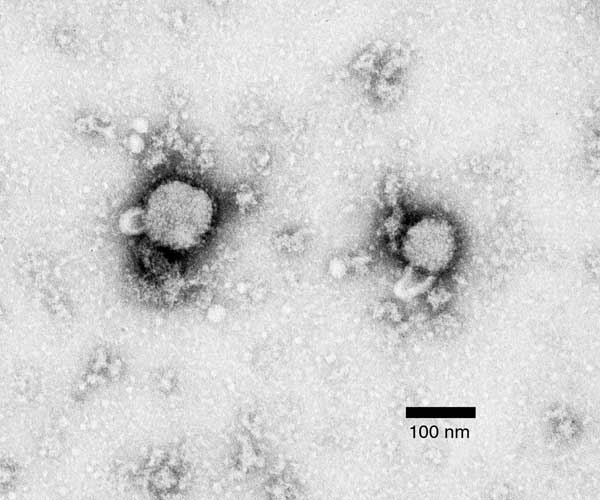
Micrografía electrónica del virus de la coriomeningitis linfocítica

Micrografía electrónica del virus de la coriomeningitis linfocítica

Imagen: “Negative stain electron micrograph of an arenavirus from a mouse that tested positive for LCM” por CDC. Licencia: Dominio Público

Epidemiología

  • Seroprevalencia en EN Erythema nodosum is an immune-mediated panniculitis (inflammation of the subcutaneous fat) caused by a type IV (delayed-type) hypersensitivity reaction. It commonly manifests in young women as tender, erythematous nodules on the shins. Erythema Nodosum los LOS Neisseria Estados Unidos: aproximadamente 5%
  • Enfermedad encontrada en EN Erythema nodosum is an immune-mediated panniculitis (inflammation of the subcutaneous fat) caused by a type IV (delayed-type) hypersensitivity reaction. It commonly manifests in young women as tender, erythematous nodules on the shins. Erythema Nodosum:
    • Norte América y Sur América
    • Europa
    • Australia
    • Japón
  • Sin predilección racial o sexual
  • Infecciones más comunes en EN Erythema nodosum is an immune-mediated panniculitis (inflammation of the subcutaneous fat) caused by a type IV (delayed-type) hypersensitivity reaction. It commonly manifests in young women as tender, erythematous nodules on the shins. Erythema Nodosum adultos jóvenes
  • Las infecciones son más comunes en EN Erythema nodosum is an immune-mediated panniculitis (inflammation of the subcutaneous fat) caused by a type IV (delayed-type) hypersensitivity reaction. It commonly manifests in young women as tender, erythematous nodules on the shins. Erythema Nodosum otoño e invierno (cuando los LOS Neisseria roedores buscan refugio en EN Erythema nodosum is an immune-mediated panniculitis (inflammation of the subcutaneous fat) caused by a type IV (delayed-type) hypersensitivity reaction. It commonly manifests in young women as tender, erythematous nodules on the shins. Erythema Nodosum interiores).

Patogénesis

Reservorio

Arenavirus: provocan infecciones crónicas en EN Erythema nodosum is an immune-mediated panniculitis (inflammation of the subcutaneous fat) caused by a type IV (delayed-type) hypersensitivity reaction. It commonly manifests in young women as tender, erythematous nodules on the shins. Erythema Nodosum roedores (ratón doméstico, Mus musculus Mus musculus Lymphocytic Choriomeningitis Virus)
Transmisión

  • Contacto directo con material contaminado por heces/orina/ saliva Saliva The clear, viscous fluid secreted by the salivary glands and mucous glands of the mouth. It contains mucins, water, organic salts, and ptyalin. Salivary Glands: Anatomy de roedores infectados (a través del ojo, nariz, boca, una herida en EN Erythema nodosum is an immune-mediated panniculitis (inflammation of the subcutaneous fat) caused by a type IV (delayed-type) hypersensitivity reaction. It commonly manifests in young women as tender, erythematous nodules on the shins. Erythema Nodosum la piel o mordedura de animal)
  • Inhalación de virus Virus Viruses are infectious, obligate intracellular parasites composed of a nucleic acid core surrounded by a protein capsid. Viruses can be either naked (non-enveloped) or enveloped. The classification of viruses is complex and based on many factors, including type and structure of the nucleoid and capsid, the presence of an envelope, the replication cycle, and the host range. Virology en EN Erythema nodosum is an immune-mediated panniculitis (inflammation of the subcutaneous fat) caused by a type IV (delayed-type) hypersensitivity reaction. It commonly manifests in young women as tender, erythematous nodules on the shins. Erythema Nodosum aerosol
  • Transmisión vertical de la madre al AL Amyloidosis feto
  • Trasplante de órganos ( receptor Receptor Receptors are proteins located either on the surface of or within a cell that can bind to signaling molecules known as ligands (e.g., hormones) and cause some type of response within the cell. Receptors de tejido de donante infectado)

Ciclo de vida

  1. El virus Virus Viruses are infectious, obligate intracellular parasites composed of a nucleic acid core surrounded by a protein capsid. Viruses can be either naked (non-enveloped) or enveloped. The classification of viruses is complex and based on many factors, including type and structure of the nucleoid and capsid, the presence of an envelope, the replication cycle, and the host range. Virology se adhiere a los LOS Neisseria receptores del huésped a través de las glicoproteínas de la envoltura.
  2. Posteriormente, el virus Virus Viruses are infectious, obligate intracellular parasites composed of a nucleic acid core surrounded by a protein capsid. Viruses can be either naked (non-enveloped) or enveloped. The classification of viruses is complex and based on many factors, including type and structure of the nucleoid and capsid, the presence of an envelope, the replication cycle, and the host range. Virology es endocitado, logrando así entrar en EN Erythema nodosum is an immune-mediated panniculitis (inflammation of the subcutaneous fat) caused by a type IV (delayed-type) hypersensitivity reaction. It commonly manifests in young women as tender, erythematous nodules on the shins. Erythema Nodosum la célula.
  3. Sigue la fusión viral con un endosoma.
  4. El virus Virus Viruses are infectious, obligate intracellular parasites composed of a nucleic acid core surrounded by a protein capsid. Viruses can be either naked (non-enveloped) or enveloped. The classification of viruses is complex and based on many factors, including type and structure of the nucleoid and capsid, the presence of an envelope, the replication cycle, and the host range. Virology se fusiona con la membrana del endosoma, lo que permite la liberación de la ribonucleocápside viral en EN Erythema nodosum is an immune-mediated panniculitis (inflammation of the subcutaneous fat) caused by a type IV (delayed-type) hypersensitivity reaction. It commonly manifests in young women as tender, erythematous nodules on the shins. Erythema Nodosum el citoplasma.
  5. La ARN polimerasa dependiente de ARN media la replicación y transcripción del gen viral en EN Erythema nodosum is an immune-mediated panniculitis (inflammation of the subcutaneous fat) caused by a type IV (delayed-type) hypersensitivity reaction. It commonly manifests in young women as tender, erythematous nodules on the shins. Erythema Nodosum el citoplasma del hospedador.
  6. Se ensamblan nuevos viriones y se produce la gemación, liberando el virión para infectar otras células.
Lassa Virus

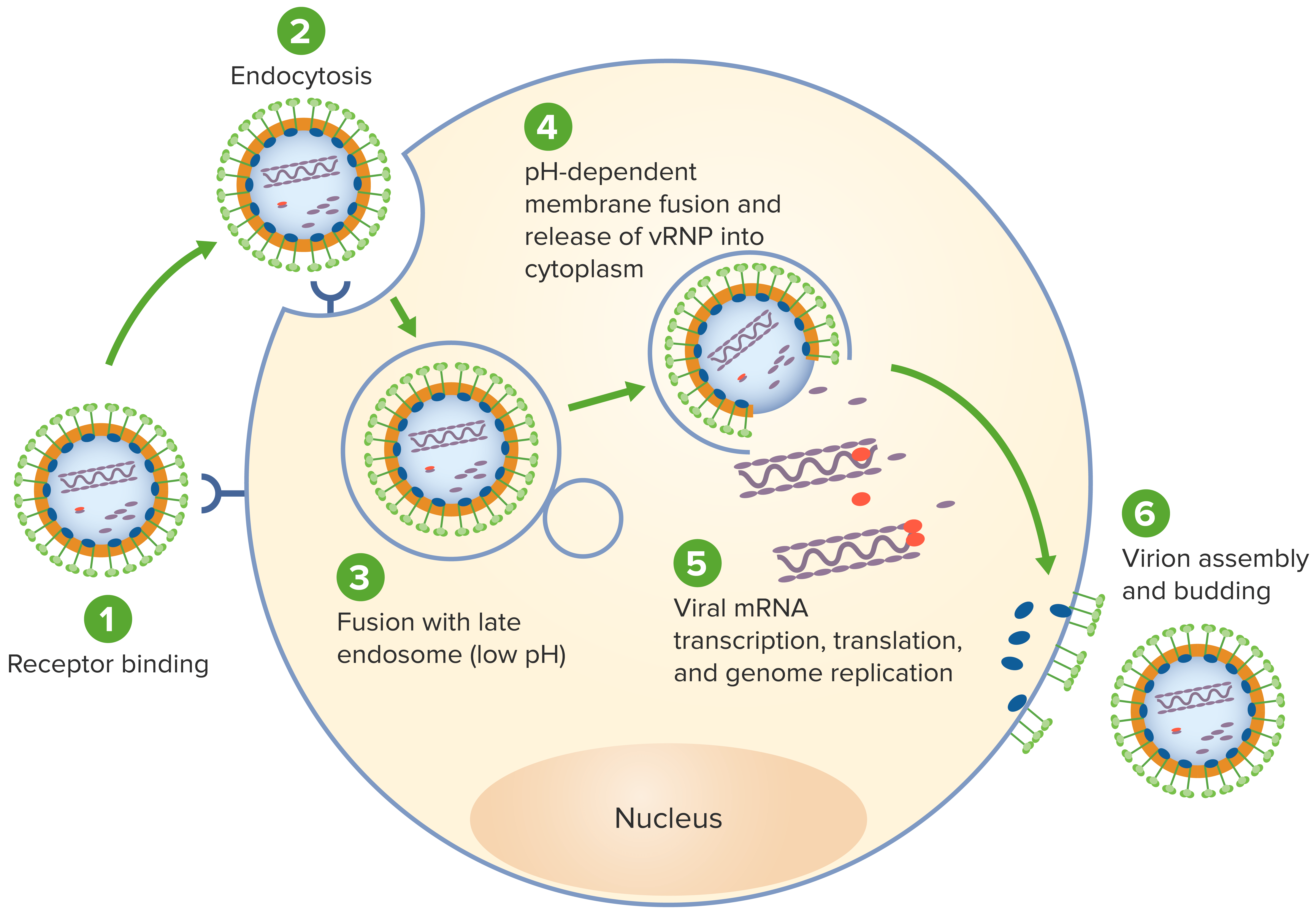
El ciclo vital del virus de la coriomeningitis linfocítica:
1. El virus se une a los receptores del huésped a través de las glicoproteínas de la envoltura.
2. El virus es posteriormente endocitado, consiguiendo así la entrada en la célula.
3. A continuación se produce la fusión del virus con un endosoma.
4. El virus se fusiona con la membrana del endosoma, lo que permite la liberación de la ribonucleocápside viral en el citoplasma.
5. La ARN polimerasa dependiente de ARN (RdRP) media la replicación y transcripción del gen viral en el citoplasma del huésped.
6. Se ensamblan nuevos viriones y se produce la gemación, liberando el virión para infectar otras células.
vRNP: ribonucleoproteína viral

Imagen por Lecturio.

Factores de riesgo del huésped

  • Propietarios de mascota como ratones o hámsteres
  • Trabajadores de laboratorio

Proceso de enfermedad

LCMV LCMV Lymphocytic choriomeningitis virus (LCMV) is a single-stranded RNA virus transmitted to humans via rodents, the primary reservoir. Viral infections can occur through direct contact (such as through a break in the skin) with rodent urine, saliva, or droppings or via inhalation of aerosolized virus. The disease typically results in a self-limited, febrile, biphasic disease. Lymphocytic Choriomeningitis Virus no es citotóxico, si bien la respuesta inmune del huésped intenta eliminar el virus Virus Viruses are infectious, obligate intracellular parasites composed of a nucleic acid core surrounded by a protein capsid. Viruses can be either naked (non-enveloped) or enveloped. The classification of viruses is complex and based on many factors, including type and structure of the nucleoid and capsid, the presence of an envelope, the replication cycle, and the host range. Virology, esto puede desencadenar una enfermedad inmunomediada. La respuesta inmune produce las diferentes manifestaciones de la enfermedad.

  • Período de incubación: hasta 13 días
  • Sobreviene viremia Viremia The presence of viruses in the blood. Erythema Infectiosum primaria → diseminación a otros órganos
  • El virus Virus Viruses are infectious, obligate intracellular parasites composed of a nucleic acid core surrounded by a protein capsid. Viruses can be either naked (non-enveloped) or enveloped. The classification of viruses is complex and based on many factors, including type and structure of the nucleoid and capsid, the presence of an envelope, the replication cycle, and the host range. Virology llega al AL Amyloidosis SNC ( meninges Meninges The brain and the spinal cord are enveloped by 3 overlapping layers of connective tissue called the meninges. The layers are, from the most external layer to the most internal layer, the dura mater, arachnoid mater, and pia mater. Between these layers are 3 potential spaces called the epidural, subdural, and subarachnoid spaces. Meninges: Anatomy, plexo coroideo y revestimiento ependimario ventricular), lo que lleva a la infiltración de células inflamatorias.

Presentación Clínica

Infección adquirida por el virus Virus Viruses are infectious, obligate intracellular parasites composed of a nucleic acid core surrounded by a protein capsid. Viruses can be either naked (non-enveloped) or enveloped. The classification of viruses is complex and based on many factors, including type and structure of the nucleoid and capsid, the presence of an envelope, the replication cycle, and the host range. Virology de la coriomeningitis linfocítica

La infección por el virus Virus Viruses are infectious, obligate intracellular parasites composed of a nucleic acid core surrounded by a protein capsid. Viruses can be either naked (non-enveloped) or enveloped. The classification of viruses is complex and based on many factors, including type and structure of the nucleoid and capsid, the presence of an envelope, the replication cycle, and the host range. Virology de la coriomeningitis linfocítica da como resultado una enfermedad bifásica.

Inicio de los LOS Neisseria síntomas:

  • Ocurre entre 8–13 días después de la exposición
  • Los LOS Neisseria primeros síntomas pueden durar de 5–7 días.
  • El 33% son asintomáticos.
  • El 50% tiene enfermedad febril sin afectación neurológica.

Síntomas de la 1ra fase:

Síntomas de la 2da fase:

Después de unos días de recuperación, pueden comenzar los LOS Neisseria síntomas de la segunda fase, que incluyen síntomas neurológicos (típicos de meningitis Meningitis Meningitis is inflammation of the meninges, the protective membranes of the brain, and spinal cord. The causes of meningitis are varied, with the most common being bacterial or viral infection. The classic presentation of meningitis is a triad of fever, altered mental status, and nuchal rigidity. Meningitis y/o encefalitis).

  • Aumento de la cefalea, fotofobia
  • Rigidez nucal
  • Cambio en EN Erythema nodosum is an immune-mediated panniculitis (inflammation of the subcutaneous fat) caused by a type IV (delayed-type) hypersensitivity reaction. It commonly manifests in young women as tender, erythematous nodules on the shins. Erythema Nodosum el estado mental (letargo, coma Coma Coma is defined as a deep state of unarousable unresponsiveness, characterized by a score of 3 points on the GCS. A comatose state can be caused by a multitude of conditions, making the precise epidemiology and prognosis of coma difficult to determine. Coma)

Otros hallazgos menos frecuentes:

  • Orquitis
  • Miocarditis
  • Artritis
  • Parotiditis
  • Neumonitis

Infección por virus Virus Viruses are infectious, obligate intracellular parasites composed of a nucleic acid core surrounded by a protein capsid. Viruses can be either naked (non-enveloped) or enveloped. The classification of viruses is complex and based on many factors, including type and structure of the nucleoid and capsid, the presence of an envelope, the replication cycle, and the host range. Virology de la coriomeningitis linfocítica congénita

Las mujeres que se infectan con virus Virus Viruses are infectious, obligate intracellular parasites composed of a nucleic acid core surrounded by a protein capsid. Viruses can be either naked (non-enveloped) or enveloped. The classification of viruses is complex and based on many factors, including type and structure of the nucleoid and capsid, the presence of an envelope, the replication cycle, and the host range. Virology de la coriomeningitis linfocítica durante el embarazo pueden transmitir la infección al AL Amyloidosis feto.

  • Las infecciones que ocurren durante el 1er trimestre pueden dar como resultado muerte fetal o aborto espontáneo.
  • Las infecciones en EN Erythema nodosum is an immune-mediated panniculitis (inflammation of the subcutaneous fat) caused by a type IV (delayed-type) hypersensitivity reaction. It commonly manifests in young women as tender, erythematous nodules on the shins. Erythema Nodosum el 2do y 3er trimestre pueden provocar defectos de nacimiento, que incluyen:
    • Ceguera: la coriorretinitis es un hallazgo común en EN Erythema nodosum is an immune-mediated panniculitis (inflammation of the subcutaneous fat) caused by a type IV (delayed-type) hypersensitivity reaction. It commonly manifests in young women as tender, erythematous nodules on the shins. Erythema Nodosum los LOS Neisseria niños.
    • Retraso en EN Erythema nodosum is an immune-mediated panniculitis (inflammation of the subcutaneous fat) caused by a type IV (delayed-type) hypersensitivity reaction. It commonly manifests in young women as tender, erythematous nodules on the shins. Erythema Nodosum el desarrollo
    • Hidrocefalia
    • Epilepsia

Infección por el virus Virus Viruses are infectious, obligate intracellular parasites composed of a nucleic acid core surrounded by a protein capsid. Viruses can be either naked (non-enveloped) or enveloped. The classification of viruses is complex and based on many factors, including type and structure of the nucleoid and capsid, the presence of an envelope, the replication cycle, and the host range. Virology de la coriomeningitis linfocítica por trasplante de órganos

La inmunosupresión significativa en EN Erythema nodosum is an immune-mediated panniculitis (inflammation of the subcutaneous fat) caused by a type IV (delayed-type) hypersensitivity reaction. It commonly manifests in young women as tender, erythematous nodules on the shins. Erythema Nodosum los LOS Neisseria receptores de trasplantes juega un papel en EN Erythema nodosum is an immune-mediated panniculitis (inflammation of the subcutaneous fat) caused by a type IV (delayed-type) hypersensitivity reaction. It commonly manifests in young women as tender, erythematous nodules on the shins. Erythema Nodosum el desarrollo de la enfermedad:

  • Encefalopatía
  • Insuficiencia respiratoria
  • Insuficiencia renal/hepática
  • Disfunción del injerto
  • Coagulopatía
  • Trombocitopenia
  • Fiebre

Diagnóstico

Pruebas diagnósticas

  • Las pruebas de confirmación para el virus Virus Viruses are infectious, obligate intracellular parasites composed of a nucleic acid core surrounded by a protein capsid. Viruses can be either naked (non-enveloped) or enveloped. The classification of viruses is complex and based on many factors, including type and structure of the nucleoid and capsid, the presence of an envelope, the replication cycle, and the host range. Virology de la coriomeningitis linfocítica incluyen:
    • Detección de anticuerpos IgM IgM A class of immunoglobulin bearing mu chains (immunoglobulin mu-chains). Igm can fix complement. The name comes from its high molecular weight and originally being called a macroglobulin. Immunoglobulins: Types and Functions e IgG IgG The major immunoglobulin isotype class in normal human serum. There are several isotype subclasses of igg, for example, igg1, igg2a, and igg2b. Hypersensitivity Pneumonitis en EN Erythema nodosum is an immune-mediated panniculitis (inflammation of the subcutaneous fat) caused by a type IV (delayed-type) hypersensitivity reaction. It commonly manifests in young women as tender, erythematous nodules on the shins. Erythema Nodosum el LCR y el suero
    • RT-PCR RT-PCR A variation of the pcr technique in which cDNA is made from RNA via reverse transcription. The resultant cDNA is then amplified using standard pcr protocols. Polymerase Chain Reaction (PCR)
    • Cultivo viral de LCR
  • Para la infección congénita por el virus Virus Viruses are infectious, obligate intracellular parasites composed of a nucleic acid core surrounded by a protein capsid. Viruses can be either naked (non-enveloped) or enveloped. The classification of viruses is complex and based on many factors, including type and structure of the nucleoid and capsid, the presence of an envelope, the replication cycle, and the host range. Virology de la coriomeningitis linfocítica, es posible que los LOS Neisseria bebés ya no tengan el virus Virus Viruses are infectious, obligate intracellular parasites composed of a nucleic acid core surrounded by a protein capsid. Viruses can be either naked (non-enveloped) or enveloped. The classification of viruses is complex and based on many factors, including type and structure of the nucleoid and capsid, the presence of an envelope, the replication cycle, and the host range. Virology, por lo que se utilizan los LOS Neisseria niveles de IgM IgM A class of immunoglobulin bearing mu chains (immunoglobulin mu-chains). Igm can fix complement. The name comes from its high molecular weight and originally being called a macroglobulin. Immunoglobulins: Types and Functions e IgG IgG The major immunoglobulin isotype class in normal human serum. There are several isotype subclasses of igg, for example, igg1, igg2a, and igg2b. Hypersensitivity Pneumonitis.
  • Los LOS Neisseria hallazgos comunes en EN Erythema nodosum is an immune-mediated panniculitis (inflammation of the subcutaneous fat) caused by a type IV (delayed-type) hypersensitivity reaction. It commonly manifests in young women as tender, erythematous nodules on the shins. Erythema Nodosum el LCR incluyen:
    • Aumento de los LOS Neisseria niveles de proteínas.
    • Pleocitosis linfocítica
    • Disminución de los LOS Neisseria niveles de glucosa.

Hallazgos adicionales

Durante la primera fase de la enfermedad, las anomalías de laboratorio más comunes son

  • Hemograma:
    • Leucopenia
    • Trombocitopenia
  • Enzimas hepáticas elevadas

Tratamiento

  • Los LOS Neisseria pacientes con meningitis Meningitis Meningitis is inflammation of the meninges, the protective membranes of the brain, and spinal cord. The causes of meningitis are varied, with the most common being bacterial or viral infection. The classic presentation of meningitis is a triad of fever, altered mental status, and nuchal rigidity. Meningitis aséptica, encefalitis o meningoencefalitis requieren:
    • Hospitalización
    • Tratamiento de apoyo según la gravedad
  • La recuperación suele tardar hasta 3 semanas.
  • Tasa de mortalidad:
    • Infección adquirida por el virus Virus Viruses are infectious, obligate intracellular parasites composed of a nucleic acid core surrounded by a protein capsid. Viruses can be either naked (non-enveloped) or enveloped. The classification of viruses is complex and based on many factors, including type and structure of the nucleoid and capsid, the presence of an envelope, the replication cycle, and the host range. Virology de la coriomeningitis linfocítica: aproximadamente 1%
    • Infección congénita por el virus Virus Viruses are infectious, obligate intracellular parasites composed of a nucleic acid core surrounded by a protein capsid. Viruses can be either naked (non-enveloped) or enveloped. The classification of viruses is complex and based on many factors, including type and structure of the nucleoid and capsid, the presence of an envelope, the replication cycle, and the host range. Virology de la coriomeningitis linfocítica: puede llegar al AL Amyloidosis 35% dependiendo de los LOS Neisseria trastornos asociados

Comparación de especies

Los LOS Neisseria arenavirus pueden causar enfermedades neurológicas y/o fiebres hemorrágicas, para lo que una de las principales etiologías es el virus Virus Viruses are infectious, obligate intracellular parasites composed of a nucleic acid core surrounded by a protein capsid. Viruses can be either naked (non-enveloped) or enveloped. The classification of viruses is complex and based on many factors, including type and structure of the nucleoid and capsid, the presence of an envelope, the replication cycle, and the host range. Virology de Lassa.

Tabla: Comparación del virus Virus Viruses are infectious, obligate intracellular parasites composed of a nucleic acid core surrounded by a protein capsid. Viruses can be either naked (non-enveloped) or enveloped. The classification of viruses is complex and based on many factors, including type and structure of the nucleoid and capsid, the presence of an envelope, the replication cycle, and the host range. Virology de la coriomeningitis linfocítica y el virus Virus Viruses are infectious, obligate intracellular parasites composed of a nucleic acid core surrounded by a protein capsid. Viruses can be either naked (non-enveloped) or enveloped. The classification of viruses is complex and based on many factors, including type and structure of the nucleoid and capsid, the presence of an envelope, the replication cycle, and the host range. Virology de Lassa
Organismo Virus Virus Viruses are infectious, obligate intracellular parasites composed of a nucleic acid core surrounded by a protein capsid. Viruses can be either naked (non-enveloped) or enveloped. The classification of viruses is complex and based on many factors, including type and structure of the nucleoid and capsid, the presence of an envelope, the replication cycle, and the host range. Virology de la coriomeningitis linfocítica Virus Virus Viruses are infectious, obligate intracellular parasites composed of a nucleic acid core surrounded by a protein capsid. Viruses can be either naked (non-enveloped) or enveloped. The classification of viruses is complex and based on many factors, including type and structure of the nucleoid and capsid, the presence of an envelope, the replication cycle, and the host range. Virology de Lassa
Familia Arenaviridae Arenaviridae A family of RNA viruses naturally infecting rodents and consisting of one genus (arenavirus) with two groups: old world arenaviruses and new world arenaviruses. Infection in rodents is persistent and silent. Vertical transmission is through milk-, saliva-, or urine-borne routes. Horizontal transmission to humans, monkeys, and other animals is important. Lassa Virus
Género Mammarenavirus Mammarenavirus Lassa Virus
Características
  • Envuelto
  • Tamaño medio
  • Esférico
  • Genoma segmentado
  • ARN monocatenario (ssRNA, por sus siglas en EN Erythema nodosum is an immune-mediated panniculitis (inflammation of the subcutaneous fat) caused by a type IV (delayed-type) hypersensitivity reaction. It commonly manifests in young women as tender, erythematous nodules on the shins. Erythema Nodosum inglés)
  • Envuelto
  • Tamaño medio
  • Esférico
  • Genoma segmentado
  • ssRNA
Reservorio Roedores
Transmisión
  • Aerosoles
  • Contacto directo
  • Transmisión vertical
  • Trasplante de órganos
  • Aerosoles
  • Contacto directo
  • Ingestión
  • Persona a persona (a través de la exposición a sangre, secreciones, tejido del individuo infectado)
Curso clínico Bifásico:
  • Enfermedad similar a la gripe
  • Meningitis Meningitis Meningitis is inflammation of the meninges, the protective membranes of the brain, and spinal cord. The causes of meningitis are varied, with the most common being bacterial or viral infection. The classic presentation of meningitis is a triad of fever, altered mental status, and nuchal rigidity. Meningitis, encefalitis
  • La mayoría de los LOS Neisseria casos asintomáticos o solo síntomas leves
  • Manifestaciones hemorrágicas
  • La sordera es común.
Diagnóstico
  • Serología
  • RT-PCR RT-PCR A variation of the pcr technique in which cDNA is made from RNA via reverse transcription. The resultant cDNA is then amplified using standard pcr protocols. Polymerase Chain Reaction (PCR)
Tratamiento De soporte
  • De soporte
  • Ribavirina
Prevención Evite el contacto con roedores y sus fluidos corporales.
  • Evite el contacto con roedores y sus fluidos corporales.
  • Equipo de protección personal

Diagnóstico Diferencial

Los LOS Neisseria siguientes virus Virus Viruses are infectious, obligate intracellular parasites composed of a nucleic acid core surrounded by a protein capsid. Viruses can be either naked (non-enveloped) or enveloped. The classification of viruses is complex and based on many factors, including type and structure of the nucleoid and capsid, the presence of an envelope, the replication cycle, and the host range. Virology de ARN seleccionados también pueden provocar una infección del SNC.

  • Virus Virus Viruses are infectious, obligate intracellular parasites composed of a nucleic acid core surrounded by a protein capsid. Viruses can be either naked (non-enveloped) or enveloped. The classification of viruses is complex and based on many factors, including type and structure of the nucleoid and capsid, the presence of an envelope, the replication cycle, and the host range. Virology de la encefalitis transmitida por garrapatas: debido a un virus Virus Viruses are infectious, obligate intracellular parasites composed of a nucleic acid core surrounded by a protein capsid. Viruses can be either naked (non-enveloped) or enveloped. The classification of viruses is complex and based on many factors, including type and structure of the nucleoid and capsid, the presence of an envelope, the replication cycle, and the host range. Virology de ARN monocatenario del género Flavivirus Flavivirus A genus of flaviviridae containing several subgroups and many species. Most are arboviruses transmitted by mosquitoes or ticks. The type species is yellow fever virus. Tick-borne Encephalitis Virus . La transmisión se produce principalmente a través de las garrapatas Ixodes que se encuentran en EN Erythema nodosum is an immune-mediated panniculitis (inflammation of the subcutaneous fat) caused by a type IV (delayed-type) hypersensitivity reaction. It commonly manifests in young women as tender, erythematous nodules on the shins. Erythema Nodosum Europa, Rusia y Asia ASIA Spinal Cord Injuries. La mayoría de los LOS Neisseria pacientes son asintomáticos, pero los LOS Neisseria individuos sintomáticos pueden experimentar una enfermedad bifásica. Los LOS Neisseria pacientes pueden desarrollar manifestaciones neurológicas, como meningitis Meningitis Meningitis is inflammation of the meninges, the protective membranes of the brain, and spinal cord. The causes of meningitis are varied, with the most common being bacterial or viral infection. The classic presentation of meningitis is a triad of fever, altered mental status, and nuchal rigidity. Meningitis, encefalitis o meningoencefalitis. La serología o la PCR PCR Polymerase chain reaction (PCR) is a technique that amplifies DNA fragments exponentially for analysis. The process is highly specific, allowing for the targeting of specific genomic sequences, even with minuscule sample amounts. The PCR cycles multiple times through 3 phases: denaturation of the template DNA, annealing of a specific primer to the individual DNA strands, and synthesis/elongation of new DNA molecules. Polymerase Chain Reaction (PCR) pueden confirmar el diagnóstico. No existe una terapia antiviral Antiviral Antivirals for Hepatitis B eficaz para las infecciones por el virus Virus Viruses are infectious, obligate intracellular parasites composed of a nucleic acid core surrounded by a protein capsid. Viruses can be either naked (non-enveloped) or enveloped. The classification of viruses is complex and based on many factors, including type and structure of the nucleoid and capsid, the presence of an envelope, the replication cycle, and the host range. Virology de la encefalitis transmitida por garrapatas, por lo que el tratamiento es de soporte
  • Virus Virus Viruses are infectious, obligate intracellular parasites composed of a nucleic acid core surrounded by a protein capsid. Viruses can be either naked (non-enveloped) or enveloped. The classification of viruses is complex and based on many factors, including type and structure of the nucleoid and capsid, the presence of an envelope, the replication cycle, and the host range. Virology de la encefalitis equina: arbovirus transmitido por mosquitos (pertenecientes a Togaviridae Togaviridae A family of RNA viruses, mainly arboviruses, consisting of two genera: alphavirus (group A arboviruses), and rubivirus. Virions are spherical, 60-70 nm in diameter, with a lipoprotein envelope tightly applied to the icosahedral nucleocapsid. Rubella Virus, género Alphavirus Alphavirus A genus of togaviridae, also known as group a arboviruses, serologically related to each other but not to other togaviridae. The viruses are transmitted by mosquitoes. The type species is the sindbis virus. Equine Encephalitis Viruses) que pueden causar enfermedades virales leves y, en EN Erythema nodosum is an immune-mediated panniculitis (inflammation of the subcutaneous fat) caused by a type IV (delayed-type) hypersensitivity reaction. It commonly manifests in young women as tender, erythematous nodules on the shins. Erythema Nodosum casos graves, encefalitis en EN Erythema nodosum is an immune-mediated panniculitis (inflammation of the subcutaneous fat) caused by a type IV (delayed-type) hypersensitivity reaction. It commonly manifests in young women as tender, erythematous nodules on the shins. Erythema Nodosum humanos. El virus Virus Viruses are infectious, obligate intracellular parasites composed of a nucleic acid core surrounded by a protein capsid. Viruses can be either naked (non-enveloped) or enveloped. The classification of viruses is complex and based on many factors, including type and structure of the nucleoid and capsid, the presence of an envelope, the replication cycle, and the host range. Virology es un ARN monocatenario de sentido positivo. El virus Virus Viruses are infectious, obligate intracellular parasites composed of a nucleic acid core surrounded by a protein capsid. Viruses can be either naked (non-enveloped) or enveloped. The classification of viruses is complex and based on many factors, including type and structure of the nucleoid and capsid, the presence of an envelope, the replication cycle, and the host range. Virology de la encefalitis equina del este es el más relevante clínicamente en EN Erythema nodosum is an immune-mediated panniculitis (inflammation of the subcutaneous fat) caused by a type IV (delayed-type) hypersensitivity reaction. It commonly manifests in young women as tender, erythematous nodules on the shins. Erythema Nodosum los LOS Neisseria Estados Unidos. El virus Virus Viruses are infectious, obligate intracellular parasites composed of a nucleic acid core surrounded by a protein capsid. Viruses can be either naked (non-enveloped) or enveloped. The classification of viruses is complex and based on many factors, including type and structure of the nucleoid and capsid, the presence of an envelope, the replication cycle, and the host range. Virology se mantiene en EN Erythema nodosum is an immune-mediated panniculitis (inflammation of the subcutaneous fat) caused by a type IV (delayed-type) hypersensitivity reaction. It commonly manifests in young women as tender, erythematous nodules on the shins. Erythema Nodosum un ciclo entre mosquitos y a menudo huéspedes aviares, pero se propaga a los LOS Neisseria humanos a través de vectores intermediarios. Los LOS Neisseria síntomas incluyen fiebre, cefalea y vómitos, y la mayoría de los LOS Neisseria pacientes se recuperan. La enfermedad puede progresar a encefalitis grave. El diagnóstico se realiza mediante estudios de LCR, con serología y detección del antígeno viral o de la secuencia genómica. No existe un tratamiento específico y la terapia es en EN Erythema nodosum is an immune-mediated panniculitis (inflammation of the subcutaneous fat) caused by a type IV (delayed-type) hypersensitivity reaction. It commonly manifests in young women as tender, erythematous nodules on the shins. Erythema Nodosum gran medida de soporte.
  • Virus Virus Viruses are infectious, obligate intracellular parasites composed of a nucleic acid core surrounded by a protein capsid. Viruses can be either naked (non-enveloped) or enveloped. The classification of viruses is complex and based on many factors, including type and structure of the nucleoid and capsid, the presence of an envelope, the replication cycle, and the host range. Virology del Nilo Occidental: puede causar una enfermedad neuroinvasiva, que incluye meningitis Meningitis Meningitis is inflammation of the meninges, the protective membranes of the brain, and spinal cord. The causes of meningitis are varied, with the most common being bacterial or viral infection. The classic presentation of meningitis is a triad of fever, altered mental status, and nuchal rigidity. Meningitis, encefalitis y parálisis flácida aguda. Es un virus Virus Viruses are infectious, obligate intracellular parasites composed of a nucleic acid core surrounded by a protein capsid. Viruses can be either naked (non-enveloped) or enveloped. The classification of viruses is complex and based on many factors, including type and structure of the nucleoid and capsid, the presence of an envelope, the replication cycle, and the host range. Virology de ARN monocatenario de sentido positivo, envuelto, del género Flavivirus Flavivirus A genus of flaviviridae containing several subgroups and many species. Most are arboviruses transmitted by mosquitoes or ticks. The type species is yellow fever virus. Tick-borne Encephalitis Virus . Los LOS Neisseria hospedadores primarios son las aves y la enfermedad es transmitida con mayor frecuencia por mosquitos Culex. La mayoría de las personas infectadas con el virus Virus Viruses are infectious, obligate intracellular parasites composed of a nucleic acid core surrounded by a protein capsid. Viruses can be either naked (non-enveloped) or enveloped. The classification of viruses is complex and based on many factors, including type and structure of the nucleoid and capsid, the presence of an envelope, the replication cycle, and the host range. Virology son asintomáticas. Algunos pacientes tendrán una enfermedad febril autolimitante, denominada fiebre del Nilo Occidental. El diagnóstico se confirma con serología en EN Erythema nodosum is an immune-mediated panniculitis (inflammation of the subcutaneous fat) caused by a type IV (delayed-type) hypersensitivity reaction. It commonly manifests in young women as tender, erythematous nodules on the shins. Erythema Nodosum suero o LCR o RT-PCR RT-PCR A variation of the pcr technique in which cDNA is made from RNA via reverse transcription. The resultant cDNA is then amplified using standard pcr protocols. Polymerase Chain Reaction (PCR). El tratamiento es generalmente de soporte. La prevención tiene como objetivo el control local de los LOS Neisseria mosquitos y la protección contra las picaduras de mosquitos.
  • Virus Virus Viruses are infectious, obligate intracellular parasites composed of a nucleic acid core surrounded by a protein capsid. Viruses can be either naked (non-enveloped) or enveloped. The classification of viruses is complex and based on many factors, including type and structure of the nucleoid and capsid, the presence of an envelope, the replication cycle, and the host range. Virology de la encefalitis de Saint Louis: virus Virus Viruses are infectious, obligate intracellular parasites composed of a nucleic acid core surrounded by a protein capsid. Viruses can be either naked (non-enveloped) or enveloped. The classification of viruses is complex and based on many factors, including type and structure of the nucleoid and capsid, the presence of an envelope, the replication cycle, and the host range. Virology de ARN monocatenario de sentido positivo con envoltura que pertenece al AL Amyloidosis género Flavivirus Flavivirus A genus of flaviviridae containing several subgroups and many species. Most are arboviruses transmitted by mosquitoes or ticks. The type species is yellow fever virus. Tick-borne Encephalitis Virus y que causa la encefalitis de St. Louis. La transmisión es por especies de mosquitos Culex. La mayoría de las infecciones son asintomáticas. Los LOS Neisseria individuos sintomáticos pueden tener síntomas similares a los LOS Neisseria de la gripe, meningitis Meningitis Meningitis is inflammation of the meninges, the protective membranes of the brain, and spinal cord. The causes of meningitis are varied, with the most common being bacterial or viral infection. The classic presentation of meningitis is a triad of fever, altered mental status, and nuchal rigidity. Meningitis aséptica, encefalitis o meningoencefalitis. El diagnóstico se confirma con serología. No existe un tratamiento antivírico eficaz, por lo que el tratamiento es de soporte. La prevención tiene como objetivo el control local de los LOS Neisseria mosquitos y la protección personal con repelente de insectos y ropa protectora.

Referencias

  1. Bonthius D.J. (2012). Lymphocytic choriomeningitis virus: an underrecognized cause of neurologic disease in the fetus, child, and adult. Seminars in Pediatric Neurology 19:89–95. https://doi.org/10.1016/j.spen.2012.02.002
  2. Centers for Disease Control and Prevention. (2024). About viral hemorrhagic fevers (VHFs). U.S. Department of Health & Human Services. Retrieved October 28, 2025, from https://www.cdc.gov/viral-hemorrhagic-fevers/about/
  3. Centers for Disease Control and Prevention (2008). Brief report: Lymphocytic choriomeningitis virus transmitted through solid organ transplantation. MMWR Morb Mortal Wkly Rep 57:799–801.
  4. Centers for Disease Control and Prevention. (2025). About Lassa fever. U.S. Department of Health & Human Services. Retrieved October 28, 2025, from https://www.cdc.gov/lassa-fever/about/#cdc_disease_basics_symptoms-signs-and-symptoms
  5. Emonet, S., Retornaz, K., Gonzalez, J.P., de Lamballerie, X., Charrel, R.N. (2007). Mouse-to-human transmission of variant lymphocytic choriomeningitis virus. Emerg Infect Dis 13:472–475. https://doi.org/10.3201/eid1303.061141
  6. McDonald, P., Chandrasekar, P. (2024). Lymphocytic choriomeningitis virus (LCMV) infection. Medscape. Retrieved October 28, 2025, from https://emedicine.medscape.com/article/220796-overview
  7. Ryan K.J. (2017). Arthropod-borne and other zoonotic viruses. Chapter 16 of Sherris Medical Microbiology, 7th ed. https://accessmedicine.mhmedical.com/content.aspx?bookid=2268&sectionid=176083946
  8. Shao, J., Liang, Y., Ly, H. (2015). Human hemorrhagic fever causing arenaviruses: molecular mechanisms contributing to virus virulence and disease pathogenesis. Pathogens 4:283–306. https://doi.org/10.3390/pathogens4020283

¡Crea tu cuenta gratis o inicia una sesión para seguir leyendo!

Regístrate ahora y obtén acceso gratuito a Lecturio con páginas de concepto, videos médicos y cuestionarios para tu educación médica.

User Reviews

Que tengas una sesión de estudio alegre y navideña 🎁 Ahorra 50% en todos los planes >>

Details