Domina Conceptos Médicos

Estudia para la escuela de medicina y tus examenes con Lecturio.

Virus de Epstein-Barr

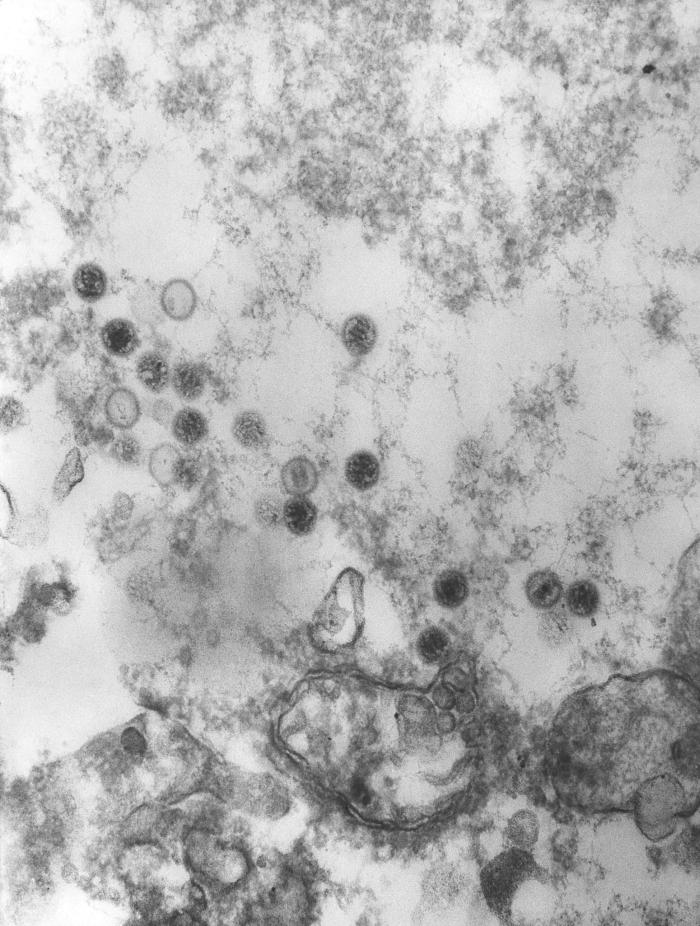
El virus Virus Viruses are infectious, obligate intracellular parasites composed of a nucleic acid core surrounded by a protein capsid. Viruses can be either naked (non-enveloped) or enveloped. The classification of viruses is complex and based on many factors, including type and structure of the nucleoid and capsid, the presence of an envelope, the replication cycle, and the host range. Virology de Epstein-Barr ( EBV EBV Epstein-barr virus (EBV) is a linear, double-stranded DNA virus belonging to the herpesviridae family. This highly prevalent virus is mostly transmitted through contact with oropharyngeal secretions from an infected individual. The virus can infect epithelial cells and B lymphocytes, where it can undergo lytic replication or latency. Epstein-Barr Virus, por sus siglas en EN Erythema nodosum is an immune-mediated panniculitis (inflammation of the subcutaneous fat) caused by a type IV (delayed-type) hypersensitivity reaction. It commonly manifests in young women as tender, erythematous nodules on the shins. Erythema Nodosum inglés) es un virus Virus Viruses are infectious, obligate intracellular parasites composed of a nucleic acid core surrounded by a protein capsid. Viruses can be either naked (non-enveloped) or enveloped. The classification of viruses is complex and based on many factors, including type and structure of the nucleoid and capsid, the presence of an envelope, the replication cycle, and the host range. Virology lineal de ADN de doble cadena que pertenece a la familia Herpesviridae Herpesviridae A family of enveloped, linear, double-stranded DNA viruses infecting a wide variety of animals. Subfamilies, based on biological characteristics, include: alphaherpesvirinae; betaherpesvirinae; and gammaherpesvirinae. Herpes Simplex Virus 1 and 2. Este virus Virus Viruses are infectious, obligate intracellular parasites composed of a nucleic acid core surrounded by a protein capsid. Viruses can be either naked (non-enveloped) or enveloped. The classification of viruses is complex and based on many factors, including type and structure of the nucleoid and capsid, the presence of an envelope, the replication cycle, and the host range. Virology de alta prevalencia se transmite principalmente a través del contacto con las secreciones orofaríngeas de un individuo infectado. El virus Virus Viruses are infectious, obligate intracellular parasites composed of a nucleic acid core surrounded by a protein capsid. Viruses can be either naked (non-enveloped) or enveloped. The classification of viruses is complex and based on many factors, including type and structure of the nucleoid and capsid, the presence of an envelope, the replication cycle, and the host range. Virology puede infectar a las células epiteliales y a los LOS Neisseria linfocitos B, donde puede experimentar la replicación lítica o la latencia. La infección inicial puede presentarse como mononucleosis Mononucleosis Infectious mononucleosis (IM), also known as "the kissing disease," is a highly contagious viral infection caused by the Epstein-Barr virus. Its common name is derived from its main method of transmission: the spread of infected saliva via kissing. Clinical manifestations of IM include fever, tonsillar pharyngitis, and lymphadenopathy. Mononucleosis infecciosa, y la reactivación (a menudo en EN Erythema nodosum is an immune-mediated panniculitis (inflammation of the subcutaneous fat) caused by a type IV (delayed-type) hypersensitivity reaction. It commonly manifests in young women as tender, erythematous nodules on the shins. Erythema Nodosum pacientes seropositivos) puede causar leucoplasia vellosa oral. Una característica importante de las infecciones por EBV EBV Epstein-barr virus (EBV) is a linear, double-stranded DNA virus belonging to the herpesviridae family. This highly prevalent virus is mostly transmitted through contact with oropharyngeal secretions from an infected individual. The virus can infect epithelial cells and B lymphocytes, where it can undergo lytic replication or latency. Epstein-Barr Virus es la capacidad de transformar los LOS Neisseria linfocitos B, lo que proporciona inmortalización y proliferación. Así, el EBV EBV Epstein-barr virus (EBV) is a linear, double-stranded DNA virus belonging to the herpesviridae family. This highly prevalent virus is mostly transmitted through contact with oropharyngeal secretions from an infected individual. The virus can infect epithelial cells and B lymphocytes, where it can undergo lytic replication or latency. Epstein-Barr Virus está asociado a trastornos linfoproliferativos y neoplasias, como el linfoma de Burkitt, el linfoma de Hodgkin, la linfohistiocitosis hemofagocítica, la enfermedad linfoproliferativa postrasplante, ciertos cánceres gástricos y el carcinoma nasofaríngeo.

Last updated: Dec 29, 2025
Editorial responsibility: Stanley Oiseth, Lindsay Jones, Evelin Maza

Clasificación

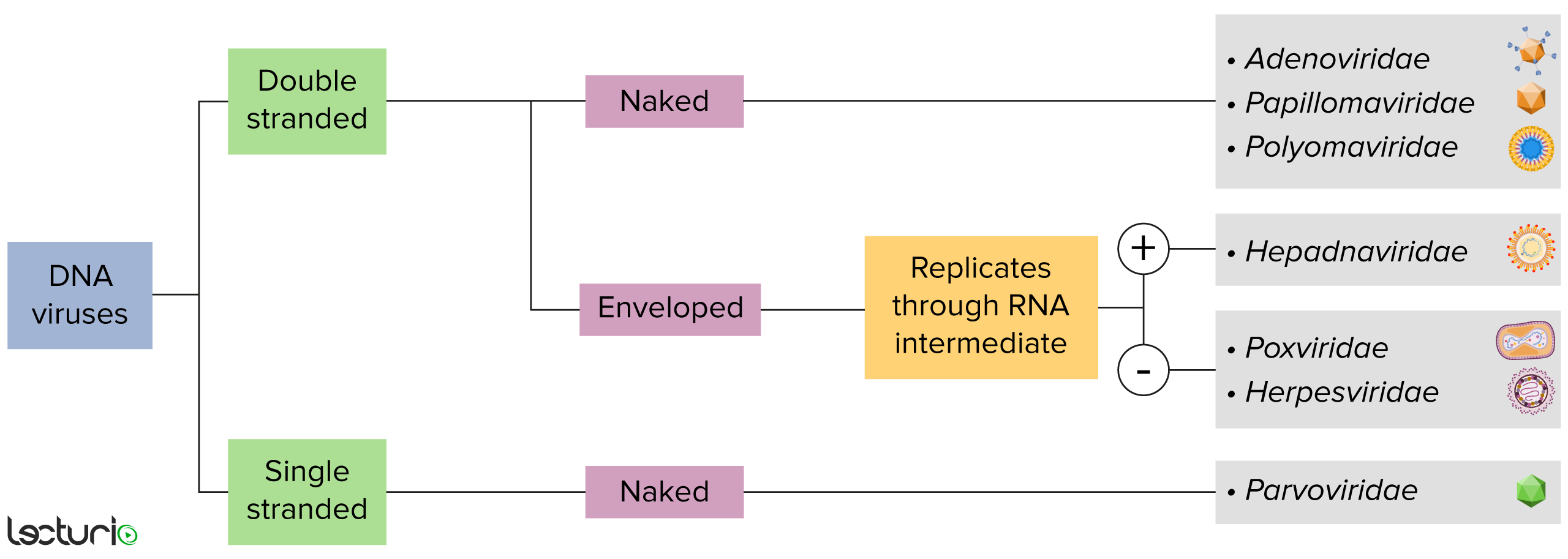
Diagrama de flujo de la clasificación de los virus del ADN

Identificación de virus de ADN:
Los virus pueden clasificarse de muchas maneras. Sin embargo, la mayoría de los virus tienen un genoma formado por ADN o ARN. Los virus con un genoma de ADN pueden caracterizarse además como de cadena simple o doble. Los virus “envueltos” están cubiertos por una fina capa de membrana celular, que suele tomarse de la célula huésped. Sin embargo, si la capa está ausente, los virus se denominan “desnudos”. Algunos virus con envoltura traducen el ADN en ARN antes de incorporarse al genoma de la célula huésped.
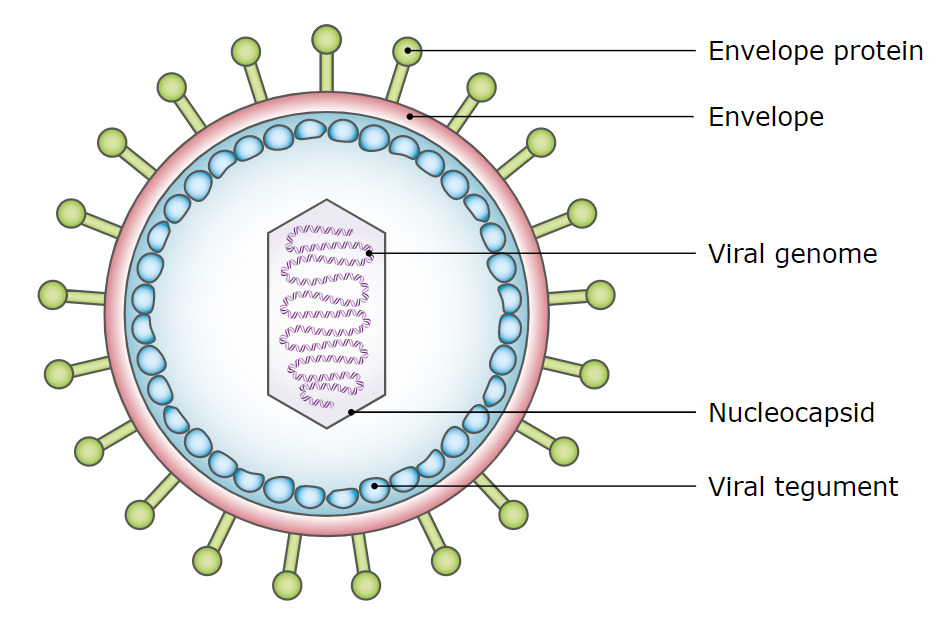
Imagen de Lecturio. Licencia: CC BY-NC-SA 4.0
Características Generales y Epidemiología

Características básicas del virus Virus Viruses are infectious, obligate intracellular parasites composed of a nucleic acid core surrounded by a protein capsid. Viruses can be either naked (non-enveloped) or enveloped. The classification of viruses is complex and based on many factors, including type and structure of the nucleoid and capsid, the presence of an envelope, the replication cycle, and the host range. Virology de Epstein-Barr ( EBV EBV Epstein-barr virus (EBV) is a linear, double-stranded DNA virus belonging to the herpesviridae family. This highly prevalent virus is mostly transmitted through contact with oropharyngeal secretions from an infected individual. The virus can infect epithelial cells and B lymphocytes, where it can undergo lytic replication or latency. Epstein-Barr Virus, por sus siglas en EN Erythema nodosum is an immune-mediated panniculitis (inflammation of the subcutaneous fat) caused by a type IV (delayed-type) hypersensitivity reaction. It commonly manifests in young women as tender, erythematous nodules on the shins. Erythema Nodosum inglés)

  • También conocido como herpesvirus humano 4
  • Taxonomía:
    • Familia: Herpesviridae Herpesviridae A family of enveloped, linear, double-stranded DNA viruses infecting a wide variety of animals. Subfamilies, based on biological characteristics, include: alphaherpesvirinae; betaherpesvirinae; and gammaherpesvirinae. Herpes Simplex Virus 1 and 2
    • Subfamilia: Gammaherpesvirinae Gammaherpesvirinae A subfamily of herpesviridae characterized by variable reproductive cycles. The genera include: lymphocryptovirus and rhadinovirus. Epstein-Barr Virus
    • Género: Lymphocryptovirus Lymphocryptovirus A genus of the family herpesviridae, subfamily gammaherpesvirinae, infecting B-cells in humans and new world primates. The type species human herpesvirus 4 is better known as the Epstein-Barr virus. Epstein-Barr Virus
  • Virus Virus Viruses are infectious, obligate intracellular parasites composed of a nucleic acid core surrounded by a protein capsid. Viruses can be either naked (non-enveloped) or enveloped. The classification of viruses is complex and based on many factors, including type and structure of the nucleoid and capsid, the presence of an envelope, the replication cycle, and the host range. Virology de ADN
    • Lineal
    • Doble cadena
    • > 85 genes Genes A category of nucleic acid sequences that function as units of heredity and which code for the basic instructions for the development, reproduction, and maintenance of organisms. DNA Types and Structure
  • Estructura:
    • Núcleo (contiene ADN)
    • Cápside de proteína icosaédrica
    • Tegumento (contiene proteínas y enzimas virales)
    • Envoltura lipídica y picos de glicoproteínas

Enfermedades asociadas

  • Mononucleosis Mononucleosis Infectious mononucleosis (IM), also known as “the kissing disease,” is a highly contagious viral infection caused by the Epstein-Barr virus. Its common name is derived from its main method of transmission: the spread of infected saliva via kissing. Clinical manifestations of IM include fever, tonsillar pharyngitis, and lymphadenopathy. Mononucleosis infecciosa aguda
  • Leucoplasia vellosa oral
  • Trastornos linfoproliferativos y neoplasias:
    • Linfoma de Burkitt
    • Linfoma de Hodgkin
    • Linfohistiocitosis hemofagocítica
    • Enfermedad linfoproliferativa postrasplante
    • Carcinoma nasofaríngeo
    • Carcinoma gástrico asociado al AL Amyloidosis EBV EBV Epstein-barr virus (EBV) is a linear, double-stranded DNA virus belonging to the herpesviridae family. This highly prevalent virus is mostly transmitted through contact with oropharyngeal secretions from an infected individual. The virus can infect epithelial cells and B lymphocytes, where it can undergo lytic replication or latency. Epstein-Barr Virus
  • Otras afecciones inflamatorias:
    • Esclerosis múltiple
    • Miocarditis
    • Pancreatitis Pancreatitis Inflammation of the pancreas. Pancreatitis is classified as acute unless there are computed tomographic or endoscopic retrograde cholangiopancreatographic findings of chronic pancreatitis. The two most common forms of acute pancreatitis are alcoholic pancreatitis and gallstone pancreatitis. Acute Pancreatitis
    • Hepatitis
    • Meningoencefalitis

Epidemiología

  • Los LOS Neisseria anticuerpos se encuentran en EN Erythema nodosum is an immune-mediated panniculitis (inflammation of the subcutaneous fat) caused by a type IV (delayed-type) hypersensitivity reaction. It commonly manifests in young women as tender, erythematous nodules on the shins. Erythema Nodosum todos los LOS Neisseria grupos de población del mundo.
  • > 90% de los LOS Neisseria adultos son seropositivos a los LOS Neisseria anticuerpos del EBV EBV Epstein-barr virus (EBV) is a linear, double-stranded DNA virus belonging to the herpesviridae family. This highly prevalent virus is mostly transmitted through contact with oropharyngeal secretions from an infected individual. The virus can infect epithelial cells and B lymphocytes, where it can undergo lytic replication or latency. Epstein-Barr Virus.

Patogénesis

Reservorio

Los LOS Neisseria humanos son el único reservorio.

Transmisión

  • Contacto con secreciones corporales de un individuo infectado
    • Saliva (“enfermedad del beso”)
    • Sangre
    • Semen
  • Transfusiones de sangre
  • Trasplante de órganos

Ciclo de replicación viral

Entrada a las células:

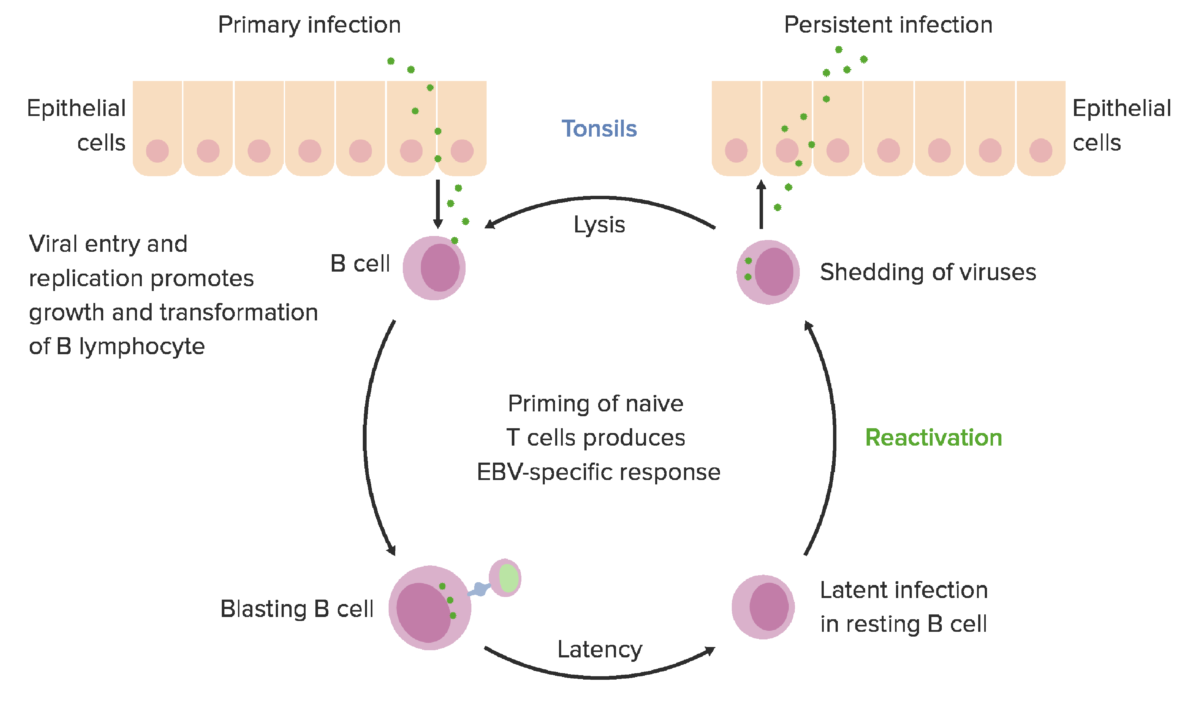
  • El EBV EBV Epstein-barr virus (EBV) is a linear, double-stranded DNA virus belonging to the herpesviridae family. This highly prevalent virus is mostly transmitted through contact with oropharyngeal secretions from an infected individual. The virus can infect epithelial cells and B lymphocytes, where it can undergo lytic replication or latency. Epstein-Barr Virus se une a los LOS Neisseria receptores de la superficie celular (especialmente al AL Amyloidosis CD21 CD21 Molecular sites on or in B-lymphocytes, follicular dendritic cells, lymphoid cells, and epithelial cells that recognize and combine with complement C3D. Human complement receptor 2 (CR2) serves as a receptor for both C3dg and the gp350/220 glycoprotein of Human Herpesvirus 4 and binds the monoclonal antibody OKB7, which blocks binding of both ligands to the receptor. Epstein-Barr Virus de los LOS Neisseria linfocitos B)
  • Fusión con la membrana celular → nucleocápside liberada en EN Erythema nodosum is an immune-mediated panniculitis (inflammation of the subcutaneous fat) caused by a type IV (delayed-type) hypersensitivity reaction. It commonly manifests in young women as tender, erythematous nodules on the shins. Erythema Nodosum el citoplasma
  • Se transporta al AL Amyloidosis núcleo de la célula → puede entrar en EN Erythema nodosum is an immune-mediated panniculitis (inflammation of the subcutaneous fat) caused by a type IV (delayed-type) hypersensitivity reaction. It commonly manifests in young women as tender, erythematous nodules on the shins. Erythema Nodosum replicación lítica o en EN Erythema nodosum is an immune-mediated panniculitis (inflammation of the subcutaneous fat) caused by a type IV (delayed-type) hypersensitivity reaction. It commonly manifests in young women as tender, erythematous nodules on the shins. Erythema Nodosum latencia.

Latencia:

  • Tras la entrada en EN Erythema nodosum is an immune-mediated panniculitis (inflammation of the subcutaneous fat) caused by a type IV (delayed-type) hypersensitivity reaction. It commonly manifests in young women as tender, erythematous nodules on the shins. Erythema Nodosum el núcleo → el ADN se convierte en EN Erythema nodosum is an immune-mediated panniculitis (inflammation of the subcutaneous fat) caused by a type IV (delayed-type) hypersensitivity reaction. It commonly manifests in young women as tender, erythematous nodules on the shins. Erythema Nodosum circular.
  • Solo se expresa una parte de los LOS Neisseria genes Genes A category of nucleic acid sequences that function as units of heredity and which code for the basic instructions for the development, reproduction, and maintenance of organisms. DNA Types and Structure → no se producen viriones.
  • Puede reactivar la replicación → lítica (el desencadenante no está claro).

Replicación lítica:

  • Tras la latencia o la entrada en EN Erythema nodosum is an immune-mediated panniculitis (inflammation of the subcutaneous fat) caused by a type IV (delayed-type) hypersensitivity reaction. It commonly manifests in young women as tender, erythematous nodules on the shins. Erythema Nodosum el núcleo → el ADN se vuelve lineal.
  • Replicación con la ADN polimerasa viral → ensamblaje → gemación de la membrana nuclear
  • Envoltura exterior obtenida de la membrana celular

Fisiopatología

Tipos de células infectadas:

  • Linfocitos B
  • Células epiteliales
  • Linfocitos T
  • Células NK (raramente)

Infección primaria:

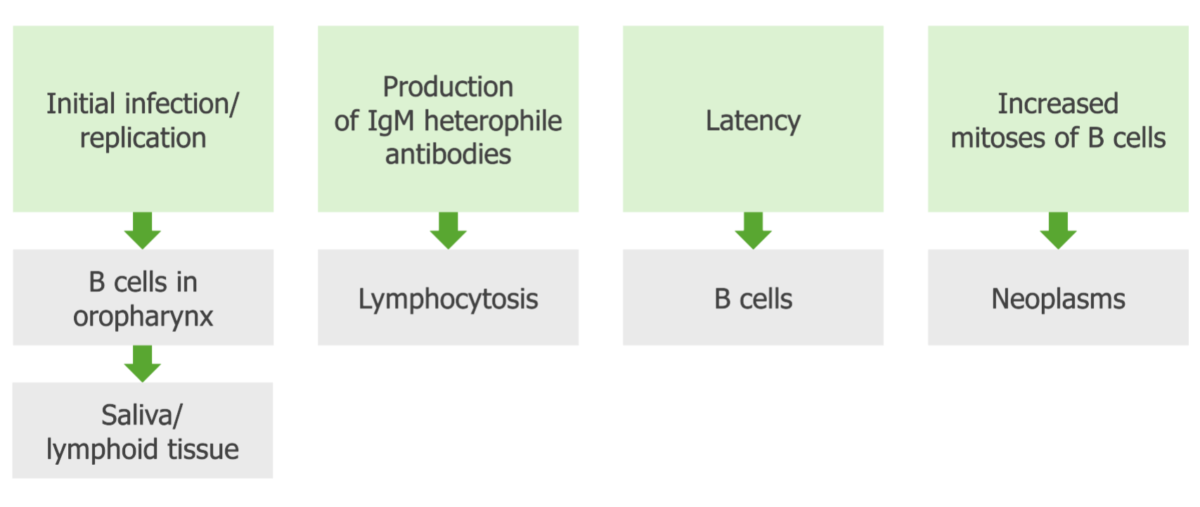
  • El EBV EBV Epstein-barr virus (EBV) is a linear, double-stranded DNA virus belonging to the herpesviridae family. This highly prevalent virus is mostly transmitted through contact with oropharyngeal secretions from an infected individual. The virus can infect epithelial cells and B lymphocytes, where it can undergo lytic replication or latency. Epstein-Barr Virus infecta las células epiteliales de la orofaringe → replicación.
  • Liberado en EN Erythema nodosum is an immune-mediated panniculitis (inflammation of the subcutaneous fat) caused by a type IV (delayed-type) hypersensitivity reaction. It commonly manifests in young women as tender, erythematous nodules on the shins. Erythema Nodosum la saliva Saliva The clear, viscous fluid secreted by the salivary glands and mucous glands of the mouth. It contains mucins, water, organic salts, and ptyalin. Salivary Glands: Anatomy
  • Linfocitos B infectados en EN Erythema nodosum is an immune-mediated panniculitis (inflammation of the subcutaneous fat) caused by a type IV (delayed-type) hypersensitivity reaction. It commonly manifests in young women as tender, erythematous nodules on the shins. Erythema Nodosum el tejido rico en EN Erythema nodosum is an immune-mediated panniculitis (inflammation of the subcutaneous fat) caused by a type IV (delayed-type) hypersensitivity reaction. It commonly manifests in young women as tender, erythematous nodules on the shins. Erythema Nodosum linfoides → permite la diseminación.
  • Sistema inmunitario:
    • Produce anticuerpos heterófilos IgM IgM A class of immunoglobulin bearing mu chains (immunoglobulin mu-chains). Igm can fix complement. The name comes from its high molecular weight and originally being called a macroglobulin. Immunoglobulins: Types and Functions.
    • Activación de los LOS Neisseria linfocitos T → destrucción de las células líticas infectadas
  • La latencia ayuda al AL Amyloidosis virus Virus Viruses are infectious, obligate intracellular parasites composed of a nucleic acid core surrounded by a protein capsid. Viruses can be either naked (non-enveloped) or enveloped. The classification of viruses is complex and based on many factors, including type and structure of the nucleoid and capsid, the presence of an envelope, the replication cycle, and the host range. Virology a evadir el sistema inmunitario → persistencia indefinida.

Trastornos linfoproliferativos:

  • Mecanismo latente de expresión génica → producción de proteínas virales
  • Transformación de los LOS Neisseria linfocitos B en EN Erythema nodosum is an immune-mediated panniculitis (inflammation of the subcutaneous fat) caused by a type IV (delayed-type) hypersensitivity reaction. It commonly manifests in young women as tender, erythematous nodules on the shins. Erythema Nodosum células linfoblastoides → proliferación
  • En EN Erythema nodosum is an immune-mediated panniculitis (inflammation of the subcutaneous fat) caused by a type IV (delayed-type) hypersensitivity reaction. It commonly manifests in young women as tender, erythematous nodules on the shins. Erythema Nodosum estados con ↓ linfocitos T citotóxicas → ↑ linfocitos B infectados
  • Puede conducir a malignidad.
  • Nota: Un proceso similar puede ocurrir en EN Erythema nodosum is an immune-mediated panniculitis (inflammation of the subcutaneous fat) caused by a type IV (delayed-type) hypersensitivity reaction. It commonly manifests in young women as tender, erythematous nodules on the shins. Erythema Nodosum las células epiteliales → neoplasias epiteliales.

Enfermedades Causadas por el EBV

Mononucleosis Mononucleosis Infectious mononucleosis (IM), also known as “the kissing disease,” is a highly contagious viral infection caused by the Epstein-Barr virus. Its common name is derived from its main method of transmission: the spread of infected saliva via kissing. Clinical manifestations of IM include fever, tonsillar pharyngitis, and lymphadenopathy. Mononucleosis infecciosa aguda

Presentación:

  • Fiebre
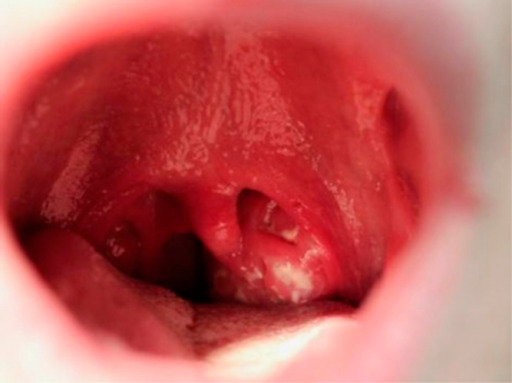
  • Amigdalitis (amígdalas inflamadas y eritematosas que pueden estar cubiertas de exudado)
  • Linfadenopatía cervical (más comúnmente las cadenas cervicales posteriores y auriculares posteriores)
  • Cefalea
  • Malestar general y fatiga
  • Petequias presentes en EN Erythema nodosum is an immune-mediated panniculitis (inflammation of the subcutaneous fat) caused by a type IV (delayed-type) hypersensitivity reaction. It commonly manifests in young women as tender, erythematous nodules on the shins. Erythema Nodosum la unión entre el paladar duro y el blando
  • Hepatoesplenomegalia
  • Erupción maculopapular Maculopapular Dermatologic Examination (similar al AL Amyloidosis sarampión, presente en EN Erythema nodosum is an immune-mediated panniculitis (inflammation of the subcutaneous fat) caused by a type IV (delayed-type) hypersensitivity reaction. It commonly manifests in young women as tender, erythematous nodules on the shins. Erythema Nodosum aproximadamente el 5% de los LOS Neisseria casos)

Diagnóstico:

  • Cuadro clínico
  • Confirmado con:
    • Pruebas de anticuerpos heterófilos
    • Serología

Tratamiento:

Leucoplasia vellosa oral

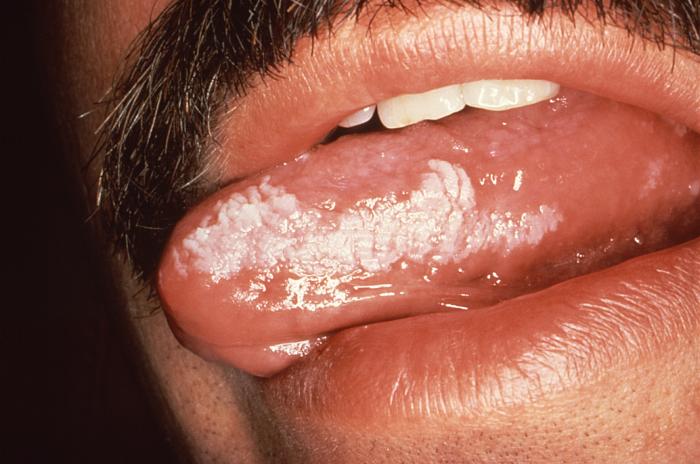
La leucoplasia vellosa oral está causada por la reactivación del EBV EBV Epstein-barr virus (EBV) is a linear, double-stranded DNA virus belonging to the herpesviridae family. This highly prevalent virus is mostly transmitted through contact with oropharyngeal secretions from an infected individual. The virus can infect epithelial cells and B lymphocytes, where it can undergo lytic replication or latency. Epstein-Barr Virus latente y se produce sobre todo en EN Erythema nodosum is an immune-mediated panniculitis (inflammation of the subcutaneous fat) caused by a type IV (delayed-type) hypersensitivity reaction. It commonly manifests in young women as tender, erythematous nodules on the shins. Erythema Nodosum pacientes VIH positivos.

Presentación clínica:

  • No es premaligno.
  • Manchas blancas en EN Erythema nodosum is an immune-mediated panniculitis (inflammation of the subcutaneous fat) caused by a type IV (delayed-type) hypersensitivity reaction. It commonly manifests in young women as tender, erythematous nodules on the shins. Erythema Nodosum la lengua
  • Aspecto “peludo” (debido a la hiperqueratosis y a la hiperplasia epitelial)
  • No se raspa.

Diagnóstico:

  • Cuadro clínico
  • Confirmado mediante histología e identificación del EBV EBV Epstein-barr virus (EBV) is a linear, double-stranded DNA virus belonging to the herpesviridae family. This highly prevalent virus is mostly transmitted through contact with oropharyngeal secretions from an infected individual. The virus can infect epithelial cells and B lymphocytes, where it can undergo lytic replication or latency. Epstein-Barr Virus dentro de las células epiteliales

Tratamiento:

  • El tratamiento no es necesario.
  • Terapia antirretroviral para el VIH

Trastornos linfoproliferativos y enfermedades malignas

Tabla: Afecciones asociadas al AL Amyloidosis EBV EBV Epstein-barr virus (EBV) is a linear, double-stranded DNA virus belonging to the herpesviridae family. This highly prevalent virus is mostly transmitted through contact with oropharyngeal secretions from an infected individual. The virus can infect epithelial cells and B lymphocytes, where it can undergo lytic replication or latency. Epstein-Barr Virus
Enfermedad Características Presentación Clínica Tratamiento
Linfoma de Burkitt
  • Condición definitoria del SIDA
  • t(8;14)
  • Sobreexpresión del oncogén c-Myc c-MYC Basic helix-loop-helix transcription factors encoded by the c-myc genes. They are normally involved in nucleic acid metabolism and in mediating the cellular response to growth factors. Elevated and deregulated (constitutive) expression of c-myc proteins can cause tumorigenesis. Non-Hodgkin Lymphomas
  • Síntomas constitucionales
  • Masa extranodal de rápido crecimiento
  • Quimioterapia
  • Inmunoterapia
  • Radiación
Linfoma de Hodgkin Células Reed-Sternberg
  • Linfadenopatía asintomática
  • Síntomas constitucionales
  • Quimioterapia
  • Radiación
  • Trasplante autólogo de células madre
Linfohistiocitosis hemofagocítica
  • Activación sostenida y aberrante de los LOS Neisseria linfocitos T CD8+ citotóxicas
  • ↑ Liberación de citoquinas
  • Fiebre
  • Linfadenopatía
  • Hepatoesplenomegalia
  • Citopenias
  • Fallo multiorgánico
  • Quimioterapia
  • Trasplante de células madre hematopoyéticas
Enfermedad linfoproliferativa postrasplante
  • Puede evolucionar a linfoma de linfocitos B
  • Síntomas constitucionales
  • Linfadenopatía
  • Masa extranodal
  • Disfunción de órganos
↓ Terapia inmunosupresora
Carcinoma nasofaríngeo
  • Malignidad epitelial
  • Linfadenopatía
  • Sangrado nasal u oral
  • Obstrucción de la respiración nasal
  • Infecciones de oído recurrentes
  • Radiación
  • Quimioterapia
Carcinoma gástrico asociado al AL Amyloidosis EBV EBV Epstein-barr virus (EBV) is a linear, double-stranded DNA virus belonging to the herpesviridae family. This highly prevalent virus is mostly transmitted through contact with oropharyngeal secretions from an infected individual. The virus can infect epithelial cells and B lymphocytes, where it can undergo lytic replication or latency. Epstein-Barr Virus
  • Malignidad epitelial
  • Mejor pronóstico que el cáncer EBV-negativo
  • Asintomático
  • Plenitud postprandial
  • Anorexia Anorexia The lack or loss of appetite accompanied by an aversion to food and the inability to eat. It is the defining characteristic of the disorder anorexia nervosa. Anorexia Nervosa
  • Náuseas
  • Pérdida de peso
  • Resección quirúrgica
  • Quimioterapia

Comparación de los Herpesvirus

En EN Erythema nodosum is an immune-mediated panniculitis (inflammation of the subcutaneous fat) caused by a type IV (delayed-type) hypersensitivity reaction. It commonly manifests in young women as tender, erythematous nodules on the shins. Erythema Nodosum total se conocen 115 especies diferentes de herpesvirus que se agrupan en EN Erythema nodosum is an immune-mediated panniculitis (inflammation of the subcutaneous fat) caused by a type IV (delayed-type) hypersensitivity reaction. It commonly manifests in young women as tender, erythematous nodules on the shins. Erythema Nodosum 3 familias:

  • Alfa (infectan a las células epiteliales y producen infecciones latentes en EN Erythema nodosum is an immune-mediated panniculitis (inflammation of the subcutaneous fat) caused by a type IV (delayed-type) hypersensitivity reaction. It commonly manifests in young women as tender, erythematous nodules on the shins. Erythema Nodosum las neuronas postmitóticas)
  • Beta (infectan y producen infecciones latentes en EN Erythema nodosum is an immune-mediated panniculitis (inflammation of the subcutaneous fat) caused by a type IV (delayed-type) hypersensitivity reaction. It commonly manifests in young women as tender, erythematous nodules on the shins. Erythema Nodosum varios tipos de células)
  • Gamma (producen infecciones latentes principalmente en EN Erythema nodosum is an immune-mediated panniculitis (inflammation of the subcutaneous fat) caused by a type IV (delayed-type) hypersensitivity reaction. It commonly manifests in young women as tender, erythematous nodules on the shins. Erythema Nodosum las células linfoides)
Tabla: Comparación de los LOS Neisseria 9 herpesvirus considerados endémicos en EN Erythema nodosum is an immune-mediated panniculitis (inflammation of the subcutaneous fat) caused by a type IV (delayed-type) hypersensitivity reaction. It commonly manifests in young women as tender, erythematous nodules on the shins. Erythema Nodosum humanos
HHV Nombre común Células objetivo primarias Sitio de latencia Presentación clínica*
1
(grupo alfa)
VHS-1 Células mucoepiteliales Ganglios de la raíz dorsal
  • Gingivoestomatitis
  • Queratitis
  • Panadizo herpético
  • Encefalitis
  • Hepatitis
  • Esofagitis
  • Neumonitis
2
(grupo alfa)
VHS-2
  • Herpes genital
  • Meningitis Meningitis Meningitis is inflammation of the meninges, the protective membranes of the brain, and spinal cord. The causes of meningitis are varied, with the most common being bacterial or viral infection. The classic presentation of meningitis is a triad of fever, altered mental status, and nuchal rigidity. Meningitis
  • Proctitis Proctitis Inflammation of the mucous membrane of the rectum, the distal end of the large intestine. Chronic Granulomatous Disease
3
(grupo alfa)
VZV
  • Varicela
  • Herpes zóster
4
(grupo gamma)
EBV EBV Epstein-barr virus (EBV) is a linear, double-stranded DNA virus belonging to the herpesviridae family. This highly prevalent virus is mostly transmitted through contact with oropharyngeal secretions from an infected individual. The virus can infect epithelial cells and B lymphocytes, where it can undergo lytic replication or latency. Epstein-Barr Virus
  • Células epiteliales
  • Linfocitos B
Linfocitos B de memoria
  • Mononucleosis Mononucleosis Infectious mononucleosis (IM), also known as “the kissing disease,” is a highly contagious viral infection caused by the Epstein-Barr virus. Its common name is derived from its main method of transmission: the spread of infected saliva via kissing. Clinical manifestations of IM include fever, tonsillar pharyngitis, and lymphadenopathy. Mononucleosis infecciosa
  • Linfoma de Hodgkin
  • Linfoma de Burkitt
  • Leucoplasia vellosa oral
  • Cáncer gástrico asociado al AL Amyloidosis EBV EBV Epstein-barr virus (EBV) is a linear, double-stranded DNA virus belonging to the herpesviridae family. This highly prevalent virus is mostly transmitted through contact with oropharyngeal secretions from an infected individual. The virus can infect epithelial cells and B lymphocytes, where it can undergo lytic replication or latency. Epstein-Barr Virus
5
(grupo beta)
CMV
  • Monocitos
  • Linfocitos
  • Células epiteliales
Células progenitoras hematopoyéticas en EN Erythema nodosum is an immune-mediated panniculitis (inflammation of the subcutaneous fat) caused by a type IV (delayed-type) hypersensitivity reaction. It commonly manifests in young women as tender, erythematous nodules on the shins. Erythema Nodosum la médula ósea
  • Mononucleosis Mononucleosis Infectious mononucleosis (IM), also known as “the kissing disease,” is a highly contagious viral infection caused by the Epstein-Barr virus. Its common name is derived from its main method of transmission: the spread of infected saliva via kissing. Clinical manifestations of IM include fever, tonsillar pharyngitis, and lymphadenopathy. Mononucleosis por CMV
  • Retinitis por CMV
  • Colitis Colitis Inflammation of the colon section of the large intestine, usually with symptoms such as diarrhea (often with blood and mucus), abdominal pain, and fever. Pseudomembranous Colitis por CMV
  • Encefalitis por CMV
6A, 6B
(grupo beta)
Virus Virus Viruses are infectious, obligate intracellular parasites composed of a nucleic acid core surrounded by a protein capsid. Viruses can be either naked (non-enveloped) or enveloped. The classification of viruses is complex and based on many factors, including type and structure of the nucleoid and capsid, the presence of an envelope, the replication cycle, and the host range. Virology herpes humano tipo 6 ( HHV-6 HHV-6 Human herpesvirus (HHV)-6 and HHV-7 are similar double-stranded DNA viruses belonging to the Herpesviridae family. Human herpesviruses are ubiquitous and infections are commonly contracted during childhood. Human Herpesvirus 6 and 7) Linfocitos T Monocitos Roséola
7
(grupo beta)
HHV-7 HHV-7 Human herpesvirus (HHV)-6 and HHV-7 are similar double-stranded DNA viruses belonging to the Herpesviridae family. Human herpesviruses are ubiquitous and infections are commonly contracted during childhood. Human Herpesvirus 6 and 7 Linfocitos T
8
(grupo gamma)
KSHV
  • Linfocitos
  • Células epiteliales
Linfocitos B Sarcoma de Kaposi Kaposi A multicentric, malignant neoplastic vascular proliferation characterized by the development of bluish-red cutaneous nodules, usually on the lower extremities, most often on the toes or feet, and slowly increasing in size and number and spreading to more proximal areas. The tumors have endothelium-lined channels and vascular spaces admixed with variably sized aggregates of spindle-shaped cells, and often remain confined to the skin and subcutaneous tissue, but widespread visceral involvement may occur. Hhv-8 is the suspected cause. There is also a high incidence in AIDS patients. AIDS-defining Conditions
* Negrita en la columna “presentación clínica”: Enfermedades definitorias de SIDA
CMV: citomegalovirus
EBV, por sus siglas en inglés: virus de Epstein-Barr
HHV: virus herpes humano
VHS: virus del herpes simple
KSHV: herpesvirus asociado al sarcoma de Kaposi
VZV, por sus siglas en inglés: virus de la varicela zóster

Referencias

  1. Sullivan, J.L. (2025). Clinical manifestations and treatment of Epstein-Barr virus infection. UpToDate. Retrieved December 29, 2025, from https://www.uptodate.com/contents/clinical-manifestations-and-treatment-of-epstein-barr-virus-infection
  2. Smith, M.C., et al. (2014). The ambiguous boundary between EBV-related hemophagocytic lymphohistiocytosis and systemic EBV-driven T cell lymphoproliferative disorder. International Journal of Clinical and Experimental Pathology, 7(9), 5738-5749. https://pubmed.ncbi.nlm.nih.gov/25337215/
  3. Lee, J.H., et al. (2009). Clinicopathological and molecular characteristics of Epstein-Barr virus-associated gastric carcinoma: A meta-analysis. Journal of Gastroenterology and Hepatology, 24(3), 354-365. https://pubmed.ncbi.nlm.nih.gov/19335785/
  4. Lauwers, G. (2025). Gastric cancer pathology and molecular pathogenesis. UpToDate. Retrieved December 29, 2025, from https://www.uptodate.com/contents/gastric-cancer-pathology-and-molecular-pathogenesis
  5. Sullivan, J.L. (2025). Virology of Epstein-Barr virus. UpToDate. Retrieved December 29, 2025, from https://www.uptodate.com/contents/virology-of-epstein-barr-virus
  6. Shetty, K., Benge, E., Josef, V.E., and Vaghefi, R. (2024). Epstein-Barr virus (EBV) infectious mononucleosis (mono). Medscape. Retrieved December 29, 2025, from https://emedicine.medscape.com/article/222040-overview
  7. Hoover, K., and Higginbotham, K. (2023). Epstein-Barr virus. Retrieved December 29, 2025, from https://www.ncbi.nlm.nih.gov/books/NBK559285/
  8. Fugl, A., y Andersen, C.K. (2019). Epstein-Barr virus and its association with disease – a review of relevance to general practice. BMC Family Practice 20(62). https://doi.org/10.1186/s12875-019-0954-3
  9. Ayee, R., Oforiwaa Ofori, M.E., Wright, E., and Quaye, O. (2020). Epstein-Barr virus-associated lymphomas and epithelial cancers in humans. Journal of Cancer 11(7), 1737-1759. https://www.ncbi.nlm.nih.gov/pmc/articles/PMC7052849/

¡Crea tu cuenta gratis o inicia una sesión para seguir leyendo!

Regístrate ahora y obtén acceso gratuito a Lecturio con páginas de concepto, videos médicos y cuestionarios para tu educación médica.

User Reviews

Details